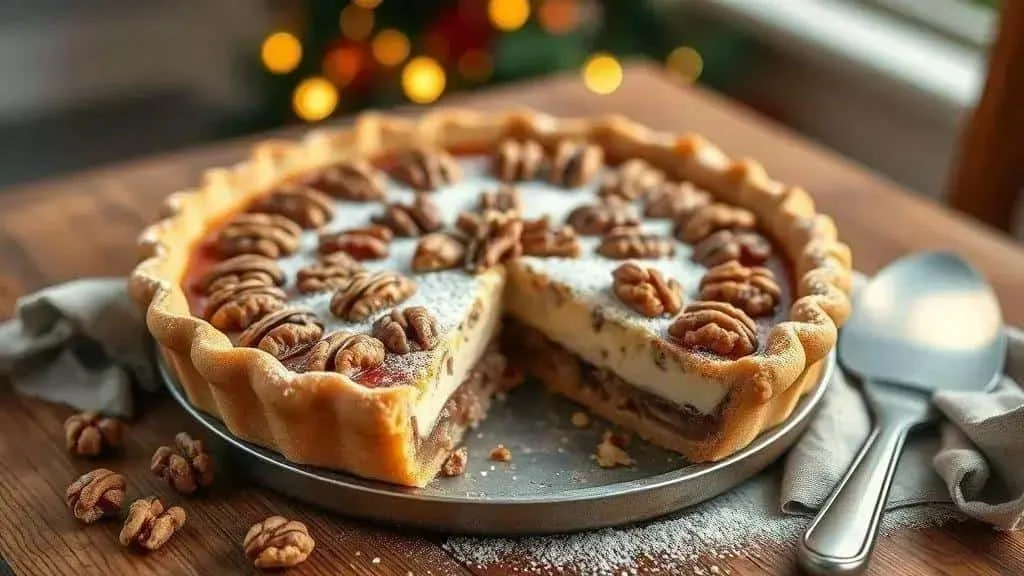
This Christmas walnut tart has buttery shortcrust pastry and a rich Brazilian-style filling of condensed milk, eggs, toasted walnuts and optional spice. Blind-bake the case, cook the filling until properly set, cool promptly and refrigerate. Chocolate and pecan variations offer different flavours, while vegan versions need a separately tested egg-free filling.
A Christmas walnut tart brings toasted nut flavours and a rich filling to the festive table. This guide explains the pastry, baking and serving, with ideas for variations. It is a Brazilian-style dessert rather than a claim that every family follows the same traditional recipe.
Ingredients for Brazilian Christmas Walnut Tart
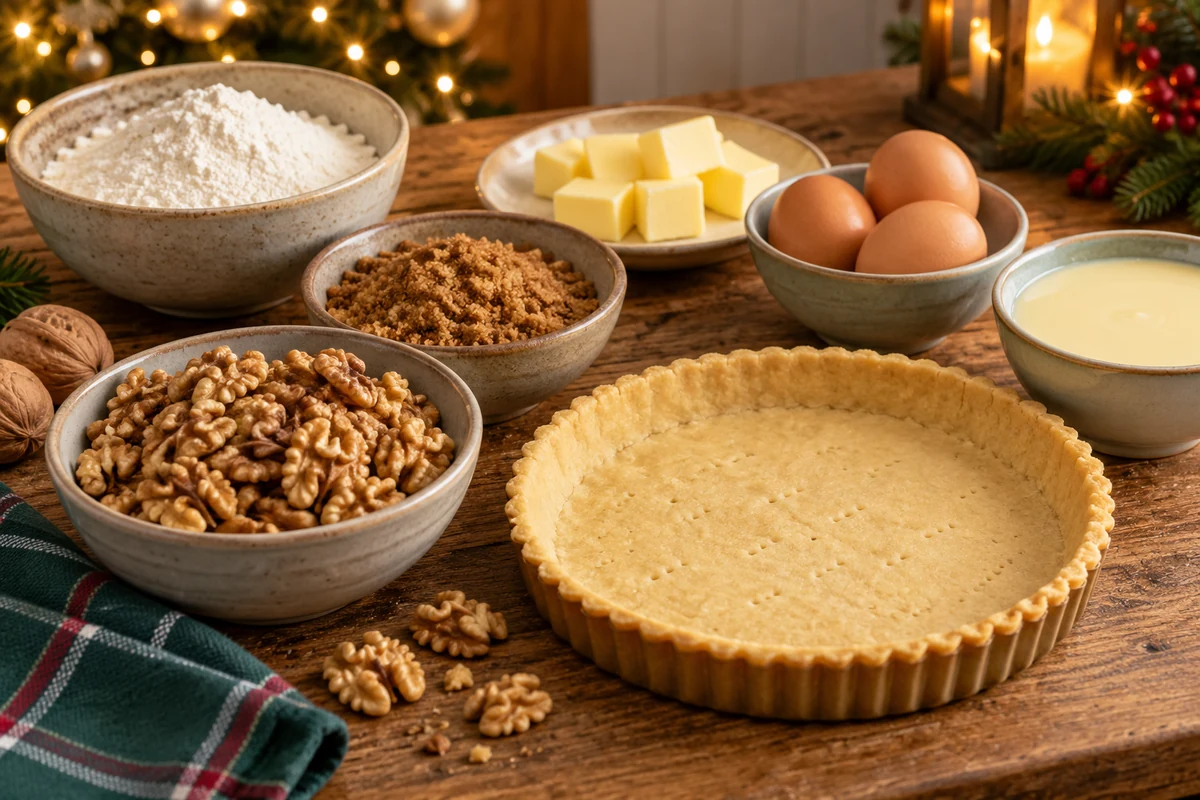
Gather the following ingredients for a Brazilian Christmas walnut tart. Use a suitably deep 23 cm tin and do not overfill it; the quantity it holds depends on its depth.
- 200 g plain flour – for the pastry; wholemeal flour gives a denser result and may need different hydration.
- 100 g cold unsalted butter, cubed – a suitable cold baking block can be used, with a different texture.
- 1 large egg – for the pastry. Keep a little cold water available only if needed; an egg-free pastry requires its own tested proportions.
- 1 tablespoon caster sugar – for the pastry.
- A pinch of salt – for the pastry.
- 300 g walnuts – chop most for the filling and reserve a few halves for decoration. Pecans make a different variation.
- 1 tin sweetened condensed milk, about 395–397 g – for the Brazilian-style filling. Corn syrup is not a direct replacement; an American-style pecan pie uses a different formula.
- 3 large eggs – for the filling.
- 100 g soft light brown sugar – gives a caramel note; other sugars change the flavour and texture.
- 50 g unsalted butter, melted and cooled slightly – for the filling.
- 1 teaspoon vanilla extract, optional.
- 1 teaspoon ground cinnamon, optional.
- Icing sugar, optional – to dust before serving.
Ingredient and preparation notes
Toast the walnuts: spread them on a tray at 160°C, or 140°C fan, for about 5–7 minutes, checking frequently. They should smell toasted without becoming dark or bitter. Cool before using.
Setting the filling: the eggs help it set. Removing an egg does not reliably make it firmer, and extra cream changes the formula. Keep the base proportions for the first batch.
Vegan adaptation: choose a tested vegan walnut tart recipe using plant-based pastry and filling. A few spoonfuls of starch or aquafaba are not a proven direct replacement for the eggs here.
Storage: this egg-and-dairy tart needs refrigeration. Cool promptly and refrigerate within 1–2 hours; use within 48 hours, or sooner if an ingredient requires it.
How to Make Brazilian Christmas Walnut Tart
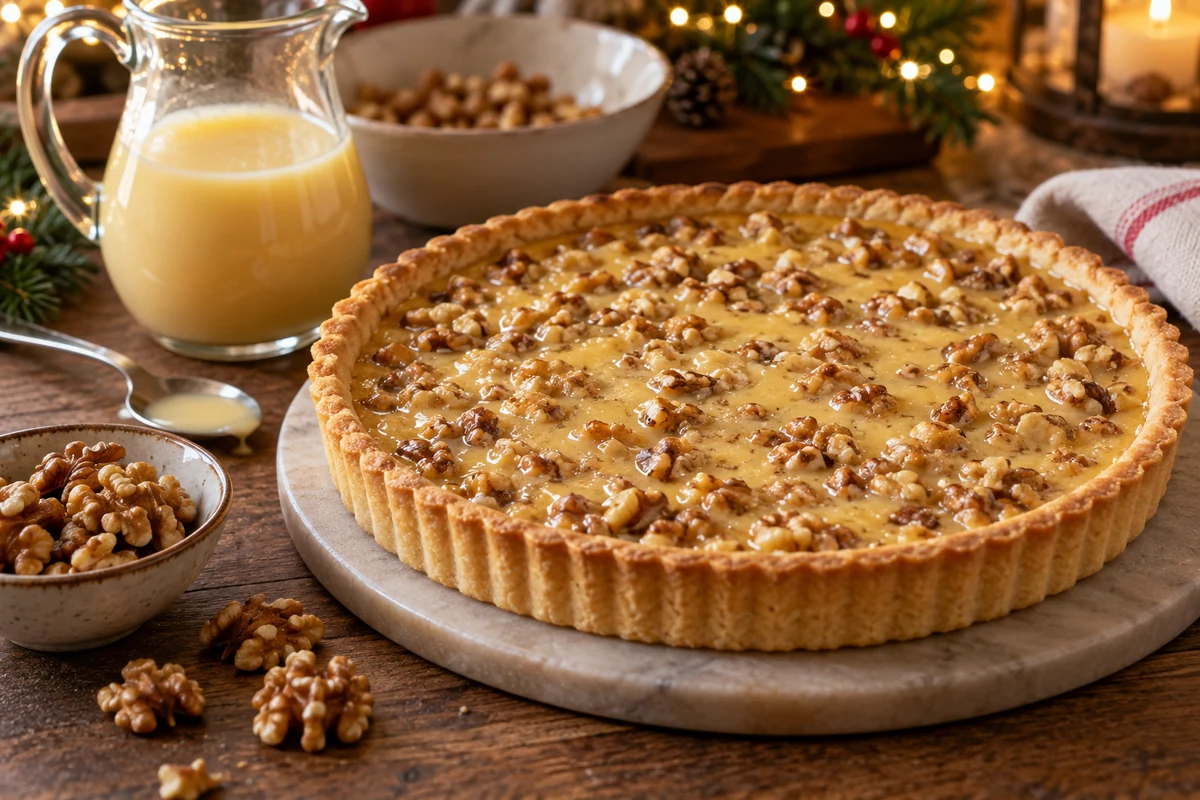
- Toast the walnuts and heat the oven: toast at 160°C, or 140°C fan, as above, then cool. Increase the oven to 180°C, or 160°C fan for blind-baking the pastry.
- Make the pastry: combine 200 g flour, 1 tablespoon sugar and a pinch of salt. Rub in 100 g cold butter until crumbly, then add 1 egg. Bring together gently, adding cold water a teaspoon at a time only if needed. Avoid overworking. Wrap and chill for 30 minutes.
- Line and blind-bake: roll out on a lightly floured surface and line a deep 23 cm tart tin. Chill for 15 minutes, then line with baking paper and baking beans. Bake at 180°C, or 160°C fan, for about 12–15 minutes until the sides hold. Remove the weights and paper and bake for another 3–5 minutes, or until the base looks dry. Ovens and tin depth vary.
-
Make the walnut filling
Mix the filling: combine the condensed milk, 3 eggs, 100 g brown sugar, 50 g melted butter and optional vanilla and cinnamon. Stir in the cooled chopped walnuts, reserving the decorative halves. Do not taste the raw egg mixture.
- Fill and bake: pour into the pastry case, leaving room below the rim; do not force in excess filling. Add the reserved walnuts. Reduce to 160–170°C, or 140–150°C fan and start checking after 25–30 minutes, allowing longer for a deeper filling. The centre should have only a slight wobble, not liquid movement. Check that the centre reaches 70°C for 2 minutes or 75°C for 30 seconds; protect the pastry edges if they brown too quickly.
- Cool and chill: cool on a rack, then refrigerate within 1–2 hours. Chill for a further 2–4 hours or overnight for neater slices, rather than leaving it at room temperature for several hours.
- Finish and store: dust with icing sugar if desired. Keep covered in the fridge and use within 48 hours of baking. Freshly chilled slices can be frozen promptly for up to a month as a quality guide.
Practical tips
Avoid a soggy base: blind-bake thoroughly and do not overfill. Vary the flavour: try pecans for some of the walnuts or add finely grated orange zest to the pastry.
Christmas Walnut Tart Variations
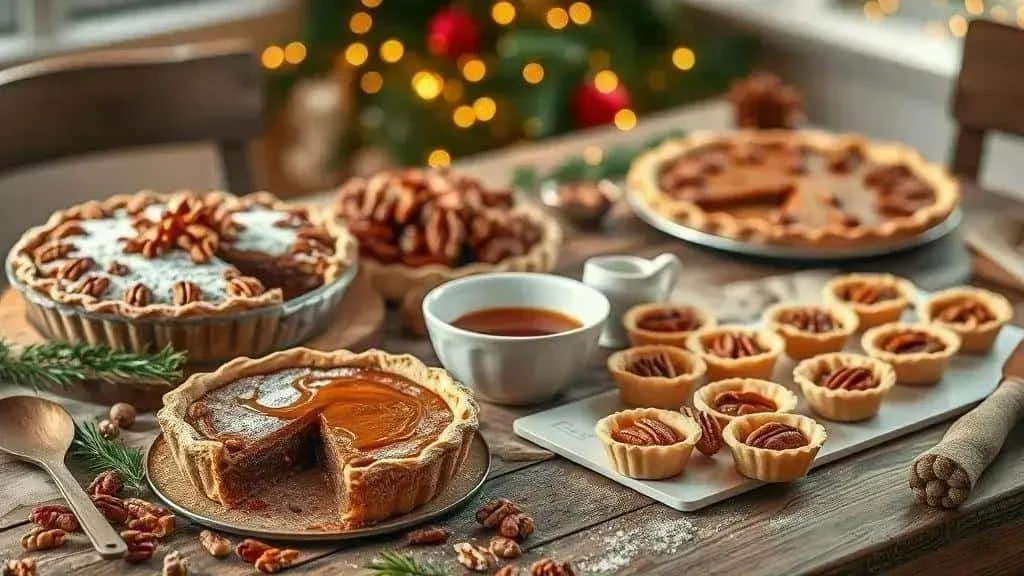
These ideas adapt the flavour of a Christmas walnut tart. Changes to the filling’s liquids, eggs or sugars need testing because they affect how it sets.
Caramel and pecan
Idea: use pecans for a different nut flavour and serve with a small drizzle of caramel. For a syrup-based American-style pie, follow a complete pecan pie recipe rather than replacing condensed milk with syrup.
Substitutions: pecans can replace the walnuts by weight, but honey, corn syrup and invert sugar are not automatically interchangeable with the dairy filling.
Chocolate
Idea: 100–150 g melted dark chocolate makes a richer variation and changes the set. Fold it into the filling once slightly cooled and test the bake; finish with chocolate shavings.
Alternatives: milk chocolate gives a sweeter result. A little dissolved instant coffee can add flavour, but keep extra liquid minimal.
Vegan and lactose-free adaptations
Vegan filling: use a tested egg-free walnut tart formula. Plant-based condensed milk alone does not replace eggs or butter, and sweetened coconut cream is not necessarily equivalent.
Pastry and dairy: use suitable vegan pastry and check every ingredient. A lactose-free dairy version still contains milk protein and is unsuitable for a milk allergy.
Gluten-free
Pastry: choose a tested gluten-free sweet pastry recipe or a suitable ready-made pastry. Rice, tapioca and almond flour blends need different proportions and binding; they are not all direct substitutes for plain flour.
Handling: chill gluten-free pastry as directed and line the tin carefully. Check other ingredients and prevent cross-contact.
Individual tartlets
Method: line small 8–10 cm tins and blind-bake as appropriate. Smaller fillings cook faster; start checking earlier, but confirm the egg filling is cooked rather than relying on a fixed 12–18 minutes.
Why try them: individual tartlets make portioning straightforward at a party.
Crumble topping
Mixture: rub 50 g flour, 40 g cold butter and 30 g sugar into crumbs. Scatter a light layer over the filling before baking, allowing room and checking that both topping and filling cook properly.
Extra texture: add 30 g oats or 20 g chopped nuts to the crumble if desired; use suitable gluten-free oats only when needed.
Flavour combinations
Ideas: orange zest suits the pastry. Use the optional teaspoon of cinnamon once, with up to ¼ teaspoon nutmeg if desired. A small amount of rum or almond extract changes the flavour; label alcohol and allergens appropriately.
Serving and Decorating a Christmas Walnut Tart
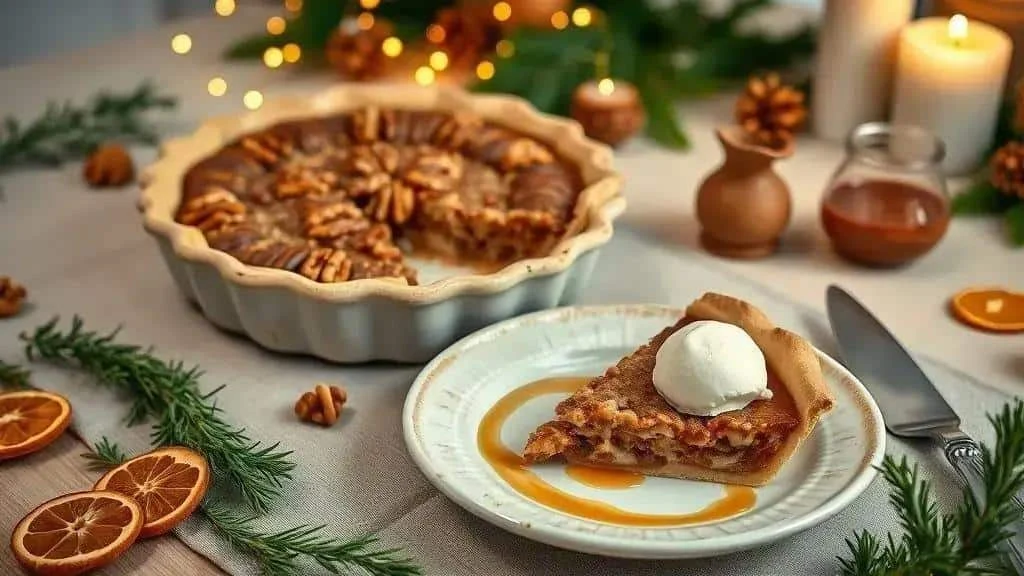
Choose a serving plate: plain ceramic or a rustic platter contrasts with the golden pastry.
Portions: a 23 cm tart can provide roughly 8–10 slices, depending on depth and appetite. Warm a knife in hot water and dry it between cuts.
Serving temperature: serve chilled or let individual portions stand briefly to soften the texture. Keep the rest refrigerated.
Plating
- Show the filling: place a slice upright in the centre of the plate.
- Creamy accompaniment: add a small spoonful of whipped cream or vanilla ice cream.
- Sauce: a little caramel or ganache adds richness; keep the portion small alongside the sweet filling.
- Nut garnish: one or two toasted walnut halves make the main ingredient clear.
Table decoration
Warm colours: gold, copper and green work well with simple linen.
Decorative details: keep pine cones, dried orange decorations and candles away from food and serving routes. Use only suitable edible ingredients on the tart itself.
Practical presentation
- Ingredient cards: name the dessert and identify allergens such as walnuts, wheat, milk and egg. Its name alone does not provide all allergy information.
- Serving utensils: have a tart slice, plates, forks or spoons and napkins ready.
- Pre-portioning: cut chilled slices before bringing them to the table for easier serving.
Preparing ahead and transport
Bake the day before: cool promptly and refrigerate, then add any final decoration before serving.
Transport chilled: use a rigid covered container inside an insulated box with ice packs. Keep the tart cold and refrigerate on arrival; dry ice is unnecessary for ordinary home transport.
Drinks to serve alongside
Suggestions: coffee and spiced tea contrast with the rich filling. Adults who drink alcohol may enjoy a small glass of port or dessert wine.
Alcohol-free option: serve warm spiced apple juice or citrus herbal tea. Ordinary British cider contains alcohol, so it is not an automatic alcohol-free substitute.
Storage, Freezing and Make-Ahead Planning
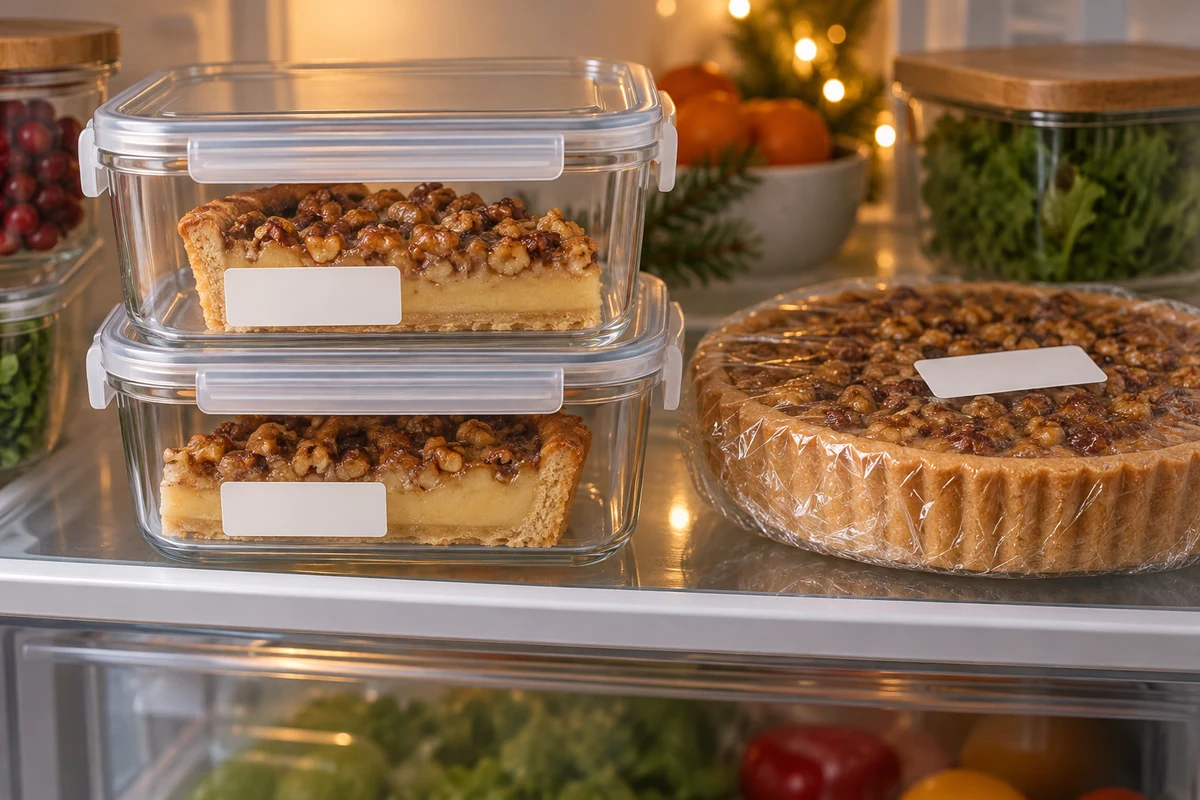
Correct storage protects this egg-and-dairy tart. It should be kept chilled, with freezing an option for longer storage.
Time at room temperature
- Cool promptly: refrigerate within 1–2 hours of baking. Do not leave this custard-style tart out for 24 hours.
- During serving: keep time outside chilled storage short and avoid warm, sunny places.
In the fridge
- Storage time: keep covered and use within 48 hours, or a shorter ingredient limit where applicable.
- Protect the tart: use a clean container or cover the tin to prevent drying and absorption of odours.
- Separate slices: baking paper between portions can help stop them sticking.
In the freezer
- Freeze slices: wrap cooled portions in suitable food wrap and foil or a freezer container. Aim to use within one month for quality.
- Freeze the whole tart: chill first, wrap well and support it in a rigid container. A month is a quality guide, not an automatic safety cut-off for continuously frozen food.
- Reduce freezer burn: remove unnecessary air from packaging and label the date.
Defrosting and reheating
- Thaw in the fridge: allow roughly 12–24 hours depending on size, until fully defrosted. Use within 24 hours of thawing.
- Serving texture: let a portion stand briefly before eating if preferred, keeping the rest cold.
- If reheating: heat a portion until steaming hot throughout, checking the centre rather than assuming 8–12 minutes is enough. Reheat only once. The microwave may soften the pastry.
Planning ahead
- The day before: bake, cool promptly and refrigerate. Add icing sugar or delicate decoration just before serving.
- Further ahead: freeze the freshly chilled tart and thaw in the fridge before the event.
- Pastry ahead: raw pastry can be wrapped and frozen for about a month for quality; thaw in the fridge and bake thoroughly. Do not taste raw dough.
Transport and serving away from home
- Short journeys: use a covered, stable container and an insulated bag with ice packs, especially in warm conditions.
- Longer journeys: ensure the cool box can maintain chilled conditions throughout and refrigerate on arrival.
- Finish at the venue: add icing sugar and other final decorations shortly before serving.
Handling reminders
- Clean hands and utensils: wash hands thoroughly and use clean equipment when portioning and packing. Gloves do not replace hand hygiene.
- Date labels: record baking, freezing and thawing dates.
- Discard when needed: do not keep chilled leftovers beyond the recommended storage window or use food that has been improperly stored. Freezer quality guidance is different from a guarantee of safety.
Accompaniments and Drinks

These simple pairings complement the rich walnut filling.
Sweet accompaniments
- Whipped cream: a small unsweetened spoonful provides a creamy contrast.
- Vanilla ice cream: a small scoop suits a slice of tart.
- Custard: use a modest amount so it does not overwhelm the walnut flavour.
- Baked fruit: warm apple or pear slices with cinnamon add another texture.
- Berry compote: a little tart fruit balances the sweetness.
Cheese and savoury contrasts
- Mild goat’s cheese: a small piece offers a tangy contrast if you enjoy sweet and savoury combinations.
- Cheese and nuts: offer small separate portions, keeping allergen information clear.
Optional adult drinks and coffee
- Tawny port: an optional small serving complements caramel-like flavours.
- Dessert wine: a sweet wine can accompany the filling for adults who choose alcohol.
- Espresso or strong coffee: an alcohol-free bitter contrast between bites.
- Scotch whisky, optional: serve separately in a small measure for adults who enjoy it.
Alcohol-free choices
- Warm spiced apple juice: add cinnamon and cloves. If using alcohol-free cider, check the product rather than assuming ordinary cider is alcohol-free.
- Spiced tea: rooibos or chai complements cinnamon and nuts.
- Milky coffee or cappuccino: a softer option for those who prefer it.
Serving tips
- Temperature: serve chilled or let individual slices stand briefly, avoiding long periods at room temperature.
- Portions: pair a slice with a small accompaniment and the guest’s preferred drink; extra sweet sauces are optional.
- Arrangement: leave space on the plate and table for utensils and napkins.
Walnut Tart at a Brazilian Christmas
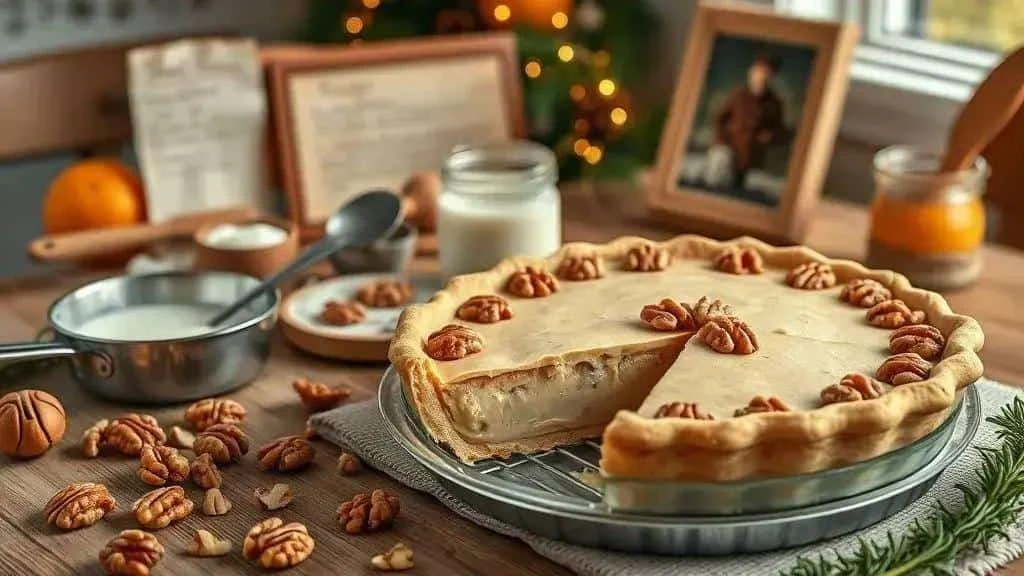
A walnut tart can be part of a Brazilian festive table, with recipes varying between households.
Recipes and influences
Nut tarts appear in several baking traditions. This version uses sweetened condensed milk for a rich filling; that ingredient distinguishes it from many syrup-based pecan pies. A specific migration history for this recipe has not been established here.
A festive role
Walnuts give a rich, celebratory flavour. Sharing a tart at the end of a meal can become a family custom, without implying that it has one universal symbolic meaning.
Ingredient notes
- Walnuts and pecans: walnuts have an earthier, sometimes slightly bitter flavour, while pecans are often sweeter and buttery. Either gives a distinct version.
- Condensed milk: brings sweetness and milk solids to this filling. It should not be replaced with syrup without changing the recipe.
- Toasting: a short, carefully watched toast enhances the nut aroma. The exact time depends on the oven and the size of the pieces.
- Family variations: spices, orange zest or a little rum can reflect personal preferences.
- Storing walnuts: keep them airtight and follow the packet’s storage guidance; refrigeration can help retain freshness. Discard rancid nuts.
Different approaches
Some versions include dulce de leche, chocolate or dried fruit, while others use alcohol for aroma. Treat these as flavour ideas and test changes to the filling rather than assuming every addition behaves the same.
Making your own tradition
A shared dessert can become associated with Christmas gatherings and family memories. Write down the version you enjoy so it is easier to repeat.
A practical baking reminder
Balance pastry and filling: blind-baking helps the base stay crisp. Protect browned edges while the centre finishes cooking; shortening the bake is not a substitute for checking the egg filling.
Final thoughts
This Brazilian Christmas walnut tart combines buttery pastry with a rich nut filling. Start with the base recipe, then test flavour variations to find the version you prefer.
Share the recipe with friends and follow us on Instagram, Facebook and Pinterest for more festive ideas.
Thank you for visiting. Explore the I Love Christmas blog for more recipes and Christmas inspiration.
FAQ: Brazilian Christmas Walnut Tart
Can I freeze the baked tart?
Yes. Cool and chill promptly, then wrap fresh portions well and freeze. Aim to use within one month for quality. Thaw fully in the fridge and use within 24 hours of defrosting.
How do I keep the pastry crisp?
Blind-bake until the base is dry before adding filling, and avoid overfilling. If reheating a portion, heat it thoroughly rather than relying on a fixed short time; reheating may still change the texture.
How can I make a vegan version?
Use a tested vegan walnut tart recipe with suitable pastry, dairy replacements and an egg-free filling designed to set. Aquafaba or starch are not reliable direct replacements for all the eggs in this recipe.
How do I stop the filling being runny?
Keep the base proportions, blind-bake the case and allow enough baking time for the centre to cook and set. Removing an egg does not necessarily firm it. Cool promptly and chill before slicing.
Which drinks work well with it?
Coffee, spiced tea and warm spiced apple juice are good options. Adults who drink alcohol may prefer port or dessert wine. Ordinary British cider is alcoholic unless specifically labelled otherwise.
Sources and Further Reading
- Food Standards Agency: cooking food safely
- Food Standards Agency: chilling, freezing and defrosting food
- Handling flour and flour products safely