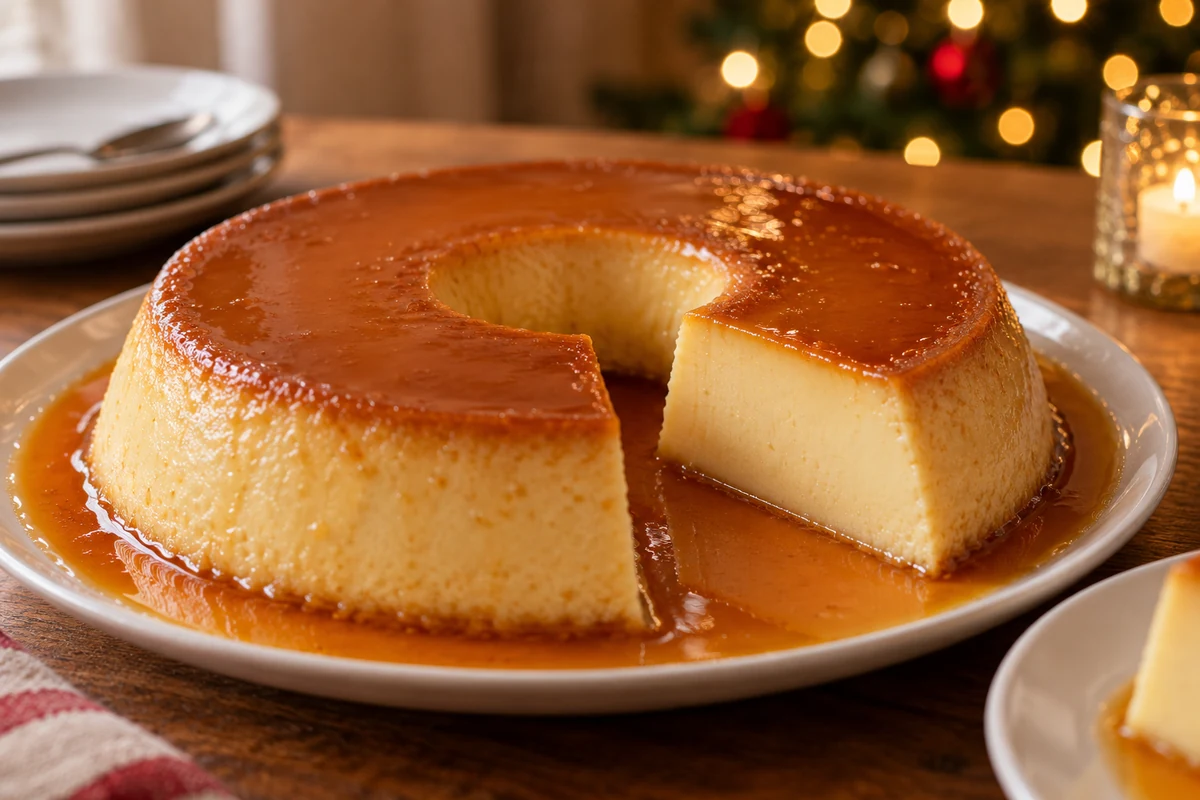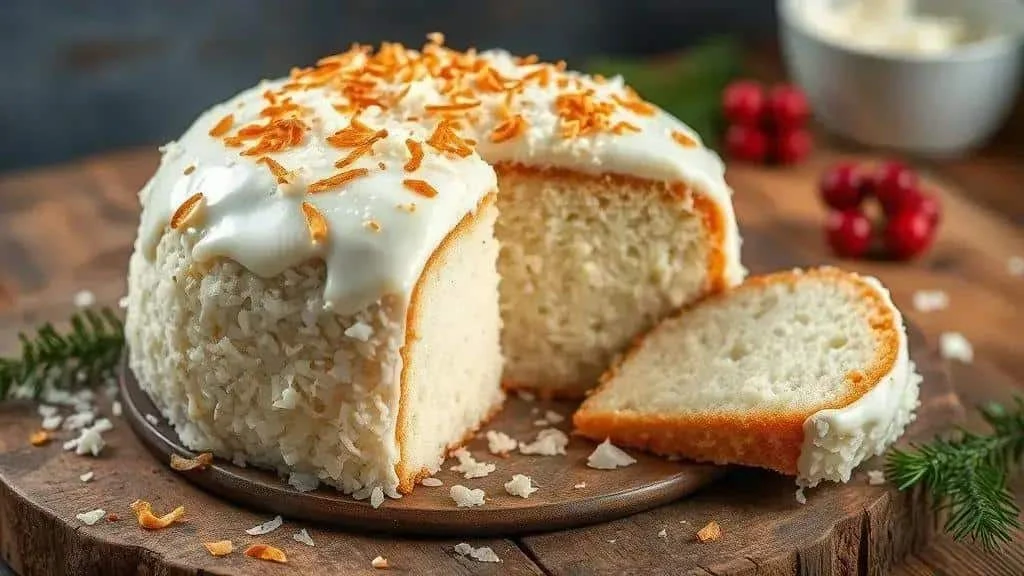
Brazilian-style chilled Christmas coconut cake combines a soft cake with a condensed-milk and coconut-milk soak, finished with grated coconut. Prepare it ahead and refrigerate for at least six hours before serving. Chocolate and fruit toppings offer variations, while vegan and gluten-free versions need separately tested adaptations.
Chilled Christmas coconut cake is a sweet, refreshing dessert for the festive table. Its soft crumb absorbs a creamy coconut soak, and an overnight chill makes it convenient to prepare before your guests arrive.
Ingredients for Chilled Christmas Coconut Cake
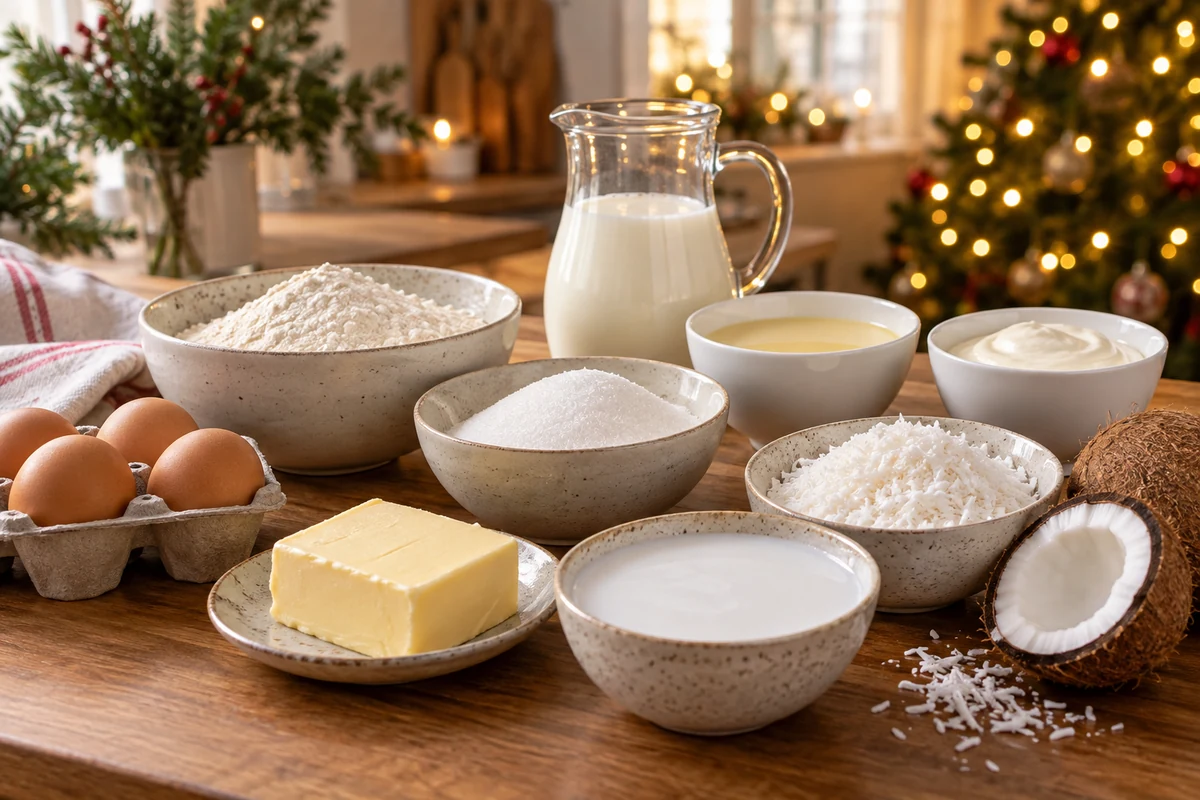
Measure the ingredients for chilled Christmas coconut cake before starting. The coconut is used in the soak and on top in this version, rather than adding an unspecified amount to the batter.
- 3 large eggs – take them out of the fridge shortly before mixing. Three tablespoons of banana purée or hydrated flaxseed are not a reliable equivalent for three eggs in this recipe.
- 200 g caster sugar – demerara gives a different texture and flavour. Concentrated cooking sweeteners need a manufacturer-specific conversion and can change the cake’s structure.
- 200 g butter, softened – use the butter method below. A cup of oil is not an equivalent replacement in a creamed cake.
- 260 g plain flour – for a gluten-free version, use a tested suitable sponge recipe or follow a blend manufacturer’s validated method.
- 1 level tablespoon baking powder – use a standard 15 ml measuring spoon, not a heaped serving spoon.
- 240 ml milk – an unsweetened plant-based drink is an option, but the other dairy ingredients also need changing for a dairy-free version.
- 1 tin sweetened condensed milk, about 395–397 g – for the soak. This is not evaporated milk.
- 200 g Brazilian-style table cream, or about 200 ml single cream – use pasteurised cream. Coconut cream gives a dairy-free variation with a different richness.
- 200–250 ml coconut milk – use a cooking coconut milk and stir it until smooth. Start with 200 ml; the extra 50 ml is for adjusting the soak if needed.
- 200 g grated coconut in total – use 150 g in the soak and reserve 50 g for the topping. Fresh grated coconut and unsweetened desiccated coconut absorb liquid differently.
- 1 teaspoon vanilla extract – to complement the coconut.
- A pinch of salt – for the cake batter.
- Optional decoration: up to 100 g additional grated or toasted coconut if you want a heavier coating, plus candied fruit or glacé cherries. The extra coconut is optional, not part of the measured 200 g above.
Ingredient Notes and Substitutions
Dietary adaptations: dairy-free preparation requires changing the butter, milk, cream and condensed milk. A vegan cake also needs an egg-free sponge formulation. Use a tested vegan or gluten-free base that can support a milk soak, rather than assuming banana, flaxseed or alternative flour can simply replace the original quantities.
Before mixing: soften the butter and let the eggs lose their fridge chill shortly before baking. Keep cream and other ingredients for the uncooked soak refrigerated until needed.
How to Make Chilled Christmas Coconut Cake
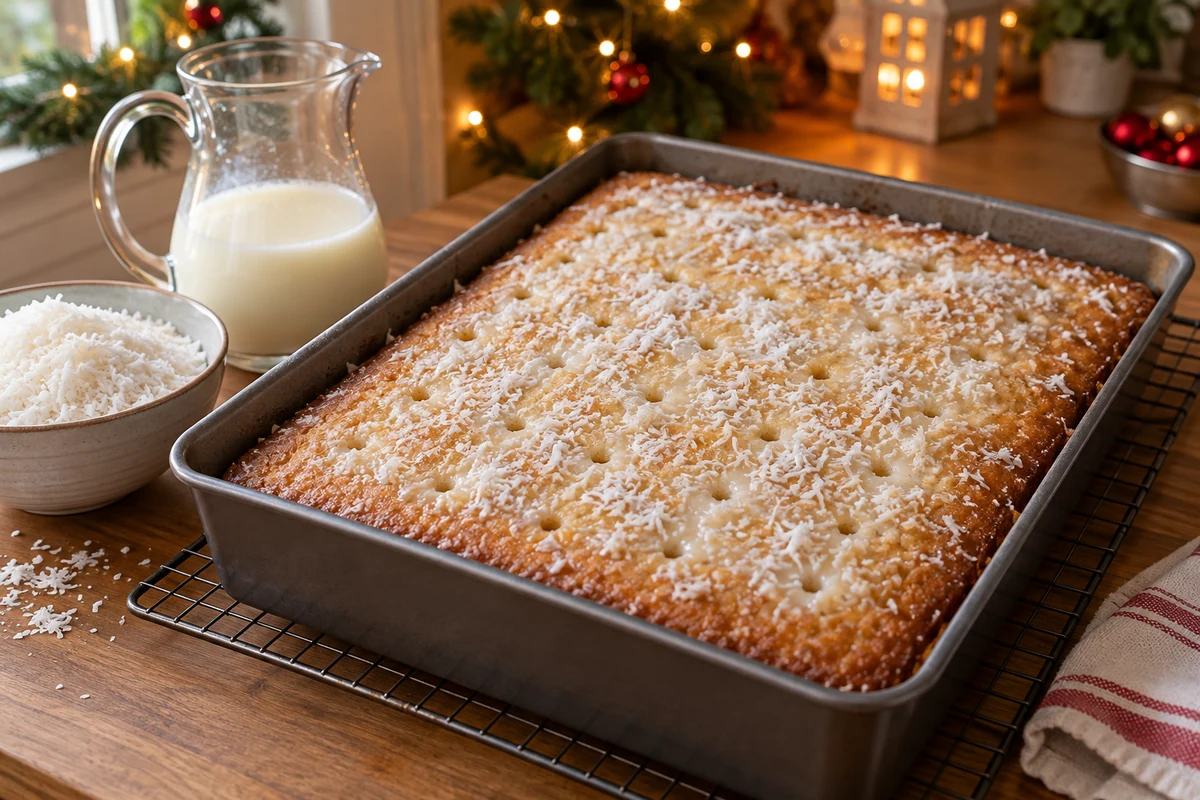
Prepare your tin and measured ingredients, then follow these steps for chilled Christmas coconut cake. Keep the baked cake in its tin for soaking so that the liquid does not run away.
- Heat the oven to 180°C, or 160°C fan: grease and line a deep 20 × 30 cm tin. Leave enough depth for the cake to rise and for the soak; do not overfill a shallow tin.
- Cream butter and sugar: beat 200 g softened butter and 200 g caster sugar until pale and creamy, about 2–3 minutes, scraping the bowl as necessary.
- Add eggs and vanilla: beat in the 3 eggs one at a time, mixing after each addition, then add 1 teaspoon vanilla extract.
- Add dry ingredients and milk: sift the 260 g flour with the baking powder and pinch of salt. Fold into the butter mixture in batches, alternating with 240 ml milk and beginning and ending with flour. Mix until evenly combined without prolonged beating.
- Bake: spread the batter in the prepared tin. Bake for about 30–35 minutes, checking the centre with a skewer; it should come out without wet batter. Ovens and tin depths vary, so extend the time if needed. Avoid opening the door during the first 20 minutes.
- Mix the soak: combine the condensed milk, cream and 200 ml coconut milk, then stir in 150 g grated coconut. If it is too thick to spread and soak in, add some of the reserved 50 ml coconut milk. Keep chilled until the cake is ready.
- Prick the cake: leave it in the tin for about 8–10 minutes after baking, then make evenly spaced holes with a clean fork or skewer. Do not pierce through a delicate non-stick surface or remove the cake onto a rack for soaking.
- Apply the soak gradually: spoon it over in roughly three stages, waiting a few minutes between additions. Let the liquid absorb and spread the coconut across the surface. Stop if liquid pools excessively; the cake may not need every last spoonful.
- Cool and refrigerate: cool promptly, then cover and refrigerate within one to two hours of preparation. Do not leave the dairy-soaked cake out until completely cold. Chill for at least six hours, preferably overnight, until cold throughout and firm enough to cut.
- Cut and decorate: use a clean knife to cut chilled squares, wiping the blade between cuts. Add the reserved 50 g coconut, toasted if desired, and optional candied fruit or glacé cherries.
- Storage: keep covered in the fridge and use within 48 hours of preparing the soaked cake, or sooner if an ingredient’s use-by date requires it. Freeze portions promptly if needed; one month is a practical quality target, with possible texture changes.
Tips for Beginners
Slightly tempered ingredients mix more evenly: soften butter and take out eggs shortly before making the batter, rather than leaving dairy ingredients out for hours.
Avoid prolonged beating after adding the flour, but fold thoroughly enough to remove dry streaks.
Absorbing the soak: add it slowly. A cake that is already saturated will not improve if more liquid is forced into it.
Dietary changes: check every component, including butter and condensed milk. Use a tested egg-free sponge for a vegan version; a few tablespoons of banana or flaxseed are not a guaranteed substitute for three eggs.
Chilled Coconut Cake Variations
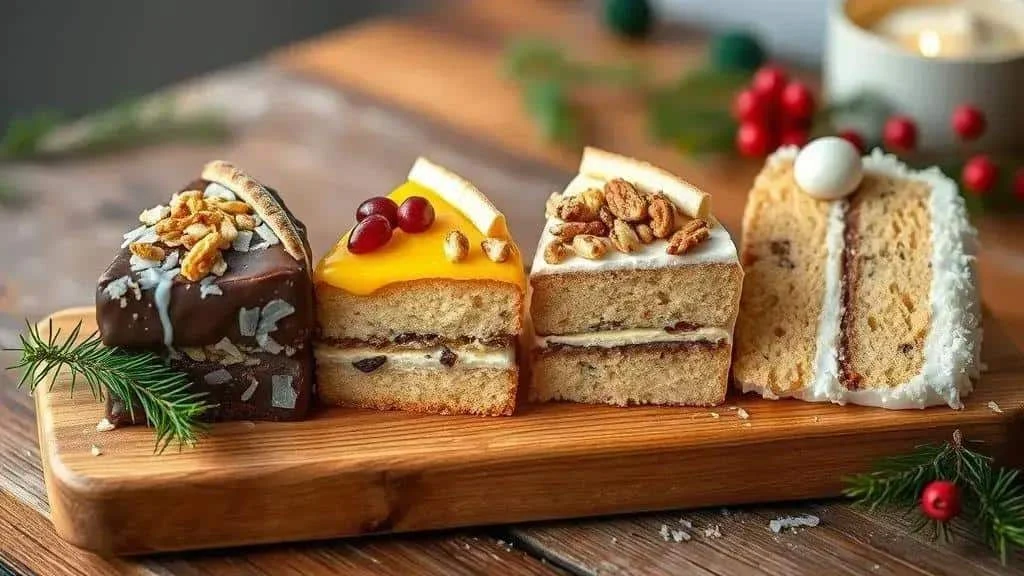
- Chocolate and brigadeiro: use a tested chocolate sponge if you want a chocolate base, rather than replacing a quarter of the flour and adding melted chocolate without adjusting the formula. For a soft brigadeiro-style topping, gently cook 1 tin condensed milk, 100 g dark chocolate and 50 g butter, stirring until smooth and spreadable. This is a topping alternative, not a thin soak; finish with toasted coconut and refrigerate appropriately.
- Passion fruit: make a separate topping by combining 1 tin condensed milk, 200 ml cream and up to 100 ml suitable strained passion fruit pulp, adding the pulp gradually to taste. Use this instead of the standard soak, not as an additional full batch. The acidity thickens the mixture, so it behaves differently. Finish with a little edible seeded pulp; do not also add another 150 ml juice to the batter.
- Candied fruit and nuts: try 100 g chopped candied fruit and 80–100 g chopped nuts in the batter or as a topping variation, not both. If folding into the batter, coat the fruit with a little flour reserved from the measured amount. Check tin capacity and trial the heavier mixture before serving guests.
- Dulce de leche and toasted coconut: spread 200 g dulce de leche over the cooled cake and finish with coconut toasted gently in a dry pan. This creates a topped cake rather than the same milk-soaked texture. Follow chilled storage instructions for the product and finished cake.
- Vegan version: use a tested egg-free sponge with suitable plant-based fat and milk, then adapt the soak with vegan condensed milk and cream. The original flaxseed-and-oil swap is not validated for this butter cake, so quantities and baking time cannot be assumed to stay the same.
- Gluten-free version: use a tested gluten-free sponge suitable for soaking. Flour blends and binders vary; do not automatically add ½ teaspoon xanthan gum or assume that two cups of any blend equal the weighed wheat flour.
- Reduced-sugar or lower-carbohydrate version: choose a separately formulated recipe. Almond flour, coconut flour and erythritol do not replace plain flour and sugar one-for-one, and the condensed-milk soak contains substantial sugar. No nutritional or medical suitability is established for an improvised substitution.
Tips for Adapting Each Variation
Liquid balance: fruit acidity, coconut flour and almond flour each behave differently. An extra spoonful of milk cannot reliably correct every substitution; follow the tested formula for the variation you choose.
Topping versus soak: brigadeiro and dulce de leche are thicker and mainly sit on the cake. Do not expect smaller holes or extra warmth to make them behave like milk. Chill perishable versions thoroughly before serving.
Baking time: different flours and egg substitutes change the bake. Check using the method and timing of the alternative recipe rather than assuming they always cook faster.
Presentation: serve different variations side by side for contrast, with separate utensils and clear ingredient information where allergens differ.
Check the whole recipe: dairy-free fat, plant milk and vegan condensed milk may help, but an egg-free cake still needs a suitable formula. Check the cream, toppings and decorations too.
Techniques for a Soft, Even Texture
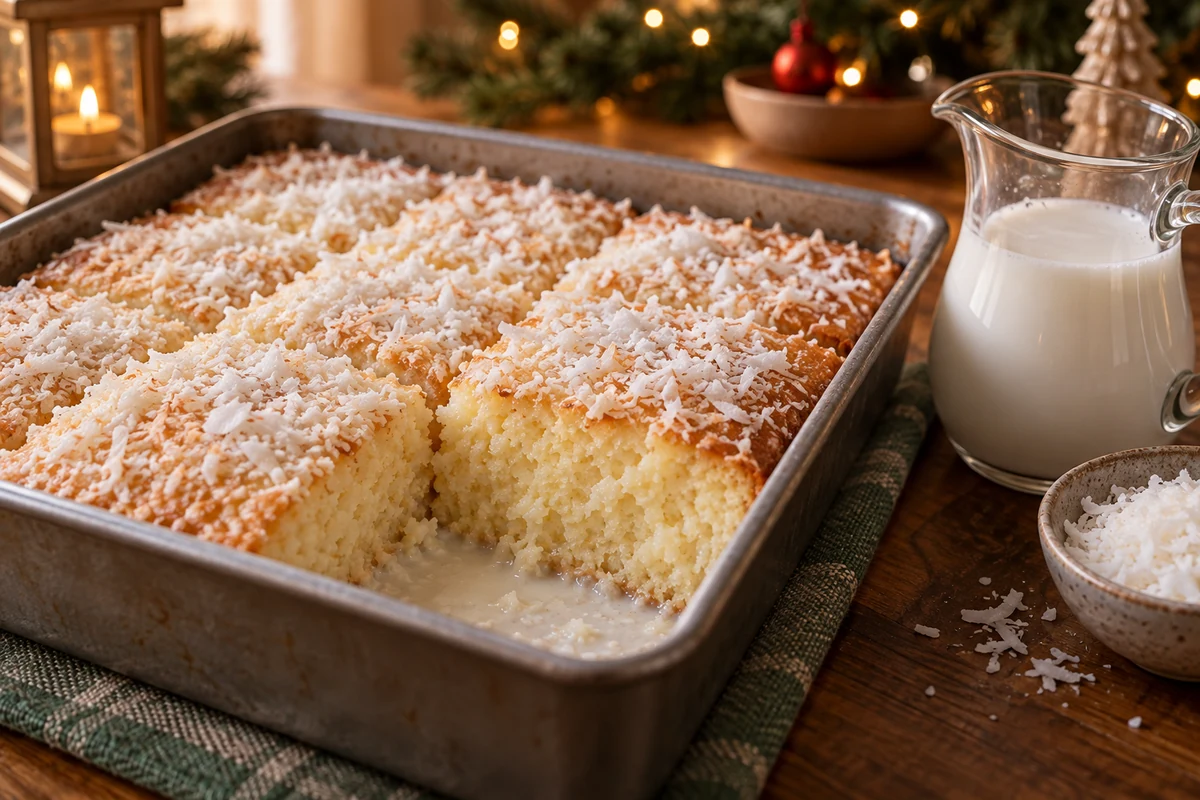
Weigh flour, sugar and butter accurately, and use standard measuring spoons for small quantities. Keep the measured cake ingredients separate from the soak ingredients.
- Sift dry ingredients: combine the flour, baking powder and salt evenly before adding them to the batter.
- Ingredient temperature: softened butter and eggs that are not very cold help the mixture combine. Temper only what is needed shortly before baking.
- Mix gently after flour: fold until homogeneous, avoiding both prolonged beating and unmixed patches.
- Alternate additions: add flour and milk in batches, beginning and ending with flour, scraping the bowl to obtain an even batter.
- Check the bake: begin checking near the expected 30–35 minute finish, earlier if your oven or shallower tin warrants it. The skewer should not carry raw batter. Do not taste raw cake mixture containing flour and eggs.
- Even holes: keep the warm baked cake in its tin and prick the surface evenly, avoiding damage to the tin underneath.
- Slow soaking: add the liquid in stages and allow absorption before adding more. Keep excess soak separate rather than flooding the base.
- Thorough chilling: refrigerate promptly and leave covered for at least six hours. This lets the cake absorb the liquid and firm for slicing.
- Adjusting the soak: begin with 200 ml coconut milk and add up to the extra 50 ml only if needed. Grated coconut may absorb some liquid as it stands. Do not repeatedly heat and cool the dairy mixture to alter its consistency.
- Finishing texture: fresh coconut gives a softer topping, while toasted desiccated coconut adds crunch. Cool toasted coconut before scattering it on the chilled cake.
Common Problems and Practical Corrections
- Dry cake: check your oven temperature, tin size and ingredient measurements for the next batch. Begin testing earlier, but never shorten baking so much that the centre remains raw. A little soak can moisten a fully baked cake.
- Heavy crumb: check the raising agent and mixing method, and avoid untested substitutions. Do not assume extra baking powder will fix an unsuitable formula.
- Soggy base: use less soak and apply it gradually. Stop when the cake no longer absorbs it rather than relying on a fixed amount for every bake.
- Soak staying on top: check that holes are evenly spaced and distinguish thick coconut topping from the liquid that soaks into the cake. A modest adjustment with the reserved coconut milk may help; repeated reheating is unnecessary.
- Crumbly slices: chill the cake thoroughly and cut with a suitable sharp knife, cleaning it between portions. An unsupported alternative-flour recipe may need reformulation rather than simply more chilling.
Tips for Consistent Results
Use an oven thermometer if you suspect the oven runs hot or cool. Record the tin, bake and quantity of soak used. Choose coconut milk and grated coconut with a consistent composition when repeating the recipe.
Decorating for the Christmas Table
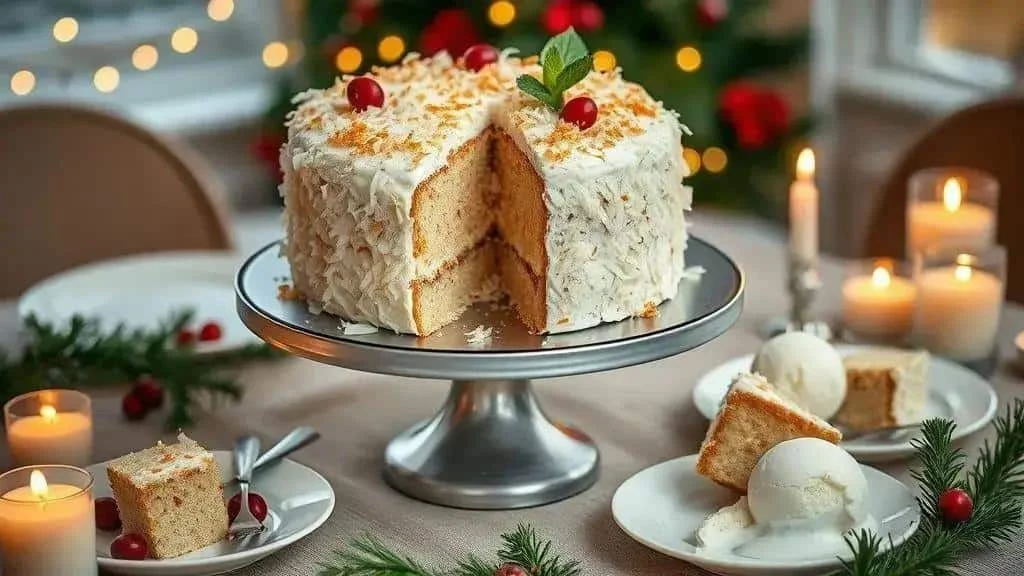
The white coconut topping makes chilled Christmas coconut cake easy to decorate with a few colourful edible accents. A tray of neat squares is as effective as a large centrepiece.
Cake Decoration Ideas
- Toasted coconut: sprinkle cooled toasted coconut over the topping for colour and texture.
- Red fruit: glacé cherries, washed raspberries or cooked cranberry compote contrast with the white coconut. Follow cooking instructions on frozen berry packs before using them.
- Chocolate shavings: add a little dark chocolate for a complementary flavour, checking the label for allergens.
- Green accents: use washed edible mint on the dessert. Keep pine branches, holly and other decorative greenery away from the food and serving surface; being washed does not make ornamental foliage edible.
- A little sparkle: use only decorations explicitly sold as edible, with an ingredients list. A product labelled merely non-toxic is not necessarily suitable to eat.
Choosing a Serving Plate or Tray
Use a stable serving tray or stand that supports the cake. A plain cloth beneath the dish can frame the dessert, but keep fabric out of contact with the cake and utensils.
- Individual portions: cut regular squares and place on simple plates, showing the moist cake and coconut topping.
- Clean cuts: wipe the knife between cuts. If warming it in hot water, dry the blade before returning it to the cake.
- Accompaniments: a small scoop of coconut ice cream, whipped cream or a spoonful of prepared passion fruit cream can be served alongside. Keep these additions chilled or frozen as appropriate.
Coordinating the Christmas Table
Red, green and gold work well beside the white topping. Arrange decorations around the serving area without crowding it or allowing non-edible materials to touch the cake.
- Lighting: warm background lights make the setting welcoming. Keep flames and electrical decorations away from food and table fabrics.
- Different heights: combine a secure cake stand with lower dishes, leaving room for guests to serve safely.
- Ingredient information: identify wheat, milk, eggs and any additional allergens in your actual ingredients. Mention coconut as an ingredient too; check labels when using nuts, soya or other substitutes.
Serving and Storage Tips
- Keep chilled: refrigerate the cake until close to serving time, especially because the topping contains uncooked dairy ingredients.
- Decorate ahead selectively: the coconut coating can be added in advance; add delicate washed fruit or mint shortly before serving.
- Transport: use a rigid, covered container kept level in an insulated carrier with ice packs. Chilled handling is needed for safety, not merely to keep the topping firm.
- Portions: about 120–150 g per adult is a possible dessert serving at a full meal, not a guaranteed yield. Weigh the finished cake and adjust for your guests and other desserts.
Simple Finishing Touches
Texture contrast can come from soft grated coconut and a little toasted coconut or chopped nuts. Check allergies and use only genuinely edible metallic decorations if adding sparkle.
Vegan, Lactose-Free and Other Dietary Options
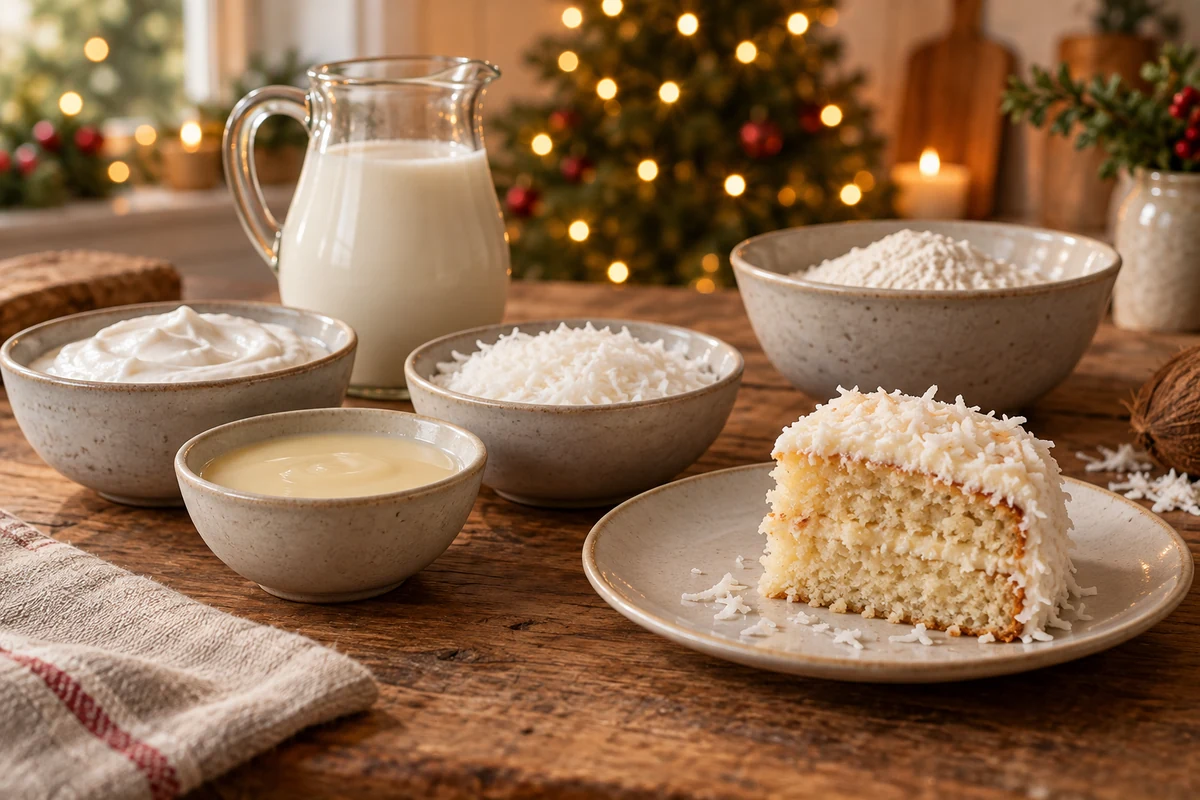
Adapting chilled Christmas coconut cake means considering both the sponge structure and the dairy-rich soak. Lactose-free, dairy-free and vegan are different requirements.
Vegan Preparation
- Eggs: flaxseed, banana and aquafaba behave differently. The original gives conflicting quantities, so use a tested egg-free sponge rather than treating any of them as a universal replacement for three eggs.
- Fat: choose the dairy-free baking fat specified by your vegan recipe. Neither 180 ml nor a full cup of oil is an established equivalent to 200 g butter in this creaming method.
- Milk: an unsweetened plant-based drink may be used in a suitable recipe, accounting for flavour and allergens such as soya or almonds.
- Condensed milk: use a suitable commercial plant-based condensed milk or a tested homemade recipe with a known final yield. Simply reducing 400 ml coconut milk with sugar does not guarantee a 395 g equivalent with the same consistency.
- Cream: choose a suitable ready-to-use plant-based cream or coconut cream. Raw tapioca starch stirred into plant milk is not an equivalent uncooked cream substitute.
- Rising and texture: use the raising-agent quantity in the tested vegan recipe. Adding an extra teaspoon to a dense batter can create other faults rather than solve the structural problem.
Lactose-Free Options
- Milk and cream: choose products labelled suitable for the intended diet. Lactose-free dairy may suit lactose intolerance but still contains milk protein and is unsuitable for milk allergy.
- Condensed milk: check this ingredient as well; use a suitable lactose-free or plant-based version with an appropriate consistency.
- Butter: use an appropriate lactose-free butter or dairy-free baking block. Check the whole recipe rather than assuming changing the liquid milk is enough.
- Packaged ingredients: read labels for ingredients, allergens and relevant precautionary statements. Vegan labelling alone does not establish that a product is safe for every allergy.
Gluten-Free and Other Adaptations
- Gluten-free sponge: select a tested formulation and check whether its blend already contains a binder. Use clean equipment and suitable ingredients to avoid gluten cross-contact.
- Lower-carbohydrate cake: almond and coconut flours need a different balance of eggs and liquid. Use a separately tested recipe with appropriate nutritional information if that is your goal; the original condensed-milk cake is not a low-carbohydrate recipe.
Practical Substitution Checks
- Hydration: follow the chosen alternative recipe. Not all gluten-free or nut flours absorb more water in the same way, so a fixed extra 1–3 tablespoons is not a reliable rule.
- Small trials: test a smaller cake in advance and check how it holds up after soaking and chilling, not just immediately after baking.
- Time and raising agents: use the alternative recipe’s guidance and check the centre for doneness. A different formula may need a different tin and baking time.
- Plant-based soak: use products suitable for eating without further cooking and adjust thickness a spoonful at a time. Keep the mixture refrigerated until needed and do not repeatedly warm it.
- Flavour: vanilla or lemon zest can complement neutral substitutes. Account for the vanilla already present rather than automatically adding another full dose.
Good Preparation Practices
Read labels and tell guests what the final version contains. Plant-based substitutes may introduce nuts, soya or other allergens. Record successful weights and methods, and do not describe an untested adaptation as guaranteed to work.
Storage and Making Ahead
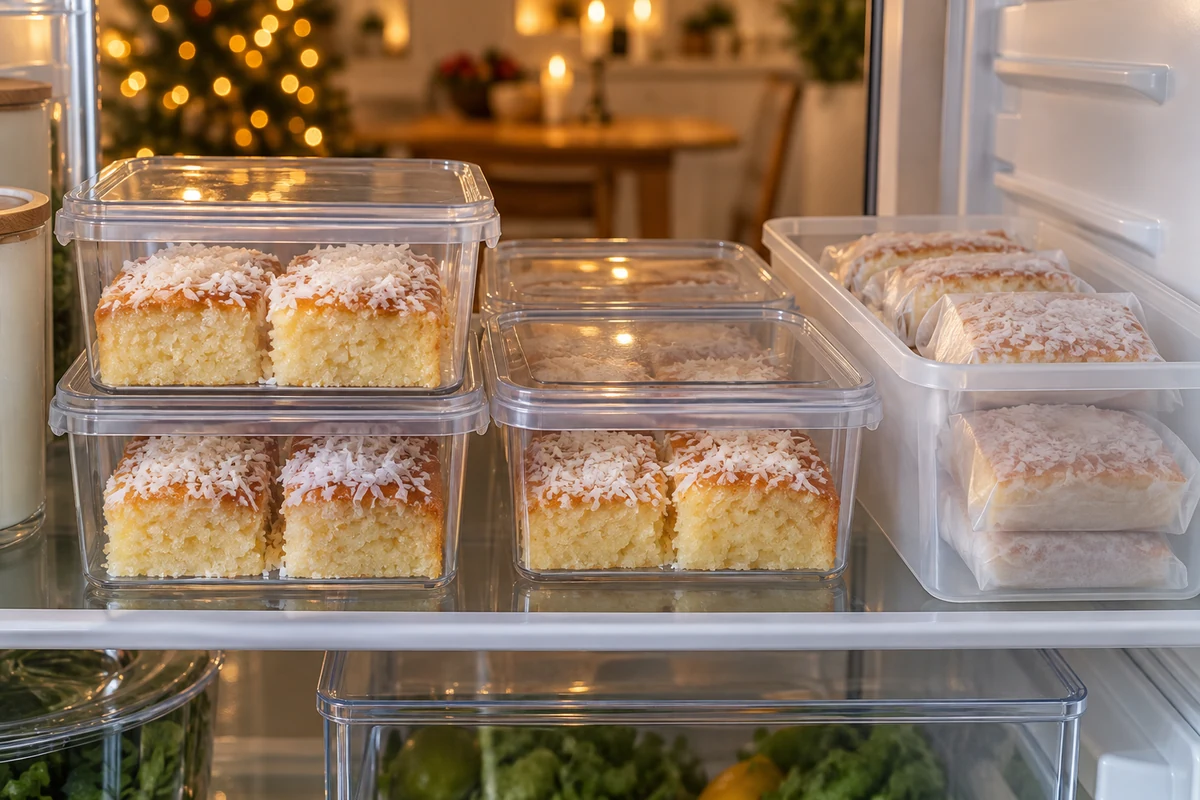
Keep chilled Christmas coconut cake covered and refrigerated once prepared. The dairy soak makes it a perishable dessert, not a plain cake for keeping on the counter.
Fridge Storage
- Covered tray: use a clean lid or suitable food wrap and eat within 48 hours of preparing the soaked cake, following any shorter ingredient use-by date.
- Individual portions: clean lidded containers make serving and chilled transport easier. Use clean utensils when cutting and packing.
- Fridge temperature: keep the fridge at 5°C or below and allow cold air to circulate around covered containers.
Freezing and Quality
- Freeze portions: freeze promptly after preparation and chilling, using suitable wrap and a freezer-safe container. Avoid delicate fruit garnishes until after thawing.
- Quality target: aim to use within one month for texture. Freezing may still alter the soak and crumb; this is not a guarantee of identical results for every variation.
- Reduce freezer burn: minimise trapped air and seal the packaging well without crushing the cake.
Defrosting Safely
- Thaw in the fridge: allow enough time for the portion to thaw completely, often overnight. Size matters more than a fixed 8–12 hour rule. Use within 24 hours of defrosting.
- Avoid rapid warming: this dessert is best thawed gently in the fridge. A microwave can make the topping separate and heat the cake unevenly; do not thaw on the counter.
- Refresh the presentation: add a little fresh topping coconut after thawing if desired. Extra soak does not reverse unsafe storage or reset the use-by time.
Making Ahead Step by Step
- Bake the day before: prepare the cake, add the soak while the cake is still slightly warm and cool promptly. For preparation further ahead, freezing a suitable version is preferable to extending chilled storage.
- Apply the soak: add it gradually on preparation day. Do not keep an old cake for several days and assume that a new soak restarts its storage time.
- Refrigerate: cover after prompt cooling and chill for at least six hours, ideally overnight.
- Decorate before serving: add delicate washed fruit or mint at the last moment, keeping the cake cold until then.
Transport and Service
- Even for a short journey: use a covered rigid container on a level surface inside an insulated carrier with ice packs, and refrigerate on arrival.
- At the table: bring out the cake shortly before serving and keep spare portions in the fridge. It need not sit out for 15 minutes to be cut.
- Portion neatly: use a suitable sharp knife and wipe it clean between cuts; avoid transferring crumbs or topping back into storage containers.
Final Practical Tips
- Limit time out of the fridge: serve small quantities and replenish as needed, especially in warm weather. Return food promptly rather than leaving the whole tray out for a long buffet.
- Keep useful notes: record the tin, baking time, soak used and chilling time so you can repeat a successful result.
- Label stored portions: note the contents and preparation or freezing date, including any relevant allergens.
A Chilled Dessert for the Festive Table
Chilled Christmas coconut cake offers a soft, coconut-rich Brazilian dessert for sharing. Careful baking, gradual soaking and prompt refrigeration are the key steps.
Try flavour variations in small batches first, especially when changing the sponge ingredients or adapting the recipe for a dietary requirement.
Thank you for reading. Follow our social channels for more seasonal recipes, and visit the I Love Christmas blog for festive ideas.
Happy Christmas and happy baking — share your finished creations with us!
FAQ — Chilled Christmas Coconut Cake
What are the essential ingredients?
The base uses eggs, sugar, butter, plain flour, baking powder and milk. The soak contains condensed milk, cream, coconut milk and grated coconut. Vanilla and salt balance the flavour. Dietary versions require suitable changes to the whole recipe, not just one ingredient.
How do I avoid a soggy cake?
Prick the warm cake evenly while it is still in its tin, then add the soak in stages. Wait for absorption and stop if too much liquid remains pooled. You do not have to use every spoonful if your cake is already saturated.
How long can I store it?
Cool promptly, refrigerate within one to two hours and use within 48 hours of preparing the soaked cake, or sooner according to ingredient limits. Freeze portions promptly for up to one month as a quality guide. Thaw in the fridge and use within 24 hours; the texture may change.
Can it be made vegan or lactose-free?
Use a tested egg-free sponge and change all dairy ingredients for a vegan cake. For lactose intolerance, appropriate lactose-free products may be suitable, but they still contain milk protein and are not suitable for milk allergy. Check condensed milk, butter, cream and toppings as well as the liquid milk.
Can I make it before Christmas dinner?
Yes. Prepare and soak it the day before, cool promptly and refrigerate for at least six hours, preferably overnight. Add delicate decorations just before serving and count the storage time from preparation.