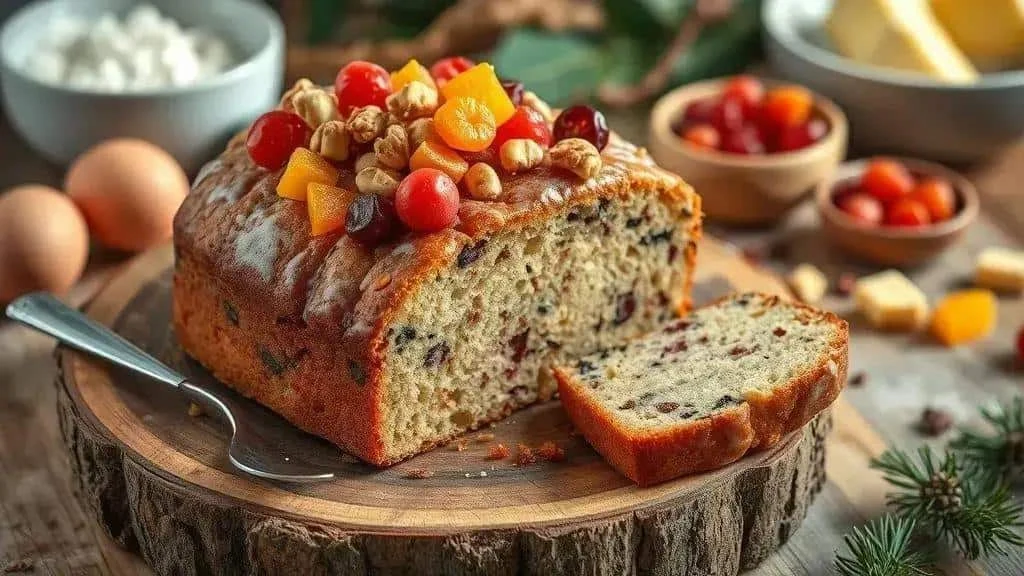
This Christmas cake with candied fruit is a soft, buttery Brazilian-style festive cake, rather than a rich British fruitcake made for long maturation. It combines chopped candied fruit, optional raisins and nuts, with ideas for syrup, decoration, storage and dietary adaptations that should be tested separately.
Christmas cake with candied fruit brings colour and citrus fragrance to the festive table. Follow the method below for a soft cake, then choose a simple decoration or a carefully tested variation to suit your celebration.
Ingredients for Christmas Cake with Candied Fruit
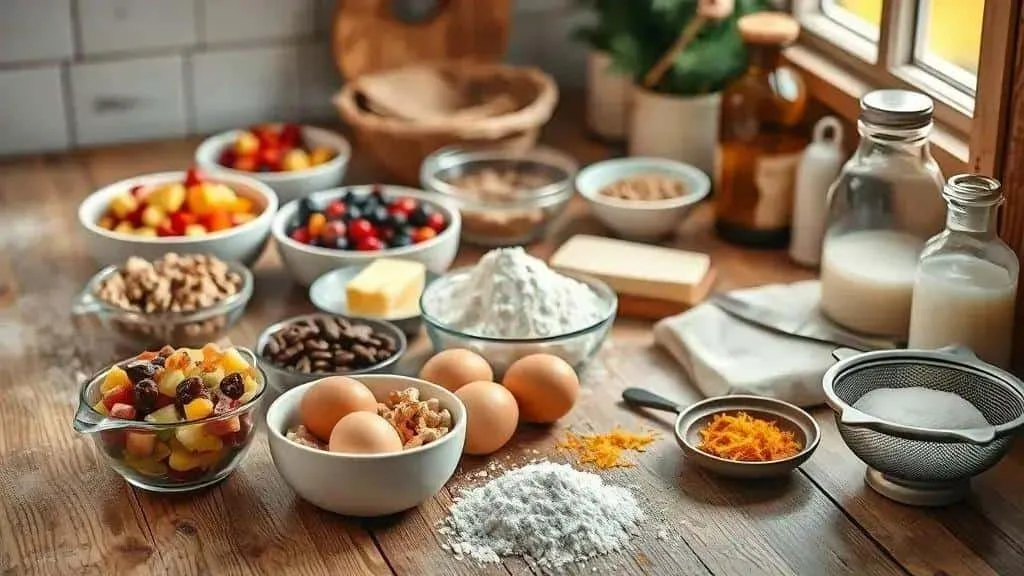
For this Christmas cake, weigh the ingredients carefully and prepare the fruit before mixing the batter. Optional additions increase the volume, so choose your tins accordingly.
- 350 g plain flour – reserve 1–2 tablespoons from this amount to coat the fruit. For a gluten-free cake, use a tested recipe or a blend explicitly suitable for this style of cake.
- 250 g caster sugar – soft brown sugar gives a different flavour and texture. Reducing the quantity also changes the bake; it is not simply an equivalent swap.
- 200 g unsalted butter, softened – a firm baking margarine may be used, but avoid a low-fat spread with a high water content.
- 4 medium eggs – let them lose their fridge chill shortly before mixing. Replacing all four with flaxseed or apple purée requires a separately tested vegan formulation.
- 200 ml milk – an unsweetened plant-based drink is an option, but the butter must also be replaced for the cake to be dairy-free.
- 10 g baking powder – weigh it rather than assuming a tablespoon is an exact equivalent.
- ½ teaspoon salt
- 1 tablespoon vanilla extract – or use the product’s recommended amount if it is particularly concentrated.
- 300 g mixed candied fruit, chopped small – drain and pat dry if packed in syrup. Toss with the reserved flour just before folding into the batter.
- 100 g raisins, optional – soften in about 50 ml orange juice, rum or brandy for 10–20 minutes, then drain well. Choose juice for an alcohol-free version.
- 100 g chopped walnuts or almonds, optional – for extra texture; omit for a nut-free version and check the other ingredients for cross-contact warnings.
- Finely grated zest of 1 orange and 1 lemon – avoid the bitter white pith.
- Up to 100 ml orange juice, rum or brandy for an optional finishing syrup – separate from the raisin-soaking liquid. You may not need it all; do not add it to the cake batter.
- Icing sugar – optional, for dusting after the cake has cooled.
Ingredient Swaps and Practical Tips
- Flour: gluten-free blends vary. Follow a suitable tested cake recipe or the blend manufacturer’s guidance, and check the baking powder and all other ingredients for gluten.
- Sugar: soft brown sugar adds a molasses note and changes the crumb. If trying a reduced quantity, test a small cake first instead of assuming that reducing by 20 g or 50 g has no effect.
- Butter: a suitable baking margarine is closer in function than liquid oil. Coconut oil contains no water and does not cream in the same way, so it needs a different formulation.
- Eggs: flaxseed mixtures and apple purée do not reproduce every role of four eggs. Use a tested vegan fruitcake recipe if you need a reliable egg-free result.
- Fruit: drain soaked fruit well, pat it dry and chop large pieces. A light coating of reserved flour can help separate pieces, but it does not guarantee that fruit will never sink in a thin batter.
- Moistening: a little syrup adds moisture after baking. It is not a way to preserve the cake indefinitely; juice, alcohol and fresh fillings require appropriate storage.
Mixing tip: sift the dry ingredients, then coat the fruit with the reserved flour just before folding it in. Mix evenly and gently without leaving pockets of dry flour.
How to Make Christmas Cake with Candied Fruit
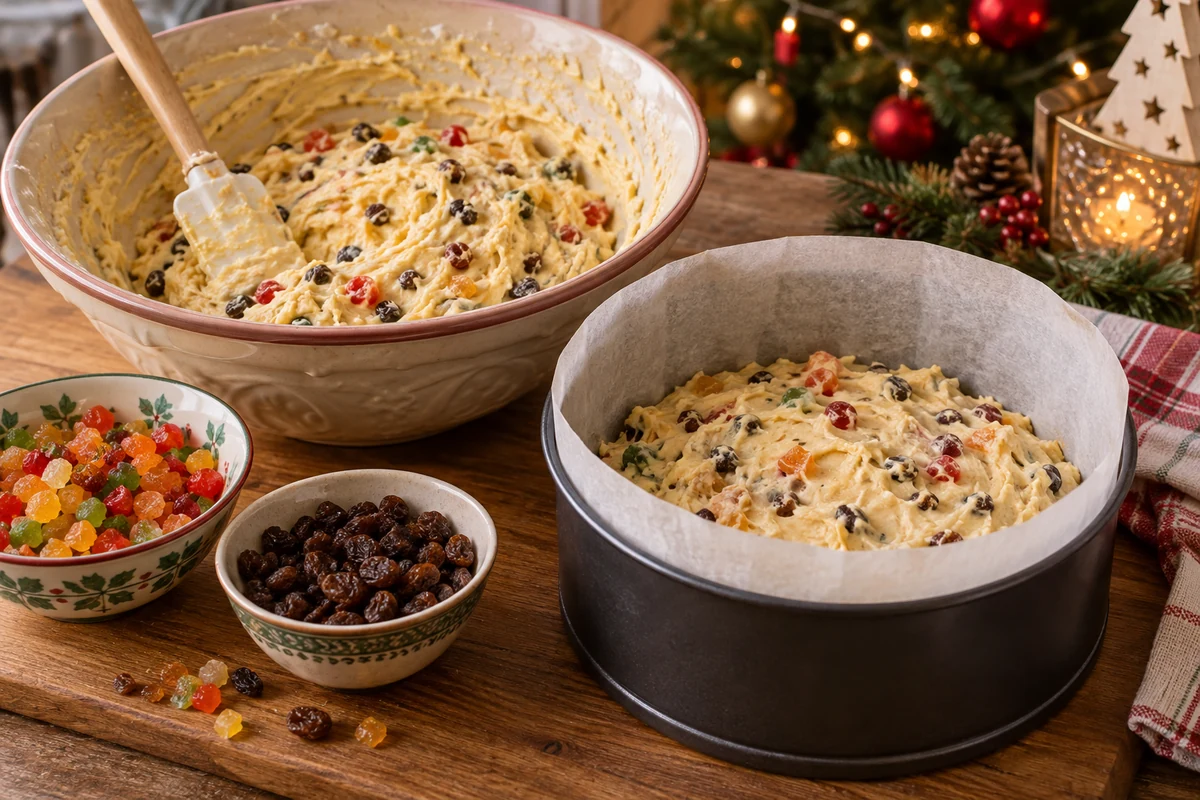
Follow these steps for a fragrant Christmas cake. The stated baking time is a guide: the depth of the batter and size of the tin are especially important for this generous mixture.
- Prepare the oven and tins: heat to 180°C, or 160°C fan. Grease and line a deep 22 cm round cake tin if its capacity is sufficient, or divide between suitable loaf tins. Do not fill any tin more than about two-thirds full; bake spare batter separately rather than forcing it into a shallow tin.
- Cream the butter and sugar: beat 200 g softened butter with 250 g caster sugar in a large bowl until paler and fluffy, roughly 3–5 minutes with an electric mixer. Scrape down the bowl as necessary.
- Add the eggs: beat in the 4 eggs one at a time, mixing well after each addition. If the mixture begins to split, a spoonful from the measured flour can help bring it together.
- Add the flavourings: mix in the vanilla and the finely grated orange and lemon zest.
- Combine dry ingredients and milk: sift the flour, keeping back the portion reserved for the fruit, with 10 g baking powder and ½ teaspoon salt. Fold into the butter mixture in batches, alternating with 200 ml milk and beginning and ending with flour. Mix just until evenly combined.
- Prepare the fruit: drain and pat dry the candied fruit and optional soaked raisins. Toss with the reserved 1–2 tablespoons flour; do not add unmeasured extra flour or pour the soaking liquid into the batter.
- Fold in fruit and nuts: gently distribute the fruit and optional chopped nuts through the batter with a spatula. The raisins and nuts are optional throughout the recipe, not additional compulsory ingredients at this stage.
- Bake: transfer to the prepared tin or tins and level the surface. Start checking after about 45 minutes; smaller or shallower cakes may bake sooner, and a deep cake may need longer than 60 minutes. A skewer inserted into the cake centre should come out without wet batter. Cover loosely with foil if the top colours before the centre is done.
- Cool and turn out: let the cake stand in its tin for about 10–15 minutes, then carefully transfer to a wire rack. A large delicate cake may need a little longer to stabilise. Cool completely before wrapping or adding a perishable filling.
- Add optional syrup: gently warm up to 100 ml orange juice with 1 tablespoon sugar until dissolved, then cool slightly. Brush a modest amount onto the warm cake, allowing absorption between applications; you need not use all of it. An adult version can use rum or brandy, but warming does not reliably remove the alcohol. This is an alternative to the simple syrup below, not an extra full soaking.
Quick Tips for Beginners
- Ingredient temperature: softened butter and eggs that are not fridge-cold mix more easily. Prepare them shortly before baking rather than leaving perishable ingredients out for hours.
- After adding flour: mix until evenly combined, without prolonged beating or leaving unmixed streaks.
- Candied fruit: use small pieces with a dry surface. If you rinse syrupy fruit, dry it thoroughly before weighing into the mixture; extra water can change the batter.
- Alcohol-free option: use orange juice for soaking and finishing. Do not assume alcohol baked into a cake or warmed in syrup has all evaporated.
Common Substitutions
- Gluten-free flour: choose a tested recipe or manufacturer-approved blend and method. A universal one-for-one replacement is not guaranteed to work in this fruit-heavy batter.
- Brown sugar: expect a darker flavour and colour. Any reduction in sugar is a separate change to trial, rather than a required adjustment for brown sugar.
- Dairy-free fat: a suitable firm dairy-free baking block is an option. Replace the milk too; coconut oil is not an identical replacement for butter.
Christmas Candied-Fruit Cake Variations
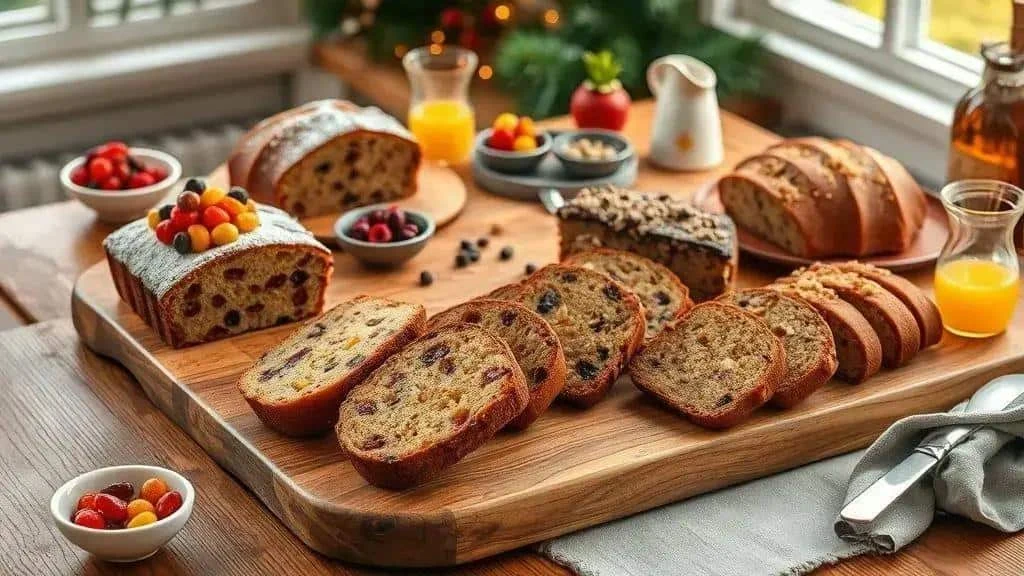
These ideas adapt the flavour and presentation of Christmas cake with candied fruit. Trial substantial ingredient changes before baking for guests or customers.
Alcohol-Free Version
Use orange or apple juice for the fruit and a light brushing of juice-based or simple syrup for the finished cake. This keeps the recipe alcohol-free when the other ingredients are suitable.
- Soaking raisins: use about 50 ml juice for 100 g raisins, adding a little more only if needed. Drain before adding to the batter.
- Aroma: retain the orange zest and vanilla from the base recipe; no additional full dose is necessary.
- Finishing tip: brush a little lukewarm syrup onto the warm cake and let it absorb. Stop before the crumb becomes soggy.
Vegan Version
A vegan cake needs replacements for the eggs, butter and milk. Because this recipe relies on four eggs, use a separately tested vegan fruitcake formulation rather than promising an identical result from several simple swaps.
- Egg replacement: the original suggestion of 4 tablespoons ground flaxseed with 12 tablespoons water is an experimental change, not a validated substitute for this cake. Follow the quantities in your chosen tested vegan recipe.
- Fat: a dairy-free baking block may suit a creamed cake; liquid coconut oil needs different handling and is not interchangeable by an arbitrary weight reduction.
- Milk: use the plant-based drink and quantity required by the vegan recipe. Check flavourings, candied fruit and decorations as well.
Gluten-Free Version
Choose a blend designed for cakes and follow a tested formula, including its hydration, binder and mixing instructions. Fruit-heavy cakes need enough structure to support the additions.
- Flour blend: check whether it already contains xanthan gum or another binder. Do not add a binder automatically or assume every 350 g blend behaves like plain wheat flour.
- Hydration: use the recipe or blend manufacturer’s liquid guidance; an extra tablespoon of milk is not a universal correction.
- Preparation: use clean equipment to avoid gluten cross-contact, and follow the specified mixing and resting method for the chosen blend.
Chocolate and Fruit
Chocolate offers another festive flavour. Chocolate chips are a simpler addition to trial than replacing a large amount of flour with cocoa, which changes the batter’s structure and moisture needs.
- Cocoa version: use a tested chocolate fruitcake recipe rather than automatically replacing 40–60 g flour with cocoa in this one.
- Chocolate chips: try 100 g chips as a variation and, if using nuts, limit those to 50 g for this version. Check tin capacity and the finished texture before scaling up.
- Sweetness: dark chocolate gives more contrast. Reducing the cake sugar to compensate for milk chocolate is an additional recipe change and should be tested.
Filled and Iced Cake
A filling and icing can turn the cake into a celebration centrepiece, but perishable fillings change how it must be stored and transported.
- Filling: use properly prepared pastry cream or a suitable ganache, following a tested filling recipe and its chilled storage guidance.
- Icing: a simple icing-sugar and orange-juice glaze or a chocolate topping provides a festive finish. Add liquid gradually to obtain a spreadable consistency.
- Assembly: split the fully cooled cake carefully, add the cooled filling and refrigerate promptly when the filling requires it. Count storage time from the preparation of the oldest perishable component.
Mini Cakes and Gifts
Small cakes are convenient for gifts or individual servings. Test the chosen tin size so that you can give accurate portions and storage instructions.
- Tins: use muffin or mini ring-cake tins, leaving room to rise. Start checking around 20 minutes; 20–30 minutes is only a guide and depends on the size and oven.
- Wrapping: cool completely before placing in food-safe bags or boxes. Dust with icing sugar near serving time if you want it to remain visible.
- Spices: a small amount of cinnamon or nutmeg gives a festive variation. Add sparingly so the citrus and fruit still stand out.
Tips for Adapting the Recipe
- Fruit distribution: drain, dry and chop the fruit, coat lightly with reserved flour and fold in evenly. The batter’s consistency also affects sinking.
- Check the centre: use a skewer and the cake’s appearance rather than relying on a single time for every tin.
- Syrup: brush on a little for flavour and moisture; adding more does not guarantee a longer safe storage time.
Keeping the Cake Moist and Storing It
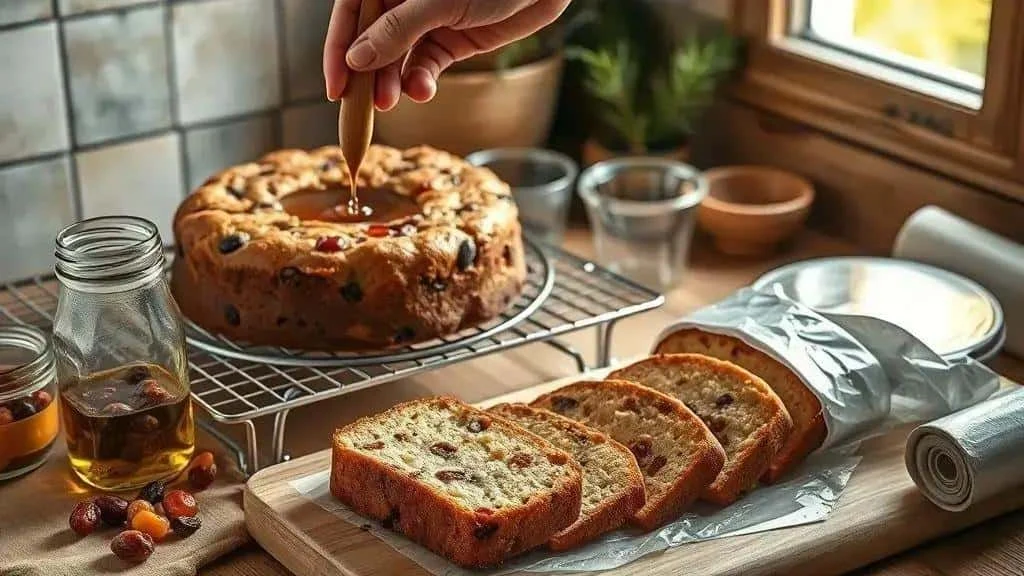
Careful baking and wrapping help keep this Christmas cake soft. Treat it as a fresh cake, not as a mature, heavily fruited Christmas cake designed to keep for weeks.
Optional Simple Syrup
- Prepare the syrup: heat 100 ml water with 100 g sugar just until dissolved, then cool. This makes more than you may need; it is an alternative to the juice syrup in the main method.
- Optional flavouring: add 1–2 tablespoons orange juice, or rum or brandy for an adult version, once the syrup has cooled. Alcohol added at this point remains in the syrup.
- Make small holes: prick the top lightly with a clean skewer to help a modest amount of syrup absorb.
- Brush gradually: apply a thin coating, wait briefly and judge the texture before adding more. Do not pour the entire quantity over the cake automatically.
Fruit Soaking and Flavoured Syrups
Soaking firm raisins can soften them; a little syrup adds flavour after baking. Neither technique compensates for an underbaked or badly stored cake.
- Raisins: soak 100 g in roughly 50 ml juice, rum or brandy for 10–30 minutes, using a little more liquid if necessary. Drain thoroughly before folding in.
- Fruit flavour: orange juice suits an alcohol-free syrup. Concentrated juice is stronger and sweeter, so use it according to its dilution instructions rather than treating it as ordinary juice.
- Even application: brush lightly across the top, avoiding pools around the edges or in the centre.
Wrapping and Storage
- Plain, unfilled cake: once completely cool, keep airtight in a cool, dry place and aim to eat within two days for quality. This does not apply to cakes with fresh cream, custard, other perishable fillings or a heavy juice soaking.
- Chilled versions: refrigerate filled or heavily moistened cakes promptly, well covered, and use within 48 hours of preparing the perishable components, or a shorter ingredient limit. Do not assume that refrigeration automatically gives this cake a week of safe storage.
- Freezing: freeze the plain, fully cooled cake promptly in well-wrapped portions. Up to three months is a practical quality target; fillings and toppings may not freeze well.
How to Freeze and Defrost
- Portion: slice the cooled plain cake so that you can defrost only what you need.
- Wrap well: use suitable food wrap and an outer freezer bag or foil to reduce drying and freezer burn.
- Freeze: place in a sealed freezer-safe container or bag and label with the preparation date.
- Defrost: thaw wrapped portions in the fridge until fully defrosted; timing depends on their size. Use within 24 hours of thawing, and add delicate decorations afterwards.
Transport and Serving
- Transport: secure the cake on a sturdy board inside a rigid box. Keep plain cakes cool; use an insulated carrier with ice packs for perishable fillings. Dry ice is unnecessary for ordinary home cake transport.
- Serving: if needed, add a light final brushing of freshly prepared syrup. Avoid repeatedly soaking a cake that is already moist.
- Avoid drying: cover the cake in the fridge and wrap properly before freezing. Wrapping does not make an expired or poorly stored cake safe.
Practical tip: reserve syrup in a clean covered container in the fridge, follow the relevant storage limit and avoid dipping a used pastry brush back into it.
Christmas Decoration and Presentation

Simple decorations can highlight the colourful fruit in this Christmas cake. Choose a stable serving stand and keep non-food decorations separate from the cake.
Choosing a Stand and Tableware
- Stand: use a stable plate or cake stand large enough to support the whole cake.
- Base: choose a food-safe cake board or paper liner; ordinary decorative paper may not be suitable for direct food contact.
- Tableware: white, gold-accented or simple natural-looking pieces can complement the festive setting.
- Serving tools: have a clean cake server and suitable knife ready, with a stable cutting surface.
Decorating the Cake
- Candied fruit: arrange small pieces in a ring or a neat cluster on top, using a little icing to hold them if needed.
- Fresh herbs: washed culinary rosemary or mint can add a green accent. Remove woody stems before eating; do not substitute unidentified decorative foliage.
- Finishing touches: dust with icing sugar for a snowy effect, or scatter chopped walnuts or flaked almonds if suitable for your guests.
- Candles: keep flames well away from food, paper and foliage. Battery-powered lights provide atmosphere without an open flame beside the cake.
Setting the Table
- Colour palette: combine red, green and gold, or use natural tones with a restrained metallic accent.
- Layers: a tablecloth, runner and placemats add depth. Vary heights while keeping stands steady and serving areas clear.
- Centrepiece: a small wreath or pine cones can decorate the table, but keep painted or non-edible items off the cake and away from serving utensils.
- Lighting: warm background lights create a festive atmosphere. Keep wires, batteries and bulbs out of contact with food.
Cutting and Serving
- Let it cool: cutting a hot cake can crush the crumb. Wait until it has cooled and any filling has set appropriately.
- Use a clean knife: a suitable serrated knife works for the plain cake. For sticky icing, wiping a warmed blade clean and dry between cuts may help.
- Portion size: loaf slices about 1.5–2 cm thick are a starting point; adjust wedges from a round cake to its height and your guests’ preferences.
- Allergen information: tell guests about wheat, eggs, milk, any nuts and other allergens shown on ingredient labels, including relevant sulphite information in dried or candied fruit.
Giving or Selling Cakes
- Packaging: use a rigid food-safe box, a sturdy board and an appropriate liner. Add ribbon outside the food-contact area.
- Storage note: state the actual preparation date and instructions for that version. Do not use a blanket five-day refrigerated shelf life for every filling or syrup; perishable versions need chilled handling and a suitable shorter limit.
- Travel: secure the cake on its board with suitable edible icing if needed and fit the board snugly in the box. Avoid improvised materials touching the cake.
Final decoration: set up the table in advance and add delicate edible decorations shortly before serving. Keep perishable cakes refrigerated until required.
Planning Christmas Cake Sales
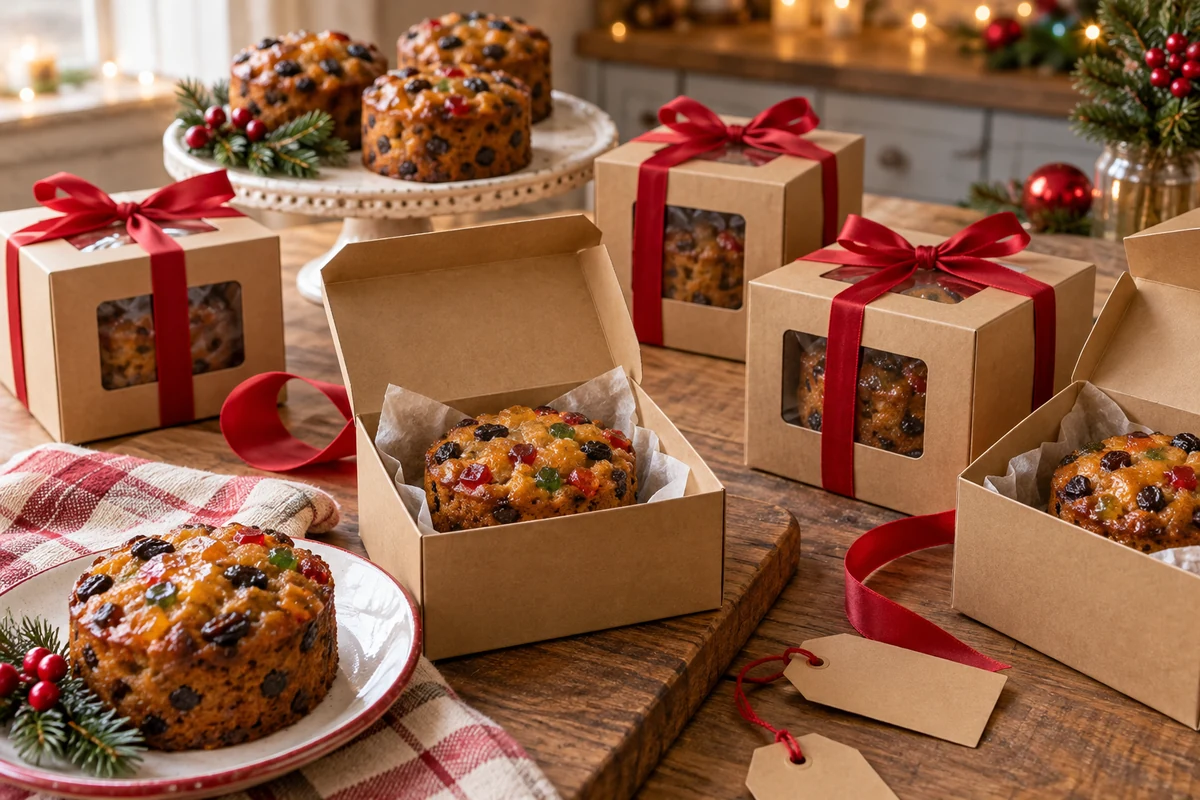
Costs and pricing — record ingredients, labour, packaging and an appropriate share of overheads before choosing a selling price. Profit is not guaranteed by a particular mark-up or presentation.
A Simple Costing Method
- Ingredients: calculate the amount actually used per cake, including fillings, decorations and expected wastage.
- Labour: estimate preparation, baking supervision, decorating and packing time, and apply your chosen hourly cost.
- Other costs: include packaging, energy, transaction fees and delivery where relevant.
- Target margin: choose a margin based on complete costs and your market. A 30–50% range is only an illustrative planning choice, not a recommendation or a prediction of achievable profit.
- Arithmetic example: price = cost ÷ (1 − margin expressed as a decimal). With an illustrative £15 cost and 40% margin, the price is £25. These are invented numbers to explain the calculation, not verified ingredient prices; a margin is different from a mark-up.
Packaging and Presentation
- Materials: use rigid boxes, stable boards and food-safe liners.
- Appearance: ribbons and branded labels can make a gift appealing, alongside accurate preparation and storage information.
- Required information: check the food-labelling rules for how you sell. For prepacked for direct sale food, a full ingredients list with applicable allergens emphasised is required; a short list of nuts and eggs alone is not enough.
- Gift option: price extra packaging separately if offered, and make the total clear before the customer orders.
Photography and Promotion
- Clear photographs: show the actual cakes you sell in natural light, including the fruit and crumb. Attractive images do not guarantee sales.
- Useful views: photograph the whole cake, a slice, the decoration and the packaging to show what the customer will receive.
- Content: share your real preparation process and genuine customer feedback with permission. Do not invent testimonials or present illustrative images as photographs of a product you have made.
- Channels: social pages, local marketplaces and messaging apps can help customers find your offer. Keep product details, collection arrangements and prices consistent.
Orders and Delivery
- Direct orders: provide a clear ordering method and confirm collection or delivery details in writing.
- Markets and local delivery: check event requirements, delivery costs and whether the cake needs refrigerated transport before accepting orders.
- Lead times: set realistic order cut-offs and delivery dates based on your actual capacity.
- Transport: keep the box level, protect it from heat and maintain the cold chain for perishable fillings.
Batch Preparation and Consistency
- Batch planning: organise ingredients, oven space and cooling time to reduce waste without compromising hygiene.
- Freezing: test the quality of frozen plain portions before using this in your production plan. Record preparation and freezing dates and provide suitable handling information.
- Consistency: use a recipe you have physically tested, with recorded weights, tin sizes and yields. This editorial guide does not replace your own production testing.
- Cost records: track purchases, wastage and sales so you can reassess the price when costs change.
Customer Service and Repeat Orders
- Custom requests: agree the price and feasibility of special decorations, messages or fillings in advance, including allergen limitations.
- Offers: bundles or larger-order discounts may appeal, but calculate whether they still cover your costs.
- Samples and partnerships: local shops or cafés may be suitable partners; provide safe handling and allergen information with any samples.
- After-sales contact: invite honest feedback and offer a future discount if appropriate, without making a reward conditional on a positive review.
Food Business Requirements and Safety
- Labelling: provide accurate ingredient, allergen and storage information appropriate to the sales format. Consult the official guidance linked below.
- Food hygiene: plan safe preparation, cooling, storage and transport, including cleaning and allergen cross-contact controls.
- Registration: in the UK, register a food business with your local authority at least 28 days before starting to trade. Home-based and online food businesses are included; ask your authority about the requirements applying to your operation.
- Business arrangements: check relevant permissions, tax obligations and insurance, and make collection, delivery and cancellation terms clear. Seek appropriate advice for your circumstances.
Candied fruit, citrus and a soft buttery crumb make this Brazilian-style cake a colourful addition to Christmas. Measure carefully, choose a suitable tin and check the centre rather than relying on baking time alone.
Thank you for reading. We hope these preparation and presentation ideas help you plan a festive cake for your table.
Follow our social channels for more seasonal ideas, and visit the I Love Christmas blog for further recipes and inspiration.
FAQ — Christmas Cake with Candied Fruit
Which ingredients can I substitute?
A suitable baking margarine or unsweetened plant-based milk may be useful variations, but making the whole cake vegan or gluten-free requires more than one simple swap. Use a tested recipe for those diets, particularly because this cake contains four eggs and a large quantity of fruit.
How can I stop the fruit sinking?
Use small pieces, drain soaked fruit and pat it dry. Toss lightly with 1–2 tablespoons taken from the measured flour, then fold in at the end. This helps distribute the pieces but is not a guarantee; batter consistency, fruit size and correct baking also matter.
How can I moisten the cake without alcohol?
Use a little orange-juice syrup from the main method, or the alternative simple syrup made with 100 ml water and 100 g sugar, flavoured with 1–2 tablespoons juice. Brush on gradually; do not add both full quantities or soak the cake until wet.
How should I store it, and for how long?
Keep the plain, unfilled cake airtight in a cool, dry place and aim to eat within two days. Refrigerate perishable filled or heavily moistened versions promptly and use within 48 hours of preparing their components, or a shorter applicable limit. Freeze plain wrapped portions promptly for up to three months as a quality guide; thaw in the fridge and use within 24 hours.
What should I check before selling Christmas cakes?
Physically test your recipe and storage arrangements, register the food business where required, follow hygiene and allergen rules and check the labelling requirements for your sales format. Use suitable packaging, calculate costs accurately and give customers clear handling instructions.
Sources and Further Reading
- Food Standards Agency: chilling, freezing and defrosting food
- GOV.UK: starting a food business
- King Arthur Baking: causes of dry cakes