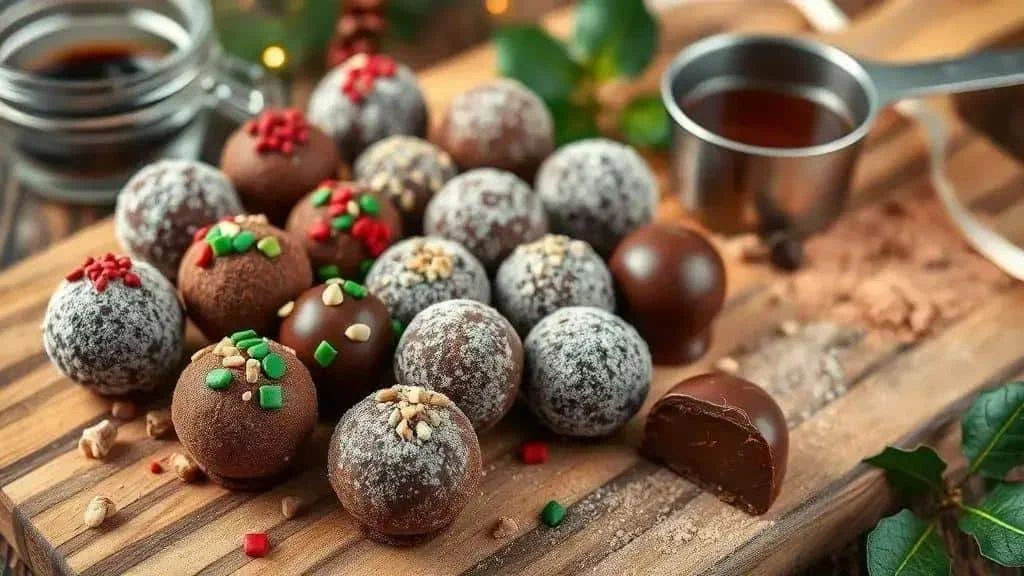
Christmas chocolate truffles are small sweets made from chilled chocolate ganache, flavoured with vanilla, orange or coffee and rolled in cocoa, nuts or edible sprinkles. They make thoughtful festive gifts. Keep these fresh-cream truffles refrigerated and, without a validated longer shelf life, use within 48 hours or freeze promptly.
Christmas chocolate truffles add a personal touch to the festive table. Here is a homemade recipe, together with decoration ideas and advice on storing, giving and selling small batches.
Ingredients for Homemade Christmas Chocolate Truffles
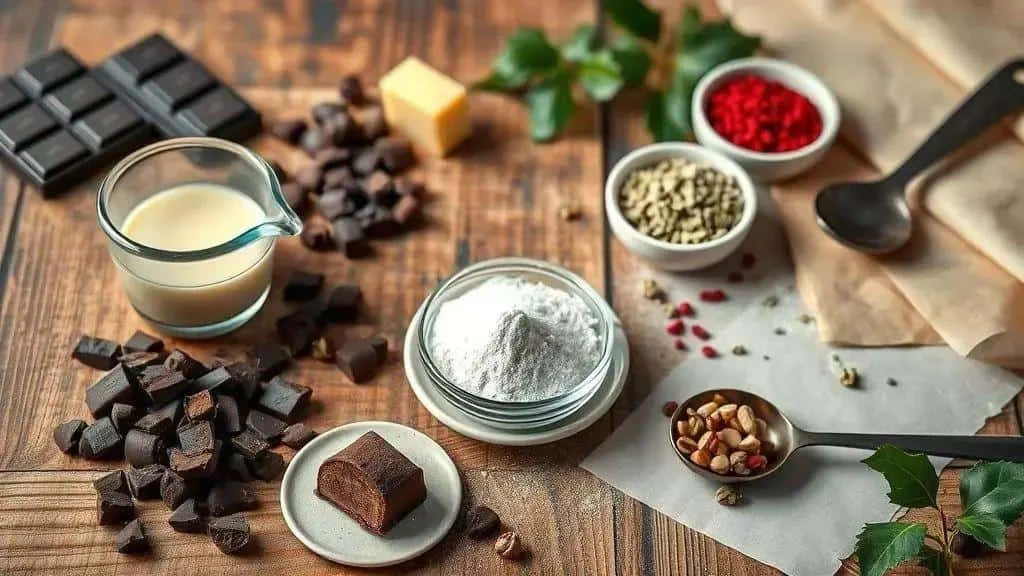
For these homemade Christmas chocolate truffles, use ingredients you enjoy eating. The batch makes roughly 30 truffles of about 25 g before coating; make smaller portions for a larger yield.
Ingredients
- 500 g dark chocolate — finely chopped, ideally around 50–70% cocoa. Milk chocolate produces a softer, sweeter ganache and may need a different cream ratio; it is not an exact swap.
- 200 ml double cream — for the ganache. The original uses Brazilian fresh cream; UK double cream is a practical rich option. Do not add an extra spoonful of butter automatically when changing cream types.
- 50 g unsalted butter — softened, to enrich the ganache. Using 40 g changes the texture slightly; start with the stated recipe before adjusting it.
- 3 tablespoons unsweetened cocoa powder — for coating some of the truffles; adjust the coating to taste.
- Up to 2 tablespoons icing sugar — optional. Sift it into the warm ganache only if extra sweetness is needed.
- 1 tablespoon rum or brandy, or 1 teaspoon vanilla extract — optional. These are alternative flavourings, not identical measures. For an alcohol-free batch, choose alcohol-free vanilla flavouring and omit the spirits.
- Extra cocoa powder — if needed for rolling.
- Edible Christmas sprinkles — red, green or other festive colours. Use decorations explicitly labelled edible, with ingredients listed.
- Chopped nuts or dried fruit — such as pistachios, hazelnuts or walnuts, for optional coatings and variations. Check allergen information.
- Baking parchment and small paper cases — for shaping, storing and presenting the truffles. For an optional chocolate shell, allow an additional 200–300 g chocolate.
How to Make Christmas Chocolate Truffles
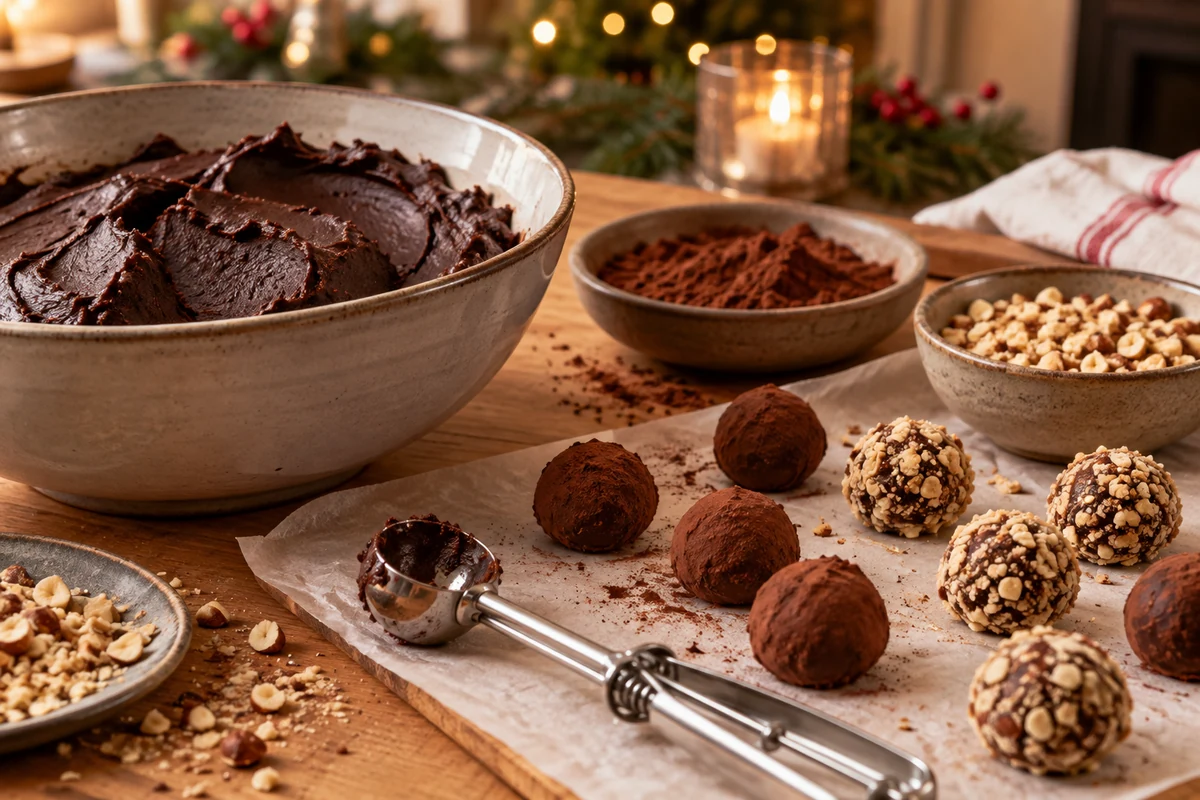
Follow these steps to make homemade Christmas chocolate truffles. Ganache firmness varies with the chocolate, so allow time for chilling and a small trial batch.
- Chop the chocolate: finely chop 500 g dark chocolate and place it in a clean, dry, heatproof bowl. Small pieces melt more evenly.
- Heat the cream: warm 200 ml double cream in a saucepan until small bubbles appear around the edges. Remove from the heat before it boils vigorously.
- Pour over the chocolate: add the hot cream and leave for a minute to soften the chocolate.
- Make the ganache: stir gently from the centre outwards until smooth and glossy. Incorporate the softened butter and your chosen flavouring. If using the optional icing sugar, sift it in now and mix thoroughly.
- Check the texture after chilling: warm ganache is naturally soft. Do not change the ratio before it has chilled properly. If too hard to scoop, let a small portion soften briefly; if still too soft when cold, test a little more melted chocolate in a small portion.
- Chill until firm: transfer to a shallow container and cover with suitable food wrap. Cool promptly and refrigerate within one to two hours; allow about two to three hours in the fridge, or until firm enough to shape.
- Shape the truffles: portion with a small scoop or two spoons, then roll quickly with clean, dry hands. Roughly 30 portions of about 25 g are possible before coating. If the mixture sticks, chill it again rather than wetting your hands.
- Add the coating: roll in cocoa, edible sprinkles, icing sugar or chopped nuts. For a chocolate shell, melt the extra chocolate gently over warm water or in short microwave bursts, stirring each time. Dip using a fork and drain on parchment. Temper the chocolate for a firmer, glossier shell; simply melted chocolate may bloom or soften more easily.
- Decorate: before a chocolate shell sets, add edible sprinkles, a little melted white chocolate or chopped pistachios. Use a small piping bag for fine lines if you like.
- Set the coating: refrigerate for around 10–20 minutes, or until the coating is firm. Keep the finished fresh-cream truffles chilled.
- Store safely: keep in an airtight container in a fridge at 5°C or below and use within 48 hours unless the exact recipe has a professionally validated longer shelf life. For longer storage, freeze promptly in a single layer, then package; one month is a quality guide. Defrost in the fridge and use within 24 hours of full defrosting.
- Yield and variations: portion size determines the yield. Scale ingredients proportionally, allowing extra chilling time for larger batches. A vegan version needs vegan chocolate, plant cream and a suitable replacement for the butter too; test its texture separately.
Essential Tips
- Choose chocolate for flavour — dark chocolate above 50% cocoa is a useful starting point, but cocoa percentage alone does not guarantee quality or yield.
- Keep melting equipment dry — small accidental splashes can make melted chocolate seize. Cream is deliberately incorporated in a measured quantity when making ganache.
- Use gentle heat — chocolate can scorch. Use a bowl over gently steaming water, without the bowl touching it, or short microwave bursts with stirring.
- Vary the flavour with orange zest, cinnamon or a small pinch of allspice.
- Present them neatly — food-safe paper cases and festive outer packaging make a simple gift feel special.
Christmas Chocolate Truffle Variations
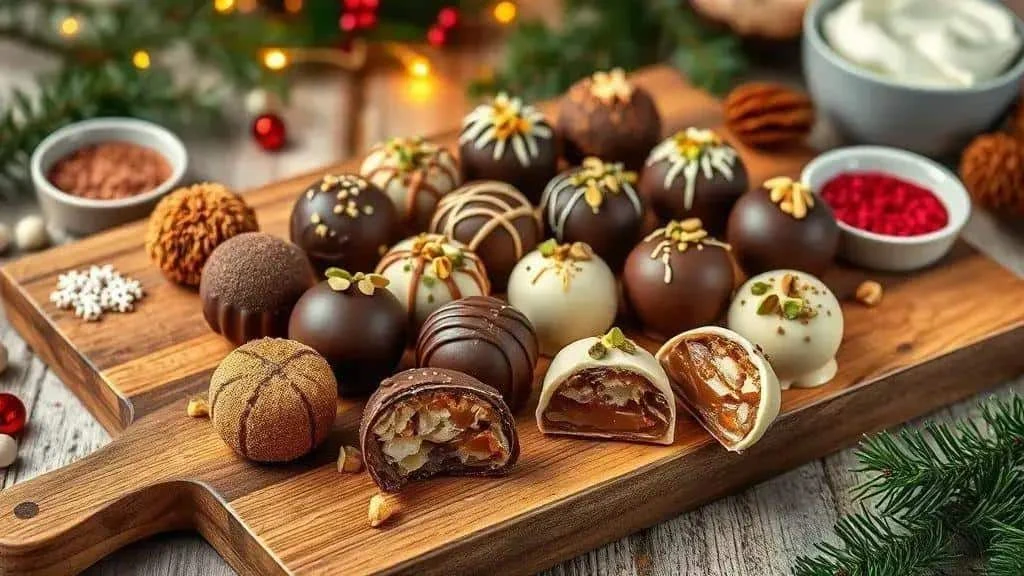
Give your homemade Christmas chocolate truffles different flavours and finishes. Test filled and dairy-free versions in small batches, as extra ingredients change the set and storage requirements.
Orange Truffles
Finely zest a washed orange, avoiding the white pith. Stir 1–2 teaspoons zest into the warm ganache. For an optional stronger flavour, use 1 teaspoon orange liqueur in an adult batch, or a little food-grade orange flavouring according to its label. Count added liquid within the optional flavouring rather than adding several measures.
Coffee and Spice Truffles
Use 1 teaspoon instant coffee dissolved in 1 tablespoon of the measured hot cream, or 1 tablespoon brewed espresso. Espresso adds extra liquid and can soften the mixture, so trial it first. A small pinch of cinnamon or nutmeg is optional; omit coffee for a caffeine-free batch.
Filled Truffles: Caramel, Jam and Praline
Prepare small, firm centres and chill before enclosing them in ganache. A brief spell in the freezer may help with handling, but does not make a loose filling suitable:
- Soft caramel: for a trial filling, caramelise 100 g sugar to amber, remove from the heat and carefully stir in 50 g butter and 50 ml warm cream. It will bubble fiercely; use a deep pan and protect your hands. Cool, then chill fully. Only use it as a centre if sufficiently firm; otherwise serve it separately as a sauce.
- Thick jam: use small amounts of an already thick, smooth jam. Sieving removes seeds but does not reliably thicken a runny jam.
- Nut praline: caramelise 100 g sugar and carefully mix in 75 g chopped almonds or hazelnuts. Spread on a heatproof, parchment-lined tray and cool completely before processing to crumbs or a paste. Never put hot caramel into a food processor.
Coatings and Textures
Try a few different finishes:
- Cocoa powder — a classic, simple coating.
- Chopped walnuts or pistachios — for a crunchy contrast, with allergens clearly identified.
- Tempered chocolate — for a shiny shell. Allow about 200–300 g extra for dipping roughly 30 truffles; the amount used depends on their size and coating thickness.
- Edible festive sprinkles — a colourful finish for gifts; use a light coating if you prefer less sweetness.
Vegan, Lactose-Free and Lower-Sugar Options
These changes require a small texture trial and a check of every ingredient:
- Vegan: use vegan chocolate, thick coconut cream and a suitable plant-based butter. Replacing cream alone leaves the dairy butter in the recipe. Plant creams differ in water and fat content, so the same proportions are not guaranteed to set identically.
- Lactose-free: check the chocolate, cream, butter and decorations. Lactose-free dairy is still unsuitable for someone with a milk allergy.
- Lower sugar: choose products by their labels and omit optional icing sugar. Chocolate with 85–90% cocoa can still contain sugar, and cream contains naturally occurring sugars. Do not label the finished truffles sugar-free or suitable for diabetes without appropriate evidence.
Quick Preparation Tips
- Adjust only after chilling: let firm ganache soften briefly before scooping. If a recipe adjustment is necessary, test a small portion first; extra cream changes both texture and storage characteristics.
- Use the stated starting ratio: 500 g dark chocolate to 200 ml cream, plus the butter, gives a rich mixture. Different chocolates and creams behave differently.
- Enclose fillings carefully: use chilled, firm centres and cold but workable ganache. Keep the coating intact so the filling does not leak.
- Mix finishes: arrange cocoa, nut and chocolate-coated truffles separately so flavours and allergens remain easy to identify.
Presentation, Packaging and Selling Tips
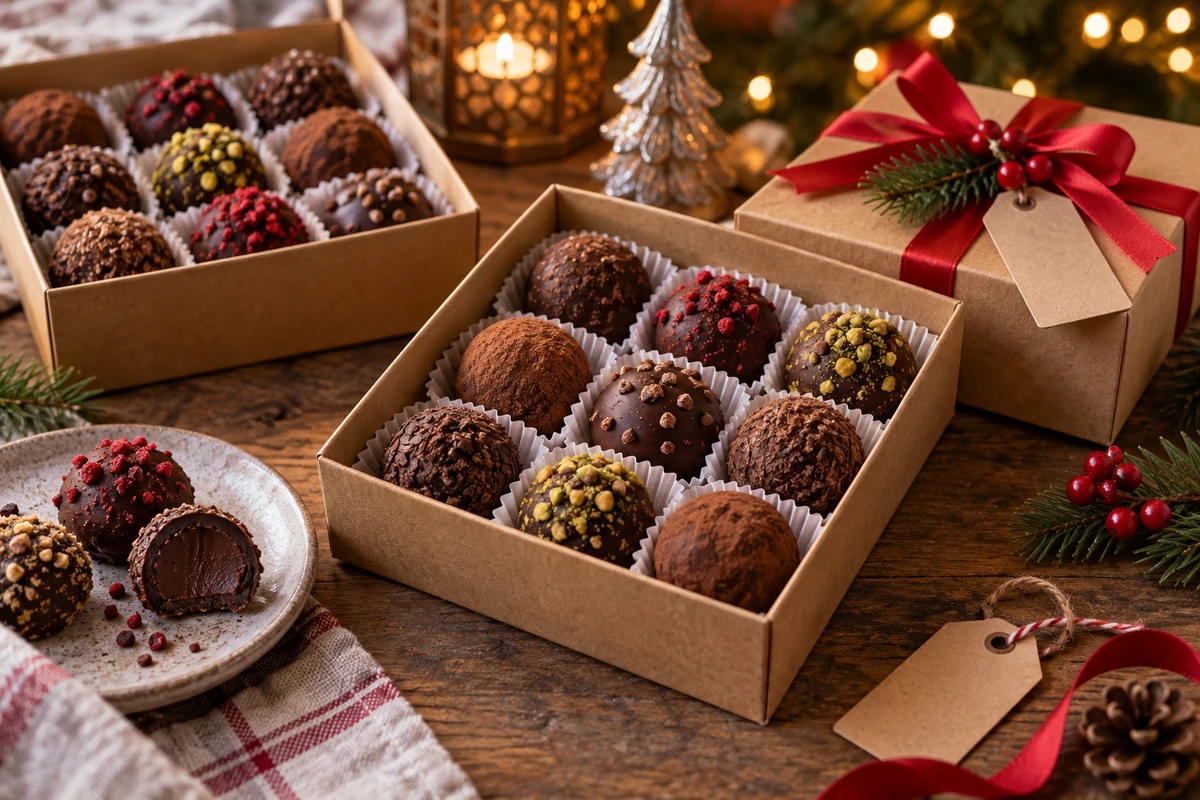
Clean packaging and clear information make gifts easier to enjoy. If selling in the UK, register your food business with the local authority at least 28 days before trading and check the food hygiene and labelling requirements for your sales format.
Presentation Ideas
- Use individual cases made for food contact. They keep the truffles separated from the outer packaging.
- Choose a simple colour scheme — kraft-style boxes with red ribbon, or white boxes with green details, work well for Christmas.
- Arrange tasting trays by flavour and keep samples covered and chilled appropriately. Use separate utensils for nut-coated varieties.
- Make labels legible — identify flavour and weight without obscuring ingredients, allergens or storage instructions.
- Protect stacked layers with food-safe dividers or parchment, leaving enough room so the truffles are not crushed.
Practical, Affordable Packaging
- Boxes for six: measure the finished truffles in their cases before choosing a box. A 9 × 9 × 3 cm box may be too small for six truffles from this batch; check the actual fit.
- Boxes for twelve: select dimensions from the finished portions rather than assuming a 12 × 8 × 3 cm box will hold them. Allow space for cases and a lid that does not touch the sweets.
- Window boxes: use packaging intended for food. Check local recycling guidance rather than assuming every clear window is recyclable.
- Paper and ribbon: decorate the outside with paper, ribbon or twine, and use a food-safe inner liner where necessary.
- Labelling: follow the rules for the way the product is sold. UK prepacked-for-direct-sale food needs a full ingredients list with the relevant regulated allergens emphasised. Check milk, nuts, soya and all other ingredients; also provide appropriate storage and date information.
- Lower-waste packaging: choose appropriately sized boxes and explain disposal accurately. Avoid unsupported environmental claims.
Working Out Costs and Prices
Calculate ingredients + packaging + labour + overheads, then divide by the actual number of saleable truffles. Add a planned markup and check whether the resulting price covers all your costs.
- Illustrative example only: if a batch costs £15 and produces 30 saleable truffles, the cost is 50p each. A 100% markup gives a £1 selling price, which is a 50% gross margin before any omitted costs — not a 100% margin. Six would be £6 before extra box costs. These figures are not a market-price estimate.
- Check discounts first: a volume offer, such as 10% off a box, reduces the margin. Recalculate the return before advertising it.
- Include delivery costs: account for cold packaging, transport and selling-platform fees. A free-delivery threshold still needs to cover those costs.
Where to Sell
- Local fairs and markets: check organiser and local-authority requirements, protect samples and maintain suitable chilled storage.
- Orders and events: agree a realistic lead time, portion count and delivery arrangement. A 48–72-hour ordering window is an example, not the product’s shelf life.
- Social media and online shops: use accurate descriptions and photographs of the product you actually sell. Provide required allergen information before purchase and on delivery.
- Local partnerships: discuss supply, refrigeration, labelling and responsibility for unsold stock with cafés or shops before agreeing terms.
Hygiene, Shelf Life and Storage
- Shelf life: for this unvalidated home recipe, keep refrigerated and use within 48 hours, or freeze promptly. A longer commercial shelf life requires assessment of the exact recipe and process; it cannot be inferred from chocolate alone.
- Storage labels: state that the truffles need refrigeration, provide suitable date information and clearly identify allergens.
- Delivery: use insulated packaging with cold packs to maintain refrigeration throughout the journey, not only on visibly hot days.
- Clean handling: wash hands, clean equipment and surfaces, and keep batch records. Gloves do not replace handwashing and must be changed when contaminated.
Simple Selling Ideas
- Mixed boxes: offer clearly identified flavours in a six-piece gift box, pricing the packaging into the offer.
- Repeat-customer offers: a loyalty scheme can encourage return orders if its discount remains affordable.
- Personal messages: offer a note on the outer packaging, with clear lead times and any additional charge.
- Use genuine product photographs: well-lit pictures should show the truffles customers will receive. Do not present an illustrative or generated image as a photograph of your own finished batch.
Cocoa and Keeping Truffles at Their Best
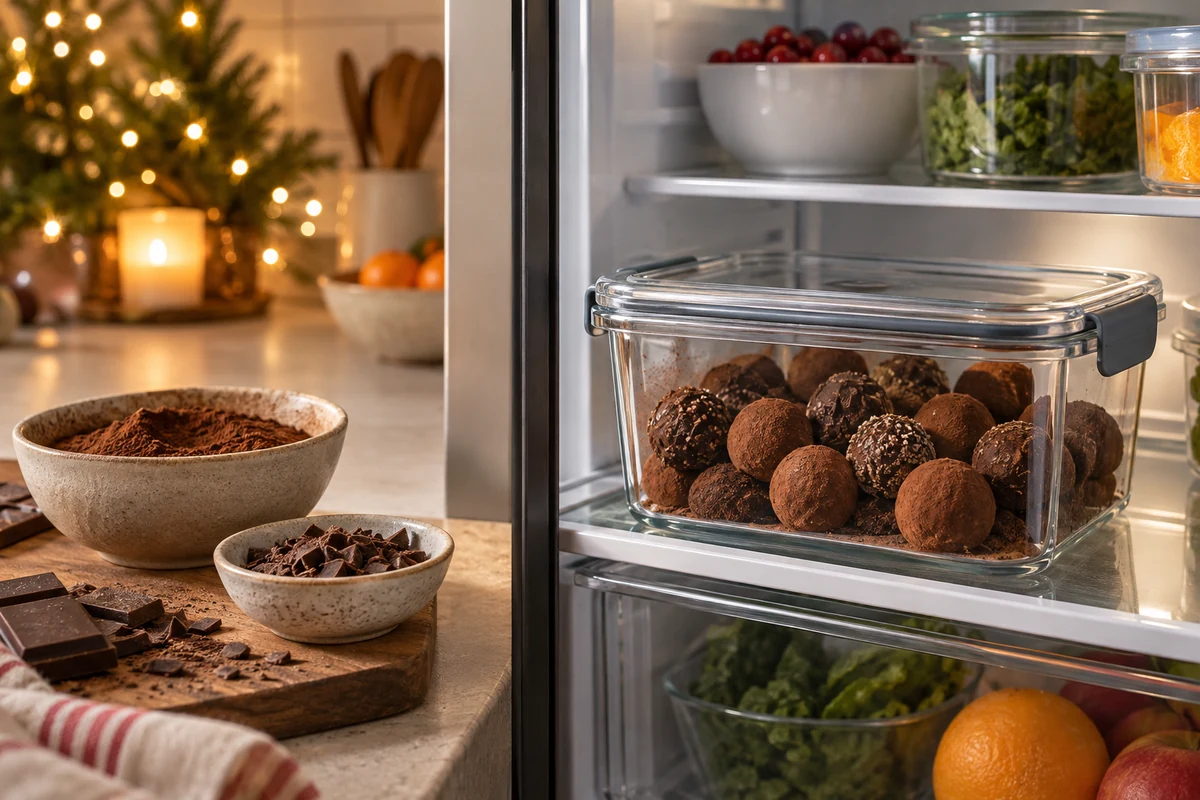
Cocoa gives chocolate its characteristic flavour. The bean, recipe and processing all affect the finished ganache.
A Few Cocoa Notes
- Traditional names: Criollo, Forastero and Trinitario are commonly used historical cocoa groupings. They are not a complete account of cocoa’s genetic diversity, nor a reliable quality ranking on their own.
- Cocoa percentage: darker chocolate often tastes less sweet and more intense. Around 50–70% is a useful starting point here, but percentage alone does not predict how firmly a ganache will set.
- Processing: bean origin, fermentation, roasting and conching can influence fruity, nutty and caramel-like notes.
- Cocoa powder and nibs: powder gives a dry coating, while chopped cocoa nibs add a firmer crunch and a more bitter finish.
- Enjoy them as sweets: cocoa contains naturally occurring compounds, but this rich recipe is a confection, not a health treatment. Choose chocolate for flavour rather than making health claims for the truffles.
How Chocolate Affects the Ganache
- Choose a consistent product: use chocolate with a clear ingredients list and repeat a small trial when changing brands.
- Balance the ingredients: chocolate, cream and butter together determine firmness. Do not assume stronger-tasting chocolate always needs less cream.
- Pair flavours: dark chocolate works well with orange, coffee and nuts; gentler chocolate flavours can suit caramel and vanilla.
Storing the Truffles
- Fridge temperature: use a fridge at 5°C or below. Do not use the original 4–8°C range as the target for these fresh-cream sweets.
- Airtight packaging: use clean food-safe containers, with parchment between layers if needed, to protect from moisture and other food smells.
- Home-storage guide: use refrigerated truffles within 48 hours unless a longer shelf life has been validated for the exact recipe. Freeze promptly for longer keeping; one month is a suggested quality limit, not a guarantee for poorly handled food.
- Freezing: firm the truffles in a single layer in the freezer, then pack airtight and date. Defrost covered in the fridge and use within 24 hours once fully thawed.
- Transport: keep chilled with insulated packaging and cold packs. Protect the sweets from crushing and deliver promptly.
- Changes in appearance: chocolate bloom can be a harmless change in fat or sugar structure, but a pale surface alone cannot prove a fresh-cream filling is safe. Discard mouldy or spoiled truffles and anything with an uncertain storage history; do not rely on smell alone.
- Clear information: identify the batch, dates, refrigeration needs and all relevant allergens. Ingredient labels may reveal soya or other allergens as well as milk and nuts.
Quick Quality Tips
- Avoid repeated warming and cooling: keep the main batch chilled and take out only what you are serving. Temperature swings can also cause condensation and spoil the finish.
- Separate strong flavours: store coffee and other strongly flavoured truffles separately to reduce aroma transfer.
- Display small quantities: replenish from refrigerated stock and follow an appropriate food-safety plan if selling. Frequent replenishment does not replace temperature control.
With careful chilling and a few festive finishes, these Christmas chocolate truffles make an enjoyable addition to dessert or a small homemade gift.
Thank you for following the recipe. Follow our social channels for more Christmas ideas, and share the flavours and finishes you tried.
Visit the I Love Christmas blog for more seasonal inspiration. Happy Christmas!
Frequently Asked Questions About Christmas Chocolate Truffles
How long do homemade Christmas truffles keep in the fridge?
For this fresh-cream recipe without a validated longer shelf life, refrigerate at 5°C or below and use within 48 hours. Alternatively freeze promptly, with one month as a quality guide, then thaw in the fridge and use within 24 hours of full defrosting.
Can I make vegan truffles?
Yes, with vegan chocolate, a suitable plant cream and plant-based butter, plus vegan coatings. Changing the cream alone is not enough. Test a small batch because plant products differ and may need a different ratio.
How do I stop truffles melting during delivery?
Use insulated packaging with cold packs, protect layers with food-safe dividers and deliver promptly. Maintain refrigeration throughout transport; the cream filling needs cold storage even when the weather feels cool.
Which allergens can the truffles contain?
The basic recipe contains milk; chocolate may contain soya, and nut coatings add nuts. Check every ingredient and decoration for other allergens and cross-contact information, and provide the information required for your sales format.
How can I fix ganache that is too soft or too firm?
Let it chill fully before judging it. Hard ganache may simply need a brief softening period before scooping. If cold ganache remains too soft, trial a little extra melted chocolate in a small portion. Adding cream changes the recipe, so do not assume the original shelf life still applies.
Is it worth selling homemade truffles at Christmas?
It can be worth testing demand, but profit is not guaranteed. Include ingredients, labour, chilled delivery, packaging and fees in your costs, register the business where required and check hygiene and labelling rules before selling.