Christmas cheesecake with mixed berries combines a biscuit base, creamy baked filling and colourful fruit topping. Follow the preparation and chilling steps, then explore no-bake and dietary adaptations, with guidance on setting agents, storage and festive presentation.
Christmas cheesecake brings a creamy, colourful finish to a festive meal. Mixed berries add a sharp contrast to the rich filling. The steps below cover the main baked recipe, presentation ideas and adaptations to consider before making your celebration dessert.
Ingredients for Christmas cheesecake with mixed berries
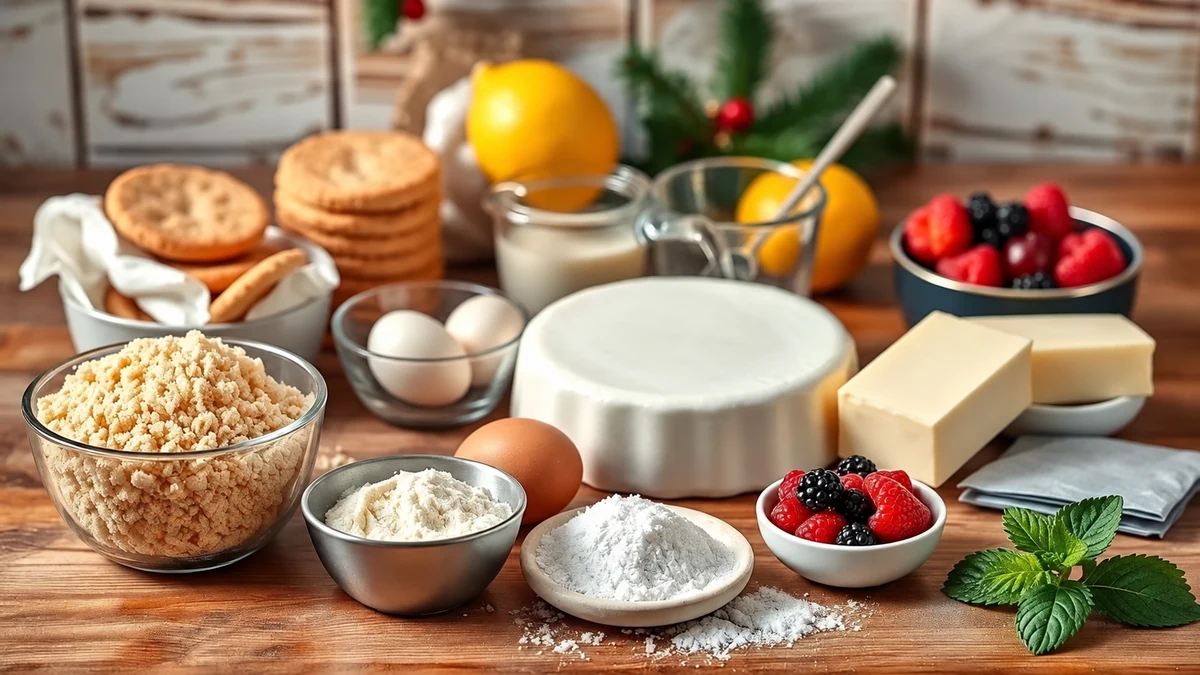
For this Christmas cheesecake with mixed berries, gather the following ingredients:
- 200 g digestive biscuits or plain Brazilian maize biscuits, finely crushed. Use suitable gluten-free biscuits if required and check every other ingredient too.
- 100 g unsalted butter, melted, for binding the base. A firm vegan baking alternative or coconut oil changes the texture; replacing the butter alone does not make the whole cheesecake vegan.
- 600 g full-fat cream cheese, softened briefly for easy mixing. Reduced-fat products contain different amounts of water and may give a softer result.
- 150 g caster sugar. Demerara gives a coarser texture unless dissolved; a baking sweetener needs its manufacturer’s conversion rather than an automatic equal-weight substitution.
- 3 large eggs, added one at a time.
- 200 ml whipping cream. For a lactose-free version, all the dairy ingredients need suitable replacements, not just the cream.
- 1 tsp vanilla extract, for the filling.
- Finely grated zest of 1 washed lemon, avoiding the bitter white pith.
- 300 g mixed berries, such as strawberries, raspberries, blackberries and redcurrants. Use fresh berries for the garnish; frozen berries for the cooked sauce should be prepared according to their packet.
- 50 g sugar for the topping. Honey changes the flavour and is unsuitable for babies under one and for a vegan dessert.
- 1 tbsp lemon juice, for the berry sauce.
- 1 tbsp cornflour, mixed with 2 tbsp cold water to thicken the sauce. Gelatine and agar are different setting agents, not interchangeable spoon-for-spoon substitutes; follow a formulation suitable for the product if using them instead.
- Optional: fresh mint leaves, washed and dried, for decoration.
Substitutions and practical notes
- Gluten-free base: use 200 g suitable gluten-free biscuits. A base made with 160 g ground almonds behaves differently and needs the binding fat adjusted; it also introduces nuts.
- Vegan adaptation: plant-based cream cheese or silken tofu can form the basis of a separate vegan recipe. The combination of 600 g plant cream cheese, or 450 g tofu, plus a further 200 g tofu and 2 tbsp cornflour in place of eggs is not a reliable universal substitution. Product moisture and setting vary, so use an egg-free formulation suited to your ingredients; see the cashew-based option below.
- Reduced-fat adaptation: reduced-fat cream cheese and 100 g rather than 150 g sugar change both flavour and structure. Using a lower-fat cream may soften the filling further. Test the combination before a celebration rather than expecting an identical result.
- Setting the topping: the main recipe uses cooked cornflour. If choosing gelatine instead, calculate the quantity for the sauce from the product instructions, then hydrate and dissolve as directed. Do not combine all the suggested setting agents or use a whole tablespoon automatically.
- Ingredient temperature: soften the cream cheese for about 20–30 minutes while preparing the base, keeping the rest of the dairy chilled until needed. This helps mixing without leaving perishable ingredients out for a prolonged period.
- Adjust the sweetness: taste a cooled spoonful of the berry sauce. Very sharp fruit may need another 10–20 g sugar; add only if necessary.
How to make Christmas cheesecake step by step
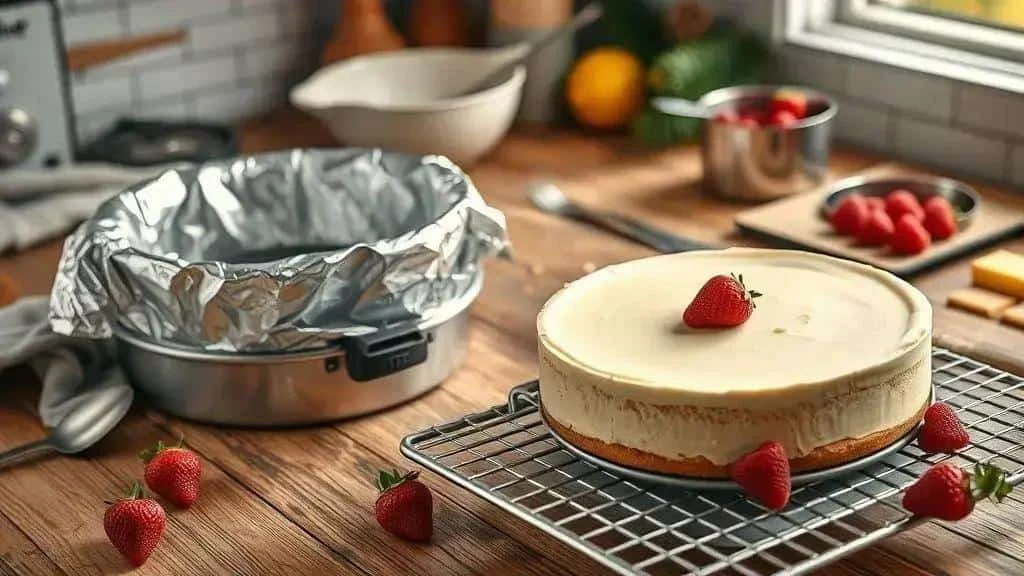
- Prepare the tin and oven: heat the oven to 160°C, 140°C fan. Line the base of a 22–24 cm springform tin with baking parchment and lightly grease the sides. Wrap the outside of the base and sides securely in foil to help keep water out; a springform tin is not inherently watertight.
- Make the base: combine 200 g crushed biscuits with 100 g melted butter. Press firmly and evenly into the tin with the back of a spoon, then refrigerate for 15 minutes.
- Mix the cream cheese: beat 600 g softened cream cheese until smooth. Add 150 g caster sugar gradually, using a low to medium speed rather than whipping in lots of air.
- Add eggs and cream: mix in the 3 eggs one at a time, gently after each addition. Add 200 ml cream, 1 tsp vanilla and the lemon zest. Stop mixing as soon as evenly combined. Do not taste the raw egg mixture.
- Fill the tin: pour the filling over the chilled base and smooth the top. Tap the tin gently to release large air bubbles. Set it in a larger roasting tin on the oven shelf, then carefully pour hot water into the outer tin to halfway up the cheesecake tin, avoiding splashes into the filling.
- Bake in the water bath: allow about 50–70 minutes, checking towards the end. The edges should be set and the centre should have a slight, unified wobble, not ripple like liquid. Tin diameter and oven performance affect the time; continue baking if the filling is still liquid.
- Cool gradually: turn off the oven and leave the door ajar for up to an hour to reduce sudden temperature changes. Do not leave the cheesecake in the switched-off oven overnight. Manage cooling so it can be refrigerated within 1–2 hours after cooking.
- Chill: carefully remove the tin from the water bath, dry the outside and allow remaining steam to escape briefly. Refrigerate, loosely covered without touching the surface, for at least 4 hours, preferably overnight. Once fully cold, cover securely.
- Cook the berry topping: reserve a few washed fresh berries for garnish if wanted. Put the remaining berries from the 300 g total in a small saucepan with 50 g sugar and 1 tbsp lemon juice. Mix 1 tbsp cornflour with 2 tbsp cold water, stir into the fruit and simmer, stirring, until the starch is cooked and the sauce thickens. Follow any additional cooking instructions on frozen berries. Cool promptly.
- Alternative set topping: if using gelatine instead of the cornflour method, follow the manufacturer’s amount and preparation for the quantity of sauce. Do not add extra gelatine merely for shine; excessive setting agent makes a rubbery topping.
- Release the cheesecake: run a thin knife, warmed in hot water and dried, around the inside of the tin. Unclip the ring carefully and transfer the fully chilled cheesecake using a wide cake lifter.
- Decorate and slice: spread cold berry sauce over the top, add the reserved fresh berries and finish with mint. A light dusting of icing sugar is optional. Warm and dry the knife between slices for a neat cut.
Biscuit base tips and texture variations
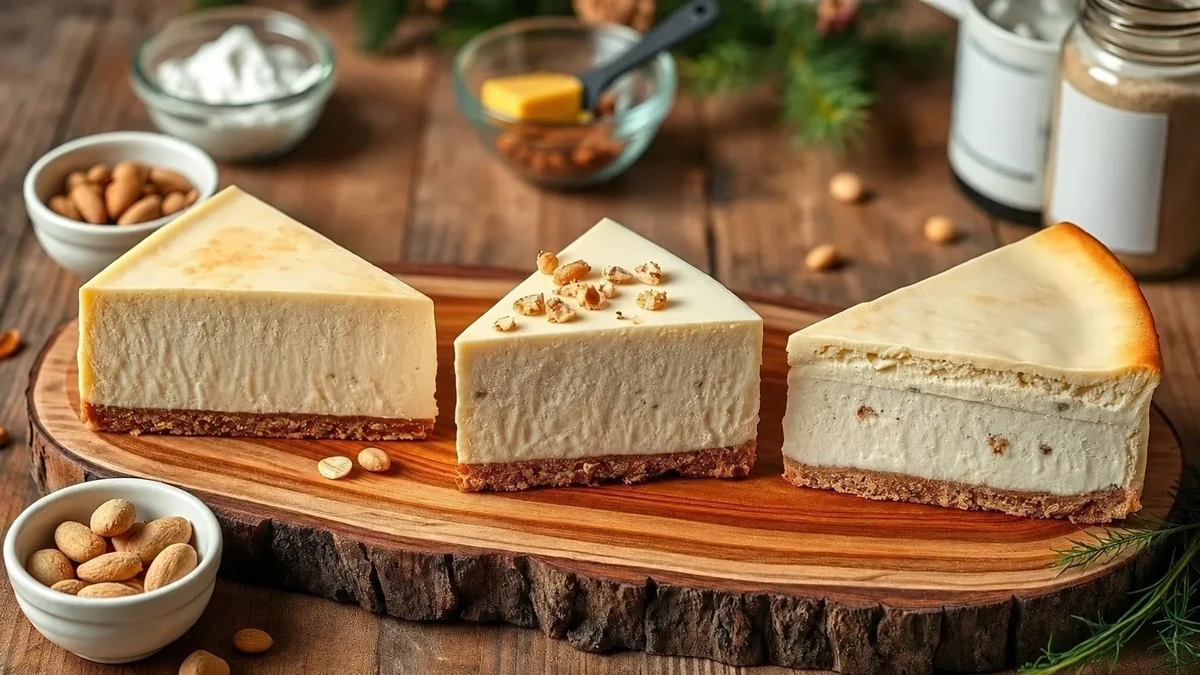
A useful starting ratio for the base is 200 g biscuits to 100 g butter. Different biscuits absorb fat differently, so look for evenly damp crumbs that hold together when pressed.
Making a firm biscuit base
- Crush finely: use a food processor, or a rolling pin and sturdy food bag, to make even crumbs that compact well.
- Use melted, slightly cooled butter: stir it evenly through the crumbs with a fork. Avoid pouring very hot butter straight onto cold ingredients.
- Press evenly: compact the mixture with a spoon or flat-bottomed glass. A shallow rim is possible, but spreading a fixed amount too far up the sides leaves a thin base.
- Chill before filling: refrigerate for 15–30 minutes so the butter firms. Chilling helps the base hold together but does not make it waterproof.
- Optional pre-bake: for a baked cheesecake, bake the pressed base for about 8–10 minutes at 160°C, 140°C fan, then let it cool before filling. Watch closely to avoid burning the crumbs.
- Add texture: replace a small amount of biscuit with oats or ground almonds if desired. Adjust butter to the crumb texture rather than reducing it by a fixed amount automatically. Check gluten requirements and nut allergies.
Understanding different filling textures
- Smooth and dense: full-fat cream cheese and gentle mixing support a dense filling. Lower cream quantities and different baking temperatures need their own balanced recipe; do not make several changes to the main formula at once.
- Creamy and soft: mix until just smooth and avoid overbaking. Adding another 50–100 ml cream makes a wetter mixture and can change the setting time, so treat that as an adaptation to test rather than a guaranteed improvement.
- Light and aerated: whipped cream can be folded into a suitable no-bake filling. Do not simply add raw egg whites to the baked recipe and omit the oven; an uncooked mousse-style dessert needs an appropriate egg-free or safely formulated recipe.
- No-bake version: use the separate egg-free mixture below with a suitable setting agent, following its instructions for quantity, activation and mixing. Allow at least 6 hours to chill, or longer until properly firm.
- Thickening and structure: cornflour only thickens properly when cooked. Greek yoghurt adds moisture and acidity; it is not a setting agent or an interchangeable substitute for starch.
- Reduce cracking: avoid overmixing and overbaking, use a protected water bath and cool gradually. Keep the cooling period within safe limits before refrigeration; cracks are cosmetic and can be covered with fruit.
Contrast textures: pair a firm biscuit base with creamy filling and a lightly thickened berry sauce. The topping should spread easily rather than set into a hard jelly.
Mixed berry topping and festive presentation
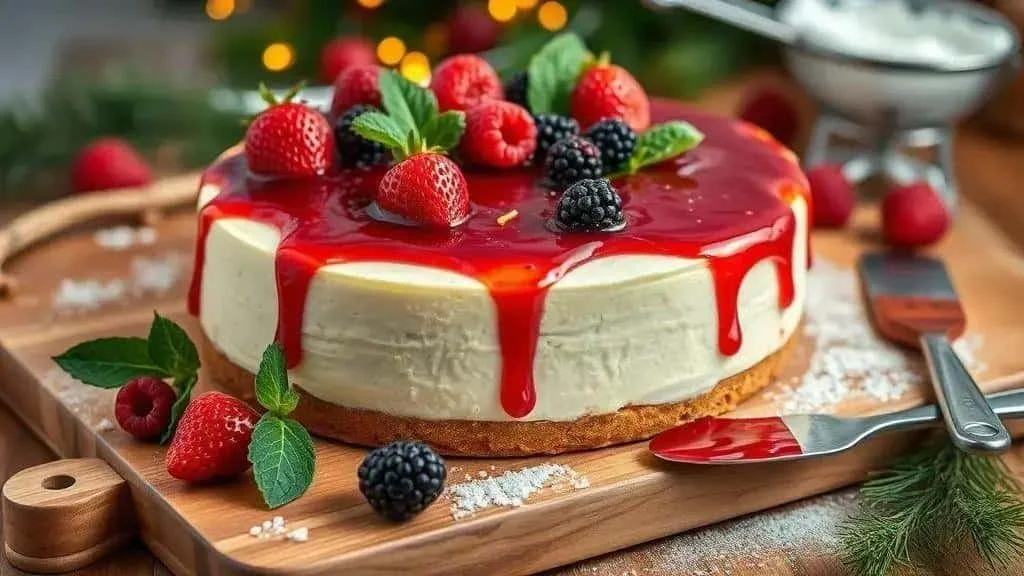
The topping gives Christmas cheesecake with mixed berries its colour and a sharp contrast to the filling. Apply it cold to a fully chilled cheesecake.
Making a glossy berry sauce
Cook berries with sugar and lemon until they release their juice, then thicken with the cornflour slurry. Strain for a smooth sauce or leave the fruit pieces in. A gelatine-based topping needs a separate method suited to that setting agent.
- Sauce proportions: use 300 g berries, 50 g sugar and 1 tbsp lemon juice, reserving a little fresh fruit for decoration if wanted. Mix 1 tbsp cornflour with 2 tbsp cold water before adding it to the pan.
- Cooking: stir over gentle heat until the sauce simmers and thickens, allowing about 5–8 minutes as a guide. Frozen fruit may need a different cooking time according to its packet. Avoid reducing the sauce until it is sticky and overly stiff.
- Using gelatine instead: check the manufacturer’s quantity and hydration method for the amount of fruit sauce. Leaf sizes and powder strengths vary, so one leaf and one teaspoon are not universal equivalents.
Assembling the topping
- Keep the cheesecake chilled: remove it from the fridge only when ready to decorate. There is no need to warm it before adding the topping.
- Spread the cold sauce: start in the centre and work gently towards the edge with a spatula. Warm sauce can soften the filling, so allow it to cool first.
- Add fresh fruit: arrange washed, dried strawberries, raspberries or blackberries on top. Slice larger strawberries and keep a few small berries for the centre.
- Build a simple pattern: make a ring of fruit around the edge, leave glossy sauce visible in the middle and add a few smaller berries for height.
- Finish the decoration: add washed mint, a little lemon zest and, if desired, a fine dusting of icing sugar for a snowy effect.
- Cut neatly: dip a knife in hot water, dry it and wipe the blade between slices. Keep the cheesecake supported on a stable serving plate.
Ideas for a festive table
- Vary the colours: combine red strawberries and raspberries with darker blackberries and bright redcurrants.
- Add a finishing texture: white chocolate shavings, chopped nut brittle or flaked almonds can provide contrast. Declare milk and nut ingredients and keep unsuitable additions separate.
- Choose a serving plate: white porcelain or a simple rustic cake stand lets the fruit stand out. Keep decorative rosemary around the plate rather than mixed indiscriminately into each slice.
- Decorate ahead: add the sauce a few hours before serving and refrigerate. For the freshest appearance and least moisture, add whole berries closer to serving time.
No-bake, vegan and reduced-fat adaptations
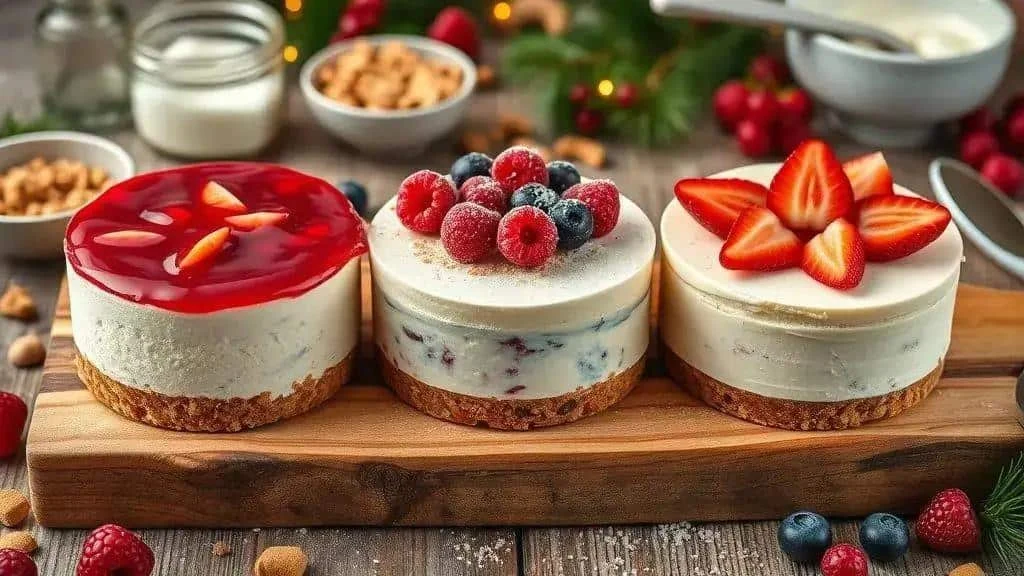
These adaptations offer different ways to make Christmas cheesecake. They change the structure as well as the ingredients, so check product instructions and make a small trial before relying on a variation for the main celebration.
No-bake cheesecake
- 200 g digestive biscuits or plain Brazilian maize biscuits, finely crushed.
- 100 g unsalted butter, melted. Coconut oil gives a different flavour and a firmer texture when cold.
- 500–600 g cream cheese, softened briefly. Full-fat cream cheese is the more dependable choice for a firm no-bake filling; reduced-fat products may need a different formulation.
- 150 g caster sugar, or a suitable sweetener at its manufacturer’s equivalent amount. Do not assume 120 g sweetener has the same sweetness or bulk.
- 200 ml whipping cream. A plant-based replacement changes the setting properties and does not remove lactose from the cream cheese.
- 1 tbsp lemon juice, to balance sweetness.
- Powdered gelatine at the amount specified for this quantity of filling. One teaspoon cannot be assumed sufficient for 500–600 g cheese plus cream. For a vegetarian setting product, use its own instructions; agar may need boiling and is not a direct teaspoon-for-teaspoon substitute.
- Make the base: mix biscuit crumbs with melted butter, press into the tin and chill for 15 minutes.
- Mix the filling: beat the cream cheese and sugar until smooth, then gently mix in the cream and lemon juice. This no-bake mixture contains no eggs.
- Add the setting agent: prepare it exactly as directed for the filling quantity. With dissolved gelatine, temper it with a little filling before mixing it evenly through the rest to reduce lumps. Follow a different method where a vegetarian product requires one.
- Chill until set: spoon onto the chilled base, level and refrigerate for 6–8 hours or until firm. If the filling has not set, serve it chilled in dessert glasses rather than attempting to cut unstable slices.
- Finish: add cold berry sauce shortly before serving and keep refrigerated until needed.
Vegan cashew-based variation
- 200 g vegan biscuits for the base, checking for milk, eggs and honey. A 160 g ground-almond base is a separate nut-containing option that needs its binding fat adjusted.
- 100 g coconut oil or firm vegan baking fat, melted, for the biscuit base.
- 450–500 g cashews for a cashew-based filling. Measure before soaking, soak refrigerated until softened and drain. Replacing them with 600 g plant cream cheese changes both moisture and structure and needs a recipe designed for that product.
- 120–150 ml coconut milk, added gradually while blending. Use only as much as needed for a smooth mixture.
- 80–100 g maple or agave syrup, adjusted to taste. These syrups still contribute sugar.
- Agar or another vegan setting agent, according to its instructions for the mixture. Do not assume one teaspoon is enough, or replace it with uncooked cornflour, which will not set the chilled filling properly.
- Prepare the vegan base: combine crushed biscuits with melted coconut oil or vegan fat, press into the tin and refrigerate.
- Blend the filling: blend the soaked, drained cashews with coconut milk and syrup until very smooth, stopping to scrape down the sides as needed.
- Activate the setting agent: measure and heat it with the liquid specified by its manufacturer. Agar generally requires boiling, rather than merely dissolving in warm water. Blend it promptly into the filling using a method suited to the product, before it starts setting.
- Assemble and chill: spread the filling over the base and refrigerate for at least 6 hours, until firm. If trialling a new combination, check a small portion first to assess the set.
- Decorate: use washed, dried berries and a vegan berry sauce. The dessert contains nuts; organic or untreated fruit still needs normal cleaning.
Reduced-fat cream cheese variation
- 200 g wholemeal biscuits, crushed. Wholemeal or sugar-free does not automatically mean lower in calories; compare the ingredients if that matters to you.
- 80–90 g suitable baking butter or spread, enough to bind the crumbs. Very low-fat spreads contain more water and may not work well. Coconut oil is not a low-fat substitute.
- 600 g reduced-fat cream cheese. Its water content and texture will affect the finished cheesecake.
- 100 g fat-free Greek yoghurt, for a tangier filling.
- Baking sweetener equivalent to 80–100 g sugar, following the product’s conversion and suitability for baking.
- 2 large eggs. This is a smaller, different filling formulation, not a guarantee of the same texture as the three-egg main recipe.
- Make the base: mix wholemeal biscuit crumbs with the melted binding fat, press into the tin and refrigerate for 15 minutes.
- Mix the filling: beat cream cheese with the measured sweetener until smooth. Add yoghurt and eggs, mixing on low speed just until combined.
- Bake gently: bake in a protected water bath at 150–160°C, 130–140°C fan. Start checking after 45–55 minutes, but continue until the edges are set and only a slight unified wobble remains in the centre. The product and tin determine the final time.
- Cool and refrigerate: cool gradually, with no more than about an hour in the switched-off oven, then refrigerate within 1–2 hours of cooking. Chill for at least 4 hours until firm.
- Finish with fruit: use washed fresh berries or berry sauce with sweetness adjusted to taste. The finished dessert’s nutritional values depend on the actual ingredients and portion size.
Choosing an adaptation
- Plan the timing: a no-bake version saves oven space but still needs several hours to set. Choose a dietary adaptation based on all its ingredients, not just one replacement.
- Make a trial: test a smaller quantity before the celebration, especially when changing cream cheese, fat, sweetener or setting agent.
- Keep chilled: every version is perishable. Cover and refrigerate to protect it from contamination and fridge odours.
Storage, preparation ahead and serving
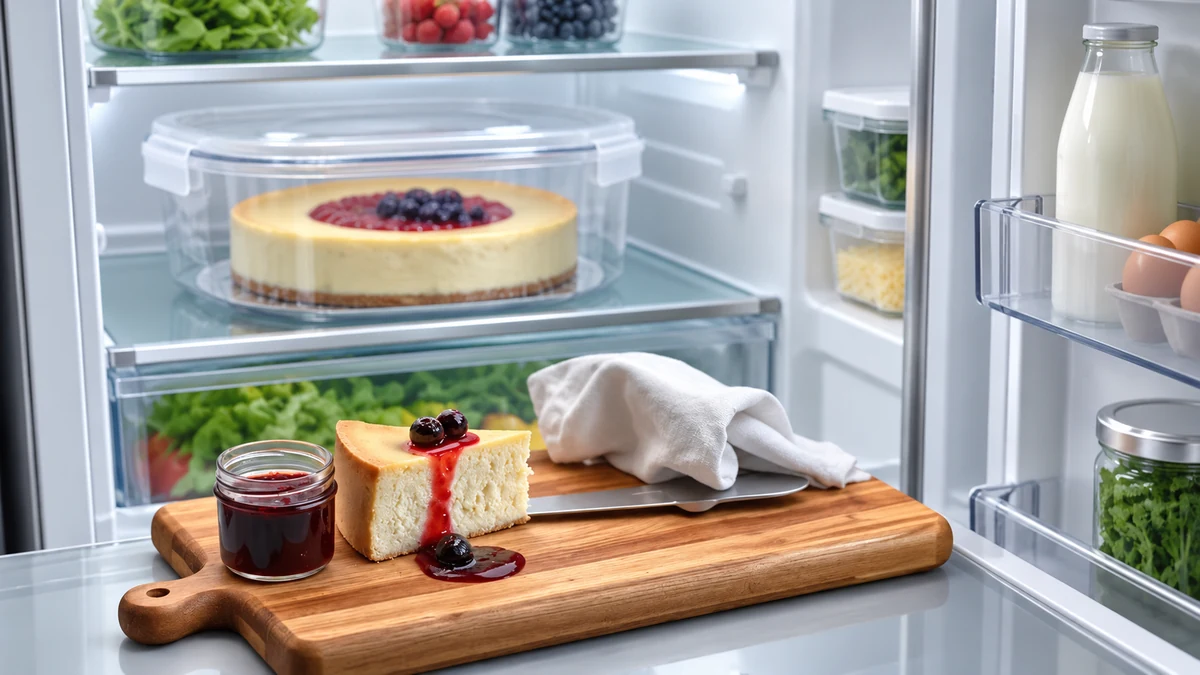
Plan cooling and storage so your Christmas cheesecake is firm, fresh and ready for the festive meal.
Storage and keeping times
- Whole cheesecake: cover, refrigerate at 5°C or below and use within 48 hours of preparation, or sooner if an ingredient’s instructions require it. Make it the day before rather than several days ahead.
- Slices: keep covered in a food container within the same storage window. Cutting the cheesecake does not restart the keeping time.
- Freezing: wrap plain chilled portions securely in food-safe wrapping and freeze promptly. Use within about a month for quality; texture may change, especially in no-bake variations. Defrost fully in the fridge, allowing longer than 8–12 hours if needed, and use within 24 hours. Add fresh garnish afterwards.
- Limit time out: keep refrigerated until serving and return suitable leftovers promptly. Aim to keep time at room temperature under two hours, less in a hot room; this includes decorating and serving time.
What to prepare ahead
- The day before: bake, cool safely and refrigerate the cheesecake overnight so it firms before decorating.
- Biscuit base: make it a day ahead and keep covered in the fridge. Check that it remains firmly pressed before adding filling.
- Berry sauce: prepare up to 48 hours ahead, cool promptly and refrigerate in a closed container. Stir cold before using; there is no need to warm it to spread on cheesecake.
- Fresh decoration: wash and dry berries and mint, then arrange them shortly before serving to keep the surface fresh.
- Transport: use an insulated cool box with frozen ice packs, keeping the cheesecake level and chilled. Avoid direct contact between packs and delicate decoration.
Serving at the festive meal
- Serve chilled: take the cheesecake out when ready to slice. If very firm, a few minutes on the table is enough; do not warm the whole dessert unnecessarily.
- Slice cleanly: warm a knife in hot water, dry it and cut firmly. Clean the blade between portions.
- Reduce moisture: use a properly thickened, cold sauce and add it a few hours before serving. Keep the dessert refrigerated. Warm jam between the filling and topping is not a dependable barrier for the biscuit base.
- Portion size: small 80–100 g slices may suit a rich dessert after a large meal. Serve on room-temperature or chilled plates, not heated plates that soften the filling.
- Extra sauce: offer a small bowl of chilled compote separately and add fresh mint and berries at the table if preferred.
- Make allergens clear: identify milk, eggs, wheat or other gluten-containing cereals, nuts and any additional allergens in the products used. Keep alternative portions and utensils separate to avoid cross-contact.
Final check: keep covered and chilled until needed, then check the decoration and transfer carefully to the serving table.
Conclusion
A Christmas cheesecake with mixed berries offers creamy filling, a crisp biscuit base and a bright fruit topping. Gentle mixing, careful baking and enough chilling time help those layers hold together.
Choose the main baked recipe or trial a no-bake, vegan or reduced-fat adaptation in advance. Setting agents and replacement ingredients behave differently, so use their instructions and check the result before a special occasion.
Thank you for reading. Follow our social channels for more Christmas recipes, practical kitchen ideas and festive inspiration.
Visit the I Love Christmas blog for more seasonal recipes, decorations and ideas for the end of the year.
FAQ — Christmas Cheesecake with Mixed Berries
Can I make the cheesecake before Christmas dinner?
Yes. Bake and chill it the day before, keeping the cooling period within 1–2 hours before refrigeration. Cover, store at 5°C or below and use within 48 hours of preparation, or sooner if the ingredients require it.
How can I make a no-bake Christmas cheesecake?
Use the separate egg-free filling over a chilled biscuit base. Measure and activate the setting agent according to its instructions for the full quantity of filling, then chill for 6–8 hours or until firmly set. Gelatine and agar are not direct equivalents.
Which substitutions help with lactose intolerance?
Check cream cheese, cream, butter and biscuits for suitable lactose-free replacements. Plant-based ingredients may change the texture. Lactose-free dairy still contains milk proteins and is not suitable for someone with a milk allergy.
How can I stop the topping making the cheesecake too wet?
Thicken the sauce properly, cool it completely and apply it a few hours before serving. Keep the cheesecake refrigerated and add washed, dried fresh berries near serving time.
What is the best way to slice the cheesecake?
Slice it chilled with a knife warmed in hot water and dried. Wipe the blade between cuts and serve on room-temperature or chilled plates. Return suitable leftovers to the fridge promptly.
Sources and Further Reading
- Food Standards Agency — chilling, freezing and defrosting food
- Food Standards Agency — food allergies and intolerances
- Food Standards Agency — cooking your food safely
- Dr. Oetker — gelatine and vegetarian setting products