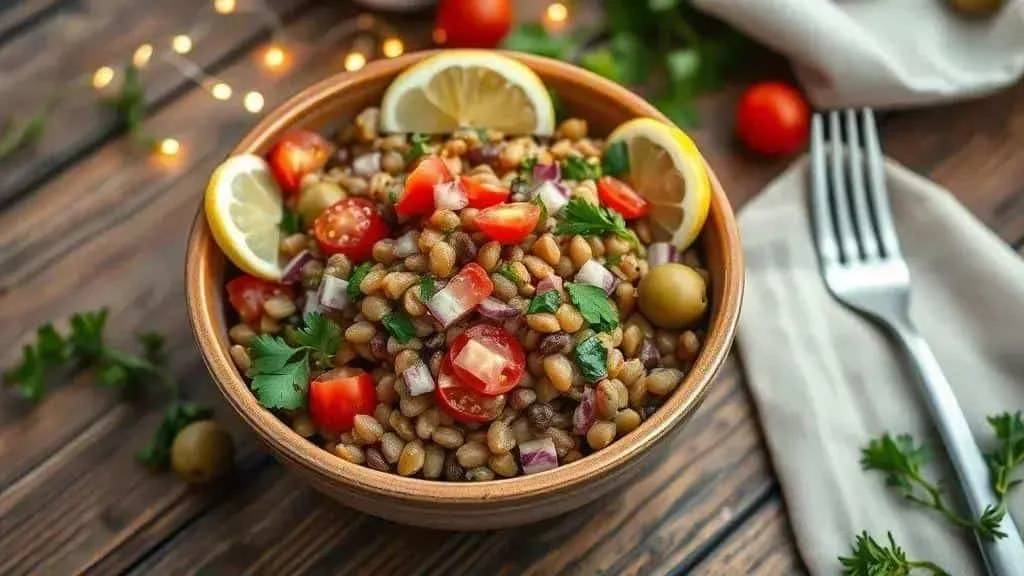
New Year’s Eve lentil salad combines tender lentils that hold their shape, fresh vegetables and a balanced vinaigrette. It is a versatile festive side with vegan and cheese-and-nut variations, and a connection to New Year prosperity traditions rather than a promise of good fortune.
A New Year’s Eve lentil salad brings flavour and a little festive symbolism to the table. This version is straightforward to prepare, full of colour and easy to adapt to different preferences.
Ingredients for good-luck lentil salad
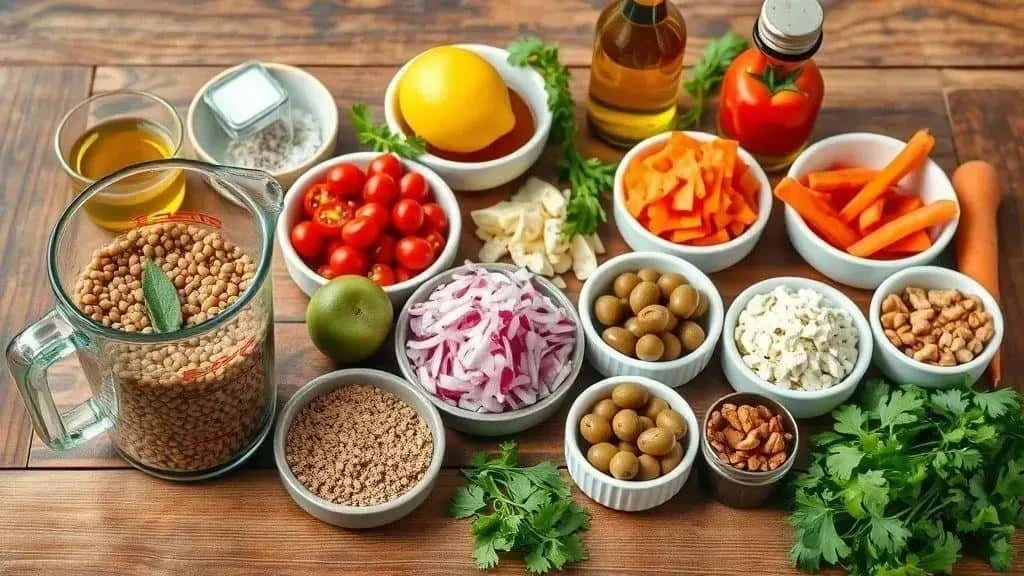
For this good-luck lentil salad, gather the ingredients below. Pay particular attention to whether lentil weights refer to dried or cooked lentils.
- 400 g dried green or brown lentils, picked over and rinsed. For tinned lentils, use the equivalent cooked, drained yield; two tins are not automatically equivalent to 400 g dried. The smaller variations below deliberately use 400 g cooked lentils instead.
- About 1 litre water or vegetable stock to start, adding more hot liquid as needed to keep the lentils covered, or follow the packet’s quantity. Chicken stock is an option only for a non-vegetarian version.
- 1 bay leaf, optional.
- Up to 1 teaspoon salt, to taste; use less with salted stock.
- 3 tablespoons extra virgin olive oil, for the vinaigrette, or use a milder olive oil.
- 2 tablespoons cider vinegar or juice of 1 lemon; white balsamic vinegar is another option.
- 150 g cherry tomatoes, halved, or use diced tomatoes.
- 75 g red onion, finely chopped; spring onions give a milder flavour.
- 80 g red pepper, finely diced; yellow or green pepper also works.
- 1 medium carrot, about 80 g, grated; grated courgette is an alternative, with excess moisture squeezed out.
- 50 g sliced green olives; raisins offer a sweeter variation.
- 15 g fresh parsley, chopped, or use coriander or chives.
- Salt and black pepper, to taste at the end.
- Optional: 100 g feta or ⅓ measuring cup toasted nuts. Use vegetarian-labelled cheese where needed. Firm tofu or suitable toasted seeds are vegan alternatives.
Substitutions and quick tips
Cook the lentils until tender throughout but still holding their shape; split red lentils are less suitable for this salad. Reduce added salt with salted tinned lentils or stock. Taste and adjust the acidity before serving. Optional additions to the dressing are 1 teaspoon Dijon mustard and 1 finely chopped garlic clove.
How to make good-luck lentil salad step by step
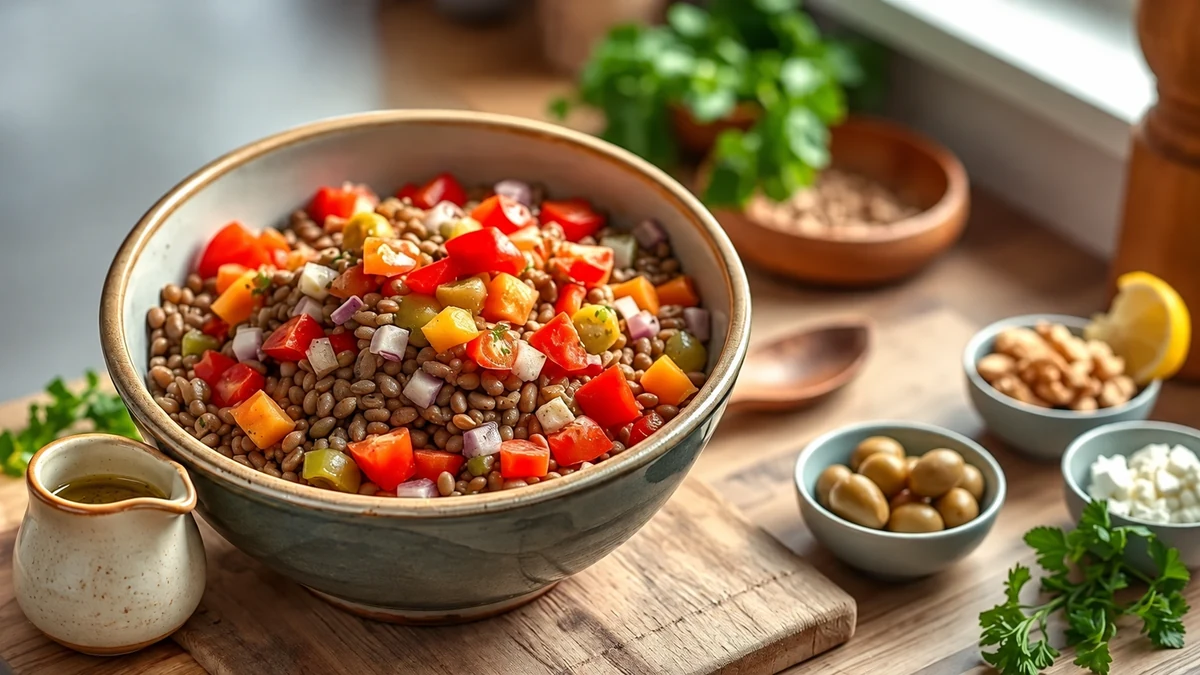
Follow these steps to make the good-luck lentil salad, checking texture as you cook.
- Prepare the lentils: weigh 400 g dried green or brown lentils, remove any debris and rinse under running water.
- Cook: place in a pan with water or stock, optional bay leaf and a little salt if appropriate. Bring to the boil, then simmer according to the packet until tender but intact. Start checking at about 18–22 minutes, allowing longer for varieties that need it, and top up the liquid so the pan does not boil dry.
- Drain and cool: drain, discard the bay leaf and spread the lentils in a clean shallow container to cool promptly. Refrigerate within 1–2 hours of cooking.
- If using tinned lentils: drain, rinse and skip cooking. Check the drained quantity and scale the vegetables and dressing to the amount you use; do not substitute tin weight directly for dried weight.
- Prepare the vegetables: halve the tomatoes, finely dice the onion and pepper, grate the carrot, slice the olives and chop the parsley.
- Make the vinaigrette: whisk the olive oil and cider vinegar or lemon juice together. Add optional Dijon mustard and garlic, then salt and pepper to taste. Check the balance before dressing the salad.
- Combine: put the cold lentils and vegetables in a large bowl, pour over the vinaigrette and fold gently so the lentils remain intact.
- Adjust: taste for salt, pepper and acidity. If the salad seems dry, add 1–2 tablespoons water or cold stock, then adjust the seasoning again.
- Rest: refrigerate for at least 30 minutes to let the flavours mingle. Take out shortly before serving rather than leaving it at room temperature for an extended period.
- Finish: add optional crumbled feta or toasted nuts just before serving, and garnish with parsley and lemon slices.
Quick tips
- Texture: avoid overcooking, but do not leave the centres hard or chalky merely to keep the lentils firm.
- Variations: chicken stock suits a non-vegetarian version, raisins add sweetness and firm tofu gives a vegan alternative to cheese.
- Storage: refrigerate covered and use within 48 hours of cooking or opening the lentils, or sooner if another ingredient requires it. Keeping dressing separate helps texture but does not extend this period.
Vegan and richer variations on good-luck lentil salad
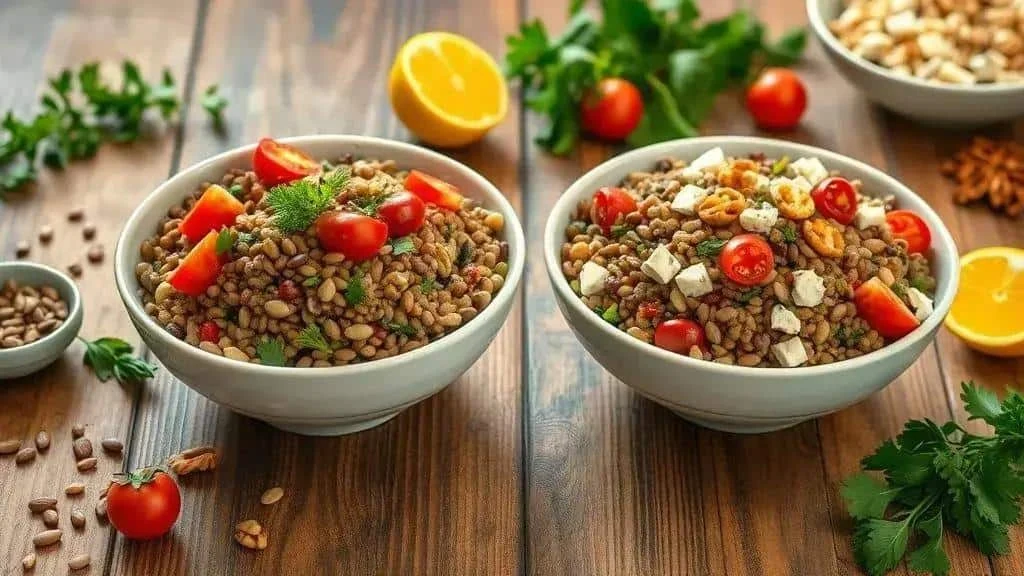
These smaller variations each use 400 g cooked, drained lentils. They are not the same yield as the main recipe, which starts with 400 g dried lentils. Scale up proportionally if needed.
Vegan variation
Use the following ingredients for a smaller vegan salad:
- 400 g cooked, drained lentils, cooled; use vegetable stock if cooking them yourself.
- 3 tablespoons extra virgin olive oil.
- 2 tablespoons lemon juice, or cider vinegar.
- 150 g cherry tomatoes, halved.
- 75 g red onion, finely chopped.
- 50 g sliced olives, or raisins for a sweeter variation.
- 40 g toasted sunflower or pumpkin seeds, for crunch; check suitability for anyone with allergies.
- ¼ measuring cup parsley, chopped.
To assemble the vegan variation:
- Combine: put cold lentils, tomatoes, onion, olives and parsley in a large bowl.
- Dress: shake the oil, lemon juice, salt and pepper in a jar, taste and adjust.
- Finish: fold in the dressing and scatter over the seeds just before serving.
Cheese, roasted pepper and nut variation
For a richer smaller salad, use the following additions. You can also include tomatoes and onion from the vegan variation above, with its lemon-and-oil dressing.
- 400 g cooked, drained lentils, cooled.
- 100 g crumbled feta or goat’s cheese; choose a suitable vegetarian cheese if required.
- 60 g toasted walnuts or other nuts.
- 80 g roasted red pepper, peeled and sliced.
- Optional truffle-flavoured oil, a few drops to taste in place of some of the dressing oil; its strength varies greatly, so do not start with a large quantity.
- Finely grated zest of 1 lemon.
To assemble the richer variation:
- Combine: mix cold lentils and roasted pepper, adding the optional tomatoes and onion if using.
- Make the dressing: use the lemon-and-oil dressing above, with lemon zest and a little optional Dijon mustard. Adjust salt and pepper.
- Add cheese and nuts: fold in the cheese gently, reserving the toasted nuts until serving.
- Finish: dress the salad and scatter over nuts and fresh herbs. Add a few drops of optional truffle-flavoured oil to taste.
Practical tips
- Balance: check salt and acidity before serving, particularly with salty cheese or olives.
- Crunch: add nuts and seeds at the last moment.
- Storage: separate dressing can preserve texture, but all perishable components still need refrigeration and appropriate storage times.
Preparing ahead and storing the salad
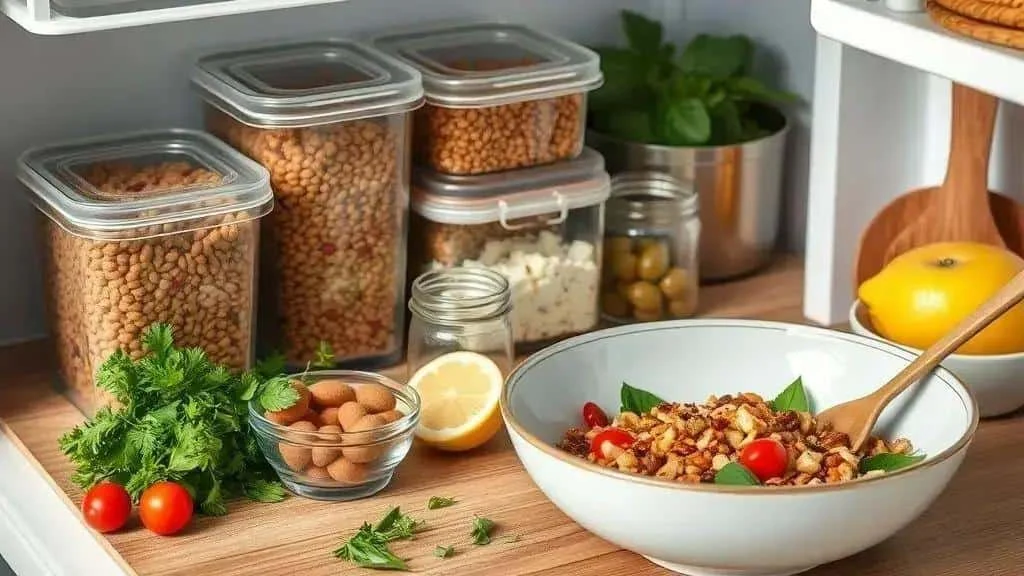
A little organisation helps your good-luck lentil salad reach the table fresh and ready to serve.
Preparation tips
- Cook until tender: the lentils should be fully cooked but retain their shape after cooling.
- Cool promptly: drain and spread in a shallow container, then refrigerate within 1–2 hours.
- Drain thoroughly: remove excess cooking water so the dressing does not become diluted.
- Keep dressing separate: cover and refrigerate the homemade vinaigrette, using within 48 hours for this preparation, especially when adding fresh garlic or herbs.
- Prepare toppings separately: cool toasted nuts or seeds completely and store dry in an airtight container.
- Delicate ingredients: add tomatoes and fresh herbs closer to serving for the best appearance.
Storage guidance
- Finished salad: refrigerate covered at 5°C or below and use within 48 hours of cooking or opening the lentils, or sooner where another ingredient requires it.
- Cooked lentils on their own: use within 48 hours of cooking or freeze promptly in portions. Adding them to a salad later does not restart their storage time.
- Vinaigrette: keep covered in the fridge and use within 48 hours for this homemade mixture; shake before use.
- Freezing: avoid freezing the assembled salad because the fresh vegetables lose texture. Plain cooked lentils can be frozen separately for later use.
- Fridge temperature: keep it at 5°C or below and store ingredients covered to protect them from contamination.
Assembly on the day
- Timing: assemble 30 minutes to 2 hours before serving, then keep refrigerated while the flavours mingle.
- Final adjustments: taste for salt, pepper and acidity; a small drizzle of oil can finish the salad if needed.
- Crunch last: add toasted nuts or seeds as the salad goes to the table.
- Presentation: use a serving bowl and garnish with herbs and citrus zest.
A simple preparation schedule
- The day before: cook, cool promptly and refrigerate the lentils, leaving time to use any leftovers within the 48-hour period.
- Also the day before: prepare and refrigerate the dressing, toast and cool dry toppings, and chop suitable vegetables into separate chilled containers.
- On the day: combine 30 minutes to 2 hours before serving, keep chilled and add crunchy toppings and delicate herbs at the end.
The nutritional role of lentils in a festive meal
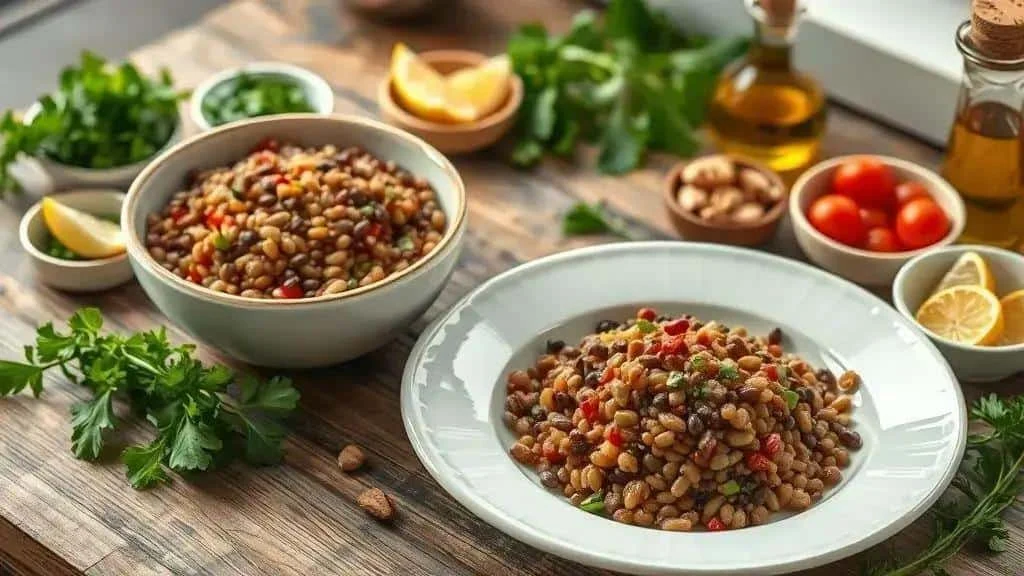
Lentils bring plant protein, fibre and several micronutrients to a New Year’s Eve meal. They are a versatile ingredient in a balanced diet, rather than a guarantee against tiredness, digestive discomfort or overeating.
Understanding the nutritional information
- Energy: use nutrition figures for the cooked or drained lentils you are serving, not the dried weight. The oil and toppings also contribute to the finished salad’s energy content.
- Protein: lentils are one useful plant-based protein source within a varied diet.
- Fibre: pulses help increase dietary fibre, which contributes to normal digestive function.
- Iron: lentils contribute plant-derived iron. Eating them is not a substitute for assessment or treatment of persistent fatigue or iron deficiency.
- Folate: lentils contribute this B vitamin as part of a varied diet; quantities vary by product and preparation.
- Other minerals: potassium and magnesium are among the nutrients found in lentils. Check a suitable food-composition source or product information when you need exact amounts.
Practical advantages at the table
- A substantial base: cooked lentils make a satisfying alternative to a salad made solely from leaves.
- Flexible portions: serve a small side or a larger portion according to the rest of the meal and your appetite.
- Variety: including pulses alongside vegetables and wholegrains contributes to a varied eating pattern; this dish is not a treatment for cholesterol or blood pressure.
- Adaptability: choose vegan, cheese or nut variations, checking that the ingredients suit your guests rather than assuming one version suits everyone.
- Symbolism: lentils are associated with prosperity in New Year food traditions, including celebrations in Brazil. This is a cultural custom, not a promise that eating them changes your luck.
Quick tips
Serve lentils with vitamin-C-containing ingredients such as lemon and tomatoes, which can help the body absorb plant-derived iron. Tofu, cheese or nuts provide additional texture and nutrients where appropriate. Keep portions suited to the whole meal.
Accompaniments and serving ideas

Pair the good-luck lentil salad with contrasting textures and flavours for a varied celebration menu.
Suggested accompaniments
- Fluffy white rice provides a mild accompaniment to the tangy dressing.
- Roast chicken with herbs is a familiar option alongside the salad.
- Grilled fish works well when you want a gently flavoured main dish.
- Crunchy farofa, a Brazilian toasted cassava-flour side, adds a contrasting texture.
- Roasted vegetables such as carrots, squash and broccoli add colour and variety.
- Cheese and bread make easy sharing starters, with suitable alternatives for dietary requirements.
- Pickles and extra dressing allow guests to adjust the flavours on their own plates.
- Desserts such as fruit salad or small mousse portions round off the meal.
- Drinks can include fruit-infused water and other alcohol-free choices, with optional sparkling wine for a toast.
Serving the celebration meal
- Temperature: keep the salad refrigerated until shortly before serving and replenish small portions from the fridge.
- Buffet order: put starters and salads before main courses and warm sides, with desserts in a separate area if possible.
- Portions: allow roughly 100–150 g per person as a side, adjusting for appetites and the number of other dishes.
- Buffet arrangement: use stable stands for different heights and provide separate serving utensils and clear ingredient labels.
- Finish at the table: add nuts, seeds and fresh herbs just before serving.
- Optional extras: offer lemon or vinegar dressing, olives and cheese separately so guests can adjust their portions.
- Dietary requirements: label vegan or gluten-free versions only after checking all ingredients, and use separate utensils to avoid allergen cross-contact.
Quick presentation ideas
- An attractive bowl: a simple ceramic or rustic serving dish highlights the colours.
- Herbs and zest: parsley, chives and lemon zest add a fresh finish.
- Small portions: individual bowls with suitable cutlery are convenient when guests want to try several dishes.
Finishing touches for a festive presentation
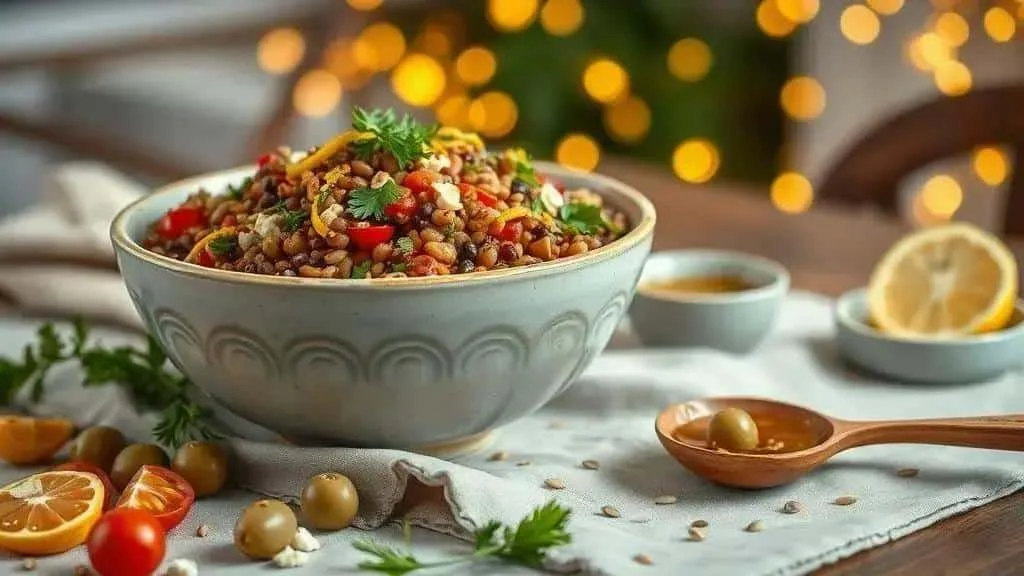
Use colour, texture and aroma to present your good-luck lentil salad attractively without making service complicated.
Finishing touches
- Citrus zest: finely grated lemon or orange zest adds fragrance.
- Fresh herbs: finish with parsley, chives or mint.
- Crunch: sprinkle over toasted nuts or seeds just before serving.
- A final drizzle: add a little olive oil only if the dressed salad needs it.
- Savoury contrast: sliced olives or feta add saltiness, so taste before adding more salt.
Arranging the serving dish
- Choose a bowl: use clean, food-safe glass or ceramic, or a wooden bowl intended for serving food.
- Spread evenly: arrange the salad without piling it excessively high and keep the rim clean.
- Distribute the colour: spread tomatoes, pepper and carrot throughout the lentils.
- Add texture: scatter nuts or seeds over the top at the last moment.
- Finish with herbs: add fresh herbs and citrus zest as the dish goes to the table.
- Serving utensils: provide a broad serving spoon and, if helpful, a second spoon for easy portioning.
Setting the table
- Crockery and cutlery: neutral colours let the salad stand out.
- Napkins: linen or cotton in festive colours can complement the setting.
- Lighting: warm fairy lights or battery-operated candles create a welcoming atmosphere.
- Extras: lemon wedges, herbs and small bowls of olives or cheese give guests a choice of finishes.
- Clear labels: identify the different versions and relevant allergens without crowding the serving area.
Practical reminders
- Taste first: adjust salt and acidity before serving.
- Keep it simple: a few well-chosen garnishes are easier to serve than an overloaded platter.
- Individual bowls: these offer a neat alternative to a large shared dish, especially at a buffet.
To finish
This good-luck lentil salad is a versatile, colourful choice for New Year’s Eve, with straightforward preparation and plenty of ways to vary the flavours.
Thank you for reading. Follow our social pages for more recipes and celebration ideas, and share a photograph of your version if you make it.
Explore the I Love Christmas blog for more seasonal inspiration. Happy New Year!
Frequently asked questions about good-luck lentil salad
How long should I cook the lentils?
Follow the packet for your green or brown lentils and start checking around 18–22 minutes, allowing longer where needed. They should be tender throughout but hold their shape. Keep enough liquid in the pan while they cook.
Can I use tinned lentils instead of dried?
Yes. Drain and rinse them, check their drained weight and scale the other ingredients accordingly. Tinned weight is not equivalent to dried weight. The smaller variations use 400 g cooked lentils; the main recipe starts with 400 g dried.
How should I store the finished salad?
Cover and refrigerate at 5°C or below. Use within 48 hours of cooking or opening the lentils, or sooner if another ingredient requires it. Add crunchy toppings at serving time; keeping them separate does not extend the salad’s safe storage period.
Can I make it vegan?
Yes. Use water or vegan vegetable stock for cooking, omit cheese or replace it with suitable tofu or seeds, and check the dressing ingredients. Nuts are another option where suitable for your guests.
Can I prepare it ahead for New Year’s Eve?
Cook, cool promptly and refrigerate the lentils the day before. Store dressing separately, assemble 30 minutes to 2 hours before serving and keep chilled. Add nuts, seeds and delicate herbs just before serving.
How much should I serve per person?
Allow roughly 100–150 g as a side dish, adjusting for appetites and the other food available. Larger portions may suit a meal in which the salad is a main component.
Sources and Further Reading
- Food Standards Agency — chilling, freezing and defrosting food
- Food Standards Agency — food allergies and intolerances
- NHS — a balanced vegetarian diet