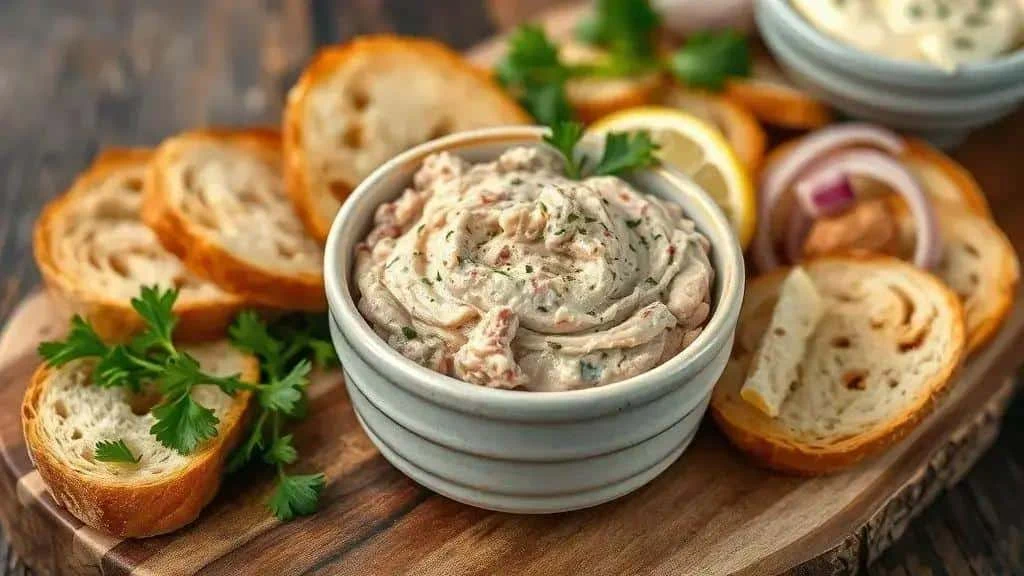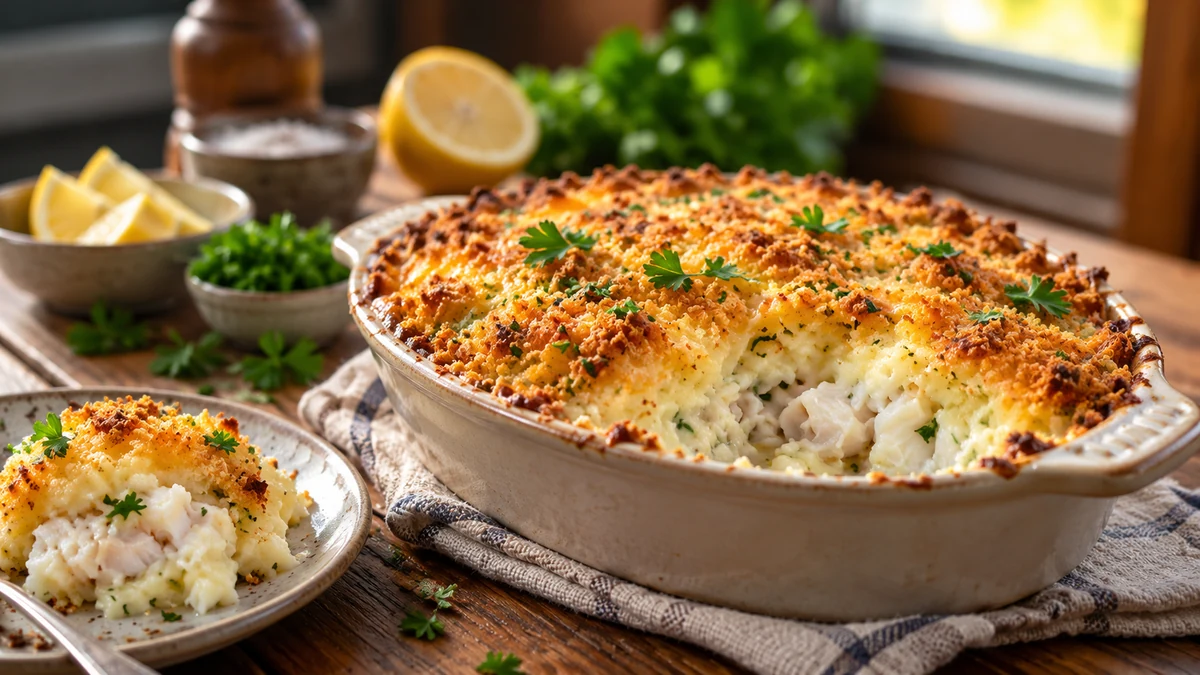
This potato-based take on bacalhau espiritual combines desalted cod, mashed potato and béchamel beneath a cheese and breadcrumb topping. It is a comforting festive bake; unlike many familiar Portuguese versions, this variation uses potato rather than soaked bread and grated carrot.
Salt cod and potato gratin brings a creamy centre and golden crust to the Christmas table. Here is how to prepare the fish, make the sauce and assemble this variation on bacalhau espiritual.
Ingredients for salt cod and potato gratin
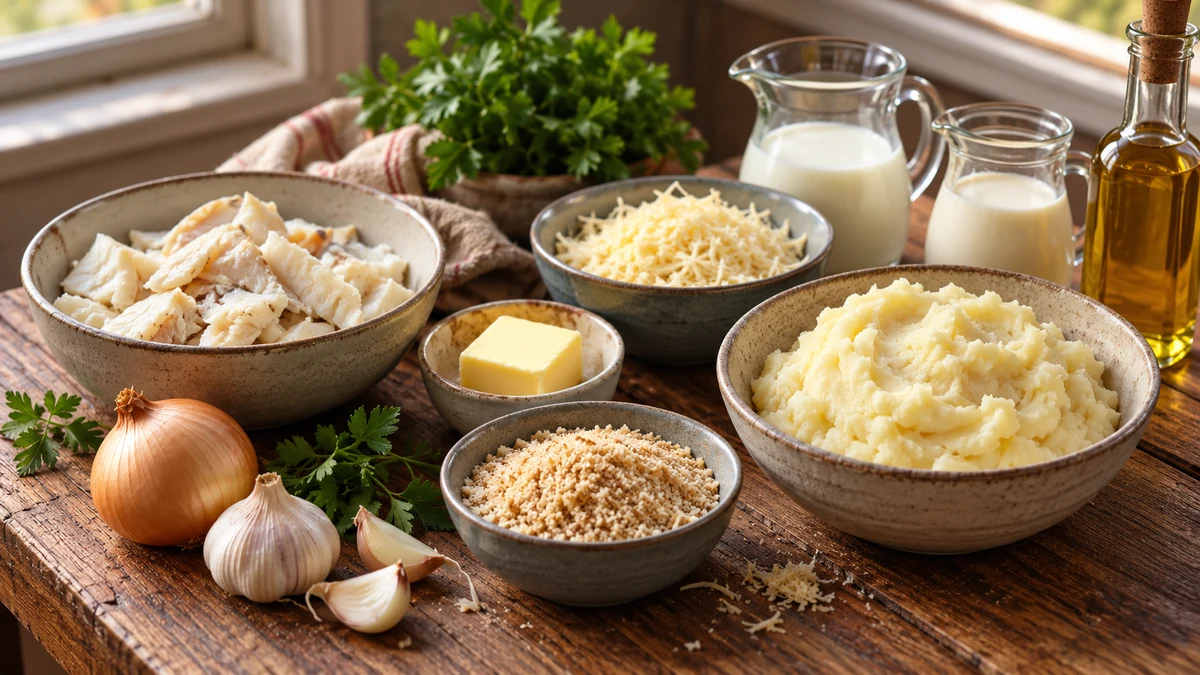
For this potato-based bacalhau espiritual variation, prepare the following ingredients. Fish and potato weights refer to the prepared ingredients, not a fixed number of fillets or potatoes.
Ingredients
- 600 g desalted salt cod, drained and free of skin and bones – weigh after soaking. Follow the supplier’s desalting instructions; fresh cod or another firm white fish is an alternative with a milder flavour and needs no desalting.
- 400 ml milk – for the white sauce; a little extra may be needed to adjust the finished mixture. Use an unsweetened, unflavoured alternative if required.
- 3 tablespoons butter – all reserved for the béchamel. Use the olive oil below for the onion so the butter is not counted twice.
- 3 tablespoons plain flour – for the béchamel. Cornflour is not a direct spoon-for-spoon replacement in this method; use a suitable gluten-free sauce method if needed.
- 1 medium onion, finely sliced.
- 2–3 garlic cloves, finely chopped, to taste.
- 400 g plain mashed potato – weigh the cooked, drained potato rather than assuming four potatoes give this amount. Sweet potato makes a different, sweeter variation.
- 150 ml cream – single cream works for a pourable mixture; use a suitable unsweetened plant-based cooking cream if required.
- 150 g grated cheese – Parmesan or a cheese suitable for gratinating; use a suitable dairy-free alternative where needed.
- 2 tablespoons breadcrumbs – for the crisp topping.
- 2 tablespoons chopped fresh parsley – to finish.
- A pinch of grated nutmeg – for the white sauce.
- Salt and black pepper, to taste – season cautiously because the fish and cheese may already be salty.
- 1 tablespoon olive oil – for the onion, plus a little extra to grease the baking dish if needed.
Quick tips
Scale the fish, sauce and potato together when changing the batch size. Taste only fully cooked fish or a cooked sample before adjusting salt. Less cream or a thinner cheese layer changes the richness; substituting olive oil for butter does not automatically make a dish low in calories.
How to make salt cod and potato gratin

- Desalt the fish if necessary: follow the product instructions, keeping it submerged in cold water in a covered container in the fridge throughout and changing the water as directed. Soaking time varies greatly with thickness; do not taste uncooked fish. Weigh out 600 g after desalting and draining.
- Cook and flake: gently poach the desalted fish in water until cooked through and flaking, rather than boiling vigorously. Around 8–10 minutes may suit some pieces, but thickness matters. Drain, allow just enough cooling to handle, and remove all skin and bones as you flake it.
- Prepare the potato: boil peeled potato until tender, drain well and mash. Weigh 400 g for the recipe. Keep it plain at this stage; the béchamel and cream will provide richness.
- Soften the onion and garlic: heat the tablespoon of olive oil in a large pan. Cook the onion until soft, then add the garlic and cook briefly without letting it burn.
- Add the fish: gently fold the freshly cooked flakes into the onion mixture. Avoid vigorous stirring, which breaks them up excessively. Continue straight to the sauce and assembly rather than leaving the pan at room temperature.
- Make the béchamel: melt the 3 tablespoons of butter in another pan, stir in the flour and cook gently for about a minute. Gradually whisk in 400 ml milk until smooth, then simmer gently until thickened and the flour is cooked. Add nutmeg and pepper; check salt cautiously.
- Combine: mix the mashed potato with the béchamel and 150 ml cream, then gently fold in the fish and onions. It should be creamy and spoonable, not runny. Add a small splash of extra milk only if needed.
- Assemble: spoon into a lightly greased ovenproof dish with room for bubbling. Level gently and scatter over the 150 g grated cheese and 2 tablespoons breadcrumbs.
- Bake: put into a preheated oven at 200°C, or 180°C fan. A warm assembled dish may take around 15–20 minutes, but cook until piping hot throughout and golden on top; colour alone is not enough. Rest for about 5 minutes before serving.
Tips and variations
- Salt: taste the cooked mixture before seasoning; the desalted fish and cheese still contribute salt.
- Texture: keep the sauce creamy enough to coat the fish. Extra béchamel changes the balance, while reducing cream makes a less rich version rather than a guaranteed low-calorie meal.
- Substitutions: use another suitable firm white fish if cod is unavailable. Fresh, unsalted fish needs no soaking; a dairy-free version must also replace butter and cheese, not just milk and cream.
- Browning: if the centre is already piping hot but the topping remains pale, finish briefly under a suitable grill. Use a grill-safe dish and watch continuously.
Variations on the creamy cod gratin
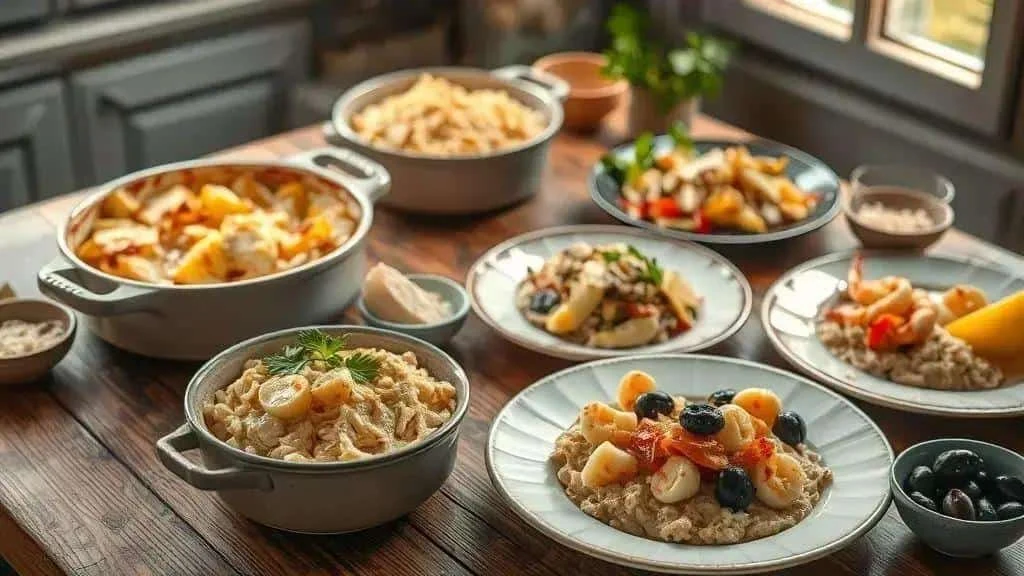
These salt cod gratin variations change the flavour, texture or ingredients while keeping a creamy baked finish. Recheck allergens and cooking requirements after any substitution.
Plant-based variation
Replace the fish with cooked mushrooms or suitable prepared hearts of palm. Use unsweetened plant-based milk and cream, dairy-free fat and a suitable topping. A little crumbled nori can add a sea-like flavour; vegetable stock adds seasoning but not the same flavour.
- Substitutions: mushrooms or hearts of palm, oat or soya drink, plant-based cooking cream and dairy-free spread. Check labels, including breadcrumbs and any stock.
- Tip: nutritional yeast can add savouriness to a dairy-free topping; it does not melt like cheese.
A less rich version
Use less cream and a thinner cheese topping if you prefer a less rich bake. Replacing some potato with cooked beetroot makes a sweeter, pink variation, rather than a proven lighter equivalent. Add it only if that flavour and colour are wanted.
- Substitutions: reduced-fat cream changes richness; yoghurt adds tang but may split when heated. Choose a sauce method suited to the ingredients rather than swapping them indiscriminately.
With other seafood
Prawns or mussels can be added to the cod mixture. Prepare and cook them safely according to the product, remove shells where appropriate, and assemble promptly. The finished bake must be hot through without relying on the topping’s colour.
- Suggested balance: 400 g prepared cod and 200 g peeled prawns replace the 600 g cod; cooking times depend on whether the seafood starts raw or cooked.
- Tip: check seasoning and tell guests about fish, crustacean or mollusc allergens as applicable.
With peppers and olives
Fold roasted red pepper strips and sliced black olives into the fish mixture. They add colour and a savoury contrast to the creamy sauce and cheese topping.
- Suggested addition: 1 roasted red pepper and 80 g sliced olives.
Using a different white fish
Pollock, hake or another suitable firm white fish makes a milder variation. Only salted fish needs desalting; cook fresh fish according to its thickness and check carefully for bones.
- Substitutions: start with the same prepared weight of suitable white fish. Increasing to 700–800 g changes the fish-to-sauce balance, so it is an optional adjustment rather than a requirement for a milder species.
Individual portions
Use individual ovenproof dishes for smaller servings. Finish with a thin layer of crumbs and cheese, then add parsley or lemon zest after baking.
- Portions: dividing the batch into six gives about 100 g prepared cod per dish, plus potato and sauce. Choose dishes large enough for the full mixture and leave space at the rim.
Browning and finishing
Start with an evenly heated oven at 200°C, or 180°C fan. Parmesan or panko changes the topping’s flavour and texture. Use a brief grill finish only after the centre is hot and only with suitable cookware.
- Optional finish: a very small drizzle of extra olive oil over the crumbs can help them brown, but is not essential.
Choosing and desalting salt cod

- Type of fish: choose a reputable product suitable for cooking and flaking. Thick loins take longer to soak than thin pieces or shredded fish; follow the supplier’s instructions.
- Condition: check packaging, dates and storage instructions. Reject spoiled or damaged products, but remember that normal appearance and smell do not guarantee food safety.
- Cut: loins or other pieces can be flaked for this bake. There is no need to buy a presentation cut that will ultimately be broken up.
- Prepared weight: allow roughly 100–150 g desalted, drained fish per main-course serving, adjusting for appetites and the rest of the meal.
Desalting step by step
- Plan ahead: follow the packet’s soaking schedule. Thin shreds may need much less time than whole pieces, while very thick loins can take longer than 48 hours; a universal 24–48-hour rule is unreliable.
- Size the pieces: follow the supplier’s advice on cutting before soaking. Changing thickness changes the desalting time, so keep pieces reasonably even.
- Use cold water: submerge the fish in a suitable covered food container with enough cold water. Do not use warm water as a shortcut.
- Change the water: replace it with fresh cold water at the intervals specified for the cut, rather than applying one schedule to every product.
- Keep refrigerated: maintain the fridge at 5°C or below and keep the fish chilled throughout soaking, separate from ready-to-eat foods.
- Check saltiness safely: cook a small sample completely before tasting. A fixed one-minute cooking time is not suitable for every sample, and raw fish should not be tasted.
- Drain: drain well after soaking and pat dry if needed. Weigh the prepared amount before proceeding with the recipe.
- If time is short: buy ready-desalted fish and follow its instructions. Milk soaking or frequent water changes are not guaranteed shortcuts for thick salted pieces.
- After desalting: cook promptly, following the product’s storage and use-by instructions. If freezing is suitable, freeze in labelled portions; thaw in the fridge and use within 24 hours of complete defrosting.
Practical tips
- Plan the amount: soak only what you need unless you have arranged safe storage for the rest. Extra soaking can remove more flavour than intended.
- Season at the end: taste a fully cooked sample because sauce reduction and cheese can change the final saltiness.
- Check for bones: inspect carefully while flaking with clean utensils; do not assume a boneless label means no checks are needed.
Assembly and a golden topping

For this bacalhau espiritual variation, either fold everything together as above or layer the fish between the potato and sauce. These are alternative assembly methods, not extra quantities to add to the same batch.
Alternative layered assembly
- Prepare the dish: grease lightly and preheat the oven to 200°C, or 180°C fan.
- First layer: spread half the prepared potato, béchamel and cream mixture evenly in the dish.
- Add the fish: distribute the cooked cod and onion mixture in an even layer, breaking up large clumps gently.
- Cover: spoon over the remaining potato and sauce mixture and level without pressing it hard.
- Topping: use the recipe’s 150 g cheese and 2 tablespoons breadcrumbs. An extra light drizzle of oil is optional, not a further tablespoon required by the method.
- Individual dishes: leave about 1 cm of space below the rim to reduce overflowing.
- Bake promptly: the assembled dish does not need a room-temperature resting period. If making ahead, cool quickly and refrigerate within two hours; a chilled dish will take longer to heat through.
Tips for a golden gratin
- Temperature and time: bake at 200°C, or 180°C fan. Around 15–20 minutes is a guide for a warm mixture, not a safety guarantee. The centre must be piping hot before a brief optional grill finish.
- Oven position: start on the middle shelf. If moving closer to the grill, check the dish is suitable and do not leave it unattended.
- Crisp topping: finely grated cheese and panko or ordinary crumbs give different textures. Spread them evenly rather than in a thick, dry layer.
- Avoid drying out: if the top browns before the centre is hot, cover loosely with foil and continue baking. Once hot throughout, rest for about 5 minutes before serving.
- Fan ovens: the suggested fan setting is 180°C; follow your appliance guidance and check the food rather than trusting a fixed time.
- Finishing touch: add chopped parsley or a little lemon zest just before serving.
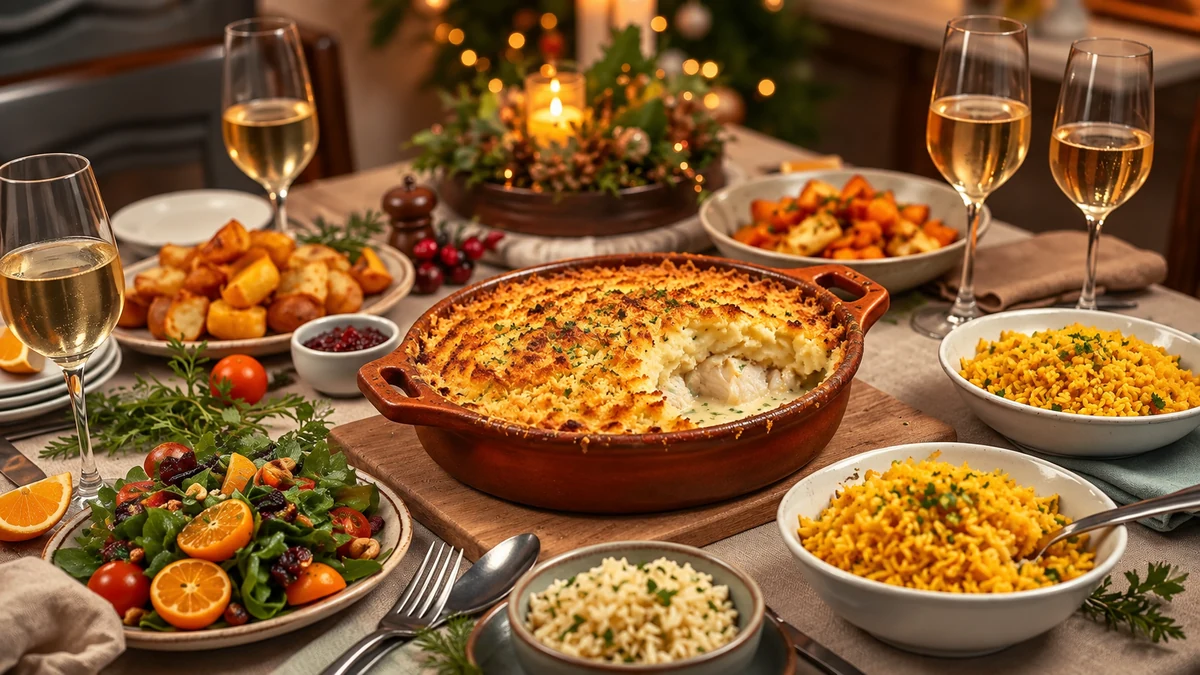
Balance the creamy salt cod and potato gratin with fresh leaves, colourful vegetables or a modest side dish. It already contains potato, so several additional starches are not essential.
Suggested sides
- Roast potatoes – if wanted, allow roughly 150–200 g per person and season wedges with rosemary and olive oil.
- Leaf and orange salad – rocket, lettuce and orange segments provide freshness; around 80 g leaves per person is a generous guide.
- Sautéed vegetables – around 100 g per person of carrots, courgettes or asparagus, adjusted to the menu.
- Saffron or lemon rice – a small cooked serving can accompany the fish, although the gratin already supplies a starchy element.
- Seasoned chickpeas – a small portion of cooked chickpeas offers a different texture; season lightly alongside the salted fish.
- Sliced rustic bread – one or two slices can be useful for the sauce if guests want them.
- Herb-roasted vegetables – squash or sweet potato adds a sweeter contrast.
Planning portions
Allow roughly 100–150 g prepared cod per person as part of the main dish. The 600 g fish quantity therefore suits around four to six servings depending on appetites, sauce portions and sides.
Drinks to serve
- Dry white wine – an Alvarinho or young Verdejo is an optional pairing for adults who drink alcohol.
- Brut sparkling wine – another optional pairing with the creamy sauce.
- Alcohol-free option – sparkling water with lemon or a citrus iced tea.
Preparing for a festive meal
- Finish close to serving: bake until hot through shortly before the meal to keep the topping crisp. Allow extra time if the dish has been chilled.
- Prepare cold sides ahead: keep washed salad ingredients and suitable dressings covered in the fridge until needed.
- Reheating: reheat only once, covered initially to limit drying, until steaming hot throughout. Time depends on portion size; uncover briefly at the end if needed. A browned crust alone is insufficient.
- Buffet portions: smaller servings containing around 80–100 g prepared fish may suit a buffet with several mains. Keep food safely hot or chilled rather than leaving the full tray out for a prolonged period.
Guests with dietary requirements
Offer a separately prepared plant-based option using mushrooms and a suitable sauce if needed. Label ingredients clearly and use clean utensils. Lactose-free dairy still contains milk proteins and is not suitable for a milk allergy.
Bacalhau espiritual: background and variations
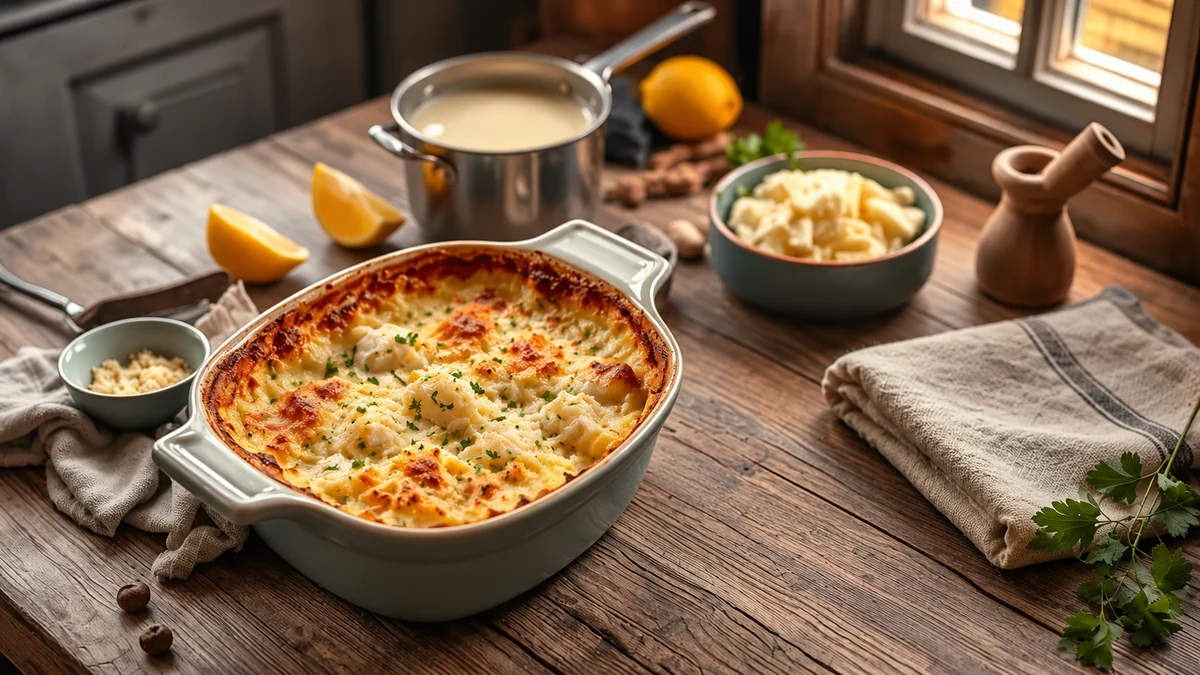
Bacalhau espiritual is associated with Portuguese cooking and has inspired many home adaptations. This page’s potato version should be distinguished from recipes using bread soaked in milk and grated carrot.
The name and its history
Lisbon’s Centro Interpretativo da História do Bacalhau associates the dish with the Countess of Almeida Araújo and the Cozinha Velha restaurant at Queluz in 1947, drawing on French brandade. That account is more specific than an unsupported claim that the dish originated in convents or that its name necessarily comes from Lent.
Cultural context
Creamy cod bakes suit celebratory meals in Portugal and Brazil, where salt cod has a strong place in festive cooking. Household versions differ in their sauce, vegetables and topping.
Culinary details
- Different versions: bread and carrot feature in many recognisable recipes; this version instead uses mashed potato for body.
- Stretching the fish: combining cod with a sauce and a starchy ingredient makes a substantial dish for several people.
- Serving: a shared baking dish suits a family table, while individual ovenproof dishes help with portioning.
- Local adaptations: another suitable white fish or a mushroom-based version changes the dish but can follow the same creamy baked format.
How the textures work
Béchamel and mashed potato create a soft centre, with grated cheese and breadcrumbs giving contrast on top. Nutmeg, parsley and a little lemon zest can add aroma without overwhelming the fish.
Presentation ideas
- Describing the dish: ‘creamy salt cod and potato gratin’ tells unfamiliar guests what this particular version contains.
- Individual servings: separate dishes make it easier to identify different versions, though allergen safety also requires careful ingredients and preparation.
- Family meals: a warm gratin can become part of a household’s festive menu without claiming one fixed recipe for every family.
Using the background
Knowing that bacalhau espiritual has several interpretations helps you describe this potato variation accurately and adapt it thoughtfully.
We hope this creamy salt cod and potato gratin gives you a practical idea for a festive meal.
If you try it, share your result and any ingredient adjustments on our social pages.
Follow us and visit I Love Christmas for more recipes and ideas for the festive season.
Happy cooking, and enjoy the celebrations!
FAQ — Salt Cod and Potato Gratin
How should I desalt the cod?
Follow the product instructions for the thickness of the fish, using cold water and keeping it refrigerated throughout. Change the water as directed and taste only a completely cooked sample. Ready-desalted fish avoids the soaking stage.
Can I use a different fish?
Yes. Suitable firm white fish such as pollock or hake gives a milder variation. Fresh unsalted fish does not need desalting; use the prepared weight in the recipe and cook it appropriately.
How do I prevent a dry topping?
Keep the filling creamy and avoid a thick layer of crumbs. If the top browns too early, cover loosely and continue until the centre is piping hot, then rest briefly before serving.
Can I freeze the finished gratin?
Cool promptly in smaller portions, cover and refrigerate or freeze within two hours. Refrigerated leftovers should be eaten within 48 hours; label frozen portions and use within about three months for quality. Thaw in the fridge, use within 24 hours of defrosting and reheat once until steaming hot throughout.
How can I make it dairy-free?
Replace the milk, cream, butter and cheese with suitable dairy-free alternatives and check all ingredient labels. Lactose-free milk products are different from dairy-free products and remain unsuitable for a milk allergy.
How much should I serve per person?
Around 100–150 g prepared fish per person is a useful main-course guide, plus the potato and sauce. The batch therefore makes roughly four to six servings, depending on appetites and accompaniments.
Sources and Further Reading
- Museu do Bacalhau — Bacalhau espiritual
- Seafood from Norway — Desalting salt cod
- Food Standards Agency — Cooking your food