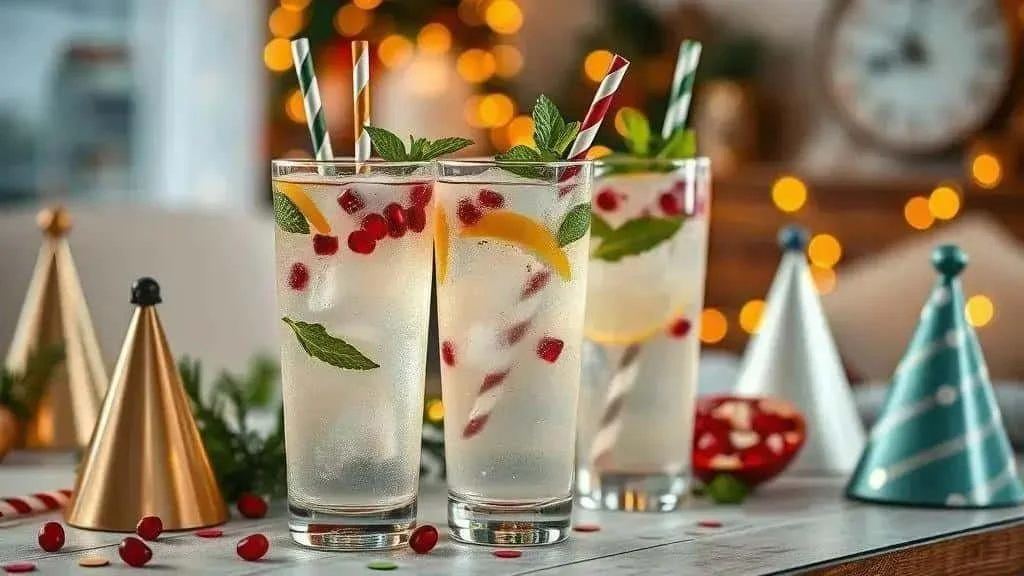
These alcohol-free New Year’s Eve fruit drinks offer an occasional festive choice for older children, using fruit juice and water with optional syrup. The guide includes accurate batch quantities, no-added-syrup variations, suitable cups, careful fruit preparation and adult supervision. These recipes are not drinks for babies.
Colourful alcohol-free New Year’s Eve fruit drinks can help older children join a family celebration. Keep servings small, offer water as well and choose decorations appropriate to each child’s age. The following ideas focus on simple flavours and practical preparation.
Ingredients for the children’s festive fruit drink
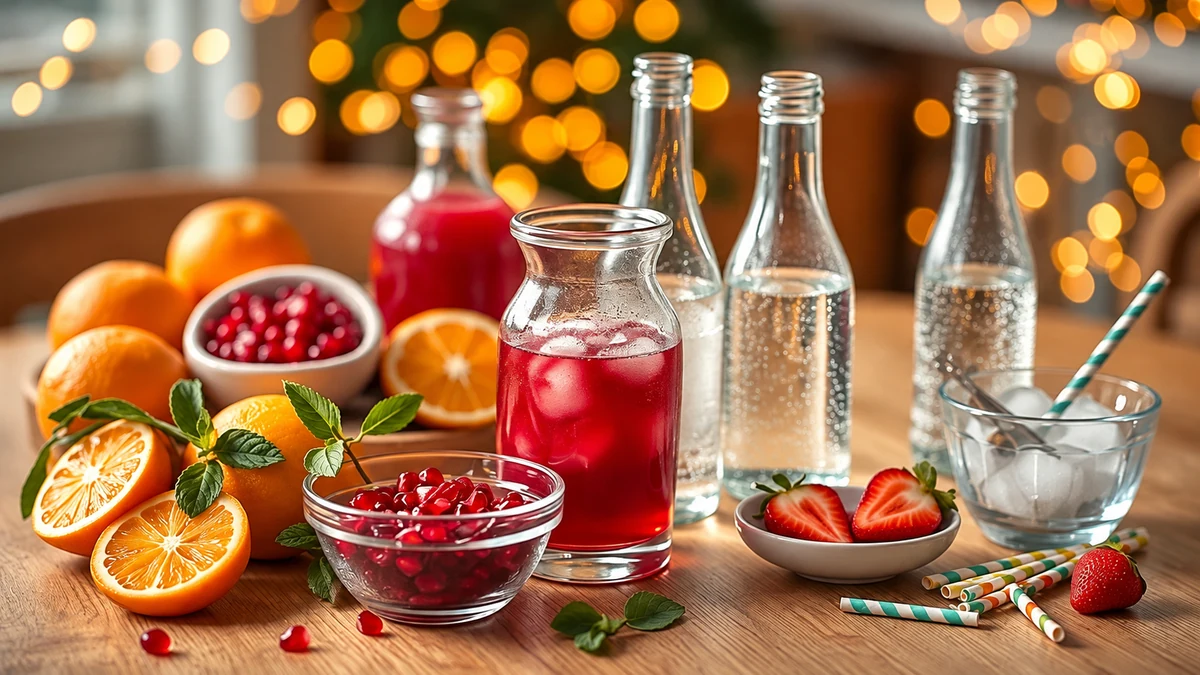
- 300 ml chilled orange juice — strained if freshly squeezed. Apple or peach juice gives a different flavour; check packaged products for added sugar.
- 150 ml cranberry or pomegranate juice — for colour and sharpness. Diluted grape juice is an alternative; cranberry juice drinks often contain added sugar.
- 200 ml chilled water — still water works well. Sparkling water is an optional variation for older children who enjoy it.
- Up to 50 ml sugar syrup, optional — made with equal weights of water and sugar. Start without it, as the juices may be sweet enough. Honey and agave also add sugar; never give honey to a child under one.
- Up to 1 tablespoon fresh lime juice — add gradually to taste; lemon juice is an alternative.
- Chilled ingredients — use these instead of loose ice in young children’s cups. Ice is optional for older children who can manage it safely.
- Optional fruit for garnishing — use soft fruit prepared for the child’s age. Leave loose pomegranate seeds, whole cranberries and whole blueberries out of young children’s drinks.
- Prepared orange and strawberry pieces — remove pips, peel and tough membranes where necessary; serve suitable soft pieces separately if preferred.
- Up to 8 mint leaves, optional — infuse briefly and remove before serving to younger children. Basil gives a different aroma.
- Colourful cups or napkins — decorate around the drink rather than using cocktail sticks, detachable ornaments or sharp picks.
Yield and adjustments
Yield: about 650–715 ml, depending on the optional syrup and lime. That makes approximately five small servings of 130–140 ml, not four 220 ml drinks. Add extra water if a more diluted drink is preferred.
Substitutions and considerations
Use fruit juice for flavour, rather than treating it as an everyday drink. To reduce sugar per serving, leave out syrup and dilute with more water. Fruit purée, honey and agave do not make a drink sugar-free. Serve these as occasional meal-time drinks for older children; water and appropriate milk remain the usual choices.
How to prepare the festive fruit drink
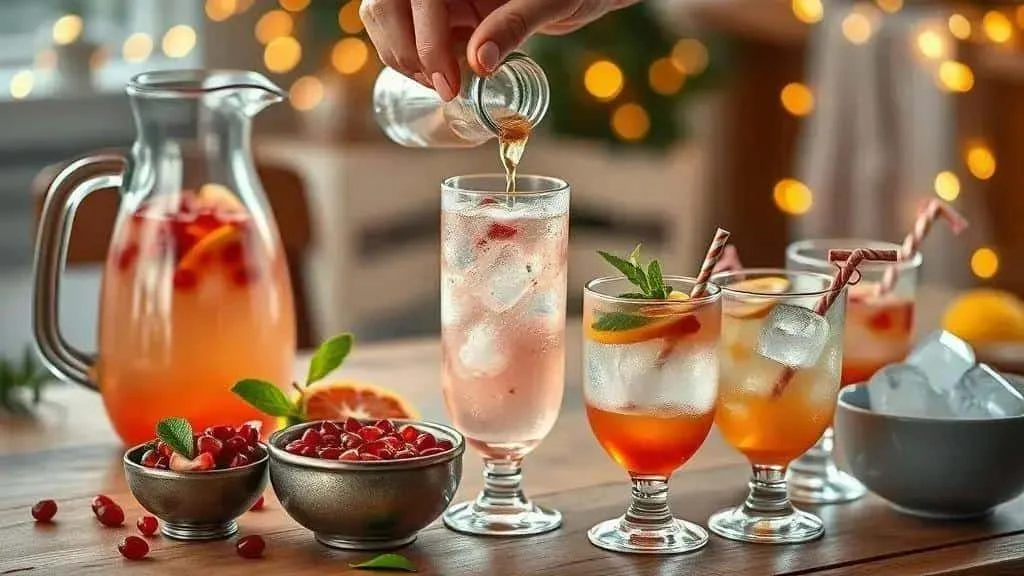
- Make optional syrup: an adult should gently heat 50 g sugar with 50 ml water, stirring until dissolved, then cool it. This makes more than 50 ml of syrup; measure only what you need rather than adding the entire batch.
- Mix the juices: combine 300 ml chilled orange juice and 150 ml cranberry juice in a clean jug and stir.
- Check the flavour: taste first, then add lime juice gradually, up to one tablespoon. Use a little cooled syrup only if needed, up to 50 ml for the batch.
- Chill the base: cover and refrigerate until cold. This avoids needing loose ice in children’s cups.
- Add water at serving time: stir 200 ml chilled still water into the batch, or gently add sparkling water for older children. Divide into about five small servings; add more water if preferred.
- Finish simply: use a colourful cup and an age-appropriate soft fruit garnish, if wanted. Omit loose seeds, whole round berries, hard ice pieces and cocktail sticks for young children.
- Scale accurately: the finished batch is about 650–715 ml before any extra dilution. Multiply all measured ingredients by the same factor for a larger batch.
- Reduce added sugar: omit or reduce the syrup rather than replacing it automatically with another sweetener. Honey must not be given to babies under one.
- Try a small sample: if the cranberry is too sharp, use a little apple or diluted grape juice in its place, or add water. Keep the final portion modest.
Preparation tips
- Prepare the base on the day: mix the juices up to six hours ahead, cover and keep refrigerated. Add sparkling water only when serving.
- Use small cups: a cup does not need to be full. Start with a small serving and offer plain water alongside.
- Decorate appropriately: larger fruit pieces are not automatically safer. Prepare soft fruit for the child’s age and leave out sticks and small detachable decorations.
Fruit drink variations
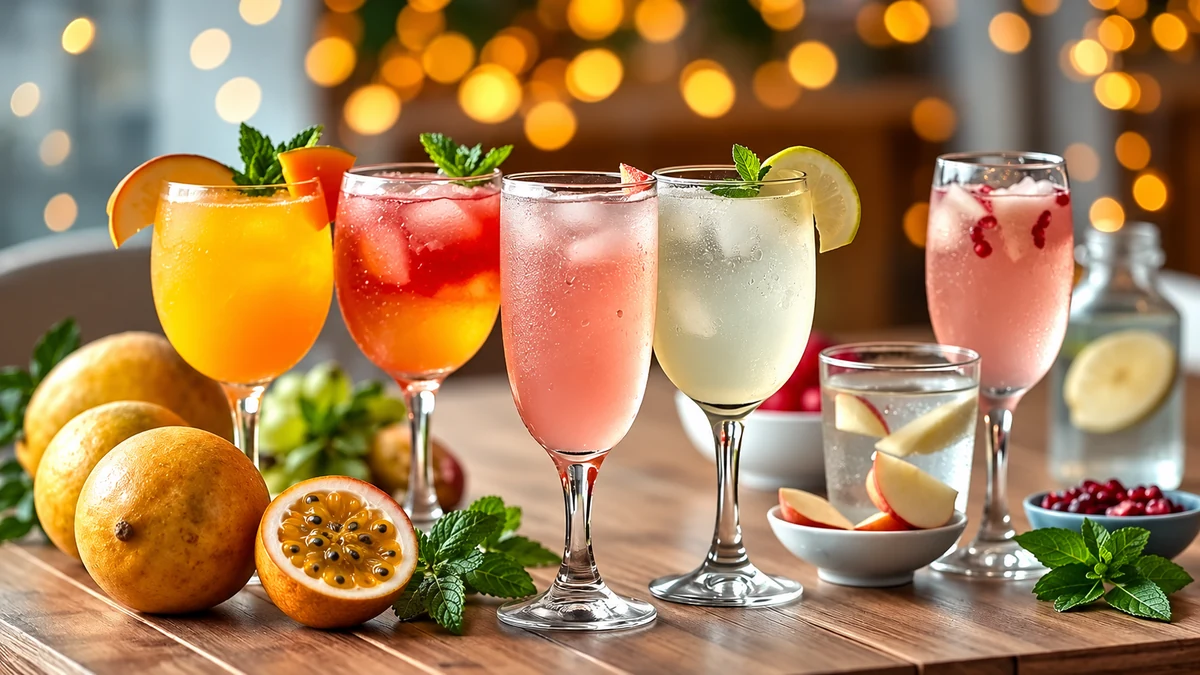
Vary these festive fruit drinks with different juices and fruit, keeping the child’s age, preferences and dietary needs in mind.
Small batches to divide between servings
- Mango and passion fruit: mix 120 ml mango juice with 60 ml strained passion fruit juice and 50–70 ml water. This makes 230–250 ml; divide into two small servings and dilute further if preferred. Strain out hard seeds.
- Pink strawberry and apple: mix 100 ml smooth strawberry purée, 100 ml apple juice and 50 ml water. Divide the 250 ml batch into small servings. Pear juice gives another flavour.
- Grape refresher: mix 100 ml white grape juice with 50 ml water, then add another 50–100 ml water. Divide into small servings. If offering grapes separately, cut them lengthways into quarters for young children; halves are not enough.
- No added syrup: dilute unsweetened apple purée with water to a drinkable consistency and add a little lime only if needed. It still contains fruit sugars, so do not describe it as sugar-free or add sweetener automatically.
- For babies under one: do not use these party recipes as infant drinks. Breast milk or infant formula remains the main drink; from around six months, small sips of water can be offered with meals. Babies do not need juice or smoothies.
Adapting to dietary needs
- Gluten-free: check labels on juices, syrups and decorations, and avoid cross-contact. Natural ingredients alone are not a guarantee for every prepared product.
- Dairy-free or vegan: the fruit-and-water base contains no dairy. Check added products, and omit honey for a vegan version. Plant-based milk is not needed for these recipes.
- Less sharp: reduce the citrus juice and dilute with water, or use a little apple or pear in place of sharper fruit.
- No alcohol or caffeine: check every packaged ingredient. Plain water and ordinary fruit juice keep the recipe simpler than fermented drinks, energy drinks or alcohol alternatives.
Presentation and flavour tips
- Colourful layers: spoon smooth fruit purée into a cup first and gently add the diluted juice. The colours may blend, which is fine.
- Suitable garnishes: use soft fruit prepared for the child’s age, or serve the drink without loose pieces. Avoid hard seeds, picks and whole round berries in young children’s cups.
- Adjust the dilution: more water reduces the amount of juice in a serving. There is no need to keep a high juice percentage simply to preserve colour.
Let children help
Let older children choose between prepared flavours or cup colours with an adult supervising. Try small samples before the party rather than making large quantities of an unfamiliar combination.
Colourful, child-friendly presentation
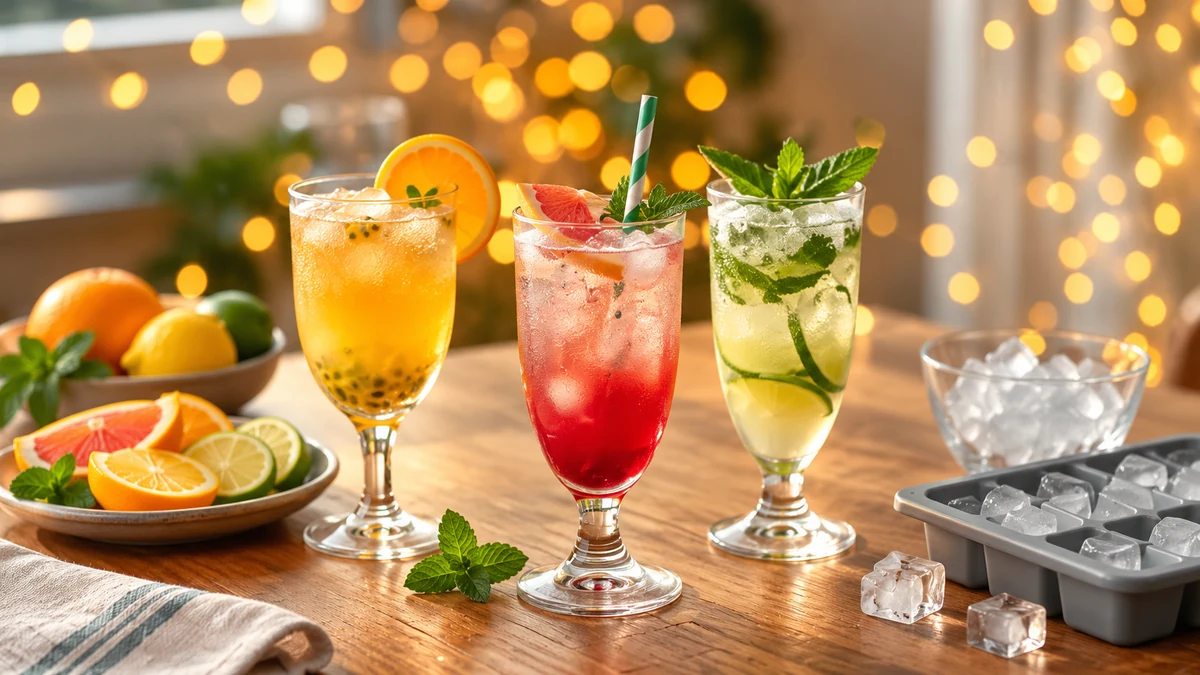
Colourful cups, small servings and a little supervised participation can make the drink feel special without elaborate decorations.
Cups and utensils
- Choose suitable cups: use clean, food-safe, shatter-resistant cups designed for children, or appropriate stainless-steel cups. Match the cup and serving to the child’s age.
- Straws and utensils: use only age-appropriate items with supervision. An ordinary open cup is often simpler than a straw or decorative stirrer.
- Stable placement: put cups on a steady surface away from table edges, with a non-slip mat if useful.
Colour without unnecessary loose pieces
- Soft fruit: use suitably prepared strawberry or orange pieces without pips or tough peel. Quarter grapes lengthways for young children, and omit cocktail sticks entirely.
- Seeds and round berries: putting them on a spoon does not remove a choking risk. Leave hard seeds out, and prepare soft berries appropriately rather than serving them whole to young children.
- Cup decoration: colourful napkins or cups give a festive effect without a coarse sugar rim. If using any edible decoration for older children, keep it minimal and check ingredients.
Supervised preparation
- A small assembly station: set out prepared fruit and clean cups for older children to help, with an adult choosing suitable ingredients and handling cutting tasks.
- Simple layers: add smooth purée first, then pour the diluted juice gently over a spoon for a colourful effect.
- Keep drinks cold: chill ingredients in advance. Frozen whole fruit inside ice cubes is not a suitable decoration for young children’s drinks.
Arranging the table
- Soft lighting: place fairy lights or battery candles out of children’s reach, with battery compartments secure and away from spills.
- Colourful accessories: use placemats, trays and patterned napkins to make the table inviting.
- Identify cups: an adult can mark names on the outside, away from the drinking rim. Avoid small removable stickers within reach of toddlers.
Hygiene and supervision
- Avoid loose decorative parts: keep small ornaments and items that can detach away from children’s cups.
- Check allergies: ask parents or carers about ingredients before offering drinks or garnishes.
- Supervise: keep an adult present during preparation and drinking, with children seated calmly.
Organising children’s drinks at a party
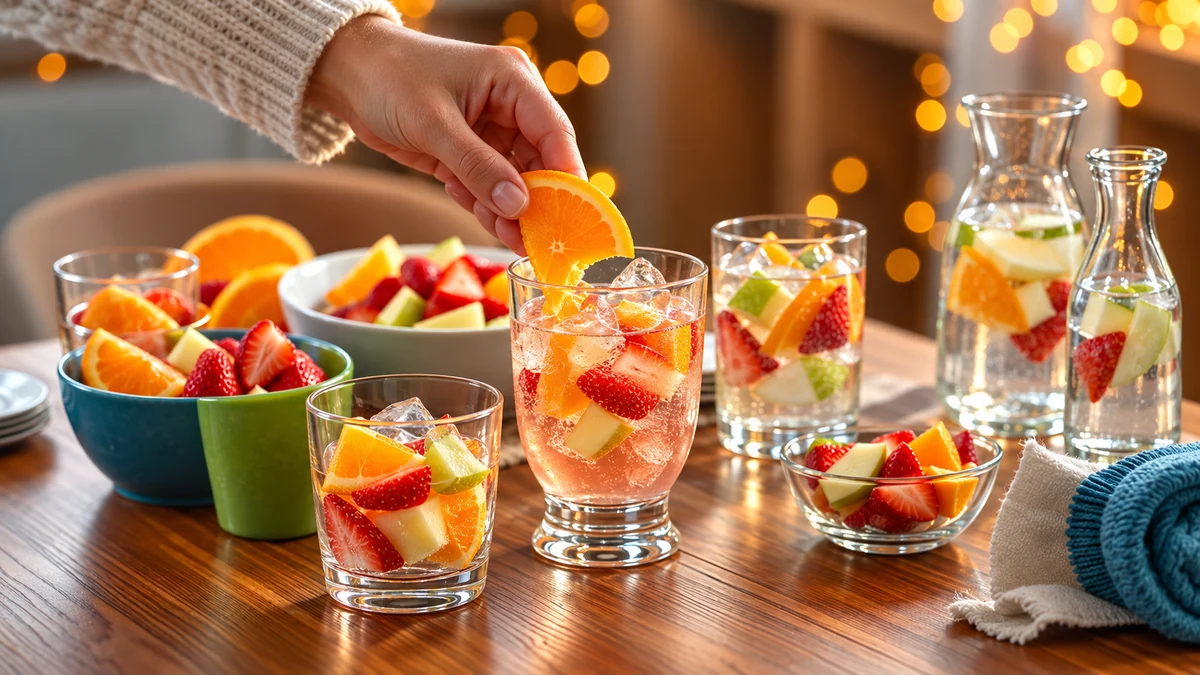
- Stay nearby: an adult should supervise children while they drink and eat garnishes.
- Confirm dietary needs: check all juices, syrups and optional additions with the child’s parent or carer.
- Keep portions modest: offer a small occasional serving suited to the child’s age, rather than a full adult-sized glass. Provide plain water too.
- Leave out hazardous decorations: avoid cocktail picks, small hard sweets and detachable ornaments.
- Check labels: make sure no ingredient contains alcohol or caffeine, and keep children’s drinks separate from adult cocktails.
Timing and organisation
- Make the base on the day: prepare up to six hours ahead, cover and refrigerate, following any shorter storage instructions on the ingredients.
- Add bubbles last: if using sparkling water for older children, add it just before serving.
- Arrange a supervised station: set out suitable cups and prepared ingredients while an adult handles pouring and final checks.
- Serve small batches: avoid filling every cup long before it is needed.
- Keep spare ingredients chilled: bring out additional fruit and juice only when needed, with fresh clean utensils.
Keeping everything clean and chilled
- Clean equipment: wash cups, spoons and bowls before use and keep the preparation area clean.
- Cold storage: keep the base covered at 5°C or below and use it the same day. As a cautious party rule, discard prepared mixtures left out for more than two hours, and sooner in hot conditions. Do not return used drinks to the jug.
- Prepare fruit carefully: wash fruit and herbs, remove stones and pips, and choose soft cuts suitable for the child’s age. Simply making pieces bigger is not a general safety solution.
- Reusable items: clean reusable cups and any suitable straws thoroughly according to their instructions.
Equipment and serving details
- Shatter-resistant cups: use food-safe children’s cups in good condition to avoid broken glass.
- Keep utensils simple: omit cocktail sticks, including blunt ones. Use only age-appropriate drinking accessories under supervision.
- Identify individual cups: mark them clearly and use separate utensils for drinks made for children with allergies.
- Choose decoration thoughtfully: a colourful cup is enough. Serve suitable soft fruit separately if loose garnishes would be difficult for a child to manage.
Quick checks
- Added sugar: reduce or omit syrup and add water. Unsweetened purée still contains fruit sugars.
- Serving time: include a small drink with the celebration meal rather than encouraging continual sipping throughout the evening.
- Adult help: supervise any child who helps assemble or decorate a drink.
A family celebration
Keep alcohol-free New Year’s Eve fruit drinks simple: small servings, familiar flavours and suitable cups can make older children feel included without elaborate garnishes.
If you try these ideas, tell us which combination your family enjoyed. Follow our social channels for more seasonal recipes and activities.
Thank you for reading. Visit the I Love Christmas blog for more ideas for your celebrations.
Children’s festive fruit drinks: frequently asked questions
How much should I serve?
Offer a small occasional serving appropriate to the child’s age and their parent or carer’s preference, with water available too. This batch makes roughly five servings of 130–140 ml before extra dilution; that is a recipe yield, not a portion recommendation for every child.
Can I make the drink in advance?
Yes. Make the juice base on the day, up to six hours ahead, cover and refrigerate. Follow any shorter ingredient storage instructions, and add sparkling water only when serving.
How can I reduce the sugar?
Leave out or reduce the syrup and dilute with more water. Juice and fruit purée still contain sugars; replacing syrup with purée or agave does not make the drink sugar-free.
How should I prepare garnishes for children?
Use age-appropriate soft fruit, remove pips and stones, quarter grapes lengthways and leave out hard seeds, whole round berries, cocktail sticks and loose ice for young children. Keep children seated and supervised.
What should I offer a baby under one instead?
These recipes are for older children, not babies. Continue the baby’s usual breast milk or infant formula, with small sips of water at meals from around six months. Babies do not need fruit juice, and honey must be avoided before one year.
Sources and Further Reading
- NHS — drinks and cups for babies and young children
- Food Standards Agency — choking hazards
- Food Standards Agency — chilling, freezing and defrosting food
- NHS — food and drinks to avoid when weaning