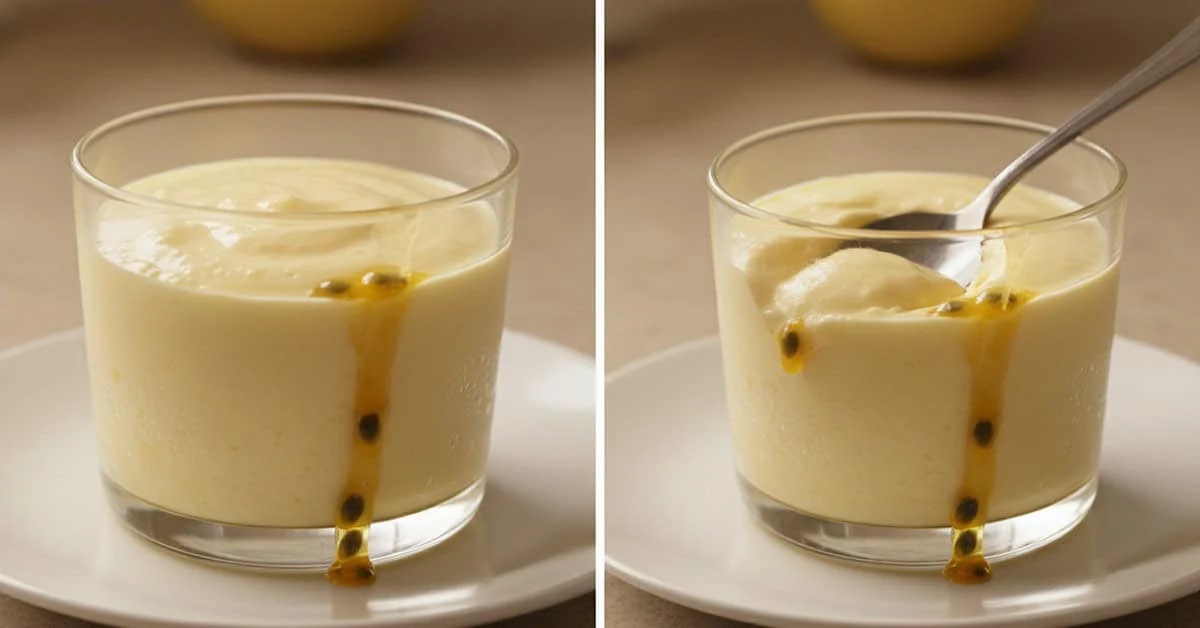
Christmas passion fruit mousse combines condensed milk, cream and sharp passion fruit for a smooth chilled dessert. Make individual portions, choose simple toppings and follow the setting and refrigeration advice. Dairy-free and vegan adaptations require suitable changes to all the relevant ingredients.
Christmas passion fruit mousse offers a bright, tangy finish to a festive meal. This Brazilian-style version is straightforward to blend and chill, with optional ways to make it more aerated or add contrasting toppings.
Ingredients for tangy passion fruit mousse
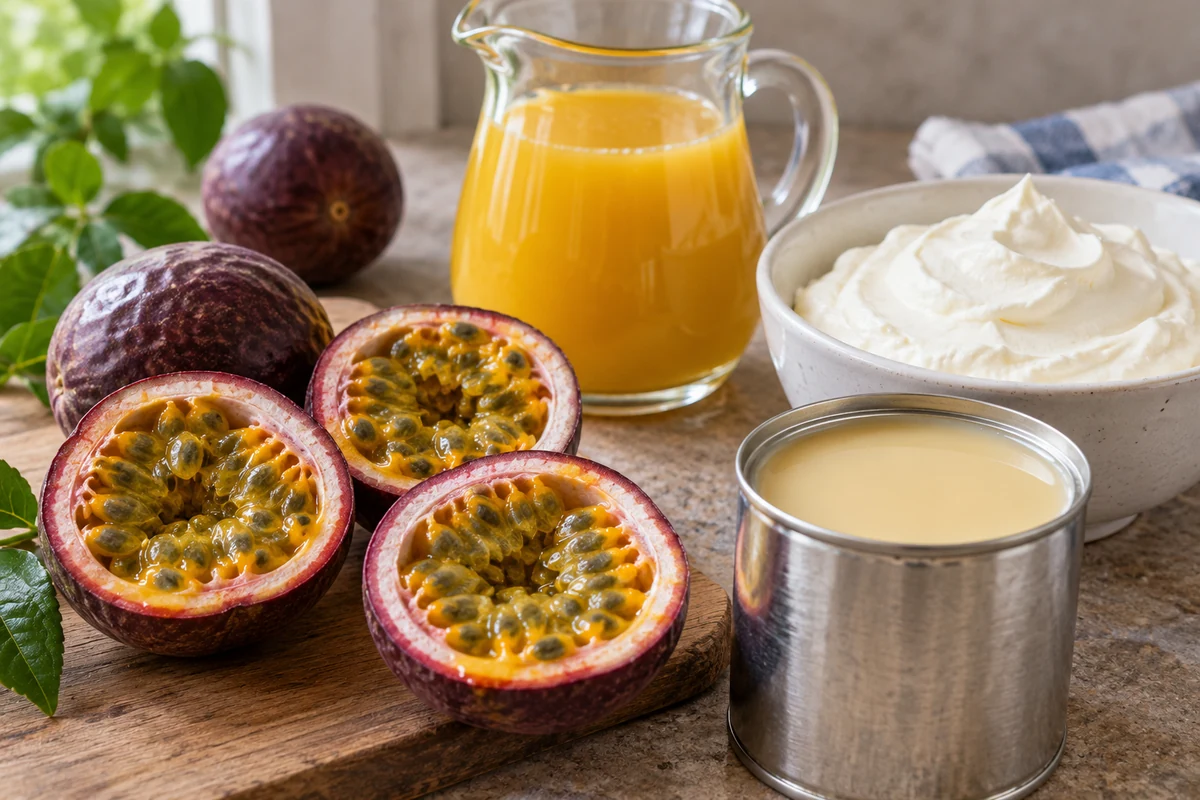
For a creamy passion fruit mousse, gather these ingredients before starting.
- 1 tin sweetened condensed milk, about 397 g — a 395 g tin also works; use a suitable plant-based alternative for a dairy-free version.
- 200 ml single cream — for a smooth texture; thick coconut cream is an alternative, but changes the flavour and setting behaviour.
- 200 ml strained, unsweetened passion fruit juice or purée — use concentrated fruit pulp rather than a diluted juice drink. Reserve a little seeded pulp separately for the topping.
- Cold water, as specified on the gelatine packet — for blooming; use the manufacturer’s quantity rather than adding an arbitrary half-cup.
- Powdered gelatine suitable for setting approximately 800 ml mixture — often around 10–12 g, but strengths vary, so follow the packet. Agar is not a gram-for-gram substitute; see the separate advice below.
- Pasteurised egg white equivalent to 2 eggs, optional — choose a product suitable for whipping and uncooked use. Omit it for the simpler egg-free version; aquafaba is a different optional alternative.
- Up to 3 tablespoons caster sugar, optional — add only if the fruit is particularly sharp, reserving 1 tablespoon for the topping if using.
- 2 tablespoons passion fruit pulp with seeds — for the topping, separate from the strained juice in the base.
- Lemon zest or mint leaves, optional — to finish.
Notes and substitutions
For a less sweet flavour, leave out the optional sugar first. Reducing condensed milk or adding much more juice changes the setting balance. For a vegetarian version, use a setting product with instructions suitable for an acidic, creamy dessert; do not assume that a fixed 8–10 g of agar replaces gelatine.
Strain fresh passion fruit pulp through a sieve, pressing gently to collect the juice without grinding the seeds. Unsweetened frozen pulp can also work; defrost and prepare it according to the packet.
The recipe makes approximately 6–8 small servings, depending on the glasses and whether you add the optional aerated ingredient.
How to make tangy passion fruit mousse
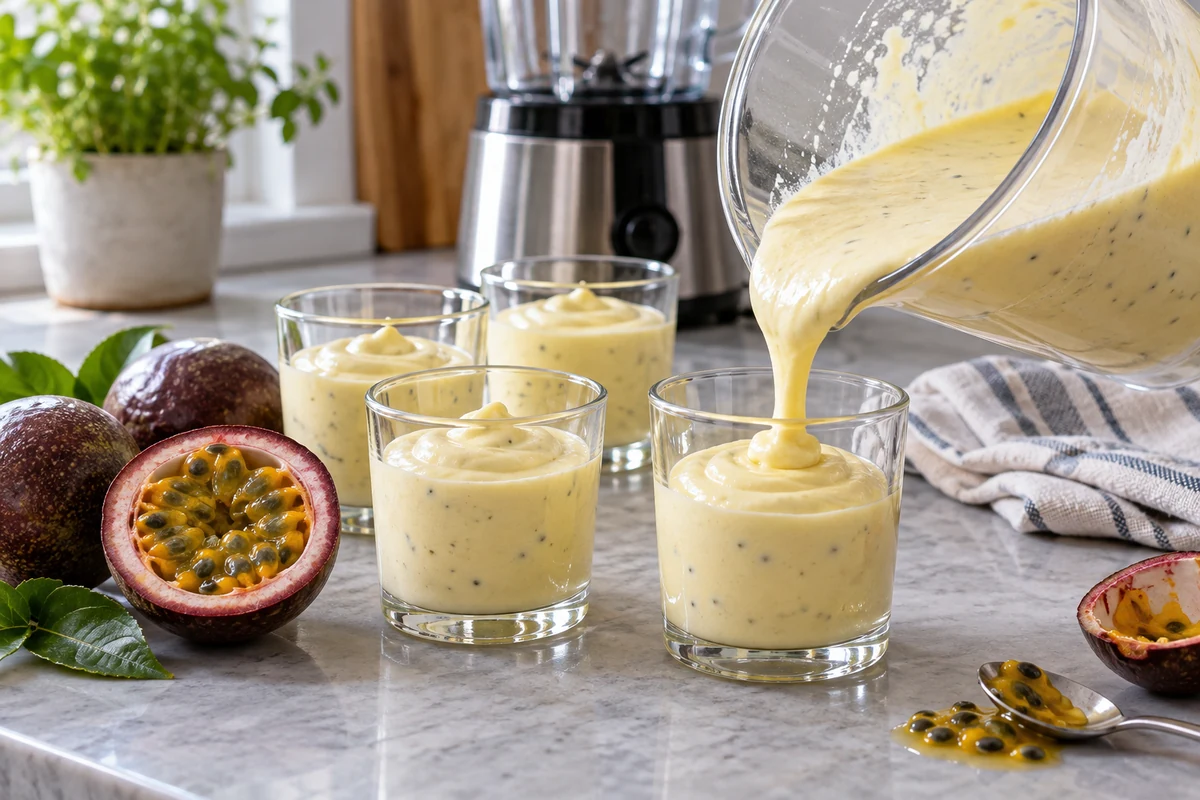
- Prepare the gelatine: sprinkle the required amount over cold water as directed on the packet, leave to bloom, then dissolve gently using the recommended method. Do not boil gelatine or use a fixed microwave time regardless of the product.
- Blend the base: blend the condensed milk, 200 ml cream and 200 ml strained passion fruit juice briefly until smooth. Do not grind the whole seeds into the mixture.
- Add the gelatine: let the dissolved gelatine cool slightly without setting. Mix it first with a spoonful or two of the base, then blend it into the rest in a thin stream to reduce lumps.
- Check the flavour: taste before adding any optional egg white. Add a little of the optional sugar only if needed; the condensed milk already provides substantial sweetness.
- Whip the optional ingredient: for a lighter texture, whip pasteurised egg white equivalent to 2 eggs, following the product instructions. Alternatively, whip about 120 ml drained liquid from tinned chickpeas into firm peaks. The basic mousse works without either.
- Fold gently: if using whipped egg white or aquafaba, fold it into the base with broad, gentle movements. The added volume and liquid can affect setting; check the setting agent’s guidance for the final mixture.
- Portion and chill: divide between small glasses or a shallow dish, cover and refrigerate for at least 4–6 hours, preferably overnight, until set and thoroughly chilled.
- Make the topping: gently heat the 2 tablespoons seeded pulp with 1 tablespoon of the optional sugar, if wanted, just until dissolved. Cool promptly and refrigerate separately before using.
- Finish: spoon a little cold topping onto each mousse. Add optional whipped cream, mint or lemon zest. Keep non-edible Christmas decorations away from the food.
- Store chilled: keep covered at 5°C or below and eat within 48 hours, respecting any shorter ingredient use-by date. Freezing can spoil the texture. Agar-based versions need their own preparation method.
Quick tips
- Vegetarian setting agents: agar usually needs boiling to activate, but quantity and handling depend on the product and fruit acidity. Follow a suitable manufacturer-tested method rather than adding it like gelatine.
- Fruit concentration: use strained pulp or concentrated unsweetened juice; a diluted drink gives a weaker flavour and different balance.
- Aeration: fold the optional whipped ingredient in gently and allow enough chilling time. Use pasteurised egg white suitable for uncooked use, not an unspecified raw egg.
Passion fruit mousse variations
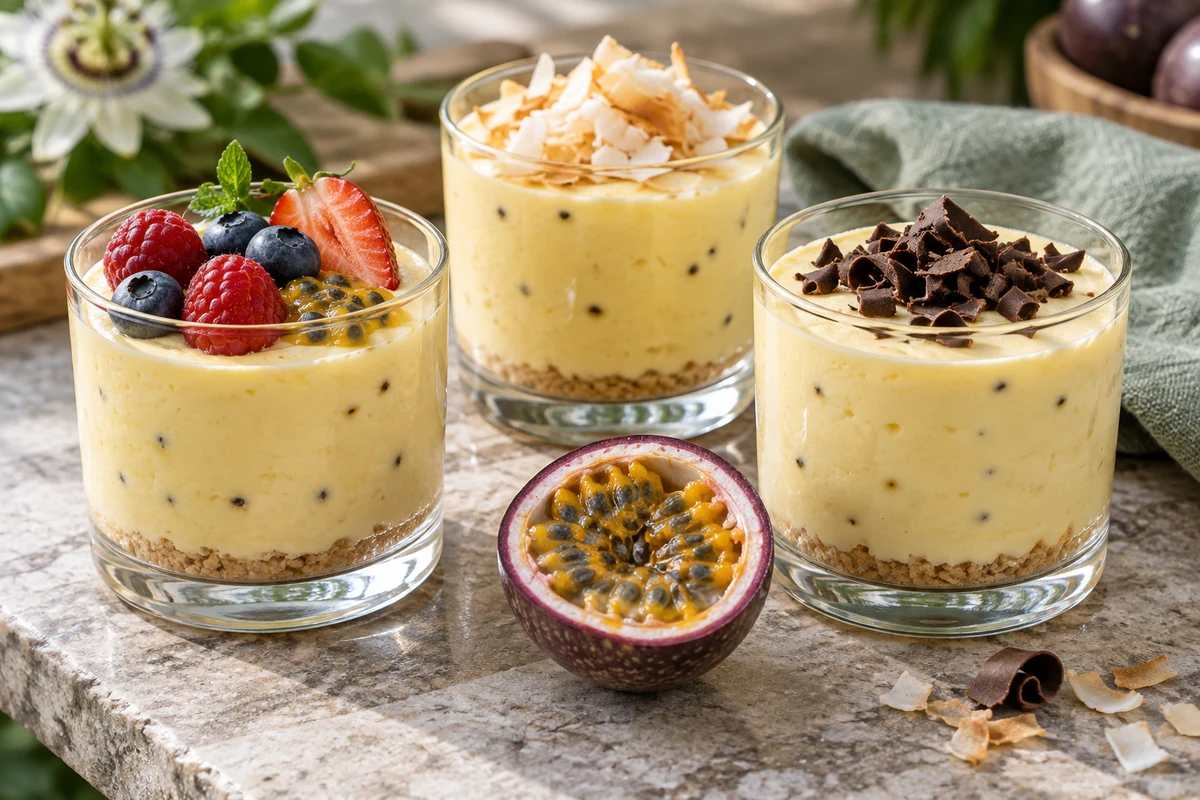
Vary your passion fruit mousse with small changes to flavour, toppings or presentation.
Coconut variation
Replace the 200 ml dairy cream with 200 ml thick coconut cream, mixed smooth, for a coconut flavour. Thin coconut drinking milk is not equivalent. This alone does not make the mousse dairy-free: the condensed milk must also be replaced.
With toasted nuts
Scatter 30 g chopped nuts across the whole batch, choosing walnuts, Brazil nuts or almonds. Toast gently in a dry pan, cool and add just before serving; no extra butter or sugar is needed for a simple crunchy topping.
White chocolate layers
Make a small ganache with 50 g white chocolate and 2 tablespoons cream. Cool it, then add a thin layer to each mousse. It adds sweetness, so omit optional sugar in the base if the fruit allows.
Aerated mousse with egg white or aquafaba
Fold in whipped pasteurised egg white equivalent to 2 eggs, or about 120 ml whipped aquafaba, as described above. Check that the setting method suits the extra volume. Aquafaba alone does not make a dairy-and-gelatine mousse vegan.
Berry sauce topping
Cook 100 g berries with a little sugar to taste until softened, following packet cooking instructions if using frozen berries. Cool promptly, refrigerate and add a small amount to each mousse at serving time.
Mini Christmas mousse pots
Fill small glasses mostly with mousse and finish with a thin layer of sauce or a little crunch. A mint leaf and a few passion fruit seeds make a simple edible decoration.
Choosing a variation
- Less sweet: omit optional sugar before changing the main condensed-milk and fruit proportions.
- Dairy-free: use suitable plant-based condensed milk and coconut cream, checking any toppings too.
- Setting: follow the setting agent’s instructions for the total mixture and allow at least 4–6 hours in the fridge.
- Presentation: small glasses and a mint leaf give a neat festive finish.
Assembly, presentation and storage

Individual servings of passion fruit mousse are easy to portion and keep chilled until needed.
- Containers: choose clean food-safe glasses or small pots; for a shared dessert, use a shallow serving dish.
- Layers: finish the chilled mousse with a thin layer of cold passion fruit sauce or cooled white chocolate ganache.
- Crunch: add a small sprinkle of toasted chopped nuts shortly before serving; the suggested 30 g is for the batch, not each portion.
- Cream and fruit: a small spoonful of whipped cream and a few seeded drops of pulp are enough.
- Edible decoration: use washed mint leaves or citrus zest. Leave woody sprigs and ornamental greenery off the dessert.
- Serving: keep at 5°C or below until shortly before serving. Around 100–150 ml per glass gives roughly 6–8 portions, depending on additions.
Quick assembly tips
- Prepare ahead: fill the glasses and chill for at least 4–6 hours; making them the day before is convenient.
- Keep toppings cold: never pour hot sauce onto the set mousse.
- Even portions: use a small jug or ladle to divide the mixture evenly.
- Use a tray: arrange the glasses on a stable tray for transport between fridge and table.
Storage and transport
- Refrigeration: keep covered at 5°C or below and use within 48 hours, or sooner if an ingredient’s use-by date requires it.
- Freezing: it is not recommended for this version because the texture may separate or turn grainy.
- Transport: use an insulated cool box with frozen gel packs and keep the mousse chilled. Ordinary frozen packs are sufficient; there is no need to handle dry ice.
- Individual portions: keep unused pots covered in the fridge and take out only what you intend to serve.
- Serving time: minimise time at room temperature, returning portions being saved promptly to the fridge. Do not leave them out for more than 2 hours, and be more cautious in hot conditions.
Combining flavours
Pair the tang of passion fruit with a little berry sauce, citrus zest or toasted nuts. Use a clean serving tray and keep decorative greenery and berries separate from the food.

A few simple details help the passion fruit mousse fit a Christmas table without overpowering its flavour.
Colour and table decoration
Green, red and gold table details contrast with the mousse’s pale yellow colour. Keep the dessert itself simply decorated.
- Greenery — place decorative sprigs away from glasses and food-contact surfaces.
- Red fruit — use edible raspberries or strawberries on food, never unidentified decorative berries such as holly berries.
- Napkins and cutlery — festive colours can provide decoration without anything extra touching the dessert.
Edible finishing touches
Choose toppings that add flavour as well as appearance.
- Passion fruit seeds and pulp — a small amount signals the flavour.
- Lemon or orange zest — finely grated from washed fruit.
- Toasted nuts — a small sprinkle adds crunch.
- Whipped cream — a small spoonful softens the sharp contrast.
How it fits the Christmas menu
Serve the mousse as a small chilled dessert after the main meal, rather than treating its sharp flavour as a sign that it is low in sugar or fat.
- After roast turkey or ham — the fruit gives a contrasting flavour after savoury dishes.
- Alongside a varied menu — salads and vegetables in the main course can balance a meal that ends with a rich dessert.
- With other desserts — offer smaller portions if also serving cheese or white chocolate treats.
- Drinks: water, tea or decaffeinated coffee are simple choices; adults who choose alcohol may prefer a small dessert-wine serving.
Table layout and service
Keep the glasses easy to reach without leaving them unrefrigerated for the whole meal.
- Individual portions: clear glasses show the colour and make serving straightforward.
- Keep chilled: leave the glasses in the fridge until needed; an ordinary serving tray does not keep them cold.
- Serve in batches: bring out a few portions at a time for a long buffet.
Final practical touches
Small details are enough to make a homemade dessert feel festive.
- Allergens: make milk, egg or nut ingredients clear, including those introduced by optional toppings or alternatives.
- Chilling time: allow at least 4–6 hours and check the mousse is set before serving.
- Time out of the fridge: keep it brief and do not exceed 2 hours; in hot conditions, bring out smaller batches.
- Place cards: a name card beside each glass adds a personal touch without putting decorative items in the food.
Passion fruit and its tangy flavour
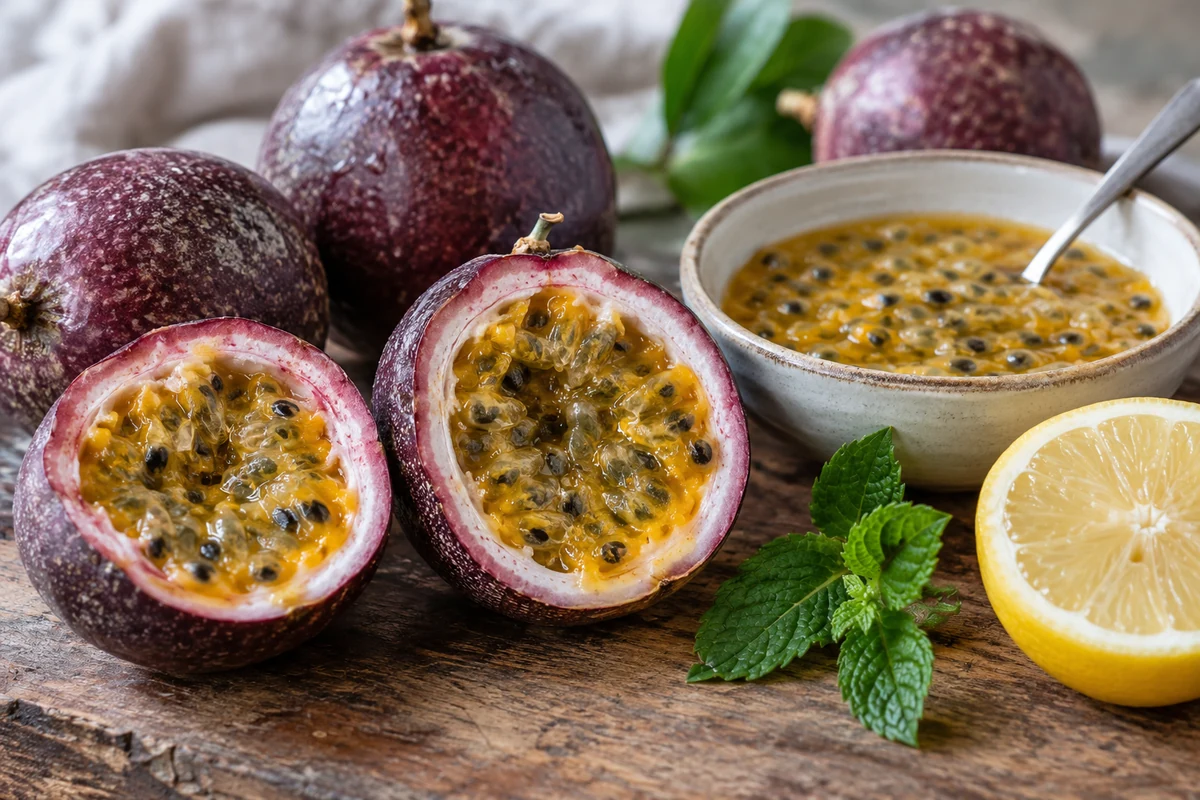
- Origins: the commonly eaten passion fruit, Passiflora edulis, is native to parts of South America. Purple- and yellow-skinned forms can differ in flavour and acidity.
- Brazilian name: passion fruit is called maracujá in Brazilian Portuguese and appears in many drinks and desserts.
- Edible seeds: the dark seeds sit inside juicy pulp and can be eaten with it; strain them out if you prefer a smooth mousse.
- Kitchen uses: the fruit works in sauces, drinks and desserts because of its distinctive aroma and tartness.
- Strong flavour: a little concentrated pulp can flavour a creamy mixture; diluted drinks have a different effect.
- Different textures: strained juice gives a smooth base, while a little seeded pulp adds contrast on top.
What the tartness brings
- Flavour contrast: acidity makes a sweet dessert taste brighter and less cloying.
- A fresh impression: the fruit’s aroma and sharpness can feel refreshing, but that is a sensory quality rather than a health claim.
- After a rich meal: a small chilled portion gives a different flavour; it is not a digestive treatment.
- Rich ingredients still count: condensed milk and cream make this a sweet, rich dessert even though the fruit tastes tangy.
- Enjoy for flavour: choose the mousse because you enjoy it, without assuming that fruit ingredients make the finished dessert medicinal.
Using passion fruit in cooking
- Sweet balance: a little white chocolate or cream can soften the acidity without hiding the fruit.
- Savoury ideas: passion fruit can also flavour a sauce for fish or a salad dressing.
- Drinks: add a small amount to sparkling water or other drinks for a fruity, tangy note.
- Added sugar: taste the base before adding optional sugar; fruit concentration and sweetness vary.
- Presentation: a few whole seeds in pulp make a recognisable topping.
Ingredient care
- Personal preference: use a smaller serving or choose another dessert if sharp fruit does not agree with you.
- Dietary needs: ask guests about allergies and avoid ingredients they need to exclude; do not assume an unfamiliar fruit or alternative is suitable for everyone.
- Seeds: strain the base for a smooth texture and offer seeded topping separately if preferred.
- Fruit storage: use sound fresh fruit or properly stored packaged pulp, following use-by dates and preparation instructions.
A bright finish to Christmas dinner
Tangy passion fruit mousse is a practical chilled dessert with a distinctive Brazilian flavour. Small topping changes let you make it crunchy, fruity or a little richer.
Keep portions chilled until serving and use simple edible decorations such as mint, zest or a few seeds.
For more festive recipes and ideas, visit the I Love Christmas blog.
If you make the recipe, share your version. Happy Christmas and enjoy your meal!
FAQ: Christmas passion fruit mousse
Can I make it without animal gelatine?
Yes, but use a vegetarian setting product with instructions suitable for an acidic, creamy dessert. Agar needs a different method and is not a gram-for-gram replacement; do not use an arbitrary 8–10 g.
How can I make the mousse more aerated?
Gently fold in whipped pasteurised egg white suitable for uncooked use, or whipped aquafaba, as described in the recipe. Allow for the added volume when following the setting agent’s instructions.
How should I store it before serving?
Keep covered at 5°C or below and eat within 48 hours, or sooner if an ingredient requires it. Minimise time out of the fridge and do not leave it out for more than 2 hours.
Can I use fresh passion fruit?
Yes. Strain the pulp to obtain 200 ml concentrated juice for the base, without grinding the seeds. The number of fruits needed varies with their size and juiciness.
How do I make it dairy-free?
Use suitable plant-based condensed milk and coconut cream, checking toppings too. For a fully vegan version, also omit egg white and replace animal gelatine with an appropriate vegetarian setting method.
What if the mousse does not set?
Allow sufficient chilling time and check the gelatine quantity, strength and preparation instructions against the total mixture. Agar requires its own activation method. Do not sprinkle dry setting powder into a finished cold mousse; a softly set but safely chilled dessert can be served in glasses.
Sources and Further Reading
- Food Standards Agency: cooking food safely
- Food Standards Agency: chilling, freezing and defrosting food safely
- Royal Botanic Gardens, Kew: Passiflora edulis
- Food Standards Agency: safe use of eggs for catering