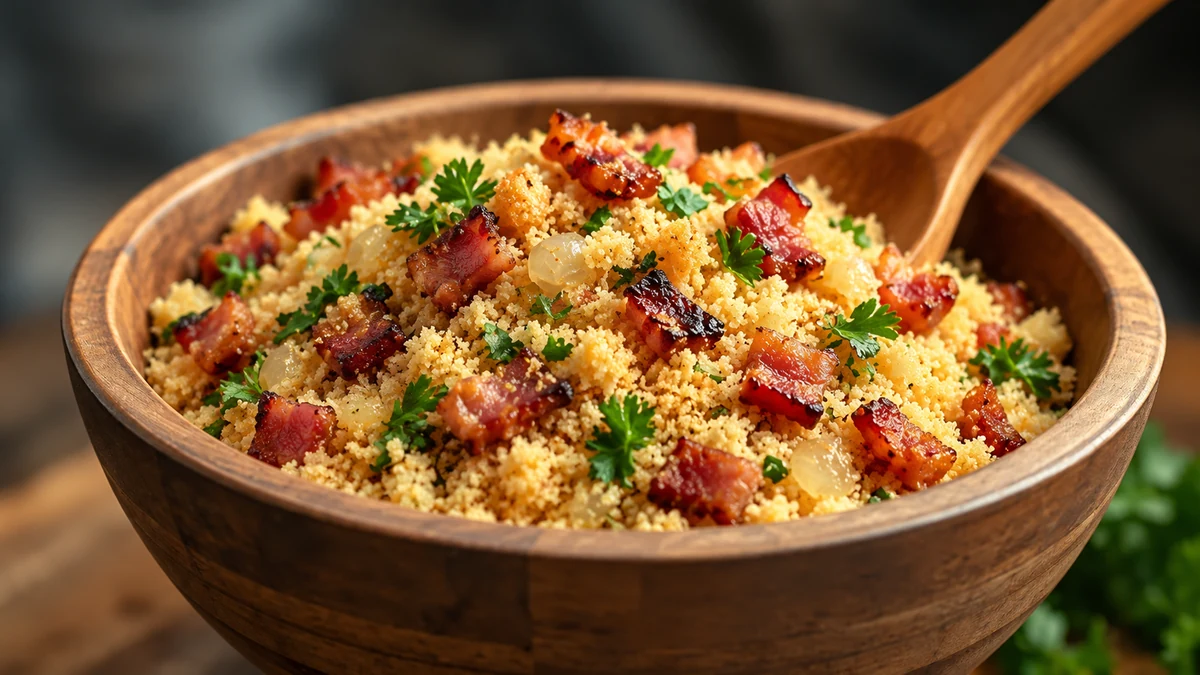
Crispy bacon farofa is a Brazilian side dish made with toasted cassava flour, browned bacon, onion, garlic and herbs. Its texture should be loose and crumbly, not creamy. Render the bacon gently, drain excess fat and fold it into the toasted crumbs near the end.
Crispy bacon farofa adds a savoury crunch to a roast dinner or Christmas spread. This guide explains the ingredients, cooking method and ways to keep the crumbs light rather than greasy, with variations for different tastes.
Ingredients for crispy bacon farofa
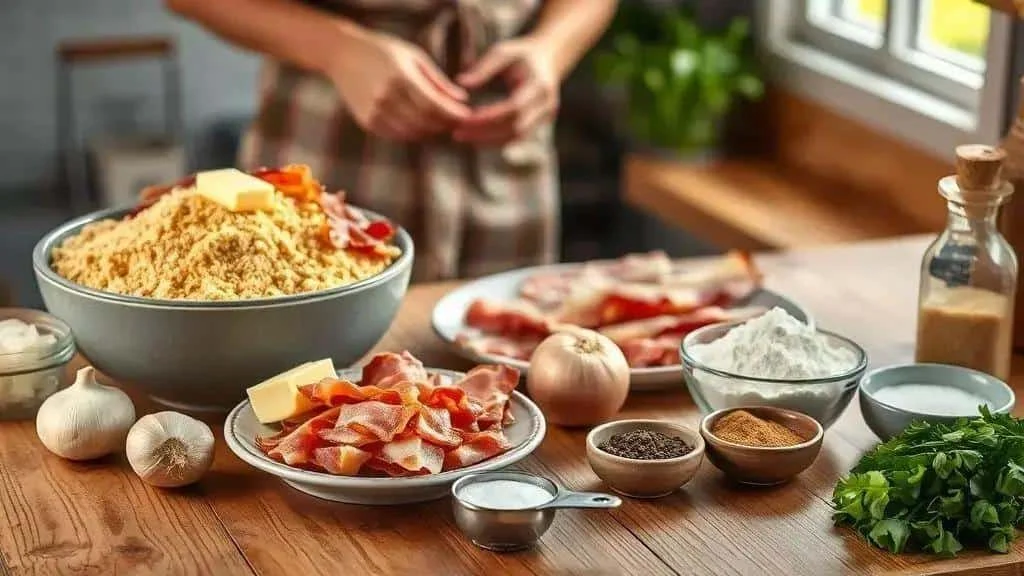
For this crispy bacon farofa, gather the following ingredients:
- 300 g diced bacon – streaky bacon works well. Pancetta or diced Brazilian calabresa sausage gives a different flavour; cook any replacement according to its instructions.
- Up to 2 tbsp butter – or vegetable oil. The amount needed depends on how much bacon fat remains in the pan.
- 1 medium onion, finely chopped – spring onions give a milder alternative.
- 2 garlic cloves, finely chopped – or 1 tsp garlic powder, added with the flour rather than fried on its own.
- 2 cups Brazilian farinha de mandioca – the granular cassava flour used for farofa, not tapioca starch or a very fine baking flour. Start with 1½ cups if you prefer a less dry result and add more as needed. Toasted Brazilian maize flour makes a different variation.
- Salt, to taste – bacon is already salty, so taste first.
- Freshly ground black pepper – or a little dried chilli for heat.
- 2 tbsp chopped parsley, optional – or spring onion or coriander.
- Up to 1 tbsp soft brown sugar, optional – for a sweet-savoury version. Add a small amount first; it does not remove salt from the dish.
Ingredient and texture tips
Reserve a little rendered bacon fat for toasting the flour. Drain away the excess safely, keeping roughly 1–2 tbsp in the pan. For a less rich version, use only a little of that fat and reduce the added butter.
Add the cassava flour gradually, stirring continuously so you can judge the texture. Taste before adding salt. For a vegetarian version, replace the bacon with smoked tofu and use fresh oil or butter rather than bacon fat; choose oil for a vegan version.
How to make crispy bacon farofa
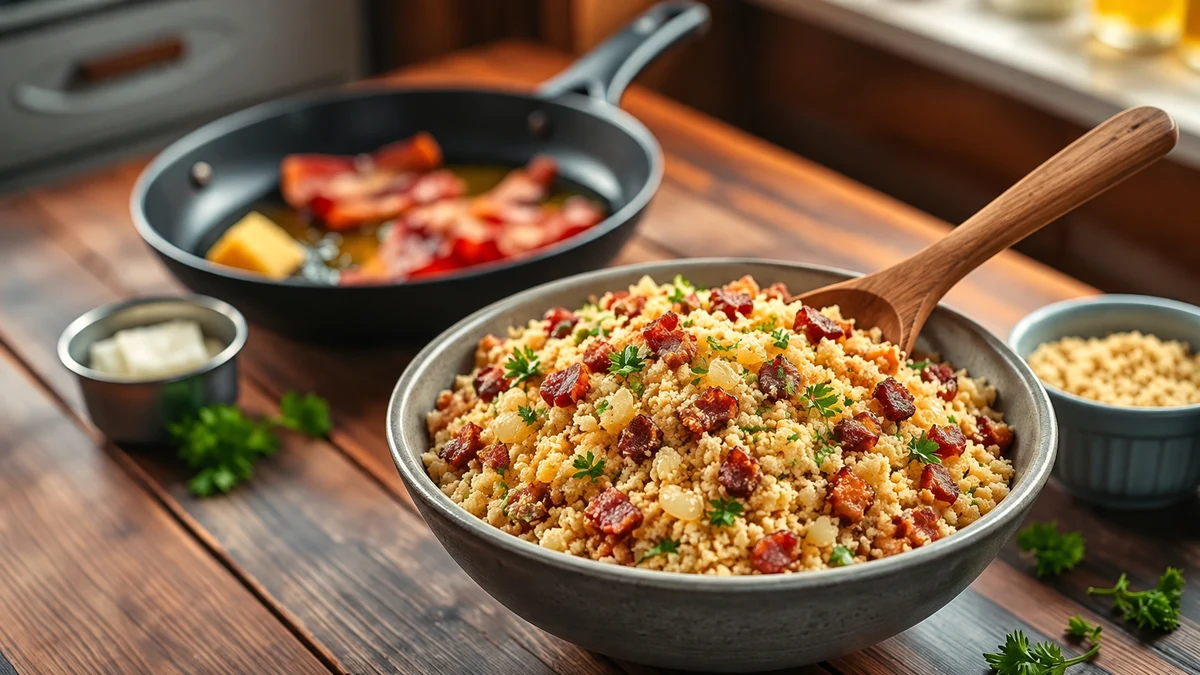
- Prepare the ingredients: dice 300 g bacon, chop the onion and garlic, and measure 2 cups of farinha de mandioca. Keep raw bacon and its utensils separate from ready-to-eat ingredients.
- Start the bacon gently: place it in a large cold frying pan, then set over medium heat. This lets its fat render gradually without needing extra oil at the start.
- Cook until crisp: stir occasionally until the bacon is fully cooked and browned. About 8–10 minutes is a guide; thickness, quantity and pan temperature affect the time.
- Lift out the bacon: use a slotted spoon and drain on a clean plate lined with kitchen paper. Leave about 1–2 tbsp rendered fat in the pan and remove the rest carefully.
- Soften the onion: add a little of the measured butter or oil only if needed, then cook the onion until soft and lightly golden. Start checking after 3–4 minutes and continue as necessary.
- Add the garlic: stir for about 30–45 seconds, until fragrant, without letting it burn.
- Toast the flour: lower the heat and add the cassava flour gradually, stirring constantly. Toast until evenly golden and fragrant, roughly 4–6 minutes as a guide. Follow any cooking instructions on the product.
- Return the bacon: fold it through near the end, mixing briefly so it stays crisp.
- Adjust the seasoning: taste before salting, then add pepper. If using brown sugar, start with a pinch and increase only to taste, up to the optional tablespoon.
- Finish with herbs: remove from the heat and stir in the parsley. Serve promptly, while freshly made and warm.
Tips for crisp bacon
- Pat away excess moisture with kitchen paper before cooking. Discard the paper and wash your hands after handling raw bacon.
- Do not crowd the pan. Cook in batches if necessary so moisture can escape and the bacon browns evenly.
- If you use an oven to finish the bacon, spread it on a suitable rack over a tray at 200°C conventional/180°C fan and watch closely. It may need only a few minutes; remove it before it burns.
- Choose a heavy-based pan for even heating. Browning develops flavour; it does not seal juices inside the bacon.
Adjusting the farofa’s texture
If it is too dry, stir in a little of the remaining butter or rendered bacon fat, rather than adding a large amount at once. Starting with 1½ cups flour produces a richer, less dry mixture. If it is greasy, add a little more flour and toast gently; the finished crumbs should remain loose.
Variations on crispy bacon farofa
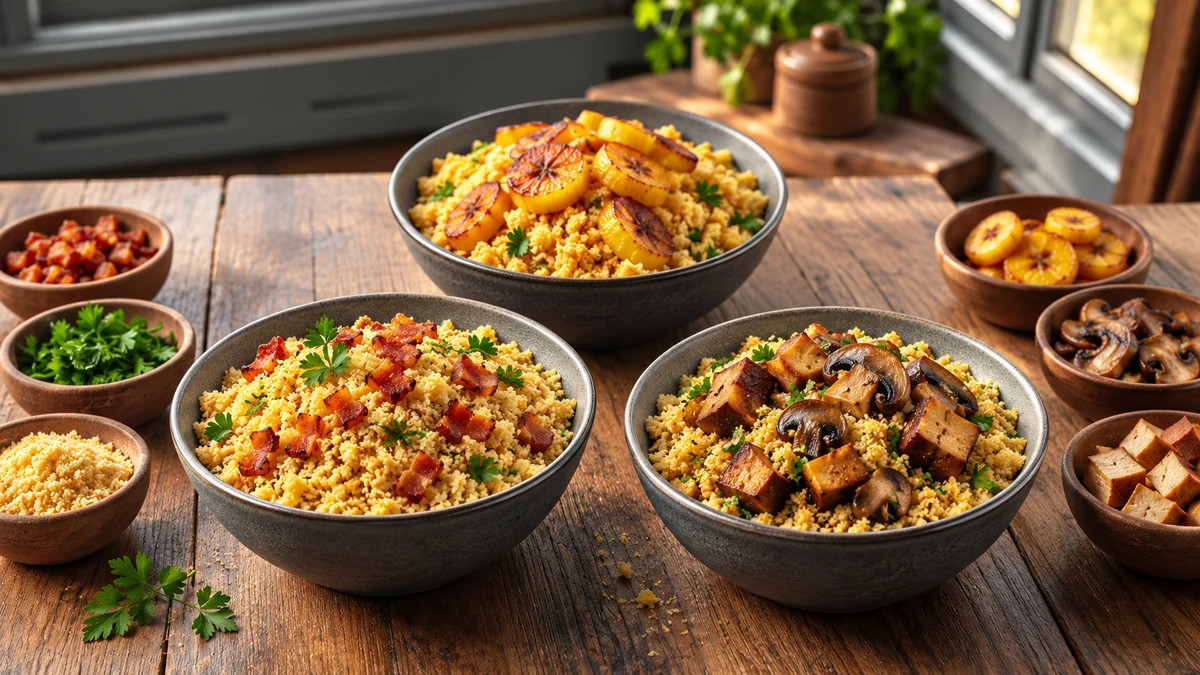
Adapt the crispy bacon farofa with savoury, sweet or meat-free additions. Adjust the fat and salt to match each variation.
Savoury variations
- With calabresa sausage: replace 150 g of the bacon with 150 g diced calabresa. Use the same flour quantity and only as much added butter as needed. Check whether the sausage needs cooking; smoking alone does not mean it is ready to eat.
- With leek: add one washed, finely sliced leek to the pan and reduce the onion to half. Cook until soft before adding the flour.
- With smoked paprika: stir in up to 1 tsp while toasting the flour, keeping the heat low enough to avoid scorching it.
Sweet-savoury variations
- Plantain and bacon: fry slices of one ripe plantain until golden and cooked through, then fold in at the end. Its sweetness may be enough without extra sugar; taste before adding any.
- Dried fruit and nuts: add ⅓ cup raisins and ½ cup chopped Brazil nuts or walnuts near the end. Make the nut content clear to guests.
Meat-free variations
- Smoked tofu: replace the bacon with 250 g diced smoked tofu, following its cooking instructions. Start with 1 tbsp oil and add a little more as needed; omit all bacon fat.
- Mushrooms: use 200 g sliced button or shiitake mushrooms instead of bacon. Cook with garlic and oil until their released moisture has evaporated before adding flour.
Using different crumb bases
- Brazilian maize flour: use 1½–2 cups of a toasted or pre-cooked product suitable for farofa, following its instructions. British cornflour is starch and is not a direct substitute.
- Cassava flour and panko: combine one cup of each for a breadcrumb variation. Ordinary panko contains wheat, so this version is not gluten-free.
Quantities and practical adjustments
- Main recipe proportions: 300 g bacon, 2 cups cassava flour, one onion and two garlic cloves make a rich side dish. The number of portions depends on serving size and the rest of the menu, rather than a fixed four-person yield.
- A less rich version: use 150 g bacon and 1½ cups flour, with up to 1 tbsp butter or a little olive oil if needed after rendering the bacon.
- Salt control: bacon, sausage and smoked tofu may already provide enough. Taste before adding more.
Useful cooking reminders
- Use moderate heat to render and brown the bacon, rather than starting with a fiercely hot, crowded pan.
- Add cooked plantain and dried fruit towards the end so they keep their shape and do not scorch.
- Toast alternative crumb bases gently and stir constantly, following any preparation instructions on the packet.
Getting the bacon extra crisp
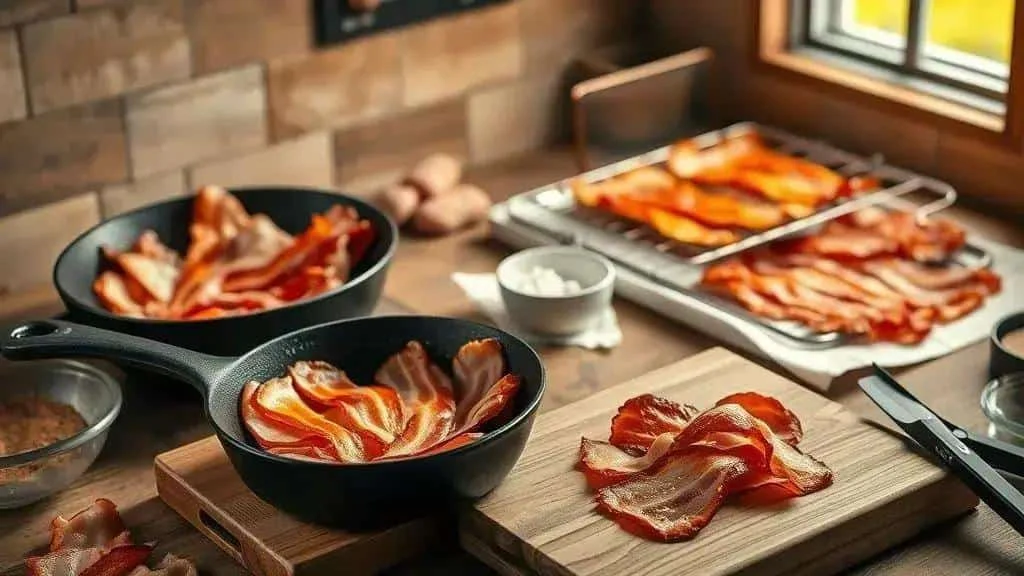
The main points are even-sized pieces, controlled heat and draining away excess fat. A crisp exterior should come from proper cooking, not from burning the edges.
Methods for crisp bacon
- Choose an even cut: medium-cut streaky rashers can be cooked whole and chopped afterwards, while diced bacon works for the main method. Very thin rashers burn quickly and thick pieces need longer.
- Remove excess moisture: pat with kitchen paper, then discard the paper and clean hands and surfaces that touched the raw meat.
- Start in a cold pan: arrange the bacon and bring it gradually to medium heat so the fat renders before the surface becomes too dark.
- Leave space: avoid overlapping rashers and cook in batches if needed.
- Optional oven finish: after pan-frying, use a rack over a tray at 200°C conventional/180°C fan for a short finish, checking frequently. Four to six minutes is only a guide, not a requirement.
- Oven-only method: spread rashers in a single layer on a suitable rack and tray at 200°C conventional/180°C fan. Start checking around 12 minutes; thickness and your oven determine when they are cooked and crisp.
- Microwave option: use only a microwave-safe bacon tray or dish and the appliance’s instructions. Cook in short stages and check thoroughly; a universal two- or four-minute setting is not reliable for every quantity and wattage.
- Keep it simple: a starch coating is not needed for this farofa. Even cooking, space in the pan and proper draining are the more useful steps.
- Drain without stacking: put cooked rashers in a single layer on a clean rack or kitchen-paper-lined plate so trapped steam does not soften them.
Common mistakes
- Starting in an excessively hot pan can burn the surface before the fat has rendered properly.
- Piling up freshly cooked rashers traps steam and softens their texture.
- Discarding every drop of fat is not necessary: a measured 1–2 tbsp can flavour the farofa. Conversely, leaving a large pool makes it greasy.
Adding the bacon to the farofa
Once cooked, chop whole rashers if needed and fold them in near the end. Mix briefly, reserving a little for the top if desired. Keep any bacon prepared ahead refrigerated, then reheat thoroughly only once before using.
Serving farofa with Christmas dinner
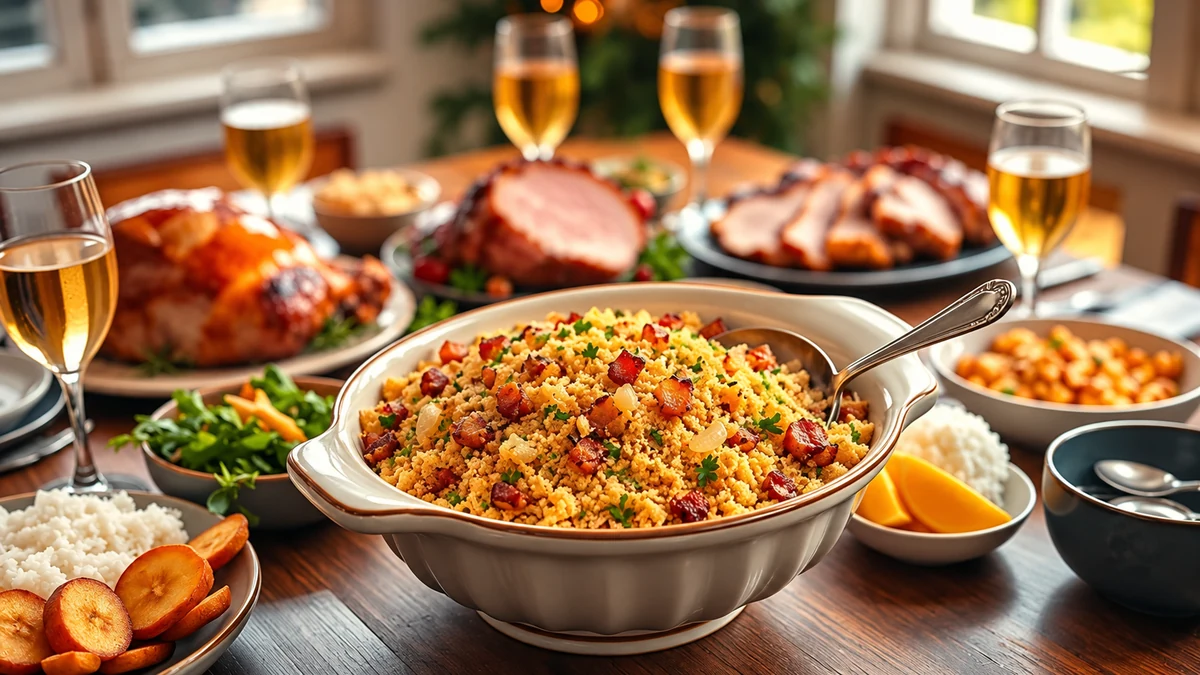
Crispy bacon farofa is especially good freshly made and warm. About 50–70 g per person is a starting guide for a side dish in a larger festive menu.
Portions and temperature
- Serving size: allow roughly 50–70 g as a side, or a larger portion for guests who particularly enjoy it, depending on the other food offered.
- Serving warm: serve promptly after cooking. If reheating refrigerated farofa, heat until steaming hot throughout, stirring well; one or two minutes is not a dependable safety check.
Main dishes to serve alongside
- Roast pork: the salty crumbs contrast with slices of pork leg or loin.
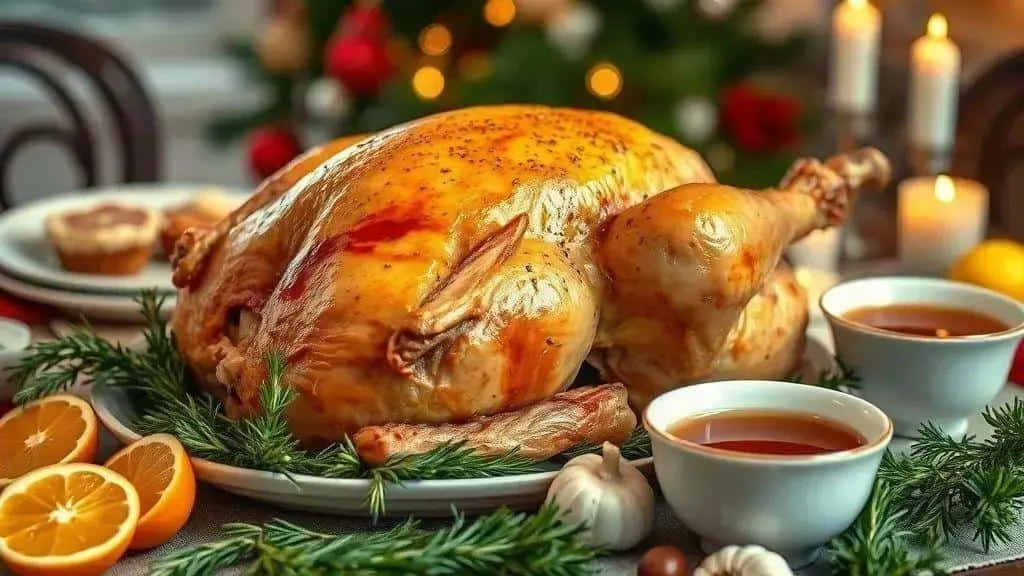
- Roast poultry: chicken or turkey works well with the crunchy texture.
- Barbecued or grilled meat: the farofa can soak up a little of the meat’s juices on the plate.
- Salt cod or richer fish: use restrained salt and extra herbs so the side does not overpower the fish.
Other accompaniments
- Plain white rice: a simple base alongside the savoury crumbs.
- Chopped vegetable vinaigrette or fresh salad: sharpness and freshness balance the bacon’s richness.
- Plantain variation: offer a small portion with golden cooked plantain for a sweet-savoury contrast.
- Nuts and dried fruit: optional festive additions, clearly identified for guests with allergies.
Drink suggestions
- Dry sparkling wine: an optional pairing for adults who drink alcohol.
- Light red wine: Pinot Noir can accompany roast meat without overwhelming the side dishes.
- Lager or pilsner: another option with a savoury meal, including alcohol-free versions.
- Non-alcoholic choices: orange juice or sparkling water with lemon.
Presentation
- Serve in a rustic bowl or a warmed serving dish, taking it to the table promptly.
- Reserve a little cooked crisp bacon to scatter over the top at the last moment.
- Finish with parsley and, if using the variation, a few golden plantain slices.
- Provide a separate serving spoon, particularly when meat-free dishes are also on the table.
Preparing components in advance
- Cook the bacon ahead: cool promptly, refrigerate within two hours in a covered container and use within 48 hours. Reheat until steaming hot throughout before adding to the farofa; reheat only once.
- Toast the plain flour: dry-toasted farinha, without bacon, onion or added fat, can be prepared ahead and stored according to its packet guidance once cool. Farofa containing cooked bacon or vegetables needs refrigeration.
- Combine at serving time: bring the prepared components together shortly before serving, checking that any refrigerated cooked ingredients are thoroughly reheated.
- Restore the texture: stir gently in a pan or spread in an oven dish. Add a little fresh butter or oil only if it is dry, and heat all the way through.
Storing and using leftovers
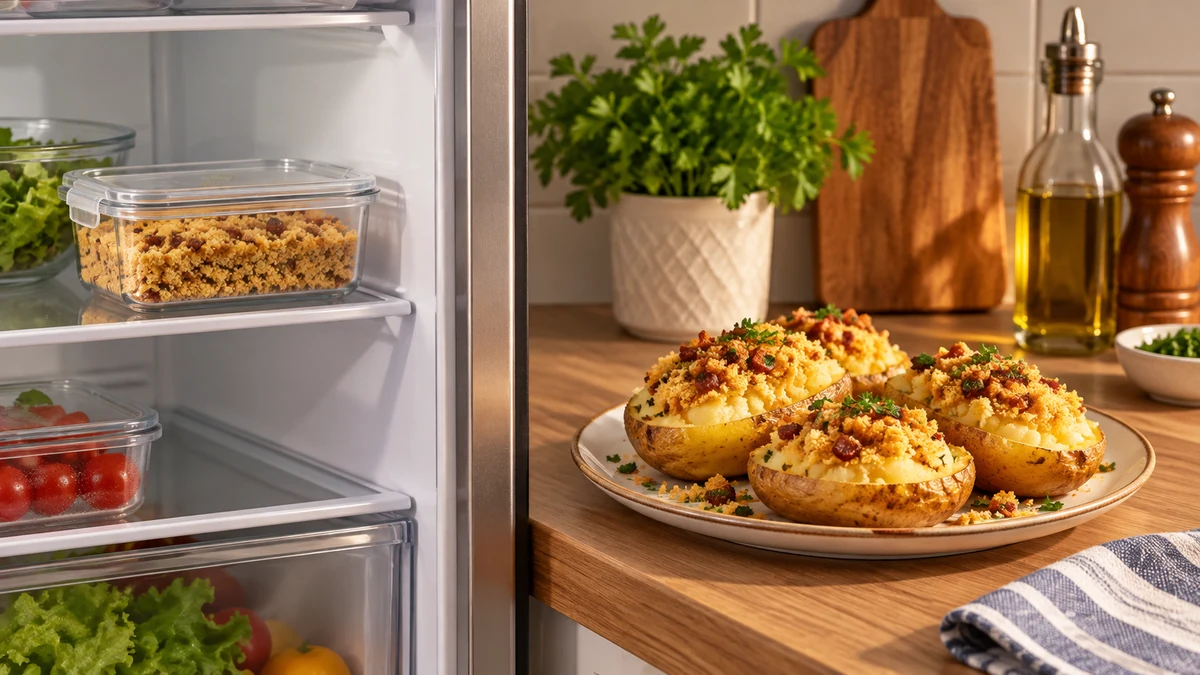
Treat crispy bacon farofa as cooked leftovers: bacon and softened vegetables mean it should not be stored like a dry packet of flour.
Safe storage
- After cooking: cool promptly in shallow portions and refrigerate within two hours. Do not leave it on the table for the rest of the day.
- In the fridge: keep covered and eat within 48 hours. Avoid leaving a deep, warm batch out for hours while waiting for every crumb to become cold.
- In the freezer: freeze promptly in labelled portions. Up to three months is a quality guide, although the bacon may lose some crispness. Thaw in the fridge and use within 24 hours of defrosting.
Reheating and restoring crunch
- In the oven: spread in a shallow dish at about 180°C conventional/160°C fan, stirring occasionally until steaming hot throughout. The required time depends on the amount and starting temperature; do not rely on a fixed five minutes.
- In a frying pan: warm over moderate-low heat, stirring thoroughly and adding a little butter or oil if needed. Check the whole portion is steaming hot before serving.
- In the microwave: use a microwave-safe dish, stir between heating stages and follow the appliance’s standing-time advice. Check it is hot throughout; this method usually softens the crumbs. Reheat only once, whichever method you choose.
Ideas for using leftovers
Use safely stored leftovers within their original keeping time. Turning them into another dish does not restart the clock; do not reuse a portion that has already been reheated.
1. A crunchy salad topping
- Combine washed salad leaves, cherry tomatoes and cheese suitable for your guests’ dietary needs.
- Scatter 2–3 tbsp safely stored cold farofa over each portion instead of croutons.
- Add a light dressing and serve immediately so the crumbs do not become soggy.
2. A filling for baked potatoes
- Bake whole potatoes until tender all the way through.
- Halve them and mix a little of the scooped-out potato with 2 tbsp farofa and butter to taste.
- Return the filling to the skins, add a little more farofa and bake until the filling is steaming hot throughout. Browning the top alone is not enough when using chilled leftovers.
3. Farofa and cheese fritters
- Mix one cup of farofa with ½ cup grated cheese and one beaten egg. The mixture should hold together; this is a flexible leftover idea rather than a precisely tested yield.
- Shape small, flat fritters, coat lightly in suitable flour and shallow-fry, turning carefully. Cook until the centre is fully set and steaming hot; a food thermometer can confirm 70°C for two minutes. Colour on the outside alone does not show the egg and filling are cooked.
- Drain on kitchen paper and serve immediately. Take care with hot oil and do not leave the pan unattended.
Safety reminders
- Cool promptly and refrigerate within two hours. Leaving cooked food at room temperature to cool for a long period can allow bacteria to grow.
- Thaw in the fridge, use within 24 hours of defrosting and reheat only once until steaming hot throughout.
- Discard spoiled food, but do not rely on smell or appearance to prove safety. If storage time or temperature is uncertain, do not use it.
Finishing tips for well-balanced farofa
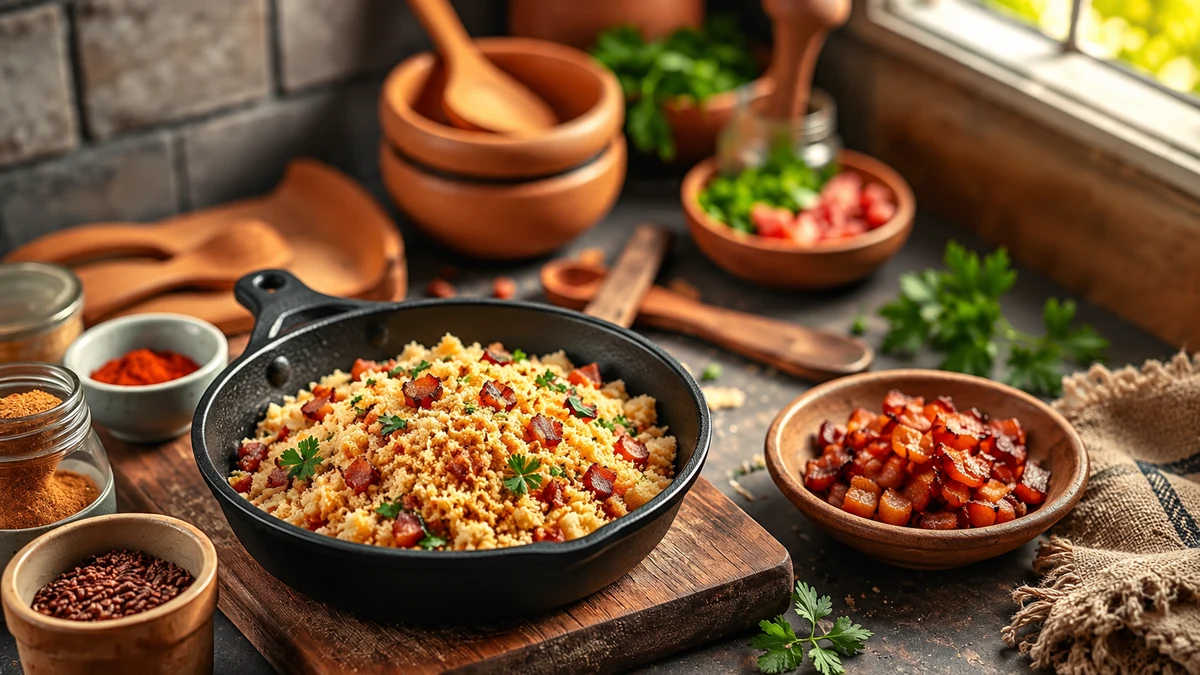
These practical finishing tips focus on flavour and texture without implying the recipe has been tested by a named chef.
Building flavour
- Render the bacon fat gently over medium heat and keep only a measured amount for the flour.
- Season in stages: soften onion and garlic first, then judge the salt and pepper after the bacon has been returned.
- Clarified butter or ghee is an optional alternative for toasting, but it still comes from milk and is not suitable for a milk-free version. Use oil where milk must be avoided.
Texture and crunch
- Add flour gradually over gentle heat and keep stirring for even colour without burnt patches.
- Add bacon at the end and reserve a little for the top if desired.
- Vary the crumbs with cassava flour and panko if you want a different crunch. The result remains crumbly rather than creamy, and ordinary panko introduces wheat.
Seasoning variations
- Sweet-savoury balance: a pinch of brown sugar can change the flavour, but it cannot correct the actual salt content of an oversalted dish.
- Fresh herbs at the end keep their aroma better than herbs fried for a long time.
- Pepper and paprika: add gradually and avoid scorching spices on high heat.
Keeping preparation manageable
- Taste before salting: bacon contributes plenty on its own.
- Adjust the richness: 300 g bacon to two cups of flour is a generous ratio. Reduce the bacon and retained fat if that suits your menu better.
- Prepare ahead thoughtfully: keep toasted plain flour separate from cooked bacon, refrigerating the bacon promptly. Combine and heat thoroughly near serving time.
Serving and presentation
- A useful garnish: scatter reserved crisp bacon over the top so guests can see what is in the dish.
- Use a warmed bowl: it helps at the table, but is not a substitute for temperature-controlled hot holding. Serve small amounts and keep the rest safely stored.
Final reminders
- A pan or oven usually restores texture better than a microwave, but every reheating method must heat the food thoroughly.
- Use a sound, heavy-based frying pan with manageable heat and enough space for stirring.
- For a party, offer clearly labelled variations with plantain or nuts and separate utensils for any meat-free option.
Ready to make your farofa
The essentials of crispy bacon farofa are simple: cook the bacon properly, toast the cassava flour gently and control the amount of fat. Serve fresh for the best crunch.
Share the recipe with anyone planning a festive meal, and tell us which variation you prefer.
Explore the I Love Christmas blog for more Christmas dinner ideas and seasonal inspiration.
Crispy bacon farofa: frequently asked questions
How do I make bacon crisp without burning it?
Pat off excess moisture, start in a cold pan and bring it to medium heat. Leave space between pieces, cook until fully done and drain without stacking. An oven finish is optional and needs close watching.
Can I make farofa ahead?
Yes. Cool promptly, refrigerate within two hours and eat within 48 hours, or freeze in portions. Reheat only once until steaming hot throughout; a pan or oven generally restores texture better than a microwave.
Which flour should I use?
Use granular Brazilian farinha de mandioca made for farofa, not tapioca starch. Suitable toasted Brazilian maize flour is an alternative. A half-cassava, half-panko version contains wheat unless you use a verified gluten-free substitute.
How do I avoid making it too salty?
Taste after adding the bacon before using any extra salt. Choose a lower-salt bacon if available and reduce salty additions. Sugar changes the taste but does not remove sodium or fix an oversalted batch.
Can I make a vegetarian version?
Yes. Replace bacon with cooked smoked tofu or sautéed mushrooms and use oil instead of bacon fat. Smoked paprika can add a smoky note. For a vegan version, also replace dairy butter and check every added ingredient.