This pomegranate and jasmine margarita combines tequila, pomegranate juice and jasmine syrup for a fruity, floral New Year’s Eve cocktail. Follow the preparation steps, try the alcohol-free variation and adjust the sweetness to suit your ingredients.
A pomegranate and jasmine margarita brings together sharp lime, ruby pomegranate and a delicate floral note. Here is how to prepare the cocktail and its variations for a festive gathering.
Pomegranate and jasmine margarita ingredients
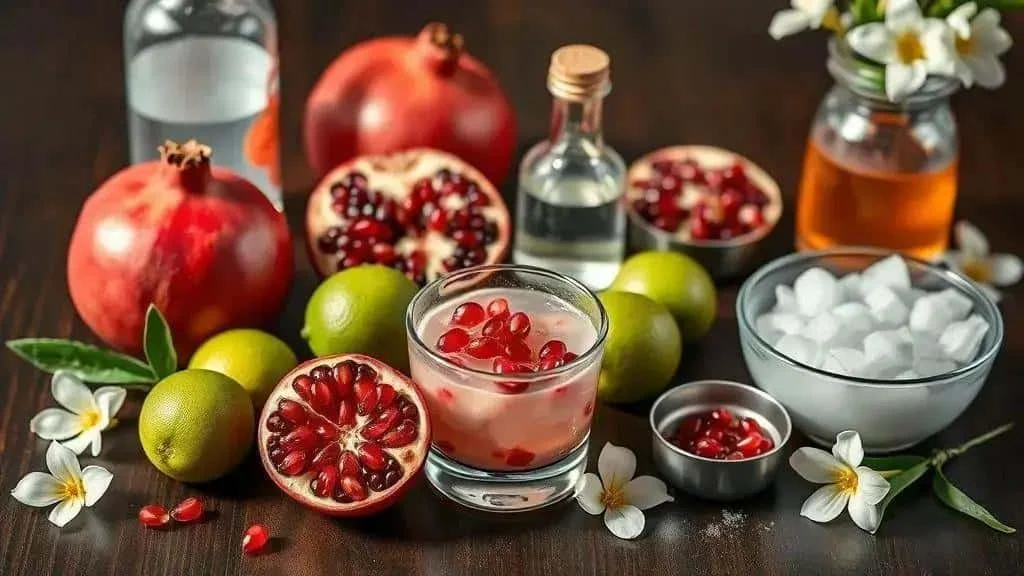
For a pomegranate and jasmine margarita, measure the ingredients carefully to balance acidity, sweetness and floral flavour:
- 60 ml blanco tequila — choose 100% agave if preferred. Reposado adds oak-aged notes; an alcohol-free tequila-style alternative gives a different flavour for a mocktail.
- 30 ml Cointreau or triple sec — orange liqueur supplies sweetness and citrus flavour. For an alcohol-free version, use an alcohol-free orange alternative or around 20 ml diluted orange syrup, adjusting to taste.
- 25 ml fresh lime juice — squeeze just before mixing. Lemon juice makes a different citrus variation; adjust by taste rather than assuming it is always less acidic.
- 20 ml jasmine syrup, or simple syrup infused with jasmine tea. Alternatively, use 15–20 ml elderflower liqueur for an alcoholic elderflower variation, or 20 ml simple syrup with a few drops of food-grade orange blossom water.
- 45 ml pomegranate juice — fresh or unsweetened bottled juice. Diluted grenadine or cranberry juice offers a different flavour; grenadine is much sweeter, so reduce the jasmine syrup as needed.
- 1 tablespoon pomegranate seeds — for garnish. Lime zest is an alternative if fresh pomegranate is unavailable.
- Ice — cubes for shaking and fresh cubes for serving.
- Salt or sugar — for the rim. Fine salt, caster sugar or a salt-and-lime-zest mixture adheres more easily than very coarse crystals.
- A lime slice or strip of lime peel — for garnish.
- 1 pasteurised egg white, optional — for foam, using a product suitable for uncooked recipes. Around 30 ml aquafaba, the liquid from cooked chickpeas, is a plant-based alternative with a different foaming strength.
Ingredient tips
Choose pomegranate juice without added sugar if possible; fresh juice is not automatically less sweet than bottled juice. For jasmine syrup, infuse a small batch of simple syrup with food-grade jasmine tea, following the tea’s brewing guidance to avoid bitterness. Start with the stated lime quantity and adjust. Reducing the tequila lowers the alcohol in the recipe, but the orange liqueur still contributes alcohol.
How to make a pomegranate and jasmine margarita
- Prepare the jasmine syrup: dissolve 100 g sugar in 100 ml hot water. Remove from the heat, add two jasmine tea bags, steep according to their packet instructions, then remove them and cool. This makes more syrup than one cocktail needs.
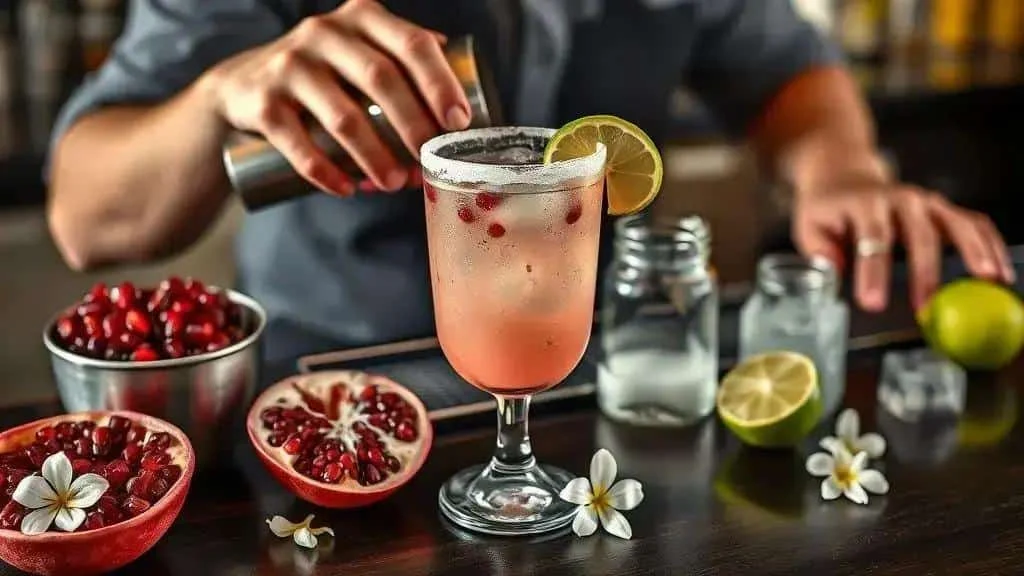
- Prepare the glass: rub a lime wedge around the rim and dip it in sugar or salt. Chill the glass until needed.
- Measure into a shaker: add 60 ml blanco tequila, 30 ml Cointreau or triple sec, 25 ml fresh lime juice, 20 ml jasmine syrup and 45 ml pomegranate juice.
- Optional foam: add one pasteurised egg white suitable for uncooked use, or around 30 ml aquafaba. Omit both for a clear, lighter-textured cocktail.
- Dry shake if using egg white or aquafaba: secure the lid and shake without ice for 10–15 seconds to start the foam.
- Shake with ice: open the shaker, add ice to roughly three-quarters full, secure the lid and shake for 10–15 seconds until cold.
- Strain and serve: strain into a chilled margarita glass or a rocks glass over fresh ice. A fine strainer catches pulp and small ice fragments while allowing the foam through.
- Garnish: add pomegranate seeds and a lime slice or twist. Flowers are optional: only use flowers specifically sold as edible and suitable for this purpose.
- Adjust the balance: if too sharp, add a little more syrup; if too sweet, try a little more lime. Make small adjustments rather than automatically adding a full extra measure.
- Prepare a larger batch: multiply the liquid ingredients and refrigerate in a covered jug. Shake individual portions with ice just before serving; add any egg white or aquafaba individually rather than leaving a foamy batch standing.
Practical preparation tips
Strain fresh juice to remove excess pulp. Prepare and chill the syrup ahead, then measure each drink consistently. A full recipe contains 180 ml liquid before ice dilution or optional foam, so choose a glass with enough room or divide it into smaller servings.
Pomegranate and jasmine margarita variations
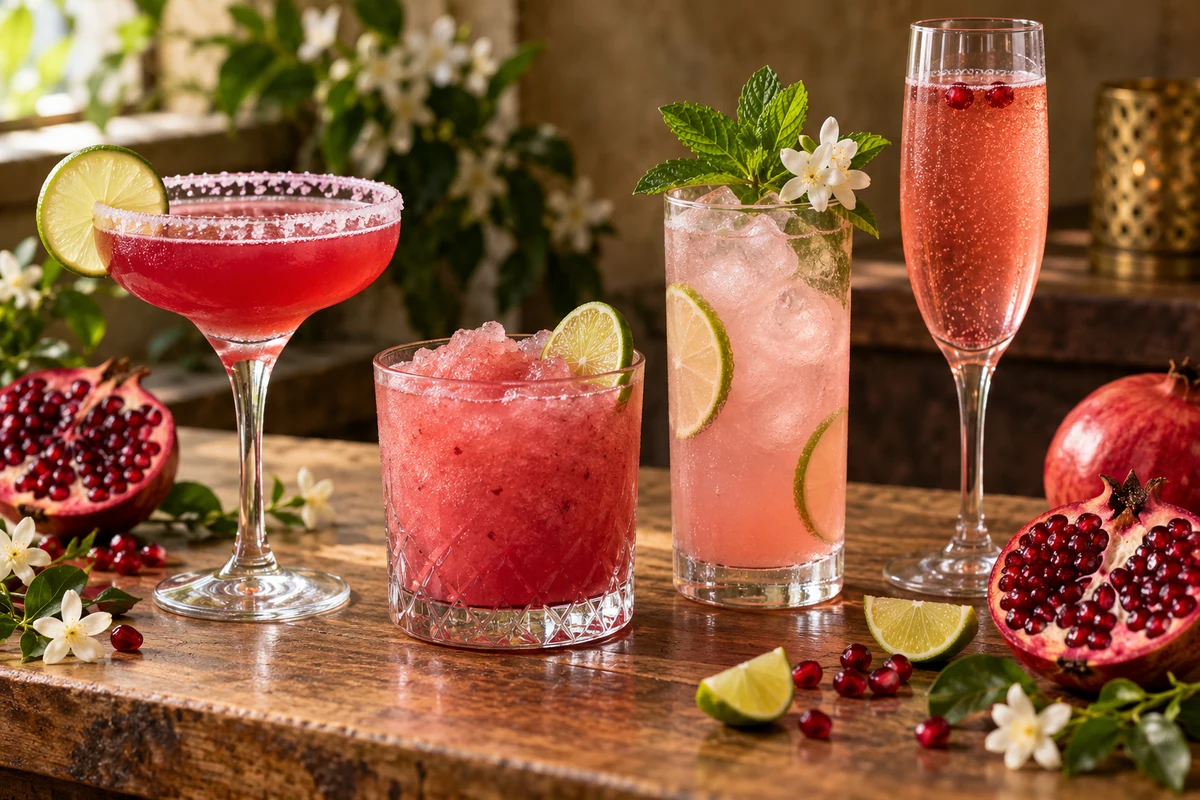
Try these variations on the pomegranate and jasmine margarita, adjusting each to the sweetness of your juice and syrup.
Pomegranate mezcal variation
Mezcal brings a different agave character, often with smoky notes that contrast with the pomegranate.
- 60 ml mezcal, replacing the tequila
- 30 ml Cointreau
- 25 ml lime juice
- 20 ml jasmine syrup
- 45 ml pomegranate juice
- Pomegranate seeds to garnish
Method: shake the liquids with ice, strain into a chilled glass and garnish with pomegranate seeds.
Frozen pomegranate and jasmine margarita
A slushy variation for anyone who prefers a frozen cocktail, whatever the season.
- 60 ml tequila
- 30 ml Cointreau
- 25 ml lime juice
- 20–30 ml jasmine syrup
- 60–80 ml pomegranate juice
- 1 cup crushed ice, approximately 240 ml by volume
Method: blend until slushy. Adjust the sweetness, garnish with pomegranate seeds and serve immediately. The final texture depends on the ice and blender.
A less sweet variation
Use less syrup and liqueur for a drier-tasting drink; this is not a calculated low-sugar or low-calorie recipe.
- 60 ml tequila
- 20 ml Cointreau, or 10 ml liqueur plus 10 ml water
- 25 ml lime juice
- 10–15 ml jasmine syrup, adjusting to taste
- 45 ml pomegranate juice, with a little sparkling water if desired
Method: shake the still ingredients with ice, then add sparkling water to the glass. Dilution makes the flavour less concentrated but does not remove the alcohol already added.
Alcohol-free mocktail
This version keeps the fruity and floral flavours without adding spirits or liqueur. Check the labels of any commercial syrups or spirit alternatives if avoiding alcohol completely.
- 60 ml pomegranate juice
- 25 ml lime juice
- 20–25 ml jasmine syrup
- 30 ml sparkling water or ginger ale
- Ice and pomegranate seeds to serve
Method: mix the juices and syrup, add ice, then top with sparkling water or ginger ale and garnish. Do not shake carbonated ingredients.
Spicy jalapeño variation
A little chilli provides a contrast to the sweet pomegranate. Start gently because jalapeños vary in heat.
- 60 ml tequila
- 30 ml Cointreau
- 25 ml lime juice
- 20 ml jasmine syrup
- 45 ml pomegranate juice
- 1–2 thin jalapeño slices, starting with one
Method: lightly muddle the chilli in the shaker, add the liquids and ice, then shake and strain. Avoid touching your eyes after handling chilli.
Sparkling New Year’s Eve variation
A sparkling-wine top gives the drink a different finish. This variation has no jasmine syrup in its base; add a small amount only if you want a sweeter floral note.
- 45 ml tequila
- 20 ml Cointreau
- 20 ml lime juice
- 30 ml pomegranate juice
- 60–90 ml dry sparkling wine, to top up
- Pomegranate seeds and lime peel to garnish
Method: shake the tequila, liqueur and juices with ice, strain into a suitably sized glass, then top with chilled sparkling wine. Never put the sparkling wine in the shaker. Serve immediately.
Serving tips for New Year’s Eve

A little preparation makes the pomegranate and jasmine margarita easier to serve at a party.
- Choose the glass: a margarita glass or rocks glass shows off the pink colour; allow room for the full liquid quantity, ice and garnish.
- Prepare rims ahead: dip the rims in salt or sugar and keep the glasses clean and cool until needed.
- Chill the glasses: refrigerate them for 10–15 minutes before serving.
- Choose the ice: large cubes generally melt more slowly than crushed ice under similar conditions; crushed ice suits the frozen variation.
- Prepare garnishes: keep pomegranate seeds and lime slices covered and refrigerated. Use only properly identified, food-grade edible flowers if adding them.
- Batch the base: mix the still liquid ingredients in a covered jug and refrigerate. Shake measured portions with ice at serving time; keep any carbonated additions separate.
- Identify alcohol-free drinks: use clearly different glasses or labels and separate utensils to avoid mixing them up.
- Adjust sweetness: keep extra syrup and lime juice available for small adjustments.
- Measure portions: the main recipe has 180 ml liquid before dilution. With both tequila and liqueur at 40% ABV, its 60 ml plus 30 ml measures contain 3.6 UK alcohol units. Split into smaller servings if preferred; offer water and alcohol-free options, and remember that food does not cancel alcohol’s effects.
- Finish simply: pomegranate seeds and a lime twist are enough for a festive garnish; flowers are not essential.
Making service easier
Arrange glasses, measured ingredients and garnishes on a stable counter. Carry only as many drinks as fit safely on your tray. For a self-service station, clearly label alcoholic and alcohol-free jugs and provide a measuring cup rather than encouraging unmeasured refills.
Choosing and preparing pomegranate and jasmine
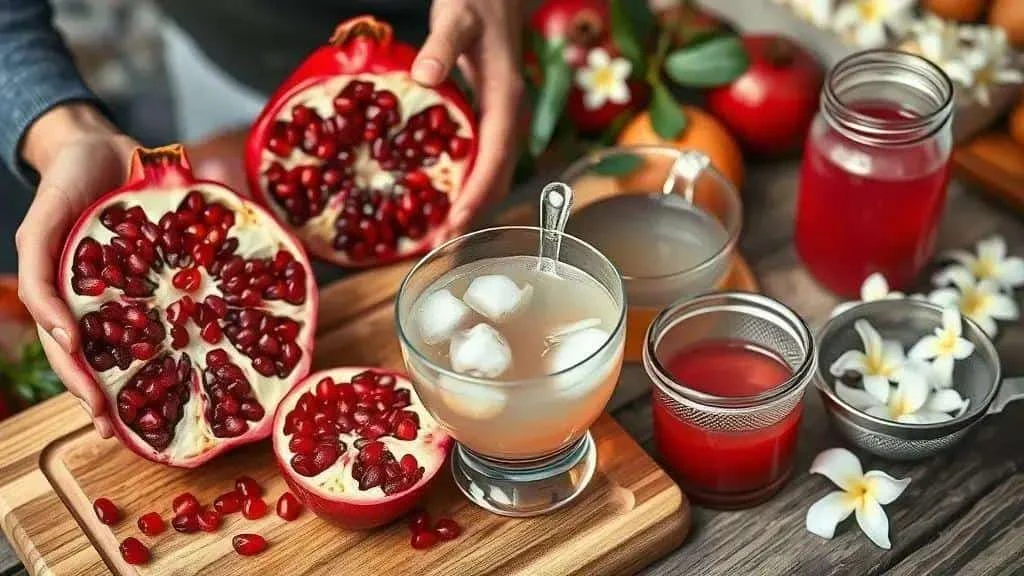
Choose pomegranate for its condition and flavour, and jasmine specifically sold for culinary use.
Choosing a pomegranate
- Weight: look for fruit that feels heavy for its size.
- Skin: choose firm fruit without mould, soft patches or leaking splits.
- Colour: the shade varies by variety, so do not rely on deep red colour alone.
- Condition: weight and intact skin are more useful shopping checks than trying to judge ripeness by the sound when tapped.
Preparing pomegranate seeds and juice
- Cut carefully: wash the outside, then cut the fruit into halves or sections on a stable chopping board.
- Loosen seeds in water: gently separate the sections in a bowl of clean water. The white membrane tends to float while the seeds sink.
- Drain: skim off the membrane, drain the seeds and remove any remaining white pieces.
- Extract juice: pulse the seeds briefly, then press through a fine sieve. Avoid grinding the hard inner seeds, which can make the juice bitter.
- Store: refrigerate prepared seeds and fresh juice promptly in clean, covered containers and use within 48 hours for this recipe. Freeze juice in small portions if keeping it longer; three months is a quality guide, not a guarantee for poorly handled juice.
Choosing jasmine
- Culinary suitability: use packaged jasmine tea or a food-grade syrup. A plant being called jasmine does not establish that it is safe to eat.
- Condition: if buying edible flowers, choose fresh, undamaged ones and follow the supplier’s storage instructions.
- Source: buy flowers explicitly intended for eating. Florist flowers and unidentified garden plants are unsuitable, even if described as organic.
Preparing jasmine for culinary use
- Follow the supplier’s instructions: handle edible flowers gently and clean them as directed. Washing cannot make an unsafe species or unsuitable pesticide treatment safe.
- Use the correct part: eat only the parts the supplier identifies as edible. Do not assume stems, leaves and whole flowers are interchangeable.
- Make tea-infused syrup: dissolve 100 g sugar in 100 ml water, then infuse with food-grade jasmine tea according to its brewing instructions. Strain, cool promptly and refrigerate in a clean covered container; make a small batch and use within 48 hours or freeze portions.
- Use jasmine tea: choose a culinary tea product and follow its brewing time and temperature. Jasmine-scented green tea can become bitter when over-steeped or heavily reduced, and may contain caffeine.
Safety and flavour tips
- Check suitability: use fruit suitable for eating and flowers explicitly sold for culinary use. Do not try to rescue unidentified or chemically treated flowers by washing them.
- Taste a small amount: check the syrup’s strength before measuring it into a drink.
- Keep the floral note gentle: jasmine should complement the fruit rather than dominate it.
- Freeze spare pomegranate: freeze seeds or juice in small portions for later drinks; thawed seeds may be softer.
Storage at a glance
Keep whole pomegranates cool and check their condition before use. Refrigerate prepared seeds, fresh juice and homemade tea syrup at 5°C or below and use within 48 hours for this preparation, or freeze promptly. After thawing in the fridge, use within 24 hours. Commercial products should follow their own labels.
Food pairings and cocktail notes
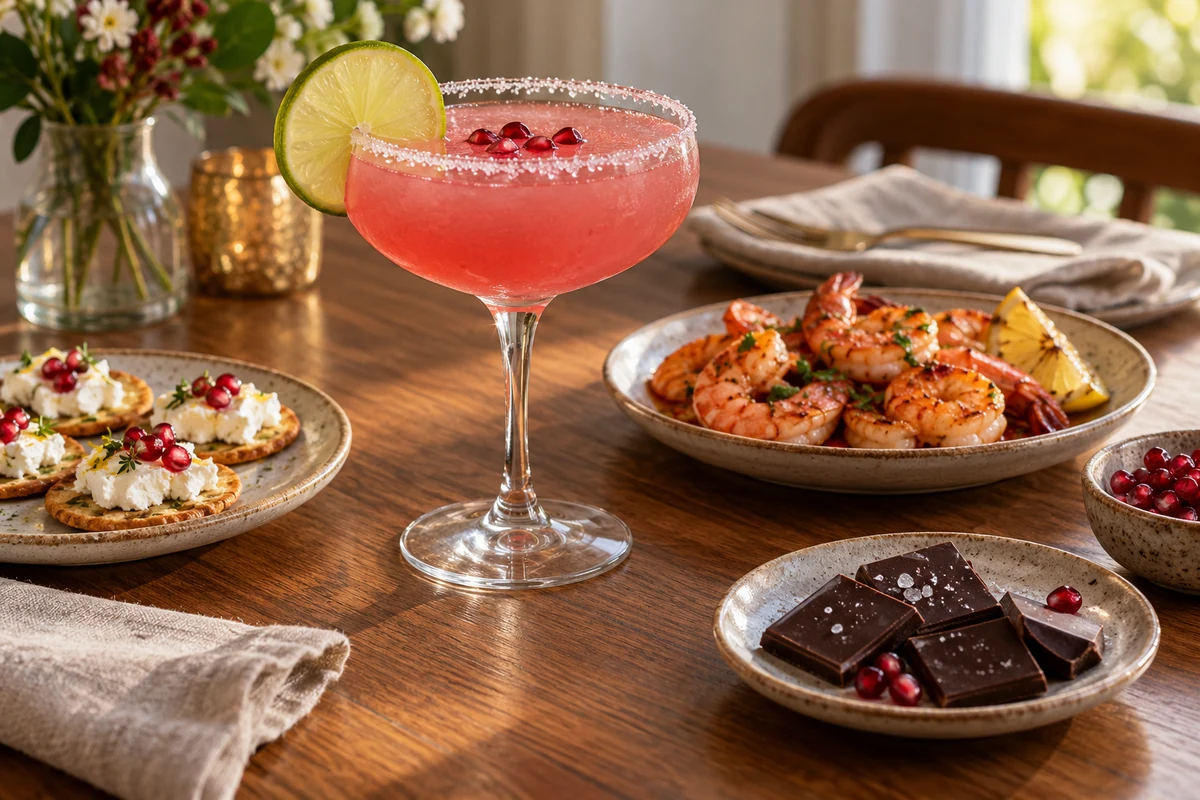
The fruit, lime and floral notes of a pomegranate and jasmine margarita work with contrasting textures and flavours. These are serving suggestions, rather than fixed pairing rules.
Savoury food
- Cooked seafood — prawns or other seafood make a fresh-tasting accompaniment. Raw oysters are not suitable for everyone, so consider your guests before serving them.
- Small fried bites — breaded prawns or croquettes contrast with the drink’s acidity.
- Fish tacos — citrus and herbs complement the margarita’s flavours.
Cheese and cured meats
- Goat’s cheese — a tangy option alongside the fruit.
- Brie or Camembert — creamy textures contrast with the lime. Choose foods appropriate to guests’ dietary and pregnancy-related needs.
- Cured ham — a salty accompaniment to the fruity drink.
Desserts
- Dark chocolate — its bitterness contrasts with the sweetness.
- Lemon tart — repeats the citrus theme; adjust the drink’s sweetness to suit.
- Pomegranate or lemon sorbet — another fruit-led option.
Serving and adjusting the drink
- Temperature: serve chilled and use a cold glass.
- Glassware: choose a margarita glass for a stemmed presentation or a rocks glass for ice.
- Dilution: use fresh cubes after shaking; crushed ice changes the drink more quickly and suits the frozen variation.
- Flavour: add lime or syrup in small amounts until the balance suits you.
Notes on the ingredients
- Pomegranate at New Year: it appears in some festive customs as a symbol of prosperity or fertility. These are cultural associations, not promises of good fortune.
- Jasmine: supplies aroma, while the sugar in the syrup supplies sweetness. The two should be balanced separately.
- 100% agave tequila: describes the source of the fermentable sugars used in production; it does not mean that every such tequila tastes the same or that other tequila is simply sweetened afterwards.
- Egg white or aquafaba: adds foam and a softer texture. Both are optional; use pasteurised egg white suitable for uncooked use.
- Sparkling variation: add chilled sparkling wine after shaking, remembering that it adds alcohol as well as bubbles.
Ideas for different occasions
- New Year’s Eve: offer measured portions, savoury bites and a clearly identified alcohol-free option.
- Dinner party: serve with a small seafood or cheese starter suited to your guests.
- Outdoor gathering: keep juices and garnishes chilled and mix drinks to order; the frozen variation needs immediate serving.
Enjoying your margarita
The pomegranate and jasmine margarita combines citrus, fruit and a floral finish. Use the main recipe as a starting point, then adjust it to the sweetness of your ingredients.
For New Year’s Eve, prepare the syrup ahead, refrigerate the juices and garnishes, and shake each drink just before serving.
Thank you for reading. Explore the I Love Christmas blog for more festive recipes, serving ideas and seasonal inspiration.
If you make a variation, share what worked for you. Enjoy the celebrations and offer everyone a drink that suits their preferences.
Pomegranate and jasmine margarita: frequently asked questions
Can I make it without alcohol?
Yes. Use the mocktail recipe with pomegranate juice, lime, jasmine syrup and sparkling water. If using commercial spirit alternatives or flavourings, check their labels; omit both tequila and orange liqueur.
How do I make a simple jasmine syrup?
Dissolve 100 g sugar in 100 ml hot water, remove from the heat and infuse with two jasmine tea bags according to their packet’s brewing instructions. Strain, cool promptly and refrigerate. Use within 48 hours or freeze small portions.
What can I use instead of fresh pomegranate juice?
Unsweetened bottled pomegranate juice is the closest practical option. Cranberry juice or diluted grenadine produces a different drink; grenadine usually needs less added syrup because it is already sweet.
How should I store prepared pomegranate?
Keep the seeds and fresh juice in clean covered containers in the fridge and use within 48 hours for this recipe. Freeze spare juice in small portions; use thawed juice within 24 hours and follow commercial product labels where applicable.
Are jasmine flowers safe to eat?
Do not judge by the common name or appearance. Use flowers specifically identified and sold for culinary use, following the supplier’s instructions, or use food-grade jasmine tea instead. Washing does not make florist flowers or an unsuitable plant safe.
Sources and Further Reading
- Royal Horticultural Society: edible flowers
- NHS: calculating alcohol units
- Food Standards Agency: cooking and cooling food