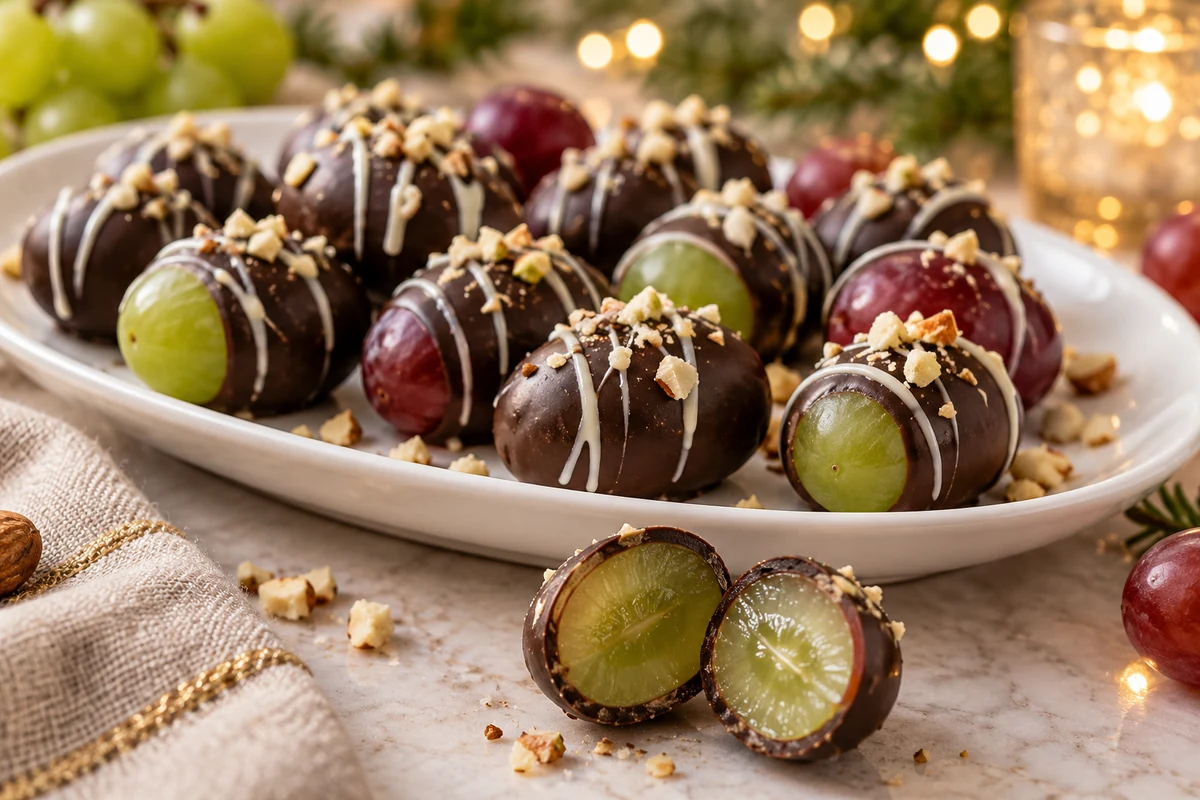
This chocolate-covered grape platter features individual seedless grapes dipped in chocolate, with optional ganache and decorations. It is a bite-sized variation on Brazilian grape sweets, rather than a layered spoon dessert. The number of pieces depends on the grapes and coating thickness.
A chocolate-covered grape platter combines juicy fruit with a chocolate coating for a festive dessert. Follow the method below, then choose simple decorations or one of the optional creamy accompaniments.
Chocolate-covered grape platter ingredients
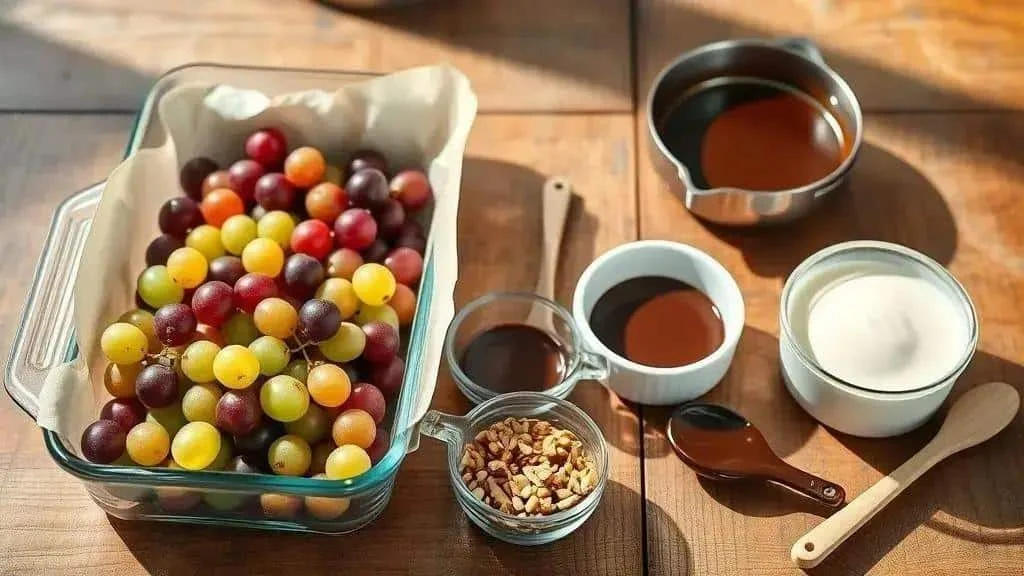
For a chocolate-covered grape platter, use firm fruit and set out the chocolate quantities before starting:
- 700 g seedless grapes — green, red or a mixture, washed and thoroughly dried
- 300 g dark chocolate — reserve 200 g for the optional ganache and 100 g for coating; if omitting ganache, all of it can be used for coating
- 150 g milk chocolate — for coating, either separately or combined with the reserved dark chocolate
- 100 g white chocolate, optional — for drizzling; use only as much as needed
- 200 ml whipping cream, optional — for a soft ganache served alongside; use 100–150 ml for a thicker ganache, depending on the chocolate
- Up to 2 tablespoons butter, optional — to enrich the ganache; it can be omitted
- 50 g chopped nuts, optional — walnuts, almonds or hazelnuts
- A little coconut oil, optional — only if deliberately making a softer refrigerated coating; it is not a substitute for tempering and is not needed in the basic method
- Baking parchment — for the setting tray
- A serving dish and one or more lined trays — a 20 × 30 cm dish is useful for presentation, but the grapes may need several trays to set without touching
Ingredient choices and practical tips
Grapes: choose firm seedless fruit without splits or mould. Cut fruit releases more juice, so seedless grapes are easier to coat. Whole grapes, including chocolate-covered ones, are unsuitable for babies and young children; offer appropriately prepared fruit instead.
Firmer ganache: use less cream or more chocolate, then let it cool before deciding whether it can hold a thin layer. A soft 1:1 ganache is better served as a dip than treated as a firm wrapping.
Vegan or dairy-free option: use suitable chocolate and plant-based cream, and omit the butter or use an appropriate alternative. Check every chocolate, including the white decoration; lactose-free dairy is not suitable for a milk allergy.
A glossy shell: temper suitable chocolate according to its manufacturer’s guidance. Adding coconut oil changes the coating and does not reproduce the same stable finish.
Storage and yield: keep covered in the fridge and use within 48 hours. Count the grapes for an accurate piece yield; 700 g is normally far more than 18–24 individual grapes, and coating use varies.
How to make a chocolate-covered grape platter
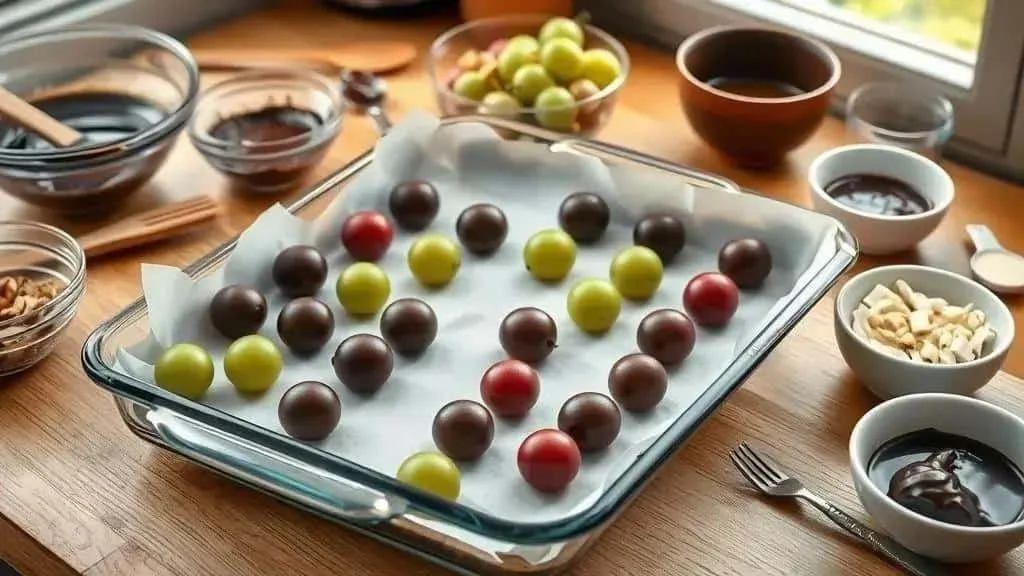
- Set up: line setting trays with baking parchment and prepare dry bowls, a dipping fork and the washed grapes.
- Dry the fruit thoroughly: wash the grapes under running water, remove stems and dry carefully with clean kitchen paper. Surface water can spoil the coating’s texture.
- Make optional ganache: heat 200 ml cream until steaming, pour over the reserved 200 g chopped dark chocolate, wait briefly, then stir until smooth. Add butter if desired. This makes a soft accompaniment; use less cream for a thicker version and cool before serving.
- Melt the coating chocolate: use the remaining 100 g dark chocolate and 150 g milk chocolate, or all 450 g if omitting ganache. Melt gently in a heatproof bowl over barely simmering water without the bowl touching the water, or in short microwave bursts, stirring frequently. Keep steam and water out.
- Choose the finish: dip grapes directly into the coating chocolate for the simplest version. Temper it if you want a firmer, glossier shell; plain melted chocolate can be chilled to set but may look duller and soften more readily.
- Dip: lower a dry grape into the chocolate with a dipping fork, coat, lift and let excess chocolate drain. Set on the lined tray with space between pieces. Avoid leaving hidden cocktail sticks in the finished sweets.
- Add a creamy option: serve soft ganache in a small bowl alongside. If trying a ganache layer under the shell, first make a firmer ganache, cool until spreadable and test a few pieces; runny cream-based ganache will not form a neat wrapping.
- Decorate: melt white chocolate gently and drizzle over the coated grapes. Add chopped nuts while the coating is still soft, if using.
- Set and refrigerate: chill until the coating is firm, checking after around 20 minutes. Keep refrigerated afterwards because the sweets contain fresh fruit and may include dairy fillings.
- Arrange for serving: lift the set pieces carefully from the parchment and transfer to a platter. Take out only the amount you plan to serve shortly.
- Keep equipment clean and dry: protect melted chocolate from water and avoid contaminating prepared fruit with dirty utensils.
- Check the yield: each whole grape makes one piece. The batch size depends on grape size and coating thickness; keep extra grapes separate if the dipping chocolate runs out.
Getting a glossy coating
Use the tempering curve supplied for your chocolate. Dark, milk and white chocolate have different working temperatures, and a blend needs appropriate guidance. Coconut oil makes a different, softer coating; it does not prevent bloom or replace tempering. Even a properly tempered shell still surrounds perishable fresh fruit here.
Quick storage reminders
Storage: keep covered at 5°C or below and use within 48 hours. Serving: let a small serving stand briefly if needed to soften the chocolate, keeping the rest chilled.
Filling and coating variations
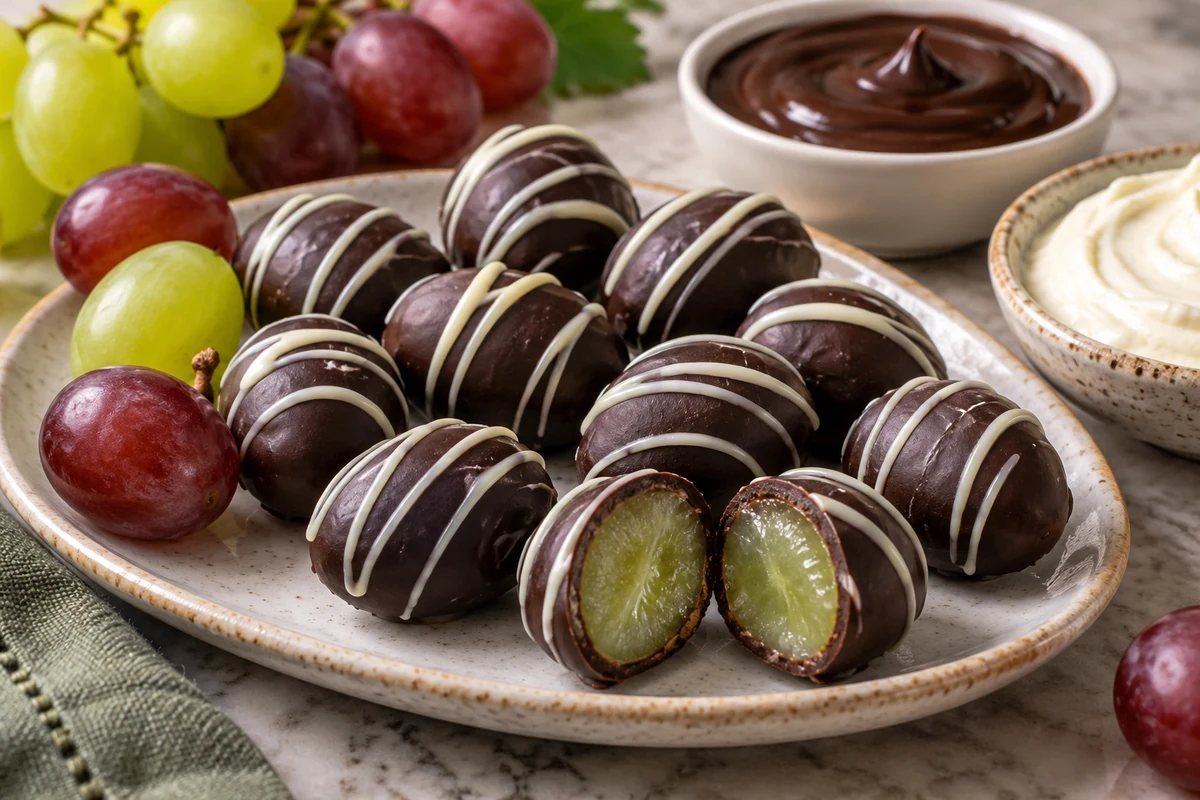
Use these ideas to vary your chocolate-covered grape platter. The quantities below are separate optional preparations, not additional requirements for the main recipe.
Creamy accompaniments and optional layers
- Thicker dark chocolate ganache — ingredients:
- 200 g dark chocolate
- 100 ml whipping cream
- Heat the cream until steaming, without prolonged boiling.
- Pour over the chopped chocolate, wait briefly and stir until smooth. Cool until spreadable before testing a thin layer around a dry grape.
- Lemon cream cheese — ingredients:
- 150 g cream cheese
- 2 tablespoons icing sugar
- 1 teaspoon finely grated lemon zest
- Beat the cream cheese with the icing sugar until smooth.
- Fold in the zest and refrigerate. Serve as a dip or test a very thin chilled layer; it is not automatically firm enough to wrap around a grape.
- Dulce de leche — ingredient:
- 150 g thick dulce de leche
- Use at a spreadable consistency; avoid heating until runny.
- Serve alongside or spread a thin layer around a dry grape before coating. Do not try to inject or hollow out the grape for filling.
- Brigadeiro-style chocolate mixture — ingredients:
- 1 tin sweetened condensed milk, approximately 395 g
- 1 tablespoon butter
- 2 tablespoons cocoa powder
- Cook over a low heat, stirring continuously, until thick enough to pull away from the pan.
- Cool promptly, then chill until firm enough to handle. Use a thin layer around the fruit rather than a hot filling.
- Pistachio or hazelnut paste — ingredients:
- 100 g roasted pistachios or hazelnuts
- A little neutral oil, only if needed — add gradually rather than automatically using two tablespoons
- Process the nuts until they release their oils and form a paste, pausing as needed to protect the appliance.
- Adjust with a little oil only if necessary. Serve alongside or try a thin layer beneath the chocolate, and identify the nut ingredients clearly.
Coatings and textures
- Dark chocolate gives a stronger cocoa flavour; temper suitable chocolate for a firmer shell.
- Milk chocolate gives a sweeter coating. Whole coated grapes are still a choking risk for young children, regardless of the chocolate used.
- White chocolate makes a contrasting drizzle; melt gently because it can overheat easily.
- Chopped nuts add crunch when scattered over the coating before it sets.
- Flaky sea salt can be used very sparingly on dark chocolate if you enjoy a sweet-and-salty contrast.
Vegan and dairy-free variations
- Plant-based ganache — ingredients:
- 200 g suitable vegan chocolate
- Up to 200 g plant-based cream — this makes a soft accompaniment; use less for a thicker mixture and test the product’s behaviour
- Check every component: omit dairy butter and choose suitable coating and decorating chocolates. Vegan labelling and milk-allergy suitability are not interchangeable; check allergen and cross-contact information.
Combining flavours
Ideas to try: dark chocolate with nuts, milk chocolate with dulce de leche, or lemon cream cheese served alongside. Keep variations grouped so guests know what they contain.
Finishing touches: dust a few pieces lightly with cocoa, drizzle others with white chocolate and use a little edible mint for colour. Keep the platter chilled until shortly before serving.
Arranging the platter
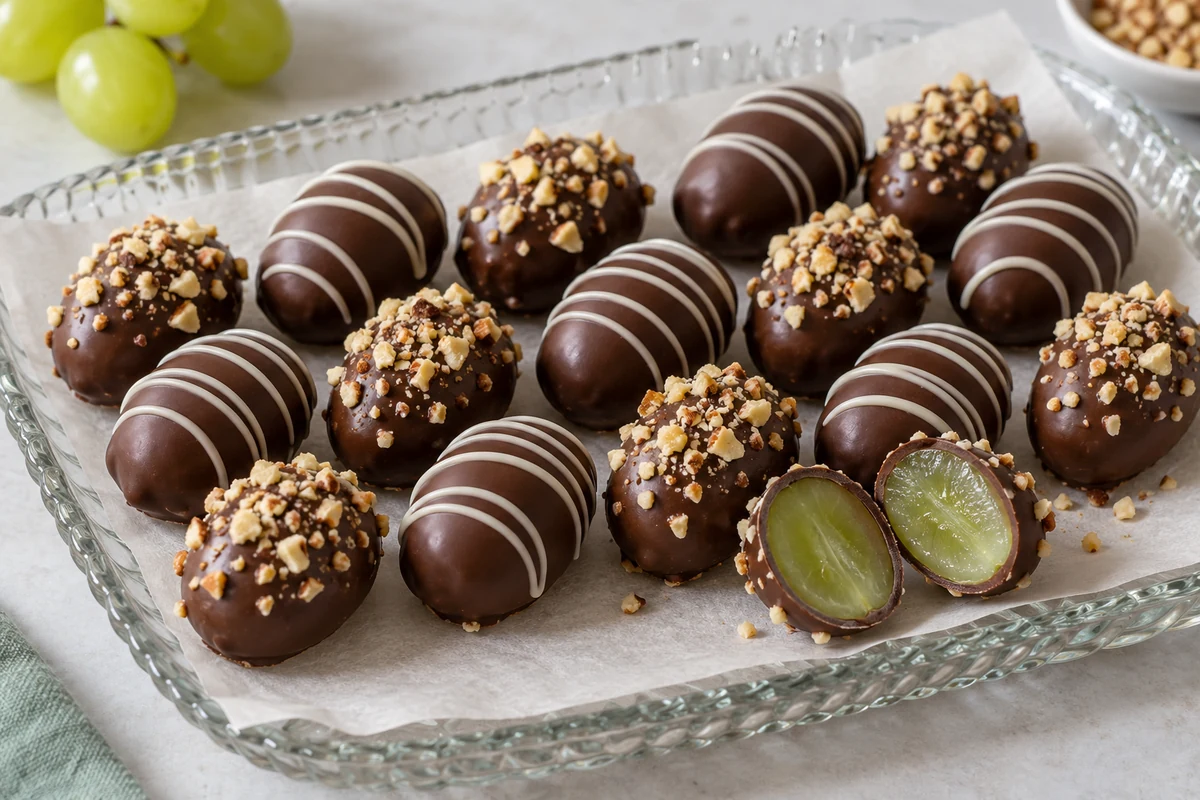
- Spacing: leave around 1–2 cm between pieces while setting so they do not join together.
- Arrangement: simple rows or grouped flavours make the platter easy to serve.
- Colour: vary the chocolate decorations; coated grapes will not show their skin colour unless only partly dipped.
- Layers: a single layer is easiest to handle. If storing stacked pieces, separate them with parchment and avoid crushing soft fillings.
- Decoration: use white chocolate drizzle, finely chopped nuts or a tiny pinch of flaky salt.
- Fresh detail: add clean edible mint or a little citrus zest if desired.
- Serving tools: provide small tongs or dessert forks rather than leaving sharp sticks hidden in the sweets.
- Serving temperature: take out a small quantity shortly before serving and replenish from the fridge.
- Neat finish: wipe the serving dish and remove loose parchment before presenting, if practical.
- Identify variations: separate ganache, nut and cream cheese versions with clear descriptions.
Events and transport
- Packaging: use a rigid food-safe box with a lined base and enough support to prevent movement.
- Transport: keep the sweets chilled in an insulated carrier with ice packs. Protect them from sun and heat even on a short journey.
- Allergen information: identify ingredients such as milk, nuts and soya where present. Milk allergy is different from lactose intolerance; check the actual product labels.
- Portions: two or three pieces per adult may suit a mixed dessert table, depending on size and the rest of the menu.
Creative presentation
Visual details: vary the drizzle or arrange the sweets on a festive napkin-lined serving area. Keep pine sprigs, baubles and other non-food decorations away from the food.
Lighting: natural side light shows the chocolate’s texture well in photographs; avoid hot lights that could soften it.
Extra fruit: a separate bowl of washed grapes can show the main ingredient. For babies and young children, grapes must be prepared safely, cut lengthways into quarters rather than offered whole.
Festive serving and small gifts
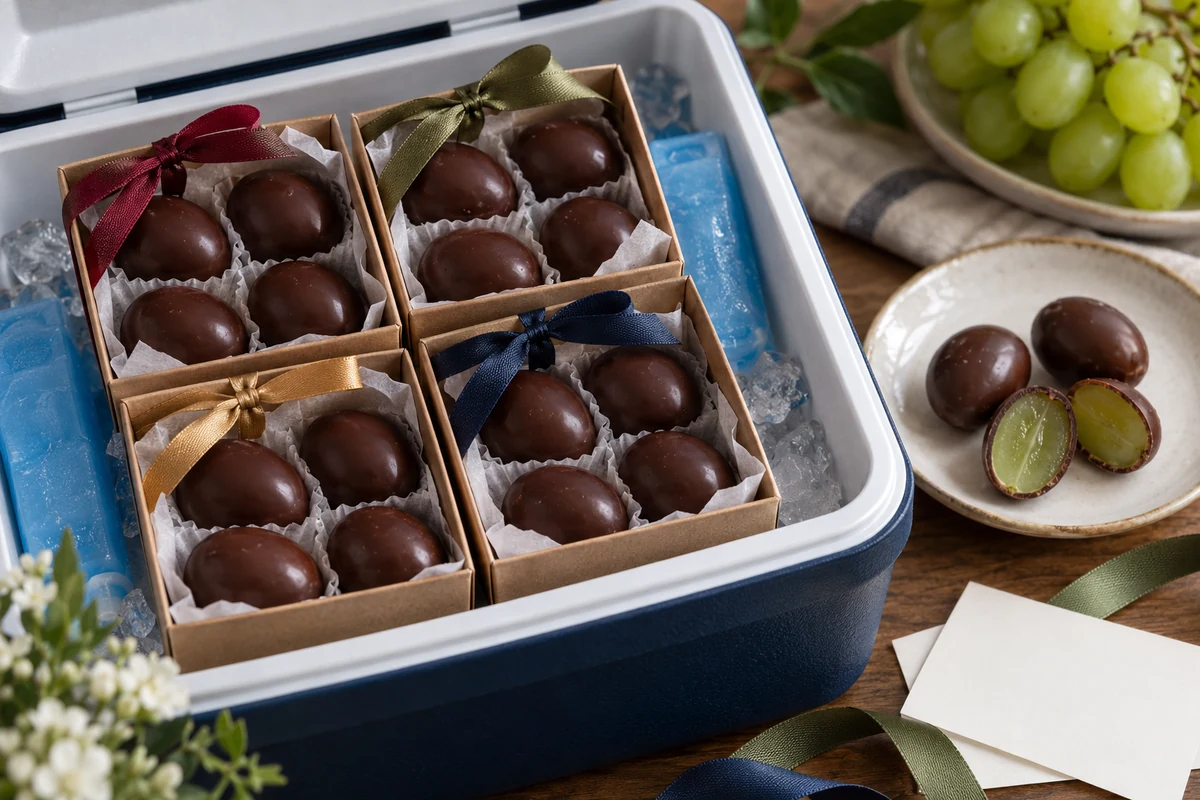
A few serving ideas make the chocolate-covered grape platter easy to share:
- Fruit and chocolate: the appeal lies in contrasting juicy fruit with rich chocolate, without needing to claim a particular historical origin.
- Texture: a properly set shell contrasts with the grape inside; a ganache accompaniment gives a softer alternative.
- Occasions: serve as part of a dessert platter or a small chilled gift intended for prompt eating.
- Drinks: tea, coffee or a drink chosen to match the sweetness all work. If offering wine, treat the pairing as a preference rather than a guaranteed match.
- Dietary needs: identify milk, nuts and other relevant allergens, including those in decorations and fillings.
Ideas for a festive table
- Seasonal arrangement: use different drizzles and a festive serving dish. Place non-food decorations separately from the platter.
- Choice of flavours: offer a simple chocolate-coated version alongside one or two clearly labelled accompaniments.
- Table position: place the dish where it is easy to serve, away from heat sources and with suitable utensils.
- Quantity: plan a few pieces per adult as part of a larger dessert selection, then count the finished batch rather than relying on the fruit’s weight alone.
- Serving: use small tongs or forks so guests can take a piece without touching the others.
Small gift ideas
- Individual boxes: put a few set sweets in a rigid food-safe box lined with parchment. Keep decorative ribbons outside the food compartment.
- Clear packaging: use food-safe packaging that supports the sweets and include useful storage and ingredient information, rather than a blank label.
- Mixed selections: identify each flavour and any allergens on a card so the recipient knows what is inside.
- Packaging choices: choose recyclable or compostable materials only where the product is actually suitable for the relevant local disposal system.
- Timing: make up to a day ahead, refrigerate promptly and pack shortly before handing over. These are fresh-fruit sweets, not long-life chocolates.
Final gift reminders
Try a small batch first: check the coating and filling texture before preparing many pieces. Tell the recipient: keep refrigerated, transport chilled and eat within 48 hours of preparation, or sooner if ingredient guidance requires it.
Enjoying your grape platter
A chocolate-covered grape platter is a colourful addition to a festive dessert table. Start with the simple dipped version, then add a drizzle or an optional accompaniment to suit your guests.
Dry the fruit carefully, check the coating’s consistency and keep the finished sweets chilled. A neat arrangement can be simple without needing elaborate decoration.
Thank you for reading. Visit the I Love Christmas blog for more recipes and festive serving ideas.
Chocolate-covered grapes: frequently asked questions
How should I store the finished sweets?
Keep covered in the fridge at 5°C or below and use within 48 hours. Take out only what you plan to serve shortly, particularly when using cream-based fillings.
Can I freeze them?
Freezing is not recommended for the intended texture: grapes can become watery when thawed and the chocolate may crack or develop surface changes. A smaller fresh batch is more predictable.
How do I make a vegan version?
Use suitable vegan coating and decorating chocolates, plant-based cream if making ganache, and omit dairy butter. Check allergen information separately if catering for a milk allergy.
Do the grapes need to be seedless?
Seedless grapes are easiest because cutting to remove seeds releases juice. Whole coated grapes are unsuitable for babies and young children; offer safely prepared fruit rather than these whole sweets.
Can I make them ahead for a party?
Yes, up to a day ahead. Keep chilled in a covered container and arrange shortly before serving. Maintain refrigeration during transport and use within 48 hours of preparation.
How do I avoid dull chocolate or a white surface?
Use suitable chocolate and follow its tempering instructions for the best shell. Keep utensils dry and avoid condensation and temperature swings. Coconut oil is not a substitute for tempering, and fresh-fruit sweets still require refrigeration.
Sources and Further Reading
- Callebaut: tempering chocolate
- NHS: preparing food safely for young children
- Food Standards Agency: cooking and cooling food