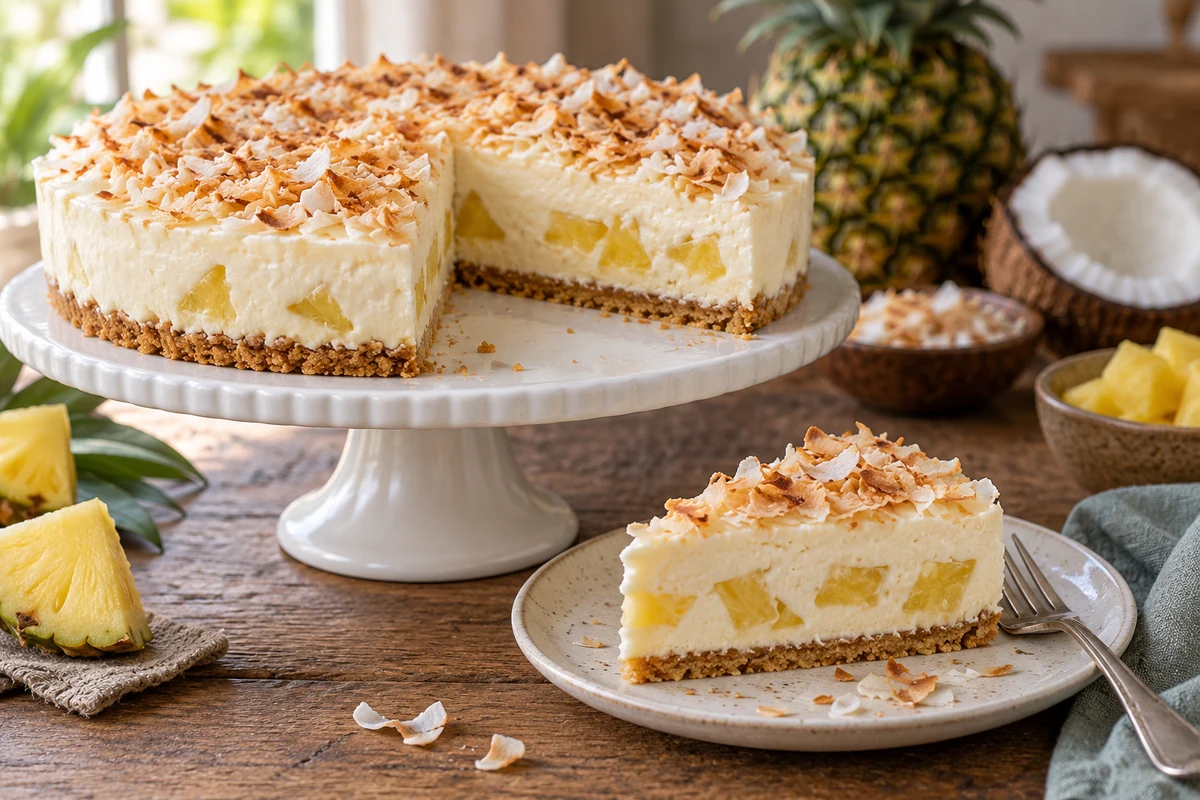
This no-bake pineapple and coconut tart has a pressed biscuit base, a coconut cream filling set with gelatine, and a layer of cooked pineapple. Allow at least 4–6 hours in the fridge. Dairy-free, vegan and gluten-free adaptations need all relevant ingredients checked and may produce a different texture.
No-bake pineapple and coconut tart combines juicy fruit with a creamy coconut filling. It is a chilled biscuit-base dessert rather than a sponge cake. Here is how to assemble it, manage the setting stage and adapt the flavours.
Ingredients for no-bake pineapple and coconut tart
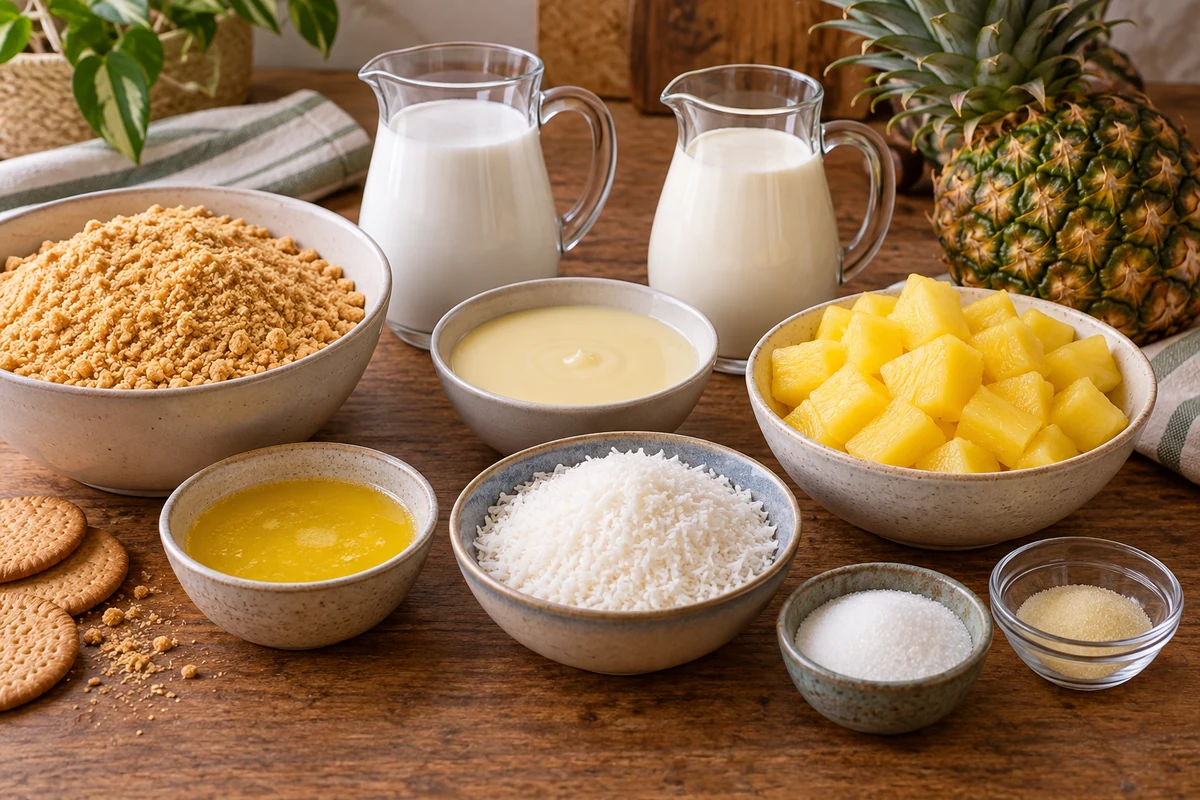
For this no-bake pineapple and coconut tart, prepare the following ingredients:
- 200 g plain sweet biscuits – Brazilian maisena biscuits are used in the original. Plain digestives or similar biscuits can be used, with a slightly different flavour and fat content.
- 100 g unsalted butter, melted – to bind the crumbs. A suitable firm plant-based baking fat can be used for a dairy-free base; not all margarines are milk-free.
- 395 g sweetened condensed milk – weigh the amount for the filling rather than assuming every tin is the same size.
- 200 g cream – the original uses a Brazilian carton of cream. For the whipped variation, use 200 ml whipping cream instead, not in addition.
- 200 ml full-fat coconut milk – for flavour and body. Whole milk with a tablespoon of grated coconut is a possible variation, but gives a different result and still contains dairy.
- 12 g unflavoured powdered gelatine – prepare according to the packet and check its guidance for the complete filling. Sachet sizes and leaf strengths differ; six leaves are not a universal equivalent.
- 600–800 g prepared pineapple flesh – peeled, cored and diced. Use the prepared weight, not a whole fruit’s weight. For tinned pineapple, weigh an equivalent drained amount rather than assuming one tin is enough.
- 100 g sugar – for cooking fresh pineapple; use less if the fruit is very sweet, especially if using fruit canned in syrup.
- Juice of half a lemon – add to taste to the pineapple.
- 100 g grated coconut – fresh or unsweetened desiccated coconut. Dried coconut absorbs more moisture and gives a different texture.
- 50 g toasted coconut flakes, optional – for decoration.
- A little extra coconut and cooked or tinned pineapple – for the top, if desired. Avoid raw pineapple in direct contact with the gelatine filling.
- Water as required – for the gelatine preparation and a splash in the pineapple pan if needed.
Substitutions and measuring notes
Condensed milk: evaporated milk with a little sugar is thinner and less sweet, so it is not a like-for-like replacement. Use a dedicated lower-sugar variation rather than assuming the same filling will set identically.
Cream: a suitable plant-based cream can replace it, but condensed milk, butter and biscuits must also be checked for a milk-free dessert.
Gelatine: use the manufacturer’s conversion if changing from powder to leaves. Their weight and strength vary, as do the quantities needed for different textures.
Pineapple: drained tinned fruit is convenient and has already been heat-treated. Fresh pineapple must be cooked before it goes into this gelatine dessert.
Measuring: weigh the listed ingredients and measure liquids. Adjusting sugar modestly is different from changing the coconut milk quantity, which also changes the set.
How to make the pineapple and coconut tart
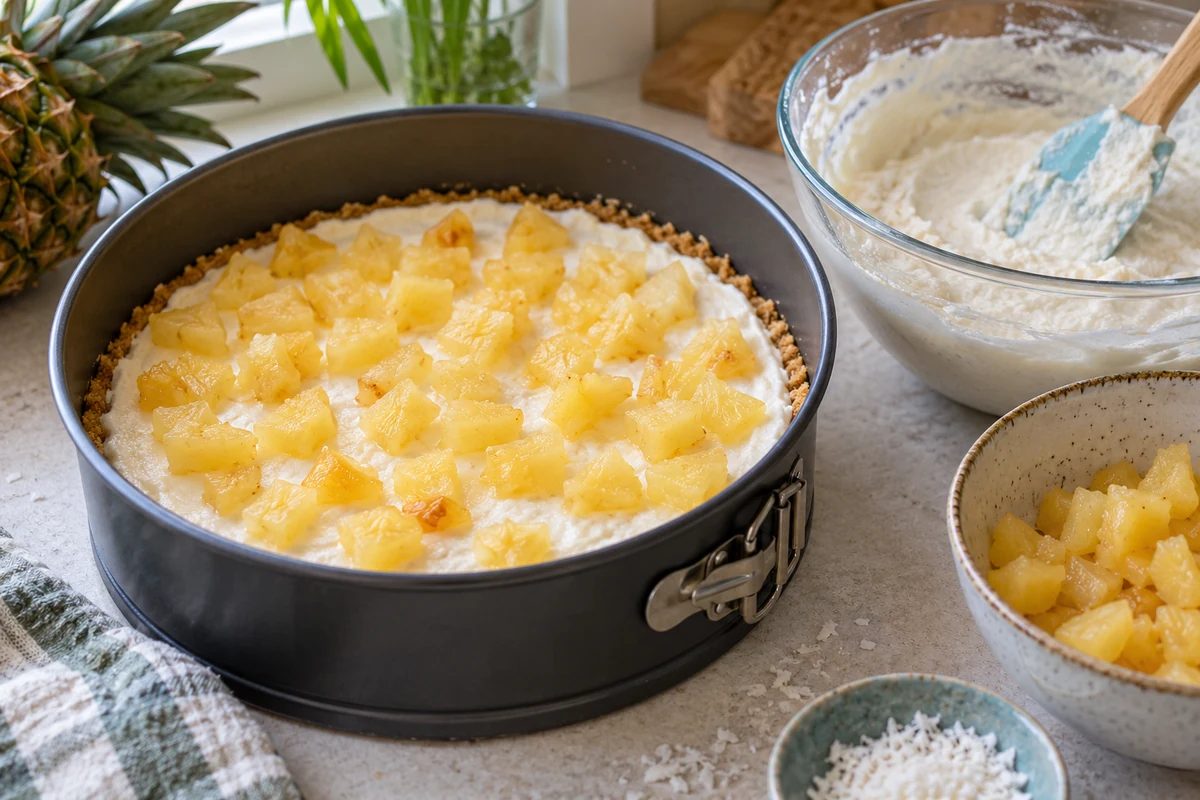
- Make the base: crush 200 g plain sweet biscuits into fine crumbs and combine with 100 g melted butter to make a damp crumb mixture. If using richer biscuits, add the butter gradually and stop when it binds without looking greasy. Press firmly into the base of a 22–24 cm loose-bottomed tin and chill for 15 minutes.
- Cook the pineapple: put 600–800 g diced prepared pineapple in a saucepan with up to 100 g sugar and juice from half a lemon. Simmer, stirring, until the pieces are cooked through and the liquid is reduced, roughly 10–12 minutes for small pieces. Do not merely warm raw fruit. Cool promptly in a shallow container and drain excess syrup.
- Prepare the gelatine: bloom 12 g powdered gelatine using its packet’s cold-water quantity and standing time, then dissolve gently as directed without boiling. Do not automatically add both the original’s six tablespoons of cold water and two extra tablespoons of hot water if your product uses another method.
- Mix the coconut cream: blend 395 g condensed milk, 200 g cream and 200 ml coconut milk until smooth. Stir in 100 g grated coconut. Mix a little base into the dissolved, warm but not hot gelatine, then stir this evenly back into the filling to avoid strands.
- Airier variation: use 200 ml whipping cream instead of the cream in the preceding step. Whip separately to soft peaks and fold into the cool but still fluid condensed-milk, coconut and gelatine mixture. Do not add a second portion of cream.
- Assemble the tart:
Layering and chilling
Spread half the filling over the chilled base. Add the cooled, well-drained cooked pineapple in an even layer, then cover with the remaining filling and smooth the top gently. If the filling is too fluid to support distinct layers, let it thicken briefly in the fridge while watching it closely; do not wait until it sets solid.
- Chill: refrigerate for at least 4–6 hours, preferably overnight, until the centre is set. The freezer is not a reliable shortcut: a frozen outside can hide a soft centre and alter the texture.
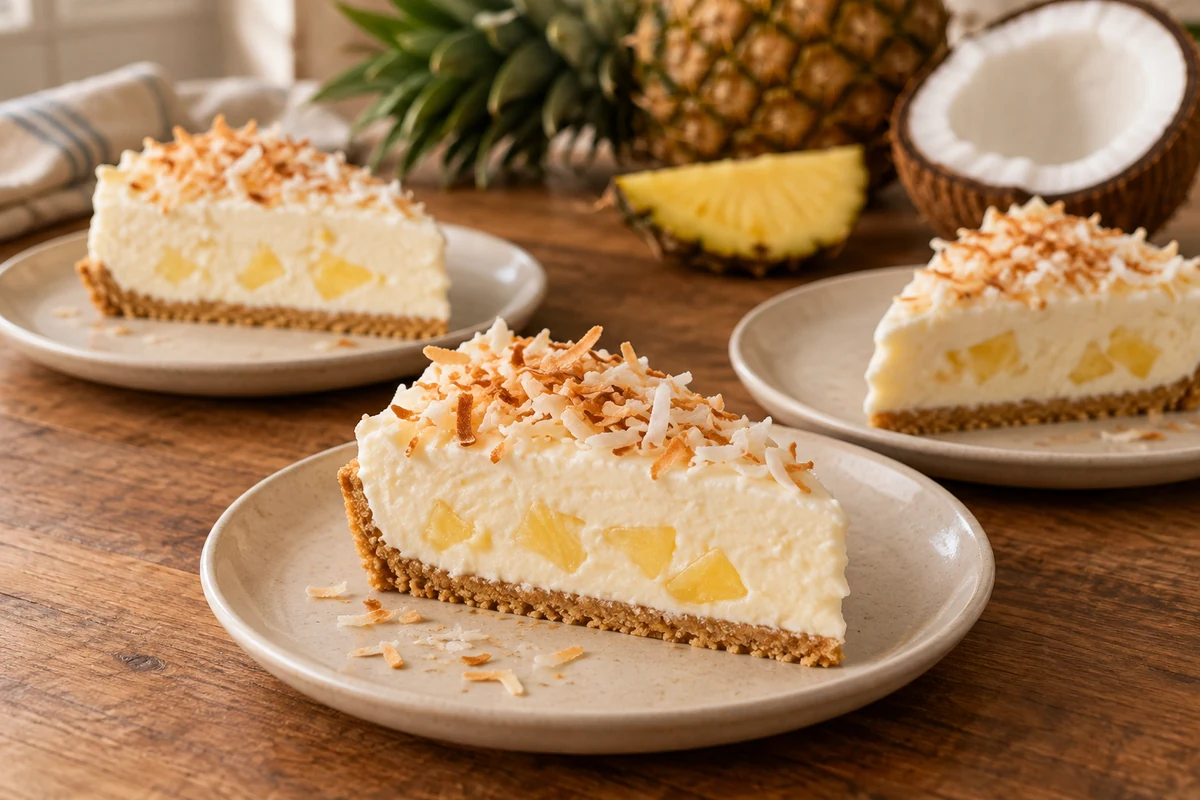
- Finish: add toasted coconut flakes and cooked or tinned pineapple just before serving. Loosen the edge carefully if needed and release the tin only when the tart is fully set.
- Store: keep covered and refrigerated at 5°C or below, and use within 48 hours of preparation, or sooner if an ingredient requires it. Freezing is possible but can change the cream and base; thaw in the fridge and use within 24 hours of complete thawing.
- A useful shortcut: use an equivalent drained weight of tinned pineapple and reduce the added sugar as needed. Keep excess canning liquid out of the filling.
Variations on pineapple and coconut tart
These variations offer different flavours and dietary options. Changes to the base, sweetness or setting agent need checking together; no single substitution guarantees the same texture.
- Lactose-free: replace 395 g condensed milk with a suitable lactose-free product. The original’s 400 ml coconut milk with 3 tbsp sugar is not a direct equivalent without a specified final reduction. Use 200 ml suitable plant-based cream if preferred, and check butter and biscuits too. Lactose-free dairy still contains milk proteins and is not suitable for a milk allergy.
- Vegan adaptation: the original proposes 400 ml coconut milk reduced with 150 g sugar and 200 g soft tofu, but gives no final reduction weight. A ready-made coconut condensed milk is easier to measure. Replace gelatine with a suitable plant-based setting product at its stated dose, following its heating method. Use vegan biscuits and plant-based fat, and tofu suitable for the intended preparation. Trial the result before a party.
- Lower-fat or less sweet variation: a reduced-fat condensed milk and reduced-fat cream or thick yoghurt change the body and flavour. Reducing the compote sugar to 65 g may suit sweet fruit. Wholemeal biscuits are not automatically lower in calories, and the finished dessert has not been analysed to support a calorie claim.
- White chocolate variation: blend 150 g gently melted, slightly cooled white chocolate into the cream base for a richer, sweeter result, checking its set. Alternatively, use a thin topping made with 100 g white chocolate and 50 ml cream; cool it before spreading over the chilled tart. These are alternatives, not two required additions.
- Pineapple and passion fruit: use a smaller pineapple layer with 150 g passion fruit pulp sweetened to taste. The pulp is not automatically half the weight of the original compote. Excess liquid can loosen the filling, so serve it as a little chilled sauce alongside for an easier variation.
- Gluten-free: replace the 200 g plain biscuits with 200 g suitable gluten-free biscuits, checking all other ingredients and cross-contact. A blend of certified gluten-free oats and almonds needs a separate base formula and adds a nut allergen.
A few reminders
Taste the pineapple before adding all the sugar. If adapting the filling, trial its set in a small glass. Adequate refrigeration is essential, but extra chilling cannot compensate for the wrong setting formula or uncooked pineapple.
Texture, assembly and storage tips
These practical tips help keep the filling smooth, the base tidy and the finished tart properly chilled.
Getting the filling right
- Gelatine: bloom and dissolve it fully according to its packet. Undissolved particles or gelatine setting on contact with a very cold base can leave lumps.
- Whipped cream option: whip the substitute cream portion to soft peaks and fold gently into a cool, fluid base. Overwhipping can make it grainy.
- Coconut milk: choose a full-fat product for body. A thin coconut drink is not equivalent; extra grated coconut does not automatically correct too much liquid.
- Pineapple layer: cook fresh pineapple thoroughly, reduce the syrup and drain any excess after cooling. A watery layer can soften the base.
- Toasted coconut: toast flakes in a dry pan over gentle heat, stirring and watching closely until lightly golden. They can burn quickly; let them cool before using.
Assembling neatly
- Firm base: compact the damp crumbs with the flat bottom of a glass and chill for 10–15 minutes before filling.
- Balanced layers: spread half the cream, the cooled drained pineapple and the remaining cream gently, rather than pressing the fruit through a fluid layer.
- Tools: use a small palette knife to smooth the top. For serving, dip a clean knife in warm water and dry it between slices.
- Air bubbles: blend only until the unwhipped base is smooth. Smooth the top gently; avoid knocking the air out of the whipped variation.
- Chilling time: allow at least 4–6 hours, preferably overnight, and check the centre before releasing the tin.
Keeping the tart
- Refrigeration: cover and keep at 5°C or below for up to 48 hours from preparation. Follow any shorter ingredient instructions.
- Freezing: freeze portions promptly in suitable containers if needed. The original’s one-month suggestion is a quality guide, not a guarantee of unchanged texture. Thaw in the fridge and eat within 24 hours of complete thawing.
- Cooling the fruit: use a shallow container and refrigerate within two hours. Do not leave dairy filling or cooked fruit out for hours while waiting to eliminate every trace of condensation.
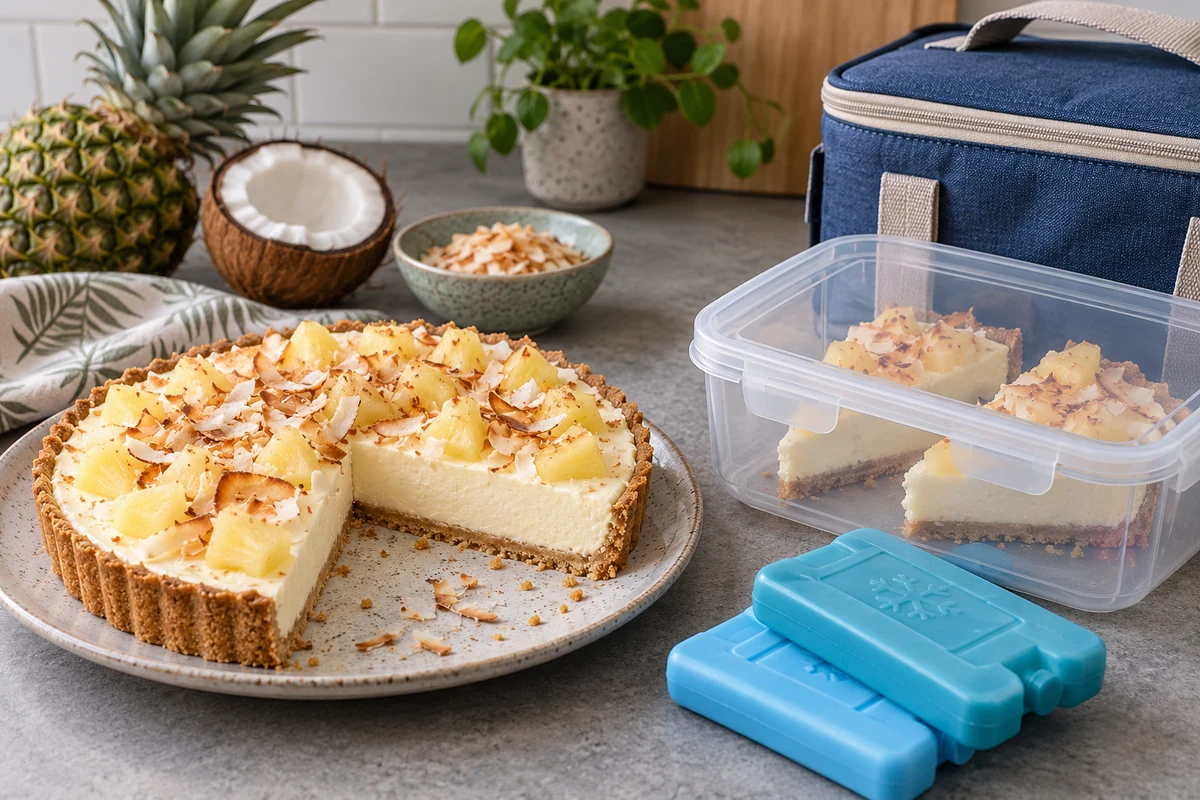
- Transport: keep the tart level and supported in an insulated cool box with ice packs, then refrigerate on arrival.
- Serving texture: serve chilled, taking out only the portions needed. Leaving an overly firm tart at room temperature is not a reliable correction for too much gelatine.
Trial a variation: prepare and fully chill a small sample of a changed filling before making a whole tart for an event.
Pineapple, coconut and useful substitutions
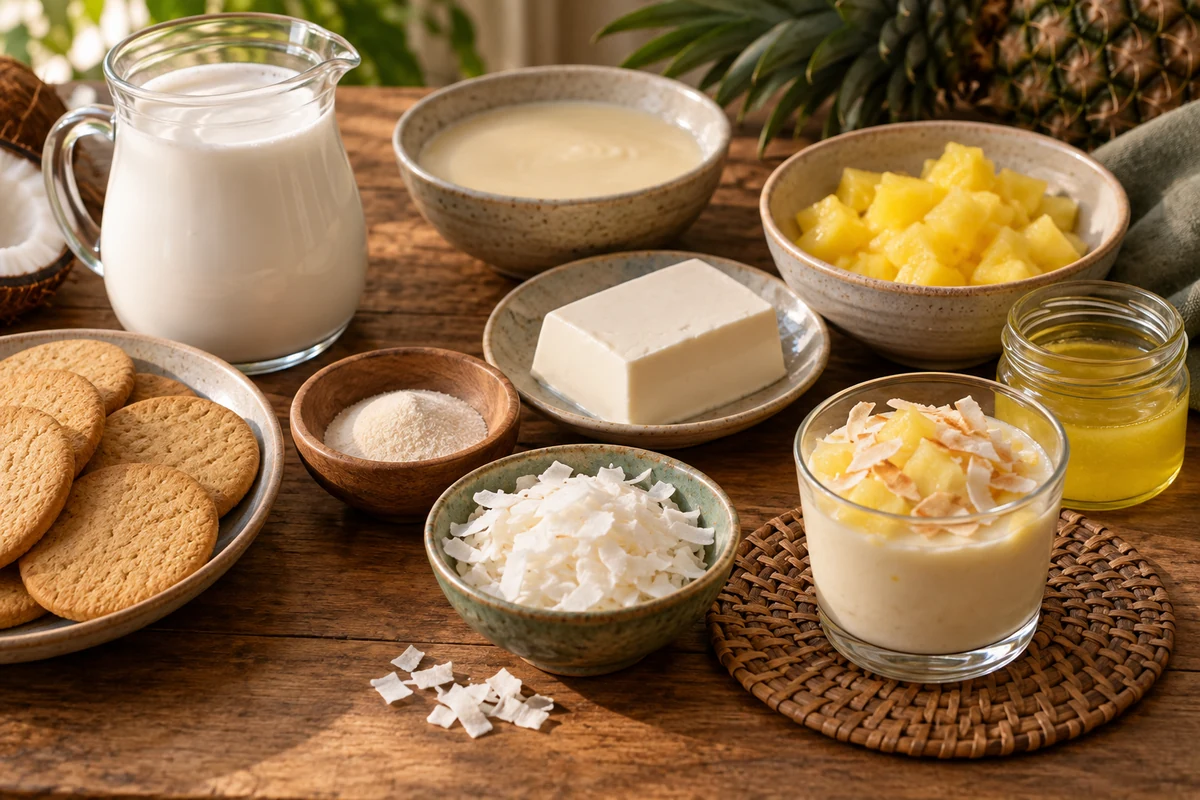
These ingredient notes explain why the fruit preparation and the type of coconut product affect the finished tart.
Ingredient facts
- Bromelain: fresh pineapple contains an enzyme that breaks down gelatine proteins and can prevent setting. Cooking inactivates it; properly canned pineapple has already been heat-treated. Keep raw pineapple and its juice out of the filling.
- Fruit sweetness: taste the prepared pineapple before adding all the sugar. Variety and ripeness matter; lemon is optional if the fruit is already very sharp.
- Fresh and dried coconut: fresh grated coconut adds more moisture, while desiccated coconut is drier and absorbs liquid. Follow the storage instructions of the product you use.
- Coconut milk: full-fat coconut milk contributes more body than a light coconut drink. Stir or shake the product as directed before measuring.
Practical alternatives
- Tinned pineapple: use an equivalent drained weight to the prepared fruit in the recipe. One tin may be much less than 600–800 g after draining. Adjust added sugar if the fruit was canned in syrup.
- Plant-based setting: agar and vegetarian blends have different strengths and methods. Do not replace 12 g gelatine with an arbitrary tablespoon of agar; use the product’s instructions for the whole mixture.
- Milk-free condensed milk: a suitable coconut condensed milk is a more predictable starting point than reducing an unspecified mixture of coconut milk and sugar. Its sweetness and setting behaviour may still differ.
- Cream alternatives: a thick plant-based cream or yoghurt changes the texture and must fit the dietary requirements. For the airier dairy option, replace the original cream portion with 200 ml whipping cream whipped separately; do not double it.
- Grated coconut: unsweetened desiccated coconut can replace fresh grated coconut with a drier result. Add any extra liquid cautiously, counting it in the filling; use toasted flakes as garnish.
- Gluten-free base: suitable gluten-free biscuits are the closest replacement. Oats and almonds have different binding needs, so do not assume the same butter ratio works unchanged.
Before serving
Use fully cooked and cooled pineapple or drained tinned fruit. Test a changed filling in a small glass and allow its full chilling time. This is especially useful when switching between gelatine and a plant-based setting product.
Thank you for reading. We hope this no-bake pineapple and coconut tart inspires a chilled dessert for your next gathering.
If you make it, share a photo on social media and tell us how your version turned out.
Follow our social channels for more recipes and seasonal ideas, and explore the I Love Christmas blog.
Enjoy preparing your dessert, and come back for more festive recipes.
FAQ: no-bake pineapple and coconut tart
Can I use tinned pineapple instead of fresh?
Yes. Drain it well and use the prepared fruit weight called for, rather than assuming one tin is equivalent. Reduce the added sugar if it was canned in syrup.
How do I stop pineapple from preventing the filling from setting?
Cook fresh pineapple thoroughly before cooling and adding it, or use drained tinned pineapple. Fresh pineapple’s bromelain can break down gelatine; avoid raw fruit or raw juice in contact with the filling.
Which substitutions suit lactose intolerance?
Use suitable lactose-free dairy products or checked plant-based alternatives, including in the base. Lactose intolerance differs from milk allergy: lactose-free dairy still contains milk proteins. Recheck the setting method when changing the filling.
How should I store the tart?
Keep covered at 5°C or below and use within 48 hours of preparation, or sooner if an ingredient requires it. Freeze suitable portions promptly if needed; thaw in the fridge and consume within 24 hours of complete thawing. Freezing can change the texture.
Can I make the base crunchier?
Use firm biscuits, compact the crumbs well and keep excess pineapple syrup out of the layers. Wholemeal biscuits are a flavour variation, not a guarantee of extra crunch. Toasted coconut added just before serving provides contrast; nuts are optional and need allergy checks.
Sources and Further Reading
- Monash University Malaysia: pineapple and gelatine
- Dr. Oetker: platinum-grade leaf gelatine
- UK guidance: chilling, freezing and defrosting food