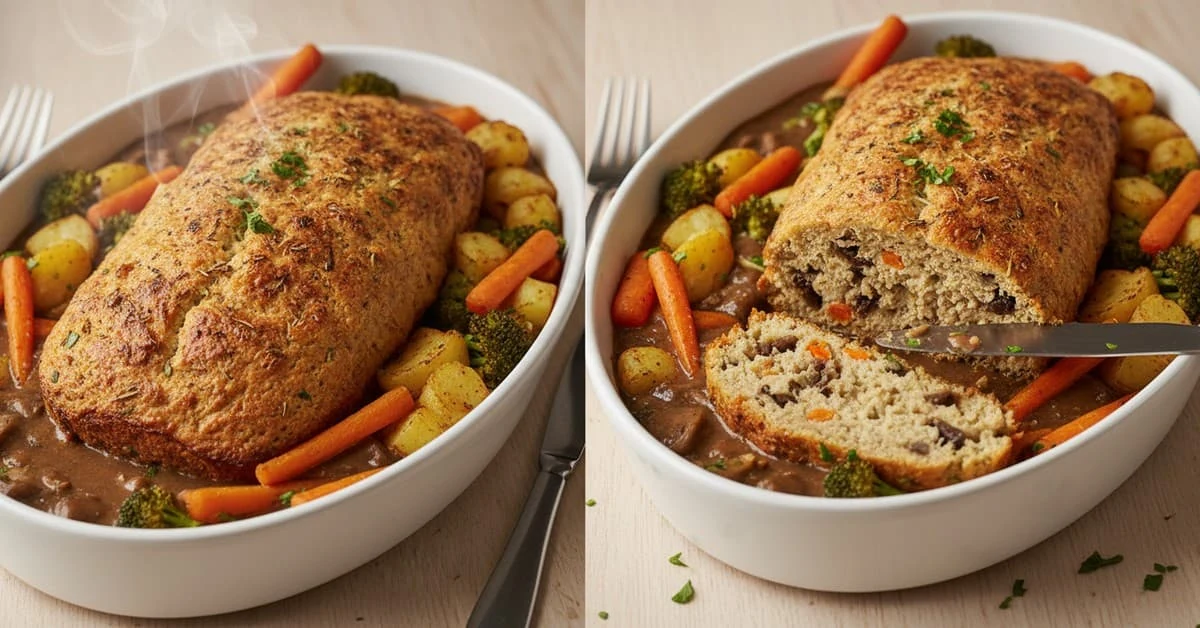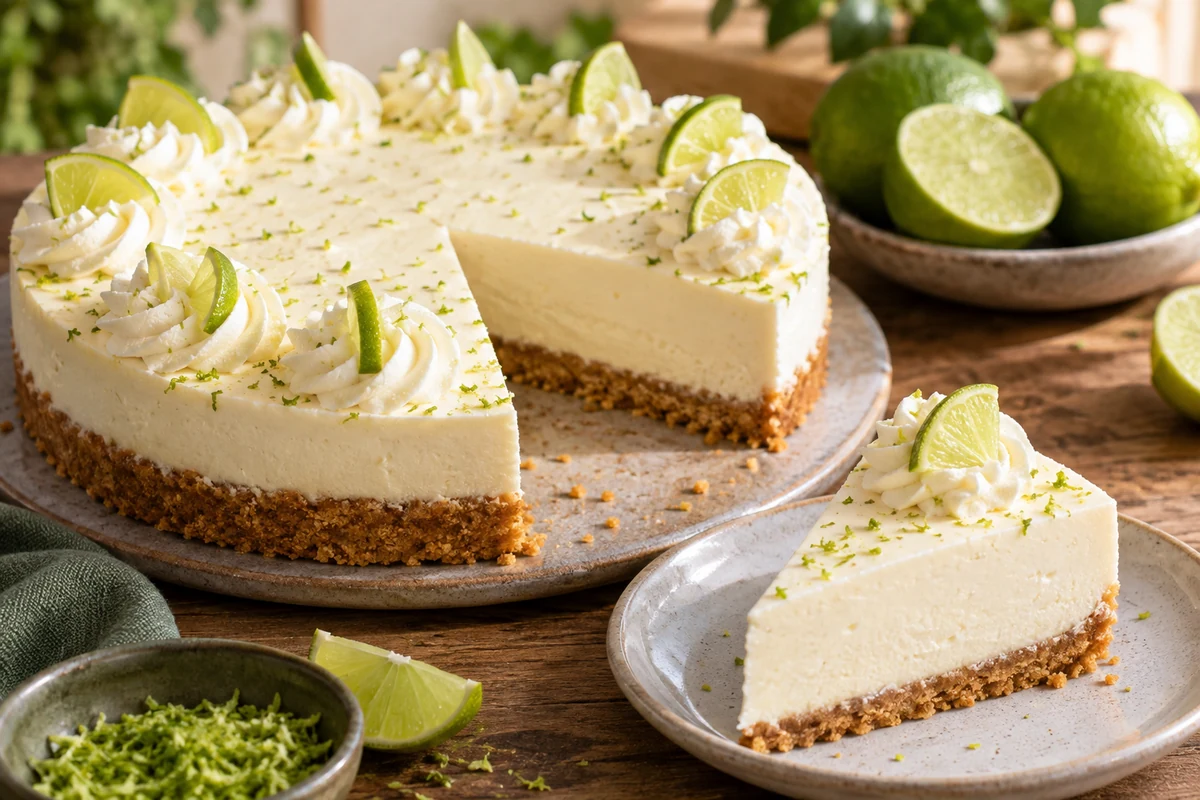
This no-bake lime mousse tart combines a pressed biscuit base with sweetened condensed milk, fresh lime juice and whipped cream. Gelatine helps the filling hold its shape for slicing, while several hours in the fridge allow it to set. The Brazilian limão taiti used here is a Persian or Tahiti lime, not a yellow lemon.
A no-bake lime mousse tart is a refreshing way to finish a New Year’s Eve meal. The filling is sweet and tangy, with a crumbly biscuit base and plenty of lime fragrance. Allow time for chilling before you plan to serve it.
No-bake lime mousse tart ingredients
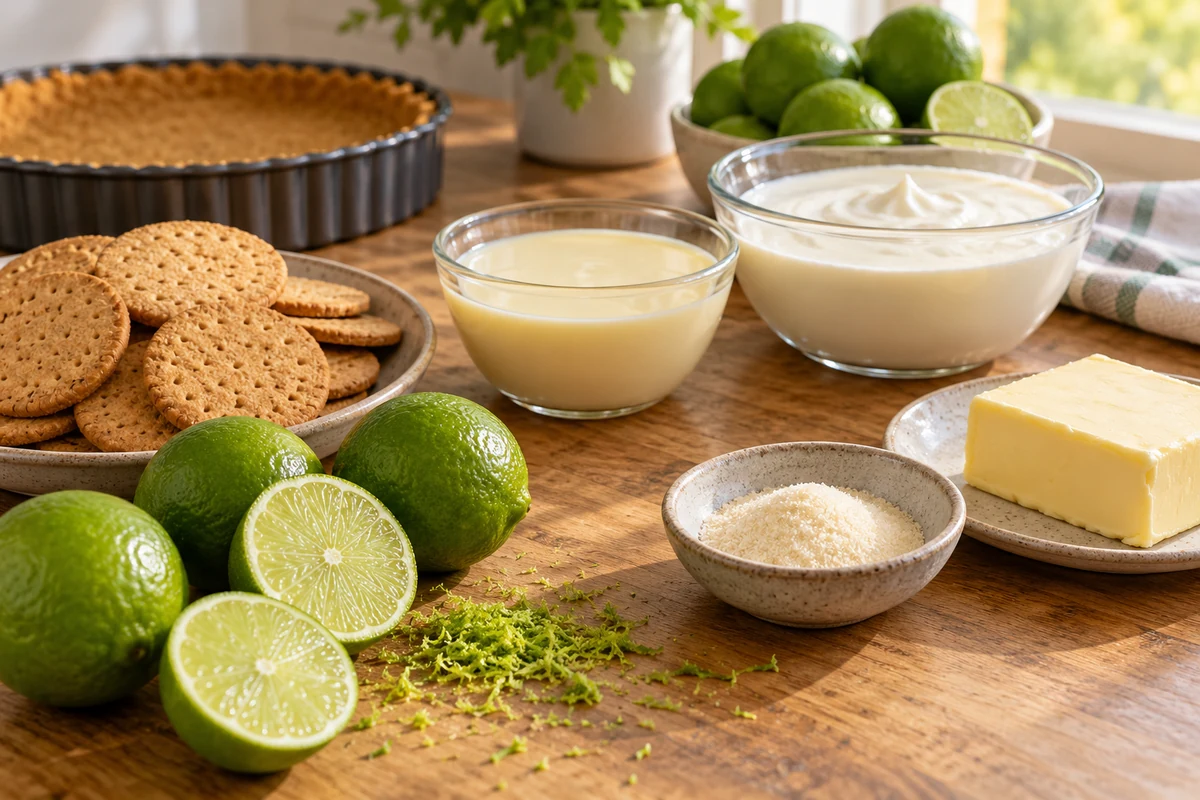
For this no-bake lime mousse tart, organise the ingredients in advance. Use fresh limes for the zest and measure the juice, as the amount in each fruit varies.
- 200 g plain sweet biscuits, finely crushed. Digestives work well in the UK. Crisp ginger biscuits offer a different flavour; soft honey cake is not a direct substitute for a biscuit crust.
- 100 g unsalted butter, melted. For a dairy-free base, use a suitable plant-based baking block, checking the biscuit ingredients too.
- 395–397 g sweetened condensed milk – one standard tin. Plant-based condensed milk is discussed in the vegan variation below and may set differently.
- 200 ml whipping cream, chilled, for the filling. Use cream intended for whipping; ordinary pouring or single cream will not give the same result. Any whipped-cream decoration needs extra cream.
- About 120 ml fresh lime juice – usually several limes, but measure rather than relying on a fixed fruit count. Add gradually to taste.
- Finely grated zest of 2 limes, plus a little extra for decoration if desired.
- 10 g powdered gelatine, prepared with the water and method specified by its manufacturer. Strength varies, so check that the product is suitable for this quantity of acidic dairy filling. Agar is not a gram-for-gram replacement.
- A pinch of salt.
- Mint leaves or extra lime zest, to decorate.
Substitutions and quick tips
For a lighter texture, whip the cream to soft peaks and fold it in gently; reducing butter in the base will not aerate the mousse. A filling without gelatine may be too soft to slice, so serve it in glasses or follow a recipe specifically designed to set without it. Extra chilling cannot reliably compensate for the wrong ingredient balance.
How to make no-bake lime mousse tart
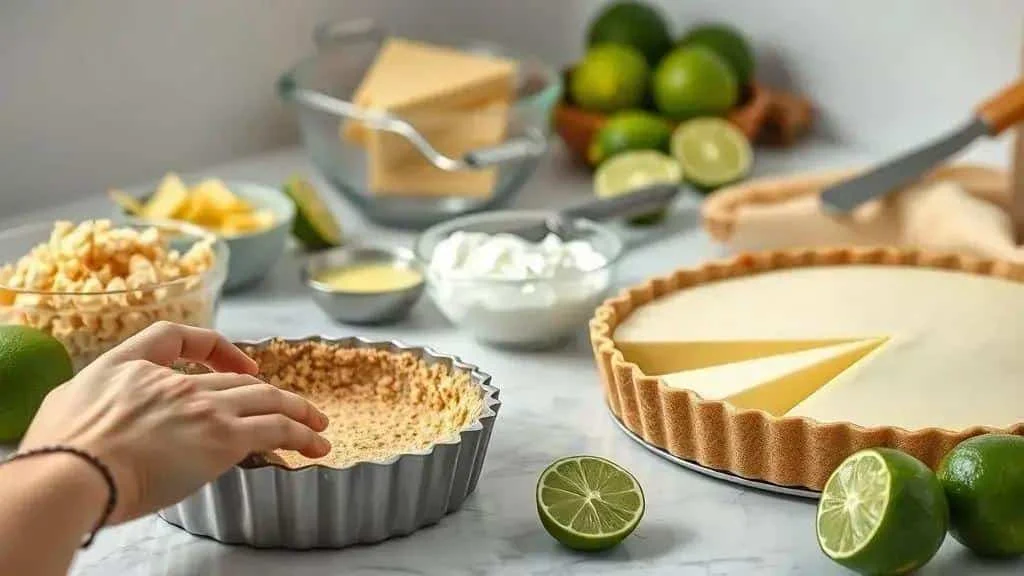
Follow these steps for the no-bake lime mousse tart. Read the gelatine instructions first so its preparation fits the mixing sequence.
- Make the base: crush the biscuits finely, mix with the melted butter and press evenly into a 22–24 cm loose-bottomed tart tin or springform tin. Chill for at least 15 minutes, until firm.
- Prepare the gelatine: hydrate and dissolve the measured powder according to the packet, using its specified amount of water. Gentle warming may be needed; do not assume every product needs 60 ml water or the same microwave time. Keep it fluid but not hot.
- Mix the lime filling: combine the condensed milk, salt and lime zest, then add the measured lime juice gradually to taste. Stir a little of this mixture into the fluid gelatine to temper it, then mix that back into the bowl until smooth. Avoid pouring gelatine straight into an ice-cold mixture, where it can form strands.
- Whip the cream: whisk 200 ml chilled whipping cream to soft peaks. Stop before it becomes grainy.
- Fold together: gently fold the whipped cream into the lime mixture in the bowl, keeping as much air as possible. Work promptly while the gelatine mixture is still fluid.
- Check the flavour: ideally adjust the sweetness and lime before adding gelatine and folding in the cream. Yoghurt is tangy, so it is not a reliable way to reduce sourness. Avoid making large liquid additions once the mousse is setting.
- Fill and chill: spoon the mousse over the cold base and smooth the top. Cover without pressing on the filling and refrigerate for at least 4 hours, preferably 6–8 hours or overnight, until fully set.
- Decorate and serve: carefully release the tart from the tin. Finish with zest, mint and, if wanted, separately whipped extra cream. Dip a knife in hot water, dry it and wipe between slices for a neater cut.
- Store: keep covered in the fridge at 5°C or below and eat within 48 hours of preparation, or sooner if the ingredients require it. Freezing can change the filling’s texture.
Quick reminders
Press the base evenly with the back of a spoon. Fully dissolved gelatine helps prevent lumps. Agar needs its own product-specific method and is not simply stirred in cold. For a dairy-free version, check the biscuits, fat, condensed milk and whipping product; replacing only the cream is not enough.
Assembling the tart and helping the mousse set
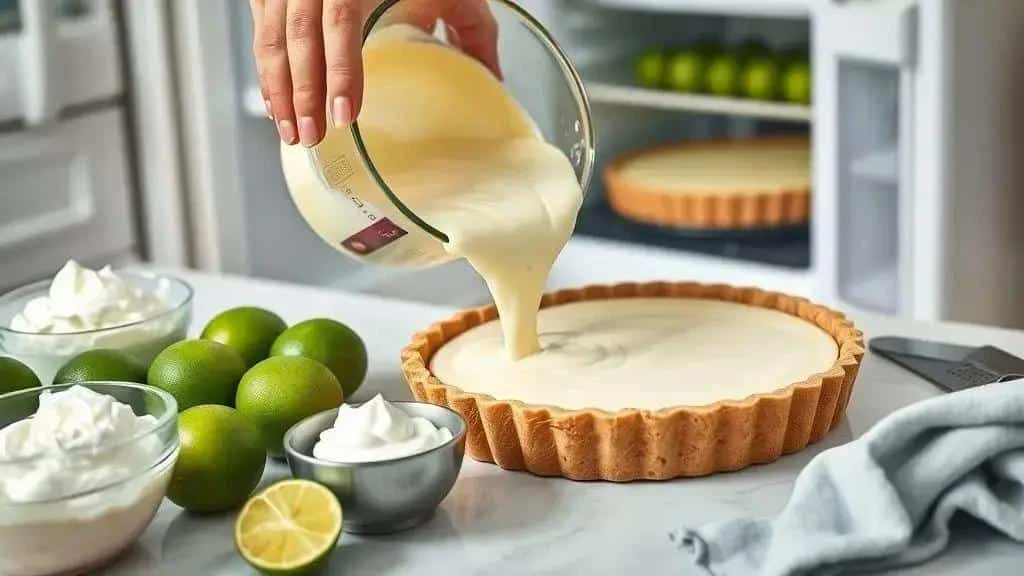
These steps help the mousse set evenly, with a neat base and a smooth top.
- Check the base: it should be cold and firm. Press any loose areas down gently and chill a little longer before filling.
- Check the gelatine: it must be hydrated and fully dissolved according to the packet. Undissolved grains or set strands can leave an uneven filling.
- Fold before filling: combine the whipped cream and lime mixture gently in the mixing bowl, then transfer it to the tin. Do not stir the mousse into the biscuit base.
- Level gently: smooth the surface with a spatula without pressing out the air.
- Remove large pockets: a gentle tap can release a large trapped air pocket. Avoid repeated banging, which can deflate the mousse.
- Cover: use a cake carrier or cover raised above the surface so it does not mark the filling or collect fridge odours.
- Chill thoroughly: keep the tart in a fridge at 5°C or below. Allow at least 4 hours and preferably 6–8 hours or overnight; check that the centre is set before unmoulding.
- Plan ahead: do not rely on a brief spell in the freezer to replace setting time. The edges may freeze while the centre remains soft, and the texture can suffer.
- Unmould carefully: loosen the edges with a thin knife if needed. Briefly warm the outside of the tin with a warm cloth only if necessary, without warming the filling itself.
- Transport chilled: use a rigid covered container on a level base inside a cool box or insulated bag with ice packs. Keep the packs separate from the food.
Tips for a reliable set
- Hydrate the gelatine properly: follow its preparation instructions. The term Bloom strength refers to a gelatine’s setting strength; it is not a universal soaking time.
- Keep whipping cream cold: use chilled cream intended for whipping, and stop at soft peaks.
- Measure the citrus: extra lime juice changes both flavour and liquid balance. Do not try to fix an unknown amount of extra juice by sprinkling more dry gelatine into the mousse.
- Understand alternatives: agar sets differently and generally gives a firmer, more brittle texture than gelatine. Follow a suitable recipe and the product’s heating instructions.
- Try a small batch: test any substantial substitution before relying on it for a celebration, especially with plant-based dairy or a different setting agent.
Vegan and lactose-free lime mousse tart variations
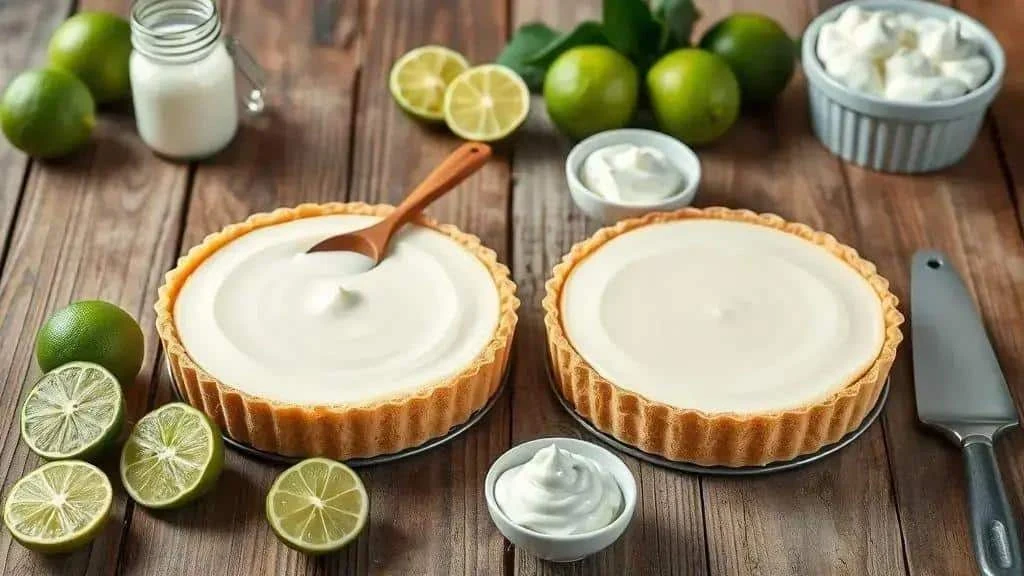
The following notes show how to adapt the no-bake lime mousse tart. Plant-based products vary considerably, so they do not always produce the same set as dairy ingredients.
Vegan version
Replace all animal-derived ingredients, including the gelatine. For a sliceable tart, choose a plant-based setting product with instructions suitable for an acidic cream filling; without a tested setting method, use individual dessert glasses instead.
- 200 g vegan plain biscuits or digestives, finely crushed.
- About 100 g vegan baking block, melted. Coconut oil gives a different, harder chilled base; if using it, add only enough to bind the crumbs rather than assuming an exact equivalence.
- 395–397 g sweetened condensed coconut milk or another suitable plant-based condensed product.
- 200 ml plant-based whipping cream, chilled and prepared as directed by the manufacturer.
- Up to about 120 ml fresh lime juice, added gradually according to the plant-based mixture and your taste.
- Finely grated zest of 2 limes.
- A suitable vegan setting agent, measured and prepared according to a product-specific method for this type and quantity of filling. There is no reliable universal replacement of 10 g gelatine with 6 g agar.
- A pinch of salt.
- Base: combine the biscuit crumbs with the melted fat, press into the tin and chill until firm. For individual glasses, divide the crumbs between the glasses instead.
- Setting agent: follow its instructions for the amount, liquid and heating needed. Agar must be properly heated, but boiling a fixed 6 g in just 60 ml water is not a universal method for this filling.
- Lime mixture: mix the plant-based condensed milk with zest, salt and lime juice to taste. Combine with the prepared setting agent only at the temperature and stage specified by its recipe, avoiding hot liquid poured directly into cold whipped cream.
- Whip the plant cream: prepare it to soft peaks according to the packet; some products need different chilling or mixing conditions.
- Fold together: follow the chosen setting method so the mixture is cool enough not to melt the whipped cream but has not started setting into lumps. If you are not using a setting agent, fold the cream into the lime mixture and serve as a softer dessert in glasses.
- Chill: transfer to the chilled base or individual glasses, cover and refrigerate. Follow the setting product’s timing and confirm firmness before attempting to slice a tart.
- Expect a different texture: plant-based condensed milk, whipping cream and agar vary by brand. More time in the fridge cannot guarantee a sliceable filling if the formula is unsuitable.
Lactose-free version
Use products labelled lactose-free for every dairy component and check the biscuits. Lactose-free dairy still contains milk proteins and is not suitable for a milk allergy. Individual tolerance varies.
- 200 g suitable plain biscuits, finely crushed; check the ingredients.
- 100 g lactose-free butter or suitable baking block, melted.
- 395–397 g lactose-free sweetened condensed milk.
- 200 ml lactose-free cream suitable for whipping, chilled.
- About 120 ml fresh lime juice, measured and added gradually to taste.
- Finely grated zest of 2 limes.
- 10 g powdered gelatine, checking the manufacturer’s setting capacity and instructions as in the main recipe.
- Base: combine the crumbs and melted fat, press into the tin and chill until firm.
- Prepare the gelatine: use the packet’s specified water amount and dissolving method, keeping it fluid but not hot.
- Mix the filling: combine condensed milk, lime juice and zest. Temper the dissolved gelatine with a little filling, then stir it smoothly back into the bowl.
- Whip the cream: whisk the chilled lactose-free whipping cream to soft peaks.
- Fold and chill: fold the cream gently into the lime filling, spoon over the base and refrigerate for at least 4 hours, preferably 6–8 hours or overnight, until set.
- Adjust before setting: if needed, add a small extra spoonful of lactose-free condensed milk to balance the lime before adding the gelatine. Avoid major changes to the proportions.
Practical tips
- Setting strength: do not apply an arbitrary 10–20% reduction to agar. Use the chosen product’s guidance and test the result for your particular filling.
- Temperature: fluid gelatine should be tempered into the filling before the whipped cream is folded in. Agar has different temperature requirements. This recipe does not use egg whites.
- Taste first: add the lime juice gradually before the setting stage.
- Decorate simply: lime zest and mint suit all versions; any extra whipped topping must match the dietary requirements too.
Presentation ideas for New Year’s Eve

Keep the presentation simple so the pale creamy filling and green lime zest stand out. Without food colouring, the mousse itself will usually be pale rather than bright green.
Plates and portions
- Individual slices: small slices of around 80–100 g work well after a large meal. Weigh the finished tart if you need a precise number of servings.
- Dessert glasses: layer biscuit crumbs, mousse and zest in small glasses for easier portioning. Keep chilled until service.
- Plan the amount: allow one modest portion per guest, or smaller tasting portions when offering several desserts.
Finishes and garnishes
- Fine lime zest: use a fine grater and take only the coloured surface, avoiding bitter white pith.
- Mint: a small clean sprig adds colour and fragrance.
- Whipped cream: pipe small dots or rosettes using extra cream, prepared separately from the filling.
- A crisp topping: add a few extra biscuit crumbs just before serving so they do not soften too soon.
- A festive accent: use a little candied citrus peel or decoration explicitly labelled edible. Craft glitter and decorative metallic leaf are not food.
Setting the table
- Colour: white, gold and lime-green accents work well with the dessert.
- Lighting: warm fairy lights or LED candles create a welcoming setting without a flame near table decorations.
- Tableware: simple plates and dessert forks keep the focus on the tart; gold-coloured cutlery is an optional festive detail.
- Decorations: keep loose confetti, mirrors and non-edible metallic decorations away from plates and food. Napkins and a table runner give a similar effect without mixing decorations into the dessert.
Assembly and serving tips
- Release gently: loosen the chilled tart carefully and use a warmed, dried knife for cleaner slices.
- Keep chilled: take out only what you are ready to serve. There is no need to leave the whole tart warming on the table for 15 minutes.
- Transport: use a rigid cake carrier with a non-slip base inside an insulated container with ordinary ice packs. Dry ice is unnecessary for this home dessert.
- Buffet service: put out small batches and keep the rest refrigerated, using stable stands only where they are secure and suitable for food.
Serving alongside other flavours
- Drinks: sparkling water, tea or coffee are simple choices. If serving wine, a style with some sweetness may balance the tart better than a very dry one; alcohol is optional.
- Fruit sauces: offer a small amount of passion fruit or berry sauce separately so guests can add it to taste.
Photographing the finished tart
For a quick photograph, use natural side light and a plain background. Show the zest, filling and biscuit base clearly. Small details such as a fresh mint leaf are enough; keep the photo session brief and return the tart to the fridge promptly.
Storage and making ahead
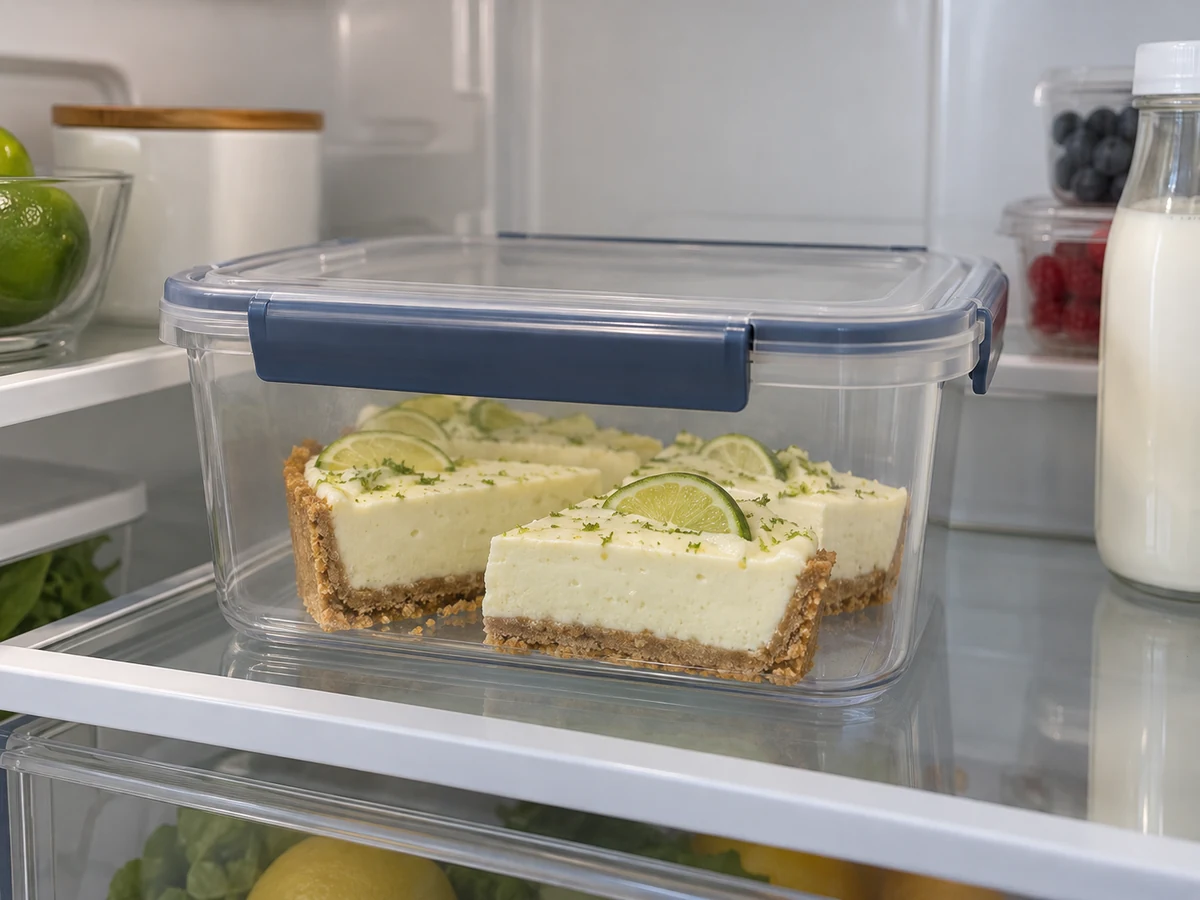
Keep the tart covered and refrigerated so it stays cold and does not absorb other fridge odours.
- Temperature: keep the fridge at 5°C or below, ideally around 4°C, and avoid a position that freezes the filling.
- Storage time: eat within 48 hours of preparation, following any shorter ingredient instructions. Appearance alone does not establish that a dairy dessert is safe.
- Covering: use a lidded cake carrier or a cover held above the surface to protect the finish.
- Freezing: the tart is best freshly chilled. Freezing and thawing may cause the filling to release liquid and the base to soften.
What you can prepare ahead
- Base: make it the day before and keep covered in the fridge. A much longer lead time can affect crispness and depends on the biscuits and fat used.
- Filling: prepare the assembled tart the day before serving so it has enough time to set. Count the total refrigerated storage from preparation, not from the time it is cut.
- Decoration: add mint, zest and any extra whipped cream shortly before serving.
If you need to freeze a portion
- Check suitability first: if all ingredient instructions allow freezing, test a small freshly prepared portion before freezing more. A month is a practical quality target, not a guarantee that the original texture will return.
- Protect it: seal portions in freezer-safe containers, label the date and keep frozen at about −18°C. Freeze while still within the safe chilled storage period, not after it has expired.
- Defrost in the fridge: allow enough time for the portion size and eat within 24 hours of fully defrosting. Do not thaw a dairy mousse on the worktop.
- Expect some change: the mousse may lose air or release liquid. Freshly whipped topping can decorate it, but cannot restore a damaged filling.
Keeping the texture consistent
- Dissolve properly: prepare the selected setting agent exactly as directed before incorporating it. Gelatine and agar use different methods.
- Whip carefully: use cold whipping cream and stop at soft peaks for the filling. Overwhipping makes it grainy.
- Let it chill undisturbed: keep it level in a properly cold fridge while it sets. Normal fridge use is fine; avoid leaving the door open for long periods.
- Control the juice: measure and add gradually, as excess liquid or acidity can change the set.
- Cut neatly: dip a knife in hot water, dry it and wipe between slices.
Transport and service
- Keep it cold in transit: use a rigid covered carrier inside an insulated container with ice packs, away from direct sun.
- Assemble in advance: transport the tart already set. Assembling mousse on arrival still requires several hours of chilling; it is not a last-minute shortcut. Individual set dessert pots may be easier for longer journeys.
- At the table: serve chilled portions promptly and keep the remainder refrigerated.
Quick checklist: firm base, correctly dissolved gelatine, gently whipped cream, adequate setting time and covered cold storage.
Understanding the citrus and other ingredients
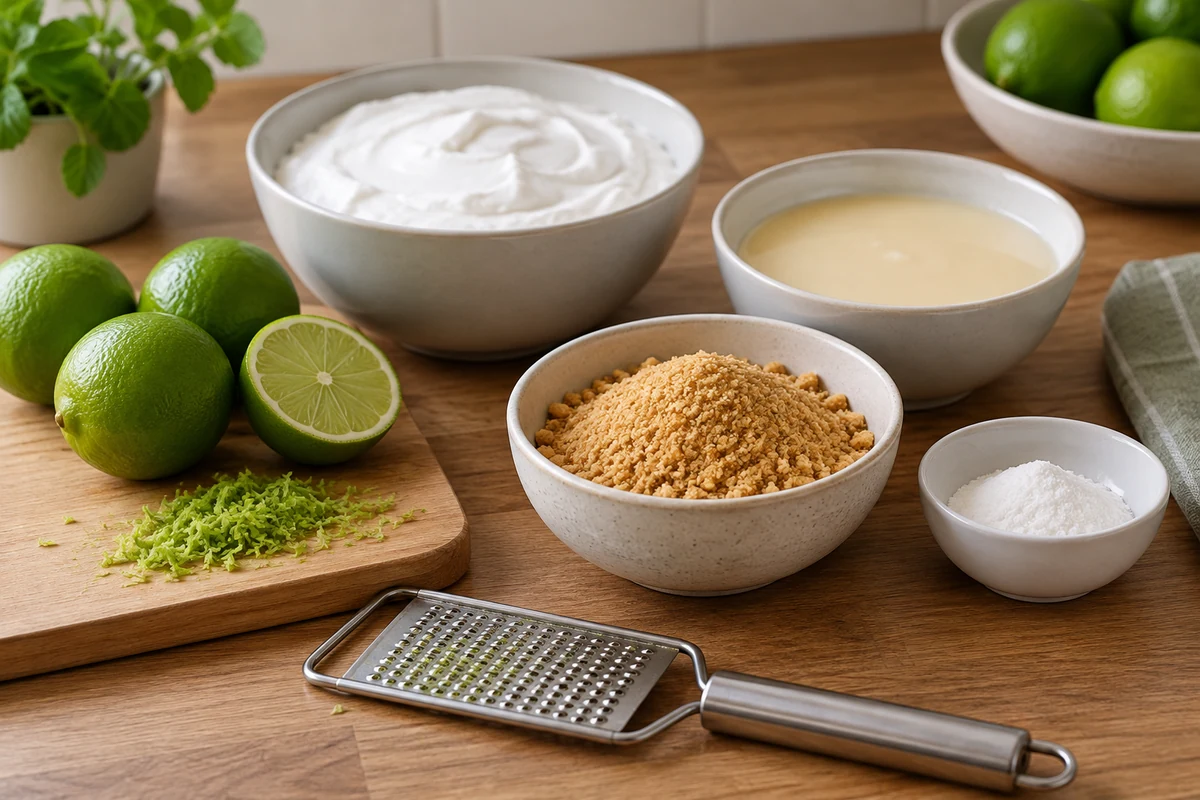
Lime gives this tart its flavour: zest provides fragrance, while the juice brings acidity and helps thicken the condensed-milk mixture.
Limes and lemons
- Brazilian names: limão taiti means Persian or Tahiti lime; limão galego is commonly called Key lime; limão siciliano is a yellow lemon. These names should not all be translated simply as lemon. Flavour and juice yield vary with the fruit.
- Zest and juice: the zest contains aromatic oils. Acid in the juice thickens the dairy condensed-milk mixture, but this alone does not guarantee a sliceable mousse with every substitution.
- Fresh fruit: choose firm fruit that feels heavy for its size, without mould or damaged areas. Keep refrigerated for longer storage.
- Avoid the pith: grate only the green surface of limes, or the yellow surface of lemons. The white layer underneath can taste bitter.
Useful substitutions
- Fresh lime juice: bottled 100% lime juice can be used when necessary, but taste and acidity may differ. Add gradually and keep the overall liquid quantity close to the recipe. Do not use sweetened lime cordial as an equal replacement.
- Lemon instead of lime: use measured lemon juice and matching zest for a different flavour, tasting as you add it. Lemon is not always less acidic than lime.
- Citric acid: it is not a direct replacement for the juice in this recipe, because it changes the liquid balance and flavour. Adding citric acid does not establish a longer safe shelf life for a cream dessert.
- Condensed milk: plant-based condensed products can replace the dairy ingredient in a suitable vegan method, but their composition and setting behaviour differ.
- Whipping cream: choose a plant-based product specifically designed to whip, following its own instructions. General-purpose coconut milk or pouring cream is not an automatic equivalent.
- Gelatine: use a suitable product-specific vegan setting method if replacing it. Agar usually gives a firmer, more brittle texture and requires heating; do not assume that 6 g will suit every brand or filling.
Balancing flavour and texture
- Add gradually: it is easier to add a little more juice than to correct an overly sour filling.
- Adjust sweetness: a small extra spoonful of the appropriate condensed milk can soften the perception of acidity before setting. Honey is not vegan; use a suitable plant-based sweetener if needed, avoiding large changes to the liquid balance.
- Keep the fragrance: finely grate fresh zest into the filling and save extra zest for the final decoration.
- Preserve the air: fold whipped cream gently into a smooth filling while it is still fluid.
Choosing ingredients at the shops
- Choose sound limes: avoid fruit that is shrivelled, bruised or mouldy; skin shine alone is not a reliable guide to juice content.
- For zest: choose unwaxed fruit where available and wash it before grating. An organic label does not remove the need to wash fruit or guarantee that no residues are present.
- Store the fruit: keep limes in the fridge, avoiding trapped moisture, and discard fruit that develops mould.
A chilled tart for a festive finish
This no-bake lime mousse tart combines a firm biscuit base with a sweet, tangy filling. Careful measuring, suitable whipping cream and enough time in the fridge make the preparation easier to manage.
Thank you for reading. Follow our social channels for festive recipes, or visit the I Love Christmas blog for more ideas for your Christmas and New Year’s table.
Share the recipe with someone who enjoys citrus desserts, and tell us how you served your tart. Enjoy your celebration.
No-bake lime mousse tart: frequently asked questions
How long will the tart keep in the fridge?
Keep covered at 5°C or below, ideally around 4°C, and eat within 48 hours of preparation. Follow any shorter ingredient instructions. Making or adding a fresh topping does not restart the storage time.
Can I replace gelatine with agar?
Only with a method suited to the particular agar product and acidic filling. There is no universal conversion to 6 g. Agar needs heating and sets differently, often more firmly and less elastically than gelatine. Test a small batch before relying on a sliceable tart.
How can I make a vegan or lactose-free version?
For vegan, replace biscuits where necessary, butter, condensed milk, whipping cream and gelatine with suitable alternatives; use a validated setting method or serve the softer filling in glasses. For lactose-free, use appropriately labelled dairy products and check every ingredient. Lactose-free dairy is not suitable for milk allergy.
What if the filling stays runny?
Allow the full chilling time and check that the gelatine was suitable, correctly measured and fully dissolved. Do not add dry gelatine or guess at extra agar after assembly. If the safely stored filling remains too soft to slice, serve it in glasses rather than promising that more refrigeration will fix the formula.
Can I make the base ahead?
Yes, make it the day before, cover and refrigerate. Keep it separate from strong fridge odours and fill it once cold and firm. The biscuit type and storage conditions affect how crisp it stays.
What is a simple New Year’s Eve decoration?
Use finely grated lime zest, a small mint sprig and a few dots of extra whipped cream. Plain plates and restrained gold-coloured tableware are enough; keep non-edible decorations away from the food.
Sources and Further Reading
- RHS: Tahiti lime
- Dr. Oetker: vegetarian setting-agent guidance
- UK guidance: chilling, freezing and defrosting food