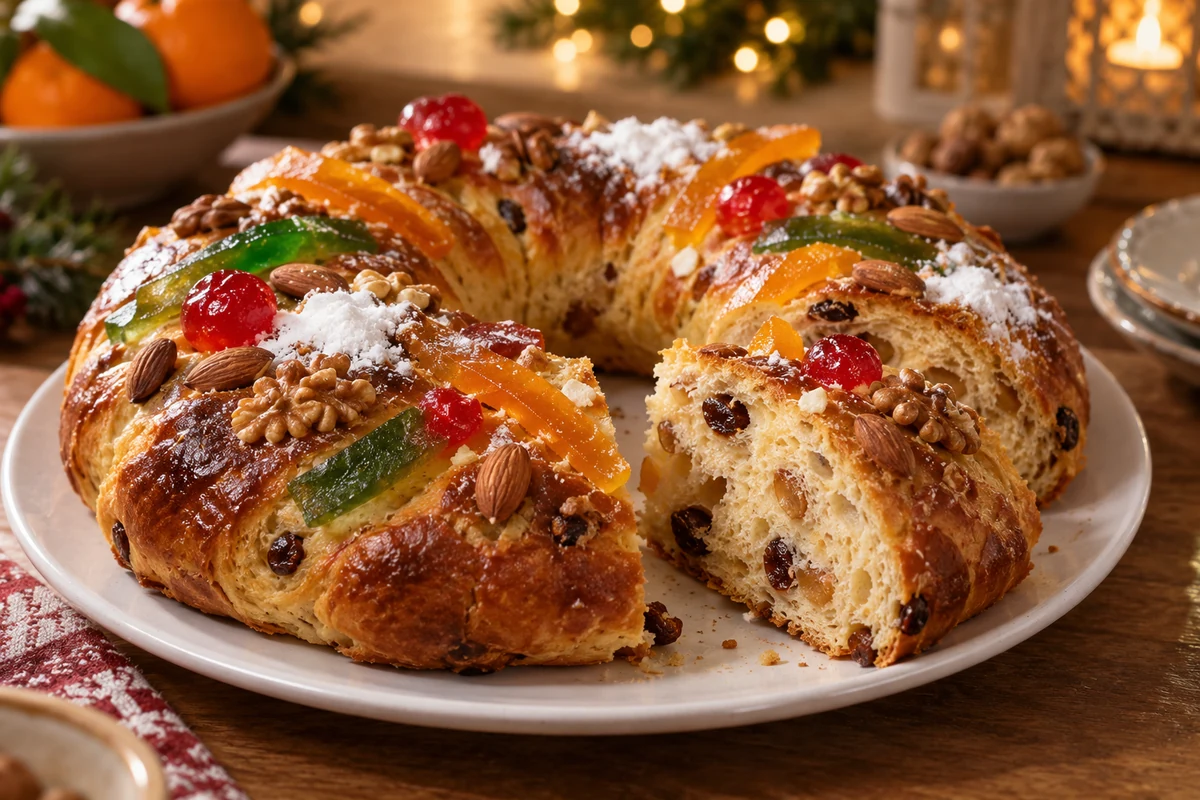
Portuguese bolo rei is a crown-shaped Christmas bread enriched with eggs and butter, studded with fruit and nuts and scented with citrus. Follow the dough-making, proving and shaping steps below, with notes on decoration, storage and alcohol-free flavouring. Filled versions are modern variations with different storage needs.
Portuguese bolo rei brings together citrus, candied fruit and the aroma of freshly baked sweet bread. Although its English name is king cake, its texture comes from yeast rather than a sponge-cake batter. Its broad ring shape also sets it apart from tall Italian panettone.
Ingredients for Portuguese bolo rei
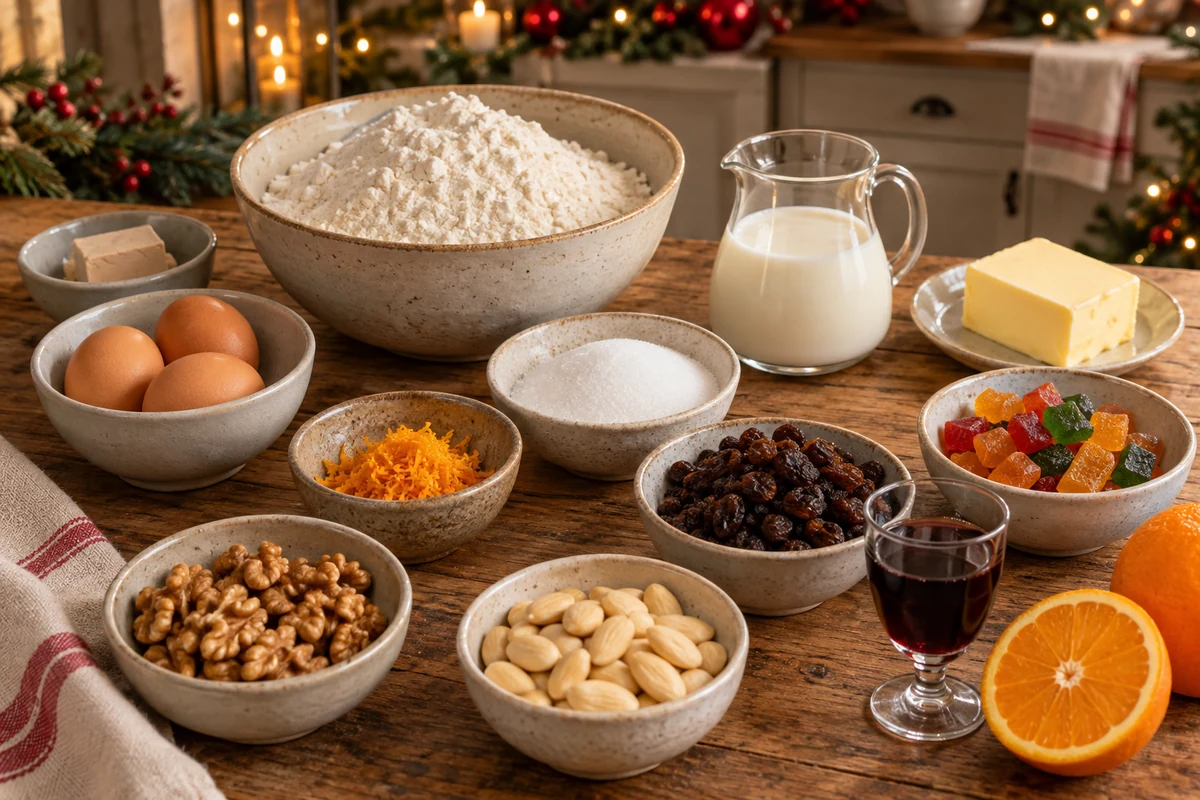
Gather these ingredients for a large Portuguese bolo rei, or divide the dough into two smaller rings. Keep some fruit and nuts aside for the top, and have an extra egg yolk ready for the glaze.
- 500 g strong white bread flour. Flour strength matters for this rich yeast dough; a gluten-free version needs a separate formulation.
- 150 g caster sugar. Soft light brown sugar gives a slightly different flavour and colour.
- 150 g unsalted butter, softened but not melted.
- 3 large eggs, beaten. Do not add an extra yolk to the dough automatically, as this changes its hydration.
- Up to 200 ml lukewarm milk. Begin with 100 ml in total, including any used for the yeast, then add more gradually only if needed. Egg size and flour absorption vary, and adding all the milk at once may make this dough too loose to shape.
- 20 g fresh yeast or 7 g instant dried yeast, used according to its packet instructions.
- A generous pinch of salt.
- Finely grated zest of 1 orange and 1 lemon, avoiding the bitter white pith.
- 50 ml port, or 50 ml orange juice for an alcohol-free version. Baking does not guarantee removal of all alcohol.
- 200–250 g candied fruit and peel, with some larger pieces reserved for decoration and the rest diced. Chopped dried apricots or dates give a different variation.
- 100 g raisins. If soaking them briefly in water, drain and pat dry before adding.
- 100 g mixed nuts, such as almonds, walnuts and hazelnuts, with some reserved for the top.
- Icing sugar, for decoration. You will also need one extra egg yolk, beaten with a little water, to brush the dough before baking.
Substitutions and practical notes
- Gluten-free: do not assume a gluten-free flour blend will work gram for gram in this enriched yeast dough. Use a tested gluten-free bolo rei recipe for reliable structure.
- A less rich version: reducing butter changes softness and keeping quality. A spoonful of yoghurt is not an equivalent replacement for 50 g butter, so keep the base proportions for your first attempt.
- Alcohol-free: use orange juice instead of port and soak any raisins in water, not rum. Keep added liquids lukewarm or cool, never hot.
- Fruit: keep within the suggested quantities and dry soaked fruit well so it does not make the dough wet and heavy.
- Yeast: dissolve fresh yeast in a little of the measured milk. Instant yeast can usually go straight into the flour; follow the manufacturer’s directions.
How to make Portuguese bolo rei
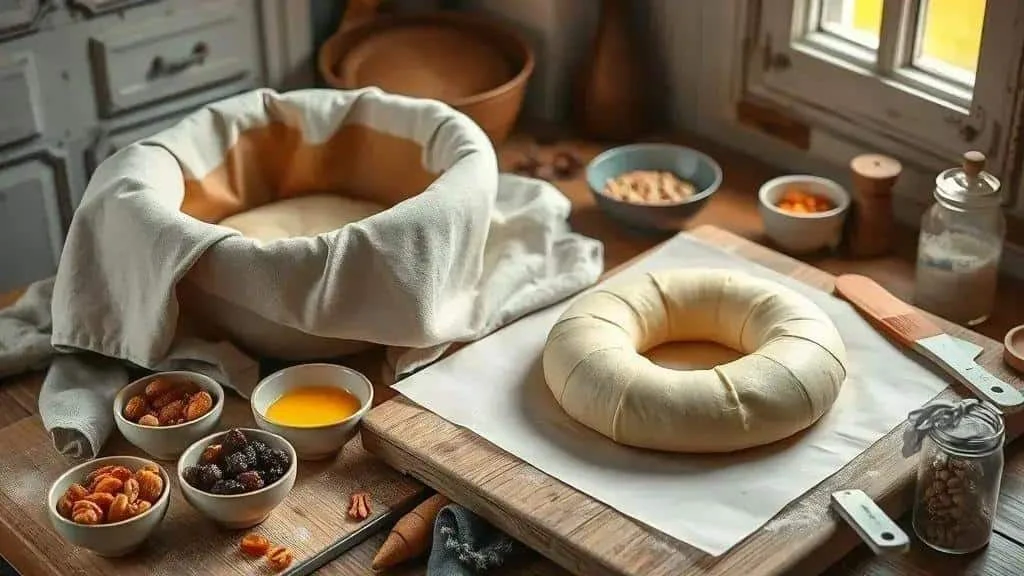
Make the Portuguese bolo rei in the stages below. Rich dough can rise slowly, so use its appearance and feel alongside the suggested timings.
- Prepare the yeast: dissolve fresh yeast in 50 ml of the measured lukewarm milk with 1 tsp of the measured sugar. Leave for 5–10 minutes. For instant yeast, follow its packet instructions instead.
- Mix the wet ingredients: combine the three beaten eggs, remaining sugar, orange and lemon zest, and port or orange juice. Add enough milk to bring the initial amount used, including the yeast mixture, to 100 ml; reserve the rest.
- Add the yeast: stir the prepared yeast mixture into the wet ingredients, or combine instant yeast with the flour if directed on the packet.
- Add flour and salt: mix in the 500 g flour and salt to form a soft dough. Add the reserved milk a little at a time only if needed; you may not need all 200 ml.
- Develop the dough: knead until it begins to become smooth and elastic, roughly 10–15 minutes by hand or 6–8 minutes with a dough hook. Allow extra time if necessary rather than adding flour to disguise an under-kneaded dough.
- Incorporate the butter: work in small pieces of softened butter gradually, kneading between additions. Continue until the dough is smooth, elastic and able to hold its shape, though still soft and slightly tacky.
- First rise: place in a lightly greased bowl, cover and leave in a comfortably warm place until approximately doubled. Allow 1–2 hours as a starting guide; a cool room or rich dough may need longer.
- Prepare the fruit and nuts: dice the candied fruit, reserving some larger pieces for decoration. If the raisins are very dry, soak them briefly in warm water, then drain and dry thoroughly. Reserve some nuts for the top too.
- Fold in the additions: gently flatten the risen dough on a lightly floured surface. Fold in the prepared fruit, raisins and nuts, leaving the reserved decorations aside.
- Shape a crown: form a thick rope and join its ends firmly into a broad ring on a lined baking tray. Leave a generous central opening because it will narrow during proving and baking. Two smaller rings are easier to handle than one very large one.
- Second rise: cover loosely and leave until visibly puffy, usually around 45–60 minutes or longer in a cool room. Preheat the oven to 180°C conventional or 160°C fan towards the end of proving.
- Glaze and decorate: brush with the extra beaten egg yolk and arrange the reserved nuts and candied fruit on top. A little coarse sugar is optional.
- Bake: start checking after 30–40 minutes, allowing longer for a large, thick ring. Cover loosely with foil if it browns too quickly. Check the thickest part: the crumb must be baked through rather than wet or doughy; avoid mistaking sticky fruit for raw dough.
- Cool and finish: transfer carefully to a rack. If wanted, brush lightly with a syrup made by dissolving 1 tbsp sugar in 2 tbsp water, then let it dry. Add a little icing sugar after cooling, rather than washing the sugar away with syrup.
- Store: once fully cool, wrap the unfilled bread well and keep in a cool, dry place. It is best within 1–3 days. Do not put a fresh apple slice in the container; freeze spare portions instead of adding moisture.
Practical tips
Avoid overloading the dough with fruit. Use lukewarm milk and follow the yeast packet’s temperature advice. A gently warm room is sufficient for proving; do not use an oven that might accidentally be switched on or become hot enough to melt the butter.
Bolo rei variations and optional fillings
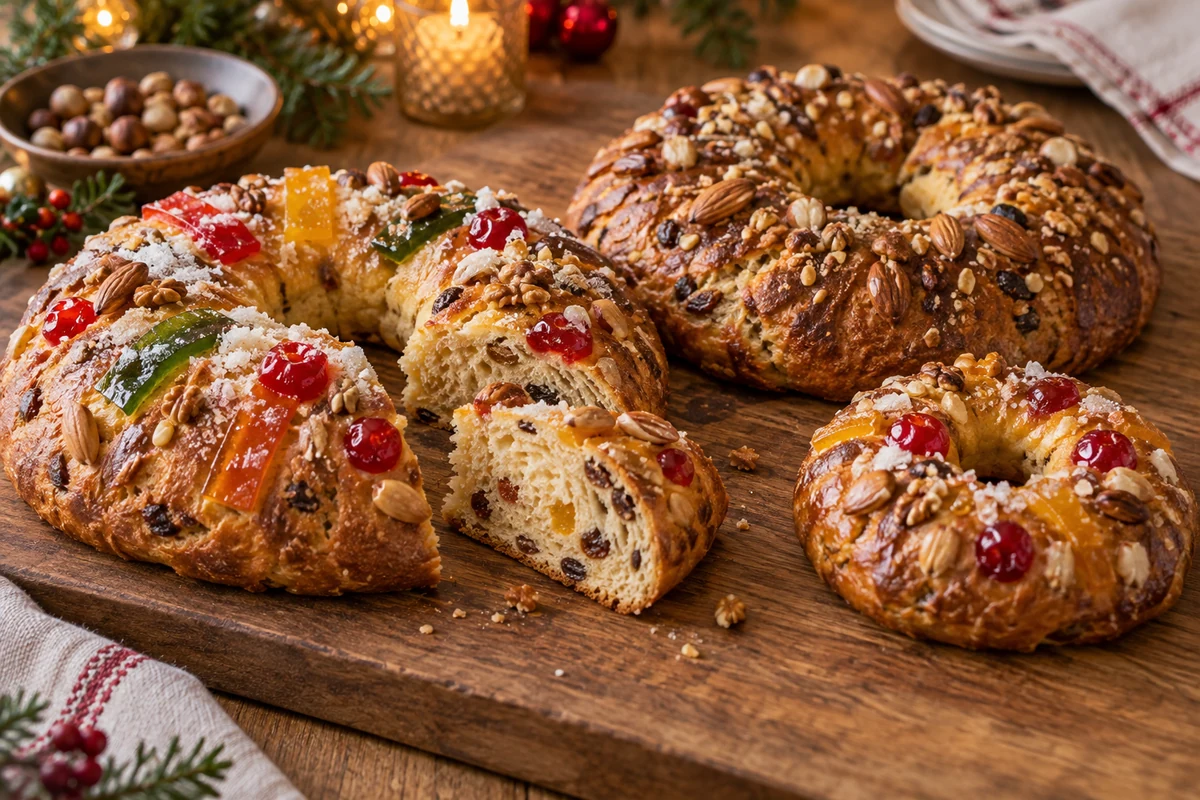
The classic Portuguese bolo rei is a fruit-and-nut bread, not a cream-filled sponge. The following are optional adaptations. Fill only after baking and cooling, preferably shortly before serving, and refrigerate any perishable filling.
Optional richer fillings
- Pastry cream: use about 200 g of fully cooked, promptly chilled pastry cream made from a reliable separate recipe. A mixture starting with 500 ml milk produces much more than 200 g; do not treat those amounts as equivalent. Keep the filled bread refrigerated and use within 48 hours.
- Portuguese egg-yolk sweet: around 150 g of properly prepared doce de ovos gives a rich variation. Follow a complete cooked recipe rather than mixing raw yolks with syrup, and keep the finished filling chilled.
- Chocolate ganache: use about 150 g of a prepared ganache suitable for filling. Combining 150 g chocolate and 125 ml cream makes considerably more than 150 g; chill any cream-containing filling and use promptly.
Fruit and nut-based alternatives
- Almond and yoghurt spread: mix a little almond butter with Greek yoghurt and honey to taste, then serve alongside slices. Its richness depends on the proportions; it is not automatically a low-fat filling.
- Apple compote: about 200 g of cooked apple with cinnamon can be offered alongside. Cool promptly and refrigerate; this is fresh compote, not a shelf-stable preserve.
- Citrus cream: combine 150 g fromage frais with orange zest and a little honey. Add juice sparingly to avoid a runny texture, then refrigerate and serve alongside the bread.
Changes to the dough
- Less butter: this produces a different texture. If you want a lighter enriched bread, choose a tested lower-fat formulation rather than making several substitutions at once.
- Lactose-free: suitable lactose-free dairy products can be used, or appropriate baking alternatives. Check all ingredients and fillings. Lactose-free milk is still unsuitable for someone with a milk allergy.
- Less sweet: reducing sugar to 120 g changes the dough’s flavour and browning. Adding extra dates also adds sugar, so it does not automatically produce a low-sugar bread.
If you choose to fill the bread
Moist fillings: cool the baked bread completely and use properly chilled filling. Split individual servings or offer the filling separately rather than injecting a warm loaf. Refrigerate filled portions and keep within the filling’s safe storage time.
Decoration and presentation
- Orange icing: 100 g icing sugar mixed with a little orange juice makes an optional icing, not a low-sugar glaze. Add juice gradually and drizzle lightly if using.
- Fruit: candied orange slices give a traditional-looking finish. Fresh berries are a separate serving suggestion; add shortly before serving rather than storing them on the bread.
- Toasted nuts: a small amount of almonds or walnuts adds crunch. Keep the total balanced with the nuts already in the dough.
Serving combinations
Try a slice with a small spoonful of pastry cream or apple compote. An almond and yoghurt spread offers another flavour, but neither addition is needed for the traditional fruit-and-nut loaf. Keep chilled accompaniments separate until serving.
Dough, proving and baking tips
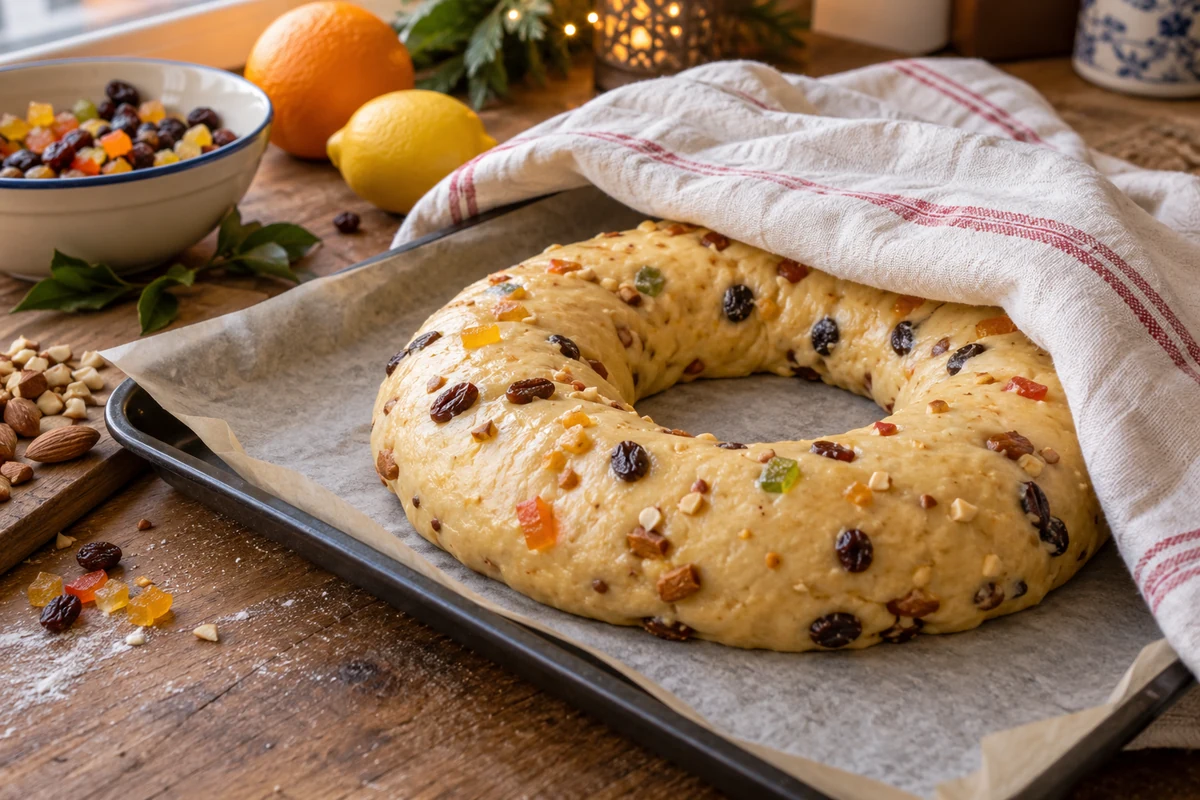
A soft but workable dough and patient proving help give bolo rei its enriched-bread texture. It should not resemble a pourable cake batter.
Adjusting the dough
Hold back some of the milk at the start and add it gradually. Give the flour time to absorb the liquid and develop the dough through kneading. If still genuinely too dry, add milk by the spoonful; if impossibly wet, use only a little extra flour rather than burying the dough in it.
- Milk temperature: use lukewarm milk according to the yeast packet’s directions. Hot milk can damage yeast and melt the butter prematurely.
- Adding butter: work it in gradually after the dough has begun developing structure, allowing each addition to incorporate before the next.
- Limit extra flour: too much makes the finished bread dry and heavy.
Managing the rise
Dough rises faster in warmth and slower in the fridge. With eggs and milk in the mixture, an overnight rest belongs in a properly cold refrigerator, not a barely cool room.
- Temperature: a room around 24–28°C can suit a short rise. For an overnight rest, use a fridge at 5°C or below; 12°C is not a suitable refrigerator setting.
- Typical timing: allow roughly 1–2 hours for the first rise and 45–60 minutes for the second, adjusting to the dough’s expansion rather than following the clock rigidly.
- An overnight option: a covered dough can rise slowly in the fridge, but its timing depends on yeast activity and temperature. Check it rather than assuming an 8–16-hour rest always gives the same result, and allow extra time for cold dough to prove after shaping.
Checking the dough
Use these observations as guides alongside the dough’s volume and texture.
- Gentle finger test: a light indentation that slowly begins to recover can suggest the shaped dough is ready. Immediate spring-back usually means it needs more proving time, not more yeast. A fragile, collapsing dough may have overproved.
- Windowpane test: before adding fruit, stretch a small piece gently. It should form a thin membrane rather than tearing at once. A short rest followed by more kneading can help.
Kneading and handling
- Kneading: the suggested 10–15 minutes by hand or 6–8 minutes with a dough hook are starting guides. Adding butter gradually may require more time; stop if the mixer or dough becomes excessively warm.
- Short rests: if the dough resists stretching, cover it and rest for about 10 minutes before continuing.
- Add fruit gently: fold the prepared fruit and nuts through evenly without shredding the dough.
Common problems
- Heavy crumb: possible causes include insufficient proving, weak gluten development, too much extra flour or too much fruit. Adding more fat is not a universal fix.
- Dough too loose: check whether all the milk was added too quickly or the butter became very warm. A brief cool rest and further kneading may help before adding more flour.
- Overproved dough: dough that has expanded and collapsed may bake with a poor texture. Do not assume reshaping fixes food that has been held unsafely or smells spoiled; discard if its safety is in doubt.
Before baking
Use the egg wash for shine, preheat the oven and leave enough space for the ring to expand. Keep the main bread unfilled during baking; optional cream fillings belong in cooled servings afterwards.
Bolo rei and Portuguese Christmas traditions
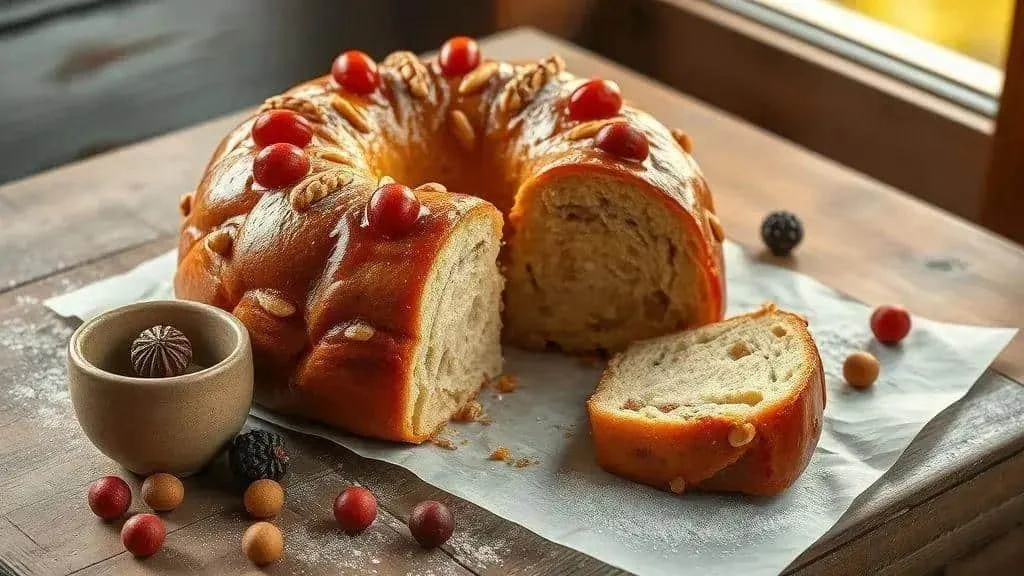
Bolo rei is a familiar part of Portuguese Christmas celebrations and is especially associated with Dia de Reis, or Epiphany, on 6 January.
The crown shape
The ring of bolo rei resembles a crown, with colourful candied fruit suggesting jewels. This symbolism connects its festive appearance with the Three Kings; it is not a claim that one modern recipe has an unbroken ancient origin.
Festive customs
- Epiphany, 6 January: a traditional occasion for sharing the bread with family and friends.
- At the table: slices can be served after a festive meal or with afternoon coffee. Port is an optional pairing for adults.
- Bolo rei and bolo rainha: the queen-cake variation generally replaces candied fruit with more nuts. That difference does not by itself mean the bread is low in sugar.
The bean and the hidden token
Older customs describe a dried bean and sometimes a small token hidden in the bread. The person finding the bean was traditionally expected to buy the next cake. Treat this as cultural background: do not hide hard beans, coins or small objects in a homemade loaf, as they can cause choking or dental injury.
Different versions
- Individual preferences: bakers vary the balance of nuts, candied fruit and citrus, and some use port or other flavourings.
- Bakeries and shops: traditional fruit-and-nut rings sit alongside newer chocolate or filled variations. The latter should be described as adaptations rather than the only authentic version.
Serving it today
Bolo rei also makes a festive food gift. Cut the ring into manageable slices and serve the unfilled bread at room temperature or gently warmed. Perishable fillings require refrigeration and different handling.
Storing, packaging and selling bolo rei
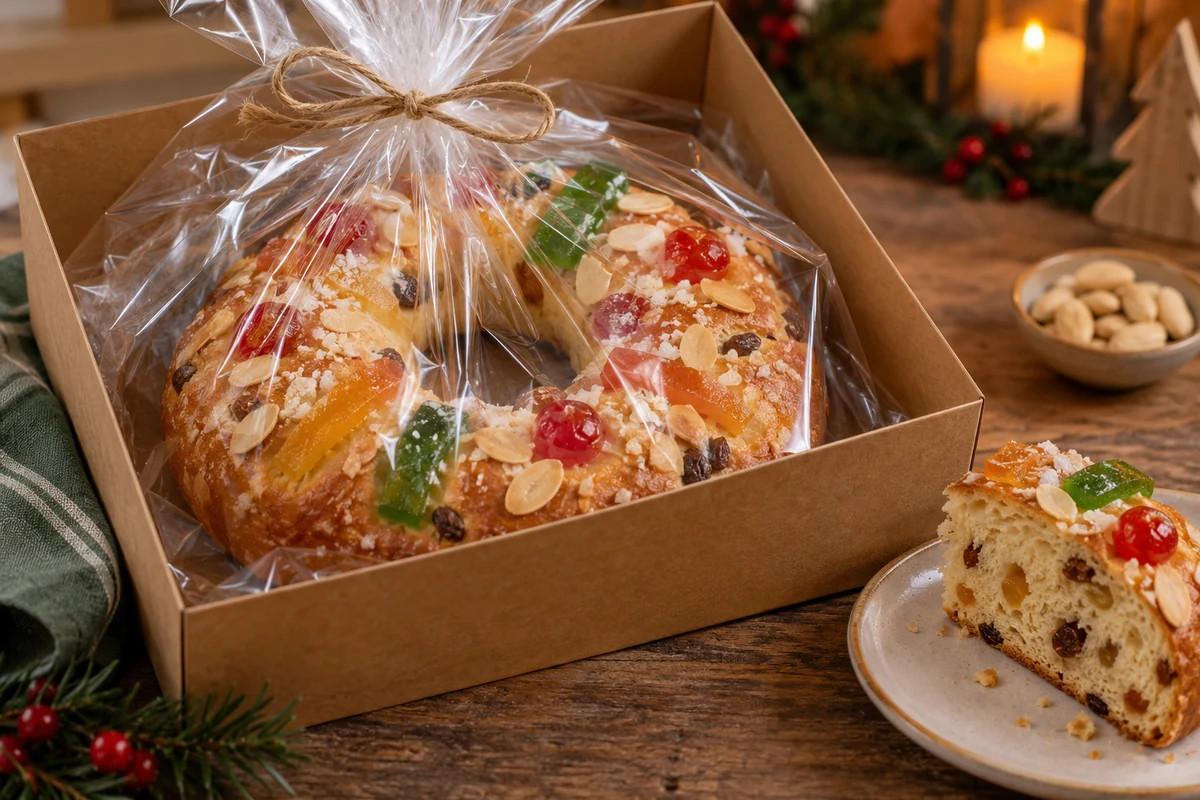
Good packaging protects bolo rei from drying out and keeps its decoration intact. Home-storage guidance is not a validated commercial shelf life, especially if you add cream or other moist fillings.
Storage
- Unfilled bread: once fully cool, wrap well or place in an airtight container in a cool, dry place. Aim to enjoy it within 1–3 days for the best texture.
- For longer keeping: freeze spare unfilled portions instead of promising a week at room temperature. Refrigerate cream-filled versions at 5°C or below and consume within 48 hours, or sooner if the filling requires it.
- Freezing: wrap unfilled slices individually and put them in a freezer bag, aiming to use within three months for quality. Thaw covered; any bread with a perishable filling must thaw in the fridge and be used within 24 hours.
Packaging materials
- Food-safe cake boxes with a firm base help stop the ring sliding around.
- Clear food-safe containers can display the decoration while protecting it. Required labels should remain visible and readable.
- Suitable food wrap and baking parchment protect cut surfaces and help keep the box clean.
- Ribbons and clear labels finish the package. Keep decorative materials away from direct food contact unless suitable for that use.
Packing the bread
- Cool fully: let the unfilled bread cool on a rack before wrapping, to avoid condensation.
- Protect the decoration: choose a box with sufficient height so the lid does not squash the fruit and nuts.
- Use a firm base: place the ring on a food-safe cake board or rigid serving base.
- Fit the box: leave enough space to protect the edges without allowing the bread to slide freely.
- Close and label: secure the box and add ingredient, allergen and storage information as appropriate. Decoration should never replace useful labelling.
Shelf life and information for the recipient
Keeping time depends on the actual recipe, preparation and storage. Explain whether the bread is unfilled or contains a chilled filling. A seller must establish suitable shelf-life and storage instructions for their own product rather than relying on a general blog estimate.
- Useful details: include ingredients, preparation date, storage instructions and whether alcohol was used; do not assume baking removes it all.
- Allergens: check wheat, eggs, milk and the specific nuts used, plus any allergens in bought candied fruit, decorations or fillings.
Presentation and pricing ideas
- Portion sizes: whole rings and individually wrapped slices suit different occasions. Keep the product description accurate for each version.
- Display: keep packages clean and protected from direct sunlight. Cream-filled products need a refrigerated display rather than an ordinary warm shop window.
- Samples: if offering tastings, provide hygienic portions with clear allergen information and suitable temperature control.
- Costs: include ingredients, packaging, energy, labour and overheads when calculating a price. There is no guaranteed margin simply because the bread is homemade.
Food-business and hygiene considerations
- Hygiene: wash hands, clean work surfaces and utensils, and prevent cross-contamination. Gloves do not replace handwashing or safe handling.
- Before selling: in England, register a food business with the local authority at least 28 days before trading and check the applicable food-safety and labelling requirements. A home kitchen is not exempt merely because batches are small; consult the relevant authority for your location.
- Transport: use firm, secure packaging. Products with perishable fillings need chilled transport as well as protection from crushing.
Final thoughts
Making Portuguese bolo rei is a chance to enjoy a distinctive festive bread, with fruit, nuts and citrus in a soft enriched dough. Take time over kneading and proving, and keep optional fillings separate from the traditional base recipe.
Share your results and visit I Love Christmas for more seasonal recipes, decorating ideas and festive inspiration. Happy baking!
Portuguese bolo rei: frequently asked questions
Can I make a lactose-free or vegan version?
Suitable lactose-free milk and butter alternatives can be considered, but check every ingredient and filling. Lactose-free dairy is not safe for a milk allergy. A vegan version also needs an egg-free formulation; use a tested recipe rather than assuming a flaxseed mixture will replace three eggs successfully.
How do I store bolo rei so it stays soft?
Wrap fully cooled, unfilled bread well and keep in a cool, dry place, ideally eating it within 1–3 days. Freeze extra slices for longer keeping. Refrigerate any cream-filled version and use within the filling’s safe storage time, generally within 48 hours.
How can I avoid a dense, heavy loaf?
Develop the dough through kneading, add milk gradually and allow enough proving time. Drain soaked raisins, keep fruit and nuts within the suggested quantities and avoid adding excessive flour when shaping.
Can I leave out the alcohol?
Yes. Replace the 50 ml port with 50 ml orange juice and use water for soaking raisins. Citrus zest provides plenty of aroma. Use cool or lukewarm liquid, not hot juice, and do not assume alcohol used in baking disappears completely.
How should I package it for a gift or sale?
Place the cooled bread on a firm food-safe base inside a suitable box, secure it against movement and include ingredient, allergen and storage information. If selling, follow the requirements for your product and location; filled versions may need refrigeration during transport.
Sources and Further Reading
- Visit Portugal: Christmas traditions
- Food Standards Agency: starting a food business
- Food Standards Agency: allergen labelling for prepacked food sold directly