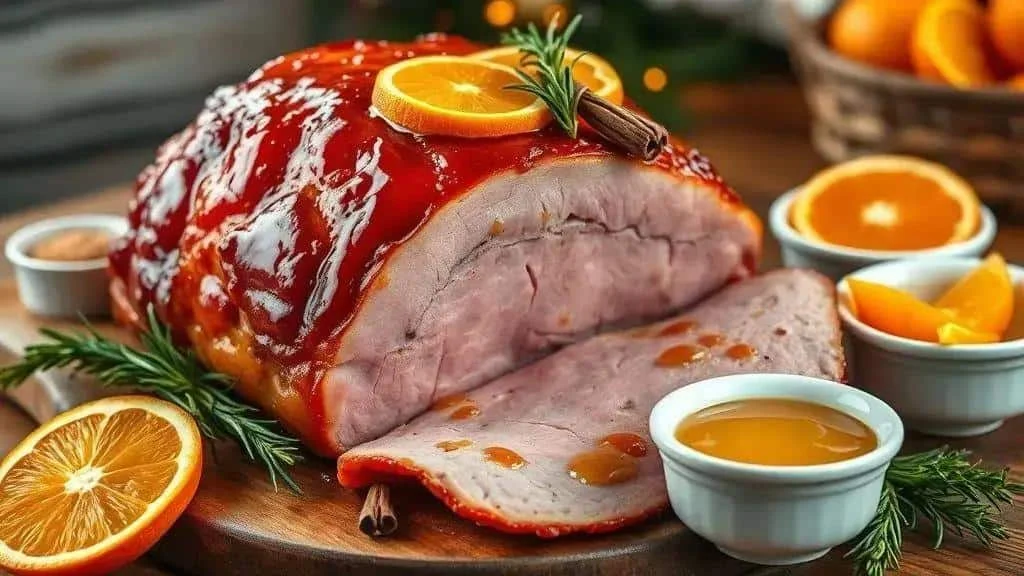
Orange-glazed ham is a festive main course made with a fully cooked ham joint and a sweet-tangy glaze of fresh orange juice, brown sugar, honey and mustard. This is inspired by Brazilian tender, a ready-cooked ham often served at celebrations. Check the packet’s reheating instructions: raw gammon needs a different cooking method. Pineapple and herbs offer easy variations, while a plant-based roast needs its own cooking instructions and a separate vegan glaze.
Orange-glazed ham makes an attractive centrepiece for New Year’s Eve. The citrus glaze balances sweet honey with mustard, and the joint can be served with a selection of simple side dishes. Here is how to prepare, glaze and carve it.
Ingredients for orange-glazed ham
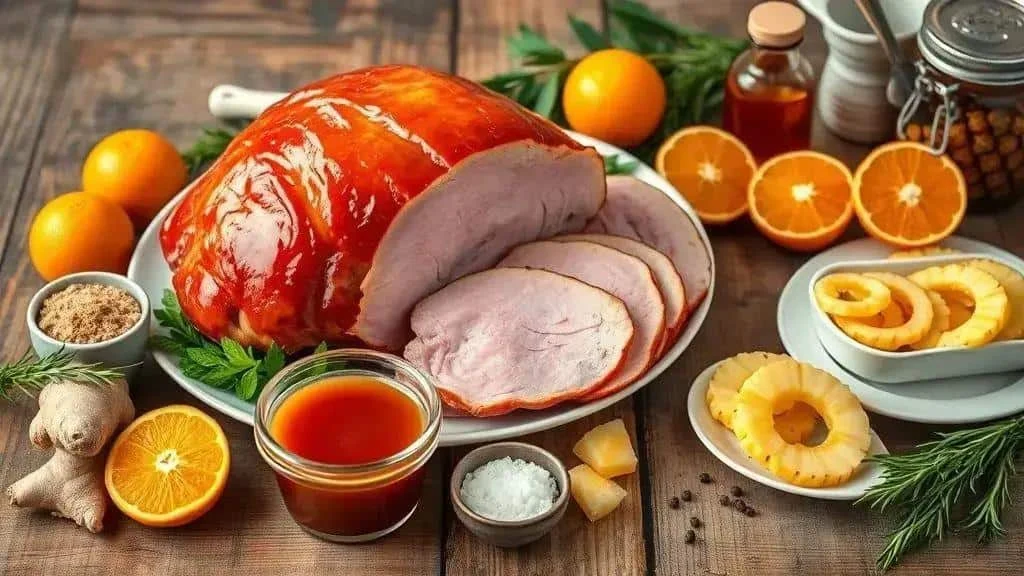
To make this orange-glazed ham, gather the following ingredients:
- 2.5 kg fully cooked ham joint – choose a joint labelled cooked or ready to eat and suitable for reheating. The number of servings depends on whether it has a bone, portion size and side dishes. A smoked joint is suitable only if it is also fully cooked; smoking alone does not establish this.
- 240 ml fresh orange juice – freshly squeezed gives a lively flavour. Alternatively, use unsweetened orange juice made up to drinking strength.
- 2 tbsp finely grated orange zest – use only the coloured peel. Lemon zest gives a different but pleasant citrus note.
- 110 g soft brown sugar – for colour and caramel flavour. White sugar with a little treacle is another option; adjust to taste.
- 3 tbsp honey – adds sweetness and shine. Maple syrup or a suitable glucose syrup can be used instead.
- 2 tbsp Dijon mustard – gives the glaze a tangy edge. Mild yellow mustard is an alternative.
- 1 tbsp soy sauce – adds savoury depth. Reduced-salt soy sauce is useful with salty ham; use certified gluten-free tamari if required.
- 1 tsp finely grated fresh ginger – or about ½ tsp ground ginger for a different, warmer flavour.
- 1 tbsp cornflour – mix with 1 tbsp cold water and add gradually to thicken the glaze. You may not need all the slurry. Plain flour is not a direct replacement: it needs a different quantity and longer cooking.
- 8–10 whole cloves – optional, for studding the surface. Remove them before serving. If using allspice instead, infuse a few berries in the sauce and strain them out.
- 6 pineapple rings, drained – optional, to cook alongside the ham. Orange slices are another garnish.
- Black pepper to taste; salt only if needed – ham and soy sauce are already salty.
- Rosemary sprigs and orange slices – for serving.
Quick ingredient tips
Fresh juice and brown sugar give the glaze its citrus aroma and rounded flavour. For less sweetness, start with about a quarter less sugar and a little more mustard, tasting before the sauce touches the ham. A vegan version needs a plant-based roast and maple syrup instead of honey. Check mustard, soy and wheat allergens in all ingredients.
How to prepare orange-glazed ham
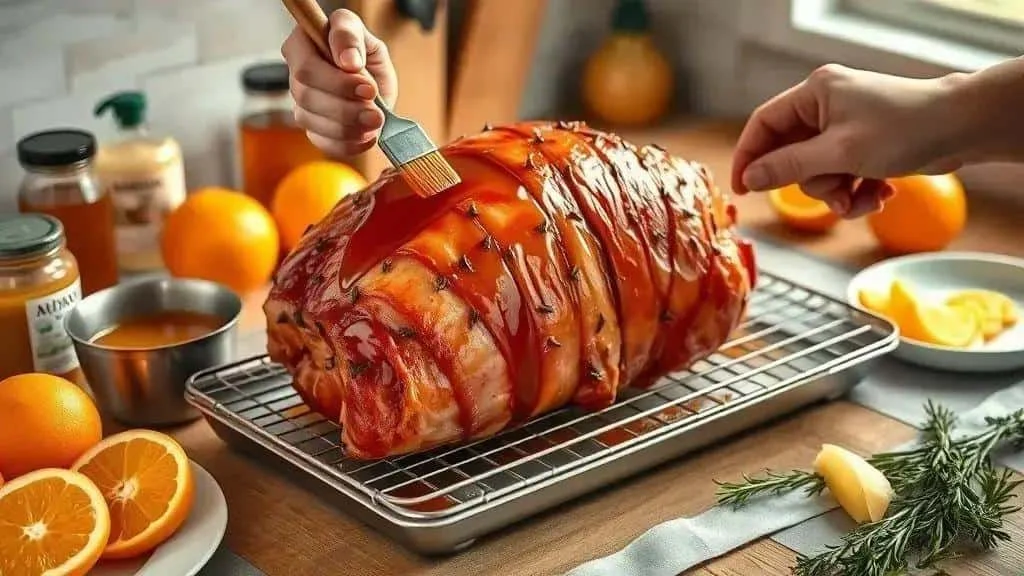
- Preheat the oven: follow the ham supplier’s instructions. Where compatible with those instructions, use 180°C conventional/160°C fan. Line a roasting tin with foil if desired.
- Prepare the ham: remove packaging and any netting as directed on the label. Pat the joint dry with kitchen paper and put it on a rack in the tin, with the outer surface facing upwards.
- Score the surface: if there is a fat layer, lightly mark a diamond pattern with a sharp knife without cutting deeply into the meat. This gives the glaze places to cling to.
- Add cloves and pineapple: stud the scored surface sparingly with cloves. Put pineapple rings alongside the ham rather than securing them with hidden toothpicks. Keep track of the cloves so they can all be removed before carving.
-
Sweet-tangy orange glaze
Make the glaze: mix the 240 ml orange juice, orange zest, 110 g brown sugar, honey, Dijon mustard, soy sauce and ginger in a small saucepan. Warm gently, stirring until the sugar dissolves.
- Thicken the glaze: stir the cornflour slurry again and add it a little at a time to the simmering sauce. Cook, stirring, until it coats a spoon, usually a minute or two. Before basting, set aside a clean portion for serving; use the remainder for the ham.
- Reheat under foil: brush the joint with some of the basting glaze, cover loosely with foil and reheat according to the packet’s weight-based instructions. Do not assume a 2.5 kg joint will heat through in 30–40 minutes.
- Check the centre: the reheated ham should be steaming hot throughout. Use a clean food thermometer in the thickest part, away from bone: 70°C for 2 minutes, or an equivalent safe time–temperature combination, is a useful check. A warm knife is not a reliable substitute.
- Finish uncovered: near the end of reheating, remove the foil and brush with more basting glaze. Allow roughly 10–15 minutes for colour, watching closely so the sugar does not burn. This browning stage does not replace checking that the centre is hot.
- Rest before carving: allow about 8–10 minutes under loosely tented foil. Remove every clove before serving.
- Carve and serve: cut even slices with a sharp carving knife. Serve promptly with the clean reserved sauce, reheated until steaming hot, and garnish with orange segments and rosemary.
-
Quick tips
For less sweetness: reduce the brown sugar by about a quarter and add a little more mustard to taste. For a deeper colour: let the uncovered glaze brown briefly, watching continuously; a very hot oven can burn the sugar before the ham is ready.
Festive variations on orange-glazed ham

- Classic orange glaze: keep the orange, honey and brown sugar combination and apply thin coats during the final stages for a glossy finish.
- Pineapple and rum: cook pineapple rings beside the ham with a little brown sugar and rum. Use pineapple juice instead for an alcohol-free version; cooking does not reliably remove all the alcohol.
- Mustard and herbs: mix Dijon mustard, honey, rosemary and thyme for a fragrant variation with a gently caramelised surface.
- Smoky chipotle: add a little chipotle paste to a honey and soy glaze. Start sparingly and consider serving extra chilli separately for guests who prefer mild food.
- Hoisin and ginger: combine hoisin, soy sauce, orange juice and ginger, then finish with toasted sesame seeds and sliced spring onions. Check the sauce labels and flag soy, wheat and sesame where present.
- Vegan roast, seitan or smoked tofu: use a suitable plant-based roast or firm tofu with a separate orange glaze made with maple syrup, not honey. Follow that product’s cooking directions rather than the ham timings. Tempeh is another option but must be prepared and cooked as its label directs. Keep plant-based food and utensils separate from the ham.
Choosing a variation
The orange-and-pineapple version suits a traditional spread; hoisin or chipotle gives a stronger flavour. Keep a separate glaze for vegetarian portions so it never contacts the meat. Taste before basting and adjust sweetness, acidity and heat gradually.
Matching the side dishes
Pair sweet glazes with plain mashed potatoes or Brazilian mandioquinha, a sweet root vegetable also called arracacha. Grilled vegetables work well with spicy glazes. Arrange carved slices in a fan with orange, herbs and pineapple for a colourful platter.
Choosing and preparing the ham
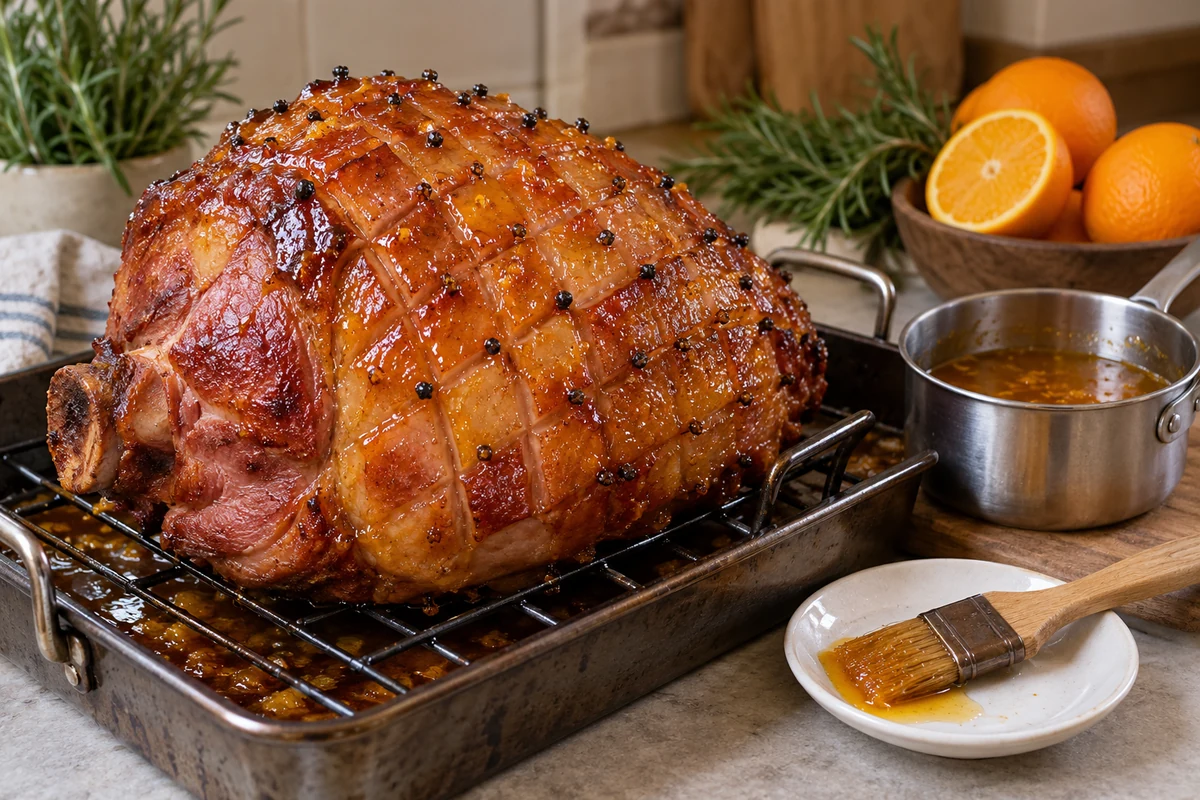
Choose your fully cooked ham according to the guest count, bone weight and how many other dishes you will serve. Plan portions from the usable carved meat rather than treating the whole joint weight as edible servings. Allow extra only if you want leftovers.
- Read the label: check the weight, use-by date, storage instructions and explicit cooked or ready-to-eat wording. Smoked gammon can still be raw.
- Check condition: choose an intact pack that has been kept refrigerated. Appearance alone cannot establish food safety.
- Choose the size and shape: a whole joint makes a centrepiece; a smaller joint is easier to portion for a small gathering.
Essential preparation tips
- Score lightly: mark only the outer fat layer in diamonds, avoiding deep cuts into the meat.
- Use a suitable rack: raise the joint above the tin to allow heat to circulate, unless its packet gives a different method.
- Glaze in thin layers: build up the coating towards the end of reheating instead of pouring it all on at once.
- Cover initially: foil helps limit surface drying while the centre heats.
Oven temperature and timing
An oven setting of 180°C conventional/160°C fan can be used where it agrees with the ham’s instructions. Reheating time varies with shape, weight and starting temperature; follow the label rather than a fixed 30–40-minute estimate for a large joint. Check that the centre is steaming hot, using 70°C for 2 minutes or an equivalent safe combination. Allow a short uncovered finish for the glaze.
A quick preparation checklist
- Preheat the oven according to the fully cooked ham’s reheating instructions.
- Pat the ham dry and place it on a rack in a roasting tin.
- Score lightly and add a few cloves if using, remembering to remove them later.
- Brush with some glaze and cover loosely with foil, keeping the clean serving portion separate.
- Reheat covered following the packet and checking the centre temperature.
- Remove the foil and add more basting glaze for a short uncovered browning stage.
- Rest briefly for about 8–10 minutes, remove cloves and carve.
Mistakes to avoid
- Do not drown the joint in glaze at the start: sugary sauce can burn before the centre heats.
- Avoid excessive oven heat, which dries or scorches the outside.
- Do not carve immediately; a short rest makes serving easier.
Small flavour adjustments: start with about a quarter less sugar for a less sweet glaze, and add orange zest or a rosemary sprig for more aroma.
Side dishes and arranging the festive meal
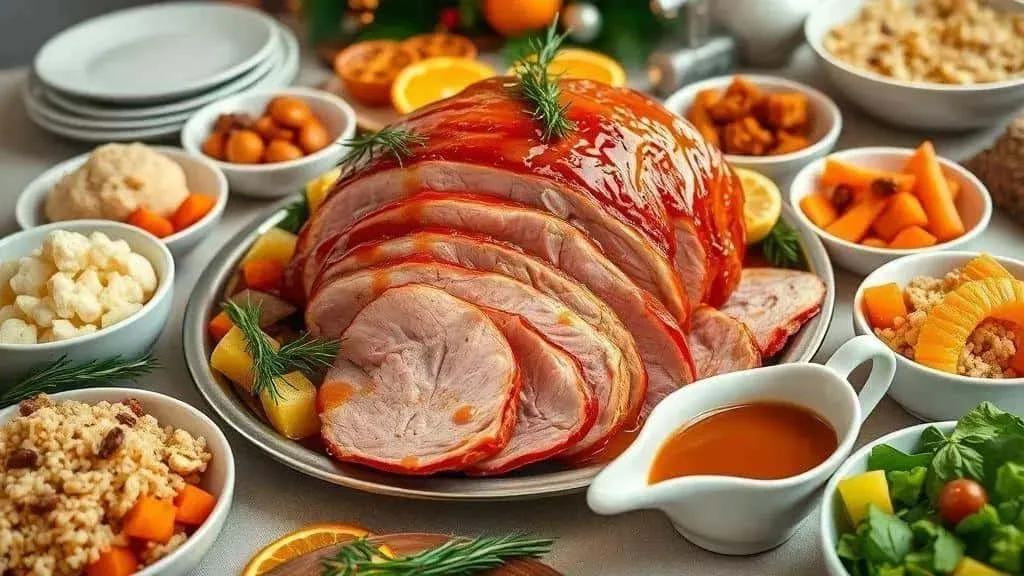
Balance the orange-glazed ham with creamy, crisp and fresh accompaniments. The amounts below are serving ideas, not a requirement to prepare every dish.
- Creamy mashed potatoes, around 1.2 kg – made with milk and butter, or try mashed mandioquinha for a sweeter Brazilian alternative.
- Crisp farofa, around 300 g – Brazilian toasted cassava flour with butter, onion and optional bacon. For a meat-free version, omit bacon and use suitable fat and nuts if everyone can eat them.
- Rice with walnuts and raisins, starting with 2 cups of uncooked rice – cooked until fluffy, then mixed with chopped walnuts and plumped raisins. Scale the recipe to your guests.
- Roasted vegetables, around 1 kg in total – carrots, sweet potatoes and onions with olive oil, rosemary and seasoning.
- Citrus green salad – leaves, orange segments and a light olive-oil and orange dressing.
- Sauces and condiments – clean reserved orange glaze, mustard and chilli jam for guests to choose from.
- Bread and toast – sliced baguette or small rolls to serve with the sauce.
Quick pairing tips
Plain mash and rice balance a sweet ham glaze; roasted vegetables and farofa work well alongside a spicy version. Offer sauces separately so everyone can adjust the meal to their taste.
Arranging the serving platter
- Place the ham centrally, either whole for carving or in a fan of slices.
- Spoon the mash alongside and smooth it lightly with a spatula.
- Arrange the roast vegetables on the other side for contrast in colour and texture.
- Serve the walnut rice separately or in a distinct part of the platter so it does not soak up too much sauce.
- Keep the farofa in a small bowl to preserve its crispness.
- Add orange segments, rosemary and any caramelised pineapple rings around the meat.
- Finish with a sauce jug of clean reserved glaze; a light coating on the ham is enough for shine.
Portions and serving time
- Portion planning: base quantities on the carved meat, appetites and side dishes. A 2.5 kg joint may provide more servings than a small dinner party needs, especially if boneless; plan refrigerated storage for leftovers.
- Serving time: serve promptly after the brief rest. If holding food hot, maintain at least 63°C; do not leave it sitting lukewarm on the table for an extended period.
- Make ahead: mash, farofa and vegetables can be prepared ahead if cooled and stored appropriately. Chill cooked food promptly and within 2 hours, use within 48 hours and reheat only once until steaming hot. Rice needs faster cooling, ideally within 1 hour, and use within 24 hours.
Presentation ideas
White serving dishes or food-safe boards show off the colours. Vary the height with small bowls for sauces and sides, then add a little fresh zest and herbs.
Oranges in festive cooking
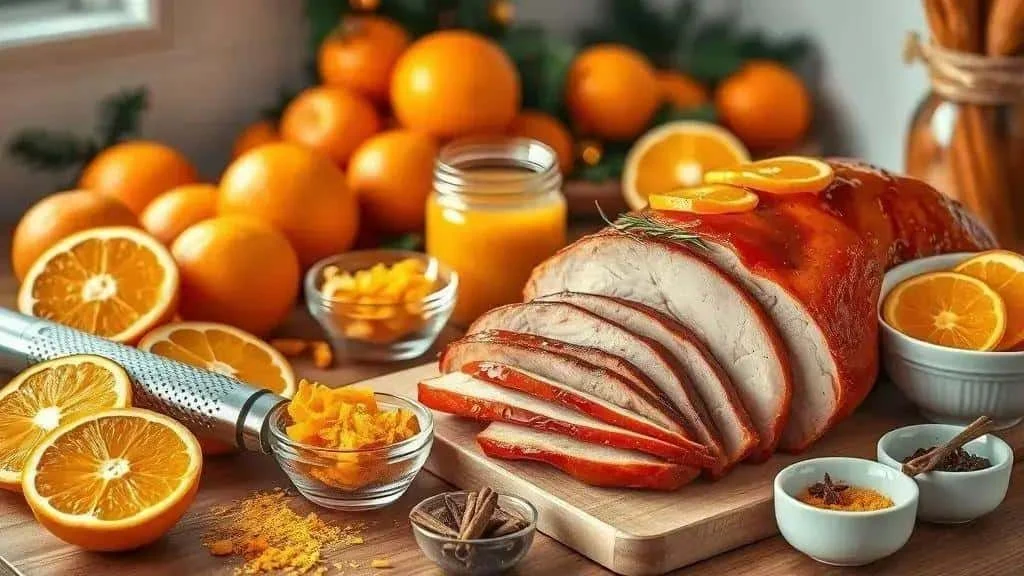
- Navel and sweet juicing oranges work well here. Brazilian recipes often use bahia or pera oranges; use a sweet, juicy variety available locally.
- Blood oranges add a deeper colour and work in both sweet and savoury sauces.
- The coloured zest contains aromatic oils. Use a fine grater and avoid the bitter white pith.
- Fresh juice balances a sweet glaze with acidity. Simmer only as much as needed to dissolve the sugar and thicken the sauce.
- Peel can also be candied for a garnish using a separate tested recipe.
Practical ways to use oranges
- Zest: finely grate just the coloured outer peel for fragrance without the pith.
- Juice: squeeze and strain out the pips. Adjust the sauce with small additions of honey or sugar only if needed.
- Segments without membrane: useful for salads and neatly finished platters; remove any pips.
How to segment an orange
- With a sharp knife on a stable chopping board, cut a thin slice from each end.
- Follow the curve of the fruit to remove the peel and white pith.
- Carefully cut between the membranes to release the segments, keeping fingers away from the blade.
- Catch the segments and juice in a bowl; the juice can go into the glaze.
Storage and advance preparation
- Refrigerate fresh juice in a covered container and use within 48 hours.
- Keep freshly grated zest covered in the fridge and use within 24–48 hours for the best aroma.
- For candied peel, follow the storage instructions of the recipe used; fresh peel and home-candied peel do not automatically keep for weeks.
Flavour combinations
- Orange pairs with cloves, cinnamon and ginger. Use spices lightly so the citrus remains noticeable.
- Rosemary and thyme complement savoury orange dishes.
- Balance an overly sweet glaze with a little mustard or cider vinegar, added gradually.
Handling and substitutions
- Avoid grating the white pith, which can taste bitter.
- If fresh oranges are unavailable, use unsweetened orange juice at drinking strength. Fresh zest is optional if you cannot obtain suitable fruit.
- Wash the fruit before zesting and choose peel suitable for culinary use, preferably unwaxed. Organic fruit still needs washing and is not a guarantee of no residues.
A small detail with a big effect: the aromatic oil in the coloured peel means a little finely grated zest can noticeably change a sauce.
Conclusion
Orange-glazed ham combines a familiar festive centrepiece with a sweet-tangy sauce and plenty of options for serving.
Choose a fully cooked joint, follow its reheating directions, adjust the clean glaze to taste and prepare sides that balance the sweetness.
Thank you for reading. Visit I Love Christmas for more seasonal recipes and ideas, and follow our social channels for updates.
Orange-glazed ham: frequently asked questions
What oven temperature and reheating time should I use?
Follow the fully cooked ham’s packet instructions for its weight and shape. Where compatible, 180°C conventional/160°C fan is a useful setting, with a short uncovered finish for the glaze. Check that the centre is steaming hot: 70°C for 2 minutes or an equivalent safe combination. Do not use this method for raw gammon.
How should I store leftover ham?
Cool promptly, divide into manageable portions and refrigerate within 2 hours at 5°C or below. Use within 48 hours or freeze promptly, following any stricter packet instructions. Reheat only once until steaming hot throughout; if the bought cooked ham was already reheated for dinner, serve safely stored leftovers cold rather than heating them again.
Can I use another fruit instead of orange?
Yes. Pineapple juice gives a sweeter glaze, while apple juice or a little tart apple can provide a different balance. Adjust the sugar and sauce consistency, and still follow the ham’s reheating instructions.
How can I make the glaze less sweet?
Start with about a quarter less brown sugar and add a little extra mustard or cider vinegar. Taste and adjust gradually before the sauce touches the ham.
What vegetarian alternative can I serve?
Try a suitable seitan roast or firm smoked tofu with a separate orange glaze, following that product’s cooking instructions. Use maple syrup rather than honey for a vegan version and check all ingredients and side dishes. Seitan contains wheat, and tofu contains soy.
Sources and Further Reading
- Food Standards Agency: cooking food safely
- UK guidance: chilling, freezing and defrosting food
- Research on alcohol retention during cooking