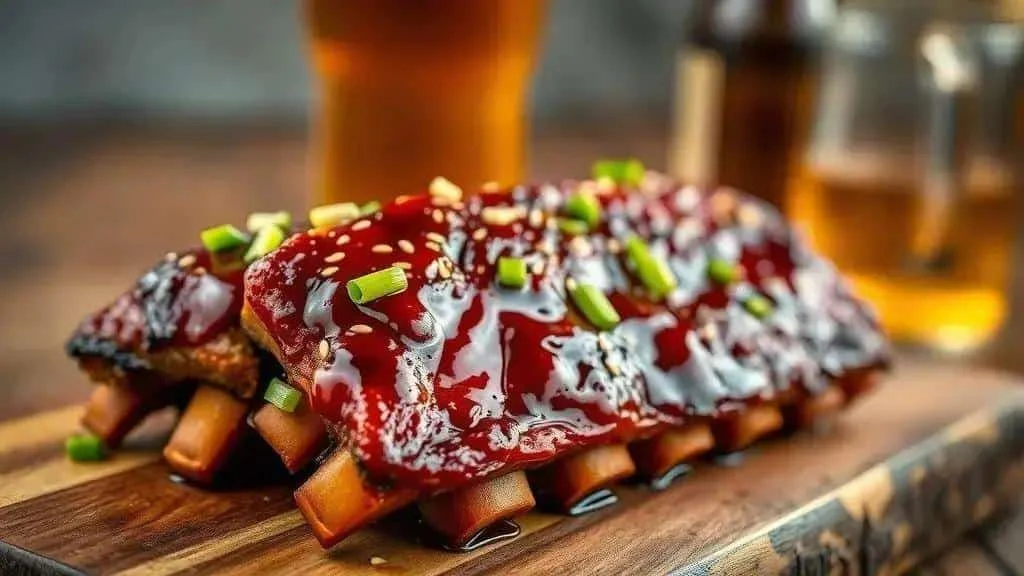
Sweet and sour beer-braised pork ribs combine browned pork with a sauce of beer, tomato ketchup, soy sauce, vinegar, honey, garlic and ginger. Gentle covered cooking develops tenderness before a final glaze. Stock provides an alcohol-free alternative; cooking with beer does not guarantee that all its alcohol disappears.
Sweet and sour beer-braised pork ribs make a generous centrepiece for New Year’s Eve. Follow the steps for browned meat, a balanced sauce and a glossy finish, with practical alternatives to suit the occasion.
Ingredients for sweet and sour beer-braised pork ribs
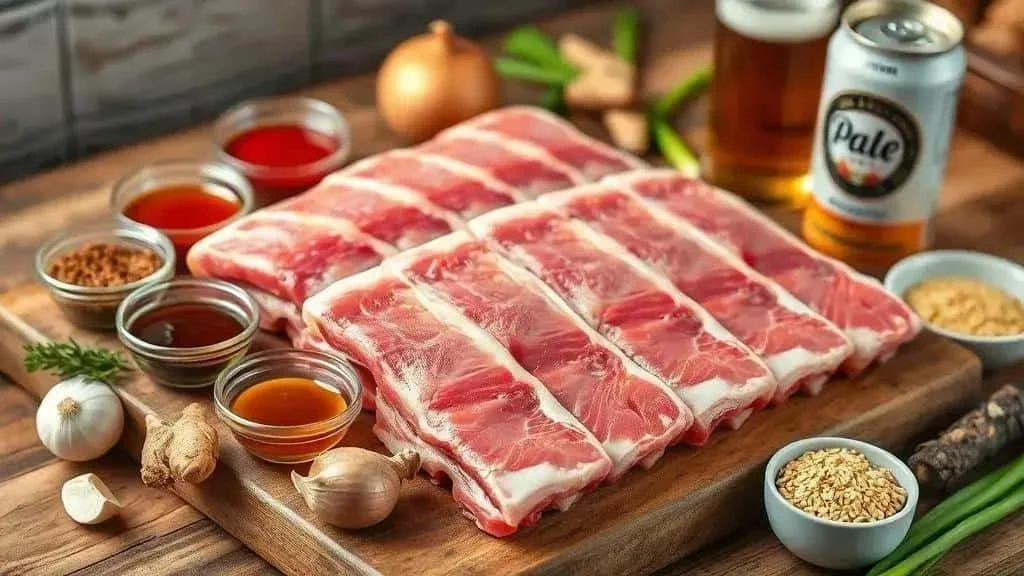
For sweet and sour beer-braised pork ribs, gather:
- 1.5 kg pork ribs – cut into manageable sections, with a little fat for flavour.
- 330 ml pale beer – for the braising liquid and flavour. Use beef or vegetable stock instead for an alcohol-free version.
- 4 tablespoons soft brown sugar – for sweetness and glazing; demerara is an alternative. Honey changes the balance, so adjust rather than adding it indiscriminately.
- 6 tablespoons tomato ketchup – the sauce base. Reduced passata is a less sweet alternative, but also changes acidity and thickness.
- 3 tablespoons soy sauce – for savoury depth. Gluten-free tamari is an option only when labelled as such; the beer and other ingredients also need checking for gluten.
- 3 tablespoons cider vinegar – rice vinegar or lemon juice can be used to taste instead.
- 2 tablespoons honey – for sweetness and gloss; maple syrup is an alternative.
- 4 garlic cloves – crushed or finely chopped, or around 1 teaspoon garlic powder to taste.
- 1 medium onion – sliced, to cook underneath the ribs.
- 2 tablespoons grated fresh ginger – or around 1 teaspoon ground ginger, which gives a different flavour.
- 1 tablespoon cornflour – mixed with cold water if needed to thicken the sauce. Ordinary wheat flour is not a direct substitute in this finishing step.
- Salt and black pepper – to taste; use salt sparingly because soy sauce is already salty.
- 2 tablespoons vegetable oil – in total, for browning; olive oil also works.
- Toasted sesame seeds – optional, to finish.
- Chopped spring onion greens – to garnish.
- Water as needed – start with 60–120 ml if the braising liquid becomes too thick; also allow 2 tablespoons cold water for the cornflour slurry.
Quick substitutions and tips
Tip: gentle covered cooking is the main route to tender ribs. Pressure cooking is an alternative only with a method suited to your appliance, including its minimum liquid requirement. For a less sweet sauce, reduce the sugar or honey and taste before changing the vinegar. Dark beer gives a different, sometimes more bitter flavour; stock avoids alcohol.
How to make beer-braised pork ribs
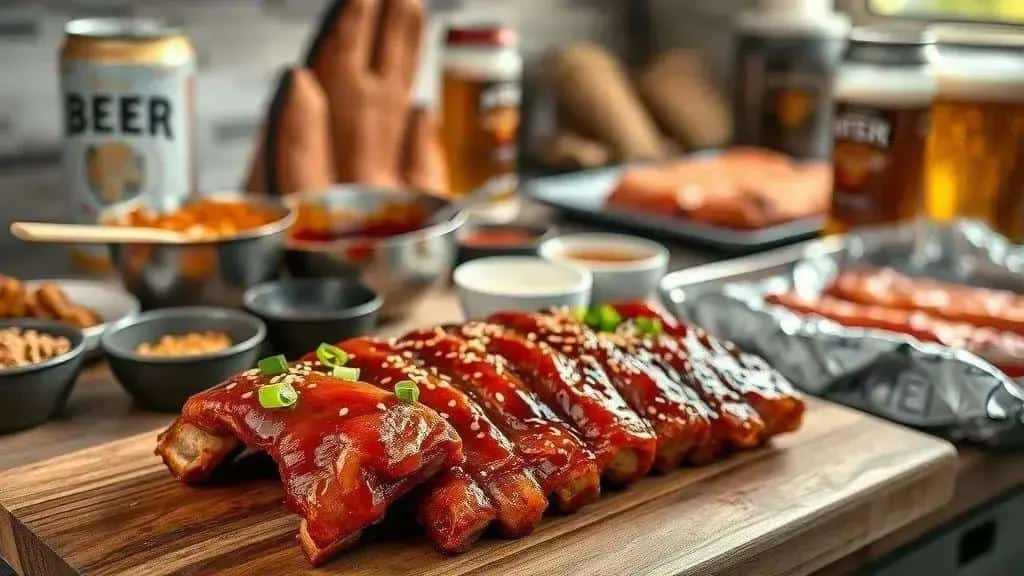
Follow these steps for sweet and sour beer-braised pork ribs. Times are guides: check both safe cooking temperature and tenderness before finishing the glaze.
- Prepare the ribs: remove the tough membrane on the bone side if present, or ask the butcher to do it. Cut into sections, season lightly and rub with 1 tablespoon of the measured oil. Keep refrigerated for a 30-minute rest or up to 4 hours, within the meat’s use-by date.
- Brown for flavour: heat the remaining 1 tablespoon oil in a large frying pan over a medium-high heat. Brown the ribs in batches, around 3–4 minutes per side as needed. Browning develops flavour; it does not seal juices inside the meat.
- Mix the sauce: combine 330 ml beer, 4 tablespoons brown sugar, 6 tablespoons ketchup, 3 tablespoons soy sauce, 3 tablespoons cider vinegar, 2 tablespoons honey, the garlic and ginger. Taste and adjust before the mixture touches raw meat.
- Oven method: heat the oven to 180°C conventional or 160°C fan. Put the sliced onion in a roasting dish, add the browned ribs and sauce, and cover tightly. Cook for roughly 1 hour 20 minutes to 1 hour 40 minutes as an initial guide, allowing longer for thick ribs. Keep enough liquid in the dish to prevent burning. The meat must be thoroughly cooked and tender; use a clean probe away from the bone to check 70°C for 2 minutes, or an equivalent safe combination. Tenderness can require further cooking beyond that safety threshold.
- Pressure cooker alternative: follow the manufacturer’s pork-rib method, minimum thin-liquid quantity, fill limit and pressure-release instructions. Thick sugary sauce can scorch, so cook with suitable thin liquid and finish with the glaze afterwards. The original 20–25 minutes is not a universal setting for every appliance or cut. Never open under pressure; check the meat is safely cooked and tender before glazing under the grill.
- Finish the sauce and glaze: lift the cooked ribs out. Bring the braising liquid to a thorough boil in a saucepan, then simmer to reduce. If still thin, gradually stir in the cornflour mixed with 2 tablespoons cold water and cook until thickened. Brush over the ribs and return uncovered to the oven, or use a hot grill briefly, watching closely so the sugar does not burn. Finish with sesame seeds and spring onion greens.
- Practical tips: the meat should be tender as well as safely cooked. Reduce sugar or honey for a less sweet version, adjusting vinegar only after tasting. Replace beer with stock when alcohol needs to be avoided.
Beer-braised rib variations
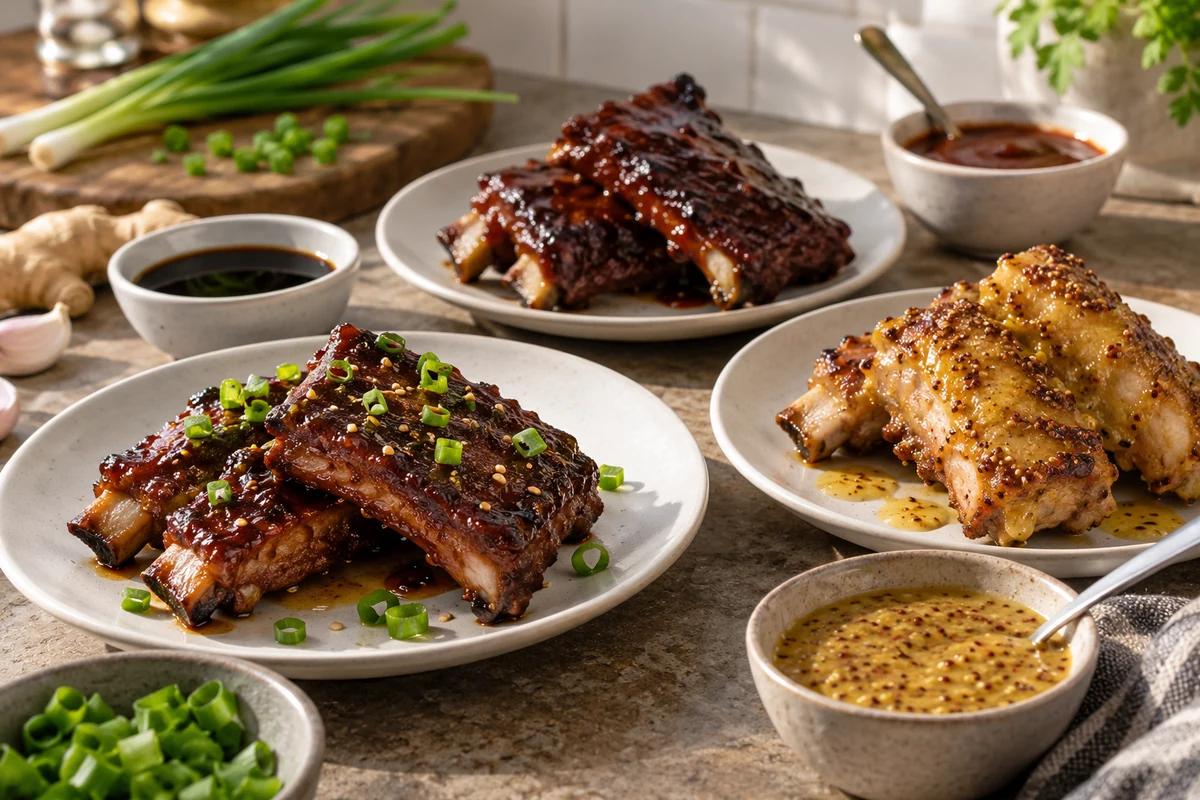
Adapt sweet and sour beer-braised pork ribs with these flavour ideas, checking ingredients carefully for dietary requirements.
Classic version
Use pale beer, brown sugar, ketchup and honey. Cook covered at 180°C conventional or 160°C fan until safely cooked and tender, then glaze near the end. Tip: brown first for flavour and reduce the cooked sauce separately for a glossy finish; neither step guarantees tenderness by itself.
Alcohol-free
Replace the beer with 330 ml beef or vegetable stock and, if desired, add 1 tablespoon apple juice for a fruity note. Check salt levels. Use the same doneness checks; this is the clearest option for guests avoiding alcohol, since beer-braised ribs may retain some alcohol after cooking.
Hoisin, ginger and sesame
Replace 3 tablespoons of the ketchup with 3 tablespoons hoisin sauce and add up to 1 tablespoon sesame oil. Taste before adding the full sugar quantity, as hoisin is sweet. Finish with sesame and spring onion, and serve with rice or noodles. For a gluten-free version, check the beer or stock, hoisin, soy alternative and every other ingredient, not just the soy sauce.
Chilli glaze
Add chilli flakes gradually, starting with a pinch and working towards 1–2 teaspoons only if the chilli strength and your taste allow. Alternatively use around 1 teaspoon chipotle sauce for smoky heat. Reduce honey if preferred and offer lime wedges alongside.
Orange and honey
Replace 100–150 ml of the beer with orange juice and add some finely grated orange zest. You can replace part of the brown sugar with honey, tasting before the sauce touches raw meat. Serve with green salad and roast potatoes.
Slow cooker and smoky flavours
For a slow cooker, use fully thawed meat and follow the appliance’s rib recipe and liquid guidance. Around 6–8 hours on low is only a guide; check safe cooking and tenderness before glazing. If using a smoker, follow a reliable method and the equipment instructions rather than assuming that 2–3 hours at a low setting will cook every rack safely. Smoking equipment belongs in a suitable outdoor location.
Choosing substitutions
Practical swaps: stock for beer; labelled gluten-free tamari for soy sauce when all other ingredients are also suitable; maple syrup or adjusted brown sugar for honey. Keep cornflour for the stated thickening method rather than substituting wheat flour directly. Choosing a variation: classic and citrus versions suit a celebration, stock avoids alcohol, and chilli or hoisin gives a stronger flavour.
Balancing seasonings and sauce
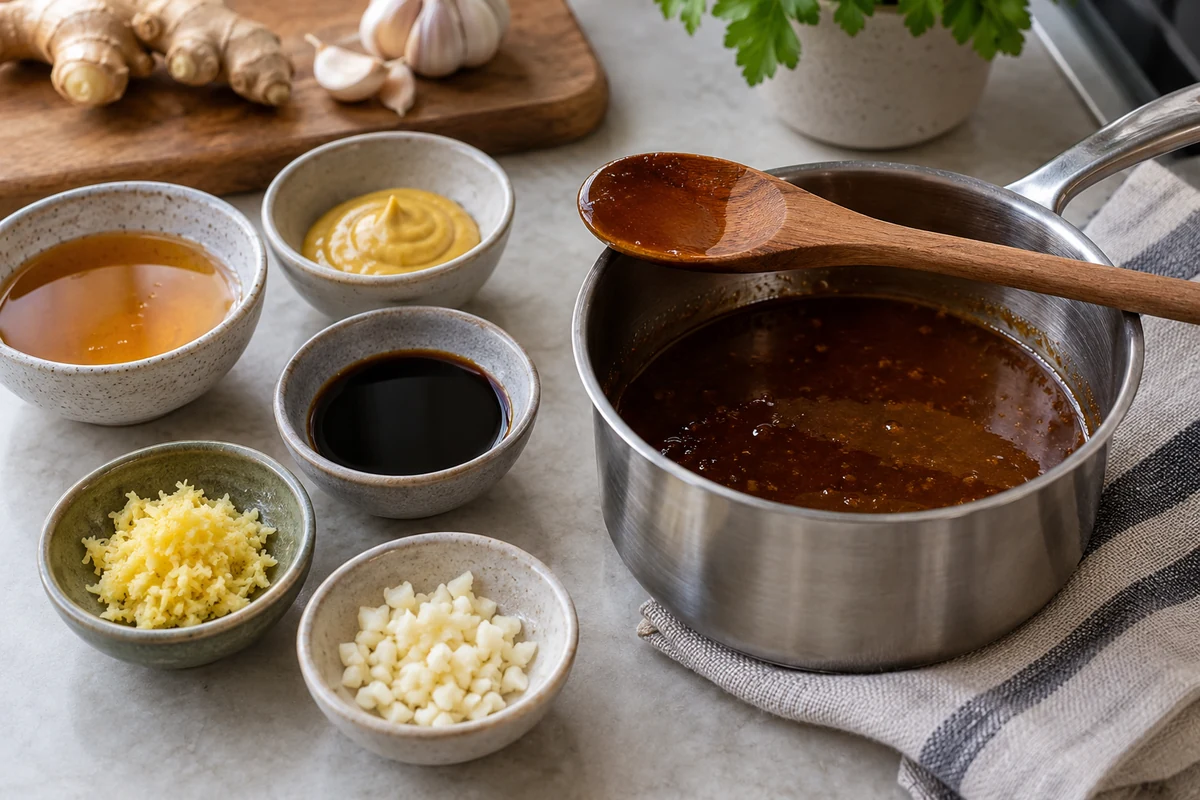
Use fresh garlic and ginger where possible, and balance the sauce before it comes into contact with raw pork. After contact, it must be cooked thoroughly before tasting or serving.
Balancing flavours
A useful approach: adjust sweetness, acidity and saltiness in small increments. Sugar or honey adds sweetness; vinegar or citrus adds sharpness; soy sauce adds savoury flavour and salt. If too sweet, a little vinegar can balance the taste, but it does not remove sugar. If reducing the sweetener, do not automatically add more acid.
Sauce quantities for 1.5 kg ribs
- 330 ml beer, or stock for an alcohol-free version
- 4 tablespoons soft brown sugar
- 6 tablespoons tomato ketchup
- 3 tablespoons soy sauce
- 3 tablespoons cider vinegar
- 2 tablespoons honey
- Up to 1 tablespoon cornflour, mixed with 2 tablespoons cold water if needed after cooking
Texture and thickening
Mix 1 tablespoon cornflour with 2 tablespoons cold water, then stir the slurry gradually into the hot, thoroughly cooked sauce and simmer until thickened. You may not need it all if the sauce has already reduced. Adding dry flour directly to hot liquid can create lumps.
Preparing and tasting
Taste a small clean spoonful before contact with raw meat, or only after the sauce has been thoroughly cooked. Watch the salt, because soy sauce and stock already contain it. Let a hot sample cool slightly before tasting.
Making sauce ahead
A clean sauce prepared separately can be kept covered in the fridge at 5°C or below for up to 48 hours, subject to ingredient instructions. Keep it apart from raw pork. Marinate the ribs in the fridge for 30 minutes to 4 hours for this recipe, within the meat’s use-by date.
Substitutions and allergens
Alcohol-free: use stock instead of beer. Gluten-free: check every ingredient, including beer or stock, tamari and sauces; ordinary beer commonly contains barley. Soy sauce contains soya and often wheat, and sesame garnish is another allergen. Honey is unsuitable for babies under one year, and sauces may introduce additional allergens.
Applying the glaze
- Brown the ribs first for flavour; gentle covered cooking, rather than sealing, helps develop tenderness.
- Apply the final thick glaze near the end and watch closely to avoid burning its sugars.
- For dipping, reserve a clean portion of sauce before it touches raw meat and cook it separately. Do not serve uncooked raw-meat marinade as a dip, and use clean utensils for the finished dish.
New Year’s Eve accompaniments and drinks
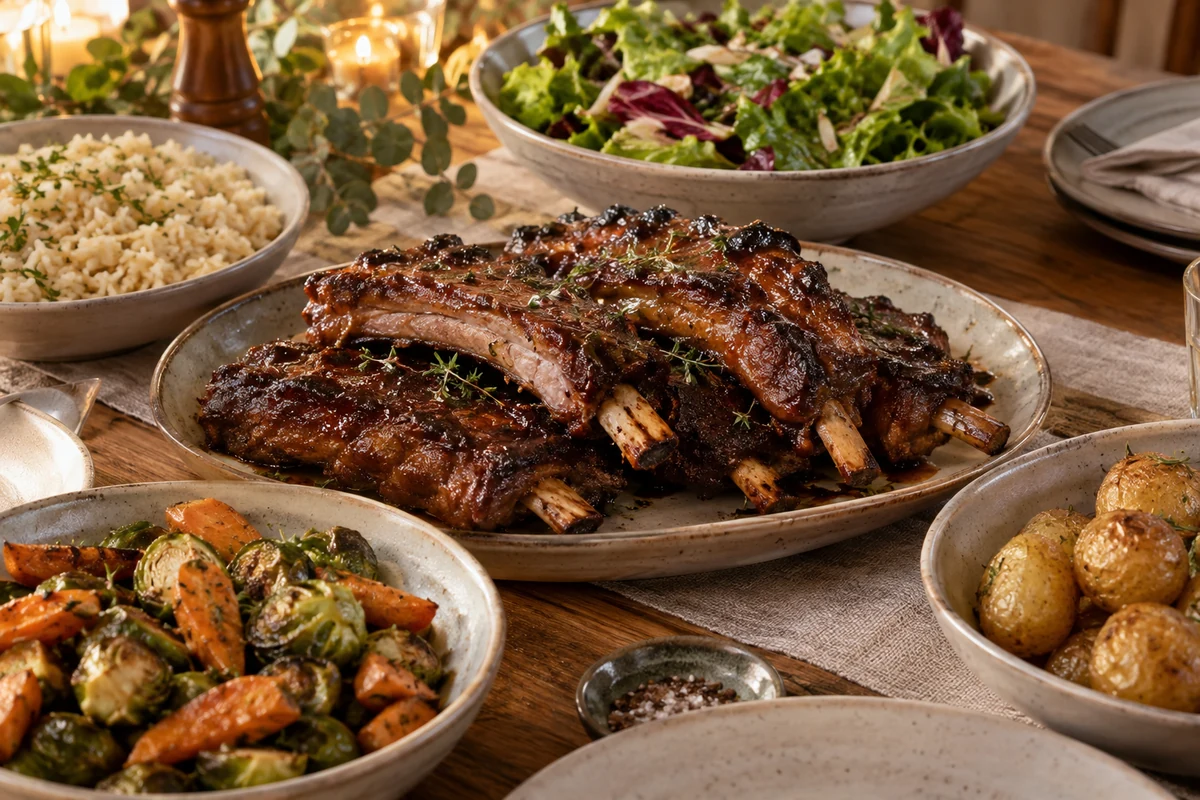
Serve sweet and sour beer-braised pork ribs with sides that contrast with the rich meat and sweet glaze.
Drinks
- Pale beer complements the malty flavours if serving alcohol.
- Fresh white wine, such as sauvignon blanc, offers acidity alongside the rich pork.
- Brut sparkling wine provides a dry, sparkling contrast.
- Alcohol-free option: chilled lemon balm tea with lemon, or apple juice mixed with sparkling water.
Side dishes
- Fluffy white rice provides a simple base for the sauce.
- Crunchy farofa, the Brazilian toasted-flour side dish, adds texture; nuts or crisp garlic can be included.
- Roast potato wedges with rosemary bring crisp edges and a savoury flavour.
- Green salad with rocket, watercress and citrus dressing contrasts with the glaze.
- Grilled vegetables such as courgettes, peppers and onion add colour.
- Quick pickles, made using a suitable refrigerated recipe, offer a sharp contrast; they are not automatically shelf-stable preserves.
Portions and serving
Per person: around 300–350 g raw bone-in ribs can be a planning guide for a generous main course, depending on the cut, appetites and sides. Arrange cooked portions on a platter, brush with hot glaze and serve the accompaniments separately.
Balancing the meal
With a sweeter sauce, offer sharp salads or pickles. With a spicy glaze, a creamy accompaniment such as mash can provide contrast. Add fresh spring onion or coriander at the end if desired.
Practical celebration tips
- Make a separate clean sauce up to 48 hours ahead and refrigerate. Keep raw ribs chilled and observe their use-by date; marinate only for the shorter period specified in this recipe.
- Keep the ribs covered while they become tender, then uncover and glaze towards the end, checking frequently for scorching.
- If holding cooked food hot before serving, keep the food itself at 63°C or above. An oven dial setting alone does not prove that every dish is being held safely.
- Offer alcohol-free drinks and use the stock-based rib recipe for guests who need to avoid alcohol in food as well.
Presentation and finishing
Finish with optional toasted sesame seeds and chopped spring onion. A clean serving board or plain platter contrasts with the glossy sauce. Offer a crisp side and a fresh salad alongside the meat.
What helps ribs become tender?
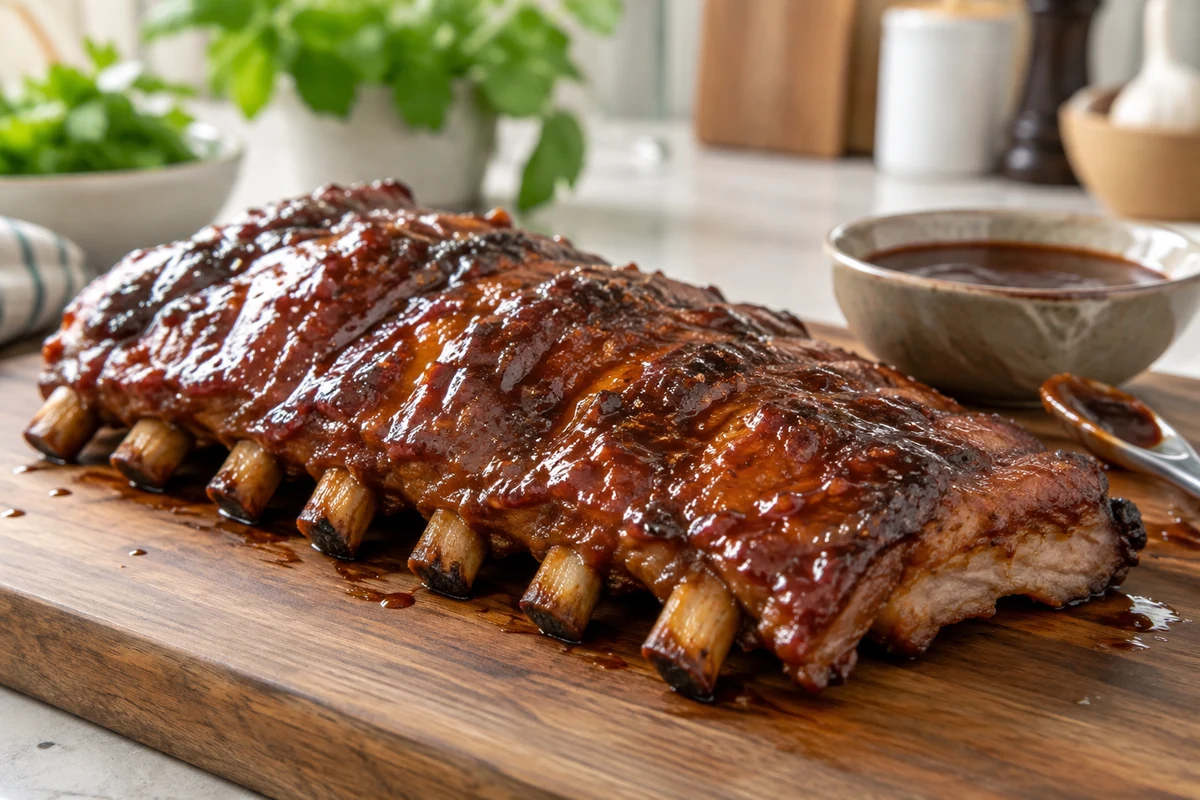
These practical points explain the main steps towards tender pork ribs without relying on shortcuts or guaranteed timings.
Cooking gently for tenderness
Gentle braising gives connective tissue time to soften. Pressure cooking can shorten the process, but requires the appliance’s correct liquid quantity, settings and release procedure.
- Pressure cooker: use the manufacturer’s method for your rib cut and quantity; 20–25 minutes is only a possible guide, not a universal instruction. Never force the cooker open.
- Lower-temperature oven: a covered braise at 150°C conventional or 130°C fan may take around 2½–4 hours, depending on the ribs. Maintain liquid and check safe cooking and tenderness rather than relying solely on time.
- Slow cooker: around 6–8 hours on low is a guide for suitable recipes; use thawed meat and follow the appliance’s instructions, then check doneness.
Browning and glazing
Browning creates flavour on the surface; it does not trap juices inside. Leave the final sugary glaze until the meat is tender to reduce the chance of burning it.
- Brown in a hot pan with a little oil, around 3–4 minutes per side as needed, without crowding the pan.
- Brush with the cooked glaze near the end of roasting or finish briefly under the grill, checking continuously as sugar can catch quickly.
Balancing the sauce
Sweet, sharp and savoury flavours should be adjusted gradually. A little vinegar can balance excess sweetness; a little honey can soften excessive sharpness. Neither adjustment removes the original sugar or salt.
- Taste a small cooled sample only before contact with raw pork or after the sauce has been thoroughly cooked.
- Soy sauce and stock already contain salt, so add extra cautiously.
Time, temperature and resting
Allow enough time for the ribs to become tender. Once fully cooked, rest for 5–10 minutes, loosely covered, before portioning and serving.
- Check a thick part away from the bone with a clean thermometer: 70°C for 2 minutes, or 75°C for 30 seconds, are examples of safe cooking combinations. Reaching that threshold does not itself guarantee tender ribs; braising may need to continue.
- Rest briefly before cutting, then serve promptly or keep safely hot.
Small details that help
- Remove the tough membrane: doing so improves the eating texture on the bone side; ask the butcher if needed.
- Short chilled marinade: allow 30 minutes to 4 hours in the fridge for this recipe, avoiding excess salt and respecting the use-by date.
- Some fat: a little fat adds richness during cooking, but remove large unwanted pieces if preferred.
- Cornflour slurry: add gradually to the hot cooked sauce for a smooth glaze, stopping once thick enough.
A few useful facts
- Beer contributes liquid and malt or hop flavours. It is not a guaranteed enzyme tenderiser; time and temperature during braising are central to tenderness.
- Brown sugar and honey give different flavours and help create a glossy glaze, but both contribute sugars.
- For smoky flavour without a smoker, try a small amount of smoked paprika or an appropriate smoke-flavoured sauce. Do not improvise indoor smoking with unsuitable equipment.
Conclusion
Sweet and sour beer-braised pork ribs bring a rich, glossy centrepiece to New Year’s Eve. Cook gently, check doneness, balance the sauce and add fresh, crisp sides for a varied meal.
Thank you for reading. Follow our social channels for more recipes and visit I Love Christmas for festive cooking ideas.
If you try the recipe, share the variation you enjoyed and the accompaniments you served with it.
Sweet and sour beer-braised ribs: frequently asked questions
How long do ribs need to cook until tender?
For the oven method, start with roughly 1 hour 20 minutes to 1 hour 40 minutes covered at 180°C conventional or 160°C fan, allowing longer for thick ribs. Check safe cooking temperature and tenderness. Pressure cooker and slow cooker timings depend on the appliance, cut and liquid quantity; follow a suitable manufacturer-approved method.
How can I make an alcohol-free version?
Replace the 330 ml beer with 330 ml beef or vegetable stock and optionally add 1 tablespoon apple juice. Adjust salt and acidity. Cooking beer does not guarantee removal of all its alcohol, so stock is the clearer alternative.
Can I prepare the sauce and ribs ahead?
Yes. Keep a separately prepared clean sauce covered in the fridge for up to 48 hours. Marinate raw ribs in the fridge for 30 minutes to 4 hours within their use-by date. If cooking ribs ahead, cook them fully, cool and refrigerate within 2 hours, use within 48 hours and reheat once until steaming hot throughout before the final glaze.
How do I reduce the sweetness?
Reduce the brown sugar or honey, then taste the clean sauce before it touches raw pork. Adjust vinegar or citrus only if needed; reducing sweetness does not automatically call for more acid.
How should I store and reheat leftovers?
Cool in smaller portions and refrigerate within 2 hours at 5°C or below. Eat within 48 hours or freeze promptly for up to about 3 months for quality. Thaw in the fridge and use within 24 hours. Reheat only once until steaming hot throughout; a covered oven dish helps retain moisture, but a fixed 10–15 minutes is not a reliable safety check.
How much should I allow per person?
Around 300–350 g raw bone-in ribs per person is a generous planning guide for a main course. Adjust for the meat-to-bone ratio, appetites and the number of other dishes.
Sources and Further Reading
- Food Standards Agency: cooking food safely
- UK guidance: chilling, freezing and defrosting food
- UK guidance: safe cooking and hot holding
- Research on alcohol retention during cooking