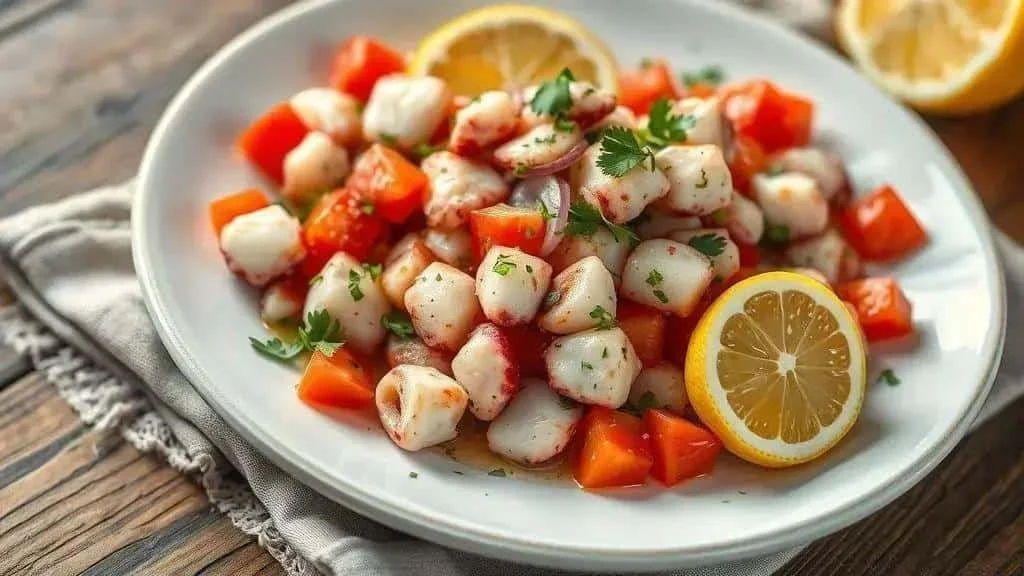
Octopus vinaigrette salad combines cooked octopus with tomato, red onion, pepper, parsley, olive oil, vinegar and lemon, finished with capers and black pepper. Using ready-cooked octopus makes assembly quick. This quantity serves four generous starters, with prawn or chickpea variations available if you prefer.
Octopus vinaigrette salad is a colourful starter with tender seafood, crisp vegetables and a sharp dressing. Here is how to prepare it, choose and handle octopus, and vary the salad for a summer gathering or festive meal.
Ingredients for octopus vinaigrette salad
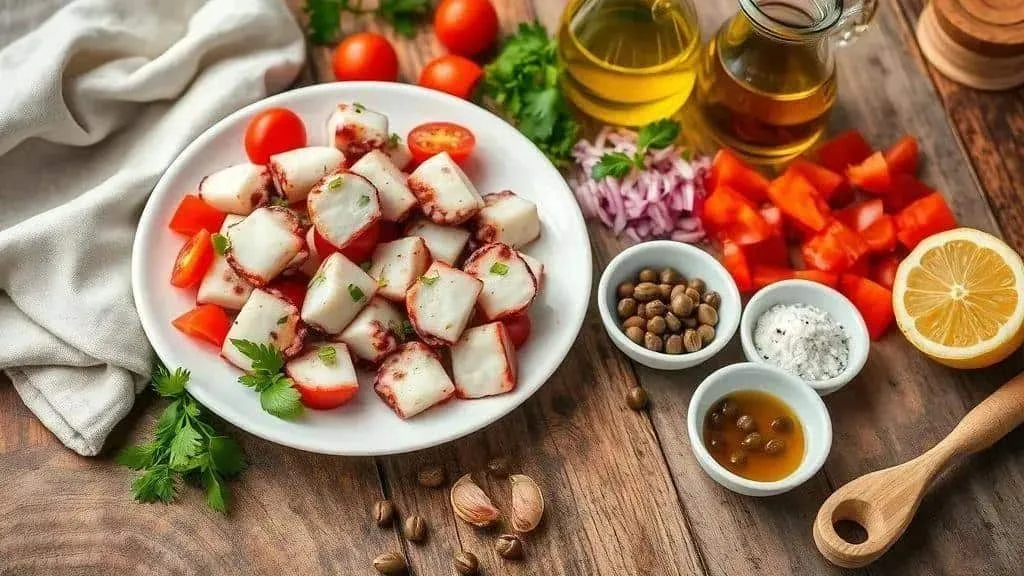
Gather the following ingredients for octopus vinaigrette salad. The recipe makes four generous starter portions; serve smaller amounts as part of a larger spread.
- 600 g cooked octopus – sliced into bite-sized pieces. Raw octopus loses weight during cooking, so ask your fishmonger how much you need rather than assuming a fixed yield. Alternatively, use 400 g well-drained canned octopus for a smaller salad.
- 2 medium tomatoes – deseeded and chopped, or a 240 ml measuring cup of halved cherry tomatoes.
- ½ red pepper – deseeded and finely diced; yellow pepper also works.
- 1 small red onion – finely chopped or thinly sliced. Spring onions offer a milder alternative.
- ½ cup chopped fresh parsley – use a 240 ml measuring cup; replace some with coriander if preferred.
- 3 tablespoons extra virgin olive oil – or a milder olive oil to taste.
- 2 tablespoons white wine vinegar – add gradually; lemon juice can replace it, but is also acidic.
- 1 garlic clove – very finely chopped or crushed; alternatively use up to ½ teaspoon garlic powder, tasting as you add it.
- 1 tablespoon capers – rinsed and chopped, or the same amount of chopped green olives.
- Salt and black pepper to taste – add salt cautiously, as octopus and capers may already be salty.
- Finely grated zest and juice of 1 lemon – use the zest and add the juice gradually alongside the vinegar. Alternatively, omit the lemon and add a little extra vinegar to taste.
- A pinch of dried chilli flakes, optional – for gentle heat.
Quick substitutions and tips
Tip: raw octopus needs gentle cooking until tender, followed by prompt cooling. Ready-to-eat cooked octopus can go straight into the salad. Let the assembled dish rest in the fridge for 15–30 minutes before serving.
- For a less oily dressing, reduce the olive oil to 2 tablespoons and adjust the acidity gradually. Adding more lemon automatically is not necessary.
- If octopus is unavailable, 400–500 g cooked, peeled prawns make a different seafood version.
- For less acidity, start with less vinegar and lemon juice, then taste. Replacing vinegar with an equal amount of lemon juice does not reliably make a dressing less acidic.
- For a Mediterranean-inspired variation, add 2 tablespoons chopped black olives and up to 1 teaspoon dried oregano.
How to make octopus vinaigrette salad
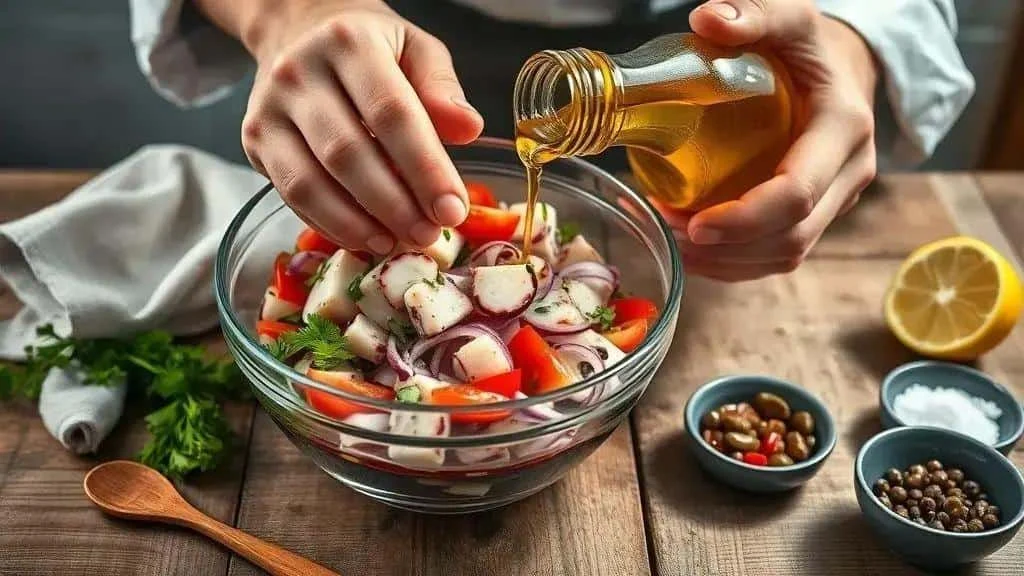
- Check whether the octopus is raw or cooked: ready-to-eat cooked octopus needs no further cooking. For raw octopus, ask the fishmonger to clean it, removing the internal organs, ink sac, eyes and beak, or follow the preparation guidance below. Already cleaned raw octopus still needs cooking.
- Cook raw octopus: place the cleaned octopus in a large pan with enough water to cover, bring to a gentle simmer and cook until thoroughly cooked and tender. Size, species and prior freezing affect the time, which can extend well beyond 25–35 minutes. Follow the supplier’s guidance and test the thickest part with a fork or skewer; it should enter easily. Brief preliminary dips can curl the arms but do not guarantee tenderness.
- Cool and cut: drain, divide into manageable portions and cool promptly, refrigerating within 2 hours. Once cool, cut into even bite-sized pieces. Keep cooked seafood separate from raw preparation surfaces.
- Prepare the vegetables: chop the 2 deseeded tomatoes, dice the ½ pepper and finely chop or slice the small onion. Chop the parsley.
- Make the dressing: whisk the 3 tablespoons olive oil with some of the measured vinegar and lemon juice, the zest and garlic. Add black pepper and a little salt if needed. Taste before adding the remaining acid; lemon size and personal preference vary.
- Assemble: gently combine the chilled octopus, tomatoes, pepper, onion, parsley and capers in a bowl. Pour over the dressing and mix to coat.
- Adjust seasoning: taste and add salt, pepper, optional chilli or a little more lemon juice only as needed.
- Chill: cover and refrigerate for 15–30 minutes, or up to an hour for the flavours to mingle. The vegetables are at their best on the day of preparation.
- Serve: offer chilled as a starter on green leaves, rustic bread or toast. Finish with a little reserved zest and, if wanted, an extra drizzle of olive oil.
- Storage: keep covered at 5°C or below and use within 48 hours of cooking the octopus, or sooner if the product label requires. Mixing it with dressing does not restart that clock. Avoid freezing the assembled salad for quality reasons.
Quick tips and substitutions
- Canned octopus: drain well, reduce added salt and follow the after-opening storage instructions.
- Cooking time: smaller pieces generally cook sooner, but whole octopus may need considerably longer. Use the supplier’s method and check tenderness rather than assuming a fixed time for every size.
- Alternative: use 400–500 g cooked, peeled prawns if easier to find. Prices vary, so this is not necessarily a cheaper choice everywhere.
- Extra flavour: start with a pinch of chilli flakes, as their strength varies, or add 1 tablespoon chopped olives.
Choosing and cleaning octopus
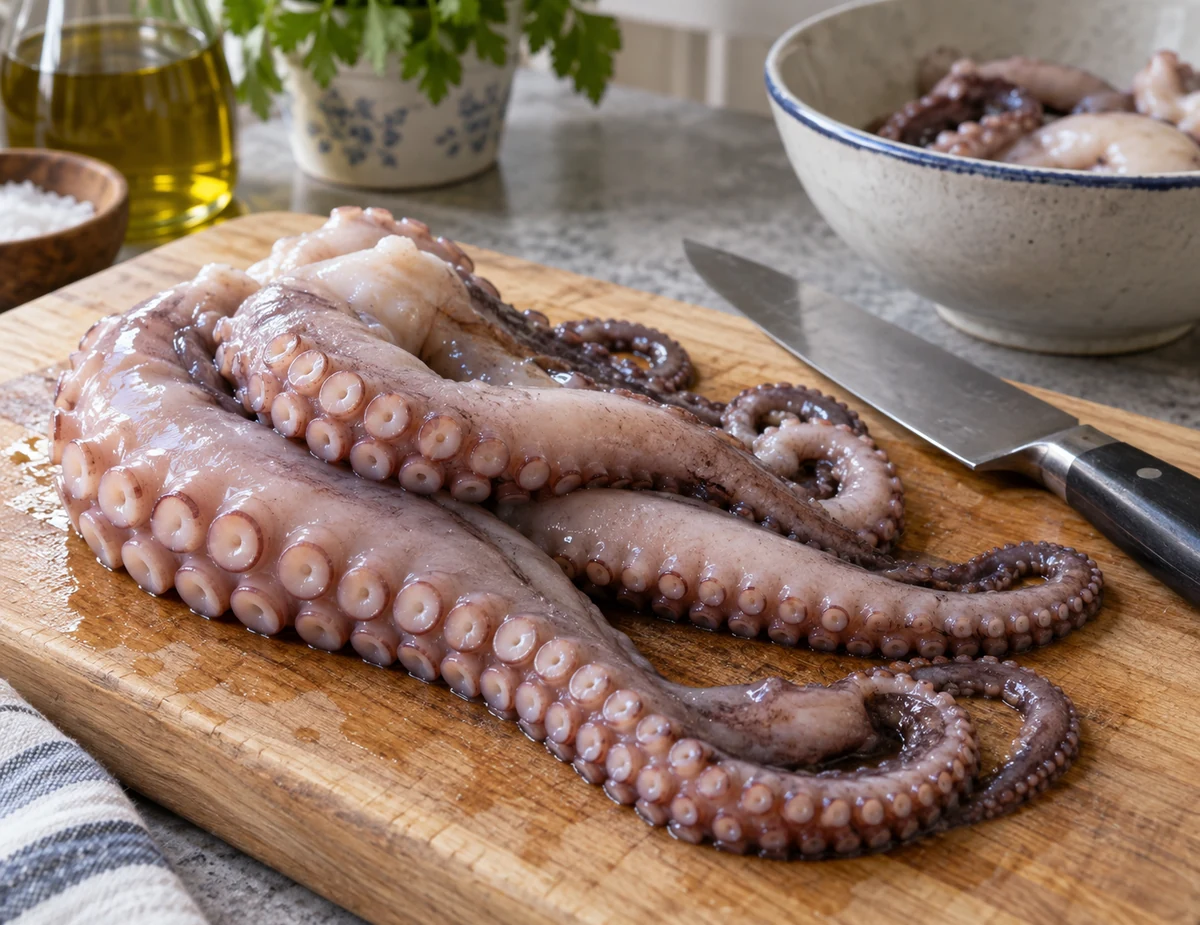
- Smell: avoid a strong, unpleasant or ammonia-like smell. Smell alone cannot establish whether seafood is safe.
- Appearance: look for properly chilled seafood without unexpected deterioration or dry, damaged areas. Natural skin colour varies, so dark colouring alone is not a spoilage test.
- Texture: ask a reputable fishmonger about freshness and handling; avoid seafood showing signs of deterioration.
- Storage and dates: check the cold chain and use-by information rather than relying on the appearance of the eyes alone.
- Size: choose enough to provide the required cooked weight. Cooking loss varies, and larger whole octopus generally needs longer cooking.
- Frozen or fresh: frozen octopus can be convenient and freezing can affect tenderness. Choose intact packaging, follow storage instructions and avoid badly freezer-burnt products for quality.
- Source and sustainability: choose traceable seafood from reputable suppliers, checking credible fishery information or certification where available.
Preparing raw octopus
- Thaw safely: defrost frozen octopus in a covered container in the fridge according to its label. A whole specimen may take longer than a day; keep any juices away from other food.
- Remove debris: if the supplier advises rinsing away sand or residue, use cold water gently, avoid splashing and clean the sink and nearby surfaces afterwards. Rinsing does not make raw seafood safe to eat.
- Clean the mantle: turn the sac-like mantle inside out and remove the internal organs and ink sac carefully. If unfamiliar with the anatomy, ask the fishmonger to do this rather than cutting blindly.
- Remove the beak: locate the hard beak at the centre where the arms meet and remove it carefully, keeping fingers clear of sharp tools.
- Skin: the skin can usually remain for cooking. Do not confuse its normal surface texture with signs of spoilage; discard seafood you suspect is unsafe.
- Remove the eyes: have these removed during cleaning, using appropriate food-preparation tools carefully or asking the fishmonger.
- Drain and cook: drain the cleaned raw octopus, keep chilled until needed, then cook using the chosen method. Cut the cooked octopus into salad-sized pieces after cooling.
Practical safety tips
- Clean equipment: use separate or thoroughly cleaned boards and knives for raw octopus and ready-to-eat salad ingredients.
- Tenderness: gently cook raw octopus until tender. Avoid unnecessary pounding, splashing or repeated freezing; ready-cooked products should be handled according to their labels.
- Salt: taste the cooked salad before adding more, particularly when using canned octopus or salty capers.
- Cooking: test the thickest part for tenderness with a fork or skewer and ensure it is cooked thoroughly. A short cooking time is not suitable for every octopus.
- Storage: cool cooked octopus promptly, refrigerate within 2 hours at 5°C or below and use within 48 hours, or follow a shorter product instruction.
Octopus salad variations
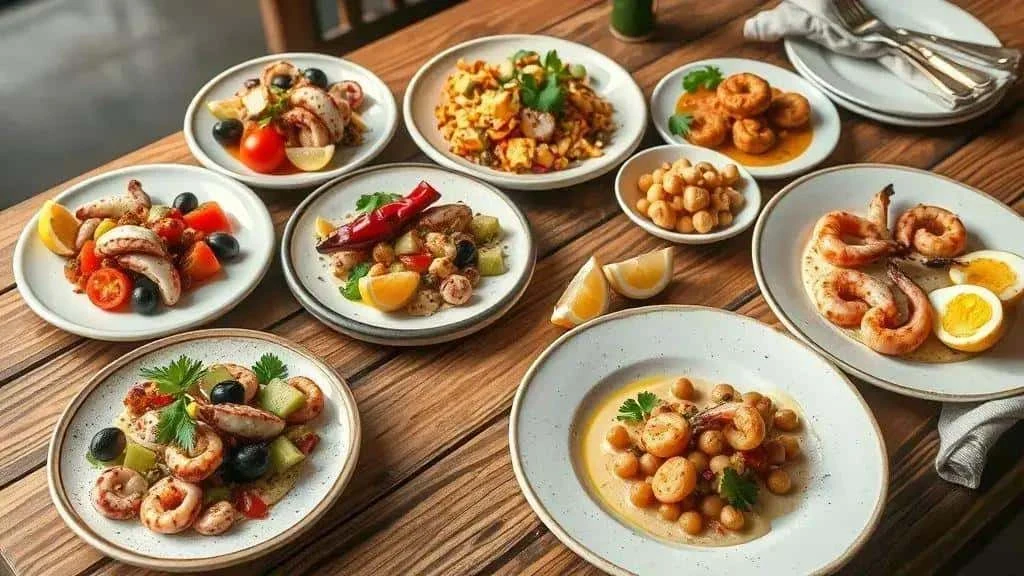
Try these separate variations of octopus vinaigrette salad. Cup measures below use a 240 ml measuring cup; all seafood should be cooked and safely chilled before mixing.
Mediterranean-inspired salad
A herb-scented version with a savoury touch from capers and olives. Add a little vinegar or lemon from the main dressing if desired.
- 600 g cooked octopus – cut into pieces.
- 2 medium tomatoes – deseeded and chopped.
- ½ red onion – thinly sliced.
- 3 tablespoons extra virgin olive oil.
- 1 tablespoon capers – rinsed.
- 1 tablespoon chopped black olives.
- Chopped parsley, salt and black pepper to taste.
Tip: gently mix, chill and serve with rustic bread or toasted baguette.
Citrus and avocado
A creamy-textured variation with bright citrus flavour.
- 600 g cooked octopus – in bite-sized pieces.
- 1 ripe avocado – cut into chunky cubes.
- Zest and juice of 1 lemon – add the juice to taste.
- 2 tablespoons olive oil.
- ½ cup cherry tomatoes – halved.
- Fresh coriander or parsley to taste.
Take care: mix the other ingredients first, then fold in avocado just before serving so it keeps its shape.
Chilli and coriander
A fragrant variation with adjustable heat.
- 600 g cooked octopus.
- ½ red pepper – finely chopped.
- Up to ¼ teaspoon chilli flakes – start with less and adjust to taste.
- ¼ cup chopped fresh coriander.
- 3 tablespoons olive oil and juice of 1 lemon, added gradually.
Suggestion: mix and chill, adjusting the chilli gradually, and offer extra lemon wedges at the table.
Potato and egg salad
A more substantial variation that can form part of a main meal.
- 400 g cooked octopus – cut into pieces.
- 3 medium potatoes – cooked until tender, cooled promptly and diced.
- 2 hard-boiled eggs – cooled, peeled and quartered.
- 1 small onion – thinly sliced.
- 3 tablespoons olive oil, juice of ½ lemon, salt and pepper to taste.
Assembly: combine gently so the potatoes keep their shape. Chill promptly and serve cold; do not hold cooked seafood and potatoes lukewarm for an extended period.
Prawn alternative
A different seafood version using an ingredient that may be easier to find locally.
- 500 g cooked, peeled prawns – instead of octopus.
- 2 chopped tomatoes, ½ chopped onion and ¼ cup chopped parsley.
- 3 tablespoons olive oil and juice of 1 lemon, added to taste.
Take care: ready-cooked prawns do not need cooking again. If starting with raw prawns, cook thoroughly according to the packet, cool promptly and then mix with the other ingredients and dressing.
Chickpeas or hearts of palm
A seafood-free variation. Chickpeas contribute plant protein; hearts of palm give a different texture and are not nutritionally equivalent.
- One 400 g tin of chickpeas – drained and rinsed; the drained weight will be less than 400 g. Alternatively, use 300 g drained ready-to-eat hearts of palm, sliced.
- 2 chopped tomatoes, ½ chopped onion and ½ cup chopped parsley.
- 3 tablespoons olive oil and juice of 1 lemon, added to taste.
Variation: add diced cucumber for crunch, or season with cider vinegar instead of lemon, adding gradually. Mix gently and refrigerate.
Final tips
- Taste: adjust salt and acidity after combining the ingredients.
- Allow a short rest: refrigerate for 15–30 minutes so the dressing coats and flavours the ingredients.
- Presentation: serve small portions as a nibble or use a sharing platter.
Serving octopus salad as a summer starter

Offer octopus vinaigrette salad in small, colourful portions with simple accompaniments. Although summer falls around Christmas in Brazil, it also suits a British summer gathering or a chilled festive starter.
Temperature and portions
Temperature: keep the salad at 5°C or below until serving, following any stricter seafood label instruction. Do not use 6–10°C as a storage target.
- Small appetiser: around 50–75 g cooked octopus per person, plus vegetables, may suit a tasting portion.
- Larger starter or main component: around 150–200 g cooked octopus per person, plus vegetables and accompaniments, depending on the menu and appetite.
- Serving: use small bowls or spoon portions onto slices of rustic bread just before eating.
Drinks to serve alongside
- Fresh white wines such as vinho verde or sauvignon blanc can complement the citrus dressing if serving alcohol.
- Dry rosé offers a fruity pairing with herbs and gentle chilli.
- Pale lager is another option alongside the chilled salad.
- Brut sparkling wine adds a dry, sparkling contrast for a celebration.
- Alcohol-free option: sparkling water with lemon slices or citrus iced tea.
Accompaniments and assembly
- Bread and toast: toasted baguette, rustic bread or crostini make a useful base.
- Green leaves: rocket or mixed salad leaves add colour and a slightly bitter contrast.
- Extras: cooked, cooled baby potatoes, hard-boiled quail eggs or ready-to-eat hearts of palm offer different textures.
- Individual portions: serve in small food-safe glasses or on canapé spoons, keeping spare portions refrigerated.
Presentation and finishing touches
- Finish with a little olive oil if needed, lemon zest and freshly ground pepper.
- Garnish with parsley or coriander and a thin lemon slice alongside.
- Contrast: plain white or rustic ceramic plates make the colourful vegetables stand out.
- Serve promptly after taking the salad from the fridge, rather than leaving a full platter out throughout a long gathering.
Serving safely
- Time out of the fridge: keep it brief and use a conservative limit of 2 hours, less in very hot conditions. Offer small portions and keep the remainder chilled.
- Storage: refrigerate promptly and use within 48 hours of cooking, or the product’s shorter limit. Dressing does not preserve seafood or reset its storage time.
- Dietary needs: offer a separately prepared chickpea version for guests avoiding seafood, with separate utensils to prevent cross-contact.
Octopus: natural history and cooking qualities
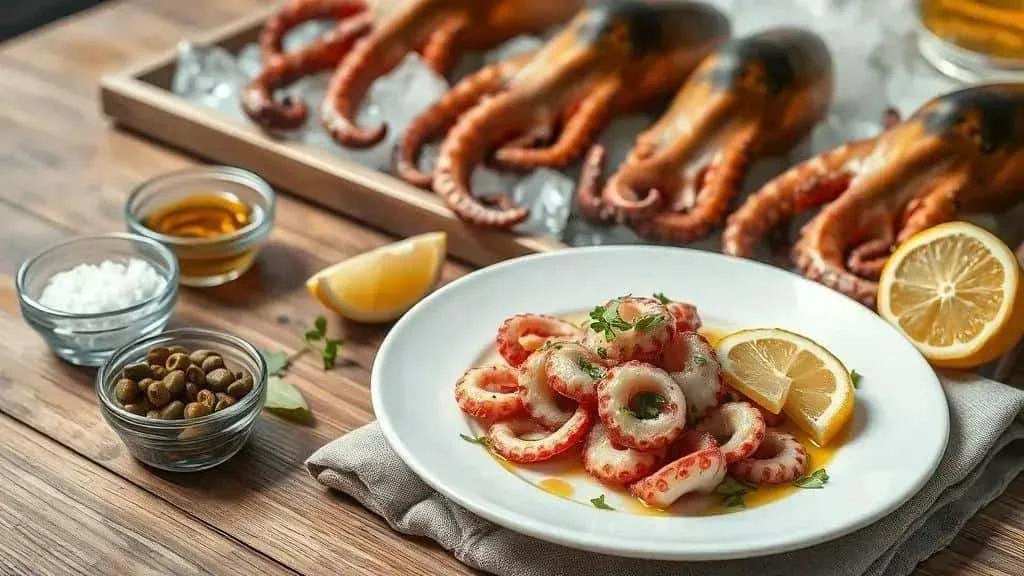
Octopuses have fascinating biology as well as a distinctive culinary texture. These facts provide background to the ingredient without turning a recipe into a promise of health benefits.
A few facts about octopuses
- Three hearts: two pump blood through the gills and another circulates it around the body.
- Blue blood: the copper-containing oxygen-carrier haemocyanin gives oxygenated octopus blood its blue colour.
- Problem-solving: octopuses are molluscs known for complex behaviour, including learning and problem-solving.
- Camouflage: specialised skin structures help many octopuses change colour and appearance to blend into their surroundings.
Nutritional context
- Protein: octopus supplies protein and is relatively low in fat before added oil or sauces.
- Fats: seafood can contribute omega-3 fats, but amounts differ between species and a portion of this salad is not a treatment or supplement.
- Vitamins and minerals: seafood contributes nutrients such as vitamin B12 and minerals, with amounts depending on species, preparation and serving size.
- The whole dish matters: oil, bread and portion size affect the finished meal’s energy content, so it is not automatically low in calories.
Cooking qualities
- Texture: octopus can be firm before sufficient gentle cooking softens its connective tissue. Longer cooking may be needed for tenderness; simply stopping early to avoid toughness is not a reliable method.
- Flavour: lemon, vinegar, herbs and olive oil provide contrast to the seafood’s savoury flavour.
- Versatility: cooked octopus can be used in salads, stews or grilled dishes, with preparation adjusted to each recipe.
Safety and sourcing
- Allergies: octopus is a mollusc allergen, while the prawn alternative contains crustaceans. Check guests’ needs and all dressing ingredients.
- Sourcing: look for traceability and credible information about fishing practices. A general claim of sustainability is not proof on its own.
- Freezing: freezing can help preserve properly handled raw octopus and affect its texture, but does not replace thorough cooking or correct storage.
Quick reminders
- Taste and adjust the cooked salad at the end, especially when canned octopus or capers bring additional salt.
- Enjoy safely by buying well-handled seafood, keeping it chilled and limiting time on the table.
Try octopus vinaigrette salad at your next gathering for a starter with fresh vegetables, a bright dressing and tender seafood.
Find more recipes and serving ideas on our social channels and at I Love Christmas.
Thank you for reading, and enjoy your next celebration.
Octopus vinaigrette salad: frequently asked questions
How do I choose octopus that is suitable for cooking?
Buy from a reputable supplier, check dates and storage conditions, and avoid seafood with an unpleasant or ammonia-like smell or signs of deterioration. Appearance and smell alone cannot guarantee safety.
Can I use frozen or canned octopus?
Yes. Thaw frozen raw octopus in the fridge and cook it thoroughly. Ready-to-eat cooked or canned octopus can be used according to its label; drain it and adjust added salt. Follow after-opening instructions.
How long does octopus take to become tender?
It varies with size, species, prior freezing and method. Gently simmer raw octopus according to the supplier’s guidance until cooked thoroughly and easily pierced in its thickest part. Whole octopus may take considerably longer than 25–35 minutes; ready-cooked octopus needs no repeat cooking for this salad.
What can I use instead of octopus?
Use 400–500 g cooked, peeled prawns for another seafood version. For a plant-based alternative, use one drained 400 g tin of chickpeas or 300 g drained ready-to-eat hearts of palm, noting that these give different yields and nutritional profiles.
How should I store the finished salad?
Keep covered at 5°C or below and use within 48 hours of cooking the octopus, or sooner if its label requires. Adding dressing does not restart storage time. Keep time out of the fridge brief, no more than 2 hours, and avoid freezing the assembled salad for quality.
Sources and Further Reading
- Food Standards Agency: cooking food safely
- UK guidance: chilling, freezing and defrosting food
- Natural History Museum: octopus biology
- PBS: octopus and potato salad cooking example