Discover seven Christmas salt cod recipes: Gomes de Sá, creamy cod, à Brás, lagareiro, a cornbread-topped gratin, croquettes and a warm chickpea salad. The guide covers buying and soaking bacalhau, cooking methods, variations, portion planning and safe advance preparation.
These Christmas salt cod recipes bring Portuguese and Brazilian festive flavours to the table. Choose from seven preparations, with buying advice and variations to suit your menu. Bacalhau means salt cod here, so it must be properly desalted before cooking unless sold ready to use.
Why Choose Salt Cod for Christmas Dinner?
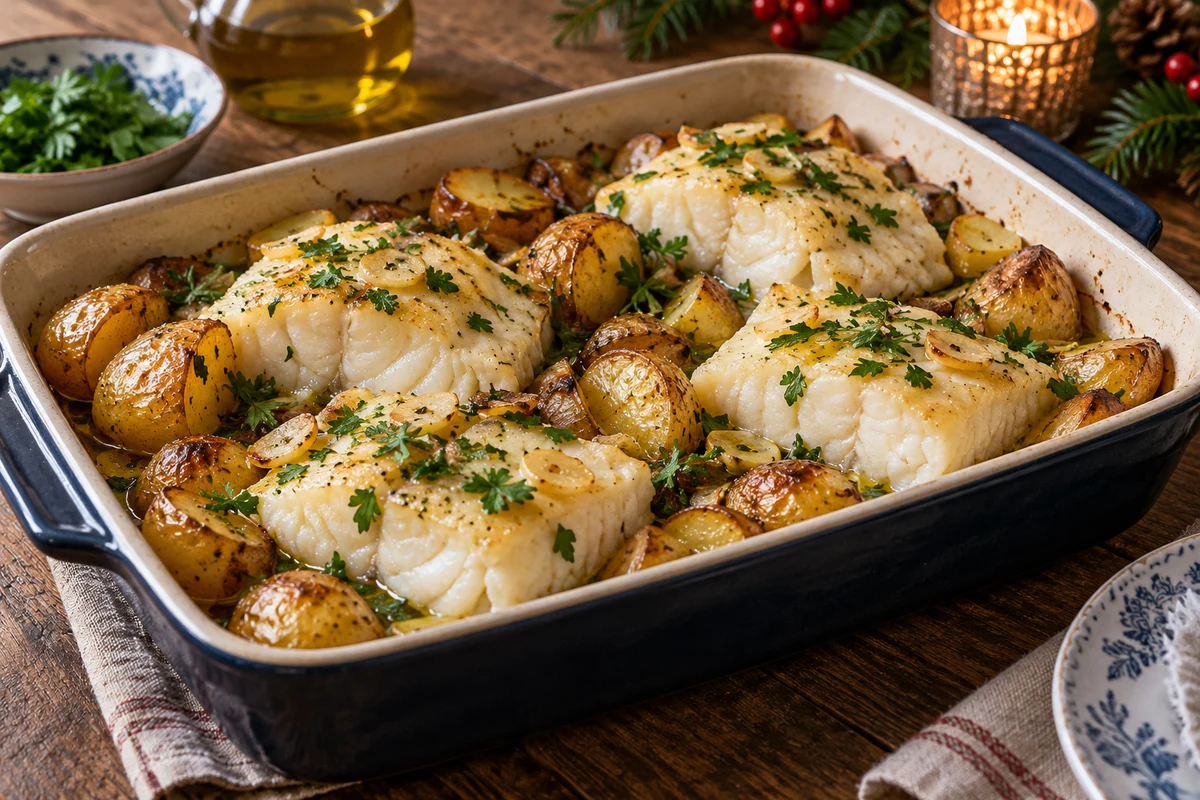
Salt cod combines tradition and a distinctive flavour with practical recipes that do not require elaborate techniques.
Reasons to Serve Salt Cod
- Tradition and connection: in many Portuguese and Brazilian families, bacalhau is closely associated with festive meals and shared memories.
- Versatility: it works in roasts, creamy bakes, gratins and croquettes, particularly with potatoes, eggs, olives and olive oil.
- Flexible portions: flaked cod combines with potatoes or chickpeas to make a shared dish. The number of servings depends on the whole recipe, rather than salt cod automatically feeding more people than fresh fish.
- Advance shopping: salted and dried cod can often be bought ahead, provided it is stored exactly as its packaging or supplier instructs, including refrigeration when required.
- Straightforward methods: classic recipes have manageable steps, though soaking time, bones and thorough cooking still need attention.
- A protein-rich ingredient: cod itself is relatively lean; the finished dish’s fat and salt content depends on the oil, cream, cheese and remaining salt in the fish.
- Informed sourcing: look for traceable suppliers and, where available, MSC-labelled wild fish from fisheries assessed against the MSC’s environmental standard.
Quick Planning Tips
- Plan the soaking: follow the supplier’s instructions. Some cuts take 24–48 hours, while very thick pieces may need longer; keep them refrigerated throughout.
- Allow suitable portions: roughly 150–200 g of drained, desalted, boneless cod per adult is a useful main-course guide, adjusted for the recipe and side dishes.
- Classic accompaniments: potatoes, hard-boiled eggs, olives and olive oil complement the fish.
- Making ahead: fully cook suitable components, cool promptly and refrigerate. Do not partly cook fish and leave it to finish later.
With a little preparation, salt cod makes an appealing shared Christmas meal with plenty of scope for different textures and flavours.
Buying and Desalting Salt Cod
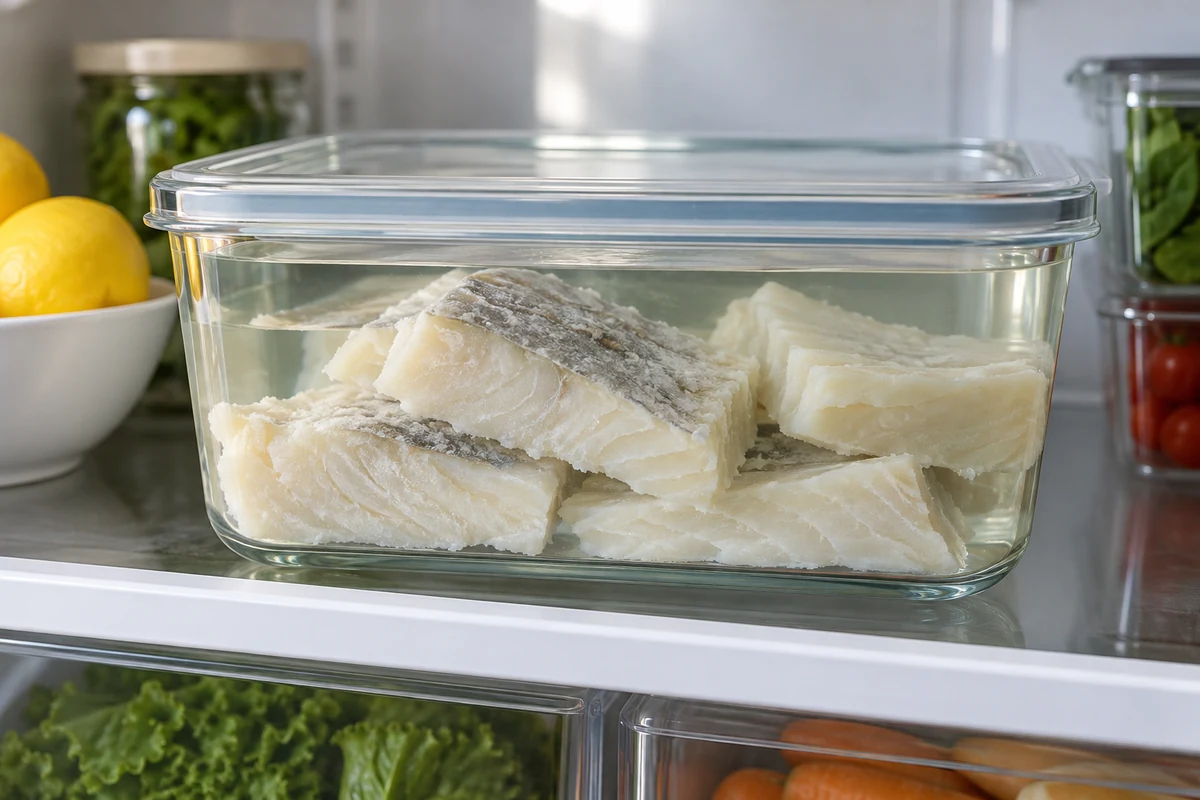
Choose the right cut, plan enough refrigerator space and allow time for soaking. This gives you a better starting point than trying to correct very salty fish during cooking.
Choosing Salt Cod
- Cut: choose thick loin pieces for a centrepiece, portions for roasting and smaller pieces for flaked dishes.
- Condition: buy from a reputable supplier and check that the fish is in the condition expected for that product. Appearance or smell alone cannot establish food safety.
- Origin and certification: check traceability and consider MSC-labelled fish. Sustainability certification is not a substitute for correct storage or cooking.
- Packaging: check that it is intact, within its date and clearly labelled as salted and dried, ready-desalted, chilled or frozen, as appropriate.
- Quantity: plan roughly 150–200 g drained, desalted, boneless cod per adult for a main course. Ask the supplier about yield from salted bone-in fish: soaking restores water, while skin and bones reduce the usable portion, so a universal percentage adjustment is unreliable.
How to Desalt It
- Remove surface salt: follow the packet’s rinsing instructions, avoiding splashes and cleaning the sink and utensils afterwards.
- Prepare the pieces: ask the fishmonger to portion large pieces if necessary. Similar thicknesses soak more evenly; skin may help large portions hold together.
- Cover with cold water: put the fish in a clean food-safe container with enough water to submerge it completely, cover and refrigerate.
- Change the water: follow the product’s soaking time and water-change instructions. Keep the fridge at 5°C or below; thickness and salt content mean 24–48 hours is only a guide, not a rule for every cut.
- Check the salt safely: when the recommended soaking time is complete, cook a small sample thoroughly before tasting it. Never taste raw soaked fish. If it is too salty, seek the supplier’s advice on further soaking.
- When time is short: buy ready-desalted cod and follow its instructions. Do not replace refrigerated soaking with several hours under a tap or on the worktop.
- Drain: drain the desalted fish and pat dry with disposable kitchen paper if needed. Keep chilled until cooking and follow the product’s use-by guidance.
Practical Safety Tips
- Keep it refrigerated: soak in cold water in a fridge at 5°C or below, not at room temperature.
- Avoid warm water: it is not a safe shortcut for prolonged soaking and can affect the texture.
- Discard the soaking water: do not use it for stock, sauces or other food.
- Plan backwards: read the supplier’s instructions several days before Christmas so you can start at the right time without keeping soaked fish unnecessarily long.
- Use suitable alternatives: ready-desalted portions save soaking time. For flaked recipes, remove skin and bones carefully after cooking.
The recipes below use drained, desalted cod; unless stated otherwise, weights are for the usable boneless fish before cooking. Cook it fully before flaking it for dishes that need only brief finishing.
Seven Salt Cod Recipes at a Glance

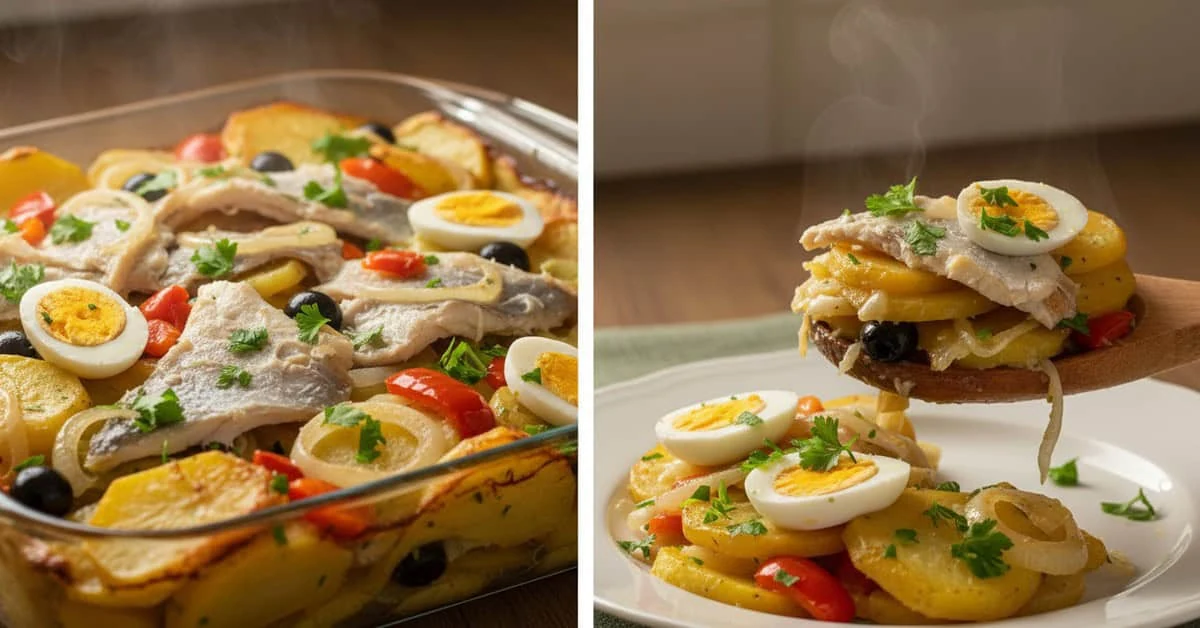
Bacalhau à Gomes de Sá — a classic combination of cod, potatoes, onions, eggs and olives.
- 600 g desalted cod — cook fully, remove skin and bones and separate into large flakes before assembling.
- 800 g potatoes — boiled and sliced; choose a variety that holds its shape.
- 2 large onions — thinly sliced.
- 3 garlic cloves — chopped.
- 100 ml extra-virgin olive oil — or 80 ml for a less oily result.
- 4 hard-boiled eggs — sliced, to finish.
- ½ cup pitted black olives — measured in a 240 ml cup.
- Parsley, black pepper and salt — add salt cautiously after tasting the cooked fish.
- Cook the potatoes: boil until tender but still holding their shape, drain and slice.
- Cook the onion and garlic: soften the onion in the oil, then add the garlic without letting it burn.
- Add the cooked cod: fold in the fully cooked flakes and heat through gently; if using chilled cooked fish, ensure it is steaming hot throughout.
- Combine: carefully fold in the potatoes without breaking them up too much.
- Optional oven finish: transfer the hot mixture to an ovenproof dish and bake at 200°C, or 180°C fan, until hot throughout and lightly coloured. Eight to ten minutes is only a guide for an already-hot dish.
- Serve: top with sliced eggs, olives and parsley.
Bacalhau com Natas: Creamy Salt Cod Bake
- 500 g desalted cod — fully cooked, checked for bones and flaked.
- 400 g potatoes — diced and cooked until just tender.
- 1 medium onion — chopped.
- 300 ml single cream — or 200 ml cream plus 100 ml milk.
- 50 g butter — divided between the onion and sauce; alternatively use three tablespoons olive oil, similarly divided.
- 2 level tablespoons plain flour — for the sauce.
- 100 g grated cheese — for the topping.
- Cook the potatoes: boil the cubes until tender but intact, then drain well.
- Cook the onion: soften it in half the butter, then fold in the fully cooked cod.
- Make the sauce: melt the remaining butter in a small pan, stir in the flour and cook briefly, stirring. Gradually whisk in the cream, or cream-and-milk mixture, then simmer gently until smooth and thickened.
- Combine: fold together the potatoes, cod, onion and sauce. Check seasoning once everything is cooked.
- Bake: transfer to an ovenproof dish, add the cheese and bake at 200°C, or 180°C fan, until bubbling and steaming hot throughout, with a golden top. Allow roughly 15–20 minutes for a hot mixture, longer if chilled.
Bacalhau à Brás
- 400 g desalted cod — fully cooked and flaked, with skin and bones removed.
- 500 g raw potatoes — cut into thin matchsticks, then fried or oven-baked until cooked and crisp, using suitable cooking oil. Ready-fried potato straws are an alternative added gradually to taste; 500 g raw potatoes is not equivalent to 500 g dried packet straws.
- 1 large onion — sliced.
- 4 eggs — beaten.
- 80 ml olive oil — for sautéing; use less if the potatoes already carry plenty of oil.
- Parsley and olives — to garnish.
- Soften the onion: cook gently in the olive oil.
- Add the cooked cod: stir through and heat thoroughly.
- Add the potatoes: fold in the cooked potato matchsticks gently, reserving a few for the top if desired.
- Add the eggs: reduce the heat and stir in the beaten eggs. Continue cooking gently until the eggs are set and the mixture is thoroughly hot; do not rely on off-heat residual warmth to cook them.
- Finish: check seasoning after cooking and garnish with parsley and olives.
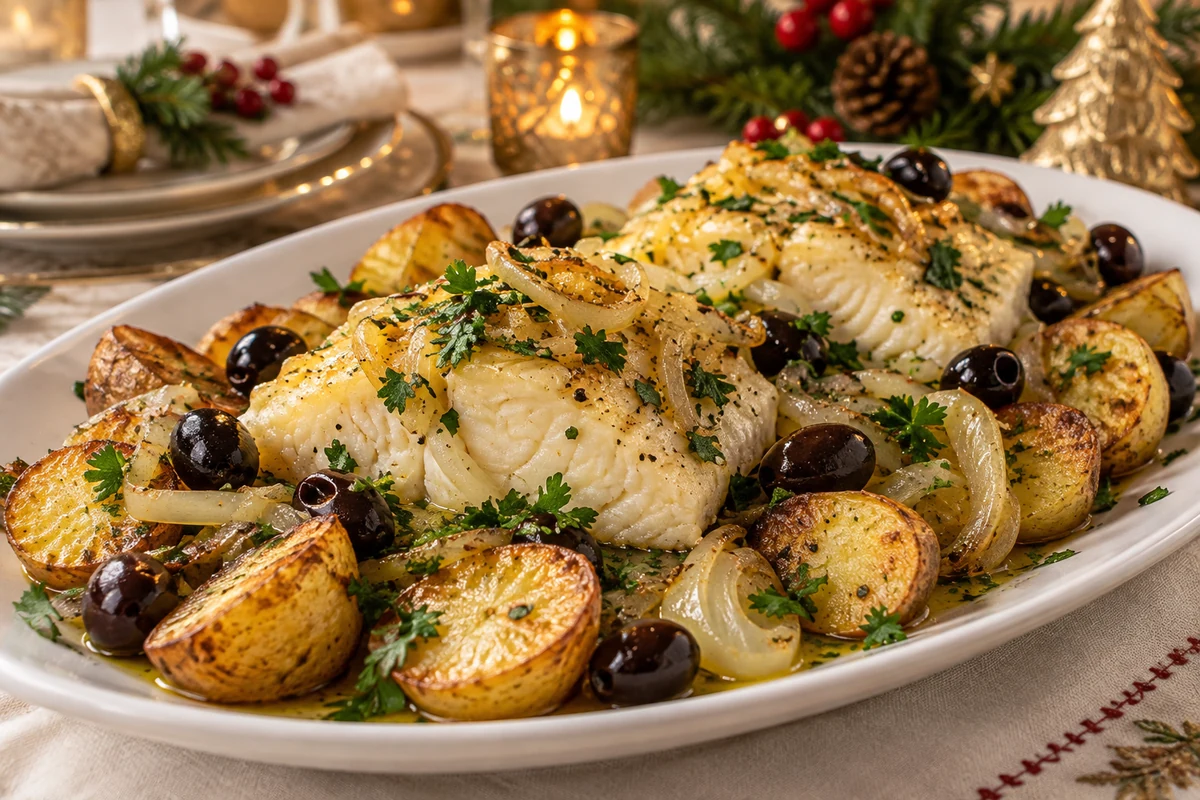
Bacalhau à Lagareiro
- 800 g desalted cod loin — divided into portions and checked for bones.
- 600 g small potatoes — whole or halved, depending on size.
- 4 garlic cloves — sliced.
- 150 ml olive oil — divided between fish and potatoes; use only as much as needed.
- 2 tablespoons butter — optional, for richness.
- Parsley and lemon — to serve.
- Roast the potatoes: wash and toss with some of the measured oil and a little seasoning. Roast at 200°C, or 180°C fan, until golden and tender, allowing a head start before the fish.
- Prepare the cod: place in an ovenproof dish with sliced garlic, the remaining oil and the optional butter.
- Roast: cook at 200°C, or 180°C fan, until the fish is opaque, separates easily into flakes and is hot through the thickest part. Around 15–20 minutes is a guide only; thick portions may need longer.
- Serve: arrange the fish over the tender potatoes, spoon over some cooking oil and finish with parsley and lemon.
Salt Cod Gratin with Broa
- 600 g desalted cod — fully cooked and flaked, with all bones removed.
- 300 g Portuguese broa — crumbled savoury maize bread; use suitable breadcrumbs if unavailable. Broa often contains wheat or rye, so it is not automatically gluten-free.
- 200 ml cream or prepared béchamel — to bind the filling.
- 1 onion — chopped; also allow a little olive oil for softening it.
- 100 g grated cheese — for the topping.
- Soften the onion: cook it in a little olive oil, then add the fully cooked cod flakes.
- Add the sauce: fold in the cream or prepared béchamel and heat gently.
- Assemble: transfer to an ovenproof dish and cover with the bread crumbs and cheese.
- Bake: cook at 200°C, or 180°C fan, until the filling is steaming hot throughout and the topping is golden. Cover loosely if the top browns before the centre is hot.
Salt Cod Croquettes
- 500 g desalted cod — fully cooked, checked for bones, flaked and cooled promptly before mixing.
- 600 g cooked mashed potato — well drained, without added milk or water.
- 1 egg — to bind.
- 1 small onion — very finely chopped.
- Parsley, pepper and suitable frying oil — or a little oil for baking.
- Mix: combine the cooked cod, cooled mashed potato, onion, egg and seasoning. Do not taste the mixture after adding raw egg; cook a small sample first if checking seasoning.
- Shape: form small, evenly sized croquettes with clean, lightly damp hands, then wash your hands after handling the raw-egg mixture.
- Cook: fry in a suitable thermostatically controlled fryer according to its instructions, or brush lightly with oil and bake at 200°C, or 180°C fan. Around 20–25 minutes is a baking guide; turn halfway and ensure the centres are thoroughly cooked and steaming hot, not just browned outside.
- Drain and serve: drain fried croquettes on kitchen paper and serve promptly with lemon.
Warm Salt Cod and Chickpea Salad
- 400 g desalted cod — fully cooked, flaked and kept hot for immediate assembly.
- 400 g cooked chickpeas — drained.
- 200 g diced potatoes — cooked until tender.
- 1 red onion — thinly sliced.
- 100 g olives — green or black, pitted.
- 3 tablespoons olive oil and one tablespoon vinegar.
- Parsley, pepper and lemon — to taste.
- Prepare the cod: use freshly fully cooked flakes, or reheat safely chilled cooked cod once until steaming hot throughout.
- Combine the vegetables: mix warm chickpeas and potatoes with the onion and olives in a large bowl.
- Add the fish: fold in the cooked cod carefully.
- Dress: add oil, vinegar, pepper, parsley and lemon to taste. Add salt only if needed and serve promptly.
Quick variations: replace some potatoes with cooked roast squash or add mild pickled peppers. Cream and yoghurt behave differently when heated, so use a recipe designed for yoghurt rather than making a blanket one-for-one swap. Adjust oil and salt to the dish.
Ingredients for Bacalhau à Gomes de Sá
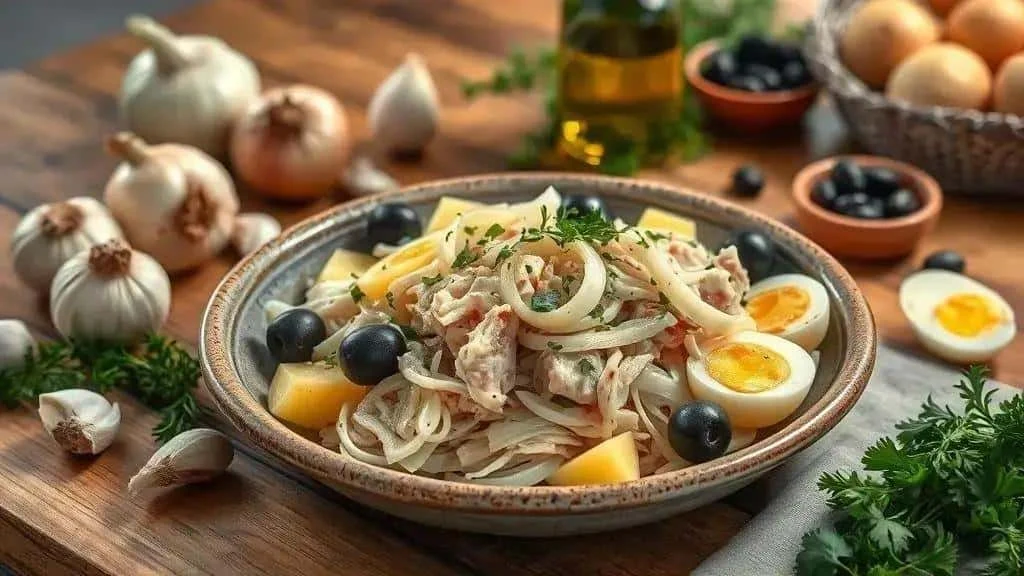
These ingredients make Bacalhau à Gomes de Sá, a classic shared dish of cod, potatoes and onions.
Ingredients
Serves about four as a main course, or six to eight as smaller portions with other dishes:
- 600 g desalted cod — fully cook and flake it before assembling, removing skin and bones.
- 800 g potatoes — boiled and sliced; choose a firm variety that holds together.
- 2 large onions — thinly sliced; red onions give a different colour and flavour.
- 3 garlic cloves — chopped or sliced.
- 100 ml extra-virgin olive oil — use 80 ml for a less oily version.
- 4 eggs — hard-boiled and sliced.
- ½ cup pitted black olives — measured in a 240 ml cup.
- Chopped parsley — to garnish.
- Ground black pepper — to taste.
- Salt — add only after tasting a thoroughly cooked piece of fish.
- Optional: 1 bay leaf for the poaching water, removed after cooking, and one tablespoon vinegar or lemon juice to finish.
Variations: use a little less oil, replace some potatoes with cooked roast squash or choose green olives. Check seasoning after the fish is fully cooked.
Bacalhau à Gomes de Sá: Step-by-Step Method
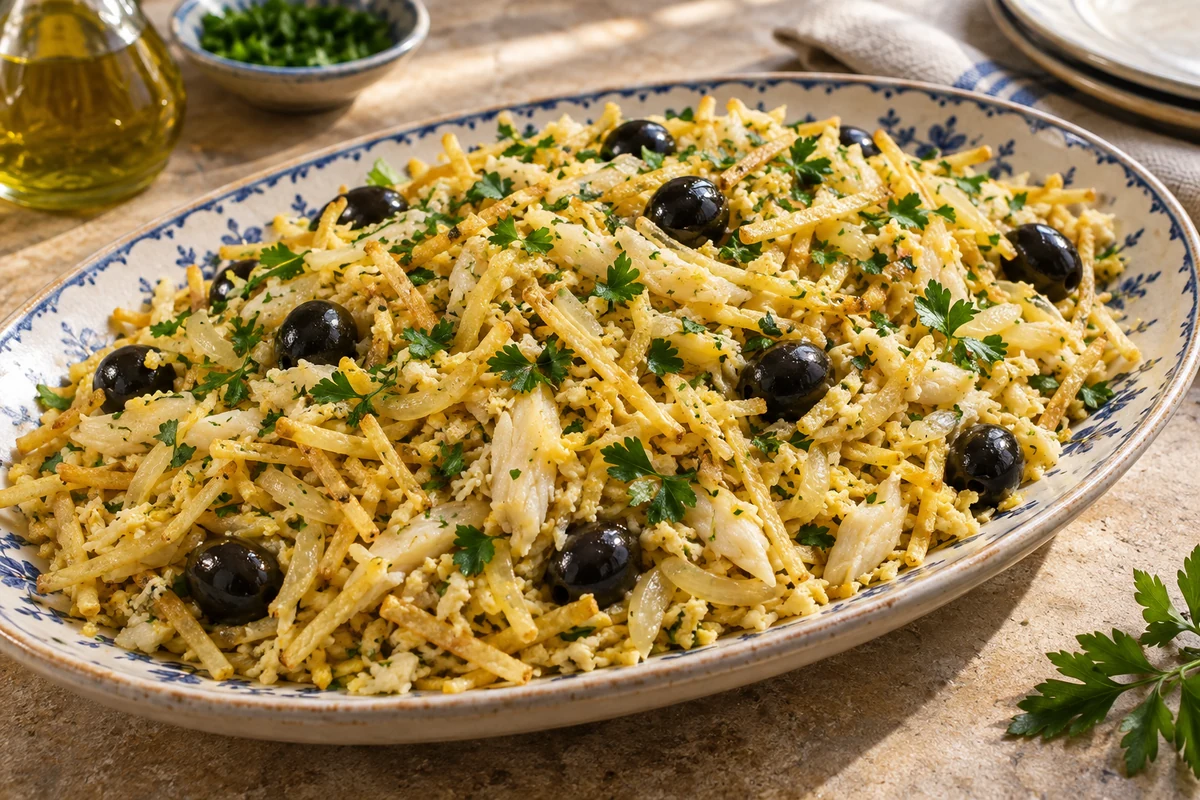
Follow these steps to make Bacalhau à Gomes de Sá, keeping the fish in large flakes and the potatoes intact.
- Cook the cod: place the 600 g desalted cod in a pan, cover with water and bring gently to a simmer, adding the optional bay leaf. Cook until the flesh is opaque, flakes easily and is hot throughout; the time depends on thickness, so do not count five to eight minutes from a cold pan as a guarantee. Drain and discard the bay leaf.
- Check for bones: when safe to handle, remove skin and all bones, using clean forks or hands, and separate into large flakes.
- Cook the potatoes: boil the 800 g potatoes until tender but still firm enough to slice. Fifteen to twenty minutes may suit smaller potatoes; check with a knife. Drain, cool briefly, peel if desired and slice about 5–10 mm thick.
- Slice the onions: cut both onions thinly and evenly.
- Cook the onions: soften them gently in the measured oil for around 15–20 minutes until lightly golden, adding the garlic towards the end so it does not burn.
- Add the cooked cod: fold in the flakes and heat through gently, avoiding unnecessary stirring that breaks them up. Chilled cooked fish must be reheated until steaming hot throughout.
- Add potatoes: gently coat the slices in the oil and onion mixture.
- Season: taste the cooked mixture before adding salt, then add black pepper and the optional vinegar or lemon juice.
- Optional oven finish: transfer to an ovenproof dish and bake at 200°C, or 180°C fan, until hot throughout and lightly coloured. An already-hot mixture may take eight to ten minutes; chilled food needs longer.
- Garnish: arrange the four sliced hard-boiled eggs, half-cup of olives and chopped parsley over the top. Spoon over a little of the oil already in the dish and serve.
Practical Tips
- Potato texture: a fork should slide in easily while the slices still hold together.
- Salt: taste only thoroughly cooked cod, then adjust the finished dish sparingly.
- Save time: cook the potatoes and fish in separate pans at the same time if you can monitor both safely.
- Alternatives: use a firm potato variety or replace some potatoes with cooked roast squash.
- Presentation: a warmed serving dish slows cooling, but is not a substitute for safe hot holding. Serve promptly.
Creamy Salt Cod Bake: Ingredients and Method
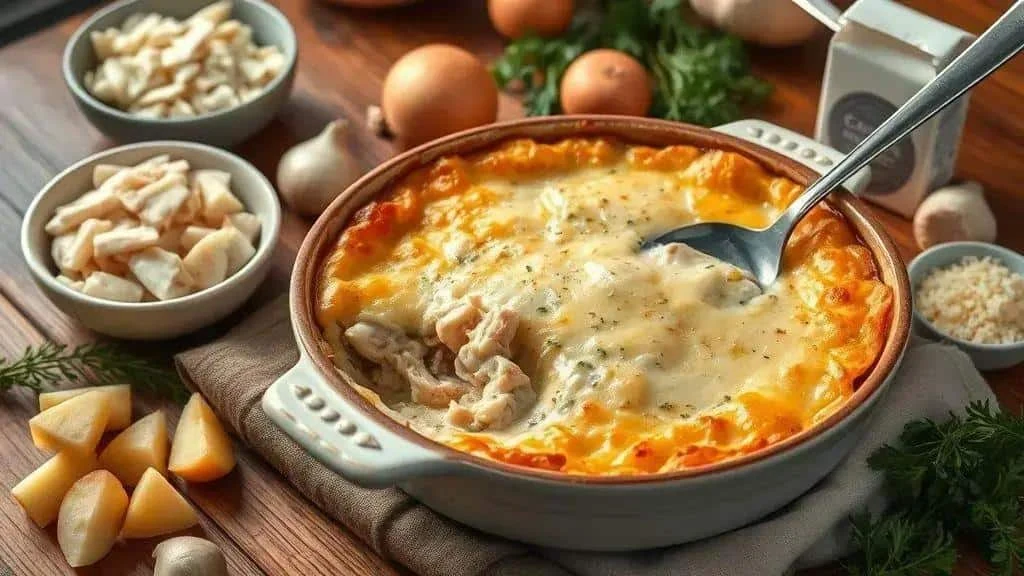
This bacalhau com natas combines flaked salt cod, potatoes and a creamy sauce. Smaller cod pieces can be more economical than whole loins.
Ingredients
- 500 g desalted cod — fully cooked, checked for bones and separated into flakes.
- 400 g potatoes — diced and cooked until tender but intact.
- 1 medium onion — finely chopped.
- 2 garlic cloves — chopped or crushed.
- 300 ml single cream — or 200 ml cream plus 100 ml milk. Thick yoghurt is not a direct substitute in this heated sauce.
- 50 g butter — use half for the onions and half for the sauce; alternatively divide three tablespoons olive oil between them.
- 2 level tablespoons plain flour — for thickening. Alternatively use one and a half level tablespoons cornflour blended with two tablespoons of the measured cold liquid, adding it to the heated sauce rather than making a flour roux.
- 100 g grated cheese — optional topping.
- Salt and black pepper — adjust after tasting the fully cooked fish.
- Chopped parsley — to finish.
Method
- Preheat the oven: set it to 200°C, or 180°C fan.
- Cook the cod: cover the desalted fish with water, bring gently to a simmer and cook until opaque, easily flaked and hot throughout. Drain and let it cool just enough to handle.
- Flake and check: remove skin and all bones, separating the fish into large flakes with clean forks.
- Cook the potatoes: boil the cubes until just tender, often around eight to ten minutes depending on size, then drain well.
- Soften onion and garlic: use half the measured butter or oil to cook the onion gently until soft, then add the garlic for about one minute.
- Add the cooked fish: fold the cod into the onion mixture and heat through gently.
- Make the sauce: heat the remaining butter or oil in a small pan, stir in the plain flour and cook briefly, stirring. Gradually whisk in the measured cream or cream-and-milk mixture, then simmer gently until thickened. If using cornflour instead, whisk its cold slurry into the heated liquid and cook until thickened. Season with pepper.
- Combine: gently mix the potatoes, fish, onions and sauce.
- Assemble: transfer to an ovenproof dish and scatter the optional cheese over the top.
- Bake: allow roughly 15–20 minutes for a hot mixture, until bubbling, golden and steaming hot throughout; a chilled dish takes longer. Without an oven, heat thoroughly in a suitable pan and let the cheese melt, recognising that it will not have the same browned crust.
- Serve: sprinkle with parsley, rest briefly and serve while hot.
Quick Tips
- Salt: taste the fully cooked cod before seasoning the finished dish.
- Cost: replacing 100 ml of the cream with milk can reduce richness and cost while retaining the same total liquid volume.
- Texture: cook fish and potatoes thoroughly, then handle them gently rather than stirring vigorously.
- Making ahead: use fully cooked components, cool in shallow containers and refrigerate within one to two hours at 5°C or below. Assemble and heat thoroughly within 48 hours, reheating cooked ingredients only once.
Bacalhau à Brás Variations and Additions
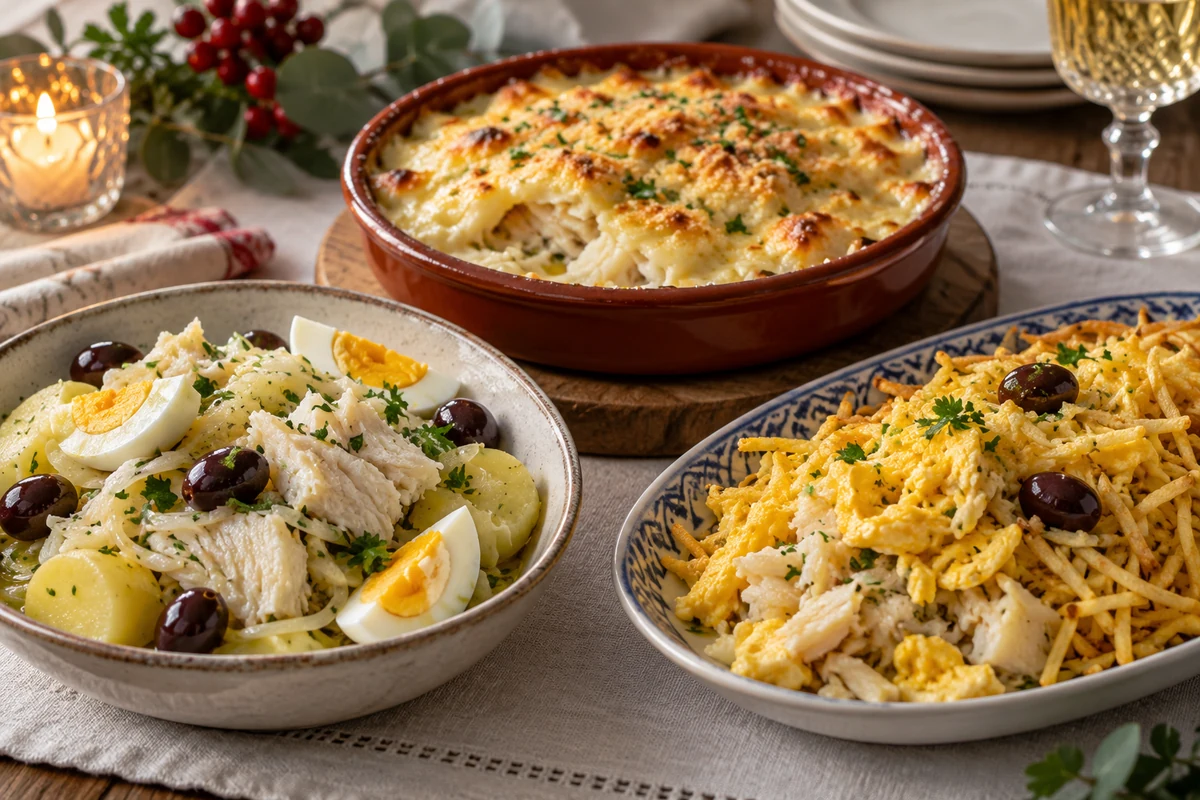
Use the bacalhau à Brás method above as the base for these variations. Keep its onion, potato and cooking steps unless a change is specified below; the lists highlight changes rather than supplying five independent complete recipes. All fish must be fully cooked, and the eggs should be gently cooked until set.
1. With Red Pepper and Tomato
- 400 g desalted cod — fully cooked and flaked.
- 1 red pepper — thinly sliced.
- 1 ripe tomato — deseeded and chopped.
- 4 eggs — beaten.
- 80 ml olive oil — the base recipe’s sautéing allowance, not extra oil on top of it.
Method adjustment: cook the pepper and tomato with the onion until excess liquid evaporates. Add the cooked cod and potatoes, then stir in the eggs over gentle heat until set and thoroughly hot.
2. With Mushrooms
- 400 g desalted cod — fully cooked and flaked.
- 200 g mixed mushrooms — sliced, such as button mushrooms or shiitake.
- 1 onion — chopped, replacing the sliced onion in the base recipe.
- 4 eggs — beaten.
- Olive oil and parsley — use the base recipe’s oil as needed, with parsley to finish.
Method adjustment: sauté the mushrooms until browned and their liquid has evaporated. Combine with the onion, cooked cod and potatoes, then add the eggs and cook gently until set. Reduce the oil if the mixture already has enough.
3. With Spinach and Ricotta
- 400 g desalted cod — fully cooked and flaked.
- 150 g spinach — cooked and thoroughly drained.
- 150 g ricotta — crumbled.
- 3 eggs — beaten, replacing the base recipe’s four eggs.
- Cooked potato matchsticks — use the base recipe’s potatoes, reserving a little for crunch at the end.
Method adjustment: fold the cooked spinach and ricotta into the hot fish-and-onion mixture and heat through. Add potatoes and beaten eggs, cooking gently until the eggs are set. Finish with reserved crisp potatoes.
4. With Chickpeas
- 350 g desalted cod — fully cooked and flaked, replacing the base recipe’s 400 g.
- 200 g cooked chickpeas — drained.
- 3 eggs — beaten, replacing the base recipe’s four eggs.
- 1 onion — sliced.
- Olive oil, parsley and pepper — as in the base recipe, adjusted to taste.
Method adjustment: heat the chickpeas thoroughly with the cooked cod and onion. Add the base recipe’s cooked potatoes, reducing them if you prefer a less substantial dish, then cook the three beaten eggs through gently.
5. With Chouriço or Sausage
- 350 g desalted cod — fully cooked and flaked, replacing the base recipe’s 400 g.
- 100 g Portuguese chouriço or suitable sausage — finely diced; follow its cooking instructions.
- 4 eggs — beaten.
- Cooked potato matchsticks — as in the base recipe.
Method adjustment: cook the sausage thoroughly, allowing some fat to render. Use that fat for the onion, reducing the added oil. Continue with the cooked cod, potatoes and eggs, cooking until the eggs are set. Check the salt carefully.
Other Additions
- Black or green olives add saltiness; scatter over the finished dish.
- Sliced hard-boiled egg can be a garnish, although it gives a different result from the scrambled-egg base.
- Fresh cheese or grated Parmesan adds richness and milk; use sparingly as an optional variation.
- Roasted peppers provide colour and sweetness.
- Fresh parsley or spring onion brightens the dish when added at the end.
Adapting the Recipe
- Salt: taste only the thoroughly cooked mixture, especially when adding sausage or olives.
- Texture: cook off excess vegetable liquid and reserve some crisp potatoes for the finish.
- Alternatives: baked sweet-potato matchsticks give a different flavour and texture. For a dairy-free version omit cheese and ricotta and check all other ingredients; lactose-free dairy is not suitable for a milk allergy.
Choose additions that suit your guests and ingredients while keeping the essential cooking steps of the base recipe.
Roast Salt Cod with Broa: A Lagareiro-Inspired Variation
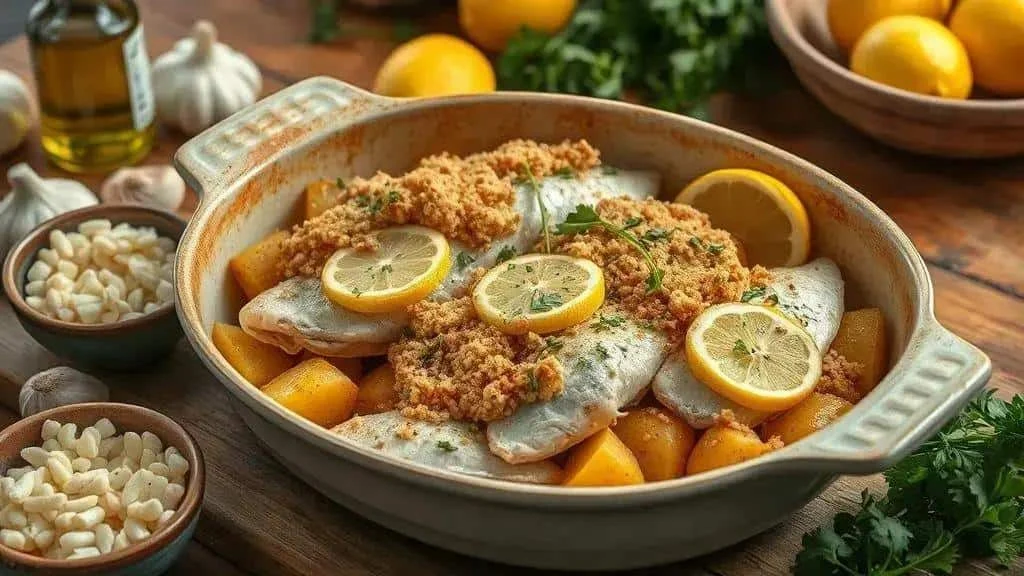
This roast salt cod with broa combines potatoes, garlic and olive oil with a crisp savoury bread topping.
Ingredients
- 800 g desalted cod loin — divided into four to six portions and checked for bones. Thaw frozen ready-desalted fish in the fridge according to its instructions.
- 600 g small potatoes — washed, whole or halved to an even size.
- 150–200 ml extra-virgin olive oil — total allowance for potatoes, fish and topping; use only as much as needed.
- 4–6 garlic cloves — thinly sliced.
- 200 g Portuguese broa — crumbled savoury maize bread. Substitute suitable breadcrumbs if unavailable, rather than raw maize flour. Check for wheat or rye allergens.
- 2 tablespoons butter — optional; omit for a dairy-free version and use the measured oil instead.
- ½ cup pitted black olives — optional, measured in a 240 ml cup.
- Chopped parsley — to finish.
- Zest and juice of 1 lemon — add to taste at the end.
- Salt and black pepper — season cautiously after checking a fully cooked sample of the fish.
- 1 bay leaf — optional, for the potatoes; remove before serving.
Step-by-Step Method
- Preheat: set the oven to 200°C, or 180°C fan.
- Roast the potatoes: toss with two to three tablespoons of the measured oil, a little seasoning and the optional bay leaf. Roast for roughly 25–35 minutes, or until golden and tender; timing depends on size.
- Prepare the fish: put the cod in an ovenproof dish, scatter over the garlic and drizzle with four to six tablespoons of the measured oil. Add the optional butter in small pieces.
- Begin roasting: cook the cod for roughly 12–18 minutes, depending on thickness, before adding the topping. This is part of one continuous cooking session; do not chill partly cooked fish to finish later.
- Mix the topping: combine the crumbled broa with two to three tablespoons of the measured oil and some parsley until lightly coated. Keep within the total oil allowance.
- Add the crumbs: carefully scatter them over the cod and add the optional olives.
- Finish cooking: return to the oven for around eight to ten minutes, checking that the fish is opaque, flakes easily and is hot throughout. Brown briefly under the grill only if necessary and if the dish is grill-safe; watch closely.
- Assemble: remove the bay leaf, arrange the cod over the potatoes and spoon over some cooking oil. Add lemon juice to taste.
- Finish: scatter with parsley and lemon zest, add black pepper and serve promptly while the topping is crisp.
Practical Tips
- Salt: taste a fully cooked sample after desalting before deciding how much salt to add.
- Potatoes: check with a fork that they are tender inside, not merely browned outside.
- Advance preparation: the potatoes can be fully cooked ahead, cooled and refrigerated promptly, then reheated thoroughly once. Prepare the bread topping separately and roast the fish close to serving.
- Alternative fish method: roast the potatoes as above, cook the cod fully in a suitable frying pan and toast the bread topping separately. This changes the method for the fish but still uses the oven for potatoes.
Salt Cod Starters and Nibbles

Salt Cod Croquettes
- 500 g desalted cod — fully cooked, boned, flaked and cooled promptly.
- 600 g potato — cooked, well drained and mashed without added liquid.
- 1 egg — to bind.
- 1 small onion — very finely chopped.
- 2 tablespoons parsley — chopped.
- Black pepper — to taste.
- Suitable frying oil — or a little oil for baking.
- Mix: combine cooled cooked potato and cod with finely chopped onion, parsley and egg. Keep the mixture chilled if it is not being cooked immediately.
- Check seasoning safely: cook a small test portion thoroughly before tasting. Never taste the mixture while it contains raw egg.
- Shape: form small, even croquettes with clean lightly oiled hands and compact gently. Wash your hands afterwards.
- Fry or bake: use a thermostatically controlled fryer following its instructions, or brush with oil and bake at 200°C, or 180°C fan, turning halfway. Around 20–25 minutes is a baking guide; ensure every centre is thoroughly cooked and steaming hot, not simply golden outside.
- Drain and serve: drain fried croquettes on kitchen paper and serve promptly with lemon wedges.
Salt Cod Pastries
- 300 g desalted cod — fully cooked and flaked, with skin and bones removed.
- 1 small onion — chopped.
- 2 tablespoons olive oil — for softening the onion.
- Ready-made puff pastry for baking, or Brazilian pastel wrappers suitable for frying; these are different products and need their own cooking instructions.
- 1 egg — beaten, for glazing baked pastries.
- Parsley and pepper — to taste.
- Make the filling: soften the onion in the oil, stir in the fully cooked cod and heat through. Season with parsley and pepper, then cool promptly before filling the pastry.
- Fill: cut the pastry into suitable pieces, add a small spoonful of cool filling and seal the edges according to the packet instructions. Avoid overfilling.
- Cook: brush puff pastries with beaten egg and bake according to the pastry packet, until risen, golden and steaming hot in the centre. Fry pastel wrappers only if the product is intended for frying, using suitable equipment and its stated method.
- Serve hot: offer chilli sauce or a suitable lemon mayonnaise alongside, identifying egg and other allergens.
Salt Cod Toasts with Slow-Cooked Tomatoes
- 200 g desalted cod — fully cooked and flaked.
- 6 slices rustic bread — lightly toasted.
- 200 g cherry tomatoes — halved.
- 3 tablespoons olive oil — divided between tomatoes and fish.
- Fresh cheese, optional — for a creamy layer.
- Basil or parsley — to garnish.
- Cook the tomatoes: warm most of the oil in a shallow pan and cook the tomatoes gently for around 12–15 minutes until soft. Season sparingly.
- Heat the fish: use the reserved oil to heat the cooked flakes. If previously chilled, reheat once until steaming hot throughout.
- Toast the bread: use the oven or a suitable grill until crisp.
- Assemble: spread with the optional cheese, then add the fish, tomatoes and herbs.
- Finish: spoon over a little of the tomato cooking oil and serve immediately.
Salt Cod Canapés with Ricotta and Herbs
- 200 g desalted cod — fully cooked, checked for bones, flaked and chilled promptly; soaking alone does not make it ready to eat.
- 150 g ricotta — mashed.
- 2 tablespoons plain yoghurt — to loosen the cheese.
- Fresh herbs — parsley, chives or dill, to taste.
- Small bread rounds or prepared blinis — as a base, following any packet heating instructions.
- Make the spread: mix ricotta, yoghurt and chopped herbs, adding pepper and salt cautiously.
- Assemble: spread over the bases, add a small portion of fully cooked chilled cod and finish with herbs or a little lemon zest.
- Serve chilled: keep refrigerated until needed and serve small batches promptly, rather than leaving the whole tray out for hours.
Small Cups of Warm Cod and Chickpea Salad
- 200 g desalted cod — fully cooked and flaked.
- 200 g cooked chickpeas — drained.
- 100 g diced potato — cooked until tender.
- ½ red onion — thinly sliced.
- 3 tablespoons olive oil and one tablespoon vinegar.
- Pepper and parsley — to taste.
- Prepare the fish: use freshly fully cooked cod, or reheat safely chilled cooked flakes once until steaming hot throughout.
- Combine: mix warm chickpeas and potatoes with the onion and cooked cod, then dress with the oil, vinegar, pepper and parsley.
- Portion: divide into small heat-safe serving bowls or cups and finish with herbs.
- Serve promptly: assemble close to serving time so the warm salad does not sit around cooling for a prolonged period.
Serving Tips
- Offer different temperatures: serve hot dishes promptly and keep chilled starters refrigerated until needed.
- Small portions: three or four small nibbles per guest may suit a starter before a full meal; adjust for their size.
- Presentation: use varied serving dishes, washed edible herbs and lemon wedges for colour.
- Salt: taste a fully cooked piece of cod before seasoning fillings, and never taste a mixture containing raw egg.
Planning Christmas Dinner: Portions, Timing and Making Ahead
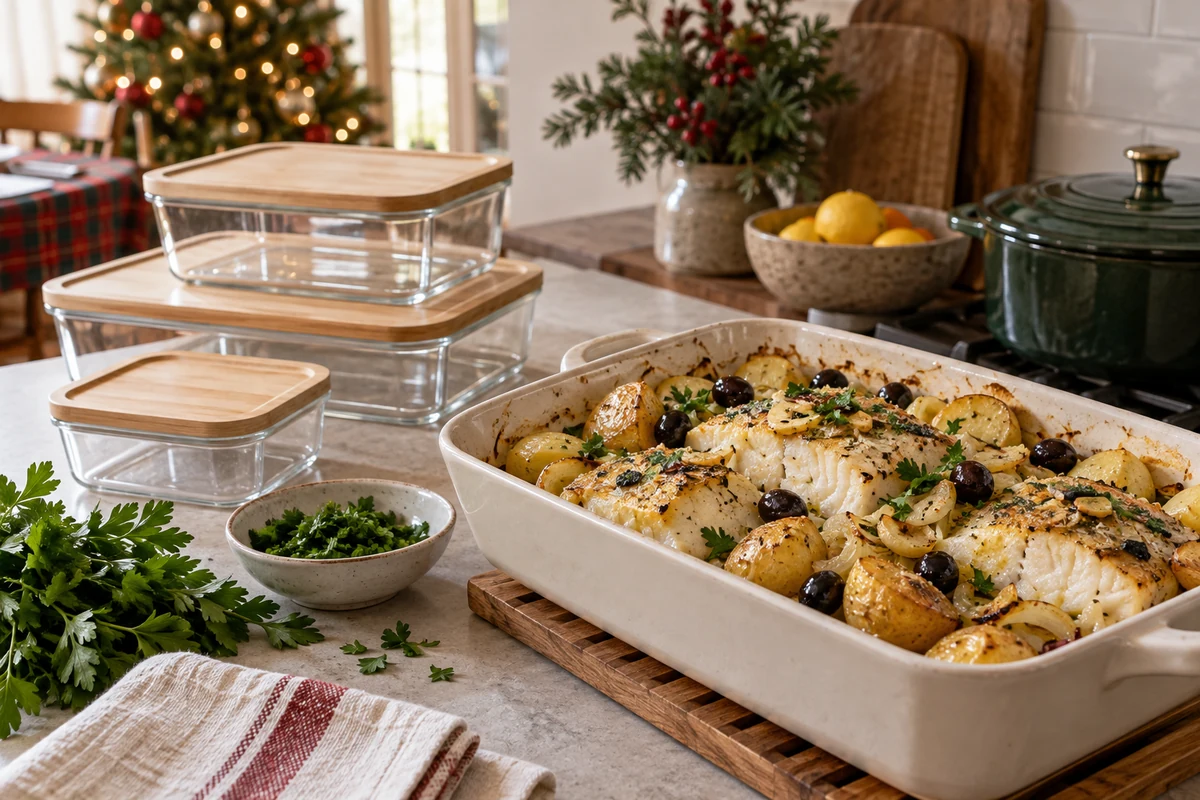
A manageable schedule helps you serve hot food together without leaving cooked dishes out for too long. Use these portion guides as estimates, then adjust to your guests and menu.
Portion Planning
- Desalted cod: roughly 150–200 g drained boneless fish per adult for a main course, before cooking, adjusted for the dish.
- Side dishes: around 200–250 g potatoes, vegetables and salad combined per person is a starting point, not a fixed requirement.
- Starters: allow around three or four small pieces per person if a full dinner follows.
- Dessert: start with one portion per person and add a small allowance for seconds if appropriate.
- Drinks: provide plenty of water and appealing alcohol-free options. Plan any wine separately and modestly rather than treating a combined litres-per-adult figure as drinking advice.
Shopping Plan
- One to two weeks ahead: buy pantry ingredients, olive oil and preserves. Buy salt cod this early only if its storage instructions and date allow it, and keep it as directed.
- Three to five days ahead: check your stocks and buy potatoes, onions and suitable vegetables, considering storage space and freshness.
- Close to the meal: buy herbs, salad and other short-life ingredients, checking use-by dates rather than assuming everything lasts the same time.
Preparation Schedule
- Several days ahead: check the fish supplier’s soaking instructions and start at the specified time. Keep the cod refrigerated and change the water as directed.
- Two days ahead: confirm guest numbers, clean serving equipment and check that the fridge has enough space for covered shallow containers.
- The day before: fully cook any suitable components being made ahead, cool promptly and refrigerate within one to two hours. Prepare chilled sauces and desserts only within their safe storage periods.
- On the morning: prepare vegetables and shape croquettes using cooled cooked fish and potato. Keep the raw-egg mixture chilled until cooking, or fully cook suitable dishes and chill promptly for one later reheating.
- Two to three hours before: organise oven space and assemble dishes from safely chilled ingredients as needed. Time their cooking to finish near service; do not leave a cooked fish bake out for hours and repeatedly reheat it.
- Fifteen to thirty minutes before: finish the cooking or thorough reheating, prepare fresh garnishes and warm suitable serving dishes. Keep cold starters in the fridge until needed.
Storage and Reheating
- Cool in shallow portions: refrigerate within one to two hours at 5°C or below and use cooked leftovers within 48 hours, unless a shorter limit applies.
- Oven reheating: use roughly 160–180°C, or 140–160°C fan, covering if needed to prevent drying. Ensure the centre is steaming hot throughout; temperature and time depend on the dish and quantity.
- Microwave reheating: follow appliance instructions, stir or rearrange where possible, allow the stated standing time and check for cold spots.
- Reheat only once: gentle heat can protect the flakes, but the whole portion still needs to become steaming hot. Avoid repeated warming and cooling.
Table and Service Planning
- Organise by course: set out small batches of starters and bring hot dishes to the table when ready.
- Share tasks: ask someone to replenish clean serving dishes and drinks while you finish cooking.
- Coordinate serving: aim to finish the main components close together, serving promptly rather than relying on warm plates to keep food safe.
Saving Time
- Cook and chill suitable components: potatoes and sauces can often be prepared the day before if fully cooked, cooled promptly and refrigerated correctly.
- Use equipment correctly: proper hot-holding equipment must keep food at a safe temperature according to its instructions; a trivet or barely warm dish is not enough.
- Delegate: let a guest look after drinks or table setting so the cook can concentrate on the food.
Final Checklist
- Check that desalting is complete, tasting only a thoroughly cooked sample.
- Check ovenproof dishes, clean utensils and refrigerator space.
- Review cooking times and who is helping with each task.
- Prepare suitable make-ahead dishes first and chill them promptly.
- Allow a little spare time for seasoning and presentation.
A realistic schedule leaves room to enjoy the meal while keeping the food properly cooked and safely stored.
Final Thoughts
Choose a salt cod recipe that fits your time, equipment and guests. Plan the soaking first, cook the fish thoroughly and keep the accompaniments manageable for a relaxed Christmas meal.
Follow our social channels for more festive recipe ideas and practical kitchen tips.
Thank you for reading the I Love Christmas blog. Explore more recipes and ideas for your next celebration.
Frequently Asked Questions About Christmas Salt Cod
How long should I soak salt cod?
Follow the supplier’s instructions for the cut and product. Some pieces take 24–48 hours and thick portions may take longer. Keep submerged in cold water in the fridge at 5°C or below, changing the water as directed. Cook a small sample fully before checking the salt; never taste it raw.
How much salt cod should I buy per person?
Allow roughly 150–200 g drained, desalted, boneless cod per adult for a main course, adjusted to the recipe. Ask the supplier about yield from salted or bone-in cuts: soaking adds water, while skin and bones affect the usable weight, so there is no reliable universal percentage conversion.
Can I make these dishes ahead and reheat them?
Suitable dishes or components can be fully cooked ahead, cooled in shallow portions and refrigerated within one to two hours at 5°C or below. Use within 48 hours and reheat only once until steaming hot throughout. Do not partly cook fish and leave it to finish later.
Which substitutions work well?
Cooked roast squash can replace some potatoes, and suitable breadcrumbs can replace broa. Use the specified cream-and-milk option for the creamy bake; yoghurt and raw maize flour are not direct substitutes for cream and cooked bread. Check allergens whenever changing ingredients.
What should I serve with salt cod?
Roast potatoes, sautéed vegetables, warm chickpea salad and olives are useful accompaniments. Water with lemon or other alcohol-free drinks work well; adults who choose alcohol may prefer a small serving of dry white or sparkling wine.
Sources and Further Reading
- Pascoal: how to soak salt cod
- Marine Stewardship Council: the blue label
- Food Standards Agency: cooking food safely
- Food Standards Agency: chilling and leftovers