Brazilian pavê is a layered biscuit-and-cream dessert that can be prepared ahead for New Year’s Eve. Explore five versions — classic custard, passion fruit, chocolate and nuts, vegan coconut and fruit, and lemon — plus an avocado-chocolate variation, portion planning and safe chilling and transport advice. These are spoon desserts; their firmness varies with the ingredients and chilling time.
Pavê for New Year’s Eve brings a Brazilian favourite to the festive table. Choose a classic creamy dessert or a fruitier version, and serve it in a shared dish or individual glasses.
Why Pavê Works Well for New Year’s Eve

A New Year’s Eve pavê combines familiar ingredients with visible layers and a useful make-ahead format. Choose flavours that suit your guests and leave enough time for chilling.
- Prepare ahead: assemble a suitable recipe the day before and keep it refrigerated.
- Flexible serving: use a shared dish or small individual portions to suit the number of guests.
- Varied flavours: fruit, chocolate and nuts offer different combinations; vegan and dairy-free versions need appropriate ingredients throughout.
- Manageable cost: straightforward ingredients can make an attractive dessert without elaborate decorations.
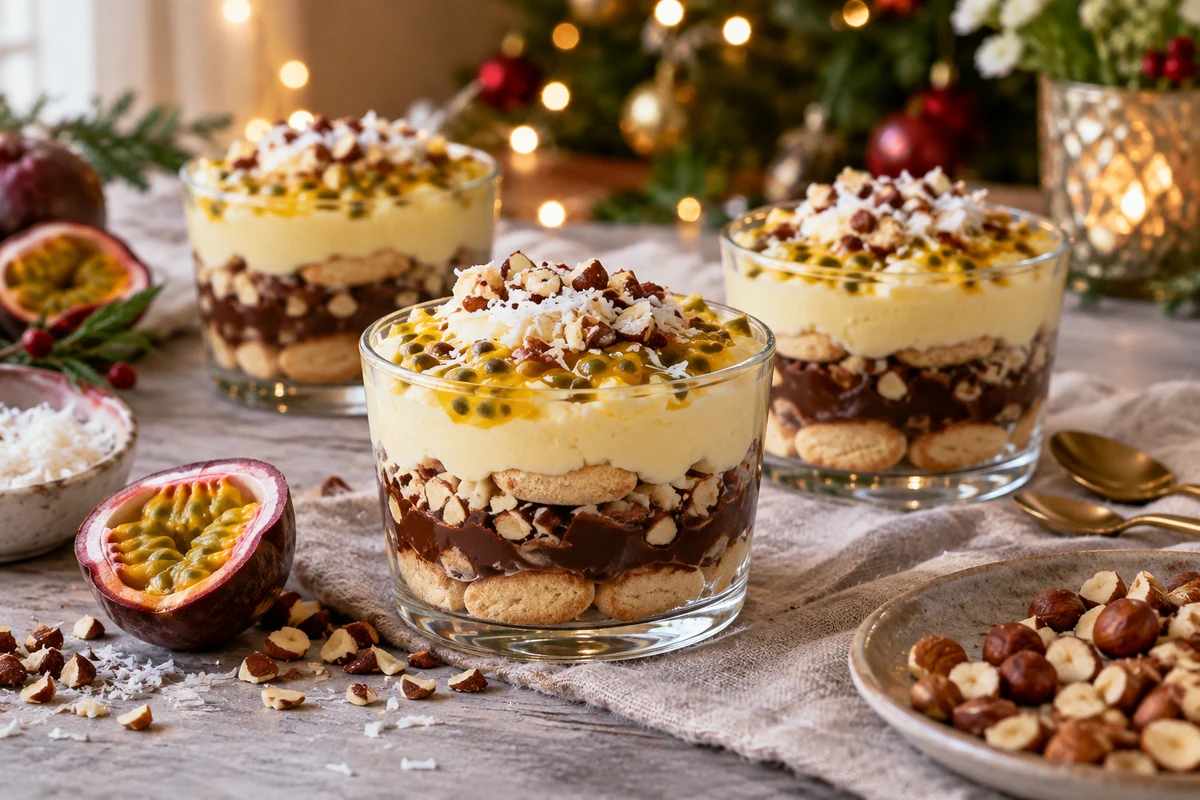
- Visible layers: glass dishes show off contrasting biscuits, cream and fruit.
Practical Tips
A few simple choices make preparation and serving easier, although texture depends on the recipe and ingredients rather than a guaranteed professional finish.
- Assemble up to 24 hours ahead: chilling helps biscuits soften and flavours settle; use ingredients with sufficient remaining shelf life.
- Individual portions: small glasses make serving convenient and keep portions consistent.
- Choose substitutions carefully: plain biscuits can replace sponge fingers with a different texture. Replacing cream alone does not make a dessert vegan if it still contains dairy condensed milk, eggs or milk biscuits.
- Simple decoration: fresh fruit, chocolate curls and chopped nuts work well when suitable for your guests.
- Safe transport: cover the dessert and keep it cold in an insulated box with ice packs; a lid alone does not keep food refrigerated.
A well-planned pavê can be a colourful centrepiece without complicated decorating techniques.
Planning Portions and Assembly
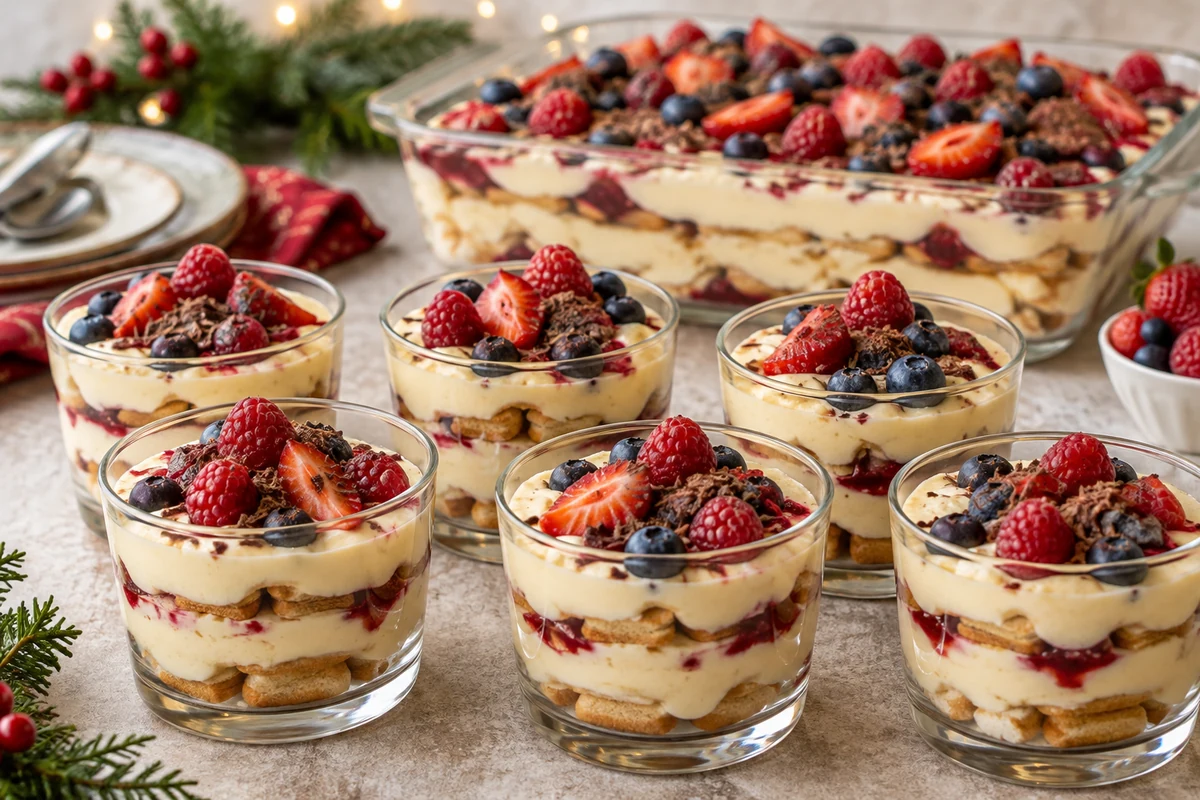
Estimate the amount of finished dessert needed before choosing dishes. Dish dimensions alone do not tell you the weight or number of servings.
Calculating Portions
Use these figures as planning guides:
- Choose a serving size: roughly 120–180 g may suit an adult dessert portion, with 150 g a convenient planning figure rather than a requirement.
- Multiply by guest numbers: 20 portions of 150 g require 3 kg of finished dessert.
- Check the actual yield: a 20 × 30 cm dish does not automatically provide 12–15 portions. Depth, recipe weight and portion size determine the result; weigh a finished batch or add up usable ingredients when planning.
- Divide the total between flavours: offering three versions does not mean making a full serving of all three for everyone.
Organising Assembly
- Choose the menu: decide on flavours and whether to use shared dishes or individual cups.
- Allow a modest margin: an extra 10% of ingredients can be useful, but avoid making more perishable dessert than you can keep safely chilled.
- Prepare suitable creams and toppings ahead: cool cooked mixtures promptly and refrigerate within 1–2 hours; count their storage time from preparation, not assembly.
- Assemble 12–24 hours ahead where suitable: cover and refrigerate. Chilling softens the biscuits but does not guarantee a sliceable set.
- For individual cups: assemble the day before or on the day, leaving the required chilling time. Add delicate fruit and crunchy toppings near serving.
- Transport cold: use secure containers inside an insulated cool box and refrigerate again on arrival.
- Finish near serving time: add curls, nuts and fruit last to preserve their appearance and texture.
Substitutions and Planning Tips
- Different biscuits: plain sweet biscuits or chocolate sandwich biscuits give different textures; adjust dipping time rather than soaking them heavily.
- Dairy-free versions: replace milk, cream and condensed milk, and check biscuits and chocolate. Lactose-free dairy still contains milk proteins and is not suitable for a milk allergy.
- Children’s portions: offer a smaller, age-appropriate serving, with toppings suitable for their age and any allergies.
- Label containers: record flavour, ingredients, allergens and preparation date; identify any alcohol-containing version clearly.
- Use suitable equipment: a large enough saucepan and mixing bowl make larger batches easier, but allow extra time for even heating and rapid cooling.
Five Pavê Recipes for the Festive Table

Choose classic custard, passion fruit, chocolate and nuts, vegan coconut and fruit, or lemon. The recipes below are intended to be served with a spoon rather than unmoulded as firm cakes.
Classic Custard Pavê
A creamy biscuit-layer dessert with a cooked custard base.
- 500 ml milk for the custard; whole milk gives a richer texture.
- 395 g sweetened condensed milk. A product labelled light is not automatically sugar-free or appropriate for a particular medical diet.
- 200 g cream, to stir into the cooked custard.
- 2 tbsp cornflour, mixed with some of the cold milk before heating.
- 2 egg yolks; these must be cooked thoroughly in the custard.
- 200 g sponge fingers in total, regardless of packet size; plain sweet biscuits give a different texture.
- Up to 1 cup milk for dipping, using only what the biscuits need, with an optional 1 tsp vanilla extract.
- Cook the custard: whisk milk, condensed milk, dissolved cornflour and yolks while cold, then heat gently, stirring continuously until thickened and thoroughly cooked. Check the mixture reaches 75°C for 30 seconds or 70°C for 2 minutes; do not stop merely because it coats a spoon.
- Finish the cream: remove from the heat, stir in the cream and cool promptly in a shallow container. Avoid leaving a large pan at room temperature for hours.
- Start assembly: briefly dip biscuits in milk and arrange a layer in a suitable dish.
- Add layers: spread over half the custard and repeat with remaining biscuits and custard.
- Chill: cover and refrigerate for at least 4 hours. Add optional chocolate curls or freshly whipped cream just before serving.
- Variations: add well-drained tinned fruit or replace biscuits with cooked cake pieces, adjusting the dipping liquid to avoid sogginess.
Passion Fruit Pavê
Tart passion fruit balances the sweetness of condensed milk in this spoon dessert.
- 395 g sweetened condensed milk.
- 200 ml cream.
- About 120 ml concentrated passion fruit juice or strained pulp, added gradually because strength varies.
- 1 tbsp cornflour dissolved in 2 tbsp cold water.
- 200 g sponge fingers, plus up to 1 cup milk for brief dipping and optional vanilla extract.
- Pulp of 2 passion fruits and up to 2 tbsp sugar for the topping; passion fruit jam is an alternative.
- Cook the cream base: combine condensed milk, cream and dissolved cornflour while cold. Heat gently, stirring, until the starch is cooked and the mixture thickens. Do not add the acidic juice during prolonged cooking.
- Add passion fruit: remove from the heat and let the mixture cool slightly, then stir in the juice gradually. Stop if the flavour or consistency is right before all the juice is used.
- Layer: briefly dip biscuits in milk and alternate with the passion fruit cream in a suitable dish.
- Make the topping: heat the fruit pulp with sugar to taste for a few minutes, then cool promptly.
- Chill: add cooled topping and refrigerate for 4–6 hours, or overnight within the storage limits below.
- Variations: fold whipped cream into a fully cooled mixture for an airier texture. Diet or light condensed milk changes the formulation and is not an automatic low-calorie substitute.
Chocolate and Nut Pavê
A rich chocolate version with a crunchy nut topping.
- 200 g dark chocolate; milk chocolate gives a sweeter result and a different set.
- 300 ml cream.
- 395 g sweetened condensed milk.
- 1 tbsp cornflour dissolved in 2 tbsp cold milk, plus up to 1 cup milk for dipping biscuits.
- 200 g chocolate or plain sweet biscuits.
- 150 g chopped nuts, such as walnuts, almonds or Brazil nuts; reserve some for the topping.
- Melt the chocolate: use a bowl over gently simmering water without touching it, or short microwave bursts, stirring frequently.
- Cook the cream: combine condensed milk, cream and dissolved cornflour in a saucepan. Heat gently and stir until the starch is cooked and the mixture thickens. Remove from the heat and stir in melted chocolate.
- Layer: cool the mixture promptly, briefly dip biscuits in milk and alternate biscuits, chocolate cream and nuts.
- Finish: end with cream and reserve some nuts and optional chocolate curls for serving.
- Refrigerate: cover and chill for at least 4 hours.
- Variations: use hazelnut praline or a suitable crunchy topping. A tablespoon of liqueur is optional for an explicitly labelled adults-only version; keep an alcohol-free option.
Vegan Coconut and Fruit Pavê
A coconut-based version without animal ingredients when suitable biscuits, cream and dipping drink are used. Vegan does not mean free from all allergens.
- 400 ml full-fat coconut milk, the cooking variety rather than a diluted coconut drink.
- 200 ml coconut cream or a suitable thick plant-based cooking cream.
- 3 tbsp cornflour dissolved in 3 tbsp cold water.
- 200 g vegan sweet biscuits, plus a little plant-based drink for dipping; check that both milk and egg ingredients are absent.
- 1 cup prepared fresh fruit, such as strawberries, blueberries or mango.
- 2 tbsp demerara sugar, adjusting to taste.
- Thicken the base: warm coconut milk and sugar, stir in the cornflour slurry and bring to a gentle simmer, stirring until the starch is cooked and the mixture thickens.
- Add cream and cool: remove from heat, stir in coconut cream and cool promptly in a shallow container.
- Layer: briefly dip biscuits in the plant-based drink and alternate with coconut cream.
- Add fruit: distribute prepared fruit between layers, reserving a little for serving.
- Chill: refrigerate for at least 3–4 hours and add the reserved fruit just before serving.
- Variations: add lemon zest for a fresh aroma. Oat cream has different fat and water contents, so use a tested oat-based version rather than assuming it replaces coconut milk exactly.
Lemon Pavê
A sweet, tangy dessert with the aroma of ordinary yellow lemons, known as limão siciliano in Brazil.
- 395 g sweetened condensed milk.
- 200 ml cream.
- Zest and juice of 2 lemons, adding juice gradually to taste rather than assuming a fixed yield from every lemon.
- 2 tbsp cornflour, mixed smoothly with some of the cold cream before heating.
- 200 g plain sweet biscuits, plus a little milk for brief dipping.
- Some of the lemon zest, reserved for decoration.
- Cook the base: combine condensed milk, cream and the smoothly mixed cornflour. Heat gently, stirring continuously until thickened and the starch is cooked. Keep the lemon juice out of the hot cooking stage.
- Add lemon: remove from the heat, cool slightly and stir in juice gradually to taste, along with most of the zest. More juice will change the consistency; the result is intended as a spoon dessert.
- Assemble: briefly dip biscuits in milk and alternate them with the cream in a suitable dish.
- Chill: refrigerate for at least 4 hours. Add reserved zest and optional crushed ready-made meringues near serving.
- Variations: a little passion fruit provides a different tang. Use ready-made meringues or a properly cooked meringue recipe; torching raw egg whites on top is not a reliable cooking method.
Classic Pavê: Ingredient Notes
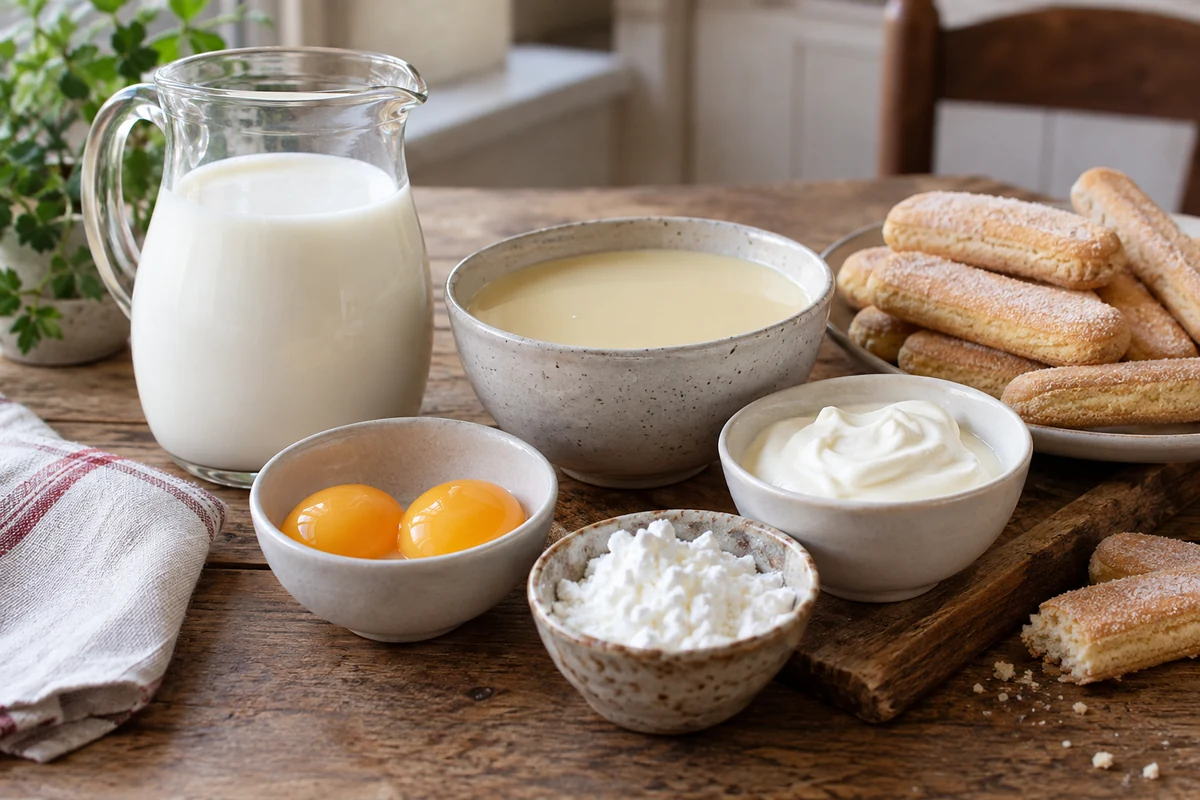
For the classic custard pavê, use the following amounts and the cooked-custard method above:
- 500 ml whole milk for the custard. Changing only this milk does not make the full recipe dairy-free.
- 395 g sweetened condensed milk, the sweet base of the custard; different formulations can change the texture.
- 200 g cream, stirred in after the custard has cooked.
- 2 tbsp cornflour, mixed with some of the cold milk. For an egg-free version, follow the coconut recipe below rather than guessing a starch replacement.
- 2 egg yolks, which must be thoroughly cooked in the custard.
- 200 g sponge fingers in total; packet sizes vary. Plain biscuits give firmer, thinner layers.
- Up to 1 cup milk for dipping, with optional 1 tsp vanilla extract. A tablespoon of liqueur is an optional adults-only variation, which must be clearly identified.
- Chocolate curls or cocoa powder, optional, to decorate; nuts or fruit introduce their own texture and allergen considerations.
- Optional vanilla extract: use the teaspoon already listed in the dipping milk, or in the custard, rather than adding it twice by mistake.
Substitutions and Tips
- Dairy-free: all dairy components, including condensed milk, need suitable replacements. The coconut recipe is a clearer starting point.
- Egg-free: choose the coconut version and suitable biscuits. Simply removing yolks does not establish the correct texture or make the remaining dairy ingredients vegan.
- Alternative biscuits: plain sweet biscuits create different layers; chocolate sandwich biscuits add chocolate flavour and extra sweetness.
- Less sweet: choose a smaller serving or an unsweetened topping. Reducing condensed milk changes both sweetness and structure, so test any reformulation before a party.
- Yield: choose a dish that gives useful layers and divide the actual finished weight by your intended portion size. A 20 × 30 cm dish alone does not establish 12–15 servings.
Passion Fruit Pavê: Detailed Method
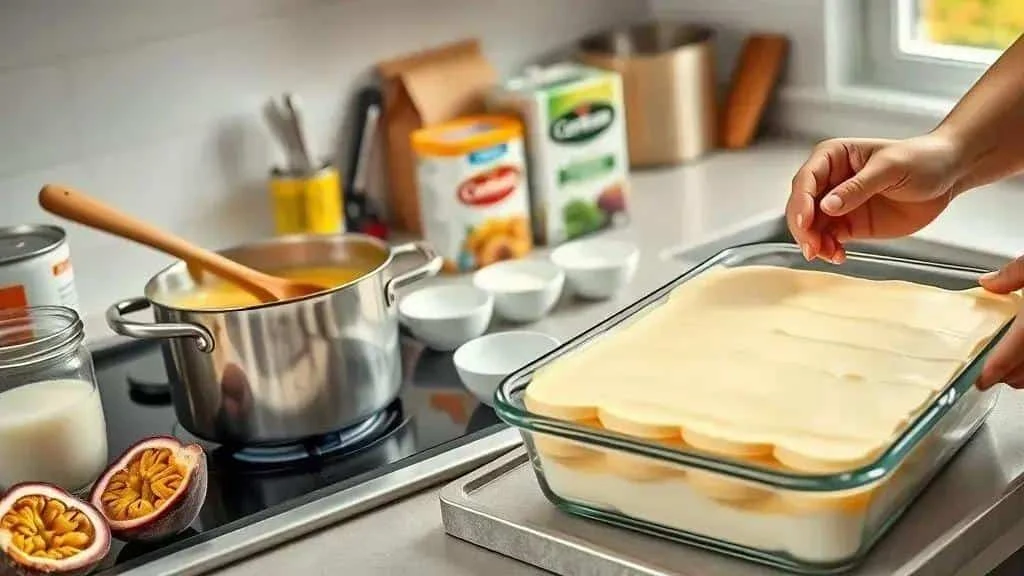
- Measure everything: prepare 395 g condensed milk, 1 tbsp cornflour, 2 tbsp cold water, about 120 ml passion fruit juice, 200 ml cream, 200 g sponge fingers, up to 1 cup milk for dipping, pulp of 2 passion fruits and up to 2 tbsp sugar for the topping. Have a saucepan, whisk, dish and bowls ready.
- Make the topping: heat passion fruit pulp with sugar to taste for about 2–3 minutes, stirring, then cool promptly. Strain some seeds out if preferred.
- Mix the cornflour: stir it into 2 tbsp cold water until smooth.
- Cook the base: combine condensed milk, cream and the slurry in a saucepan. Heat gently, stirring constantly until the starch is cooked and the mixture has thickened; do not rely on a fixed 4–6 minutes for every batch.
- Add the juice: remove from the heat and let cool slightly, then stir passion fruit juice in gradually to taste. The cream is already included in the base, so do not add another 200 ml.
- Dip the biscuits: pour some of the milk into a shallow bowl, add optional vanilla and dip each biscuit briefly. Use only enough milk to moisten them.
- Assemble: layer biscuits and half the cream, then repeat, finishing with cream.
- Top and chill: add cooled passion fruit topping, cover and refrigerate for at least 4 hours, or overnight within the storage period below.
- Finish for serving: optional lemon zest, whipped cream, nuts or white chocolate change the flavour and allergens; choose a simple combination.
- Storage and transport: keep refrigerated at 5°C or below and transport in an insulated box with ice packs. Individual cups should also remain cold.
Tips and Alternatives
- Balance the flavour: add the measured juice gradually. Do not keep adding juice to a loose mixture or assume that removing a quarter of the condensed milk leaves the recipe unchanged.
- Vegan alternative: use the coconut base with a suitable passion fruit topping and vegan biscuits. Plant-based condensed milk brands vary and are not guaranteed direct replacements.
- If the base is too loose: check that the cornflour was heated properly before adding acidic juice. Cool a small sample to assess it; avoid adding dry starch or repeatedly boiling the finished acidic cream.
- Airier texture: fold 100 g freshly whipped cream into the fully cooled mixture before assembly. This makes a softer dessert and adds to the yield.
- Yield: weigh the finished dessert for accurate portions. These quantities do not support the original claim of 12–15 portions of 150 g; serve fewer full portions or smaller tasting cups.
Chocolate and Nut Pavê: Ingredients and Detailed Method
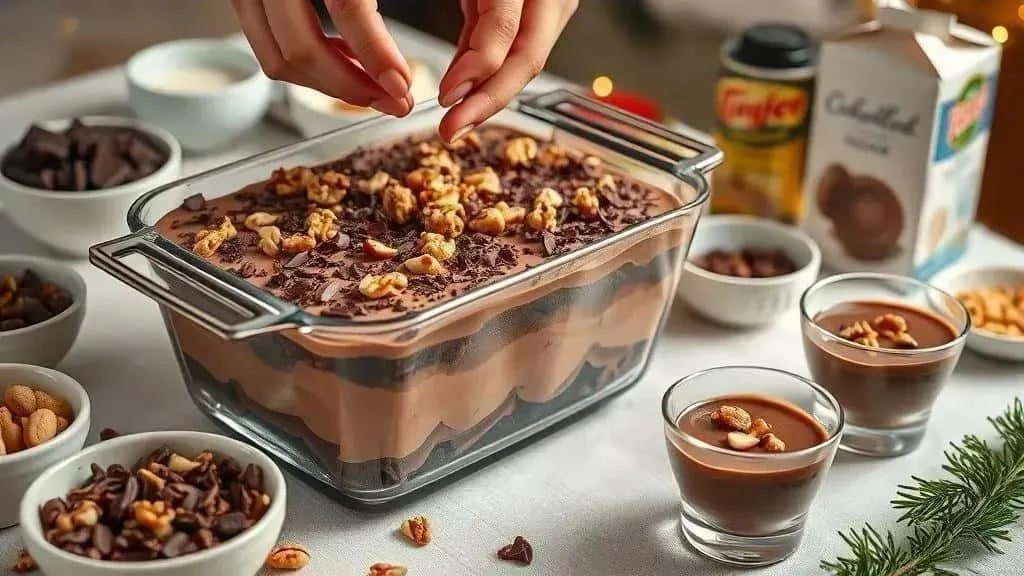
Prepare this chocolate and nut pavê ahead and add the crispest toppings close to serving.
Ingredients
- 200 g dark chocolate, or milk chocolate for a sweeter result.
- 395 g sweetened condensed milk. Coconut condensed milk is a different formulation, so use a tested plant-based version if making broader changes.
- 300 ml cream.
- 1 tbsp cornflour dissolved in 2 tbsp cold milk.
- 200 g chocolate or plain sweet biscuits.
- Up to 1 cup additional milk for dipping, using only what is needed.
- 150 g chopped walnuts, almonds or Brazil nuts, with some reserved for decoration.
- Optional chocolate curls or cocoa, to finish.
- Optional 1 tbsp chocolate liqueur or rum, for a clearly labelled adults-only version.
Method
- Prepare: chop nuts and chocolate and mix cornflour with 2 tbsp cold milk.
- Melt chocolate: use a gentle bain-marie or short microwave bursts, stirring frequently.
- Cook the cream base: combine condensed milk, all 300 ml cream and cornflour slurry while cold. Heat gently and stir continuously until thickened and the starch is cooked, taking care not to scorch the sugary mixture.
- Add chocolate: remove from the heat and stir in melted chocolate until smooth.
- Cool promptly: the cream has already been used in the cooked base. For an optional airier version, fold in 50 g whipped cream only once the mixture is cold; this produces a softer texture.
- Moisten biscuits: briefly dip in a shallow bowl of milk without soaking.
- Layer: alternate biscuits, chocolate cream and some nuts, dividing the mixture to suit the dish. Finish with cream.
- Chill: cover and refrigerate for at least 4 hours, saving the final nuts and curls for serving if you want them crisp.
- Serve cold: bring out only the amount needed, and add toppings near serving. There is no need to leave the whole dessert warming for 15 minutes first.
- Storage: keep covered at 5°C or below and use within 48 hours of preparation, or sooner if required by an ingredient. Use a cool box with ice packs for transport.
Tips and Alternatives
- Toasted nuts: toast gently until fragrant, watching closely, and cool before adding. Nuts burn quickly, so timing depends on the method and size.
- Less sweet flavour: try dark chocolate around 70% cocoa. Cutting the condensed milk changes the recipe’s balance and should be tested separately.
- Vegan option: choose the avocado-chocolate variation below with suitable biscuits and chocolate ingredients, rather than relying on several untested swaps in this dairy cream.
- Optional alcohol: add the tablespoon of liqueur to cooled cream only for adults who want it; keep alcohol-free portions separate and clearly labelled.
- Firmness: chill thoroughly and serve with a spoon. More starch or less cream changes the formula; do not promise a sliceable result without testing it.
Pavê Variations and Vegan Options
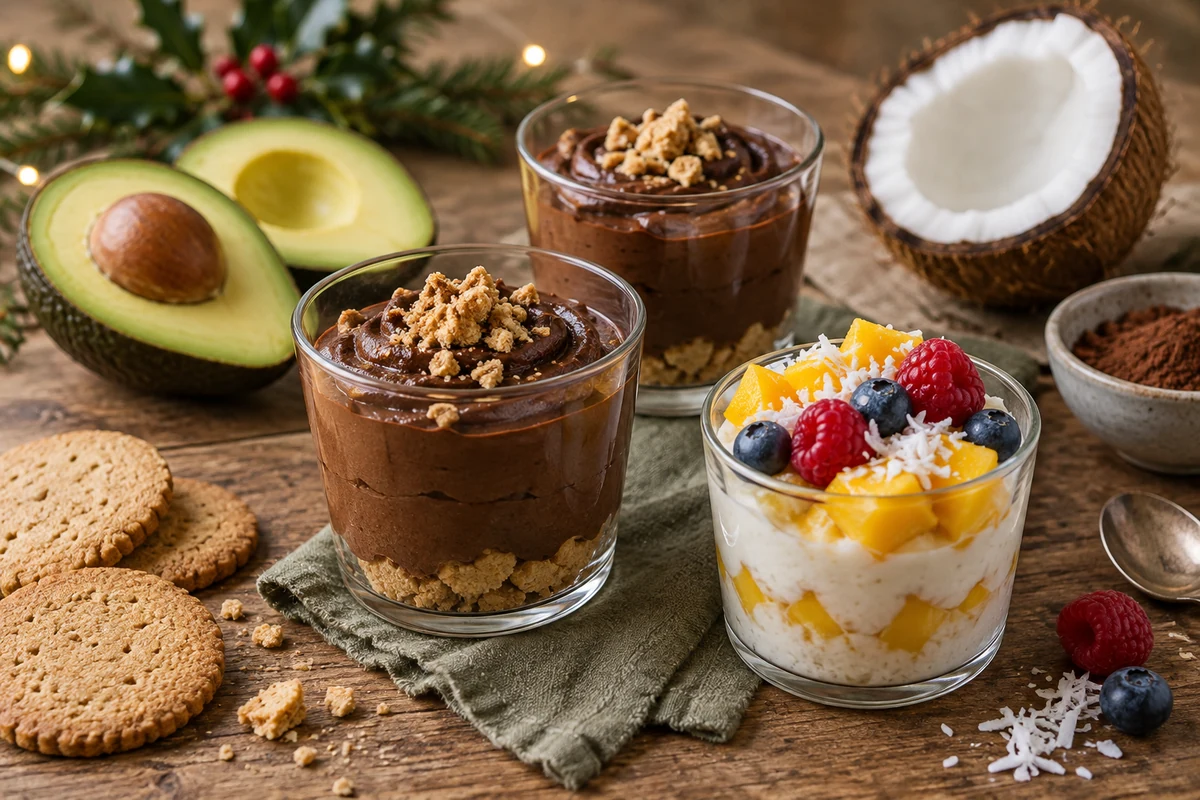
Explore different flavours while checking all components, including biscuits, dipping liquid and decorations.
Flavour Ideas
- Coconut and fruit: a tropical combination with a contrast between cream and fresh fruit.
- Chocolate and avocado: avocado gives a dairy-free creamy base when paired with suitable biscuits and toppings.
- Vegan passion fruit: add a passion fruit topping to the coconut version.
- Granola and nuts: add crunch near serving, checking for nuts, gluten, honey or dairy as relevant.
- Lemon and vegan meringue: use a suitable plant-based lemon cream and ready-made vegan meringues or a tested recipe.
Vegan Coconut and Fruit Pavê: Ingredients
- 400 ml full-fat coconut milk, the cooking variety.
- 200 ml coconut cream or a suitable thick plant-based cooking cream.
- 3 tbsp cornflour dissolved in 3 tbsp cold water.
- 200 g vegan sweet biscuits, plus a little plant-based drink for dipping.
- 1 cup prepared fresh fruit, such as strawberries, mango or berries.
- 2 tbsp demerara sugar, adjusting to taste.
Vegan Coconut Pavê: Method
- Warm the coconut milk: combine the 400 ml coconut milk and sugar in a saucepan over a gentle heat.
- Cook the cornflour: add the slurry and stir continuously, bringing to a gentle simmer until the starch is cooked and the mixture thickens.
- Finish the cream: remove from heat, stir in coconut cream and cool promptly in a shallow container.
- Dip biscuits: use a little cold plant-based drink, such as oat drink, and dip only briefly.
- Layer: alternate biscuits, cream and prepared fruit in a dish or cups.
- Chill: refrigerate for at least 3–4 hours and add any reserved fruit near serving.
Vegan Chocolate and Avocado Pavê: Ingredients
- 400 g ripe avocado flesh; the number of avocados depends on their size, so do not count skins and stones in the weight.
- 4 tbsp unsweetened cocoa powder.
- 4 tbsp agave syrup or cane syrup, adjusting to taste.
- 200 g vegan biscuits, plus a little plant-based drink for dipping.
- 50 g chopped nuts, such as walnuts or almonds.
Chocolate and Avocado Pavê: Method
- Blend the cream: process avocado flesh, cocoa and syrup until smooth.
- Taste: adjust sweetness with a little more syrup if wanted.
- Layer: briefly dip biscuits in plant-based drink, alternate with avocado cream and add nuts between layers or on top.
- Chill: refrigerate for 2–3 hours before serving. This remains a soft spoon dessert and is best enjoyed freshly prepared, within the safe chilled storage period.
Adapting for Vegan or Dairy-Free Guests
- Milk alternatives: oat, almond or coconut drinks can suit dipping, but their behaviour in cooked creams varies.
- Cream alternatives: choose a plant-based cooking cream with suitable fat and consistency. Whipped aquafaba adds air but is not a direct replacement for cream.
- Condensed milk alternatives: use a recipe designed for the specific plant-based product. Date paste or a reduced plant drink does not necessarily match condensed milk’s sweetness or structure.
- Egg-free creams: use the coconut or avocado versions here, rather than assuming extra starch or aquafaba replaces yolks in any recipe.
- Biscuits: check that they contain no milk, butter, eggs or other animal ingredients when a vegan dessert is required.
Texture and Flavour Tips
- Firmness: cook the cornflour correctly, chill fully and assess a small batch before a party. Plant-based products vary, so an extra fixed spoonful of starch is not a universal solution.
- Sweetness and acidity: citrus and passion fruit balance sweet flavours, but adding large amounts of juice can make the cream loose or split.
- Crunch: nuts and granola soften between moist layers; reserve some for serving.
- Storage: refrigerate promptly and decorate close to serving so fruit and toppings keep their texture.
- Yield: calculate from the actual finished quantity; vegan and dairy recipes do not automatically produce identical amounts.
New Year’s Eve Flavour Combinations
- Coconut and passion fruit: a tropical contrast of creamy and tangy flavours.
- Chocolate and candied orange: a rich citrus combination.
- Lemon and vegan meringue: sweet crunch with a tangy cream.
- Berries and coconut cream: colourful fruit against a pale coconut layer.
Presentation
- Individual cups: use clean, food-safe glasses and provide separate spoons.
- Visible layers: clear dishes show off the colours and biscuit texture.
- Simple decoration: fresh fruit, lemon zest, nuts or mint can finish the dessert neatly.
- Clear identification: label vegan choices and allergens separately; a vegan label is not an allergen-free guarantee.
Finishing, Storage and Transport
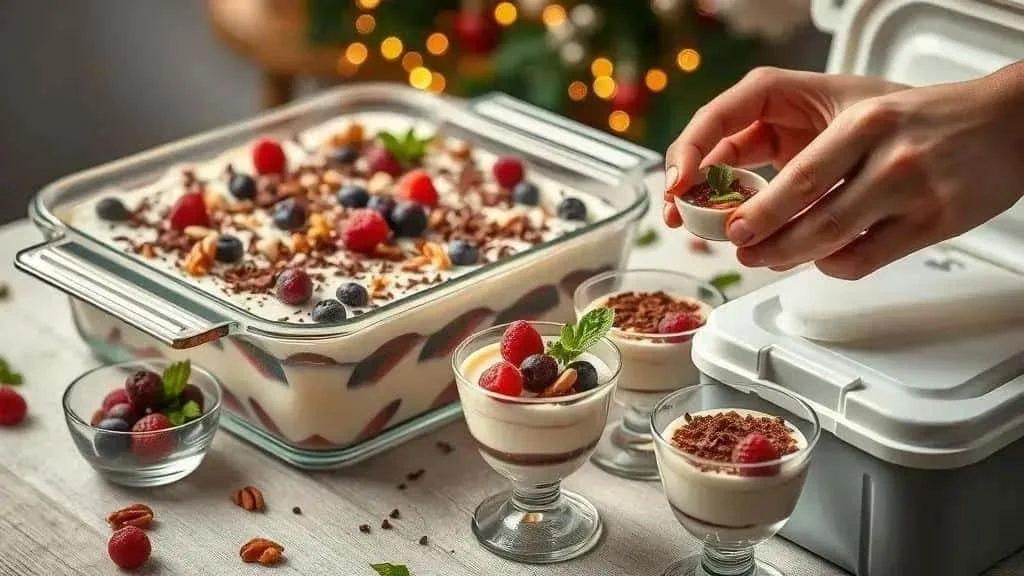
Good presentation depends on careful chilling and serving as well as attractive toppings.
Decoration
- Add delicate toppings last: fresh fruit, toasted nuts and granola keep their appearance and crunch better when added near serving.
- Use light finishing touches: a little citrus zest, sifted cocoa or chocolate curls can be enough.
- Whipped cream and meringues: use suitable prepared toppings and keep dairy cream cold. Add crisp meringues late so they do not soften in the dessert.
- Fruit topping: a cooled fruit sauce gives contrast. Any liqueur addition should be optional, adults-only and clearly labelled.
- Final garnish: mint leaves, prepared berries or a small amount of caramel decoration can finish the dish; match toppings to guests’ age and allergies.
At the Table
- Individual portions: label flavours and allergens clearly and bring out small batches, leaving the rest refrigerated.
- Clear dishes: use a clean serving spoon and keep the layers visible.
- Vary heights safely: use stable cups and serving stands without precarious stacks.
- Colour contrast: passion fruit, berries and lemon zest complement pale creams.
Storage at Home
- Refrigeration: keep desserts covered at 5°C or below, using fresh ingredients within their use-by dates.
- Storage period: use within 48 hours of preparation, or sooner if an ingredient requires it. Vegan creams are also perishable; assembly does not restart the storage clock.
- Avoid soaking: dip biscuits quickly rather than leaving them submerged.
- Keep toppings separate: store prepared fruit cold and crunchy toppings dry until needed.
Safe Transport
- Secure containers: choose a flat base and a fitted lid so the dish remains stable.
- Maintain chilling: use an insulated cool box with sufficient ice packs and refrigerate promptly on arrival.
- Prevent movement: keep the box level and secure during the journey.
- Individual cups: pack in a covered, stable tray inside the cool box; smaller containers still require temperature control.
Keeping the Dessert at Its Best
- Prepare at a sensible time: the day before is convenient if the recipe and ingredients allow it. Individual cups do not have a longer safe life than a shared dish.
- Check texture: assess a chilled spoonful before serving. These desserts need not hold a clean cut; longer chilling cannot correct every formulation problem.
- Freezing: creamy layers and fresh fruit may split or become watery. Prefer refrigeration for these recipes unless a particular version has been tested for freezing; thaw any suitable frozen portion in the fridge.
- Clean serving utensils: use a separate spoon for each dessert and avoid allergen cross-contact. Return suitable untouched portions to the fridge promptly, not food that has sat warm for a prolonged period.
A Sweet Finish to the Celebration
Choose a pavê flavour, check the recipe quantities and allow enough time to chill it properly. A small trial batch is useful before making a large dessert for guests.
For more festive recipes and presentation ideas, visit the I Love Christmas blog and follow the site’s social channels.
Enjoy creating your own combination of layers and toppings, and have a happy New Year.
Frequently Asked Questions about New Year’s Eve Pavê
How many portions does a medium dish of pavê make?
It depends on the finished weight, depth and serving size, not just the dish dimensions. Divide the finished dessert’s weight by your chosen portion, such as 150 g. Several recipes here make less than the 1.8–2.25 kg needed for 12–15 portions of that size.
Can I make pavê ahead, and when should I decorate it?
Usually the day before is convenient, provided it stays refrigerated and within ingredient use-by dates. Cool cooked creams promptly, count storage from preparation and use within 48 hours or a shorter ingredient limit. Add delicate fruit, crunchy toppings and whipped cream close to serving.
How can I make a vegan or dairy-free version?
Use the coconut or avocado recipe with suitable vegan biscuits and plant-based dipping liquid. Check every topping too. Replacing only milk or cream is insufficient if condensed milk or eggs remain; date paste and aquafaba are not universal direct substitutes. Lactose-free dairy is not milk-allergen-free.
How should I transport pavê to a party?
Use a securely covered dish or stable individual cups inside an insulated cool box with ice packs. Keep the box level, minimise the journey and refrigerate promptly on arrival. A fitted lid protects the layers but does not control temperature.
How do I prevent soggy biscuits?
Dip each biscuit briefly and use only as much liquid as needed. Different biscuits absorb differently, so test one first. Keep cream layers suitably thick and avoid adding excess fruit juice.
Sources and Further Reading
- UK Government: cooking food safely
- Food Standards Agency: chilling food
- Food Standards Agency: allergen guidance
- UK Government: safe use of eggs and pasteurised egg products