Plan a budget-friendly New Year’s Eve meal with ten menu ideas, detailed recipes for tropical salad, festive rice and roast chicken, and additional starters and desserts. Compare ingredient prices, prepare suitable components ahead and keep presentation simple to make entertaining more manageable.
A budget-friendly New Year’s Eve meal can still feel special. Here are practical menu ideas, three detailed core recipes and additional snacks and desserts to help you plan a celebration without overspending.
Why Choose a Simple New Year’s Eve Menu?
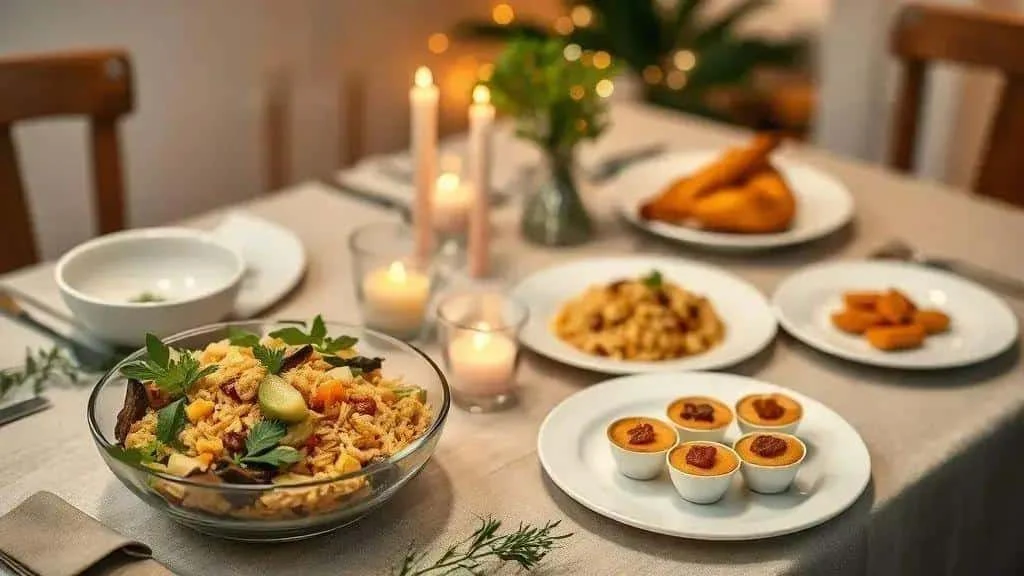
A simple New Year’s Eve meal can reduce shopping and preparation while leaving more time to enjoy the evening with family and friends.
Practical Benefits
- Budget control: compare seasonal produce and affordable alternatives to expensive ingredients.
- Less pressure: fewer dishes mean fewer cooking tasks to coordinate.
- Preparation ahead: suitable dishes or components can be made earlier, within their safe storage limits.
- Less waste: buying appropriate quantities and storing food well helps make better use of ingredients.
- Flexibility: a short menu is easier to adapt to guests’ preferences and dietary needs.
Saving Money Without Losing Flavour
- Compare seasonal produce, frozen options and offers rather than assuming one source is always cheapest.
- Replace expensive ingredients with suitable alternatives, such as an affordable white fish instead of costly shellfish.
- Buy larger packs only when the unit price and storage space make sense, and freeze suitable portions promptly.
- Compare the cost of homemade sauces and seasonings with ready-made versions.
- Use safely stored cooked meat in sandwiches or salads the next day; unsuitable buffet leftovers should not be reused.
A Simple Planning Routine
- Choose a short menu: select three or four complementary dishes, covering the courses you want to serve.
- Write a shopping list: use quantities for your actual guest count to avoid unnecessary purchases.
- Buy ahead: pick up shelf-stable ingredients early and check dates on offers.
- Prepare suitable components: washed, dried salad leaves, sauces and chilled desserts can simplify the day when stored correctly.
- Share tasks: ask willing guests to help with drinks, table setting or a dish.
- Plan service: put plates and cutlery somewhere accessible and leave room for serving.
Simple Finishing Touches
- Fresh herbs can add colour and aroma to several dishes from one purchase.
- A little suitable glaze can give roasted vegetables a glossy finish; avoid adding sweetness unnecessarily.
- Use clean serving dishes and simple decoration. Battery-powered candles give atmosphere without an open flame near food or foliage.
- Label dishes clearly and keep ingredient information available for guests with dietary requirements.
Planning a Budget-Friendly Celebration Step by Step
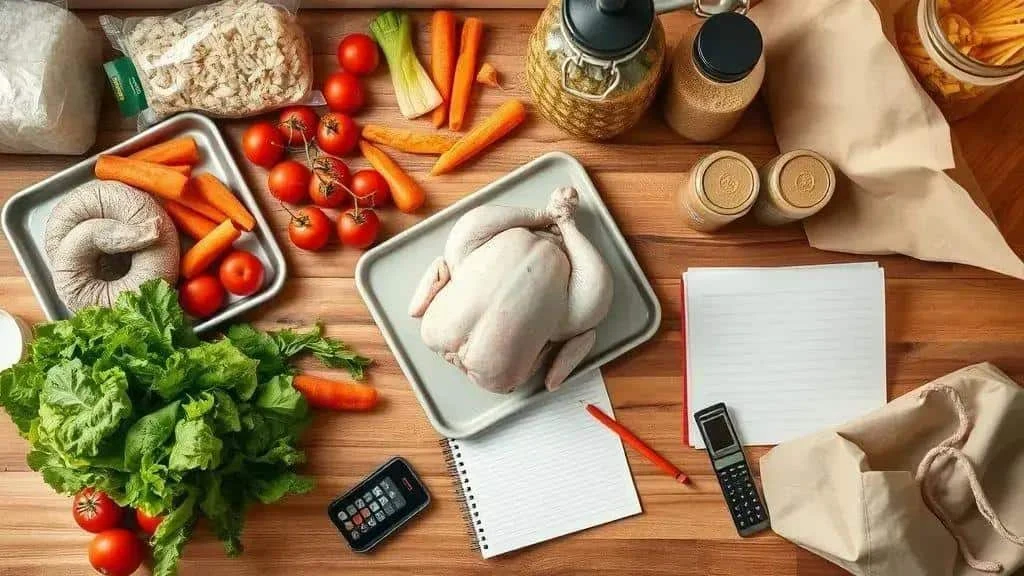
Organise your budget-friendly meal by deciding what matters most, choosing dishes with manageable yields and sharing tasks where possible.
Step-by-Step Planning
- Set a budget: one possible starting split is 35% for the main dish, 25% for sides, 20% for drinks, 15% for dessert and 5% for decoration. Adjust these illustrative figures to your priorities.
- Confirm numbers: ask who is attending and allow a modest 5–10% reserve if useful.
- Keep the menu focused: choose three or four dishes that scale easily for your group.
- List ingredients: combine quantities across recipes so you do not buy the same ingredient twice.
- Compare prices: look at supermarkets, markets and online options, comparing unit prices and usable quantities.
- Make a schedule: separate shopping, preparation and cooking tasks. Only prepare food early when its ingredients and storage instructions allow it.
- Share responsibilities: arrange contributions such as drinks or a salad with willing guests.
- Choose useful dishes: roast meat can provide a planned next-day meal if cooled and stored safely; avoid making excess rice simply for leftovers.
- Estimate food portions: roughly 150–200 g of cooked boneless meat or a suitable alternative may suit an adult main course, depending on the menu. This is food weight, not grams of protein. Use the rice recipe’s measured yield rather than a vague carbohydrate allowance.
- Check equipment: gather serving dishes, utensils and storage containers. Reuse crockery you already own where practical.
- Plan the day: coordinate oven space, finishing times and safe hot or chilled holding.
- Prepare for leftovers: have shallow containers ready and plan how food will be cooled and transported safely.
- Review: adjust quantities to final confirmations without buying unnecessary last-minute offers.
Quick Savings Tips
- Compare seasonal, frozen and tinned produce for value and suitability.
- Check unit prices before buying larger packs of rice, pulses or nuts.
- Consider chicken or an affordable white fish instead of more expensive seafood.
- Make sauces at home when the ingredients and effort offer better value.
- Plan sandwiches, pies or salads with safely stored leftovers rather than letting food go to waste.
Shopping Checklist
- Main dish: for example, the 1.5–2 kg chicken below; adjust for edible yield, appetites and side dishes.
- Rice: the recipe below uses 360 g dry rice for eight side portions. Scale from that rather than buying 1 kg for eight people automatically.
- Vegetables and leaves, such as lettuce, tomatoes, carrots and onions.
- Fruit for salad or dessert; compare pineapple, mango, apples and seasonal alternatives.
- Oil, salt, pepper and basic seasonings.
- Water and other drinks suited to your guests; estimate by duration, preferences and pack sizes rather than a fixed drinking rate.
- Simple dessert ingredients, such as condensed milk, biscuits, cocoa or fruit.
- Waste bags, foil where needed and clean leftover containers.
Ten Menu Ideas and Approximate Timings
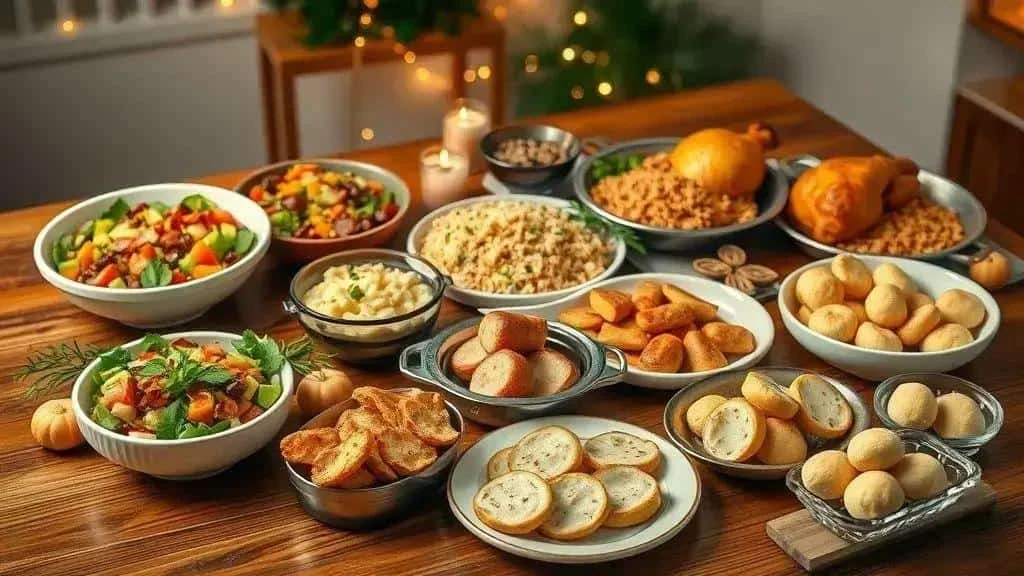
- Easy tropical salad — about 6–8 side portions, with roughly 15 minutes of preparation. Keep prepared ingredients chilled and dress shortly before serving.
- Simple festive rice — about eight side portions. Allow roughly 10 minutes to prepare and 20–25 minutes to cook and rest, adjusting to the rice packet.
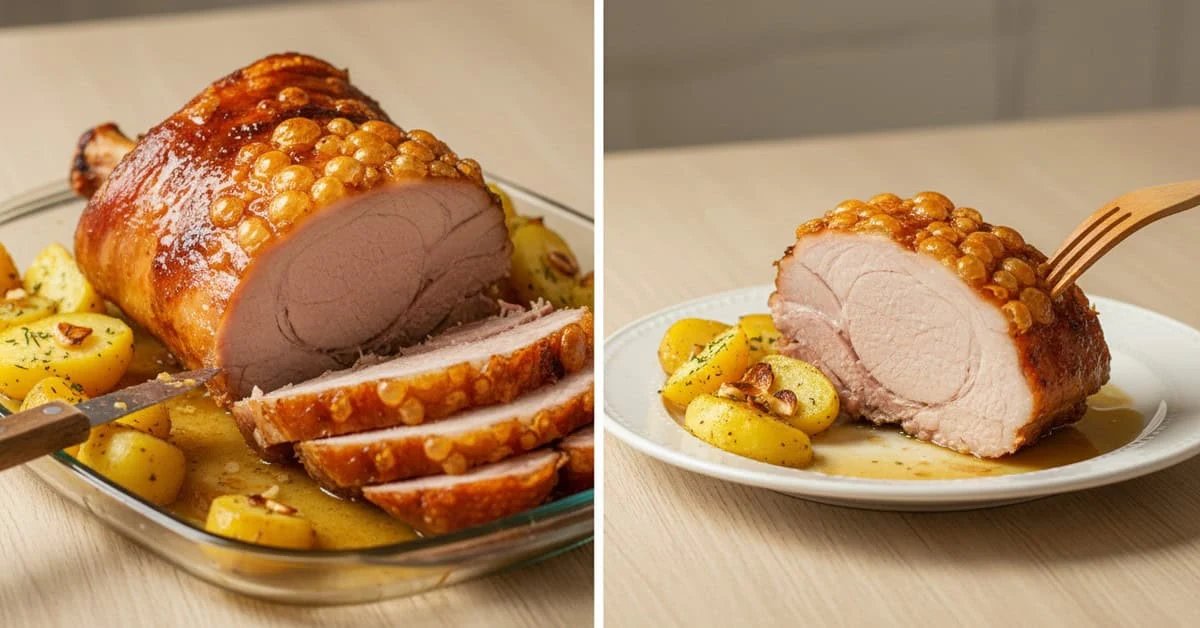
- Roast chicken — a 1.5–2 kg bird may provide 6–8 modest portions with generous sides, depending on appetites and edible yield. Allow preparation time, about 80–100 minutes of roasting as a guide, and resting; always check thorough cooking.
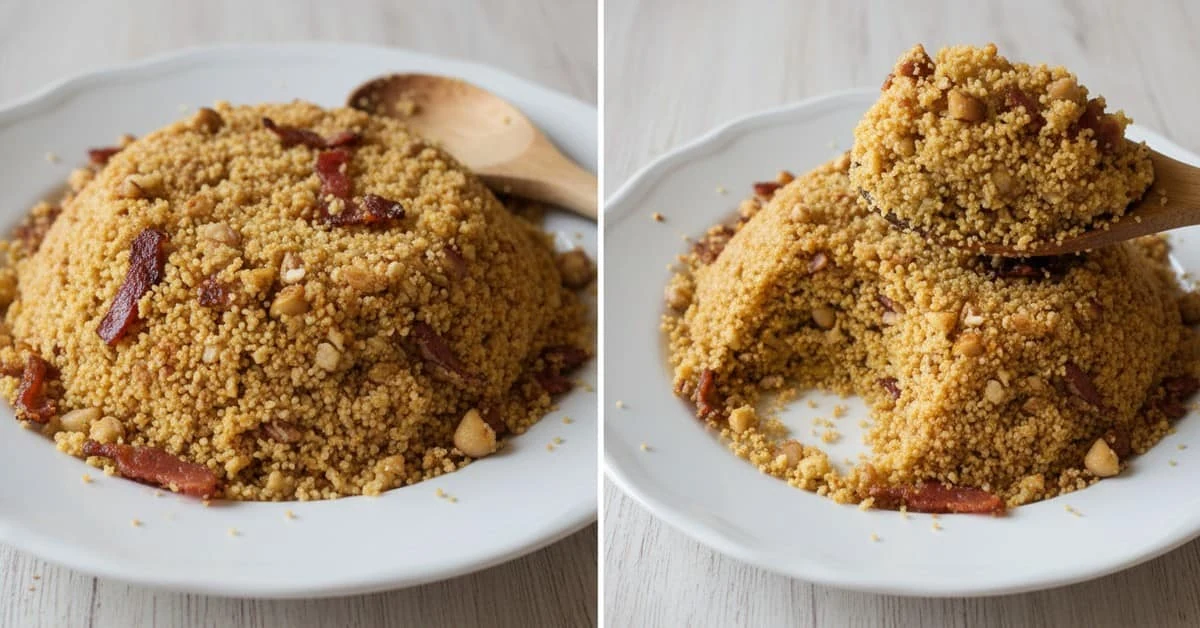
- Onion and bacon farofa — a Brazilian toasted cassava-flour side. A separate recipe sized for eight may take roughly 25 minutes; this is a menu suggestion rather than a full recipe below.
- Roast potato wedges — a flexible side, often needing roughly 40 minutes of roasting after preparation, depending on size and oven temperature.
- Vegetable mayonnaise salad — cooked vegetables with suitable ready-made mayonnaise can be prepared ahead and chilled. Allow time to cool the vegetables safely as well as preparing and cooking them.
- Herb-baked white fish — choose an affordable suitable fish and a recipe for six. Around 25 minutes is only a guide; thickness determines the cooking time.
- Brazilian savoury blender pie — the mini version below uses a blended batter. Allow around 15 minutes to prepare and 20–30 minutes or longer to bake, depending on tin size.
- Cheese and ham bites — the recipe below makes around 20 pieces and needs no cooking, using ready-to-eat ham. Allow roughly 20 minutes for assembly.
- Simple biscuit pavé — a soft layered dessert, suitable for about 8–10 small portions. Allow roughly 20 minutes to assemble and at least two hours to chill; texture depends on the biscuits and cream.
Using These Timings
- Prepare the day before: suitable chilled desserts, sauces and cooked vegetable salads can reduce work, provided their storage limits allow it.
- Coordinate roasts: chicken and potatoes may share an oven if their temperatures suit, with enough space and no raw juices contaminating ready-to-eat food.
- Finish fresh dishes last: dress salad and prepare rice and snacks near serving time.
- Leave a buffer: allow extra preparation time, but judge cooking by the food’s condition and temperature rather than a percentage alone.
- Share assembly: ask someone to handle drinks or suitable snack preparation.
Coordinating the Meal
- Start longer-cooking dishes first and keep chilled desserts refrigerated until service.
- Use separate timers. If holding food hot, keep the food at 63°C or above; covering a dish alone does not ensure safe hot holding.
- Label leftover containers with the dish and preparation date, without extending the ingredients’ original storage limits.
Easy Tropical Salad: Ingredients
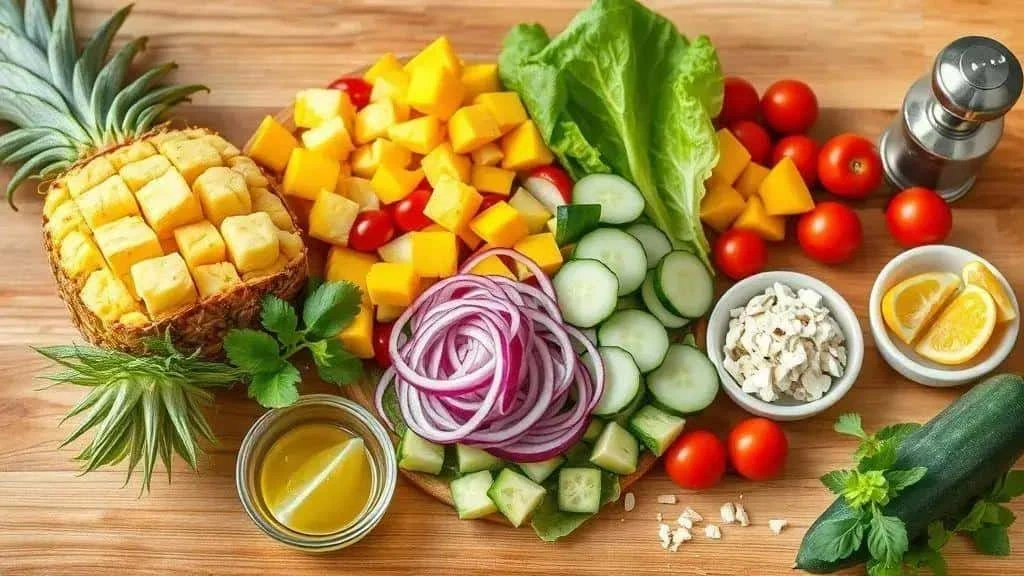
For about 6–8 side portions of easy tropical salad, gather the following ingredients. This Brazilian-inspired combination is refreshing, although tropical fruit is not locally seasonal in the UK at New Year.
- About 800 g prepared pineapple — peeled, cored and diced; buy enough whole fruit to allow for waste. Two green apples offer a different, smaller-volume alternative.
- 1 ripe mango — peeled and diced; a pear or extra pineapple gives a different variation.
- 1 iceberg or loose-leaf lettuce — washed, dried and torn; follow instructions if using prepared salad leaves.
- 1 medium cucumber — sliced into half-moons, deseeded if desired.
- 200 g cherry tomatoes — halved, or 2 chopped medium tomatoes. Quarter small round tomatoes lengthways for young children.
- Half a small red onion — finely sliced; an optional five-minute soak in cold water can soften its sharpness.
- 60 ml lime or lemon juice — add to taste; 2 tbsp cider vinegar gives another dressing option.
- 45 ml olive oil — or sunflower or rapeseed oil.
- Salt and black pepper to taste — start lightly and adjust after dressing.
- 3 tbsp chopped coriander or parsley — mint is another option.
- 30 g chopped nuts or toasted coconut, optional — suitable sunflower seeds can replace them. Peanuts are a separate allergen, not a generally allergy-safe swap.
- 100 g diced fresh cheese or ricotta, optional — firm tofu gives a plant-based alternative; check its preparation instructions.
Practical Tips
- Cut fruit into similar-sized pieces for easy serving.
- Keep dressing separate until shortly before serving so the leaves remain crisp.
- Add optional cheese at the end and keep the salad chilled until needed.
- For a vegan salad, omit dairy cheese or use suitable tofu, nuts or cooked chickpeas.
- Compare available fruit prices and substitute thoughtfully, recognising that yield and flavour will change.
Easy Tropical Salad: Method
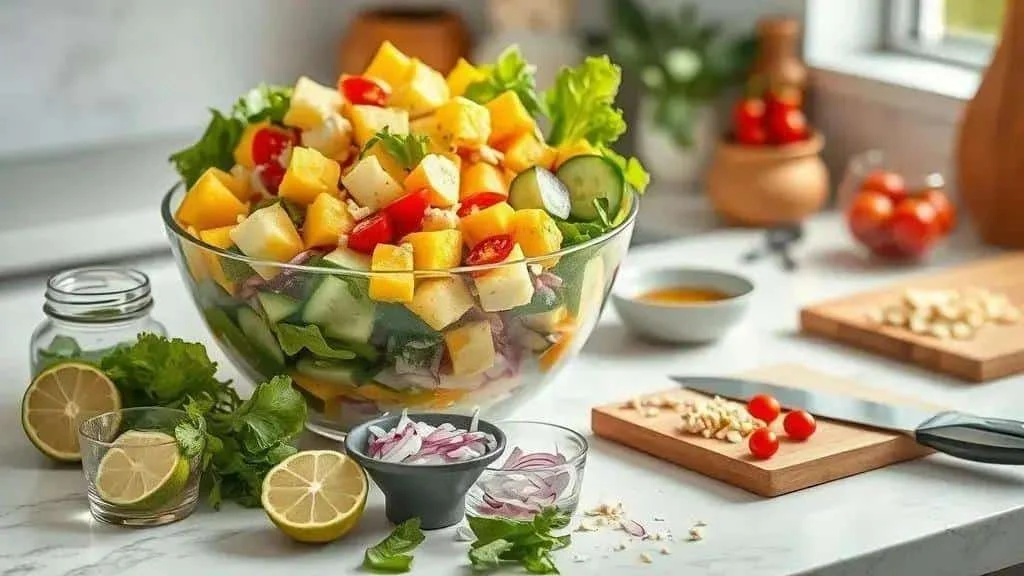
Use the following steps to assemble the tropical salad with crisp leaves and evenly dressed fruit.
- Wash the produce as appropriate under running water and drain. Dry the lettuce well.
- Prepare the pineapple by peeling, coring and dicing it evenly.
- Prepare the mango by peeling and cutting the flesh into similar pieces, leaving excess juice behind.
- Tear the lettuce into bite-sized pieces and place in a large bowl.
- Slice the cucumber into half-moons, removing the watery centre if desired.
- Cut the tomatoes and add to the bowl, using suitably small pieces for children.
- Soak the sliced onion in cold water for five minutes if desired, then drain well.
- Mix the dressing by shaking or whisking the juice, oil, salt and pepper together.
- Dress shortly before serving, tossing gently with two spoons so the fruit does not break up.
- Add herbs and toppings, scattering the optional nuts or coconut over the salad.
- Add optional cheese at the end.
- For preparation ahead, keep cut fruit and leaves separately covered in the fridge, with dressing in another container. Assemble near service.
- Taste and adjust the dressing before taking the salad to the table.
Quick Tips
- Choose fruit for flavour and value rather than relying on a fixed shopping list.
- Omit dairy cheese for a vegan version and check any alternative topping.
- Small bowls or glasses make convenient individual portions.
Simple Festive Rice: Ingredients
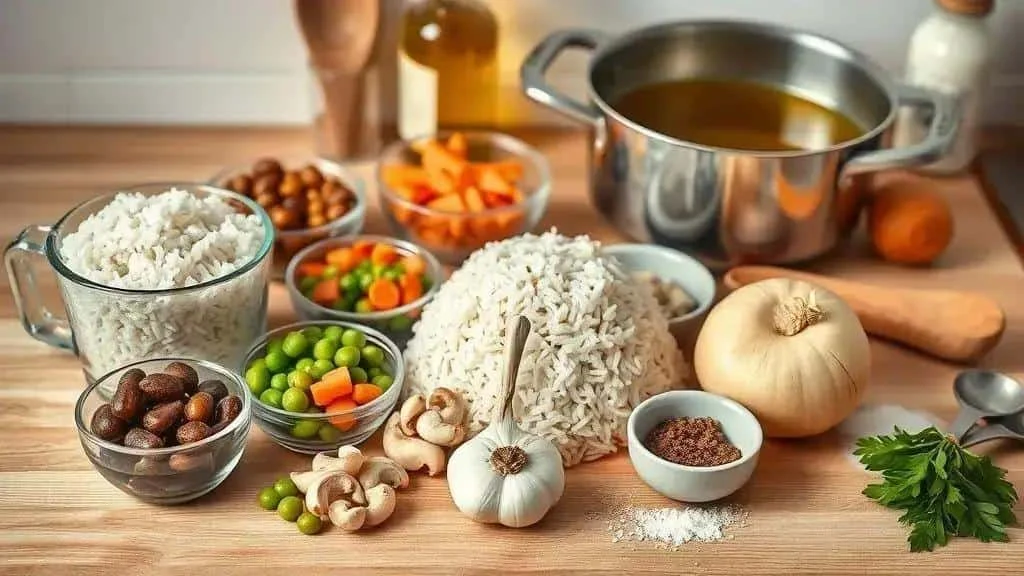
For about eight side portions of simple festive rice, use the quantities below. The rice variety determines the exact liquid and cooking time.
- 360 g dry white rice — rinse if its instructions recommend it. Brown rice needs its own packet-guided liquid and cooking time.
- 45 ml oil or olive oil — butter gives a dairy-containing alternative.
- 1 medium onion — finely chopped; red onion also works.
- 2 garlic cloves — crushed or chopped; garlic powder may be used to taste.
- Up to 1 litre hot chicken or vegetable stock — use the quantity required by your rice’s absorption instructions, keeping extra available if needed. Check stock seasoning before adding salt.
- 75 g raisins — or chopped dried apricots; omit if preferred.
- 1 medium carrot, about 100 g — finely diced; red pepper offers a different flavour.
- 75 g frozen peas — cook according to the packet; frozen sweetcorn is an alternative with its own cooking instructions.
- 40 g sliced green olives — a smaller amount of capers gives a sharper alternative.
- 40 g chopped nuts, optional — suitable sunflower seeds can add crunch instead.
- 1 bay leaf, optional — or a little dried mixed herbs.
- Salt to taste — the stock and olives may already provide enough. Soy sauce changes the flavour and may add soy and wheat allergens.
- Freshly ground black pepper to taste.
- Chopped parsley, to finish — or chives.
Quick Tips
- Budget tip: frozen vegetables can offer good value; compare pack prices and use only what is needed.
- Dry raisins: soak very dry raisins in warm water for about ten minutes, then drain.
- Nuts: briefly toast the optional chopped nuts in a dry pan, watching closely so they do not burn.
- Stock seasoning: taste a safely prepared spoonful before adding extra salt, allowing it to cool enough first.
- Vegetarian version: use a suitable vegetable stock; use oil rather than butter if making the dish vegan.
Simple Festive Rice: Method
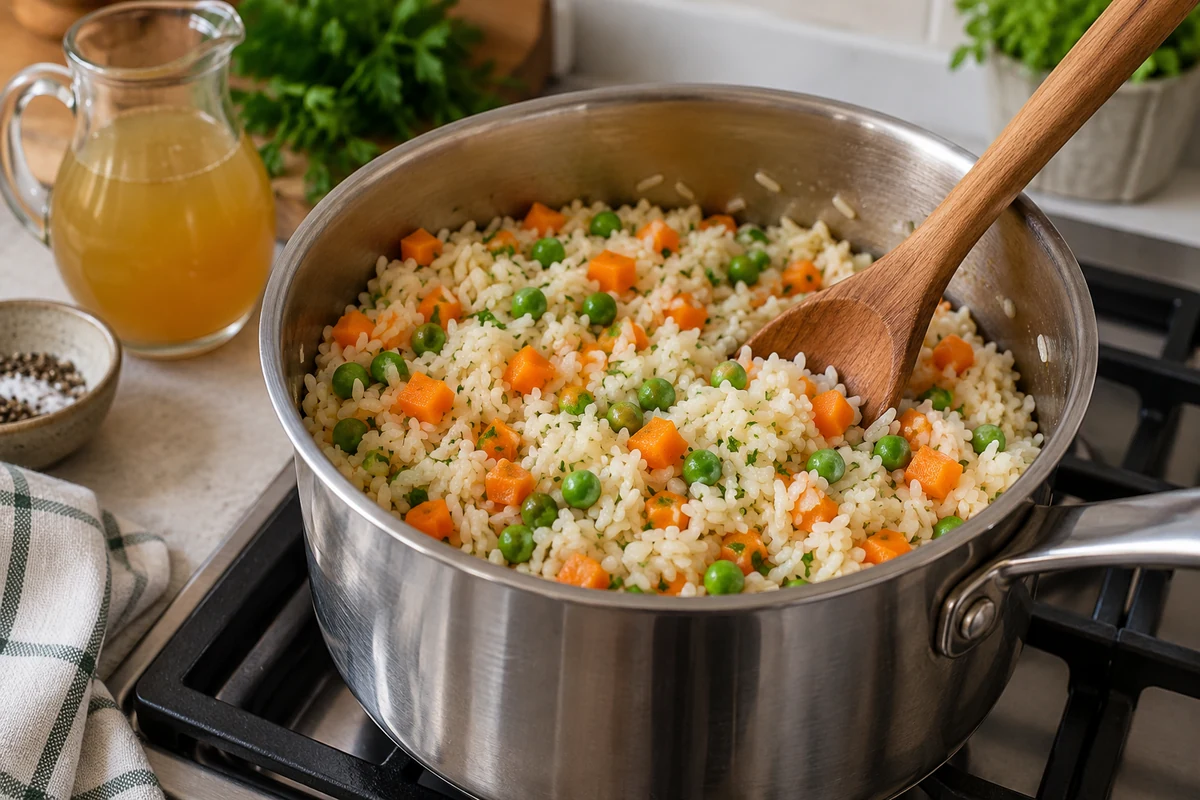
Prepare simple festive rice with the following method, adjusting water and cooking time to the rice variety.
Method
- Prepare the rice: rinse and drain the 360 g rice if recommended by its packet.
- Heat the oil: warm the measured oil in a medium saucepan over a medium heat.
- Soften the aromatics: cook the chopped onion until beginning to soften, then add garlic briefly without burning it.
- Add rice: stir for about a minute to coat the grains in oil; this does not literally seal them.
- Add carrot and raisins: stir the finely diced carrot and raisins through the rice.
- Add stock: pour in the packet-guided amount of hot stock and add the optional bay leaf. Reserve excess stock rather than automatically adding the entire litre.
- Simmer: bring to the boil, reduce to a low heat and cover.
- Cook gently: follow the rice’s absorption time, often around 15–18 minutes, until tender and the liquid is absorbed. Avoid unnecessary stirring.
- Cook the peas according to their packet, separately if needed, then fold into the rice. Merely thawing frozen vegetables or warming them for two minutes may be insufficient.
- Rest briefly: once cooked, leave covered off the heat for about five minutes.
- Fluff: remove the bay leaf and separate the grains gently with a fork.
- Add olives and nuts: fold in the olives and optional nuts, then check seasoning.
- Finish: scatter with chopped herbs and serve promptly.
Quick Tips
- Use hot stock when adding liquid during cooking.
- For brown rice, follow its own liquid ratio and cooking time rather than keeping the white-rice quantities unchanged.
- A suitable vegetable stock makes the rice vegetarian; check all flavourings too.
- Cool leftover rice quickly, ideally within one hour, refrigerate and use within 24 hours. Reheat only once until steaming hot throughout, including if incorporating it into another dish.
Roast Chicken: Ingredients
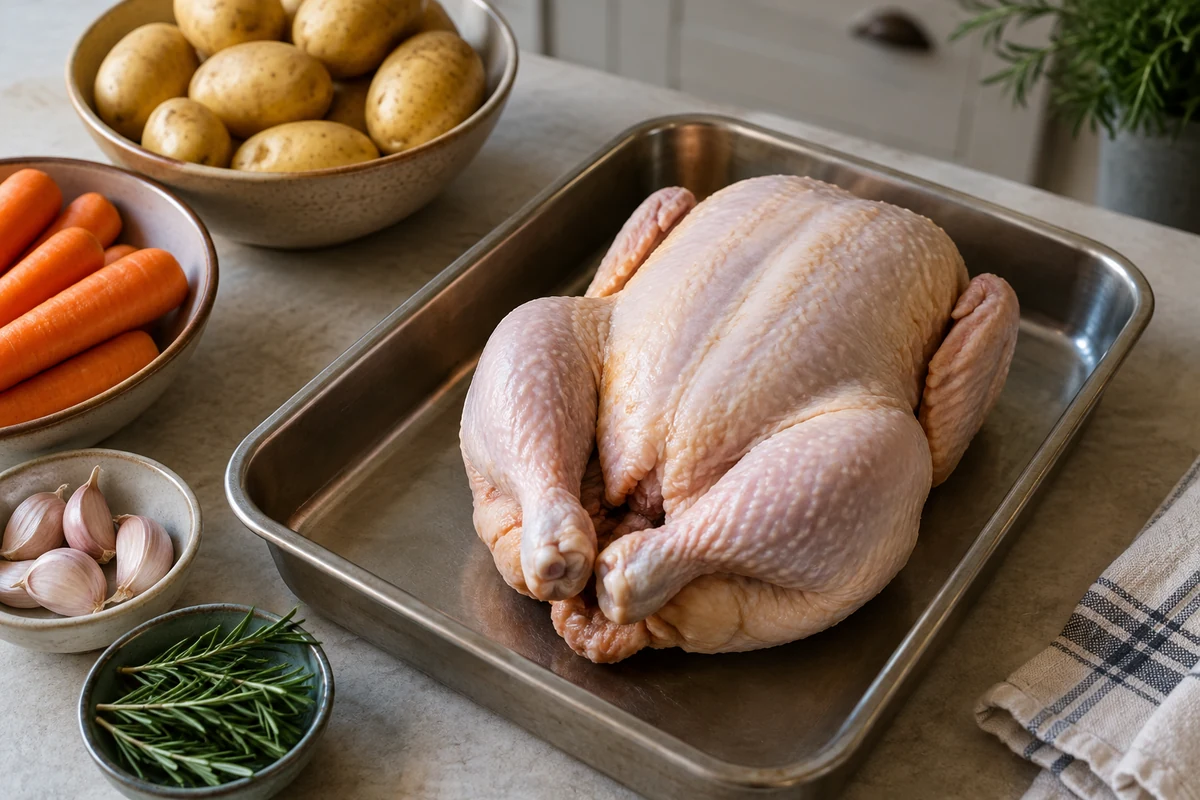
This roast chicken uses straightforward seasonings. A 1.5–2 kg bird may stretch to 6–8 modest portions with plenty of sides, but check that its edible yield suits your guests.
- 1 whole chicken, 1.5–2 kg — fully thawed if frozen, with giblets removed. About 2 kg thighs and drumsticks is an alternative, with a different cooking time.
- 45 ml olive or sunflower oil — for coating the chicken.
- 3 garlic cloves — crush two for the tray and one for the seasoning paste.
- 1 lemon, zest and juice — keep the squeezed halves for the tray if desired. Two tablespoons cider vinegar can replace the juice for a different flavour.
- 1 tbsp sweet or smoked paprika — only smoked paprika adds a smoky flavour. Brazilian annatto seasoning gives colour but a different taste.
- 1 tsp dried oregano or thyme — or 1 tbsp chopped fresh herbs.
- 30 g butter, optional — for beneath the skin. Omit or use a suitable milk-free spread if needed; replacing butter does not make chicken vegan.
- 1–1½ tsp salt — adjust to taste and the size of the chicken.
- ½ tsp ground black pepper — or white pepper to taste.
- 1 medium onion — halved or thickly sliced for the roasting tray.
- 3–4 medium potatoes, optional — washed and cut into wedges; carrots are another suitable roasting vegetable.
- 2–3 fresh rosemary or thyme sprigs — for the tray; dried herbs can be used sparingly instead.
Ingredient Tips
- Chicken pieces often cook faster than a whole bird; compare the price per usable portion.
- Butter under the skin adds richness. Omit the extra butter if you prefer, rather than assuming the same amount of oil is lower in fat.
- Lemon and herbs provide flavour without a long marinade. Keep seasoned raw chicken refrigerated until cooking.
Roast Chicken: Method
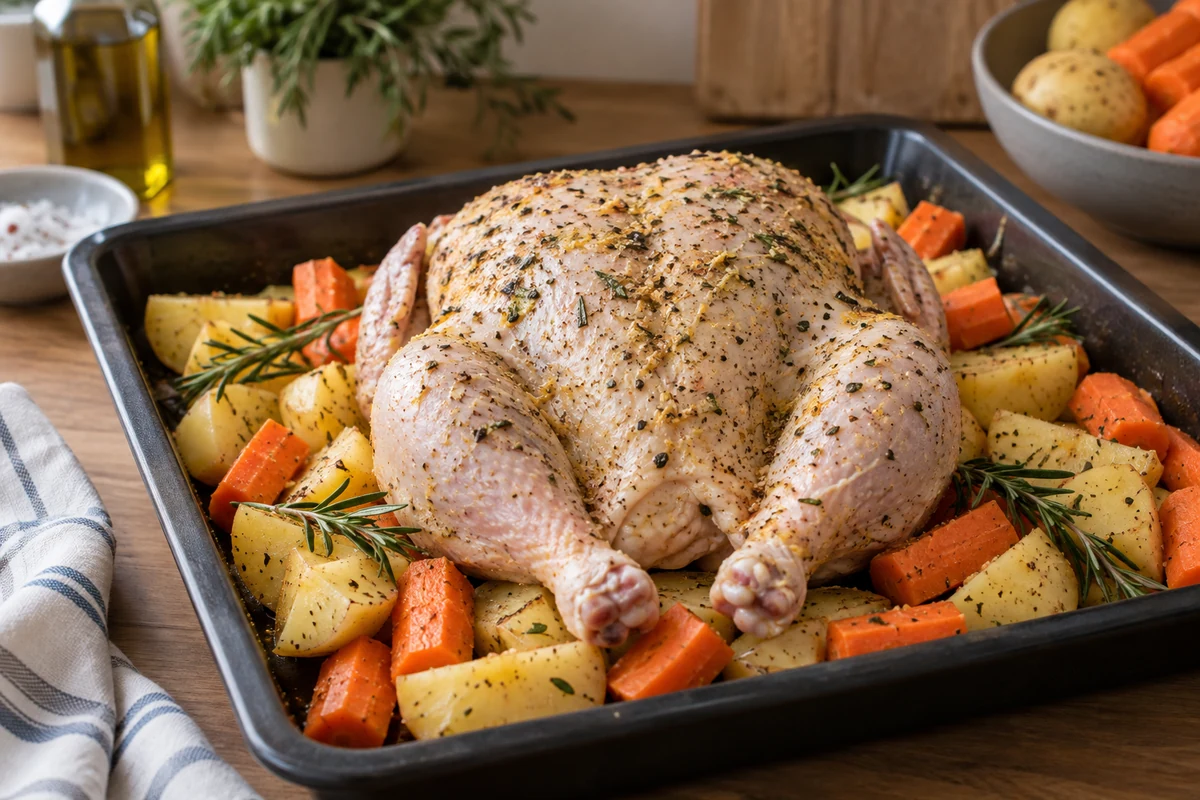
Follow these steps for a simply seasoned roast chicken, allowing enough time for thorough cooking rather than treating it as a guaranteed quick roast.
Step-by-Step Method
- Preheat: set the oven to 220°C, or 200°C fan.
- Prepare the bird: remove giblets and pat dry with kitchen paper without washing it. Keep raw poultry away from ready-to-eat food and wash hands after handling.
- Prepare the aromatics: place two crushed garlic cloves, the fresh herb sprigs and optional squeezed lemon halves in the tray. Leave the cavity unstuffed to allow predictable cooking.
- Mix the seasoning: combine oil, paprika, salt, pepper, dried herbs, the remaining garlic clove, lemon zest and juice. Rub over the bird and carefully beneath the breast skin where accessible.
- Optional butter: spread the measured 30 g softened butter beneath the breast skin. Omit it if preferred.
- Arrange: set the chicken on a roasting rack above the onion and aromatics, with optional potato wedges around it. Vegetables exposed to raw juices must also cook fully.
- Start at high heat: roast for about 20 minutes at 220°C, or 200°C fan, watching that the seasoning does not scorch.
- Lower the heat: reduce to 180°C, or 160°C fan. Allow roughly another 40 minutes per kilogram as an initial guide, giving around 80–100 minutes total for a 1.5–2 kg bird. Actual time varies; follow any packet guidance and verify cooking. Pieces may take around 35–45 minutes or longer according to size.
- Baste if needed: use the hot roasting juices occasionally, avoiding unnecessary oven opening and keeping raw utensils away from cooked food.
- Check thoroughly: probe the thickest meat away from bone in more than one place. Aim for 75°C held for 30 seconds or 70°C for 2 minutes. Without a probe, check that the meat is steaming hot throughout, with no pink flesh and clear juices; one visual cue alone is less reliable.
- Rest: once fully cooked, leave loosely covered for 10–15 minutes before carving.
- Serve: carve and serve with cooked potatoes and thoroughly boiled pan juices, discarding spent herbs and lemon halves.
- Store safely: clean equipment used for raw poultry. Cool cooked leftovers and refrigerate within 1–2 hours, then use within 48 hours or freeze. Reheat only once until steaming hot throughout.
Tips for Beginners
- Crisper skin: pat the skin dry before seasoning; avoid washing the bird.
- Alternative cuts: thighs and drumsticks may offer good value and shorter cooking times, but still need thorough checking.
- Quick gravy: if the tray is hob-safe, add a little water or stock and scrape up the browned residue, then boil thoroughly. Otherwise transfer the juices to a saucepan. Wine is optional and does not become reliably alcohol-free through cooking.
- Do not guess: if cooking is incomplete, return the chicken to the oven and check again with a clean probe.
Adapting Recipes to Your Budget
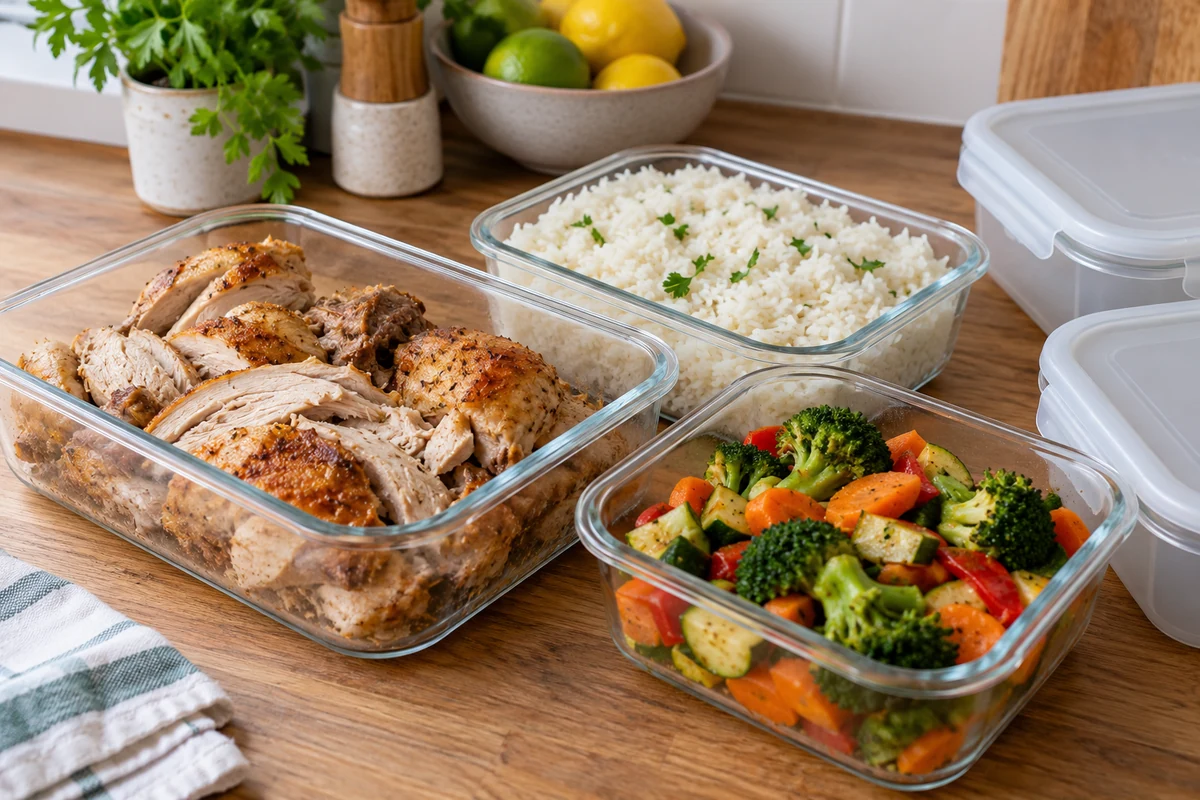
Simple substitutions can help with cost, provided you account for changes in quantity, texture and cooking method.
Affordable Ingredient Swaps
- Main ingredients: compare chicken, beef, tinned fish and pulses by usable weight and the recipe’s needs. There is no fixed rule that one portion of beef equals 1.2 portions of chicken or one tin of tuna.
- Seafood: an affordable white fish may replace prawns or octopus in a suitable recipe, with adjusted cooking time and different allergen information.
- Dairy: ricotta or a soft cheese may work in some fillings instead of a costly cheese, but moisture and melting behaviour vary.
- Vegetables and pulses: compare dried, frozen and tinned versions for value, allowing for soaking or cooking where required.
Making Ingredients Go Further
- Add properly cooked lentils or chickpeas to rice for a different, more substantial dish.
- Prepare a base of onion, garlic and carrot for several dishes, storing portions safely until needed.
- Offer roasted or sautéed vegetables as a substantial side rather than automatically increasing the meat quantity.
- Turn safely stored meat into sandwiches or use promptly chilled rice in another cooked dish within its 24-hour limit, reheating only once.
Dishes That Scale Well
- Soups and stews: can provide a starter or substantial main when scaled to the group.
- Savoury pies and quiches: use a suitable affordable filling and slice into manageable portions.
- Layered chilled desserts: biscuits and simple creams can provide several small servings, with suitable refrigeration.
Shopping and Storage
- Buy larger packs of dry ingredients only when unit prices and your storage space justify it.
- Compare local markets and supermarkets; a particular time of day does not guarantee the best price.
- Cool suitable cooked food promptly and freeze in labelled portions if it will not be eaten within its refrigerated storage limit.
Good Presentation on a Budget
- Use a little fresh herb or lemon zest to finish simple dishes.
- Arrange food on clean platters, keeping decorative foliage away from edible portions.
- Serve appropriately sized portions with replenishment available, rather than preparing excess for appearance alone.
A Quick Planning Check
- Choose three or four complementary dishes that can share ingredients without making every course taste alike.
- Scale measured recipe yields to your guest count and adjust to appetites.
- Agree contributions with willing guests to share both cost and preparation.
Easy Starters: Ingredients and Short Methods
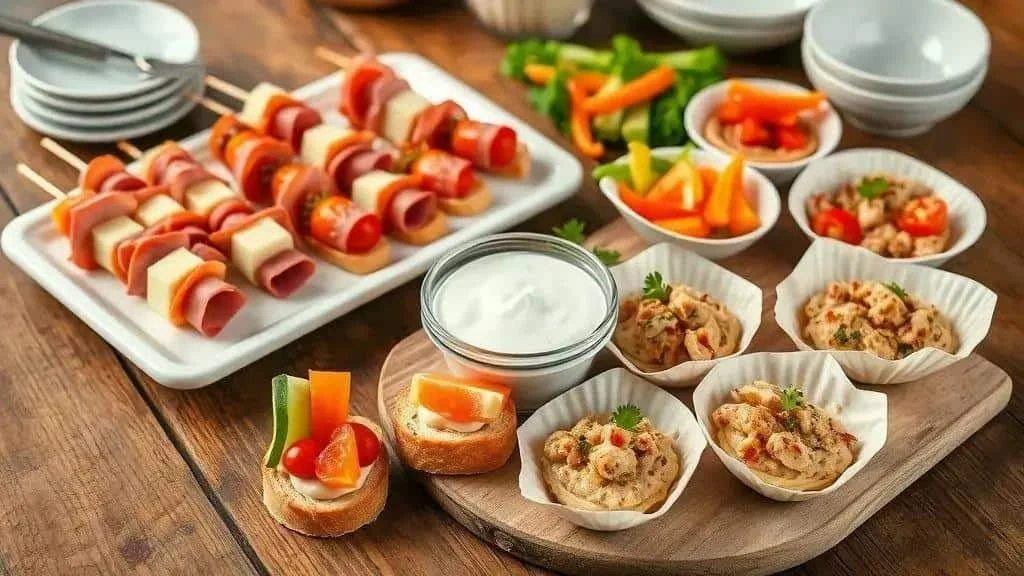
These small starters offer straightforward combinations. Keep ready-to-eat ingredients chilled until service and check dietary requirements before choosing the menu.
Cheese and Ham Bites
- 200 g mozzarella, cubed — a firm mild cheese is another option.
- 200 g ready-to-eat cooked ham — or suitable cooked turkey slices; compare labels rather than assuming one is lower in fat.
- 20 cocktail sticks — optional; remove before giving food to young children.
- 1 tbsp olive oil, optional — for a light finishing brush.
- Divide the cheese and ham into about 20 portions, wrap each cheese cube with ham and secure if needed.
- Arrange on a clean platter and brush lightly with optional oil.
- Keep covered and refrigerated until serving. Assemble up to an hour ahead if the ingredient labels allow, rather than leaving the platter at room temperature.
Tomato Bruschetta
- 1 baguette or large bread roll — enough for 12–16 small slices.
- 3 medium tomatoes — deseeded and chopped.
- 2 garlic cloves — halved for rubbing over the bread.
- 3 tbsp olive oil.
- Basil leaves to taste — or parsley.
- Salt and pepper to taste.
- Toast the bread at 200°C, or 180°C fan, for about 5–7 minutes, watching until lightly golden.
- Rub the cut garlic lightly over the warm toast.
- Mix tomatoes, oil, seasoning and chopped basil.
- Spoon onto the toast just before serving to preserve its crispness.
Vegetable Sticks with Yoghurt Dip
- 2 large carrots — cut into sticks appropriate for the guests; hard raw sticks are unsuitable for very young children.
- 1 cucumber — cut into sticks; celery is an alternative but introduces a separate allergen.
- 1 red pepper — cut into strips.
- 200 g plain yoghurt — for the dip.
- 1 tbsp lemon juice.
- 1 small garlic clove, crushed — optional.
- Salt and pepper to taste.
- Wash and cut the vegetables into suitable serving pieces.
- Stir yoghurt, lemon juice, optional garlic, salt and pepper together.
- Serve vegetables with small portions of dip, keeping reserves chilled.
Mini Brazilian Savoury Blender Pies
- 2 eggs.
- 200 ml milk.
- 100 ml oil.
- 300 g plain flour.
- 1 tbsp baking powder.
- Filling: 200 g cooked shredded chicken or 150 g drained tinned tuna — seasoned to taste and stored safely before use.
- Salt and pepper to taste.
- Blend eggs, milk and oil until combined; do not taste the raw batter.
- Add the flour gradually, mixing just until smooth, then stir in baking powder and seasoning.
- Place a little batter in greased small tins, add an appropriately sized spoonful of filling and cover with more batter. Keep the total fill to about two-thirds of each tin so it can rise.
- Bake at 180°C, or 160°C fan, for roughly 20–30 minutes, adjusting to tin size. The batter must be fully cooked and the filling steaming hot throughout; colour alone is insufficient. Cool briefly before removing from the tins.
Quick Tuna Crostini
- 1 tin of tuna in water, about 170 g before draining — drain well; actual drained weight varies by product.
- 60 g ready-made mayonnaise — or Greek yoghurt for a different flavour and texture, checking milk and egg allergens.
- 1 small onion, finely chopped.
- Thin bread slices — enough for the topping, toasted.
- Juice of half a lemon — add to taste.
- Chopped parsley to taste.
- Mix drained tuna, mayonnaise, onion, lemon juice and parsley, then season to taste.
- Spoon over cooled toast just before serving, keeping unused topping refrigerated.
- These are ready-to-eat cold bites. If choosing to heat them, heat the topping thoroughly and serve immediately rather than relying on a brief surface warming.
Final Starter Tips
- Prepare sensibly: cold fillings may be made shortly ahead within their label limits and kept covered in the fridge. Assemble moist toppings on bread at the last moment.
- Vary the serving dishes: small bowls and platters make it easy to serve fresh batches.
- Control costs: offer small, balanced portions and enough food for the group rather than relying on presentation to disguise inadequate quantities.
Simple Dessert Ideas: Ingredients and Variations
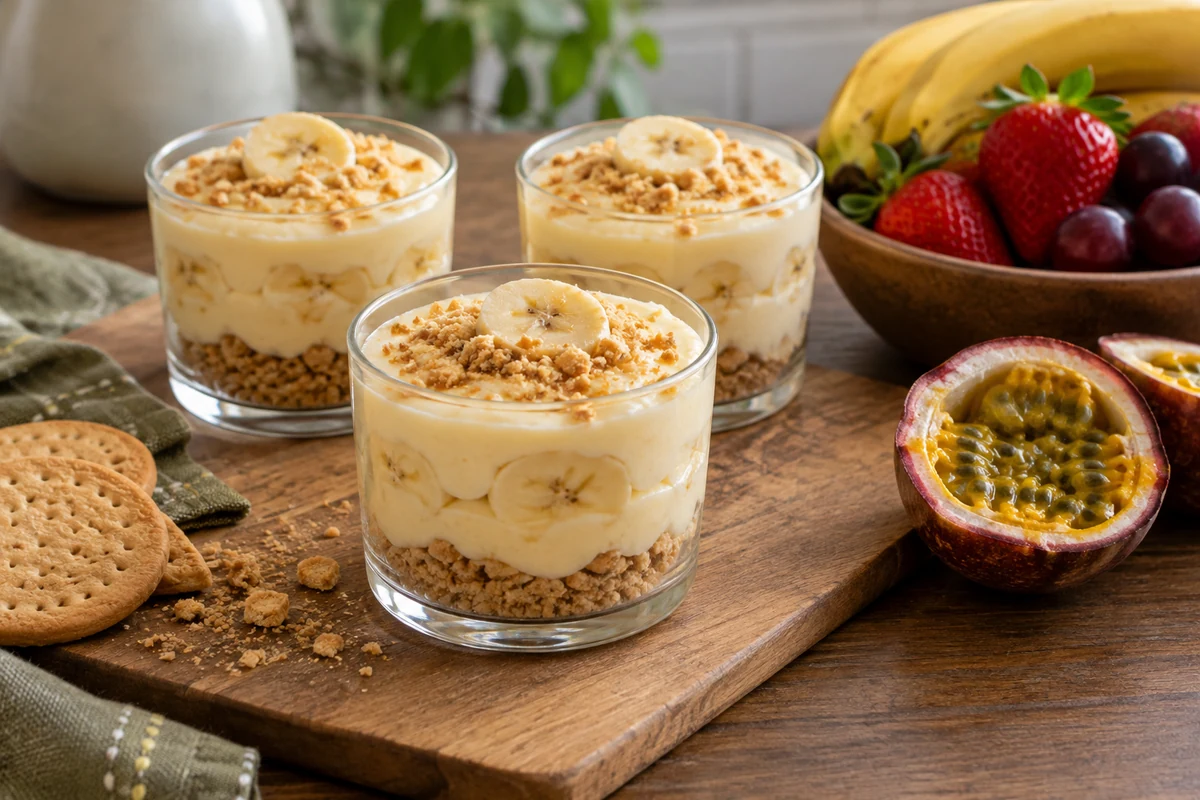
These simple dessert ideas use familiar ingredients and offer variations for different tastes. The following are short preparation outlines, not a claim that every substitution produces the same texture.
Simple Biscuit Pavé
- 395 g sweetened condensed milk — the sweet base; cream and sugar are not a direct equivalent.
- 200 g cream — mixed with the condensed milk for a soft spoonable filling.
- 200 g plain sweet biscuits — Brazilian maisena biscuits or suitable alternatives; sponge fingers absorb liquid differently.
- 240 ml milk — use only enough to briefly moisten biscuits, without soaking them to collapse. Plant milk changes this ingredient but does not make the whole dessert dairy-free.
- 2 tbsp cocoa powder — for the layers. Mix the two dairy ingredients, alternate with briefly dipped biscuits and cocoa, then cover and chill for at least two hours. Serve in dishes rather than expecting firm slices.
Pavé Variations
- Add well-drained tinned peaches or pineapple between layers.
- Use a small fruit topping for a fruity variation; replacing condensed milk with purée changes the filling’s consistency and requires a tested adjustment.
- Chocolate biscuits provide contrast; adjust the cocoa to taste.
Quick Passion Fruit Cream
- 395 g sweetened condensed milk.
- 200 g cream.
- 120 ml concentrated passion fruit juice or strained pulp — mix gradually into the dairy ingredients and chill until thickened. Serve as a spoonable cream; ordinary orange juice is not an equivalent setting substitution.
- Pulp of 1 passion fruit, optional — for decoration just before serving.
Passion Fruit Cream Variations
- For lemon cream, use a tested lemon version or add juice gradually to taste rather than automatically substituting the full passion fruit volume.
- For a richer variation, fold in 50 g melted white chocolate, cooled slightly and first mixed with a little filling to avoid lumps.
- Yoghurt changes both flavour and thickness; test a small quantity rather than assuming it gives an identical lower-fat result.
Frozen Banana Dessert
- 4 ripe bananas, peeled, sliced and frozen — or 2 bananas with a cup of frozen mango for a different texture. Use a processor rated for frozen fruit, allowing pieces to soften slightly if its instructions require it.
- Up to 1 tbsp honey or sugar, optional — taste the fruit first; omit honey for vegans and children under one.
- 1 tsp vanilla extract, optional — blend with the fruit until creamy and serve promptly. Do not force an unsuitable blender through hard frozen pieces.
Frozen Banana Variations
- Add 1 tbsp cocoa powder for a chocolate flavour.
- Add 2 tbsp peanut butter for richness, clearly identifying the peanut allergen.
- Add suitable berries for a tangy variation. If their packet requires cooking, cook and cool them before freezing and blending.
Spoonable Chocolate Brigadeiro
- 395 g sweetened condensed milk.
- 1 tbsp butter — or a suitable baking spread.
- 2 tbsp chocolate powder — cocoa gives a less sweet flavour. Stir with condensed milk and butter over a low heat until thickened, without catching, then portion into heatproof dishes and cool promptly before refrigeration.
- Chocolate sprinkles, cocoa or desiccated coconut — to finish when cool enough to handle. Do not taste the bubbling hot mixture.
Brigadeiro Variations
- Omit chocolate and add 1 tsp vanilla for a white brigadeiro, finished with coconut.
- For a coffee variation, add instant coffee gradually to taste; a whole tablespoon gives a strong flavour.
- Unsweetened cocoa gives a deeper chocolate flavour, but the condensed milk still makes this a sweet dessert.
Fruit Salad with Orange Dressing
- 2 apples — diced; pears are an alternative.
- 1 cup diced pineapple — fresh or well-drained tinned pineapple.
- 1 medium mango — diced; papaya is another option.
- 60 ml orange juice — for the dressing.
- Up to 1 tbsp honey or sugar — optional, depending on fruit sweetness. Toss prepared fruit with the juice and optional sweetener, cover and refrigerate until serving.
- Mint leaves, optional — washed, for decoration.
Fruit Salad Variations
- Add plain yoghurt to individual portions if desired, identifying the milk ingredient.
- Scatter with suitable toasted oats or granola just before serving; check gluten, nut and other ingredients.
- A little port or liqueur is an adults-only variation; clearly label it and keep an alcohol-free portion separate.
Dessert Planning Notes
- Prepare ahead appropriately: pavé, fruit creams and brigadeiro need refrigeration. Cool cooked desserts promptly, keep at 5°C or below and use within 48 hours or any shorter ingredient limit.
- Compare offers: seasonal, tinned or frozen fruit may offer better value according to the recipe.
- Small servings: modest dessert dishes help portion rich desserts and control costs.
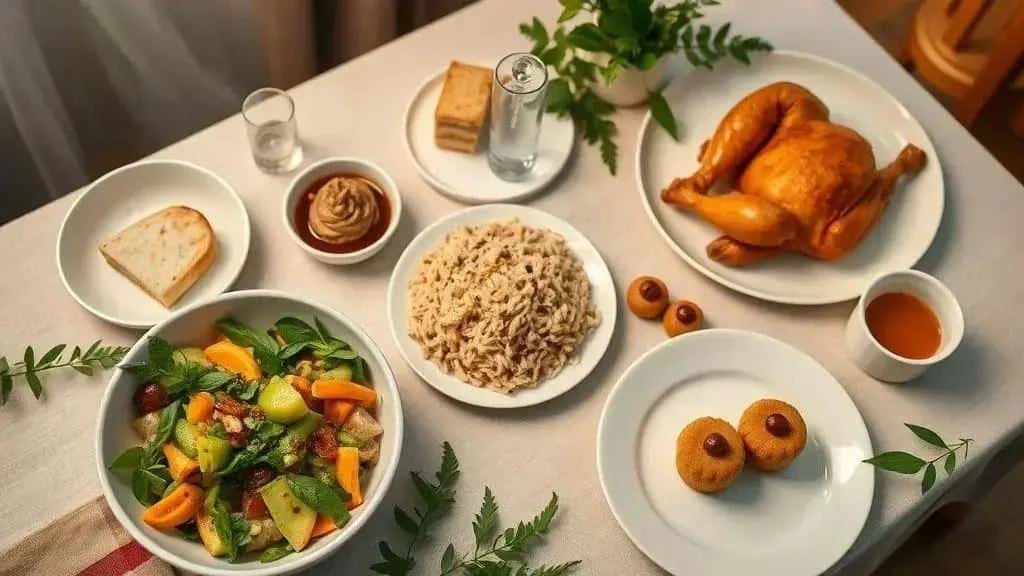
Setting an Attractive Table on a Budget

Colour, texture and a clear layout can make a table feel festive without buying a new set of decorations.
Affordable Decoration Ideas
- Cloths and runners: use a neutral tablecloth or runner you already own.
- Soft lighting: battery-powered candles are useful around fabric and foliage. Reused jars are not automatically suitable holders for a real flame.
- Greenery: a few suitable decorative sprigs can add colour; keep unknown or non-edible foliage away from food.
- Mix existing crockery: coordinated colours can bring different plates and glasses together.
- Fairy lights: use lights suited to their location, following instructions and keeping cables clear of heat, liquids and walkways.
Arranging the Table
- Start with the base: lay the cloth or runner neatly.
- Place serving dishes: leave accessible space for food rather than letting decoration dominate.
- Set cutlery and glasses: arrange what each place setting needs, with enough room for comfortable use.
- Keep the centrepiece low: small arrangements and battery candles avoid blocking conversation.
- Use readable labels: identify dishes and relevant allergens clearly, with full ingredient information available. Do not hide the wording for the sake of a photograph.
- Allow movement: leave enough room for guests and serving utensils.
Low-Cost Finishing Details
- Folded napkins: simple folds or ties can be enough; keep decorative pieces separate from food.
- Reused containers: clean jars make small vases or holders for battery lights, rather than improvised real-flame candle holders.
- Layered plates: a larger plate beneath a smaller one adds interest if you already have them.
- Edible decoration: washed orange slices or rosemary can decorate suitable dishes. Keep decorative displays separate from food intended for eating unless handled as food throughout.
Presenting the Food
- Easy serving: choose platters and spoons that contain sauces and are comfortable to use.
- Colour: suitable fresh leaves or fruit can brighten pale dishes.
- Finish near service: add herbs, zest or a little oil when appropriate.
- Arrange by course: make starters easy to find, keep hot food safely hot and leave chilled desserts refrigerated until needed.
Saving Time on the Day
- Create clear stations: give plates, cutlery and condiments their own accessible places.
- Prepare non-food items early: set aside decoration and serving dishes the day before.
- Ask for help: share table setting or a dish with willing friends.
- Reuse decorations: rearrange items from previous celebrations rather than buying everything again.
Enjoying the Celebration
A budget-friendly New Year’s Eve meal can be satisfying and welcoming. Choose manageable dishes, compare prices and leave enough time for safe cooking and storage.
If you try these ideas, share how you adapted them and what worked for your gathering.
Thank you for reading. Visit the I Love Christmas blog and follow our social channels for more festive recipes and entertaining ideas.
Frequently Asked Questions About Budget-Friendly New Year’s Eve Meals
How do I work out portions per person?
Use the measured yield of each recipe and account for the other dishes. Around 150–200 g cooked boneless meat or an appropriate alternative may suit an adult main course; that is food weight, not protein content. Adjust for appetites, bones and side dishes.
Can I adapt the menu for dietary requirements?
Yes, with complete ingredient checks. Suitable pulses, tofu or mushrooms can form plant-based dishes, while vegetable stock and appropriate dairy alternatives may help. Substitutions can change cooking and texture; do not assume every replacement is equivalent or allergen-free.
What can I prepare ahead?
Prepare non-food items, suitable chilled desserts and washed, dried salad components ahead. Cooked dishes must be cooled and stored safely, then reheated thoroughly only once where appropriate. Dress salads and add delicate garnishes near serving time.
How should I store leftovers?
Cool cooked food promptly and refrigerate within 1–2 hours, using most leftovers within 48 hours or freezing them. Rice needs faster cooling, ideally within one hour, and use within 24 hours. Reheat only once until steaming hot throughout; discard food whose time or handling is uncertain.
How can I make the table attractive cheaply?
Use existing crockery, a simple cloth, a low arrangement and battery-powered candles. Clear spacing, readable dish labels and a little fresh garnish are more useful than expensive decorations.
Sources and Further Reading
- UK Government: cooking food safely
- Food Standards Agency: chilling food
- Food Standards Agency: allergen guidance
- NHS: foods to avoid for babies and young children
- UK Government: handling flour safely