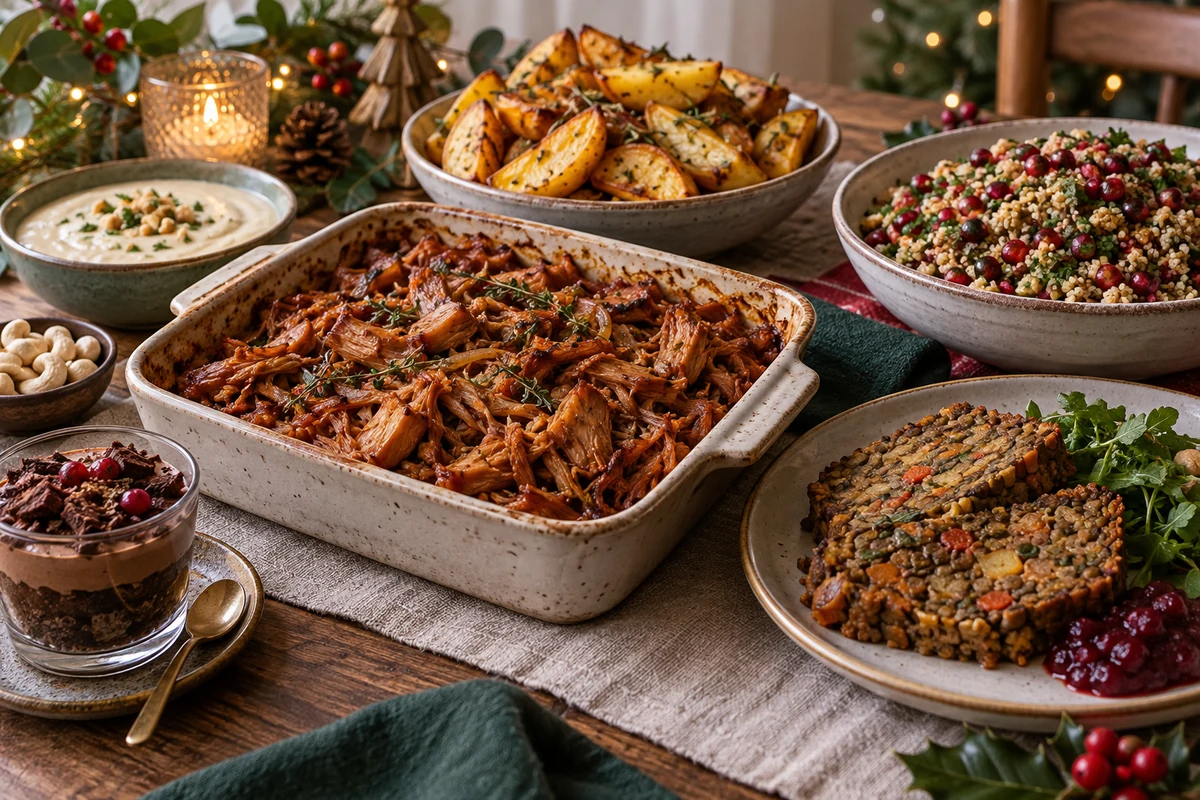
Explore seven vegan Christmas recipes: herby jackfruit, roasted vegetable and lentil terrine, festive quinoa, potato wedges, creamy cashew sauce, vegan rabanadas and chocolate pavé. Find preparation steps, ingredient alternatives and a make-ahead plan for a varied festive meal. Check individual dietary needs: vegan food is not automatically free from allergens.
These vegan Christmas recipes offer seven options for your festive table, with preparation steps, variations and serving ideas. Try unfamiliar recipes before the celebration so you can adjust portions and timings to your kitchen.
Why Choose Vegan Recipes for the Festive Season?
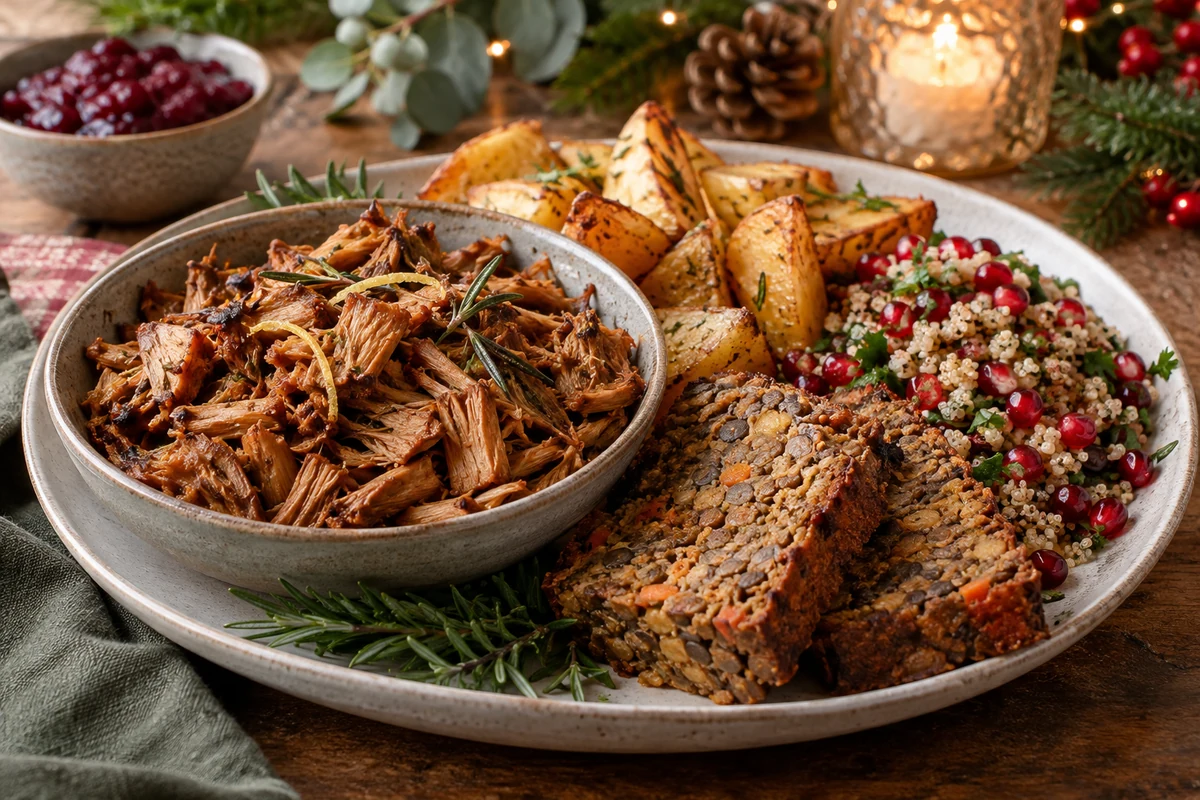
Choosing vegan recipes for the festive season opens up a colourful range of vegetables, pulses, grains and sauces without leaving celebration behind.
Reasons to Offer a Vegan Menu
- Variety in your diet: vegetables, pulses and wholegrains provide different nutrients. A vegan dish is not automatically healthier; the ingredients and overall diet matter.
- Thoughtful shopping: seasonal produce, careful portions and using leftovers safely can help reduce waste.
- Flavour and texture: fresh herbs, roasted vegetables and creamy sauces offer plenty of scope for a memorable meal.
- Choice for guests: a vegan menu suits people avoiding animal products, but allergies and intolerances need separate checks.
- Convenient preparation: some dishes can be made ahead, chilled promptly and reheated thoroughly when needed.
- Flexible spending: vegetables, pulses and potatoes can form an economical meal, depending on seasonal prices and your choices.
Practical Menu Tips
- Vary the textures: combine something creamy, something crisp and a substantial baked dish.
- Choose suitable plant-based drinks such as oat or almond, nut creams such as cashew, and plant proteins such as chickpeas, tofu or seitan. Young jackfruit adds a shredded texture but is not a comparable protein source.
- Look for seasonal vegetables and fruit at a price that suits your budget, including squash and root vegetables.
- Make sauces and chilled desserts the day before if convenient, keeping them covered at 5°C or below.
- Label dishes and keep ingredient packaging available so guests can check ingredients and allergens.
- Offer sparkling water, citrus drinks or iced tea alongside any wine. If serving wine or beer, check that it is suitable for vegans.
With a little planning, a varied vegan meal can look inviting and accommodate different preferences. Confirm dietary requirements before choosing the final menu.
Building a Varied Vegan Christmas Menu
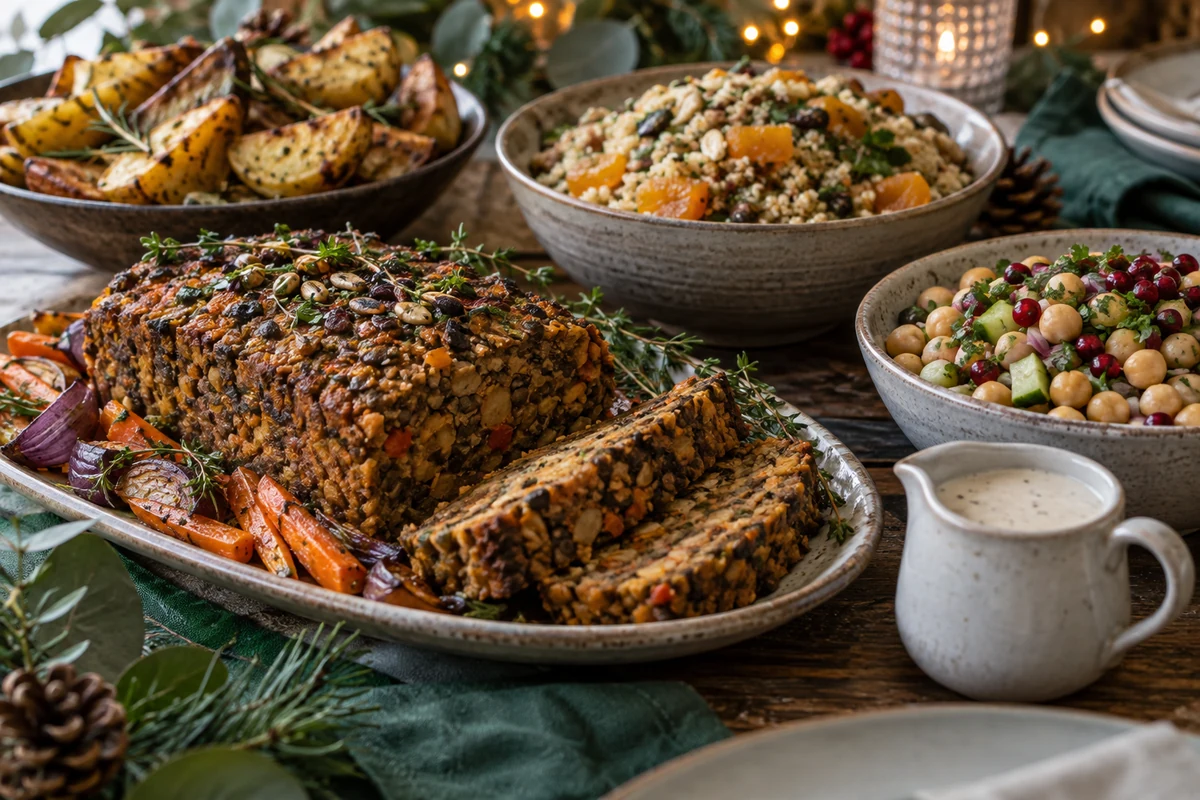
Planning a varied vegan Christmas menu makes shopping and cooking more manageable and helps you offer a balance of flavours and textures.
Useful Menu Components
- Plant proteins: lentils, chickpeas, tofu, tempeh or seitan. Serve jackfruit with a protein-containing dish rather than treating it as an equivalent replacement.
- Starchy foods and grains: quinoa, brown rice, roast potatoes, nut farofa or wholewheat pasta.
- Vegetables: green salads, roasted vegetables, squash or sweet potato mash, and pickles for contrast.
- Fats and finishing ingredients: olive oil, avocado, nuts and seeds, used in suitable portions.
- Sauces and creams: cashew or tofu cream, tahini and unsweetened plant-based drinks.
- Seasonings and herbs: garlic, onion, lemon, citrus zest, fresh herbs and spices.
Planning Portions
- Vegetables: offer a generous selection of raw and cooked vegetables for colour and variety.
- Protein-containing dishes: include pulses, tofu or another suitable option. A serving weight is not interchangeable across these foods.
- Starchy accompaniments: plan portions around appetites and the number of other dishes rather than applying one fixed amount to everyone.
- Dessert and extras: offer smaller initial portions, with more available if wanted; baked fruit is one option alongside richer desserts.
A Menu to Adapt for Six Guests
- Starter: artisan bread, chickpea dip and pickles.
- Salad: mixed leaves, walnuts, pomegranate and citrus dressing.
- Main dishes: herby jackfruit with cashew sauce, alongside lentil terrine or another pulse dish. Scale the recipes: one 400 g tin of jackfruit is not six main portions.
- First side: quinoa with nuts and dried fruit.
- Second side: roasted vegetables with rosemary and balsamic vinegar.
- Extra accompaniment: sweet potato mash with coconut milk.
- Dessert: vegan rabanadas or chocolate pavé with cashew cream.
Planning Ahead
- Two or three days before: decide on the menu, write your shopping list and buy non-perishable ingredients.
- The day before: make suitable sauces, creams and desserts, refrigerating them promptly.
- On the day: roast vegetables and reheat prepared dishes thoroughly close to serving time.
- Create a timetable: allow for oven space, preparation, safe cooling and reheating as well as cooking time.
Common Adaptations
- Gluten-free: replace seitan with suitable plain tofu, lentils or a mushroom-and-nut dish, checking all sauces and labels too.
- Avoiding nuts: an appropriate oat drink or tofu cream may work instead of nut cream, subject to other allergies and cross-contact information.
- Avoiding soya: consider chickpeas or lentils for protein, with vegetable purées as accompaniments; check prepared sauces and seasonings.
- Adjusting sweetness: reduce added sugar gradually where the recipe allows. Dates, syrups and coconut sugar still contribute sugars and are not automatic one-for-one substitutes.
Drinks to Accompany the Meal
- Dry sparkling wine: an optional pairing for citrus flavours and roasted dishes; choose a vegan-labelled product.
- Light wines: fruity whites or rosés can complement creamy dishes, if your guests drink alcohol.
- Alcohol-free options: sparkling water with lemon, citrus drinks and flavoured iced tea.
- Serving temperature: keep drinks cool and bring hot food to the table promptly after cooking or reheating.
Practical Tips for the Table
- Use clear ingredient and allergen labels, with a separate serving utensil for each dish.
- Offer modest first portions and let guests help themselves to more to reduce waste.
- Add freshly washed herbs or citrus zest just before serving for colour and aroma.
- Keep a simple option such as plain rice or salad available, after confirming it meets the guest’s particular requirements.
The Seven Vegan Festive Recipes at a Glance

- Herby roasted jackfruit — shredded young jackfruit with garlic, rosemary and lemon. Allow for marinating as well as cooking; scale the drained quantity to your menu.
- Roasted vegetable and lentil terrine — colourful layers that firm as they chill, served cold or thoroughly reheated.
- Festive quinoa with dried fruit and walnuts — fluffy grains with pomegranate and apricots for sweet and sharp notes.
- Garlic and herb potato wedges — roasted until crisp outside and tender inside, with rosemary and olive oil.
- Creamy cashew sauce — for roasted dishes and mash; suitable tofu cream can provide an alternative where nuts must be avoided.
- Vegan rabanadas with oat drink — Brazilian-style festive French toast with cinnamon and orange zest.
- Chocolate pavé with cashew cream — a chilled layered biscuit dessert; choose suitable gluten-free biscuits if needed.
A Practical Tip
Balance textures: combine a creamy dish, a substantial bake and something crisp. Preparing sauces the day before can save time if they are kept safely chilled.
A Pantry Guide for Vegan Festive Cooking
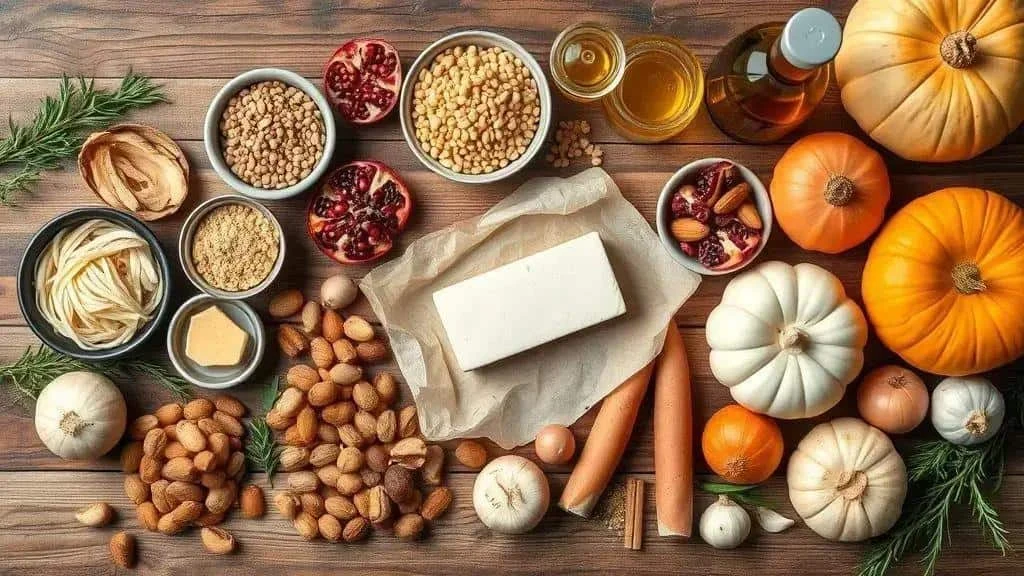
- One 400 g tin of young jackfruit in water — drain before using; its drained weight is lower. Buy young green jackfruit rather than ripe fruit in syrup. Mushrooms or seitan make different alternatives. This pantry guide is not a combined shopping list: use each recipe’s quantities, including stock and glaze ingredients.
- Two cups of cooked lentils — a base for terrines and fillings; chickpeas or white beans give a different texture. Use 240 ml measuring cups throughout.
- One cup of uncooked quinoa — for a side dish; brown rice or couscous are alternatives with different cooking instructions and allergen considerations.
- Cooked chickpeas — useful for dips and salads. Weigh the cooked, drained amount required; two tins do not necessarily provide 500 g drained.
- 400 g firm tofu — useful for roasting and skewers; silken tofu is better suited to smooth creams. Tempeh and nut purée are different ingredients, not interchangeable in every dish.
- One cup of raw cashews — for creams; soak covered in the fridge, then drain and rinse. Sunflower seeds are a possible alternative only where suitable for the guest.
- A 400 ml tin of coconut milk — for mash or desserts; oat or almond alternatives have different richness and allergens.
- Plant-based drinks such as oat, almond or soya — for rabanadas and sauces; measure the amount required by the chosen recipe.
- Nutritional yeast — adds a savoury flavour to sauces and farofa. A little mild miso gives a different flavour, but usually contains soya and may contain gluten.
- Tahini — sesame paste for sauces and dips. Almond butter and cashew cream are nut-containing alternatives, not allergy-safe substitutes by default.
- One kilogram of potatoes or sweet potatoes — for roasting or mash; choose the variety to suit the dish.
- Squash or pumpkin — useful for sweet or savoury purées and fillings; buy according to your menu.
- Onions and garlic — useful aromatic ingredients. Spring onions and leeks offer different flavours but are not automatically suitable for dietary restrictions.
- Walnuts, cashews and almonds — for farofa, crunch and desserts; choose and measure according to the recipe and guests’ needs.
- Pomegranate and dried fruit such as apricots or dates — for sweet and sharp contrasts in salads and sides.
- Olive oil — for dressings and cooking; choose an oil suited to the cooking temperature and follow its label.
- Soy sauce or tamari — for savoury flavour. Both generally contain soya; miso is not a reliable soya-free substitute. Check gluten-free claims separately.
- Maple or agave syrup — for sweetening and glazes; sugar or molasses changes the flavour and consistency. Honey is not vegan.
- Useful spices: cinnamon, nutmeg, smoked paprika, cumin and black pepper, in small amounts to taste.
- Fresh herbs: rosemary, thyme and parsley for aroma and finishing.
Ingredient and Substitution Tips
- Store nuts according to their packaging, tightly sealed; refrigeration can help keep them fresh. Discard any that are rancid or mouldy.
- Choose plant-based drinks with a richness and flavour suited to the dish; an unsweetened option is generally useful for savoury cooking.
- Plan your shopping around seasonal availability and your actual recipe quantities.
- Gluten-free adaptations: use suitable labelled breads, flours and sauces, and consider quinoa or brown rice. Flour swaps may need a tested recipe rather than a direct substitution.
- Prepared sauces: make tahini or cashew sauces ahead if helpful, then refrigerate promptly and use within 48 hours or sooner if an ingredient requires it.
How to Prepare the Seven Recipes
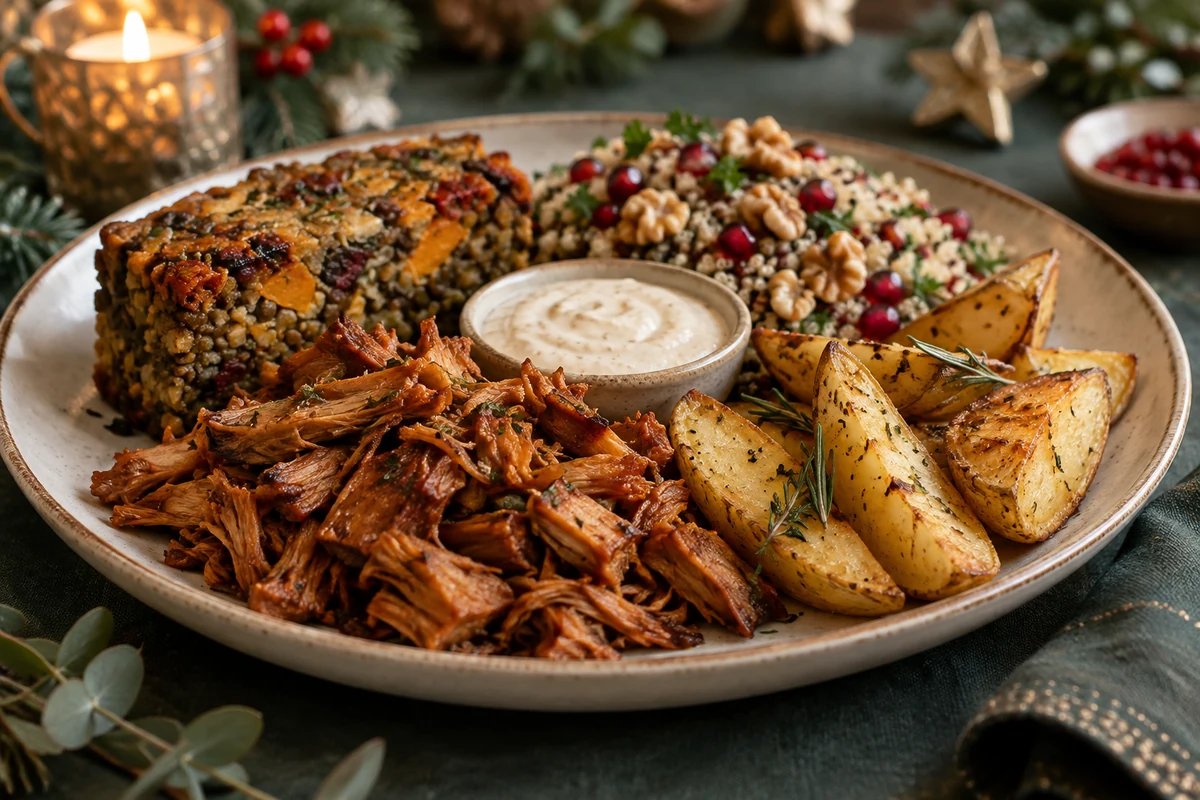
Herby Roasted Jackfruit
- Prepare the jackfruit: drain one 400 g tin of young jackfruit in water. Shred with two forks or clean hands, removing any tough cores or large hard seeds.
- Marinate: mix with 3 tablespoons soy sauce, 1 tablespoon olive oil, 2 chopped garlic cloves, the zest of 1 lemon and 1 teaspoon chopped rosemary. Cover and refrigerate for 20–30 minutes.
- Brown: heat another tablespoon of olive oil in a large frying pan. Cook the jackfruit for 6–8 minutes, stirring, until it begins to colour.
- Bake: transfer to a roasting dish, add ½ cup vegetable stock, cover with foil and bake at 180°C for about 25 minutes.
- Glaze: remove the foil, brush with 2 tablespoons maple syrup mixed with 1 tablespoon mustard, and roast at 200°C for another 10–15 minutes, watching to prevent burning.
- Serve: rest briefly, scatter with fresh herbs and spoon onto plates. This is a shredded jackfruit dish, not a sliceable joint; serve with lentils or another protein-containing dish.
Tips
- Large mushrooms or seitan offer firmer alternatives, but need preparation and cooking times appropriate to those ingredients.
- For extra savoury flavour, add 1 teaspoon nutritional yeast to the marinade.
Roasted Vegetable and Lentil Terrine
- Roast the vegetables: slice 2 aubergines, 2 courgettes and 2 peppers. Coat lightly with olive oil, season with salt and pepper, and roast at 200°C for around 25–30 minutes until tender and browned.
- Prepare the lentils: measure 2 cups of cooked, well-drained green lentils. If starting with dried lentils, cook according to the packet, then measure the cooked amount; do not use 2 cups dry.
- Make the base: mix 2 tablespoons ground flaxseed with 6 tablespoons water and leave to thicken for about 5 minutes. Pulse with the lentils, ½ cup rolled oats and 1 finely chopped, softened onion to make a mouldable mixture.
- Assemble: line a loaf tin with baking parchment and alternate layers of lentil mixture and roasted vegetables, pressing them together firmly.
- Bake and chill: bake at 180°C for about 30–35 minutes until hot throughout. Cool promptly and refrigerate within 1–2 hours of cooking; do not leave a large terrine out until completely cold. Chilling helps it firm for slicing.
- Serve: slice when firm and serve cold, or reheat once until steaming hot throughout. Add salad or a vegan sauce.
Tips
- Aquafaba binds differently from flaxseed. Keep the flax mixture here unless you have tested an alternative that gives a stable terrine.
Festive Quinoa with Dried Fruit and Walnuts
- Rinse: rinse 1 cup quinoa in cold water and drain well. If desired, stir it in a saucepan over low heat until excess surface moisture evaporates, then toast briefly without scorching.
- Cook: add 2 cups water or vegetable stock and cook covered until tender, usually around 12–15 minutes, or follow the packet’s liquid ratio and timing.
- Prepare the additions: chop ½ cup walnuts and ½ cup dried apricots, and remove the seeds from 1 pomegranate.
- Combine: mix the cooked quinoa with the fruit, walnuts and 2 tablespoons olive oil. Add the juice of 1 orange gradually to taste and consistency, then season with salt.
- Finish: add orange zest and black pepper. Serve promptly while warm, or cool quickly, refrigerate within 1–2 hours and serve chilled; do not leave it sitting out for an extended buffet.
Tips
- Replace the apricots with chopped dates or dried cranberries for a different sweetness.
Garlic and Herb Potato Wedges
- Prepare: cut 1 kg potatoes into thick wedges and rinse. If including sweet potatoes, keep them separate initially because they soften at a different rate.
- Parboil: boil the potato wedges for about 6–8 minutes until just beginning to soften. Drain well and gently shake to roughen the edges; sweet potatoes may need less time and gentler handling.
- Season: toss with 3 tablespoons olive oil, 1 tablespoon chopped rosemary and salt. Chop 4 garlic cloves and reserve them to add towards the end of roasting so they do not burn.
- Roast: spread in one layer and roast at 220°C for around 30–35 minutes until tender and golden, turning halfway through. Toss in the reserved garlic near the end and watch closely as it cooks.
- Finish: scatter with chopped parsley and a little flaky salt if needed, then serve promptly.
Tips
- For crisp edges, dry the wedges well, avoid overcrowding the tray and use an oil suitable for the cooking temperature.
Creamy Cashew Sauce
- Soak: cover 1 cup raw cashews with cold water and soak in the fridge for about 8 hours, or follow a suitable shorter method recommended on the packet. Drain and rinse; do not leave them soaking for hours at room temperature.
- Blend: blend the drained cashews with ½ cup water, 1 tablespoon nutritional yeast, 1 tablespoon lemon juice and 1 garlic clove until smooth.
- Adjust: add water gradually for a thick sauce to accompany roasts or a thinner dressing for salads.
- Season: add salt and pepper, and optionally 1 teaspoon mustard for a deeper flavour.
- Store: refrigerate promptly at 5°C or below and use within 48 hours. For hot service, heat thoroughly, stirring; if reheating, do so only once until steaming throughout.
Tips
- A nut-free alternative can be made with 200 g silken tofu and 2 tablespoons tahini, provided soya and sesame are suitable for the guest and labels show no relevant cross-contact risk.
Vegan Rabanadas with Oat Drink
- Mix: whisk 2 cups oat drink with 2 tablespoons sugar, 1 teaspoon ground cinnamon and the optional zest of 1 orange. This mixture is for 6 thick bread slices.
- Choose the bread: use firm vegan bread or vegan brioche, sliced 2–3 cm thick. Slightly stale bread works well; discard mouldy bread entirely.
- Dip: dip each slice briefly, roughly 2–3 seconds per side, adjusting for the bread so it softens without falling apart.
- Cook: shallow-fry in a little suitable vegetable oil over medium heat for about 2–3 minutes per side until golden and hot through. Alternatively, lightly oil and bake at 200°C for around 12–15 minutes, turning halfway and checking the centre.
- Finish: optionally coat lightly in additional cinnamon sugar while hot. Serve with fresh fruit or a little maple syrup.
Tips
- Baking is an alternative to frying and may use less oil. Coconut sugar is still sugar, so choose it for flavour rather than assuming a health benefit.
Chocolate Pavé with Cashew Cream
- Make the cream: measure 1 cup raw cashews before soaking, soak covered in the fridge, then drain and rinse. Blend with ½ cup plant-based drink, 2–3 tablespoons cocoa powder and 3–4 tablespoons sugar or maple syrup, adding sweetness gradually, until smooth.
- Layer: alternate vegan biscuits, cashew cream and optional dairy-free chocolate shavings in small glasses or a suitable dish. Use enough biscuits for the layers your cream will cover; choose suitable gluten-free biscuits where needed.
- Chill: cover and refrigerate at 5°C or below for at least 4 hours, or overnight, to firm and soften the biscuits. Use within 48 hours of preparing the cream.
- Finish: add a little cocoa or dairy-free chocolate shavings just before serving, with chopped walnuts if suitable.
- Serve: bring out the chilled portions close to serving time and keep the rest refrigerated.
Tips
- Maple syrup or date purée changes the flavour and texture of the cream. Neither makes the dessert sugar-free; adjust liquid and sweetness gradually.
Adapting Recipes to Dietary Needs and Preferences
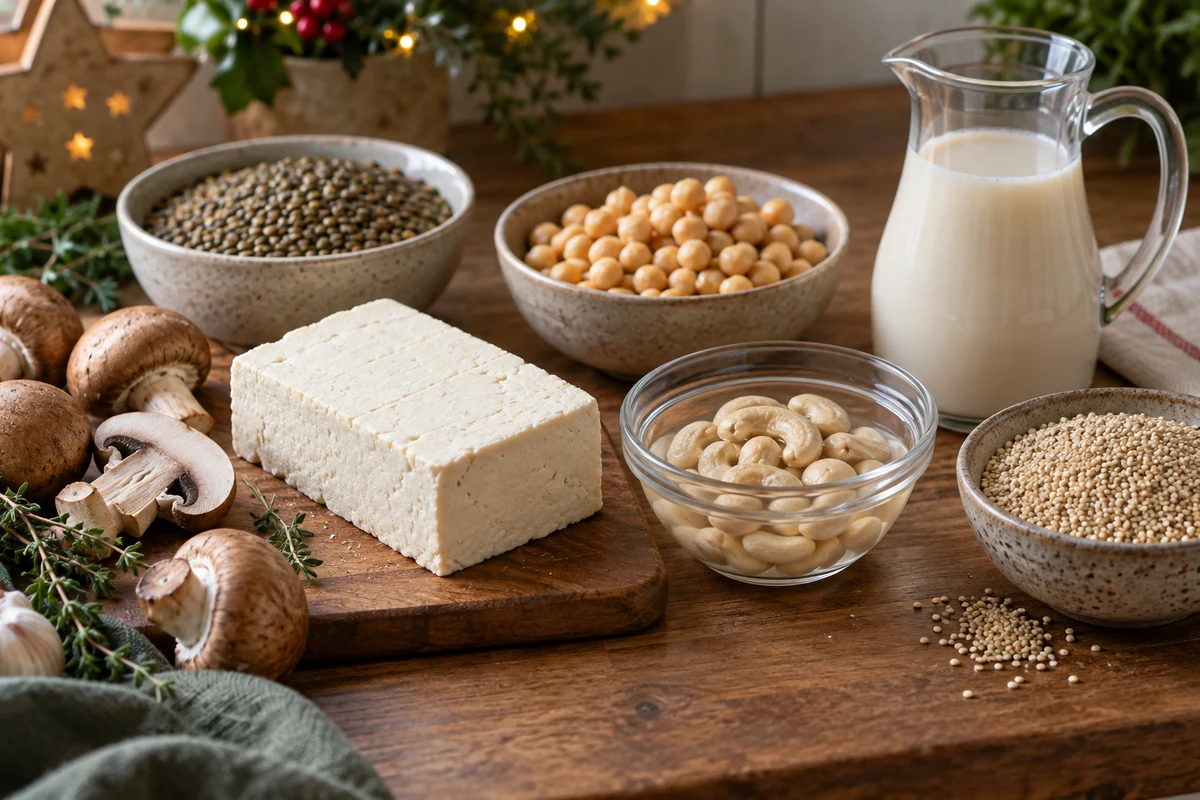
Some substitutions can help a recipe suit a guest, but no simple swap guarantees that a whole dish is safe for an allergy. Check every ingredient and avoid cross-contact.
Substitutions to Consider
- Gluten-free: use suitable labelled bread for rabanadas and a tested gluten-free flour blend where a recipe needs flour. Rice flour or oat flour does not always replace wheat flour directly.
- Avoiding nuts: a sauce may use 200 g blended silken tofu or ½ cup soaked and blended sunflower seeds instead of cashews. Check soya, seed allergies and cross-contact information first; adjust liquid to the new base.
- Avoiding soya: consider chickpeas, lentils or suitable soya-free seitan. Nut cream, where tolerated, or potato purée can replace some sauces, with a different flavour and nutritional profile.
- High-temperature cooking: choose an oil whose label recommends it for the temperature used. Changing the type of oil does not make a recipe oil-free.
- Replacing eggs: 1 tablespoon ground flaxseed mixed with 3 tablespoons water and left for about 5 minutes can bind some recipes. A quarter-cup of apple purée suits some bakes, but neither is a universal egg substitute.
- Avoiding dairy: choose plant-based ingredients throughout. Lactose-free cow’s milk is not vegan or suitable for a milk allergy; vegan labelling alone does not guarantee freedom from milk cross-contact.
- Low-FODMAP needs: these recipes have not been assessed as low-FODMAP. Ingredients and portions both matter, so use a tested recipe or advice from a registered dietitian rather than assuming that replacing onion and garlic is enough.
Ingredient Alternatives and Quantities
- One cup of raw cashews makes a variable quantity of cream depending on added liquid. For a different sauce, try 200 g silken tofu with 2 tablespoons tahini where soya and sesame are suitable; adjust the water gradually.
- One 400 g tin of young jackfruit gives less than 400 g after draining. Sliced portobello mushrooms or seitan can replace it in a different version, but quantities, seasoning and cooking times need adjustment.
- Breadcrumb alternatives: suitable gluten-free crumbs, finely ground cornmeal or processed gluten-free oats can work for some coatings. Ground almonds add a nut allergen and brown differently.
- An egg-free coating mixture: start with 1 tablespoon chickpea flour and 2 tablespoons water, adjusting to coat the food. Cook flour-containing coatings thoroughly.
- Replacing granulated sugar: coconut sugar, maple syrup and date purée have different sweetness and moisture. Use a recipe designed for the alternative instead of applying a fixed conversion to every dessert.
Adjusting Texture and Flavour
- More savoury flavour: add tamari, tomato purée or a little diluted miso gradually. Check salt and allergens; tamari and most miso contain soya.
- Creaminess from vegetables: squash, sweet potato or cauliflower purée can replace part of a rich sauce base, though the flavour and texture will change.
- Crunch: finish with suitable toasted seeds, chopped nuts or gluten-free corn farofa.
- Less added salt: use herbs, aromatic spices and a little lemon juice or vinegar to build flavour before adding more salt.
Alternative Cooking Methods
- Baking instead of frying: lightly oil suitable foods and bake, using the temperature and doneness checks for that dish. Baking may use less oil but changes the texture.
- Air frying: rabanadas and potato wedges can be adapted for an air fryer. Follow a suitable recipe and appliance guidance, turn as needed and check they are cooked through; one short timing does not suit both foods.
- Gluten-free binding: use certified gluten-free oats where appropriate in the lentil mixture. Sprinkling flour over a terrine does not replace a binder throughout it.
- A loose mixture: drain wet ingredients well first. If necessary, add a little ground oats or chickpea flour, test a small cooked portion and cook any added flour thoroughly.
A Quick Substitution Checklist
- Cashew cream: a different sauce can use 200 g silken tofu and 2 tablespoons tahini, where soya and sesame are suitable; adjust liquid rather than assuming equal yield.
- Oat drink in rabanadas: a similar quantity of suitable almond drink or light coconut milk can work, with a different flavour and allergen profile.
- Nutritional yeast: a little mild miso provides a different savoury flavour. Start sparingly and check soya, gluten and salt content.
- Oats in sweet recipes: for an oat allergy, choose a tested oat-free recipe. Rice flour or a gluten-free blend may need changes to liquid and binding.
- Soy sauce: labelled gluten-free tamari can suit a gluten-free diet but still contains soya. Diluted miso is generally not soya-free either.
Testing Adaptations
- Try a small batch before the celebration to assess texture and seasoning. This is a cooking trial, never a way to test whether an allergic person tolerates an ingredient.
- Write down quantities and methods that work so you can repeat them.
- Label adapted dishes clearly and confirm their ingredients with guests instead of relying on labels such as ‘vegan’ alone.
Vegan Starters, Snacks and Side Dishes
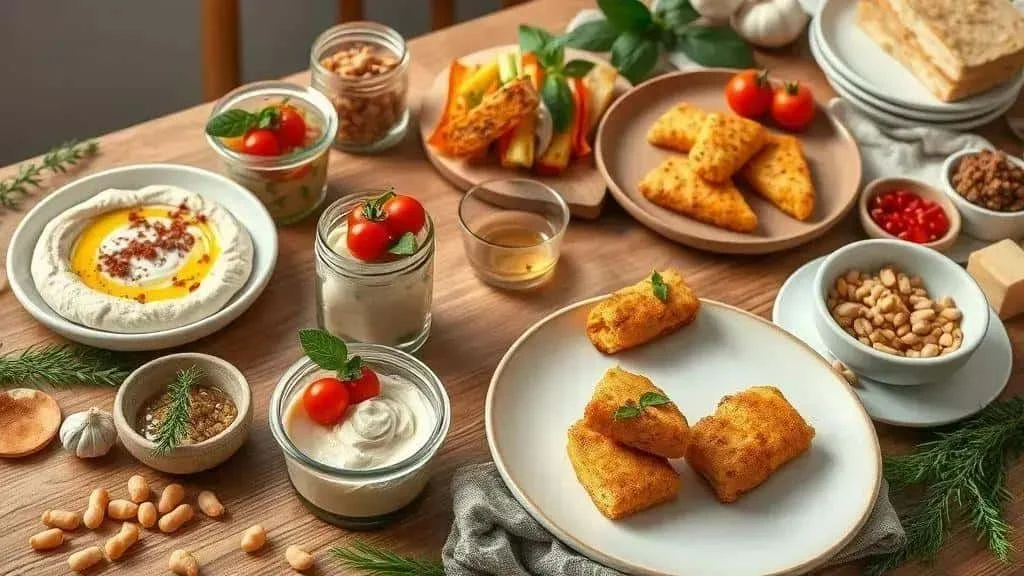
Chickpea Houmous with Za’atar
For a creamy starter, gather:
- 400 g cooked chickpeas, drained.
- 2 tablespoons tahini, which contains sesame. Suitable sunflower seed butter offers a different alternative where needed; check all relevant allergies.
- 2 tablespoons lemon juice.
- 1 garlic clove, chopped.
- 3 tablespoons olive oil.
- Up to ½ teaspoon salt, to taste.
- 1 teaspoon za’atar or smoked paprika; za’atar commonly contains sesame.
- Process: put the chickpeas, tahini, lemon juice and garlic in a food processor.
- Blend: add the olive oil and a little drinking water at a time until creamy.
- Finish: season with salt and sprinkle with za’atar or paprika when serving. Refrigerate promptly if preparing ahead.
Tip
Serve with bread and suitable carrot or cucumber sticks. This can provide roughly 6–8 small starter portions, depending on what else is served; prepare vegetables appropriately for young children.
Roasted Tomato and Basil Bruschetta
- 1 rustic baguette, sliced about 1 cm thick; check it is vegan.
- 4 ripe tomatoes, diced, or a comparable quantity of halved cherry tomatoes.
- 2 tablespoons olive oil.
- 1 garlic clove, halved for rubbing on the bread.
- Basil leaves to taste.
- Salt and pepper to taste.
- Roast the tomatoes: toss with 1 tablespoon olive oil, salt and pepper. Roast at 200°C for around 12–15 minutes until softened and lightly coloured.
- Toast the bread: brush with the remaining tablespoon of oil and toast in the oven or under the grill, watching closely.
- Assemble: rub the toasted slices with the cut garlic, spoon over the tomatoes and finish with basil.
Variation
Add a thin layer of vegan olive pâté or cashew cream for extra flavour, checking ingredients and allergens.
Vegetable Sticks with Creamy Cashew Dip
- 2 carrots, cut into sticks.
- 1 cucumber, cut into sticks.
- 1 red pepper, cut into strips.
- 1 cup raw cashews, measured before soaking; soak covered in the fridge until softened, then drain and rinse.
- ½ cup water, adding gradually as needed.
- 1 tablespoon lemon juice.
- Salt and pepper to taste.
- Blend the dip: blend the drained cashews with water, lemon juice, salt and pepper until smooth. Keep chilled until serving.
- Prepare the vegetables: wash and cut into even sticks. For young children, use age-appropriate shapes and soften hard vegetables as needed to reduce choking risks.
- Serve: arrange the vegetables with a small bowl of dip, replenishing from the fridge rather than leaving the whole batch out.
Alternative
Where nuts must be avoided, 200 g silken tofu blended with 1 tablespoon tahini is an option only if soya and sesame are suitable and relevant cross-contact risks have been checked.
Lentil and Herb Croquettes
- 2 cups cooked lentils, well drained.
- ½ cup rolled oats; use certified gluten-free oats where required and tolerated.
- 1 small onion, chopped and softened in a little oil.
- 2 tablespoons chopped parsley.
- Salt, pepper and cumin to taste.
- Olive oil for cooking.
- Combine: pulse the lentils, oats, softened onion, parsley and seasonings into a mixture that holds together when pressed.
- Shape: form compact small patties or cylinders. Test one first if the mixture seems loose.
- Cook: lightly oil and bake at 200°C for around 20–25 minutes, turning halfway, until browned and steaming hot through. Alternatively, shallow-fry carefully until the centre is hot as well as the surface browned.
Serving
Serve with a suitable mango chutney or mild chilli sauce.
Mini Marinated Tofu Skewers
- 400 g firm tofu, drained and cubed.
- 3 tablespoons soy sauce or tamari.
- 1 tablespoon maple syrup.
- 1 teaspoon sesame oil.
- Suitable skewers, plus optional pieces of pepper and onion to thread between the tofu.
- Marinate: mix the soy sauce, maple syrup and sesame oil, add the tofu, cover and refrigerate for 30 minutes.
- Thread: alternate tofu with optional pepper and onion pieces. Prepare wooden skewers according to their instructions and keep sharp ends away from children.
- Cook: grill or griddle for roughly 8–10 minutes, turning, until the tofu is hot through and vegetables are cooked. Follow any cooking instructions on the tofu packaging.
Dietary Note
This is not a soya-free recipe: both tofu and the usual marinade contain soya. For a soya allergy, choose a suitable chickpea or lentil dish instead; changing the sauce is not enough.
Crunchy Nut and Herb Farofa
- 2 cups toasted Brazilian manioc flour (farinha de mandioca), not tapioca starch.
- ½ cup chopped nuts of your choice.
- 2 tablespoons finely chopped onion.
- 1 tablespoon olive oil.
- Chopped parsley and spring onion greens to taste.
- Cook the onion: heat the oil in a frying pan and cook the onion until softened and golden.
- Add the nuts: stir briefly until fragrant, without letting them burn.
- Add the flour: stir in the toasted manioc flour and heat until crisp. Finish with the chopped herbs.
Finishing
Farofa adds crunch alongside vegan roasts. Serve promptly; once onion and fresh herbs are added, cool and refrigerate leftovers rather than treating the mixture as a dry cupboard ingredient.
Vegan Festive Desserts: Ingredients and Presentation
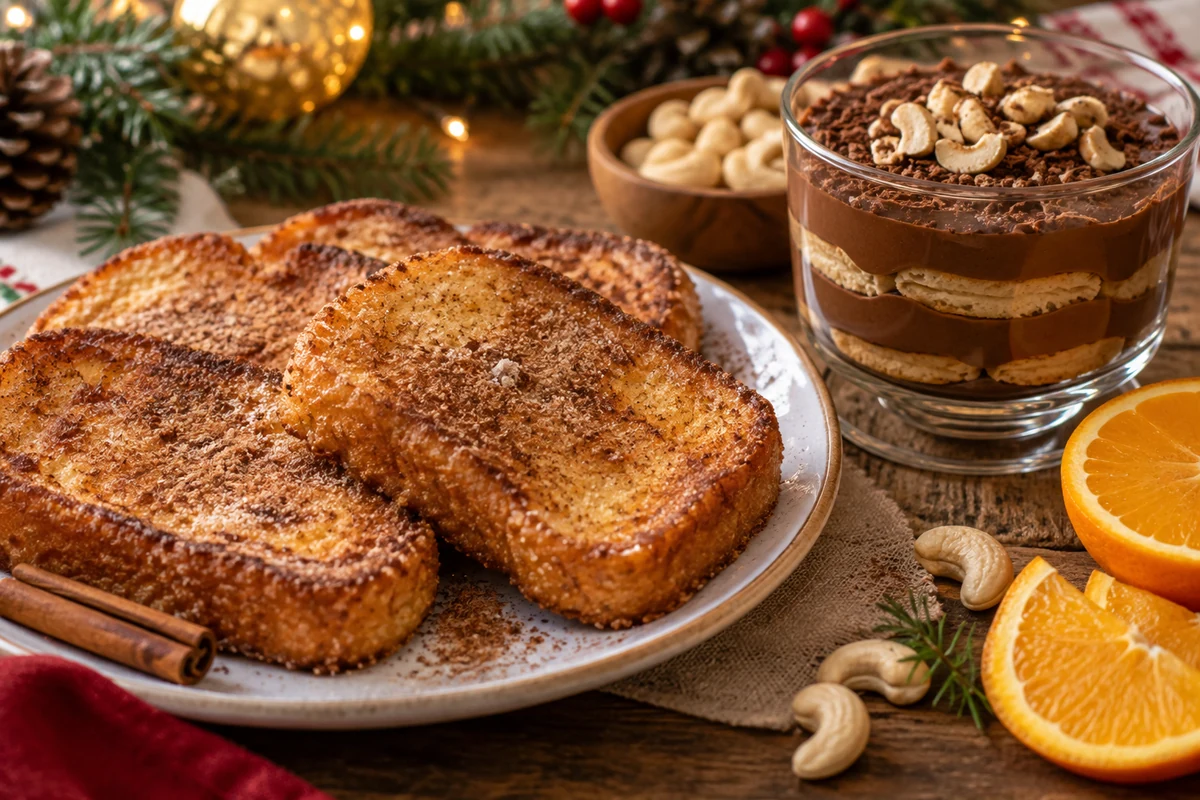
Vegan Rabanadas
- 6 thick slices of firm vegan bread, slightly stale but never mouldy; choose suitable gluten-free bread if needed.
- 2 cups plant-based drink, such as oat or almond; light coconut milk gives a different flavour and richness.
- 2 tablespoons sugar, or adjust a different sweetener to taste rather than assuming equal sweetness.
- 1 teaspoon ground cinnamon.
- Zest of 1 orange, optional.
- Vegetable oil for shallow-frying or lightly oiling for baking. Use the method above; extra cinnamon sugar or maple syrup for serving is optional.
Chocolate Pavé with Cashew Cream
- 1 cup raw cashews, measured before soaking, then soaked covered in the fridge, drained and rinsed.
- ½ cup plant-based drink, adjusting gradually for consistency.
- 2–3 tablespoons cocoa powder, to taste; melted chocolate changes the recipe’s sweetness and texture.
- 3–4 tablespoons sugar or maple syrup, adding gradually to taste.
- Vegan biscuits, also gluten-free if needed, for layering; use enough for the cream and serving dishes chosen.
- Dairy-free chocolate shavings and optional chopped walnuts for finishing; assemble and chill as described above.
Baked Fruit with Maple and Nuts
- 4 pears or 6 small apples, halved and cored. Arrange in a baking dish and bake with the maple and cinnamon until tender; timing depends on the fruit’s size and ripeness.
- 2 tablespoons maple syrup; molasses gives a stronger alternative flavour.
- ½ cup chopped walnuts or almonds, added near the end so they do not burn.
- Lemon or orange zest for finishing.
- Ground cinnamon to taste.
Presentation and Decoration
- Colour contrast: pomegranate, washed mint leaves or citrus zest can brighten a dark chocolate dessert.
- Visible texture: show the pavé layers through clear glasses and lightly dust rabanadas with cinnamon and zest.
- Individual portions: use small glasses for pavé and small plates for rabanadas to make serving straightforward.
- Edible decoration: use a few suitable chocolate pieces, nuts or washed fruit for decoration. Avoid cross-contact and remove choking hazards from children’s servings.
Assembly Tips
- Prepare ahead: make the cream and pavé the day before, keep refrigerated and add crunchy toppings just before serving.
- Avoid soggy bread: dip rabanada slices briefly so they soften but retain their shape.
- Serving temperature: serve rabanadas and baked fruit promptly after cooking, with pavé kept chilled until needed.
- Portions: allow around 1–2 small rabanada slices or one small pavé portion per guest as a planning guide, adjusting for the meal and appetites.
Quick Dessert Adaptations
- Avoiding nuts: a cream based on 200 g silken tofu and 1 tablespoon tahini may be suitable where soya and sesame are tolerated. Test its flavour and texture before using it in a dessert.
- Gluten-free: choose suitable certified gluten-free biscuits and bread for pavé and rabanadas, and check the other ingredients too.
- Adjusting sweetness: reduce added sweetener gradually where practical. Dried fruit adds sweetness but still contains sugars and does not preserve the same texture in every recipe.
Storage and a Make-Ahead Timetable
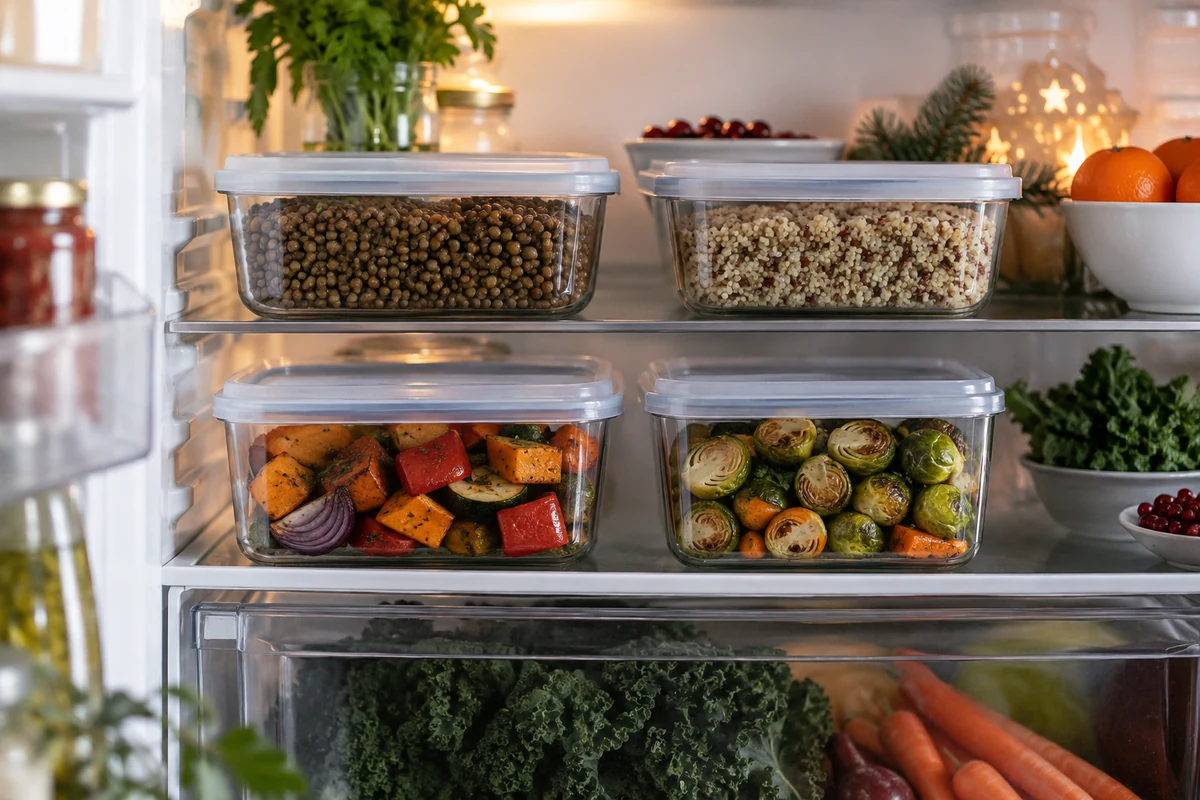
Plan cooking, cooling and storage together so preparing ahead reduces work without leaving food at unsafe temperatures.
Suggested Timetable
- Three days before: finalise the menu and shop. Plan thawing around each item’s instructions and cooking time; do not thaw everything this early, as fully thawed food should generally be used within 24 hours.
- Two days before: organise equipment and dry ingredients. Make perishable sauces only within their safe storage window, or freeze suitable portions promptly for longer storage.
- The day before: cook lentils, quinoa or vegetables and prepare the terrine if desired. Cool promptly, refrigerate within 1–2 hours and keep covered at 5°C or below.
- On the day: reheat only what you need, thoroughly and once. Set out tableware ahead, but bring perishable food out close to serving time.
Storing Food Safely
- Suitable containers: use clean food-safe containers with secure lids.
- Smaller portions: divide large batches for faster cooling and to reheat only what is needed.
- Clear labels: mark the outside with the contents and preparation date.
- Refrigeration: keep prepared dishes and cashew creams at 5°C or below and use within 48 hours, or sooner where an ingredient’s instructions require it.
- Freezing: freeze suitable dishes promptly in labelled freezer-safe portions. Texture and recommended storage time vary; follow ingredient guidance and try a small portion before freezing a whole celebration menu.
Reheating and Texture
- Covered oven reheating: an oven around 160–180°C can help protect moist dishes, but check the centre rather than relying on oven temperature. Reheat until steaming hot throughout, such as 75°C for 30 seconds or 70°C for 2 minutes.
- A crisp finish: uncover suitable dishes towards the end and increase the heat briefly if needed, watching closely. Browning the surface does not prove the centre is hot.
- Sauces and mash: heat in a saucepan, stirring to prevent burning and ensure the whole batch becomes steaming hot.
- Microwaving: use microwave-safe containers, stir or turn during heating and allow the recommended standing time. Check for cold spots and do not assume a few short bursts are sufficient.
- Finishing: add fresh herbs, suitable toasted nuts or citrus zest immediately before serving.
Packing and Transport
- Temperature control: transport chilled dishes in a cool bag with ice packs and refrigerate on arrival. Keep hot-held food at 63°C or above, or transport chilled and reheat thoroughly at the destination.
- Separate sauces: pack them in sealed containers to keep accompaniments from becoming soggy, maintaining the required temperature.
- Stable packing: keep dishes level and use food-safe packaging to protect toppings; avoid stacking open food containers.
- Delicate desserts: secure dessert glasses upright in a rigid box inside suitable chilled transport.
Food Safety Reminders
- Temperatures: refrigerate at 5°C or below. Reheat once until steaming throughout; a clean probe can confirm 75°C for 30 seconds or 70°C for 2 minutes.
- Prompt cooling: divide large quantities into smaller, shallow containers and refrigerate within 1–2 hours of cooking.
- Storage time: use refrigerated leftovers within 48 hours or freeze promptly. Thaw in the fridge and use within 24 hours of fully thawing; do not repeatedly thaw and refreeze prepared dishes. Smell and appearance cannot confirm safety.
- Hygiene: wash hands, utensils and work surfaces, and avoid cross-contact when preparing food for guests with allergies.
Checklist for the Day
- Have a clean food thermometer available and check reheated dishes in the centre.
- Reheat dishes that can be safely hot-held first, leaving crisp foods until last.
- Prepare a clean finishing area for garnishes, keeping perishable sauces chilled until needed.
- Have spare containers for leftovers and clear ingredient information beside the food.
Serving Ideas and Drinks for Different Tastes
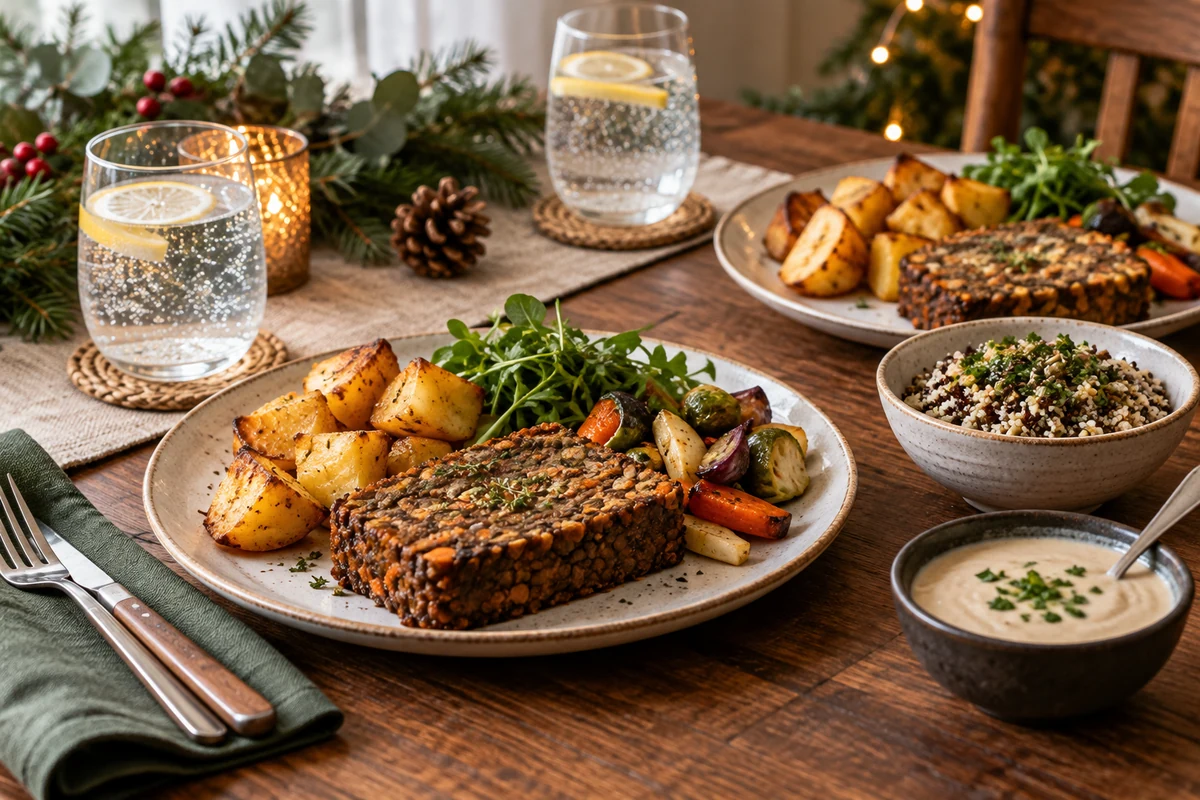
Familiar flavours and thoughtful service can make a vegan festive meal welcoming to a mixed group of guests.
Serving the Meal
- Temperature: serve hot dishes promptly after thorough cooking or reheating, and cold salads directly from chilled storage. If holding hot food, keep it at 63°C or above.
- Moderate first portions: let guests try several dishes, with more available if wanted.
- Simple presentation: ceramic or white plates show off colourful vegetables; finish with fresh herbs, citrus zest or suitable seeds.
- Order of service: offer starters, then mains and sides, followed by dessert. Serve sauces separately where this helps preserve texture.
- Serving utensils: provide a separate spoon or pair of tongs for each dish and keep them from moving between dishes.
Drinks Pairings
- Dry sparkling wine: an optional match for roasted and citrus dishes. Check vegan suitability, as some wines use animal-derived processing aids.
- Light aromatic white wine: sauvignon blanc or vinho verde can accompany salads, quinoa and dishes with dried fruit.
- Light red wine: pinot noir can accompany savoury vegetable roasts; very tannic wines may overwhelm desserts.
- Beer: a wheat beer or light amber ale is another optional pairing for crisp, seasoned dishes. Check vegan suitability and allergens, including gluten.
- Alcohol-free choices: sparkling water with citrus, diluted pomegranate juice or a citrus mocktail provide alternatives. Check mixers for guests who must avoid alcohol completely.
Welcoming Guests Used to Traditional Menus
- Familiar textures: shredded jackfruit, suitable seitan and crisp accompaniments offer variety without needing every dish to imitate meat.
- Familiar seasonings: garlic, onion, rosemary, tomato purée and suitable tamari can create recognisable savoury flavours.
- An inviting table: use individual plates or sharing dishes as you normally would, while keeping ingredient information clear.
- Simple options: include a familiar side such as rice or plain mash made with suitable vegan ingredients.
Practical Service Steps
- Set up a finishing area: arrange clean utensils and garnishes ready for plating, bringing chilled sauces out only when needed.
- Work in stages: finish crisp dishes last so they reach the table at their best.
- Prepare drinks service: set out glasses before serving food and offer alcohol-free choices clearly.
- Keep the conversation relaxed: explain flavours and offer choices without pressuring guests to try something.
Labels and Communication
- Identify allergens: use clear cards and keep a complete ingredient list available. Check directly with guests where a restriction needs special care.
- Small tasting portions: offer these for guests exploring unfamiliar flavours, never as a way to test an allergy.
- Be welcoming: discuss suitable alternatives in advance. A hurried last-minute swap may not resolve an allergen or cross-contact risk.
Conclusion
Vegan festive cooking can be varied, practical and full of flavour. Plan around your guests’ needs and choose a manageable combination of main dishes, sides and desserts.
Test unfamiliar substitutions before the occasion, prepare suitable sauces ahead and vary the textures. Fresh herbs, carefully toasted nuts where appropriate, and simple presentation can make a difference without complicating the meal.
Thank you for reading. Follow our social channels for more festive ideas and visit the I Love Christmas blog for seasonal recipes and inspiration.
Vegan Festive Recipes: Frequently Asked Questions
Can I prepare vegan dishes ahead?
Yes. Suitable sauces, creams and desserts can be made the day before, kept at 5°C or below and used within 48 hours, or sooner if required. Cool cooked food promptly and refrigerate within 1–2 hours. Reheat dishes only once until steaming hot throughout.
How can I adapt dishes for a nut allergy?
Silken tofu or suitably prepared sunflower seeds may replace cashews in some sauces, but confirm all the person’s allergies and check labels and cross-contact risks. Tofu contains soya and tahini contains sesame. Vegan does not mean allergen-free.
Which substitutions suit a gluten-free diet?
Use appropriate gluten-free bread, biscuits, oats and sauces, and consider quinoa or brown rice. Flour changes can affect binding and texture, so use tested gluten-free recipes rather than assuming every flour is interchangeable.
How should I store vegan Christmas leftovers?
Cool promptly, refrigerate within 1–2 hours at 5°C or below and eat within 48 hours, or freeze suitable portions promptly. Thaw in the fridge and use within 24 hours of fully thawing. Reheat once until steaming throughout, such as 75°C for 30 seconds or 70°C for 2 minutes; smell alone cannot confirm safety.
What drinks can I offer alongside the meal?
Offer alcohol-free options such as sparkling water and citrus mocktails. If guests drink alcohol, vegan-labelled dry sparkling wine, light aromatic whites or light reds can complement different dishes. Check allergens and individual requirements.
Sources and Further Reading
- UK Government: cooking food safely
- Food Standards Agency: chilling food
- Food Standards Agency: allergen guidance
- NHS: foods to avoid giving babies and young children