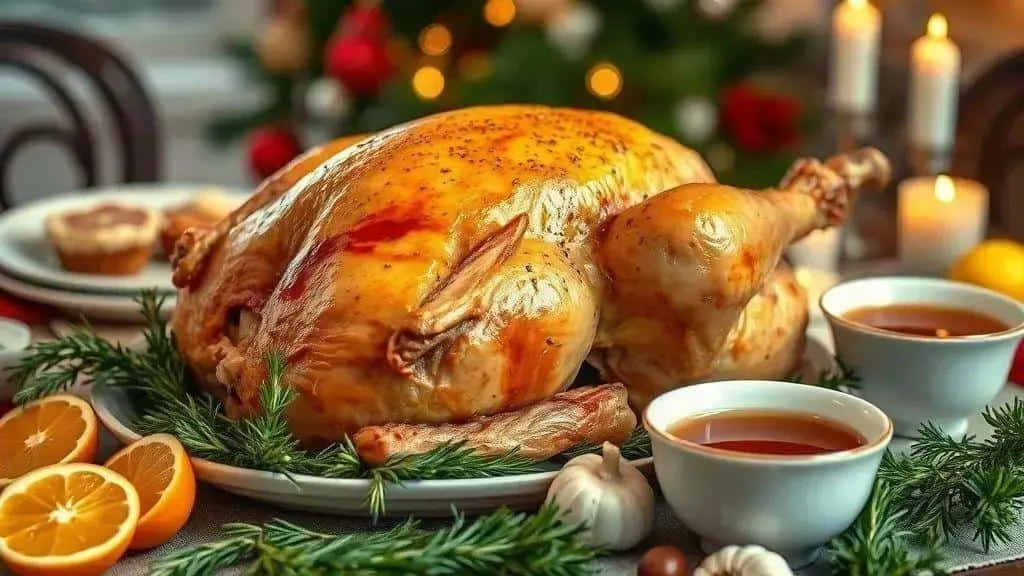
These five Christmas roast turkey recipes offer herb butter, Brazilian farofa served separately, honey and citrus, bacon and wine, and a gluten-free herb variation. Choose one approach, follow the bird’s packaging, thaw fully and check doneness with a food thermometer. Allow time for resting, side dishes and safe storage of leftovers.
Explore these Christmas roast turkey recipes for a festive centrepiece. Whether you prefer herbs, citrus or a Brazilian-inspired accompaniment, the following ingredients and methods help you plan the meal without promising a foolproof result.
The Basics of a Good Christmas Turkey
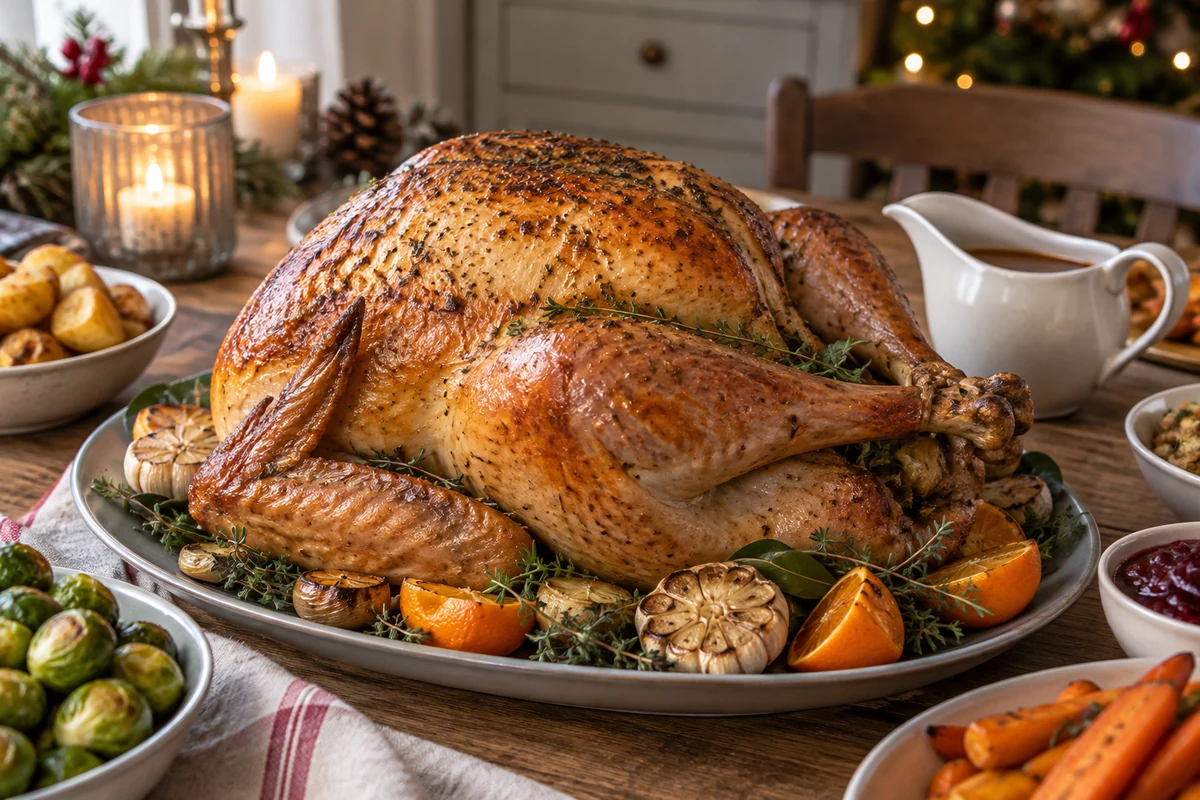
Flavourings, careful cooking and realistic planning matter more than a fixed short cooking time. Follow the turkey’s thawing and roasting instructions. Thaw in a covered container on the fridge’s bottom shelf at 5°C or below; a large bird can take several days. Do not wash raw poultry. Cook farofa or stuffing separately, and check thick breast and thigh meat for 75°C for 30 seconds or 70°C for 2 minutes, avoiding bone.
What Helps the Roast Turn Out Well
- Balanced seasoning: herbs, citrus and butter or olive oil add flavour without needing to overwhelm the turkey.
- Optional brining: a suitable brine can change moisture retention and seasoning. It is not necessary for every bird, especially one already salted or injected; marinades do not make raw poultry safe.
- Centre temperature: check thick breast and thigh meat for 75°C for 30 seconds or 70°C for 2 minutes. Do not remove the turkey at a lower temperature and assume resting will finish the job safely.
- Resting: after thorough cooking, rest loosely covered for 20–30 minutes before carving and serving promptly.
- Protecting the surface: loose foil can slow excessive browning while the centre finishes cooking.
- Glazes and basting: pan juices or a late glaze add flavour and colour. Sweet coatings burn easily, so watch closely and avoid opening the oven unnecessarily.
- A workable schedule: include thawing, preparation, cooking checks and resting rather than relying on an optimistic roasting estimate.
- Different flavours: choose herbs, citrus or a regional accompaniment to suit the guests, checking dietary requirements.
Spreading flavourings under the skin and leaving adequate space in the oven can help. For leftovers, cool promptly in smaller portions, refrigerate within 1–2 hours at 5°C or below and use within 48 hours or freeze. Reheat only once; after fridge thawing, use within 24 hours of complete thawing.
General Preparation and Ingredient Guide
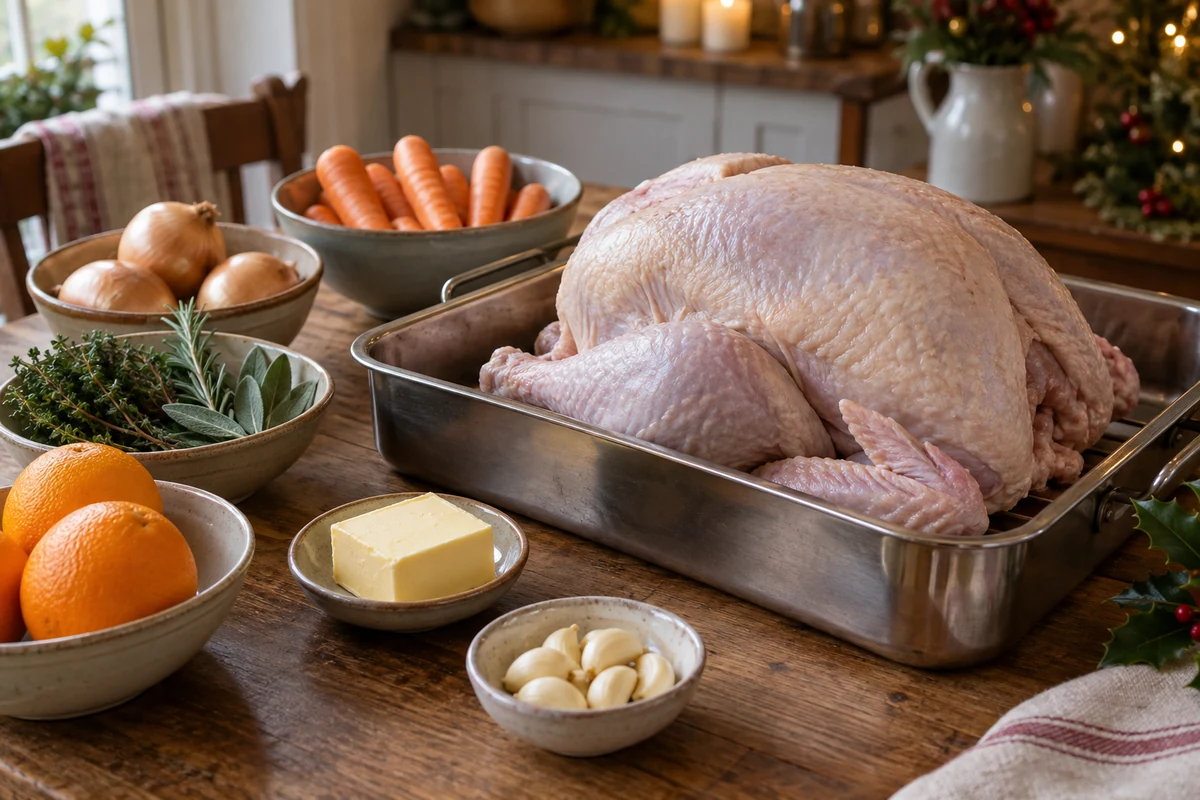
- 1 whole turkey, 4–5 kg, fully thawed with any giblet bag removed. The following is a general preparation option; use the separate ingredient list for your chosen recipe.
- 3 litres water for an optional brine. This may not cover a large bird; use a suitable food-safe container and a tested brining method for its size rather than topping up arbitrarily.
- 150 g salt for the 3-litre brine, weighed rather than measured by spoon. Do not add this as dry seasoning, and do not change the weighed amount merely because the salt grains are finer.
- 100 g brown sugar for the optional brine. A sweet glaze is a separate option, not a necessary extra.
- 200 g unsalted softened butter, or 80–100 ml olive oil for a different coating. Check all ingredients if avoiding milk.
- 3 garlic cloves, chopped, or a suitable garlic paste, adjusted to its strength.
- Zest and juice of 2 oranges, divided between flavouring the optional brine, butter and pan liquid. Lemon gives a sharper flavour and should be added gradually.
- Rosemary, thyme and 4 bay leaves. Allow 2 tbsp chopped thyme and 1 tbsp rosemary for the butter, plus a few sprigs for the brine and tin; use less if dried.
- Black pepper and salt only if needed, considering any previous brining or seasoning.
- 1 large onion and 2 carrots, cut into pieces for the roasting tin, not packed into the cavity.
- 500 ml chicken stock or water for the tin and gravy. Wine is an optional flavouring, but a large wine-based quantity changes the sauce and is not alcohol-free.
- Bacon rashers, optional, if choosing a bacon-covered roast; account for their salt and cook them thoroughly.
- 2 tbsp plain flour or 1 tbsp cornflour, optional, for thickening gravy. Use suitably labelled cornflour and check the stock and other ingredients for a gluten-free version.
General Preparation Method
- Optional brine: dissolve 150 g salt and 100 g sugar in 1 litre hot water with some orange zest, 2 thyme sprigs and 2 bay leaves. Add 2 litres cold water and chill fully to fridge temperature before any contact with the turkey. Use only for an unseasoned bird where a suitable tested method and the pack allow it.
- Brine under refrigeration: if using this option, keep the bird covered by cold brine at 5°C or below for 8–12 hours, within the turkey’s safe use period. If the container, liquid amount or fridge space is unsuitable, skip brining. Do not brine a pre-seasoned bird without checking its instructions.
- Drain and dry: lift out carefully, discard the used brine and pat dry with kitchen paper. Do not rinse raw turkey: splashes can spread bacteria. Clean the sink area, worktop and utensils afterwards.
- Preheat: follow the turkey’s packaging. If no instructions are available, the general UK guide for an unstuffed turkey uses 180°C conventional or 160°C fan; see the timing guidance below.
- Mix the herb butter: combine 200 g softened butter, garlic, reserved orange zest, 2 tbsp chopped thyme and 1 tbsp rosemary. Add pepper and little or no salt if the turkey has been brined.
- Spread beneath the skin: gently loosen the breast skin and spread some butter underneath, then the rest over the skin. Wash hands after handling raw poultry.
- Use aromatics in the tin: put the onion, carrots and remaining herbs around or beneath the bird. Keep the cavity unfilled and cook stuffing separately.
- Set up the tin: place the turkey on a suitable rack over the vegetables. Add 200–300 ml from the stock allowance and some orange juice to the tin. Use oven-safe kitchen string only if needed for its shape.
- Roast according to the pack: if instructions are missing, at 180°C conventional/160°C fan the general guide is 45 minutes per kg plus 20 minutes below 4.5 kg, or 40 minutes per kg from 4.5–6.5 kg. These are estimates for an unstuffed, fully thawed turkey; always verify doneness.
- Check both areas: probe the thick breast and thigh meat without touching bone. Confirm 75°C for 30 seconds or 70°C for 2 minutes before removing the bird.
- Protect and moisten if needed: spoon over some pan juices occasionally and add small amounts of the remaining stock if the tin dries out. Cover loosely with foil if browning too quickly.
- Rest: loosely cover the fully cooked bird and leave for 20–30 minutes before carving, then serve promptly.
- Make gravy: skim excess fat from the pan juices and bring them to a thorough simmer with remaining stock as needed. For flour gravy, cook the flour in a little retained fat before gradually whisking in liquid. Alternatively, mix cornflour with cold water, add gradually and simmer until cooked and thickened.
- Carve: remove legs and thighs, then slice the breast across the grain. Serve the hot gravy separately.
Useful Techniques
- Dry the surface: pat with disposable kitchen paper before seasoning. Keep raw poultry covered and separated in the fridge rather than leaving it exposed near ready-to-eat food.
- Flavour under the skin: placing herb butter near the breast meat adds flavour beyond the outside coating.
- Probe where needed: avoid unnecessary cuts, but do not skip temperature checks for fear of losing a little juice.
- Use a thermometer: it helps distinguish a cooked centre from merely browned skin.
- Plan serving time: do not rush an undercooked bird. If food is held hot after resting, maintain 63°C or above; a loosely covered platter does not ensure safe hot holding.
Five Turkey Recipes: Overview and Variations
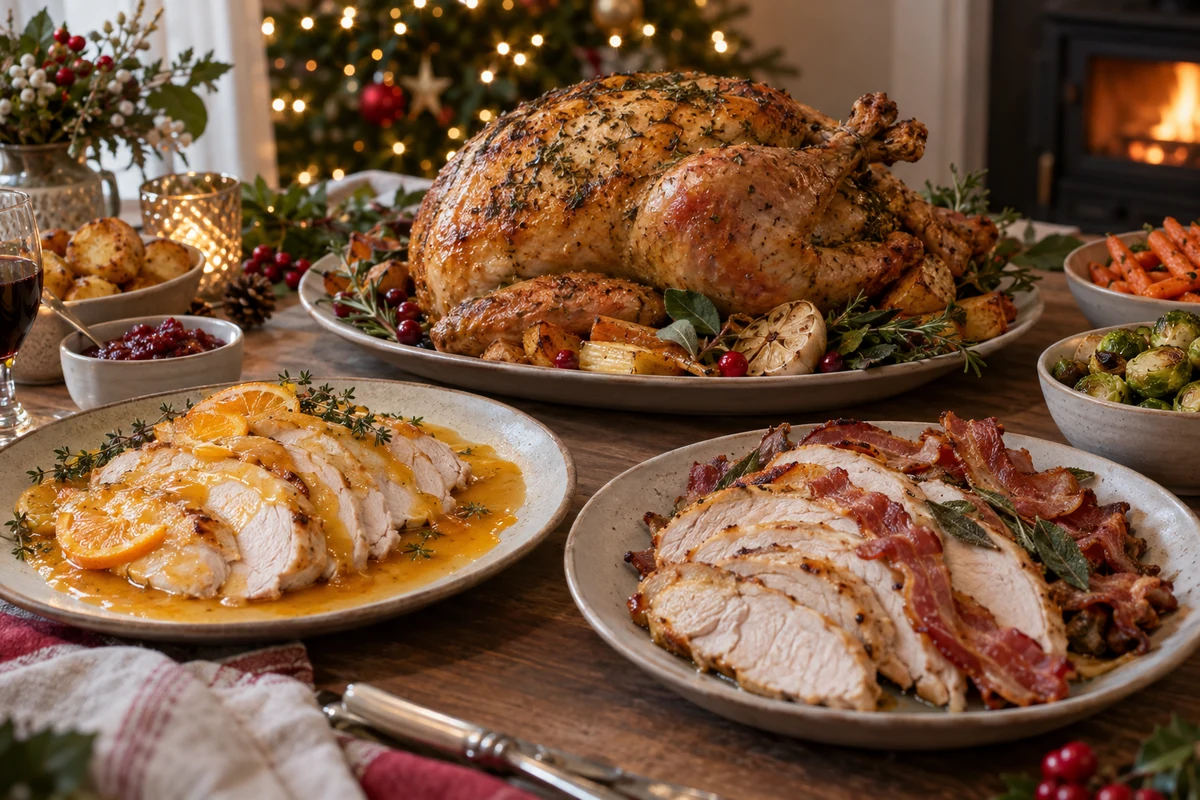
Classic Herb Turkey
- 1 whole turkey, 4–5 kg, fully thawed and prepared without washing.
- 200 g unsalted softened butter, or 100 ml olive oil for a different coating.
- 4 chopped garlic cloves, or suitable garlic paste adjusted to its strength.
- Zest and juice of 1 lemon, or an orange for a sweeter flavour.
- 2 tbsp chopped fresh rosemary, or 2 tsp dried.
- 2 tbsp fresh thyme leaves, or about 1 tsp dried, adjusted to taste.
- Salt and black pepper, reduced if the bird is already seasoned or brined.
- 500 ml chicken stock or water for the tin and gravy.
Classic Herb Turkey Method
- Make the butter: mix butter, garlic, lemon zest, rosemary and thyme, with pepper and any needed salt.
- Loosen the skin: gently make a pocket above the breast meat without tearing it.
- Apply the butter: spread some underneath the breast skin and the rest over the outside.
- Add citrus: put the lemon juice in the roasting tin with part of the stock. Keep the cavity empty.
- Roast: follow the pack or the general unstuffed-turkey guide above. Do not rely on 25–30 minutes per kilogram at a low temperature.
- Moisten as needed: use some pan juices for occasional basting and remaining stock to prevent a dry tin.
- Verify doneness: check thick breast and thigh meat for 75°C for 30 seconds or 70°C for 2 minutes, avoiding bone.
- Rest: loosely cover for 20–30 minutes before carving and serving.
Variations
- More citrus: add some orange zest to the herb butter.
- Olive-oil version: replace the butter with the stated oil allowance. This changes the flavour but does not automatically make the meal low-calorie.
- Smoky flavour: add a little smoked paprika rather than trying to smoke herbs in the kitchen.
Turkey with Brazilian Farofa on the Side
- 1 whole turkey, 4–5 kg, fully thawed and prepared according to its pack.
- 300 g prepared farofa, the Brazilian toasted cassava-meal accompaniment. Check its ingredients, as ready-made varieties can already contain bacon or seasoning.
- 150 g chopped bacon, optional, reduced or omitted if the farofa already contains it.
- 1 large chopped onion, softened in a little butter, oil or the bacon fat.
- 1 diced apple, or firm pear.
- Chopped parsley and chives to taste.
- Salt, pepper and ground cumin as needed.
Turkey with Brazilian Farofa Method
- Cook the farofa ingredients: cook the bacon thoroughly, soften the onion and apple, then stir in the prepared farofa and herbs and heat evenly. Keep this in its own pan, away from raw turkey.
- Season the turkey: add pepper and any needed salt, accounting for brining or pre-seasoning.
- Keep the cavity empty: serve farofa as a separately cooked side dish rather than stuffing the bird.
- Prepare for roasting: coat the turkey with a little butter or oil as desired; the fuller recipe below specifies the allowance.
- Roast: follow the packaging or the general guide for an unstuffed turkey above, then check doneness.
- Serve safely: verify the breast and thigh temperatures and serve the farofa hot. If reheating made-ahead farofa, heat thoroughly to 75°C for 30 seconds or 70°C for 2 minutes, only once.
Variations
- Dried fruit: replace some apple with chopped apricots or raisins.
- Vegetarian farofa: omit bacon and use suitable farofa, vegetables, mushrooms and fat. Keep it separate from the turkey and poultry utensils.
- Brazilian nuts: add toasted Brazil nuts or cashews if suitable for your guests.
Honey, Citrus and Spice Turkey
- 1 whole turkey, 4–5 kg, fully thawed and prepared.
- 120 ml honey for the glaze. Maple syrup gives a different flavour; neither is sugar-free. Do not serve honey to under-ones.
- Zest and juice of 3 oranges.
- 1 tsp ground cinnamon, or ½ tsp nutmeg for a different flavour.
- 2 tbsp grated fresh ginger, optional.
- Salt and pepper as needed.
Honey, Citrus and Spice Turkey Method
- Mix the glaze: combine honey, orange juice and zest, ginger and spice. Divide it before contact with raw turkey if reserving some for serving.
- Optional marinade: apply a small portion and refrigerate, covered, for 2–4 hours within the bird’s safe storage period. Discard used raw-poultry marinade unless it is subsequently thoroughly cooked.
- Start roasting: use the turkey’s packaging instructions or the general guide above. High heat does not seal juices into the skin.
- Add glaze late: brush with a clean portion of glaze towards the end of roasting rather than repeatedly coating the bird with honey throughout a long roast.
- Watch the finish: allow the glaze to colour without burning and check safe centre temperatures before resting.
Variations
- Chilli: add a little chopped fresh chilli or chilli flakes to the glaze.
- Wine: replace a little juice with dry white wine if appropriate. Cooking does not guarantee complete alcohol removal.
- Mixed citrus: use some lemon or mandarin juice, adding sharp juice gradually.
Turkey with Bacon and White Wine
- 1 whole turkey, 4–5 kg, fully thawed and prepared.
- 200–300 g streaky bacon rashers for the breast.
- 300 ml dry white wine for the roasting tin and sauce.
- 2 onions and 2 carrots, chopped for the tin.
- Pepper, paprika and salt if needed; bacon is already salty.
Turkey with Bacon and White Wine Method
- Prepare the tin: add onion, carrot and some wine, keeping liquid below the bird rather than pouring it over the skin.
- Add bacon: lay the rashers across the breast in an even layer.
- Roast: use the packaging instructions or the general guide above. Add liquid as needed so the tin does not dry out, and shield bacon that colours too fast.
- Uncover the skin if desired: towards the end, carefully lift off the bacon and finish cooking it separately if needed. Anything that has touched raw turkey must be thoroughly cooked before serving.
- Make the sauce: bring the pan juices to a thorough simmer and reduce, adjusting seasoning after tasting the cooked sauce. Optional thickening is described in the fuller recipe.
Variations
- Dark beer: gives a maltier sauce instead of wine, but introduces gluten unless a suitable gluten-free product is chosen and still contains alcohol unless specified otherwise.
- Maple finish: a little maple syrup brushed onto cooked bacon near the end adds sweetness; watch closely to prevent scorching.
- Alcohol-free: replace wine with suitable chicken stock and a little apple juice, adjusting sweetness.
Herb and Olive-Oil Turkey: Gluten-Free Option
- 1 whole turkey, 4–5 kg, checked for gluten-containing seasonings or fillings and fully thawed.
- 100 ml olive oil instead of butter.
- 3 crushed garlic cloves.
- Finely grated zest of 1 lemon.
- Fresh parsley, thyme or basil to taste.
- Salt and pepper as needed.
- 1 tbsp suitably labelled cornflour, optional, for the gravy.
Herb and Olive-Oil Turkey Method
- Flavour the turkey: mix oil, garlic, zest and herbs, apply to the bird and refrigerate covered for 2–4 hours if marinating, within its safe use period.
- Roast: follow the pack or the general unstuffed-turkey guide above, checking the centre before serving.
- Protect the skin: use loose foil if it browns too quickly. No bacon is needed for this variation.
- Make gravy: thoroughly simmer the pan juices with suitable gluten-free stock or water. If required, add cornflour mixed with a little cold water and cook until thickened.
- Rest and serve: after 20–30 minutes’ rest, carve and serve promptly with washed salad leaves and cooked vegetables.
Variations
- Yoghurt and herbs: a suitable yoghurt marinade changes the flavour. Keep refrigerated; lactose-free dairy yoghurt still contains milk proteins.
- Mustard and honey: use a little as a late glaze, checking both ingredients for gluten-free suitability and avoiding honey for under-ones.
- Ginger and tamari: add a little ginger and explicitly gluten-free tamari. Tamari contains soya and can be salty; not every tamari is gluten-free.
Classic Herb Turkey: Full Ingredients and Method
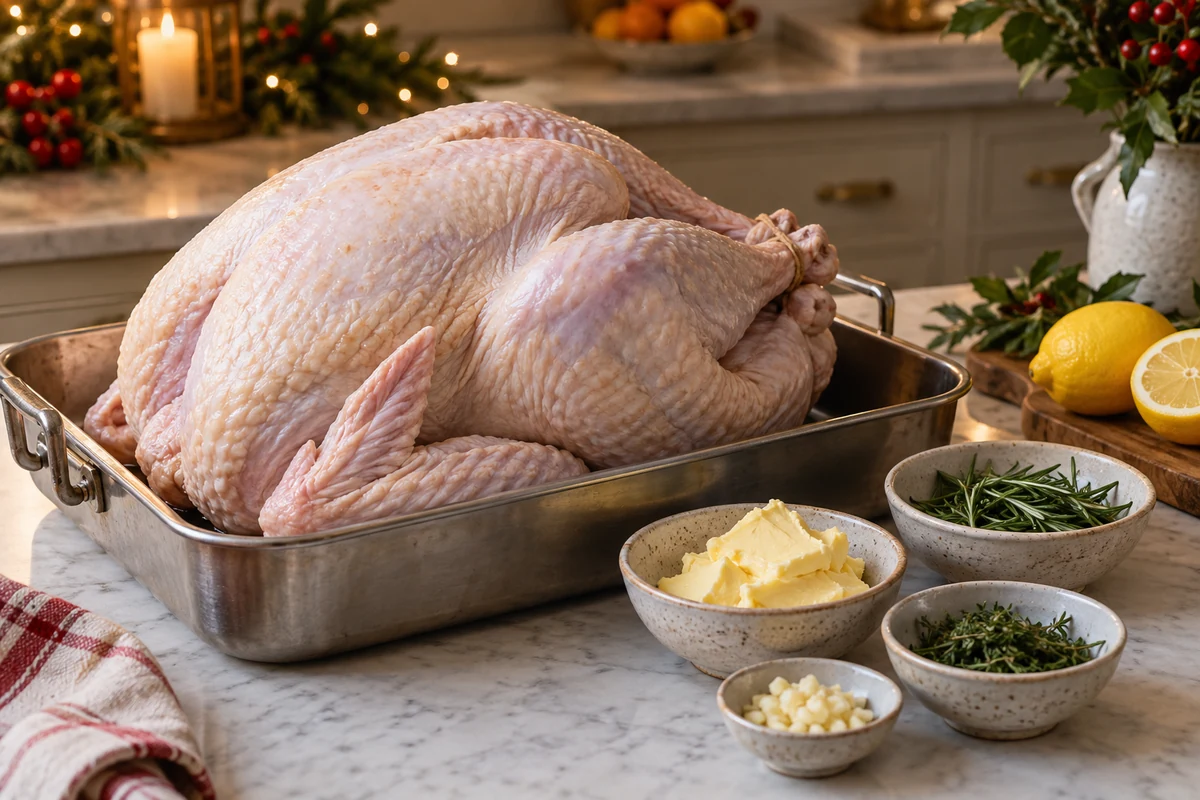
Classic Herb Turkey
Ingredients
- 1 whole turkey, 4–5 kg, fully thawed, with any giblet bag removed.
- 200 g unsalted softened butter, or 100 ml olive oil for a different coating.
- 4 chopped garlic cloves, or a suitable garlic paste adjusted to its strength.
- Zest and juice of 1 lemon, or an orange.
- 2 tbsp chopped fresh rosemary, or 2 tsp dried.
- 2 tbsp fresh thyme leaves, or about 1 tsp dried.
- Salt as needed, taking account of any brining or pre-seasoning. Do not add a fixed tablespoon to an already salted bird.
- Freshly ground black pepper to taste.
- 1 large onion and 2 carrots, chopped for the roasting tin.
- 500 ml chicken stock or water for the tin and gravy. Wine can replace part if desired, but is not alcohol-free. Optional gravy thickening: 1 tbsp cornflour mixed with a little cold water.
- A food thermometer for checking thick breast and thigh meat.
- Foil and oven-safe kitchen string if needed.
Method
- Plan the roasting time: follow the pack. Without instructions, use the general guide at 180°C conventional/160°C fan: below 4.5 kg, 45 minutes per kg plus 20 minutes; from 4.5–6.5 kg, 40 minutes per kg. Always check centre temperatures and keep the cavity unfilled.
- Optional brining: use the separate brine ingredients and precautions in the preparation section only if appropriate to an unseasoned bird. It is optional, not an additional dry salt allowance. If skipping, proceed with the herb butter.
- Drain and dry: discard any used brine and pat dry with disposable kitchen paper. Do not rinse or wash the raw turkey.
- Preheat: use the pack’s oven temperature or the general guide above, allowing enough space around the bird.
- Mix herb butter: combine butter, garlic, lemon zest, rosemary and thyme. Add pepper and only any salt needed beyond existing seasoning.
- Spread beneath the skin: carefully loosen the breast skin, apply some butter underneath and spread the remainder over the outside.
- Add aromatics to the tin: place the onion and carrots beneath or around the bird and add the lemon juice to the liquid. Keep the cavity empty.
- Position the turkey: use a suitable rack over the vegetables and add 200–300 ml from the stock allowance. Tie only if needed to keep the shape, without restricting the cavity.
- Roast: follow the chosen pack instructions or general guide, checking progress and allowing extra time if required by your oven and bird.
- Baste if desired: use some pan juices occasionally. Add remaining stock gradually if the tin dries out and shield over-browning skin with loose foil.
- Check doneness: probe thick breast and thigh meat without touching bone for 75°C for 30 seconds or 70°C for 2 minutes. Do not rely on carry-over cooking during the rest.
- Rest: loosely cover the fully cooked turkey for 20–30 minutes before carving and serving.
- Make gravy: strain pan juices into a saucepan, skim excess fat and bring to a thorough simmer, adding remaining stock or water as needed. For thicker gravy, add the optional cornflour slurry gradually and simmer until cooked and thickened.
- Carve: separate the legs, then cut the breast across the grain. Serve hot gravy alongside.
Quick Tips
- Flavour under the skin: herb butter adds flavour directly beside the breast meat.
- Dry safely: pat the skin before seasoning; keep raw poultry covered and separated on the fridge’s bottom shelf until preparation.
- Check with a thermometer: safe centre temperature matters more than a golden surface or an estimated cooking time.
- Protect browning areas: use loose foil where needed. Bacon is a separate optional variation with its own ingredients and salt level.
Brazilian-Style Turkey with Farofa: Ingredients and Method
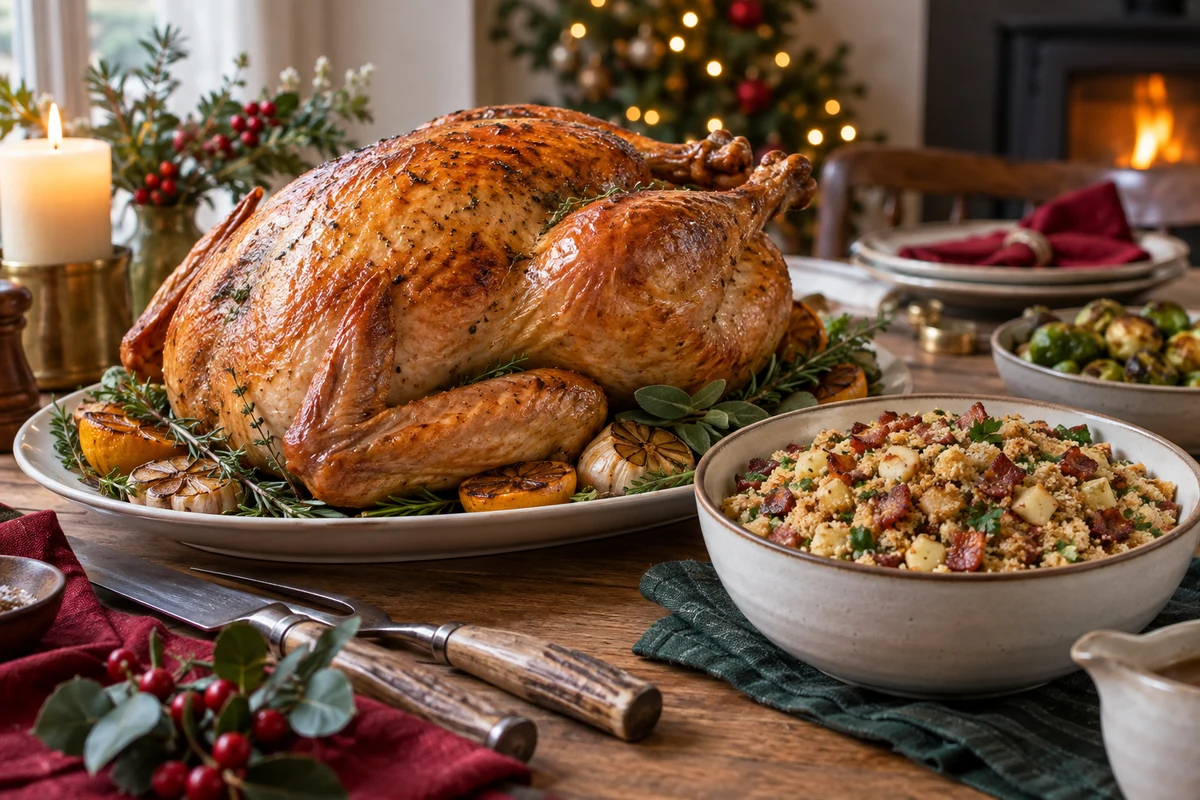
Brazilian-style turkey with farofa served separately
Ingredients
- 1 whole turkey, 4–5 kg – fully thawed if frozen; follow its packaging and do not wash it.
- 300 g prepared farofa – a Brazilian toasted cassava-meal mixture. Check its seasoning and ingredients; cassava meal is not tapioca starch.
- 150 g diced bacon, optional – or cooked smoked turkey pieces. Adjust if your prepared farofa already contains bacon.
- 1 large onion, chopped – to sauté in some of the butter or oil.
- 1 medium apple, diced – pear, chopped dried apricots or raisins offer alternatives.
- 2 garlic cloves, chopped – or garlic paste to taste.
- 2 tbsp chopped parsley – or spring onion greens.
- 1 tsp ground cumin, optional – sweet paprika gives a different flavour.
- Salt and black pepper – to taste, allowing for the bacon and prepared farofa.
- 2 tbsp butter or 3 tbsp olive oil – divide between the farofa and coating the turkey. Oil avoids dairy; check all other ingredients if needed.
- 200–300 ml chicken stock – for the roasting tin and gravy; water is an alternative. Have an additional 2–3 tbsp water for the farofa if required.
- Kitchen string and foil – if needed to secure and protect the bird. Have a clean food thermometer ready.
Method
- Cook the bacon: reserve half the butter or oil in a clean dish for the turkey. Heat the remainder in a large frying pan and cook the bacon thoroughly until browned; lift it out and set aside.
- Sauté the onion and garlic: soften the onion in the same pan, then add the garlic and cook for about a minute without burning it.
- Add the apple: cook for 2–3 minutes, until beginning to soften but still holding its shape.
- Combine the farofa: stir the prepared farofa, cooked bacon, parsley and cumin into the onion mixture. Heat through and adjust the seasoning. Keep this accompaniment separate from the raw turkey.
- Adjust the texture: if too dry, add the extra water a little at a time, up to 2–3 tbsp. If too wet, cook briefly to evaporate moisture rather than automatically adding more seasoned farofa.
- Season the turkey: coat with the reserved butter or oil, putting some beneath the breast skin if practical. Add pepper and only as much salt as needed, especially with a pre-seasoned bird.
- Cook the farofa separately: leave the turkey cavity empty. Place the farofa in its own ovenproof dish or keep it hot in the pan; do not put it into the bird before or after roasting.
- Position the turkey: use a rack in a roasting tin, adding the stock beneath it. Secure the legs only if the packaging recommends it. There is no stuffing to sew or pin inside.
- Preheat the oven: follow the turkey’s packaging. Without specific instructions, use 180°C conventional/160°C fan for an unstuffed bird.
- Allow adequate roasting time: without packet guidance, allow approximately 45 minutes per kg plus 20 minutes for a turkey under 4.5 kg, or 40 minutes per kg for one weighing 4.5–6.5 kg. These are planning guides; confirm doneness by temperature.
- Baste and protect: baste occasionally with the roasting juices and top up the tin with water if it is drying out. Loosely cover the bird with foil if its skin is browning too quickly.
- Check doneness: test the thickest breast and thigh, avoiding bone: both must reach 75°C for 30 seconds or 70°C for 2 minutes. The separately cooked farofa should be piping hot throughout; use the same temperature check when reheating it.
- Rest before carving: loosely cover the cooked turkey for 20–30 minutes, then serve promptly. If hot-holding food, keep it at 63°C or above.
- Carve and serve: remove the legs, then slice the breast across the grain. Serve the farofa in its own dish with the turkey and gravy.
Tips and Variations
- Dried-fruit farofa: add chopped dried apricots or raisins for a sweet contrast.
- Richer farofa: an optional little extra melted butter can enrich the side dish; add gradually so it does not become greasy.
- Vegetarian side dish: replace bacon with sautéed mushrooms and roasted vegetables. Choose vegetarian farofa and stock, and prepare and serve it with separate utensils, away from poultry juices.
Honey, Citrus and Spice Turkey: Ingredients and Method
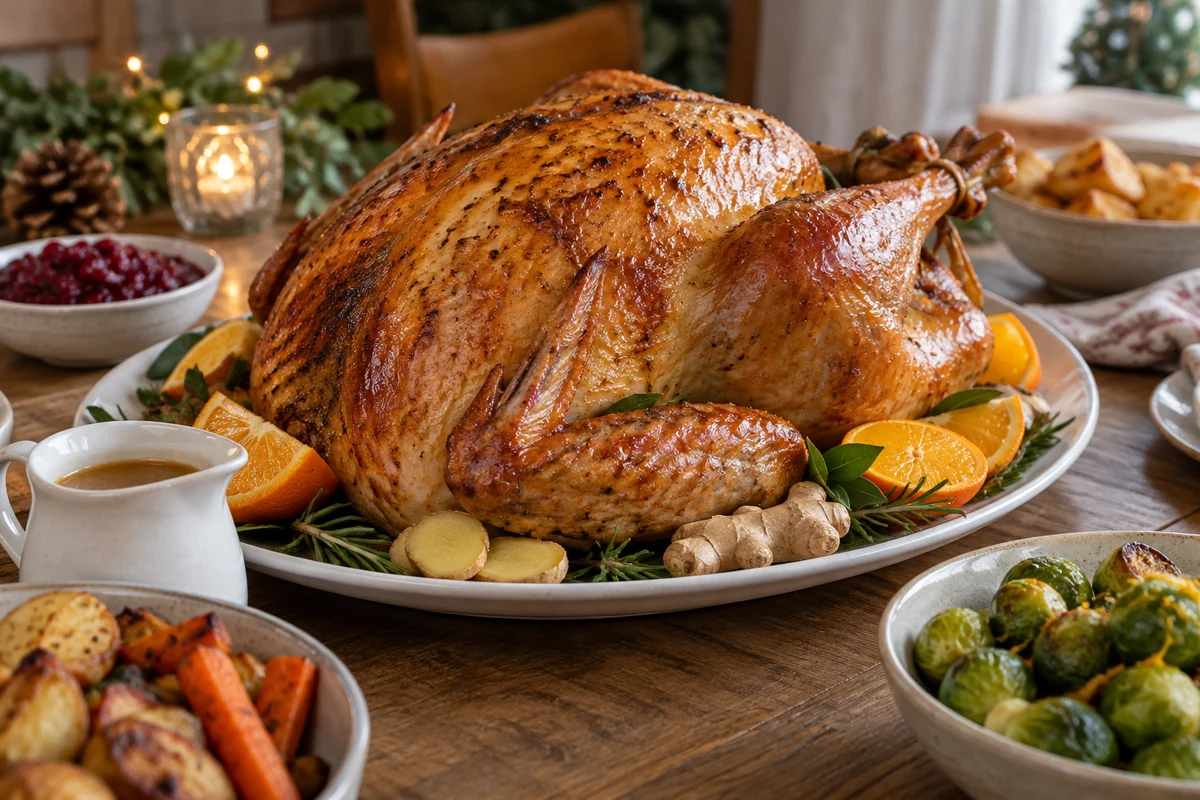
Honey, citrus and spice turkey
Ingredients
- 1 whole turkey, 4–5 kg – fully thawed if frozen; follow its packaging and do not wash it.
- 120 ml honey – for the glaze; alternatively, dissolve 100 g brown sugar in a little water. Neither option is sugar-free.
- Zest and juice of 3 oranges – or 2 oranges and 1 lemon for a sharper flavour. Reserve a little zest for the butter.
- 2 tbsp unsalted butter, softened – or 3 tbsp olive oil for a dairy-free alternative, checking the rest of the ingredients too.
- 2 tbsp grated fresh ginger – or 1 tsp ground ginger for a different intensity.
- 1 tsp ground cinnamon – or infuse a cinnamon stick in the glaze and remove it before serving.
- ½ tsp grated nutmeg, optional – for extra warmth.
- 3 garlic cloves, chopped – or garlic paste to taste.
- Salt and freshly ground black pepper – to taste.
- 500 ml chicken stock or water – for the tin and gravy; optionally, 1 tbsp cornflour mixed with cold water to thicken the gravy.
- Food thermometer – for checking the thickest parts of the bird.
- Foil and kitchen string – for covering or securing the bird if needed.
Method
- Prepare the citrus mixture: combine the honey, orange juice, most of the zest, ginger, cinnamon and optional nutmeg. Before anything touches raw poultry, reserve half in a clean covered container in the fridge for glazing later.
- Season the turkey: pat dry with kitchen paper without washing. Season lightly, allowing for any pre-seasoning, and leave the cavity empty. Clean hands and surfaces after handling the raw bird.
- Apply the flavoured butter: mix the butter or oil with half the garlic and reserved zest. Carefully loosen the breast skin and distribute the mixture beneath it and over the surface.
- Apply the marinade: brush with the half of the citrus mixture designated for raw poultry. Keep the reserved clean glaze and its utensils separate.
- Marinate, if desired: cover and refrigerate at 5°C or below for 2–4 hours, within the bird’s use-by and post-thawing window. Do not leave it on the worktop to warm up; discard used marinade unless it is thoroughly cooked as part of the dish.
- Preheat the oven: follow the packaging, or use 180°C conventional/160°C fan if there are no specific instructions.
- Prepare the tin: place the turkey on a rack in the roasting tin. Add the remaining garlic and 200–300 ml of the stock beneath it, reserving the rest for topping up and gravy.
- Roast thoroughly: follow packet timings. Without these, allow approximately 45 minutes per kg plus 20 minutes below 4.5 kg, or 40 minutes per kg at 4.5–6.5 kg. Time alone does not establish doneness.
- Protect the glaze: baste occasionally with the tin juices, keeping the clean glaze separate until the final stage. Cover loosely with foil if the sugary surface darkens before the meat is cooked.
- Check the centre: use a clean thermometer in the thickest breast and thigh, avoiding bone. Both must reach 75°C for 30 seconds or 70°C for 2 minutes; do not rely on resting to finish undercooked meat.
- Finish the glaze: during the final 15–20 minutes, brush lightly with the reserved clean glaze using a clean brush. Watch closely for burning; a hotter oven or grill is not necessary. Recheck the cooking temperature before removing the bird.
- Rest before carving: cover loosely for 20–30 minutes and serve promptly, or hot-hold at 63°C or above.
- Make the gravy: strain the roasting juices into a saucepan, add the remaining stock as needed and bring to a thorough simmer. Reduce and season; for a thicker sauce, add the optional cornflour slurry gradually and cook until thickened.
- Carve and serve: slice the breast across the grain and serve with the hot gravy. Extra orange wedges and fresh herbs are optional garnishes.
Variations
- A spicy note: add a little crushed chilli to the honey mixture.
- Wine gravy: replace some stock with dry white wine. Cooking does not guarantee that all alcohol disappears; retain stock for an alcohol-free option.
- Less sweetness: reduce or omit the honey, accepting a less glossy finish. Honey and brown sugar both contain sugars; a smaller amount does not make this a sugar-free glaze. Do not serve honey to babies under one.
Turkey with Bacon and Wine: Ingredients and Method
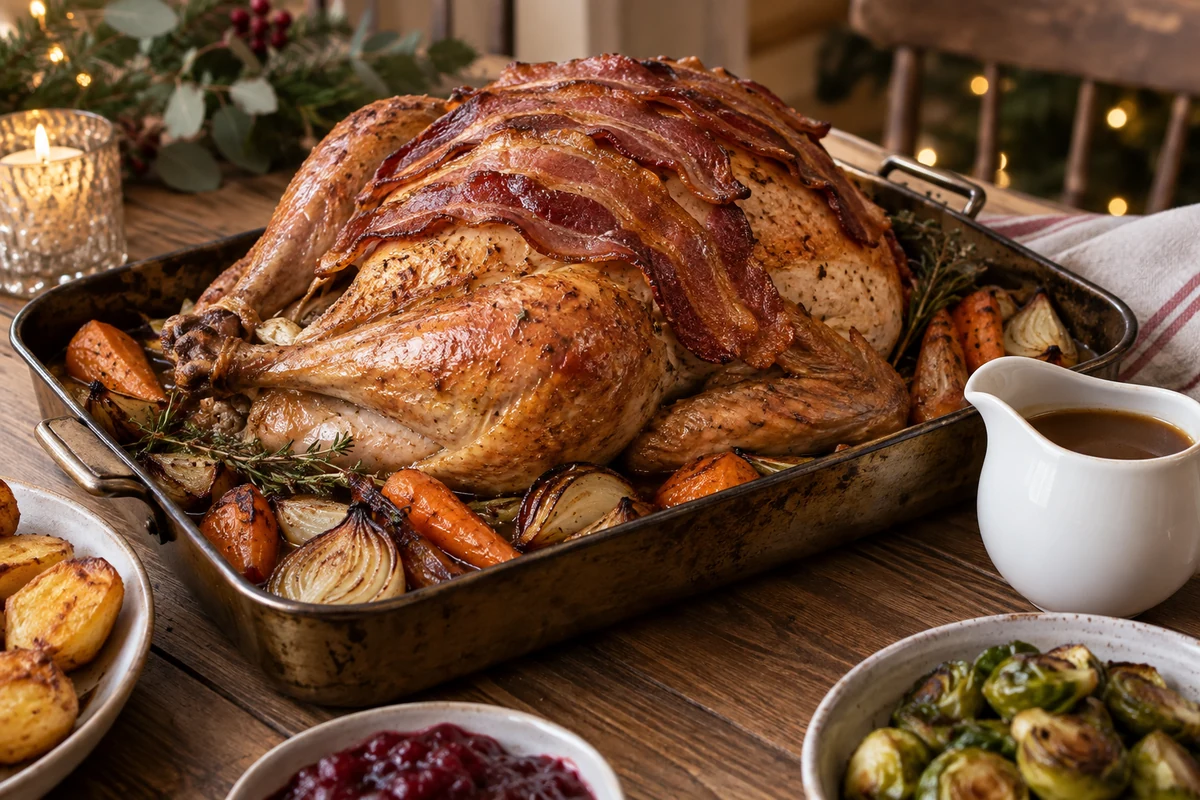
Turkey with bacon and wine
Ingredients
- 1 whole turkey, 4–5 kg – fully thawed if frozen; follow its packaging and do not wash it.
- 200–300 g streaky bacon rashers – pancetta or smoked bacon changes the flavour and salt level.
- 300 ml dry white wine – or extra chicken stock, with some apple juice if desired, for an alcohol-free version.
- 300–400 ml chicken stock – homemade or shop-bought; water also works. Optionally, have 1 tbsp cornflour and cold water for thickening the gravy.
- 2 large onions – quartered for the roasting tin.
- 2 large carrots – cut into large pieces.
- 3 garlic cloves – chopped or crushed; garlic paste can be used to taste.
- 50 g unsalted butter, softened – alternatively, use olive oil to coat the bird, up to 80 ml as needed rather than treating it as an exact butter conversion.
- 1 tbsp sweet or smoked paprika – or cumin to taste for a different flavour.
- Rosemary and thyme sprigs – if using dried herbs, begin with roughly one-third as much by volume and adjust to taste.
- Salt and freshly ground black pepper – allow for the bacon, stock and any seasoning already in the turkey.
- Kitchen string and foil – if needed for securing and covering the bird; use a food thermometer to check doneness.
Method
- Plan the cooking time: follow the packaging. Otherwise, at 180°C conventional/160°C fan, allow about 45 minutes per kg plus 20 minutes below 4.5 kg, or 40 minutes per kg at 4.5–6.5 kg. Keep the cavity empty and check temperatures, not time alone.
- Dry and season: pat with kitchen paper without washing, then season lightly. Keep refrigerated until preparation and do not add a 30-minute period at room temperature.
- Prepare the vegetable bed: arrange the onions and carrots in the roasting tin with half the garlic and some herb sprigs.
- Apply the seasoned butter: mix the butter or oil with paprika, the remaining garlic and chopped herbs. Spread beneath the breast skin and over the bird.
- Lay on the bacon: drape the rashers across the breast without sharp cocktail sticks. Keep track of any kitchen string used and remove it before serving.
- Add the liquids: pour all the wine and some of the stock into the tin, keeping them off the skin. Reserve the remaining stock for topping up and gravy.
- Roast: use the packaging’s temperature and timing, or the guide above, without a separate high-heat stage. Allow space around the tin for heat to circulate.
- Baste occasionally: spoon over the roasting juices every 30–40 minutes if needed. Cover loosely with foil if the bacon or skin is colouring too quickly, and top up the tin with reserved stock or water if it dries out.
- Check the temperature: probe the thickest breast and thigh without touching bone. Both must reach 75°C for 30 seconds or 70°C for 2 minutes before the turkey leaves the oven.
- Uncover the skin, if desired: move or remove some bacon near the end so the skin can brown. Bacon that touched raw turkey must itself be thoroughly cooked before serving; finish it separately if necessary.
- Rest before carving: loosely cover for 20–30 minutes, then serve promptly. Keep food at 63°C or above if hot-holding.
- Make the gravy: strain the roasting juices and bring to a thorough simmer, adding reserved stock as needed. All the measured wine is already in the tin. Reduce and season; optionally add cornflour mixed with cold water and cook until thickened.
- Carve and serve: remove the legs, slice the breast across the grain and serve with hot gravy, fully cooked bacon and roasted vegetables.
Quick Tips
- Protect the breast: use the bacon or a loose foil cover if it is browning too quickly.
- Skim the juices: remove excess surface fat with a spoon before making the gravy.
- Use a thermometer: it helps check safe cooking without leaving the bird in the oven longer than necessary.
- Rest the turkey: a short rest makes carving easier; serve promptly afterwards.
Herb and Olive-Oil Turkey: Gluten-Free Ingredients and Variations
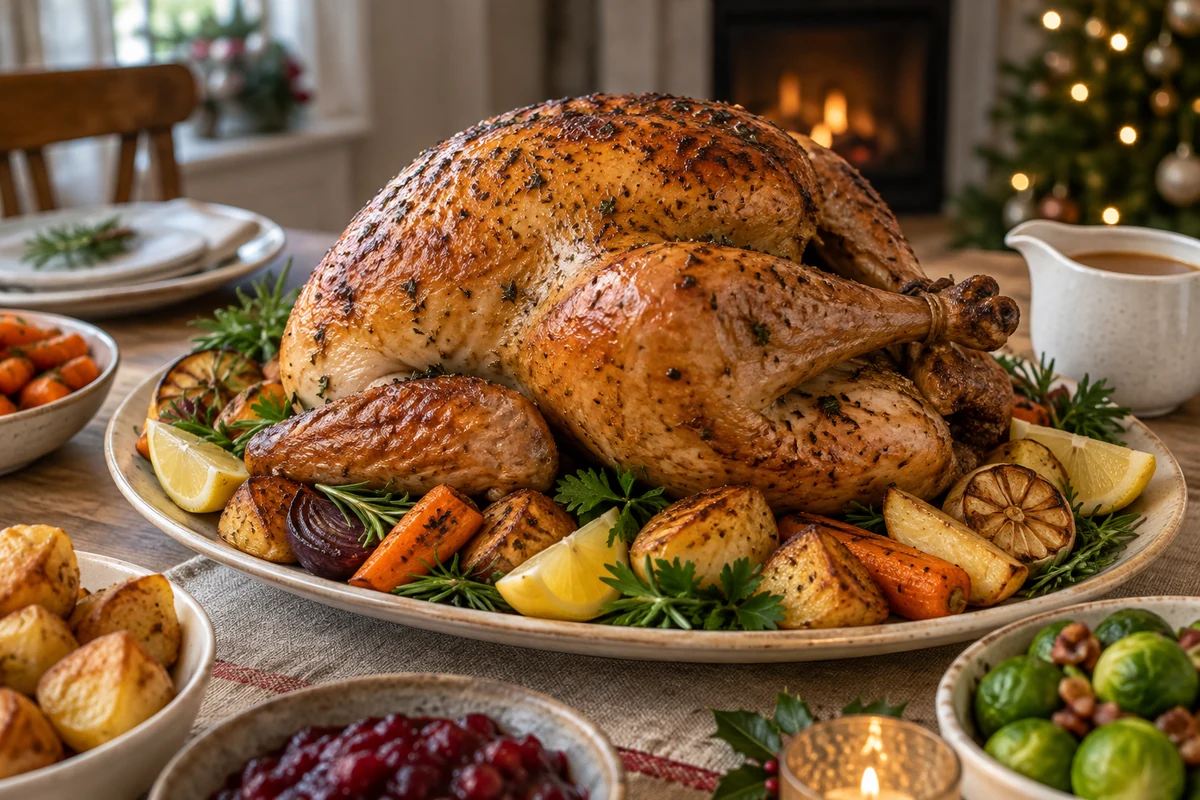
Herb and olive-oil turkey, with gluten-free gravy
Ingredients
- 1 whole turkey, 4–5 kg – fully thawed if frozen; check any added seasoning is gluten-free and do not wash the bird.
- 100 ml olive oil – or avocado oil if preferred.
- 3 garlic cloves, crushed – or garlic paste to taste.
- Zest and juice of 1 lemon – orange gives a sweeter citrus note.
- 2 tbsp chopped parsley – coriander is an alternative.
- 2 tbsp chopped fresh thyme – or 2 tsp dried thyme.
- 1 tbsp chopped fresh rosemary – chop the leaves and discard woody stems.
- Salt and black pepper – to taste, allowing for the stock and any pre-seasoning.
- 500 ml gluten-free chicken stock or water – for the tin and gravy. Vegetable stock does not make gravy containing turkey juices vegetarian.
- 1 tbsp cornflour – check it is gluten-free and mix with cold water before adding to the gravy.
- 150 g plain yoghurt, optional – for the variation below. Lactose-free dairy yoghurt still contains milk protein; a suitable plant-based yoghurt avoids dairy but does not make turkey vegan.
Method and Variations
- Basic herb roast and yoghurt variation: mix the oil, garlic, lemon zest and herbs; spread beneath the breast skin and over the turkey. Put the lemon juice and half the stock in the tin, leaving the cavity empty. Follow packet roasting instructions, or the weight-based guide above at 180°C conventional/160°C fan. Check both breast and thigh reach 75°C for 30 seconds or 70°C for 2 minutes; rest for 20–30 minutes and serve promptly. Simmer the strained juices with the remaining stock and add cornflour slurry gradually, cooking until thickened. For the yoghurt variation, add the optional yoghurt to the herb mixture and marinate covered in the fridge for 4–8 hours within the bird’s safe storage window before roasting.
- Gluten-free mustard and honey: brush with a little gluten-free Dijon mustard and honey near the end of roasting, using a clean portion and brush. Mustard is an allergen; do not serve honey to babies under one.
- Mediterranean flavours: add sliced olives and sun-dried tomatoes to the tin with the lemon and herbs, adjusting added salt accordingly.
- Ginger and tamari: add grated ginger and explicitly gluten-free tamari to the garlic and lemon mixture. Tamari normally contains soya and is not automatically gluten-free.
- Less added salt: use more lemon zest for flavour and choose a lower-salt stock. Keep enough liquid in the tin without repeatedly adding salty stock.
Quick Tips
- Marinate in the fridge: keep the yoghurt-coated bird covered at 5°C or below, within its use-by date and post-thawing period. Marinating does not extend that period.
- Make a slurry: mix cornflour with cold water before adding it gradually to simmering gravy, then cook until thickened.
- Avoid cross-contamination: check the turkey, stock, seasonings and sauces for gluten, and use clean equipment away from breadcrumbs and ordinary flour.
Planning Your Christmas Turkey
These five turkey recipes offer different flavours for Christmas dinner. Choose one, read the full method and plan the oven space, thawing time, side dishes and safe cooking checks before starting.
Try a variation that suits your guests, adjusting seasoning and checking allergies. Advance preparation can help, provided food stays within its safe storage times.
Thank you for reading. Follow our social channels for more seasonal recipes and cooking ideas.
Visit the I Love Christmas blog for more recipes, ideas and festive inspiration.
Share your turkey photos and tell us which flavours you chose. Wishing you an enjoyable Christmas meal!
Christmas Roast Turkey: Frequently Asked Questions
How can I keep roast turkey moist?
Herb butter or oil beneath the skin adds flavour, while checking the cooking temperature helps prevent unnecessary overcooking. Brining is optional and unsuitable for some pre-seasoned birds. Rest the thoroughly cooked turkey for 20–30 minutes before serving.
How long does a 4–5 kg turkey take to roast?
Follow its packaging. Without specific instructions, UK guidance at 180°C conventional/160°C fan allows about 45 minutes per kg plus 20 minutes below 4.5 kg, or 40 minutes per kg at 4.5–6.5 kg. Check the thickest breast and thigh reach 75°C for 30 seconds or 70°C for 2 minutes; timings are only a guide.
Do I have to brine the turkey?
No. Herb butter, oil or a suitable marinade offers flavour without brining. Check whether the turkey is already seasoned or brined before adding salt, and keep all raw-poultry preparation within its safe refrigerated storage period.
How can I check doneness without a thermometer?
A food thermometer gives the clearest check. Follow the packet timing and check that the thickest meat is steaming hot throughout, with no pink meat and clear juices. Continue cooking if any check fails; skin colour or clear juices alone should not be your only test.
How should I cook and serve the stuffing?
Cook stuffing or farofa separately, rather than inside the turkey. Serve piping hot, using a temperature check of 75°C for 30 seconds or 70°C for 2 minutes where appropriate, particularly when reheating. Keep it separate at serving too; do not warm it inside the cooked bird.
Sources and Further Reading
- UK Government: cooking food safely
- Food Standards Agency: chilling food
- Food Standards Agency: allergen guidance
- UK Government: Christmas food hygiene
- NHS: foods to avoid giving babies and young children