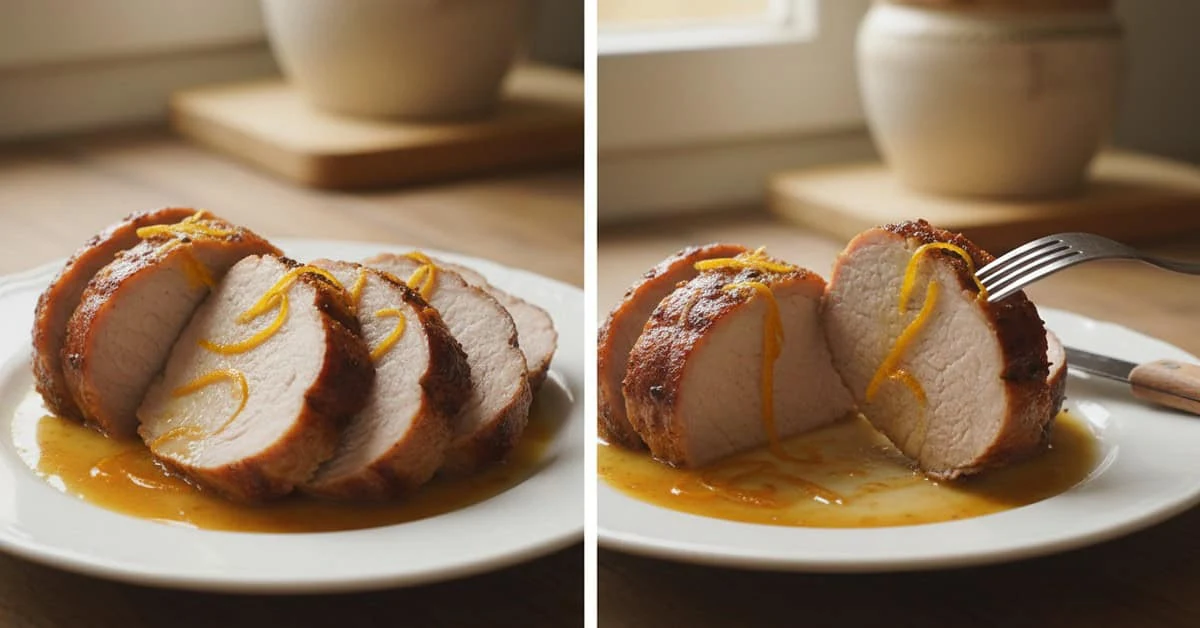
Roast pork loin with orange sauce combines browned pork with a sweet and tangy sauce made from orange juice, honey, soy sauce and mustard. This guide covers seasoning, roasting, checking the centre temperature, resting and serving, followed by variations and safe leftover ideas.
Roast pork loin with orange sauce brings a bright citrus note to a Christmas meal. Follow the main method below, then choose the accompaniments and variations that suit your table.
Ingredients for roast pork loin with orange sauce
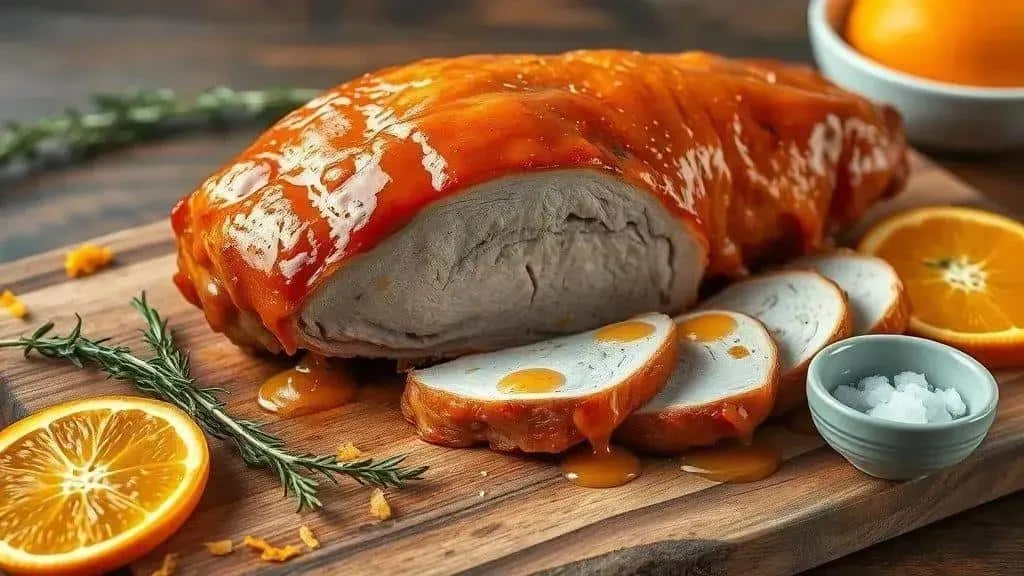
For roast pork loin with orange sauce, gather these ingredients. The recipe uses a pork loin joint; pork fillet is a different, thinner cut and needs its own cooking time.
- 1.5 kg pork loin joint — trimmed as needed. Alternatively, use about 1 kg pork fillet, adapting the timing to the smaller pieces.
- 2 tablespoons olive oil — divided between seasoning and browning; vegetable oil is an alternative.
- 4 garlic cloves — chopped or crushed, or 1 teaspoon garlic powder.
- Coarse salt, to taste — the original recipe allows up to 1 tablespoon, but adjust for the salt in the soy sauce and stock. Use less if substituting fine salt.
- 1 teaspoon ground black pepper — or to taste.
- 1 medium onion — quartered, optional, for the roasting tin.
- 200 ml orange juice — measure the juice, as fruit yields vary. Unsweetened packaged juice is also suitable.
- Finely grated zest of 1 orange — divide between the pork and sauce, avoiding the bitter white pith.
- 3 tablespoons honey — or maple syrup; brown sugar is another option, added to taste.
- 1 tablespoon soy sauce — use a product explicitly labelled gluten-free if required; not every tamari is gluten-free.
- 1 tablespoon Dijon mustard — or a milder mustard.
- 50 g cold butter — diced, to finish the sauce; omit or use a little oil for a dairy-free alternative.
- 120 ml chicken stock or white wine — for deglazing the pan. Water can be used instead.
- Up to 1 tablespoon cornflour — mixed with 2 tablespoons cold water, added gradually only if needed. Ordinary wheat flour is not gluten-free and needs a different thickening method.
- Thyme and/or rosemary sprigs — optional, with parsley to finish if desired.
- Orange slices — optional, for garnish.
Practical notes
Servings: approximately 6–8, depending on trimming, appetites and side dishes.
Time: allow 15–20 minutes for preparation, plus roasting and resting. A 60–90-minute roasting estimate is only a starting guide; the joint’s shape and your oven affect the result.
Keeping the meat juicy: brown the surface for flavour, then roast gently and check the centre. For this recipe, use 75°C for 30 seconds or 70°C for 2 minutes as the cooking check. Rest for 10–15 minutes afterwards; do not remove it early and assume resting will finish an undercooked centre.
Substitutions: maple syrup or brown sugar can replace honey, and labelled gluten-free tamari can replace soy sauce. Pork fillet needs adjusted timing. Keep cornflour if avoiding wheat.
How to make roast pork loin with orange sauce
- Prepare the joint: trim excessive fat and any rind as needed, then pat dry with kitchen paper. Tie loosely with kitchen string if required to hold an even shape. Keep raw-meat utensils separate from cooked-food equipment.
- Season: rub with 1 tablespoon of the oil, salt, pepper, garlic and half the orange zest. Cook when ready, or cover and refrigerate for up to 12 hours within the use-by date. Do not leave it on the worktop to marinate.
- Brown the pork: heat the remaining tablespoon of oil in a large pan and brown the joint for about 2–3 minutes on each side. Browning adds flavour; it does not seal the juices inside. Watch that the garlic does not burn.
- Transfer to the tin: put the joint in a roasting tin with the optional onion, herbs and orange slices. Deglaze the browning pan with the 120 ml stock or wine, scraping up the browned bits, and pour this liquid into the tin.
- Roast carefully: use a preheated oven at 160–170°C, or 140–150°C fan. Follow the joint’s pack guidance and check the thickest centre for 75°C for 30 seconds or 70°C for 2 minutes. Baste occasionally and add a splash of water if the tin dries out. Do not rely on the clock alone.
-
Orange sauce
Make the base: combine the 200 ml orange juice, remaining half of the zest, honey, soy sauce and Dijon mustard in a small saucepan over medium heat.
- Reduce and thicken: simmer gently for around 8–10 minutes, checking the flavour and consistency. If needed, stir the cornflour slurry again and add it a little at a time. Simmer while stirring until it thickens; you may not need the full amount.
- Finish: remove from the heat and whisk in the cold diced butter. Taste before adding further salt or sweetness.
- Rest the pork: once it passes the cooking temperature check, cover loosely with foil and rest for 10–15 minutes. Resting is for the finished joint, not a substitute for safely cooking the centre.
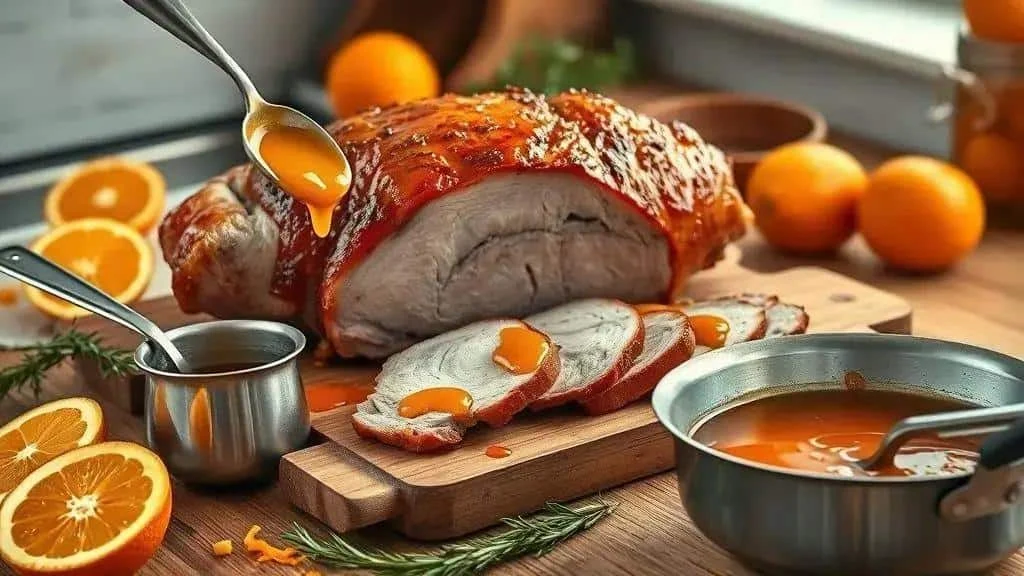
- Slice and serve: remove all string, cut across the grain into roughly 1 cm slices and spoon over the hot orange sauce. Garnish with orange and thyme if desired.
- For beginners: a clean food thermometer is more reliable than judging by pinkness. This method calls for pork cooked through. Choose labelled gluten-free products if needed, and use stock or water instead of wine for an alcohol-free sauce.
Roast pork loin variations
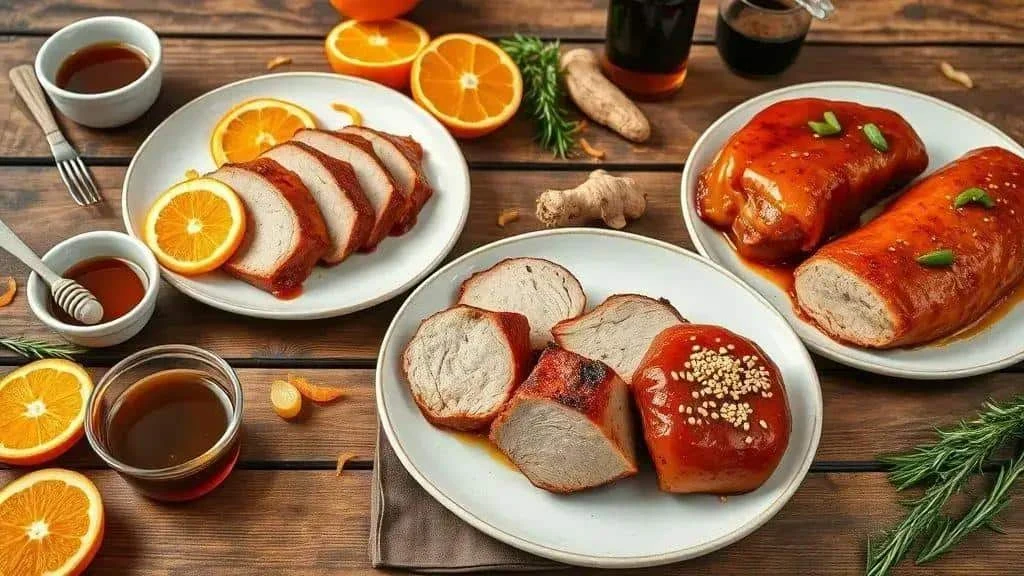
Honey and balsamic: replace about 30 ml of the orange juice with 2 tablespoons balsamic vinegar and use 2 tablespoons honey. Reduce to a glaze and brush a little over the joint near the end of cooking, watching for burning.
Soy and ginger: shoyu is a type of soy sauce, not a separate replacement ingredient. For this variation, use up to 2 tablespoons soy sauce, 1 tablespoon grated ginger and 1 tablespoon honey, adjusting the salt elsewhere. Finish with toasted sesame seeds if suitable for your guests.
Apple and herbs: roast diced apple with parsley and garlic in a separate dish alongside the pork. If you want a butterflied, filled and rolled joint instead, follow a recipe designed for that cut and check the centre of the filling as well; the unstuffed joint’s timing does not automatically apply.
Less added sugar: reduce or omit the honey and taste the sauce before adding another sweetener. Orange juice still contains sugars, so this is not automatically sugar-free or low-carbohydrate. Diluted concentrate does not inherently contain less sugar than an equivalent serving of juice.
Slow cooker: use the appliance’s guidance for pork loin, joint size and liquid level. Lean loin can dry out during a long cook, so do not assume 6–8 hours suits every joint. Cook thoroughly and reduce a clean portion of sauce separately for serving.
Air fryer pork fillet: smaller fillets can be cooked using the appliance’s pork guidance, with room around them. The original suggestion of 180°C for 18–25 minutes is not a guarantee for 800–1,000 g of meat; check the centre of every piece and continue as needed. Apply sugary glaze only near the end.
Spiced citrus glaze: add up to 1 teaspoon smoked paprika and a small pinch of ground cloves to the sauce, adjusting to taste.
Dietary adjustments
Gluten-free: use explicitly gluten-free soy sauce or tamari, cornflour, and checked stock and mustard. Dairy-free: omit butter or finish with a little vegetable oil, checking all other ingredients. Less salt: reduce added salt and choose lower-salt stock and soy sauce. These changes still require checking individual dietary needs.
Practical tips
- For a glossy finish: brush a little concentrated sauce onto the pork near the end and watch closely. Extra high heat is optional, not essential, and can burn honey quickly.
- For freshness: add a little additional orange zest and thyme just before serving.
- For extra sauce: double the sauce ingredients if needed, keeping the serving portion separate from any brush or utensil that touches undercooked meat.
Techniques for juicy pork loin
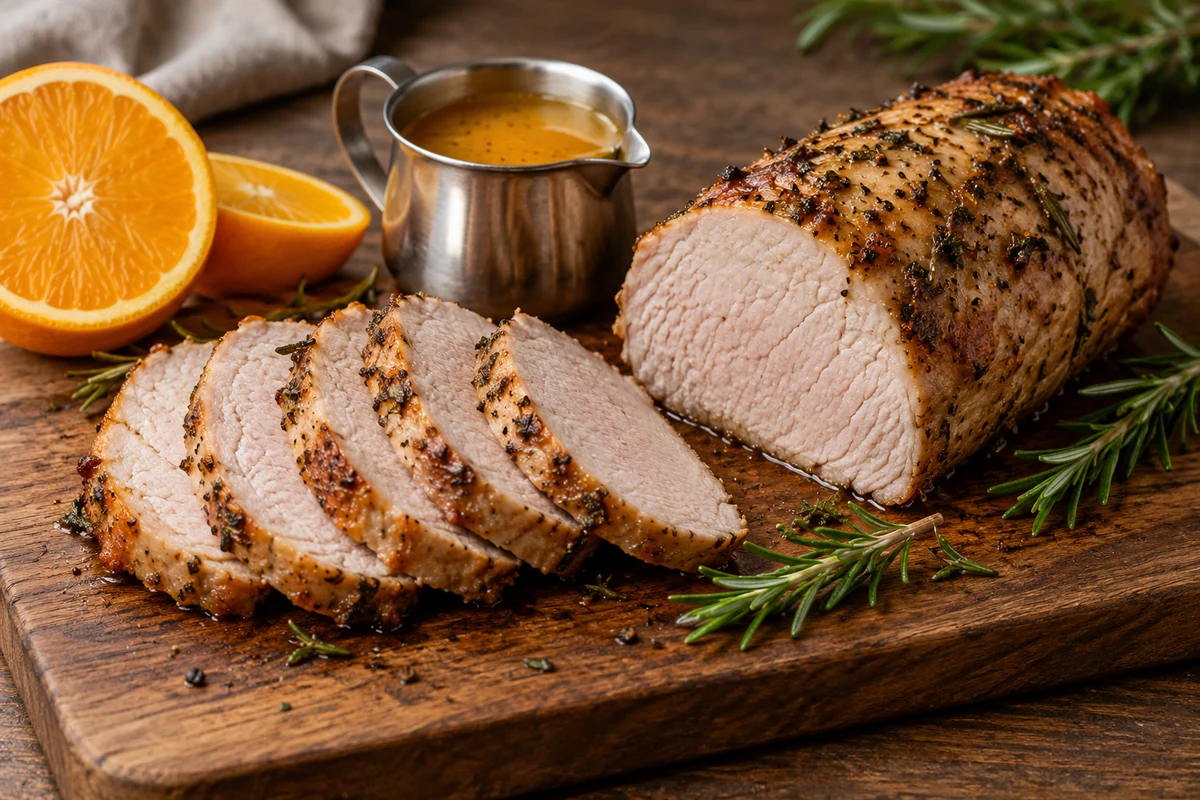
For juicy pork loin, focus on even cooking, avoiding unnecessary extra oven time after it is safely cooked, and resting before slicing. Browning and basting add flavour but cannot replace a centre-temperature check.
Browning before roasting
Pat the surface dry and brown it in a hot pan for about 2–3 minutes per side. This develops flavour through browning; it does not create a watertight seal around the meat.
- Dry the surface: kitchen paper removes excess moisture and helps browning.
- Heat the pan: use an oil suitable for frying and avoid letting it smoke excessively.
- Brown briefly: turn the joint to colour the outside before finishing it thoroughly in the oven.
- Deglaze: loosen the browned bits with the measured stock or wine and transfer the liquid to the roasting tin. Boil any juices used as a separate gravy before serving.
Temperature control
Use a clean digital food thermometer in the thickest centre. This recipe uses 75°C for 30 seconds, or 70°C for 2 minutes as the cooking check. Avoid touching bone or the tin, and do not take the joint out below the target expecting an unmeasured rise during resting to make it safe.
Marinades, brines and seasoning
Choose a marinade or a brine as an alternative preparation, keeping the meat refrigerated and counting all salt only once. A citrus marinade flavours the surface; it does not sterilise raw pork.
- Brining: follow a suitable pork-brining recipe with defined quantities and refrigeration guidance. If using a brined joint, omit the extra salt in this recipe and account for the soy sauce’s saltiness.
- Optional citrus marinade: an additional 200 ml orange juice, 2 crushed garlic cloves, 2 tablespoons oil and herbs can be used before cooking. These are extra marinade ingredients; keep the measured sauce ingredients separate and discard used raw-meat marinade rather than serving it uncooked.
Basting and glazing
Baste occasionally with the hot roasting liquid without constantly opening the oven. Brush on a little clean orange sauce towards the end for a glossy surface. Keep the remaining serving sauce separate and avoid applying a sugary coating too early.
Resting and slicing
Once fully cooked, rest the joint under loose foil for 10–15 minutes. Remove string and slice across the grain into pieces about 1 cm thick.
Tips for beginners
- Gentle roasting: an oven at 160–170°C, or 140–150°C fan, gives you time to monitor the joint; follow the pack’s guidance where it differs.
- Use a rack if helpful: a rack above the tin allows air to circulate while the juices collect below.
- Handle with tongs: use tongs or suitable lifters rather than repeatedly stabbing the joint with a fork.
- Check the centre: colour alone is not a reliable test. Use the thermometer guidance above rather than accepting a pink centre without a measured time and temperature.
Orange sauce: reduction and texture
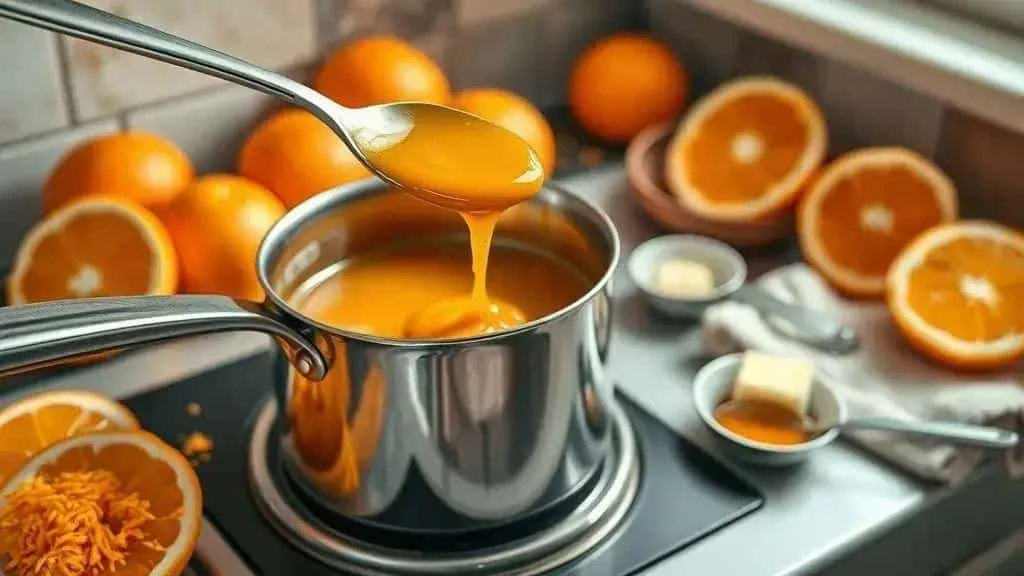
The sauce combines gentle reduction, optional cornflour and butter whisked in at the end. The following explains the same sauce in the main recipe, not a second set of ingredients.
Step-by-step sauce method
- Measure: put 200 ml orange juice and the half of the orange zest reserved for sauce into a small saucepan.
- Add flavour: stir in the 3 tablespoons honey, 1 tablespoon soy sauce and 1 tablespoon Dijon mustard. If using brown sugar instead of honey, start with 2 tablespoons and adjust the finished sauce to taste.
- Heat gently: bring to a gentle simmer, stirring to dissolve the sweetener. Avoid scorching the pan’s edges.
- Reduce: simmer over medium-low heat, checking after 8–12 minutes. Stop when the flavour and consistency suit you rather than forcing a fixed percentage reduction that may make it too salty or sweet.
- Thicken only if necessary: stir together up to 1 tablespoon cornflour and 2 tablespoons cold water. Add gradually while stirring, then simmer until thickened. Use only as much as needed.
- Finish: remove from the heat and whisk in the 50 g cold butter. For a dairy-free version, omit it or add about 1 tablespoon vegetable oil, recognising that the texture will be different.
- Taste: adjust pepper, salt or a little cider vinegar or lemon juice if needed. Remember that soy sauce and stock may already provide enough salt.
- Strain if preferred: a fine sieve removes zest and gives a smoother finish.
- Serve promptly: prepare the sauce close to serving. Do not leave it merely lukewarm for an extended period; chill promptly if making ahead, then reheat once until steaming hot.
Judging the texture
Look for a light coating: the sauce should coat the back of a spoon. If thin, reduce or add a little slurry; if too thick, loosen with water or stock.
Avoid bitterness: use only the coloured zest, not white pith, and avoid excessive reduction or scorching.
Quick sauce tips
- Control the thickness: mix cornflour with cold water first and add in stages to avoid lumps or a gluey sauce.
- Final gloss: cold butter whisked in off the heat gives a richer, smoother finish.
- Storage: cool promptly, cover and refrigerate at 5°C or below. Use within 48 hours or freeze, and reheat once until steaming hot, stirring to restore the texture.
Accompaniments for a festive meal
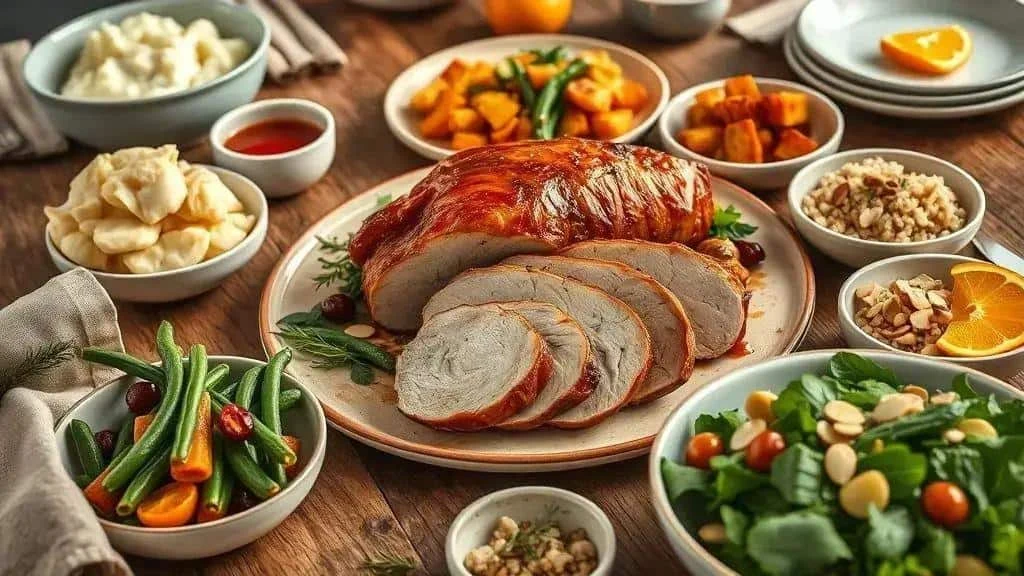
Serve roast pork loin with orange sauce with a mixture of creamy, crisp and fresh sides. As the sauce is already sweet and citrusy, not every accompaniment needs another glaze.
Side dish suggestions
- Mashed potatoes — cook 1 kg potatoes until tender, drain and mash with up to 100 g butter and about 200 ml warm milk. Oil and a suitable unsweetened plant drink make a different dairy-free version.
- Herb roast potatoes — toss 1.2 kg small potatoes with oil, thyme and salt. Roast at 200°C, or 180°C fan, for roughly 35–45 minutes, checking tenderness and adjusting for size.
- Orange and honey vegetables — cook 400 g carrots until nearly tender, add 300 g courgette and finish with up to 2 tablespoons honey and orange zest. Reduce the honey if serving several sweet dishes.
- Rice with cranberries and almonds — fold about ½ cup dried cranberries and ⅓ cup toasted almonds into 2 cups freshly cooked rice. Leftover rice must be cooled within 1 hour, refrigerated, used within 24 hours and reheated only once until steaming hot.
- Creamy polenta — the original guide uses 1 part cornmeal to 4 parts stock by volume. Follow your polenta packet for the correct ratio and cooking time, then finish with butter or olive oil.
- Green beans with garlic and almonds — cook 500 g trimmed beans until tender-crisp, then toss with 2 gently cooked garlic cloves and 2 tablespoons flaked almonds.
- Citrus green salad — combine leaves, orange segments and thinly sliced red onion with a light oil, orange juice and vinegar dressing.
Portions and planning
Per person: a 1.5 kg raw boneless joint divided between 6–8 people gives roughly 190–250 g raw meat per person before cooking loss. Adjust sides to appetites; vegetables plus one starchy dish may be enough. Prepare components ahead without leaving cooked food out for long periods.
Organising your time
- Ahead of the meal: shop with use-by dates in mind and prepare dry ingredients or suitable sauces. Keep meat and any marinade refrigerated.
- On the day: roast the pork, check its temperature and rest it while finishing sides and sauce.
- Keeping food hot: serve promptly where possible. A low oven or warm water bath is not a guarantee of safe holding; suitable equipment and a food-temperature check are needed for an extended service.
Drinks to serve alongside
Wine: adults who drink alcohol may enjoy a dry Riesling or a lighter Pinot Noir with the citrus sauce. Alcohol-free choices: sparkling water with orange or chilled hibiscus tea also suit the meal.
Presentation
Arrange the slices slightly overlapping on a platter. Spoon over some hot sauce, add orange zest and thyme, and serve the rest of the sauce separately. A warmed platter helps presentation, but is not a substitute for serving promptly.
Storage and leftover ideas
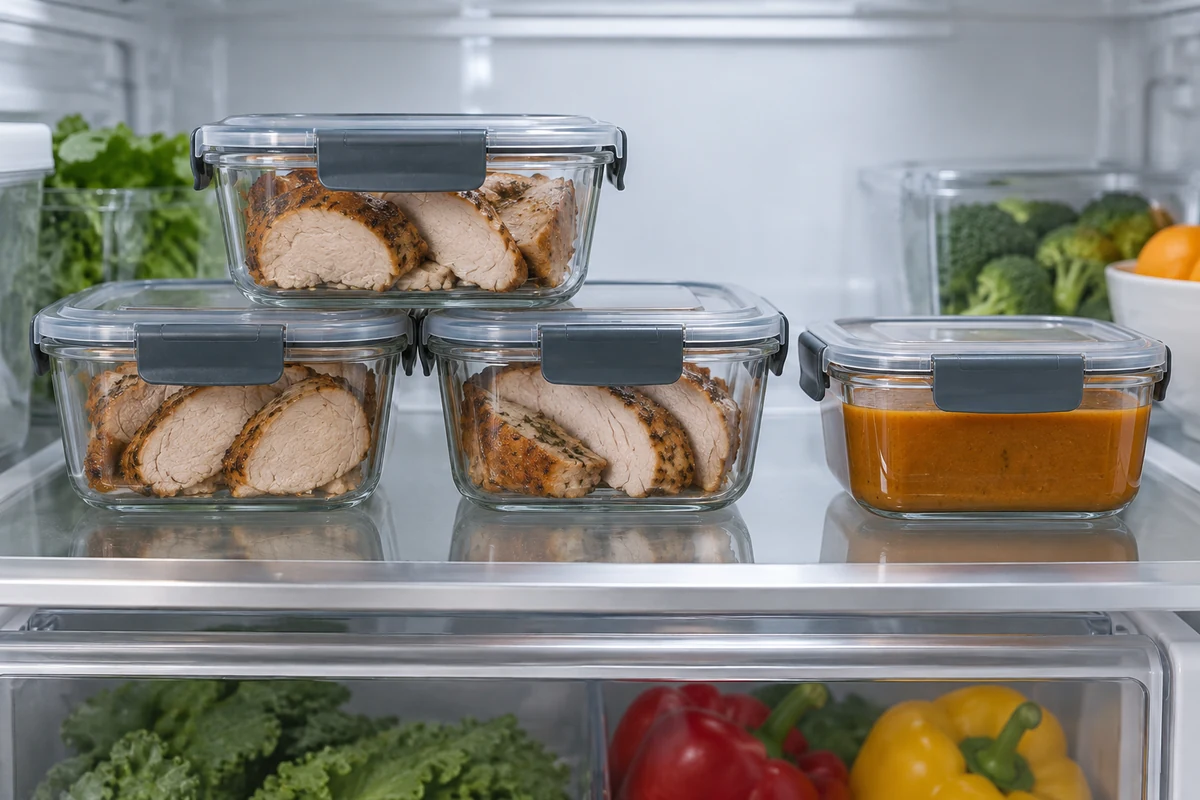
Careful storage starts as soon as the meal is over. Portion leftovers into shallow containers and refrigerate within 1–2 hours rather than leaving a large joint to cool slowly.
Refrigeration
- Time limit: keep covered at 5°C or below and use within 48 hours of cooking, or freeze promptly.
- Portioning: slice into manageable portions so cooling is quicker and you only take out what you need.
- Containers: use clean food containers and cover for refrigerated storage. Do not wait indefinitely for food to become completely cold on the worktop; divide it and chill within the recommended time.
Freezing
- Packaging: wrap portions in freezer-safe packaging or use suitable containers, removing excess air where practical.
- Quality guide: aim to use frozen portions within about 3 months for best quality. Freezing does not make spoiled or badly handled leftovers safe.
- Label: record the contents and date so older portions are used first.
Safe reheating
- Defrost in the fridge: allow enough time for the portion to thaw fully; 12–24 hours is not sufficient for every size. Use within 24 hours of full defrosting.
- Microwave: cover with a vented microwave-safe lid, turn or stir between heating stages and check for cold spots. Follow the appliance’s standing-time guidance.
- Oven: add a little stock or sauce, cover with foil and heat at 160–170°C, or 140–150°C fan, until steaming hot throughout. Do not assume a fixed 10–20 minutes is sufficient for every portion.
- Frying pan: heat slices with a little oil, stock or sauce, turning as needed until thoroughly hot, rather than just warming the surface.
- Safety check: reheat until steaming hot throughout; 75°C for 30 seconds is one suitable probe check. Reheat only once, regardless of portion size.
Ways to use leftovers
- Crusty sandwich: use safely chilled cold pork with rocket and orange sauce, or reheat it once until thoroughly hot before assembling.
- Pork salad: serve cold pork with leaves, orange segments, toasted walnuts and vinaigrette. If serving warm, reheat the pork fully first.
- Pork fried rice: stir-fry diced pork with rice stored safely for no more than 24 hours, eggs and spring onions. Cook the eggs and heat everything thoroughly; this is the single reheating for both pork and rice.
- Citrus pasta: add strips of pork and a little sauce to cooked pasta, heating the meat throughout. Finish with Parmesan if desired.
- Soup: add diced pork to vegetable soup and heat thoroughly. Use portions that have not already been reheated.
- Croquettes: combine finely chopped pork with mash, shape and coat in breadcrumbs. Cook until the filling is steaming hot, not merely until the outside browns, and count this as the pork’s reheating.
Reducing waste
- Freeze sauce portions: cool and freeze promptly in a covered tray or small containers, then label. Reheat only the amount needed.
- Use small portions: individual packs make it easier to thaw only what you need.
- Save cooking juices safely: boil juices intended for serving, cool promptly and refrigerate or freeze for later sauces. Keep the same storage and reheating limits.
- Check the history: discard food with signs of spoilage, but do not rely on smell, colour or texture to prove safety. Time, temperature and handling matter even when food looks normal.
Conclusion
Roast pork loin with orange sauce makes a bright, savoury-sweet main course. Careful seasoning, a measured sauce and a centre-temperature check are more useful than relying on an exact oven time.
Plan the sides, rest the fully cooked joint before slicing and serve promptly. These simple steps help the meal come together smoothly.
Thank you for reading. Follow our social channels for more recipe ideas and visit I Love Christmas for more seasonal inspiration.
FAQ — Roast Pork Loin with Orange Sauce
What oven temperature and cooking time should I use?
Use 160–170°C, or 140–150°C fan, unless your joint’s packaging advises otherwise. Timing varies with size and shape. Check the thickest centre for 75°C for 30 seconds or 70°C for 2 minutes rather than relying on the 60–90-minute estimate alone.
How can I stop the pork becoming dry?
Brown it for flavour, roast gently, check the centre and avoid unnecessary extra cooking once it is safely done. Rest for 10–15 minutes before slicing and serve with sauce. Browning does not seal moisture inside the meat.
Can I replace the honey?
Yes. Use maple syrup or add brown sugar to taste. You can also reduce or omit the sweetener, but orange juice still contains sugars, so the finished sauce should not be described as sugar-free simply because honey was removed.
How should I store and reheat leftovers?
Cool in shallow portions and refrigerate within 1–2 hours at 5°C or below. Use within 48 hours or freeze promptly. Defrost in the fridge, use within 24 hours of full thawing and reheat only once until steaming hot throughout.
How can I make the recipe gluten-free or dairy-free?
For gluten-free cooking, use labelled gluten-free soy sauce or tamari and checked stock, mustard and cornflour. For dairy-free cooking, omit the butter or use a little vegetable oil, and check all other ingredient labels.
Sources and Further Reading
- Food Standards Agency: cooking and reheating food safely
- Food Standards Agency: chilling, freezing and defrosting food safely
- Food Standards Agency: cooking and reheating safely, including rice