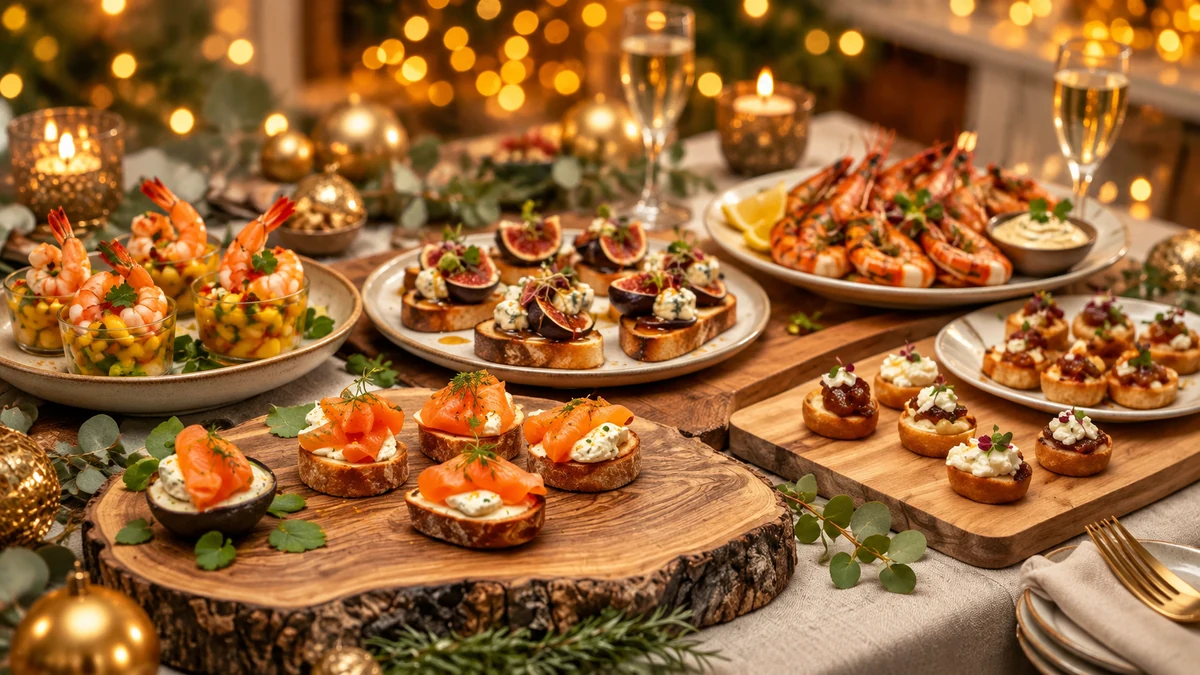
Elegant New Year’s Eve starters can be served in small, attractive portions. These eight ideas include salmon and mango tartare, fig and Gorgonzola bruschetta, vegetarian canapés and prawn skewers, with two detailed recipes, serving suggestions and dietary adaptations. Plan suitable components ahead and offer sparkling wine or alcohol-free drinks alongside.
Elegant New Year’s Eve starters set the scene for a celebration. Here are ideas for small dishes, practical assembly tips and alternatives to help you plan around your guests’ preferences.
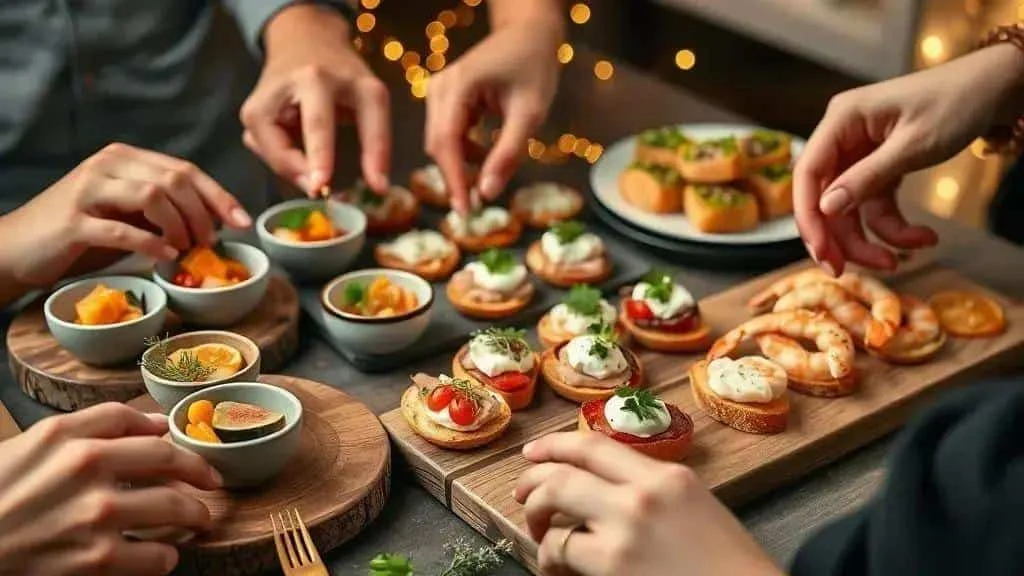
A menu of elegant New Year’s Eve starters can combine small portions, distinctive flavours and attractive presentation without requiring hours of last-minute cooking.
Flavours and ingredients to consider
Use fresh ingredients and contrasting flavours. Seafood, tropical fruit and plant-based dishes offer different starting points for a varied menu.
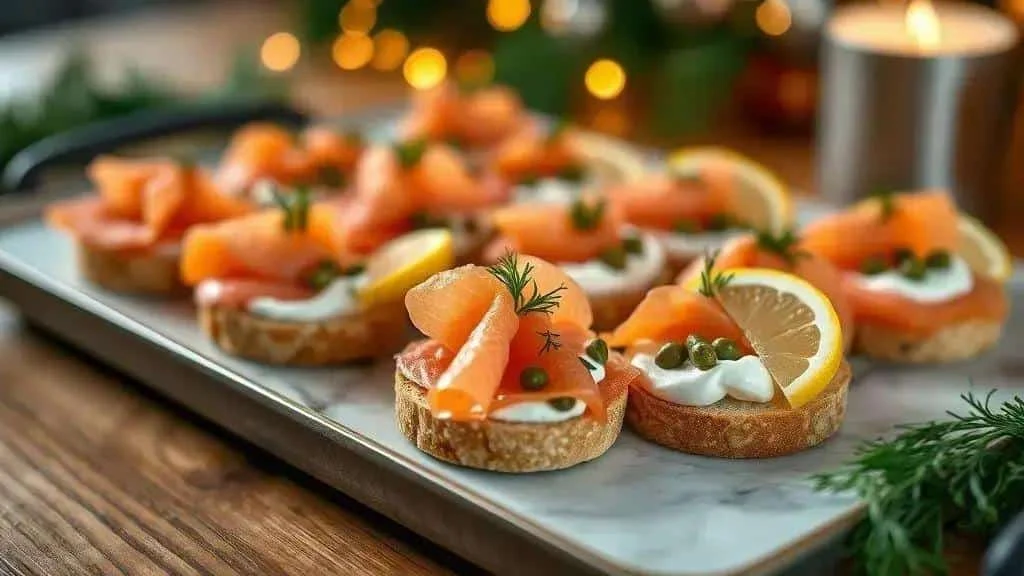
- salmon and mango tartare, with a citrus dressing;
- fig and Gorgonzola bruschetta, balancing sweet fruit and savoury cheese;
- vegetarian canapés with herbed strained yoghurt and crunchy walnuts;
- mini prawn skewers with citrus sauce;
- seasonal vegetables and herbs from suitable local suppliers, where available.
Texture, colour and contrast
Crisp and creamy elements work well together. Add colour and contrasting textures without making each portion difficult to eat.
- crisp toast or vegetable crisps with smooth spreads or mousses;
- microgreens, citrus zest or flowers specifically sold as edible food, never florist flowers;
- bite-sized portions that let guests try several flavours.
Practical presentation
Choose components that can be prepared ahead and assembled just before serving to reduce the last-minute rush.
- arrange starters on boards or small individual plates;
- use clean tasting spoons or small cups for individual portions;
- provide clear ingredient and allergen information, including which dishes are suitable for vegan guests.
Thoughtful sourcing and serving materials
Consider how ingredients are produced and how serving materials will be reused or disposed of. A local source alone does not establish sustainability.
- ask about the origin and relevant sustainability certification of fish and seafood;
- use seasonal vegetables and fresh herbs when they suit the recipe;
- prioritise reusable utensils; if using compostable disposables, check that your local collection accepts them.
Pairing starters with drinks
Sparkling drinks and citrus flavours can complement savoury bites. Offer several choices rather than assuming everyone drinks alcohol.
- citrus-led starters can work with sparkling wine;
- richer bites can be paired with an aromatic white wine or a citrus cocktail;
- include sparkling water and appealing alcohol-free options.
Quick preparation tips
A few simple techniques can make small starters look more polished.
- prepare suitable sauces and spreads the day before, following their storage instructions and keeping perishable foods chilled;
- use cutters or small moulds for even portions;
- finish with fresh herbs and a measured drizzle of olive oil or flavoured oil where it suits the dish.

Consider the main course, your guests’ dietary requirements and how much work each starter needs at serving time.
Key considerations
Flavour and balance: starters should lead into the main course. Gentle acidity, contrasting textures and small portions help avoid an overly heavy opening dish.
Dietary requirements: ask about allergies, intolerances and vegetarian or vegan preferences. Plan alternatives for the actual needs of your guests.
Timing and logistics: choose dishes with components you can safely prepare ahead and finish shortly before serving.
- Fish and seafood menus: citrus canapés, tartare or ceviche can fit the flavours. Raw-fish dishes need the sourcing precautions below; use thoroughly cooked fish instead when raw fish is unsuitable.
- Meat and roast dinners: fresh, sharp starters such as crunchy salads or pickled vegetables can provide contrast.
- Vegetarian or vegan menus: combine grains, grilled vegetables and suitable nuts or seeds for texture, checking ingredients against guests’ allergies.
Planning around your guests
- Guests who enjoy wine: consider cheese, crisp bread and fruit preserves, with an alcohol-free pairing available too.
- Families with children: offer mild, manageable bites. Remove skewers and adapt sizes and textures to avoid choking hazards for young children.
- Older guests: ask about individual preferences or chewing needs rather than assuming them. Softer options and moderate seasoning may be welcome; offer cooked alternatives to raw fish for vulnerable guests.
- Guests with allergies: discuss ingredients and preparation with them, use separate clean equipment and provide written information. A separate table alone cannot guarantee food is free from allergens.
Portions and preparation
- As a planning guide before a main meal, allow around four to six small bites per person, adjusting for appetite and the rest of the menu.
- Bite-sized portions: let guests sample different starters without filling up before dinner.
- Prepare suitable sauces and garnishes ahead, store them appropriately and assemble shortly before serving.
- Use clean spoons, cups and boards that are easy to handle and replenish.
Drink pairings
- Sparkling wine can complement the acidity of a citrus fish starter, whether made with suitably sourced raw fish or a cooked alternative.
- Aromatic white wines can accompany seafood and mild cheeses.
- Citrus cocktails can complement fresh herbs and fruit.
- For alcohol-free choices, offer fruit-infused sparkling water and light mocktails.
Practical finishing touches
- Keep portions similar in size for a tidy presentation.
- Add colour with microgreens, citrus zest or correctly identified, food-grade edible flowers.
- Choose seasonal ingredients and reusable serving materials where practical; check local disposal arrangements for compostable items.
- Display readable ingredient and allergen labels beside the dishes and keep a full ingredient list available for questions.
Eight starter ideas at a glance
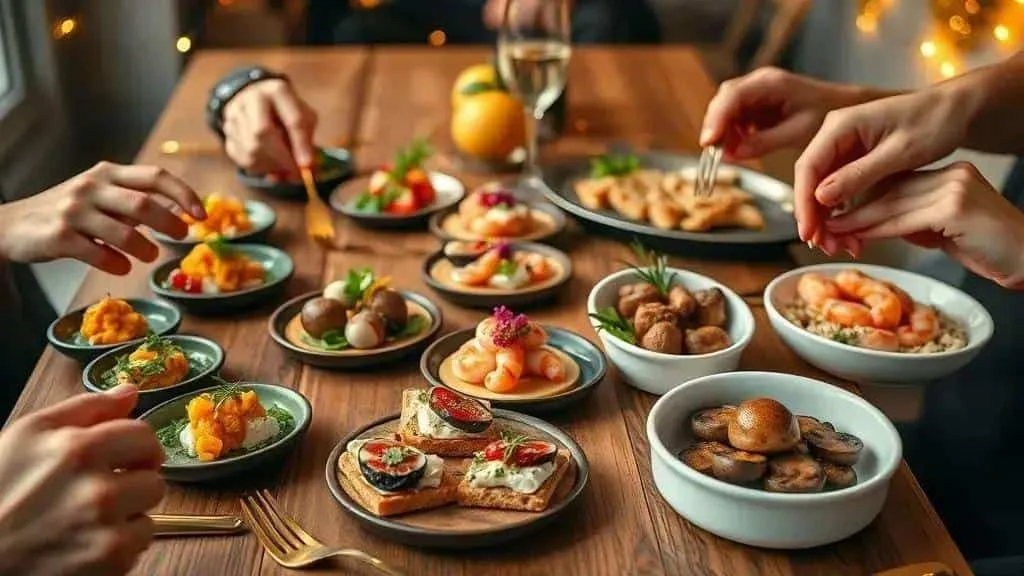
These eight suggestions include serving ideas; the salmon tartare and fig bruschetta have detailed recipes below. Portion suggestions refer to each individual option, not eight full servings for every guest.
Salmon and mango tartare
Small cubes of salmon, mango and red onion with lime make a fresh-tasting starter. Use fish the supplier confirms is suitable for raw consumption, with appropriate parasite controls; lime does not make raw fish safe. Serve one to two tablespoons in a spoon or small cup. Choose a cooked alternative for pregnant or vulnerable guests.
Fig and Gorgonzola bruschetta
Top toast with Gorgonzola, sliced figs, honey and chopped pistachios. Allow one or two pieces per person. For pregnancy, soft blue cheese must be cooked until steaming hot throughout; never give honey to children under one.
Herbed yoghurt and walnut canapés
Spread a crisp base with seasoned strained yoghurt, then add toasted walnuts and fresh herbs. Allow two or three bites per person. This contains milk and nuts; its mild flavour does not make it dairy-free.
Mini prawn skewers with citrus sauce
Marinate prawns in lime and olive oil in the fridge, then cook thoroughly and serve with a separately prepared citrus sauce. Discard marinade that touched raw prawns. Allow two small skewers per person and remove the sticks for young children.
Goat’s cheese and tomato jam crostini
Spread thin toast with goat’s cheese, add sweet-and-sour tomato jam and finish with black pepper. Allow two crostini per person. For pregnant guests, choose pasteurised soft goat’s cheese without a white rind, or cook rind-ripened cheese until steaming hot throughout.
Aubergine rolls with ricotta and herbs
Roll thin grilled aubergine slices around seasoned ricotta and herbs. Allow two rolls per person. Serve freshly assembled, properly chilled, or thoroughly reheated once. Choose vegetarian-suitable cheese if required.
Tropical white-fish ceviche
Combine small cubes of firm white fish with lime, onion, chilli and mango or passion fruit. Allow three to four tablespoons per person. The raw fish needs the same supplier-confirmed controls as tartare: citrus marinating is not cooking or a reliable parasite treatment. Prepare in small batches and serve promptly, or use cooked fish.
Mushroom and thyme tartlets
Fill cooked mini pastry cases with creamy sautéed mushrooms, butter and thyme; finish with a little olive oil and lemon zest. Allow one per person. A milk-free version needs suitable pastry, cooking fat and cream alternative, not just a change of cream.
Salmon and mango tartare: ingredients
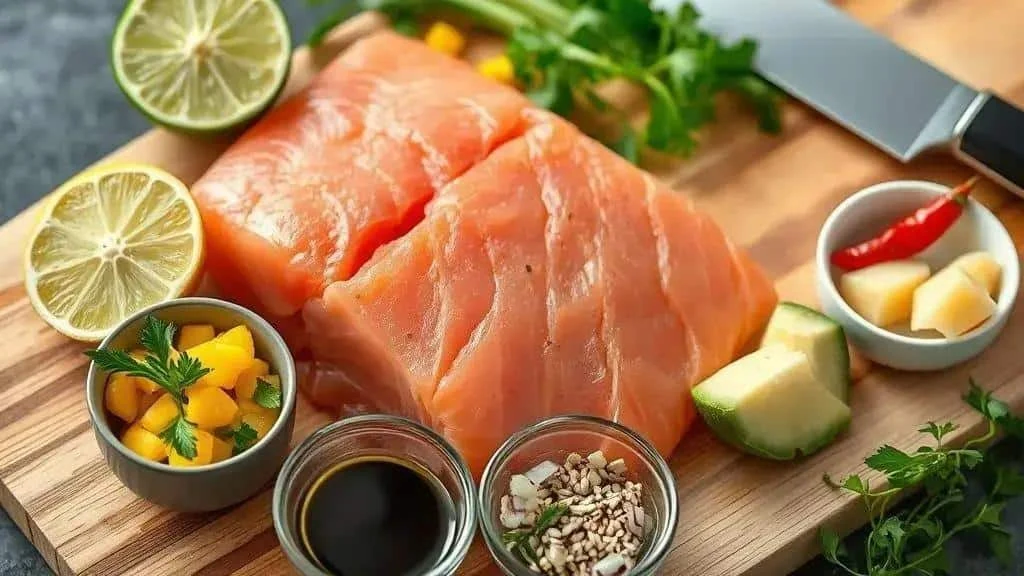
For this salmon and mango tartare, gather the ingredients below and keep perishables chilled. Freshness and refrigeration do not remove the risks associated with eating raw fish.
Ingredients
- 300 g salmon suitable for eating raw, diced. Ask the supplier to confirm the required parasite treatment or valid exemption; a ‘sashimi-grade’ description alone is not enough. Tuna or firm white fish need the same checks.
- 1 medium mango, ripe but firm, peeled and diced. Avocado or peach can replace it for a different flavour and texture.
- ¼ red onion, finely chopped; use shallot for a milder flavour.
- 2 tablespoons lime juice, for flavour, not preservation. Lemon juice is an alternative.
- 1 tablespoon soy sauce. Use tamari specifically labelled gluten-free if needed.
- 1 tablespoon olive oil; mild sesame oil is an alternative, but introduces sesame as an allergen.
- ½ small avocado, optional, diced; replace with diced cucumber for a crisper texture.
- 1 tablespoon chopped coriander or dill, according to preference.
- 1 teaspoon sesame seeds, or chopped pistachios; check the relevant seed or nut allergy requirements.
- 1 small red chilli, optional, deseeded and finely chopped; use a little dried chilli instead if preferred.
- Salt and black pepper to taste, allowing for the salt in the soy sauce. Optional garnish: washed microgreens and a little lime zest.
Raw-fish precautions: buy from a supplier who confirms the fish is intended for raw use and has the appropriate parasite controls. Freezing for parasites does not eliminate every foodborne hazard. For pregnant or vulnerable guests, use fish cooked to 70°C for two minutes or an equivalent, then promptly cooled and refrigerated, instead of raw tartare.
How to make salmon and mango tartare
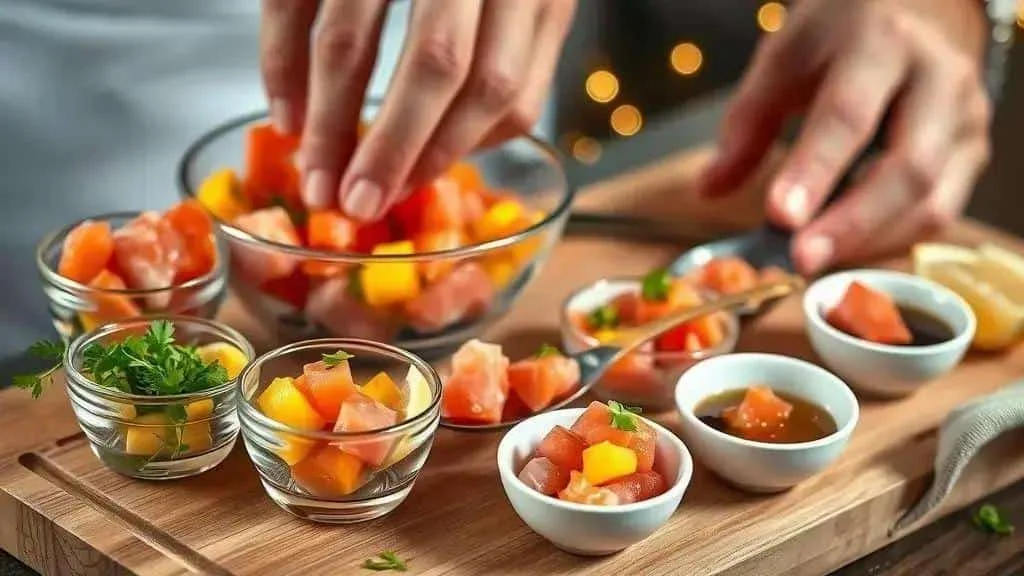
Prepare the salmon and mango tartare in a clean workspace, handling the fish for as little time as possible before returning it to the fridge.
- Keep ingredients chilled: leave the salmon and prepared mango in the fridge until needed. Keep the fridge at 5°C or below, following any stricter storage instructions on the fish.
- Wash and dry: wash the mango before peeling. Pat the fish dry with kitchen paper if needed, without rinsing it or splashing raw-fish juices around the sink.
- Dice the salmon: use a clean board and sharp knife, remove skin and bones, and cut into roughly 5 mm cubes. Keep raw-fish equipment separate from equipment for ready-to-eat ingredients.
- Prepare the fruit and vegetables: dice the mango and optional avocado or cucumber. Finely chop the red onion and optional chilli using clean equipment.
- Mix the dressing: combine the two tablespoons of lime juice, one tablespoon of soy sauce and one tablespoon of olive oil. Taste and adjust the seasoning before it touches the raw fish.
- Combine gently: place the diced salmon, mango, onion, optional chilli and optional avocado or cucumber in a bowl. Fold in the dressing without crushing the pieces.
- Add herbs and crunch: fold in the tablespoon of coriander or dill and the teaspoon of sesame seeds or chopped pistachios.
- Check the balance: use the seasoning adjustments made to the dressing before mixing; do not taste raw fish to check whether it is safe. The intended flavour is fresh and gently sharp.
- Chill briefly: refrigerate for 10–15 minutes to let the flavours combine. This changes flavour and texture; it does not disinfect the fish.
- Portion for serving: use tasting spoons, small cups or a small ring mould. Add the optional microgreens and lime zest just before serving.
- Serve promptly: offer one to two tablespoons per person with thin toast or ready-to-eat vegetable crisps. Keep the remaining mixture refrigerated until needed.
Serving safely: use small batches, follow the fish supplier’s storage and use-by instructions, and do not save portions left on the serving table. Choose the cooked-fish alternative if the required raw-fish sourcing cannot be confirmed.
Salmon and mango tartare variations
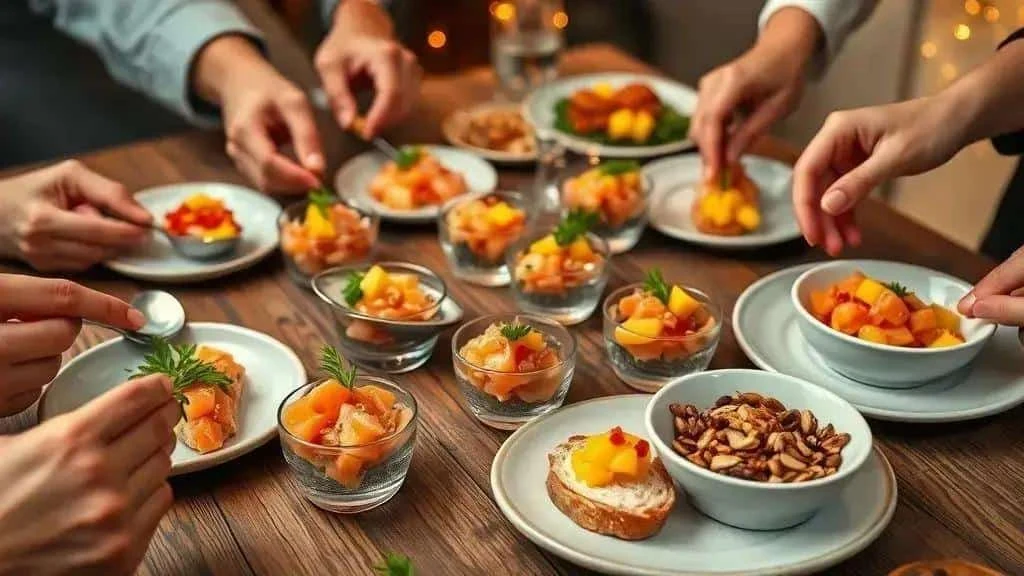
Vary the salmon and mango tartare with different seasonings, textures or fish-free ingredients, keeping the same care over preparation and storage.
Flavour variations
- Sesame and ginger: replace the olive oil with one teaspoon of toasted sesame oil. Use one tablespoon of soy sauce and one teaspoon of sesame seeds in total, then add one teaspoon each of grated ginger and chopped chives.
- Mediterranean-inspired: omit the soy sauce and add one extra tablespoon of olive oil, making two tablespoons in total, plus one teaspoon of chopped capers, the zest of half a lemon and mint or basil.
- Chilli and citrus: add half a teaspoon of sriracha or chopped red chilli, keeping the lime juice at two tablespoons in total and adjusting the heat to taste.
Texture variations
- Creamier: fold in a quarter of a mashed avocado or two tablespoons of mayonnaise, checking its ingredients against dietary requirements.
- Crunchier: add one tablespoon of toasted pistachios or almonds, or one tablespoon of crisp fried onions. Check nuts, gluten and other allergens in the chosen topping.
- Fresh cucumber: replace 50 g of the salmon with 50 g of diced cucumber for a crisp contrast.
Fish-free options
- Mango and hearts of palm: combine 150 g of chopped ready-to-eat hearts of palm with 100 g of mango, one tablespoon of lime juice, one tablespoon of olive oil and fresh herbs.
- Plant-based tuna or chickpeas: use 150 g of a suitable ready-to-eat tuna alternative or cooked, mashed chickpeas, then balance the seasoning. These give a different texture and nutritional profile from fish.
Presentation and portioning
- Small portions: serve one to two tablespoons in tasting spoons or small cups.
- Ring-mould presentation: use a 5 cm ring, press gently and remove the ring immediately before serving.
- Crostini and crisps: use thin toast, rice crackers or commercially prepared, ready-to-eat cassava crisps. Only describe the dish as gluten-free when every ingredient is verified as suitable.
Dietary adaptations
- Gluten-free: replace ordinary soy sauce with tamari labelled gluten-free and check the serving base and all other ingredients.
- Milk-free: avoid milk-containing creams and condiments; avocado or a suitable plant yoghurt can add creaminess. Standard mayonnaise contains egg, but does not necessarily contain milk: check the label.
- Less salt: use less soy sauce or a product labelled reduced-salt. ‘Light soy sauce’ describes a style and does not necessarily mean lower salt. Use citrus and herbs to balance flavour.
Choosing the finishing touches
Match garnishes to the variation: microgreens and citrus zest for freshness, suitable chopped nuts for crunch, or a little flavoured oil. Account for added allergens, keep the mixture refrigerated and assemble shortly before serving.
Fig and Gorgonzola bruschetta: ingredients
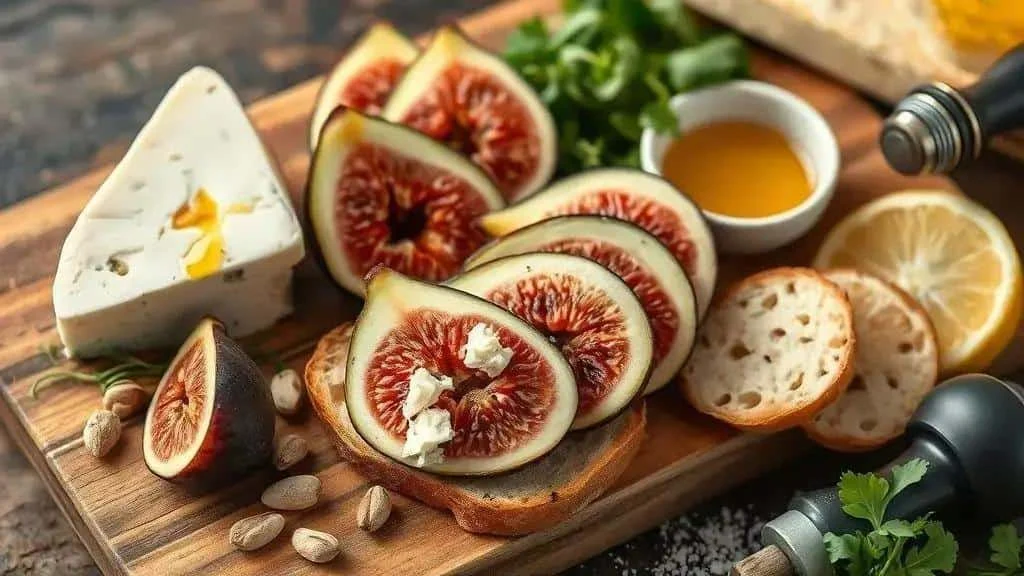
- 1 small baguette, about 250 g, cut into 12–16 slices; use firm gluten-free bread if required.
- 150 g Gorgonzola dolce, mashed with a fork for spreading. Creamy goat’s cheese or another mild blue cheese is an alternative; check suitability for the people eating it.
- 6 medium fresh figs, washed and sliced. Alternatively, soak dried figs in warm water for 10–15 minutes and drain; their more concentrated sweetness will change the result.
- 2 tablespoons honey, for the whole batch; balsamic reduction is an alternative. Do not serve honey to children under one.
- 30 g shelled pistachios, roughly chopped; walnuts or almonds are alternatives, subject to allergy requirements.
- 2 tablespoons extra-virgin olive oil, for brushing the bread.
- Zest of ½ lemon, optional, for freshness.
- Freshly ground black pepper and flaky sea salt, used sparingly to finish.
- Rocket or microgreens, optional, washed and dried, for garnish.
Ingredient notes and substitutions
- Bread: choose a firm crumb that becomes crisp when toasted rather than collapsing under the topping.
- Cheese: Gorgonzola dolce has a relatively mild blue-cheese flavour. Fresh goat’s cheese gives a different, less blue-cheese-led result.
- Figs: soaked dried figs are an out-of-season alternative, with a sweeter, denser texture than fresh fruit.
- Vegan version: use a plant-based spread, such as a suitable nut spread, and agave syrup instead of honey. Check the bread and toppings too.
Storing the ingredients
- Store the cheese in the fridge at 5°C or below, following its packaging instructions. Mash only the amount needed with a fork rather than leaving it out to soften for an extended period.
- Fresh figs are delicate. Use promptly, or refrigerate and aim to use within a day for quality, checking their condition before serving.
- Toast pistachios in a dry frying pan for around two minutes, watching and stirring so they do not burn, then cool before use.
How to make fig and Gorgonzola bruschetta
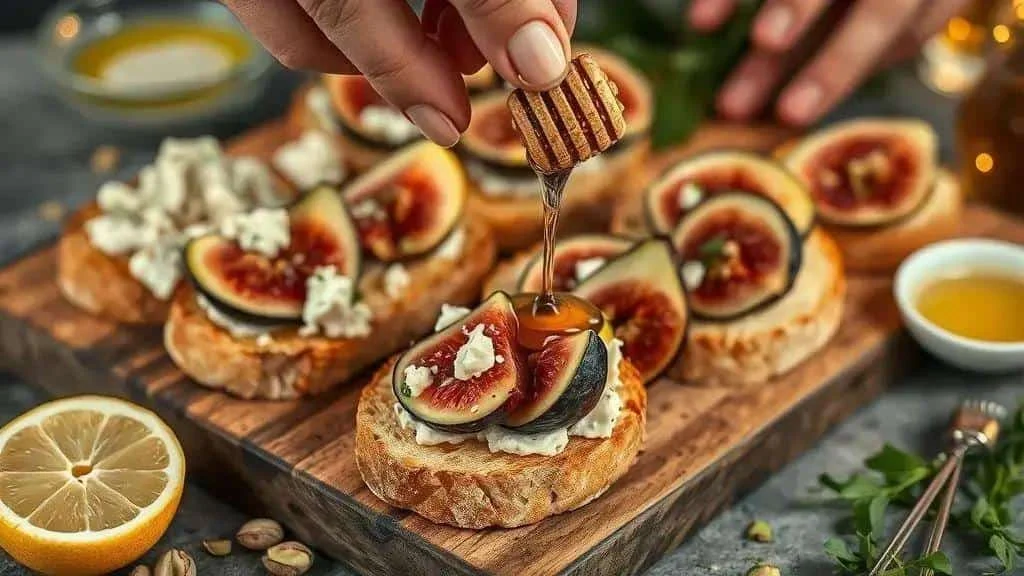
Make fig and Gorgonzola bruschetta by preparing the toast first, then dividing the toppings evenly across the batch.
- Preheat: set the oven to 200°C, or use the grill for quicker toasting, watching closely. Use equipment suitable for the chosen heat source.
- Slice the bread: cut the baguette into roughly 1.5 cm slices and arrange on a baking tray or grill tray. Do not place baking paper close to a grill element.
- Brush with oil: divide the two tablespoons of olive oil over both sides of all the slices.
- Toast: bake for around 6–8 minutes, turning halfway, until lightly golden. Grill timings will differ, so watch the bread rather than relying on the oven timing.
- Prepare the cheese: mash the Gorgonzola with a fork until spreadable, keeping it chilled until assembly.
- Slice the figs: wash, dry and cut into thin slices or quarters.
- Assemble: divide the 150 g of cheese evenly between the 12–16 slices, approximately 9–12.5 g per piece. Divide the figs over the top.
- Add honey and pistachios: distribute the two tablespoons of honey and 30 g of chopped pistachios across the whole batch, rather than measuring those quantities for each slice.
- Finish: add optional lemon zest and freshly ground black pepper, with a little flaky salt only if needed.
- Warm option: a brief return to the oven will soften the cheese, but is not a safety treatment. If serving soft blue cheese during pregnancy, cook it until steaming hot throughout, or choose an appropriate alternative cheese.
- Serve: offer one or two pieces per person, freshly assembled, with the optional rocket or microgreens.
- Prepare ahead: toast bread up to a day ahead, cool completely and store dry in an airtight container. Keep prepared cheese and figs covered and refrigerated separately; assemble close to serving.
Fig and Gorgonzola bruschetta variations
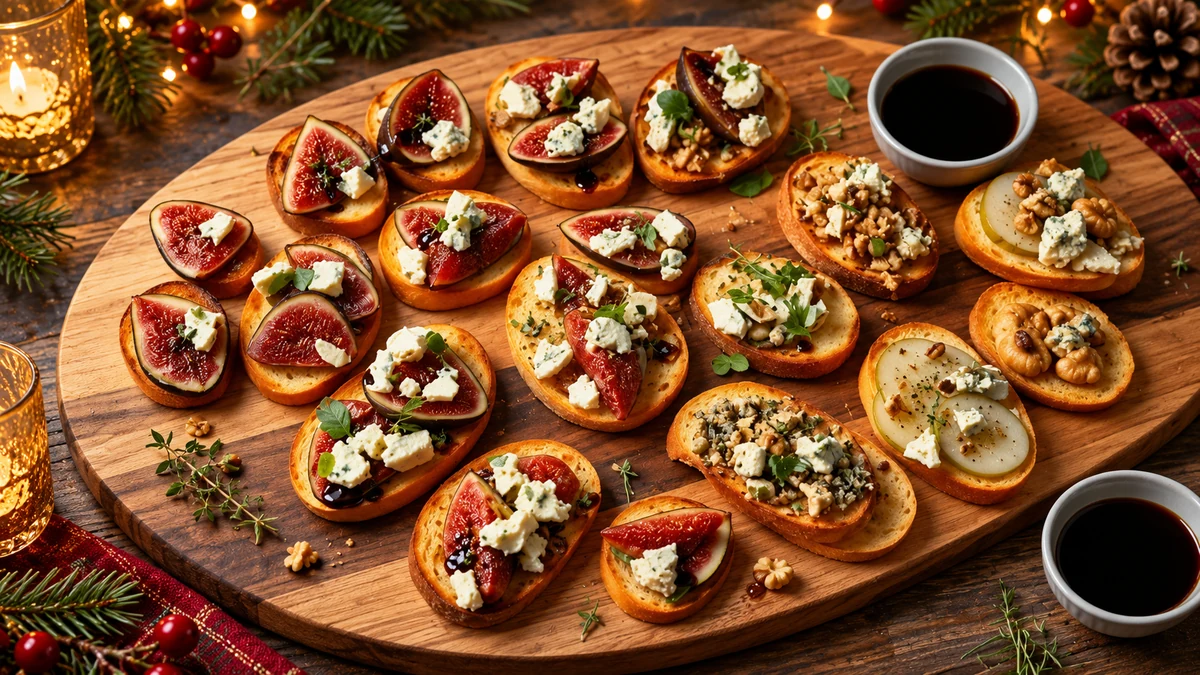
Adapt fig and Gorgonzola bruschetta with different fruit, toppings or serving bases while retaining the sweet-and-savoury contrast.
Sweet and savoury combinations
- Pistachio and honey: keep the original fig, cheese, honey and pistachio combination. Balsamic reduction gives a tangier finish, although it is not necessarily lower in sugar.
- Cured ham: add a thin slice for a salty contrast and finish with black pepper. During pregnancy, cured ham should be thoroughly cooked; it is not a suitable cold topping for those guests.
- Pear and walnut: replace figs with thinly sliced pear and use chopped walnuts instead of pistachios.
- Caramelised onion: add a spoonful beneath the cheese for a deeper savoury flavour, with a little flavoured oil if desired.
Vegan and gluten-free alternatives
- Vegan: blend 100 g of cashews soaked in the fridge with two tablespoons of nutritional yeast, salt and lemon juice, adding enough water for a spreadable texture. Use suitable bread and agave syrup instead of honey. This alternative contains nuts.
- Gluten-free: use bread or rice crackers labelled gluten-free, or a suitable cooked polenta base, and verify every topping.
Texture variations
- Extra crunch: add crisp fried onions, up to a tablespoon per bruschetta if desired, or toasted pistachios. Check packaged toppings for allergens.
- Creamier cheese: mix a little ricotta into the Gorgonzola for a milder flavour and easier spreading. Diluting blue cheese does not change its pregnancy precautions.
Assembly and finishing techniques
- Crisp toast: brush with the allocated oil and bake at 200°C for around 6–8 minutes, checking for a golden finish.
- Layering: add cheese, then fruit, then the crunchy topping and a little honey or balsamic reduction.
- Warm or freshly assembled: assemble cold toppings just before serving to keep the bread crisp. Brief warming only softens cheese; follow the thorough-heating precautions above when they apply.
Alternative presentations
- Mini portions: use smaller slices on serving boards or tasting spoons.
- Tartlets: use fully cooked mini pastry cases filled with fig and cheese, applying the same ingredient and heating precautions.
- Cocktail picks: combine fig, prosciutto and a little cheese for a bread-free variation. Remove picks for young children; choose cooked or alternative toppings where the cold ingredients are unsuitable.
Pairings
- Sparkling wine: can contrast with the sweet figs and savoury cheese.
- Light white wine or rosé: offers another pairing for the blue-cheese flavour.
- Alcohol-free: offer sparkling water with citrus slices or a gentle citrus mocktail. Choose alcohol-free drinks during pregnancy.
Adjust the intensity: use a milder cheese or a little ricotta if guests prefer less pronounced blue-cheese flavour, while retaining the relevant dietary precautions.
Presentation and assembly tips
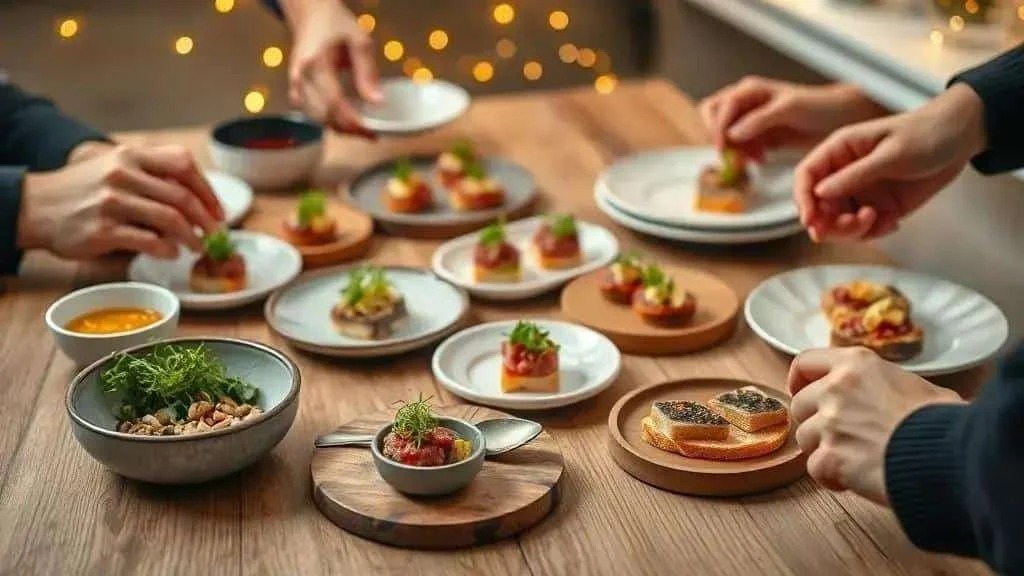
- Even portions: cut and assemble similar-sized pieces for a tidy presentation.
- Colour contrast: combine light and dark ingredients so individual elements stand out.
- Varied textures: balance crisp, creamy and fresh elements.
- Temperature: keep chilled components refrigerated until needed and serve cooked starters hot. Replenish in small batches rather than leaving everything on the table.
- Clean presentation: use clean serving utensils and wipe plate rims before serving.
- Height and depth: vary the serving dishes while keeping them stable and easy to reach.
- Individual servings: use clean spoons, cups or small boards for manageable portions.
Assembly step by step
- Organise the worktop: arrange small bowls of components, with raw fish and its equipment kept separate from ready-to-eat foods.
- Prepare the bases: toast bread and prepare fully cooked vegetable crisps ahead, cooling and storing them appropriately. Cassava must be properly processed and cooked, not simply sliced and served.
- Sauces and garnishes: keep sauces in small containers, refrigerated where required, and add at serving time to avoid soggy bases.
- Build layers: start with the base, add the main topping and finish with a crisp element.
- Use a ring: gently shape suitable mixtures in a 4–5 cm ring and lift it away carefully.
- Check seasoning: taste cooked components or dressing before it contacts raw fish, using a clean spoon. Adjust salt, acidity and oil before assembling the batch.
- Finish at the last moment: add microgreens, zest or a small drizzle of flavoured oil just before serving.
Garnishes and finishing touches
- microgreens and fresh herbs for colour and aroma;
- citrus zest for a fresh finish;
- toasted seeds or chopped nuts, with clear allergen information;
- a small drizzle of olive oil or balsamic reduction;
- a correctly identified flower sold specifically for eating, if desired.
Serving options
- Shared board: group three or four different starters with visible labels and an ingredient list guests can consult.
- Tasting spoons: use for small portions of tartare or smooth spreads, replenishing chilled mixtures as needed.
- Small cups: suit ceviche or dressed salads; keep the raw-fish precautions in mind where applicable.
- Mini skewers: are easy to collect after serving, but remove the sticks when serving young children.
Practical serving arrangements
- If needed, allow an optional extra 20% for second helpings, keeping reserves properly stored rather than assembling everything at once.
- Use separate clean utensils and preparation areas for dietary alternatives; this reduces cross-contact but is not an allergen-free guarantee.
- Reheat cooked food only once, until steaming hot throughout. A core temperature of 70°C for two minutes, or 75°C for 30 seconds, is a useful check; a brief surface warming is insufficient.
- Label stored components with preparation dates and planned serving times to keep track of the batch.
Vegetarian starters and dietary adaptations
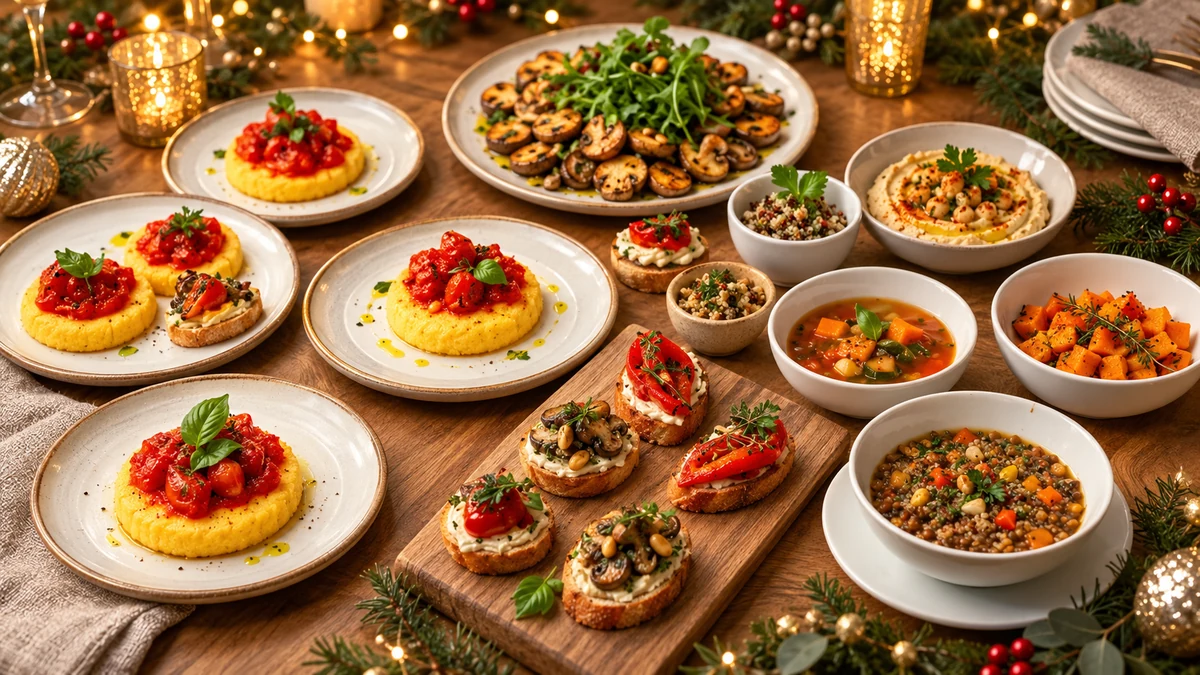
Vegetarian starters and dietary adaptations can broaden the menu, but every substitution needs to match the specific requirement: vegan, gluten-free, milk-free and allergy-safe are not interchangeable descriptions.
Vegetarian starter ideas
- Hummus and roasted pepper crostini: spread small slices of wholemeal or suitable gluten-free bread with one tablespoon of hummus and top with roasted pepper strips. Allow two per person. Hummus commonly contains sesame.
- Grilled vegetable tartlets: fill cooked pastry cases with courgette, aubergine and slow-roasted tomatoes. Choose explicitly vegan pastry where required; wholemeal pastry is not automatically vegan. Suitable cooked polenta rounds are a gluten-free alternative.
- Quinoa-stuffed mushrooms: fill 12 medium mushrooms with one cup of cooked quinoa, herbs and optional walnuts, then cook thoroughly. Sunflower seeds can replace walnuts only if they suit the guest’s allergies; seeds are not universally safe substitutes.
Vegan alternatives
- Mango and hearts-of-palm tartare: combine 100 g of chopped ready-to-eat hearts of palm with 50 g of mango, lime and herbs, then serve in tasting spoons.
- Citrus mushroom salad: cook diced button mushrooms, cool promptly and refrigerate, then dress with lime, red onion and coriander. Serve chilled with cooked sweet-potato crisps. Citrus juice does not cook the mushrooms.
- Creamy cashew spread: blend 150 g of cashews soaked in the fridge with one tablespoon of nutritional yeast, salt and lemon juice, adding water as needed. Serve on suitable gluten-free toast if required, and label the nuts clearly.
Gluten-free and milk-free options
- Polenta with tomato and basil ragù: cut fully cooked, chilled polenta into discs, heat thoroughly and top with tomato and basil sauce. Allow one disc per person; check the stock, cooking fat and sauce ingredients.
- Cucumber rolls with a plant-based filling: wrap thin cucumber slices around seasoned ready-to-eat firm tofu. A cashew spread is another milk-free option, but introduces nuts; tofu contains soya.
- Rice-cracker canapés: use crackers labelled gluten-free in place of ordinary toast and check all toppings too.
Adapting for nut, crustacean and egg allergies
- Nuts: use toasted sunflower or pumpkin seeds only if suitable for that guest, checking packaging and cross-contact risks.
- Crustaceans: offer mushroom or vegetable starters instead of prawns, prepared away from seafood with clean equipment.
- Eggs: use a suitable plant spread or seasoned plant yoghurt instead of egg mayonnaise, and check pastry, bread and every other ingredient.
Labels and separate preparation
- Separate preparation area: a clean dedicated work area helps reduce allergen cross-contact, but cannot by itself establish that a dish is allergen-free.
- Dedicated utensils: use separate tongs and spoons, wash hands properly and clean equipment. Changing gloves is not a substitute for handwashing.
- Clear information: place readable labels with the dishes and keep full ingredient details available, rather than relying only on verbal descriptions or labels hidden in the kitchen.
Preparing ahead and finishing
- Make suitable components ahead: some sauces and cooked spreads can be refrigerated for up to 48 hours, subject to their ingredients and storage instructions. This is not a blanket storage allowance for raw-fish starters.
- Assemble near serving time: keep dry toast separate from moist toppings. Cool cooked polenta promptly and refrigerate; heat thoroughly if serving it hot.
- Reheat thoroughly: an oven at 180°C can be used, but the time depends on the food’s size and starting temperature. Reheat only once, until steaming hot throughout, checking the core temperature rather than assuming three to five minutes is enough.
Portions and drinks
- Planning guide: allow four to six small bites per person in total when starters precede a main meal, adjusting to your menu.
- Drink choices: sparkling wine can complement sharp flavours; iced tea and citrus mocktails provide alcohol-free alternatives.
Hosting tips
- Ask guests about dietary requirements before the event.
- Choose a simple alternative that meets those actual requirements. Vegetable sticks and hummus are not universally suitable: consider sesame allergy and age-appropriate textures.
- Make sure someone serving the food can explain ingredients and preparation accurately, without guessing about allergens.
Conclusion
An elegant New Year’s Eve starter menu can be built around small portions, contrasting flavours and thoughtful presentation. Choose a manageable selection from these eight ideas.
Adapt dishes to your guests, prepare suitable components ahead and keep safe storage and serving arrangements part of the plan.
Thanks for reading! Follow our social channels for more seasonal ideas, and visit the I Love Christmas blog for further inspiration.
New Year’s Eve starters: frequently asked questions
Which starters suit an elegant New Year’s Eve meal?
Small portions with contrasting flavours work well: bruschetta, cooked prawn skewers and mushroom tartlets are examples. Tartare needs appropriate raw-fish sourcing and handling; offer a cooked alternative when it is unsuitable.
How can I adapt starters for allergies or dietary requirements?
Ask about each guest’s needs, check every ingredient and use separate clean equipment to reduce cross-contact. Provide clear written information; a vegan, gluten-free or milk-free label does not address every allergy.
Can I prepare the starters ahead?
Some suitable sauces and cooked components can be prepared up to 48 hours ahead and refrigerated according to their instructions. Prepare raw-fish dishes close to serving, follow supplier guidance and keep them chilled. Assemble crisp bases at the last moment.
How much should I allow per person?
Around four to six small bites in total is a starting point before a main meal. Adjust for the menu and guests; an optional extra 20% can cover second helpings, with reserves properly stored until needed.
Which drinks go with these starters?
Sparkling wine can complement citrus flavours, while light white wines or rosés can suit seafood and cheese. Offer sparkling water, iced tea or alcohol-free mocktails as well.
Sources and Further Reading
- Food Standards Agency: chilling and storing food
- NHS: foods to avoid during pregnancy
- NHS: foods to avoid for babies and young children
- Food Standards Agency: cooking and reheating
- Food Standards Agency: fish parasite controls