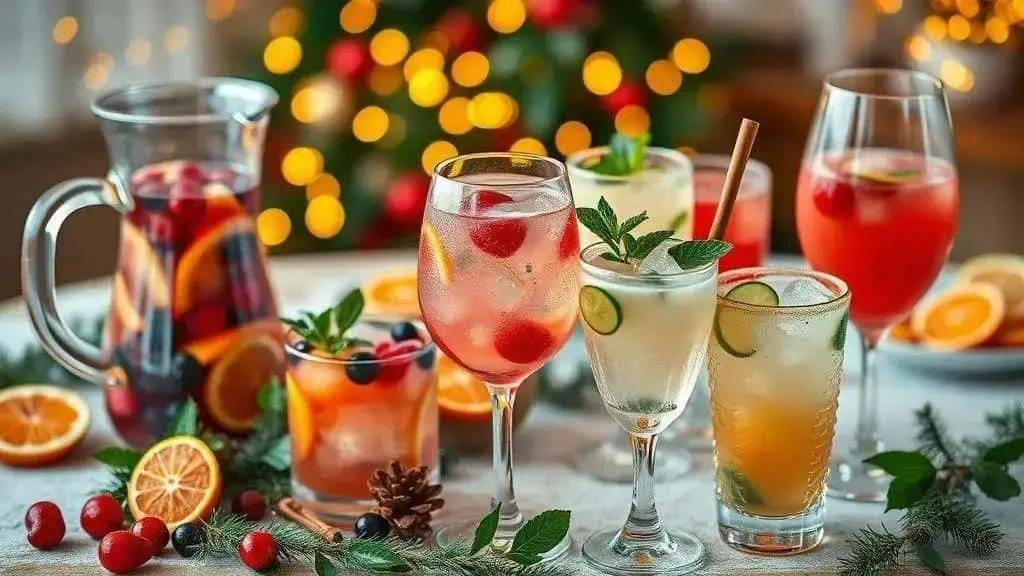
Christmas and New Year drinks can combine fruit juice, seasonal fruit, herbs and sparkling ingredients. These ten ideas include cocktails for adults and alcohol-free options, with preparation and serving tips for a summer celebration or a refreshing festive drinks table.
Christmas and New Year drinks need not be complicated. Here are ten options with ingredients, methods and variations, followed by fuller guides to three favourites. The tropical choices reflect Christmas in Brazil’s summer; they can also bring colour to a winter gathering.
Why choose refreshing drinks for Christmas and New Year?
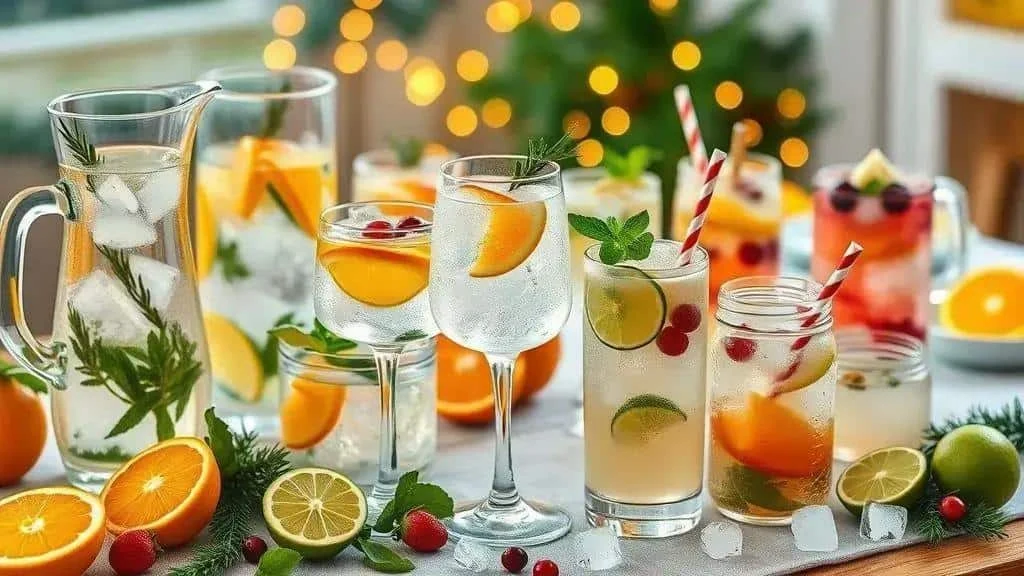
Refreshing drinks suit Brazil’s summer festivities and offer a contrast to rich Christmas food. Fruit, herbs and chilled mixers provide a range of flavours.
A drinks table with water and alcohol-free choices lets guests choose what suits them. A fresh or fruity taste does not tell you how much alcohol a drink contains.
Practical advantages
- Simple preparation: many combinations need only a few ingredients and basic measuring tools.
- Flexible recipes: fruit bases can support cocktails and alcohol-free alternatives, provided every alcoholic ingredient is omitted or replaced.
- Adjustable strength: use measured quantities, but remember that adding ice or mixer does not remove the alcohol already poured. These recipes are not all low-alcohol drinks.
- Budget choices: compare seasonal fruit and versatile ingredients rather than buying a separate bottle for every recipe.
Cater for different preferences
- Offer clearly labelled alcohol-free choices alongside any adult cocktails, with water readily available.
- Use fresh fruit and herbs for aroma rather than relying on spirits for every flavour.
- Ask about allergies and check labels. Sparkling water can replace wine, but fermented drinks and flavour extracts are not automatically alcohol-free.
Chilled glasses, citrus slices, herbs and clean decorative ice can make the drinks inviting without elaborate equipment.
Prepare suitable juice bases and syrups ahead, keep them refrigerated and add fizz and ice at serving time to reduce last-minute work.
Set up a simple home drinks station
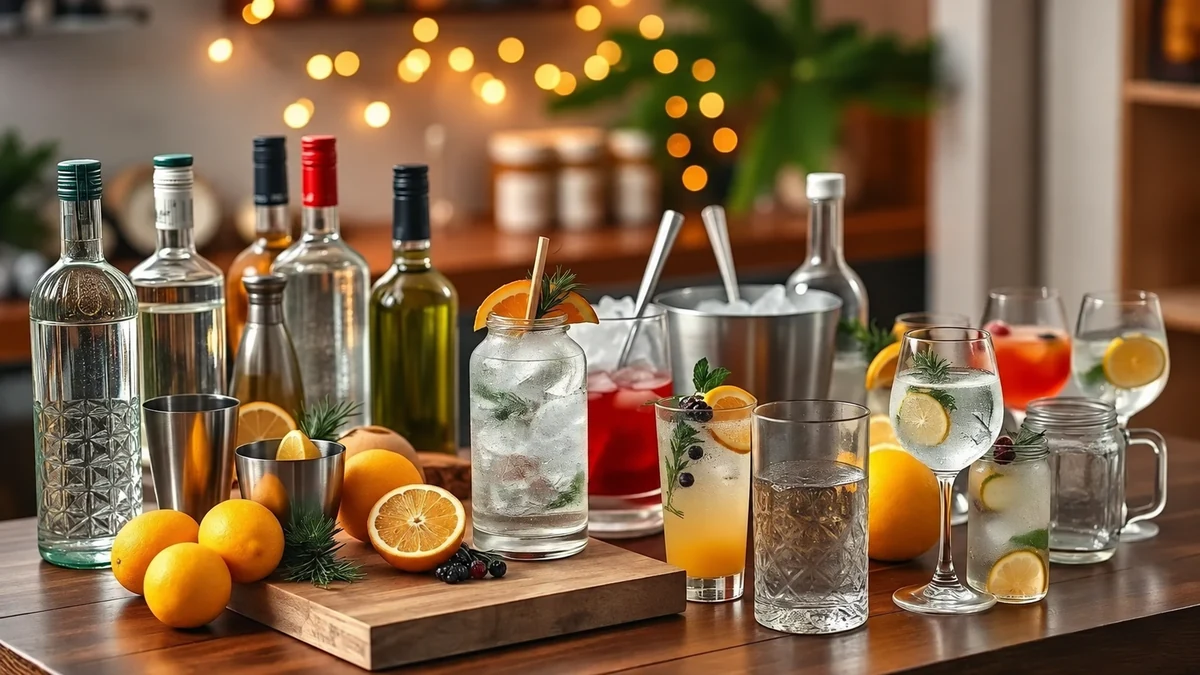
A small organised drinks area makes preparation easier and leaves more time for your guests.
Group bases, mixers, tools and garnishes by function, leaving a clear space for measuring and assembling drinks.
Useful supplies
- Bases: choose only the bottles needed for your selected recipes, such as vodka, white rum or sparkling wine for adults. You do not need to buy all three.
- Mixers: sparkling water, lemonade, orange juice, cranberry juice drink and tonic water, according to the recipes.
- Sweeteners and flavourings: simple syrup or sugar; honey is optional where suitable and must not be given to children under one.
- Fruit and herbs: limes, oranges, pineapple, berries, mint and rosemary.
- Ice: clean drinking-water ice, stored hygienically with a dedicated scoop.
- Tools: a shaker, measuring jigger, long spoon, muddler, fine strainer and corkscrew where needed.
- Glasses: tumblers, flutes and tall glasses; use the same attractive options for alcohol-free drinks, with clear identification.
Organise the space
- Choose a work surface: use a stable table or counter near the kitchen for easy replenishment.
- Separate supplies: keep alcohol distinct from mixers and alcohol-free drinks, with garnishes in clean containers.
- Provide an alcohol-free area: set out labelled fruit water and suitable mocktail bases, keeping chilled items cold until needed.
- Keep ice accessible: use a covered bucket and scoop; do not dip used glasses into it.
- Keep tools close: arrange the measuring tools and spoons for easy use, with separate clean utensils for alcohol-free preparations.
- Label clearly: identify alcohol and relevant allergens rather than expecting guests to tell from the colour.
Serving and presentation
- Measure consistently: use a jigger rather than free-pouring spirits.
- Keep garnishes simple: a citrus slice or clean herb sprig is often enough; sharp cocktail sticks are unsuitable for small children.
- Chill glasses: refrigerate them or fill briefly with ice, then discard the chilling ice before making the drink.
- Make genuine alcohol-free versions: replace every wine, spirit and liqueur with suitable juice, cooled tea or sparkling water; dilution alone does not achieve this.
- Prepare bases ahead: make juice mixtures and syrups a few hours before the event and refrigerate in clean covered containers.
Budget-conscious shopping
- Choose bottle sizes that suit your planned quantities and prioritise ingredients shared by several recipes.
- Compare seasonal fruit prices and consider suitable frozen alternatives, following their preparation instructions.
- For a simple syrup, dissolve equal weights of sugar and water, then cool promptly. Measure the finished syrup required by a recipe; the starting water volume is not the final yield.
- Use clean, unused citrus peel and herbs across several recipes; do not reuse garnishes from served drinks.
Guest comfort and sensible service
- Provide water and appealing alcohol-free choices throughout the event. Water does not make someone sober or safe to drive.
- Measure alcoholic servings and do not encourage drinking to keep the party going. Arrange alcohol-free choices for drivers and safe transport in advance.
- Keep a clear place for used glasses and waste so the preparation area remains clean.
Ten Christmas and New Year drinks: ingredients and methods
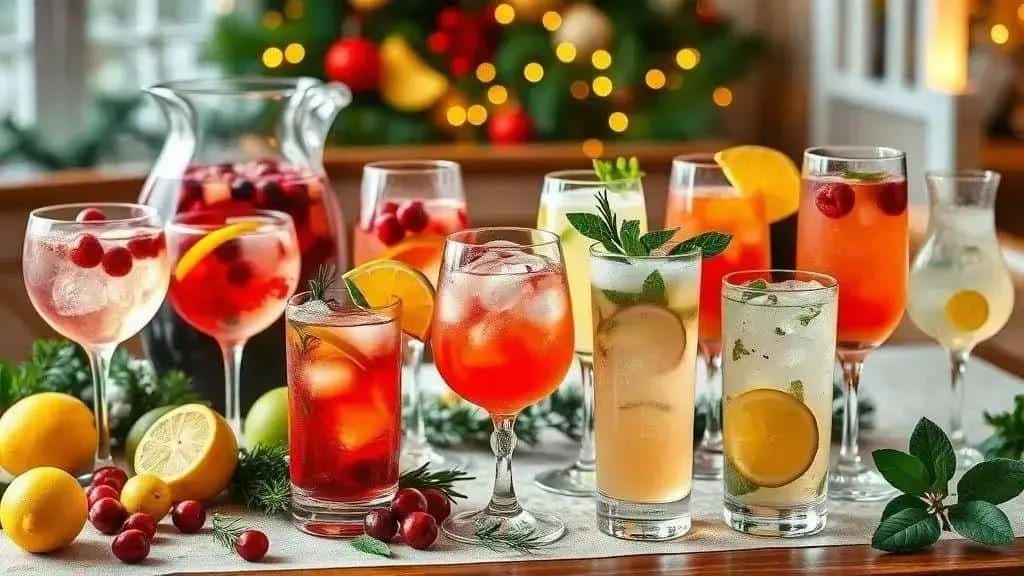
Berry punch — a colourful sharing jug. The basic alcohol-free recipe makes about 1.5 litres before fruit and ice; optional alcohol changes both the volume and strength.
Ingredients
- 1 litre cranberry juice drink — sweetness varies by product.
- 500 ml sparkling water — sparkling wine is an adult alcoholic alternative.
- 200 g mixed berries — washed strawberries, raspberries and blackberries; cut large strawberries.
- 100 ml vodka, optional — omit entirely for the alcohol-free version.
- Ice as needed
- Mint sprigs to garnish
Method
- Chill the jug: use the fridge or ice for a few minutes, then discard any chilling ice and meltwater.
- Add the juice: pour the cranberry juice into the jug, reserving the sparkling ingredient until serving.
- Add the berries: stir them into the juice for colour and flavour.
- Add optional alcohol: stir in the measured vodka only for the adult version and label the jug accordingly.
- Finish and serve: gently add the sparkling water, or wine for the alcoholic version, immediately before serving over ice with mint.
Tropical clericot — a wine-and-fruit sharing drink, making about 1.15 litres before fruit and ice.
Ingredients
- 750 ml dry white wine — choose a flavour you enjoy.
- 200 ml passion fruit juice
- 1 cup diced pineapple — fresh or thoroughly drained tinned fruit
- 1 orange, sliced
- 200 ml sparkling water
- Ice as needed
Method
- Combine fruit and juice: put the pineapple and orange slices in a jug with the passion fruit juice.
- Add the wine: pour it in and stir gently.
- Add fizz at serving time: stir in the sparkling water shortly before pouring.
- Serve over ice: divide between glasses with some of the fruit. For an alcohol-free alternative, replace all the wine with suitable juice or cooled tea.
Herb and lime caipirinha — an adult cocktail combining cachaça, citrus and mint or basil. The quantities make one drink.
Ingredients
- 1 large lime cut into 6 wedges
- Up to 2 tbsp sugar — start with less if preferred
- 50 ml cachaça — or vodka for a different version
- 6 mint or basil leaves
- Crushed ice to fill the glass
Method
- Muddle lime and sugar: press the wedges gently with the sugar in a sturdy tumbler to release the juice.
- Add herbs: press the leaves lightly without grinding them into small fragments.
- Add cachaça: measure in the spirit and stir to help dissolve the sugar.
- Add ice: fill with crushed ice and stir gently. The same volume of vodka is not necessarily lower in alcohol; check the ABV.
Pomegranate spritz — a fruity sparkling-wine drink with orange. This makes about 280 ml before ice, so use a large glass or divide into two smaller servings.
Ingredients
- 100 ml pomegranate juice — dilute concentrate according to its label
- 150 ml dry sparkling wine — such as prosecco or cava
- 30 ml sparkling water
- An orange slice to garnish
- Ice as needed
Method
- Prepare the glass: add ice to a large wine glass, leaving room for the liquid.
- Pour the juice: add the pomegranate juice first.
- Add the sparkling ingredients: pour in the wine and water gently.
- Garnish: add the orange slice and serve promptly.
Christmas Moscow mule — vodka, cranberry and ginger in a chilled glass or suitably lined mug. Makes one adult cocktail.
Ingredients
- 60 ml vodka — this is a substantial spirit measure, not a low-alcohol serving
- 120 ml alcohol-free ginger beer — check the label, as products differ
- 30 ml cranberry juice drink
- Juice of ½ lime
- Ice as needed
- A rosemary sprig, optional garnish
Method
- Add ice: use a glass or a copper-style mug with an intact food-safe lining suitable for acidic drinks, rather than bare copper.
- Add the base: pour in the measured vodka, cranberry juice and lime juice.
- Finish with ginger beer: add it last and stir gently.
- Garnish: add the rosemary if using. Omit the vodka completely and replace with a suitable mixer for an alcohol-free version.
Festive mimosa — sparkling wine with orange juice and optional raspberry purée. Makes one 150–170 ml drink.
Ingredients
- 100 ml dry sparkling wine, chilled
- 50 ml fresh orange juice, strained
- 20 ml raspberry purée, optional
- A little orange zest to garnish
Method
- Add the fruit base: put the optional raspberry purée in the glass, then add the orange juice.
- Pour the wine: add the chilled sparkling wine slowly, leaving room for foaming.
- Finish: garnish with orange zest. Depending on the purée, the colour may blend rather than form a distinct layer.
Pineapple mojito — pineapple, mint, lime and rum in one tall adult cocktail.
Ingredients
- 6 fresh mint leaves
- Up to 2 tbsp sugar — or simple syrup added gradually to taste, not as an exact volume-for-volume substitute
- 50 ml white rum — dark rum gives a different flavour
- 100 g diced fresh pineapple
- Juice of 1 lime
- Sparkling water to top up
- Ice as needed
Method
- Muddle gently: press the pineapple and sugar together in a sturdy glass, then lightly press in the mint.
- Add rum and lime: stir in the measured rum and lime juice.
- Finish: add ice and top up with sparkling water, stirring gently. Do not shake carbonated liquid in a sealed shaker.
- Serve: use a little of the pineapple and mint as garnish, or add an extra small piece if available.
Citrus and rosemary gin and tonic — a fragrant variation making one adult drink.
Ingredients
- 50 ml gin
- 150 ml chilled tonic water
- 2 thin lime slices and 2 orange slices
- 1 rosemary sprig — gently rub it to release aroma; there is no need to use a flame near the drink
- Large ice cubes
Method
- Add ice: put large cubes in a roomy balloon glass.
- Measure in the gin: pour it over the ice.
- Add tonic: pour slowly to preserve the fizz.
- Garnish: add the citrus slices and rosemary.
Cucumber and lime agua fresca — an alcohol-free sharing jug, making a little over a litre before ice.
Ingredients
- 1 litre cold drinking water
- 1 large cucumber, thinly sliced
- Juice of 2 limes
- Up to 2 tbsp honey or sugar — optional, to taste; no honey for children under one
- Mint leaves
- Ice as needed
Method
- Prepare the cucumber: wash and slice thinly.
- Mix the liquids: stir the water, lime juice and optional sweetener until dissolved.
- Infuse: add cucumber and mint, cover and refrigerate for 30 minutes.
- Serve cold: strain if preferred and pour over ice.
Passion fruit and mint cooler — a tart fruit base that can be alcohol-free or made with a measured spirit addition. Divide between glasses according to the dilution you choose.
Ingredients
- 200 ml strained passion fruit pulp — dilute concentrate as directed on its label
- 50 ml cachaça or vodka, optional — omit entirely for alcohol-free drinks
- 1 tbsp sugar, or to taste
- Mint leaves
- Sparkling water to dilute to taste
- Ice as needed
Method
- Press the mint: gently muddle it with the sugar in a small jug.
- Add fruit: stir in the strained pulp.
- Add optional alcohol: measure in cachaça or vodka only for the adult alcoholic version.
- Dilute and serve: add chilled sparkling water to balance the pulp’s acidity and divide between glasses with ice. The fuller alcohol-free version below uses 500 ml water.
- Garnish: finish with a little mint, with optional passion fruit alongside.
Berry punch: the fuller ingredient list
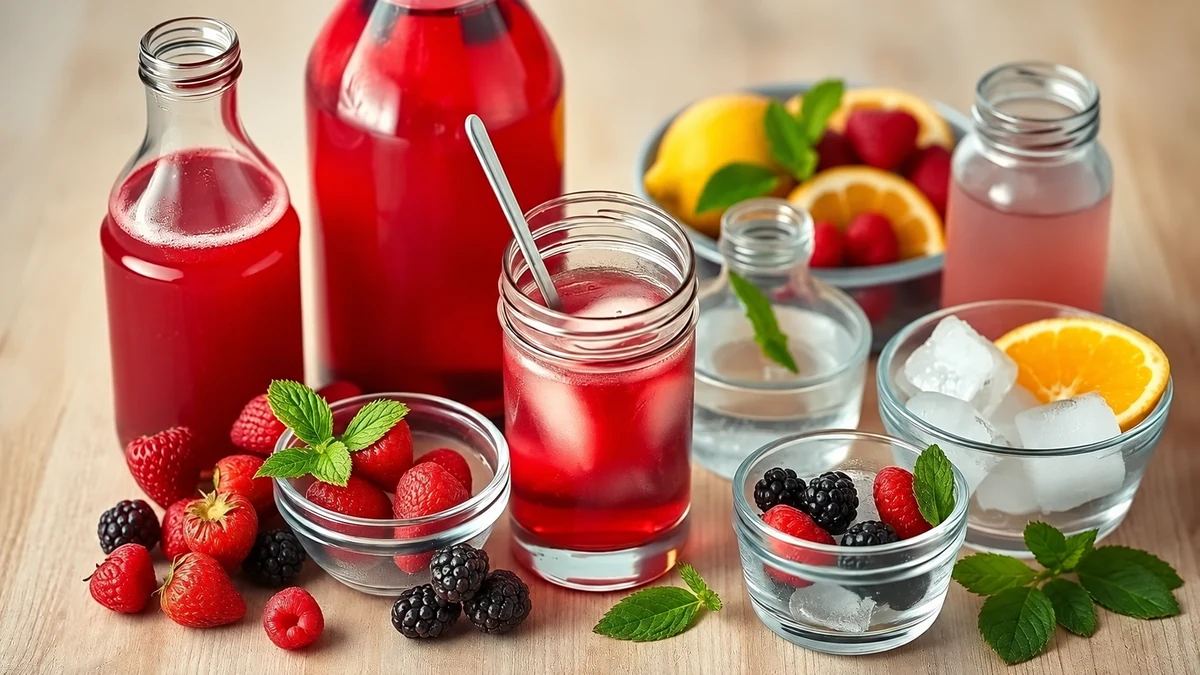
This version of berry punch adds lime and optional syrup to the simple recipe above. It makes roughly 1.5–1.8 litres before fruit and ice, depending on the additions.
Ingredients
- 1 litre cranberry juice drink — dilute concentrate according to its label; red grape juice gives a sweeter alternative.
- 500 ml sparkling water — or 500 ml sparkling wine for an alcoholic version.
- 200 g mixed berries — washed fresh fruit, or frozen berries prepared according to the packet; some require cooking and cooling first.
- 100 ml vodka, optional — gin gives a different flavour. Omit all spirits and use sparkling water for the alcohol-free version.
- Up to 150 ml finished simple syrup, optional — add gradually, as some cranberry drinks are already very sweet. Honey or agave changes the flavour and is not an exact fixed-ratio substitute.
- Juice of 1 lime — lemon is an alternative.
- Ice as needed — large cubes generally melt more slowly than crushed ice under similar conditions.
- Mint sprigs — or basil for a different aroma.
- Orange or lime slices to garnish.
How to make berry punch
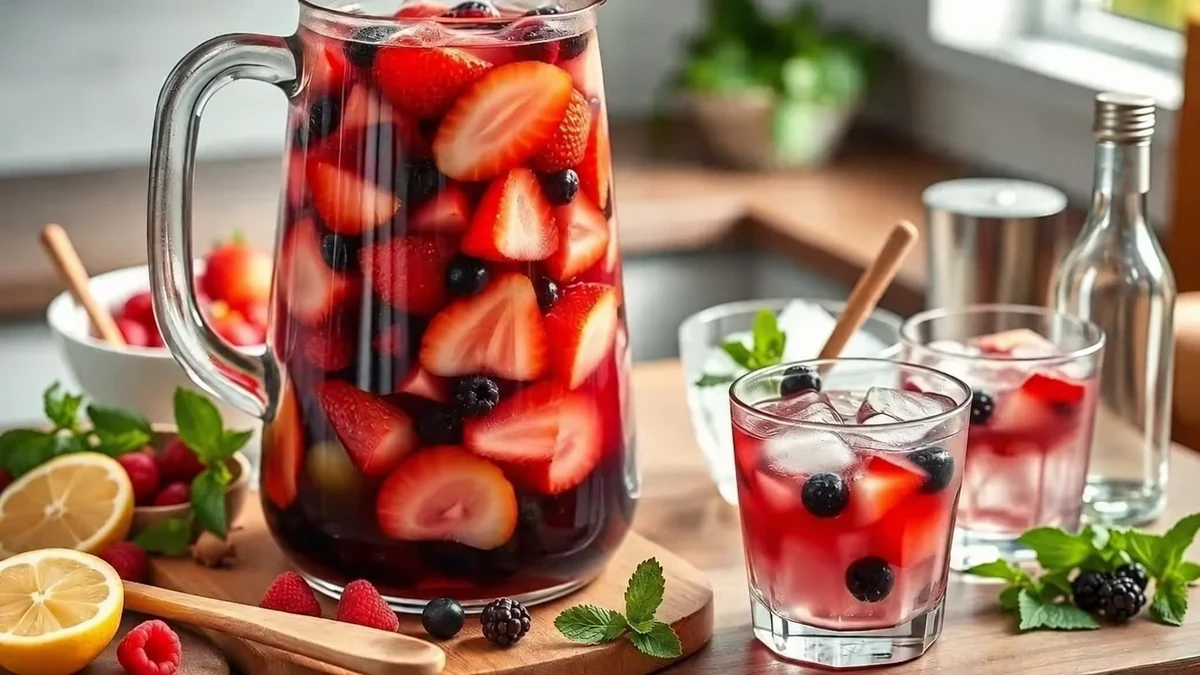
Make the berry punch base ahead if useful, keeping it chilled and adding the sparkling ingredient only when serving.
- Chill the jug: refrigerate it or add ice for 3–5 minutes, then discard the chilling ice and meltwater.
- Prepare the berries: wash 200 g fresh berries, quarter large strawberries and leave suitable smaller berries whole. Follow any cooking instructions on frozen fruit.
- Make syrup if needed: dissolve 150 g sugar in 150 ml water over gentle heat, then cool promptly. This makes more than 150 ml syrup; measure only the amount required and refrigerate the remainder separately.
- Mix the base: combine 1 litre cranberry juice and the lime juice, adding the cooled syrup gradually up to 150 ml if needed. The whole syrup batch is not required.
- Add fruit: stir in the berries and gently press two or three against the jug to release some colour without puréeing everything.
- Choose the version: add the optional 100 ml spirit only for adults. For alcohol-free punch, omit it; no extra ingredient is necessary to replace its volume.
- Chill: cover and refrigerate for 30–60 minutes.
- Add fizz and ice: just before serving, stir in 500 ml chilled sparkling water, or wine for the alcoholic version, and add ice to the glasses.
- Check the flavour: taste with a clean spoon and adjust sweetness or acidity a little at a time, if needed.
- Serve: garnish with mint and citrus, and use a clean ladle for a larger sharing bowl.
- Make-ahead storage: keep the covered base without fizz or ice at 0–5°C for up to 24 hours, or less if an ingredient’s instructions require it. Add fizz and ice at serving time.
Berry punch variations
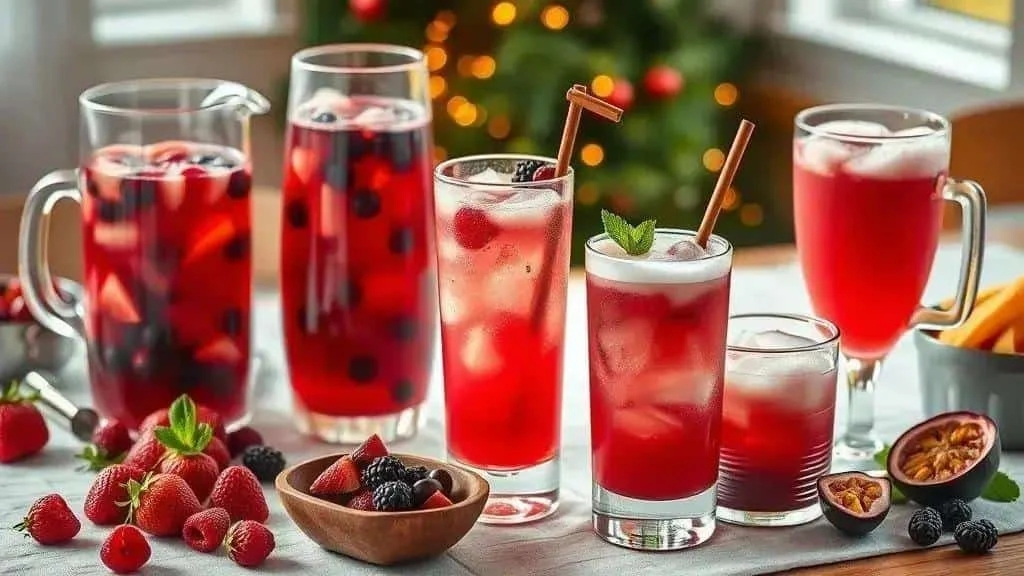
Adapt berry punch with one of these combinations. Mix the still ingredients, chill and add any fizz last; quantities are for a shared batch, not one glass.
Sparkling-wine punch
A wine-based variation for adults; sparkling does not mean low in alcohol.
- 1 litre cranberry juice drink
- 300–400 ml dry sparkling wine, such as prosecco or cava
- 150 g mixed berries
- 50–100 ml raspberry liqueur, optional — increases the alcohol in the batch
- Mint sprigs
Rum or gin punch
Rum and gin provide different flavour profiles. Mix the following as a sharing batch, adding syrup gradually rather than assuming it all needs sweetening.
- 100 ml white rum or gin — vodka is another option
- 1 litre cranberry juice drink
- Up to 150 ml simple syrup, to taste
- Mixed berries and clean orange peel
Ginger or citrus sparkling punch
Use a clearly alcohol-free ginger or citrus mixer for a mocktail. Kombucha is a fermented alternative for guests who choose it, but may contain alcohol and must not be assumed to be alcohol-free.
- 750 ml cranberry juice drink
- 250 ml alcohol-free ginger or citrus sparkling mixer — kombucha is optional only after checking its alcohol content and suitability
- 150 g mixed berries
- Juice of 1 lime
Tropical passion fruit punch
Combine berries and passion fruit for a tart fruit punch; dilute the pulp to suit its concentration.
- 800 ml cranberry juice drink
- 200 ml strained passion fruit pulp
- 150 g mixed berries
- Sparkling water to taste
Christmas-spiced punch
Infuse the juice with cinnamon, cloves and orange in the fridge, taste periodically and strain out the whole spices before serving. Add only as much syrup as needed.
- 1 litre cranberry juice drink
- 2 cinnamon sticks
- 3 cloves
- Up to 150 ml simple syrup, to taste
- Orange slices
Less sweet, without added syrup
Diluting juice and omitting syrup changes sweetness, but fruit juice still contains sugars. Do not describe the finished drink as sugar-free or low-calorie without checking its actual composition.
- 1 litre diluted cranberry juice drink — check the label and dilute to taste
- Sparkling water to top up
- An optional suitable sweetener, used according to its label
- Fresh mixed berries
Frozen berry punch
Blend the ingredients with ice in an appliance designed for it, adding liquid as needed for a pourable slush. Follow frozen-fruit packet instructions before use.
- 500 ml cranberry juice drink
- 200 g frozen mixed berries suitable for this use
- 100 ml water or extra juice
- Ice as needed
Tips for adapting a punch
- Adjust sweetness gradually: juices and syrups vary, so taste before adding the full allowance.
- Choose a texture: leave suitable fruit pieces in a sharing jug or strain for a smoother drink.
- For alcohol-free drinks: omit every spirit, liqueur and wine, using suitable juice, sparkling water or cooled tea instead.
- Keep the fizz: add sparkling water or wine only when serving.
Tropical clericot: the fuller ingredient list
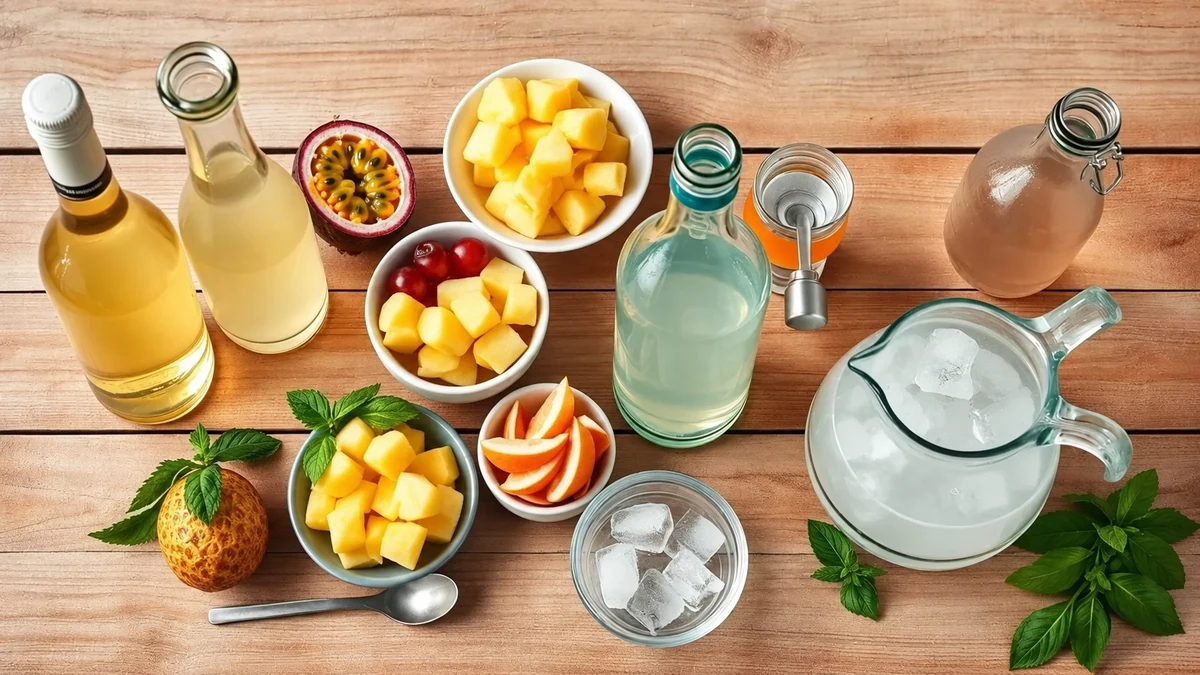
This tropical clericot includes more fruit than the short version above. It is an adult sharing drink unless all wine and liqueur are replaced; omitting only the liqueur is not enough.
Ingredients
- 750 ml dry white wine — rosé is an alternative; if using sparkling wine, add it only at serving time.
- 200 ml strained passion fruit juice — orange juice or suitably diluted pineapple juice gives a different flavour.
- 150 g diced pineapple — fresh or thoroughly drained tinned fruit.
- 1 medium apple, cored and diced — peel if preferred, or use pear.
- 1 orange, thinly sliced — or a washed mandarin.
- 75 g seedless grapes, halved — peach or nectarine pieces are alternatives.
- 200–300 ml sparkling water — add at serving time; alcohol-free ginger ale adds sweetness and ginger flavour.
- 50–100 ml orange liqueur, optional — for example triple sec. Omitting it leaves the wine, so the drink remains alcoholic.
- Ice as needed — with up to 2 tbsp simple syrup and a little lime juice available only if adjustment is needed.
- Mint or basil leaves — or a small rosemary sprig for a different aroma.
How to make tropical clericot
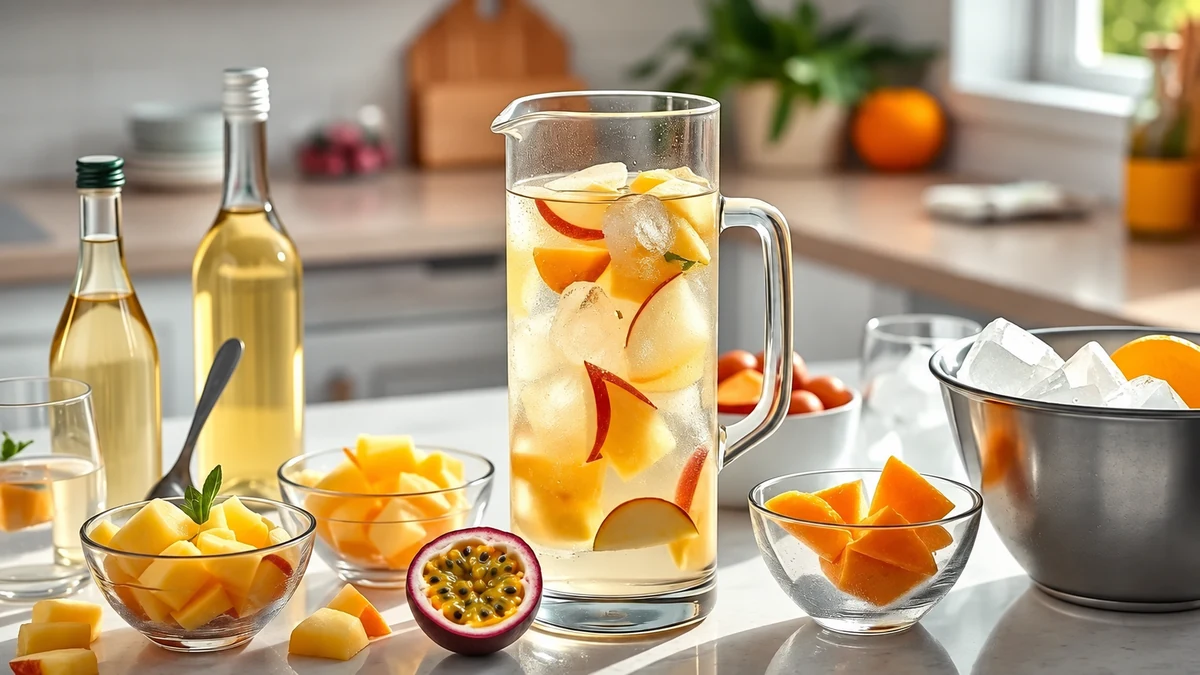
- Chill the jug and wine: refrigerate before preparation so the ingredients start cold.
- Prepare the fruit: wash and prepare the pineapple, cored apple, orange and grapes, cutting pieces into manageable sizes.
- Measure the juice: strain and measure 200 ml passion fruit juice, diluting any concentrate as directed.
- Combine gently: mix the fruit with the optional orange liqueur and, only if needed, some of the optional syrup. Press a few pieces lightly without turning everything into purée.
- Build the base: transfer the fruit mixture to the jug and add the passion fruit juice.
- Add still wine: pour in the 750 ml white wine and stir gently. Reserve any sparkling-wine alternative for the final stage.
- Infuse in the fridge: cover and chill for 30–60 minutes.
- Add fizz: immediately before serving, add the 200–300 ml sparkling water or alcohol-free ginger ale. Add ice to glasses rather than diluting the whole jug early.
- Check the balance: taste and use a little of the optional syrup or lime juice if needed.
- Serve: use a clean ladle to divide fruit and liquid between chilled glasses, finishing with the chosen herbs.
- Store the base: keep the covered fruit, juice and still-wine mixture at 0–5°C for up to 24 hours, respecting shorter ingredient limits. Fizz and ice go in at serving time; wine does not make the mixture shelf-stable.
Tropical clericot variations
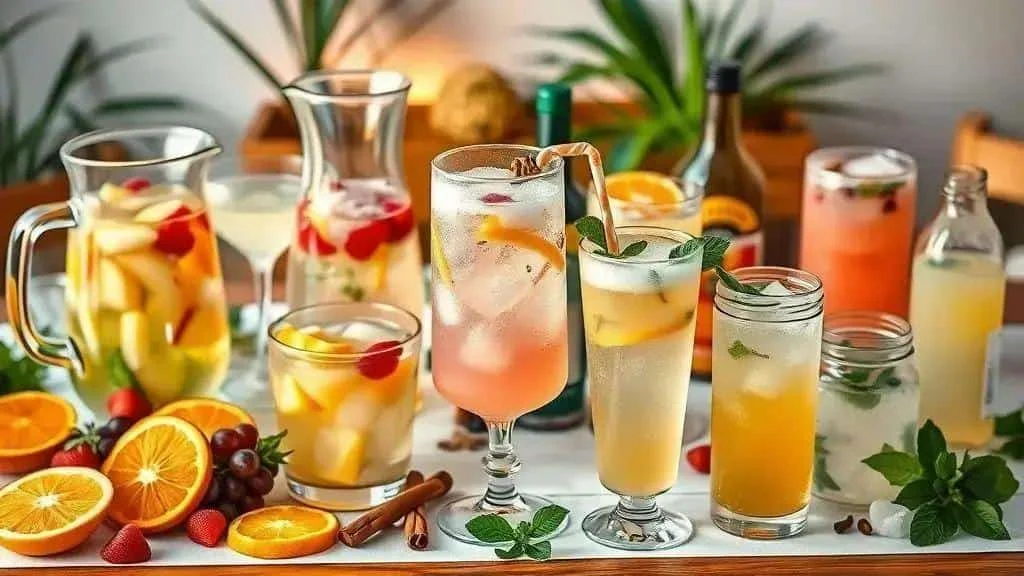
Try one of these clericot variations. Mix still ingredients and chill; add sparkling ingredients at the last moment. The quantities describe shared batches, and the alcohol-free version is identified separately.
Sparkling clericot
A wine-based variation with extra bubbles, rather than a claim of reduced alcohol.
- 500 ml dry white wine
- 250–300 ml dry sparkling wine, such as prosecco or cava
- 150 g diced pineapple
- 1 orange, sliced
- 50–80 ml orange liqueur, optional
- Ice as needed
Rosé clericot
A berry-and-grape version using rosé wine.
- 750 ml rosé wine
- 150 g sliced strawberries
- ½ cup halved grapes
- 100 ml sparkling water
- Mint leaves
Coconut water clericot
Coconut water adds a different flavour and dilutes the wine, but does not remove its alcohol.
- 500 ml white wine
- 250 ml chilled coconut water
- 150 g diced pineapple
- Juice of 1 lime
- Ice as needed
Rum clericot
Adding rum increases the alcohol in the shared batch; measure it carefully and label the drink.
- 600 ml white wine
- 100 ml white rum
- 150 g mango or pineapple
- Up to 1 tbsp simple syrup, to taste
- Sparkling water to top up
Alcohol-free clericot
Use juice and sparkling water, omitting all wine and liqueur. Kombucha is not used here because fermentation can leave alcohol in the drink.
- 500 ml white grape juice or clear apple juice
- 250 ml sparkling water
- 150 g mixed diced fruit
- Juice of ½ lime
- Mint leaves
Christmas-spiced clericot
Infuse the wine with spices and fruit in the fridge, tasting periodically. Strain out the cinnamon and cloves before serving.
- 750 ml white wine
- 2 cinnamon sticks
- 3 cloves
- Orange slices
- 150 g mixed berries
Frozen clericot
Blend in an ice-capable blender for a slush texture, following the frozen fruit’s preparation instructions. Serve immediately; freezing does not remove alcohol.
- 400 ml white wine
- 200 g frozen fruit suitable for blending without further cooking
- Ice as needed
- Up to 50 ml simple syrup, to taste
A less sweet wine spritzer
Omit syrup and dilute to taste. This changes sweetness and alcohol concentration, but the wine still contains alcohol and calories; no nutritional value is calculated here.
- 500 ml white wine mixed with 500 ml water
- Optional suitable sweetener, used according to the label
- Fresh fruit for flavour
- Sparkling water for extra fizz, if desired
Tips for adapting clericot
- Taste before sweetening: add syrup gradually, if it is needed at all.
- Preserve the bubbles: add sparkling water or wine just before serving.
- Keep some texture: use manageable fruit pieces rather than crushing everything.
- For alcohol-free clericot: replace all wine with suitable juice or cooled tea and omit liqueurs; check every flavouring rather than assuming fermented drinks are alcohol-free.
- A starting ratio: two parts base, one part juice or flavoured water and one part prepared fruit by volume can be a starting point, but adjust to the particular ingredients. It is not a measure of alcohol strength.
Herb and lime caipirinha: ingredients
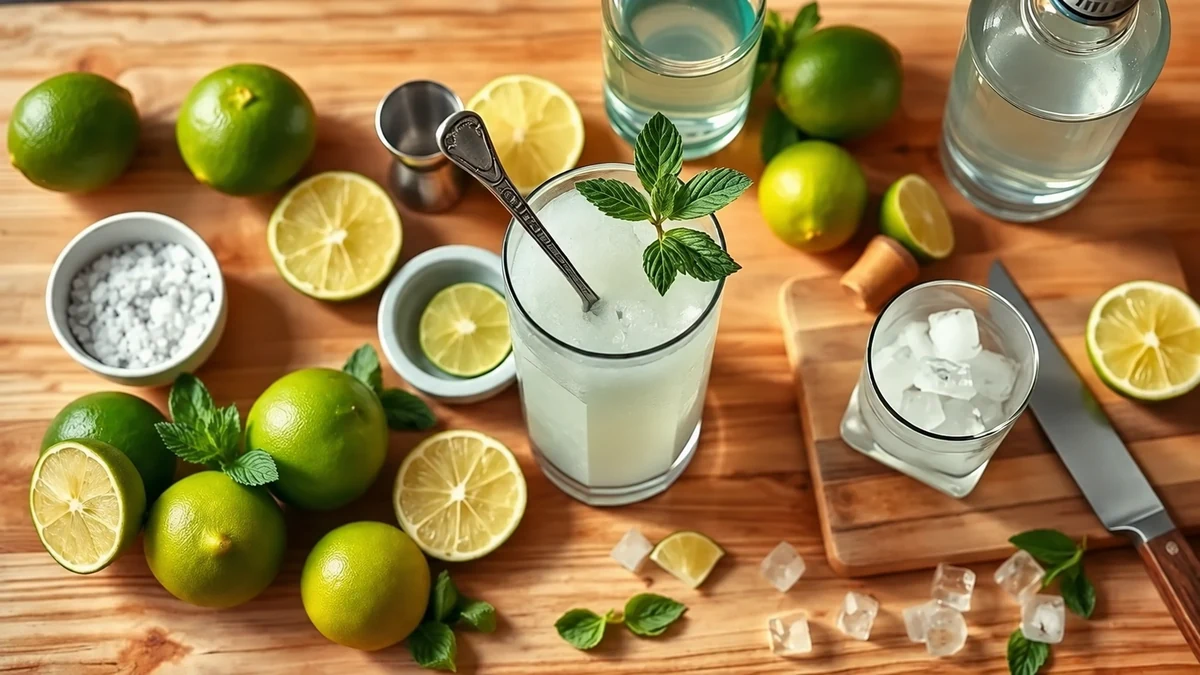
These quantities make one herb and lime caipirinha for an adult. Ingredient substitutions change sweetness and flavour; they are not always direct equivalents.
Ingredients
- 1 large lime cut into 6 wedges — lemon gives a different citrus variation.
- Up to 2 tbsp white or demerara sugar — if using simple syrup instead, add gradually to taste; 1½ tbsp syrup does not contain the same sugar as 2 tbsp dry sugar.
- 50 ml white cachaça — or 50 ml vodka for a different flavour; compare the ABV rather than assuming vodka is weaker.
- 6 mint leaves — basil or culinary lemon balm is an alternative.
- Crushed ice — approximately a cup, depending on the glass; cubes melt differently.
- Up to 1 tsp finely grated lime zest, optional — start with a little to avoid overwhelming the drink.
- A thin lime or orange slice to garnish, or a mandarin or kumquat slice.
How to make herb and lime caipirinha
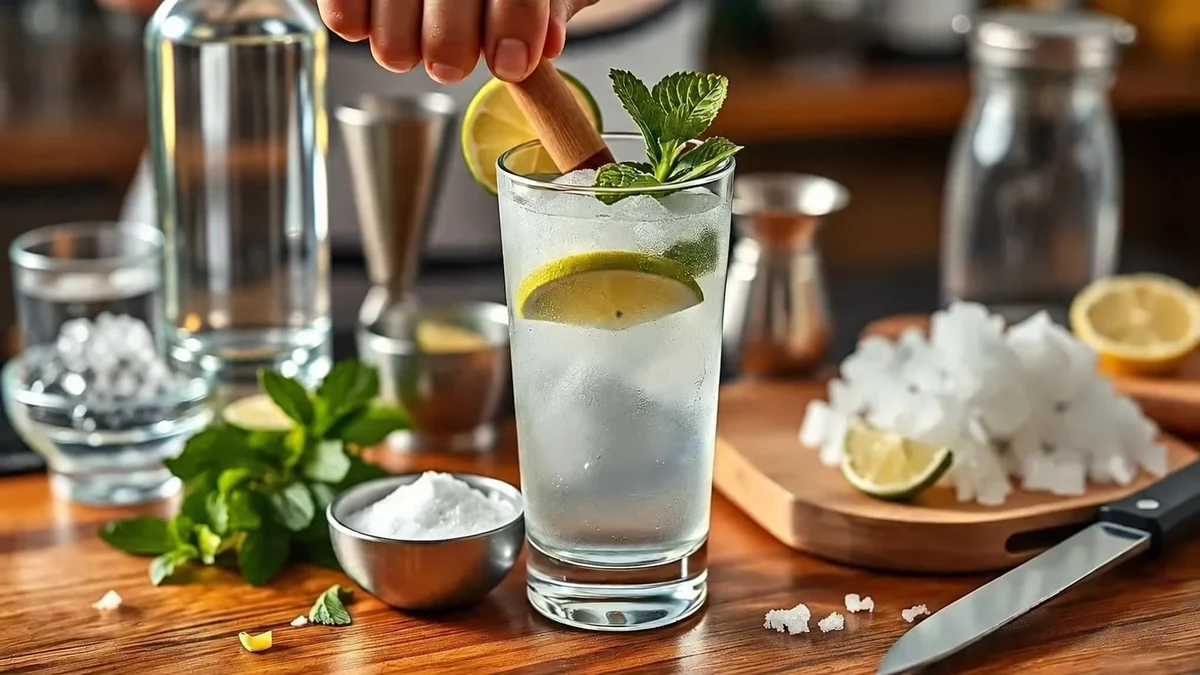
- Prepare: wash and dry the lime, cut it into six wedges and measure the sugar, mint and cachaça.
- Chill the glass: refrigerate it or fill with ice briefly, then discard the ice and meltwater. Only put glassware in a freezer if its manufacturer says it is suitable.
- Add lime and sugar: put the lime wedges in a sturdy tumbler and add sugar, starting below the full quantity if you prefer a less sweet drink.
- Muddle carefully: press gently to release juice without grinding the peel, which can make the drink bitter.
- Add mint: press the leaves lightly to release their aroma without shredding them.
- Check sweetness: use a clean tasting spoon. If using syrup instead of sugar, add it gradually; there is no fixed small-volume swap that preserves the original sweetness.
- Add the spirit: measure in 50 ml cachaça. Using less reduces the alcohol added; replacing it with the same volume and strength of vodka does not.
- Stir gently: mix for a few seconds without breaking up the herbs further.
- Add ice: fill with crushed ice or cubes, leaving enough room to stir without spilling.
- Finish: stir again, add the citrus garnish and optional zest, and use a little extra mint if available.
- Serve promptly: for a gathering, prepare small refrigerated batches of lime and sugar close to serving, then measure in spirit and ice for each drink.
Practical tips
- Alcohol-free variation: omit the cachaça completely and use sparkling water or clearly alcohol-free ginger ale to taste.
- Avoid bitterness: press the fruit to release juice rather than pulverising the peel.
- For several guests: scale measured portions, keep the base chilled and avoid leaving muddled peel to infuse for long periods.
- Flavour alternatives: demerara sugar adds a caramel note, while basil changes the herbal profile.
Variations and alcohol-free versions
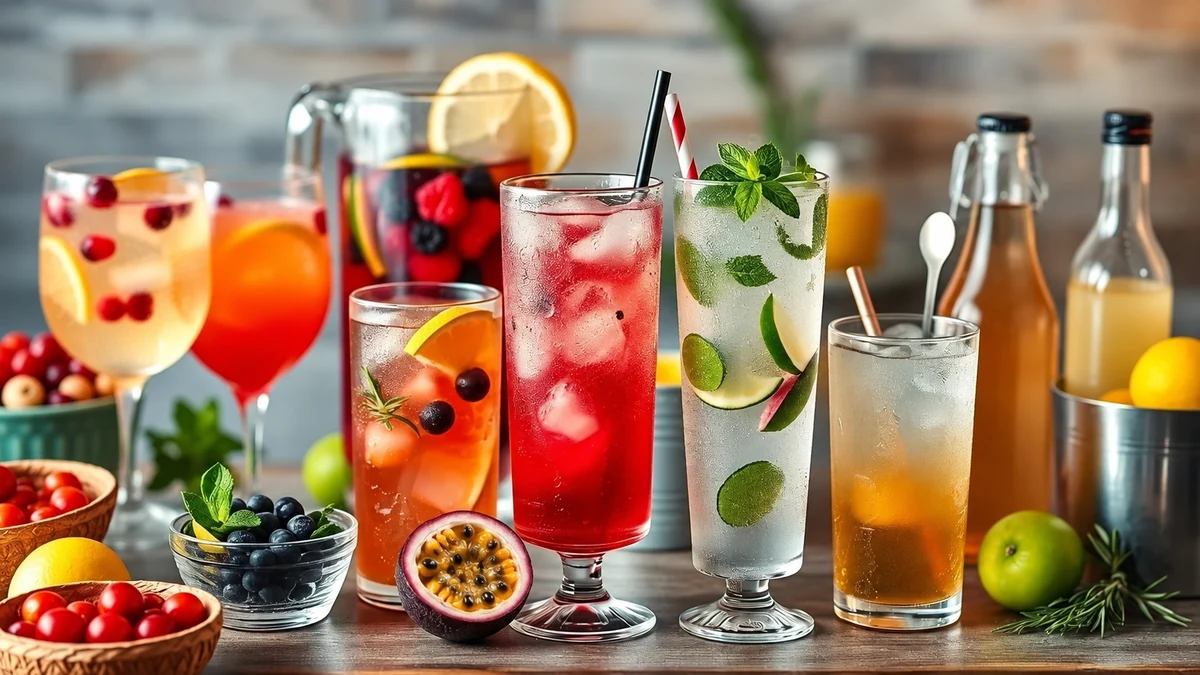
Thoughtful variations can retain an attractive presentation while offering guests a genuine choice. Alcohol-free does not automatically mean suitable for every age or dietary need.
Principles for adapting drinks
- Keep the serving style: use chilled ingredients, suitable ice or a blended texture when appropriate.
- Replace every alcoholic ingredient: suitable juices, cooled teas and coconut water provide different flavours. Kombucha can contain alcohol and should not be the default substitute for someone avoiding it.
- Use culinary flavourings: clean citrus peel, edible herbs and spices add aroma. Check bitters and extracts individually for alcohol and other ingredients.
- Balance sweetness and acidity: add syrup and lime juice gradually. A few drops of diluted food-grade cider vinegar is an optional flavour variation, not an exact citrus replacement.
- Keep the presentation appealing: use suitable glasses and simple garnishes, while clearly distinguishing alcoholic drinks.
Practical substitutions
- Sparkling wine: use plain or flavoured sparkling water; do not assume a fermented alternative is alcohol-free.
- Vodka, gin or cachaça: try apple juice, white grape juice, cooled tea or a suitable mixer, adjusting the recipe. Tea may contain caffeine.
- Liqueurs: use an appropriate fruit syrup or explicitly alcohol-free flavouring in small quantities.
- Alcohol-free ginger beer: alcohol-free ginger ale or cooled ginger infusion gives a different intensity and level of fizz.
- Alcoholic bitters: omit them or use a verified alcohol-free product. Vanilla and orange extracts often contain alcohol, so they are not automatic substitutes.
Mocktail 1: Cucumber and lime agua fresca
A simple alcohol-free sharing jug. For young children, keep water available rather than treating sweetened mocktails as an everyday drink; do not use honey for children under one.
- 1 litre chilled water
- 1 large cucumber, thinly sliced
- Juice of 2 limes
- Up to 2 tbsp honey or simple syrup, optional — add to taste, as their sweetness differs
- Mint leaves
- Ice
- Slice: wash the cucumber and cut it thinly.
- Mix: combine the water, lime juice and optional sweetener.
- Infuse: add cucumber and mint, cover and refrigerate for 30 minutes.
- Serve: strain if preferred and pour over ice with a little mint.
Mocktail 2: Alcohol-free berry punch
A colourful sharing jug made without spirits, liqueur or wine. The base yields about 1.5 litres plus lime juice and any syrup, before fruit and ice.
- 1 litre cranberry juice drink
- 500 ml sparkling water
- 200 g mixed berries
- Up to 150 ml simple syrup, optional and to taste — do not substitute the same amount of honey automatically
- Juice of 1 lime
- Ice
- Mix the base: combine cranberry and lime juices, adding only as much syrup as needed.
- Add prepared berries: lightly press a few for colour, leaving the rest in pieces.
- Chill: cover and refrigerate for 30 minutes.
- Finish: add the sparkling water just before serving and pour into glasses with ice.
Mocktail 3: Passion fruit and mint cooler
- 200 ml strained passion fruit pulp — check whether concentrate needs dilution
- 500 ml sparkling water — this makes a sharing batch of about 700 ml before ice
- 1 tbsp sugar, or syrup added to taste
- Mint leaves
- Ice
- Press the mint: lightly muddle it with the sugar in a jug large enough for the batch.
- Add pulp: stir in the passion fruit.
- Add fizz: gently stir in the sparkling water at serving time and divide between glasses with ice.
- Garnish: add a little mint, with optional passion fruit alongside.
Batch preparation and service
- Make bases ahead: refrigerate suitable juice-and-fruit bases at 0–5°C in clean covered containers and use within 24 hours or a shorter ingredient limit.
- Add fizz last: stir in sparkling water or wine just before serving; never shake it in a sealed shaker.
- Identify each version: label alcohol-free drinks and keep preparation utensils separate and clean.
- Present both versions well: use attractive garnishes without making the alcoholic and alcohol-free drinks impossible to distinguish.
Glasses, garnishes and presentation
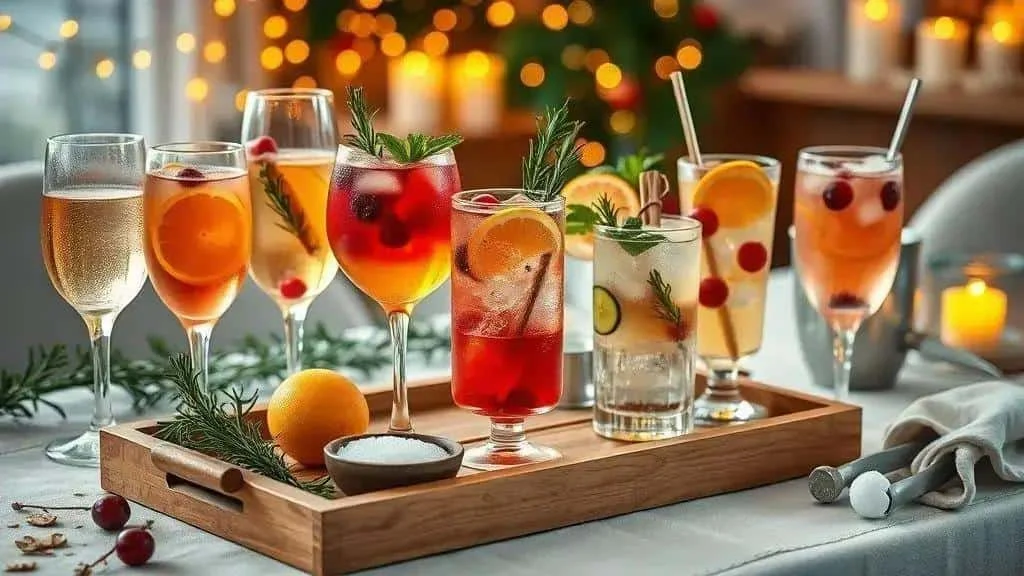
Suitable glasses, simple garnishes and a tidy presentation can make a drinks table feel festive without elaborate decoration.
Choose a practical glass
- Flute: useful for a modest mimosa; the larger spritz recipe needs a bigger glass or two smaller servings.
- Balloon glass: gives gin and tonic room for ice and citrus.
- Short tumbler: suitable for a caipirinha and other shorter drinks with ice.
- Highball or Collins glass: useful for mojitos and other longer drinks.
- Copper-style mug: use one with an intact food-safe lining suitable for acidic drinks, or simply use a glass for a Moscow mule.
Edible garnishes
- Citrus slices: wash the fruit and cut thin slices for the rim or surface.
- Fresh herbs: clean mint, rosemary or basil provides aroma.
- Fruit pieces: choose manageable strawberries, pineapple or grapes; avoid sharp sticks and choking-size garnishes for small children.
- Whole spices: cinnamon or culinary star anise can add a festive aroma; remove small hard spices before drinking.
- Decorated rims: a little sugar, flavoured salt or citrus zest gives contrast without covering the whole glass.
Simple finishing techniques
- Caramelised orange: if making it, prepare sugar-dusted slices separately on a suitable cooking surface and let them cool before garnishing. Keep flames away from alcohol, bottles and guests.
- Fresh-looking herbs: select undamaged sprigs, wash and dry them gently, then keep chilled. A one-second blanch is not necessary or a guarantee of better aroma.
- Citrus twists: use a peeler to remove a thin strip of zest with little white pith, then twist over the glass.
- Layered colours: pour suitable liquids slowly over a spoon; whether they stay separate depends on their density and composition.
Trays and serving stations
- Serving trays: use stable trays suitable for the weight of filled glasses, grouping drinks by type.
- Name cards: state the drink name and whether it contains alcohol, with relevant allergen information.
- Self-service area: provide measured instructions and clearly separated alcohol-free bases; keep spirits out of children’s reach.
- Different heights: use stable, washable stands rather than precarious stacks under heavy jugs.
Lighting and finishing details
- Warm lighting: battery lights can add atmosphere without an open flame near bottles or decorations.
- Catch condensation: wipe glass bases and use coasters to protect the table.
- Coordinate colours: use the fruit and herbs already in the recipe to complement the table.
Practical serving habits
- Use measures: a jigger makes quantities more consistent than pouring by eye.
- Prepare garnish trays: wash, cut and refrigerate small quantities, replenishing as needed.
- Add ice when assembling: avoid diluting a whole jug long before guests are ready.
- Give alcohol-free drinks equal attention: offer appealing choices as well as plain water.
Common presentation mistakes
- Overpowering garnishes: choose herbs and spices that complement the drink rather than overwhelm it.
- Too much decoration: leave room to drink comfortably and avoid loose inedible ornaments in the glass.
- Unclean glassware: serve in clean, intact glasses, with dry bases where practical.
These Christmas and New Year drinks offer a range of fruit flavours and serving styles for a festive gathering.
Choose a manageable selection, prepare suitable bases ahead, add fizz at the last moment and keep alcoholic versions clearly identified.
Thank you for reading! Follow our social channels for more recipes and presentation ideas, and visit the I Love Christmas blog for further festive inspiration.
FAQ: Christmas and New Year Drinks
Can I prepare the drinks ahead?
Suitable juice-and-fruit bases can be prepared up to 24 hours ahead and kept covered at 0–5°C, unless an ingredient requires a shorter limit. Add ice and sparkling ingredients when serving. Muddled citrus is best prepared closer to serving to limit bitterness.
How can alcohol-free drinks look like cocktails?
Use suitable juice, cooled tea, fruit, herbs and sparkling water, with attractive glasses and garnishes. Omit all wine, spirits and liqueurs, and check flavourings; kombucha and extracts can contain alcohol.
Which glass suits each drink?
A flute suits a smaller mimosa, a balloon glass gives gin and tonic room for ice, a sturdy tumbler works for caipirinha, and a tall glass suits mojitos. Choose capacity to match the recipe, leaving room for ice and foam.
How should I store leftover punch or clericot?
Keep an untouched base without ice or fizz covered at 0–5°C, within the original 24-hour preparation window or a shorter ingredient limit. Do not restart that clock after serving, and do not keep mixtures that have been left warm or contaminated by used glasses.
How can I keep ingredient costs down?
Compare seasonal fruit, make measured quantities of simple syrup and choose recipes with shared ingredients. Buy only the bottles needed for the drinks you actually plan to serve.
How can I serve alcohol more responsibly?
Use measured portions, make alcohol-free choices and water easy to find, and arrange safe transport in advance. Do not encourage someone who has had too much to keep drinking; water and food do not make them safe to drive.
Sources and Further Reading
- Food Standards Agency: chilling, freezing and defrosting
- NHS: alcohol units
- NHS: drinks for babies and young children
- NHS: foods to avoid for babies and young children
- TTB: alcohol can develop during kombucha fermentation