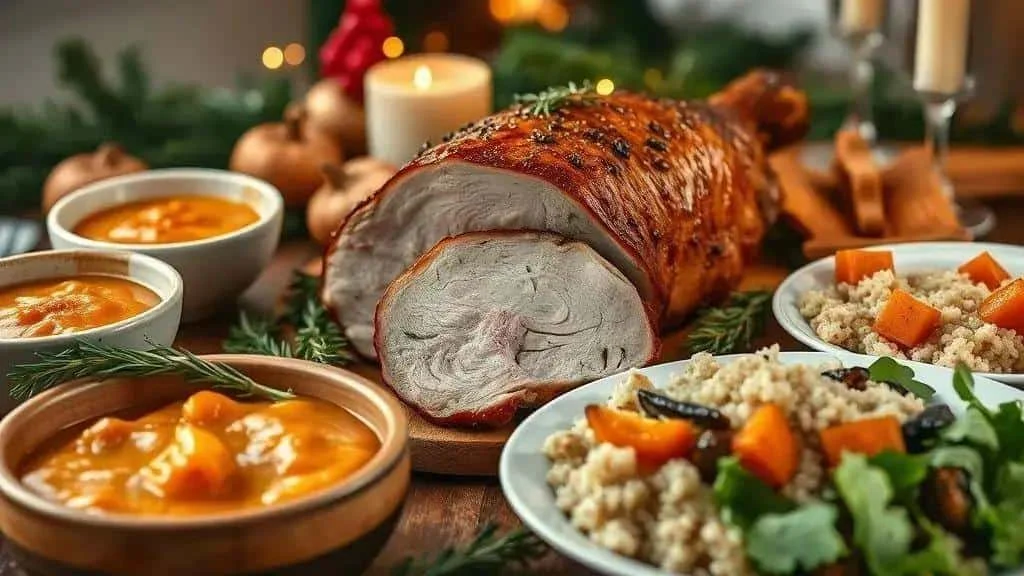
Good side dishes for pork loin bring together creamy, crunchy and tangy elements. Apple and sweet potato mash, farofa with nuts, cranberry sauce, roast vegetables and fragrant rice provide contrasting flavours, textures and colours for Christmas dinner.
Side dishes for pork loin can make a Christmas meal feel generous and varied. Here are seven ideas, from familiar mash and roast vegetables to Brazilian farofa, with preparation and serving tips to help you choose a balanced selection.
Why the Right Sides Matter

Well-chosen side dishes for pork loin complement its flavour and give a relatively lean roast variety without overwhelming it.
What Side Dishes Bring to the Plate
- Flavour balance: fruity or sharp additions, such as apple mash or cranberry sauce, contrast with the richness of the roast and its juices.
- Texture: pair something smooth, such as mash, with something crisp, such as farofa.
- Colour: roasted vegetables and salads make the Christmas table more inviting.
- Serving temperature: finish hot dishes together, and assemble warm salads just before serving rather than leaving them standing lukewarm.
- Timing: choose some dishes that can be prepared ahead, chilled safely and reheated once without losing too much texture.
- Dietary needs: include clearly identified vegetarian or gluten-free choices where needed, checking ingredients and preparation methods.
- Aroma: rosemary and thyme complement pork without overpowering its flavour.
- A useful combination: choose one creamy side, one crunchy side and something sharp or fruity.
- Drinks: citrus and herbs work well with many white wines and lighter reds.
- Portions: choose recipes whose quantities are easy to scale for the number of guests.
Quick tip: think about texture, flavour and colour together, rather than filling the plate with several similar sides.
The Seven Sides and How to Serve Them
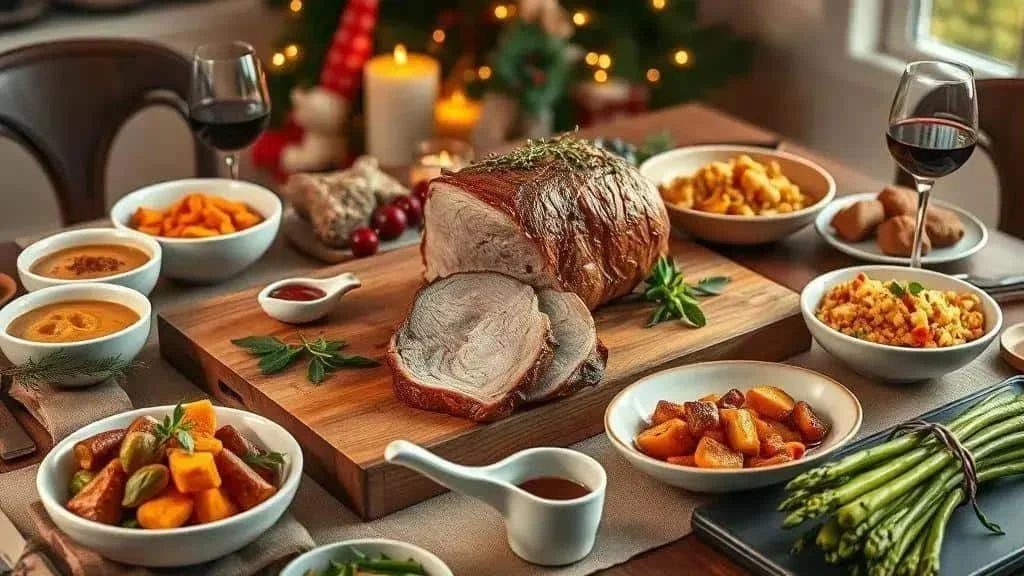
- Rustic apple and sweet potato mash — serve hot in a bowl that shows off its colour. Allow around 120 g per person when it is one of several sides. It can be prepared ahead, chilled promptly and reheated once until steaming throughout.
- Crisp farofa with nuts — serve this toasted cassava-flour accompaniment in a shallow dish. Allow roughly 50–70 g per person. Toast the nuts separately and add them near serving if you want to maximise their crunch.
- White wine and herb rice — serve in a warmed dish, finishing with fresh herbs. Around 100–130 g cooked rice per person is a starting point when rice is a main side.
- Honey and rosemary roast vegetables — present in a roasting dish, with a mixture of shapes and colours. Allow roughly 120 g per person and cook until tender with browned edges.
- Warm squash and rocket salad — add freshly roasted squash to the leaves just before serving. Allow roughly 80–100 g per person as one of several sides. Prepare the squash ahead if useful, then chill safely and reheat once before assembly.
- Cranberry sauce and fruit sauces — offer in small jugs or bowls so guests can help themselves. Allow around 2 tablespoons per person. Make ahead and refrigerate promptly, using within 48 hours.
- Griddled asparagus with garlic and lemon — arrange on a long platter. Allow around 4–6 spears per person, griddle until tender and finish with lemon zest. This is a serving idea rather than a fully measured recipe below; asparagus is a less seasonal choice for a British winter.
Portions, Temperatures and Planning
- A balanced trio: choose a creamy mash, a crunchy farofa and a tangy sauce.
- Temperatures: serve hot dishes promptly. If holding them hot, keep the food itself at 63°C or above, using suitable equipment and a thermometer. A warm salad should be assembled and eaten promptly, not held at a lukewarm temperature.
- Portions: adjust for appetites and the number of other dishes; the individual suggestions are alternatives, not quantities to add together for every guest.
- Preparing ahead: farofa and cranberry sauce can be made a day ahead and refrigerated. Roast vegetables and mash often have the best texture when finished near serving.
- Reheating: an oven at 160–180°C conventional can suit covered dishes, but check that the food is steaming throughout. Reheat only once; a water bath is useful for holding already-hot mash, not for slowly warming it from the fridge.
- Presentation: vary the height of serving dishes and use fresh leaves or citrus zest for colour.
- Table layout: place the pork centrally, hot sides nearby and small sauce jugs within easy reach.
Simple Drink Pairings
- Mash and roast vegetables suit fuller-bodied white wines or dry sparkling wine.
- Nutty farofa and white wine rice can work with light-to-medium red wines.
- Fruit sauces pair with wines that have some freshness or a light beer.
Rustic Apple and Sweet Potato Mash — Ingredients and Method
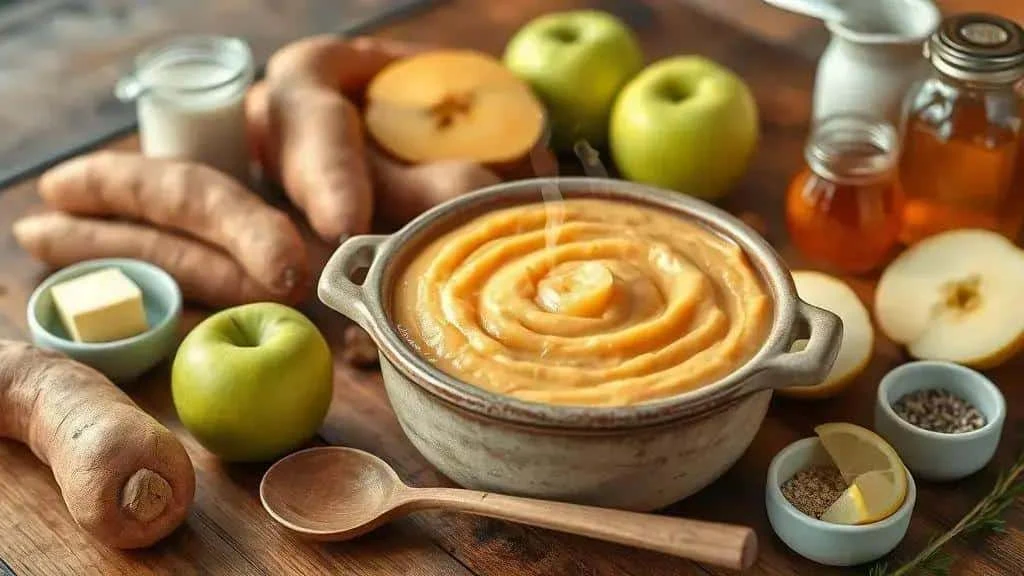
Rustic apple and sweet potato mash combines gentle sweetness with a soft texture alongside roast pork.
Ingredients
- 800 g sweet potatoes — peeled and cut into medium cubes; the Brazilian alternative is 700 g mandioquinha, also called arracacha.
- 2 medium apples — Granny Smith or Gala, peeled, cored and diced.
- 50 g butter — or 3 tablespoons extra virgin olive oil; use dairy-free milk and omit or replace the cream as well for a dairy-free dish.
- 100–150 ml milk — add to suit the texture; unsweetened, unflavoured plant milk is an alternative.
- 50 ml cream, optional — for extra richness.
- 1 tablespoon honey or brown sugar, optional — taste the apples before adding extra sweetness.
- 1 teaspoon salt — or less, to taste.
- ½ teaspoon ground black pepper.
- A pinch of nutmeg, optional.
- 1 tablespoon lemon juice — to add acidity and help limit browning of the apples.
Method
- Cook the sweet potatoes: cover with lightly salted water, bring to the boil and cook for about 12–15 minutes, until easily pierced with a fork. Drain well.
- Cook the apples: take 1 tablespoon of the measured butter or oil and heat it in a frying pan. Add the apples, lemon juice and optional honey or sugar, and cook for about 4–5 minutes, or until softened but still holding some shape.
- Mash the sweet potatoes: return them to the pan while hot, add the remaining measured butter or oil, and mash with a fork or potato masher, leaving some texture.
- Fold in the apples: stir gently to distribute the pieces.
- Adjust the consistency: add the milk gradually, using 100–150 ml as needed, followed by the optional cream. Keep some small pieces for a rustic finish.
- Season: add salt, pepper and optional nutmeg, then taste and adjust.
- Add optional crunch: finish with chopped nuts or lightly browned spring onions if desired.
- Preparing ahead: cool and refrigerate within 1–2 hours. Reheat once on the hob, stirring and adding a spoonful of milk if needed, until steaming hot throughout. Use chilled leftovers within 48 hours.
- Serve: spoon into a warmed bowl and decorate with thyme or lemon zest.
Crisp Farofa with Nuts — Ingredients and Method
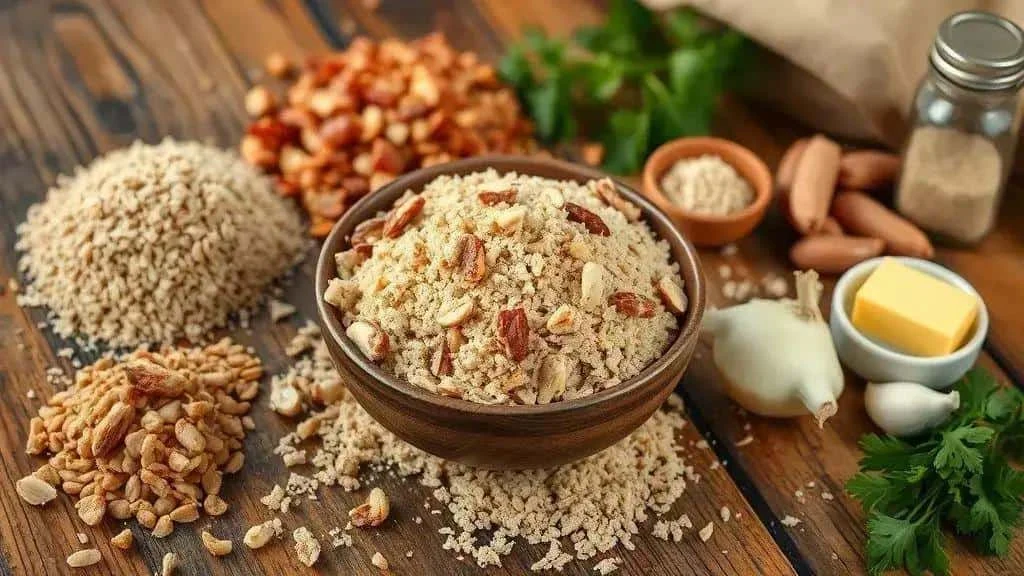
Farofa with nuts is a Brazilian toasted cassava-flour side that adds crunch to roast pork. This recipe makes roughly 8–10 side portions.
Ingredients
- 300 g toasted farinha de mandioca — a granular cassava flour sold for farofa, not tapioca starch or finely milled baking cassava flour. A Brazilian toasted maize flour suitable for farofa is an alternative; British cornflour is a starch and is not suitable.
- 150 g chopped mixed nuts — Brazil nuts, cashews or walnuts; walnuts or pecans alone also work.
- 100 g diced bacon — for a meat-free version, use 100 g smoked tofu or an extra 80 g onion.
- 1 medium onion — finely chopped.
- 2 garlic cloves — chopped or crushed.
- 3 tablespoons butter — or 4 tablespoons olive oil for a dairy-free version, divided between the cooking stages.
- 2 tablespoons chopped parsley — to finish.
- Salt to taste — the original suggests up to 1 teaspoon, but start with less if using salty bacon.
- ½ teaspoon freshly ground black pepper.
- 1 tablespoon brown sugar, optional — for a slightly sweet variation.
Method
- Prepare the ingredients: chop the onion, garlic and nuts, and measure the cassava flour.
- Cook the bacon: heat 1 tablespoon of the measured butter or oil in a large frying pan and fry the bacon until cooked and crisp. Set aside on kitchen paper. Cook smoked tofu according to its packet if using that instead.
- Soften the onion and garlic: add another tablespoon of the measured fat and cook the onion for 3–4 minutes until translucent. Add the garlic and cook for another minute.
- Toast the nuts: add them to the pan and stir for 2–3 minutes until fragrant, taking care not to burn them.
- Add the cassava flour: reduce the heat and stir it through until evenly combined and toasted.
- Adjust the texture: add the remaining measured butter or oil gradually. If still too dry, the original suggests an extra tablespoon of oil or 1–2 tablespoons stock; stock gives a softer result.
- Season: add salt, pepper and optional brown sugar, tasting before adding more salt.
- Return the bacon: stir it back through the mixture.
- Finish with parsley: take the pan off the heat and fold in the chopped herb.
- Serve or chill: serve promptly. If making ahead, cool and refrigerate within 1–2 hours, use within 48 hours and reheat only once until steaming throughout. The bacon or tofu means this is not a dry cupboard-stable mixture.
Quick Variations
- Vegetarian: replace bacon with smoked tofu and add extra onion if desired.
- Citrus: add lemon zest with the parsley.
- Dried fruit: stir in 50 g chopped dried apricots for sweetness.
- A softer farofa: add an extra 2 tablespoons butter and 2 tablespoons hot vegetable stock at the end.
White Wine and Herb Rice — Ingredients and Method
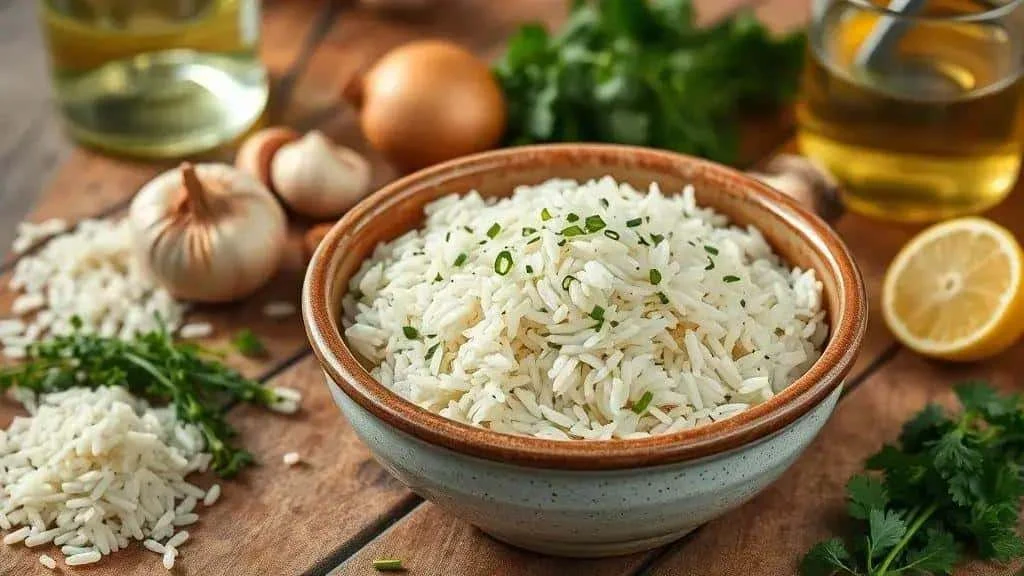
Ingredients
- 300 g long-grain white rice — rinse and drain; jasmine or basmati can be used, with cooking liquid and timing adjusted to their packet instructions.
- 1 tablespoon olive oil — or butter.
- 1 medium onion — finely chopped.
- 2 garlic cloves — chopped or crushed.
- 150 ml dry white wine — for an alcohol-free version, use 150 ml vegetable stock and 1 tablespoon lemon juice instead.
- 450–500 ml hot vegetable or chicken stock — check the rice packet, as different varieties need different amounts of liquid.
- 1 bay leaf, optional.
- 2 tablespoons chopped parsley.
- 2 tablespoons chopped chives.
- 1 tablespoon fresh thyme leaves — or 1 teaspoon dried thyme; other herbs can be used to taste.
- Salt and black pepper — the original allows 1 teaspoon salt, but start with less if the stock is salted.
- Lemon zest, optional.
Method
- Prepare the rice: rinse the 300 g rice until the water is almost clear, then drain well.
- Heat the pan: warm the oil or butter over a medium heat in a saucepan.
- Soften the onion: cook for 3–4 minutes, stirring so it does not catch.
- Add the garlic: cook for another 30–60 seconds until fragrant.
- Coat the rice: add the drained grains and stir for 2–3 minutes.
- Add the wine: pour in 150 ml and let it bubble until largely reduced, stirring. This does not make the dish alcohol-free. Use the stock-and-lemon alternative if avoiding alcohol.
- Add the stock: pour in 450–500 ml hot stock, adjusted for the rice used, and add the bay leaf. Season lightly, stir once and bring to the boil.
- Simmer gently: cover and cook over a low heat for around 12–15 minutes, or the time specified for your rice, until the liquid is absorbed and the grains are tender. Avoid stirring during this stage.
- Rest: turn off the heat and leave covered for 5–10 minutes.
- Fluff and season: remove the bay leaf, separate the grains with a fork and fold in the parsley, chives and thyme. Taste and adjust the seasoning.
- Finish: add lemon zest or an optional extra tablespoon of butter if desired.
- Serve: transfer to a warmed dish and serve promptly. For a larger batch, use a suitably sized pan; simply doubling quantities may change the cooking time.
Practical Tips
- Separate grains: use the liquid appropriate to your rice and avoid stirring as it cooks.
- Alcohol-free: substitute stock and 1 tablespoon lemon juice for the wine.
- Herbs: try basil or dill instead of thyme.
- Making ahead: rice needs prompt cooling, ideally within one hour, then refrigeration. Use within 24 hours and reheat once until steaming throughout. Do not leave the covered pan cooling for several hours or assume a short warming in the oven is sufficient.
Honey and Rosemary Roast Vegetables — Ingredients and Method
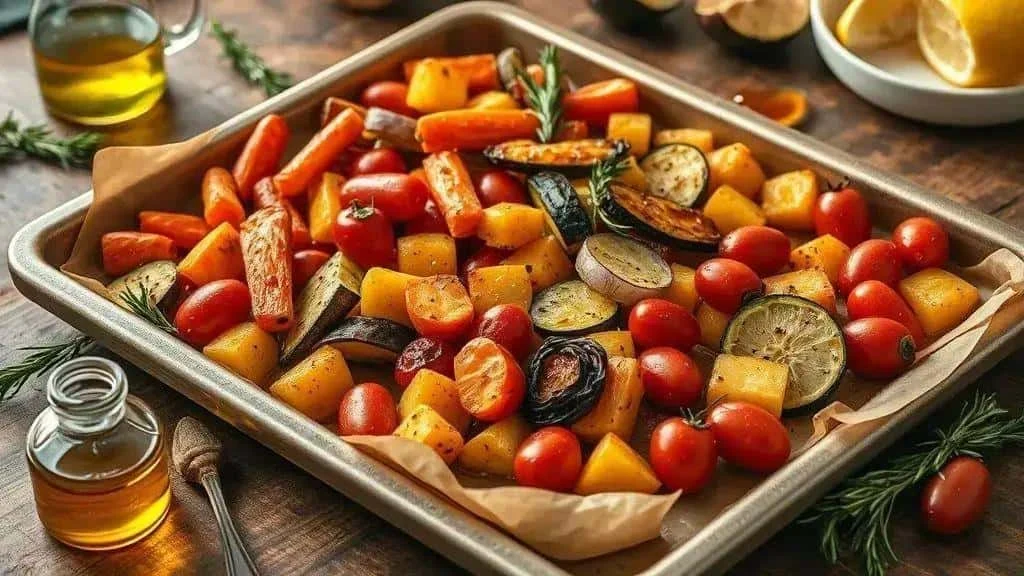
Honey and rosemary roast vegetables bring colour, sweetness and fragrance to a roast pork dinner.
Ingredients
- 400 g carrots — cut into batons or thick slices.
- 300 g potatoes — cut into medium cubes; use sweet potatoes for a sweeter variation.
- 250 g courgette — cut into thick rounds or half-moons.
- 200 g red onions — cut into wedges.
- 150 g red pepper — cut into strips; yellow or orange pepper also works.
- 150 g cherry tomatoes — left whole and added towards the end.
- 4 garlic cloves — sliced, or lightly crushed in their skins.
- 3 tablespoons extra virgin olive oil.
- 2 tablespoons honey — or maple syrup for a vegan version.
- 2 sprigs fresh rosemary — leaves stripped and chopped; thyme is an alternative.
- Salt and black pepper — up to 1 teaspoon salt and ½ teaspoon pepper, adjusted to taste.
- 1 tablespoon balsamic vinegar or lemon juice, optional — to finish.
Method
- Preheat the oven: set to 200–220°C conventional, with a shelf in the centre.
- Prepare the vegetables: wash, peel where necessary and cut into reasonably even pieces. Keep the cherry tomatoes aside.
- Dry and season: pat dry, place in a large bowl and add the oil, honey, rosemary, salt and pepper.
- Toss well: use clean hands or a large spoon to coat the vegetables evenly.
- Spread out: arrange in a single layer on a roasting tray, using baking parchment rated for the oven temperature if lining it. Use a second tray rather than overcrowding.
- Roast: cook for about 20 minutes, then turn the pieces with a spatula.
- Add the tomatoes: add an extra ½ tablespoon oil if needed and roast for another 8–12 minutes, or until tender and browned. Watch the honey so it does not burn.
- Check doneness: a fork should pass easily through the potatoes and carrots. Allow longer if necessary; times depend on piece size and the oven.
- Finish: drizzle with the optional vinegar or lemon juice, adjust the seasoning and scatter with parsley or a few fresh rosemary leaves.
- Serve: transfer to a warmed dish. If holding hot, use suitable equipment and verify that the food remains at least 63°C; an oven dial alone does not establish the food temperature.
Tips and Variations
- Even cooking: cut firm vegetables into similar-sized pieces for tender centres and crisp edges.
- Extra colour: a brief increase in oven heat at the end can help, but watch closely because honey catches quickly.
- Vegan version: use maple syrup instead of honey and olive oil as listed.
- Crunch: finish with toasted nuts or pumpkin seeds.
- Preparing ahead: cut and refrigerate the vegetables ahead if useful, then season and roast near serving. Allow enough time to check the firmest pieces rather than relying on exactly 30 minutes.
Warm Squash and Rocket Salad — Ingredients and Method
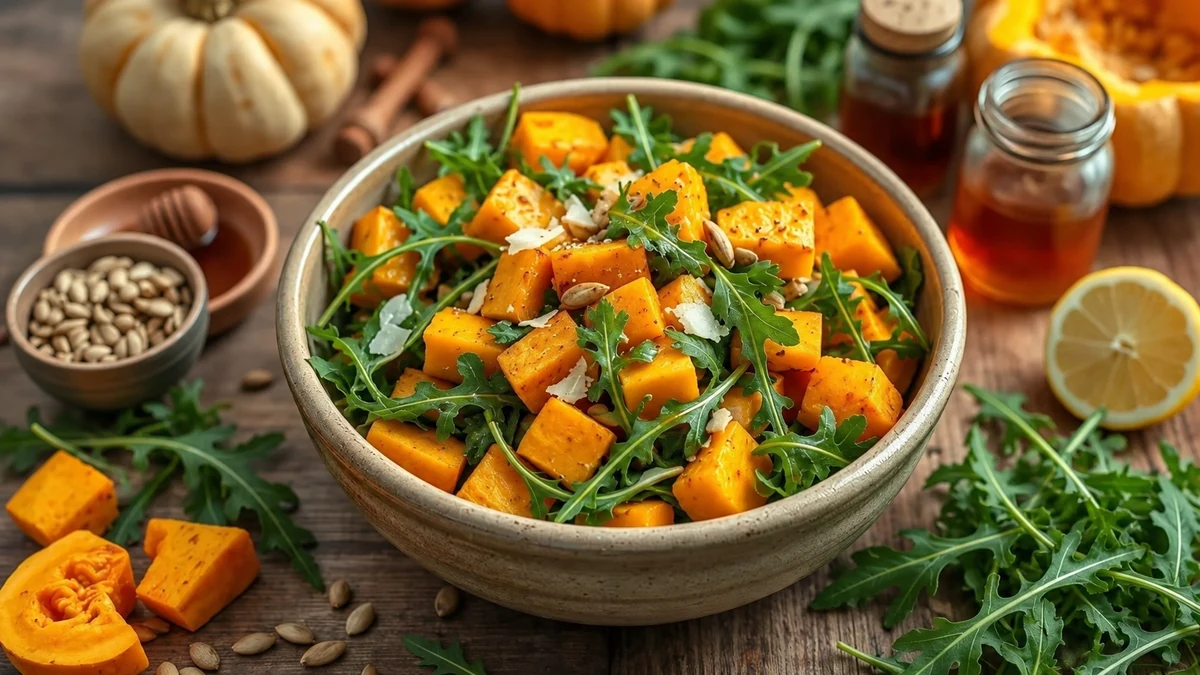
Warm squash and rocket salad combines sweet roast squash with peppery leaves for a fresh contrast to pork.
Ingredients
- 800 g squash — peeled and cut into medium cubes, using butternut squash or pumpkin; 700 g sweet potato is an alternative.
- 3 tablespoons extra virgin olive oil, plus 1 tablespoon for the dressing — the additional spoonful is used in the original method. Rapeseed oil is an alternative.
- 2 garlic cloves — chopped or sliced.
- 1 teaspoon salt — or less, to taste.
- ½ teaspoon freshly ground black pepper.
- 1 teaspoon smoked paprika, optional — or a little cumin.
- 2 tablespoons balsamic vinegar — or lemon juice for a citrus version.
- 1 tablespoon honey, optional — use maple syrup for a vegan version.
- 150–200 g rocket — washed and dried.
- 30 g pumpkin seeds — toasted; alternatively use 30–40 g chopped walnuts or almonds.
- 50 g goat’s cheese or Parmesan shavings, optional — omit for a dairy-free version. For vegetarians, choose cheese made with vegetarian rennet rather than traditional Parmesan.
Method
- Preheat the oven: set to 200°C conventional with a shelf in the centre.
- Prepare the squash: put the cubes on a tray lined with suitable baking parchment.
- Season: add 3 tablespoons oil, the garlic, salt, pepper and optional paprika. Toss to coat.
- Roast: spread in one layer and cook for about 25–30 minutes, turning halfway, until browned and easily pierced with a fork.
- Toast the seeds: if not already toasted, stir in a dry frying pan for about 2–3 minutes until fragrant. Set aside.
- Make the dressing: whisk the balsamic vinegar, optional honey or maple syrup, a little salt and the extra tablespoon of oil together.
- Assemble: place the rocket in a large bowl and add the hot roasted squash, allowing the leaves to wilt slightly.
- Dress gently: drizzle with the dressing and fold together without crushing the squash.
- Finish: scatter over the seeds and optional cheese.
- Serve: eat promptly, ideally within about 30 minutes for the best contrast of textures. Do not leave the salad standing warm for a prolonged period.
Quick Tips
- Make ahead: roast the squash up to a day ahead, cool promptly and refrigerate within 1–2 hours. Reheat once until steaming throughout before adding to the rocket; a fixed 8–10-minute warming may not be enough.
- Vegan version: use maple syrup instead of honey and leave out the cheese.
- Variations: add thinly sliced marinated red onion or a few raisins.
- Servings: makes approximately 6 side portions, or smaller helpings alongside several other dishes.
Sauces That Complement Roast Pork

Fruit sauces and savoury gravies bring sweetness, acidity or savoury depth to pork loin. These recipes offer several options for the festive table.
Simple Cranberry Sauce
Ingredients
- 300 g fresh or frozen cranberries.
- 150 g sugar — adjusted to taste.
- 120 ml water.
- 1 tablespoon orange juice — or lemon juice.
- Finely grated zest of 1 orange, optional.
Method
- Combine: put the cranberries, sugar and water in a saucepan.
- Heat: bring to the boil over a medium heat, stirring occasionally.
- Simmer: reduce the heat and cook for 8–12 minutes, until the berries burst and the mixture thickens.
- Finish the flavour: stir in the juice and optional zest, then remove from the heat.
- Cool: transfer to a suitable container; the sauce thickens as it cools. Refrigerate promptly and use within 48 hours. This is a fresh sauce, not a validated shelf-stable preserve.
Quick Honey and Mustard Sauce
Ingredients
- 3 tablespoons Dijon mustard — or mild yellow mustard.
- 2 tablespoons honey.
- 1 tablespoon cider vinegar.
- 1 teaspoon olive oil.
- Salt and pepper to taste.
Method
- Mix: combine the mustard, honey and vinegar in a bowl.
- Whisk: add the oil gradually, whisking to combine.
- Adjust: season and taste for sweetness and acidity.
- Serve: pour into a small jug beside the roast pork.
Apple and White Wine Reduction
Ingredients
- 250 ml apple juice — cider can be used, but choose apple juice if making an alcohol-free sauce.
- 100 ml dry white wine — or 100 ml vegetable stock plus 1 tablespoon lemon juice for an alcohol-free version.
- 1 tablespoon butter, optional.
- 1 tablespoon honey or brown sugar.
- Salt and pepper to taste.
Method
- Combine the liquids: put the apple juice, wine and honey or sugar in a small pan.
- Reduce: simmer over a medium heat until the volume has roughly halved, stirring occasionally. Reducing wine or cider does not guarantee that all alcohol has gone.
- Finish: remove from the heat and whisk in the optional butter for gloss.
- Season: adjust salt and pepper and strain if you prefer a smooth sauce.
Simple Herb Gravy
Ingredients
- 200 ml hot beef or chicken stock.
- 1 tablespoon butter — or olive oil.
- 1 tablespoon plain flour — the alternative is 1 teaspoon cornflour mixed with 2 tablespoons cold water, giving a lighter sauce; also check that the stock is gluten-free if required.
- 1 teaspoon chopped fresh thyme.
- 1 teaspoon chopped parsley.
- Salt and pepper to taste.
Method
- Make a roux: heat the butter or oil, add the plain flour and stir for 1–2 minutes until lightly coloured. For the cornflour alternative, skip the roux: heat the stock, then stir in the cold-water cornflour mixture.
- Add the stock: for the flour method, whisk in the hot stock gradually to prevent lumps.
- Simmer: cook for 3–5 minutes until thickened, stirring. With cornflour, simmer until the starch is cooked and the sauce has thickened; whisk in the butter or oil to finish if desired.
- Add herbs: stir in the thyme and parsley and adjust the seasoning.
- Strain if preferred: serve smooth or leave the herbs in for texture.
Serving Suggestions
- Cranberry sauce: adds a sharp, fruity contrast to slices of glazed pork.
- Honey and mustard: serve at the table or use a separate portion to brush the roast towards the end of cooking.
- Apple reduction: complements roast pork with a fuller-bodied white wine or dry sparkling wine.
- Herb gravy: suits those who prefer savoury sauces and pairs with lighter red wines.
Storage and Advance Preparation
- Make fruit sauces and reductions ahead, cool promptly and refrigerate in covered containers. Use within 48 hours, or freeze rather than relying on a longer untested shelf life.
- Finish flour- or butter-based sauces on the day if possible. If holding them hot, keep the sauce itself at least 63°C and avoid prolonged holding that spoils its texture.
- Reheat chilled sauces once until steaming throughout, stirring to heat evenly. Loosen with a little water or stock if too thick.
Vegetarian, Vegan and Gluten-Free Adaptations
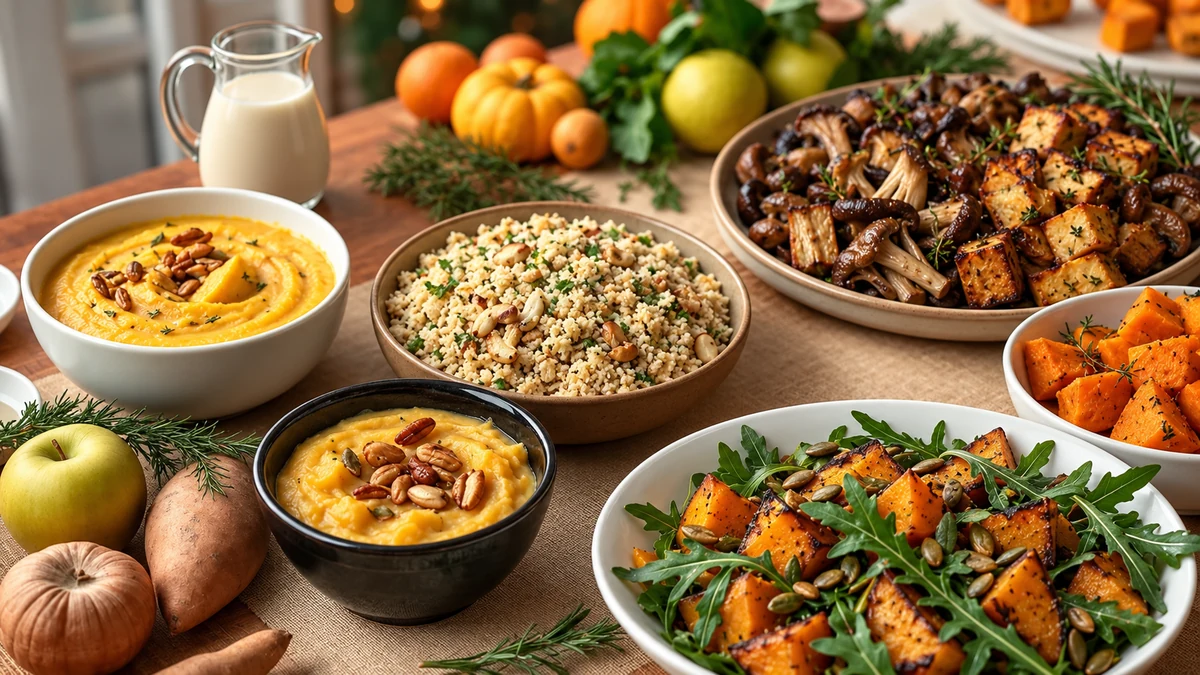
Dietary adaptations can help guests enjoy suitable sides without losing variety. Check the whole recipe, including stock, sauces and garnishes, rather than just replacing the most obvious ingredient.
Vegetarian and Vegan Options
- Mash: use olive oil or a suitable plant-based spread, plant milk and a plant-based cream; omit honey or use the brown sugar option.
- Farofa: keep the cassava-flour base, replace bacon with browned onion or smoked tofu, and use oil instead of butter for a vegan version.
- Rice: use vegetable stock and oil, omit the butter finish and choose a suitable vegan wine or the stock-and-lemon alternative.
- Roast vegetables: use olive oil and maple syrup rather than honey.
- Warm salad: add cooked quinoa or buckwheat for a more substantial side. Use maple syrup and omit the cheese for a vegan version.
- Sauces: use maple syrup instead of honey and replace or omit butter. Check stock and wine if serving vegan guests.
Gluten-Free Adaptations
- Farofa: choose pure cassava flour appropriate for farofa and check labels for gluten-containing additions or cross-contact warnings.
- Coatings and crumbs: use a suitable gluten-free product for its intended purpose; rice flour, tapioca starch and breadcrumb blends have different properties and are not interchangeable in every recipe.
- Sauce thickeners: use the cornflour slurry described in the gravy recipe or follow a starch manufacturer’s instructions. There is no universal 1:3 conversion for flour, cornflour and potato starch.
- Avoid cross-contact: use clean, separate utensils and preparation areas for dishes intended to be gluten-free.
Useful Substitutions
- Butter: use a suitable plant-based spread or the oil quantities given in the recipes. Coconut oil changes the flavour and texture, so do not assume every recipe takes an identical quantity.
- Cream: a suitable plant-based cooking cream, nut cream or thick coconut milk adds richness; check allergens and expect flavour differences.
- Breadcrumbs: gluten-free crumbs, certified gluten-free oats or crushed nuts can add crunch where appropriate. Nuts introduce their own allergen.
- Bacon: roasted mushrooms or smoked tofu provide a savoury alternative.
Labels and Communication at the Table
- Identify dishes: label suitable dishes accurately as vegan, vegetarian or gluten-free, and identify ingredients such as nuts. Only make those claims after checking ingredients and preparation.
- Separate serving utensils: give each dish its own spoon or tongs.
- Ask ahead: check guests’ dietary needs in advance and explain what you can prepare safely.
Preparation and Planning Tips
- Plan the order: prepare special-diet dishes with clean equipment, cover them and store them separately as needed.
- Preserve texture: reheat covered dishes carefully, adding a little liquid if appropriate, but ensure they are steaming throughout rather than merely warm.
- Keep alternatives separate: set aside meat-free portions before adding bacon, and taste and season each appropriately with clean utensils.
- Try unfamiliar substitutions ahead: a small trial helps check flavour and texture before cooking for guests.
Presentation, Timing and Wine Pairings

Presentation, timing and wine pairings help bring the dishes together: plan the serving order, choose contrasting colours and keep drinks from overwhelming the food.
Arranging the Table
- Warm serving dishes: they help at the point of service, but are not a substitute for temperature-controlled hot holding.
- Vary heights: use stable low and raised stands to create an attractive arrangement.
- Contrast colours: combine golden roast vegetables with green herbs and rocket.
- Make serving easy: provide tongs and spoons for each dish.
- Simple garnishes: lemon zest, rosemary and nuts add aroma and texture. Identify nut-containing dishes and adapt garnishes for guests who need them omitted.
- Offer sauces separately: small jugs let guests choose how much to add.
- Arrange logically: put the pork centrally, hot sides nearby and salads or fruit towards the ends of the table.
A Practical Preparation Schedule
- One to two days before: make fruit sauces if useful and refrigerate promptly, keeping within the 48-hour storage limit. Farofa with bacon or tofu also needs chilling, even if it looks dry.
- The day before: roast vegetables suitable for reheating, cool promptly and refrigerate. Prepare herbs and toast nuts, storing each appropriately.
- Earlier on the day: organise ingredients and make mash ahead if helpful, then chill it promptly. Prefer freshly cooked rice; if preparing it early, cool ideally within one hour, refrigerate and reheat once within 24 hours.
- Work back from the roast’s cooking time: preheat the oven and schedule crisp sides around the pork. A blanket two-hour roasting instruction is not suitable for every joint.
- In the final half-hour: finish mash, add fresh herbs and heat sauces. Assemble the warm salad at the last moment.
- At serving time: carve the rested pork just before bringing it to the table.
Reheating and Keeping Food Hot
- Oven: 160–180°C conventional can be useful for reheating covered sides. Check the centre is steaming hot and reheat only once.
- Water bath: useful for holding already-hot mash or sauce without scorching; monitor the food temperature rather than assuming warm water is enough.
- Suitable hot-holding equipment: keep food at least 63°C if it must wait. A cloth-lined bowl or ordinary insulated container does not guarantee a safe holding temperature.
- Microwave: useful for small portions, with stirring, turning and the recommended standing time. Check for cold spots and avoid repeatedly reheating the same food.
Wine Pairings
- Brut sparkling wine: offers a fresh contrast to glazed pork and apple mash.
- Lightly oaked or unoaked Chardonnay: complements roast vegetables and creamy mash.
- Pinot Noir or Gamay: lighter reds work with nutty farofa and pork without dominating delicate flavours.
- Lighter Merlot or Tempranillo: can suit caramelised sides and fruit reductions.
- Alcohol-free: sparkling water with lemon, or apple juice diluted to taste, complements fruity sauces.
- Serving temperatures: as a starting preference, try sparkling wine around 6–8°C, white wine at 8–12°C and light reds at 13–16°C, adjusting for the bottle and your taste.
Tips for a Less Stressful Meal
- Final check: check hot dishes, sauces, cutlery and glasses before guests sit down.
- A separate serving area: a small table for bread, sauces and drinks can ease crowding.
- Taste before serving: adjust seasoning and acidity with clean utensils.
- Plan sensible quantities: roughly 150–200 g cooked pork and 250–350 g of chosen sides in total per adult is a starting guide. Do not add a full portion of all seven sides for every person.
- Share the jobs: let others refill serving dishes or pour drinks so you can enjoy the meal too.
Bringing the Meal Together
Thoughtful side dishes for pork loin bring contrasting textures, sharp or fruity flavours and colour to the Christmas table.
Try the combinations that suit your guests and adapt them to your kitchen. Follow I Love Christmas for more festive recipes, decorating tips and seasonal inspiration.
FAQ — Christmas Side Dishes for Pork Loin
Which sides work best with pork loin?
Try a creamy mash, such as apple and sweet potato, alongside crisp farofa, roast vegetables and a fruit sauce. Choose a few complementary dishes rather than several similar ones.
How should I calculate portions for Christmas dinner?
Start with roughly 150–200 g cooked pork and 250–350 g of chosen sides in total per adult. Individual side portions might be 100–130 g cooked rice, 120 g mash or vegetables, or 50–70 g farofa, but reduce each if serving several. Allow 1–2 tablespoons sauce and adjust for appetites.
Which sides can I make ahead, and how should I reheat them?
Fruit sauces, mash and farofa can be prepared ahead, cooled promptly and refrigerated for up to 48 hours. Reheat dishes once until steaming throughout. Rice needs faster cooling, ideally within one hour, refrigeration and use within 24 hours. Assemble rocket salad just before serving.
How can I adapt the sides for vegetarian, vegan or gluten-free guests?
Replace bacon with smoked tofu or mushrooms, use oil and suitable plant-based milk or cream, and replace honey with maple syrup where needed. Check cheese rennet, wine and stock for vegetarian or vegan suitability. For gluten-free dishes, check all labels and prevent cross-contact; choosing cassava flour alone is not enough if other ingredients contain gluten.
Which wines suit these accompaniments?
Try brut sparkling wine with apple mash and glazed pork, a lightly oaked Chardonnay with roast vegetables, or Pinot Noir or Gamay with nutty farofa. Lighter Merlot or Tempranillo can suit caramelised sides. Sparkling water with lemon or diluted apple juice offers an alcohol-free choice.
Sources and Further Reading
- Food Standards Agency — cooking and reheating food
- Food Standards Scotland — food storage and rice
- GOV.UK — cooking food safely and hot holding