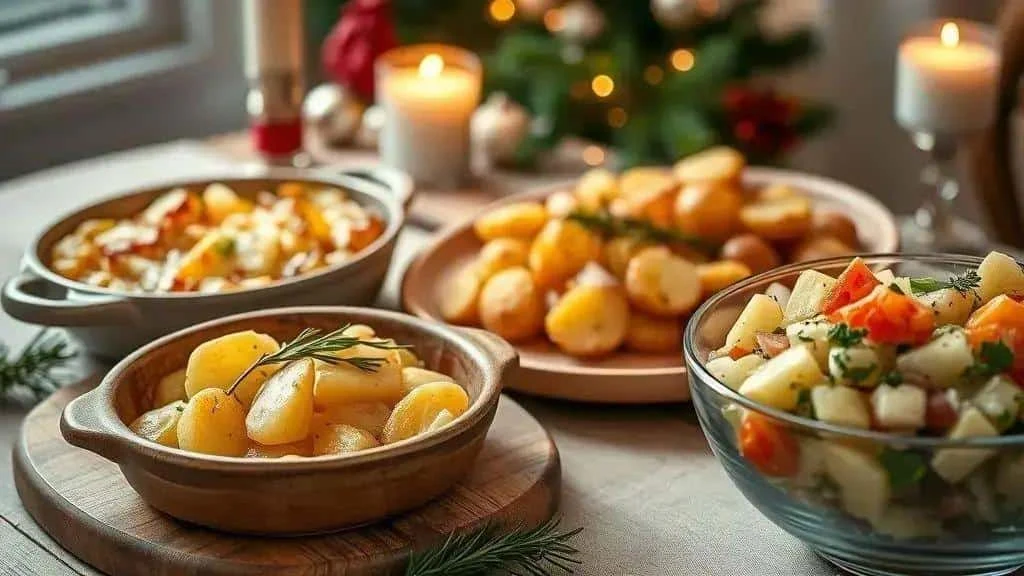
Three Christmas potato side dishes offer different textures: gratin has creamy layers and a golden crust, roast potatoes bring crisp edges and herbs, and Brazilian-style potato salad provides a chilled, creamy accompaniment. Choose potatoes suited to each method and plan cooking and serving temperatures in advance.
Christmas potato side dishes can bring a comforting touch to the table. Choose a creamy gratin, herb-scented roast potatoes or a chilled potato salad, depending on your menu and the oven space available.
Ingredients for the Three Potato Dishes
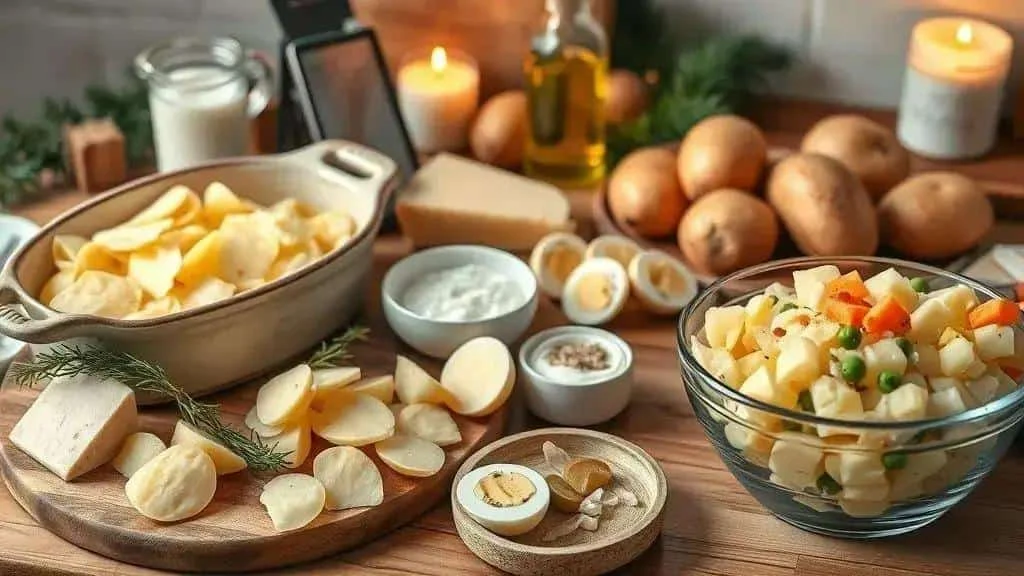
Below are ingredient lists for potato gratin, roast potatoes and Brazilian-style potato salad, with quantities and optional variations. Oven temperatures are conventional; adjust according to your fan oven’s instructions.
Potato Gratin Ingredients
- 1.2 kg potatoes, thinly sliced; choose an all-round variety suitable for baking, such as Yukon Gold where available.
- 400 ml fresh cream; alternatively use 200 ml cream plus 200 ml whole milk for this part of the mixture.
- 200 ml milk, whole or semi-skimmed, in addition to the cream mixture above. Total liquid remains 600 ml.
- 2 garlic cloves, crushed, or 1 teaspoon garlic powder.
- 50 g butter, divided between greasing the dish and dotting through the layers; olive oil is an alternative, with a different flavour.
- 150 g grated cheese, such as Parmesan, Gruyère or mozzarella. Choose a cheese labelled vegetarian if required; traditional Parmesan is not vegetarian.
- 1 teaspoon grated nutmeg, optional; it is a strong flavour, so add less if preferred.
- Salt and black pepper, to taste.
- Chopped parsley or chives, or fresh thyme, to finish.
Roast Potato Ingredients
- 1 kg potatoes, cut into wedges or chunks; choose a floury variety labelled suitable for roasting.
- 3 tablespoons olive oil, or sunflower oil.
- 2 fresh rosemary sprigs, or 1 teaspoon dried rosemary.
- 3 garlic cloves, left whole for roasting; sliced garlic burns more readily.
- 1 teaspoon coarse salt, or to taste.
- Ground black pepper, to taste.
- Zest of 1 lemon, optional; a small splash of balsamic vinegar gives a different finish but softens crisp edges.
- 1 teaspoon sweet or smoked paprika, optional.
Brazilian-Style Potato Salad Ingredients
- 1 kg potatoes, peeled and cubed; choose a waxy or salad variety that holds its shape.
- 200–250 g mayonnaise, regular or reduced-fat; natural Greek yoghurt can replace some or all for a tangier dressing.
- 2 medium carrots, cooked and diced.
- 1 measuring cup frozen peas, cooked according to the packet, cooled and drained.
- 3 hard-boiled eggs, chopped. Omit for a vegan version and use vegan mayonnaise too.
- 1 small onion, finely chopped, or chives as an alternative.
- 2 tablespoons vinegar or lemon juice.
- 1 teaspoon mustard, optional.
- Salt and black pepper, to taste.
- Chopped pickles or green apple, optional, for a crisp contrast.
Choose potatoes for the method: floury potatoes suit crisp roasting, while waxy potatoes hold together better in salad. Cook salad potatoes until tender but not falling apart.
How to Make Potato Gratin
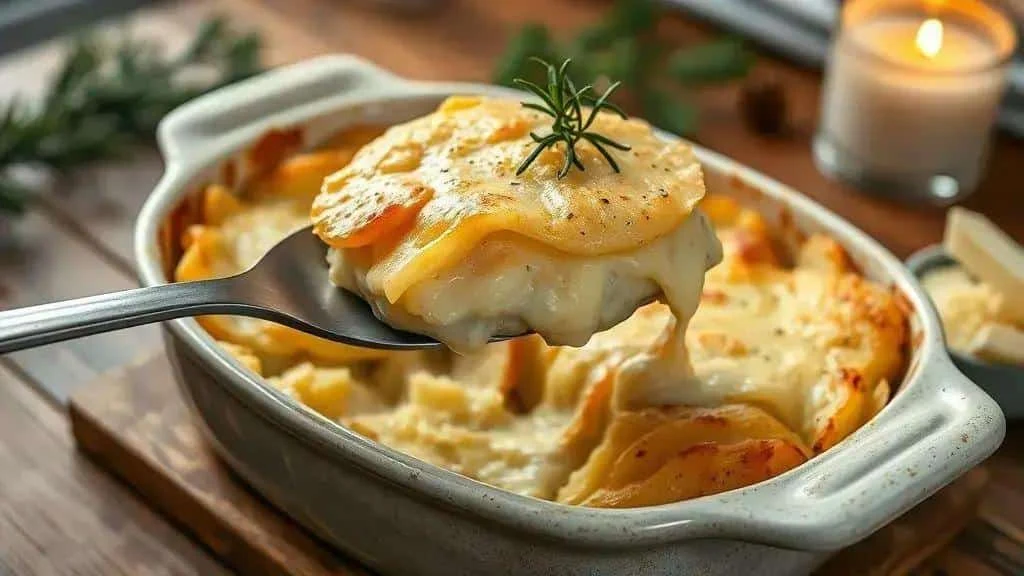
Follow these steps for a potato gratin with tender layers and a golden top.
Step-by-Step Method
- Preheat the oven: set it to 180°C to match the covered baking stage. Grease a suitably deep ovenproof dish, approximately 20–25 cm across, using some of the measured butter; leave room above the layers to prevent overflow.
- Slice the potatoes: wash, peel and cut into even 2–3 mm slices. If using a mandoline, use its hand guard.
- Keep the slices ready: assemble promptly rather than soaking away the starch, which helps thicken the sauce. If briefly holding slices in water to prevent browning, drain and dry them well before layering.
- Warm the cream mixture: gently heat 400 ml cream with 200 ml milk, the crushed garlic, optional nutmeg, salt and pepper until steaming, without boiling. If using the lower-cream variation, the total is 200 ml cream and 400 ml milk.
- Layer: arrange slices in the dish, adding a little warm cream mixture, some grated cheese and dots of the remaining butter between layers. Use the 150 g cheese and 50 g butter totals across the whole dish, reserving cheese for the top.
- Bake covered: cover with foil and bake at 180°C for approximately 40–50 minutes. Check with a knife; continue covered if the centre is still firm, as depth and slice thickness affect the time.
- Brown the top: once the potatoes are tender, remove the foil and raise the oven to 220°C for around 5–10 minutes, watching carefully. Use the grill only if the dish is grill-safe.
- Check the centre: a knife or fork should pass easily through the layers. A browned surface alone does not mean the potatoes underneath are cooked.
- Rest briefly: allow 8–10 minutes for the sauce to settle, then finish with chopped herbs and serve hot.
Optional changes: replacing part of the cream with milk changes the richness and may give a thinner sauce. A thin layer of cooked caramelised onion is another variation.
Tips and Variations for Each Dish
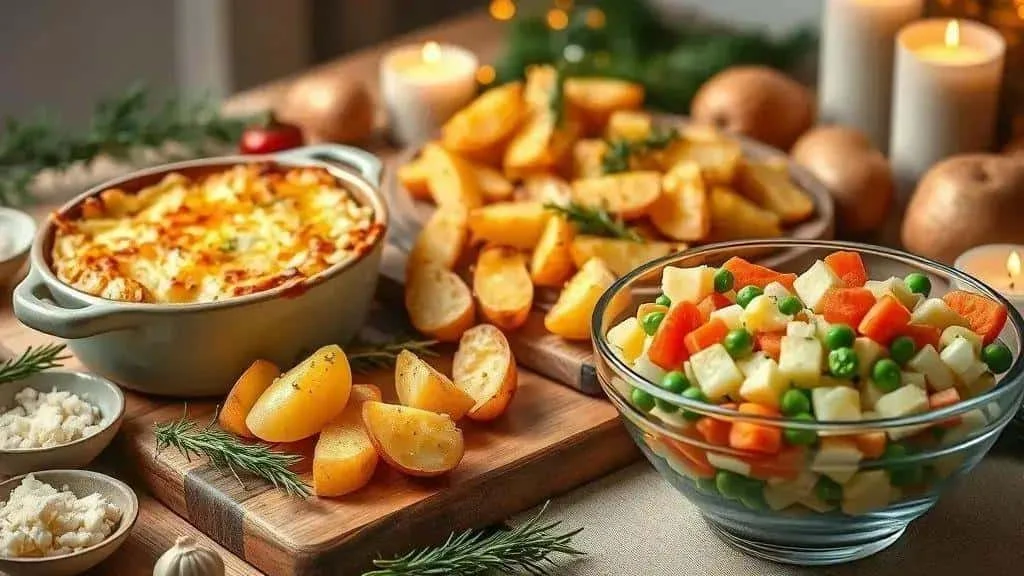
Adapt potato gratin, roast potatoes and potato salad to your menu with these practical variations.
Potato Gratin
- Cheese: Parmesan and Gruyère give a stronger flavour; mozzarella is stretchier. Choose vegetarian-labelled cheese if needed, and keep the total liquid consistent when reducing the cream.
- Seasoning: nutmeg, black pepper and a little thyme or rosemary complement the potatoes.
- Texture: even 2–3 mm slices cook more consistently. Avoid prolonged rinsing or soaking, as the potato starch helps the sauce thicken.
- Extra layers: try cooked caramelised onion or a little ready-to-eat cooked ham, noting that ham makes the dish non-vegetarian.
- Oven timing: begin with 40–50 minutes covered at 180°C, continuing until tender, then brown at 220°C for around 5–10 minutes.
- Preparing ahead: assemble and refrigerate safely for up to 24 hours. A chilled dish may need longer than the suggested 10–15 extra minutes; check tenderness throughout and follow the dish manufacturer’s advice about fridge-to-oven temperature changes.
Roast Potatoes
- Cut and peel: leave scrubbed skins on for a rustic finish if liked, and make the pieces similar in size.
- Season simply: use oil, salt, pepper and rosemary, adding smoked paprika if you enjoy it.
- Encourage crisp edges: parboil for approximately 8–10 minutes until the outside starts to soften, then drain well before roasting.
- Finish with aroma: add lemon zest after roasting. Roast the whole garlic with the potatoes rather than adding raw slices at the end unless you specifically want a raw garlic flavour.
- Keep them vegan: the oil-based recipe is already plant-based; optional nutritional yeast gives a savoury finish.
- Serve with a sauce: aioli, herbed yoghurt or chimichurri offer different contrasts. Check ingredients if serving vegan or allergy-sensitive guests.
Potato Salad
- Preserve the texture: cook even-sized cubes until tender but still holding their shape.
- Adjust the dressing: add 200–250 g mayonnaise gradually; replacing half with the same weight of Greek yoghurt gives a tangier result.
- Classic additions: use chopped hard-boiled eggs, cooked diced carrots, cooked peas and finely chopped onion. Pickles or apple add crunch.
- Balance acidity: taste before adding more vinegar, lemon juice, mustard or salt.
- Festive variations: green apple and raisins give a sweet-savoury contrast; drained ready-to-eat tuna and olives make a different, non-vegetarian version.
- Make ahead and chill: prepare up to 12 hours ahead and keep refrigerated. Freezing is not recommended for the texture of the dressed salad.
General tip: use sound potatoes without green areas or signs of spoilage, season thoughtfully and add fresh herbs when serving.
How to Make Roast Potatoes
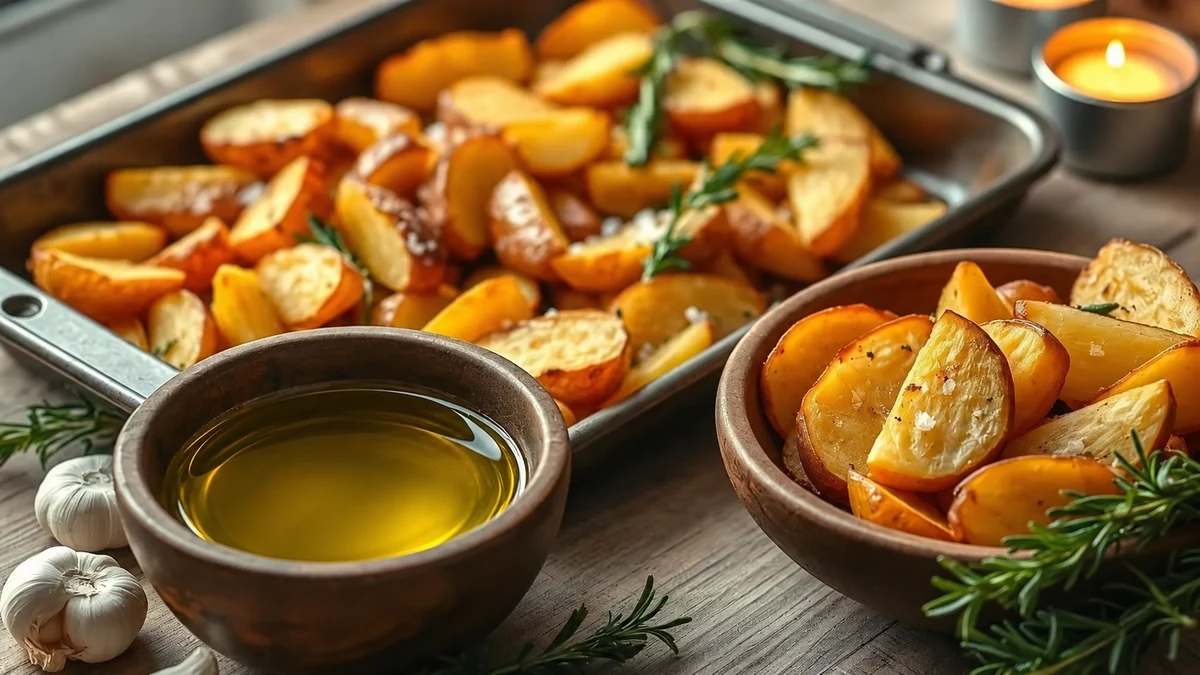
Make roast potatoes with golden edges and a tender centre using the following method.
Detailed Method
- Preheat: set the oven to 220°C with a shelf in the centre.
- Prepare the potatoes: wash 1 kg potatoes suitable for roasting. Peel or leave well-scrubbed skins on, according to preference.
- Cut evenly: make wedges or chunks around 3–4 cm across.
- Parboil if liked: simmer in salted water for about 8–10 minutes until the outer surfaces begin to soften. Drain and let steam escape for 1–2 minutes.
- Roughen the edges: gently shake the drained potatoes in the pan or colander to create a slightly uneven surface.
- Season: toss with 3 tablespoons oil, about 1 teaspoon salt, pepper to taste, the rosemary leaves and optional paprika. Add the 3 whole garlic cloves to the tray, checking them during roasting so they do not burn.
- Spread out: arrange in one layer on a suitable roasting tray with room between the pieces.
- Roast and turn: roast at 220°C for approximately 30–40 minutes, turning halfway. Potatoes that were not parboiled may need longer.
- Check: the centres should be tender and the outside golden. Continue cooking as necessary for the size of the pieces.
- Finish: squeeze the soft roasted garlic from its skin if left unpeeled, and add optional lemon zest, a little extra oil or fresh herbs.
- Air-fryer option: approximately 20–25 minutes at 200°C may suit a batch of similar-sized pieces, shaking every 7–10 minutes. Follow your appliance’s guidance, avoid overcrowding and check tenderness rather than relying on time alone.
Useful reminders: parboiling and spacing help crispness. Oil and plain herbs keep the recipe plant-based; check any seasoning blends for gluten or other allergens if needed.
How to Make Brazilian-Style Potato Salad
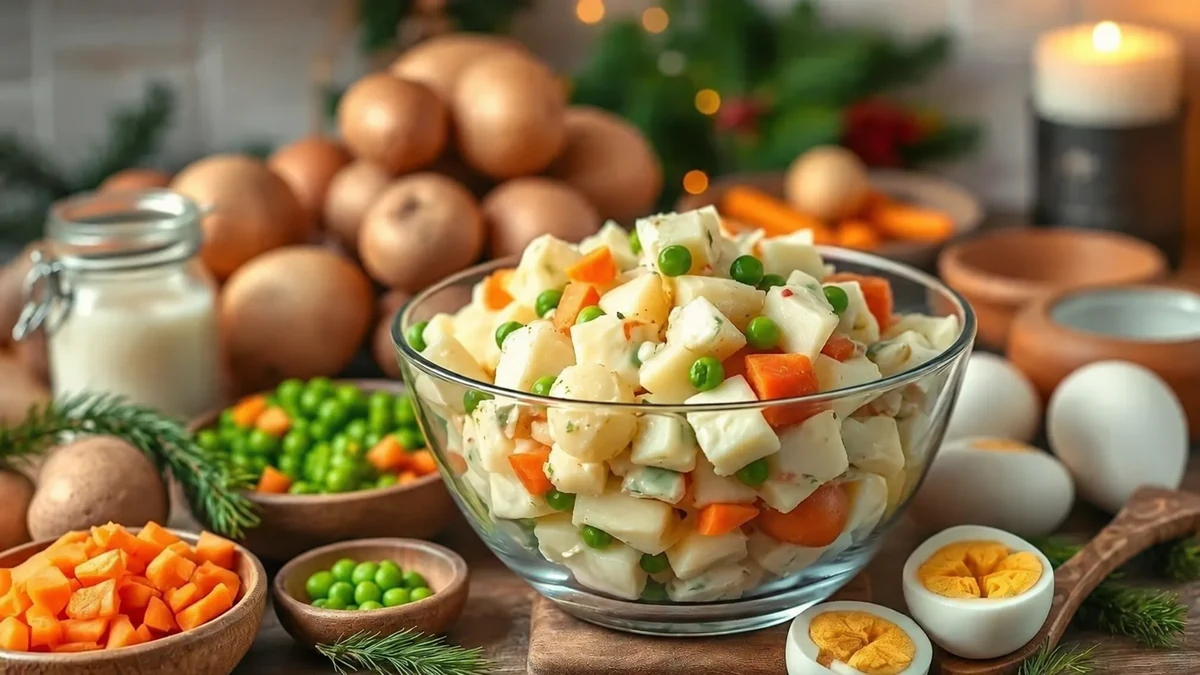
For Brazilian-style potato salad, keep the cubes intact and let cooked ingredients cool safely before adding the dressing.
Method
- Cook the potatoes: add 1 kg peeled, evenly cubed potatoes to boiling water with about 1 teaspoon salt. Cook for roughly 10–12 minutes, until tender but not breaking up; timing depends on cube size.
- Drain and cool promptly: spread in a clean shallow dish so heat can escape. Ten to fifteen minutes may start the cooling process, but is not a guarantee they are cold; refrigerate within 1–2 hours and finish cooling there if necessary.
- Prepare the additions: cook and dice the carrots, cook the peas as directed, and hard-boil the eggs until white and yolk are set. Around 9 minutes may suit some eggs, but size and starting temperature affect the time. Cool, peel and chop the eggs, then finely chop the onion.
- Mix the dressing: combine 200–250 g mayonnaise with 2 tablespoons vinegar or lemon juice and the optional teaspoon mustard. For a yoghurt variation, replace half the mayonnaise with the same weight of Greek yoghurt, keeping the overall dressing quantity similar.
- Combine gently: fold the cold potatoes, carrots, peas, chopped eggs and onion into the dressing without crushing them.
- Adjust seasoning: taste for salt and pepper. Add up to another teaspoon of vinegar or lemon juice if you prefer a sharper dressing.
- Choose optional additions: try a chopped green apple or 2 tablespoons raisins. Drained ready-to-eat tuna or safely cooked, chilled shredded chicken make different versions; follow the shortest remaining storage limit of any ingredient used.
- Chill: cover and refrigerate for at least an hour to let the flavours mingle, then serve chilled.
Vegan option: use vegan mayonnaise and omit the eggs, optionally adding suitable ready-to-eat firm tofu or cooked chickpeas. Check every ingredient and any preparation instructions rather than assuming substitutions are allergy-safe.
Plating and Serving at Christmas

Plan for suitable serving temperatures, an attractive contrast of colours and enough space for guests to help themselves.
Presentation Principles
- Temperature: serve gratin and roast potatoes hot, and keep potato salad chilled until serving.
- Contrast: use an ovenproof gratin dish, a suitable serving platter for roast potatoes and a clear bowl for salad to show the different textures.
- Portion planning: roughly 150–200 g potato per person is a starting point when there are other sides. Adjust to the meal and replenish small serving dishes rather than putting everything out at once.
- Garnish: fresh parsley, chives or thyme, lemon zest on roast potatoes and a little black pepper on gratin make simple finishes.
Arranging the Table
- Position hot dishes securely: place larger dishes within comfortable reach on heatproof mats, away from table edges.
- Keep cold food cold: bring out small bowls of potato salad from the fridge as needed. Ice can help maintain cold conditions, but is not a substitute for checking that the food stays chilled.
- Make serving flow: put plates and cutlery where guests can reach them, with enough space around sauces and side dishes.
- Label clearly: identify each dish and its relevant allergens, such as milk, eggs or mustard, according to the actual ingredients.
Practical Serving Tips
- Use suitable utensils: a broad spatula suits gratin, tongs suit roast potatoes and a large clean spoon suits salad.
- Reheat thoroughly: covered gratin can be reheated at 180°C and roast potatoes returned to a hot oven, but short fixed times do not guarantee safety. Reheat only once and make sure the centre is steaming hot throughout; larger chilled portions may take much longer than 10–15 minutes.
- Coordinate timing: finish the gratin close to the meal and refrigerate potato salad while the other dishes cook. Cool leftovers promptly, refrigerate within 1–2 hours and generally use within 48 hours or freeze sooner.
- Drinks: if serving alcohol, a dry white wine or light red can accompany gratin, while sparkling water with citrus offers an alcohol-free choice for the whole menu.
- Dietary requirements: use suitable ingredients and separate clean utensils. Lactose-free dairy still contains milk proteins, so it is not safe for a milk allergy; separate dishes alone do not prevent all cross-contact.
Add a festive detail: keep non-edible Christmas greenery outside the food area and use fresh edible herbs on the dishes themselves.
Conclusion
Creamy gratin, crisp roast potatoes and chilled potato salad each bring something different to Christmas dinner. Choose the one that suits your menu, or make smaller quantities of more than one.
Try variations before the celebration and adjust seasoning thoughtfully, keeping the cooking and storage instructions appropriate to the ingredients.
Thank you for reading. Follow us on social media and visit the I Love Christmas blog for more recipes and seasonal ideas.
Christmas Potato Dishes: Frequently Asked Questions
Which potatoes work well in a gratin?
Choose an all-round potato suitable for baking, such as Yukon Gold where available. Even, thin slices and checking tenderness through the centre matter more than relying on a variety name alone.
Can I prepare the dishes ahead?
You can assemble the gratin and refrigerate safely for up to 24 hours, using a dish suitable for the temperature change and allowing extra baking time until fully tender. Potato salad can be made 1–12 hours ahead and kept chilled. Cool any cooked ingredients promptly before assembly.
How should I store leftover potato salad?
Keep safely handled leftovers in a covered container at 5°C or below and use within 48 hours of preparation, or sooner if an ingredient requires it. Refrigerate promptly; do not keep salad left warm for too long. Freezing usually spoils the dressing and texture.
How can I crisp up softened roast potatoes?
Use a hot oven, around 200°C, or an air fryer without overcrowding. Eight to twelve minutes in an oven or five to eight in an air fryer may help small portions, but check that refrigerated leftovers are steaming hot throughout and reheat only once. A microwave generally gives a softer result.
How can I adapt the dishes for dietary requirements?
For vegan potato salad, use suitable vegan mayonnaise and omit eggs, meat and dairy. For gratin, use a complete dairy-free recipe or suitable plant-based cream, fat and cheese substitutes rather than changing only the milk. Check labels and prevent cross-contact; lactose-free is not the same as milk-free.
Sources and Further Reading
- Food Standards Agency — cooking and reheating food
- Food Standards Agency — chilling freezing and defrosting