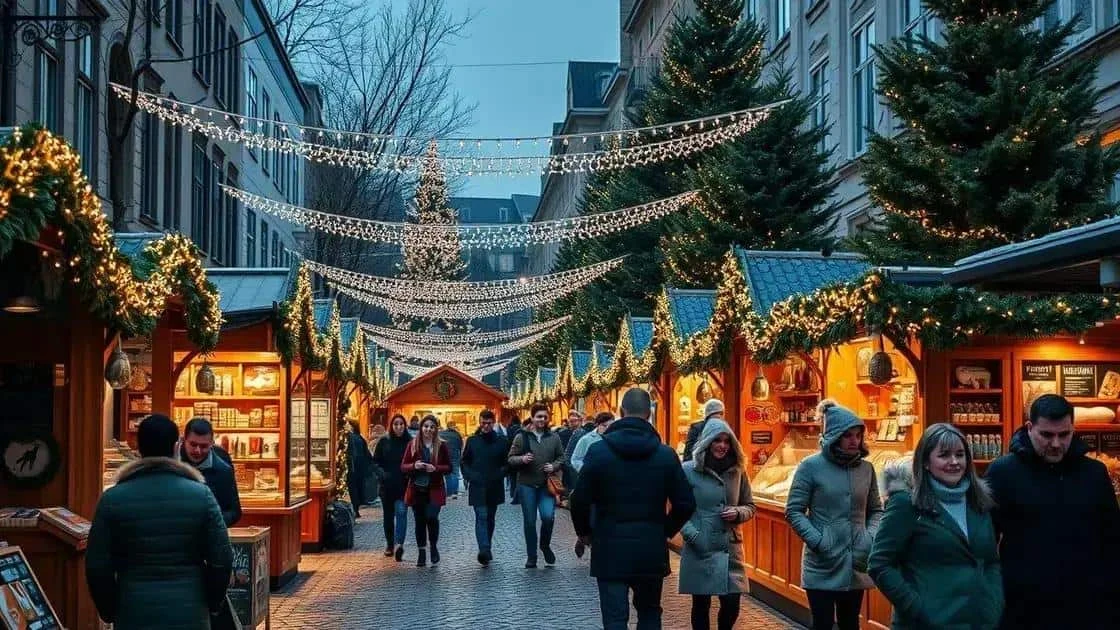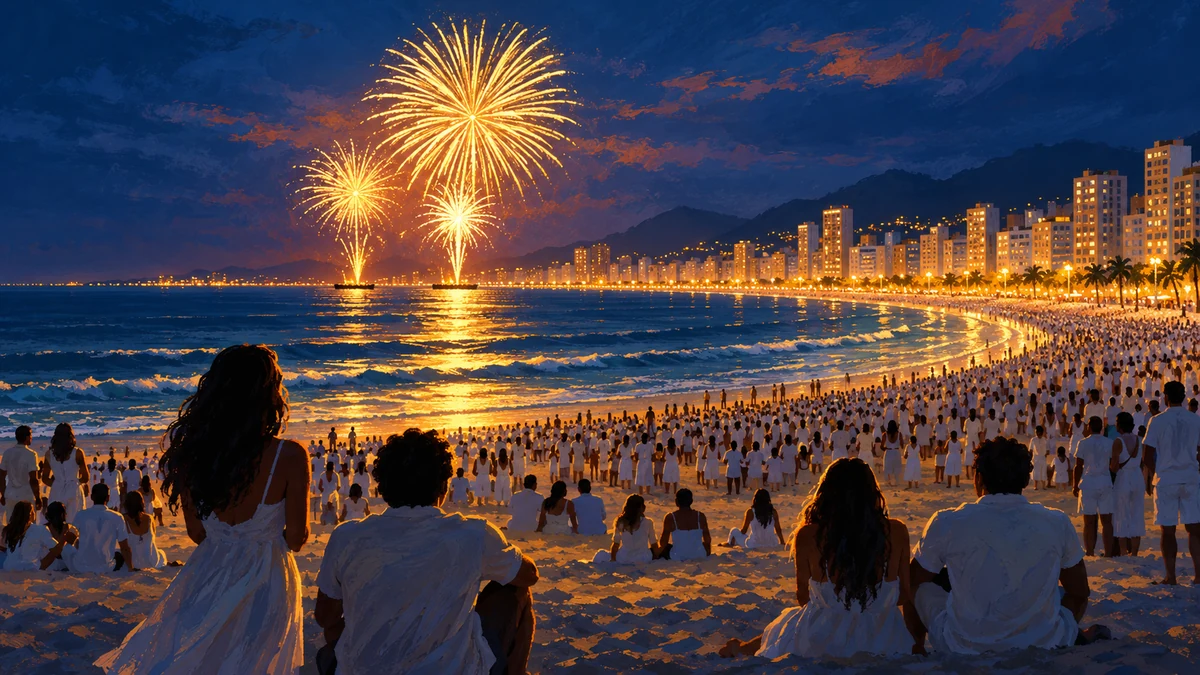
Copacabana’s New Year’s Eve celebration brings together offshore fireworks, live music and Brazilian traditions on Rio de Janeiro’s seafront. Large crowds and international coverage have made it a prominent festive event, with major implications for tourism, transport and the city itself.
New Year’s Eve at Copacabana is one of Brazil’s most recognisable celebrations. Here is a guide to its cultural background, the spectacle and the planning involved. The images accompanying this article are illustrative scenes, not documentary photographs of a particular edition or exact views of the coastline.
The roots and development of Copacabana’s New Year’s Eve celebrations
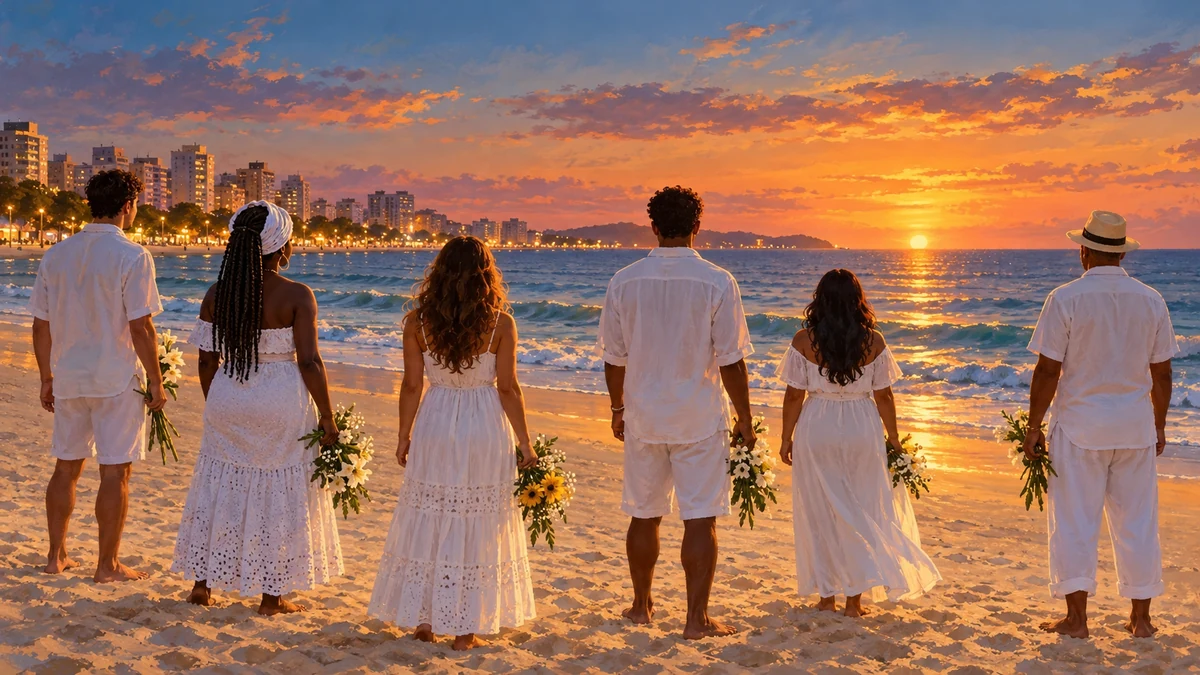
Copacabana’s celebrations bring together beach gatherings, religious traditions, music and organised entertainment. It would be misleading to give this complex history a single starting point or reduce it to informal parties: Afro-Brazilian religious practices are an important part of the cultural background.
From local traditions to a widely recognised celebration
The custom of wearing white is associated with African and Afro-Brazilian religions, including Candomblé and Umbanda, and later became widespread beyond religious communities. Rio’s municipal educational broadcaster MultiRio describes white as a symbol of peace. The traditions should be understood in that context, rather than assigned an unsupported date of origin. Source: MultiRio — origins of Brazilian New Year customs
The growth of a large public event
The modern celebration combines concert stages, professional sound systems and offshore fireworks with the seafront gathering. Television, photography and social media have carried these images beyond Brazil. Programmes and operational arrangements change between editions.
Layers of the celebration’s development:
- Religious and community traditions: white clothing, hopes for renewal and practices associated with the sea.
- Organised entertainment: concerts and professional fireworks alongside the public gathering.
- Wider visibility: television coverage, travel publicity and shared images reaching international audiences.
- Large-event planning: crowd management, transport, cleaning and environmental responsibilities.
Growth brings practical challenges
A gathering of this size needs carefully coordinated transport, medical provision, crowd management and cleaning. Each edition has its own operational plan. Music and cultural practices remain part of the occasion, but they coexist with the demands of running a major urban event.
Copacabana illustrates how a local setting and its traditions can become internationally recognised through public participation, entertainment and media coverage.
Why Copacabana’s New Year’s Eve is known around the world
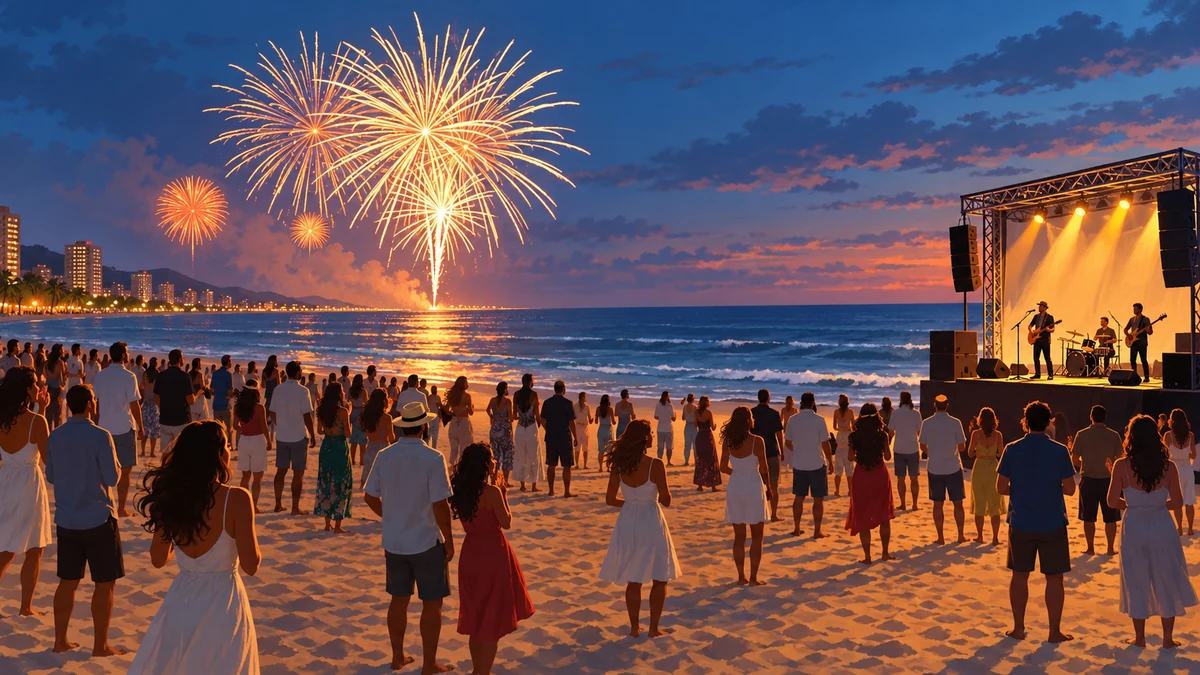
The combination of a beach setting, fireworks, live music and large crowds creates a distinctive image that travels well beyond Rio.
What attracts international attention?
Several elements contribute to the celebration’s recognisable character:
- Fireworks over the sea provide a dramatic centrepiece for broadcasts and photographs.
- Music and dance connect the event with Brazilian popular culture; the styles and performers depend on the programme.
- Traditions and symbols, including white clothing and religious observances connected with the sea, give the occasion cultural meaning beyond the show.
- Summer by the beach offers a contrast for visitors arriving from the northern hemisphere’s winter, alongside Rio’s wider attractions.
- Public participation is central to the seafront event. Free access does not mean every area is accessible or unrestricted; check the arrangements for your visit.
The role of television and social media
Broadcasts and shared pictures give the event a presence beyond those attending in person. Fireworks above the sea and crowds wearing white have become familiar visual associations with Rio’s New Year.
Tourism and the local economy
Accommodation, restaurants, transport and private celebrations all form part of the wider New Year visitor economy. Its scale should be assessed using dated official estimates, rather than treating hotel demand or spending as identical every year.
Tradition and changing formats
Programmes can change while cultural practices remain meaningful to participants. Improvements to services, environmental management and access need to be assessed for each edition rather than assumed from the event’s reputation.
Traditions, rituals and symbols on the beach
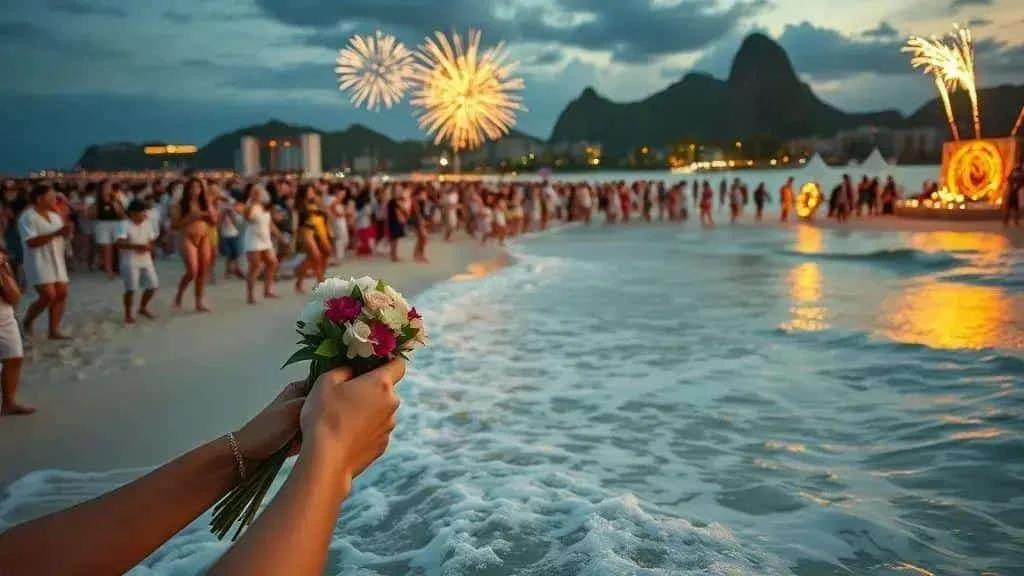
The occasion brings together faith, hope, celebration and entertainment. People participate for different reasons: a religious practice for one person may be a family custom for another, and not everyone follows the same rituals.
Common traditions and their meanings
- Wearing white: widely associated with peace and renewal, with roots in Afro-Brazilian religious traditions. Beliefs about attracting good energy are expressions of faith or custom, not guarantees.
- Offerings connected with the sea: flowers and symbolic gifts may express gratitude or requests for protection. Observe respectfully and follow local environmental guidance; do not put packaging or objects into the water.
- Jumping seven waves: a custom associated with Afro-Brazilian traditions and wishes for the coming year. Describing the custom is not advice to enter the sea at night; currents and beach restrictions must take priority.
- Prosperity customs: coloured underwear, lentils and coins are examples of popular symbols of hope, rather than ways to ensure wealth.
- Midnight fireworks: the organised display marks the change of year and forms a shared spectacle for the crowd.
Taking part respectfully
Give religious participants space and ask before photographing individuals. Follow marked boundaries and instructions from event staff. Avoid plastic, glass, ribbons or other objects that can harm the beach or marine environment; a symbolic gesture on land is an alternative to placing anything in the sea.
Flowers and considerate alternatives
If you wish to carry flowers, buy from a florist or an available local seller and remove packaging responsibly. Availability and rules vary. There is no need to launch a bouquet, note or container into the sea to show respect; take materials away with you and use the designated waste facilities.
Music and cultural expression
Live performances and Brazilian musical traditions are another part of the occasion. Rhythm, colour and shared celebration sit alongside quieter expressions of faith and personal hopes for the new year.
Understanding the event’s cultural and economic scale
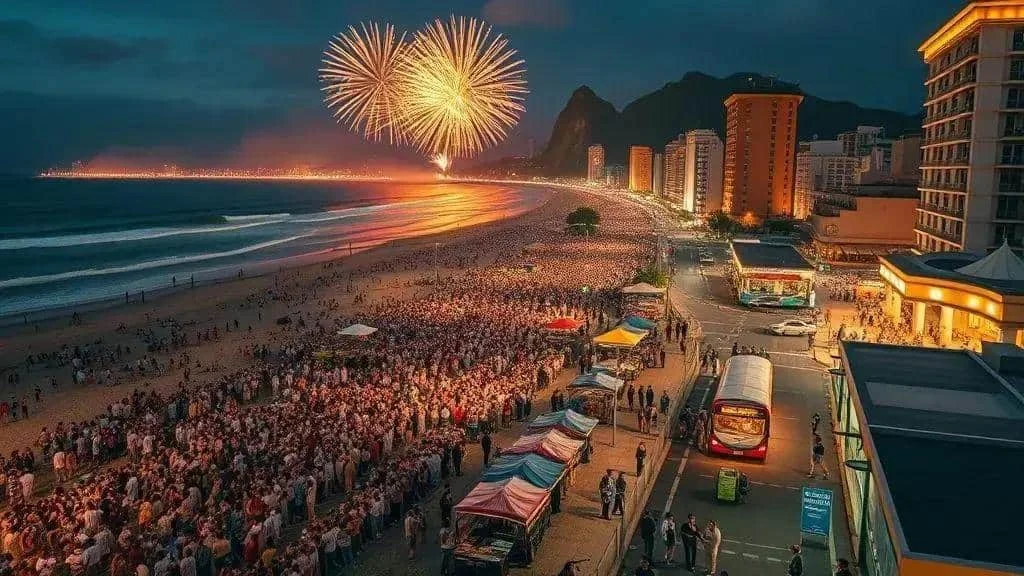
Copacabana’s New Year affects both the city’s services and its international image. Figures are most useful when they name the edition, geographical area and whether they are forecasts or reported outcomes.
Indicators to interpret carefully
- Attendance: Riotur reported approximately 2.6 million people in Copacabana and Leme for the celebration welcoming 2025. This is a dated estimate for those areas, not a fixed annual crowd size. Source: Riotur — reported attendance for New Year 2025
- Media reach: international broadcasts and shared images extend the audience, but this guide does not assign an unverified number of viewers or countries.
- Economic activity: the city forecast R$3.2 billion across Rio for New Year 2025. That was a citywide estimate, not confirmed income for Copacabana alone. Source: Rio City Hall — economic forecast for New Year 2025
- Hotel demand: availability and prices can change sharply around New Year. Check current availability and cancellation terms instead of assuming a universal occupancy percentage.
- Work and services: hospitality, event production, transport and cleaning all contribute. Job estimates need their own source and date; temporary posts and indirectly supported jobs are not the same measure.
- Waste and cleaning: cleanup is a substantial operational task. Reported quantities must specify the area and edition measured rather than being presented as an identical annual total.
How these figures inform planning
Attendance and service estimates help frame transport, security and cleaning requirements. City authorities publish operational plans that are more useful for a visit than a general description of previous celebrations.
Cultural effects beyond the statistics
The event gives Brazilian music and local performers wider visibility and creates opportunities for related celebrations. The size of that cultural effect is harder to quantify than a dated attendance estimate.
What this means for visitors
Allow for high demand, changing accommodation prices and slow journeys. Check what services are actually available and read the current transport and event notices before making plans.
Planning a visit to Copacabana for New Year’s Eve
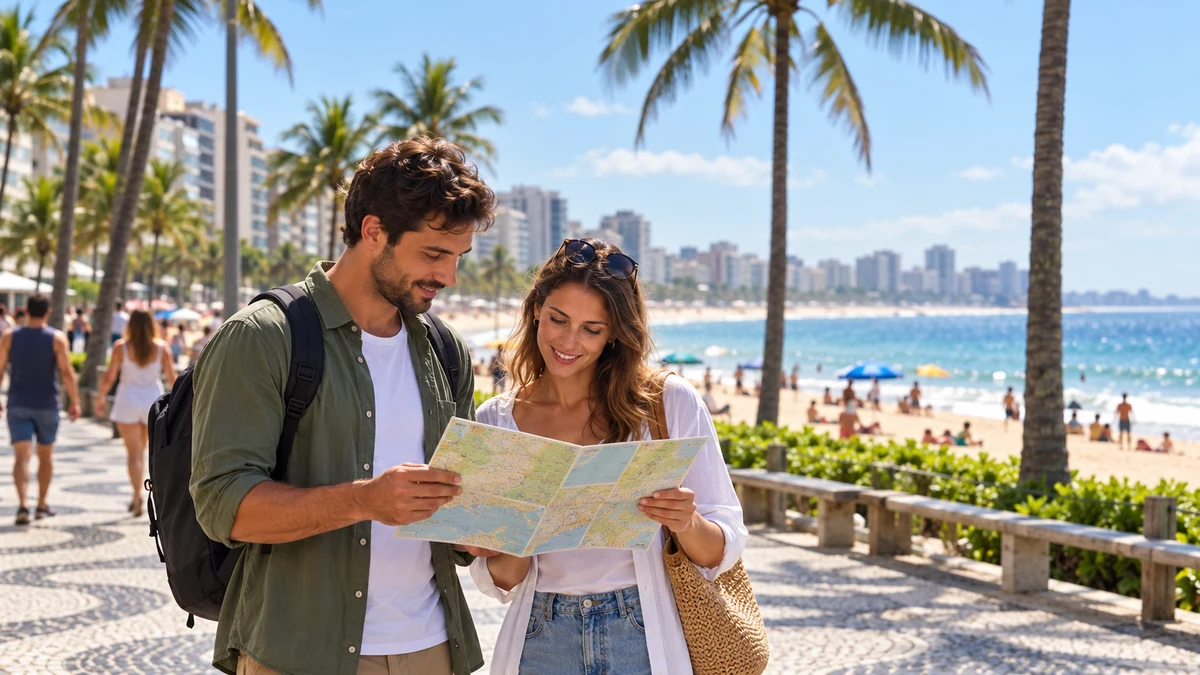
Plan accommodation, transport and personal safety well ahead of New Year’s Eve. Before deciding to attend, read current FCDO travel advice and local notices. FCDO advice includes avoiding city beaches after dark; an organised event should not be treated as a guarantee of safety or an exception to that advice.
Accommodation and bookings
Compare accommodation well in advance, checking recent reviews, the location and cancellation conditions. Staying near the event can reduce travel, but does not remove crowds, road closures or the need to plan a safe return.
Getting there and getting back
- Allow extra time: road closures, queues and access controls can make journeys much slower than usual.
- Check public transport arrangements: consult MetrôRio’s current New Year information, including any special ticket or time-slot requirements. Do not assume ordinary tickets will work during the special operation; plan the return as well as arrival. Source: MetrôRio — official New Year transport information; check the edition
- Taxis and ride-hailing: use official booking channels, confirm driver and vehicle details and arrange collection only in permitted areas. Availability near closures is not guaranteed.
- If considering driving: check restrictions and authorised parking first. Do not assume parking nearby or walking back late at night will be straightforward.
Documents and personal safety
- Identification: FCDO guidance advises carrying a passport copy and another form of photo ID if available, while leaving your passport and valuables somewhere safe. Source: FCDO — Brazil safety and security advice
- Money and cards: avoid carrying large sums, keep your card in sight and check payment amounts before authorising them.
- Belongings: carry only essentials, keep them close and avoid displaying valuables or expensive jewellery.
- Crowds: identify exits and follow staff instructions. If conditions feel unsafe, leave as soon as it is safe to do so; do not push against a dense crowd.
What to pack if you attend
- Light, comfortable clothes: white is customary rather than compulsory. Include daytime sun protection and a spare layer if appropriate for the forecast.
- Comfortable footwear: choose something suitable for walking on both the promenade and sand.
- A small torch or power bank: useful for finding belongings or maintaining phone charge; keep devices discreet.
- Drinking water and simple snacks: check the event’s permitted-container rules and dispose of packaging properly.
- A plan to take your waste away: avoid unnecessary wrapping. Plastic labelled biodegradable is not a reason to leave it on the beach or put it in the sea.
Checking the concerts and fireworks programme
Use the current official programme to locate stages and access points. Plan before setting out, agree a meeting point with your group and save useful information offline. Private venues may offer reserved space, but confirm access, arrangements and sightlines before paying.
Environmental responsibility
Keep routes clear, use designated waste facilities and take rubbish away if bins are full. Do not release plastic, glass or other objects into the sea. Respect religious activities without assuming that all materials described as natural or biodegradable are appropriate to leave behind.
Alternatives to the beach crowd
If you prefer to avoid the gathering, consider watching a broadcast or choosing a reputable organised venue with confirmed arrangements. A nearby bar, hill or viewpoint does not automatically offer safe access, fewer people or a clear view of the fireworks.
A celebration with cultural depth
Copacabana’s New Year’s Eve combines traditions, music and a coastal setting with the scale of a major public event. Understanding both its cultural background and practical demands gives a more useful picture than the fireworks alone.
Plan carefully, respect the environment and the people around you, and follow current official advice. Preparation helps, but cannot promise a trouble-free visit.
Thank you for reading. Follow our social channels for more festive stories, and visit the I Love Christmas blog for ideas about celebrations and traditions.
Copacabana New Year’s Eve: frequently asked questions
How should I plan transport to Copacabana on New Year’s Eve?
Check the current official transport plan, road closures and MetrôRio ticket rules before travelling. Allow extra time and plan the journey home. Special metro tickets may be required; taxi and ride-hailing access can be restricted.
Can I take flowers or offerings to the sea?
Respect religious practices and follow current local guidance. Do not put packaging, plastic, glass or other objects into the water. A symbolic gesture on land avoids leaving materials in the sea, and observing a tradition does not require entering the water.
What should I wear?
Choose light, comfortable clothing and suitable footwear. Many people wear white as a tradition, but it is not compulsory. Plan for daytime sun and the weather forecast, and avoid displaying valuable jewellery.
Do I need a ticket to watch the fireworks?
The public seafront celebration generally has free access, subject to the current event’s restrictions and arrangements. Private venues and reserved events may require tickets, and transport may require a separate special ticket.
How can visitors reduce their environmental impact?
Bring only what you need, use designated waste facilities, take rubbish away when necessary and do not release objects into the sea. Biodegradable labelling does not make littering acceptable.
What precautions matter in a large crowd?
Read current FCDO and local advice before deciding to attend, carry appropriate identification copies, keep valuables secure, agree a meeting point and follow staff instructions. Avoid entering the sea at night and leave safely if the crowd feels uncomfortable.
Sources and Further Reading
- MultiRio — origins of Brazilian New Year customs
- Riotur — reported attendance for New Year 2025
- Rio City Hall — economic forecast for New Year 2025
- Rio City Hall — operational plan for New Year 2026 (historical example)
- MetrôRio — official New Year transport information; check the edition
- FCDO — Brazil safety and security advice