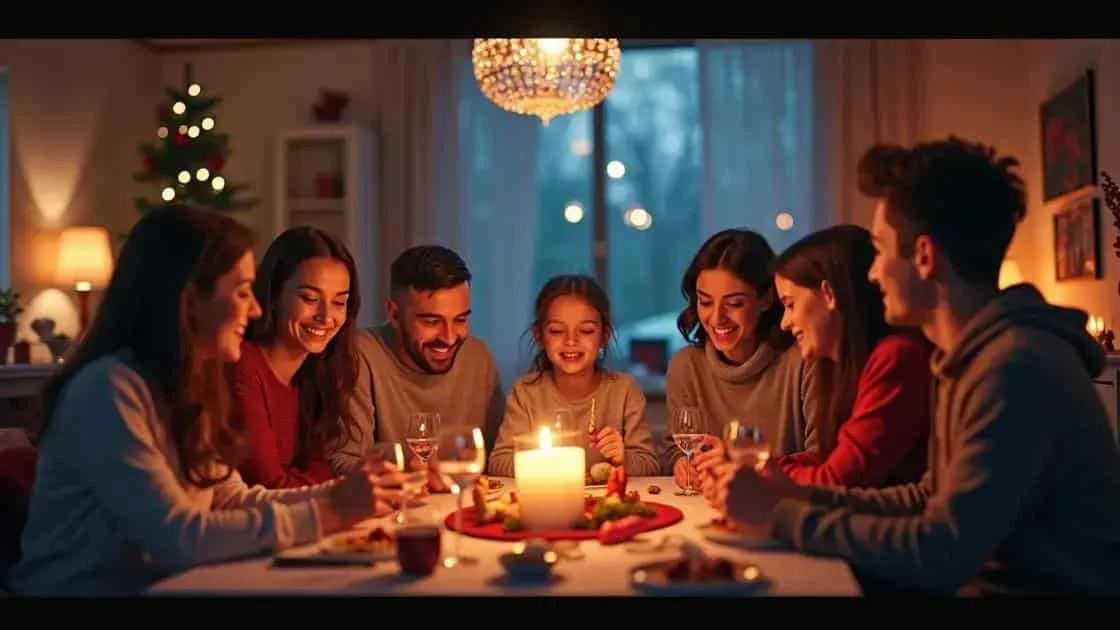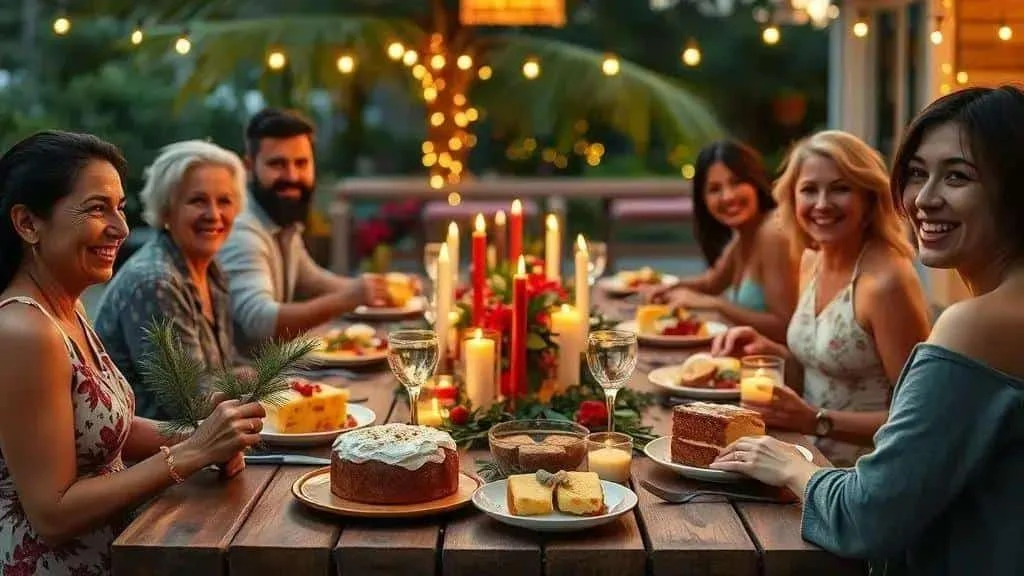
A tropical Christmas in Brazil brings European influences into conversation with local ingredients, regional customs and summer weather. Traditional trees and festive dishes coexist with tropical foliage, fresh fruit and outdoor gatherings. There is no single Brazilian Christmas: families adapt the occasion to their beliefs, surroundings and resources.
A tropical Christmas in Brazil offers a different setting from Europe’s familiar winter imagery. Here we explore foods, decorations and family activities that suit a summer celebration, while recognising that Brazil’s traditions are much more varied than a simple change of season.
How climate and geography shape celebrations
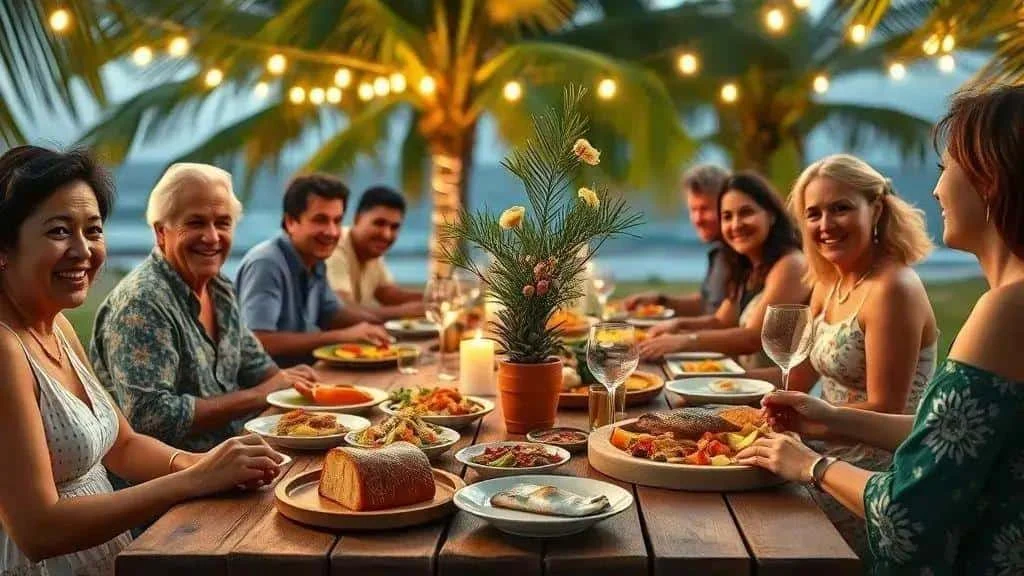
The warm summer climate in much of Brazil affects how people gather at Christmas. Conditions differ across the country, including cooler highland areas and places where rain matters as much as heat. Comfortable shade, ventilation and a weather plan can all influence the occasion.
Outdoor gatherings and flexible plans
A garden, courtyard or veranda may provide a pleasant gathering place when conditions allow. Some families share a late Christmas Eve meal; others choose different times or formats. Barbecues, poolside gatherings and public events are options rather than customs followed by every household.
Adapting decorations and symbols
Familiar Christmas decorations can be combined with local materials. These are possibilities for a tropical style, not replacements that all Brazilian homes have adopted:
- Artificial trees and small trees can stand alongside arrangements of palm leaves or other suitable foliage.
- Gentle lighting from suitable fairy lights or battery-lit lanterns can brighten an evening gathering.
- Nativity scenes may use locally inspired settings and materials, with delicate pieces protected from weather.
- Handmade decorations can incorporate reused fabric, responsibly sourced natural materials and items already owned.
Food and drink: familiar flavours with fresh additions
Brazilian festive tables may combine dishes with European connections and local ingredients. Fresh accompaniments can sit beside rich roasts and desserts; summer does not mean that every meal becomes light.
- Desserts might include panettone with tropical fruit or ice cream, alongside rabanadas, the sweet bread-based treat familiar in Brazil and Portugal.
- Main courses can include roasts, grilled food or fish, with salads and herbs providing contrast.
- Drinks may feature passion fruit, pineapple or mango in juices and alcohol-free mixes, as well as alcoholic options for adults who choose them.
Regional variety
Coastal ingredients, inland food traditions and cooler highland evenings can all shape a celebration, but geography alone does not determine the menu. Family background, budget and personal preference matter too.
These adaptations let people keep meaningful traditions while making the occasion work for their own home and surroundings.
The festive meal: European influences and Brazilian ingredients
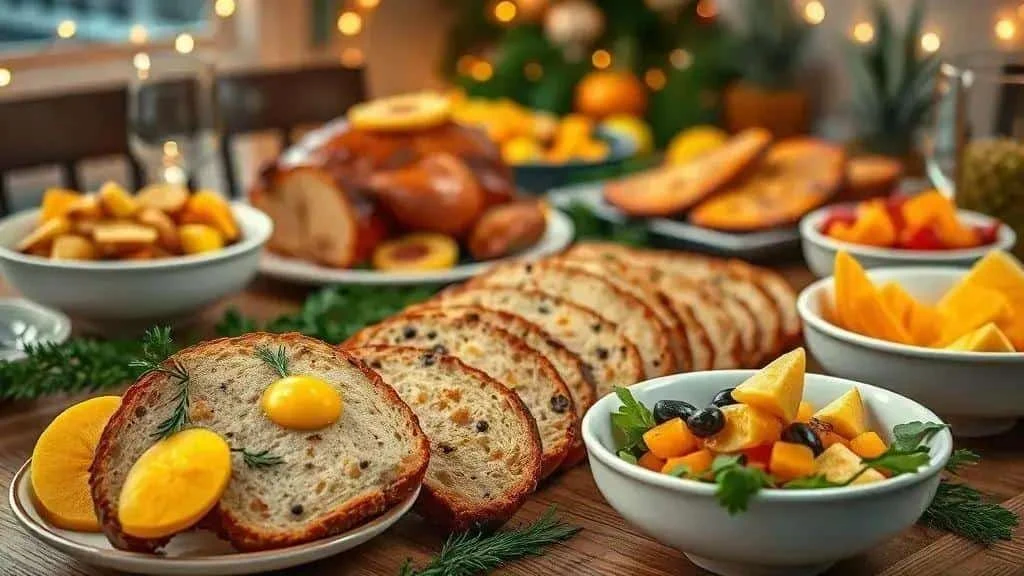
A Brazilian Christmas table can bring inherited recipes together with local produce. The result may be colourful and refreshing in places, while retaining the rich dishes that a family particularly enjoys.
Familiar dishes with different accompaniments
- Bacalhau, or salt cod can be baked or flaked into dishes with peppers, herbs and olive oil. Preparation varies between families; neither European nor Brazilian versions can be reduced to one style.
- Turkey and festive poultry may be served with citrus marinades or tropical-fruit sauces. Chester, familiar in Brazil, is a commercial poultry product rather than a separate bird species; follow the particular product’s cooking instructions.
- Panettone can be served with fresh fruit, ice cream or a fruit sauce, if those additions suit the meal.
- Rabanadas can be adapted with coconut milk or citrus zest when a suitable recipe supports the substitution. A change of ingredient does not automatically make the dessert lighter or suitable for every diet.
Tropical flavours on the table
Fruit, herbs and regional ingredients offer different aromas, colours and textures.
- Fruit such as mango, pineapple, passion fruit and acerola can appear in sauces, salads or accompaniments.
- Herbs including coriander, mint and fennel can complement suitable fish dishes and salads.
- Regional ingredients such as cassava, tapioca and nuts bring different textures and connections with Brazilian cooking; they are not interchangeable in recipes.
Balancing the menu
Fresh or acidic accompaniments can contrast with richer dishes without requiring the whole menu to change.
- Serve a citrus salad or a suitable vinaigrette alongside roasted meat.
- Offer water and refreshing fruit drinks, including alcohol-free choices.
- Add fresh fruit or a modest portion of ice cream to a dessert if it suits the dish and guests’ preferences.
Adapting to different needs
Small, considered changes can make the meal easier to share.
- Vegetarian options might include grilled vegetables, mushroom dishes or a meat-free farofa, a toasted cassava-flour accompaniment. Check stock, fats and other ingredients too.
- Coconut milk can replace dairy in some recipes, but check every ingredient before describing a finished dish as lactose-free or dairy-free.
- Compare seasonal fish, vegetables and homemade options with shop-bought foods; neither local produce nor homemade panettone is automatically cheaper.
Combining familiar recipes with suitable local ingredients can create a festive meal that reflects both family history and present-day tastes.
Decorations: trees, lights and tropical touches
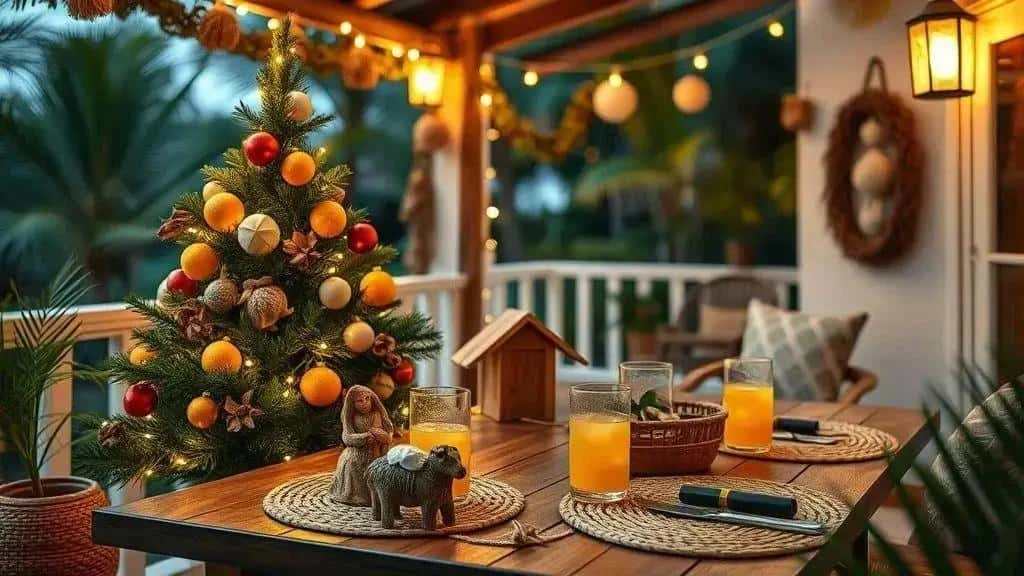
Traditional Christmas trees remain familiar in Brazil. Tropical foliage, bright colours and handmade objects can complement them, giving a household’s decorations a more personal character.
Materials and practical alternatives
Choose a display that suits your space, climate and storage arrangements:
- An artificial tree or small tree can be reused when cared for and stored properly.
- Palm foliage can be arranged in a stable vase or incorporated into a wreath when it is suitable, legally sourced and safe for the household.
- Natural accents such as dried citrus or materials already owned add texture. Do not remove shells, plants or seeds from protected places, and keep small pieces away from young children.
- Reused materials such as paper and fabric can become stars or ornaments without buying a new collection each year.
Lighting and atmosphere
Lighting can create a welcoming evening setting. Choose products appropriate for the location and follow their safety instructions:
- Warm-white LED lights can provide a gentle effect, with the correct power supply and installation.
- Solar lights may suit an outdoor area with adequate daylight; performance depends on weather, positioning and the product.
- Paper lanterns with suitable flameless lights can decorate a sheltered table. Keep paper away from heat and protect battery compartments from children.
- A compatible timer can limit operating hours. Use a dimmer only if the lights and power supply are specifically designed for it. Source: Electrical Safety First: Christmas lights
Nativity scenes and local settings
Some makers use local landscapes, materials or clothing in Nativity scenes. A palm or a regional setting can give the display a distinctive interpretation without making it representative of every Brazilian tradition. Protect delicate figures from rain and direct sun.
Simple craft ideas
Crafts can bring people together and make use of materials already available:
- A natural-fibre wreath – decorate a stable straw base with ribbon and suitable accents you already own.
- Dried citrus ornaments – use thoroughly dried orange or lemon slices, with an adult handling the oven and sharp tools.
- Fabric ornaments – sew offcuts into shapes and fill them with suitable reused material; these decorations are not automatically safe toys.
- A twig star – tie clean, smooth twigs securely with string, checking for sharp ends.
Storage and safety
Use outdoor-rated electrical products where required, keep connections protected and do not use damaged leads or overloaded sockets. Dry and clean decorations before storage. Apply a coating only if it is suitable for the material and intended use; varnish or oil is not a universal solution for natural decorations.
Thoughtful choices can preserve familiar Christmas symbols while making the display practical for a warm, sometimes humid setting.
Religious traditions and popular celebrations
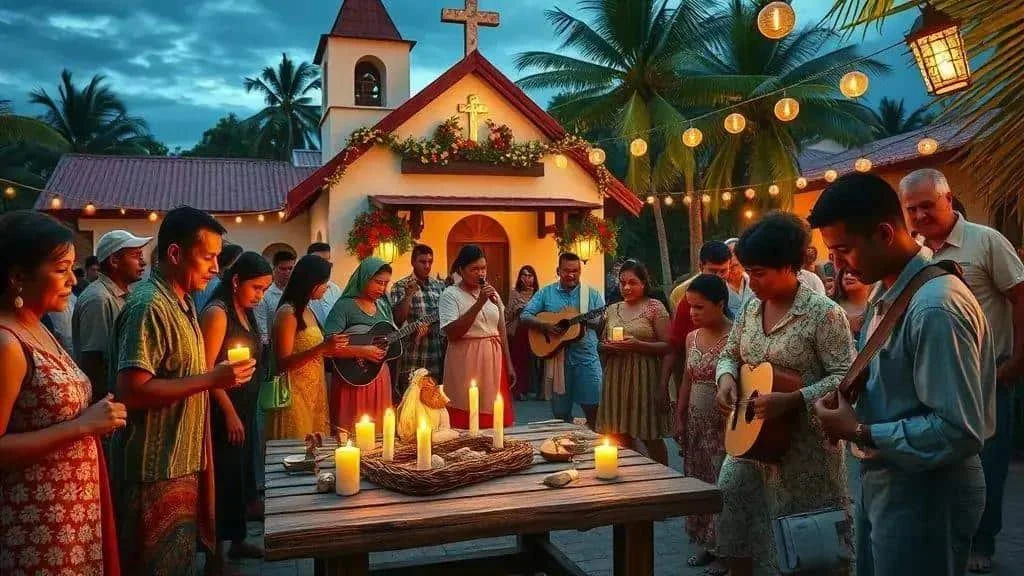
Religious observances, local festivities and family habits can coexist during Brazil’s Christmas season. Their relationships differ by community. It is more accurate to describe a particular tradition than to suggest every Brazilian celebration blends the same beliefs.
Worship and community life
Catholic Masses and novenas are part of the season for some families. Missa do Galo is the traditional name for the Christmas night Mass, though actual service times vary. A novena may bring neighbours together for prayer and song; other Christian communities have their own observances.
Popular festivities
Community expressions of the season can include:
- Choirs and pastoril performances – music and local dramatic traditions connected with the Nativity, in places where they are practised.
- Folia de Reis and related traditions – regional groups may sing and visit households during the Christmas-to-Epiphany season, with their own repertoires and customs. Source: IPHAN: Reisados and Folias de Reis
- Community events – fairs, gatherings and local celebrations can bring worship, craft and social life together in different ways.
Customs at home
A Nativity scene, a prayer before dinner or words of thanks may form part of a family’s Christmas. Other households celebrate without religious observance. Tropical decorations are a choice of setting, not a requirement for either approach.
Recognising Brazil’s diverse cultural influences
Brazilian culture has been shaped by Indigenous peoples, African diasporas, European migration and many other communities. That history should not be used to assign unspecified rituals or offerings to Christmas. Describe particular practices through the people who maintain them, and distinguish Christmas customs from separate New Year or religious observances.
Regional life and shared space
Local music, food, crafts and community gatherings can give celebrations a distinctive character. Rural and urban settings both contain varied beliefs and contemporary practices; neither represents a single fixed version of Brazilian Christmas.
Celebrating respectfully
Listen to the communities whose practices you want to understand, credit makers and performers, and ask before using sacred elements as decoration. Respect and dialogue make it easier to appreciate differences without claiming someone else’s tradition as your own.
Family activities and lasting memories
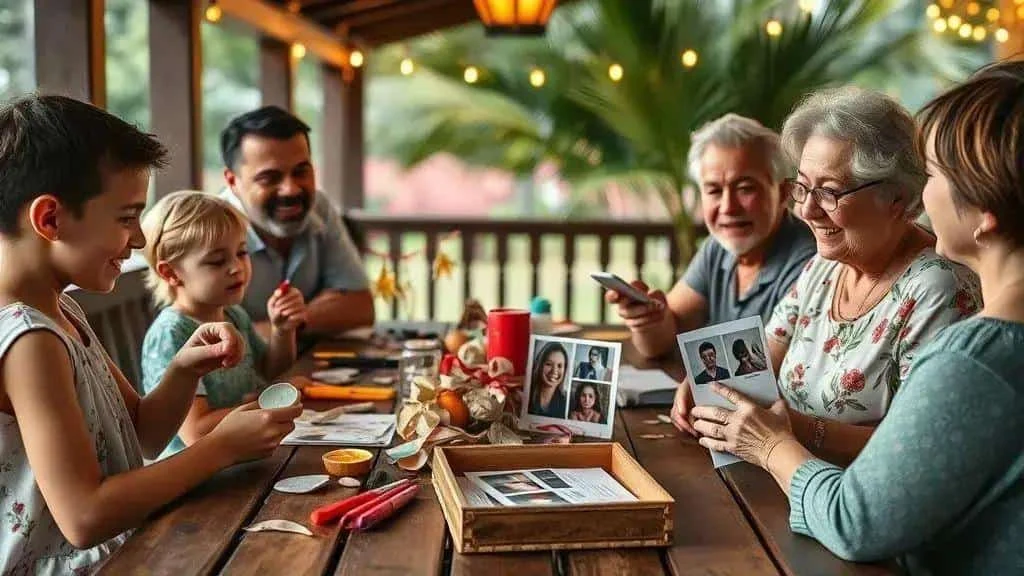
Shared activities can make the season meaningful for children and adults. Choose manageable ideas that leave room for enjoyment rather than a perfect result.
Ideas for different ages
- Babies and toddlers: enjoy songs, supervised photographs and age-appropriate soft toys. Christmas ornaments, loose parts, cords and batteries should stay out of reach.
- Ages four to seven: try simple paper crafts or age-appropriate modelling materials with close adult supervision.
- Ages eight to twelve: children may help with suitable recipes, stable decorations or table-setting tasks, according to their abilities.
- Teenagers: invite them to create playlists, organise photographs or record short family messages, respecting everyone’s privacy.
Easy craft sessions
Making something together can connect generations and leave a tangible reminder of the occasion.
- A handprint ornament: trace a child’s hand on card, cut it out with appropriate help and decorate with suitable craft materials. An adult can add a hanging hole and ribbon, keeping the finished item out of toddlers’ reach.
- A straw wreath: add ribbon and suitable decorative pieces to a base. Adults should handle sharp tools and hot glue; small shells are not appropriate for children who may put them in their mouths.
- A memory box: decorate a box with drawings and photographs, then invite each person to add a memory from the year.
Making a memory box
- Gather materials: choose a sturdy box, pens, stickers and printed photographs, with any small items kept away from young children.
- Write notes: each person can write or dictate a memory or wish and place it inside.
- Organise the contents: use envelopes or labelled sections for drawings, notes and photographs.
- Choose when to reopen it: agree a future Christmas when the family can look back together.
Games and traditions for children
- Decoration hunt: hide large, safe paper shapes and give clues; avoid fragile ornaments, batteries and choking hazards.
- A shared story: one person starts a Christmas tale and each participant adds a sentence.
- A simple cooking session: decorate biscuits or help with a suitable rabanada recipe while an adult handles heat, knives and food safety.
Recording memories simply
- A short photo session: set aside a little time for relaxed pictures without pressuring anyone to pose.
- Video messages: invite each person to share a favourite memory of the year, with their agreement about how the recording will be used.
- A digital album: collect photographs and short notes in a private family file.
- Voice recordings: preserve a song or a relative’s story with permission.
Organisation, safety and inclusion
- Use a stable craft area with surfaces that are easy to clean.
- Choose age-appropriate materials and tools, supervise closely and keep small parts, sharp items and batteries out of reach.
- Offer clear, manageable tasks and value participation rather than comparing results.
- Adapt the activity, pace and sensory environment to each child’s needs, and make it easy to opt out.
Turning memories into traditions
Repeat activities the family enjoys and allow them to change over time. Making a regular occasion of opening the memory box or crafting together can create anticipation without requiring a large budget.
Lower-cost celebrations with less waste
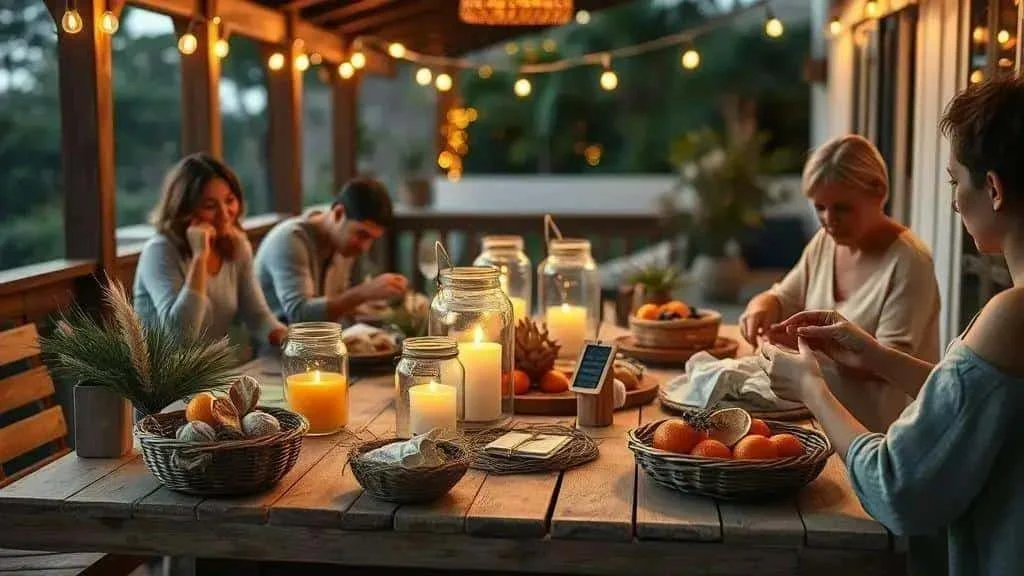
A thoughtful celebration can be both affordable and less wasteful. Start with what you already own, then choose additions that will be useful beyond a single evening.
Reusing decorations
Familiar household materials can become decorations with a little care.
- Flameless lights in jars: clean and dry sound glass jars, decorate them and use suitable LED candles, with secure battery compartments and stable placement away from children.
- A reused wreath base: add clean, responsibly sourced foliage or decorations already owned, attaching them securely.
- Fabric ornaments: sew offcuts into simple shapes for decorations that can be stored and used again.
- Appropriate LED or solar lighting: compare suitability and operating needs before buying, and avoid replacing serviceable decorations unnecessarily.
Saving on the festive meal
A realistic menu helps control cost and waste.
- Share the meal preparation: agree who will bring each dish, including portions, dietary requirements and safe transport.
- Compare seasonal ingredients: local fruit, vegetables or fish may be good value, but compare actual prices and suitability.
- Shop with a plan: use a list and consider storage life before buying ahead.
- Avoid excess: plan sensible portions and cool, refrigerate or freeze suitable leftovers safely.
Thoughtful gifts
A meaningful present does not have to be expensive.
- Homemade gifts: biscuits or jam made with a reliable recipe can be appreciated; label ingredients and storage needs. Choose safe, appropriate packaging for food or handmade toiletries.
- Shared experiences: offer a meal, an outing or time for a family activity.
- Second-hand exchanges: swap good-quality items among friends when everyone is comfortable with the idea.
Reducing energy use and waste
Small, repeatable choices can reduce unnecessary consumption.
- Use compatible timers: limit lighting hours and switch decorations off when they are not needed, following the manufacturer’s guidance.
- Choose reusable tableware: use plates, glasses and cutlery already available where practical.
- Compost suitable scraps: follow the requirements of your composting system or local food-waste collection; not every leftover belongs in a home compost bin.
Storing decorations for next year
Careful storage helps protect both materials and the effort you put into them.
- Clean and dry before packing: use a method suited to each item, check for damage and avoid sealing damp natural materials away.
- Label boxes: note the contents and any special handling needs.
- Save reusable components: ribbons, bows and sound ornaments can be used in a different arrangement next year.
Involving the family
Make practical decisions together rather than turning sustainability into another source of pressure.
- Hold a supervised craft session using clean, suitable materials already available.
- Plan the meal together and agree who will prepare each dish.
- Set gift-exchange preferences that suit the group, such as reused wrapping or a modest spending limit.
Conclusion
Christmas in Brazil shows how inherited traditions can develop in different climates and communities. Food, decorations and family activities can reflect local life while keeping the warmth of a meaningful celebration.
Thank you for reading. Follow our social channels and visit the I Love Christmas blog for more seasonal ideas, stories and projects.
Share your memories and suggestions in the comments: creativity and care can bring people together in many different ways.
FAQ: A tropical Christmas in Brazil
How can a Christmas tree suit Brazil’s warm weather?
Choose a tree or display suited to your space, protect it from excessive sun or rain and follow lighting instructions. Artificial trees, small trees and foliage arrangements are options, rather than a single Brazilian standard.
Which food adaptations suit a summer celebration?
Fresh fruit, salads and suitable grilled dishes can complement traditional roasts and desserts. Use tested recipes for substitutions, and check every ingredient before claiming a dish is lactose-free or suitable for an allergy.
How can children join in without making preparations complicated?
Choose simple paper crafts, a memory box or appropriate cooking tasks. Match materials and tools to the child’s age and abilities, supervise closely and keep small parts, heat and batteries out of reach.
Which lower-waste choices can also save money?
Reuse decorations, share meal preparation, compare seasonal ingredients and limit lighting hours with suitable products. Buying less and caring for what you already own can be more useful than replacing everything with new items labelled sustainable.
How can I respect religious and local traditions?
Listen to the people who practise them, ask before joining or photographing observances and credit local makers. Do not merge distinct beliefs or assume every Brazilian family celebrates in the same way.
Sources and Further Reading
- IPHAN: Reisados and Folias de Reis
- Electrical Safety First: Christmas lights
- Food Standards Agency: preventing food poisoning