
A Christmas road trip needs a realistic itinerary, a roadworthy vehicle, suitable rest stops and accommodation that fits your group. Pack essentials, plan fuel or charging stops and prepare simple activities for children. Adapt the journey to local rules and weather: a Brazilian summer trip is different from a British winter journey.
A Christmas road trip can be enjoyable without an ambitious schedule. A manageable route, useful stops and time to rest leave more room for the holiday itself. Here are practical ways to prepare.
Illustrations in this article are conceptual images, not documentary photographs or evidence of a particular historical event, destination, venue or access route.
Planning before you set off

Planning before you set off means checking documents, vehicle condition and places to stop. Use the ideas below alongside the rules and official travel information for the country where you will drive.
Before-departure checklist
- Documents: carry the driving, vehicle, insurance and personal documents required for your journey. In the Brazilian context of the original guide, CNH refers to the driving licence and CRLV to the vehicle licensing document; requirements differ abroad.
- Maintenance: check oil, coolant, brake fluid and screenwash as directed by the vehicle handbook. Do not open a hot cooling system or improvise with unsuitable fluids.
- Tyres: check the recommended pressures for the load, visible damage and tread, plus the spare or repair equipment supplied with the vehicle.
- Emergency equipment: carry suitable equipment for the vehicle and destination, including a first-aid kit. Warning triangles and roadside repairs require particular caution; do not place a triangle on a motorway in Great Britain. Source: The Highway Code: breakdowns and incidents
- Power and navigation: prepare chargers, a power bank and an offline route before leaving. A passenger should manage devices while the driver concentrates on the road.
- Bookings: confirm accommodation, arrival arrangements and check-in times, particularly over public holidays.
- Packing: secure luggage and pack appropriate clothing, regular medicines, water and suitable food without overloading the vehicle.
Building a realistic route
Plan around driving time, daylight, weather and the group’s needs, rather than distance alone. In Great Britain, Highway Code Rule 91 recommends at least a 15-minute break after every two hours of driving. Stop sooner if tired; a planned stop is not a reason to push on when you need rest. Source: The Highway Code: rules for drivers and motorcyclists
- Check road conditions: use official traffic and weather information, with a sensible alternative route for closures or disruption.
- Book where needed: holiday accommodation can be busy, so confirm availability rather than relying on finding a room on arrival.
- Calculate the whole journey: include meals, rest stops, charging or refuelling, and any sightseeing detours.
Essential vehicle checks
Arrange any necessary professional checks with time to address problems before departure. A quick inspection cannot guarantee that a vehicle will not break down.
- Oil and filters: follow the service schedule and use the correct oil if topping up is needed.
- Cooling system: check levels only as directed by the handbook and have unexplained leaks investigated.
- Battery: seek a suitable battery test if starting is unreliable or its condition is uncertain.
- Brakes: ask a qualified technician to investigate unusual noises, warning lights or changes in braking.
- Lights: check headlights, indicators, brake lights and other required lights before departure.
Safer, less stressful driving
Drive at a speed suited to conditions, leave an appropriate gap and share driving only with eligible, insured drivers who are fit to drive. Do not drive after drinking or when impaired by fatigue or medication.
- Share driving sensibly: agree changes at safe stops, but do not treat a change of driver as a substitute for proper rest.
- Plan fuel or charging: choose convenient stops with the facilities you need and keep a backup option.
- Save useful contacts: have your insurer, breakdown provider and accommodation details available offline.
These preparations can make a road trip easier to manage, leaving more time to enjoy the places you have chosen without rushing between them.
Sample plans for one, three and seven days

Treat these as flexible planning patterns, not fixed timetables or promises about traffic. Adapt them to the actual destination, weather and travellers.
One day: a manageable day trip
Choose a nearby destination that leaves enough time there without an exhausting return drive. Even three hours each way can make a demanding day, especially in winter or with children; a shorter journey may be better.
- Morning: leave after adequate sleep, allowing time for a break and possible traffic rather than assuming an early departure guarantees clear roads.
- Lunchtime: arrive with time for a meal at a suitable venue or a picnic if the weather and facilities allow.
- Afternoon: choose one main activity, such as a town walk or a short suitable trail. A beach visit fits some Brazilian summer trips, but is not a universal December plan.
- Return: plan around daylight, road conditions and tiredness, with a proper rest stop if needed. Do not set an arrival target that encourages rushing.
Pack water, suitable snacks and spare clothing. Choose sun or cold-weather protection according to the destination and forecast.
Three days: a relaxed short break
Divide the time between travelling, exploring and resting, rather than trying to fill every hour.
- Day one — travel and arrival: make the journey with breaks, check in and enjoy a gentle activity or meal if everyone has energy.
- Day two — explore: plan the main attraction, a suitable walk or another booked activity, leaving time for lunch and an unhurried afternoon.
- Day three — return: fit in a short visit if practical, then travel home at a time informed by current traffic and your need for rest.
Read recent accommodation reviews and cancellation terms. Include stops on the return journey rather than treating it as a single uninterrupted drive.
Seven days: a trip with several bases
Staying two or three days in each place can reduce packing and repeated travel. A circuit also works if the distances are genuinely manageable.
- Illustrative circuit: day one, travel to your first base; day two, explore locally; day three, move to a second base with a suitable stop; day four, stay locally; day five, travel to a third base; day six, explore; day seven, return with breaks.
- Pace: decide on manageable driving periods for your group and include lighter days. A four-to-six-hour drive is not automatically suitable simply because it fits on an itinerary.
- Extra activities: book limited-capacity visits where necessary, while leaving space for weather changes or delays.
Adapting the plan to your group
- Children: allow frequent stops, manageable travel days and age-appropriate activities. Infants may need additional breaks following car-seat guidance.
- Older travellers: ask about individual preferences and access needs rather than making assumptions based on age.
- A smaller budget: compare accommodation and fuel or charging costs, and consider self-catering where useful and permitted.
Planning checklist by trip length
- One day: route, offline directions, water, snacks, suitable clothing and a charged phone.
- Three days: accommodation details, first-aid kit, versatile clothing and parking arrangements where needed.
- Seven days: all the essentials above, suitable breakdown arrangements, confirmed bookings and securely stored document information.
A flexible daily plan helps keep your road trip enjoyable when traffic or weather makes the original schedule impractical.
Useful stops for rest, food and activities

Good stops combine rest and safety with practical needs, without turning the journey into another demanding itinerary.
Choosing somewhere to stop
- Use designated stopping places: choose service areas or suitable car parks. Hard shoulders and emergency areas are not picnic or rest stops.
- Park appropriately: follow signs and leave enough space to get people and luggage out safely, especially near moving traffic.
- Lock the vehicle: take essential valuables with you and avoid leaving tempting items visible.
- Check facilities: look for toilets, baby-changing facilities, accessibility and a suitable place to sit.
- Keep contact details handy: save breakdown and insurance numbers so that poor reception does not prevent you finding them.
- Electric vehicles: check connector compatibility, charging speed, payment arrangements and a backup location. An app listing does not guarantee a charger will be working or free.
Food and drinks
- Pack suitable snacks: bring water, fruit and other foods appropriate to your travellers. Avoid whole nuts for young children and plan eating during safe, supervised stops.
- Keep perishable food cold: use an insulated cool box with ice packs, following storage guidance rather than assuming it remains chilled indefinitely.
- Allow for dietary needs: keep suitable food accessible and store regular medicines according to their instructions.
- Choose food stops carefully: consider hygiene information and dietary requirements as well as recent reviews and convenience.
- Be flexible about mealtimes: quieter periods may reduce queues, but check opening hours before changing the plan.
- Take rubbish away: keep a waste bag in the car and use appropriate bins.
Making breaks enjoyable
- Rest properly: allow time out of the driving seat, with gentle movement if suitable. A short walk does not make it safe to resume driving when still sleepy.
- Use designated viewpoints: stop only where parking and access are suitable; do not pull over unexpectedly for a photograph.
- Choose short activities: a playground or brief walk may suit a break if the location, weather and supervision are appropriate.
- Allow a longer stop when useful: a relaxed meal or local visit can break up the day, but should not force a tired late-night drive afterwards.
- Ask what the group enjoys: play space, accessible facilities or a food market may matter more than a famous viewpoint.
Stop checklist
- Keys and necessary documents.
- Chargers and power bank.
- Water and suitable snacks.
- Cool box and waste bags.
- First-aid kit and regular medicines.
- Torch, suitable blanket and vehicle-specific equipment.
- Saved information about service areas and food stops.
A well-chosen stop supports the journey rather than simply adding another task to your road trip schedule.
Vehicle care and a practical checklist
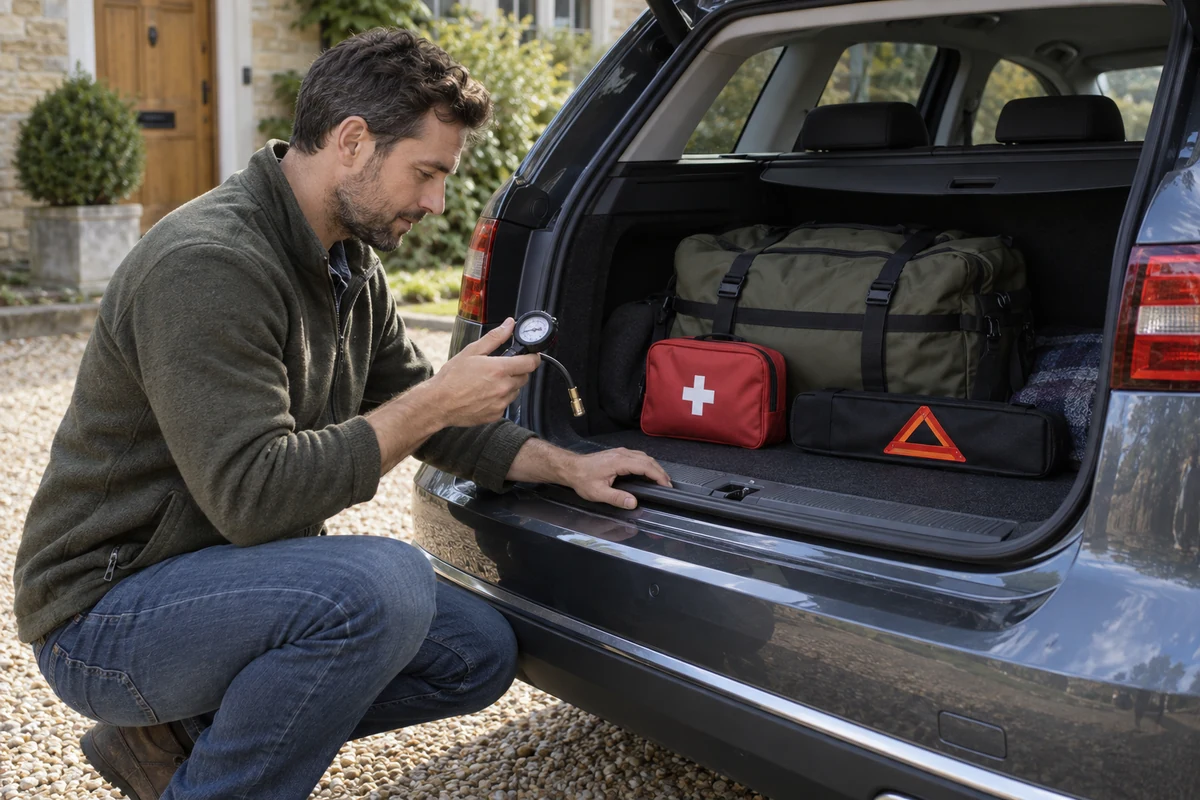
A pre-trip check can reveal problems that need attention. Follow the vehicle handbook and use professional help for anything beyond your knowledge or equipment.
Before-travel inspection
- Tyres: check pressures as specified, visible damage and the condition of any spare. Do not ignore bulges, cuts or worn tread.
- Oil and fluids: check levels using the correct procedure and specified products; recurring loss needs investigation.
- Battery: arrange a professional check if it is unreliable. Avoid touching or altering unfamiliar electrical systems.
- Lights: test required lights and arrange suitable replacement or repair if any fail.
- Brakes and suspension: have unusual noise, vibration or handling assessed before a long journey.
- Documents and cover: confirm that drivers, vehicle and destination are covered, and check which documents must accompany you.
Equipment to consider carrying
- Vehicle-specific emergency equipment, used only where safe and permitted.
- A serviceable spare or the manufacturer’s repair provision.
- Suitable basic tools; jump leads only if appropriate to the vehicle and used correctly.
- A first-aid kit.
- A working torch and spare power.
- High-visibility clothing, gloves and a weather-appropriate blanket.
- Water, suitable snacks and a cool box where needed.
- A compatible car charger and power bank.
- Necessary documents protected from damage, with securely stored backup details.
During the journey
- Watch for warnings: if the engine overheats or a serious warning appears, stop somewhere safe and follow the handbook or seek assistance. Never remove a coolant cap while the system is hot.
- Drive smoothly: avoid unnecessary harsh acceleration while always prioritising road conditions and safety over economy.
- Take proper breaks: review how everyone is feeling and revise the route if the driver needs more rest.
- Handle breakdowns cautiously: follow official guidance for the road and location. On a British motorway, do not put out a warning triangle or attempt roadside repairs; contact assistance and follow instructions about reaching a place of relative safety.
When to seek professional help
Smoke, fluid leaks, unreliable brakes or persistent warning lights need attention. Do not continue simply to reach your planned overnight stop if the vehicle may be unsafe.
Travelling with children and keeping a festive mood
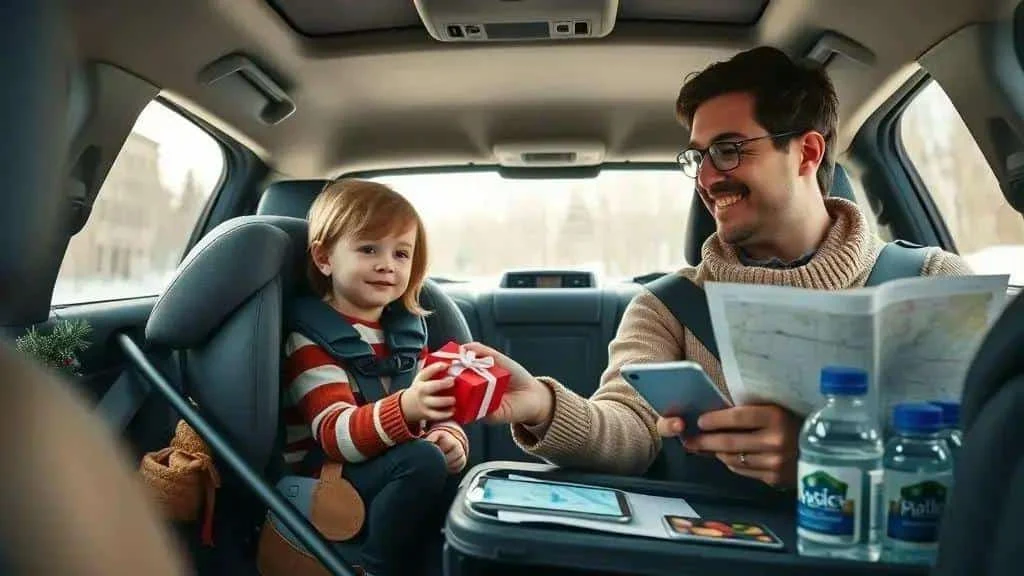
A Christmas road trip with children benefits from breaks, familiar comforts and simple activities. Keep the driver’s attention and everyone’s restraint systems clear of distractions.
Packing for children
- Clothing: pack layers appropriate to the climate, sleepwear and spare clothes. Follow car-seat guidance about bulky clothing and harness fit.
- Comfort items: bring a suitable familiar toy or blanket and nappies or other supplies as needed, without interfering with restraints.
- Medicines and hygiene: pack regular prescribed medicines, a thermometer and useful hygiene supplies. Ask a pharmacist or clinician about any medicine you are unsure how to use.
- Organisation: use clearly separated bags so that a stop does not require unpacking the whole boot.
Simple entertainment
- A short festive playlist: alternate a few Christmas songs with other favourites at a volume that does not distract the driver.
- Quiet games: try I Spy or guessing a tune, letting the driver concentrate on driving.
- Craft activities: save drawing, stickers and small craft materials for stops rather than creating loose objects in the moving vehicle.
- Screens: if used, secure devices appropriately, keep them out of the driver’s view and allow breaks if a child feels unwell.
Food and breaks
- Suitable snacks: prepare food for the child’s age and dietary needs, serving it at a safe stop with supervision rather than while rushing along.
- Listen to discomfort: stop safely if a child feels unwell. Seek appropriate advice for recurring travel sickness instead of assuming a particular meal prevents it.
- Regular pauses: allow time for movement, toilet visits and nappy changes, with more frequent stops where needed.
- Meal planning: keep a backup food option in case your intended stop is closed or too busy.
Keeping the Christmas feeling
- Small travel traditions: offer a simple daily activity or a small gift to open once safely parked, without making purchases a requirement.
- Keep the car uncluttered: save decorations and decorative lights for your accommodation. Do not attach objects that could interfere with visibility, airbags, restraints or controls.
- Photographs and memories: take pictures at safe stops and let children help make an album afterwards, with permission from those photographed.
Safety and comfort
- Car seats and belts: use a correctly fitted restraint suitable for the child and required by local rules, following the vehicle and seat manufacturers’ instructions.
- Sleep: consider normal routines without extending a drive beyond safe limits. Follow infant car-seat advice and remove children from seats for appropriate breaks.
- Useful contacts: keep family, accommodation and assistance numbers available even if your phone loses reception.
Small details that help
- Prepare an easy-access stop bag: include water, changes of clothes and useful supplies without leaving heavy objects unsecured in the cabin.
- Explain the plan: tell children what will happen next and where you expect to stop, while explaining that plans may change.
- Encourage participation: a simple travel sticker sheet can be used at stops, without withholding breaks or comfort as a reward for behaviour.
Bringing the plan together
Planning a road trip around Christmas can make the journey calmer, provided the schedule remains flexible.
Check the vehicle, choose realistic travel days and allow for rest, food, weather and children’s needs.
If conditions change, shorten the route, stop earlier or postpone a journey rather than trying to keep an unsuitable timetable.
Thank you for reading. Explore the I Love Christmas blog for more seasonal traditions and planning ideas.
Frequently Asked Questions About Christmas Road Trips
What should I check on the car before travelling?
Follow the handbook for tyres, fluid levels and lights, and arrange professional attention for warning lights, leaks, unusual noises or uncertain battery condition. Check the spare or repair equipment too.
How often should we stop?
For driving in Great Britain, the Highway Code recommends at least 15 minutes’ rest after every two hours. Stop sooner when tired and allow extra breaks for passengers’ needs; never use a motorway hard shoulder as a routine rest stop.
How should I pack for children?
Separate clothes and comfort items into easy-to-find bags, secure luggage and prepare suitable food and activities for supervised stops. Keep necessary medicines according to their storage instructions.
What belongs in an emergency kit?
Suitable equipment depends on the vehicle and country. Consider a first-aid kit, torch, high-visibility clothing, blanket, charged phone and breakdown details. Follow local guidance on warning triangles and do not attempt unsafe roadside repairs.
How do I choose a one-, three- or seven-day itinerary?
Start with available time, realistic driving distances and the group’s needs. A short day trip, a few days at one base or a longer circuit can all work if there is enough time for proper rest.