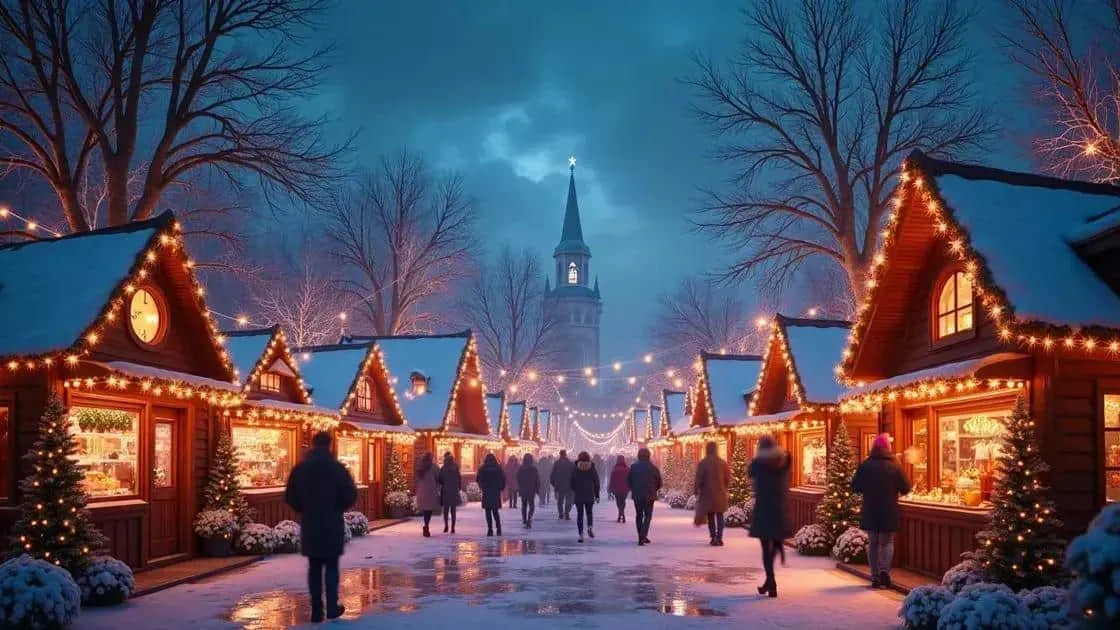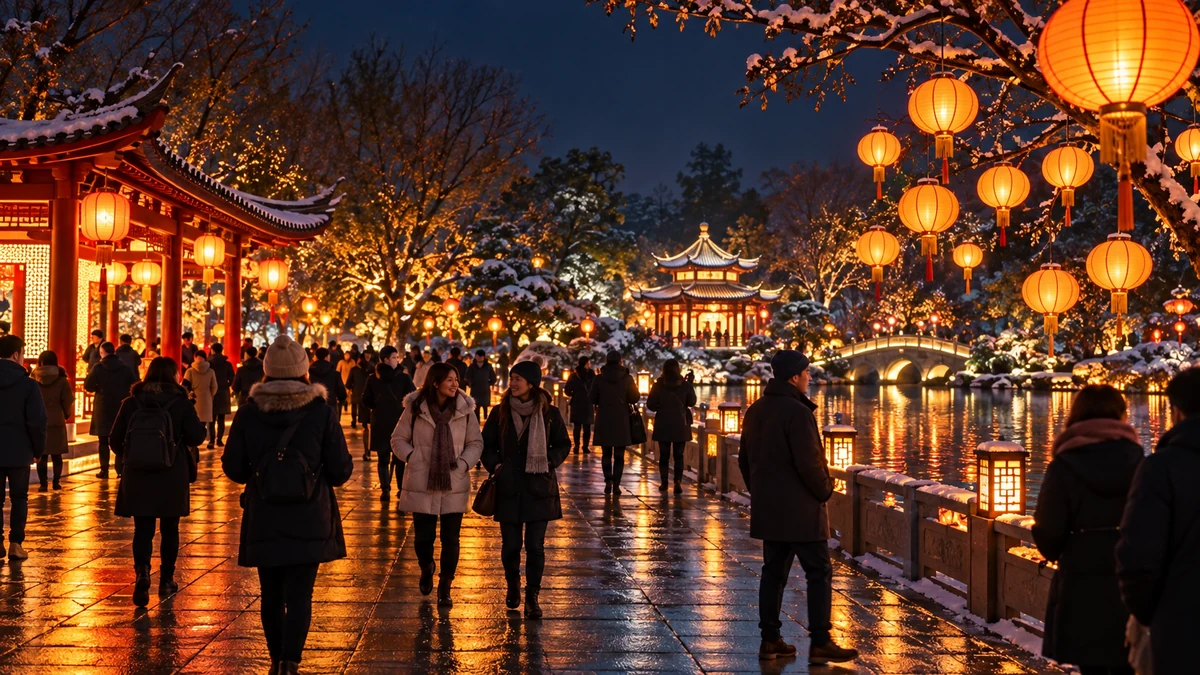
Winter light festivals in Japan and South Korea bring colour to city streets, gardens and waterfronts through illuminated tunnels, lanterns and artistic installations. Their calendars differ: not every light festival takes place at Christmas. Choose the event first, then confirm its dates, transport and admission arrangements before building a trip around it.
Christmas and winter light festivals offer illuminated walks, creative displays and opportunities to enjoy local food in Japan and South Korea. This guide introduces destinations and practical planning points, with particular attention to seasonal differences.
Illustrations in this article are conceptual images, not documentary photographs or evidence of a particular historical event, destination, venue or access route.
What are light festivals, and why visit them?
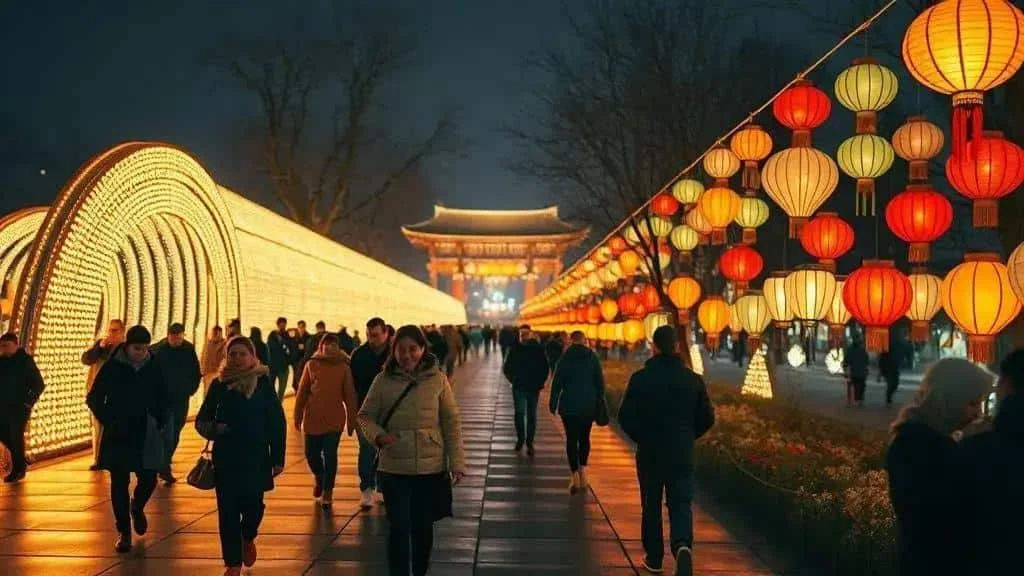
Light festivals use lamps, LEDs, lanterns and projections to turn gardens, streets and other spaces into illuminated installations.
Depending on the event, you might find tunnels of light, decorated trees, projected images or lanterns reflected in water. Music and programmed effects are features of some displays, rather than something every festival provides.
What makes them appealing?
- An atmospheric evening walk: colour, movement and illuminated landscapes can offer a different view of a familiar place.
- Photography opportunities: both casual visitors and keen photographers can enjoy the displays. A good photograph should not come at the expense of other visitors’ access.
- Local culture and entertainment: some events include performances, craft stalls or regional food. Check the programme rather than assuming these extras are available.
- Different styles of visit: options range from free street illuminations to ticketed gardens and theme parks. Families, couples and groups can choose a format that suits their needs; accessibility varies.
- A seasonal attraction: winter displays can provide an evening focus for a trip, while other lantern festivals belong to a different season entirely.
Check the organiser’s programme, book where required and allow time for queues. A weekday visit may be calmer, but holidays, weather and special events can change crowd levels.
Japanese highlights: Nabana no Sato, Tokyo and beyond
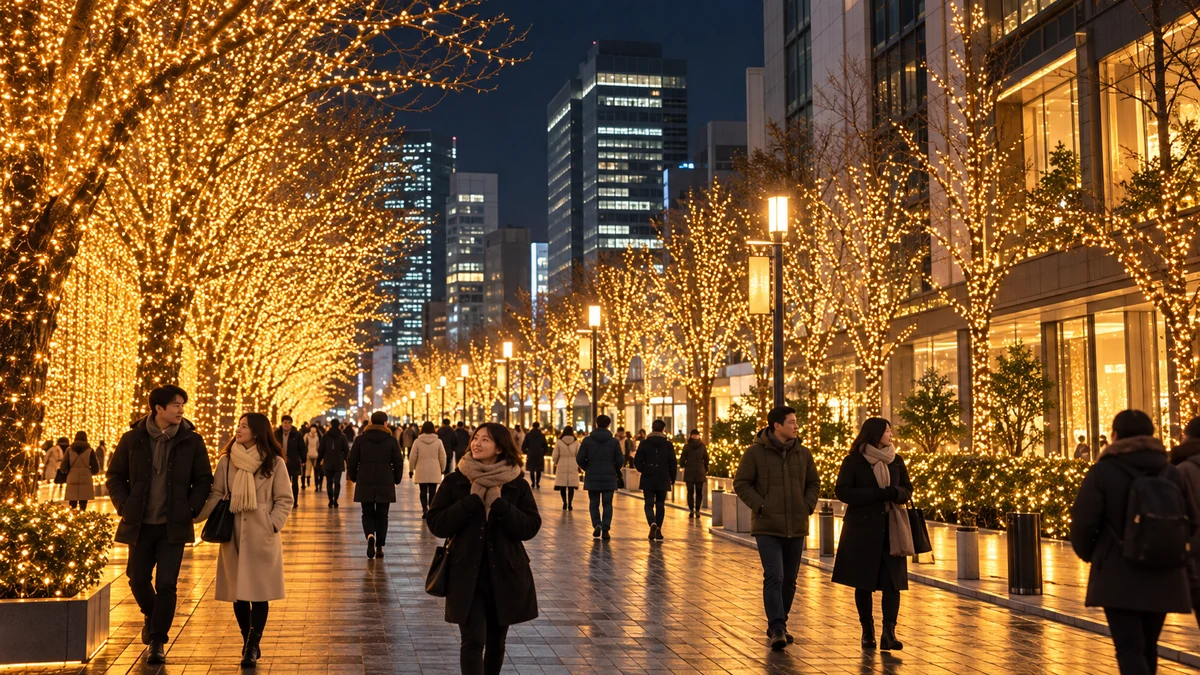
Japan offers a wide range of winter illuminations. Nabana no Sato, Tokyo’s neighbourhood displays and regional events make useful starting points, provided the dates and journeys fit your itinerary.
Nabana no Sato: Kuwana, Mie Prefecture
Nabana no Sato is known for its light tunnels and large illuminated displays. Its illumination season extends beyond Christmas and can continue into spring; consult the current programme for the dates and installations.
Getting there: during the illumination season, the operator directs rail passengers to Kintetsu-Nagashima Station and the connecting bus. Do not assume that the summer bus route from Kuwana runs in winter. Check the current timetable, admission options and any date-specific ticket conditions. Source: Nabana no Sato — rail and bus access
Practical tip: arrive with enough time to find the entrance and orientate yourself before dark. Dress warmly and check the return bus before starting your visit; early evening is not guaranteed to be quiet.
Tokyo: Midtown, Marunouchi, Omotesando and other districts
Tokyo’s displays are spread across several districts. Caretta Shiodome appears in older itineraries, so verify whether an event is actually announced before travelling there. Tokyo Midtown, Marunouchi and Omotesando are places to check for the current winter programme. Rinks, markets and special shows vary by year.
Getting around: use the relevant metro or JR services and check whether your IC card covers the journey. Street displays may be free, while separate attractions can charge admission or require booking.
Practical tip: choose nearby areas for one evening rather than rushing across the city. Compare walking distances, closing times and the last convenient train.
Kobe Luminarie and other regional illuminations
Kobe Luminarie commemorates the 1995 Great Hanshin-Awaji Earthquake. Its illuminated structures have a distinctive architectural style, but it should not be assumed to be a December event: the 2026 edition ran from 30 January to 8 February. Sapporo and Enoshima also have their own seasonal programmes. Source: Kobe Luminarie — event information
Getting there: plan around the particular event entrances and stations. A centrally located hotel may simplify the return, but confirm walking routes and any crowd-control measures.
Practical tip: check which areas are free, which need tickets and whether a timed entry applies. Respect designated routes rather than stopping wherever a photograph looks promising.
Huis Ten Bosch: Nagasaki Prefecture
Huis Ten Bosch combines a theme-park setting with European-inspired buildings, canals and illuminations. It may suit a longer visit that includes other attractions or an overnight stay; compare the current programme with the admission you intend to buy.
Getting there: the park is reached via Huis Ten Bosch Station. From Hakata, rail options include the Huis Ten Bosch limited express or a connection via Haiki. Check the operator’s current route guidance; there is no direct Shinkansen to the park. Source: Huis Ten Bosch — rail access
Practical tip: compare evening and full-day admission where offered. Check the actual lighting hours and restaurant arrangements rather than assuming that a hotel package includes everything.
Planning points for Japanese illuminations
- Timing: many displays take place in the colder months, but opening and closing dates vary widely. Verify the event itself before booking travel.
- Transport: combine rail, local services and buses as appropriate. An IC card is convenient where accepted, but does not replace every reserved ticket.
- Admission: check whether a date-specific ticket or advance reservation is needed.
- Photography: use suitable exposure settings and stabilisation. Check tripod rules even where ordinary photography is permitted.
- Other activities: combine a display with a nearby meal, a market that is actually operating or a separate onsen visit where practical.
A realistic journey and a confirmed programme make these visits more enjoyable than an itinerary built only around striking photographs.
South Korean highlights: the Garden of Morning Calm, Seoul and regional events
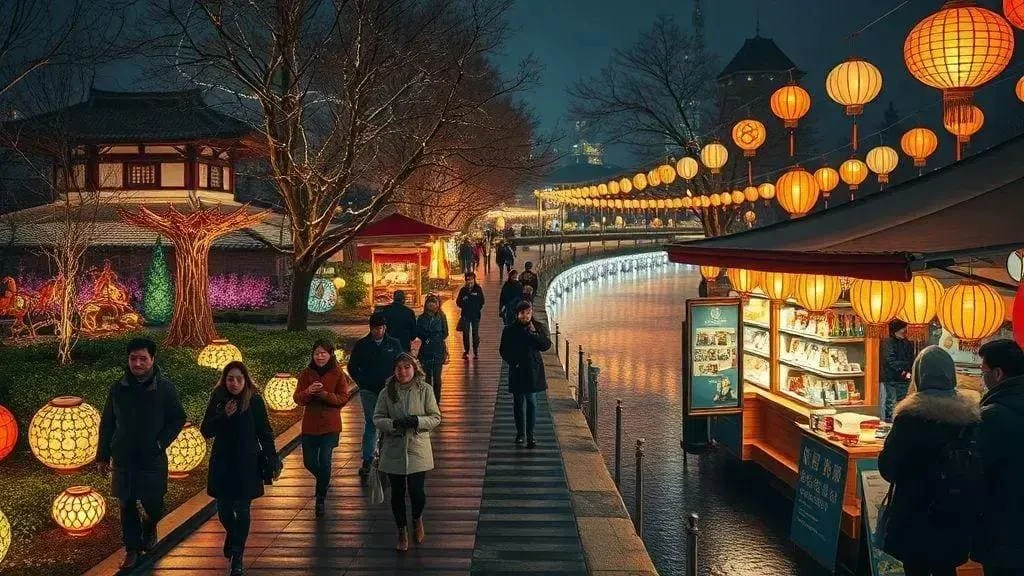
South Korea’s seasonal displays range from illuminated gardens to urban lantern installations. The Garden of Morning Calm and Seoul Lantern Festival are useful places to begin researching, while regional festivals need their own calendar checks.
The Garden of Morning Calm: Gapyeong County
The lighting festival at the Garden of Morning Calm fills garden areas with coloured light displays and themed installations. It offers a different setting from a city street, with an evening visit that requires particular attention to the journey home.
- When: this is a winter event; the published 2025–26 season ran from December into March. Confirm the dates for your own trip rather than relying on a November-to-February assumption. Source: Visit Korea — Garden of Morning Calm lighting festival
- Getting there: plan the full journey to the garden, including the final bus or taxi and its evening availability. Reaching Gapyeong County by train is only one part of the trip.
- Admission: the garden charges entry. Check current booking channels, opening hours and any festival-specific arrangements.
- Photography tip: a slower shutter speed may help with static lights if you can keep the camera steady. Follow support and tripod restrictions, and allow time to walk safely between viewpoints.
Seoul Lantern Festival: Cheonggyecheon and announced venues
The Seoul Lantern Festival features illuminated installations along central waterways and other announced venues. Themes and locations change, so use the edition’s official map when planning a walk.
- When: older guides describe a November festival, but recent editions have taken place in winter. The official 2025 event listing gave 12 December 2025 to 18 January 2026; these are historical dates, not a promise for the next edition. Source: Visit Seoul — 2025 Seoul Lantern Festival
- Getting there: choose a station near the section you intend to visit. Gwanghwamun and stations around Jongno may be useful for central sections, but entrances and walking routes need checking.
- Free and paid activities: check the current admission information and any charges for associated activities.
- Etiquette: stay on permitted paths and avoid touching installations, including delicate lantern surfaces.
Regional festivals: check the season first
Other South Korean festivals feature illuminated waterfronts, lantern displays and performances. They do not all belong in a Christmas itinerary: some major lantern events are held in autumn.
- Jinju Namgang Yudeung Festival: lanterns on and around the Namgang River are a major attraction. This is an autumn festival, typically in October, so do not add it to a December trip without a separate reason to visit Jinju. Source: Visit Korea — Jinju Namgang Yudeung Festival
- Busan and coastal displays: research the specific seasonal event and its waterfront location. A city’s reputation for lights does not confirm a particular programme or night market.
- Smaller destinations: these can offer a different pace, but are not automatically quieter or more authentic. Check transport and accommodation just as carefully.
Practical advice for a comfortable visit
- Clothing: pack warm layers, gloves and suitable footwear. Check the forecast for wind, rain, snow or ice rather than assuming the same conditions everywhere.
- Transport: rail and metro can be useful in cities; gardens outside them may need a bus, taxi or organised transfer. Plan before evening services finish.
- Tickets and opening times: reserve where required and allow for admission queues.
- Food: where stalls are available, dishes such as tteokbokki, hotteok or roasted chestnuts may provide a warming break. Ask about ingredients and allergens when needed.
- Considerate photography: respect tripod restrictions, keep paths clear and ask before taking close photographs of other people.
- Accessibility: ask about surfaces, gradients, steps, accessible toilets and transport. A generally accessible venue may still have sections that are difficult in winter.
Useful things to bring
- A power bank suited to your phone and journey, subject to the airline’s rules when flying.
- Some local cash for small purchases where cards are not accepted.
- A compact umbrella or suitable waterproof layer if the forecast calls for it.
Building an itinerary: dates, transport and accommodation
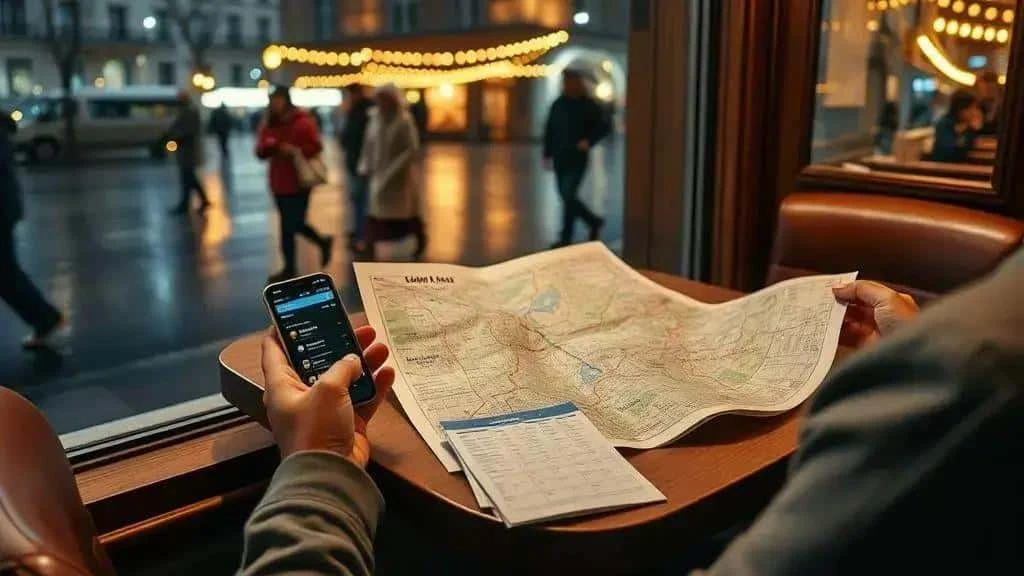
Planning a trip around Christmas and winter light festivals starts with choosing the event and confirming it will be open. For a short visit, one well-chosen base is more practical than trying to cover both countries.
Choosing dates
November to February is a useful starting window for researching winter illuminations, but not a shared timetable. Some displays finish at Christmas, others continue into spring, and autumn lantern festivals require a different trip.
- November: some winter displays begin, while others have not opened. Confirm before booking.
- December: Christmas-related events can be busy. Compare ticket availability and hotel costs early.
- January–February: some illuminations remain open or begin during this period. Check holiday crowds as well as colder weather; shorter queues are not guaranteed.
Transport
Combine trains, metro services and buses according to the route. Suica or PASMO in Japan and T-money in South Korea can simplify eligible local journeys, but check coverage, fares and any separate reservations.
- Urban journeys: use current transport information and live journey planners. Save the route and the last departure you can reasonably reach.
- Longer rail journeys: compare individual fares with any rail pass you are eligible to buy. A pass is not automatically good value for a short or local itinerary.
- Regional buses: these can be essential for gardens outside city centres. Check both outward and return timetables.
- Taxis and booked transfers: assess availability and cost before relying on a late-night pickup.
- Luggage delivery: Japanese luggage-forwarding services may be useful between stays. Confirm delivery times and keep essentials with you.
Accommodation
Choose a base with practical connections to the events you actually intend to see. A hotel close to a station can help, but check the line, exits and walking route.
- Japanese bases: Tokyo suits its own neighbourhood displays. Nagoya or Kuwana may be more practical for Nabana no Sato; do not treat every Japanese event as an easy Tokyo day trip.
- South Korean bases: central Seoul can suit city illuminations. A Garden of Morning Calm excursion needs a separate transport plan, whether staying in Seoul or closer to the garden.
- Accommodation types: compare ryokan, hotels and guesthouses by facilities, access and conditions rather than assuming one category is always cheaper or more convenient.
- Reservations: check cancellation terms, check-in times and the actual journey to the event before committing.
A suggested five-day structure
- Day 1 — Arrive and settle in: choose one base, such as Seoul, check in and take a short illuminated walk nearby if the programme and your energy allow.
- Day 2 — The main event: dedicate the evening to a confirmed festival in your chosen city, leaving enough time for arrival and admission.
- Day 3 — Daytime culture: visit local sights, then choose another nearby evening display or simply enjoy dinner and rest.
- Day 4 — A regional excursion: from a Seoul base, consider the Garden of Morning Calm if it is operating and return transport is arranged. From a Nagoya base, Nabana no Sato is a different itinerary option, not an extra stop on the same trip.
- Day 5 — Shopping and departure: allow time for local shops only if it fits comfortably around airport travel and check-in.
A quick planning checklist
- Book online where appropriate: use official or authorised sellers and check the ticket date.
- Allow for queues: weekends and holidays can be busy, but a weekday is no guarantee of an empty venue.
- Dress in layers: choose clothing and footwear for the forecast and the time spent outdoors.
- Charge devices and travel cards: carry what you need for navigation and the return journey.
- Check the final service: public transport may become less frequent or stop before you expect.
- Review travel insurance: check the cover and exclusions relevant to your trip rather than assuming every change of plan is covered.
What to pack, local etiquette and safety
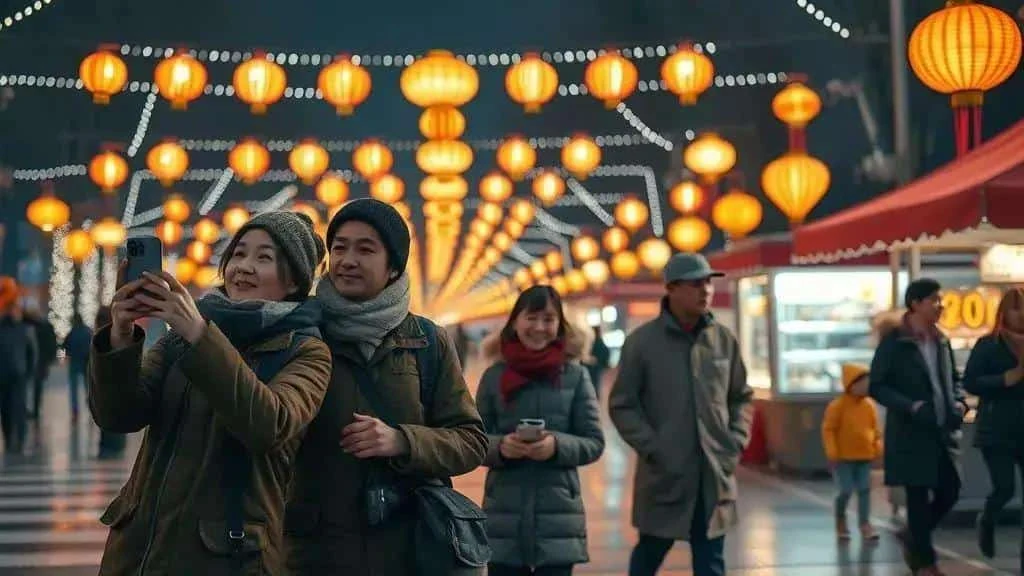
A few practical preparations can make an evening visit more comfortable: pack for the weather, follow the venue’s rules and decide how you will return.
What to pack
- Warm layers: a suitable coat, jumper, hat and gloves, adjusted to the forecast.
- Practical footwear: shoes with suitable grip and weather protection for the paths you will use.
- Phone power: a charged device, compatible cable and suitable power bank. Capacity needs vary; check airline carriage restrictions before flying.
- Cards and cash: an accepted transport card where useful, a payment method and some local currency.
- Documents: carry the identity documents required locally, plus insurance information and emergency contacts. A passport copy does not necessarily replace the original where carrying it is required.
- A small bag: water, suitable snacks and weather protection, while respecting the venue’s bag and food rules.
- Photography equipment: a clean camera lens and appropriate settings are often enough. Bring a support only if it is permitted and will not obstruct others.
Local etiquette
- Respect queues and routes: avoid stopping in narrow passages and leave room for others.
- Ask before close-up photographs: respect people’s privacy, especially around children.
- Protect the installations: do not lean on or touch fragile lanterns, light fittings or sculptures.
- Keep noise considerate: be particularly respectful in commemorative or quiet areas.
- Dispose of rubbish properly: use designated bins or carry rubbish until you find a suitable disposal point.
Safety
- Follow the official route: avoid unlit shortcuts and closed areas.
- Look after belongings: keep your phone, wallet and documents secure in crowded places.
- Plan the return: know the last practical service and a realistic alternative if it is missed.
- Take breaks from the cold: wear appropriate layers, replace wet clothing and go indoors if you become uncomfortably cold.
- Know where to get help: identify event staff, assistance points and local emergency contact information.
These preparations leave more time to enjoy the lights while respecting the place and the people around you.
Final thoughts
Japan and South Korea offer many ways to enjoy seasonal lights, from urban streets to illuminated gardens. The most useful plan is one based on confirmed dates, workable journeys and a comfortable pace.
Thank you for reading. Use official event pages for live updates, and treat older photographs and itineraries as inspiration rather than proof of the current programme.
Visit the I Love Christmas blog for more ideas on festive travel, decorations and seasonal experiences.
FAQ — Winter Light Festivals in Japan and South Korea
When should I visit the light festivals?
Start by checking the specific event. Many winter displays run between November and February, but some continue into spring or take place at different times. Jinju’s major lantern festival is an autumn event, not a Christmas fixture.
Do I need advance tickets?
Some gardens and attractions charge admission or have date-specific booking arrangements. Check the official page for the event and date you want, including the admission and return-transport details.
How do I travel between displays?
Use the rail, metro and bus services appropriate to the route. Local transport cards can help where accepted. Gardens outside city centres may need a final bus, taxi or booked transfer, especially for the return after dark.
What should I bring?
Pack for the forecast: warm layers, suitable footwear, a charged phone, payment methods and any required documents. A compact waterproof layer and a suitable power bank may also be useful.
What should I remember when taking photographs?
Follow tripod and photography restrictions, keep walkways clear and respect other people’s privacy. Choose exposure and stabilisation settings appropriate to the light.
Are the festivals accessible and suitable for families?
Suitability depends on the venue, weather and individual needs. Check paths, steps, accessible toilets, crowd arrangements and transport before booking; do not assume every illuminated garden or waterfront route has the same facilities.
Sources and Further Reading
- Nabana no Sato — rail and bus access
- Kobe Luminarie — event information
- GO TOKYO — winter illuminations
- Huis Ten Bosch — rail access
- Visit Korea — Garden of Morning Calm lighting festival
- Visit Seoul — 2025 Seoul Lantern Festival
- Visit Korea — Jinju Namgang Yudeung Festival