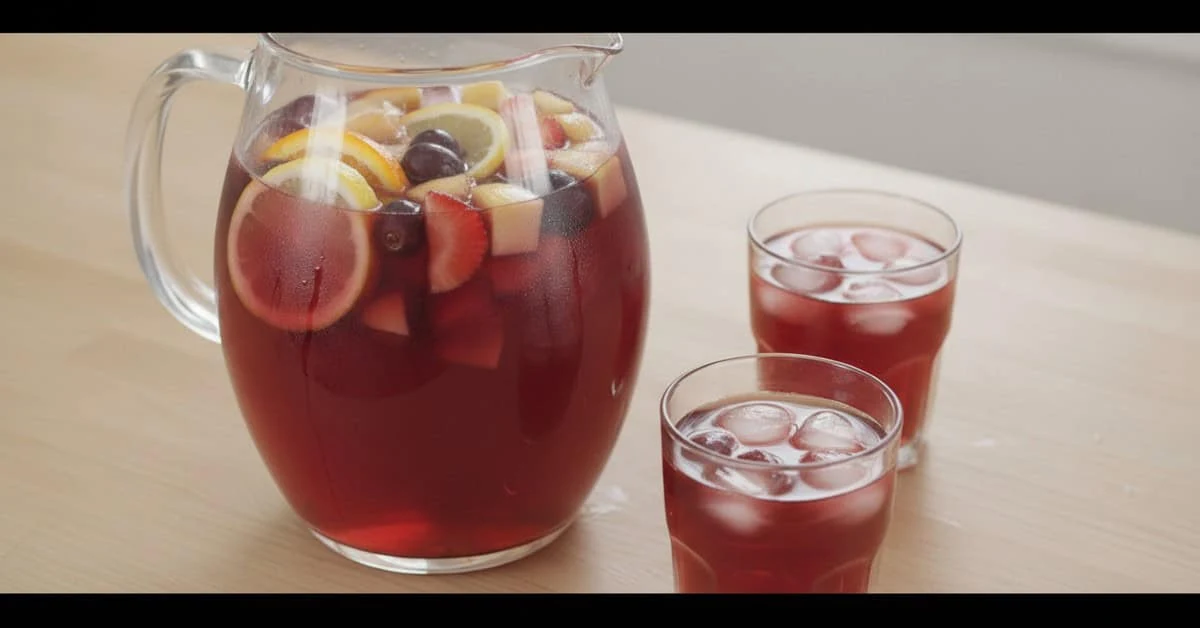
This Christmas red wine sangria combines a fruity red wine with orange, apple, grapes, pomegranate and a little cinnamon. Chill the mixture before adding sparkling water and serve in small adult portions. A separate juice-based version offers similar festive aromas without wine or spirits.
A jug of Christmas red wine sangria adds ruby colour and winter-fruit aromas to an adult gathering. Prepare it ahead, taste before sweetening and keep an unmistakably separate alcohol-free option for anyone who wants one.
Ingredients for Christmas sangria
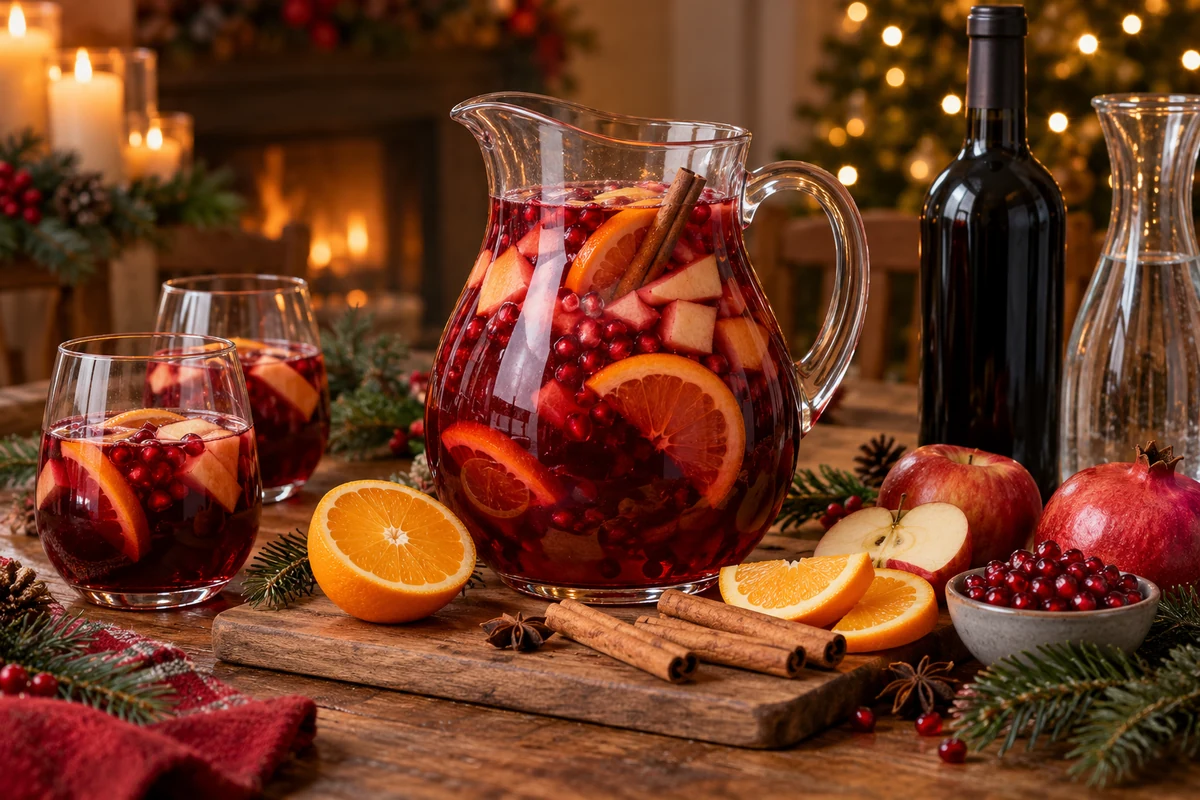
For this Christmas red wine sangria, use a roomy jug of at least 2.5 litres so there is space for the fruit and liquid. The yield depends on which optional additions you choose.
Ingredients for Christmas sangria
- 1 bottle red wine, 750 ml – choose a young, fruity style with modest tannins, such as a suitable Tempranillo or Merlot. The separate alcohol-free version uses grape juice.
- Up to 120 ml brandy or orange liqueur, optional – omit for a less strong mixture. Using juice instead of the spirit does not remove the alcohol in the wine.
- Sugar to taste, up to 50–70 g – begin with little or none, especially if using sweet juice or liqueur.
- 1 medium orange, thinly sliced – washed and pips removed. Clementines are an alternative.
- 1 medium apple, cored and sliced or diced – a firm pear also works well.
- 150 g pomegranate arils – remove the bitter membrane. Cranberries have a much sharper flavour and are not a like-for-like replacement.
- 150 g seedless grapes, halved – washed; these are for adult servings of the alcoholic recipe.
- 100–150 ml orange or cranberry juice, optional – check whether the cranberry product is sweetened before adjusting sugar.
- 2 cinnamon sticks and 2 cloves – for a subtle festive aroma. Remove the whole spices before serving.
- 200–250 ml sparkling water – chilled. Lemonade is a sweeter alternative; it changes the overall balance.
- Ice, if wanted – add to glasses at serving time. Frozen juice cubes add flavour but also more juice sugars.
Practical tip: start with less sugar, chill for about 2 hours and taste before adding more. Fruit, wine and juice all affect the sweetness.
How to make Christmas sangria
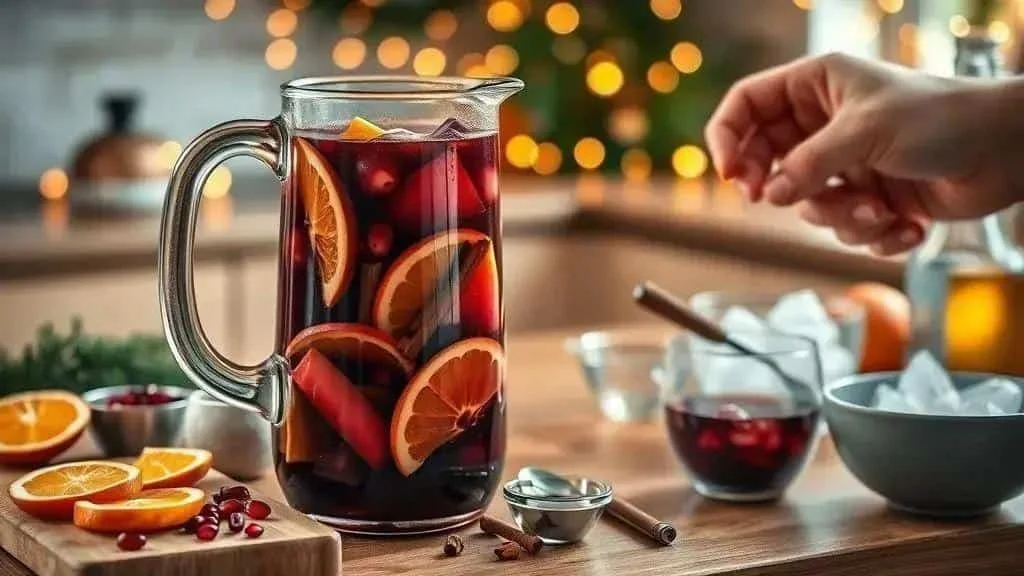
Prepare this Christmas sangria in a clean jug, keeping the sparkling water separate until serving.
- Prepare the fruit: wash the orange, apple and grapes. Slice the orange thinly, core and chop the apple, halve the grapes and measure the pomegranate arils.
- Add sugar and spices: put the fruit in the jug with the cinnamon and cloves. If sweetening, begin with about 25 g sugar and stir gently; you can add more later.
- Add the liquids: pour in the 750 ml wine, the optional brandy or liqueur, and the optional 100–150 ml juice. Stir to help dissolve the sugar.
- Release a little fruit flavour: press a few pieces lightly with a long spoon, without crushing all the fruit or pulverising citrus peel.
- Chill and infuse: cover and refrigerate for at least 2 hours. You can leave it for 6–12 hours, but taste occasionally and remove citrus peel or spices if the flavour becomes bitter or too strong.
- Finish before serving: remove the whole spices, taste and adjust sweetness if necessary. Stir in 200–250 ml chilled sparkling water gently.
- Serve: pour small portions into glasses, with ice and a little fruit if wanted. A thin orange slice makes a simple garnish.
- Alcohol-free alternative: use 750 ml grape juice and 120 ml ordinary orange juice instead of all the wine and spirits. Start without extra sugar and keep this jug and its utensils separate from the alcoholic one.
- Small adjustments: add sweetness a teaspoon at a time if required. If the mixture is too sweet, dilute with sparkling water and add only a little lemon juice for balance.
- Storage: keep covered at 5°C or below and use within 48 hours, following any shorter ingredient limit. For the alcohol-free fruit mixture, aim to use within 24 hours. Add ice and sparkling water only when serving.
Tips for beginners
- Choose a fruity wine you enjoy; an expensive or heavily oaked bottle is unnecessary.
- Cut the fruit evenly so it is easy to stir, serve and remove if the peel becomes bitter.
- Taste as you adjust rather than adding all the sugar at once.
- Add bubbles late to keep them from disappearing while the sangria infuses.
Christmas sangria variations
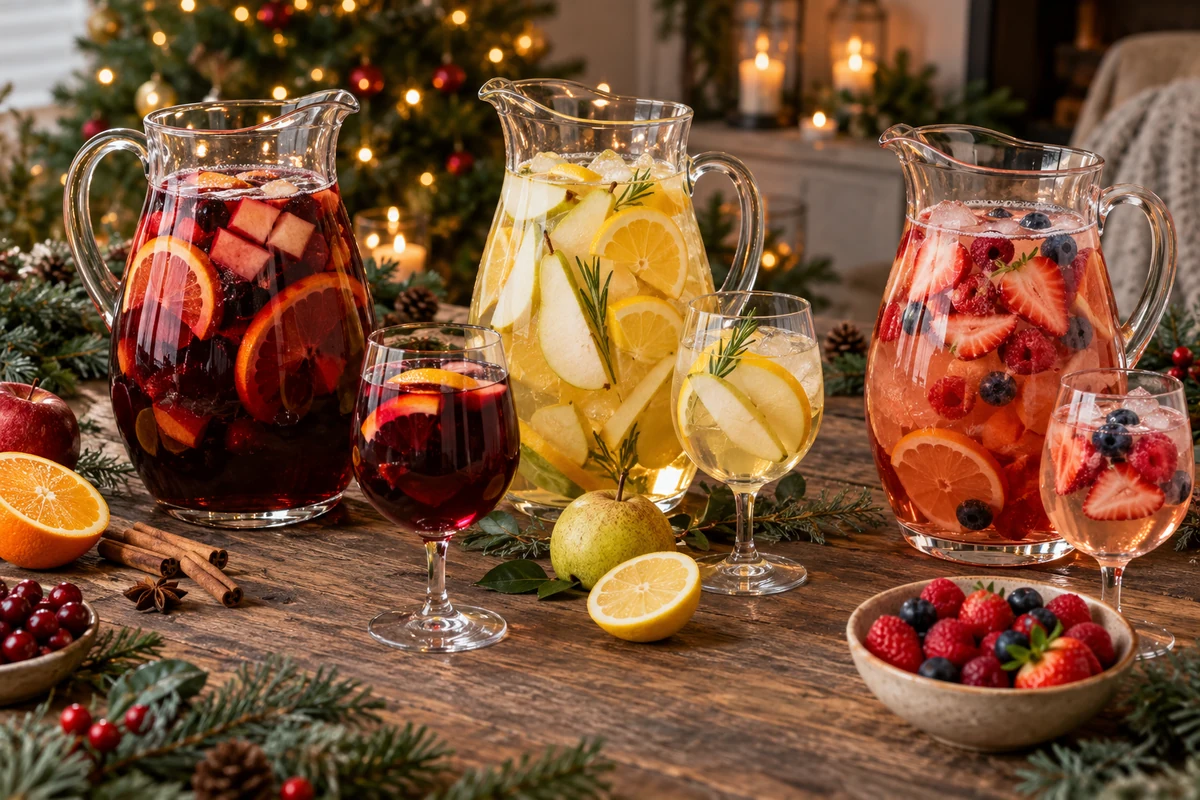
Vary this Christmas sangria with a juice-based option or a different balance of spices and citrus. Clearly identify alcoholic drinks at the table.
Alcohol-free festive mocktail
- 750 ml grape juice – the fruity base, with no wine added.
- 120 ml orange juice – ordinary ready-to-drink juice, not undiluted concentrate.
- Extra sugar only if needed – the juices are usually sweet enough. Honey does not make a drink sugar-free.
- 1 orange, sliced – washed and pips removed.
- 1 apple, cored and diced – for flavour and colour in the jug.
- 150 g pomegranate arils – optional; strain out fruit for young children’s drinks.
- 200–250 ml sparkling water – add at serving time, or use still water if preferred.
- Ice for adult servings – optional, added to glasses.
- Mix the grape and orange juices in a clean jug and taste before deciding whether to sweeten.
- Add the prepared fruit and stir gently.
- Refrigerate for about 2 hours to let the flavours mingle.
- Serve with the sparkling water added last. Offer small portions and keep the remaining base refrigerated.
Spiced warm or cold variation
- 750 ml red wine – or grape juice for a separate alcohol-free version.
- Soft brown sugar to taste, up to 70 g – start with less, particularly when using juice.
- 2 cinnamon sticks and 4 cloves – remove before serving.
- 1 cored apple, diced and 1 orange, sliced – washed and pips removed.
- A few thin slices of fresh ginger, optional – for a gently warming flavour.
- Warm gently with the sugar and spices over a low heat, without boiling. Warming wine does not make it alcohol-free.
- Add the fruit and let it infuse gently for about 10 minutes. Strain out whole spices before pouring.
- For a cold version, combine without heating and refrigerate for 2–6 hours, tasting for spice strength.
- Strain for a clearer drink, or include a little fruit in adult portions. Serve the warm variation at a comfortable drinking temperature.
Citrus and sparkling-wine variation
- 500 ml light red wine – the still base.
- 250 ml brut sparkling wine or Prosecco – chilled and added just before serving; this remains an alcoholic drink.
- 100 ml orange juice – for citrus flavour.
- Up to 50 g sugar, optional – begin with none and adjust only if needed.
- Thin lemon and orange slices and halved grapes – for adult servings.
- Mix the red wine, orange juice and fruit, adding sugar only as needed. Refrigerate for 2–4 hours.
- Just before serving, pour in the chilled sparkling wine and stir gently once.
- Serve promptly in small glasses to enjoy the bubbles.
Quick substitutions
- For less alcohol in the batch, omit the optional spirit and replace part of the wine with water or juice. Dilution does not remove alcohol already added.
- Choose juices without added sugar if preferred, but remember they still contain juice sugars.
- Alternatives: use orange juice instead of brandy, pear instead of apple, or clementine instead of orange. A few cranberries can decorate the jug, but are much more tart than pomegranate.
- Make ahead in the fridge, keeping sparkling ingredients and ice separate until serving.
Sangria technique: infusion, ice and fruit preparation
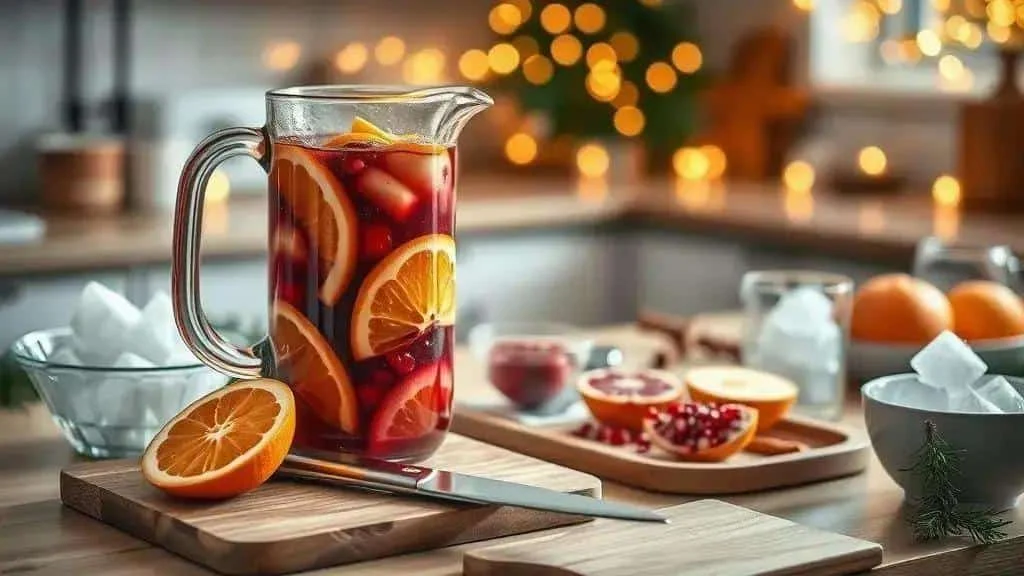
A gentle infusion and controlled dilution help the drink taste balanced. Keep the mixture cold while the fruit and spices steep.
Infusing the fruit
- Starting point: about 2 hours in the fridge gives the flavours time to mingle.
- Longer infusion: 6–12 hours can work, but citrus peel and spices may become overpowering. Taste and remove them when the flavour is right.
- Temperature: keep the covered jug refrigerated at 5°C or below until serving.
- Sugar: stir it into a little juice or the wine until dissolved. Do not assume more spirit or more sugar will improve an unbalanced drink.
Cutting the fruit
- Orange: slice into thin rounds or half-moons and remove pips; discard excessive white pith if it tastes bitter.
- Apple or pear: remove the core and cut into roughly 1 cm pieces or thin slices for the adult drink.
- Grapes: halve for the adult sangria so their flavour mingles with the liquid. Children’s fruit needs different preparation in the alcohol-free option.
- Pomegranate: use clean arils without membrane. Raw cranberries are firm and tart, so treat them as an optional decorative accent rather than an identical substitute.
- Even pieces: similar-sized cuts are easier to stir and distribute between glasses.
Ice and dilution
- Add ice at serving time: this prevents the mixture becoming watery during its fridge infusion.
- Frozen juice cubes: use small portions of grape or orange juice if you want melting ice to add flavour rather than plain water.
- Ice in glasses: this keeps the stored jug undiluted and lets each adult guest choose.
- Sparkling water: add shortly before pouring to retain its fizz.
Finishing and presentation
- Stir gently: mix with a long spoon without crushing the fruit into pulp.
- Garnish simply: a thin orange slice or a small washed rosemary sprig is enough. Remove loose whole spices from the liquid.
- Strain if preferred: serve the fruit separately if guests would rather have a clear drink.
- Pour modest portions: use a ladle or jug and offer water and alcohol-free drinks alongside.
Practical reminders
- Taste with a clean utensil: adjust sugar or acidity in small amounts and avoid returning a used tasting spoon to the jug.
- Useful equipment: a stable chopping board, sharp knife, long spoon and covered fridge-sized container make preparation easier.
- Storage: use the refrigerated wine-based mixture within 48 hours and keep sparkling additions separate until needed. Follow any shorter ingredient instruction.
Serving sangria with Christmas food
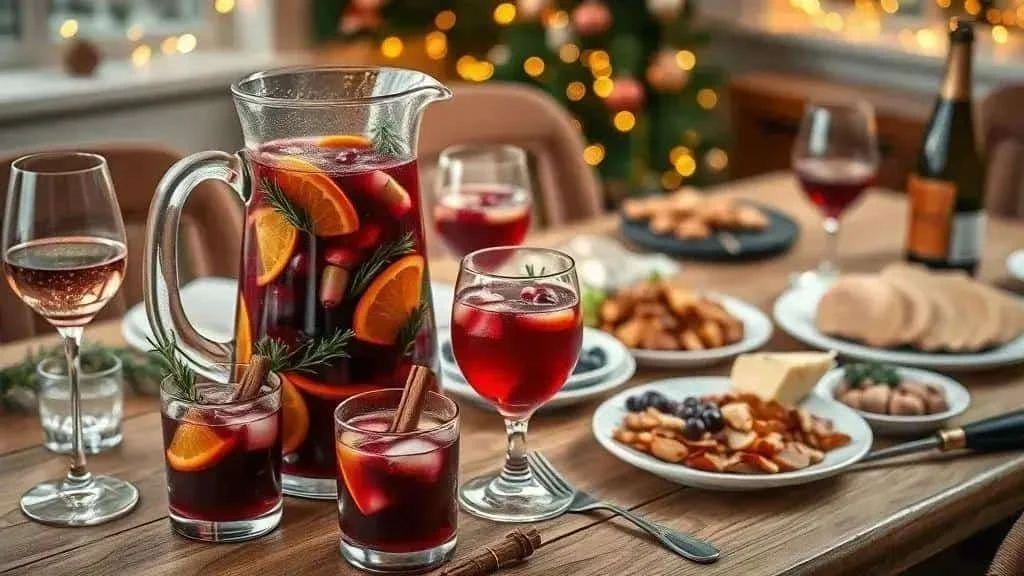
Serve this Christmas sangria as an optional adult drink alongside food, with clear labelling and alternatives for guests who do not drink alcohol.
Food pairing ideas
- Roast dishes: the fruit can complement roast turkey, pork or lamb, depending on the sauces and seasoning.
- Starters: mild cheese, savoury canapés and simple nibbles allow the citrus flavours to remain noticeable.
- Dried-fruit sides: festive rice, stuffing or Brazilian farofa with fruit offer another possible match.
- Desserts: some guests enjoy a small serving with panettone or chocolate desserts; avoid making the drink excessively sweet to compensate for the food.
Yield and glass size
- Approximate yield: the main recipe makes about 1.17–1.27 litres of liquid when both the 120 ml spirit and 100–150 ml juice are included, before fruit and ice. That is roughly 8 small 150 ml servings; omitting optional liquids reduces the yield.
- Scaling: multiply the chosen ingredients consistently rather than automatically increasing the spirit. Each additional bottle of wine adds alcohol as well as volume.
- Glasses: use small wine glasses or tumblers with room for a little fruit and ice, rather than filling large glasses to the brim.
- Serving temperature: pour chilled and let individual glasses warm slightly if preferred; keep the unused jug refrigerated.
Party preparation
- Make the still base ahead: allow at least 2 hours in the fridge, checking the flavour if leaving it overnight.
- Keep it cold: bring out smaller jugs in stages or place a serving container in an ice bath while keeping spare mixture in the fridge.
- Add sparkling ingredients late: water and sparkling wine both lose their bubbles if stirred in long before serving.
- Label the drinks: clearly mark alcoholic and alcohol-free jugs, give them separate utensils and keep alcoholic drinks away from children.
- Manage dilution: add ice to glasses rather than leaving it to melt in the stored base.
An alcohol-free alternative
- Juice-based option: combine 750 ml grape juice and 120 ml orange juice with fruit, then add 200–250 ml water at serving time. Omit every wine, spirit and liqueur.
- Separate service: use a different labelled jug and utensils. For young children, strain out the fruit and use an appropriate cup without hard garnishes.
- Similar aroma: briefly infuse cinnamon or washed orange peel and remove before serving. Juice still contains sugar, so offer small portions with a meal.
At the table
- Garnishes: keep them simple and edible, and avoid loose whole spices in poured drinks.
- Distribution: use a clean ladle for fruit, or strain the liquid if that is easier for the guests.
- Serving time: leave the jug out only as needed, refrigerate untouched spare mixture promptly, and do not return leftovers from glasses to it.
Ready to prepare your Christmas sangria?
Choose the version that suits your guests and balance the fruit, spice and sweetness to taste. Careful chilling and adding bubbles at the last moment make more difference than elaborate garnishes.
Thank you for reading. Follow our social channels and explore I Love Christmas for more seasonal recipes and hosting ideas.
Frequently asked questions about Christmas sangria
How long should sangria infuse?
Start with 2 hours in the fridge. A 6–12-hour infusion can give more pronounced flavour, but taste and remove citrus peel or spices if they become bitter or overpowering.
Can I make a similar alcohol-free drink?
Yes: replace all the wine and spirits with 750 ml grape juice and 120 ml orange juice, keep the fruit and gentle spices, and add water to taste. Keep this jug clearly separate from the alcoholic one.
How do I avoid too much dilution?
Chill the base well, add ice to glasses rather than the stored jug, and pour in sparkling water only when serving. Frozen juice cubes add flavour as they melt but also add juice sugars.
Which fruits can I use?
Orange, apple, grapes and pomegranate suit the recipe. Try clementine instead of orange or pear instead of apple. Cranberries are considerably sharper than pomegranate, so use sparingly and adjust the flavour.
How much does one bottle of wine make?
With 120 ml spirit, 100–150 ml juice and 200–250 ml sparkling water, a 750 ml bottle makes about 1.17–1.27 litres before fruit and ice: roughly 8 small 150 ml servings. Optional omissions reduce that amount.
How should I store leftover sangria?
Keep unused wine-based sangria covered at 5°C or below and use within 48 hours, following shorter ingredient limits. Aim to use the juice-only version within 24 hours. Add bubbles and ice only to the amount being served.