Teaching the Christmas story through play can include short scenes, puppets and simple craft activities. Adapt the materials and pace to each child, distinguish Christian beliefs from family customs, and offer different ways to participate. Shared stories and drawings can help families revisit what they have explored together.
Teaching the Christmas story through play gives children a chance to ask questions, tell stories and make things together. These ideas can fit into a living room, classroom or family gathering without needing an elaborate performance or expensive supplies.
Illustrations in this article are conceptual images, not documentary photographs or evidence of a particular historical event, destination, venue or access route.
Why explore the Christmas story through play?
Play gives children ways to explore the Christmas story through movement, conversation and objects. Pretend play offers opportunities for storytelling and social interaction, although no activity guarantees a particular learning outcome. Explain that the Nativity is the Christian account of Jesus’ birth, alongside the different family customs associated with Christmas. Source: NHS: different types of play
Opportunities for learning
- Remembering a sequence: acting out a short scene lets children revisit characters and what happens next.
- Considering another perspective: discussing Mary, Joseph or the shepherds can prompt questions about how characters might feel within the story.
- Language and storytelling: retelling a scene gives children a reason to try words, connect events and express their own ideas.
- Different ways to join in: drawing, puppets, narration or watching allow children to participate without all needing to perform.
Play ideas to explore
Choose an activity that suits the children involved. Here are a few starting points:
- A short scene: act out one part of the story with simple, comfortable props.
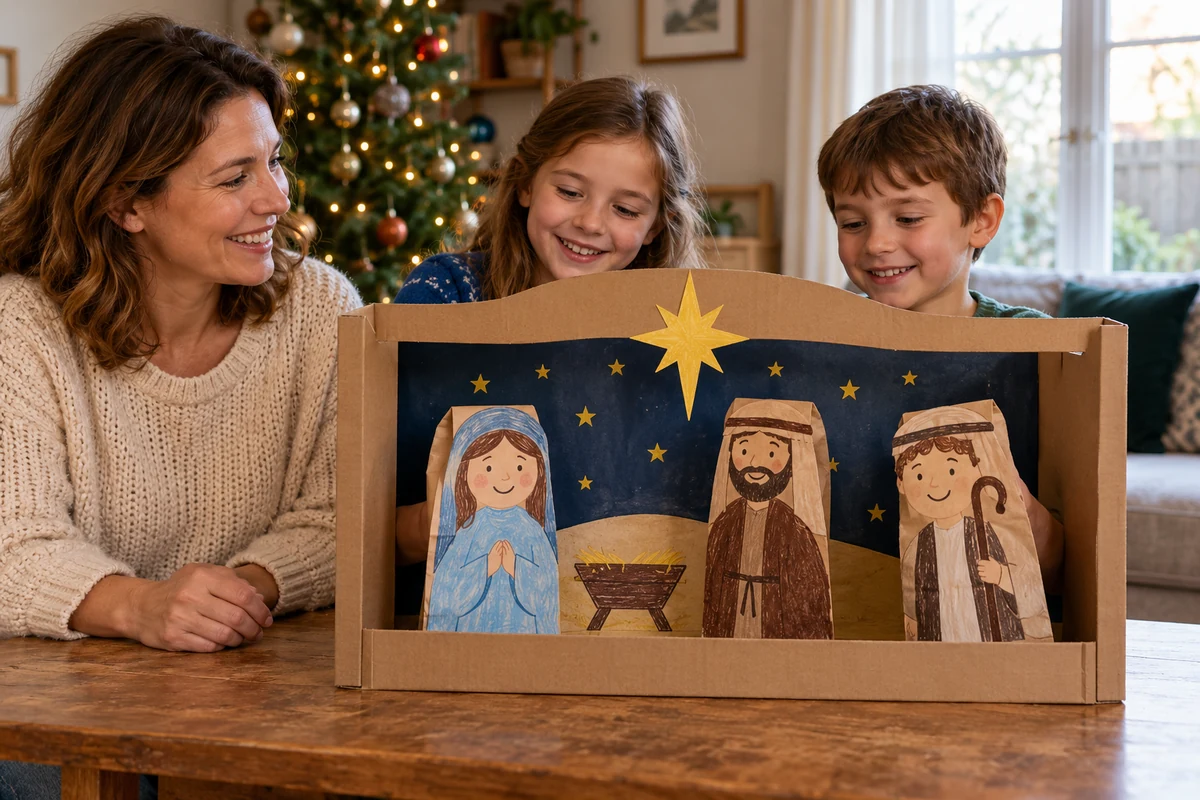
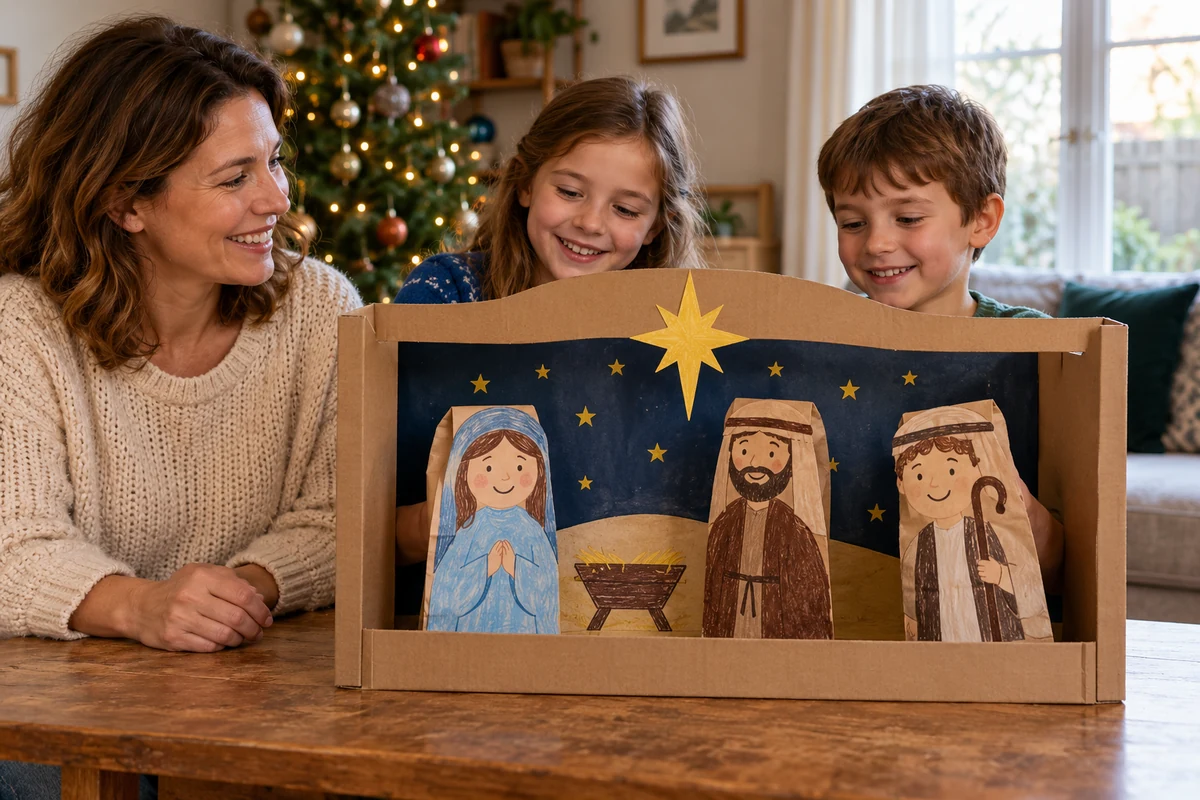
- A puppet show: use ready-made puppets or decorated paper bags to tell the story from behind a small stage.
- A shared storytelling circle: invite each child to contribute a phrase, a sound or a picture, with the option to pass.
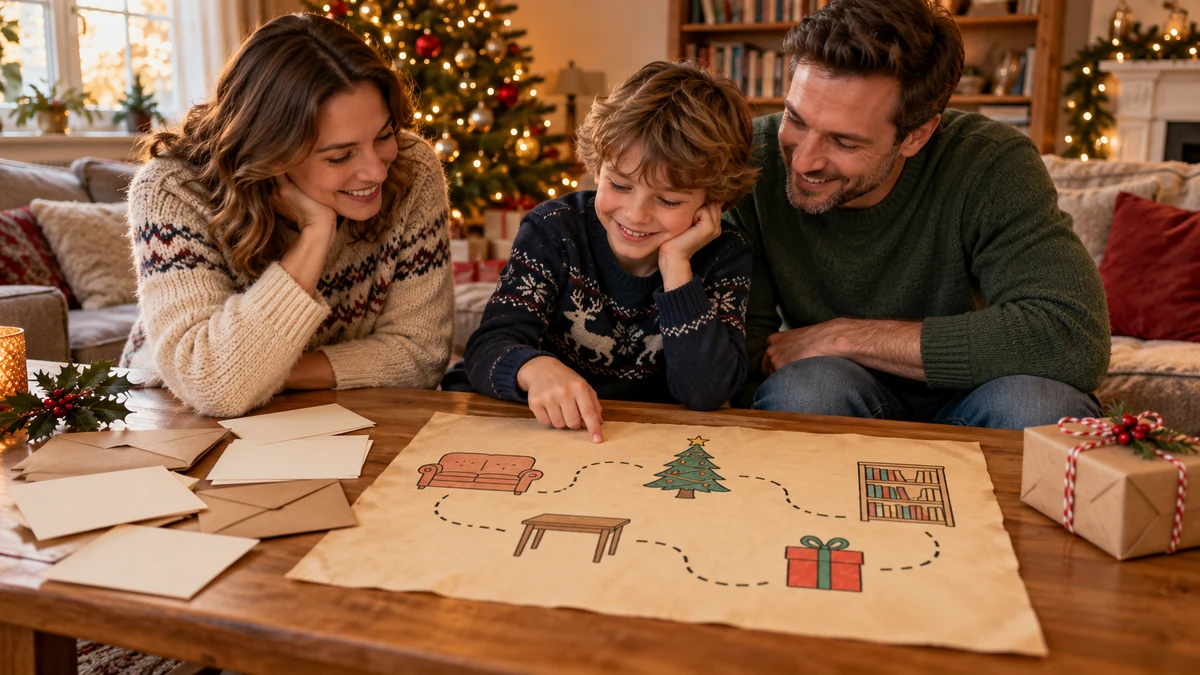
- A story treasure hunt: use large picture clues about characters or events, placed in safe, accessible locations.
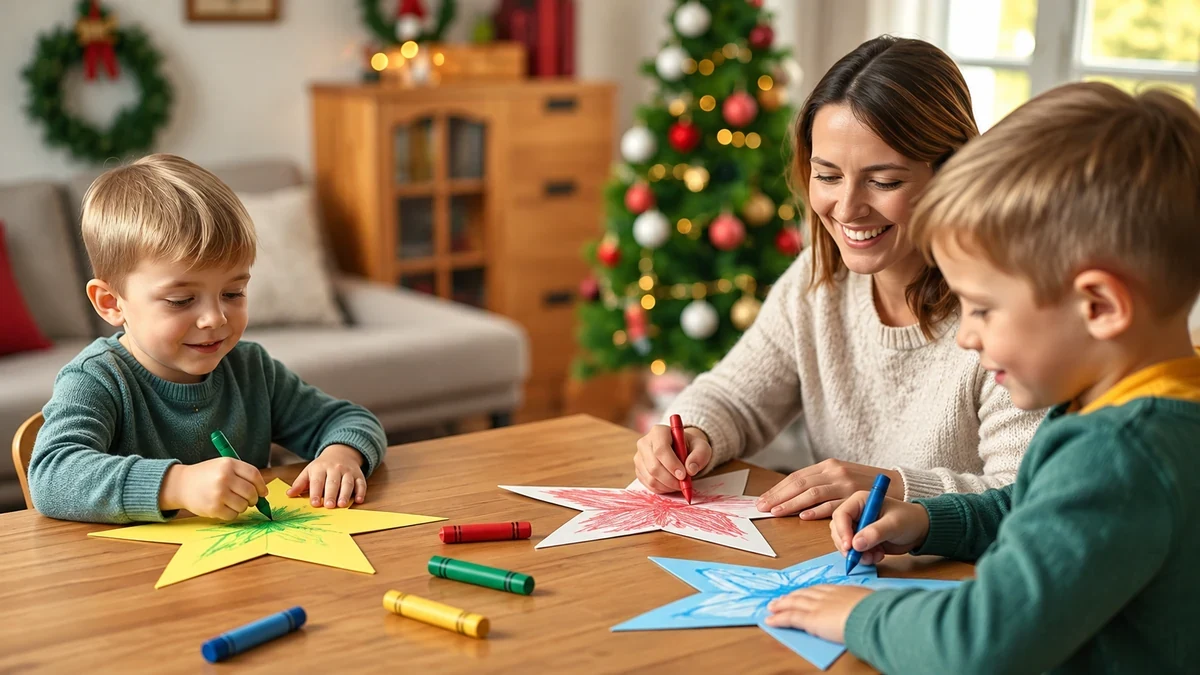
- A symbols workshop: make a paper star or a simple Nativity scene while talking about its meaning within Christian tradition.
Pointers for families and educators
- Follow the child’s stage and interests: younger children may prefer songs and pictures; older children may enjoy dialogue or open-ended discussion.
- Keep the plan flexible: 10–20 minutes can be a starting point for a group activity, but stop earlier or take breaks when needed.
- Use straightforward materials: paper, clean card and suitable fabric can create a setting without electrical lights or costly equipment.
- Invite questions: ask what a character might be thinking, while accepting that children may interpret a scene differently.
- Keep a record if wanted: a drawing or agreed photograph can help the family revisit the activity; recording is not required.
Let the activity remain a shared experience rather than a test. Children can learn about a religious story and other people’s customs without being expected to share a particular belief.
Storytelling games: short plays and puppet theatre
Drama and puppets give characters voices and movement. Begin with a familiar scene, explain the context and leave room for children’s questions and ideas.
What children can practise
- Story order: arrange a few scenes and talk about what happens before or after each one.
- Speaking and listening: try a short line, listen to a partner and respond in character.
- Working together: agree roles, share props and decide what to do if two people want the same part.
- Alternative participation: offer a puppet, a non-speaking role or an offstage task to anyone who prefers it, without treating one form of participation as better.
Materials and preparation
- Simple costumes: use comfortable clothes or short fabric pieces that do not trail, cover faces or tie around the neck. Keep all costumes away from heat and flames. Source: London Fire Brigade: candle safety
- Puppets: try suitable glove puppets, clean socks or paper bags. Draw faces instead of adding loose buttons, beads or detachable eyes.
- A portable stage: an adult can prepare a stable cardboard-box opening. A paper star creates a backdrop without wires or battery-powered decorations.
- A simple script: start with six to eight short lines and a few actions, then shorten or extend them for the group.
- Supporting props: use large picture cards, quiet music if welcomed and simple symbols such as a star or a manger made from card.
Step by step: a short Nativity scene
- Choose the scene: for example, the birth of Jesus or the message to the shepherds. Introduce it as part of the Christian Nativity story.
- Offer roles: narrator, Mary, Joseph, angel or shepherd may suit the scene. Include offstage tasks and allow children to decline or swap roles.
- Read it together: an adult can narrate while children follow with pictures or short lines. Try different voices without requiring memorisation.
- Try a brief rehearsal: a few minutes may be enough. Ask a helpful question such as “What happens next?” instead of repeatedly correcting a child’s performance.
- Share the scene: aim for a short presentation, perhaps three to five minutes, focusing on enjoyment and understanding.
- Reflect together: invite children to describe something they noticed through a word, a drawing or a gesture.
Step by step: puppet theatre
- Prepare the stage: keep the opening at a comfortable height, with stable supports and enough space for everyone to move.
- Choose or make characters: use suitable puppets or spend a short craft session decorating paper bags with drawn features.
- Keep dialogue short: one or two lines per character can be enough, with room to improvise or let an adult narrate.
- Practise movement: show how a puppet can turn towards a speaker or nod without needing complicated hand movements.
- Work in small groups: pairs or trios may make it easier to coordinate, but let children choose a comfortable level of involvement.
- Record only with agreement: ask children and their caregivers before filming or taking photographs, and agree how any recording will be shared.
Adapting the activity by age
- Ages three to five: offer simple puppets, a short role and close adult support. Ten to fifteen minutes is a flexible suggestion, not an attention target.
- Ages six to eight: try short dialogues, shared roles and some improvisation, taking breaks within a session of around 15–25 minutes if needed.
- Ages nine to twelve: children may enjoy linking scenes, writing dialogue or discussing themes such as generosity, hospitality and family customs.
Quick practical tips
- Offer a choice of tasks: acting, puppetry, narration and being an audience member can all be valuable ways to join in.
- Watch the pace: repeat an activity when children want to, and stop before it becomes tiring or frustrating.
- Notice effort and imagination: respond to children’s ideas rather than rewarding only word-perfect lines.
Christmas play ideas from babies to teenagers
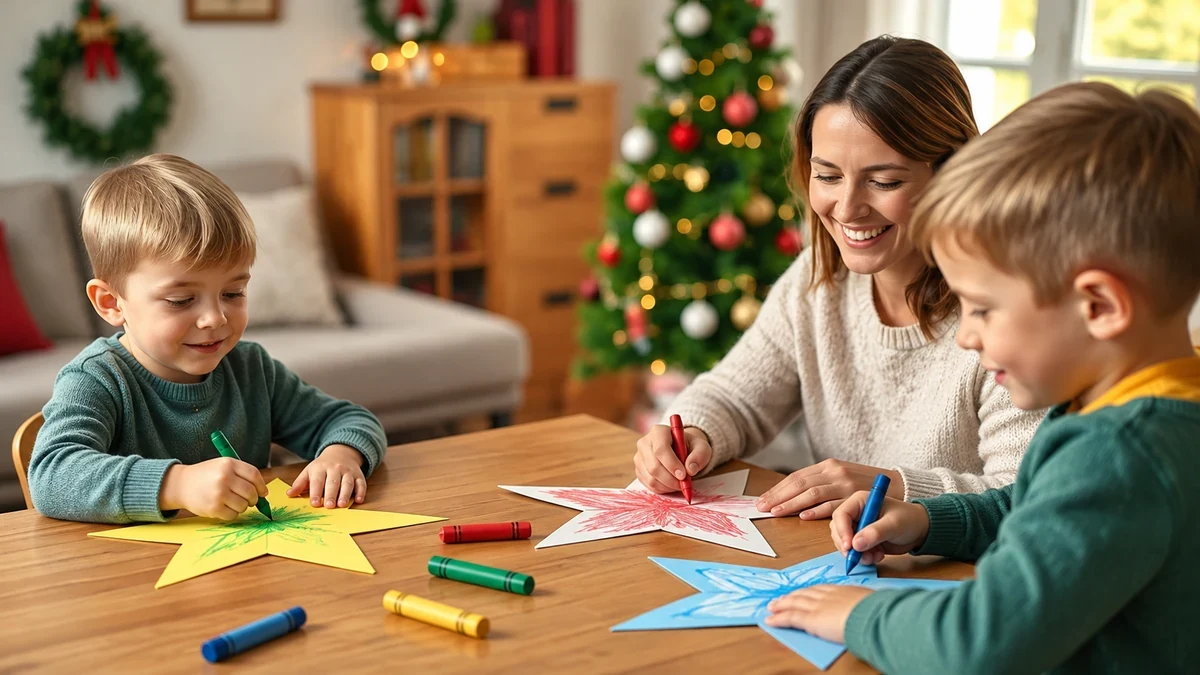
Set simple aims: a comfortable activity, suitable materials and a chance to participate. The age bands and timings below are planning suggestions, not developmental milestones or rules for every child.
Babies and toddlers: birth to two years
- Activities: share a short song or a sturdy picture book with an adult. For sensory exploration, choose age-rated toys rather than loose craft decorations. Source: NHS: baby and toddler play ideas
- Materials: suitable baby books and well-maintained toys without loose parts. Keep fairy lights, batteries, ribbons and small Nativity figures out of reach.
- Duration: a few minutes, perhaps five to ten if the child remains interested, with no requirement to complete a session.
- Care: stay close and respond to signs of tiredness or discomfort. Remove damaged items and anything unsuitable for a child who explores with their mouth.
Young children: ages three to five
- Activities: short scenes, simple paper crafts, music and gentle movement with clear space around the group.
- Materials: coloured paper, suitable washable glue, age-appropriate scissors under supervision and puppets with drawn rather than loose features.
- Duration: try ten to fifteen minutes with time for free play or a break afterwards.
- Adaptation: show an example, give one instruction at a time and let children explore their own version.
Children aged six to eight
- Activities: a short group play, a picture-clue treasure hunt or a simple card Nativity scene.
- Materials: clean cardboard, ordinary craft glue, suitable washable paints, paper and fabric. Do not describe a hot-glue gun as “cold” or hand it out as a children’s tool.
- Duration: around 15–25 minutes may suit a small activity, with a break or shorter version when needed.
- Working together: invite children to read a line or help divide tasks such as drawing the backdrop, narrating or organising props.
Older children: ages nine to twelve
- Activities: write a sequence of scenes, choose a simple soundtrack or design more detailed paper props.
- Materials: supervised, age-appropriate craft tools, fabric and reusable scenery. Any electrical lighting should be selected and installed by an adult.
- Duration: a project may take 30–45 minutes or several shorter sessions, with breaks rather than pressure to finish at once.
- Possible focus: planning as a team, explaining choices and trying different craft or storytelling techniques.
Teenagers: ages thirteen to seventeen
- Activities: compare retellings, write or produce a play, run a supervised community craft session or contribute to a project requested by a local organisation.
- Materials: suitable craft supplies, research resources and, where appropriate, sound equipment or lighting with adult oversight.
- Duration: a larger project might use 45–90 minutes including breaks, or be divided across several meetings.
- Involvement: let teenagers choose roles such as director, designer or writer and discuss how Christmas customs differ between communities.
Recording, reflecting and returning to the activity
- Keep a record: a drawing, audio clip or photograph can be useful when everyone agrees to its creation and use.
- Reflect briefly: ask what someone noticed or enjoyed, accepting a gesture or a quiet response instead of spoken answers.
- Return to favourite ideas: repeat or adapt a short activity on another day if the children remain interested.
Inclusion and safety
- Sensory choices: provide a quieter space and options without music or lights. Discuss suitable tactile materials or hearing protection with the child’s caregiver where relevant.
- Alternative participation: offer non-speaking roles, drawing, narration by an adult or an offstage task; watching is also a valid choice.
- Check materials: look for sharp edges, loose parts, allergens and unsuitable tools, and follow caregivers’ guidance about individual needs.
A flexible plan makes room for different interests and abilities. The aim is to share an enjoyable story activity, not to judge a child’s progress from a performance.
Materials, preparation and reuse
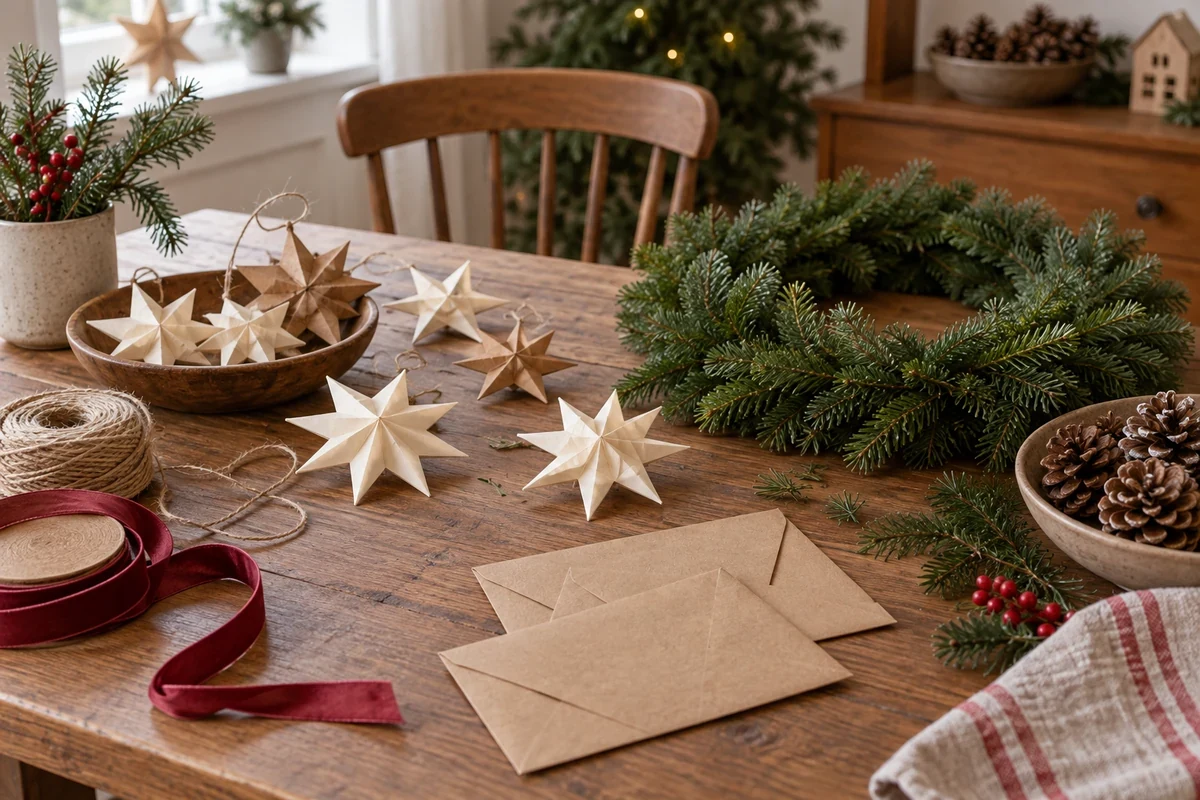
- Clean cardboard boxes: useful for a stage or backdrop; adults should remove staples and prepare any difficult cuts.
- Felt and fabric offcuts: can become scenery or simple puppet clothing. Avoid trailing ties and pieces that may come loose around younger children.
- Broad, smooth craft sticks: may suit older children’s models with supervision. Avoid sharp toothpicks, splintered wood and small loose pieces for younger participants.
- Suitable craft glue and tape: choose products intended for the activity and age group, following their labels.
- Washable paints and brushes: use child-appropriate products and protect clothing and surfaces.
- An optional lighted backdrop: an adult should handle suitable, undamaged lighting. Secure battery compartments and inaccessible leads matter; low voltage does not make a decoration a toy. Source: Child Accident Prevention Trust: button batteries
- Natural-looking textures: coloured paper or fabric can represent moss and stones without introducing unknown plants or small pebbles to a children’s activity.
- Reused puppet materials: clean socks and paper bags can become characters with drawn faces rather than buttons or detachable eyes.
- Paper cards and labels: use clean scrap paper for character names, pictures or short lines.
Preparing the activity step by step
- Sort the supplies: separate paper, fabric and tools, keeping adult-only items out of children’s reach.
- Prepare the space: use a stable table, clear walking routes and a suitable protective covering for messy activities.
- Prepare large pieces first: adults can cut box openings and check edges before children begin decorating.
- Offer clear tasks: drawing, arranging or gluing can be adjusted to each person’s abilities and preferences.
- Write short lines: a few sentences on picture cards may be enough; an adult can read them if a child prefers.
- Check the backdrop: keep it stable and free of trailing cords. Use a paper star instead of lights when an adult cannot arrange a suitable electrical setup.
- Leave time to try it: a brief run-through can reveal whether props are easy to reach and everyone has enough room.
Clearing up and storing materials
- Clear away promptly: collect scraps and tools, then store reusable materials clean and dry.
- Keep a reuse box: save suitable leftover card and fabric for another session, checking condition before reuse.
- Store lighting separately: adults should follow the manufacturer’s storage instructions and keep spare or used batteries away from children.
Keeping costs and waste down
- Share supplies: arrange a swap with other families or groups where the materials are clean and suitable.
- Reuse selectively: previous decorations or packaging may be useful after checking for sharp edges, loose parts and unsuitable finishes.
- Choose durable tools: a small collection of appropriate tools can serve several seasons when maintained and stored properly.
- Start with what is available: invite children to design within a simple set of safe materials rather than requiring a new kit.
A quick safety check
- Keep small parts away from under-threes and any child who still mouths objects.
- Supervise actively and reserve hot glue and difficult cutting for adults; offer ordinary suitable craft glue for children’s tasks.
- Check sensitivities before using glue, paint, fragrance or fabric, and choose a different material when needed.
Keeping family traditions alive through memories and adaptations
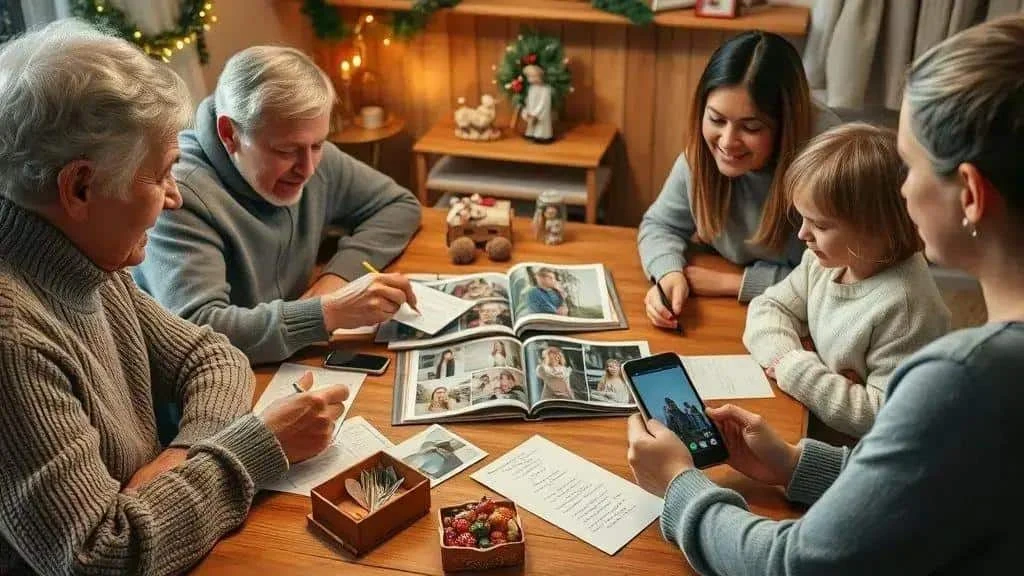
Shared memories can connect a Christmas activity with the people who celebrate it. Keep records only if they are welcome, and make room for changing beliefs, interests and family circumstances.
Digital and paper records
- A printed album: add a date and a short caption to selected photographs, with permission from the people shown.
- A shared scrapbook: children can add drawings, short notes and suitable keepsakes to tell the story of the gathering.
- Short videos: invite willing relatives to describe a memory or custom in a brief clip, perhaps 30–60 seconds.
- Audio stories: a voice recording can preserve a relative’s story and suit people who prefer listening to looking at photographs.
- Protected copies: back up important files in a secure account or storage device and check access settings before sharing.
Sharing with family and community
- A family message group: agree who can see recordings and whether anyone may forward them. A private group still needs consent and care.
- A short video call: share a new drawing, decoration or scene with relatives who would like to watch.
- A family recipe book: collect recipes and their stories, distinguishing remembered details from information you have checked.
- A community display: use drawings or agreed photographs at a school, church or community venue, following its safeguarding and consent arrangements.
Respecting differences within the family
- Respect beliefs: explain the Nativity as a Christian story without requiring belief. Offer a separate activity about kindness or family customs to anyone who prefers it.
- Food and allergies: if a gathering includes cooking, agree suitable ingredients with caregivers. Plant-based alternatives may introduce other allergens, so check rather than assuming a substitution is safe.
- Share roles by preference: people of any generation may enjoy drawing, music, organising or storytelling; avoid assigning tasks solely by age.
- Keep timing flexible: a five- or ten-minute activity may be enough to include someone without tiring them.
Using memories as a starting point
- Choose one item: a photograph, recording or old recipe can introduce a conversation with children.
- Give some context: explain who is involved and what is known about the date or occasion; say when a detail is uncertain.
- Ask an open question: try “What do you notice?” or “How might this celebration be different today?” without expecting one correct answer.
- Try a related activity: draw the scene, act out a short moment or prepare a suitable recipe with adult supervision.
- Add the new memory: keep a drawing or agreed recording beside the original, making clear which is a retelling rather than a historical record.
Caring for family records
- Ask before sharing: obtain appropriate caregiver permission and respect the child’s wishes before posting or sending images beyond the agreed audience.
- Label clearly: record the year, creator and any relevant context so the material remains understandable later.
- Check digital copies: make sure backups can still be opened and review who has access when circumstances change.
Play can give families an enjoyable way to explore the Christmas story and talk about their own traditions. Puppets, drawings and short scenes offer different ways to participate without making performance the goal.
Start small, follow children’s interests and adapt as you go. Returning to a favourite activity can be more useful than adding another elaborate project to the festive calendar. Source: NHS: activities for toddlers
Thank you for reading. Share the activities your family enjoys, and visit I Love Christmas for more festive stories and practical ideas.
Teaching the Christmas story through play: frequently asked questions
At what age can children join in?
Babies can enjoy suitable books and songs with an adult; older children may choose puppets, crafts or short scenes. Match the activity to the individual child’s interests and abilities rather than treating an age band as a requirement.
How long should an activity last?
Begin with a short session and follow the children’s responses. A few minutes may suit a baby, while older children may enjoy a longer project with breaks. Suggested timings are flexible, not targets children must meet.
How can I include children with additional needs?
Ask caregivers and the children about useful adaptations. Options include a quieter space, pictures, tactile materials, a non-speaking role or an offstage task. Provide the support appropriate to the individual rather than assuming one approach suits everyone.
Which low-cost materials work well?
Clean card, paper, suitable fabric, washable paints and puppets with drawn faces can be enough. Adults should prepare difficult cuts and check for loose parts, sharp edges and unsuitable materials. Electrical decorations are optional and are not toys.
How can the family keep the activity going over the years?
Revisit favourite stories and adapt the activity as interests change. Save drawings or agreed photographs and recordings, using clear privacy arrangements. Keeping the tradition enjoyable matters more than repeating an identical performance each year.
Sources and Further Reading
- NHS: different types of play
- NHS: baby and toddler play ideas
- Child Accident Prevention Trust: button batteries
- London Fire Brigade: candle safety
- NHS: activities for toddlers