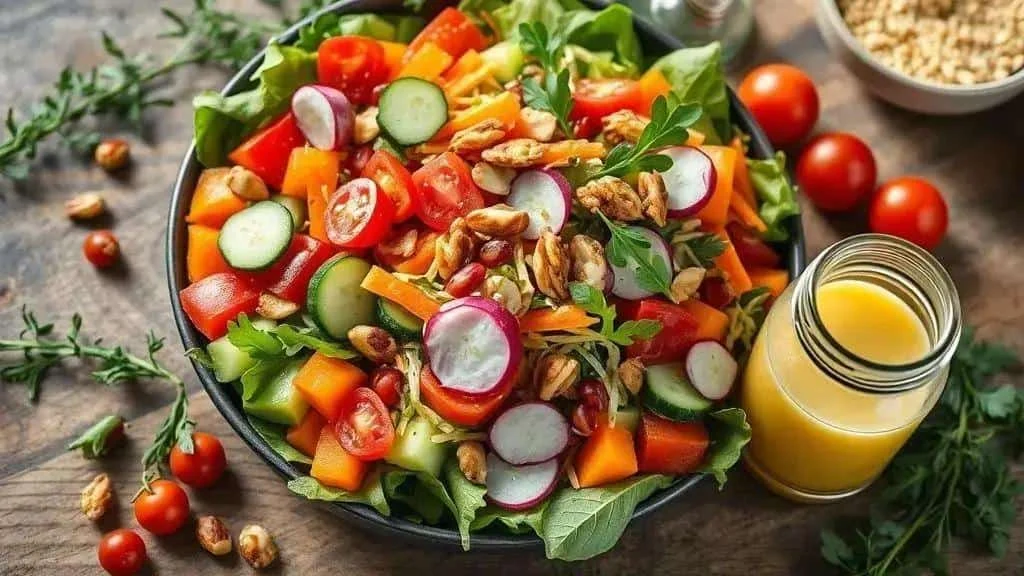
This colourful Christmas salad combines crisp vegetables, fresh leaves, pomegranate and toasted nuts with a tangy dressing. Adapt it with vegan ingredients, cooked chicken or chickpeas, and assemble shortly before serving to preserve the crunch.
Colourful Christmas salad brings fresh vegetables and bright colours to a festive meal. Follow the straightforward method below, then choose a dressing and toppings to suit your table.
Ingredients for colourful Christmas salad
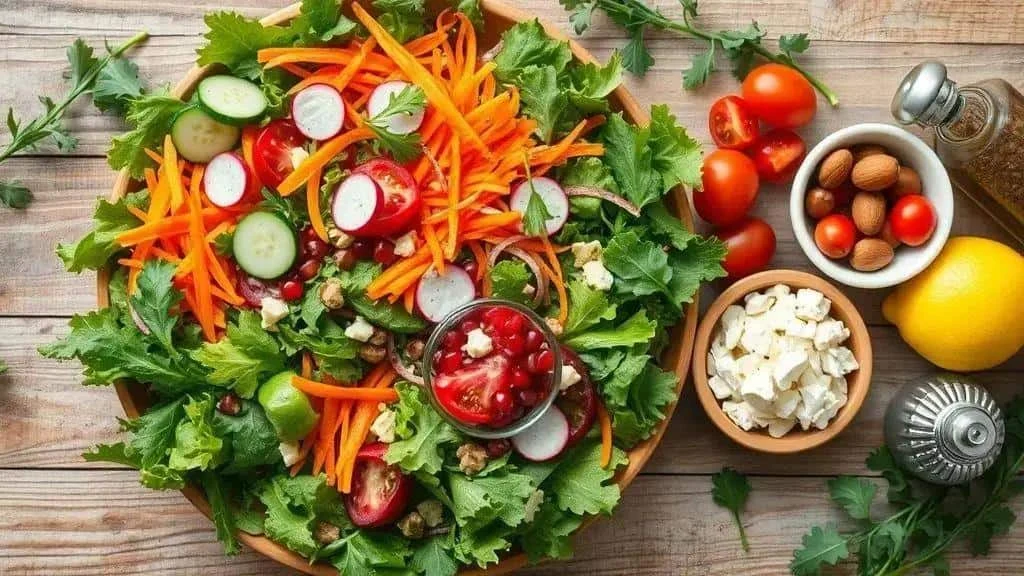
To make this colourful Christmas salad, you will need the following ingredients, making about 6 side portions:
- 200 g mixed salad leaves, such as lettuce, rocket and watercress, washed and thoroughly dried; use lettuce alone for a milder flavour.
- 1 medium cucumber, about 200 g, thinly sliced or cut into half-moons; a small, thin-skinned cucumber works well.
- 2 medium carrots, about 200 g, grated or cut into thin matchsticks; grated beetroot is an alternative, although it may stain the other ingredients.
- 1 red pepper, deseeded and thinly sliced; yellow pepper also works.
- 150 g cherry tomatoes, red and yellow if available, halved; baby plum tomatoes are another option.
- 6–8 radishes, thinly sliced; omit if you do not enjoy their peppery flavour.
- 80 g pomegranate seeds, about ½ cup, for a bright red finish; dried cranberries give a different but equally festive texture.
- 40 g toasted walnuts or almonds, about ⅓ cup, roughly chopped; Brazil nuts or pistachios are alternatives.
- 100 g feta or goat’s cheese, optional, crumbled. Fresh Brazilian Minas cheese is another option if available. Choose cheese labelled vegetarian when required.
- 1 tablespoon chopped parsley or chives; mint gives a refreshing variation.
- 3 tablespoons extra virgin olive oil for the dressing; avocado oil is another option.
- 1 tablespoon white wine vinegar or lemon juice, adjusted to taste.
- 1 teaspoon Dijon mustard, to help emulsify the dressing. For a mustard-free version, omit it or try a little plain yoghurt; honey changes the sweetness but does not replace mustard’s flavour.
- 1 teaspoon honey or agave syrup, optional, to balance the acidity. For a vegan salad, use agave or omit the sweetener.
- Salt and freshly ground black pepper, to taste.
Before you begin
Assemble shortly before serving, keeping the pomegranate seeds and toasted nuts for the final topping. This keeps the colours distinct and the nuts crisp.
How to make colourful Christmas salad
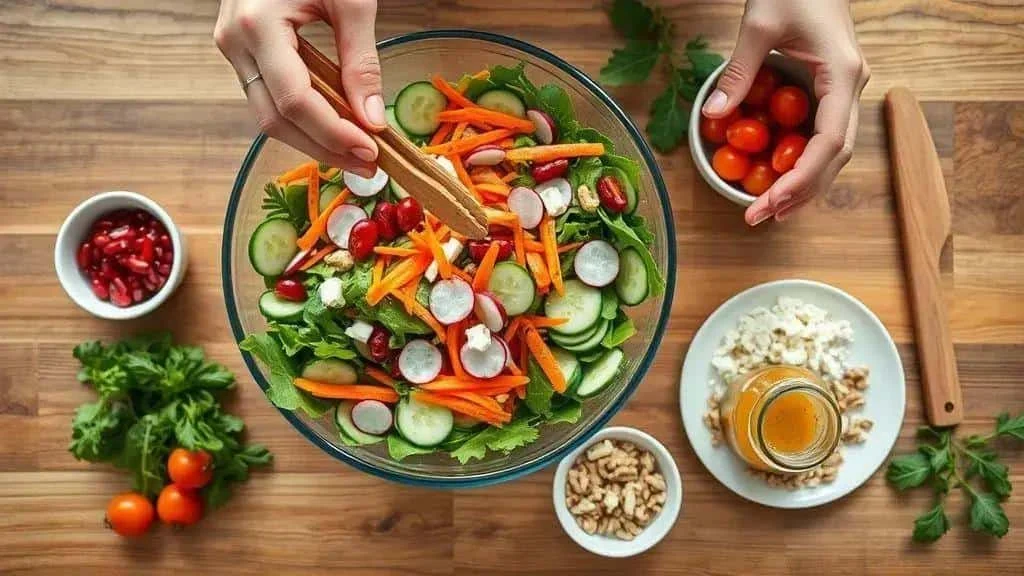
Follow these steps to prepare your colourful Christmas salad with crisp vegetables and a simple dressing.
- Wash and dry the leaves: wash 200 g mixed lettuce, rocket and watercress, then dry thoroughly in a salad spinner or with clean kitchen paper. Spinning alone does not replace washing.
- Prepare the cucumber: wash 1 medium cucumber, trim the ends and slice into thin rounds or half-moons. Leave the skin on if it is tender.
- Prepare the carrots: wash and peel 2 medium carrots, then grate or cut into fine matchsticks. Keep separate from the leaves until assembly.
- Slice the pepper and tomatoes: remove the pepper’s stalk and seeds and cut into thin strips. Halve 150 g cherry tomatoes.
- Slice the radishes: wash and thinly slice 6–8 radishes. A 5-minute soak in cold water may soften their peppery bite; drain and dry well afterwards.
- Toast the nuts: put 40 g walnuts or almonds in a dry frying pan over a medium heat. Stir for about 2–3 minutes, watching closely, until fragrant and lightly toasted. Cool before roughly chopping.
-
Mixing the dressing
Put 3 tablespoons olive oil, 1 tablespoon white wine vinegar or lemon juice, 1 teaspoon Dijon mustard and the optional teaspoon of honey or agave into a small jar. Add salt and pepper, close the lid and shake until combined.
- Arrange the vegetables: spread the dry leaves in a large serving bowl. Distribute the cucumber, carrot, pepper, tomatoes and sliced radishes over them so the colours show.
- Add the finishing ingredients: scatter over 80 g pomegranate seeds, the optional 100 g crumbled cheese, the chopped herbs and the cooled toasted nuts. Add these just before serving.
- Dress at the last moment: drizzle with the dressing just before bringing to the table, or serve it separately. Toss gently with salad servers so the leaves are not crushed.
- Final tips: for transport, keep the dressing separate and carry perishable components chilled in a cool bag. For a vegan version, use agave instead of honey and seasoned tofu instead of cheese.
Colourful Christmas salad variations

Adapt this colourful Christmas salad with different flavours, textures and dietary requirements in mind.
Vegan variation
Replace the cheese and honey with vegan alternatives and add tofu if you would like a plant-protein topping.
- 100 g firm tofu, cubed and pan-fried with oil and a little salt.
- 1 teaspoon agave syrup in place of the teaspoon of honey in the base dressing; add more only if needed to taste.
- Crumbled vegan cheese alternative, optional, for another texture.
Fruit variation
Add a sweet, juicy contrast to the crisp vegetables.
- ½ cup mandarin segments in place of some of the cherry tomatoes.
- ¼ cup seedless grapes, halved; quarter lengthways if serving young children.
- Pomegranate seeds for a colourful festive finish.
Warm roasted vegetable variation
Roasted vegetables add sweetness and make a comforting variation for colder days.
- 200 g squash, cubed, roasted until tender with oil, salt and rosemary.
- 1 small sweet potato, thinly sliced and roasted until tender.
- Serve over fresh leaves with the cool dressing and eat promptly. If using chilled cooked vegetables, reheat once until steaming hot throughout before assembling.
A more substantial salad
Add one or more of these toppings to make the salad a larger part of the meal; adjust portions to the number of people you are serving.
- 200 g grilled chicken breast, seasoned with lemon and pepper, cooked thoroughly and sliced.
- 150 g cooked chickpeas as a plant-protein alternative.
- Hard-boiled egg, quartered, for another topping.
Palm heart and avocado variation
For a different mix of vegetables, try palm hearts and a creamy avocado dressing. The recipe has not been nutritionally analysed, so this variation is not presented as meeting a defined low-carbohydrate target.
- Replace the grated carrot with drained palm hearts for a milder flavour and softer texture.
- Add 3 tablespoons mashed avocado to the dressing for creaminess, thinning as needed.
Alternative dressings and presentation
A change of dressing or arrangement gives the same vegetables a different character.
- Citrus dressing: olive oil, lemon juice, orange zest and honey or agave.
- Creamy dressing: plain yoghurt, Dijon mustard and chopped herbs.
- Layered presentation: arrange leaves at the base, vegetables by colour above and seeds and nuts on top.
Quick tip: keep nuts and pomegranate separate until serving for the best texture and appearance.
Choosing and cutting the vegetables
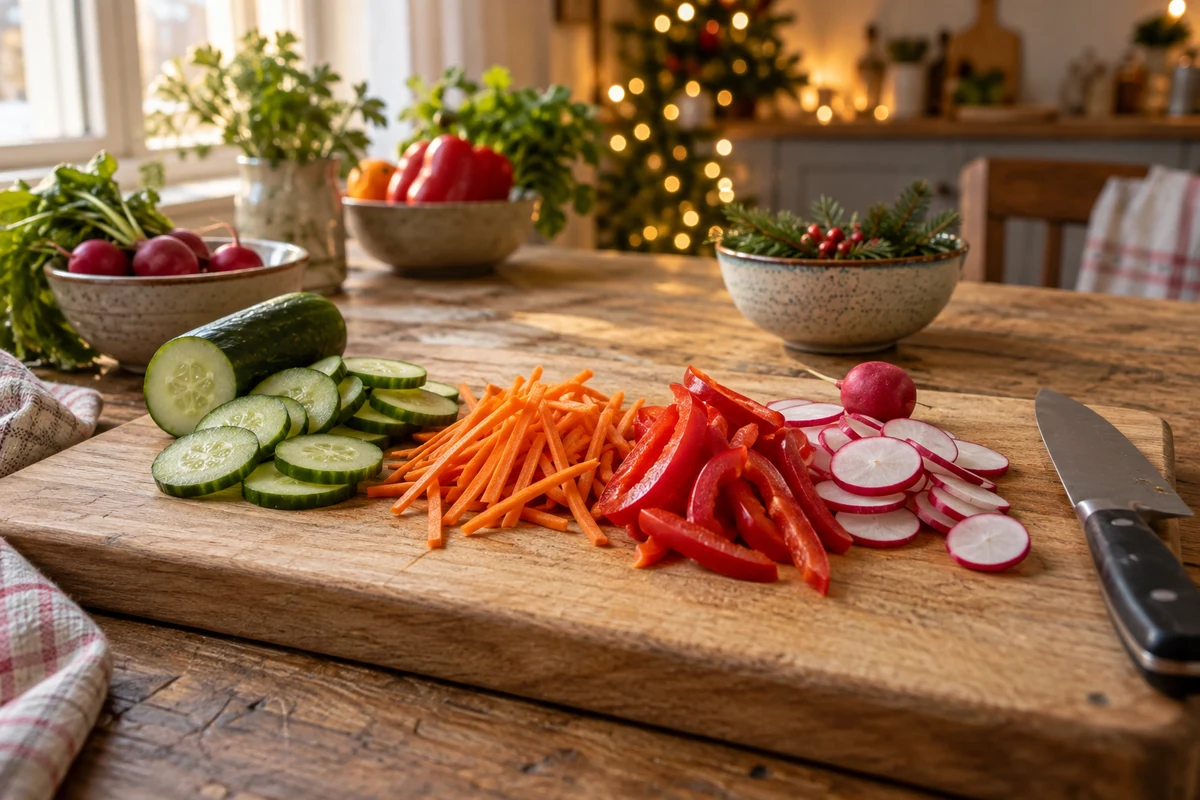
Careful selection and even cutting help your colourful Christmas salad look appealing and make it pleasant to eat.
Choosing fresh ingredients
- Cucumber: choose a firm one without soft spots, damage or shrivelled skin.
- Carrots: look for firm roots without decay. If the tops are attached, fresh-looking leaves are a useful sign of condition.
- Pepper: choose smooth, glossy skin without soft patches; it should feel firm for its size.
- Cherry tomatoes: look for intact skins and a fresh smell, avoiding soft, leaking or mouldy fruit.
- Radishes: choose firm roots and fresh leaves if attached. Flavour varies by variety, so size alone does not guarantee mildness.
- Lettuce, rocket and watercress: choose fresh leaves without sliminess, widespread yellowing or wilting.
Useful cuts and sizes
- Thin slices, 2–3 mm: useful for cucumber and radishes, giving a delicate bite.
- Matchsticks, about 3–4 mm thick and 4–6 cm long: a crunchy way to cut carrots.
- Thin strips: cut peppers into strips about 4–6 mm wide to distribute their flavour and colour.
- Halves or quarters: halve cherry tomatoes for adults; quarter small round foods lengthways for young children.
- Medium cubes, 1–1.5 cm: useful for cheese, roasted squash or sweet potato in the warm variation.
Cutting safely
- Prepare the work area: use a clean, stable chopping board on a non-slip surface.
- Use a well-maintained knife: a sharp blade needs less force, but still requires careful handling and attention.
- Protect your fingers: curl the fingertips of your guiding hand into a claw position and keep them clear of the blade.
- Choose suitable equipment: use a peeler for carrots and a chef’s knife for general slicing. If using a mandoline, follow its instructions and use the hand guard.
Keeping the vegetables crisp and colourful
- Brief cold-water soak: soak sliced carrot or cucumber in cold water for 5–10 minutes if needed, then drain and dry thoroughly.
- Dry well: use a salad spinner or clean kitchen paper to remove excess water before dressing.
- Add toppings last: scatter pomegranate and toasted nuts over the salad just before serving.
- Dress at the last moment: vinegar or citrus dressing softens leaves over time, so add it only when ready to eat.
Solving common problems
- Strong radish or onion flavour: a 5–10-minute soak in cold water can make sliced radishes or onions milder. This is not a way to rescue spoiled vegetables.
- Very juicy tomatoes: drain excess juice, or remove some seeds if necessary, before adding to the leaves.
- Transporting the salad: pack cut components separately, keep them chilled and assemble shortly before serving.
Quick tip: aim for consistent cuts so the vegetables are easy to eat together.
Dressings and herbs for Christmas salad

Choose a dressing that balances the acidity, sweetness and texture of your colourful Christmas salad. The options below are alternatives, not additions to use all at once.
Classic vinaigrette
A quick, versatile dressing that suits most of the variations.
- 3 tablespoons extra virgin olive oil
- 1 tablespoon white wine vinegar; cider vinegar gives a different fruity flavour.
- 1 teaspoon Dijon mustard
- Salt and black pepper, to taste
- Combine the vinegar and mustard in a jar.
- Add the oil gradually and season with salt and pepper.
- Shake with the lid securely closed, or whisk with a fork, then taste and adjust.
Lemon and orange dressing
Fresh citrus juice and zest give a bright, aromatic dressing.
- 2 tablespoons fresh lemon juice, strained
- 1 tablespoon orange juice
- 3 tablespoons olive oil
- 1 teaspoon honey or agave, optional
- Orange zest, optional
- Mix the juices and optional sweetener in a bowl.
- Add the oil gradually, whisking as you go.
- Finish with orange zest and adjust the sweetness or seasoning to taste.
Creamy yoghurt and herb dressing
A creamy contrast to crunchy vegetables, especially in the cheese variation.
- 120 g plain yoghurt, about ½ cup; Greek yoghurt gives a thicker result.
- 1 tablespoon lemon juice
- 1 teaspoon mustard
- 2 tablespoons chopped fresh herbs, such as parsley, chives and dill
- Salt and pepper, to taste
- Put the yoghurt in a bowl and stir in the lemon juice and mustard.
- Add the herbs and mix until evenly combined.
- Adjust the salt and pepper. If too thick, stir in up to 1 tablespoon water. Keep chilled until serving.
Honey and mustard dressing
A sweet, tangy option to serve with nuts and cheese.
- 1 tablespoon Dijon mustard
- 1 tablespoon honey; replace with agave for a vegan version.
- 2 tablespoons olive oil
- 1 tablespoon cider vinegar
- Combine the mustard, honey or agave and vinegar in a jar.
- Whisk in the oil gradually until combined.
- Taste and adjust the sweetness or acidity as needed.
Simple balsamic reduction
A concentrated dressing to drizzle sparingly over fruit and cheese.
- 100 ml balsamic vinegar
- 1 tablespoon sugar or honey, optional
- Heat the vinegar in a small saucepan over a low heat, adding the optional sweetener if wanted.
- Simmer for about 8–12 minutes, stirring and watching closely, until reduced by roughly half and slightly thickened.
- Cool before using; it thickens further as it cools.
Herbs and finishing touches
- Parsley and chives: fresh flavour with a gentle onion note.
- Basil: a fragrant choice with tomatoes and cheese.
- Mint: particularly good in fruit variations.
- Freshly ground black pepper: add at the table to taste.
- Citrus zest: adds fragrance without much extra liquid.
Practical tip: transport dressings separately and add only when serving. Keep yoghurt-based dressings and other perishable ingredients chilled.
A fresh, colourful festive side
This colourful Christmas salad brings crisp textures and fresh flavours to the table. Use the cutting tips, dressing options and variations to adapt it to your meal.
If you enjoyed these ideas, follow our social channels for more seasonal recipes and preparation tips.
Thank you for reading. Visit the I Love Christmas blog for more ways to celebrate the season around the table.
Colourful Christmas salad: frequently asked questions
Can I prepare the salad in advance?
Yes. Wash and dry the vegetables and store the cut components separately in covered containers in the fridge. Keep dressing and nuts separate, then assemble shortly before serving. Follow the shortest storage limit of any ingredients used.
How do I keep the vegetables crisp?
A 5–10-minute soak in cold water can refresh sliced carrot and cucumber. Drain and dry thoroughly, keep the leaves dry, and add toasted nuts and pomegranate just before serving.
How do I make the salad vegan?
Use pan-fried tofu or a vegan cheese alternative instead of dairy cheese, agave instead of honey, and plain unsweetened plant-based yoghurt for creamy dressings. Check the labels of packaged ingredients.
How should I transport the salad to a Christmas gathering?
Use sealed containers in a cool bag with ice packs, keeping the dressing and crunchy toppings separate. Refrigerate perishable ingredients on arrival and assemble shortly before the meal.
What goes well with this salad at Christmas?
Serve it with roast poultry, cooked fish, quiche or a cheese selection. It also complements rice dishes and Brazilian farofa, a toasted cassava-flour side, offering a fresh contrast to richer foods.
Sources and Further Reading
- Food Standards Agency: chilling, freezing and defrosting food
- NHS: foods to avoid for babies and young children