The history of Christmas dinner brings together religious observances, migration, trade, food preservation and family traditions. Turkey, salt cod and panettone reached festive tables through different routes, rather than one shared origin. This guide retains a particular interest in Brazil’s Christmas Eve meal, while considering examples elsewhere and distinguishing historical evidence from symbolic interpretations.
The history of Christmas dinner is about more than recipes. It includes religious occasions, household budgets and memories passed between generations. Understanding a few of these influences can help you appreciate familiar dishes without assuming that every family celebrates in the same way.
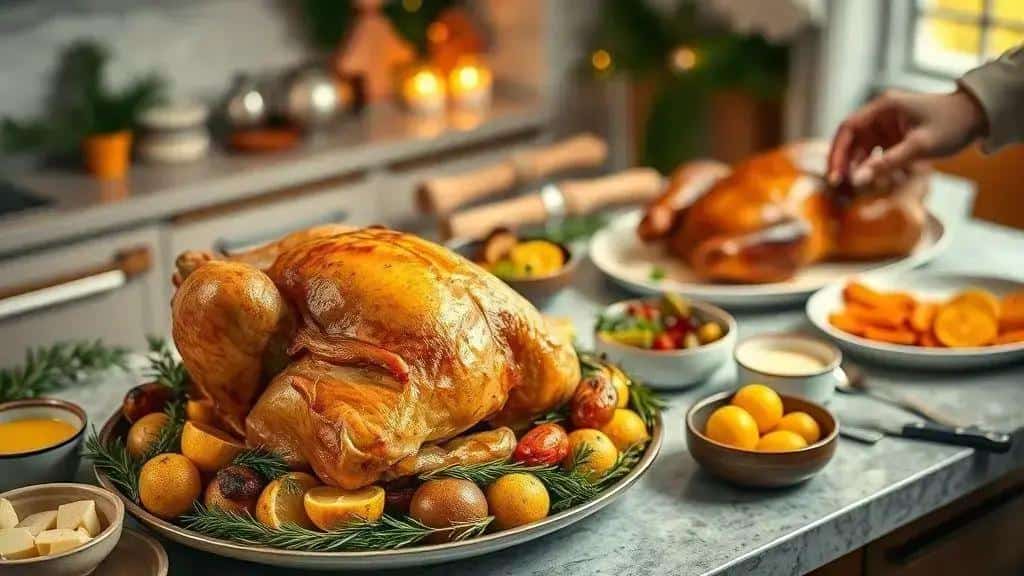
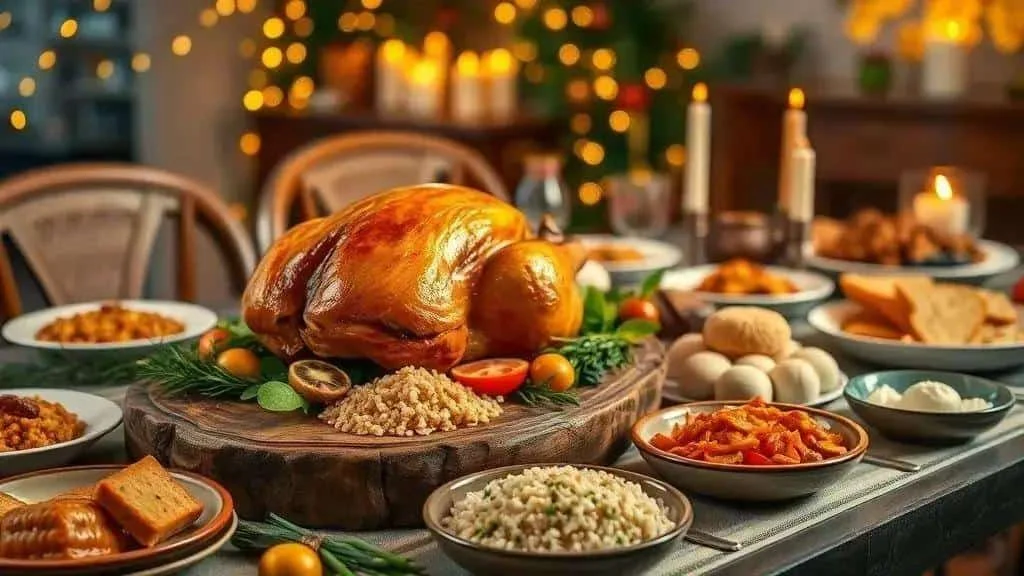
Illustrations in this article are conceptual images, not documentary photographs or evidence of a particular historical event, destination, venue or access route.
Historical background: winter festivals and Christian celebrations
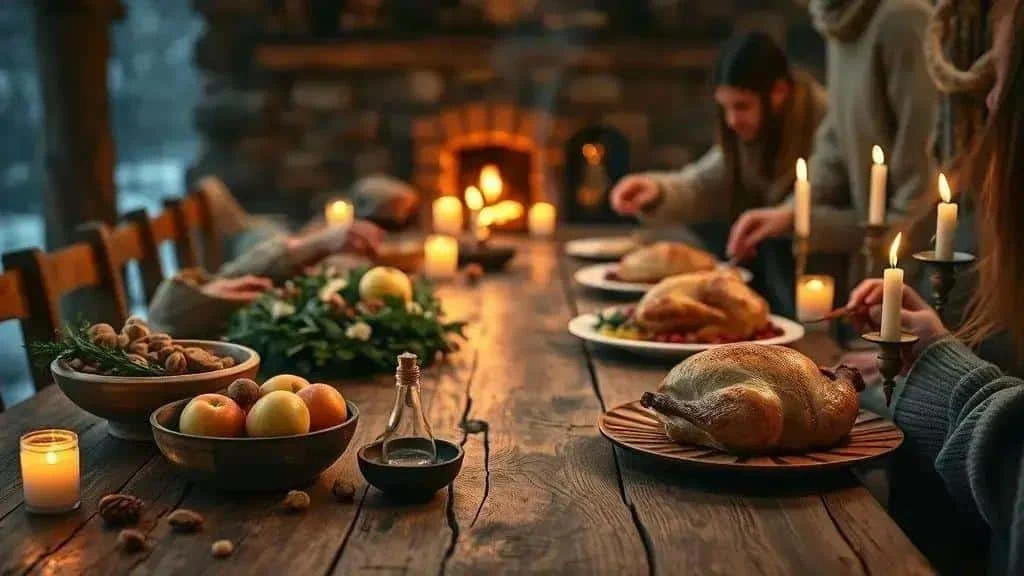
The Christmas meal developed within Christian celebrations and changing local food cultures. Earlier winter festivals provide useful background, but it is too simple to describe today’s dinner as an unchanged pagan ritual. Similarities such as feasting, lights and shared company do not by themselves establish a direct historical connection.
Earlier festivals and recurring themes
Roman Saturnalia and northern European Yule are often discussed alongside Christmas history. They belonged to different societies and periods, not one universal festival. Broad themes found across seasonal celebrations include:
- special food and communal meals, shaped by local resources;
- greenery or other seasonal decorations, whose meanings vary by place and period;
- light and warmth during darker months, without assuming every modern candle has the same ritual origin;
- gifts and social gatherings in some traditions, with different customs and purposes.
These comparisons can help us think about celebration, but they do not prove that a modern dish or decoration descends directly from a particular ancient practice.
Christian observance and changing customs
As Christian celebrations developed in different communities, religious observance and local customs interacted in varied ways. Claims that a single decision simply converted all pagan winter festivals into Christmas overstate a complicated history.
Over time, the festive meal took different forms around worship, music and household celebrations. Seasonal supplies, preserved foods, wealth and access to cooking facilities also mattered. Medieval English Christmas meals, for example, did not follow the modern turkey-dinner model. Source: English Heritage: Christmas food in medieval England
Today’s lights, greenery, special breads and family meals therefore have their own histories. Some customs changed repeatedly or became widespread much later; it is more useful to investigate them individually than to assign them all one ancient origin.
Seeing the meal in this way leaves room for history, faith and personal memory without treating a familiar symbolic explanation as established fact.
Why particular dishes become traditions
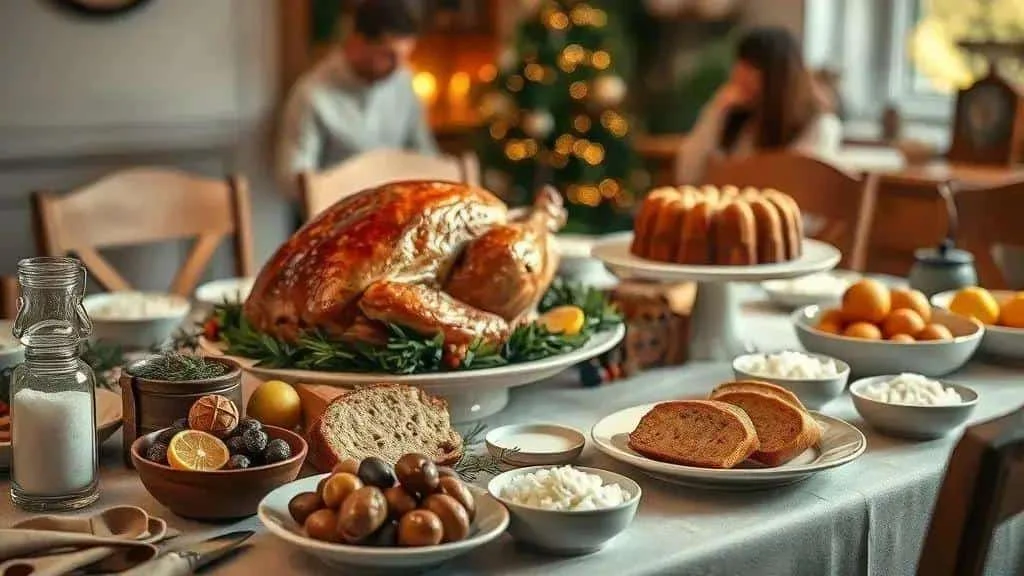
Christmas menus reflect beliefs, availability, preservation, price and social expectations. Some dishes are connected with religious observance; others became familiar through trade, migration or commercial production. A festive table can tell several stories at once.
Meanings associated with food
Turkey can suggest abundance because a large roast is a striking centrepiece, although this is an interpretation rather than its single historical meaning. Bacalhau, or salt cod, connects Portuguese food traditions with preservation and meat-free observances. Panettone brings an Italian tradition into celebrations shaped by migration and commerce, including those in Brazil.
- Turkey: a festive centrepiece in some households, with popularity that changed over time.
- Salt cod: a preserved food associated with Portuguese cooking and particular religious occasions.
- Panettone: an example of tradition spreading through migration, production and trade.
- Dried fruit and nuts: foods that store well under appropriate conditions and can suggest abundance on a festive table.
- Rice, farofa and salads: familiar Brazilian accompaniments adapted to household tastes, budgets and ingredients.
Availability and economics
A dish also depends on what people can obtain and afford. Preservation and trade helped foods travel before modern refrigeration, while today distribution, prices and advertising continue to influence the menu alongside tradition.
- Preservation: salting and drying extended the usefulness of foods such as cod, but this historical role does not mean every modern product can be stored unrefrigerated.
- Trade: imported ingredients could signal prestige when expensive or difficult to obtain.
- Season and climate: local availability affects which ingredients are practical and affordable.
- Production and advertising: packaged festive foods can become familiar through wide distribution as well as family custom.
Migration and cultural exchange
Brazilian food culture has been shaped by Indigenous, African, European and other influences, through histories that include colonisation and migration. Christmas menus draw on that varied background. The origin of a particular dish needs its own evidence rather than a general claim that every recipe follows the same path.
What this means for your own meal
When planning, combine a dish with personal meaning and food that suits your budget and local availability. Practical choices can preserve a familiar flavour or family ritual without requiring an expensive imported ingredient.
Regional variations in Brazil and elsewhere
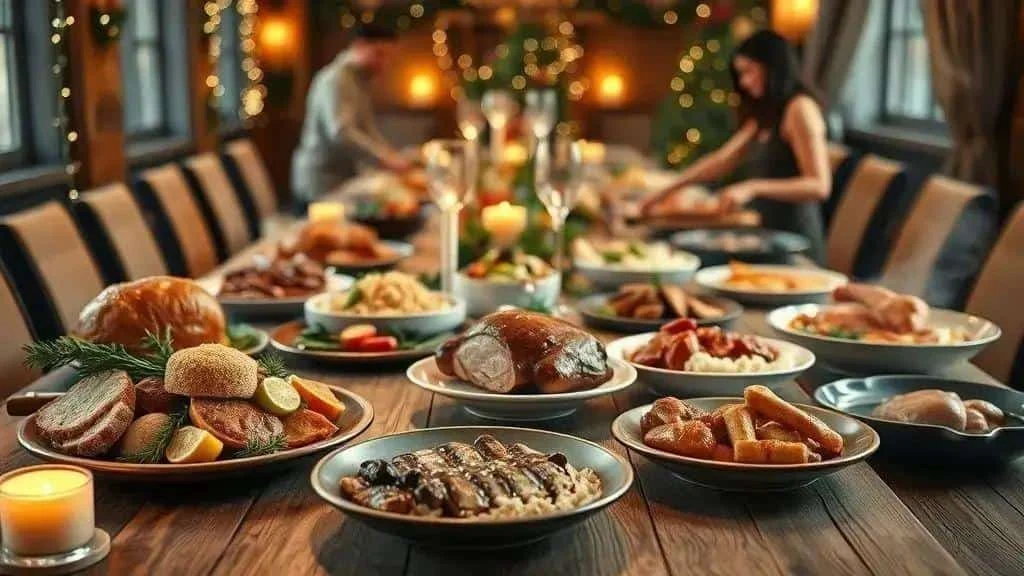
Climate, food supplies and family history all influence Christmas meals. The following examples are possibilities and broad comparisons, not fixed menus for whole regions or countries; households within the same place may celebrate very differently.
Possible regional influences in Brazil
- North: regional fish, cassava flours and tropical fruit may provide ingredients for a family’s festive dishes.
- North-east: local seafood, coconut-based cooking and regional sweets can influence the meal, depending on the household and location.
- South-east: some tables include poultry, rice, salpicão salad, farofa and panettone, although these foods also appear in other regions.
- South: local roasting and barbecue traditions, alongside foods associated with Italian or German immigration, may form part of the celebration.
- Central-west: families may draw on inland food traditions, roast meats and locally available fruit or grains, as well as dishes familiar across Brazil.
Examples from around the world
- Philippines: Noche Buena is a Christmas Eve gathering that can include lechon, or roast pig, and other festive dishes and sweets. There is no single menu shared by every family. Source: Philippine Retirement Authority: Noche Buena traditions
- Latin America: traditions vary widely. Puerto Rico offers a specific example with roast pork, pasteles and arroz con gandules, which is rice with pigeon peas, not ordinary green peas. Source: Discover Puerto Rico: a holiday feast
- Argentina and Uruguay: summer conditions can shape the meal. Asado is one possibility rather than a universal rule; Argentina’s festive dishes also include foods such as vitel toné and sweet fruit bread. Source: Visit Argentina: Christmas food traditions
- Italy and Spain: distinguish the two countries and their regions. Fish features in some Christmas Eve meals; panettone is associated with Italy, while turrón is a familiar Spanish festive sweet.
- United Kingdom and United States: roast dinners occur in both, but the menus are not interchangeable. Christmas pudding is a British example; pies, other desserts and a wide variety of family traditions feature in American celebrations.
- South Africa: December falls in summer, so an outdoor braai is one possible way to celebrate when conditions allow, alongside many other household traditions.
Why meals change
Food traditions respond to practical and cultural circumstances. Preservation affects storage, migration introduces recipes, and household resources influence what is served. Religion, trade and availability help explain choices, but no single factor accounts for every festive dish.
Combining tradition with practicality
- Choose a dish with family meaning and use local ingredients where they work in the recipe.
- Consider an affordable alternative to an expensive ingredient, while recognising that some substitutions change the result substantially.
- Ask guests about dietary requirements, including allergies. Vegetarian, gluten-free and lactose-free describe different needs; lactose-free dairy is not necessarily suitable for someone with a milk allergy. Source: Food Standards Agency: food allergy and intolerance
- Plan ahead only where the recipe and storage arrangements allow it. Cool prepared food promptly, refrigerate as appropriate and follow reliable storage and reheating guidance. Source: Food Standards Agency: chilling food safely
- Compare prices for seasonal produce and choose flavours you enjoy; local or seasonal does not automatically mean cheaper.
- Try a new recipe when you want to, while keeping familiar dishes that matter to your household.
Keeping the meal manageable
Balance rich dishes with lighter accompaniments, share tasks by agreement and concentrate on what the people attending will enjoy. The result can reflect both family history and present-day circumstances.
Foods with histories: turkey, salt cod and panettone
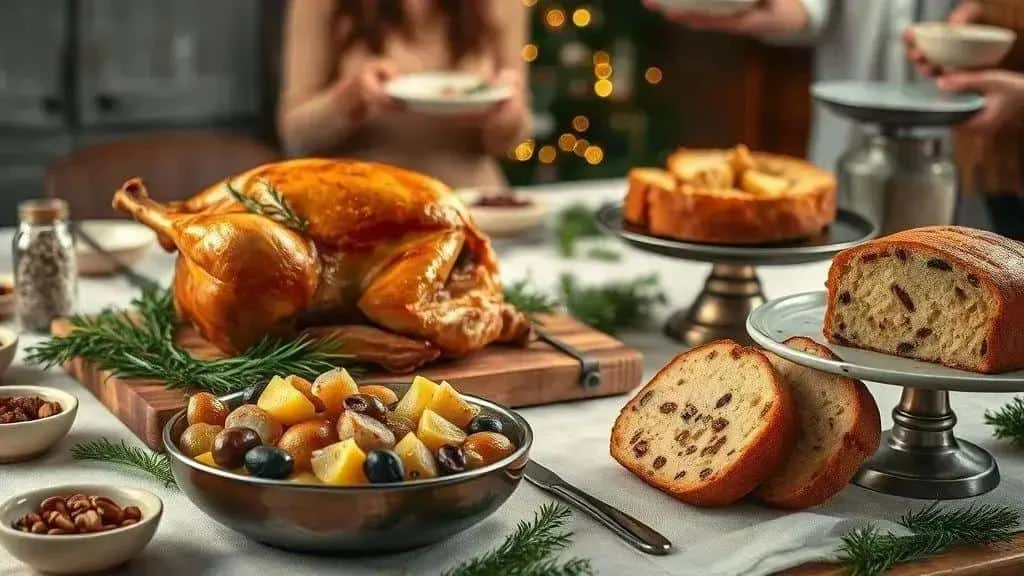
These foods illustrate different influences on the Christmas meal. Their associations with celebration come from changing patterns of supply, religious observance, commerce and personal memory, not a fixed meaning shared by everyone.
Turkey
The turkey came to Europe from the Americas. In Britain it was associated with festive eating from the Tudor period, but its later dominance at Christmas was not immediate. English Heritage notes that it became a much more expected part of the meal during the twentieth century. Source: English Heritage: Christmas turkey in Victorian England
- Symbolism: a large roast can suggest plenty, although this is a cultural interpretation rather than a universal belief.
- Practicality: a whole bird can serve several people, but size, cooking facilities and safe preparation determine whether it suits a household.
- Social history: cost, availability and changing fashions helped shape its place on the table; it was not always everyone’s Christmas choice.
Salt cod
Bacalhau is closely associated with Portuguese cooking. Visit Portugal describes fish, including salt cod, as traditional at the Consoada Christmas Eve supper. This relates to abstaining from meat in particular observances, which is not the same as eating no food at all. Source: Visit Portugal: Christmas Eve supper and midnight Mass
- Meaning: for some families it connects the meal with religious observance and recipes passed between generations.
- Practicality: salting and drying historically helped preservation and transport. For today’s products, follow the storage label, including refrigeration during soaking where required.
- Cost: its price and status have varied; it should not be described as invariably cheap or always a luxury throughout history.
Panettone
Panettone is associated with Milan and spread more widely through migration and commerce. Stories of its exact invention include legends, not just documented history. In Brazil, it has become a familiar seasonal food that households may share or give as a gift. Source: YesMilano: the history and legends of panettone
- Meaning: celebration, sharing and an association with Italian food traditions.
- Practicality: packaged versions are easy to distribute, but shelf life depends on the product, filling and storage instructions.
- Variations: chocolate versions and other fillings show how a familiar food can be adapted to different tastes.
What these foods can tell us
Looking at turkey, salt cod and panettone reveals several useful lines of enquiry: preservation, movement of people and goods, religious occasions and commercial production. These influences overlap, but each food has a distinct history.
- Preservation and transport affected what could reach the table before modern supply chains.
- Migration carried recipes between places, where ingredients and methods could change.
- Religious calendars shaped eating practices in particular communities and periods.
- Trade, industrial production and advertising helped some festive foods reach more households.
Knowing a little of that background can enrich the meal without requiring every family preference to have an ancient or sacred explanation.
Bringing family traditions to your table
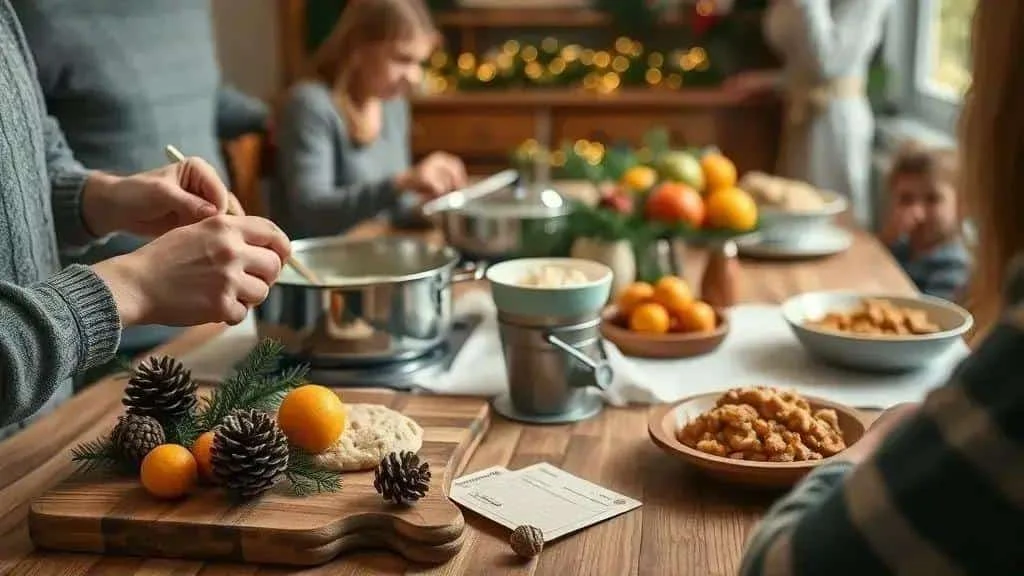
Keeping a tradition within your Christmas meal can be as simple as cooking a remembered dish or making time for a story. Choose something meaningful and manageable rather than adding tasks out of obligation.
Small rituals connected with memories
- Cook together: choose a familiar recipe and share suitable tasks, with adults handling hazards and supervising children appropriately.
- Invite stories: relatives who want to can describe meals or celebrations they remember; nobody needs to provide a polished account.
- Make a family playlist: include music people associate with earlier gatherings and new songs they enjoy now.
- Display a few memories: place photographs or objects where guests can look at them without crowding food preparation or serving areas.
- Offer a moment of thanks: invite a short reflection if it suits the gathering, allowing people to join in or simply listen.
Practical ideas on a budget
- Share dishes by agreement, taking account of each household’s budget, dietary needs and ability to transport food safely.
- Compare seasonal and local produce with other options rather than assuming a particular label always means better value.
- Make simple decorations from suitable materials, keeping painted pinecones, greenery and other non-food items separate from food and away from flames.
- Prepare suitable dishes in advance only when you can cool, store and reheat them correctly; convenience should not depend on leaving cooked food out overnight.
Welcoming different needs
Adapt the menu to guests’ actual requirements. Vegetarian, gluten-free or lactose-free options can still feel festive, but check ingredients and cross-contact risks rather than relying on those labels alone. Offer children suitable tasks and make sharing a recipe or story optional.
Recording and renewing traditions
- Write down a favourite recipe: record quantities and method while a willing relative cooks, noting anything that still needs testing rather than guessing.
- Record a short demonstration or story: ask permission first and agree how the recording may be kept or shared.
- Use a private shared folder: give access only to the intended people and respect requests not to include particular photographs or recordings.
- Adapt thoughtfully: try a tested lower-salt or vegetarian variation if wanted, recognising that a substitution may require changes to the method.
- Share responsibility: let different willing relatives organise a dish or activity in different years.
Repeated small gestures can make the meal feel personal. Traditions are allowed to change as families, circumstances and tastes change.
Bringing history and family memories together
Christmas dinner brings together historical influences and everyday decisions. Understanding a little of the background can help us appreciate familiar dishes while making room for new recipes and different needs.
Thank you for reading. For more festive ideas, recipes and discussions of traditions, visit the I Love Christmas blog and explore the stories behind your own family’s table.
Wishing you a welcoming celebration and happy memories around the table.
History of Christmas Dinner FAQs
Why did particular dishes become Christmas traditions?
Religious occasions, availability, preservation, migration, prices and family preference all played parts. Each dish has its own history; it is misleading to give all Christmas food one ancient origin.
How did turkey, salt cod and panettone become associated with Christmas?
Turkey reached Europe from the Americas and became a festive roast over time. Salt cod is associated with Portuguese cooking and fish-based Christmas Eve observances. Panettone has Milanese roots and spread through migration, production and trade.
How can I adapt traditional dishes for different diets?
Start with the guest’s actual requirements and a tested recipe. A suitable vegetable roast may replace turkey, but changing butter to oil can alter a recipe’s structure. Check allergens and cross-contact; lactose-free does not necessarily mean free of milk proteins.
How can I keep family traditions without spending much?
Cook a manageable dish together, invite stories and share tasks or food costs by agreement. Simple decorations and price comparisons can help; an expensive menu is not necessary for a meaningful celebration.
Do Christmas meals vary across Brazil?
Yes, but differences between households matter as well as regional ingredients and cultural influences. The regional examples here are possibilities, not a claim that everyone in each part of Brazil eats the same meal.
How can children join in?
Offer suitable supervised tasks, such as decorating biscuits, choosing music or helping with non-breakable table items. Keep hot dishes, sharp utensils and small choking hazards under adult control, and allow children to opt out.
Sources and Further Reading
- English Heritage: Christmas food in medieval England
- English Heritage: Christmas turkey in Victorian England
- Visit Portugal: Christmas Eve supper and midnight Mass
- YesMilano: the history and legends of panettone
- Discover Puerto Rico: a holiday feast
- Visit Argentina: Christmas food traditions
- Philippine Retirement Authority: Noche Buena traditions
- Food Standards Agency: food allergy and intolerance
- Food Standards Agency: chilling food safely