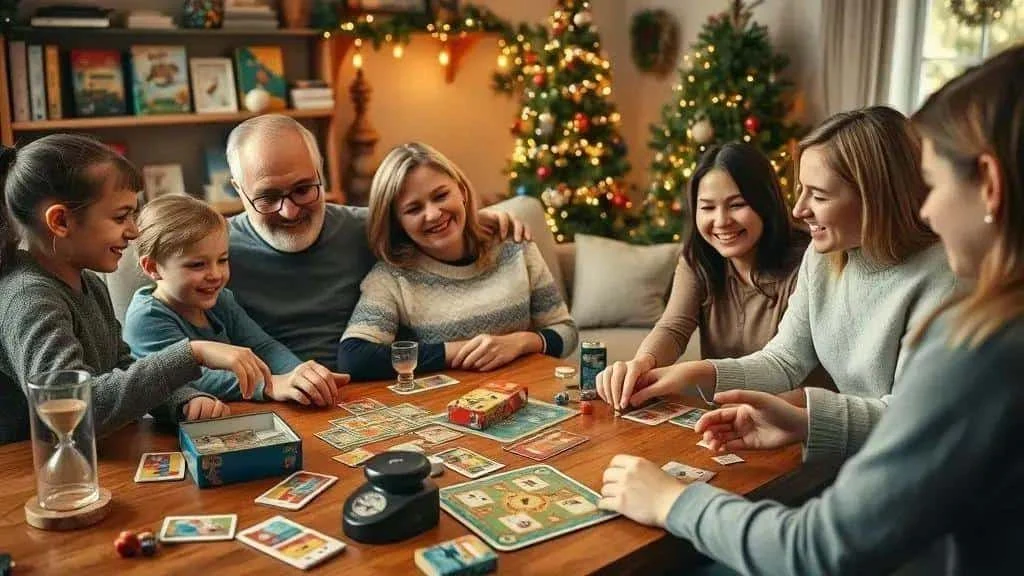
Christmas board games and card games can bring a family together around the table. Choose according to the players’ interests, the time available and the kind of interaction they enjoy. Combine shorter games with an optional longer one, explain rules clearly and consider borrowing before buying.
Christmas board games offer a way to spend time together between the meal and other celebrations. These ten suggestions cover word games, storytelling, strategy and cards. They are an editorial selection based on the games’ features, not a claim that we personally tested or ranked every title.
Illustrations in this article are conceptual images, not documentary photographs or evidence of a particular historical event, destination, venue or access route.
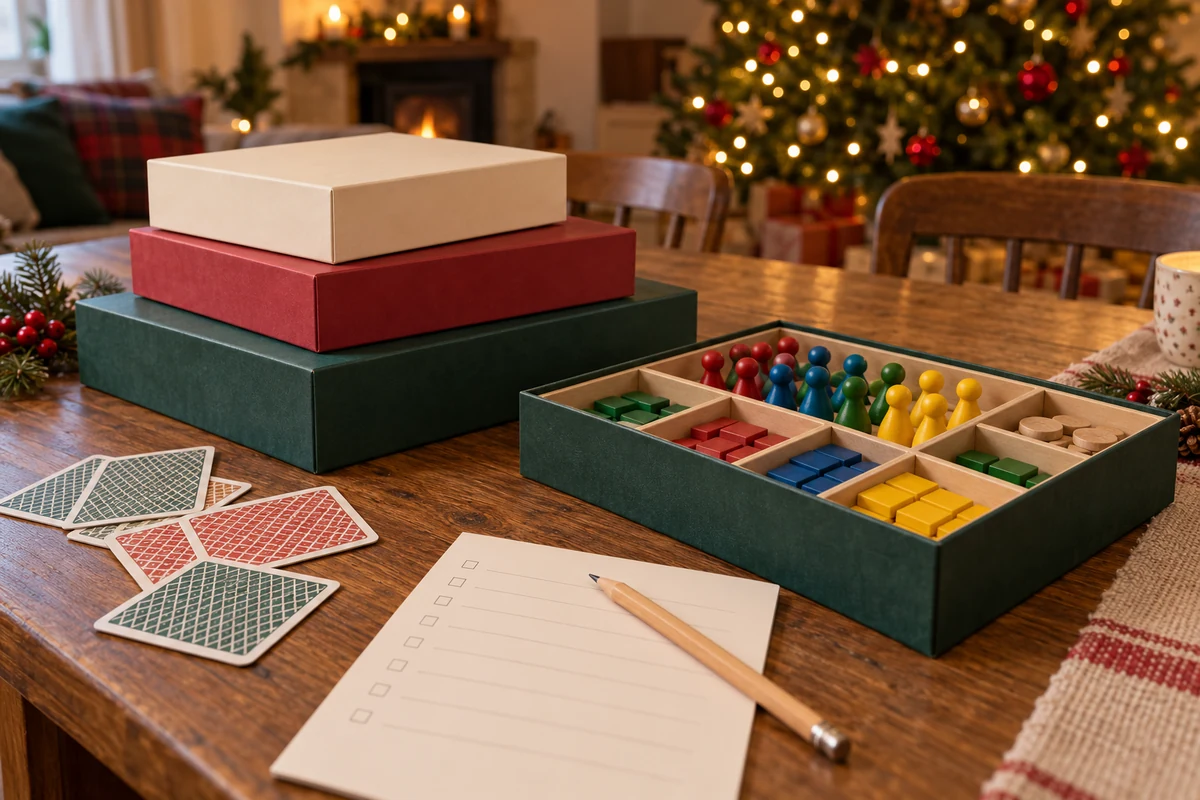
The pictures illustrate a family games night and generic components; they are not product photographs of the named games.
Planning the games night: space, timing and guests
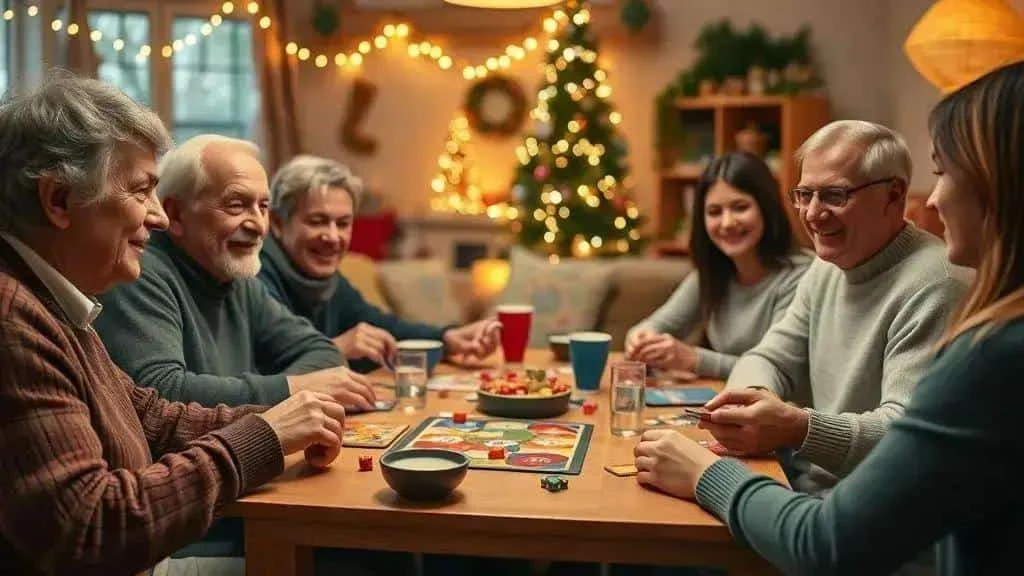
Begin with a comfortable space, a realistic amount of time and an idea of who wants to play. Leave room for guests to watch, join later or choose a different activity.
Setting up the room
Use a stable table with comfortable seating and enough clear space for the game. Provide lighting that makes text and symbols easy to see without glare. Keep snacks and drinks on a separate surface where practical.
- Playing surface: allow room for the board, cards and each player’s components, with easy reach from the seats.
- Lighting: combine comfortable room lighting with a well-positioned lamp if needed.
- Seating: provide a suitable seat for each participant and enough room to move around.
- Components: organise pieces in trays or containers. Keep small parts away from children who might put them in their mouths.
- Background sound: an optional quiet playlist can add atmosphere, but turn it down or off if it makes conversation or concentration harder.
Timing and pace
A short opening game can help people settle in before a longer one. Avoid starting a lengthy game when guests are about to eat or leave, and do not make finishing a packed programme the aim.
- Overall time: two to four hours is one possible evening plan, not a requirement. A single short game may suit your gathering better.
- Possible format: choose two or three shorter games and keep one medium-length game as an option, allowing extra time for explanations.
- Breaks: leave space for a snack or conversation; ten to fifteen minutes between games is a suggestion, not a fixed rule.
- Expectations: tell players the approximate duration before beginning. First plays often take longer than the time printed on the box.
Matching games to the group
Ask what guests enjoy rather than assuming their preferences from their age. Some will like teamwork, others a competitive challenge or a light social game. Explain any unusual theme before inviting people to take part.
- Small groups of two to four: look for games designed to work well at your exact player count, whether strategic or cooperative.
- Groups of four to six: word, deduction and party games may suit, subject to the specific game’s limits.
- More than six guests: consider separate tables or a game with a supported team format.
- Including beginners: give a clear demonstration and use an official introductory variant where available. Agree any house rules in advance.
- Taking turns: rotate players fairly between games if there are more people than places, rather than keeping winners at the table indefinitely.
A quick setup checklist
- Choose the space and clear the playing surface.
- Select a few games with different lengths and check their player limits.
- Arrange snacks, drinks and somewhere to put rubbish away from game components.
- Sort the pieces and have the correct edition’s rules ready.
- Agree a flexible start time, breaks and approximate finish.
Useful backup: keep a short, easy-to-explain game available for a gap in the evening or for guests who join later.
Choosing games by age guidance, time and interaction
Consider age guidance, the time available and the kind of interaction people want. No game is automatically the best choice for every family.
Age guidance and individual needs
Check the recommended age on the exact edition, along with reading demands, attention, theme and ease of handling the pieces. Simplifying rules does not remove a small-parts warning.
- Younger children: choose an age-appropriate edition with manageable rules and sessions. Not every title below is suitable for children aged four to eight.
- Older children: consider their experience and interests when choosing a game with more decisions or a longer playing time.
- Teenagers and adults: offer a choice between lighter play and more involved strategy rather than assuming everyone wants complexity.
- Older relatives: ask what they enjoy and what would make play comfortable. Age alone does not determine preferred difficulty or pace.
Playing time
Fit the choice around the meal, travel plans and other activities. Allow for teaching, setup and clearing away as well as the game itself.
- Short games: roughly ten to thirty minutes can work as an introduction or between other activities.
- Medium-length games: around thirty to sixty minutes may suit a group that wants a little more time together.
- Longer games: choose a game lasting over an hour only when everyone wants that commitment.
- Shorter variants: check whether the publisher provides one for your edition. A party label does not automatically mean a short game.
How players interact
Decide whether the group would prefer working together, competing gently or facing more direct opposition. A festive setting does not mean everyone enjoys the same kind of competition.
- Cooperative games: players work towards a shared objective. Make space for everyone’s decisions so one experienced player does not take over.
- Light competition: look for a format that keeps participants involved and suits their tolerance for setbacks.
- Party games: often emphasise conversation, creativity or quick reactions; check language, sensory and player-count requirements.
- Strategy and two-player games: can suit a smaller group that enjoys planning, although their duration and complexity vary.
Other practical considerations
Look at how much explanation is needed, how many people can play and whether everyone can read, distinguish and handle the components.
- Learning the rules: a clear introductory mode or a short practice round can help.
- Player count: use the stated range or a supported variant rather than adding people without checking the rules.
- Playing again: consider whether the group enjoys the central activity enough to return to it; extra components alone do not guarantee lasting appeal.
- Accessibility: check text size, glare, colour-only information and reach. Ask participants what adjustments help them.
A quick decision checklist
- Check the edition’s age guidance, theme and reading requirements.
- Compare the estimated playing time with the time you have.
- Choose a style of interaction the group wants.
- Confirm the player count and any supported variants.
- Have a shorter alternative ready if energy or plans change.
Practical approach: offer a familiar choice and a new one, letting the group decide which suits the moment.
Ten games to consider: players, ages and approximate playing times
-
Codenames
About the game: teams interpret one-word clues to identify their agents while avoiding the wrong cards. It suits people who enjoy word associations and discussion; use a language edition everyone can comfortably read. The details below refer to the classic 2015 edition, not every Codenames product.
- Players: CGE lists 2–8+; the main competitive team format works with four or more, with special rules for smaller groups. Source: Czech Games Edition: Codenames, 2015 edition
- Playing time: about 15 minutes according to the publisher, plus explanation time.
- Recommended age: 10+.
-
Dixit
About the game: players use imaginative clues and illustrated cards, then try to identify the storyteller’s card. It offers a different pace from speed-based games. Check your edition: the current base game has a different player limit from some older copies.
- Players: 3–8 in the current base edition listed by Libellud; follow the box and rules for your own copy. Source: Libellud: current Dixit base game
- Playing time: about 30 minutes.
- Recommended age: 8+.
-
Ticket to Ride
About the game: collect cards and claim railway routes to connect destinations. The shared map creates competition for routes. These specifications refer to the original North American base game; other Ticket to Ride titles differ. Source: Days of Wonder: Ticket to Ride
- Players: 2–5.
- Playing time: 30–60 minutes.
- Recommended age: 8+.
-
Azul
About the game: select coloured tiles to build patterns on your board while considering what you leave for other players. It suits a group interested in spatial decisions and direct competition for shared supplies. These details concern the original Azul, not its sequels.
- Players: 2–4.
- Playing time: approximately 45 minutes in Asmodee’s listing. Source: Asmodee: Azul specifications
- Recommended age: 8+.
-
Dobble (also known as Spot It!)
About the game: race to identify the shared symbol on two cards. Its speed and visual focus may appeal to some groups but not everyone. The standard UK Dobble listing has the specifications below; themed and younger-child editions can differ.
- Players: 2–8.
- Playing time: around 15 minutes, depending on the mini-game and number of rounds.
- Recommended age: 6+ for the standard UK edition. Source: Asmodee UK: standard Dobble
-
UNO
About the game: match cards by colour or number and use action cards as you try to empty your hand. Decide beforehand whether to play a single hand or use the full scoring rules. Different UNO editions introduce different cards and rules.
- Players: 2–10 for classic UNO. Source: Mattel: classic UNO specifications
- Playing time: variable: one hand may fit into a short break, while a full scored game can take much longer. Do not treat 15–30 minutes as a guaranteed duration.
- Recommended age: 7+.
-
Pandemic
About the game: work together to control fictional disease outbreaks and find cures. It offers a shared challenge rather than player-against-player competition; check that everyone is comfortable with the theme and let each person make decisions.
- Players: 2–4 in the base game.
- Playing time: about 45 minutes, with extra time for learning.
- Recommended age: 8+ in the publisher’s current base-game listing; check the edition you own. Source: Z-Man Games: Pandemic
-
Carcassonne
About the game: place landscape tiles and followers to score from features such as roads and cities. It builds a shared map but is competitive. Team play or shortened scoring would be an agreed house variant, not the standard base-game rules. Source: Z-Man Games: Carcassonne
- Players: 2–5 in the base game.
- Playing time: 30–45 minutes in the publisher’s listing.
- Recommended age: 7+.
-
CATAN
About the game: trade resources and build roads and settlements while competing for points. It is a longer choice for a group that enjoys negotiation and can accept that the dice will sometimes disrupt a plan.
- Players: 3–4 in the base game; five or six requires the compatible 5–6-player extension, not just any expansion. Source: CATAN: base game and player extension
- Playing time: 60–90 minutes, potentially longer while learning.
- Recommended age: 10+.
-
Sushi Go!
About the game: choose a card from your hand, then pass the remaining cards on, aiming for scoring combinations. This compact pick-and-pass game mixes simple turns with planning. These specifications are for Sushi Go!, not Sushi Go Party!. Source: Gamewright: Sushi Go!
- Players: 2–5.
- Playing time: about 15 minutes.
- Recommended age: 8+.
Putting a selection together: keep a few shorter choices and an optional longer game, rather than trying to play all ten. Manufacturer specifications were checked on 16 October 2026; confirm the exact edition before buying or borrowing.
Including children, teenagers, grandparents and other guests
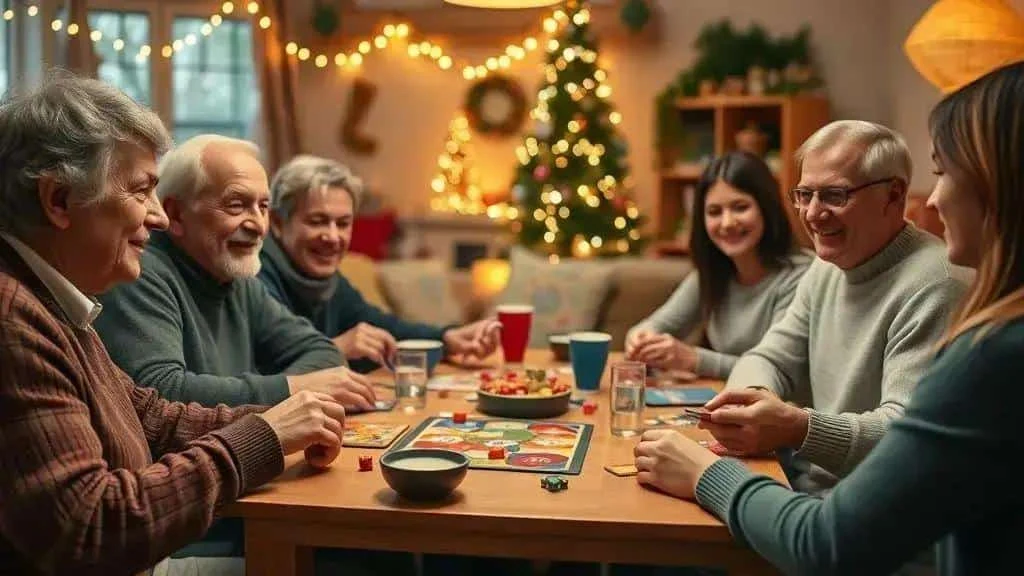
Adjust explanations, seating and the pace to the people present. Everyone should know whether you are following the printed rules or trying a shared house variant, and nobody needs to take part to be included in the evening.
Helping children learn
Explain the aim in short steps and demonstrate a turn. Use an official introductory mode or clearly agreed shorter practice game where suitable, while respecting age guidance and small-parts warnings.
- A shorter session: one practice round may be enough. Changing a scoring target can alter the balance, so explain that it is a house rule.
- Easy-to-handle pieces: choose suitable larger components or another age-appropriate game. Buttons and improvised small counters can still present a choking hazard.
- Time to think: avoid imposing a thirty-second turn limit on a child who needs longer. Use a timer only if everyone finds it helpful.
Offering teenagers a choice
Ask whether they want a strategic challenge, a social game or something familiar. Give them room to choose without making assumptions about attention, competitiveness or preferred complexity.
- Optional depth: use a supported advanced mode if the whole group wants it.
- Additional challenges: agree any side objectives before play, recognising that they may change the game balance.
- Rule changes: do not introduce extra swap cards or powers halfway through. Use a published variant or a clearly explained house version.
Comfort and access for older relatives and other players
Ask about visual, hearing, dexterity and seating needs without assuming older people require simpler games. Clear explanations and an unhurried pace can help anyone learning a new title.
- Readable references: provide a large-print summary if useful, keeping it consistent with the actual rules.
- Good lighting: illuminate the board without glare and ensure players can see the important information.
- Teamwork: choose a genuinely cooperative game when that suits the group; do not assume every competitive title has an official cooperative mode.
Agreeing inclusive formats
Try adaptations in a brief practice round before committing to a full game. Keep essential information available to everyone, and ask before offering assistance or changing someone’s role.
- Mixed-experience teams: can help with a suitable team game, provided each person still has a meaningful part.
- Beginner support: explain options or offer a practice round before adding extra resources, which can unfairly change the balance if not agreed.
- Managing time: agree a stopping point or use a shorter game rather than rushing players who need more time.
The person explaining the game
A willing host or facilitator can explain the rules and help resolve questions by checking the rulebook. That role should support participation, not dictate other people’s moves or change rules without agreement.
- Demonstrate a sample turn before starting.
- Notice frustration and offer a break or a different activity when appropriate.
- Keep a short game available for people who want to join between longer sessions.
Useful approach: agree the version of the rules before starting and let guests choose how competitive they want the occasion to be.
Buying, hiring and borrowing games on a budget
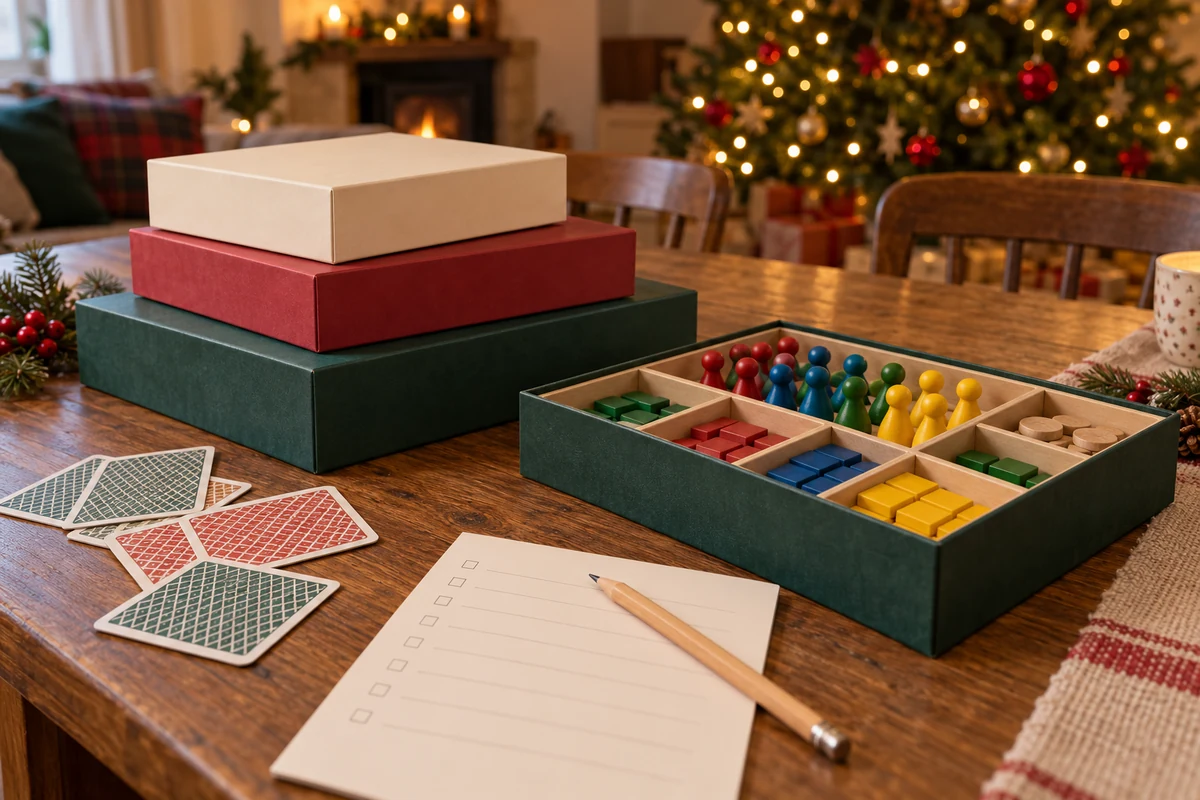
You do not need a new collection for one evening. A game already owned, borrowed or bought second-hand may suit the gathering just as well as a new release.
Shops and online sellers
Specialist shops can help you compare games and may offer demonstrations. Online listings are useful for checking editions and prices, but verify the actual seller and the product details rather than relying on a marketplace name alone.
- Purchase terms: check the seller’s returns arrangements and any applicable consumer protections; conditions differ between business and private sales.
- Before ordering: check delivery dates, total cost, the language edition and seller information.
- Replacement pieces: ask the publisher or retailer about availability rather than assuming spare components can be purchased.
Second-hand games
A well-kept second-hand game can be a useful option. Ask for photographs, check the contents against the edition’s list and include delivery costs when comparing prices.
- Places to look: local selling groups, second-hand shops and community sales may have suitable titles.
- Condition: inspect the board, cards and pieces, and ask specifically about missing components or rules.
- Missing parts: check whether a safe, practical replacement is available before buying. Improvised cards can reveal hidden information or affect play, so they are not always a workable substitute.
Hire services and board-game cafés
Where available, hire services let you try a game before committing to a purchase. Board-game cafés provide games to play on site, often for a fee. Check local availability, charges and the conditions of use.
- Short-term hire: compare the hire charge and any deposit with the cost of borrowing or buying.
- Subscriptions: if offered, review the ongoing cost, delivery arrangements and cancellation terms rather than signing up only for one evening without checking.
- Condition and returns: count components when collecting and returning a game, and agree responsibility for losses or damage.
Borrowing and exchanging games
A simple lending arrangement among friends or relatives can provide variety without buying more boxes. Agree how long the loan lasts and how the game should be looked after.
- Keep a record: note who has the game and the agreed return date.
- Community options: ask whether a local library, club or community centre lends games; availability varies.
- Why borrow: it offers a chance to try different games without committing to ownership, though some schemes charge a fee.
Looking after games and avoiding unnecessary spending
Good storage and careful handling can keep a game usable for many Christmases.
- Cleaning: follow the manufacturer’s care advice. Avoid soaking cardboard or applying cleaning solutions to printed cards; store components dry in suitable containers.
- Protection and repair: suitable card sleeves may help where needed. Do not use glue or other repairs that leave sharp, loose or unsafe parts, and seek replacements for damaged essential components.
- Packaging: keep useful boxes and dividers rather than discarding storage that protects the game.
- Shared ownership: if buying with friends, agree storage, access and responsibility for replacement parts in advance.
Before buying or hiring
- Confirm the player count and approximate playing time.
- Check the edition, language and condition of the components.
- Read the relevant returns, exchange or hire conditions.
- Agree the full price and collection or delivery arrangements.
- Decide where the game will be stored and how it will be looked after.
A sensible starting point: try a versatile game within your budget before investing in several unfamiliar titles.
Final thoughts
A Christmas games night works best when the games, pace and setting suit the people at the table. Good explanations and a comfortable space matter more than buying the newest or most expensive box.
Keep a few short options and an optional longer game, check the actual edition’s requirements and make participation flexible. Adaptations should be clear and agreed, with enough time for conversation and breaks.
Thank you for reading! Explore more festive ideas on I Love Christmas and share the games your family enjoys. Have a lovely games night!
Frequently asked questions about Christmas board games
Which games suit families with young children?
Choose an edition appropriate to the child’s age, with manageable rules and components. Standard Dobble is listed as 6+ in the UK and classic UNO as 7+; neither is automatically suitable for every younger child. Check labels, small-parts warnings and any junior edition separately.
How long should a Christmas games night last?
There is no fixed length. A few short games and an optional medium-length one can fill an evening, but a single game may be enough. Allow for teaching and breaks, and stop when the group has had enough.
How can I include people with reduced vision, hearing or mobility?
Ask what helps them. Suitable seating, reachable components, clear lighting, larger-print references and a comfortable pace may all help. Do not assume that someone wants simpler rules or a cooperative game without asking.
Where can I find games affordably?
Compare local shops, reputable online sellers, second-hand options and borrowing from friends. Some areas have game libraries, cafés or hire services; check fees, availability, component condition and return terms.
What should I check when choosing a Christmas game?
Check the exact edition’s age guidance, theme, player count, approximate duration and reading or accessibility demands. Choose a style the group enjoys and distinguish official variants from any house rules you agree together.
Sources and Further Reading
- Czech Games Edition: Codenames, 2015 edition
- Libellud: current Dixit base game
- Days of Wonder: Ticket to Ride
- Asmodee: Azul specifications
- Asmodee UK: standard Dobble
- Mattel: classic UNO specifications
- Z-Man Games: Pandemic
- Z-Man Games: Carcassonne
- CATAN: base game and player extension
- Gamewright: Sushi Go!