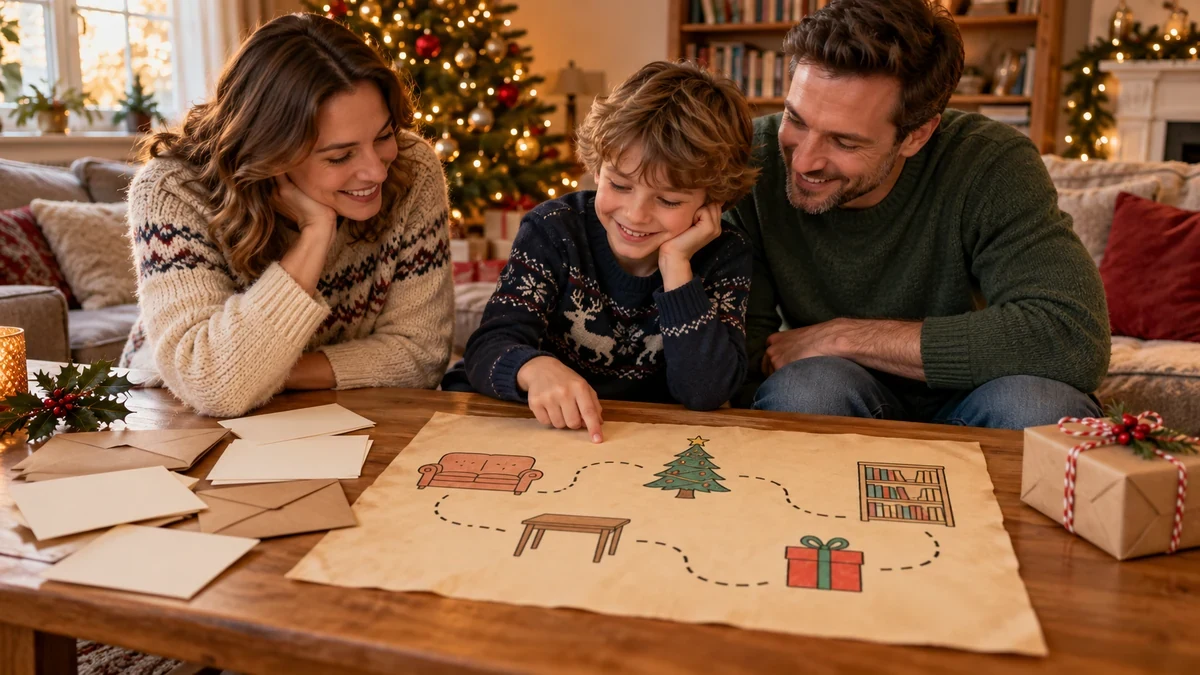
Christmas family games work best as short, optional challenges with clear instructions, suitable materials and flexible ways to take part. Combine a themed treasure hunt, crafts and seated games, agree the timetable and scoring, and finish with thoughtful prizes. Handmade keepsakes may also inspire a separate craft project or small business.
Christmas family games can turn the time around your festive meal into a lively shared celebration. A few simple activities give different generations something to talk about and enjoy together. These ideas can be adapted for children, teenagers and adults, with cooperation and comfort taking priority over winning.
Illustrations in this article are conceptual images, not documentary photographs or evidence of a particular historical event, destination, venue or access route.
Planning your Christmas games: rules and preparation
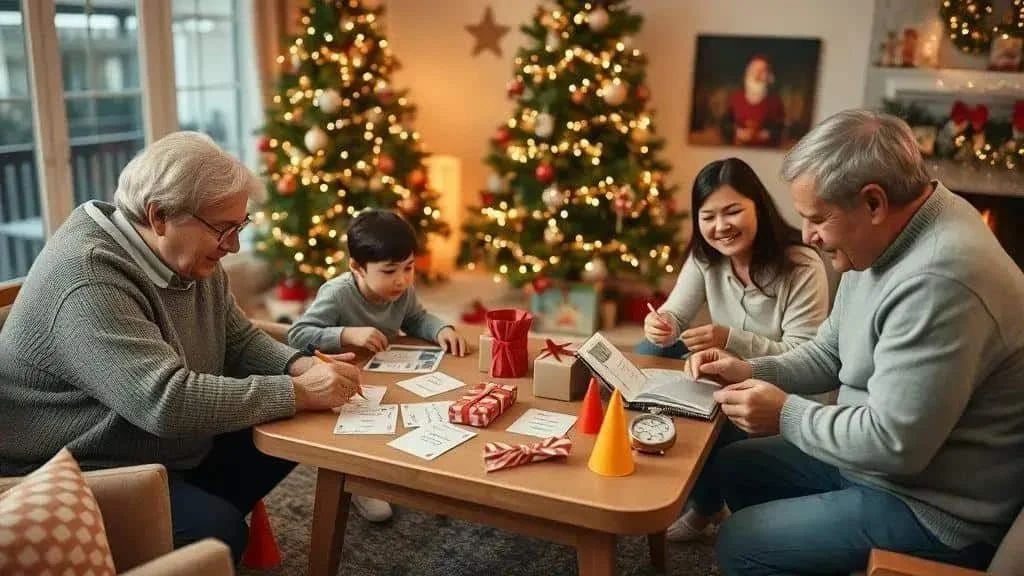
A little preparation makes a Christmas games session easier to run. Choose an uncluttered space, organise the materials and leave room in the timetable for breaks. Participation should be optional, with a quiet place available for anyone who needs it.
Materials and checklist
- A list of activities and printed or handwritten clue cards
- Pens, coloured tape and stable markers to identify activity areas without creating trip hazards
- A clock or timer to keep track of rounds
- Modest, age-appropriate prizes or individually wrapped keepsakes
- Pens, paper and a clipboard for the scorekeeper
- Craft supplies such as large felt shapes, fabric stockings, paper and washable glue suitable for the intended users
- A box for the treasure-hunt materials
Essential rules
- Teams: aim for similar numbers and a mix of skills, rather than assuming ability from age alone.
- Timing and scoring: agree a limit for each round and simple points, such as 10 for first place and 7 for second. Adjust the scoring so a long craft activity does not unintentionally dominate the total.
- Safety first: avoid dangerous movements, keep routes clear and supervise children. UK product-safety guidance warns about small objects, magnets and button batteries; keep these out of children’s game kits. Source: Office for Product Safety and Standards: small hazards big harm
- Tie-breaks: decide in advance whether to use an extra riddle, another short round or a shared win.
- Conduct: agree respectful behaviour and fair play. Pause an unsafe activity immediately rather than treating safety as merely a points penalty.
- Adaptations: ask participants what would help, including seated options, larger materials, extra time or a partner.
Preparation step by step
- Choose the venue: use a room or suitable outdoor area with enough space, a firm surface and clear exits. In winter, an indoor option is usually easier to manage.
- Choose activities and length: treat the ten ideas below as a menu. Select a few for a 60–90-minute session; including every full-length hunt and craft would require much longer.
- Create the teams: balance numbers and preferences, and choose a coordinator for each team if useful.
- Lay out the supplies: group materials by activity and identify each station so transitions are straightforward.
- Explain the rules: describe the task, time limit and scoring before anyone starts. Show a simple example where helpful.
- Try a practice round: check whether the instructions, difficulty and allotted time suit the group.
- Record the scores: keep a visible table, reading out updates for anyone who cannot easily see it.
- Finish together: offer symbolic prizes, thank everyone and take photographs only with permission.
Practical ideas: use rhyming clues, quiet Christmas music or an optional photo challenge. A flexible schedule and clear instructions matter more than elaborate equipment.
Challenge 1: a Christmas treasure hunt
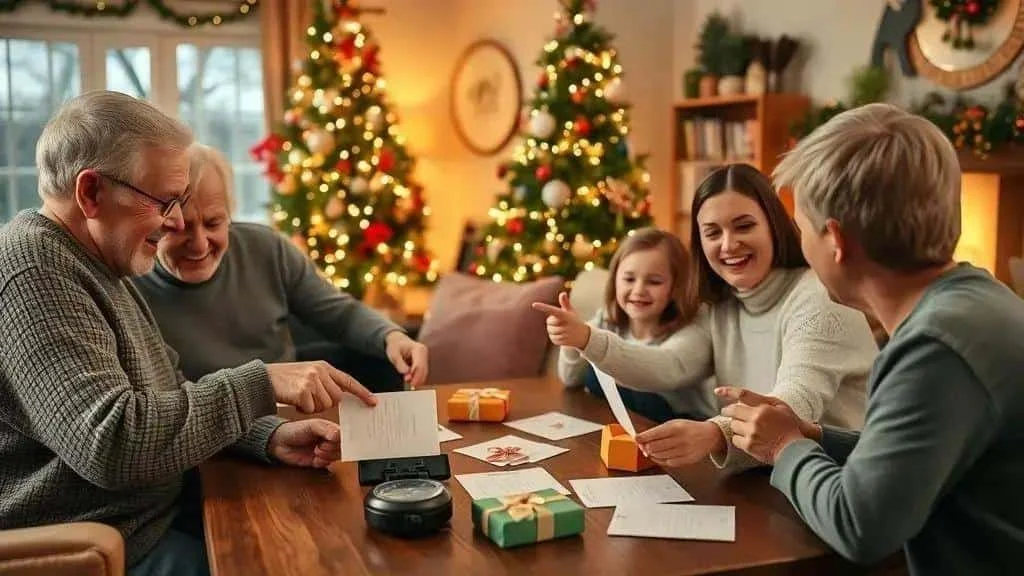
A themed treasure hunt sends each team through a sequence of clues towards a final prize. Use clear clues and accessible hiding places, and adjust the difficulty to the people taking part. Nobody should need to climb, enter private rooms or disturb decorations.
What you need
- Envelopes or cards for the clues
- Pens, removable tape and labels
- An age-appropriate prize or keepsake for each team
- A simple route map or score sheet
- A torch for optional atmosphere in an otherwise well-lit indoor game
- A master list showing the organiser every clue location
- A phone or camera for an optional photo task
Preparing the clues
- Choose a theme: connect the clues through elves, presents, Christmas traditions or another familiar idea.
- Write the sequence: prepare around 8–12 clues for a longer hunt, or fewer for a short round. Check that each answer leads clearly to the next location.
- Vary the format: combine riddles, pictures, simple puzzles and optional creative tasks.
- Check the route: follow it yourself and remove any inaccessible, confusing or unsafe hiding places.
- Set boundaries and timing: identify the permitted area, require walking and agree a total time. Offer seated clue-solving with a partner collecting the cards.
Sample festive clues
- Riddle: “By the tree where lights shine bright, an envelope is waiting in plain sight.” Place it on a reachable table beside the tree, away from cables and branches.
- Photo clue: “Photograph the reddest decoration on the table.” Show the picture to the organiser without moving fragile objects or photographing people without consent.
- Quick task: “Sing, hum or name a Christmas song to receive the next clue.” Offer an alternative for anyone who prefers not to perform.
- Simple puzzle: six large pieces that fit together to reveal the next location.
Quick rules and scoring
- Teams: two to six people is a workable starting point, with younger children supported by an adult.
- Points: you might award 10, 7 and 5 for completing the route, or score correct clues without ranking by speed.
- Mistakes: an incorrect answer can prompt a hint and another try. Explain any scoring consequence beforehand; never penalise an accessibility adjustment.
- Maximum time: allow perhaps 20–30 minutes for a short hunt, or up to an hour for a longer stand-alone game. Do not allocate an hour to the hunt inside a one-hour programme of ten activities.
- Tie-break: use one extra riddle, or let teams share the result rather than encouraging a last-minute dash.
Adapting the hunt
- Younger children: use pictures, brief clues and easily reached locations.
- Teenagers: offer more complex puzzles or a creative task, where that suits their interests.
- Reduced walking: bring clues to a table or ask a partner to collect them. Offer large print or spoken clues according to preference.
- Mixed groups: pair people with complementary interests and let them choose how to divide the tasks.
Practical tip: keep spare clue copies and a clear list of permitted locations. Outdoor games need suitable weather, supervision and lighting; moving indoors is simpler than relying on torches after dark. Keep any team photographs private unless everyone pictured agrees to wider sharing.
Challenge 2: decorate a stocking or ornament
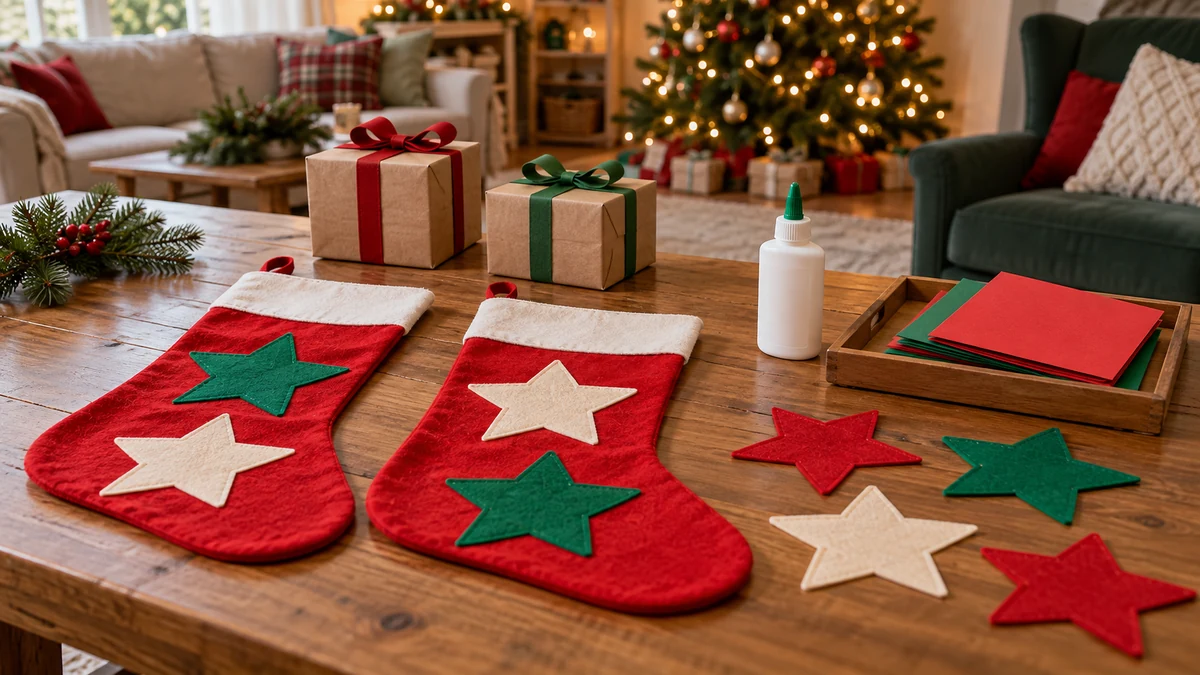
Teams decorate a fabric stocking or a large flat ornament, then show their ideas. You can judge creativity, finish and connection to the theme, or simply celebrate every design.
Suggested materials
- Fabric or felt stockings, one per participant — a large pre-cut felt stocking shape also works.
- Large felt or paper decorations — offer several shapes in each kit, with no glass or sharp fittings.
- Large stickers and fabric patches — avoid loose sequins, buttons and tiny bells where younger children may mouth them.
- Age-appropriate fabric or craft glue — follow the label and allow sufficient drying time. Choose a cold-glue activity rather than placing a hot-glue gun among the teams.
- Suitable round-ended scissors for supervised users, or pre-cut pieces for anyone who prefers them.
- Fabric pens or suitable washable paint — check the product’s intended use and protect clothing and furniture.
- Fabric scraps and short ribbon pieces — for decoration, without long loops or cords around participants.
Contest rules
- Time: allow around 30–45 minutes for a stocking or two ornaments, plus drying time. This is a substantial activity, not a five-minute transition.
- Materials: use the supplied kit; provide equivalent replacements or accessible alternatives without penalty.
- Supervision: adults prepare any pieces requiring sharp tools away from the play area. Stop to resolve spills or unsafe handling.
- Theme: choose a broad idea such as woodland, colourful Christmas or traditional festive shapes.
- Presentation: offer each team a minute to explain its design, with a partner able to speak or show a written description.
- Fair play: explain any theme-related scoring beforehand. Do not deduct points because someone needs different tools or help.
Judging and points
- Creativity, 0–10 points: an interesting idea and imaginative use of the kit.
- Finish, 0–10 points: secure, tidy work, judged with the participants’ chosen adaptations in mind.
- Connection to the theme, 0–5 points: how the design expresses the shared idea.
- Thoughtful reuse, 0–5 points: using clean, suitable leftover materials rather than adding unnecessary purchases.
- Explanation, 0–5 points: sharing the idea in a comfortable format, not judging confidence or speaking ability.
Organising the activity
- Prepare the kits: divide materials between labelled boxes or trays.
- Explain the plan: cover the time, judging criteria and materials before handing out tools.
- Set up the space: protect stable tables and set aside an area for drying finished work.
- Keep time gently: use a visible timer and give occasional reminders without rushing anyone using scissors.
- Judge consistently: ask a small panel to use the agreed score sheet, or replace ranking with a display of everyone’s work.
- Celebrate: give certificates or keepsakes and photograph the finished pieces, asking permission before including people.
Variations
- Young children: offer large stickers and pre-cut felt with adult support; keep small loose parts out of reach.
- Shorter round: decorate one simple pre-cut shape in 15–20 minutes instead of making a complete stocking.
- A charitable version: contact a local organisation first to ask whether it actually wants handmade decorations and what it can accept.
- Alternative materials: use suitable cold glue, large paper shapes and stickers rather than hot glue or tiny embellishments.
- Family teams: let different generations share design, assembly and presentation tasks by choice.
Practical tip: show a simple example of the process without prescribing a design everyone must copy.
Eight more challenges to complete the set
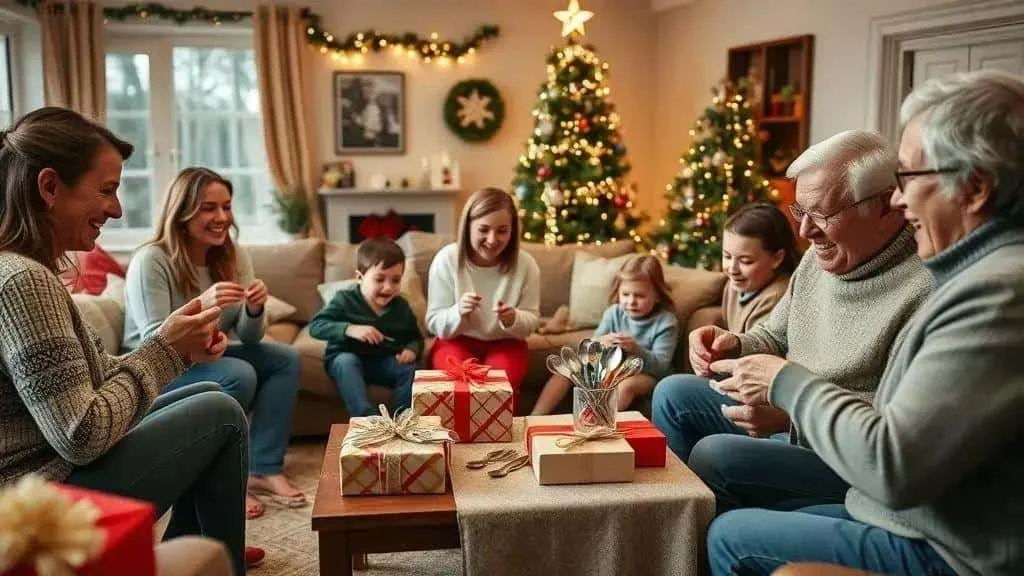
These eight ideas bring the total to ten. Choose a selection to suit your timetable; the suggested scores are examples that can be simplified into one consistent system.
Challenge 3: festive walking relay
In this gentler alternative to a sack race, participants walk along a short clear route carrying a lightweight fabric stocking. A seated passing relay is an equally valid option.
- Materials: one fabric stocking per team and stable markers placed outside the walking route. Do not use bin bags or tie anyone’s legs together.
- Rule: each willing participant completes a turn and passes the stocking to the next person. Reward completion and teamwork rather than a sprint.
- Safety: use a dry, unobstructed surface, allow ample space and supervise children. Switch to the seated version if the route is unsuitable.
Suggested points: 10 for completing the shared task, with equal credit for the seated version.
Challenge 4: Christmas film charades
Players act out the titles of familiar festive films or songs while their teammates guess. Agree whether gestures alone or another communication method will be used.
- Materials: title cards and a box to draw them from.
- Rule: allow around 60 seconds per card and award points for correct guesses within the agreed time.
- Variation: add categories such as songs, films and Christmas objects.
Suggested points: 5 per correct answer, without a bonus that disadvantages an agreed adaptation.
Challenge 5: make a miniature Nativity scene
Teams create a small Nativity scene from simple craft materials. Offer a winter village alternative for anyone who would prefer a non-religious theme.
- Materials: large paper or felt figures, suitable glue, fabric scraps and a stable cardboard base. Avoid tiny loose models around young children.
- Rule: allow 20–30 minutes and check that the pieces are securely attached before displaying them.
- Criteria: creativity, construction and connection to the chosen theme.
Suggested points: up to 30 across the three criteria, or convert the result to your overall points scale.
Challenge 6: a quick Christmas quiz
Ask questions about festive food, symbols and traditions. Check the answers beforehand and identify the country or tradition rather than presenting one custom as universal.
- Materials: a verified question list, answer cards and a score sheet. A raised hand or card avoids the need for a loud buzzer.
- Rule: ask each team in turn, allowing everyone time to discuss an answer.
- Tie-break: use an extra question or share the win.
Suggested points: 1 per correct answer, with an optional 3-point bonus for a complete set.
Challenge 7: the spoon-and-fabric relay
Carry a large soft fabric ball on a spoon held in the hand. Walk slowly along a short clear route, or transfer it between two nearby bowls while seated. Never hold the spoon in the mouth.
- Materials: sturdy spoons, large soft fabric balls suitable for the participants and stable containers. Avoid glass baubles, tiny balls and hard decorations.
- Rule: each player takes a turn; if the ball falls, pause to retrieve it before continuing. Do not chase it through the room.
- Adaptation: use a larger spoon, a small tray or a seated transfer, according to comfort and grip.
Suggested points: 10 for completing the task together, or a fixed score for each successful transfer.
Challenge 8: style and photograph a festive scene
Teams arrange a small Christmas still life and take a creative photograph. Judge the composition rather than the price or quality of the camera.
- Materials: fabric, large non-breakable decorations and a phone or camera. If lights are used, keep cables clear and battery compartments securely closed.
- Rule: allow 15–20 minutes to arrange the scene and 5 minutes for the picture. Agree whether small brightness or colour adjustments are permitted.
- Criteria: composition, creativity and connection to the festive theme.
Suggested points: up to 20, or scale the result to match the other rounds.
Challenge 9: build a present tower
Stack lightweight decorated boxes into a stable tower. Agree a low height limit so the challenge is about planning, not reaching or climbing.
- Materials: empty cardboard boxes of different sizes and removable paper tape.
- Rule: allow 10 minutes and award points for a stable arrangement within the agreed height limit.
- Safety: use empty, light boxes only, keep the base stable and never climb on furniture or boxes to add another layer.
Suggested points: 10 for a stable tower that meets the agreed conditions.
Challenge 10: wrapping paper and bow challenge
Pairs wrap an empty box neatly and add a decorative finish. Encourage cooperation; speed is optional and should never rush cutting.
- Materials: pre-cut wrapping paper, tape, a label and short ribbon pieces. An adult can prepare paper in advance so scissors are unnecessary during the timed round.
- Rule: give each pair a similar box and allow up to 8 minutes, extending the time where needed.
- Judging: consider practical wrapping, neat folds and an imaginative finish.
Suggested points: up to 15, or use the same maximum as your other creative rounds.
Adapting games for different ages and needs
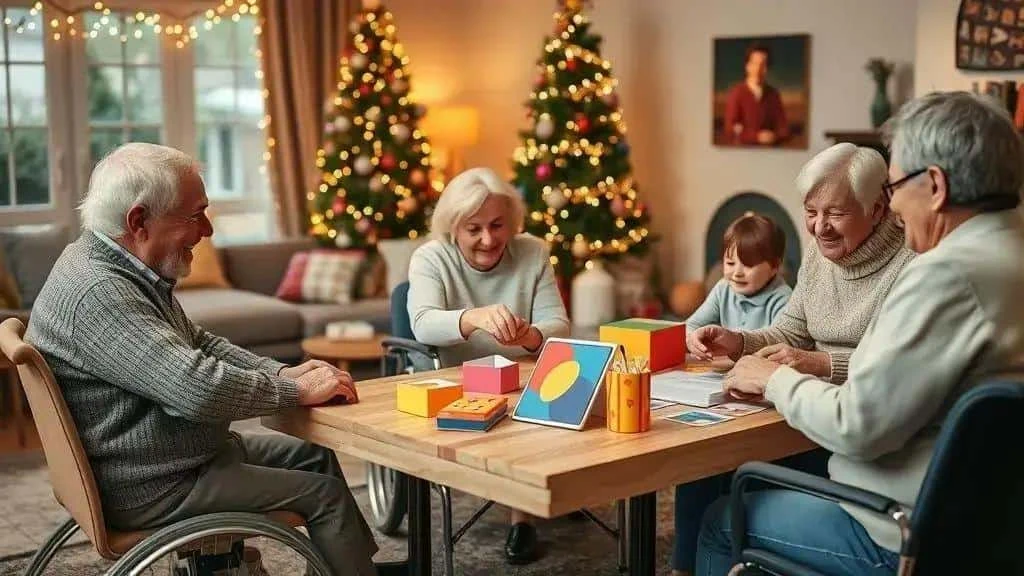
Safety, clarity and respect should guide the adaptations. Ask what each person enjoys or needs rather than assuming all older people, children or disabled participants want the same role.
Basic principles
- Reduce unnecessary walking: keep stations close together or bring materials to one accessible table.
- Provide seating: stable chairs and suitable table height allow comfortable participation and breaks.
- Allow extra time: adjust limits to remove avoidable pressure, without lowering a team’s score.
- Communicate clearly: use brief instructions, a comfortable speaking volume, large print and pictures where helpful.
- Supervise appropriately: keep an adult close to children’s activities. Remove hot tools and exclude stairs from the route rather than simply supervising a risky setup.
Adjustments by activity
- Movement games: use a short, unobstructed walking route or a seated passing task. Do not add obstacles as an accessibility adaptation.
- Treasure hunt: place clues within reach, offer pictures or spoken clues and reduce the number of stages if useful.
- Balancing tasks: offer a seated coordination game with large, lightweight objects on a stable table.
- Charades and riddles: offer drawing, writing, spoken clues or a partner, depending on the person’s preferred communication method.
- Craft contest: provide pre-cut shapes, easy-grip tools or a partner to reduce cutting and grip demands.
- Quiz: provide both spoken questions and large-print cards, with enough thinking time.
Teams and scoring
- Mixed teams: combine interests and skills, giving everyone a meaningful role if they wish to participate.
- Broader scoring: reward cooperation and creativity rather than making physical speed the only route to success.
- Choice of roles: offer rotation, but let people keep a comfortable role or simply watch without pressure.
Practical equipment
- Firm, dry flooring and clear walkways; remove loose rugs and anything that could catch a foot or mobility aid.
- Larger objects and contrasting colours where they help visibility.
- Lightweight materials with comfortable grips, avoiding small loose decorations around children who may mouth them.
- Hand-held spoons only, with a tray or seated alternative if preferred.
- A visible timer and optional spoken reminders, without flashing lights or intrusive alarm sounds.
Quick inclusion tips
- Try it first: invite willing participants to test the setup and tell you what needs changing.
- Explain calmly: repeat instructions and demonstrate without singling anyone out.
- Stay flexible: adapt a task during play without penalising the person or their team.
- Respect feelings: acknowledge effort and accept that someone may prefer to stop or take a break.
- Keep useful notes: record the variations that worked, without sharing private health or access information.
Prioritising access and enjoyment gives the group more ways to join in. A comfortable shared experience is a better aim than completing every planned task.
Prizes, keepsakes and possible craft projects
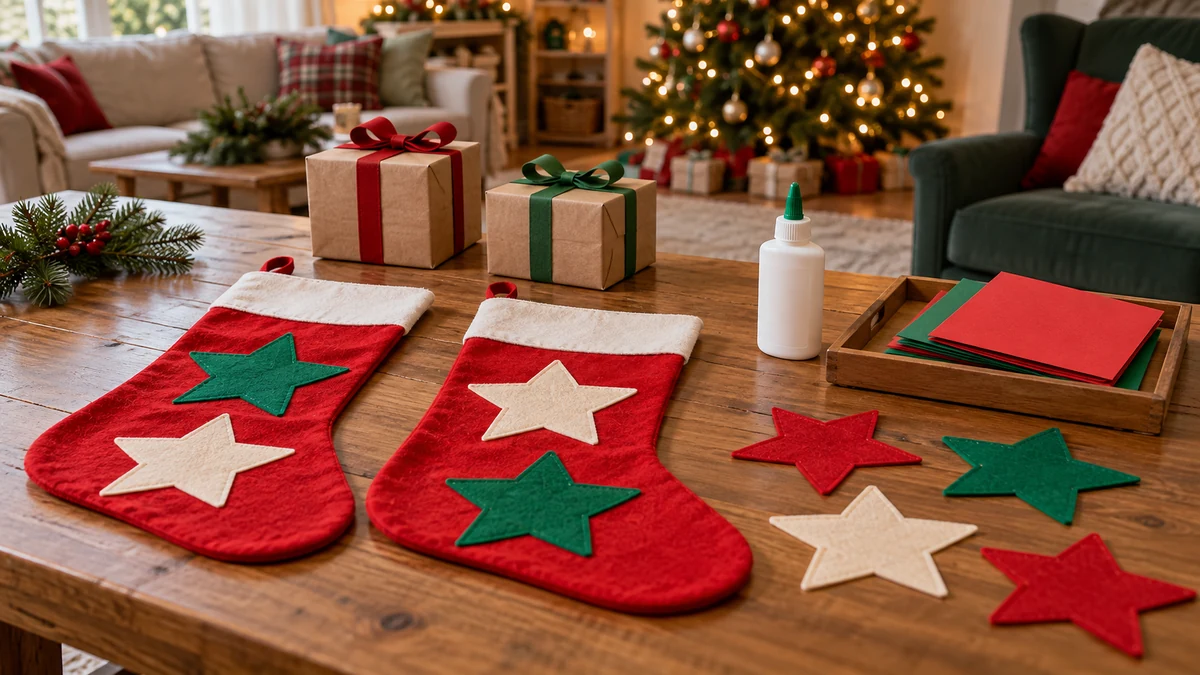
Thoughtful prizes can round off the session without making it expensive. Mix symbolic rewards and useful keepsakes, and avoid assuming everyone wants sweets, scented products or a public presentation.
Prize ideas
- Symbolic rewards: homemade certificates, cardboard trophies or a note recognising a thoughtful contribution.
- Food gifts: biscuits or chocolates can work for those who want them, with ingredients and allergens checked and a non-food alternative available.
- Shared experiences: choosing a family film, planning a games evening or suggesting a home-cooked meal.
- Reusable gifts: a useful fabric bag, mug or durable decoration, chosen for the recipient rather than labelled sustainable simply because it is handmade.
Simple, inexpensive keepsakes
- Craft kits: large paper or felt shapes and age-appropriate stickers, with clear instructions and no small hazardous components for young children.
- Decorated stockings: personalise a fabric stocking with a name or a securely attached large patch.
- Message cards: write a personal thank-you; include a family photograph only with permission from those pictured.
- Scented sachets: offer these only to people who want scented products, keeping dried contents away from young children and pets. An unscented fabric keepsake is a useful alternative.
Considering a small craft business
- Choose the product: start with a small range of decorations or stockings. A successful family activity is not proof that a product is safe or compliant for sale.
- Work out the real cost: include materials, labour, packaging, fees, delivery and other relevant overheads before setting a price. No single markup guarantees a profit.
- Make the process consistent: document materials, assembly and quality checks before accepting orders.
- Present it honestly: use clear photographs and accurate descriptions of size, materials and limitations, without promising sales from attractive packaging alone.
- Choose sales channels: consider local events or online orders after checking the applicable requirements. If you plan to sell food gifts, the Food Standards Agency provides guidance on registration, hygiene and allergens; home production is not automatically exempt. Source: Food Standards Agency: starting a food business
- Offer manageable variations: a basic and personalised version may be easier to deliver reliably than a large range.
- Workshops: a craft session is another possible project, but plan suitable supervision, access, materials and the venue’s requirements before charging for places.
- Local partnerships: approach a school, community venue or event organiser directly rather than assuming you can sell at its activities.
Pricing and promotion tips
- Compare the proposed selling price with the full cost of making and delivering the item. Treat a markup on cost and a profit margin on sales as different calculations, and test demand before producing large quantities.
- Offer a multi-item bundle only if its price still covers the relevant costs and you can fulfil the order.
- Use product photographs for promotion; obtain explicit permission before using family members, especially children, in marketing.
- Add accurate care or use instructions and a simple thank-you note where appropriate.
- If offering local delivery or collection, include its real cost and agree arrangements that protect everyone’s privacy.
Affordable ideas and thoughtful presentation can make enjoyable party keepsakes. A separate commercial project needs proper costing and product checks, with no guarantee of income.
A relaxed finish
A Christmas games session can bring generations together through shared tasks, laughter and conversation. Simple rules and flexible roles make it easier for people to enjoy it in their own way.
Choose the activities that fit your space and time, and record favourite moments only with everyone’s agreement. There is no need to complete all ten for the gathering to feel special.
Thanks for reading. Follow our social channels for more festive ideas and visit the I Love Christmas blog for more ways to plan your celebrations.
Christmas family games: frequently asked questions
How many people should be in each team?
Two to six is a useful starting point. Adjust to the group, balance numbers and let people share tasks according to their interests and access needs.
How can I adapt the games for young children and older relatives?
Offer seated options, fewer walking stages, larger materials and extra time. Ask what would help rather than assuming everyone of the same age needs the same adaptation.
What basic materials do I need?
Clue envelopes, pens, paper, tape, a timer, suitable prizes and the supplies for your chosen activities. Use pre-cut craft shapes where possible and keep hazardous small parts out of children’s kits.
How long should the session last?
Choose a few activities for around 60–90 minutes, or two or three short rounds for 30–45 minutes. Full-length treasure hunts and crafts take longer, so do not try to fit all ten into a short session.
How can I make the games safer?
Keep routes clear, use suitable lightweight materials and supervise children. Avoid running with objects, mouth-held spoons, hot tools and tasks requiring climbing. Pause whenever the setup stops being suitable.
Could the keepsakes become a source of extra income?
Possibly, but assess product suitability, full costs and applicable requirements first. Family-party success does not establish commercial viability, and sales or profit are not guaranteed.
Sources and Further Reading
- Office for Product Safety and Standards: small hazards big harm
- Food Standards Agency: starting a food business