
A Christmas party plan brings together the food, decorations, activities and practical arrangements for hosting at home. A clear checklist, vegetarian options, shared responsibilities and sensible use of what you already own can reduce last-minute work and waste, leaving more time to enjoy your guests.
Planning a Christmas party at home can feel easier when the jobs are broken into manageable steps. This guide covers decorations, a flexible menu and activities you can adapt to your space, budget and guests.
Illustrations in this article are conceptual images, not documentary photographs or evidence of a particular historical event, destination, venue or access route.
Planning ahead: a checklist for the week before the party

Start early enough to avoid a rush. Use the following timetable as a planning example, adjusting food preparation to storage instructions and the time each dish actually needs.
Essential checklist
- Guest list: confirm attendance, dietary requirements, allergies and any access needs.
- Menu: choose main dishes, starters, drinks and desserts that fit your kitchen and fridge capacity.
- Shopping: list fresh and cupboard ingredients, drinks and any serving supplies you cannot borrow or reuse.
- Decorations: check the tree, ornaments, table linen and lighting; flameless candles are a useful option.
- Tableware: count plates, cutlery, glasses and serving dishes, allowing for a few extras.
- Cleaning: organise cleaning supplies, extra bin bags and appropriate recycling containers.
- Music and atmosphere: prepare a playlist, check the sound system and keep lighting comfortable.
- A backup plan: consider bad weather, a power cut and any changes needed for guests’ comfort or accessibility.
An example timetable for the preceding week
- Seven days before — confirm the plan:
- Confirm the guest list and likely numbers.
- Finalise the menu and agree who is bringing or preparing each item.
- Check the spending limit and adjust the shopping list.
- Six days before — buy cupboard supplies:
- Purchase suitable drinks, tins, seasonings and cleaning supplies.
- Confirm any borrowed tables, chairs or equipment.
- Five days before — prepare decorations and the layout:
- Sort ornaments, check lights and assemble decorations that do not need to be fresh.
- Plan table positions and clear routes around the room.
- Four days before — review recipes and equipment:
- Identify dishes that can safely be made ahead, with their cooling, storage and reheating instructions.
- Set aside the plates, cutlery and serving dishes each course needs.
- Three days before — check fresh and frozen supplies:
- Buy fresh ingredients according to their use-by dates and storage requirements, rather than assuming every item will keep for three days.
- Prepare only dishes suitable for freezing, cool them safely and label them with their contents and date.
- Two days before — begin suitable preparation:
- Check frozen poultry well before this point: a large turkey can need longer to thaw. Food Standards Agency guidance says to follow the packaging and ensure it is fully defrosted before cooking; use the fridge and keep raw juices away from other food. Source: Food Standards Agency: defrosting food safely
- Prepare desserts or marinades only where the recipe and storage instructions allow, and keep them refrigerated as required.
- Group decorations for the table, entrance and other areas.
- The day before — clean and set up:
- Clean shared spaces and organise serving areas.
- Set out non-food table items and make room to chill drinks without displacing perishable food.
- Review the checklist and confirm jobs with helpers.
- On the day — make the final checks:
- Cook or reheat dishes according to their instructions, allowing enough time to check they are properly cooked.
- Set the lighting and music, and check the bathroom supplies.
- Receive any scheduled deliveries and store food promptly.
An illustrative timetable for a 6 pm gathering
- 8–10 am: tidy shared spaces and put arriving ingredients into appropriate storage.
- 10 am–noon: prepare suitable cold starters and desserts, keeping perishable food refrigerated.
- Noon–2 pm: work on longer-cooking dishes according to their actual cooking times; move the start earlier if necessary.
- 2–4 pm: finish decorations and arrange the drinks area without leaving chilled food out.
- 4–6 pm: complete final cooking and reheating, check the table and get ready to welcome guests. Keep food safely hot or chilled until service.
- 6 pm: welcome guests and bring out starters in manageable quantities.
Sharing responsibilities
Agree simple jobs in advance: one person can look after drinks, another receive deliveries and another help clear used glasses. Clear responsibilities reduce confusion and give the host more time with guests.
Practical ways to reduce waste
- Buy to a realistic list, with fresh ingredients timed around their storage life.
- Use washable plates and glasses where practical.
- Reuse previous years’ decorations with a few small changes.
- Make the recycling area easy to find and follow your local collection rules.
Final checks, 30–60 minutes before guests arrive
- Check food temperatures and serving arrangements, rather than judging cooked poultry by time alone.
- Put serving utensils beside the dishes they belong to, keeping separate utensils for different dietary needs.
- Switch on decorative lights and set music at a level that allows conversation.
- Keep useful supplies together: tape, scissors, a phone charger and a basic first-aid kit, safely away from children.
Affordable decorations: tree, table and lighting

Reused ornaments, restrained lighting and a few handmade details can create a welcoming Christmas setting without a large shopping list.
A simple, attractive tree
Choose a small colour palette and coordinate what you already own. Handmade ornaments add character without needing elaborate materials.
- An alternative display might use securely fixed branches or a tree-shaped wall garland. Avoid unstable improvised structures and keep exits clear.
- Simple ornaments include reused baubles, kraft-paper stars, dried orange slices and cinnamon sticks, kept out of reach of pets and young children where necessary.
- Warm-white LED lights can create a gentle effect. Use a suitable set according to its instructions and check it for damage.
Setting up the tree
- Choose the position: use a visible spot with safe access to power, away from heaters and clear of walkways.
- Use a stable support: fit a stand appropriate to the tree and follow its instructions. A decorative pot filled with loose stones is not a substitute for a properly secured stand.
- Add lights first: distribute them without trapping cables or overloading sockets.
- Place larger ornaments: spread their weight sensibly and avoid overloading individual branches.
- Finish with simple details: add a few bows, a suitable topper and a fabric tree skirt without covering electrical connections.
A practical Christmas table
A few well-chosen textures can make the table feel special. Keep the arrangement simple so that guests can talk, reach dishes and sit comfortably.
- Try a plain fabric runner, a woven mat or paper decoration kept well away from heat.
- Low-cost centrepieces can combine flameless candles, clean pine cones and suitable greenery without crowding the place settings.
- Mix tableware you already own, using a few special plates as accents.
- Make place cards from recycled paper or simple handwritten tags.
Setting the table step by step
- Lay the foundation: position the runner and keep the centrepiece low enough for conversation.
- Arrange plates and cutlery: leave comfortable space between settings.
- Add glasses: place them where guests can reach them without knocking over decorations.
- Finish with small details: add place cards, modest greenery and flameless candles if wanted.
Lighting on a budget
Several small light sources can make a room feel warm while keeping practical areas bright enough to use safely.
- Use suitable LED strings around windows or displays, keeping cables away from heat and circulation routes.
- London Fire Brigade recommends flameless candles as a safer alternative. If using a real flame, never leave it unattended, use a stable heat-resistant holder and keep it away from decorations, children and pets. Source: London Fire Brigade: candle safety
- Mirrors and reflective surfaces can make existing lighting feel brighter without adding more fittings.
- A compatible timer can help manage running time, but still switch festive lights off when leaving home or going to bed. Source: London Fire Brigade: winter safety guide
Arranging decorative lights
- Inspect first: check the complete set and stop using it if cables, plugs or fittings are damaged.
- Plan the route: avoid loose cables across doorways and places where they could be pinched or pulled.
- Use suitable fixings: follow the light set’s instructions and the fixing’s load limits; do not pierce electrical cables.
- Review the result: adjust for a balanced appearance without obstructing switches, sockets or exits.
Finding suitable materials
- Buy electrical decorations from a reputable supplier and choose products suited to their intended indoor or outdoor use.
- Second-hand decorative containers can hold ornaments or flameless lights; do not assume ordinary reused glass is safe for a burning candle.
- Fabric remnants, existing table linen or suitable paper can form a simple runner.
- Obtain natural materials from your own supplies or a permitted source, avoiding protected plants and unsuitable or toxic foliage.
Reuse and spend thoughtfully
- Refresh old ornaments with ribbon or an appropriate finish rather than replacing the whole collection.
- Choose materials that can actually be reused or recycled locally, avoiding vague environmental claims.
- Prefer decorations you will enjoy using for several occasions.
- Share purchases with relatives only where the quantity is useful; buying in bulk is not a saving if much of it goes unused.
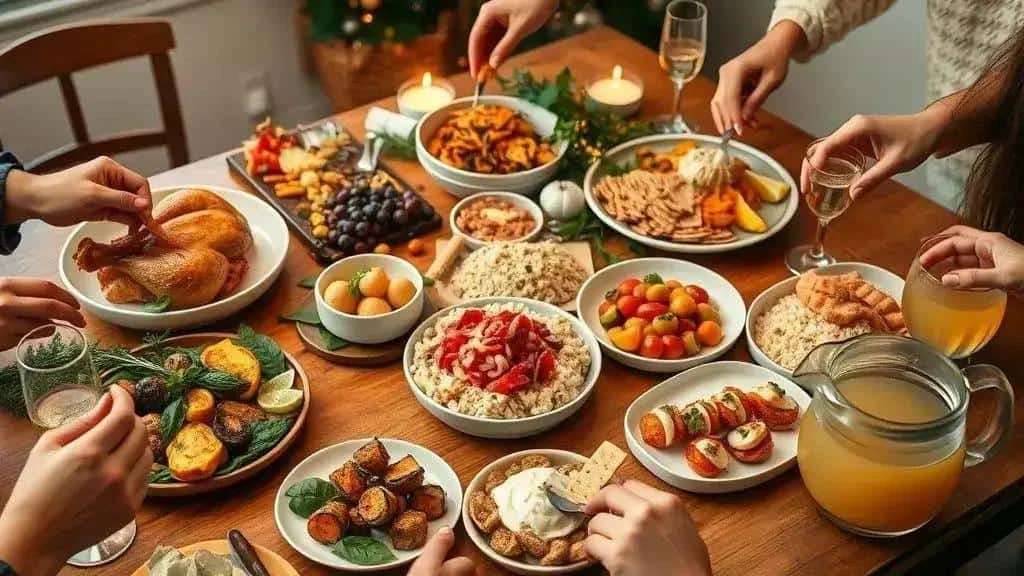
Choose a manageable main dish, a few complementary sides and a substantial vegetarian option. Check ingredients with guests who have allergies or specific dietary needs rather than relying on a dish’s name.
Flexible main dishes and sides
- Roast turkey or chicken with garlic, lemon and herbs can anchor the meal. Food Standards Agency guidance gives 70°C for two minutes, or an equivalent safe time-temperature combination, at the centre of food as a cooking check; follow the product’s instructions and measure the thickest part appropriately. Source: Food Standards Agency: cooking food safely
- Rice with vegetables is a useful accompaniment. If preparing it ahead, FSA guidance advises cooling it quickly, ideally within an hour, refrigerating it and using it within 24 hours; reheat only once until steaming hot throughout. Source: Food Standards Agency: cooking and reheating rice safely
- Brazilian farofa, a toasted cassava-flour side, can include dried fruit and nuts. Identify the ingredients clearly for guests with allergies.
- Roasted vegetables such as squash, carrots and sweet potatoes can share a tray when cut and timed appropriately.
- A fresh green salad with olive oil and lemon dressing adds a simple contrast.
Vegetarian options
- Aubergine or vegetable lasagne is easy to portion; use a suitable vegetarian cheese and check other ingredients.
- Pumpkin risotto can use vegetarian stock and a hard cheese labelled suitable for vegetarians, or an appropriate vegan alternative. Parmigiano Reggiano uses calf rennet, so it should not be assumed vegetarian. Source: Parmigiano Reggiano: product specification and calf rennet
- Chickpea salad with herbs, tomatoes and red onion provides a substantial pulse-based option.
- Roasted vegetables with herbs and olive oil work as a shared side or alongside a more substantial plant-based dish.
Quick starters and finger food
These three straightforward ideas can be adapted to the guests’ dietary requirements. Keep chilled ingredients refrigerated until needed.
Classic tomato bruschetta
- Ingredients:
- 8 slices of Italian bread or ciabatta
- 3 ripe tomatoes, chopped
- 1 garlic clove, for rubbing onto the bread
- 2 tablespoons extra-virgin olive oil
- Basil leaves, to taste
- Salt and pepper, to taste
- Toast the bread in the oven or a frying pan until golden.
- Rub with the garlic while the slices are still warm, taking care when handling them.
- Mix the tomatoes with the oil, seasoning and basil.
- Spoon the mixture onto the bread and serve promptly.
Vegetarian caprese skewers
- Ingredients:
- 20 mini mozzarella balls, labelled suitable for vegetarians if required
- 20 cherry tomatoes
- 20 basil leaves
- 2 tablespoons olive oil, with balsamic glaze to taste if wanted
- Suitable wooden cocktail sticks; serve without sticks and cut ingredients appropriately for young children
- Assemble a tomato, basil leaf and mozzarella ball on each stick.
- Drizzle with olive oil and a little balsamic glaze if using.
- Arrange on a serving dish and keep refrigerated until required.
Ricotta and herb dip
- Ingredients:
- 300 g ricotta, mashed, or soft tofu for a dairy-free version; check other ingredients if making it vegan
- 2 tablespoons olive oil
- 1 small garlic clove, crushed
- 1 tablespoon chopped parsley and chives combined
- Salt and pepper, to taste
- Crackers or toast, to serve
- Mix the ricotta or tofu with the oil, garlic and herbs until creamy.
- Adjust the salt and pepper to taste.
- Serve in small bowls with crackers alongside, keeping the dip refrigerated before serving.
Quantities and preparation ahead
- As a rough serving example, allow around 150–200 g of a main dish per adult, plus suitable sides. This refers to a serving of food, not grams of nutritional protein; raw purchases, bones, recipes, appetites and the number of courses change what you need.
- For small starters before a full meal, three to five pieces per person may be a useful starting estimate, adjusted for size and appetite.
- Make-ahead dishes: some desserts, marinades and cooked dishes can be prepared earlier, but follow their specific storage limits. Do not apply a blanket two-day rule to every food, especially rice.
- On the day: finish cooking and arrange food close to service, keeping cold dishes chilled and hot dishes safely hot. Do not leave platters out for hours merely to complete the table early.
Drinks for different preferences
- If serving wine or sparkling wine, offer it as an optional pairing rather than an essential part of the meal.
- Provide appealing alcohol-free choices, such as water with suitable citrus slices or an alcohol-free punch with its ingredients clearly identified.
- A self-service drinks area can reduce queues; keep alcoholic drinks clearly separate and out of children’s reach.
Presenting the food
- Use stable serving dishes at practical heights without making them difficult to reach.
- Use only edible, food-safe garnishes on dishes. Decorative greenery is not automatically safe to eat or place against food.
- Label ingredients and dietary options accurately, and retain packaging where it helps answer allergen questions. Separate utensils help reduce cross-contact.
Welcoming guests: jobs and movement around the home

Decide who is doing what, organise the serving areas and leave clear routes so arrivals and the meal can flow more naturally.
Key arrangements
- A clear welcome point: greet guests where you can explain the layout without blocking the door.
- A drinks station: keep it accessible and separate from the busiest food-serving spot where possible.
- A place for coats: set aside space for coats and bags without narrowing a passageway.
- Clear routes: keep corridors, exits and access to the bathroom unobstructed.
Dividing the work
Sharing a few clear jobs is more useful than asking everyone to help with everything at once.
- Welcoming: greet arrivals and explain where coats, seats and bathrooms are.
- Drinks: replenish supplies and keep the area tidy.
- Food and service: finish dishes, replace small platters as needed and monitor safe holding arrangements.
- Light clearing: collect used glasses and deal with spills promptly.
- Children’s activities: agree adult supervision with parents or carers rather than assuming someone else is watching.
A comfortable arrival sequence
- Arrival: welcome guests and show them where to put coats and find a seat.
- A first drink: offer a choice, including water and an alcohol-free option.
- Explain the layout: point out the bathroom, food area and any supervised children’s space.
- Avoid bottlenecks: invite guests to use serving areas in a way that leaves room for everyone to move.
- Meal timing: let guests know roughly when food will be served.
The host’s day-of-party checklist
- Morning: check shared spaces, useful supplies and chilled drinks.
- Afternoon: follow the cooking plan and set up non-perishable serving equipment.
- One hour before: check music, decorative lighting and the entrance.
- Thirty minutes before: put out empty serving dishes and confirm final jobs, bringing perishable food out only when appropriate.
Welcoming without feeling rushed
- Ask one willing helper to deal with small practical problems while you greet people.
- Keep greetings warm and let guests settle in without feeling that every conversation must be completed at the door.
- If hosting together, agree who will welcome arrivals and who will circulate.
Useful serving and activity areas
- Drinks: arrange glasses and clearly identify alcoholic, alcohol-free and allergen-containing options; readable labels are helpful.
- Starters: put manageable platters in a convenient spot without obstructing the entrance.
- Hot food: leave room for safe replenishment and keep hot equipment away from passing children.
- Children’s area: provide suitable games, enough space and agreed adult supervision.
Accessibility and comfort
- Discuss access needs with guests beforehand and leave sufficient room around furniture and along the main route.
- Check that bathroom essentials can be reached easily.
- Offer comfortable seating to anyone who needs it and ask about preferences rather than assuming where they should sit.
Dealing with changes and clearing up
A few practical preparations can make small problems easier to manage.
- Useful supplies: keep tape, scissors, sewing supplies, a charger, bin bags and a first-aid kit together. Store sharp items safely and leave personal medicines with their owner, out of children’s reach.
- An alternative layout: know where guests and food can move if an outdoor area becomes unusable.
- Quick clearing: put waste and recycling containers where helpers can find them, with spare bags ready.
Activities for different ages
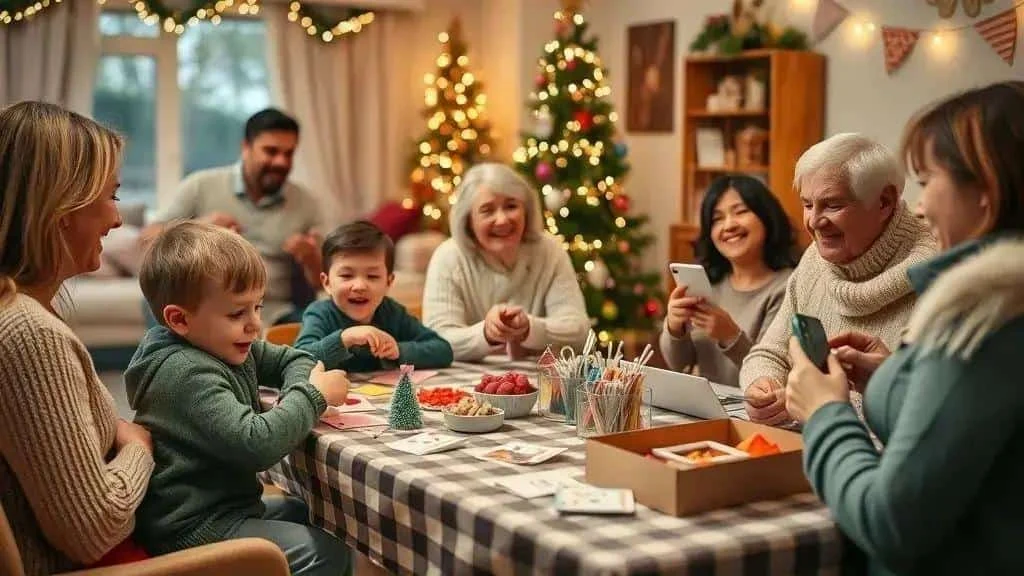
Choose short, optional activities that fit around conversation and food. Guests should be able to join in, watch or take a quiet break without pressure.
Ideas for children
- Paper decorations: provide age-appropriate paper, washable pens and suitable glue. Adults can prepare shapes in advance; supervise any use of scissors.
- A Christmas treasure hunt: use simple clues and age-appropriate rewards, keeping hiding places away from stairs, hot equipment and fragile objects.
- A texture game: let children explore safe, large objects or fabrics with their hands. Blindfolds are optional and unnecessary; avoid sharp, breakable or small choking hazards.
Running a decoration activity
- Prepare the table: protect the surface and set out only materials suitable for the children’s ages.
- Show a simple example: demonstrate the basic idea without insisting that every ornament look the same.
- Help with cutting and sticking: supervise tools and keep ribbons or cords appropriate to the age group.
- Dry and display: let the work dry before putting it on a suitable display away from heat.
Games for adults
- Christmas charades: use films, songs or familiar festive situations for teams to guess.
- A family quiz: choose friendly questions that avoid embarrassing or excluding anyone.
- Short Christmas memories: invite willing guests to share a brief story. Keep any voting light-hearted, or simply enjoy listening.
Activities to share across generations
- Christmas bingo: use clear pictures or words and age-appropriate markers; small sweets are not suitable markers for every child.
- A simple Secret Santa: agree a modest spending limit in advance and allow people to opt out.
- A photo corner: a few simple props and optional instant prints can create keepsakes. Ask before photographing or sharing pictures.
Simple rules for charades and bingo
- Charades: one player acts out a theme for up to a minute while their team guesses; award a point for a correct answer.
- Bingo: call out pictures or words at random and agree beforehand whether a line or a full card wins.
Quick conversation starters
- Invite each willing person to mention one good thing from the year.
- Let pairs share a funny memory for a couple of minutes, without requiring a public retelling.
- Try a three-question festive quiz with answers everyone can enjoy discussing.
A small craft and keepsake table
Prepare simple kits with fabric bags, tags, ribbons and suitable decorations. The benefit: willing guests can assemble a keepsake while the host avoids doing every finishing task alone.
Organising materials
- Use labelled boxes so that each activity’s materials are easy to find.
- Keep scissors, adhesives and cleaning supplies appropriate to the activity and safely supervised.
- Leave short, clear instructions for the adult helping with each activity.
Inclusion and supervision
- Offer seated or simpler versions of activities where helpful, and ask guests what works for them.
- Keep routes clear and provide a quieter space for anyone who wants a break.
- Use suitable non-toxic craft materials and keep small parts away from young children; supervision does not make an unsuitable item safe.
Thoughtful handmade gifts and favours

Simple, well-finished gifts can be personal and affordable. If you intend to sell rather than give them privately, check the relevant product and food requirements before making a batch.
A simple dried-lavender sachet
- Materials: a small securely sewn fabric bag, suitable dry filling, dried lavender, a needle and thread. This is a scented household item, not a toy or edible gift; check whether fragrance is welcome.
- Fill the bag loosely, leaving enough space for a secure seam.
- Add a little dried lavender if suitable for the recipient. Avoid adding unmeasured essential oils or making claims about health benefits.
- Close the bag securely and check that loose filling cannot escape during ordinary handling.
- Label the contents and intended use clearly, and keep the sachet away from children and pets who might open or swallow it.
Candle gifts need a tested design
- Choose appropriate materials: use a tested candle-making system with compatible wax, wick, purpose-made container and any permitted fragrance. Ordinary reused jars and arbitrary essential oils are not a reliable substitute.
- Follow the supplier’s exact heating and handling instructions in a suitable adult workspace; this overview is not a candle recipe.
- Measure fragrance only according to the validated formulation and manufacturer limits. A generic number of drops per weight of wax cannot establish a safe formulation.
- Assemble only the compatible wick and container specified for that design, following the supplier’s pouring instructions.
- Allow the specified curing time and complete appropriate testing before gifting or selling. Anglesey Trading Standards explains that candles sold to consumers require a safety assessment, suitable instructions and relevant labelling. A ready-made candle from a reputable supplier is a simpler alternative. Source: Anglesey Trading Standards: making and selling candles
A jar of ready-to-eat biscuits or dry treats
- Materials: a clean, dry, food-safe jar, suitable fully cooked biscuits or other shelf-stable treats, a contents label and optional ribbon. This idea does not cover dairy-based brigadeiro or other chilled desserts.
- Arrange the ready-to-eat contents without crushing them. Do not present an unspecified mix of ingredients as a baking recipe.
- Attach an accurate ingredients and allergen list, with storage instructions and a date supported by the food used rather than an invented shelf life.
- Store according to the contents’ requirements and keep the jar dry and closed. Choose a different gift if you cannot establish suitable storage.
Useful reusable gift sets
- Materials: a washable bag, cloth napkins or another practical reusable item the recipient will use. Include purchased toiletries only with their original information and packaging intact.
- Choose compact, durable items suited to the recipient rather than adding unnecessary extras.
- Arrange them in a reused box or simple protective paper without excessive decorative filler.
- Describe specific features truthfully, such as washable or reusable, instead of making unsupported environmental promises.
Personalised cards and gift tags
- Materials: card or kraft paper, suitable pens or stamps, ribbon and a hole punch used with appropriate supervision.
- Cut the card to size and add a simple drawing or stamped design.
- Add a modest ribbon or another securely attached detail if useful.
- Include relevant care instructions and retain the safety information supplied with purchased products.
Simple, affordable wrapping
- Use plain paper or reusable fabric, with only enough ribbon to secure the parcel.
- Reuse clean, suitable boxes and fabric; food packaging must also be appropriate for contact with its contents.
- Group a few complementary items if the recipient will use them, rather than increasing packaging for appearance alone.
If you plan to sell handmade items
- Calculate materials, labour, packaging, fees and other costs before deciding on a price. Use a realistic hourly figure for your circumstances rather than copying an unrelated example.
- Compare similar local products, taking account of their materials and finish.
- Offer clearly priced bundles or personalisation only where you can deliver them reliably.
- Record costs in a simple spreadsheet so you can see whether the price covers the work.
- Test demand with a manageable quantity, without assuming that a low introductory price will be profitable.
- Standardise suitable packaging where it reduces waste and preparation time.
Presenting items online or in person
- Use clear photographs that show the actual product and its finish.
- Describe materials, care and realistic production times accurately.
- Explain any extra charge and lead time for personalisation before accepting an order.
Hygiene, labelling and responsibilities
- Provide appropriate ingredients and allergen information for food gifts or products, checking the rules that apply to the way you supply them.
- UK government guidance says a food business must register with its local authority at least 28 days before starting. Check whether your activity requires registration and any additional rules; responsibilities are not limited to large-scale sellers. Source: GOV.UK: food business registration
- Follow appropriate food hygiene procedures and maintain the records required for your activity. Ask the local authority for guidance before beginning a food business.
Spending thoughtfully and reducing Christmas waste

Practical choices can reduce unnecessary purchases and waste while keeping the celebration personal. Focus on the food, decorations and gifts you will genuinely use.
Saving without losing the festive feel
- Plan the menu: share suitable ingredients between recipes where this reduces leftovers without creating allergen confusion.
- Buy realistic quantities: use the guest list and recipes, and compare actual prices rather than assuming one type of shop is always cheaper.
- Borrow or hire: extra chairs, dishes or decorations may be available without buying them for a single evening.
Decorations to use again
- Refresh existing ornaments with a small change rather than replacing a whole theme.
- Use suitable branches, pine cones or dried fruit only where they can be obtained responsibly and displayed safely.
- Use appropriate LED lighting, avoid overloaded sockets and switch it off when not needed.
A meal with less waste
- Plan portions: use recipe yields and the guests’ preferences. A 150–200 g main-dish serving is only a rough example, not a rule for every dish or person.
- Plan safe leftovers: Food Standards Agency guidance advises cooling leftovers and refrigerating or freezing them within one to two hours, then eating or freezing them within two days. Rice needs the shorter handling and storage limits described above. Source: Food Standards Agency: chilling and leftovers
- Serve manageable amounts: offer smaller portions and replenish safely, allowing people to return for more.
Gifts with a purpose
- Consider an experience, a useful handmade item or something from a local maker rather than elaborate packaging.
- Wrap with suitable paper, reused fabric or a reusable box.
- An agreed donation or time together can be an alternative to exchanging objects.
Reuse, food waste and recycling
- Make the appropriate recycling and food-waste containers easy to find.
- Reuse only safely handled leftovers in another meal. Dispose of unsuitable food through the appropriate waste route; do not assume all cooked food belongs in a home compost bin.
- Sort packaging according to local rules and store intact decorations for another year.
Shopping and keeping to the budget
- Buy fresh items at a suitable time, and buy cupboard offers only if the quantity will be used.
- Compare unit prices and suitable own-brand alternatives.
- Keep a simple spending record so that small extras do not quietly exceed the limit.
Small shared contributions
- Invite willing guests to bring a dish or drink, coordinating ingredients, storage and dietary needs.
- Choose useful or suitable edible favours only if guests want them; a favour is not compulsory.
- Explain practical choices warmly without making guests feel judged about their own celebrations.
Bringing the plan together
A thoughtful timetable, shared jobs and a manageable menu can make hosting feel calmer. The aim is a welcoming gathering, not a perfectly controlled evening.
Adapt the food, decorations and activities to your home and budget, leaving room for guests’ preferences and unexpected changes.
Thank you for reading. Explore the I Love Christmas blog for more festive ideas and practical planning guides.
If you share photographs or stories from the party, check that the people involved are happy for them to be made public.
FAQ: hosting a Christmas party at home
How much food should I plan for each guest?
Start with recipe yields, the number of courses and your guests’ appetites. A main-dish serving of roughly 150–200 g and three to five small starters before a full meal are only planning examples. They are not grams of nutritional protein, and raw purchases need separate calculation.
How can I decorate without spending much?
Reuse ornaments, make simple paper decorations and use a modest colour scheme. Choose suitable lighting and stable displays, with flameless candles where helpful. Buying fewer items you will reuse is often more practical than replacing everything.
Which activities work well for children?
Short paper crafts, simple treasure hunts and suitable games can work when matched to age and ability. Agree adult supervision, keep small or sharp items away from younger children and offer quiet alternatives. No activity guarantees safety merely by keeping children occupied.
Agree clear tasks before the party: welcoming, drinks, food service, light clearing and children’s activities. Give each person the information they need and make sure responsibilities do not conflict.
How can I reduce food waste?
Plan realistic quantities, bring out manageable portions and arrange safe storage for leftovers. Keep ingredients and allergens clear when guests take food home, and follow appropriate cooling, refrigeration and reheating guidance.
Offer a substantial dish, such as a suitable vegetable lasagne or chickpea-based option, alongside versatile sides. Check stock, cheese and other ingredients rather than assuming they are vegetarian; use separate serving utensils where needed.
Sources and Further Reading
- Food Standards Agency: defrosting food safely
- Food Standards Agency: cooking food safely
- Food Standards Agency: cooking and reheating rice safely
- London Fire Brigade: candle safety
- London Fire Brigade: winter safety guide
- Parmigiano Reggiano: product specification and calf rennet
- Anglesey Trading Standards: making and selling candles
- GOV.UK: food business registration
- Food Standards Agency: chilling and leftovers