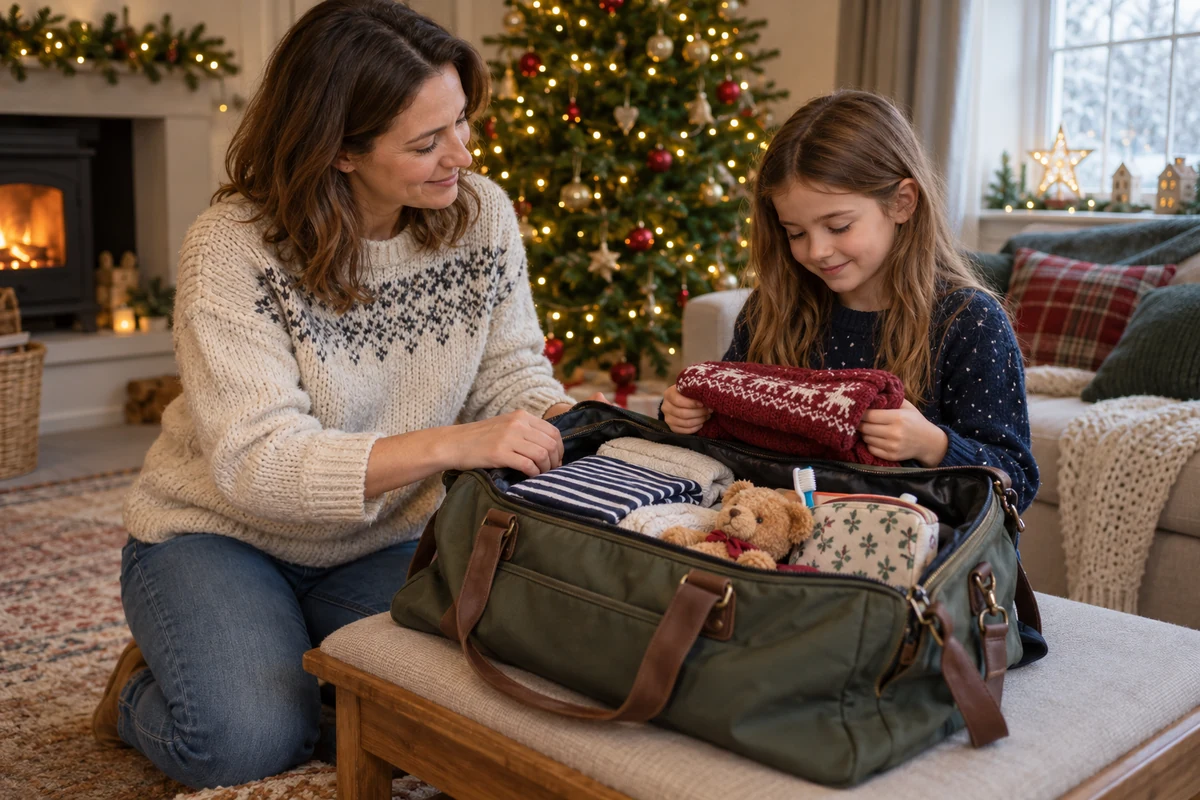
Christmas after separation can involve different dates, journeys and family traditions. Start with the children’s needs and existing arrangements, keep adult decisions with adults and make room for familiar routines. School communication and teacher gifts can be kept simple, private and optional.
Christmas after separation often needs a little extra planning. This guide brings together ideas for celebrations across two homes, conversations with school and thoughtful gifts children can help make. Choose what suits your family rather than trying to do everything.
Illustrations in this article are conceptual images, not documentary photographs or evidence of a particular historical event, destination, venue or access route.
Sharing Christmas dates without putting pressure on children
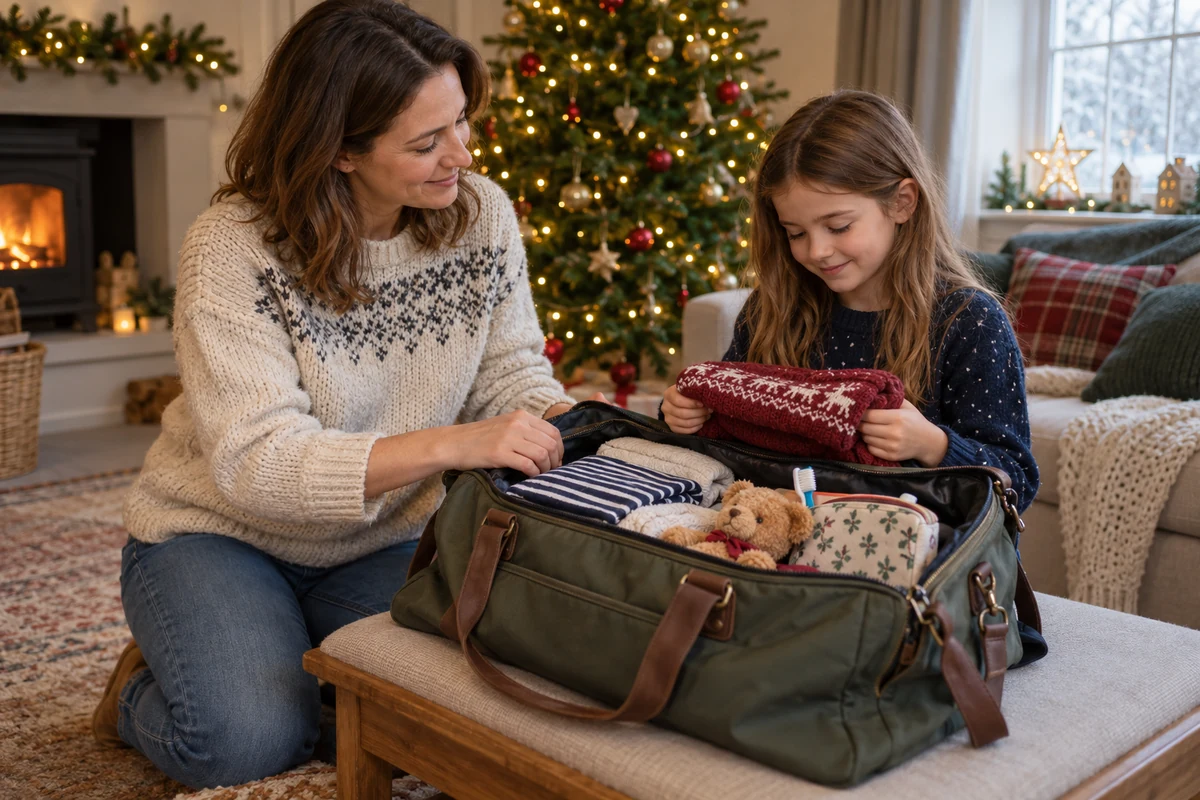
A predictable plan can help children know what to expect. Cafcass advises considering each child’s needs when planning time with parents after separation. These are practical suggestions, not legal advice: existing arrangements, court orders and safety needs take priority. Where there is domestic abuse or another safeguarding concern, seek appropriate professional support; joint celebrations or direct negotiations may be unsuitable. Source: Cafcass: planning a child’s time with parents after separation Source: Cafcass: domestic abuse practice policy
Make a clear plan
Record the agreed dates and who is responsible for each journey. Set clear expectations about collection times, meals and presents, using a communication method that is safe and appropriate for your circumstances.
- Choose a workable pattern: possibilities include alternating years, dividing a day or celebrating on different dates. None is automatically the right arrangement for every family.
- Keep the information accessible: a private shared calendar can help where sharing is safe. Otherwise use the agreed communication channel, without disclosing sensitive location information unnecessarily.
- Protect familiar routines: allow for usual meals, naps and bedtime when arranging activities and journeys.
- Discuss contingencies: agree how illness, travel disruption or changes at work will be communicated. Do not assume an informal change overrides an existing court order. Source: GOV.UK: looking after children after separation or divorce
Talking with children and school
Explain where children will be and who will care for them in simple, age-appropriate terms. Offer small choices such as a book to pack or a decoration to make, without asking them to choose between parents.
- Tell school about relevant changes to term-time collection or support needs through its official process. Staff do not usually need the family’s entire Christmas holiday itinerary.
- If you are giving a teacher a present, check the school’s policy and agree a simple delivery plan before term ends. Gifts are optional.
- Keep practical communication between adults, using appropriate messages or records rather than making a child carry information between households.
Possible ways to share celebrations
The distance between homes, children’s ages, existing arrangements and safety all affect which options are realistic:
- Alternate years: Christmas Day might be spent with one household one year and the other the next, where that fits the agreed arrangements.
- Divide the day: breakfast in one home and a later meal in the other may work when the journey is short and manageable for the child.
- Celebrate on different dates: one household could celebrate on Christmas Eve and the other on Christmas Day, or use Boxing Day or another agreed date.
- Arrange a joint gathering: consider this only if it is safe, genuinely wanted and comfortable for everyone involved. It is not a requirement for a successful Christmas.
Managing feelings of guilt
Parents can have complicated feelings about a changed Christmas, and children may miss someone even during an enjoyable celebration. Give your time and attention without expecting a particular reaction or treating presents and activities as a way to compensate for everything.
- Reassure children that they are loved and are not responsible for managing adults’ feelings.
- Avoid criticising the other parent in front of children, while explaining necessary safety boundaries honestly and appropriately.
- If it suits your family, keep a familiar song, story, game or prayer in each home. Religious activities should reflect the family’s own beliefs and preferences.
A few practical finishing touches
Keep a manageable list of clothes, comfort items, suitable snacks and any planned gifts. Photographs or short video calls may help some families stay in touch, but only when safe, agreed and welcome to the child; they should not become a way to monitor the other household.
A practical timetable for Christmas across two homes
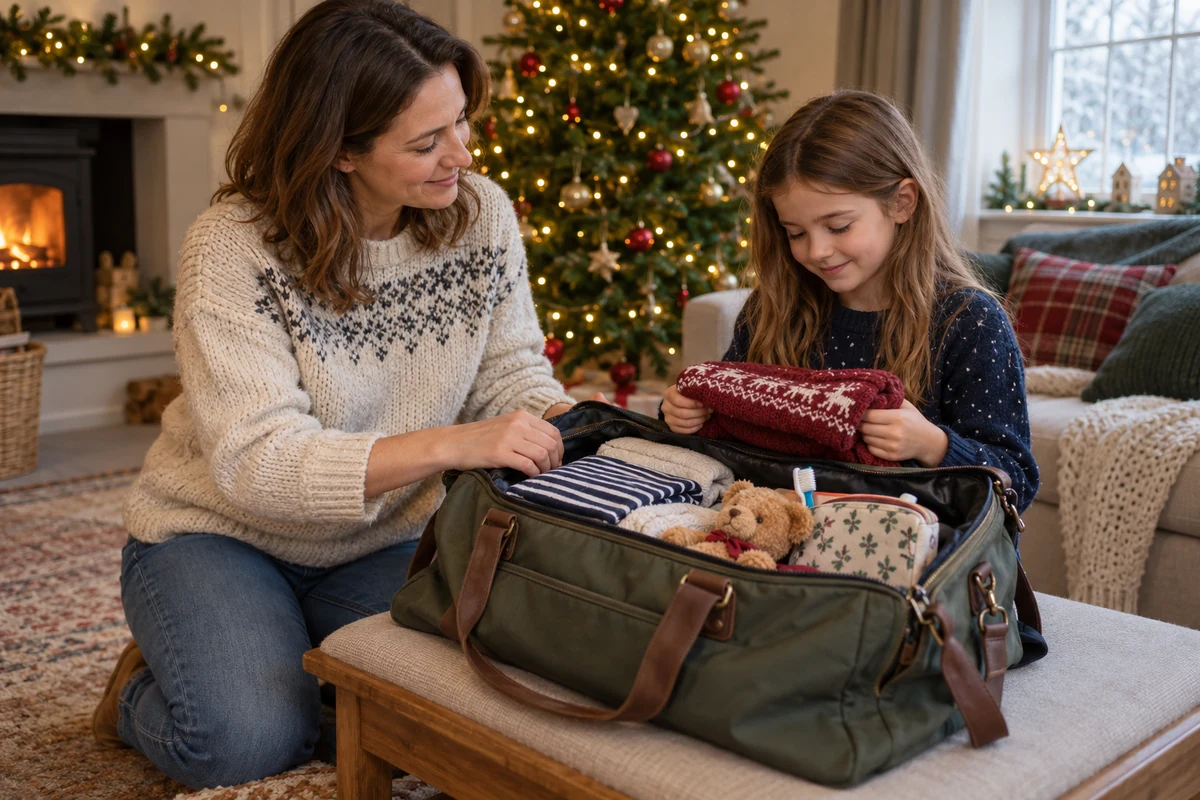
A clear timetable can make the day easier to follow. Treat it as a flexible aid, allowing for children’s routines and feelings, rather than a promise of a stress-free celebration.
Timetable options
- Different days: one household could celebrate on 24 December and the other on 25 December. Long distances may call for larger blocks of time rather than back-to-back journeys.
- Different parts of one day: a morning celebration and a later gathering may suit nearby homes if children have enough time to rest and settle.
- Celebrations further apart: Christmas Day in one home and a gathering the following weekend in the other can reduce rushing, if everyone agrees and existing arrangements allow it.
- Different activities: households can enjoy their own meals, games and present-opening traditions without competing to provide the biggest event.
Plan ahead: around two to four weeks, or earlier if needed
- Agree the pattern: adults should consider children’s views and needs, then take responsibility for workable arrangements.
- Record dates and times: use a private calendar or another agreed, safe method of communication.
- Divide practical tasks: clarify food, wrapping and transport responsibilities where these need to be coordinated.
- Contact school if relevant: confirm term-time collection changes and any plans for gifts through the school’s normal channels.
- Pack familiar essentials: include clothes, a toothbrush, an appropriate snack and a favourite comfort item if the child wants one.
Checklists for the day
- Overnight or travel bag: pack spare clothes, nappies or wipes if needed, and essential medicines in their original packaging with clear instructions for the responsible adult.
- Gifts and cards: check labels and delivery arrangements. School gifts will generally need to be delivered before the Christmas break.
- Food and dietary needs: pass on accurate allergy information and any established care plan, and pack suitable snacks for the journey.
- Contacts and necessary documents: make sure the responsible adults have relevant emergency details and any documents required by existing arrangements. A casual note is not a substitute for legal authority or required consent.
An illustrative day plan: adjust every time to your child
- 08:00 — a calm breakfast, perhaps with a favourite song or short story.
- 09:30 — a simple creative activity, such as making a decoration or a family card.
- 11:30 — check the bag and explain the next part of the day.
- 12:00 — lunch and some quiet time before travelling, if that fits the agreed schedule.
- 14:00 — the agreed handover at the agreed safe location, keeping practical adult communication brief. Let the child choose how to say goodbye rather than requiring a hug.
- 15:30 — time to settle in, followed by a familiar activity if the child feels like it.
- 19:00 — a possible evening meal for a family accustomed to eating then; bring this forward for children who normally eat earlier.
- 21:00 — only a possible bedtime for a child whose usual routine fits it. Younger children may need a much earlier bedtime, which should take precedence over this example.
Helping children move between homes
- Explain clearly: use short, reassuring sentences about what will happen next.
- Keep familiar routines: allow for normal meals, sleep and quiet time rather than filling every hour.
- Offer a gentle welcome: a short story or familiar game may help a child settle, but they may prefer some space first.
- Keep disagreements away from children: use the appropriate adult communication channel to resolve practical issues.
- Use technology thoughtfully: an agreed short call or photo can be an option, not an obligation or a check on the other home.
Talking to school about Christmas arrangements

Use official school channels and share only information relevant to the child’s care, collection or participation. This helps staff respond without being drawn into private disagreements.
Information school may need
- Term-time dates and collection times: confirm relevant changes and authorised collectors through the school’s process, in line with existing arrangements.
- Event attendance: let staff know about participation in performances, parties or other school activities when required.
- Gifts: ask whether gifts are accepted and how any voluntary contribution or delivery should be handled.
- Food and health needs: keep allergy information and care plans current, following the school’s procedures for medicines and events.
- Permissions and contacts: update the relevant records through the school rather than assuming a message changes permissions automatically.
Ways to communicate clearly
- Put important information in writing: use school email or the official platform so there is a record.
- Be concise: give the relevant dates, times and questions without unnecessary personal details.
- Ask about school policies: check the rules for gifts, photographs and visits before making plans.
- Do not use children as messengers: communicate practical information directly through the proper adult channels.
- Request a private conversation when needed: a brief meeting with an appropriate member of staff may be more suitable for sensitive information.
A useful message template
Example message: “Hello, I am a parent or carer of [child’s name]. We have updated arrangements for collection before the Christmas break. Please let me know the secure process for confirming authorised collectors and any relevant care-plan information. Could you also confirm the school’s gift policy? Thank you.”
- Keep the tone courteous and practical, thanking staff for their help and following the school’s procedures.
- Ask for acknowledgement when it is important to know that information has reached the right person.
Avoiding misunderstandings
- Allow time: contact school before the relevant event and allow staff time to respond; a week may be a useful starting point, but follow any stated deadlines.
- Respect school rules: gifts, festive clothing and visits may all be subject to specific policies.
- Agree delivery arrangements: take gifts to the office only if that is what the school requests.
- Keep relevant records securely: retain necessary messages without circulating sensitive family information more widely.
Optional Christmas gifts for teachers: thoughtful, affordable ideas
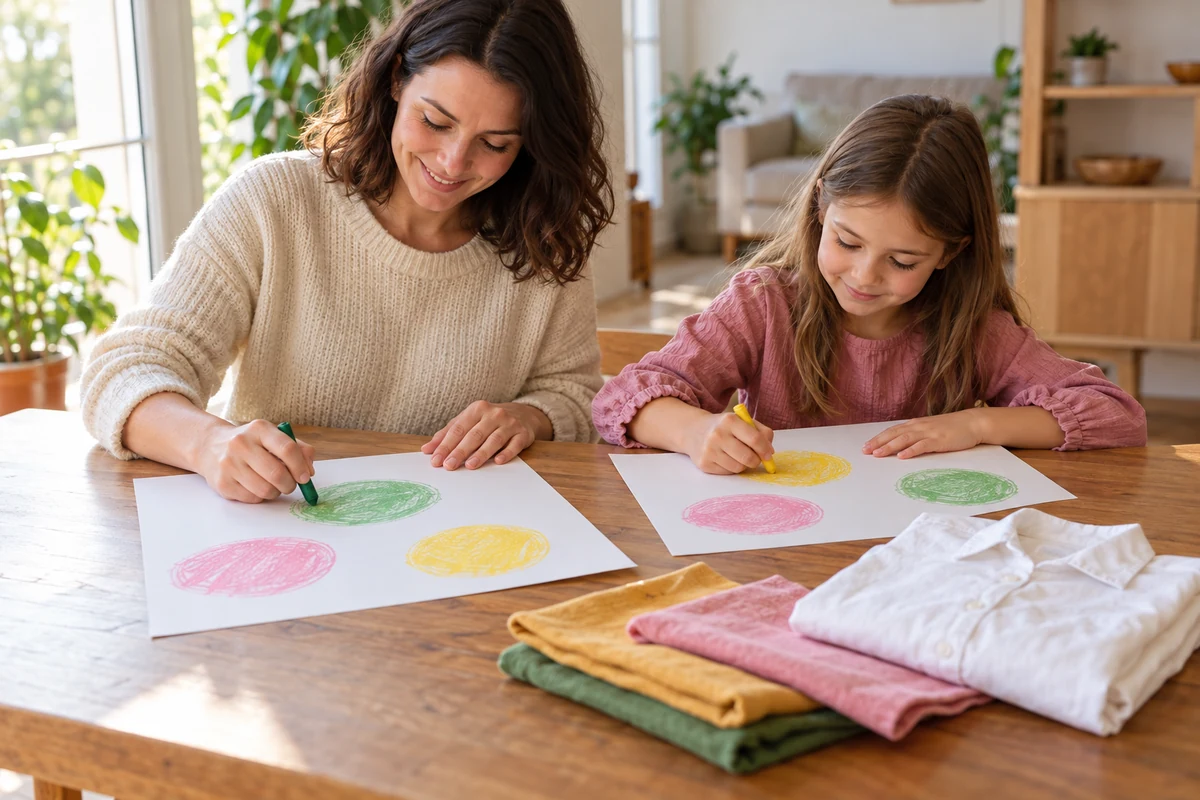
A thank-you need not be expensive, and no family should feel obliged to buy a gift. A short note or a child’s drawing may be all you want to give. Consider usefulness, safety and the school’s policy before choosing anything else.
Simple gift ideas
- A hot chocolate gift jar: a cocoa-and-sugar mixture with separately packed marshmallows can be a homemade option if food gifts are permitted and suitable for the recipient.
- A pen and personalised notepad: add a paper cover decorated by the child, keeping the gift modest and practical.
- A scented sachet: consider dried lavender or another scent only if you know it is welcome; fragrance can be unsuitable for some recipients.
- A handmade card: let the child add a drawing and their own message.
- Homemade biscuits: offer these only if the school’s food policy allows them and you can provide accurate ingredient and allergy information.
- A small succulent: check the plant’s identity, care needs and suitability for the recipient rather than assuming every variety is harmless or maintenance-free.
A homemade hot chocolate gift jar
This is a packing idea adapted from the original article, not a kitchen-tested recipe. Check the recipient’s dietary requirements first and choose a non-food gift if you cannot establish that it is suitable.
- Choose the container: use an intact, food-safe jar with a suitable lid, washed and completely dried. An adult should handle glass and check its condition.
- Prepare the ingredients: measure 3 tablespoons of cocoa powder, 6 tablespoons of soft brown sugar and 3 tablespoons of mini marshmallows. Mix the cocoa and sugar thoroughly in the jar, and pack the marshmallows separately in a clean food-safe container so portions of the dry mixture are consistent.
- Decorate the outside: add a paper label or simple decoration, keeping glue and other craft materials away from the food and rim. Avoid loose cords or small decorations around young children.
- Include preparation information: the original suggests 3 tablespoons of mixture for 200 ml of hot milk, which can be adjusted to taste. An adult can blend the cocoa mixture with a little of that milk first, then add the rest and the marshmallows. List every ingredient and relevant label warning; follow the ingredients’ storage and date instructions rather than inventing a shelf life for the homemade gift.
Let children help with the gift
- Offer choices: invite the child to choose a colour, drawing or message.
- Keep tasks short: drawing a label or selecting suitable paper can be enough; there is no need to finish everything in one sitting.
- Value the effort: a thoughtful gesture matters more than a perfectly finished object.
Safety and gift etiquette
- Check school policies: confirm the rules for food, gifts and photographs before preparing anything.
- Take allergies seriously: the Food Standards Agency advises asking the recipient about their needs, checking labels and preventing allergen cross-contact. Simply leaving out nuts does not make a gift safe for everyone; choose a non-food option if uncertain. Source: Food Standards Agency: preparing an allergy-safe meal
- Keep gifts appropriate: modest, professional items are preferable to very personal presents.
- Label for delivery: use the teacher’s name and class where necessary, without putting a child’s contact details on visible packaging.
Personal touches on a small budget
- Reuse suitable materials: paper and fabric offcuts can decorate gifts. Reused food containers must be suitable, clean and free from contamination; do not assume washing removes every allergen risk.
- Keep it simple: a sincere card can express thanks without spending money or requiring a child to appear in a video.
- Make group gifts voluntary: a class contribution may be convenient, but families should be free to decline or contribute differently without pressure.
Helping children choose and make presents
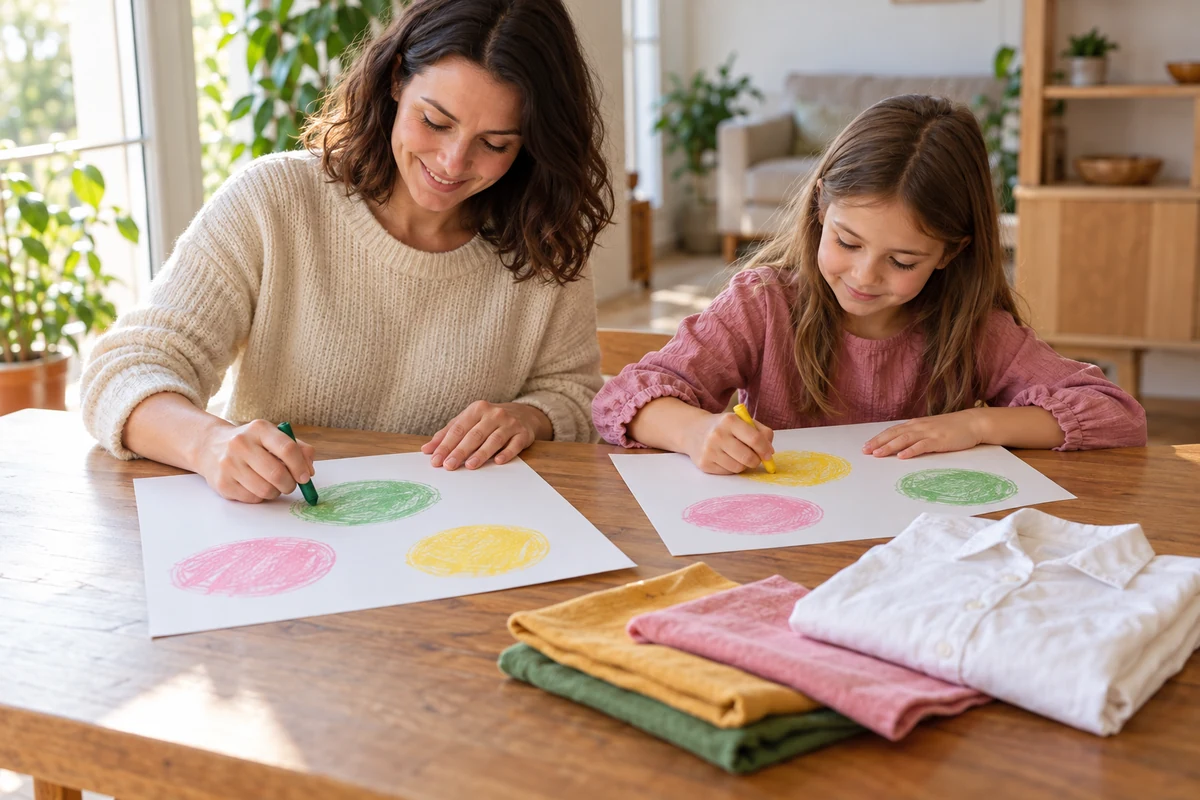
Making a gift together can be a chance to practise planning and cooperation. Keep activities enjoyable, age-appropriate and supervised, and stop if the child has had enough.
Possible tasks by age, adjusted to the individual child
- Ages 3–5: choose colours and draw on large pieces of paper with suitable materials and close supervision. Keep small stickers and other choking hazards away from children who may mouth them.
- Ages 6–9: write a short message, help measure dry ingredients or use age-appropriate scissors with supervision. Adults should handle glass when necessary.
- Ages 10 and over: help plan the gift, measure ingredients and organise small steps, with adult oversight for sharp tools, heat and food safety.
Manageable gift projects
- A handmade card: fold paper, draw and add suitable cut-out shapes.
- A hot chocolate jar: follow the packing instructions above, using a clean, completely dry food-safe container and clear ingredient information rather than decorative layers with uneven portions.
- A scented sachet: let children select fabric while an adult handles needles or hot glue. Use only materials suitable for the intended recipient.
- A decorated plant pot: use suitable paints and an appropriately identified plant, supervise handling and wash hands afterwards.
Making a simple handmade card
- Gather materials: choose card, colouring pencils and age-appropriate glue or decorations.
- Fold the card: line up the edges and press down along the fold.
- Sketch a picture: encourage a simple drawing in the centre.
- Decorate: let the child choose colours and add suitable paper shapes or stickers.
- Add a message: help with spelling if wanted, while keeping the child’s own words.
- Finish: place the card in an envelope. A bow is unnecessary, particularly when loose ribbon could pose a risk to younger children.
Low-cost personalisation ideas
- Reuse craft materials: fabric scraps and old wrapping paper can become decorative covers and collages.
- Choose a personal detail: a drawing or note is often enough. Use a class photograph only with the appropriate permissions and respect children’s wishes about their images.
- Consider a class gift: if school permits it, keep contributions genuinely optional and avoid public comparisons of what families give.
- Offer time rather than an object: a child who wants to could sing or record a short thank-you, with appropriate permission and private sharing. A written note is an equally valid choice.
Important practical checks
- Follow school policy: check what is allowed and how gifts should be delivered.
- Avoid allergy assumptions: there is no single ingredient substitution that makes a homemade gift suitable for every allergy. Ask, check all labels and consider cross-contact; a non-food card is often simpler.
- Keep the relationship professional: choose modest, useful gifts rather than very personal items.
- Use only necessary identifying details: a first name and class may be enough for a privately delivered card, following school guidance. Do not add a home address or phone number.
Recognising the child’s effort
- Comment on their choices and concentration as well as the finished gift.
- If the child wants to, share a photo of the finished object privately with a trusted relative, avoiding unnecessary personal information.
- Notice the skills involved, such as planning, taking turns and helping to tidy up.
- The activity can become a yearly tradition if everyone enjoys it, but it need not become another obligation.
Keeping traditions and making memories in both homes
Familiar traditions can provide continuity while new ones make room for changing circumstances. Neither household needs to reproduce the other, and Christmas need not become a competition.
Traditions that can work in both places
If everyone wants to, keep one familiar element in each home. For example, read the same Christmas story or choose similar tree decorations, without requiring one special object to travel back and forth.
- An annual decoration: invite the child to choose or make an ornament, with no pressure to produce matching gifts for both households.
- A familiar song or story: a favourite book at bedtime may fit naturally into existing routines.
- An optional festive photograph: take one if the child is comfortable, and agree how it will be stored or shared.
Making new rituals
Small activities can become welcome traditions through repetition. Choose ones that suit each household rather than insisting that both celebrations look the same.
- A letter for the future: children can write or draw something to look at next Christmas.
- A memory box: keep a card, photograph or other suitable keepsake from the celebration.
- A favourite recipe: make a familiar pudding or choose a new one, taking dietary requirements and allergies into account.
Simple ways to record memories
A few notes or a physical or private digital album can be enough. Store sensitive family information securely and share only with agreed recipients.
- An annual album page: add a date, an optional photo and a sentence or drawing from the child.
- A short video: a 30-second clip may be fun if the child wants it. As NSPCC guidance explains, children should have a say in photographs and filming; obtain appropriate permission and do not treat a shared folder as a guarantee against copying. Source: NSPCC: photographing and filming children
- A familiar photo spot: using the same corner each year can be a visual tradition, but participation should remain optional.
Giving children a voice
Offer manageable choices and tasks suited to the child’s abilities. Support participation without pressure, keeping decisions about arrangements and adult relationships with adults.
- Invite children to suggest a decoration, a song or a recipe they would enjoy.
- They might help mix ingredients, draw a label or choose a photograph for an album, with suitable supervision.
- Ask what they enjoyed without asking them to compare households or decide which celebration was better.
Planning handovers between homes
Use the agreed safe arrangements and keep practical adult messages separate from the child’s goodbye. A familiar comfort item may help, but children should not have to perform a cheerful farewell or hug anyone.
- Pack a familiar bag: include spare clothes, a favourite toy and any genuinely useful comfort item.
- Let the child choose a goodbye: a wave, brief word or wanted hug can all be appropriate; follow the child’s comfort and the arrangements in place.
- Explain the next step briefly: give clear information in advance, allowing time for questions.
Adjust the plan as needs change
Children’s needs can change as they grow. Familiar routines may help them feel more settled, but do not remove every difficult feeling. Listen without pressure and seek suitable professional support if distress persists or there are safety concerns.
Bringing the plans together
Christmas across two homes does not have to follow one model. Start with safety, existing arrangements and children’s needs, then choose manageable meals, journeys and traditions. Keep gifts optional and leave space for quiet time as well as celebration.
Thank you for reading. If these ideas are useful, share them with someone who would welcome them, without disclosing private family information.
For more seasonal ideas, follow our social channels and explore the I Love Christmas blog for recipes, activities and thoughtful gift suggestions.
FAQ: Christmas after separation and optional teacher gifts
Explain the plan in advance and reassure children that adult decisions and feelings are not their responsibility. Keep familiar routines where possible, listen to their views and respect existing arrangements, court orders and safety needs.
What should I tell school about our Christmas arrangements?
Share relevant term-time collection changes, care-plan information, event participation and emergency contacts through official channels. Staff do not normally need the whole holiday itinerary; ask how to update permissions securely.
Which Christmas gifts are suitable for teachers?
A card or modest practical gift can be enough, and gifts are optional. Check school policy first. If considering food, confirm the recipient’s requirements, ingredients and cross-contact risks; choose a non-food alternative if unsure.
How can children help make presents without becoming overwhelmed?
Offer short, supervised tasks suited to their abilities, such as drawing a card or choosing colours. Use appropriate materials, keep hazardous tools with adults and allow children to stop rather than expecting a perfect result.
What should go in a bag for moving between homes?
Pack clothes, a toothbrush, a suitable comfort item and other essentials for the stay. Necessary medicines should remain in their original packaging with clear information for the responsible adult, alongside relevant emergency details.
Sources and Further Reading
- Cafcass: planning a child’s time with parents after separation
- GOV.UK: looking after children after separation or divorce
- Cafcass: domestic abuse practice policy
- Food Standards Agency: preparing an allergy-safe meal
- NSPCC: photographing and filming children