
A December planner can help divide preparations into manageable steps, set spending limits and share responsibilities. Use weekly checklists for shopping, food, decorations and gifts, while leaving room for rest and changing plans. Food safety and people’s needs should guide the timetable, rather than a fixed date on a calendar.
A December planner is useful when it makes the month easier, not when it becomes another list of obligations. This flexible guide covers Christmas meals, presents and simple decorations, with a day-by-day outline you can adapt to any year. Choose what matters to your household and leave out tasks that add little enjoyment.
Illustrations in this article are conceptual images, not documentary photographs or evidence of a particular historical event, destination, venue or access route.
Planning the month one week at a time

Breaking a large job into smaller steps can make it easier to start. Give each week a broad purpose, then move tasks to fit work, caring responsibilities and available energy. The aim is a workable plan, not a perfectly organised December or a promise that all stress will disappear.
A four-week outline
- Week one — the overall plan: list events, guests and spending limits; note important dates and start gift and shopping lists.
- Week two — shopping and bookings: buy suitable non-perishables and arrange any services or personalised gifts, checking actual delivery deadlines rather than assuming there is still time.
- Week three — practical preparations: check decorations, confirm attendance and prepare suitable gifts or frozen food. Buy fresh ingredients according to their use-by dates and storage needs, not simply because this week has arrived.
- Week four — finishing and resting: complete the meal preparations safely, agree who will do what on the day and protect some time for rest.
A weekly checklist
- Planning: a usable calendar, an affordable budget and a short list of priorities.
- Shopping: separate lists for food, drinks, gifts and decorations, with delivery or collection dates recorded.
- Preparation: wrap gifts, check lights and make only those dishes that can be safely stored until needed.
- The last few days: confirm deliveries, update guest numbers and write a realistic plan for cooking and serving.
An example weekly rhythm
Monday: review the budget and tasks. Tuesday: buy any needed gifts or decorations. Wednesday: organise recipes and orders. Thursday: do food preparation that suits the recipe’s storage limits. Friday: tidy the main spaces and check lights. Saturday: finish wrapping or test the table layout. Sunday: rest and make a brief check of the coming week.
Keeping the workload manageable
- Choose priorities: focus on what people will genuinely value, rather than what seems compulsory in a festive photograph.
- Share responsibilities: agree specific jobs with willing relatives or friends, including who will finish each task.
- Use manageable blocks: try a short period of activity followed by a break, adjusting the length to your energy and the job.
- Prepare appropriate items ahead: wrap gifts, label containers and freeze suitable dishes using safe storage guidance.
- Keep lists easy to find: use a notebook, a shared note or a visible household calendar, without putting private details on public display.
Estimating time and setting priorities
Allow realistic time for each job and include travel, clearing up and breaks. A large shop might take several hours, while wrapping a few gifts may fit into a short evening session. These are planning examples, not targets. Deal first with genuine deadlines and leave optional decoration or extra dishes until you know there is space for them.
Simple tools that can help
- A monthly planner or digital calendar to see appointments and deadlines together.
- A shared list in a familiar notes app or on paper, so people know what has already been done.
- Labels and suitable containers to organise gifts, food and household supplies without mixing their storage requirements.
- A timer to remind you to pause, check the oven or return to a task at the appropriate moment.
A practical meal and shopping checklist

Start with the meal you intend to serve and work backwards to the shopping and preparation required. Tick items off as they are completed, but revise the list when guest numbers or dietary needs change. It is better to simplify the menu than to keep buying for an outdated plan.
Shopping categories
- Cupboard ingredients: pasta, rice, flour, tins, sauces, seasonings, sugar and oil, checking what is already at home.
- Perishable ingredients: meat or alternatives, dairy, fruit, vegetables and dessert ingredients, with purchase dates based on safe storage and use-by instructions.
- Drinks: water, soft drinks and other options your guests want, including alcohol-free choices, plus enough glasses and any ice required.
- Gifts and wrapping: a recipient list, suitable paper or reusable wrapping, ribbons and labels.
- Decorations and table settings: checked lights, simple centrepieces, tablecloths, napkins and a few reusable ornaments.
- Equipment and clearing up: sufficient plates and cutlery, roasting tins, serving utensils, food-safe leftover containers and rubbish or recycling bags.
A flexible shopping timetable
- Four weeks before: agree the menu, approximate guest numbers and budget; order gifts with long lead times and buy suitable non-perishables.
- Three weeks before: confirm any deliveries, catering or other services. Personalised orders may need much longer, so follow the supplier’s deadline.
- Two weeks before: buy long-life ingredients and drinks where appropriate, and prepare only dishes that are suitable for freezing.
- One week before: check utensils and decorations, then schedule fresh-food purchases around use-by dates, fridge space and the meal date.
- Two or three days before: finish non-food details and confirm guests. Calculate defrosting from the product’s weight and instructions; a large bird may need longer, and fully defrosted food should not be kept indefinitely.
Reducing unnecessary purchases and waste
- Group the list: organise ingredients by shop section and check the cupboard before leaving to avoid duplicate purchases.
- Choose sensible substitutions: compare seasonal ingredients and simpler alternatives, checking how a change affects the recipe and any allergens.
- Plan for leftovers: leave fridge and freezer space. Food Standards Agency guidance advises cooling and refrigerating or freezing leftovers within one to two hours, then eating or freezing most within two days; rice needs stricter handling. Source: Food Standards Agency: chilling, freezing and defrosting food
- Assess offers carefully: buy only what you can use and store safely, checking dates and the actual price rather than the promotional label alone.
Organising lists and labels
- Use clear categories: separate food, drinks, presents and decorations so that a quick check is enough to see what remains.
- Label clearly: identify the purpose of stored items and, for food, preparation dates, storage instructions and relevant allergens.
- Keep one shared version: update the same list when someone buys an item, rather than maintaining several conflicting copies.
A small practical supplies box
- Useful items: spare napkins, tape, rubbish bags and other ordinary supplies. Keep scissors, medicines, matches and lighters securely away from children; do not create a communal medicine basket.
- Simple refreshments: have water and suitable snacks available if guests arrive at different times, checking dietary needs and storage requirements.
- Useful contacts: keep supplier and delivery details available to the adult responsible for handling any changes.
On the shopping day
- Check purchases: review the receipt and food dates, and make sure substitutions suit the planned meal.
- Put chilled food away promptly: get perishables home and into suitable storage before organising the less urgent items.
- Update the list: mark off completed purchases and note any genuine gaps without adding unnecessary extras.
Budgeting and avoiding last-minute spending

A clear spending limit can make decisions easier, although planning cannot remove every unexpected expense. Build the celebration around what is comfortably available after essential household costs. The examples below are organisational ideas, not a recommended level of festive spending or a reason to borrow for Christmas.
Setting a realistic budget
- Start with the available total: decide what can be spent without compromising regular bills and essential needs.
- List categories: include food, drinks, presents, decorations, transport and a modest contingency if possible.
- Allocate actual amounts: percentages can be a starting point, but write down the money available in each category.
- Set individual limits: agree maximum spending on gifts or optional items before shopping.
An illustrative budget from the Brazilian original: R$1,000
- Food: R$450, or 45% of the example total.
- Presents: R$300, or 30%.
- Drinks: R$100, or 10%.
- Decorations: R$80, or 8%.
- Contingency: R$70, or 7%. These figures total R$1,000; they are not a currency conversion or an estimate of current UK Christmas costs. Use your own affordable total and priorities.
Practical ways to spend less
- Compare ahead of time: early research gives more time to assess prices and delivery options, but does not guarantee a discount.
- Consider seasonal ingredients: compare what is available locally and choose according to price, quality and the planned dish.
- Check the complete price: include delivery charges and minimum orders when comparing online and local shops.
- Share contributions by agreement: willing guests may bring a dish or drinks, with clear communication about allergens and safe transport.
- Reuse what works: keep sound decorations and suitable wrapping rather than replacing them to match a new theme.
- Buy offers selectively: a lower price only helps if the item is genuinely needed and can be stored or used in time.
Avoiding a last-minute spending rush
- Leave a contingency where possible: the original’s 5–10% is an illustration, not a guarantee of adequate cover. Do not take money from essentials merely to meet a percentage.
- Set realistic deadlines: record when items are needed and allow for delivery, while accepting that some optional purchases can be dropped.
- Pause before unplanned purchases: waiting a day or two can help distinguish a genuine need from a momentary impulse.
- Separate the spending allowance: use a clear written or digital category limit. Cash envelopes are optional and may not suit every purchase or household.
- Coordinate shopping: give each item an agreed buyer and update the shared list to avoid duplication.
Keeping track simply
- Use a notebook, spreadsheet or app: record purchases in whichever format you will actually maintain.
- Review weekly: compare spending with the total remaining and adjust optional categories if necessary.
- Keep receipts: organise them for returns or checking, storing any photographs privately.
- Share relevant information: let other contributors see the agreed list and limits without exposing unnecessary banking or personal details.
When an unexpected expense appears
- Check its priority: decide whether it is essential now, can wait or can be avoided.
- Reduce optional spending: simplify another part of the celebration where that is practical.
- Contact the supplier: ask about cancellation, a simpler option or a different delivery arrangement. Do not assume instalments make an unaffordable purchase affordable.
- Use the planned contingency appropriately: reserve it for the costs it was intended to cover, keeping essential household needs first.
- Rethink presents: an affordable handmade item or shared time may suit better than a costly purchase, if welcomed by the recipient.
Simple decorations with less spending and waste
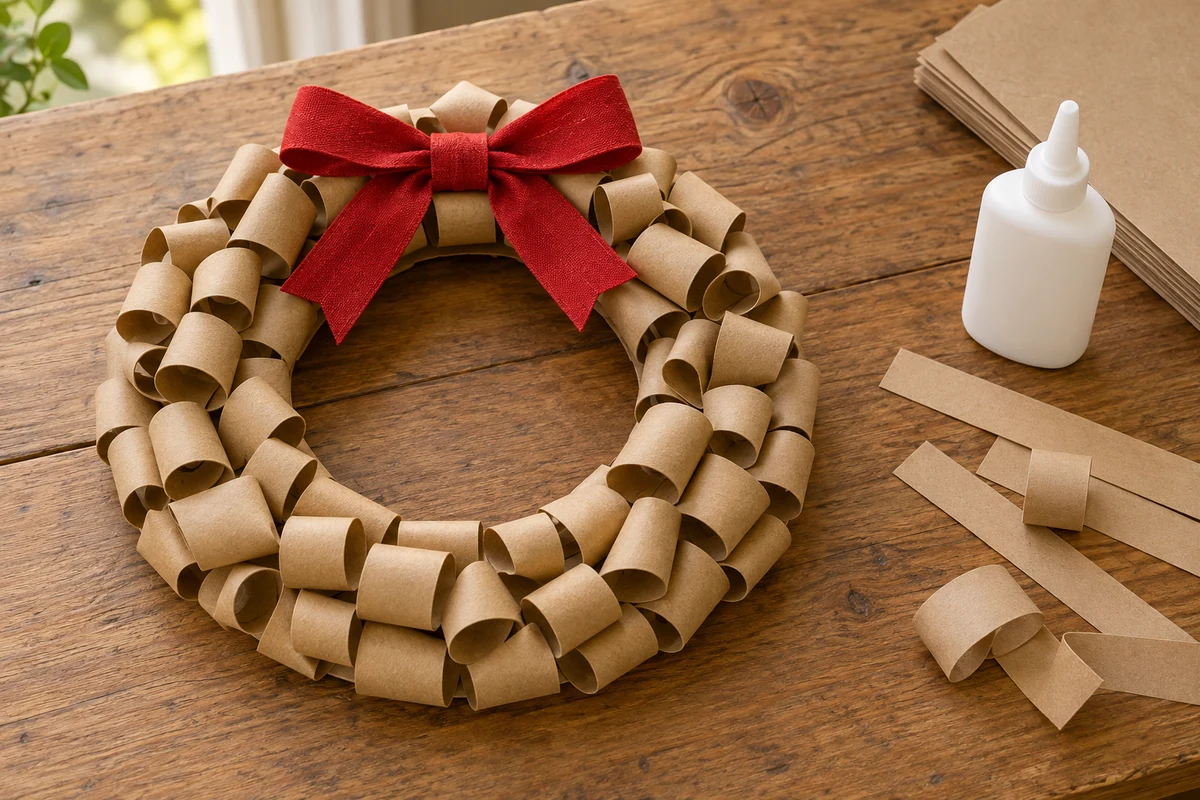
A few well-chosen decorations can create a festive atmosphere without a large new purchase. Start with what is already available, then decide whether anything genuinely needs replacing. Reuse can reduce waste, but safety still matters: damaged lights or unsuitable containers should not be retained just to avoid buying something else.
Useful materials
- Kraft paper and fabric offcuts: can become wrapping or bows where they are clean and suitable for the purpose.
- Reused jars and bottles: may work as stable vases or unlit ornaments. Ordinary glass containers are not automatically suitable for real candles.
- Natural textures: pine cones, dried orange slices and suitable greenery can decorate an unlit display, kept away from flames, heat and young children.
- Suitable LED lights: can reduce power use compared with similar filament lights. Check their condition and intended location, and switch them off when unattended.
- Small amounts of suitable craft paint: can refresh an ornament. Follow the label, protect the work surface and keep paints away from food and children unless intended for their use.
Quick decoration projects
- Dried-orange wreath: attach slices to a suitable base and finish with a fabric ribbon, keeping the finished decoration away from heat and flames.
- A jar with a battery light: use an appropriate flame-free light with a securely closed battery compartment, placed safely out of young children’s reach.
- A low table arrangement: place suitable pine cones and greenery on a tray where they do not touch food or obstruct the view across the table.
- Reusable or recyclable wrapping: choose plain paper or fabric and a simple tie, checking local recycling rules for paper with coatings or decorations.
Making a simple paper wreath
- Cut paper strips: use clean kraft or other suitable paper, approximately 2–3 cm wide and 8–10 cm long. An adult should handle cutting where needed.
- Roll and glue: curl each strip into a small roll and secure it with suitable PVA craft glue. Allow it to hold before attaching it to the base.
- Build the wreath: attach the rolls side by side to a sturdy cardboard ring, leaving the centre open. Allow the glue to dry fully before hanging.
- Finish simply: add a fabric bow and, if suitable, a securely attached small decoration. Keep this paper craft unlit and away from heat sources.
Making decorations last
- Refresh existing items: a different ribbon or small painted detail may be enough to change the look.
- Compare local options: choose durable materials you can use again. Local origin alone does not establish the total environmental impact or lowest price.
- Limit lighting hours: use compatible controls where appropriate, while following the manufacturer’s instructions and switching lights off when required.
- Avoid unnecessary disposables: borrow or reuse suitable items when that works for the gathering.
A welcoming look without excess
Combine a few natural textures with existing ornaments and leave enough clear space for the room to function. A smaller arrangement can be easier to maintain, store and reuse than a large display. The most useful decoration is one that adds enjoyment without creating extra work or obstructing movement.
Preparing the craft work
- Check materials ahead: gather usable items before buying more and set a modest limit on the project.
- Try a small arrangement first: check scale and colours on one surface before decorating the whole room.
- Invite help: offer simple craft tasks to willing friends or relatives, with suitable materials and room to work comfortably.
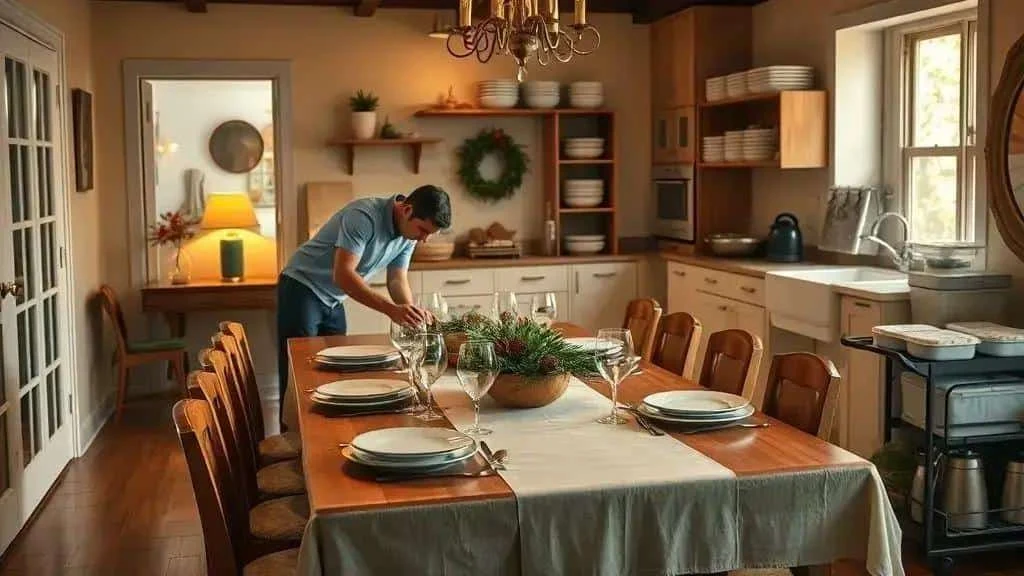
Choose dishes that fit your kitchen, guest numbers and available storage. A dish that reheats well can be useful, but only if it has been cooked, cooled and stored safely. Keep the menu small enough to serve without repeated reheating or food waiting on the table for long periods.
Principles for choosing the menu
- Suitable quantities: use the serving information from a reliable recipe and adjust for the number of dishes and guests’ appetites.
- Safe advance preparation: choose recipes with clear storage or freezing instructions rather than assuming everything can be made several days ahead.
- Practical variety: combine a manageable main course with vegetables and a small number of sides, including suitable alternatives for dietary needs.
- Simple backup options: keep ingredients for a straightforward extra dish, without cooking unnecessary quantities in advance.
Easy starters and nibbles
- A small sharing board: cheese, olives, bread and suitable fruit can be assembled quickly. Check allergens and keep chilled ingredients refrigerated until needed.
- Tomato bruschetta: prepare the topping using a trusted recipe, store it safely and add it to the toast close to serving.
- Soup in small bowls: a simple soup can be portioned easily. Handle hot servings carefully and follow safe cooling and reheating instructions if made ahead.
Herb-roasted chicken: the original recipe with safety checks
The quantities below are retained from the original article; this translation is not a kitchen test of the recipe. Serve the chicken freshly cooked, or cool and refrigerate it properly for later use. Do not leave it at room temperature as a way of keeping it ready for guests.
Ingredients:
- 1 whole chicken, 1.6–2 kg — do not wash raw poultry. The original also suggests 2.5–3 kg of thighs and drumsticks; that is a separate variation with different cooking requirements, not a weight-for-weight replacement.
- 3 tablespoons olive oil — or a suitable vegetable oil.
- 2 tablespoons dried herbs — rosemary, thyme and oregano are suggested. Chopped fresh herbs are an optional flavour variation; the original does not specify an equivalent fresh quantity.
- 4 crushed garlic cloves — the original offers 1 teaspoon garlic powder as an alternative, which will give a different flavour intensity.
- Salt and pepper to taste.
- 1 lemon — halved, to flavour the cavity.
Method:
- Preheat the oven to 200°C: this is the original stated oven setting, which does not specify a fan adjustment. Follow your appliance and poultry instructions where they differ, and leave suitable space for the roasting tin.
- Season the chicken: mix the oil, herbs, garlic, salt and pepper, then apply to the chicken. Keep raw poultry and its utensils separate from ready-to-eat food, and wash hands and surfaces afterwards.
- Add the lemon: place the halves loosely in the cavity without packing it with extra stuffing. Use only food-safe kitchen string if tying the legs.
- Roast and check thoroughly: the original suggests 60–90 minutes, but that range is not a reliable endpoint for every bird or oven. Continue until properly cooked. The Food Standards Agency gives 70°C for two minutes, or 75°C for 30 seconds, as safe core temperature combinations. Check the thickest parts with a clean thermometer, avoiding bone; do not rely on clear juices alone. Source: Food Standards Agency: cooking temperatures and reheating
- Rest and carve: once fully cooked, leave the chicken to rest for about ten minutes before carving with clean utensils. Resting does not compensate for incomplete cooking.
A creamy rice dish as a separate meal idea
- Possible ingredients: cooked rice, cream or Brazilian requeijão, cooked protein and vegetables. This is an idea rather than a complete tested recipe; choose a reliable recipe with quantities and storage instructions before preparing it.
- Rice needs particular care: the FSA advises cooling it quickly, ideally within one hour, refrigerating it for no more than 24 hours before reheating, and reheating only once until steaming hot throughout. Do not add previously reheated leftovers to another dish for repeated reheating. Source: Food Standards Agency: safe storage and reheating of rice
Desserts that may suit advance preparation
- Individual passion fruit mousse: use a reliable recipe and its refrigeration limits. The ingredients determine whether making it a day or two ahead is suitable; there is no universal shelf life for every mousse.
- Chocolate brownies: a recipe without a perishable topping may suit advance baking, but follow its cooling and storage instructions rather than assuming all versions keep in the same way.
- Fruit salad: choose suitable fruit, prepare it hygienically and keep cut fruit chilled, adding any dressing close to serving where the recipe recommends it.
Planning portions without creating excess
- Main course: use a reliable recipe’s yield, distinguishing raw from cooked weight and bone-in from boneless meat. The original’s generic gram ranges do not identify these details, so they should not be applied automatically.
- Rice or pasta: the original suggests 60–80 g dry per person as an example, but the right amount depends on whether it is a main or a side. Cooked weight varies with the product and method.
- Vegetables and salads: plan quantities across the whole menu and ask about preferences, rather than treating a single gram allowance as suitable for everyone.
- Drinks: consider the event’s duration, weather and guests’ preferences, with water available throughout. A fixed 400–600 ml total is not a dependable hydration allowance, and alcohol should not be counted as a substitute for water.
Preparation and serving organisation
- Prepare ingredients methodically: measure and label what can safely be prepared ahead, keeping raw and ready-to-eat ingredients separate.
- Use suitable containers: food-safe, covered containers make it easier to organise the fridge without leaks or cross-contamination.
- Record dates: label preparation or freezing dates and follow the recipe or product’s safe use instructions.
- Coordinate heating: plan oven and hob space so dishes can be served promptly. Reheat only what is needed, rather than warming the same food repeatedly.
- Keep serving areas clear: arrange dishes and drinks so guests can reach them comfortably without crowding hot pans or blocking exits.
Sharing preparations with family and children

Help works best when tasks are clear, optional and suited to the person doing them. A small job can be enjoyable without turning children into extra catering staff. Give adults responsibility for the work that must be completed, and let younger helpers join in at a manageable pace.
Possible tasks by age and ability
- Young children, around three to five: choose music, place napkins or decorate baked biscuits with suitable materials under close supervision. Avoid small choking hazards.
- Children around six to nine: help wrap a small present or arrange simple decorations, with adult guidance and safe tools.
- Children around ten to twelve: may follow a simple recipe or assemble a cold dish with supervision. An adult should manage heat, sharp tools and food-safety decisions.
- Teenagers: can take on tasks that match their experience and interest, with help available. Online purchases and payment details should remain under the appropriate adult’s control.
Easy activities to share
- Personalised wrapping: plain paper, simple stamps, fabric ties and handmade labels can make a modest gift feel considered.
- Reused craft materials: choose clean, suitable paper or fabric for unlit decorations, rather than asking children to handle glass candle holders.
- Cards and messages: invite people to write a short note, draw a picture or contribute in another way they enjoy.
Safe kitchen routines
- Explain the basics: wash hands before preparation and after handling raw food. Gloves do not replace handwashing or good hygiene.
- Provide a suitable work area: keep children away from hot pans, raw meat and sharp equipment.
- Choose appropriate tools: offer simple jobs with safe utensils, checking the child’s ability rather than relying on age alone.
- Stay involved: an attentive adult should supervise and handle any step that is beyond the child’s skills.
Keeping the pace comfortable
- Use small goals: finish one manageable step, then pause. Children may need much shorter sessions than an adult’s 20–40-minute block.
- Show the task: demonstrate clearly and stay available rather than expecting a child to infer the whole process.
- Acknowledge the help: a genuine thank-you or choosing the next song can be enough; participation need not depend on sweets or a reward scheme.
- Stay flexible: change or stop a task when someone is tired and appreciate the contribution without demanding a perfect result.
A short children’s checklist
- Choose a few Christmas songs together.
- Help place suitable light ornaments with an adult.
- Wrap one or two presents with assistance, if enjoyable.
- Lay out safe, non-breakable table items or napkins.
- Decorate a baked biscuit, checking ingredients and allergens first.
Letting small activities become traditions
Choose a couple of activities people look forward to, such as making an ornament or preparing a familiar dish. Simple traditions can provide continuity without adding a demanding programme. They can also change as children grow or circumstances shift; keeping the activity enjoyable matters more than repeating it exactly.
A flexible day-by-day December outline

Use this outline as a starting point rather than a food-storage calendar or a list that must be completed. It assumes a main meal around Christmas Day; move tasks for Christmas Eve or another date. Product instructions, use-by dates, defrosting time and available storage take precedence over the suggested day.
Making the timetable useful
- Prioritise essentials and remove optional jobs that do not fit the available time or money.
- Share agreed responsibilities and keep the list current so people do not duplicate work.
- Allow breaks and leave some unallocated time for ordinary life and unexpected changes.
Suggested daily tasks
- 1 December: review the month’s events and set an affordable overall budget.
- 2 December: estimate guest numbers, ask about dietary needs and decide the main priorities.
- 3 December: check gift delivery deadlines and order only what fits the budget and timetable.
- 4 December: check cupboard ingredients and buy suitable non-perishables that are genuinely needed.
- 5 December: confirm any required services, collections or deliveries, following the provider’s actual deadlines.
- 6 December: sort reusable ornaments and choose a few manageable decoration tasks.
- 7 December: finalise a practical menu and identify any dishes with reliable freezing instructions.
- 8 December: check drinks, glasses and freezer space for ice rather than buying more than can be stored.
- 9 December: wrap any gifts already available and label them discreetly.
- 10 December: organise the remaining shopping list by shop section and required purchase date.
- 11 December: check whether any essential decoration supplies are missing; skip optional extras if the display is already sufficient.
- 12 December: prepare simple non-food favours if wanted, without making perishable gifts too early.
- 13 December: buy frozen or suitable freezer-bound ingredients only where space and product instructions allow.
- 14 December: try an unfamiliar recipe if useful, recording what worked rather than assuming the first attempt is validated for every oven.
- 15 December: confirm attendance and adjust quantities and dietary arrangements.
- 16 December: schedule fresh produce and dairy purchases according to their dates and storage needs; do not buy them now solely because of the calendar.
- 17 December: check tracking and realistic delivery options for outstanding orders, using a local alternative if needed.
- 18 December: tidy the main guest areas in manageable stages.
- 19 December: test the seating and table layout, leaving clear routes through the room.
- 20 December: check lighting and any music equipment, removing damaged electrical items from use.
- 21 December: calculate defrosting from the product instructions. Start only when appropriate for its size and cooking date, in the fridge; use fully defrosted food within 24 hours under FSA guidance. Source: Food Standards Agency: chilling, freezing and defrosting food
- 22 December: prepare dishes for freezing where suitable. Do not assume a cooked dish will keep safely in the fridge until Christmas Day without checking its storage limits.
- 23 December: organise serving utensils and labelled containers, and complete non-food tasks that can be finished now.
- 24 December: make only preparations that can safely wait until the meal, keep perishables chilled and write the cooking sequence.
- 25 December: share hosting and serving tasks, cook and serve food safely, then cool and refrigerate leftovers promptly the same day.
- 26 December: check leftovers that were already safely stored, and eat or freeze them within the appropriate limits. Do not wait until today to refrigerate yesterday’s meal.
- 27 December: return borrowed items where practical and send any thank-you messages you want to send.
- 28 December: do a light tidy and store any decorations you have chosen to take down; there is no requirement to finish the festive season now.
- 29 December: make a simple New Year plan and check what supplies are already available.
- 30 December: confirm travel or hosting arrangements and gather any ordinary personal items needed for the evening.
- 31 December: check essential arrangements, leave time to rest and celebrate in whatever way suits the household.
Keeping the plan flexible
- Use reminders for important steps and breaks, rather than treating a timer as pressure to finish every job faster.
- Simplify the menu when time, equipment or energy are limited, keeping safe cooking and storage requirements unchanged.
- Keep practical supplies together while storing medicines, sharp tools and ignition sources separately and safely.
- Review the timetable each week and move or remove tasks as circumstances change.
Bringing the plan together
A calmer December does not depend on completing every suggested task. Clear priorities, shared responsibilities and realistic shopping and cooking plans can reduce avoidable last-minute work. Keep the essentials and let the optional details remain optional.
Visible lists, manageable work periods and spending limits are useful when they support the people celebrating. Protect time to rest, ask for help where available and adapt the plan to what your household can comfortably manage.
Thank you for reading. Visit the I Love Christmas blog for more seasonal recipes, decoration ideas and practical ways to prepare for the festive period.
FAQ: using a December planner
Where should I start with December planning?
List the main events, approximate guest numbers and an affordable budget. Choose a few priorities, divide the work into manageable steps and agree responsibilities with anyone helping.
When should I buy perishable food for Christmas?
Follow use-by dates, storage instructions and the actual meal date. There is no universal three-to-seven-day rule for fresh meat or dairy. Buy suitable non-perishables earlier and calculate freezing and defrosting separately for each product.
How can children help without making preparations difficult?
Offer short, safe activities suited to their interests and ability, such as laying napkins, drawing labels or decorating baked biscuits. Supervise and let them stop when tired; adults should remain responsible for essential jobs and food safety.
What helps prevent last-minute overspending?
Set a total and category limits, keep an updated shopping list and compare the complete cost before buying. Leave a contingency where affordable, and drop optional purchases rather than compromising essential household costs.
How can decorations be economical and less wasteful?
Reuse sound ornaments, choose simple paper or fabric projects and limit unnecessary new purchases. Check electrical decorations carefully and keep combustible materials away from heat and flames.
What can be prepared ahead of the celebration?
Wrapping, table planning and non-food decorations can be finished early. Food preparation depends on the recipe: freeze suitable dishes safely, follow chilled-storage limits and calculate defrosting carefully. Do not use the calendar alone to decide how long a meal will keep.
Sources and Further Reading
- Food Standards Agency: chilling, freezing and defrosting food
- Food Standards Agency: cooking temperatures and reheating
- Food Standards Agency: safe storage and reheating of rice