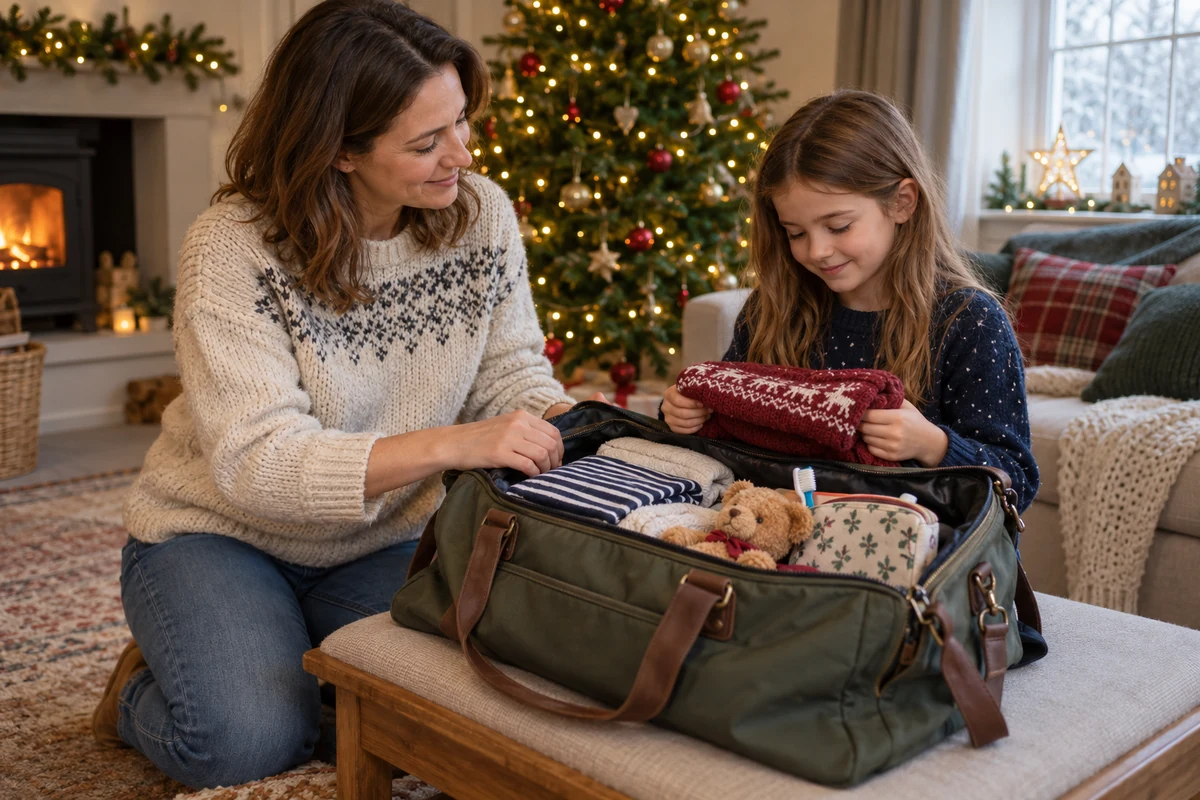
Looking after your mental health at Christmas can include setting manageable expectations, sharing tasks, taking breaks and asking for support. You do not have to feel festive or cope alone. These everyday ideas are not treatment; seek professional help if you are struggling, and urgent help if you feel unsafe.
Your mental health at Christmas can be affected by spending, expectations and complicated family relationships. Perhaps you feel anxious before a gathering, or simply want a quieter holiday. This guide offers practical ways to ease the pressure without pretending that a better to-do list can solve every difficulty.
Illustrations in this article are conceptual images, not documentary photographs or evidence of a particular historical event, destination, venue or access route.
Why Christmas can affect your mental health

Christmas can bring up many different feelings. Financial pressure, strained relationships and expectations of a perfect celebration may add stress. Bereavement, loneliness and comparisons with other people’s apparently happy lives can make the season harder. Mind’s Christmas guidance recognises that people can find this time difficult for many reasons; enjoyment is not an obligation. Source: Mind: why Christmas can be difficult
Common sources of pressure
- Social expectations: imagining a flawless celebration can leave little room for the day you actually have.
- Money worries: presents, decorations and food can create pressure when there is already little to spare.
- Family conflict: old disagreements may resurface when people gather.
- Loneliness and grief: distance from someone, or their absence, can feel particularly noticeable during the holidays.
- Disrupted routines: changes to sleep, meals and usual activities can affect how you feel.
- Social comparisons: a feed full of celebrations shows only a selected part of other people’s lives.
Changes worth paying attention to
- Difficulty sleeping, or sleeping much more than usual.
- Noticeable changes in appetite or eating habits.
- Feeling unusually irritable or impatient.
- Finding it harder to concentrate or manage everyday tasks.
- Withdrawing from people or activities because you feel overwhelmed, afraid or exhausted.
- Persistent hopelessness or deep sadness. These experiences are not a diagnosis, but they deserve care rather than dismissal as ordinary festive stress.
Small, practical ways to reduce pressure
- Set boundaries: decide what you can manage, including how long to stay and which conversations you want to avoid.
- Plan spending: choose a limit that leaves essentials covered. A simple exchange or no presents at all is a valid option.
- Make room for breaks: take a short walk, sit quietly or step away from a busy room when that helps.
- Use social media selectively: mute or leave content that makes the day harder, and remember that a photograph is not the whole story.
- Talk to someone you trust: explain how you are feeling and what kind of support would be useful, whether that is company, listening or practical help.
- Ask for professional support: the NHS advises seeing a GP if stress is difficult to cope with or self-help is not helping. You do not need to wait until things become severe. Source: NHS: stress and routes to support
A manageable plan for Christmas preparations

Practical planning can reduce some uncertainty, but the plan should make life easier, not become another standard to meet. Start with fewer tasks and share what you can.
A short planning routine
- Put tasks in one place: write down invitations, food shopping, presents and household jobs rather than trying to remember everything.
- Choose priorities: separate what matters to you from optional extras, such as elaborate decorations or lengthy visits.
- Set a realistic budget: choose a total and, if useful, a limit per person. Leave a little contingency only if you can afford it; there is no required percentage.
- Spread tasks out: shop for suitable items ahead, wrap when convenient and prepare food only as early as its recipe and safe storage allow.
- Share responsibilities: ask willing guests to bring a dish, organise drinks or help tidy up, taking their circumstances into account too.
- Simplify decisions: a smaller menu, a modest Secret Santa exchange or time together can replace a long list of purchases.
- Include rest: leave gaps between jobs rather than filling every available minute.
- Plan an exit from difficult conversations: decide on a short phrase and somewhere you can go for a break.
Ideas for keeping costs manageable
- Buy non-perishable items early only when you need them, have space and can afford them.
- Choose dishes that suit the number of guests; freeze or reuse leftovers only when it is safe to do so.
- Offer a handmade gift or shared activity if it fits your time and budget. Homemade does not have to become another demanding project.
- Agree shared shopping or contributions clearly, without assuming everyone can spend the same amount.
- Record spending in a simple note, spreadsheet or app so that small purchases do not disappear from the total.
Organising the day itself
- Set the table and prepare suitable items beforehand where possible, following food-storage instructions for anything perishable.
- Decide when you will be available for guests and when you need time to yourself.
- Use reminders for important jobs, such as checking the oven or receiving a delivery, while keeping cooking supervised.
- Ask for help with setting up and clearing away rather than silently taking on every task.
- If it suits you, leave 20–30 minutes before guests arrive to sit down, change clothes or do something restful. A shorter pause is worthwhile too.
Short phrases for setting boundaries
- “I can arrive a little later, which will help me manage the day.”
- “We are keeping presents simple this year and would rather spend some time together.”
- “I will stay until 10pm, then I need to head home and rest.”
- “I would rather not discuss that now. Can we leave it for another time?”
A quick preparation checklist
- Review your spending limit and any gift plans.
- Check the food-shopping list and remove unnecessary tasks.
- Confirm who has agreed to bring something or help.
- Make sure essential household items and any usual prescribed medicines are available; do not put together a shared supply of remedies for guests.
- Leave room for an ordinary restorative activity, such as a shower, a short walk or a quiet cup of tea.
Setting boundaries with family

A boundary describes what you can do and what you need. Clear communication may reduce misunderstandings, but it cannot guarantee that nobody feels disappointed. You are still allowed to protect your time, energy and safety.
Starting the conversation
- Choose a suitable moment: speak when there is enough time and, where possible, before everyone is tired or rushed.
- Use your own perspective: begin with “I need” or “I can manage” rather than a list of accusations.
- Be specific: explain what you can offer and any time limit. You do not have to disclose private details to make the boundary valid.
- Practise if useful: saying the words aloud beforehand can make them easier to recall.
Simple, direct examples
- “I will stay until 10pm, then I need to rest.”
- “I do not want to discuss that now. We can talk another time.”
- “We are choosing low-cost activities together this year, rather than expensive presents.”
- “Thank you for inviting me, but I need that day to myself.”
Responding to pressure
- Keep the message short: pause if you can and repeat what you need. Feeling upset does not mean you have failed to communicate properly.
- Acknowledge the other person: “I understand that you want us all together, and I still need to leave early.”
- If they disagree: restate the limit. Offer another date or a shorter visit only if that genuinely works for you.
- Avoid an endless defence: a clear explanation need not become a debate about whether you are allowed to have the need.
Following through
- Have a pause phrase: prepare a polite way to end the discussion and step away.
- Ask for support: if appropriate, tell someone you trust what would help them support your boundary.
- Confirm practical arrangements: a brief message about arrival or departure times can prevent confusion.
- Keep basic needs in view: regular meals, sleep and breaks can support you through a demanding day without being a cure for conflict.
When extra support may help
- Feeling overwhelmed by guilt or pressure after trying to set a limit.
- Conflict that substantially affects sleep, mood or daily life.
- Increasing withdrawal or distress around family gatherings.
- Feeling threatened or unsafe. Prioritise getting to safety and obtaining appropriate help; you do not need to resolve the argument first.

Simple activities can offer time together without needing a perfect result. Choose something suited to the child’s age, interests and energy, and make joining in optional.
An easy decoration activity
Keep the task small and choose materials appropriate for the particular children, with adult supervision where needed.
- Materials: coloured paper, age-appropriate glue, washable felt-tip pens and child-safe scissors. Avoid loose glitter, small parts or long ribbons where they are unsuitable for the child’s age.
- Adapt the task: younger children may enjoy drawing or sticking large prepared shapes; older children may prefer cutting and decorating their own.
- Prepare the space: cover the table and keep materials within easy reach, with anything unsuitable out of reach.
- Show one simple example: demonstrate briefly without making it a pattern everyone must copy.
- Offer choices: let the child choose colours and a manageable range of materials.
- Notice the process: acknowledge curiosity and effort rather than judging whose decoration looks best.
Cooking together without a complicated project
A familiar biscuit recipe or a festive sandwich can be enough. Check allergies and choose a task that leaves an adult able to supervise safely.
- Share suitable jobs: measuring, mixing or decorating may work depending on the child’s age and the ingredients involved.
- Keep hazards with the adult: adults handle ovens, hot trays and sharp knives; follow hygiene guidance and do not let children taste unsafe raw mixtures.
- Leave space for conversation: talk about a favourite Christmas food or invent a playful name for the finished dish.
Stories and a memory box
A shared story can invite children into family traditions while leaving room for their own experiences and feelings.
- Make it brief: try 10–15 minutes of storytelling if that suits the child, and stop sooner if they lose interest.
- Create a memory box: invite them to choose a drawing, photograph or note and say why they want to keep it.
- Try an open question: “What is something you enjoyed?” or “What would you like to do again next Christmas?” Allow a child to pass.
Cooperative games and small contributions
Shared tasks can give everyone a role without turning the celebration into a competition.
- Ideas: decorate safe parts of the tree together, choose music or take turns adding a sentence to a story.
- Keep rules simple: use short turns and make room for different ways of taking part.
- Say what you appreciated: “Thank you for choosing the decorations” is more useful than comparing one child’s contribution with another’s.
Quiet moments during a busy day
Noise, unfamiliar routines and lots of visitors can be tiring. Offer a break before a child has to become very distressed to receive one.
- A quiet place: set aside somewhere comfortable with a cushion or book, without treating it as a punishment.
- Gentle breathing, if welcome: invite a few easy, comfortable breaths without holding or forcing them. Stop if the child dislikes it or feels dizzy. The NHS breathing guidance emphasises breathing comfortably rather than straining. Source: NHS: comfortable breathing exercises
- An agreed signal: a word or gesture can help a child ask for a break without explaining in front of everyone.
Keeping activities manageable
- Flexible timing: 10–30 minutes may suit some activities, but there is no required duration. Follow the child’s attention and comfort.
- A useful role: offer a small real choice, such as selecting a song or putting safe items on the table.
- Respect tiredness: let the child rest or choose something quieter without making them earn it.
- Remember without pressure: a drawing or photograph can be a keepsake, but ask before taking or sharing pictures and do not interrupt every moment to record it.
Professional help and support options

You can ask for support before reaching a crisis. This article offers general wellbeing ideas, not an assessment or treatment plan; a qualified professional can help you understand what you are experiencing.
Reasons to seek help
- Ongoing distress: sadness, anxiety or irritability that persists or feels difficult to manage. There is no need to wait a fixed number of weeks before asking.
- Difficulty with daily life: struggling to work, study, care for yourself or carry out ordinary activities.
- Thoughts of suicide or self-harm: seek urgent professional support. If you cannot keep yourself safe or there is immediate danger, obtain emergency help now.
- Relying on alcohol or drugs: increasing use to manage feelings, or feeling unable to control it, is another reason to speak with a professional.
- Marked changes in sleep or appetite: especially when they affect your health or day-to-day functioning.
Different professionals and services
- Psychological therapists and psychologists: can provide assessment or talking therapies within their training and role. Ask about qualifications and the kind of support offered.
- Psychiatrists: are medical doctors specialising in mental health; their role may include assessment, diagnosis and treatment, including medicines when appropriate.
- NHS services: a GP can discuss symptoms and appropriate care. In England, adults can also self-refer to NHS talking therapies for anxiety and depression; eligibility and local pathways vary. Source: NHS: stress and routes to support
- Community and voluntary support: some services offer listening, peer support or practical help. Check their purpose and availability; they do not all provide clinical treatment or emergency care.
- Remote appointments: telephone or video consultations may be offered. Ask whether the format, privacy arrangements and accessibility suit you.
Finding appropriate care
- Start with your GP or local NHS service: explain what has changed and how it affects daily life. Healthcare arrangements differ across the UK’s four nations.
- Check qualifications: use official service information and the relevant professional register rather than choosing solely from social-media claims.
- Ask about costs and waiting times: if considering private care, check fees, qualifications and what is included. Paying does not automatically mean a particular service is right for you.
- Choose support that matches the need: listening or peer support may be useful alongside care, but urgent clinical concerns should not wait for a routine appointment.
What a first appointment may involve
- An initial discussion: the professional may ask about symptoms, circumstances, health history and daily routines.
- Next steps: you may discuss talking therapy, practical support, further assessment or other treatment options.
- Confidentiality: ask how information is kept and when it may need to be shared, including safeguarding or serious safety concerns.
- Reviewing the plan: tell the professional if an approach is not helping or is difficult to access so that you can discuss adjustments.
Getting help in a crisis
- Immediate danger: in the UK, call 999 or go to A&E if someone is in immediate danger, has seriously harmed themselves or cannot stay safe. Do not wait for a routine appointment. Source: NHS: urgent and emergency mental health care
- Urgent mental health concerns: seek an urgent GP assessment or your local NHS urgent mental health service. The NHS urgent-help guidance explains how to access care in England; use the corresponding official service where you live. Source: NHS: urgent and emergency mental health care
- Make the immediate space safer: if it is safe to do so, ask a trusted person to help put distance between you and anything you might use to harm yourself, while arranging professional support.
- Tell someone now: let a trusted person know that you need company or help getting care. You do not have to manage the next steps alone.
Preparing for an appointment
- Note what you have been experiencing, when it began and anything that seems to make it easier or harder.
- Bring a list of medicines and relevant health conditions.
- Write down questions you want to ask, including any concerns about treatment.
- If cost, transport, language or accessibility is a barrier, say so and ask what suitable alternatives are available.
Useful starting points
- Your GP practice: a starting point for discussing symptoms, assessment and referral where needed.
- NHS talking therapies and mental health teams: different services provide different levels of support; check the local route and eligibility rather than assuming one service covers every need.
- NHS urgent and emergency care: use urgent assessment for a crisis and emergency care when there is immediate danger; a general wellbeing article is not a substitute for either.
- Remote support: ask a recognised service about telephone or video appointments. An app is not automatically evidence-based or a replacement for care.
Seeking help is a way of caring for yourself. You deserve support whether the difficulty began at Christmas or has been present for much longer.
Looking after yourself this Christmas
Small changes can be useful. A simpler plan, a boundary or a break may make the day more manageable. They do not have to make you cheerful, and needing more help is not a failure.
If distress is intense, sleep is badly affected or you are thinking about harming yourself, seek professional support. Use urgent or emergency care according to how immediate the risk is.
Thank you for reading. Visit the I Love Christmas blog for more thoughtful seasonal ideas. Share only what you feel comfortable sharing, and keep personal or urgent health concerns with an appropriate support service.
FAQ: Mental Health at Christmas
How do I know when festive stress needs extra attention?
Ask for help if distress is hard to manage or affects sleep, relationships or daily tasks. You do not need to wait several weeks. Thoughts of self-harm or suicide need urgent support, and immediate danger needs emergency care.
How can I set a boundary without upsetting my family?
Use a clear statement about what you can manage, such as a departure time or a topic you will not discuss. You cannot guarantee another person’s reaction, but you can communicate respectfully and follow through.
How can children join in without becoming overwhelmed?
Offer short, age-appropriate activities, manageable choices and a quiet place to rest. Let them decline or stop, and adapt the plan to their needs.
What can ease pressure around presents and spending?
Agree an affordable limit, keep essentials covered and consider a modest Secret Santa, simple gifts or time together. Avoid turning homemade presents or advance shopping into extra financial or emotional pressure.
Where can I get help if I am in danger or having suicidal thoughts?
Seek urgent professional help for suicidal thoughts. In the UK, call 999 or go to A&E for immediate danger, serious self-harm or an inability to stay safe. For other urgent concerns, contact an urgent GP or local NHS mental health service; ask someone you trust to help you access care.
Sources and Further Reading
- Mind: why Christmas can be difficult
- NHS: stress and routes to support
- NHS: comfortable breathing exercises
- NHS: urgent and emergency mental health care