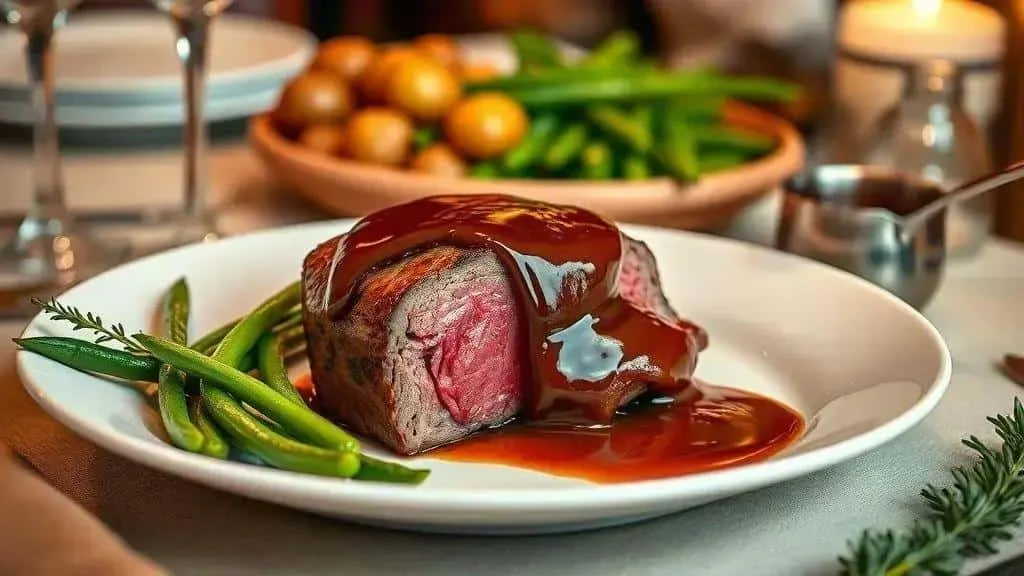
For a celebratory beef fillet with Madeira sauce, brown the meat, deglaze the pan with Madeira and reduce the sauce. Rest before slicing and serve with mashed potatoes, roast potatoes or asparagus.
Beef fillet with Madeira sauce makes an elegant New Year’s Eve centrepiece: tender beef, a glossy mushroom sauce and sides that are easy to share. Here are the ingredients, cooking steps and variations to help you plan the meal.
Ingredients for beef fillet with Madeira sauce
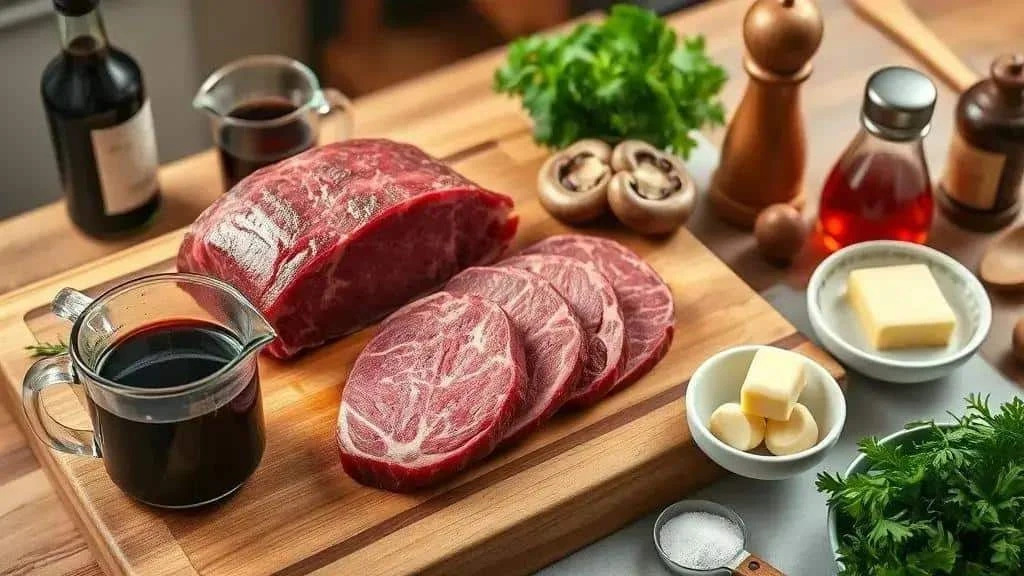
For this beef fillet with Madeira sauce, allow approximately 6–8 servings with side dishes. Portion sizes depend on the cut and your guests’ appetites:
- 1.5 kg trimmed whole beef fillet, or individual fillet steaks weighing 150–200 g each – tie the whole fillet with kitchen string for an even shape. For 6–8 people, choose the number of steaks accordingly; 8–10 steaks of this weight are not necessarily equivalent to 1.5 kg. Sirloin is an alternative that may cost less.
- Salt and freshly ground black pepper, to taste – season moderately, especially if the stock is already salty.
- 3 tablespoons olive oil – for browning the beef; rapeseed oil is another option.
- 3 tablespoons unsalted butter – use 1 tablespoon with the beef and the remaining 2 tablespoons for the sauce.
- 2 shallots or 1 medium onion – finely chopped; a small red onion is another option.
- 2 garlic cloves – finely chopped or crushed; do not let them burn.
- 250 g fresh button mushrooms, sliced – drained tinned mushrooms can be used instead; check the drained weight rather than assuming every tin contains the same amount.
- 200 ml Madeira wine – this gives the sauce its characteristic flavour. Marsala, red port or 200 ml dry red wine with 1 tablespoon balsamic vinegar produce different but useful variations. Cooking does not guarantee that all the alcohol disappears.
- 400 ml beef stock – homemade or prepared according to the packet. Vegetable stock changes the flavour but does not make this beef dish vegetarian or necessarily lower in calories.
- 1 tablespoon Worcestershire sauce, optional – adds savoury depth. Check the label for fish, gluten and other allergens.
- 1 tablespoon plain flour OR 1 teaspoon cornflour – choose one thickener. Cook the flour with the butter before adding liquid, or mix cornflour with cold water before adding it to the simmering sauce.
- 2 fresh thyme sprigs and 1 bay leaf – or use about 1 teaspoon dried thyme in place of the fresh sprigs.
- Chopped parsley, to finish – for fresh flavour and colour.
- 1 additional tablespoon cold unsalted butter – to finish the sauce off the heat.
Note: the recipe uses 4 tablespoons butter in total, including the final tablespoon. Adjust the sauce with a little extra stock if needed. A whole fillet sliced just before serving makes a convenient centrepiece.
How to cook beef fillet with Madeira sauce
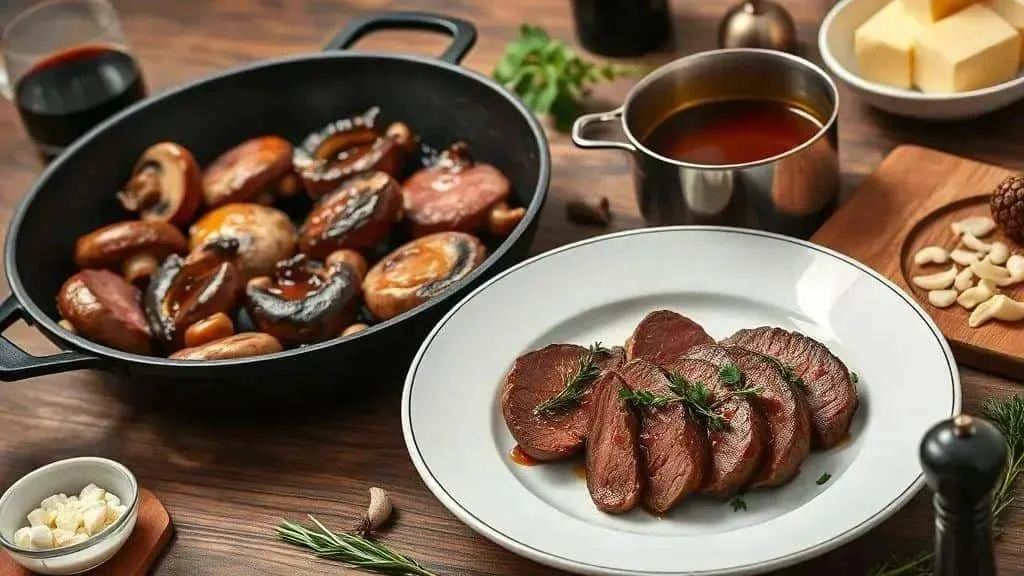
- Prepare the beef: keep it refrigerated until you are ready to prepare it; there is no need to leave it out to reach room temperature. Tie a whole fillet with kitchen string if needed, or use individual 150–200 g steaks. Pat dry with kitchen paper and season with salt and pepper.
- Preheat the oven: set it to 180°C, or 160°C fan. Individual steaks may cook entirely in the frying pan; a whole fillet generally benefits from finishing in the oven.
- Brown the beef: heat a heavy frying pan with the oil. Brown the meat for roughly 2–3 minutes per side, including the edges and ends, adjusting the heat to avoid burning. Add 1 tablespoon of the butter towards the end, when the heat is lower. Brown every outside surface of a whole fillet.
- Finish cooking where needed: transfer the beef to an ovenproof dish or use an oven-safe pan. Allow approximately 8–12 minutes for thick steaks or 20–35 minutes for a whole fillet, but thickness, starting temperature and oven performance vary. Intact whole beef can be served pink if every outer surface is thoroughly cooked. Stuffed, rolled or mechanically tenderised beef needs thorough cooking throughout: 70°C for 2 minutes, or 75°C for 30 seconds, at the centre. Choose fully cooked meat for guests who need to avoid undercooked food.
- Rest the beef: cover loosely with foil for around 5–10 minutes for steaks or 10–15 minutes for a whole fillet. Resting helps reduce the amount of juice lost when slicing. Cut across the grain after resting.
-
Make the Madeira sauce in the same pan
Once the beef is out of the pan, reduce the heat to medium. Add the remaining 2 tablespoons of the main butter allowance and soften the chopped shallots for 2–3 minutes.
- Add garlic and mushrooms: stir in the garlic for about 30 seconds, then add the 250 g sliced mushrooms. Cook for roughly 4–5 minutes, or until softened and lightly browned. If using flour rather than cornflour, stir it in now and cook briefly before adding liquid.
- Deglaze with Madeira: take the pan away from any naked flame before pouring in the 200 ml wine. Return to the heat and scrape up the browned, not burnt, bits with a wooden spoon. Reduce by about half; 3–4 minutes is only a guide. The sauce may still contain alcohol.
- Add stock and herbs: pour in the 400 ml beef stock, optional Worcestershire sauce, thyme and bay. Simmer for around 8–10 minutes, allowing the flavours to combine and the liquid to reduce slightly.
- Thicken and finish: if you have not used flour, mix 1 teaspoon cornflour with 2 tablespoons cold water. Stir into the simmering sauce and cook until thickened, following the cornflour packet guidance. Off the heat, whisk in the additional tablespoon of cold butter. Season to taste and remove the thyme stems and bay leaf.
- Slice and serve: remove any kitchen string and slice the rested whole fillet about 1 cm thick, or serve individual steaks whole. Spoon over the mushroom sauce and finish with chopped parsley.
-
Quick tips
Use a thermometer and judge the meat according to the cut and cooking method. Marsala or red wine with a little balsamic vinegar changes the sauce’s flavour; vegetable stock is another flavour variation, not a guarantee of a lighter dish. Strain before adding the finishing butter if you prefer a smooth sauce. Slice the beef just before serving and keep the sauce separate until needed.
Beef fillet variations for New Year’s Eve

These variations adapt beef fillet with Madeira sauce to different tastes and budgets. Treat each as an alternative to the main recipe rather than adding all the extra ingredients together.
Mixed mushroom sauce
Replace the button mushrooms with 250 g fresh mixed mushrooms, such as chestnut and shiitake. Dried porcini need rehydrating according to the packet and are not a gram-for-gram replacement for fresh mushrooms. Use the same 200 ml Madeira and 400 ml stock, then finish with the reserved cold butter.
Bacon-wrapped fillet steaks
Wrap each 150–180 g steak with a bacon rasher and secure with a cocktail stick if necessary. Brown the steak and cook the bacon around the edges, then finish in the oven as needed. Do not rely on a fixed 6–8 minute oven time: check that the bacon is thoroughly cooked and the beef suits the diners. Remove every cocktail stick before serving.
Gorgonzola-stuffed fillet steaks
For a rich variation, cut a pocket in each steak and add up to 40 g Gorgonzola or another suitable cheese. This is stuffed meat, so the whole centre and filling must cook thoroughly; do not use the pink-centred method for intact steaks. Check the cheese’s suitability for your guests and its milk allergen information.
Sauce without added wine
Replace the 200 ml Madeira with approximately 180 ml extra beef stock and up to 2 tablespoons balsamic vinegar, added to taste. This is in addition to the main 400 ml stock. The result is a stock-and-mushroom sauce rather than an exact Madeira substitute. If alcohol must be avoided entirely, check every ingredient’s label, including vinegar and Worcestershire sauce.
A more economical cut
Try 1.5 kg sirloin or rump, cut into thick steaks. Brown the meat and make the sauce in the same way, but judge cooking by thickness and the cut rather than automatically shortening the oven time. Season to taste; a cheaper cut does not inherently need or absorb more salt.
Considering sous-vide
Sous-vide needs a validated time-and-temperature process matched to the meat’s thickness, starting temperature and equipment. A blanket instruction of 54°C for 1–2 hours is not a reliable safety schedule. Use a trustworthy, validated recipe and suitable equipment, or follow the frying-pan and oven method here. Searing afterwards does not replace a correct sous-vide process.
Vegetarian portobello mushrooms or seitan
As a separate vegetarian option, use 4 large portobello caps or 600 g thickly sliced seitan; these quantities will not necessarily serve the same number as the beef. Cook according to the ingredient and make the sauce with 200 ml suitable wine, 400 ml vegetable stock and mushrooms. Omit standard fish-containing Worcestershire sauce or use a labelled vegetarian alternative. For a vegan version, also replace the butter and check the wine. Seitan contains wheat gluten.
How to keep beef fillet tender and juicy
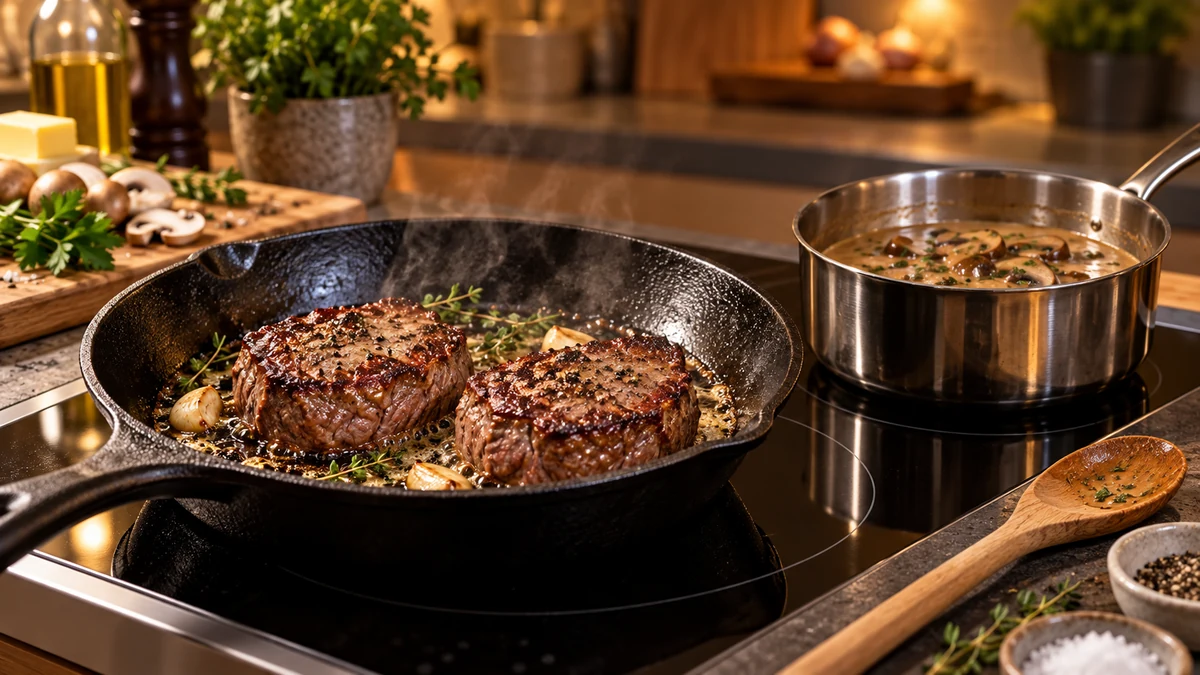
Careful preparation, heat control and resting all help. The following steps explain how to prepare the fillet and manage the heat without drying it out.
Choosing and preparing the cut
Choose a whole fillet or individual 150–200 g steaks for serving. Ask the butcher to trim tough silverskin and tie the whole piece if needed. Keep the meat chilled until preparation and follow its use-by date; leaving it out for 30 minutes does not reliably bring a large joint to room temperature.
Salting ahead: dry brining
Salt the steaks in advance if convenient, or season a whole fillet and refrigerate it for 4–12 hours, within its use-by date. Keep it on a suitable tray on the lowest fridge shelf, away from ready-to-eat food. Use salt moderately; the stock and sauce may add plenty more. There is no need to leave salted meat on the worktop.
Browning and controlling the heat
Use a well-heated heavy frying pan with part of the recipe’s oil allowance. For steaks around 3 cm thick, a couple of minutes per side is a browning guide, not a complete cooking or safety instruction. Brown the edges too, work in batches and lower the heat if the fat smokes or the crust burns.
Basting with butter, herbs and garlic
After browning, lower the heat and add butter from the recipe’s allowance, with a crushed garlic clove and a thyme or rosemary sprig if desired. Tilt the pan carefully and spoon the foaming butter over the beef for around 30–60 seconds. This adds flavour; it does not seal juices inside the meat.
Sous-vide, oven cooking and temperature checks
Sous-vide: follow a validated recipe rather than a universal low-temperature timetable. Oven: finish the browned beef at 180°C, or 160°C fan. An intact fillet differs from a stuffed or tenderised piece: the latter must cook through. Check the relevant safety guidance above, and do not assume that resting will correct an undercooked centre.
Resting and slicing
Rest individual steaks for around 5–10 minutes, or a whole fillet for 10–15 minutes, loosely covered. Then slice across the grain, roughly 1 cm thick, and serve promptly.
Practical cooking points
- Use a clean food thermometer – check the thickest part and clean the probe between raw and cooked food.
- Handle the beef with tongs rather than repeatedly stabbing it with a fork.
- Avoid prolonged acidic marinades – fillet is already tender, and long exposure can spoil its surface texture. Acid is not a substitute for safe cooking.
- For a celebration: cook a whole fillet and slice at the table or immediately before serving.
- Serve sauce separately: finish it in the same pan, then offer it alongside the beef so guests can choose how much they want.
A quick checklist
- Season ahead if helpful: keep the beef refrigerated while it stands.
- Brown the outside well: develop flavour without burning; browning does not seal in juices.
- Use a thermometer: check cooking rather than relying only on a timer.
- Rest before slicing: allow a short rest, then serve promptly.
- Slice across the grain: this makes each piece easier to chew.
Madeira sauce: tips, substitutions and method
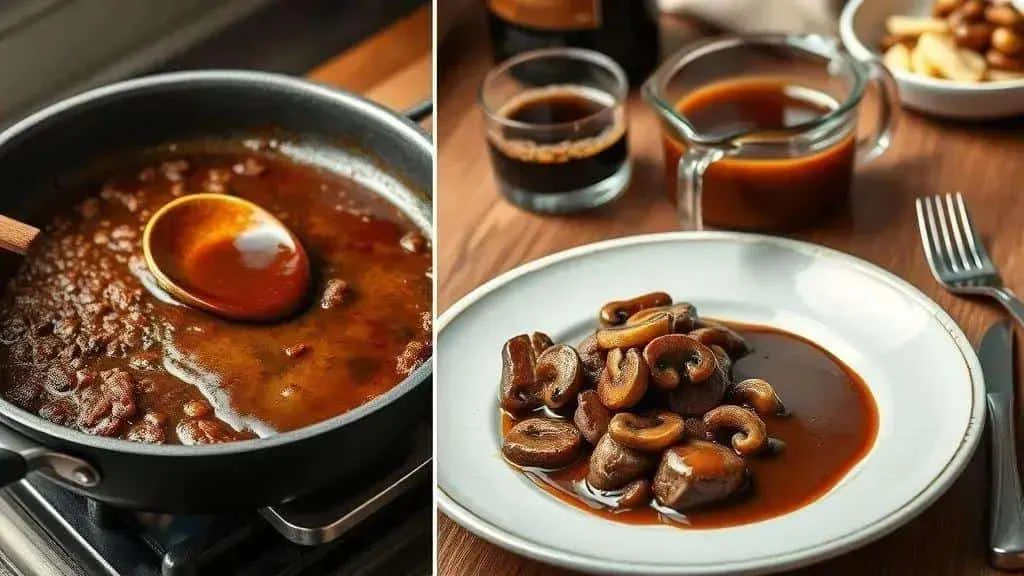
Madeira sauce combines reduced wine and stock with the browned flavours left in the pan. Mushrooms and a little finishing butter give it depth and a glossy texture.
Getting the sauce right
- Deglaze thoroughly: use the Madeira to loosen the browned bits from the pan, leaving behind any burnt residue.
- Reduce by roughly half: simmer to concentrate the flavour. A 3–5 minute reduction is a guide, not a promise that the alcohol has gone.
- Finish with cold butter: whisk in the reserved tablespoon off the heat for a glossy sauce.
- Choose one thickener: a cornflour slurry is convenient near the end, while flour should cook with butter before the liquids go in.
- Use the pan flavours: the browned meat juices provide the base; discard burnt bits rather than incorporating them.
- Strain for smoothness: pass the sauce through a fine sieve before finishing with butter if you prefer it without mushroom pieces.
Practical substitutions
- Madeira wine, 200 ml: Marsala or dry red wine with 1 tablespoon balsamic vinegar gives a different flavour. For a version without added wine, use about 180 ml extra stock and up to 2 tablespoons balsamic or cider vinegar, to taste. Check labels if avoiding alcohol completely.
- Beef stock, 400 ml: vegetable stock changes the flavour; a more concentrated beef stock strengthens it. Neither substitution automatically makes the sauce lower in salt or calories.
- Fresh mushrooms, 250 g: use a similar drained weight of tinned mushrooms for convenience, or fresh shiitake for a different texture and flavour.
- Thickeners: choose 1 tablespoon plain flour cooked with the butter, or 1 teaspoon cornflour mixed with 2 tablespoons cold water. Their thickening strength differs, so assess the finished consistency rather than adding both.
The sauce method at a glance
- After browning the beef: remove it and retain the browned, unburnt pan juices.
- Soften the shallots: use the 2 tablespoons butter reserved for the sauce and cook the chopped shallots for 2–3 minutes.
- Add garlic and mushrooms: briefly stir in the garlic, then cook the 250 g sliced mushrooms for 4–5 minutes or until softened. If choosing flour, stir it in at this stage and cook it before adding the wine.
- Add 200 ml Madeira: pour away from naked flames, then return to the heat and scrape the pan with a wooden spoon. Reduce by approximately half, judging the liquid rather than the clock alone.
- Add 400 ml stock and the herbs: include the optional tablespoon of Worcestershire sauce, thyme and bay. Simmer for roughly 8–10 minutes.
- Thicken carefully: if using cornflour instead of flour, add the cold-water slurry to the simmering sauce and cook until thickened. Do not sprinkle dry flour into the finished sauce: it can form lumps and taste raw.
- Taste and adjust: season with salt and pepper, then remove the thyme stems and bay leaf.
- Finish for gloss: off the heat, whisk in the reserved additional tablespoon of cold butter.
- Strain if preferred: for a smooth sauce, strain before the final butter rather than afterwards.
- Serve promptly: avoid leaving the sauce lukewarm for a prolonged buffet. If holding it hot, use suitable equipment and a food thermometer; add the finishing butter close to serving to help preserve the texture.
Quick tips
- Liquid quantities: start with the listed wine and stock; a shorter reduction leaves more sauce.
- Consistency: reduce a thin sauce a little longer, or loosen a thick one with hot stock.
- Fresh flavour: add chopped parsley or a little thyme near serving time.
How to present the beef for a celebration
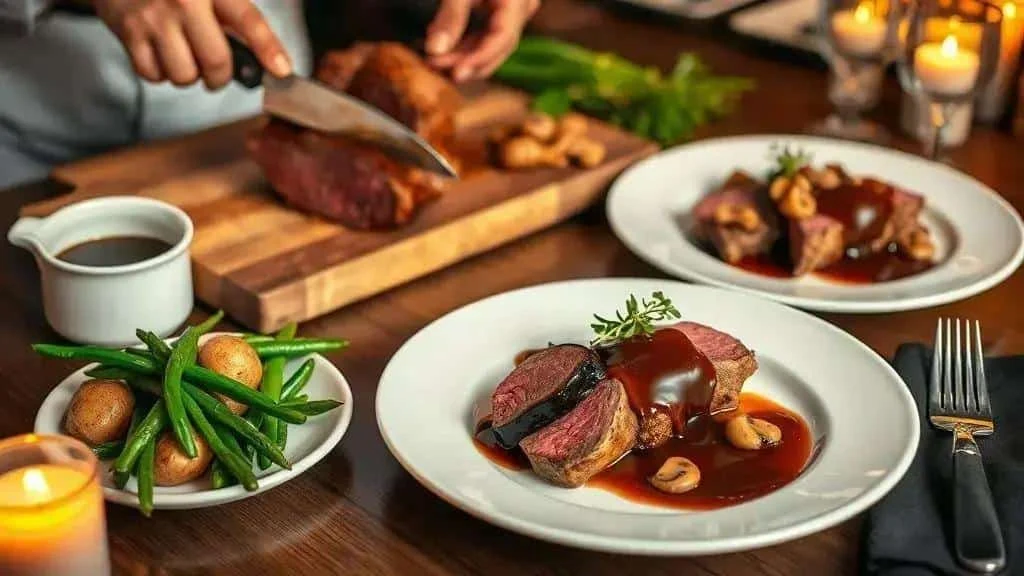
Think about colour, comfortable portions and a practical serving order. A simple arrangement leaves room for the beef and sauce to stand out.
The essentials
- A plain plate: white or dark crockery provides contrast with the meat and sauce.
- A little colour: green beans, asparagus or peas work alongside golden potatoes.
- Sauce on the side: use a gravy boat, or spoon over a little sauce at the last moment.
- Timing: arrange the sides while the beef rests, then slice and serve rather than leaving the finished plates waiting.
Plating step by step
- Warm the plates: use an appropriate method for the crockery, such as warm water followed by thorough drying. Only put plates in the oven if they are oven-safe, and handle them carefully.
- Arrange the side: place mashed potatoes, potato wedges or rice slightly off-centre.
- Slice and position the beef: cut across the grain into slices about 1 cm thick and overlap them gently alongside or over the side dish.
- Add the sauce: spoon a little over the beef or offer it separately.
- Add the mushrooms: distribute them around the beef and finish with pepper if wanted; taste before adding more salt.
- Finish with green herbs: use washed parsley or suitable washed microgreens for colour.
- Check the plate: wipe the rim with a clean cloth or kitchen paper and serve promptly.
Serving a larger group
- Slice just before serving: cook and rest the whole fillet, then slice when the sides are ready.
- Set up a serving area: arrange the sauce, side dishes and a clean carving board so service is straightforward.
- Keep portions consistent: serving spoons or small moulds can help divide side dishes without overfilling plates.
- Plan the timing: finish cold starters before the main course is ready, reducing unnecessary waiting.
Finishing touches
- A glossy sauce: use the reserved finishing butter immediately before serving, rather than adding extra butter at every stage.
- A crisp contrast: a little crisp onion or a few thin potato crisps provide texture.
- Family-style presentation: use a warm platter with a few washed herb sprigs, keeping decorative items away from the food.
Drinks and side dishes for New Year’s Eve
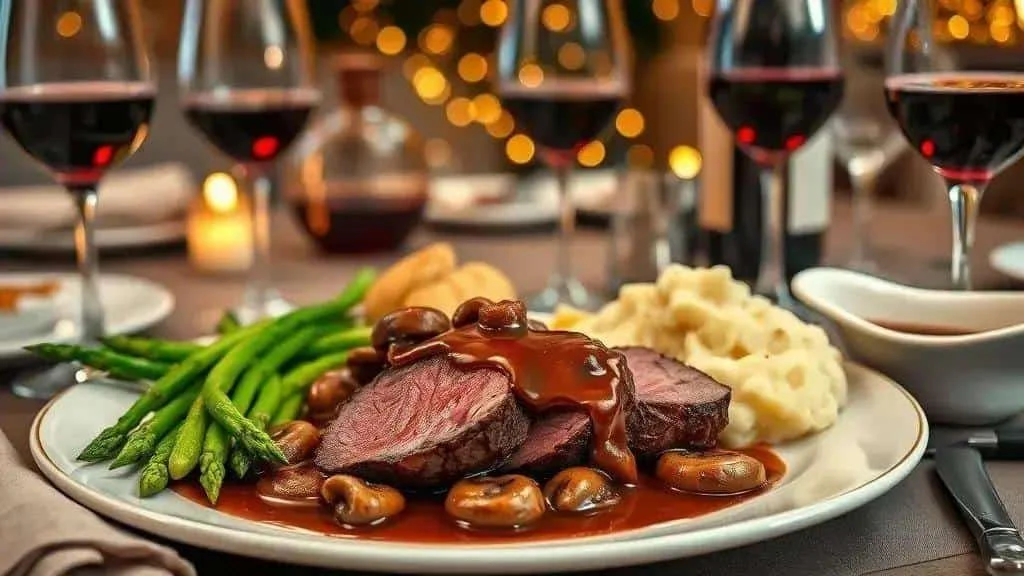
Choose accompaniments for beef fillet with Madeira sauce that balance its rich flavour and soft texture. Wine is optional; alcohol-free drinks work equally well at a celebration.
Optional wine pairings
- Medium- to full-bodied reds: Merlot, Malbec or Syrah can complement the mushrooms and beef. Individual wines vary in tannin, sweetness and intensity.
- Cabernet Sauvignon: consider it if you enjoy a fuller red, especially with robust sides.
- Pinot Noir: a possible choice for a less full-bodied pairing, particularly with a gently flavoured risotto.
- A fuller white: an oaked Chardonnay may suit creamy mashed potatoes or risotto.
- Brut sparkling wine: its acidity can contrast with the rich sauce. Sparkling water is a straightforward alcohol-free alternative.
- Serving temperature: as a flavour guide, try lighter reds at 14–16°C, fuller reds at 16–18°C and whites at 8–12°C. Chill sparkling wine according to its label or producer’s advice.
Alcohol-free drinks
- Sparkling water with lemon or orange: a simple, refreshing option alongside the sauce.
- Citrus and rosemary mocktail: combine sparkling apple juice with a little lemon and a washed rosemary sprig.
- Flavoured iced tea: black tea with ginger and lemon offers another choice; use caffeine-free tea if preferred.
Side dishes to consider
- Creamy mashed potatoes: a soft base for the mushroom sauce.
- Roast potato wedges: crisp edges contrast with the tender beef.
- Parmesan risotto: a rich, savoury accompaniment; adjust the rest of the meal accordingly.
- Grilled asparagus or sautéed green beans: green vegetables bring colour and texture.
- Sautéed mushrooms: echo the flavour already in the sauce.
- Crisp farofa or caramelised onions: Brazilian toasted cassava-flour farofa adds crunch, while onions bring sweetness. They offer different textures.
Suggested combinations
- Mash with Merlot or Chardonnay – a creamy side with an optional wine pairing.
- Roast potatoes with Syrah or Malbec – a robust combination if those wines suit your taste.
- Parmesan risotto with Pinot Noir – a creamy dish alongside a potentially lighter red.
- Asparagus with brut sparkling wine or Sauvignon Blanc – alternatively, offer sparkling water with citrus.
Planning the celebration meal
- Portions: 150–200 g raw trimmed beef per adult is a starting estimate. Adjust for appetites and the whole menu; do not automatically allocate 150–200 g of every side dish when serving several.
- Service: for a group, cook a whole fillet and slice at serving time, with the sauce ready separately.
- Drinks service: keep water and alcohol-free options available throughout. Guests do not need a different alcoholic drink for every course.
- Dessert: a fruit-based pudding can provide a contrasting finish after a rich main course.
- Plan ahead: choose drinks you know your guests enjoy and check serving guidance; there is no need to drink a glass of every pairing in advance.
Finishing touches
- Offer sauces separately so each guest can choose their portion.
- Use fresh herbs: a little washed thyme or chopped parsley finishes the plate.
- Balance the textures: combine something crisp with the tender beef and a creamy or vegetable side.
Conclusion
Beef fillet with Madeira sauce is a celebratory option for New Year’s Eve. Browning, a well-balanced sauce and a short rest help the dish come together, although fillet can be an expensive cut and results depend on cooking and ingredient quality.
Choose a variation that suits your guests, check the meat appropriately and slice across the grain. Pay particular attention to the different requirements for intact steaks and stuffed or tenderised meat.
Thank you for reading. Find more festive recipes and Christmas inspiration on our social channels and the I Love Christmas blog.
Enjoy your meal and your New Year’s Eve celebration.
FAQ: beef fillet with Madeira sauce
What temperature should beef fillet reach?
It depends on the cut. An intact whole fillet may be served pink after every outside surface is thoroughly cooked. Stuffed, rolled or mechanically tenderised beef must cook through, reaching 70°C for 2 minutes or an equivalent combination such as 75°C for 30 seconds. Do not use rare-steak temperatures for those preparations.
How can I make the sauce without wine?
Replace the 200 ml Madeira with about 180 ml extra beef stock and up to 2 tablespoons balsamic or cider vinegar, to taste, while keeping the main 400 ml stock allowance. Check all labels if avoiding alcohol completely. The result is a different mushroom sauce, not an identical Madeira flavour.
How can I keep the beef juicy when serving a group?
Brown and finish cooking the whole fillet, rest it for around 10–15 minutes under loose foil, then slice just before serving. Have the sides and sauce ready so the meat is not left waiting.
Which sides work with Madeira sauce?
Mashed potatoes, Parmesan risotto, roast potato wedges and green vegetables are all possibilities. Choose a few complementary sides rather than making the meal unnecessarily heavy.
Can I prepare parts of the recipe ahead?
Yes: make the sauce ahead, cool it promptly and refrigerate below 5°C; use within 48 hours and reheat once until steaming hot. Rice sides need faster cooling and use within 24 hours. Cook the beef fully in one session close to serving: do not partly sear it, store it and finish later. Check ingredient allergens, especially milk, wheat, fish and sulphites.
Sources and Further Reading
- Food Standards Agency — cooking food safely
- GOV.UK — cooking safely
- Food Standards Agency — chilling, freezing and defrosting