The images in this article are illustrative. They do not document a particular Indigenous community, ceremony or Christmas tradition.
There is no single Christmas tradition shared by all Indigenous peoples in Brazil. A careful account needs to identify the people, community and source behind each claim. This guide explains how to learn respectfully without presenting generic foods, dances or ceremonies as established Indigenous Christmas customs.
When exploring Christmas and Indigenous peoples in Brazil, the starting point is diversity. The Instituto Socioambiental’s reference project, Povos Indígenas no Brasil, describes many distinct peoples and histories. An account of one community cannot be treated as a description of everyone, and an unspecified festive scene is not evidence of a tradition.
Start with the Community, Not a Generalisation

Understanding Christmas in a particular Indigenous context requires a source that identifies whose experience is being described. Ideas about community, relationships with the environment and spirituality should not be assigned to every people as if they had one shared worldview.
Culture and Identity
A reference to cultural identity needs more detail than the word ‘Indigenous’. Look for the community’s own name, the speaker or author, the place and the date. Contemporary people should not be portrayed as existing only in an unchanged past.
Rituals and Celebrations Need Context
Do not label an image of dancing, singing or a gathering as Christmas without a reliable account of the event. A ceremony may have an entirely different purpose, and its meaning cannot be inferred from its appearance.
Learning Respectfully
A useful way to learn is to consult work by Indigenous authors and organisations, alongside properly documented museum and research resources. Respect includes accepting that some knowledge is not offered for outsiders to reproduce.
Checking a Claimed Custom
Before repeating a claim, ask: who described this practice, which community was involved, and does the source actually connect it with Christmas? If those details are missing, present the uncertainty rather than filling it with an imagined ritual or menu.
Music and Dance: Avoiding Assumptions

Music and dance should be described through specific, contextual information. Their presence in a community does not by itself establish that they are part of a Christmas celebration.
A Form of Expression in Context
To understand a performance as cultural expression, look for an explanation from its participants or authorised organisers. Avoid assigning a meaning to every movement or beat without evidence from the people involved.
Identifying Instruments Carefully
The appearance of flutes, drums or rattles in a photograph does not identify a people or a celebration. Use the names and descriptions provided by a reliable source rather than treating instruments as interchangeable symbols.
Participation and Permission
Do not assume that every gathering is open to visitors or that all members participate in the same way. If an event is publicly offered, follow the organisers’ instructions about attendance, recording and photography.
Contemporary Experiences
A present-day account should describe what its source actually reports, including differences within a community where relevant. Avoid inventing a universal fusion of Christmas and ancestral ceremonies to make the story appear more colourful.
Food: Separate Regional Dishes from Christmas Claims
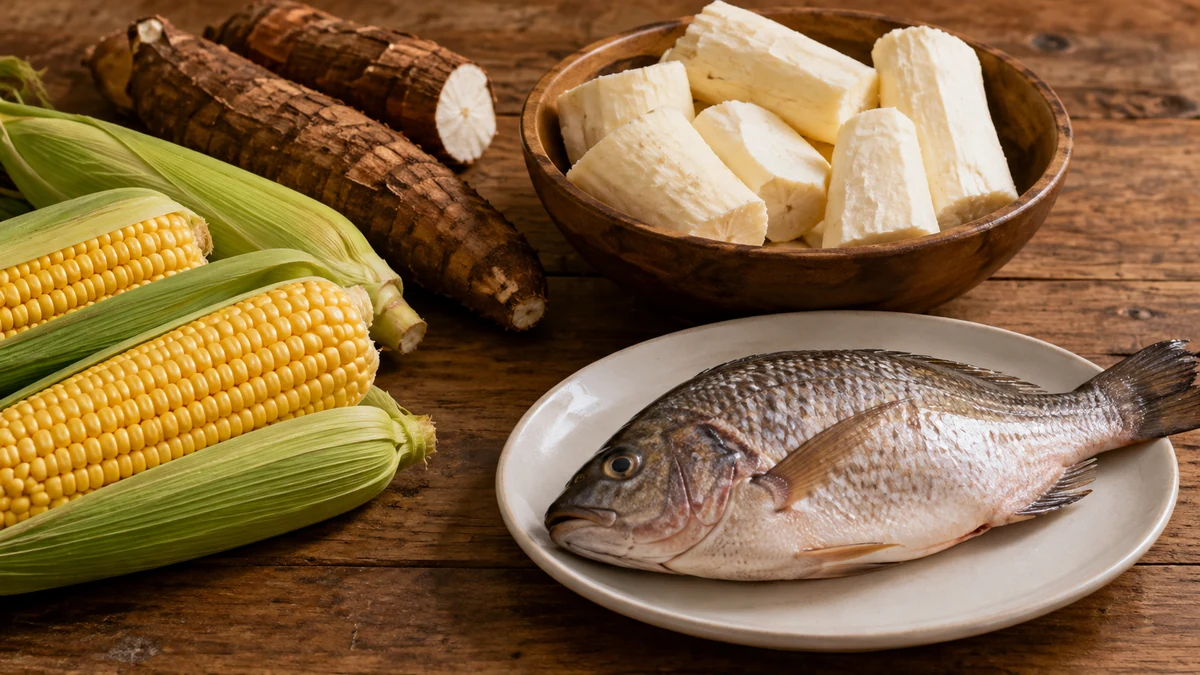
A list of Indigenous Christmas recipes needs specific evidence. The original article did not establish that its suggested dishes belonged to identified communities’ Christmas celebrations, so they should not be presented as a verified traditional menu.
Ingredients Are Not Proof of a Tradition
The use of local ingredients such as cassava, maize, fish or fruit does not establish a dish’s community of origin or its connection to Christmas. Find a documented recipe and its context before assigning either label.
Examples That Need Verification
Descriptions such as roasted tucunaré — a Brazilian fish — or duck in fruit sauce do not, on their own, support a claim of an Indigenous Christmas speciality. They are not offered here as authenticated festive recipes.
Cooking and Family Life
Preparing food may be a shared family activity, but that possibility is not evidence of a particular ritual. Describe the people and occasion from a reliable account instead of adding ceremonial significance without support.
Desserts and Attribution
The same caution applies to desserts such as sweet pamonha and curau, both maize-based Brazilian foods. Their inclusion in a general article does not prove that they are Christmas dishes shared by Indigenous peoples.
Choosing Gifts from Indigenous Artists and Makers

If considering art or craft made by an Indigenous artist as a gift, begin with the maker and the work. Look for clear identification and provenance rather than a generic ‘tribal’ description or an unsupported story attached to the object.
Materials and Claims
An object made from natural materials is not automatically sustainable, authentic or suitable for export. Ask about the material, maker and sale arrangements, and check any applicable restrictions before buying or transporting it.
Understand the Particular Object
Items described as baskets, masks or jewellery can have very different purposes. Do not assume that a ceremonial-looking object is freely available as a decoration, or invent a spiritual meaning for something the maker has not described that way.
Learning About the Making Process
Where a maker chooses to explain their work, that account can illuminate skills and knowledge. Respect the limits of what is shared rather than assuming every technique is open for reproduction or that every family works in the same way.
Supporting Makers Thoughtfully
Prefer a clearly identified maker or a transparent sales channel, and ask how the transaction benefits them. Credit the work accurately when giving it as a gift. Buying an object does not transfer a right to copy its design or speak for its culture.
Stories: Read the Source Before Retelling

Stories and narratives should be approached through their authors, tellers and publication context. Do not turn an unrelated narrative into a Christmas tale simply because it appears in a seasonal article.
Oral Accounts and Published Work
For an oral account, ask who recorded it and with what permission. For a book or recording, check the named creator and edition. A generic scene of people around a fire does not document how a particular story is shared.
Accounts of Origins
Narratives about origins need their own context and should not be reduced to decorative ‘legends’. Use the terminology and explanation provided by the relevant source, and avoid rewriting a sacred account as light entertainment without permission.
When a Story Is Connected to Christmas
To describe a narrative as a Christmas story, find a source that makes that connection explicitly. This article does not supply an invented example or claim that all communities share such stories.
Learning Without Taking Over the Story
A respectful reading can focus on what the author or speaker actually communicates. Avoid turning every narrative into the same lesson about nature or generosity, and do not assume one story represents all Indigenous people.
A More Careful Way to Explore the Subject
The useful starting point is not a ready-made list of Indigenous Christmas customs. It is a willingness to identify sources, recognise differences and distinguish verified information from assumptions.
For further reading, consult identified Indigenous creators and organisations, the Instituto Socioambiental’s reference work and the Museu Nacional dos Povos Indígenas collections. These are starting points for learning, not proof that every item they document relates to Christmas.
You can appreciate work, support makers and learn about particular experiences without copying ceremonies or inventing a shared tradition. Where the evidence is incomplete, saying so is more respectful than supplying a confident story.
FAQ — Christmas and Indigenous Peoples in Brazil
No single menu is established here. A claim about a community’s Christmas food needs a source identifying that community and occasion; a general list of Brazilian dishes is insufficient.
Can I retell an Indigenous story at Christmas?
Check its source, context and permissions. Do not assume it is a Christmas story or that every published or recorded account may be freely adapted.
Are traditional dances always part of Christmas celebrations?
That cannot be assumed. Identify the people, event and source before describing a performance as a Christmas custom.
Does a natural material prove a craft is authentic?
No. Look for clear identification of the maker, provenance and material rather than relying on a generic appearance or label.
How can I approach this subject respectfully?
Consult identified sources, prioritise the people describing their own experiences and respect limits on access or reproduction. Avoid treating distinct peoples as a single culture.
How can I support Indigenous makers when buying a gift?
Use a transparent sales channel, identify and credit the maker, and ask how the purchase benefits them. Do not assume buying a work gives permission to copy its design.
Sources and Further Reading
- Instituto Socioambiental — Indigenous peoples in Brazil
- Museu dos Povos Indígenas — collections
- Museu dos Povos Indígenas — exhibitions