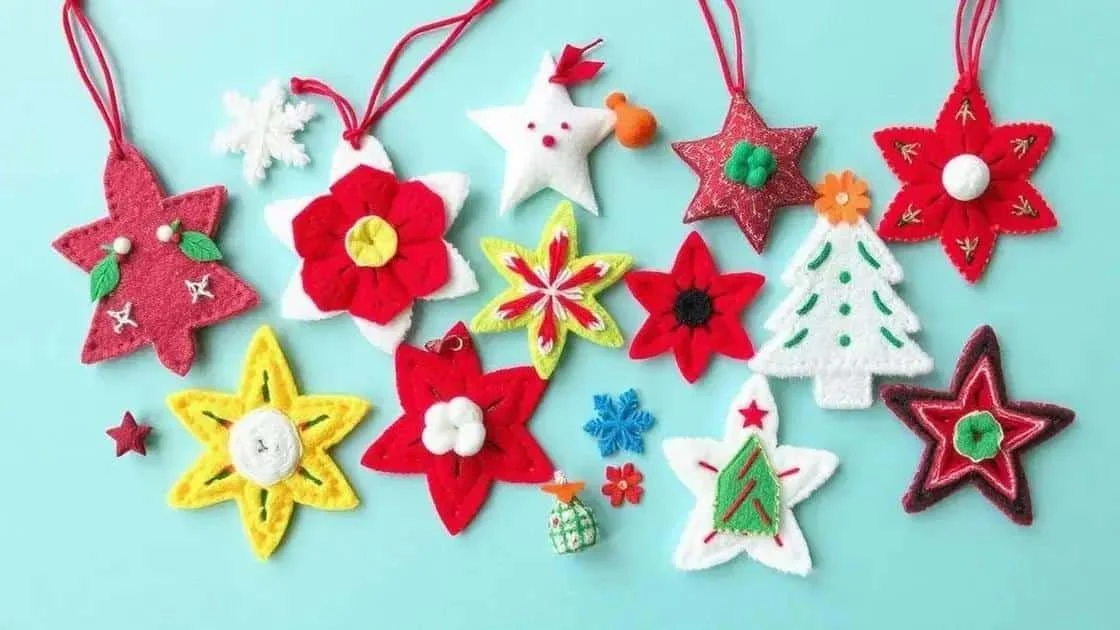
Christmas colouring can give children a chance to experiment with colours, enjoy festive themes and talk about family traditions. This guide offers drawing ideas and activities, rather than a downloadable pack of colouring sheets.
Christmas colouring ideas for children can be a welcome option between the busier parts of the holidays. Some children enjoy a simple outline; others prefer drawing their own pictures. Here are ways to set up an enjoyable session without putting pressure on the finished result.
Christmas drawing ideas for children
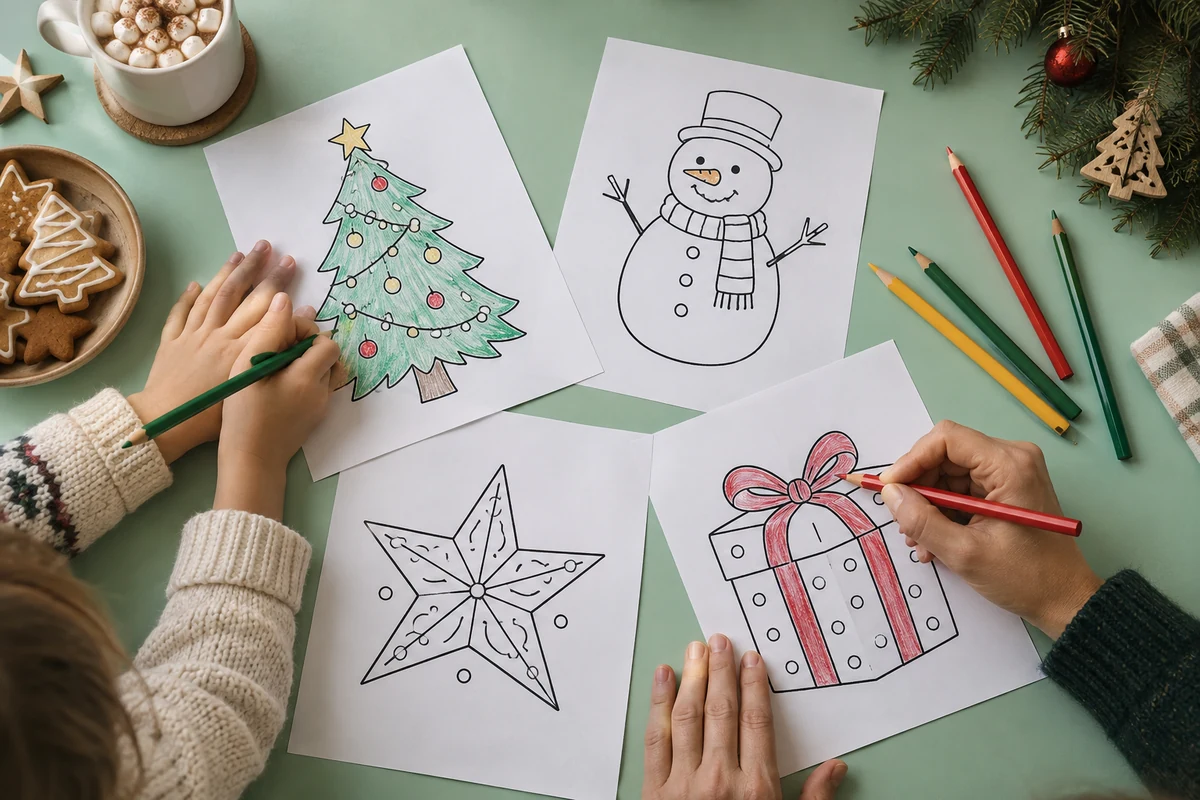
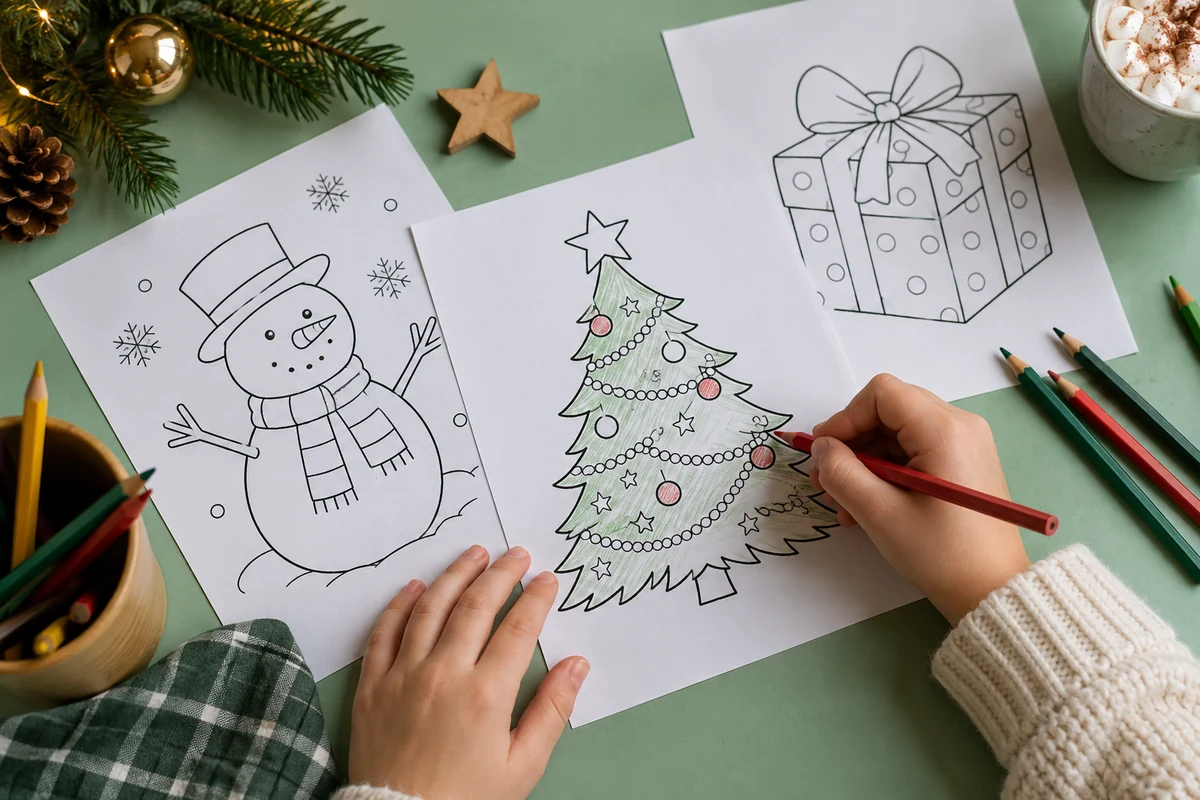
Festive pictures provide plenty of scope for imagination. Colouring can also start conversations about familiar decorations and family customs. Try drawing simple outlines together, or use colouring sheets that you have permission to print.
1. A Christmas tree
Draw a tree with a few large baubles and a star. Children can choose colours for the lights, ornaments and presents, or invent a completely different colour scheme.
2. Father Christmas
Pictures of Father Christmas are a familiar festive choice. His red coat and white trim make a clear starting point, but children can add a sack of presents or design their own version.
3. A Christmas reindeer
A reindeer with antlers and a bright nose is another cheerful subject. Brown and red are traditional choices, although there is no need to insist on realistic colours.
4. A snowman
A snowman leaves room for a colourful hat, scarf and buttons. Children can add snowflakes, a garden or other characters around it.
5. Christmas presents
Draw boxes of different sizes with ribbons and bows. Each parcel can have its own stripes, spots or patterns, making this an easy picture to personalise.
Let children choose the subjects they enjoy. Ask whether they would like their pictures displayed, rather than comparing their work or choosing a winner.
What children can enjoy about Christmas colouring
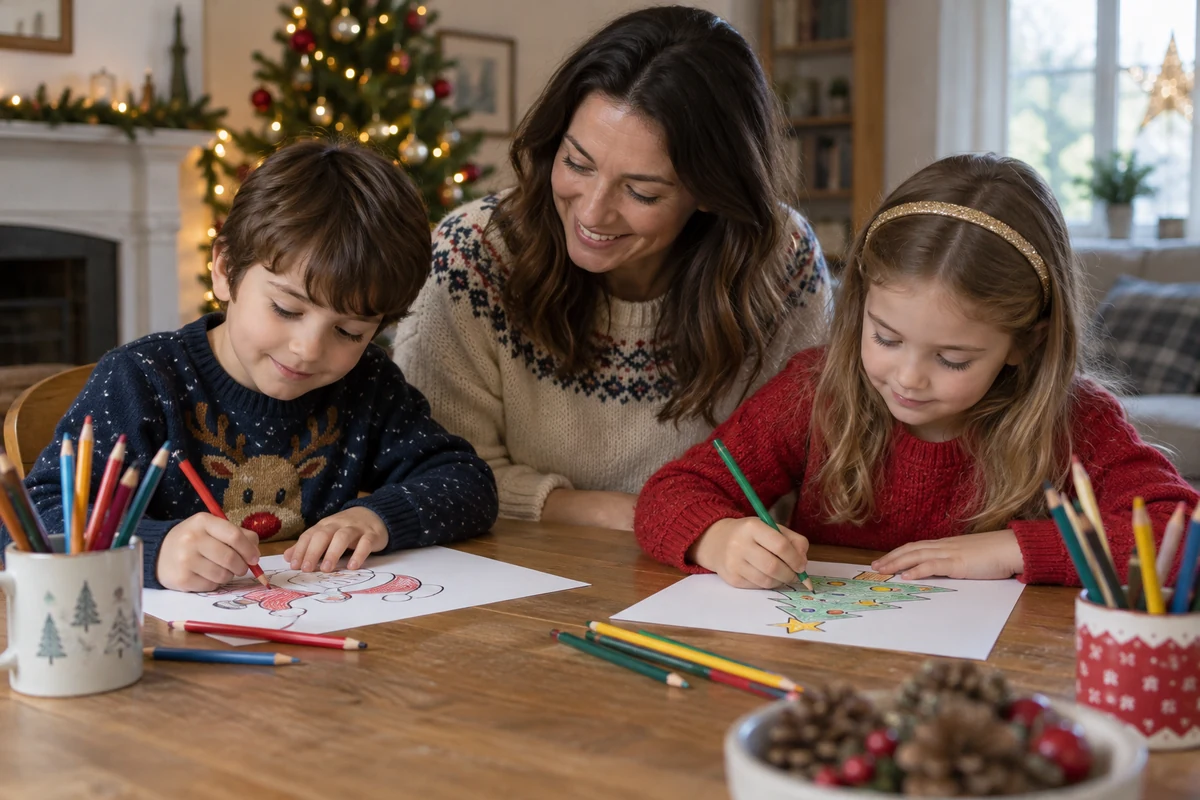
Colouring offers several opportunities for play and practice. Children respond differently, so treat it as an optional creative activity rather than a guaranteed way to improve wellbeing or development.
Experimenting with ideas
Choosing colours and combining patterns gives children room for creativity and self-expression. A purple tree or a striped snowman can be as welcome as a traditional design.
Spending time on one activity
Following a picture involves attention, but children should be free to take breaks. A quiet colouring corner may suit some children during a busy gathering; others will prefer a different activity.
Taking a quieter break
Some people find colouring relaxing, while others do not. Setting aside a little time for it can offer a change of pace, without treating it as a remedy for stress or distress.
Practising hand movements
Holding crayons and making marks offers practice with small hand movements and hand–eye coordination. Choose tools that suit the child, including chunky crayons or adapted grips where helpful.
Sharing an activity
Family members can colour alongside one another, chat or simply enjoy the same space. There is no need for everyone to work on the same picture or finish at the same time.
The most useful benefit may simply be an enjoyable shared moment. Keep the activity flexible and follow the children’s interests.
How to organise a Christmas colouring afternoon
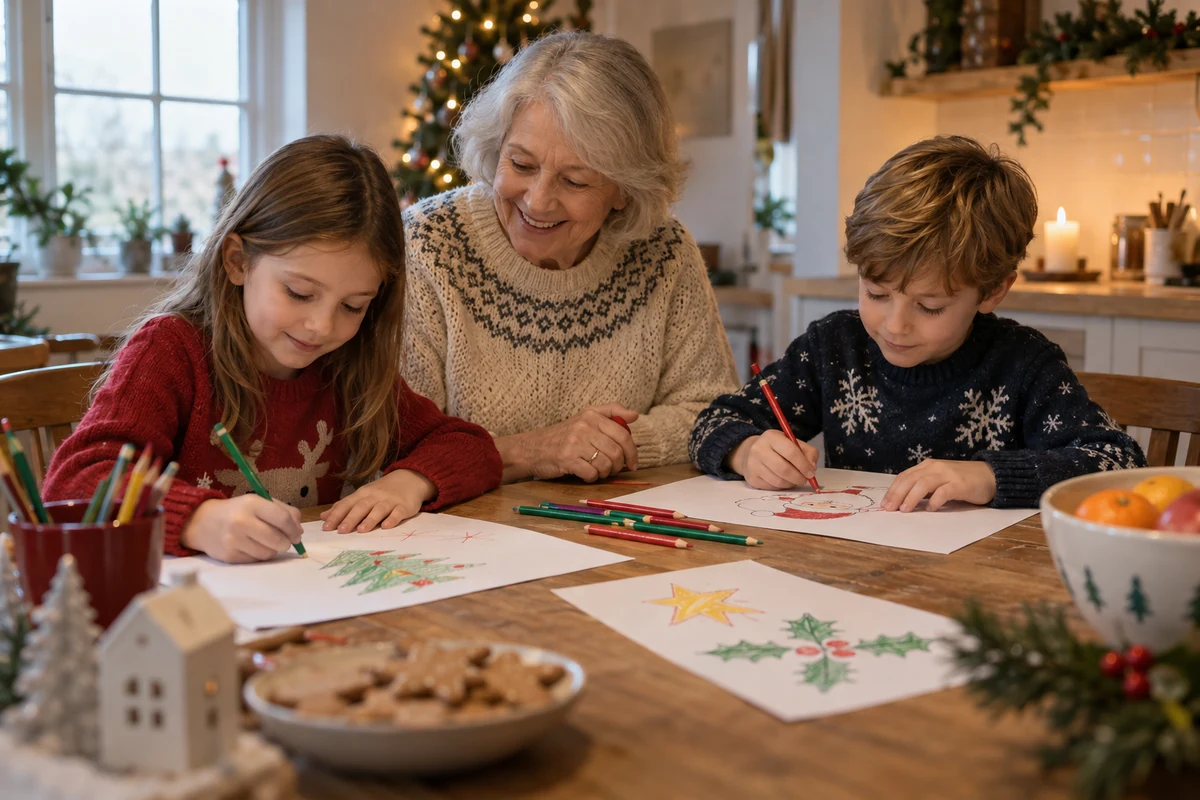
A Christmas colouring afternoon can be straightforward to arrange. A comfortable place, a few suitable materials and time to explore are enough to begin.
Choose a comfortable space
Use a well-lit table with enough room for everyone and seating suited to the children. Protect the surface if needed, and keep pathways clear.
Prepare the materials
Put out colouring pencils, washable felt-tip pens, crayons and paper. Offer a few simple outlines, such as trees, snowmen and stars, alongside blank sheets for original drawings.
Add a festive touch
A few Christmas decorations or gentle background music can make the space feel festive. Keep cables, small ornaments and candles away from the craft table.
Choose a suitable time
Pick a time when the children are not already tired or hungry. A short session with the option to continue is often more practical than expecting everyone to concentrate all afternoon.
Offer snacks and drinks
Water and suitable snacks can be served during a separate break. Check allergies, keep food away from art materials and let warm drinks cool before offering them to children.
Encourage individual ideas
The point is to enjoy making things. Encourage children to use their imaginations and choose their own colours. Staying inside every line is not a requirement.
A relaxed plan makes room for different ages and interests. Let children stop, swap pictures or try another activity without making the session a competition.
Materials for a colouring session
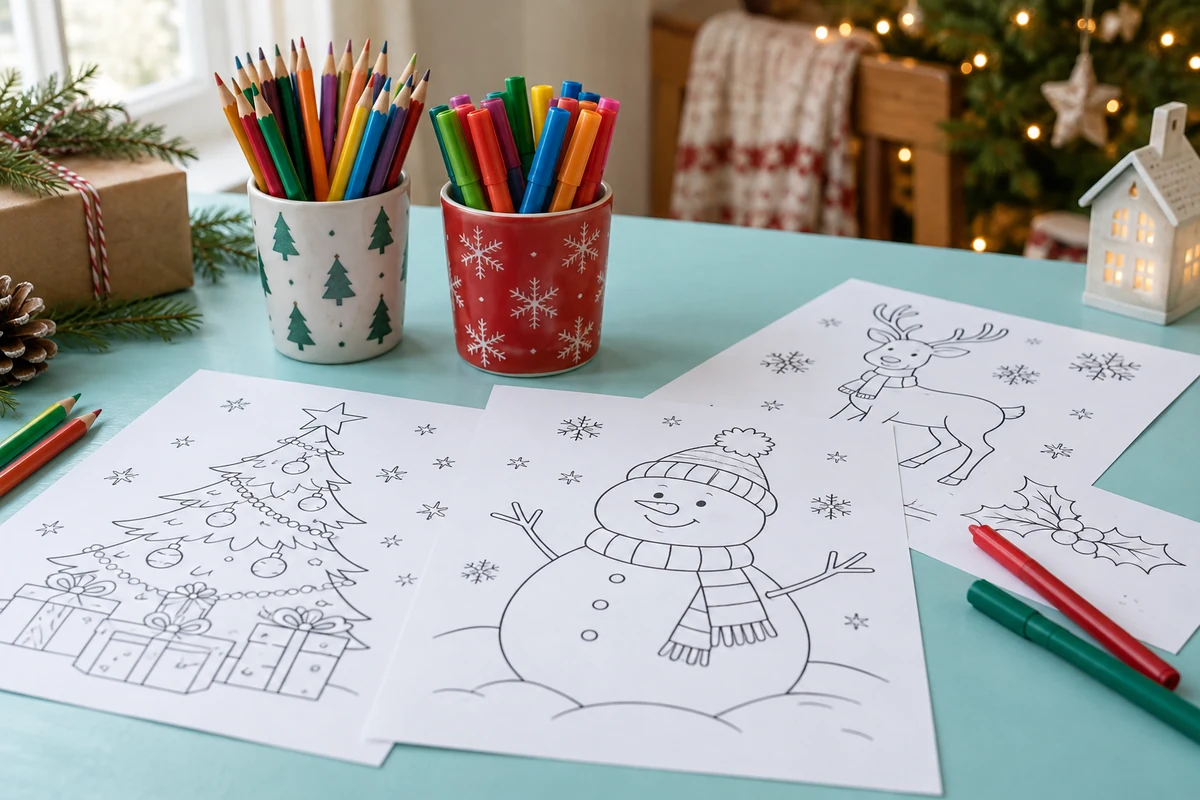
A small selection of suitable materials is usually enough. Check age guidance and supervise young children, particularly around pen lids and other small parts.
Colouring pencils
Colouring pencils work well for outlines and smaller details. Choose ones that feel comfortable to hold, and let an adult handle sharpening where needed.
Felt-tip pens
Felt-tip pens give strong colours and can fill larger areas quickly. Washable, age-appropriate pens are a practical choice; keep loose lids away from younger children.
Wax crayons
Wax crayons offer a different texture and can be easier for some small hands to hold. Choose appropriate sizes and supervise children who still put objects in their mouths.
Paper
Use paper that suits the materials. Thicker paper is helpful for wet pens or paint, and a spare sheet underneath can protect the table from marks.
Optional extras
Older children may enjoy watercolour paints, metallic pens or sparkly pencils. Check the product’s age guidance and avoid loose glitter around very young children. Extras are optional, not essential purchases.
Use what you already have where possible. A few comfortable tools and blank paper can provide just as much room for creativity as a large craft kit.
More festive themes to colour
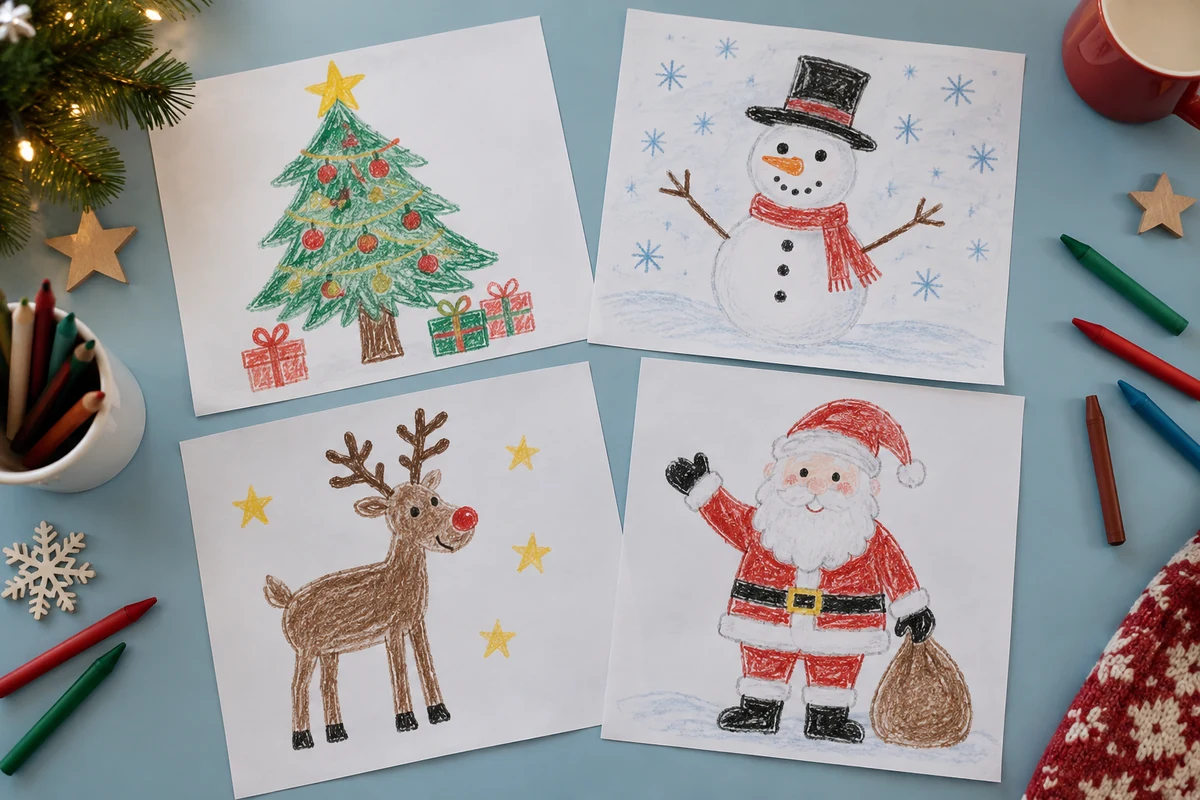
Different subjects help keep a session varied. These theme ideas can be drawn from scratch or used to choose suitable colouring sheets.
1. A decorated Christmas tree
Include baubles, lights and parcels, leaving enough space for children to add their own details. A simple outline can suit younger children better than a very intricate picture.
2. Snowmen
Give a snowman a bright scarf, an unusual hat or some snowy companions. These winter scenes are imaginative themes rather than a promise of snow at Christmas.
3. Father Christmas and his reindeer
A picture of Father Christmas travelling with his reindeer invites children to decorate a sleigh, a sack and a sky full of stars.
4. Stars and snowflakes
Large stars and simple snowflakes work well for repeated patterns. Children can experiment with warm and cool colours or design their own shapes.
5. Wrapped presents
Gift boxes offer space for stripes, spots and ribbon patterns. Children might imagine a present for someone they care about without linking the activity to expensive gifts.
6. A Christmas meal
Draw foods familiar to your family, such as roast potatoes, turkey or vegetables. To explore Brazilian traditions, you could include rabanada, a sweet fried bread dish, and farofa, toasted cassava flour served as a side.
7. Christmas decorations
Wreaths, strings of lights and hanging ornaments make versatile subjects. Children can design decorations they would like to make or simply enjoy them as drawings.
Use the themes as starting points, not rules. A child who wants to add a dinosaur or a favourite pet to the Christmas scene is still taking part creatively.
Talking with children about Christmas traditions
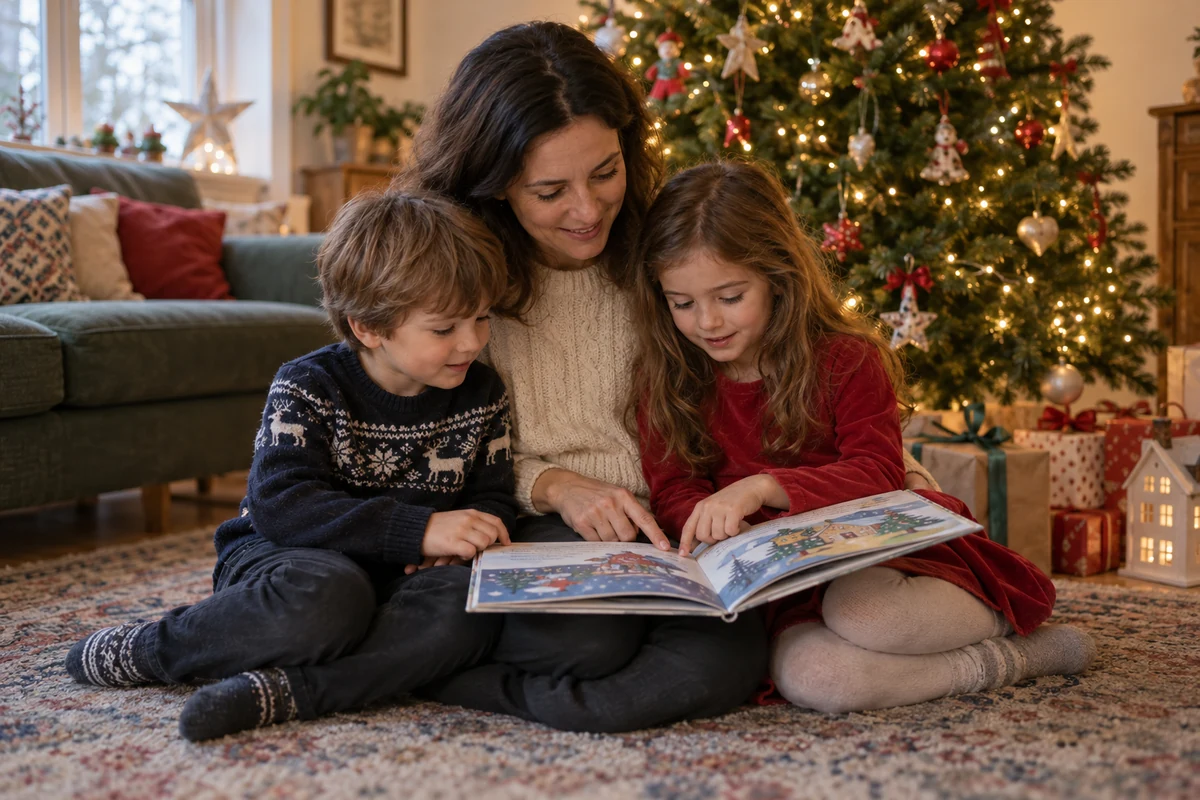
Christmas traditions vary between families, countries and beliefs. A colouring session can provide a gentle way to talk about those differences without assuming everyone celebrates in the same way.
1. Share a story
Christmas stories can introduce familiar festive characters and themes. Choose an age-appropriate picture book, and distinguish its fictional events from the history of a tradition.
2. Try a practical activity
Invite children to join in practical activities such as making cards, decorating a tree or helping with biscuits. Explain what the activity means to your family and let them take an age-appropriate role.
3. Visit a festive event
A visit to a Christmas market or a local performance may introduce different decorations, music and foods. Check accessibility, costs and the programme beforehand, and allow for a quieter alternative.
4. Include family memories
Relatives can share stories about their own childhood celebrations. These conversations may create a sense of connection while showing that customs can change over time.
5. Play a simple game
A gentle Christmas quiz or a supervised picture hunt can make the discussion playful. Keep questions suitable for the children’s ages and avoid making anyone feel tested on their family’s beliefs.
6. Make a decoration
Simple Christmas crafts, such as paper ornaments or cards, provide another way to explore symbols and customs. Adults should manage sharp tools and help younger children with cutting.
The aim is curiosity and shared enjoyment. Leave space for questions and for children whose families celebrate differently or do not celebrate Christmas.
Activities to combine with colouring
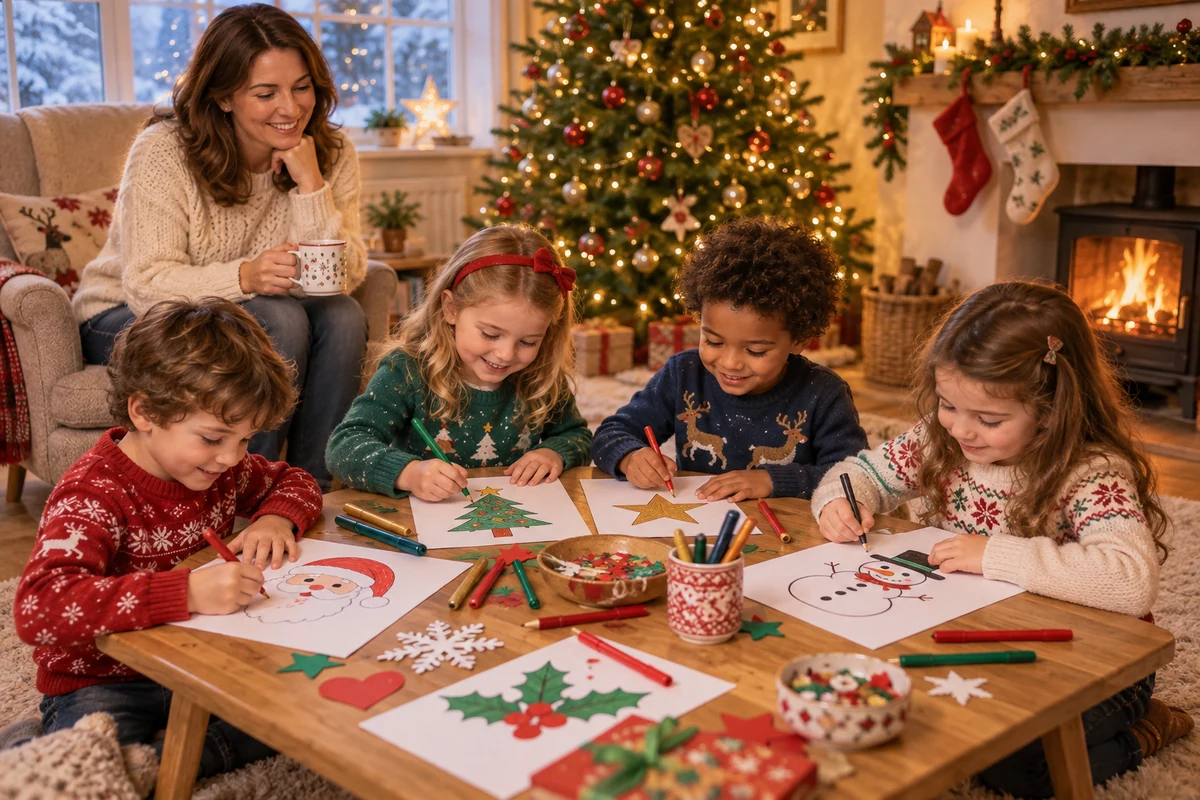
If the children want a change, try one of these additional activities. There is no need to fit all of them into the same afternoon.
1. Read a Christmas story
After colouring, offer a short Christmas story. Children may enjoy spotting familiar objects from their pictures or inventing a different ending.
2. Music and movement
Play a few festive songs and offer an optional dance break. Keep the volume comfortable and leave clear space for movement.
3. Turn pictures into crafts
Children can use their artwork to make cards or paper decorations. Ask before cutting up a picture they may want to keep, and supervise scissors and glue.
4. Try a festive game
A simple Christmas quiz or picture hunt can provide a break from sitting at the table. Use safe, accessible hiding places and avoid tiny objects for young children.
5. Prepare a snack together
Making festive snacks can be another shared activity. Wash hands, check allergies and give children tasks appropriate to their age, with adults handling hot trays and sharp utensils.
6. Build a small scene
Use the finished drawings to create a Christmas scene with folded paper or suitable toys. Children can tell a story about the characters they have made.
7. Make a Christmas journal
A Christmas journal can hold drawings, notes and photographs from the season. Ask permission before including or sharing pictures of other people, especially children.
Choose additions according to the group’s energy and interests. One enjoyable activity is enough; a busy schedule is not the goal.
Making space for Christmas creativity
Christmas colouring is a simple way to explore festive themes together. Keep the focus on choice, enjoyment and conversation rather than a perfect finished picture.
Stories, music, crafts and cooking can extend the session if children are interested. Adapt the activities to their ages, abilities and family traditions.
With suitable materials and a flexible plan, you can make room for creativity during the holidays. This page provides ideas to draw or adapt; it does not contain a set of 30 printable downloads.
FAQ — Christmas colouring for children
Which materials work well for Christmas colouring?
Age-appropriate colouring pencils, washable felt-tip pens, crayons and paper are a useful starting point. Choose tools that are comfortable to hold and supervise younger children.
How can I include children in Christmas traditions?
Share family stories, make cards or decorations together and offer suitable games. Explain that customs differ between families and that participation is optional.
Which themes can children colour?
Trees, snowmen, Father Christmas, stars, snowflakes, presents and festive meals are all possibilities. Children can also invent their own Christmas scenes.
What activities can accompany colouring?
Try a short story, a dance break, simple paper crafts, a picture hunt or supervised snack preparation. Choose only what suits the children on the day.
Why include colouring at Christmas?
It can offer a creative, shared activity and a quieter option during a busy celebration. Children enjoy different things, so it should not be presented as a guaranteed way to improve mood or concentration.
How can colouring encourage learning?
Talk about colours, shapes and the traditions shown in the pictures. Ask open questions, listen to the children’s ideas and avoid turning the session into a test.