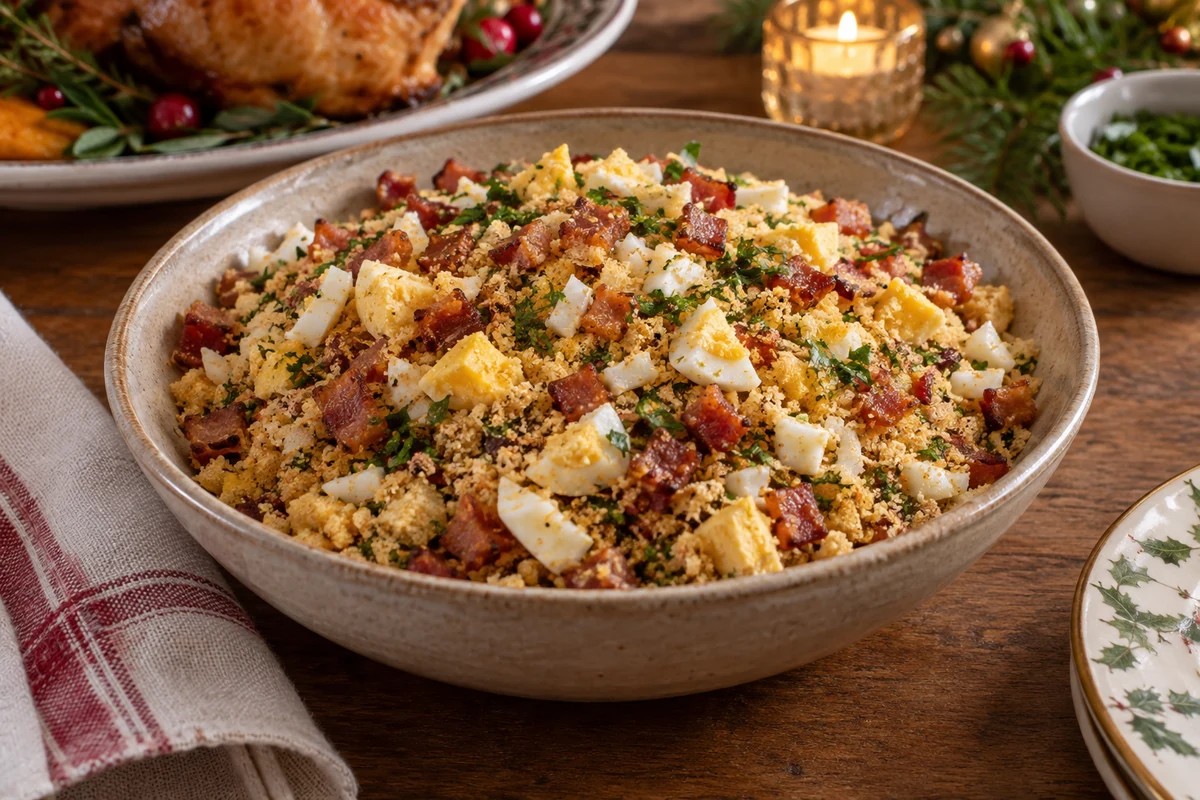
Christmas farofa with bacon and eggs is a Brazilian festive side made with toasted cassava flour, crisp bacon and chopped hard-boiled eggs. Toast the flour gently, cook the bacon thoroughly and fold in the eggs near the end. The result is a crumbly accompaniment for roast meat, rice and salads, with optional nuts or dried fruit.
Christmas farofa brings contrasting textures to a Brazilian Christmas dinner. This bacon-and-egg version is savoury and crumbly, with herbs for freshness. Here is how to prepare it, adapt it and store it safely.
Ingredients for Christmas farofa with bacon and eggs
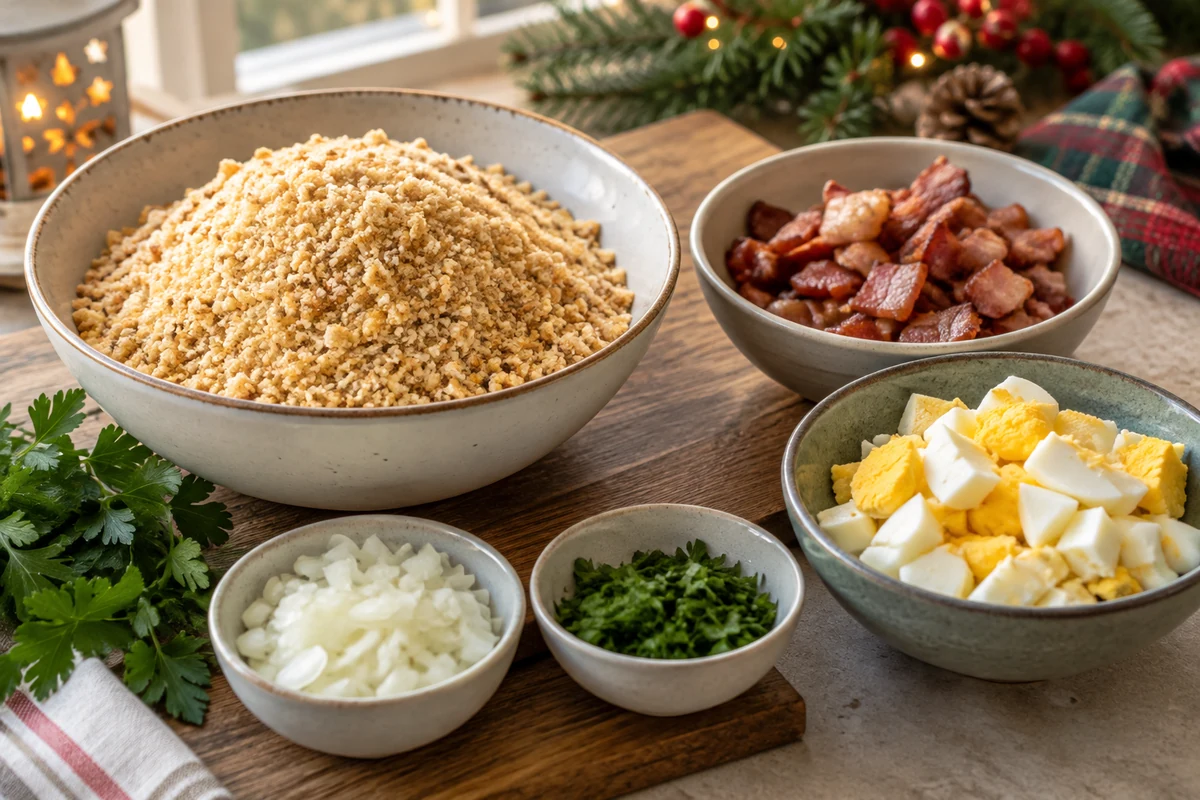
For Christmas farofa with bacon and eggs, you will need:
- 300 g diced bacon – cook until crisp. For less bacon, use 200 g, or substitute 150 g diced Brazilian calabresa sausage, cooked according to its instructions.
- Up to 4 tablespoons butter, about 55 g – adjust for the bacon fat retained. Alternatively use up to 3 tablespoons olive oil; do not add both full quantities.
- 1 large onion, chopped – for the savoury base.
- 3 garlic cloves, chopped – adjust to taste.
- 4 hard-boiled eggs, chopped – both whites and yolks should be firm for this recipe.
- 500 g toasted Brazilian farinha de mandioca – the coarse cassava flour used for farofa, not tapioca starch. Fine-textured cassava flour or Brazilian flaked maize flour changes the texture; neither automatically makes the dish lower in calories.
- ½ measuring cup (120 ml) loosely packed chopped parsley and chives – to finish.
- ½ measuring cup chopped nuts, optional – walnuts or Brazil nuts; raisins are a sweeter alternative. Identify nut ingredients for guests.
- Up to 60 ml hot chicken stock or water – only if the mixture seems too dry; extra liquid reduces crispness.
- Salt and black pepper to taste – start with no extra salt until the bacon and stock are incorporated, then adjust. About ½ teaspoon pepper is a starting point.
Substitutions and quick tips
For a vegetarian version, replace bacon with smoked tofu or sautéed mushrooms, use vegetable stock or water and avoid bacon fat. Eggs and butter can remain for ovo-lacto vegetarians; omit eggs and use oil for a vegan version. For more texture, gently toast the flour separately. Add liquid only sparingly and adjust salt after tasting the cooked mixture.
How to make Christmas farofa with bacon and eggs
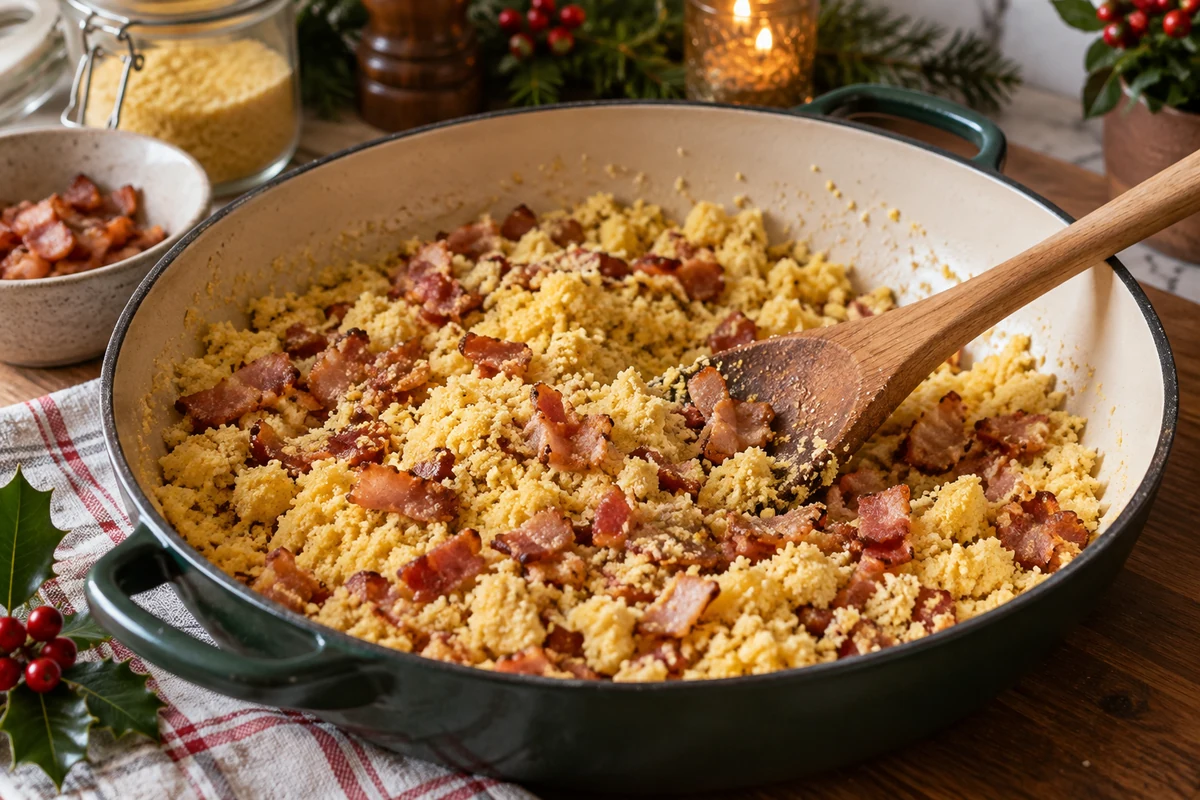
- Prepare everything first: measure the bacon, butter or oil, onion, garlic, eggs, cassava flour, herbs, optional nuts and stock. Have a large pan and a separate bowl ready. A 240 ml measuring cup is used for cup quantities here.
- Hard-boil the eggs: lower into simmering water and cook for about 10–12 minutes, adjusting for size, until whites and yolks are firm. Cool under cold water, peel and chop with clean utensils. Refrigerate promptly if preparing ahead.
- Cook the bacon: fry in a large pan over a medium heat until thoroughly cooked and crisp. Lift onto kitchen paper and retain only a little fat for the onion; discard excess safely.
- Soften the onion and garlic: cook the onion in the retained fat, adding up to 1 tablespoon of the measured butter if needed. Add garlic for 30–60 seconds without burning it.
- Add optional nuts: stir them in for 1–2 minutes until fragrant, watching carefully so they do not burn.
- Incorporate the flour: lower the heat and add it gradually, stirring to coat it with the aromatics. Toast gently according to the product’s preparation guidance. If excessively dry, add a little hot stock or water, up to 60 ml; it should remain crumbly, not wet.
- Adjust the fat: add small pieces of the remaining measured butter only as needed. Depending on the bacon fat retained, the full quantity may be unnecessary.
- Fold in bacon and eggs: add them near the end and fold gently. If the components were chilled, keep heating gently until the whole mixture is steaming hot; do not simply add cold eggs after switching off.
- Finish with herbs: stir in parsley and chives, then taste and adjust salt and pepper. Bacon and stock may already provide enough salt.
- Serve promptly: transfer to a serving bowl. When reheating a chilled batch, heat only once until steaming hot throughout; a fixed 2–3 minutes may not be sufficient.
- Store leftovers: cool in shallow portions and refrigerate within 2 hours at 5°C or below. Eat within 48 hours or freeze promptly, preferably without eggs for better texture.
Tips for a crumbly, flavourful farofa
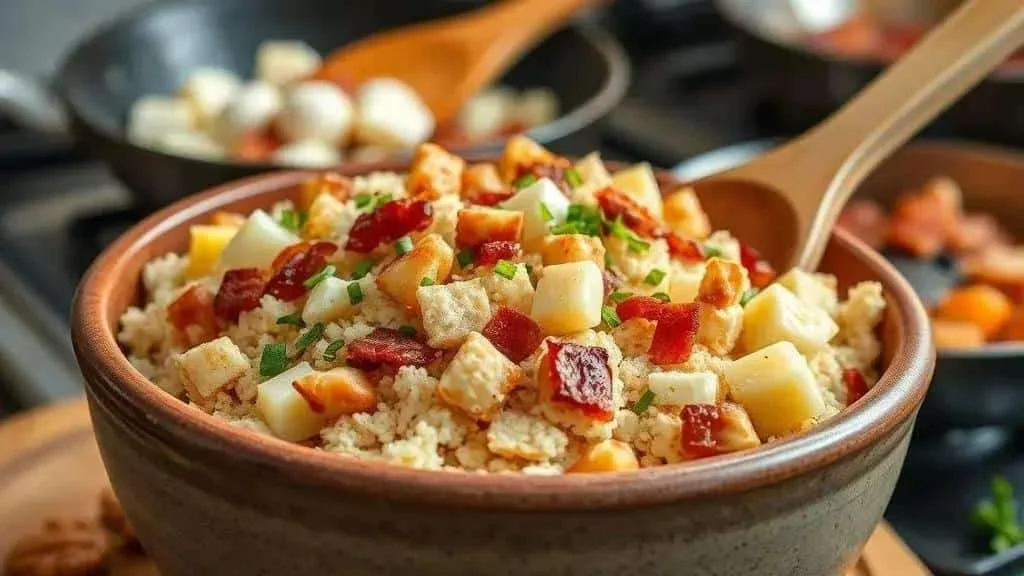
Avoid excess liquid, toast gently and combine the components in stages. Farofa containing eggs and onion will not stay as dry as plain toasted flour, but it should still be loose and crumbly.
Practical texture tips
- Toast the flour separately if useful: stir in a dry pan over a moderate heat for about 4–6 minutes, watching its colour. Already-toasted flour may need less time; follow its preparation instructions.
- Cook the bacon until crisp: drain on kitchen paper and keep only a little fat for the onion.
- Control the added fat: bacon fat and butter both add richness; too much makes the flour greasy rather than pleasantly crumbly.
- Use toasted nuts if desired: walnuts, Brazil nuts or almonds add crunch. Toast briefly and watch closely; identify the nuts for guests with allergies.
- Handle the eggs gently: fold hard-boiled pieces in near the end to retain their shape. If chilled, heat them through as part of the final mixture.
Balancing the flavour
- Season at the end: bacon, stock and salted nuts may already contribute plenty of salt.
- Add fresh herbs: parsley and chives give freshness when stirred in just before serving.
- Try a little acidity: lemon zest adds aroma without moisture. A few drops of mild vinegar are another option, but more liquid softens the flour.
- Vary the texture: mix suitable coarse and fine cassava flours, or add a little toasted breadcrumb. Breadcrumbs introduce wheat unless a suitable gluten-free product is used.
Common mistakes to avoid
- Uncontrolled heat: a cold, wet mixture will not toast readily, while excessive heat burns the flour. Keep the pan moderately hot and stir regularly.
- Too much liquid: add stock only when needed, a spoonful at a time.
- Rough mixing after adding eggs: fold gently to avoid breaking the pieces into a paste.
Christmas bacon-and-egg farofa variations
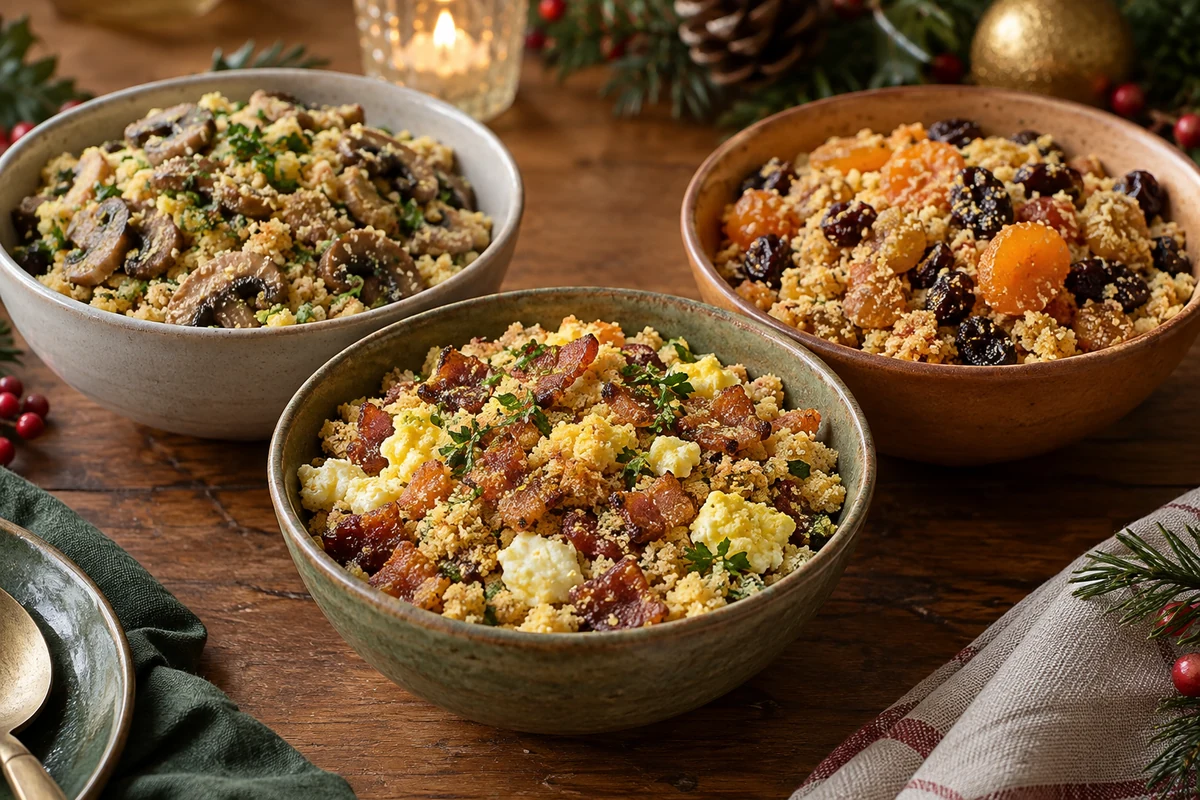
Adapt Christmas farofa with bacon and eggs using one of these variations, checking the needs of your guests.
Ideas to try
- With slowly browned onion: use the main recipe’s onion sliced instead of chopped and cook it gently in 1 tablespoon of the measured butter. A little brown sugar is optional, not required for onions to brown; avoid automatically adding a second full set of ingredients.
- With calabresa sausage: replace half the bacon with 150–200 g diced calabresa. Cook it fully according to its label and reduce added salt.
- Smoky vegetarian: replace bacon with about 200 g smoked tofu or sautéed mushrooms. Use oil and vegetable stock or water. Smoked paprika can add flavour; if using liquid smoke, follow its label rather than a universal teaspoon measure.
- With nuts and dried fruit: use the optional ½ cup nuts already listed and add up to ⅓ cup raisins or chopped dried apricots. Do not double the nut quantity unintentionally.
- Softer farofa with scrambled eggs: replace the hard-boiled eggs with 4 freshly scrambled eggs, cooked until set, and reduce the flour to about 400 g. Fold together and serve hot; this changes the texture rather than producing a crisp farofa.
- Less added fat or salt: use 200 g bacon and up to 2 tablespoons butter, and choose lower-salt products where available. Turkey bacon is not automatically low in salt, and these swaps do not justify a guaranteed low-sodium claim.
- Extra texture: replace a small portion of cassava flour with ½ cup toasted breadcrumbs or ⅓ cup suitable toasted Brazilian maize flour. Toast separately and check any wheat allergens.
Adapting the proportions
- Keep a crumbly balance: the main version uses 500 g flour; the scrambled-egg variation uses less. Adjust additions gradually rather than combining every variation.
- Taste before salting: bacon, sausage, stock and salted nuts can contribute significant salt.
- Choose complementary flavours: nuts and dried fruit suit each other, while smoky ingredients pair with fresh herbs and lemon zest.
- Toast additions first: prepare nuts or crumbs separately where helpful, keeping them from burning.
Serving farofa with Christmas dinner
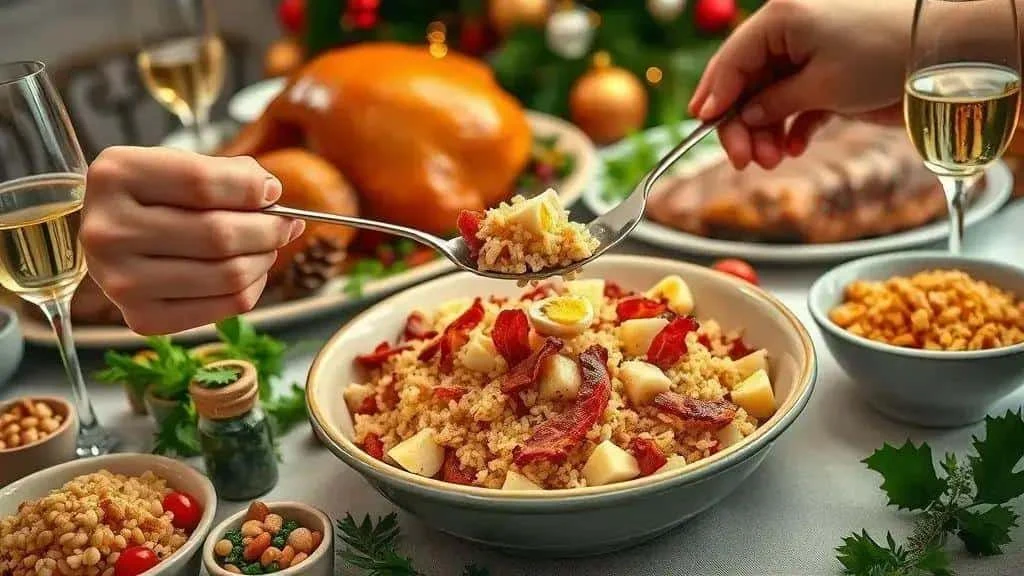
- Serve freshly made and hot: a warmed bowl helps for immediate service. If holding food hot, maintain at least 63°C; do not leave the bacon-and-egg mixture lukewarm for a long period.
- Choose a serving dish: a ceramic bowl or small individual dishes work well, with a separate serving spoon.
- Place alongside the mains: farofa accompanies turkey, roast chicken or pork well. Chester is a Brazilian commercial festive poultry option; ordinary roast chicken is a more familiar UK choice.
Food pairings
- Turkey and roast poultry: the crumbly texture contrasts with tender meat and gravy.
- Roast pork: smoked bacon complements savoury pork and sweeter glazes.
- Festive rice: a small portion beside plain or vegetable rice adds texture.
- Salpicão and fresh salads: farofa contrasts with creamy Brazilian chicken salad; serve hot and chilled dishes separately.
- Dried-fruit dishes: nut-and-fruit farofa echoes other sweet-savoury flavours in a Christmas menu.
Drinks to serve
- Dry sparkling wine: an optional festive accompaniment for adults who drink alcohol.
- A light white wine: such as Sauvignon Blanc, if it suits the rest of the meal.
- A pale beer: another optional pairing with the savoury bacon.
- Alcohol-free citrus drinks: orange juice, homemade lemonade or sparkling water with citrus offer alternatives.
Portions and reheating
- Serving size: allow roughly 70–100 g prepared farofa per adult as a side, adjusting to the menu and appetites.
- Presentation: finish with chopped herbs and a few pieces of the cooked bacon reserved from the recipe.
- Reheating: a pan helps restore texture, but heat until steaming throughout rather than stopping after 2–3 minutes. Stir carefully and reheat only once.
- Make-ahead option: prepare the bacon-and-onion base and eggs the day before, chill promptly and store separately. Keep dry toasted flour separate too. Heat chilled components through during assembly and add fresh herbs at the end.
- Check salt: season only after tasting the fully prepared mixture.
Storage and make-ahead planning
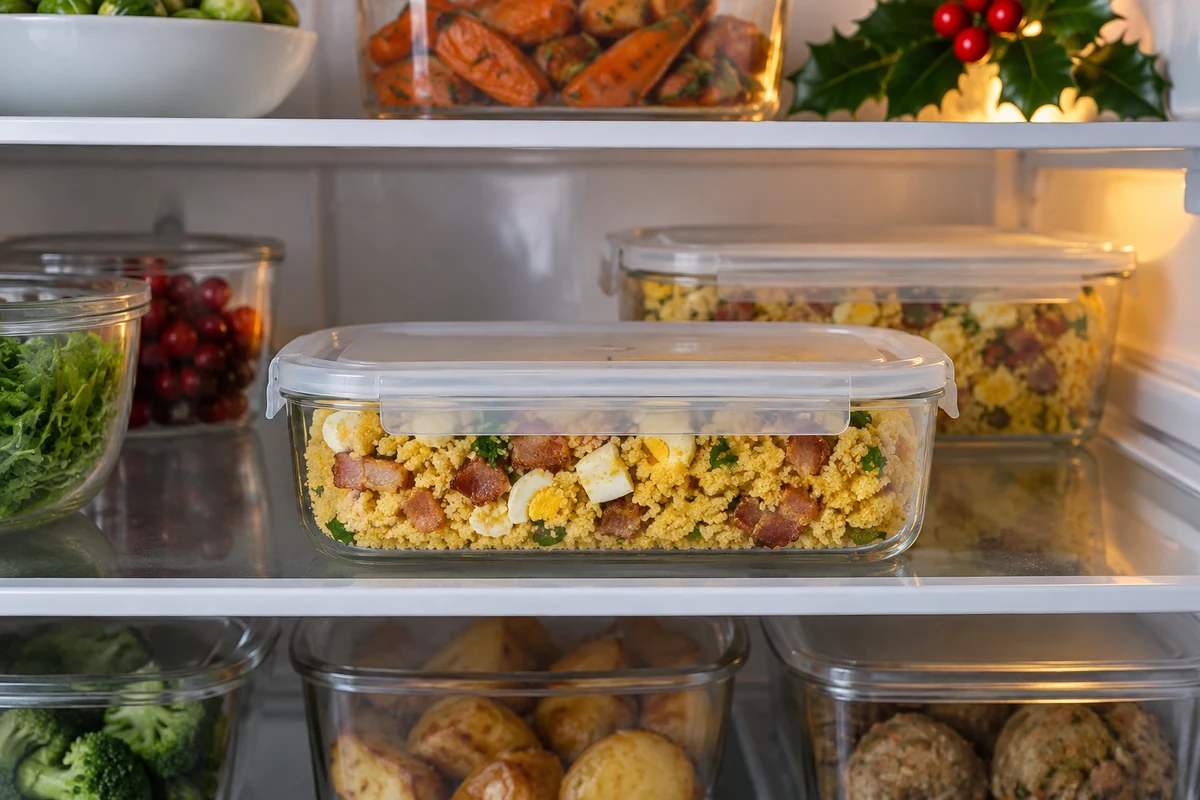
Keeping components separate can help preserve the texture of Christmas farofa, but cooked bacon, eggs and onion still require prompt chilling.
Preparing in advance
- Cook bacon and onion: cook fully, divide into shallow containers, cool promptly and refrigerate within 2 hours.
- Toast the flour: toast gently as needed, cool and keep dry in a clean sealed container according to the product’s storage instructions.
- Cook the eggs: hard-boil until whites and yolks are firm, cool under cold water, peel and refrigerate promptly in a clean covered container.
- Keep components separate: assemble on the serving day, using the earliest preparation date to determine the storage deadline.
- Transport safely: use a cool bag with ice packs for chilled components and refrigerate on arrival. An insulated bag alone does not guarantee a safe temperature.
Storage times
- Fridge: keep the prepared farofa and perishable cooked components at 5°C or below and use within 48 hours of their original cooking, rather than extending the deadline after mixing.
- Freezer: freeze the cooked base without eggs promptly in suitable sealed portions; aim to use within 2 months for best texture. Hard-boiled egg whites can become rubbery when frozen.
- Labelling: note contents and the preparation/freezing date.
- Prompt chilling matters: refrigerate leftovers within 2 hours, sooner in hot conditions. This applies even though the dish contains dry flour; bacon and eggs make it perishable.
Reheating and restoring texture
- In a frying pan: stir over a controlled heat, adding a small amount of butter or water only if necessary. Heat until steaming throughout, aiming for 70°C for 2 minutes or 75°C for 30 seconds; timing depends on batch size.
- From frozen: thaw in the fridge, allowing enough time for the portion, and use within 24 hours of full thawing. Reheat once thoroughly; do not rely on a brief low-heat warm-up of a still-frozen mass.
- Microwave option: it may soften the texture, but can heat a small portion safely with stirring, standing time and checks for cold spots. A pan is preferable for texture, not inherently safer.
- Finish: fold in freshly hard-boiled eggs near the end, or heat previously chilled eggs through with the base. Add clean fresh herbs just before serving.
Organising Christmas dinner
- Work in stages: preparing components the day before can shorten final assembly, but allow enough time to heat chilled ingredients thoroughly.
- Use labelled containers: shallow, stackable containers help organise fridge space without obstructing cold-air circulation.
- Reheat small portions: keep the remainder chilled and reheat only what will be eaten. Do not repeatedly warm the same batch during the evening.
Farofa and its Brazilian ingredients
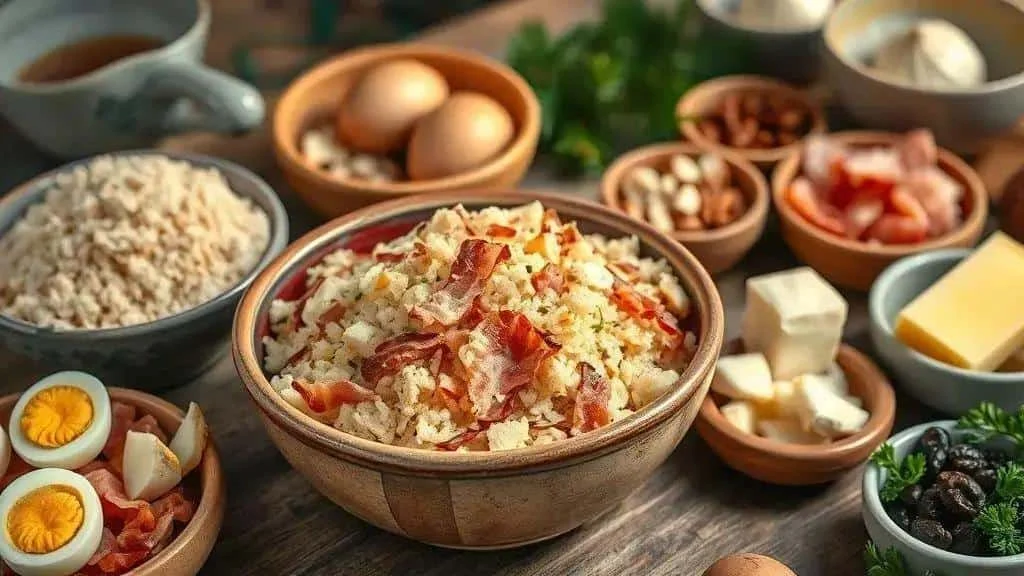
Farofa is a familiar Brazilian accompaniment, served at everyday meals, barbecues and festive dinners. Toasted cassava flour forms its base, with many variations using eggs, bacon, vegetables, nuts or fruit.
Culinary background
Cassava and cassava-flour preparation have deep roots in Indigenous food traditions in Brazil. Today’s farofas reflect many regional and household influences; there is no single recipe or simple origin story covering every version.
What each ingredient contributes
- Cassava flour: a granular base that takes on the flavours of fat and seasonings.
- Bacon: savouriness, fat and a crisp texture, with smokiness if smoked bacon is used.
- Eggs: colour, softer pieces and protein.
- Nuts and dried fruit: extra crunch and sweet notes in festive variations.
At the Brazilian table
- Farofa is not reserved for Christmas; it accompanies barbecues and everyday meals as well.
- Recipes range from savoury to sweet-savoury, including festive versions with raisins or other dried fruit.
- Many families have their own preferred flour, toasting method and additions, passed between generations.
Regional and household variations
Brazilian variations can include manteiga de garrafa, a clarified-style bottled butter, sausage, vegetables or locally available ingredients. Treat these as examples of a varied tradition rather than fixed rules for every region.
Nutrition and dietary substitutions
- Energy density: bacon, butter and nuts can make farofa rich. Serve a portion that suits the rest of the meal.
- Substitutions: smoked tofu can replace bacon for a meat-free version. Olive oil changes the fat profile but is not automatically lower in calories, and turkey bacon can still contain substantial salt.
- Gluten-free preparation: cassava itself is naturally gluten-free, but check flour, bacon, sausage and stock labels and avoid cross-contact. Ordinary breadcrumbs are unsuitable for someone with coeliac disease.
A small finishing touch
A little lemon zest or a few drops of mild vinegar can brighten a rich farofa. Add gradually so the seasoning complements the dish without making it wet.
A festive Brazilian side
Christmas farofa with bacon and eggs combines toasted flour, crisp bacon and soft egg pieces. Choose a variation that suits your guests, and remember that a vegetarian or gluten-free version requires checking all ingredients.
Prepare components ahead if helpful, chill perishable ingredients promptly and heat through during assembly. Taste before adding salt and serve while the texture is at its best.
Thank you for reading. Follow our social channels and visit the I Love Christmas blog for more festive recipes and ideas.
Christmas farofa with bacon and eggs: frequently asked questions
How long does bacon-and-egg Christmas farofa take?
Allow roughly 30–40 minutes for cooking the eggs, frying bacon, softening the aromatics, toasting flour and assembling. Equipment and batch size vary; allow longer if reheating chilled components.
How can I keep the farofa crumbly?
Toast the flour gently, drain excess bacon fat and add liquid sparingly. Fold in eggs near the end without crushing them. A frying pan helps restore texture when reheating, but ensure the entire portion becomes steaming hot.
Can I freeze the farofa?
Preferably freeze the cooked base without eggs promptly and use within about 2 months for best quality. Defrost in the fridge, use within 24 hours of full thawing and reheat once thoroughly. Add freshly cooked eggs near the end.
How do I make a vegetarian version?
Replace bacon with smoked tofu, sautéed mushrooms or drained hearts of palm. Use oil and vegetable stock or water, without bacon fat. Eggs and butter suit ovo-lacto vegetarians; omit eggs and use oil for a vegan version.
How can I avoid oversalting it?
Taste the cooked mixture before adding salt because bacon, sausage, stock and salted nuts may already supply enough. Add small pinches only if needed.
How much farofa should I allow per guest?
Around 70–100 g prepared farofa per adult is a useful side-dish guide. Adjust for appetites and how many other accompaniments are being served.
Sources and Further Reading
- Food Standards Agency: cooking food safely
- Food Standards Agency: chilling, freezing and defrosting food