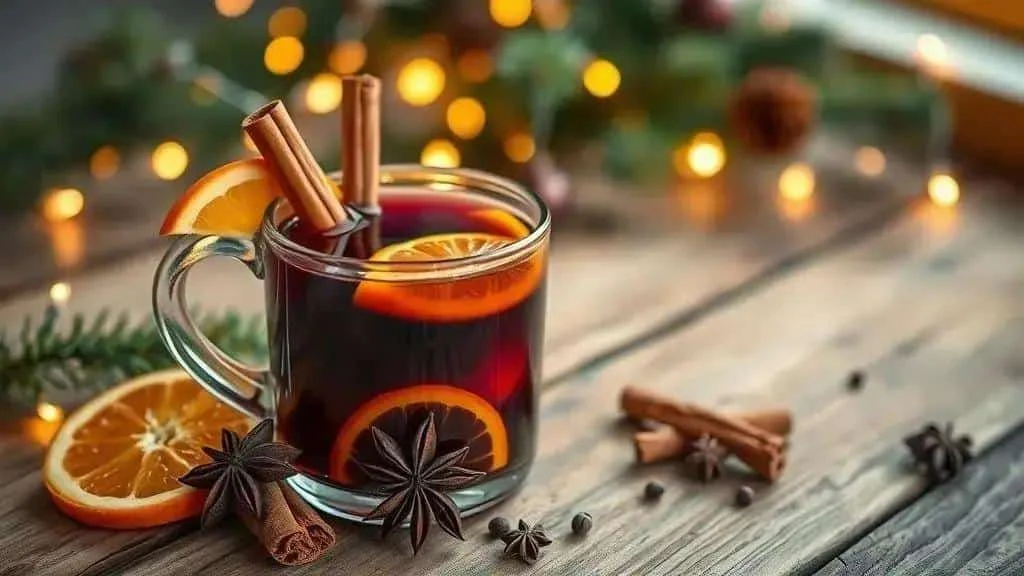
Christmas mulled wine is red wine gently warmed with cinnamon, cloves, citrus and a little sugar. This version draws on Brazilian vinho quente and is easy to serve at a British Christmas gathering. It remains an alcoholic drink after heating; for an alcohol-free alternative, make a separate batch with grape or apple juice and no spirits.
Christmas mulled wine brings citrus and spice to a winter evening. Below are the basic method, flavour variations and a separate warm juice option for guests avoiding alcohol.
Ingredients for Christmas Mulled Wine
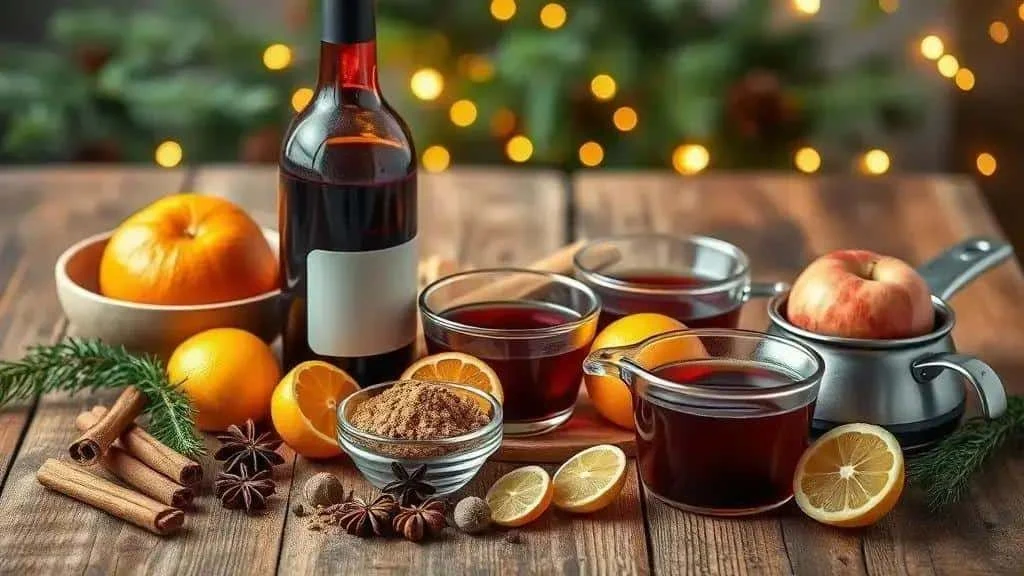
For balanced Christmas mulled wine, start with modest amounts of sugar and spice, then adjust. This batch makes about four to six servings, depending on pour size.
- 1 bottle dry red wine, 750 ml — choose a fruity wine you enjoy. For the alcohol-free version, replace it entirely with 750 ml grape or apple juice and omit all spirits.
- Up to 100–120 g sugar — the original recipe is quite sweet. Begin with about 50 g and add more only if needed. Brown sugar, honey or maple syrup give different flavours and are not identical measures.
- 1 large orange — washed and sliced. A little thinly peeled lemon zest, without the white pith, is optional.
- ½ lemon, optional — washed and sliced; use sparingly if the wine is already sharp.
- 2–3 cinnamon sticks — whole spices are easier to strain. If using ground cinnamon, start with a small pinch rather than treating it as an exact substitute.
- 6–8 whole cloves — or begin with three or four for a gentler flavour.
- Up to 2 food-grade star anise pods, optional — omit if you dislike their aniseed flavour.
- 120 ml water — for the spice infusion. Apple juice can replace it for a sweeter, fruitier result.
- 1 small apple, optional — washed, cored and sliced; a firm pear is an alternative.
- 40–80 ml brandy or rum for the whole batch, optional — for adults who want this addition. Omitting the spirits alone does not make red wine suitable for children or anyone avoiding alcohol.
- A small pinch of grated nutmeg — optional; use sparingly.
- Orange slices and food-grade cinnamon sticks, optional — removable garnishes for adult servings.
Substitutions and Practical Notes
There is no need for an expensive bottle, but use wine you like rather than wine that tastes faulty. Whole spices are easier to remove than ground ones. Cool leftovers promptly, refrigerate within one to two hours and use within 48 hours. Make the alcohol-free version with juice, not by trying to boil alcohol out of wine; if using flavourings, check that they are alcohol-free too.
How to Make Christmas Mulled Wine
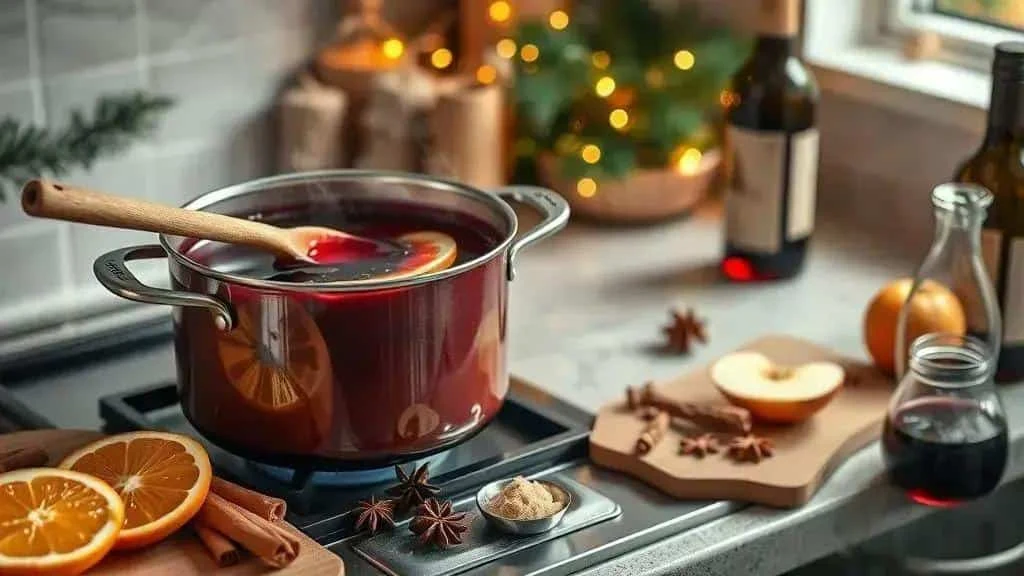
- Infuse the spices: in a saucepan large enough for the finished batch, combine 120 ml water, about 50 g of the optional sugar, cinnamon, cloves and any star anise. Heat gently until the sugar dissolves, then simmer this water-based mixture for about five minutes.
- Add fruit: add the orange and optional apple, lemon slices or zest. Warm for two to three minutes to release their flavour.
- Add the wine: turn the heat low and pour in 750 ml red wine. Warm gently for 10–15 minutes without a rolling boil, allowing the flavours to infuse.
- Adjust sweetness: taste a spoonful after cooling it enough to sip. Add more of the measured sugar only if needed, stirring until dissolved.
- Add optional spirits: remove the pan from the heat and away from any flame before adding the measured brandy or rum. This addition increases the alcohol content; it is not essential to the recipe.
- Use gentle heat: avoid vigorous boiling to protect the flavour. Alcohol can evaporate below boiling, but gentle heating does not remove it all or provide a predictable final strength.
- Strain: remove cloves, cinnamon, star anise and spent fruit through a fine sieve before serving.
- Serve carefully: pour into heatproof mugs or suitable glasses and let the drink cool to a comfortable sipping temperature. Add a removable orange slice or cinnamon stick if desired.
- Alcohol-free alternative: use 750 ml grape or apple juice instead of wine, omit all spirits and reduce or omit sugar. A little explicitly alcohol-free vanilla flavouring is optional.
- Reheat leftovers once: reheat only the portion needed, stirring until steaming hot throughout, then let it cool enough to drink. Do not repeatedly warm and chill the whole batch.
- Store promptly: cool in smaller portions, refrigerate within one to two hours at 5°C or below and use within 48 hours. Label alcoholic and juice versions separately.
- Keep the flavour balanced: start with fewer spices if unsure, taste cooled spoonfuls with a clean spoon and strain once the flavour is strong enough.
A Note on Temperature
Around 70–80°C is a useful gentle heating range for the wine, checked with a kitchen thermometer. It is not a safe-to-sip target: allow the poured drink to cool before drinking, and never offer it at that temperature to a child.
Christmas Mulled Wine Variations

Try these variations on Christmas mulled wine according to your taste. Keep the wine-based options for adults and prepare juice separately for anyone avoiding alcohol.
Classic Citrus and Spice
This simplified version uses orange, cinnamon and cloves.
- 750 ml dry red wine — fruity and suitable for your budget.
- Up to 100–120 g sugar — start with about 50 g, then adjust only if necessary.
- 2 cinnamon sticks.
- 6 whole cloves — fewer for a milder flavour.
- 1 washed orange, sliced — plus 120 ml water for the infusion.
- Warm the measured water, sugar and spices for about five minutes, stirring to dissolve the sugar.
- Add the orange and wine, then heat gently for 10–15 minutes without a rolling boil.
- Strain and pour into heatproof mugs. Let it cool to a comfortable drinking temperature.
With Optional Brandy or Rum
A small measured addition gives a different aroma and increases the strength. It is optional, not a way to make the drink safer or more warming for the body.
- 750 ml red wine.
- 40–80 ml brandy or rum for the entire batch — add off the heat and away from flames.
- Sugar to taste, starting with about 50 g — plus the main recipe’s 120 ml water.
- Whole spices — use the main recipe’s cinnamon, cloves and optional star anise.
- Prepare the water, sugar and spice infusion as in the main method.
- Add the wine and warm gently.
- Finish by removing the pan from the heat, adding the measured spirits, stirring and straining. Label clearly as alcoholic.
Cranberry, Citrus and Honey
Cranberry brings a sharper fruit note; taste before adding extra sweetness.
- 750 ml red wine.
- About 50 g fresh or frozen cranberries — or use 120 ml cranberry juice for a different texture and dilution. Follow any cooking instructions on frozen fruit.
- Up to 2 tablespoons honey — or sugar to taste.
- Washed orange slices and thin lemon zest — avoid excess white pith.
- Cook the cranberries with a little water until softened, following the packet where applicable. If using juice instead, skip this step.
- Add the wine, honey and citrus, then warm gently for about 10 minutes.
- Strain if preferred and serve in heatproof mugs. Any cranberry garnish should be properly prepared and suitable for the guest.
Chocolate Mulled Wine
This is an experimental cocoa variation rather than a standard hot chocolate. Try a small portion first, especially if adding cream, which can split in acidic wine.
- 750 ml red wine — scale down proportionally for a trial.
- 2 tablespoons unsweetened cocoa powder — sifted.
- Up to 2 tablespoons sugar — to taste.
- 50–100 ml double cream, optional — test in a small portion first; smoothness is not guaranteed.
- Make a paste with the cocoa, sugar and a little hot water, whisking out lumps. Cocoa disperses rather than dissolving completely.
- Whisk into the wine and heat gently for eight to ten minutes without vigorous boiling.
- Test the cream by slowly mixing a little warm cocoa wine into it off the heat. If it stays smooth, combine gradually and serve promptly; otherwise leave the main batch without cream.
Ginger and Gentle Pepper
A little ginger or pepper gives a sharper spice note. Add cautiously rather than making the first batch very hot.
- 750 ml red wine.
- 2 thin slices fresh ginger — adjust to taste.
- A small pinch of black pepper or a tiny piece of mild fresh chilli — chilli strength varies, so do not automatically add a whole chilli.
- Sugar or honey to taste — use with 120 ml water for the infusion.
- Infuse the ginger and pepper in the water with a little sugar for about five minutes.
- Add the wine and warm slowly, tasting a cooled spoonful before adjusting.
- Strain to remove ginger and chilli pieces before serving.
Alcohol-Free Spiced Juice
Use juice from the beginning for a genuinely wine-free version. Do not assume cooking or dilution removes alcohol from wine.
- 750 ml grape or apple juice — preferably pasteurised.
- 120 ml water — for the spices.
- Whole spices — start with one cinnamon stick, two to four cloves and optional star anise, adjusting to taste.
- 1 washed orange, sliced.
- Warm the water and spices gently for about five minutes. Juice may provide enough sweetness without added sugar.
- Add the juice and orange, then warm gently for eight to ten minutes.
- Taste and strain out the spices and fruit. Allow to cool to a comfortable temperature; for a child, serve lukewarm in a suitable cup with no hard garnishes.
Quick Tips
Whole spices are easier to strain. Stop the infusion when the flavour suits you, and keep the heating gentle. The wine version remains alcoholic even if some alcohol evaporates.
Getting the Spice and Sweetness Right
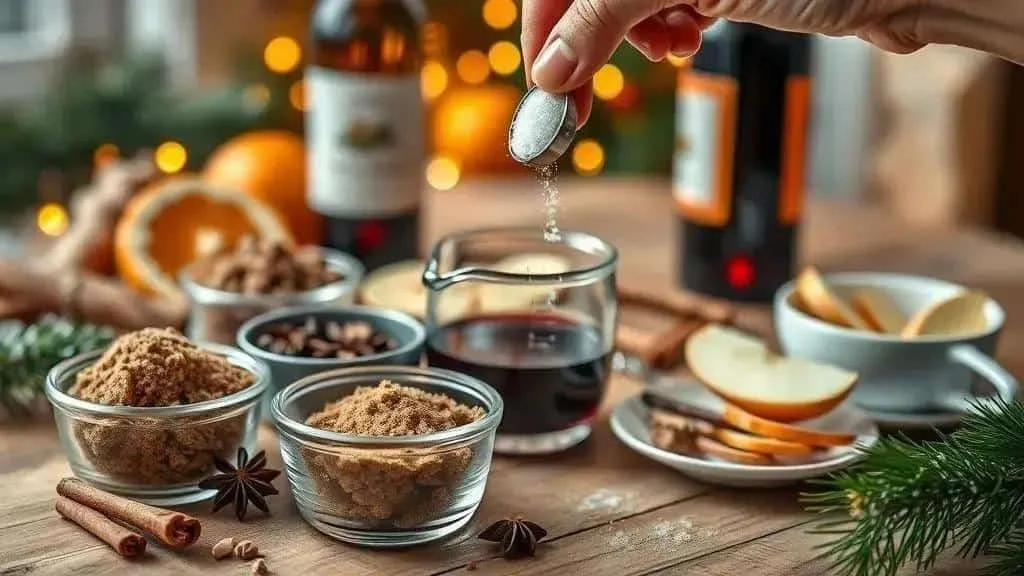
Use the measures as a starting point for your Christmas mulled wine. Different wines, citrus fruit and spices vary, so taste small cooled samples rather than adding everything at once.
Starting Proportions for 750 ml Wine
- Sugar: begin with about 50 g and use more only if necessary, up to the original 100–120 g. Honey and maple syrup also add sugar; taste rather than assuming an exact conversion.
- Cinnamon: two whole sticks are a useful start. Ground cinnamon leaves sediment and needs only a small initial pinch.
- Cloves: start with three or four for a gentle flavour, increasing towards six to eight if desired.
- Star anise: one or two food-grade pods, optional.
- Ginger: two thin fresh slices are an optional addition. Ground ginger is stronger and harder to strain, so start sparingly.
- Fruit: one washed orange, with an optional small sliced apple.
- Water: 120 ml for the spice infusion; apple juice gives a sweeter alternative.
- Optional spirits: 40–80 ml brandy or rum for the whole batch, added off the heat. Omit entirely from the juice version.
Adjusting the Flavour
- Start gently: use the lower amounts of sugar and spice, then warm for roughly 10–15 minutes once the wine is added.
- Taste a cooled spoonful: use a clean spoon and check after a few minutes to follow the developing flavour.
- Sweeten gradually: stir in small amounts of sugar or honey only if needed.
- Strengthen the spice carefully: allow a little more infusion time or add one extra whole spice, then taste again.
- Stop an overly strong infusion: remove ginger, cloves or chilli. This prevents further extraction but cannot undo flavour already in the drink; a little extra matching wine or juice may soften it.
- Balance excessive sweetness: add a little lemon juice or unsweetened juice rather than assuming extra orange slices will correct it immediately.
Useful Substitution Notes
- Whole and ground cinnamon: stick sizes and strengths vary, so there is no exact universal conversion. Start with a small pinch of ground cinnamon and expect sediment.
- Ground cloves: use a very small pinch, tasting carefully. They are harder to remove than whole cloves and can quickly dominate.
- Sweeteners: brown sugar, honey and maple syrup bring their own flavours. Add gradually; none makes the drink sugar-free.
- Alcohol-free version: replace all wine with grape or apple juice, omit spirits and check flavourings for alcohol.
Common Mistakes
- Boiling vigorously: this changes flavour and evaporation. Gentle heating around 70–80°C suits infusion, but neither that range nor boiling gives a reliable alcohol-free result.
- Too many spices: start with less, as strong clove or star anise flavours are difficult to remove afterwards.
- Leaving solids in too long: strain out whole spices and citrus once the flavour is right to reduce bitterness and hard pieces in the drink.
- Pouring spirits near a flame: remove the saucepan from the heat and any ignition source before adding optional brandy or rum.
A Serving Tip
Taste a cooled spoonful with a clean spoon and adjust gently. A removable cinnamon stick and orange slice can decorate adult servings, but leave hard garnishes out of children’s juice drinks.
Alcohol-Free Spiced Juice and Family Serving
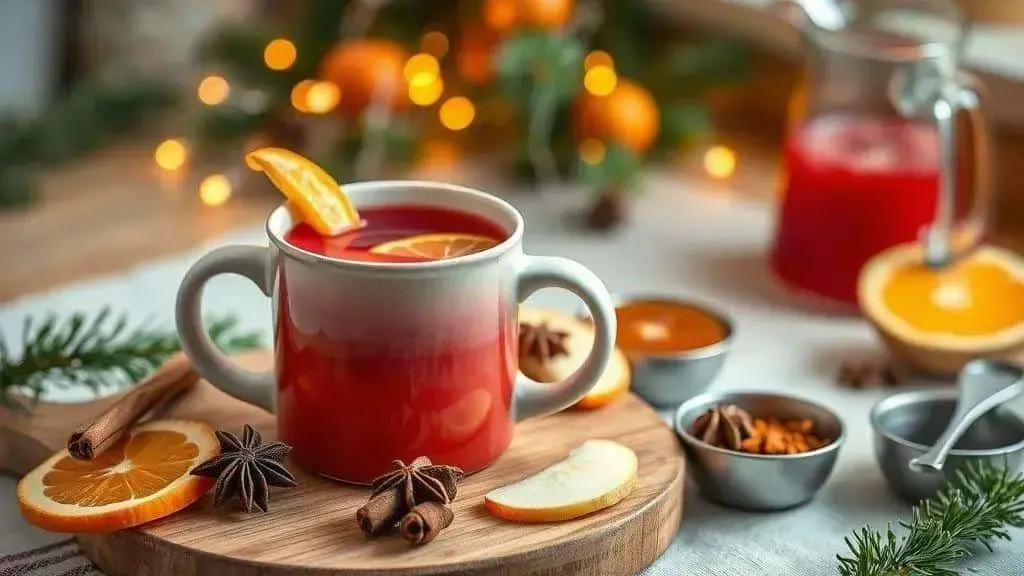
An alcohol-free alternative to Christmas mulled wine starts with juice, not wine. Keep portions modest, remove spices and let the drink cool sufficiently before offering it to a child.
Ingredients for Four to Six Small Juice Servings
- 750 ml grape juice — or apple juice, preferably pasteurised.
- Optional sugar to taste — start with none because juice is already sweet. Do not automatically add the wine recipe’s 100–120 g. Honey is unnecessary and must not be given to children under one year.
- 120 ml water — for the spice infusion.
- 1 orange — washed and sliced.
- 1 small apple, optional — cored and sliced, or use a firm pear.
- 1–2 cinnamon sticks — start with one for a milder flavour.
- 2–4 whole cloves — according to taste.
- 1 food-grade star anise pod, optional.
- 2 thin ginger slices, optional — omit for a gentler drink.
- Up to 1 teaspoon alcohol-free vanilla flavouring, optional — check the label; many vanilla extracts contain alcohol.
Step-by-Step Juice Method
- Infuse the spices: combine the water, cinnamon, cloves, optional star anise and ginger in a saucepan. Simmer gently for four to five minutes.
- Add fruit: add the orange and optional apple and warm for another two to three minutes.
- Pour in the juice: heat gently for eight to ten minutes, without a vigorous boil.
- Add optional vanilla: remove from the heat and stir in a little alcohol-free flavouring according to its label.
- Strain and cool: remove every whole spice and fruit piece. For a child, let the drink become lukewarm and check it carefully; 50–60°C must not be described as a burn-safe serving temperature.
- Taste before sweetening: the juice may need no sugar. Add only a little if you prefer it sweeter.
- Serve in a suitable cup: use a stable cup appropriate to the guest, with no hard garnishes. Keep the hot saucepan and adult mugs well out of children’s reach.
Family Serving Tips
- Let it cool: hot drinks can scald even after standing. Offer only lukewarm juice to a child and check it before serving; do not rely on a fixed waiting time.
- Use mild spices: reduce cloves and omit ginger or chilli if a gentler flavour is wanted.
- Keep presentation simple: a suitable cup is enough. Hard spices, sharp picks and awkward fruit garnishes add unnecessary risk for young children.
- Choose genuinely alcohol-free alternatives: warm apple juice or an appropriate fruit infusion can work. In the UK, cider normally contains alcohol and is not a substitute for children’s apple juice.
- Check ingredients: consider allergies and labels, including sulphites where present. The advice not to give honey under one year concerns infant botulism, not simply an allergy.
Storing and Reheating the Juice Version
Cool promptly in smaller portions and refrigerate within one to two hours at 5°C or below. Use within 48 hours. Reheat only once until steaming throughout, then cool to a suitable drinking temperature. Do not repeatedly warm the same batch.
Food Pairings for Mulled Wine
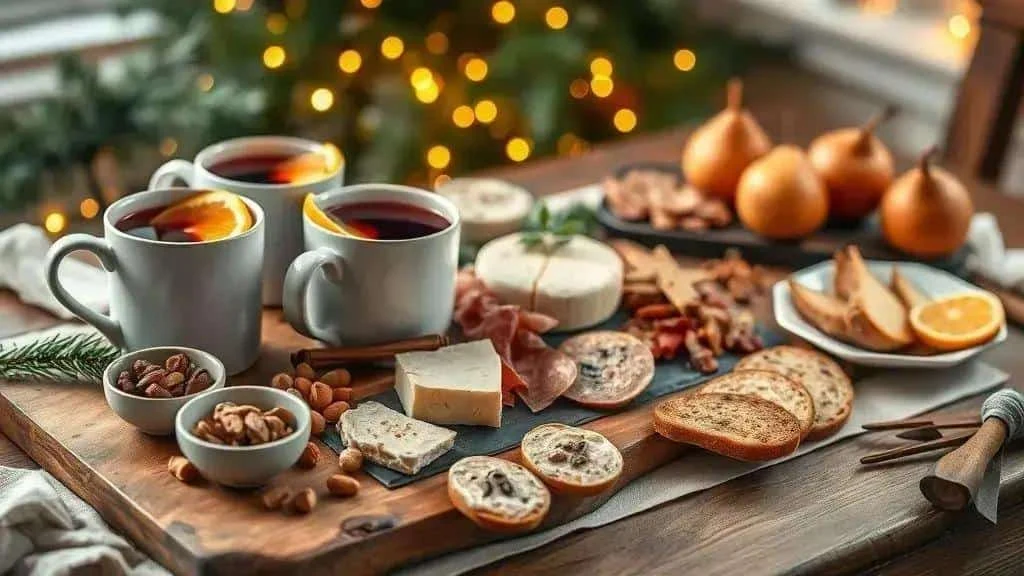
Serve Christmas mulled wine with small savoury bites or desserts that complement its citrus and spice. These are flavour suggestions, not fixed rules.
Savoury Ideas
- Baked brie with a little honey — a creamy contrast to the spices; serve with suitable bread or crackers.
- Cheese and dried-fruit boards — try Gouda, Emmental or brie with dried apricots or figs, keeping any nuts separately identified.
- Charcuterie — small slices of salami or cured ham bring a savoury contrast; consider guests’ dietary needs and keep chilled until serving.
- Mushroom pâté crostini — a savoury option beside the spiced wine.
- Toasted almonds — a simple crunchy snack, with nuts clearly identified and suitable alternatives available.
Dessert Ideas
- Panettone or fruit cake — their fruit and citrus flavours echo the drink.
- Shortbread or gingerbread — a crisp accompaniment to cinnamon and cloves.
- Dark chocolate brownies — a richer pairing, particularly with a less sweet wine mixture.
- Baked pears with gentle spices — a soft fruit dessert that echoes the mulled flavours.
- Apple or cranberry compote — served in small portions, perhaps alongside a plain cake or yoghurt.
Pairing Tips
- Balance intensity: a strongly spiced drink may be easier to enjoy with simple food, while richer desserts can suit a less sweet version.
- Try contrasts: savoury cheese and a small piece of fruit bread offer different flavours alongside the wine.
- Respect storage needs: bring out chilled snacks shortly before serving and keep reserves refrigerated. Let the drink cool enough to sip; 70–75°C is not a safe-to-drink recommendation.
- Offer small portions: allow guests to try combinations without overfilling plates or mugs.
- For children: offer a suitable lukewarm juice drink or water and age-appropriate food, never wine that has merely been heated.
Arranging the Table
Use clean serving boards, small condiment bowls and individual plates. Keep decorative pine cones and non-food greenery away from food and mugs, and place hot drinks where they cannot be pulled down by children.
Storage, Leftovers and Serving Safety
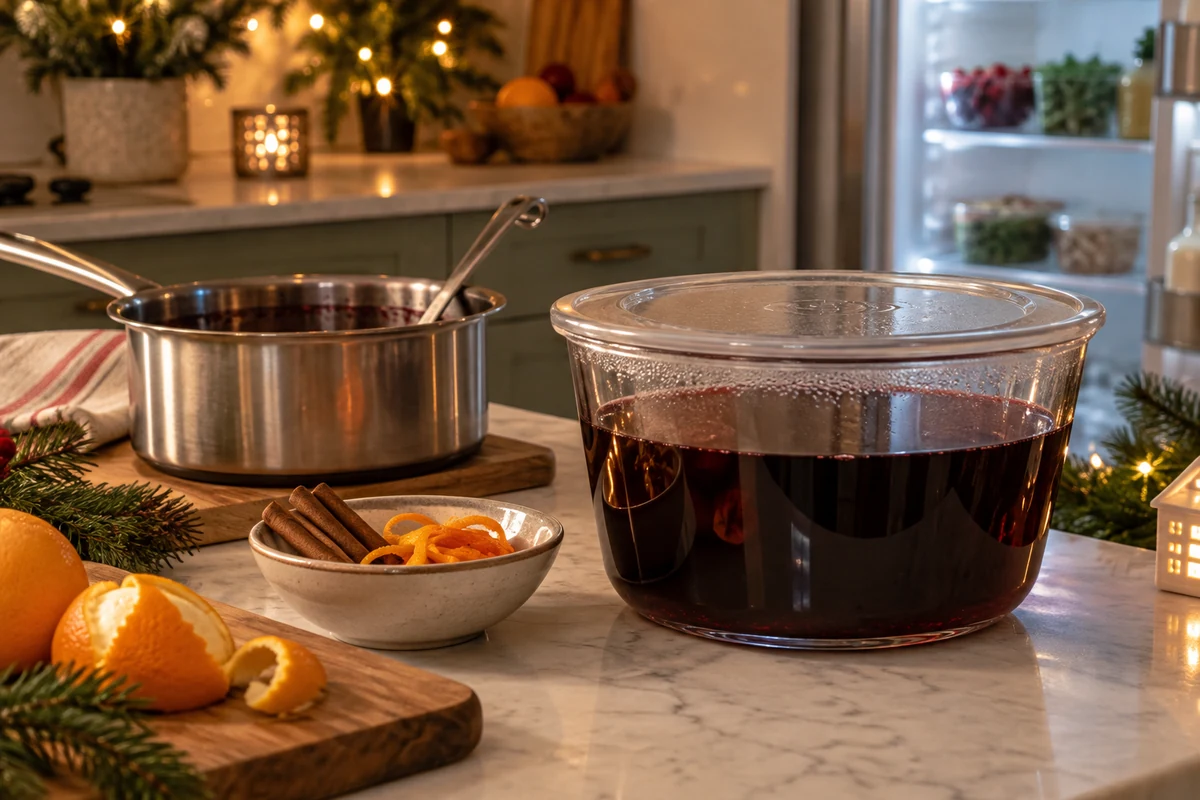
Careful handling helps keep Christmas mulled wine enjoyable. Alcohol, spices and a pleasant smell do not replace safe cooling and storage.
Storage Guidance
- Cool promptly: divide into smaller suitable containers and refrigerate within one to two hours at 5°C or below. Do not wait for a large pan to sit out all evening.
- Use within 48 hours: count from the original preparation, not the last reheating. Discard sooner if handling or storage has been uncertain.
- Freezing, optional: strain and freeze promptly in suitable containers with expansion space, allowing up to three months as a quality guide. Alcoholic mixtures may remain slushy rather than freeze solid. Thaw in the fridge and use within 24 hours of full defrosting.
- Choose suitable containers: use food-safe containers rated for the relevant temperatures. Avoid thermal shock to glass and never freeze liquid in an overfilled sealed bottle.
- Label separately: mark alcoholic wine and alcohol-free juice clearly, with the preparation date.
Reheating Step by Step
- Take out only what you need: transfer the chilled portion directly to a saucepan; there is no need to leave it warming on the worktop first.
- Heat gently: stir as it warms, keeping the heat controlled to avoid scorching or vigorous evaporation.
- Reheat thoroughly: bring the portion to steaming hot throughout. A thermometer can help confirm an appropriate reheating temperature; then let it cool before drinking. Reheat only once.
- Stir and check flavour: taste a small cooled sample using a clean spoon, and adjust only if necessary.
- Do not keep topping up spirits: use the original measured quantity if included; repeated additions change the strength unpredictably.
- Strain if needed: remove remaining whole spices or fruit pieces before pouring.
Using Fresh, Safely Stored Leftovers
- Dessert sauce: reduce a suitable freshly prepared or safely chilled portion and serve with dessert. Reduction does not guarantee removal of all alcohol.
- Poached fruit: use it to cook pears or apples. Label dishes made with wine accordingly rather than treating them as alcohol-free.
- A glaze: a small reduction can flavour roast ham or other suitable dishes. Using leftovers in another dish does not reset their storage history.
- Cold drink variations: safely chilled wine can be used in an adult drink. Adding soda does not make it a mocktail; an alcohol-free drink must start with the separate juice batch.
Serving Safety
- Drinking temperature: let hot mulled wine cool enough to sip comfortably. There is no universal 65–75°C range that makes a hot drink burn-safe.
- Make contents clear: identify the alcoholic version and offer the separate juice alternative and water without pressuring guests to drink.
- Use heatproof mugs and a ladle: pour steadily, leave headroom and avoid passing full hot mugs over children.
- Prevent scalds: keep children away from the hob and hot serving containers, turn pan handles safely and do not leave hot drinks within reach.
- Check dietary needs: explain ingredients and check wine or juice labels for sulphites and other relevant allergens. Remove hard garnishes where unsuitable.
Final Practical Advice
Prepare small batches and serve promptly rather than keeping a large pan lukewarm for hours. Follow safe cooling and refrigeration for leftovers. Discard any spoiled or poorly stored batch; a normal smell cannot prove safety.
Ready for a Cosy Christmas Gathering
Christmas mulled wine is easy to personalise with citrus and gentle spice, while a separate juice version gives guests another choice.
Start with less sugar and spice, taste cooled samples and strain once the flavour is right. Keep heating and serving temperatures distinct.
Thank you for reading. Follow our social channels and the I Love Christmas blog for more festive recipes and ideas.
Frequently Asked Questions About Christmas Mulled Wine
Does mulled wine still contain alcohol after heating?
Yes. Heating can reduce some alcohol, but the amount remaining varies and this method does not make wine alcohol-free. For anyone avoiding alcohol, use grape or apple juice from the start and omit spirits and alcohol-containing flavourings.
How long can I keep mulled wine in the fridge?
Cool promptly, refrigerate within one to two hours at 5°C or below and use within 48 hours. Reheat only the portion needed once, until steaming throughout, then allow it to cool enough to drink.
How do I make a suitable version for children?
Use the separate grape- or apple-juice recipe with no wine, spirits or alcoholic flavourings. Keep spices mild, strain out solids and let the drink become lukewarm before serving in a suitable cup. Do not treat 50–60°C as a burn-safe temperature.
Why does my mulled wine taste bitter?
Too much citrus pith, strong spices or a long infusion can contribute bitterness. Remove the solids and shorten the infusion next time. Straining stops further extraction but does not remove bitterness already in the liquid.
Can I prepare it ahead for a party?
Yes. Prepare and strain the mixture, cool promptly and refrigerate within one to two hours. Use within 48 hours and reheat only once. Alternatively, prepare a small spice infusion ahead and finish a fresh batch close to serving.
Which garnishes work best?
Washed orange slices, apple slices and removable food-grade cinnamon sticks suit adult servings. For children’s lukewarm juice, strain out whole spices and omit hard or awkward garnishes.
Sources and Further Reading
- Food Standards Agency: chilling, freezing and defrosting food
- NHS: baby and toddler safety, including hot drinks
- USDA: nutrient retention factors, including alcohol retained during cooking