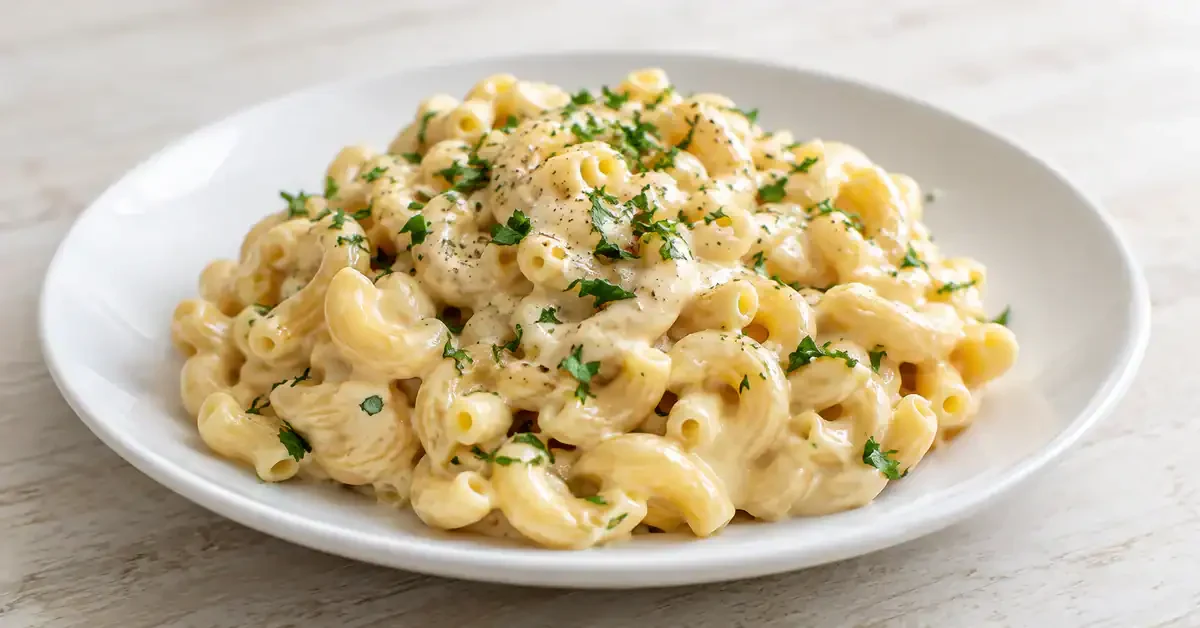
This creamy pasta combines mayonnaise, cream and Parmesan in a warm sauce, loosened as needed with a little pasta cooking water. Gentle heating and careful stirring help the sauce coat the pasta smoothly without separating.
Creamy pasta with mayonnaise and Parmesan is a warm variation inspired by Brazilian macarronese. Unlike the familiar cold mayonnaise pasta salad, this version is served hot with a creamy cheese sauce. The method below explains how to combine it gently, adjust the consistency and bring it to the festive table.
The images illustrate this recipe and its preparation; the appearance of your finished dish may vary.
Ingredients and yield
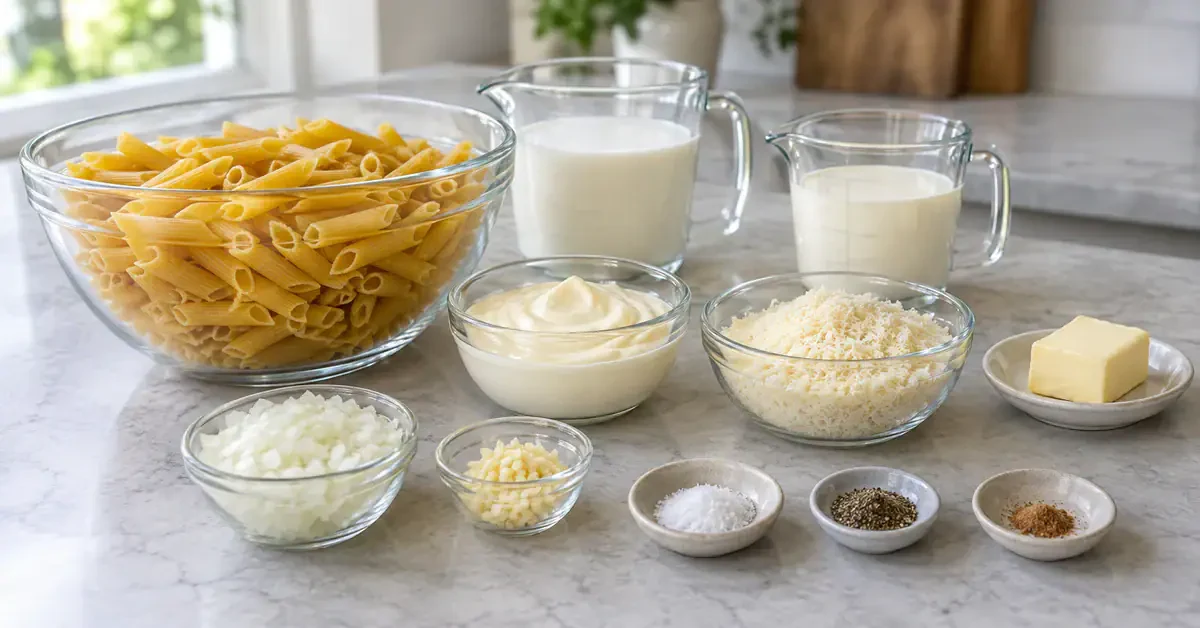
Makes approximately 6 portions. Preparation and cooking time: about 30 minutes.
- 500 g dried pasta, such as penne or fusilli
- 180 g creamy mayonnaise; use a commercially made product with pasteurised egg
- 200 ml fresh whipping cream
- 150 ml whole milk
- 60 g finely grated Parmesan
- 15 g unsalted butter
- 2 cloves garlic, finely chopped
- ½ small onion, finely chopped
- Salt to taste
- Black pepper to taste
- 1 pinch grated nutmeg, optional
Making the creamy pasta
- Cook the pasta: bring a large pan of salted water to the boil. Add the 500 g dried pasta and cook until al dente according to the packet. Reserve 1 cup of the cooking water before draining; you may not need all of it.
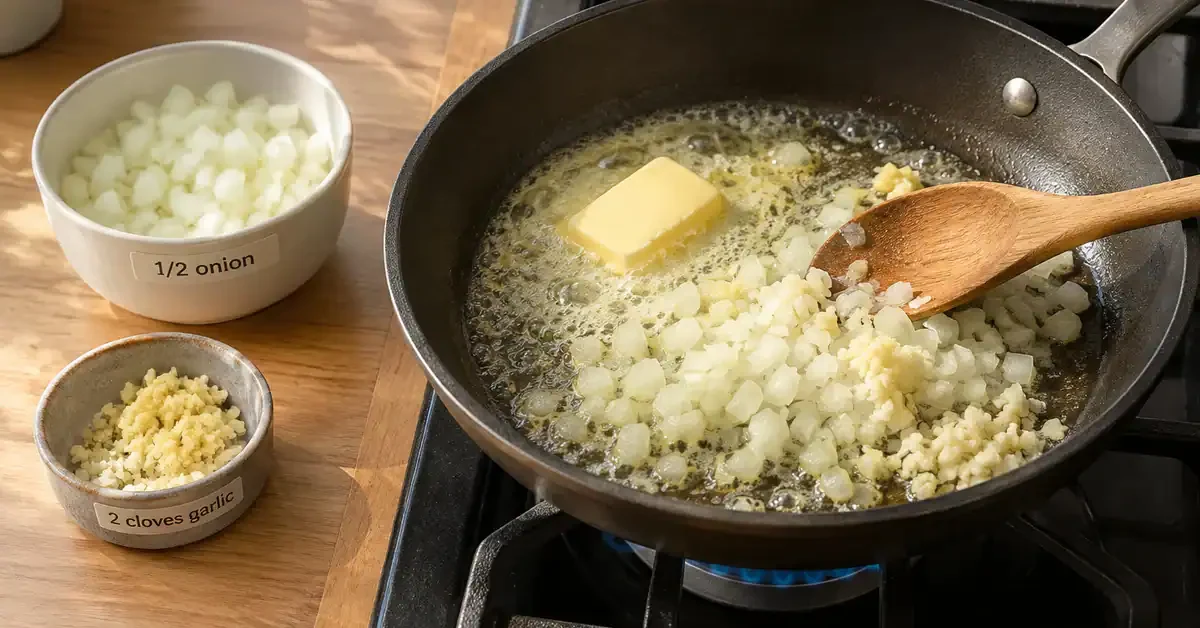
- Soften the onion and garlic: melt the 15 g butter in a saucepan over a medium-low heat. Add the chopped onion and cook until translucent, adding the garlic towards the end. Allow around 2–3 minutes as a guide, or longer if the onion needs it. Keep the heat gentle and do not let the garlic brown.
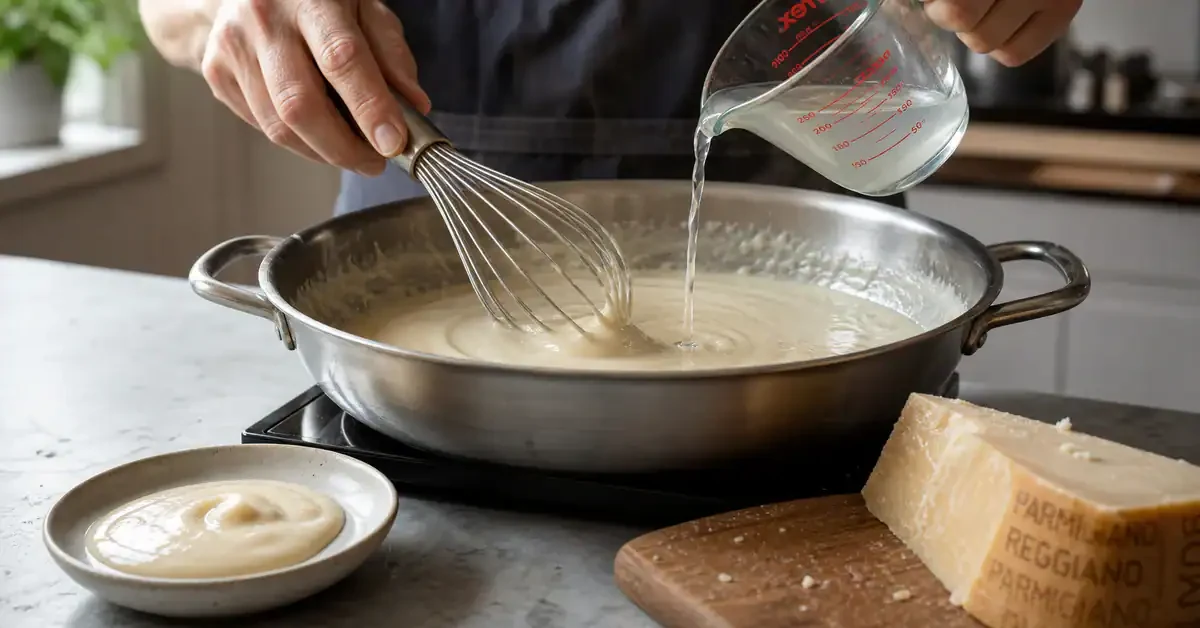
- Start the sauce: add the 200 ml cream and 150 ml milk. Stir with a balloon whisk or silicone spoon until warmed through, without bringing it to the boil.
- Add the mayonnaise and Parmesan: reduce the heat to low, or briefly take the pan off the heat if it is too hot. Stir in the 180 g mayonnaise and 60 g finely grated Parmesan until smooth. Taste before adding salt.
- Adjust the consistency: if the sauce is too thick, stir in the reserved cooking water a little at a time. If too thin, let it thicken gently over a low heat while stirring, without boiling. Add water cautiously rather than pouring in the whole cup.
- Combine with the pasta: toss the drained pasta with the sauce in a pan large enough to hold both. Coat each piece evenly. Warm gently for another minute if necessary, adding a little more reserved water only if the sauce needs loosening.
- Serve: serve straight away, with extra grated Parmesan and freshly ground black pepper if desired.
Getting the texture right
Aim for a glossy sauce that coats the pasta rather than pooling thinly underneath or setting into a heavy paste. It should lightly coat a spoon without visible pools of separated oil. Gentle heat is particularly important after adding the mayonnaise and Parmesan: boiling or overheating can split the sauce or make the cheese grainy. Its final texture will also depend on the products used.
Consistency checks
- If the sauce is too thick, whisk in small additions of the reserved pasta water until it becomes smooth and easy to stir.
- If it is too thin, warm it gently over a low heat while stirring to allow a little moisture to evaporate. Do not try to thicken it quickly with a vigorous boil.
- The sauce should cling to the pasta in an even coating. A grainy or separated texture suggests overheating or difficulties combining the ingredients; check the heat before adding more liquid.
Adjusting the sauce
- To loosen it, add the reserved cooking water gradually while stirring. Stop when the sauce coats the pasta comfortably rather than continuing to add water simply because some remains.
- To thicken it slightly, keep it over a low heat and stir, allowing a little reduction without boiling.
- If oil begins to separate, take the pan off the heat and try whisking in a small spoonful of cold milk or cream. This may improve a slightly split sauce, but it is not a guaranteed repair, especially if the cheese has already become grainy from overheating.
Common mistakes and troubleshooting
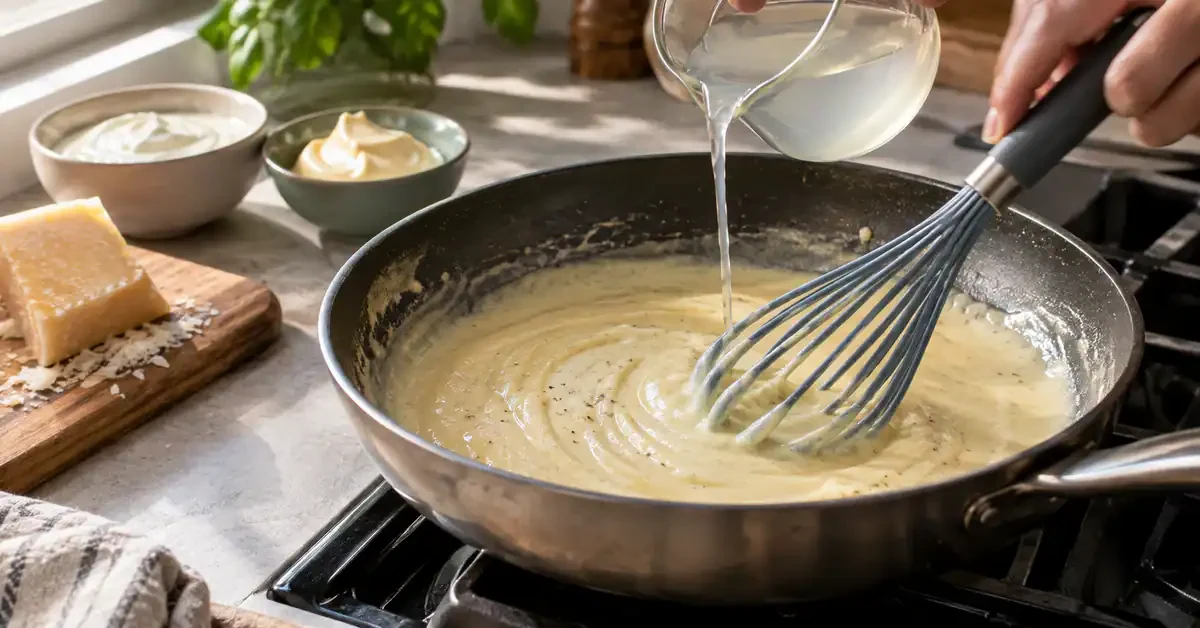
Even a simple creamy pasta benefits from careful heat control. These checks help you spot problems before they become difficult to correct.
Common preparation problems
- Overcooked pasta: pasta that has gone beyond al dente can become soft and heavy when mixed with the sauce. Follow the packet timing and taste towards the end. Drain promptly, keeping some cooking water for the sauce.
- A split sauce: overheating can destabilise the mayonnaise and dairy mixture. Use a low heat and stir. If separation begins, remove the pan from the heat and whisk in a little cold milk. A slight separation may improve; a badly split sauce may not fully recover.
- Lumps or a grainy texture: finely grate the Parmesan and stir it in gently without boiling. If lumps form, take the pan off the heat and whisk. A small addition of cream may help loosen it, but overheating damage cannot always be reversed.
- Burnt onion or garlic: burnt garlic makes the sauce bitter. Soften the onion gently and add the garlic towards the end. Reduce the heat immediately if either begins to colour too quickly; a burnt base is best replaced before adding the remaining ingredients.
- Sauce that will not coat the pasta: toss the hot pasta through the sauce in the pan. If the mixture is too heavy, loosen it with small additions of reserved cooking water and mix gently until the coating is even.
- Too much salt: taste before seasoning, remembering that the mayonnaise, Parmesan and cooking water already contribute salt.
Quick adjustments
- Too thick: whisk in a little reserved pasta water at a time, stopping when the sauce is smooth and coats the pasta easily.
- Too thin: keep the sauce over a low heat and stir while it thickens slightly, without boiling. A little extra finely grated Parmesan may add body, but it also adds salt and changes the balance.
- Beginning to separate: remove from the heat and try whisking in a small amount of cold milk or cream. Treat this as a possible rescue, not a guarantee of restoring the original texture.
- Lumps of Parmesan: remove the pan from the heat and whisk. Before adding the pasta, you can pass the sauce through a fine sieve to remove stubborn lumps, although this will also remove pieces of onion and some cheese. Finely grating the cheese and avoiding excess heat is preferable.
- Unbalanced flavour: adjust with freshly ground black pepper and, if desired, a small pinch of nutmeg. Taste between additions.
Substitutions and variations
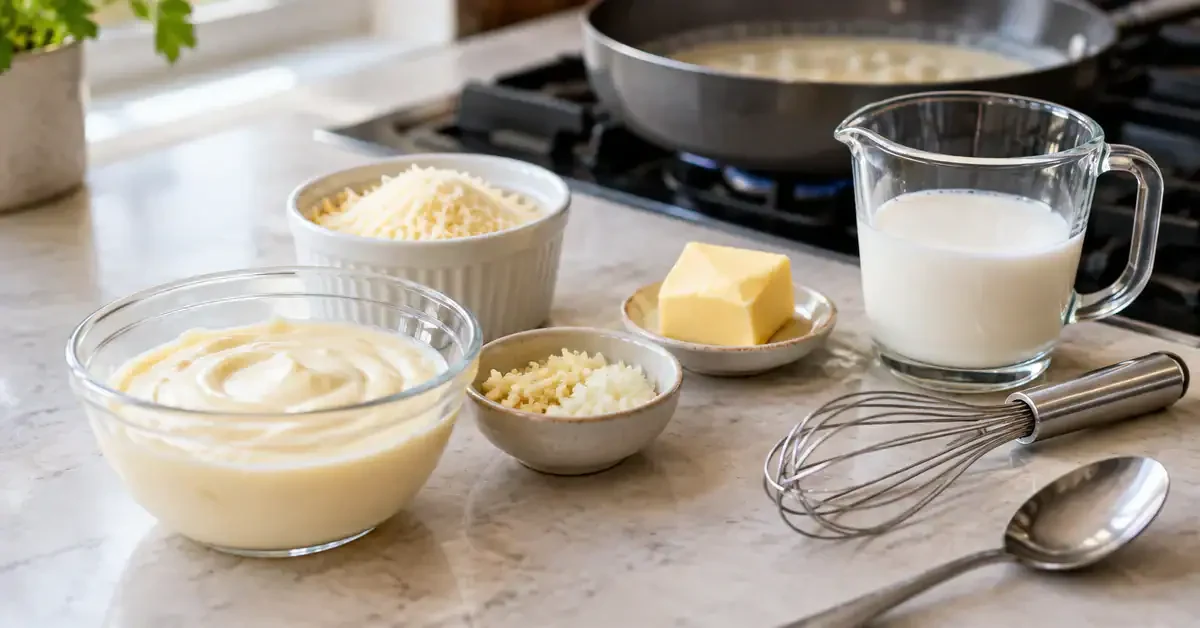
The following are optional variations, not interchangeable versions guaranteed to produce the same result. They use ingredients already present in the sauce, but changing the proportions changes its thickness and flavour.
Ingredient substitutions
- Mayonnaise: an alternative is to omit it and add 150 ml extra whipping cream and 30 g extra grated Parmesan. That gives 350 ml cream and 90 g Parmesan in total, alongside the other ingredients. This makes a different cream-and-cheese sauce, without the mayonnaise’s tang, and is not a tested like-for-like replacement.
- Whipping cream: for a variation using less cream, try 150 ml whipping cream and 200 ml whole milk in place of the original cream and milk amounts. Expect a different, potentially thinner consistency rather than an identical sauce.
- Whole milk: for less liquid, retain 200 ml whipping cream but reduce the milk to 100 ml. This changes the cream-to-milk ratio by reducing milk, not by increasing the amount of cream. Loosen with cooking water if needed.
- Unsalted butter: its role here is to soften the onion and garlic before making the sauce. Cream is not a direct substitute for frying them, so keep the butter in the base method rather than treating the finished cream mixture as an equivalent cooking fat.
- Garlic: use just 1 clove or leave it out for a milder flavour. This does not require a change to the sauce liquids.
- Onion: reduce to ¼ small chopped onion if you prefer less onion flavour, and cook gently until translucent.
- Salt: adjust at the end, taking the salted pasta water, cheese and mayonnaise into account.
Flavour variations
- Finish with extra grated Parmesan for a stronger cheese flavour, using up to an additional 20 g if desired.
- Keep the nutmeg optional and use only a small pinch for a subtle aromatic finish.
- Add a little more freshly ground black pepper if you enjoy a sharper, peppery finish.
- For a gentler onion flavour, use the smaller quantity described above and soften it without browning.
Serving and storage
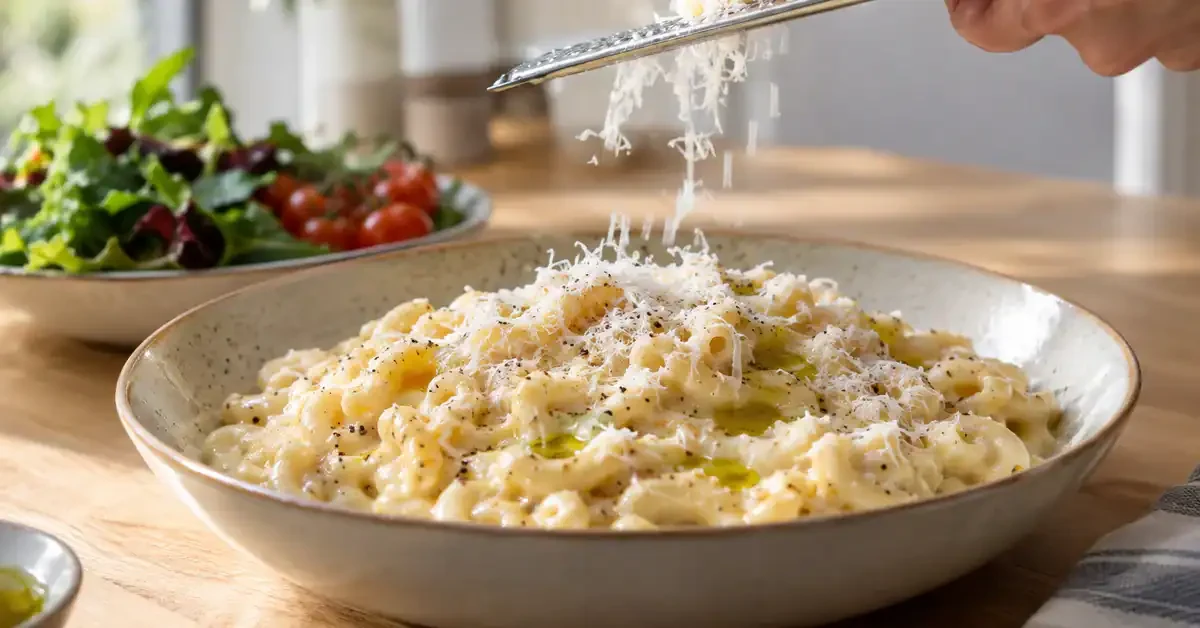
How to serve
Serve the pasta hot, soon after combining it with the sauce. Divide between pasta bowls or transfer to a serving dish, coating each portion evenly. Finish with freshly grated Parmesan and a little black pepper. A small drizzle of olive oil or a pinch of nutmeg is an optional finishing touch.
Presentation tips
- Use a shallow serving bowl or wide-rimmed pasta plates to hold both pasta and sauce comfortably.
- Sprinkle the extra Parmesan gradually and finish with freshly ground pepper.
- Serve with a simple green salad, cherry tomatoes and crusty bread if you would like accompaniments for a festive meal.
Storing and reheating
Follow Food Standards Agency guidance for leftovers: cool promptly and refrigerate in a covered container within 2 hours, then eat within 48 hours or freeze. Reheat only once, until steaming hot throughout, stirring to heat evenly. Add a little fresh water or milk if the sauce has thickened; do not use cooking water left out at room temperature. On the hob, use controlled heat and frequent stirring. In a microwave, stir between short heating intervals and check the centre is hot too. The sauce may be less smooth after reheating. Source: Food Standards Agency: cooking food and storing leftovers
The most important finishing detail
Keep the heat gentle after adding the cream, mayonnaise and Parmesan. Stir until the sauce is smooth and coats the pasta, without letting it boil. This gives you the best chance of maintaining its texture.
To vary the flavour next time, try one of the suggestions above, such as a little extra Parmesan at the table. Add it gradually rather than relying on more cheese to correct every texture problem.
Creamy Pasta: Frequently Asked Questions
How do I know the sauce has the right consistency?
It should look smooth and lightly glossy, coating the pasta without becoming heavy or watery. Avoid boiling after adding the mayonnaise and Parmesan. Loosen a thick sauce with small additions of cooking water; gently thicken a thin one over low heat without a vigorous simmer.
What should I do if the sauce splits?
Remove the pan from the heat and try whisking in a little cold milk or cream. This may help with slight separation, but it will not always restore a badly split or grainy sauce. Resume heating gently only if needed, and avoid boiling.
Can I make it without mayonnaise?
One suggested variation replaces the mayonnaise with an additional 150 ml cream and 30 g Parmesan, giving totals of 350 ml cream and 90 g cheese. It produces a different cream-and-cheese sauce rather than the same flavour and texture. The separate variation using 150 ml cream and 200 ml milk simply changes the dairy proportions; it is not itself a mayonnaise replacement.
How should I serve it for a festive meal?
Serve hot in pasta bowls or a serving dish, with an even coating of sauce. Finish with freshly grated Parmesan and black pepper. A little olive oil or nutmeg is optional, and a simple green salad makes a useful accompaniment.
How do I store and reheat leftovers?
Cool promptly, refrigerate covered within 2 hours and use within 48 hours or freeze. Reheat only once until steaming hot throughout, stirring and adding a little fresh water or milk if needed. The sauce may not regain exactly the same texture; heating it safely through is more important than stopping while the centre is still only warm.