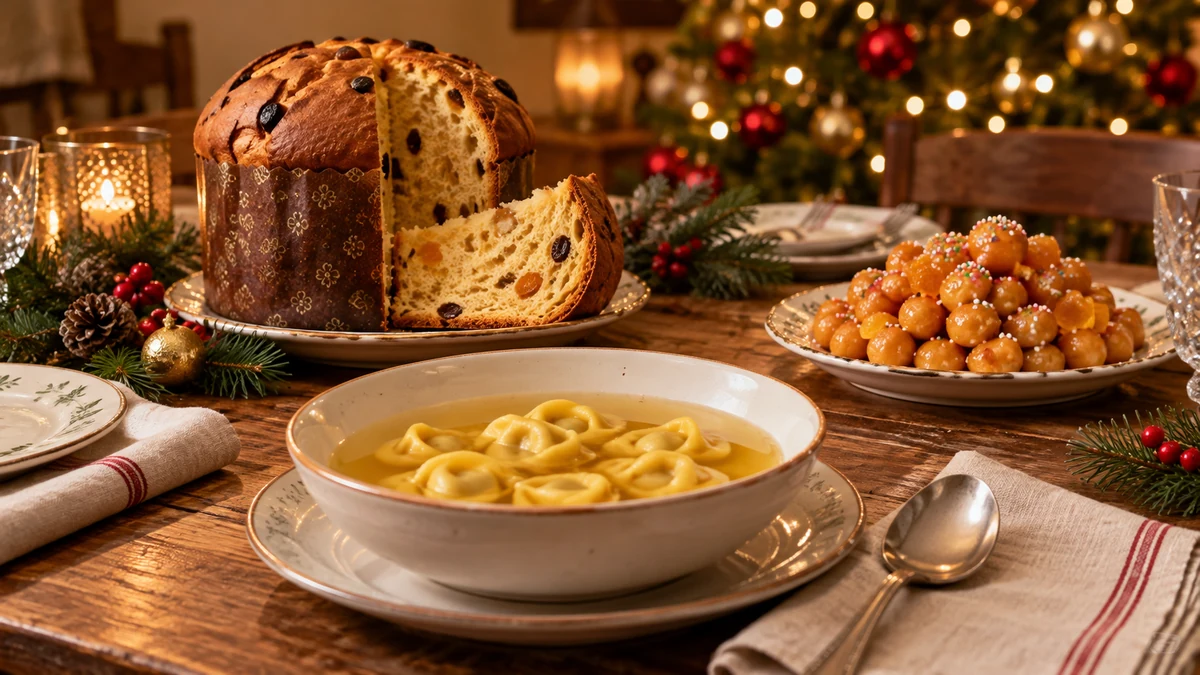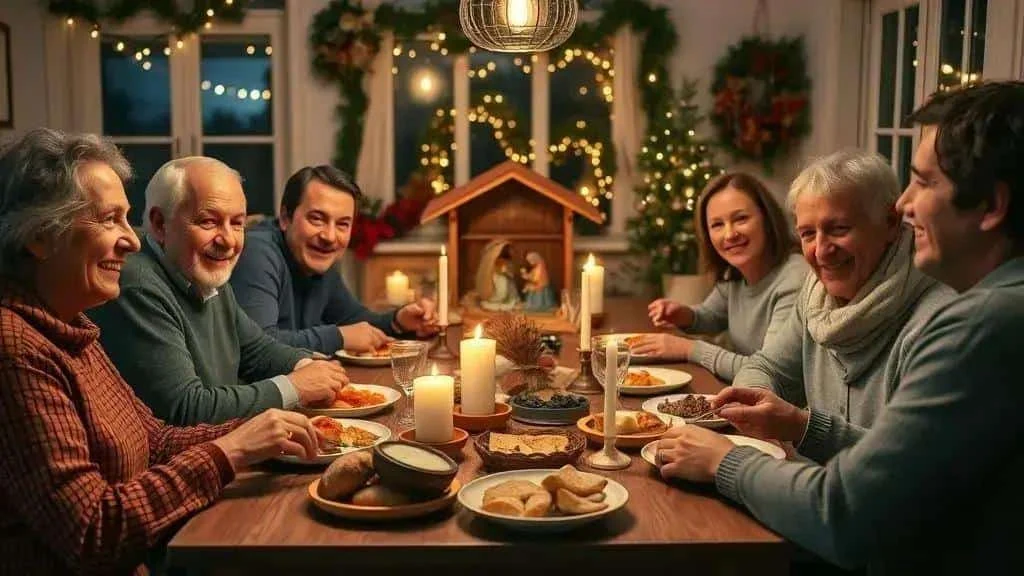
Christmas in Portugal brings together Christian worship, family meals and regional customs. The consoada on Christmas Eve, nativity scenes, Missa do Galo, bolo-rei and rabanadas are familiar elements, alongside town lights and seasonal markets. What people eat and how they celebrate varies between households and places.
Christmas in Portugal can mean a late church service, cinnamon-scented rabanadas, a carefully arranged nativity scene and a long family meal. This guide explores those traditions without treating every Portuguese household as the same, and suggests manageable ways to enjoy a little of that atmosphere at home.
Illustrations in this article are conceptual images, not documentary photographs or evidence of a particular historical event, destination, venue or access route.
The History Behind Christmas in Portugal
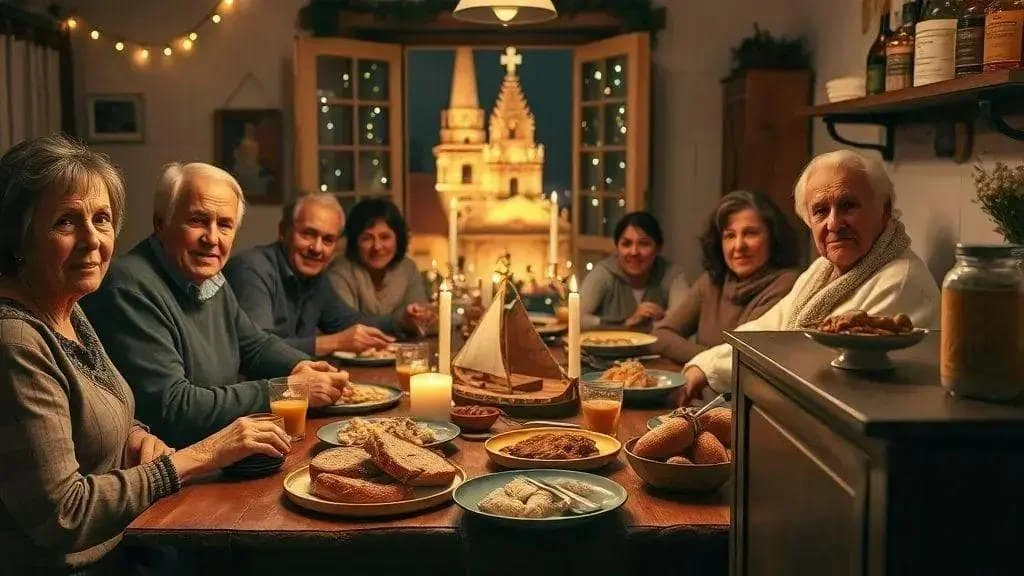
Portuguese Christmas has a strong Christian setting, alongside local seasonal practices and family habits that have changed over time. It is tempting to label every fire, light or shared meal a direct survival of an ancient festival, but those connections need evidence. The most useful starting point is the meaning a community gives its customs today.
Historical influences to keep in perspective
- Winter gatherings: warmth, light and shared food suit the season. Similar features in different celebrations do not, by themselves, establish an unbroken pre-Christian origin.
- Earlier European traditions: Roman and other winter festivities belong to the wider historical background; a particular Portuguese family custom cannot automatically be traced to them.
- Christian worship and nativity scenes: the birth of Jesus gives the celebration its religious focus, expressed through church services and representations of the Nativity.
- Church and community life: the religious calendar provides a shared framework, while each parish and household develops its own way of observing it.
- Changing food traditions: ingredients, trade and family recipes have shaped the festive table. The history of an individual sweet deserves more care than a single explanation for all Christmas desserts.
- Modern celebrations: travel, television and everyday family life bring new ideas alongside older practices, rather than making every region celebrate identically.
Familiar traditions with lasting meaning
The presépio is a nativity scene; Missa do Galo is the traditional Christmas night Mass; and the consoada is the Christmas Eve meal. Bolo-rei and rabanadas are familiar festive sweets. Visit Portugal describes these as part of the country’s Christmas traditions, while noting that the timing of presents differs between families. Source: Visit Portugal: Christmas traditions
How tradition is experienced today
A town’s illuminated streets and seasonal stalls may sit alongside a parish nativity scene or a gathering in someone’s kitchen. Looking at the food, music and stories in a particular place gives a more useful picture than expecting one national programme everywhere.
Cultural tip: look for a public nativity display, ask a local bakery about its seasonal specialities and check whether a church service welcomes visitors. Worship is a religious occasion, so attend respectfully rather than treating it as a performance.
Family Traditions and Regional Celebrations
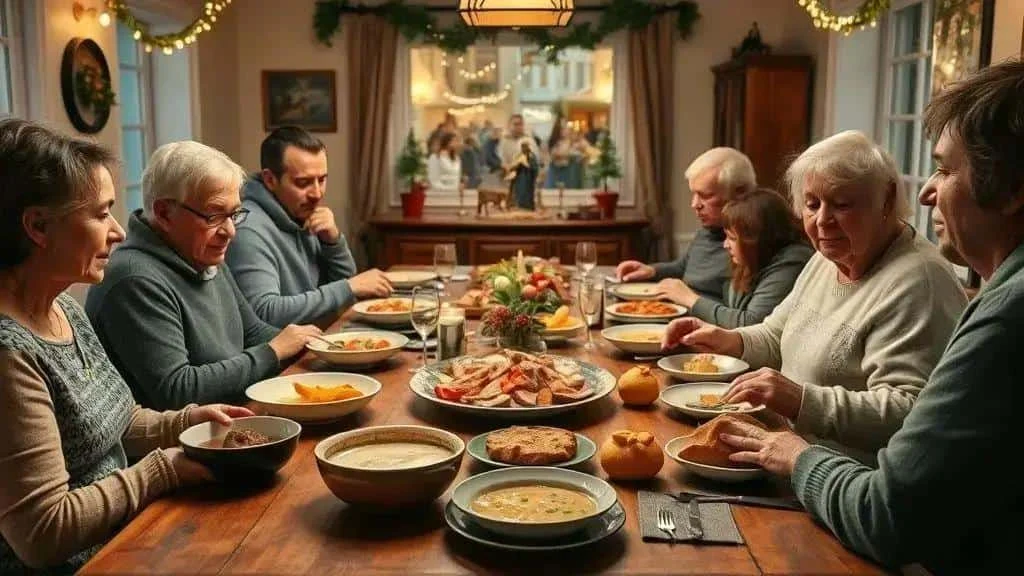
The consoada centres on spending Christmas Eve together. Some families attend Missa do Galo afterwards; others stay at home. Remembering absent relatives can be part of the evening, but an empty place or extra plate should not be presented as something every household does.
Regional differences worth exploring
- Northern Portugal: ask about local fish dishes, sweets and nativity traditions. Visit Portugal records customs in parts of the north that remember deceased relatives through the Christmas table; these are local traditions, not a rule for everyone. Source: Visit Portugal: consoada and Christmas Mass
- Central Portugal: village celebrations, nativity displays and local baking offer different ways to experience the season. Check the municipality’s programme rather than assuming a live nativity takes place every year.
- The Alentejo: explore the dishes and music of the town you are visiting. There is no reason to assume every Alentejo family has a simpler meal or celebrates in the same communal way.
- The Algarve: coastal food traditions can influence festive menus, but Christmas dinner is still a household choice. Markets and public entertainment depend on the town and the year’s programme.
- Madeira: Visit Madeira highlights honey cake and the missas do parto, a series of pre-Christmas Masses, among the island’s seasonal traditions. These should not be confused with the separate New Year celebrations. Source: Visit Madeira: seasonal traditions
- The Azores: traditions vary between islands and families. The official Azores food guide identifies massa sovada as a sweet bread associated with religious festivities more broadly, rather than a Christmas speciality unique to Madeira. Source: Taste Azores: regional foods and massa sovada
Family customs and seasonal singing
Singing may form part of a parish or community programme, while a nativity scene can be arranged at home or in church. Do not assume all seasonal songs belong to Christmas Eve: some Portuguese traditions continue into the New Year. Ask locally about the occasion and meaning.
Taking part thoughtfully
A local meal, a public nativity display or Missa do Galo can offer different insights. If you are hosting visitors, explain what a dish or song means to your own family without claiming it represents the whole country. Participation should always be optional.
Food at a Portuguese Christmas Table
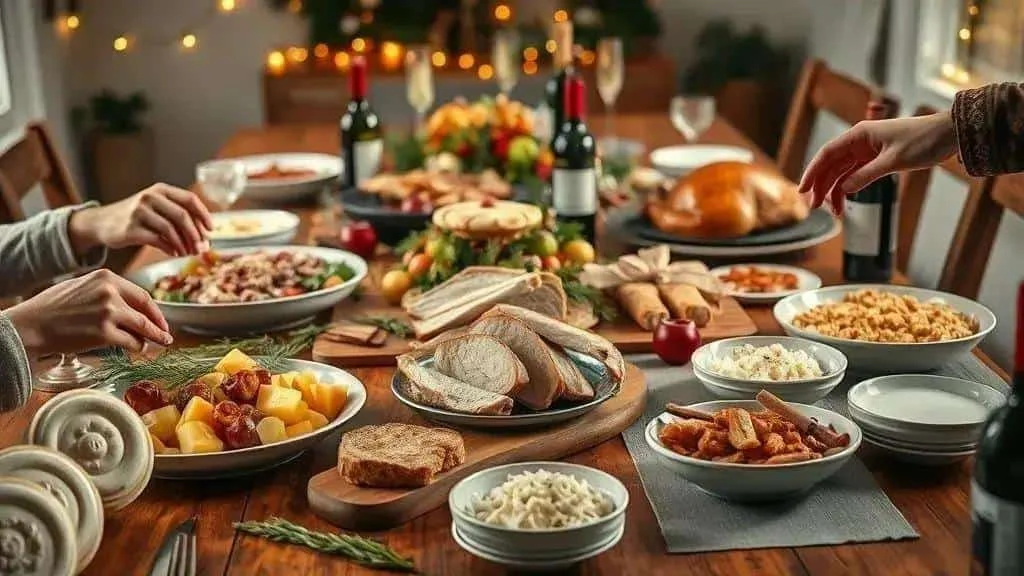
A festive menu might include fish, a roast and several sweets across Christmas Eve and Christmas Day. The selection depends on family preferences and local traditions; these are examples to explore, not a compulsory menu.
Savoury dishes you may encounter
- Bacalhau com todos: salt cod, soaked before cooking, served with vegetables such as potatoes and cabbage, often with boiled eggs and olive oil. Follow a complete recipe for the preparation.
- Octopus: another fish-and-seafood option, including preparations with potatoes and olive oil. It is not restricted to coastal Christmas tables.
- Roast kid or lamb: possible choices for a festive roast, with seasonings such as garlic, bay and wine according to the recipe and household.
- Roast turkey: also appears on some menus. The timing and accompaniments vary, so there is no single Portuguese way every family must follow.
- Soup or broth: a warming first course if it suits the meal. Choose a family favourite rather than adding another dish simply to make the table look more traditional.
Traditional sweets and desserts
- Bolo-rei: a festive ring-shaped cake or enriched bread with dried or candied fruit and nuts. Enjoy it without putting a hidden trinket or hard object into a homemade cake.
- Rabanadas: soaked bread slices coated in egg, cooked and finished with sugar and cinnamon. Recipes differ, including the liquid used for soaking.
- Aletria: a sweet vermicelli dessert, often flavoured with lemon peel and cinnamon. Check the recipe for eggs, milk and storage instructions.
- Arroz doce: Portuguese rice pudding, often decorated with cinnamon. Make and store it according to a tested recipe rather than leaving it on the table all evening.
- Island specialities: Madeira’s bolo de mel and Azorean massa sovada belong to different regional traditions. They are worth exploring in their own right, rather than grouping all island sweets under one label.
Drinks and accompaniments
- Port: an optional drink for adults who want it, perhaps alongside dessert. There is no need to describe it as necessary for digestion.
- Portuguese wines: choose to suit your guests and food if serving alcohol, with water and alcohol-free alternatives equally easy to find.
- Coffee, tea and other drinks: offer a choice at the end of the meal. Check labels on liqueurs or supposedly alcohol-free substitutes instead of assuming they suit everyone.
Practical ideas for preparing the meal
- Soaking salt cod: DECO PROteste advises soaking it in cold water in the fridge, with regular water changes; the time depends on thickness. Follow the product’s instructions and recipe rather than using one fixed time for every piece. Source: DECO PROteste: preparing salt cod
- Planning portions: use the recipe’s stated yield and account for bones, other dishes and your guests’ appetites. A single fish weight per adult is not reliable for every preparation.
- Making desserts ahead: choose recipes that specify make-ahead storage. A dry cake and a milk- or egg-based pudding need different treatment; an airtight container alone does not make a perishable dessert safe at room temperature.
- Providing a vegetarian choice: roasted vegetables with beans or a mushroom dish may fit the menu. Ask about allergies and other requirements separately: vegetarian food is not automatically suitable for everyone.
- Keeping presentation simple: serve accompaniments neatly and let people add lemon, herbs or olive oil to taste. A few well-prepared dishes are more useful than an overcrowded table.
Christmas Eve Mass and Religious Customs

Missa do Galo is an important Christmas service for many Catholics in Portugal. It is traditionally associated with midnight, but check the parish’s actual timetable: the name does not guarantee that every service begins at exactly the same hour.
Symbols and practices you may see
- Nativity scene: a representation of Jesus’s birth may stand inside the church or in another designated area, giving worshippers a focus for reflection.
- Candles and lights: these can form part of the setting and Christian symbolism. Follow the parish’s arrangements; do not assume visitors may light candles wherever they choose.
- Hymns and choirs: congregational singing or a choir may accompany the service. The musical programme varies by parish.
- Incense and bells: these may be used within the liturgy, depending on the celebration. Ask beforehand if smoke or loud sounds could make attending difficult.
- Offerings and blessings: follow the arrangements announced by the church. Food collections or other local activities should be checked rather than assumed to happen at every Mass.
Community participation
Relatives, neighbours and visitors may meet at the service, and some parishes organise a gathering afterwards. Children’s readings or a nativity presentation depend on the local programme. Quietly observing is a valid way to attend.
Etiquette for visitors
- Arrive in good time: check whether booking or any access arrangements apply. Arriving early can help, but it does not guarantee a seat.
- Dress and behaviour: wear clothing appropriate for the setting and keep conversation quiet during readings and prayers. Follow guidance from the parish team.
- Photography: ask whether photographs are permitted and avoid interrupting worship. Do not photograph individuals closely without their consent.
- Communion: visitors who are not participating may remain quietly in their place. Ask a parish representative beforehand if unsure about the religious practice.
Local celebrations beyond the service
Some places arrange additional singing, nativity displays or community gatherings. These differences cannot be reduced to formal cities and traditional villages: check what a particular parish or town actually offers.
Practical tip: attending can be meaningful if you respect the purpose of the service. Listen, follow local guidance and leave conversations about traditions for an appropriate moment afterwards.
Decorations, Markets and Town Celebrations
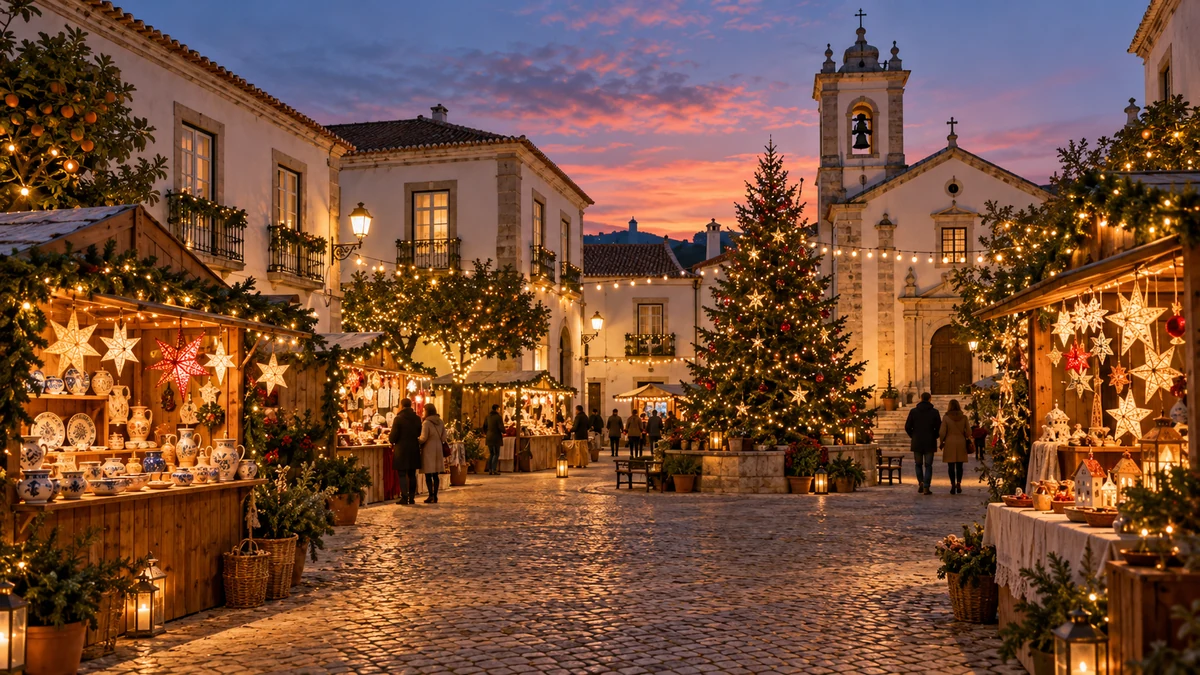
Christmas lights and decorations can make Portuguese streets and squares inviting places for an evening walk. The scale varies considerably: a modest village display can be as enjoyable as a large city installation.
Things to look out for
- Festive lighting: strings of lights, illuminated arches or projected displays may create a route through the centre. Check dates and switch-on times before travelling.
- Town Christmas trees: a decorated tree can act as a meeting point in a square. Keep access routes clear when stopping for photographs.
- Public nativity displays: materials and scale vary. Check opening hours and step-free access instead of assuming every display is accessible to everyone.
- Creative installations: contemporary light sculptures and photo settings may sit alongside more traditional decorations.
Christmas markets and activities
Visit Portugal describes markets offering crafts, seasonal food and family entertainment. Its programmes are date-specific, so use the organiser’s current listing for times, tickets and activities rather than relying on a previous year’s schedule. Source: Visit Portugal: Christmas markets
- Craft stalls: browse handmade ornaments, ceramics and gifts. Ask how an item is made instead of assuming anything labelled handmade is automatically sustainable.
- Local food: try a seasonal sweet or hot drink if it suits you, and ask vendors about ingredients and allergens.
- Activities: a programme might include music, storytelling or children’s workshops. Age limits, booking and supervision requirements vary.
Supporting local makers and businesses
A market visit is an opportunity to buy directly from a maker or stop at a local café. Choose something you will use rather than buying for the sake of it. Good signs, clear prices and considerate crowd management also make the experience better for residents and visitors.
Making a visit more comfortable
- Choose your time: check actual opening hours and ask about quieter sessions if crowds are a concern. Weekday mornings are not helpful if the market only opens later.
- Payment options: bring a suitable card and a modest amount of cash if needed. Individual stalls may accept different payment methods.
- Transport: check holiday timetables, walking distances and the route home. A nearby car park or public transport stop does not necessarily mean a step-free journey.
Affordable decoration ideas with less waste
Start by reusing decorations you already own. Making your own paper garlands or a simple wreath can be enjoyable without requiring a new collection of materials. Keep dry foliage and paper clear of heat sources.
- Reuse: wrap gifts in saved boxes or fabric that can be used again.
- Thoughtful shopping: a durable locally made item can be a useful gift; location alone does not prove a product has a lower environmental impact.
- Lighting: use suitable LED decorations and a timer if helpful, following the manufacturer’s instructions and switching them off when no longer needed.
Practical tip: combine a market visit with a manageable walk through the lights and a bakery stop. Plan around your budget, the weather and everyone’s comfort rather than trying to see everything.
Bringing Portuguese Christmas Traditions into Your Home
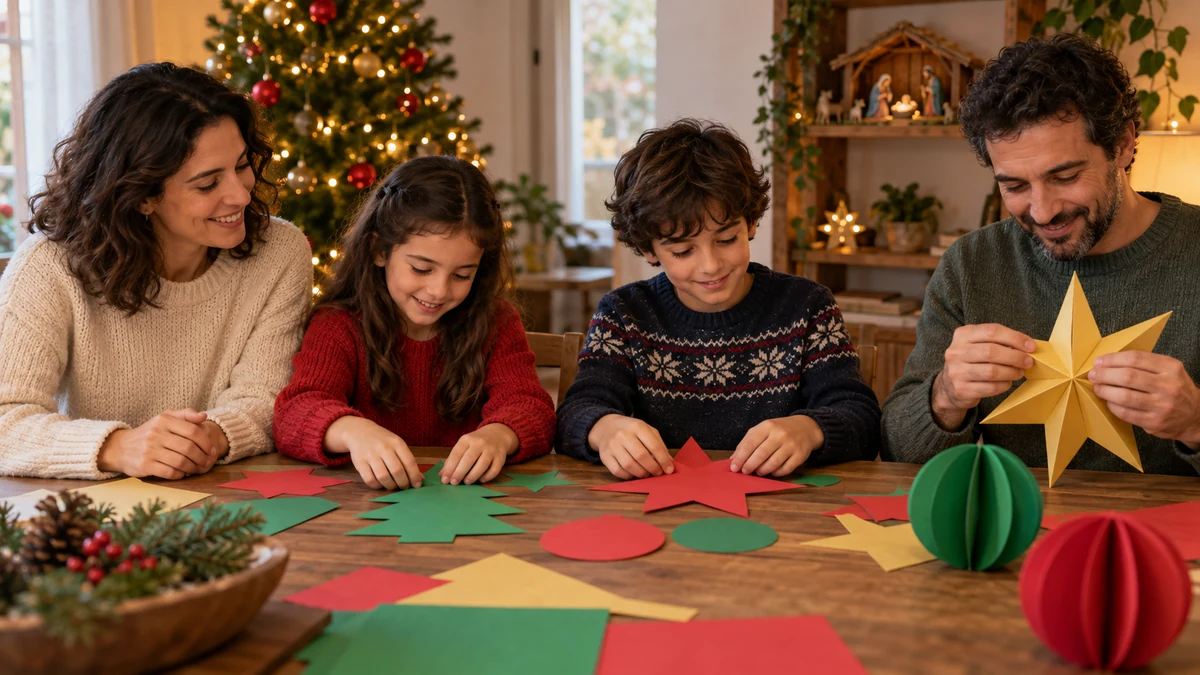
Choose the elements that mean something to you: a nativity scene, a dish for the consoada or a song to share. A small, thoughtful adaptation is more enjoyable than trying to reproduce every tradition at once.
Decorations and a nativity scene
Nativity scene: choose a stable place and arrange simple figures. Handmade paper buildings can sit alongside pieces you already own. If adding lights, use an appropriate low-heat product according to its instructions.
- Make a backdrop from fabric or paper. Keep small loose pieces out of young children’s reach and do not collect moss from protected habitats.
- Make larger figures from suitable modelling materials or papier-mâché, with adult supervision and time for them to dry.
- Choose flameless lighting near paper, fabric and greenery rather than placing burning candles among decorations.
Preparing the consoada without a last-minute rush
Write a menu and a realistic preparation schedule. Soaking salt cod ahead needs fridge space as well as time. Make desserts early only when their recipes explain how to store them.
- Follow the salt cod supplier’s soaking instructions, keep it refrigerated and change the cold water regularly. Thickness and preparation affect the time required.
- Pick accompaniments that fit your oven and hob space. If cooking ahead, cool and refrigerate promptly, then reheat according to food-safety guidance.
- Store cakes and perishable desserts as their recipes require. Food Standards Agency guidance advises cooling leftovers and refrigerating or freezing them within one to two hours; rice dishes need particular care and should be used or frozen within one day. Source: Food Standards Agency: Christmas leftovers
Activities children can join
Offer a short craft activity or a song with no pressure to perform. Children can help arrange sturdy nativity pieces, while an adult handles fragile objects, electrical lights and tools.
- Cut paper stars and garlands with age-appropriate scissors and supervision.
- Paint simple figures using suitable craft materials, then leave them to dry on a protected surface.
- Learn a song together, explaining what it means and allowing anyone who prefers to listen to do so.
Small homemade gifts
A personalised bookmark, a handwritten recipe card or a small packet of herbs can be thoughtful. Food gifts need ingredient and storage information; do not assume a homemade preserve is shelf-stable without a tested preservation method.
- Reuse wrapping paper or fabric and add a simple paper decoration.
- Include a handwritten note explaining the gift or the memory behind it.
Keeping costs and waste manageable
Reuse what you have, set a spending limit and plan quantities around the actual guest list. Buying fewer things usually helps more than replacing everything with a new supposedly eco-friendly version.
- Use clean materials already available to you, keeping small or sharp items away from young children.
- Buy ingredients for a planned menu and leave enough fridge space for safe storage.
Practical tip: choose two traditions to focus on, such as a nativity scene and a family recipe, and adapt everything else to your time, beliefs and budget.
A Christmas Shaped by Family and Place
Christmas in Portugal brings together food, worship, public celebrations and personal memories. Learning about the differences is part of its appeal; there is room for more than one way to celebrate.
Thank you for reading. Follow our social channels for more festive ideas and share the traditions that matter to you. Ask permission before sharing photographs of other people.
For more seasonal reading, visit the I Love Christmas blog whenever you need inspiration.
Frequently Asked Questions About Christmas in Portugal
When is Christmas celebrated in Portugal?
Christmas Day is 25 December, with many family celebrations beginning on Christmas Eve. The consoada and Christmas night Mass are important traditions for some households; church times should be checked locally.
What is the consoada, and what might be served?
It is the Christmas Eve family meal. Salt cod and festive sweets are familiar choices, but menus differ and some families choose other fish, a roast or vegetarian dishes.
What is Missa do Galo like?
It is a Catholic Christmas night service, traditionally associated with midnight. Music, nativity displays and any gathering afterwards depend on the parish. Visitors should check times and respect worshippers.
How do celebrations differ by region?
Local food, music and parish customs vary. Madeira’s honey cake and pre-Christmas Masses are distinctive examples; the Azores also have their own island traditions. Neither coast nor countryside has one compulsory menu.
How can I bring Portuguese traditions into my home?
Choose a meaningful element such as a nativity scene, a Portuguese recipe or a song. Plan preparation and storage carefully, and let family members join in at a comfortable level.
How can I spend less and reduce waste?
Reuse decorations, limit new purchases, plan portions and store leftovers safely. Suitable LED lighting and timers can help manage electricity use without keeping decorations on unnecessarily.
Sources and Further Reading
- Visit Portugal: Christmas traditions
- Visit Portugal: consoada and Christmas Mass
- Visit Madeira: seasonal traditions
- Taste Azores: regional foods and massa sovada
- DECO PROteste: preparing salt cod
- Food Standards Agency: Christmas leftovers
- Visit Portugal: Christmas markets