New Year in Brazil brings together beach celebrations, family meals, music and traditions such as wearing white and making wishes for the year ahead. Customs differ between communities, and religious practices deserve respect. Celebrate in ways that protect people, animals and the places you visit.
New Year in Brazil is associated with fireworks, beaches, food and rituals that bring people together. Here is a guide to some familiar customs, alongside practical ideas for celebrating with family and friends.
Illustrations in this article are conceptual images, not documentary photographs or evidence of a particular historical event, destination, venue or access route.
Popular traditions across Brazil
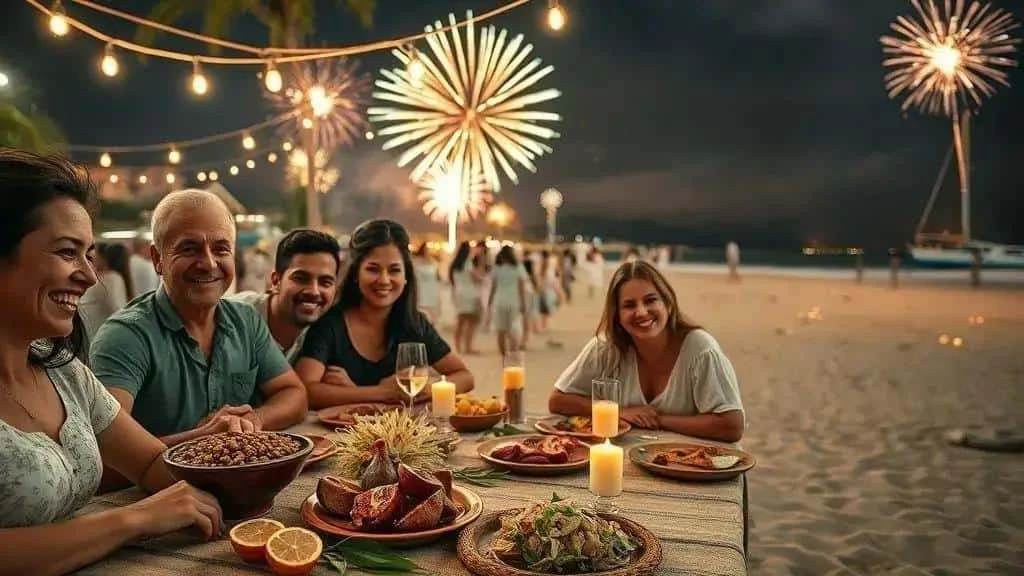
Brazilian New Year celebrations combine religious observance, popular beliefs and social gatherings. Some people attend public events, others share a late supper at home, and many create their own mixture of traditions.
Familiar rituals and beliefs
Customs include jumping over seven waves, wearing white and eating foods associated with prosperity. Seaside offerings can have religious meaning, including devotion to Iemanjá in Afro-Brazilian traditions; they are not simply party decorations. Source: MultiRio: origins of New Year customs
- Seven waves: some participants associate each wave with a wish or expression of gratitude.
- Offerings to the sea: these may express thanks or requests for protection. Observe respectfully and follow local environmental guidance.
- White clothing: it is widely associated with hopes for peace and renewal.
Regional variety
The south-east, including Rio and São Paulo: large urban celebrations sit alongside family gatherings. Copacabana is a particularly well-known New Year’s Eve destination; check the current programme and crowd arrangements if visiting.
The north-east: celebrations can include public concerts, community gatherings and religious observances. Music and customs differ between cities rather than following one regional formula.
The south: family meals, public events and coastal celebrations all feature. There is no single way that every southern household celebrates.
The centre-west: city events and gatherings in smaller communities or rural homes offer different ways to mark the occasion.
The north and Amazon region: local celebrations reflect varied communities and settings. Avoid treating distinct Indigenous, riverside and religious traditions as interchangeable.
Foods, keepsakes and symbols of good fortune
Symbolic foods and small rituals vary between families. The associations below are beliefs and customs, not guarantees of future luck:
- Lentils: often associated with prosperity and served as part of the festive meal.
- Pomegranate: its many seeds are associated with abundance.
- Grapes: some families connect them with wishes for the coming year.
- Coins in a purse or wallet: a symbolic expression of hopes for financial wellbeing.
These variations show the diversity of New Year in Brazil. People give familiar customs meanings shaped by their family, faith and community.
Seaside traditions and the seven waves

For some Brazilians, jumping over seven waves symbolises wishes, gratitude and renewal. Understanding the custom does not require entering the sea at midnight: darkness, currents, crowds and alcohol make that a risky choice.
Marking the tradition without taking unnecessary risks
- Choose a safe viewing place: stay on dry land, away from breaking waves, and follow beach staff and event instructions.
- Welcome midnight from shore: enjoy the countdown without moving into the water when the fireworks begin.
- Reflect or give thanks: think of a wish or something you appreciated about the past year.
- Use a symbolic alternative: count seven wishes or gentle steps on dry ground rather than attempting seven jumps in the sea.
- Leave respectfully: take your belongings and rubbish with you, keeping access routes clear.
Some people make offerings as part of their religious practice. Ask before photographing or joining a ceremony. For a personal celebration, flowers kept in a vase at home offer an alternative that does not leave objects in the sea.
Practical and environmental considerations
- Choose comfortable clothing suitable for the weather and your plans; white is a custom, not a requirement.
- Keep glass and loose plastic off the beach and take reusable containers home afterwards.
- Keep children close, with a responsible adult watching them continuously.
- Respect beach warnings and lifeguard advice. Street lighting or a tide table does not make night-time bathing safe.
- Respect religious practice by asking permission before taking photographs or approaching a ceremony.
Away from the coast, keep the idea of renewal simple: share seven wishes around the table. There is no need to substitute a river, lake or other open water.
Food and drink at a Brazilian New Year’s Eve supper
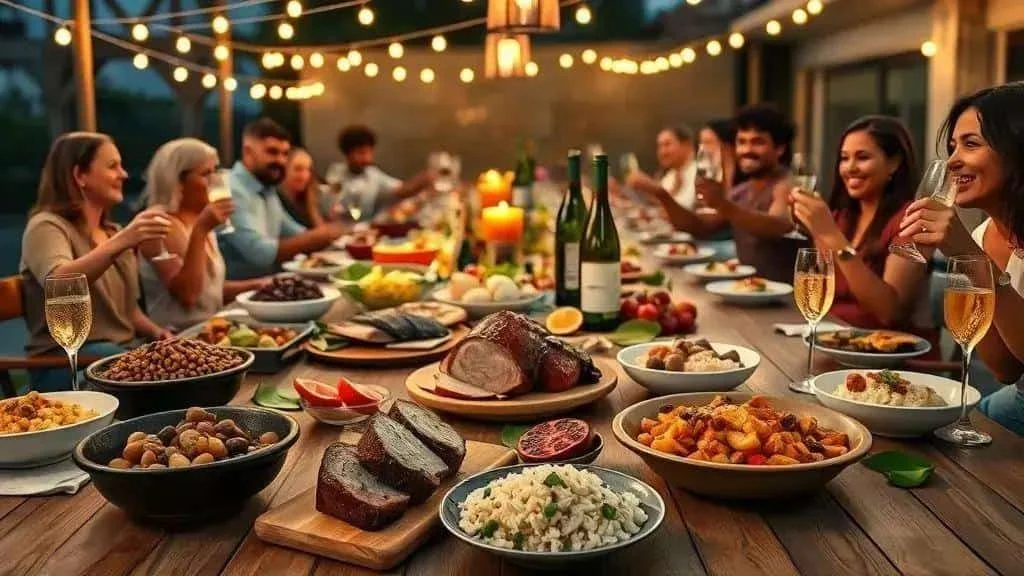
A New Year’s Eve meal, often called a ceia, can mix symbolic foods with family favourites. The dishes below are possibilities rather than a menu shared by every Brazilian household.
Festive dishes and symbolic ingredients
- Lentils: serve them as a dish symbolising prosperity. Onion, garlic and a little sausage or bacon are one option; olive oil and mushrooms offer a meat-free variation.
- Roast meat or poultry: pork leg, suckling pig or festive poultry may form the centrepiece. Herbs, orange and garlic suit many preparations; compare prices if choosing a more economical chicken dish.
- Bacalhau: salt cod reflects Portuguese culinary influence and can be served with potatoes, onions and olives.
- Rice with raisins and nuts: a sweet-and-savoury side that may include Brazil nuts or almonds, depending on preferences and allergies.
- Farofa: toasted cassava flour adds a crumbly, crunchy accompaniment. Festive versions may contain raisins, eggs or bacon.
- Rabanadas and panettone: Brazilian-style festive French toast and panettone often appear among the sweets. Rabanada recipes vary, including versions with condensed milk or port.
- Pomegranate and grapes: these can represent abundance and wishes, or simply be enjoyed as fruit.
Drinks for a toast
- Sparkling wine: adults who drink alcohol may choose Brazilian sparkling wine or another favourite. Champagne is a particular regional wine, not a name for every sparkling wine.
- Caipirinha and mixed drinks: the lime-based Brazilian cocktail is a familiar party choice. Sparkling water with lime and mint provides an alcohol-free alternative.
- Juice and flavoured water: pineapple with mint or water with orange slices can offer refreshing alternatives.
Planning the meal
- Balance hot and cold dishes: choose food you can store and serve safely. Do not leave perishable dishes at room temperature throughout a long party.
- Plan quantities dish by dish: use recipe yields, guest appetites and the number of courses. A single total weight per person is not reliable for every menu.
- Compare substitutions: use ingredients that suit your budget and the recipe, without assuming that chicken, fish or a particular cut will always be cheapest.
- Organise temperature control: keep chilled dishes refrigerated until serving and bring out small portions. If holding food hot, use suitable equipment that keeps it at 63°C or above; a vaguely warm oven is not a reliable substitute. Source: Food Standards Agency: safe catering
Festive food and drink bring together symbolism and shared enjoyment. Adapt the menu to your family’s preferences, available ingredients and practical arrangements.
Colours and hopes for the year ahead
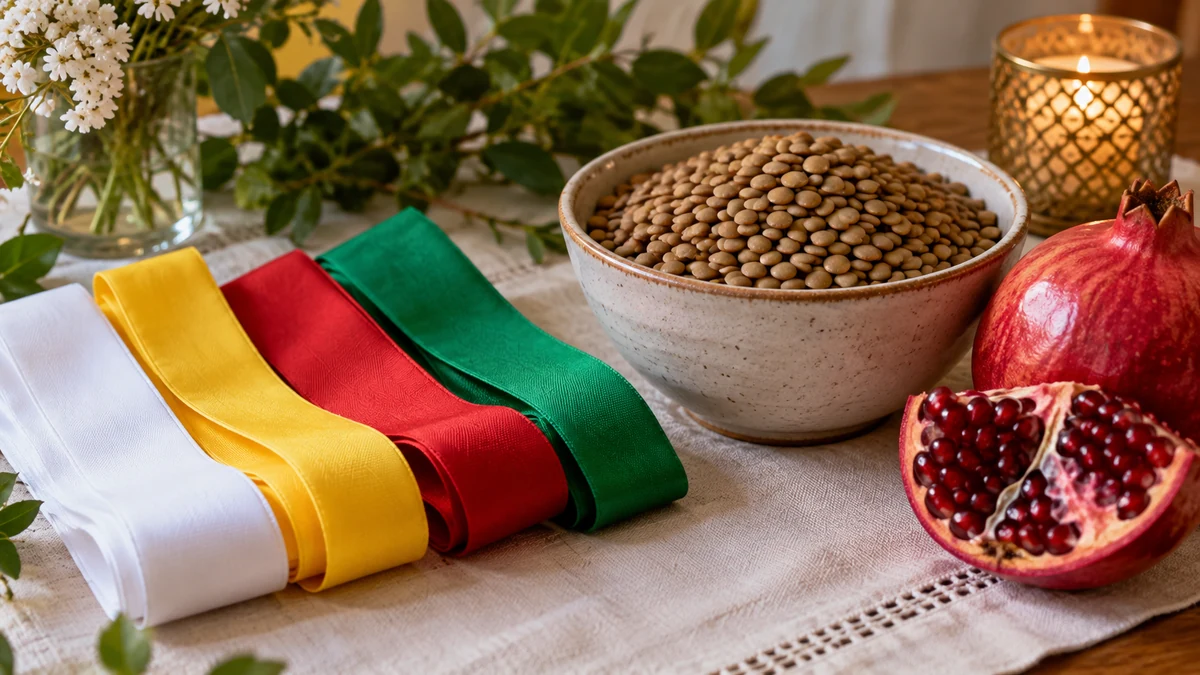
Clothing colours can represent wishes for peace, affection, health or prosperity. These meanings are popular associations that vary between people, not effects that colours can produce.
Common colour associations
- White — peace and renewal.
- Yellow or gold — prosperity and hopes for financial wellbeing.
- Red — passion, energy or romance.
- Green — hopes for health, balance or renewal.
- Pink — love and affection.
- Blue — calm, serenity or protection.
- Purple — transformation or reflection.
Choosing and combining colours
- Choose a personal meaning: pick a colour that reminds you of something you hope for.
- Keep the combination simple: pair one main colour with neutral accessories, such as yellow with white or pink with beige.
- Use a small detail: a scarf, socks or bracelet can express the idea without buying a whole outfit.
- Put comfort first: choose something suitable for the venue and weather.
Taking part thoughtfully
- Ask about local meanings: symbols can have a significance beyond general party folklore.
- Keep personal rituals simple: a wish written on paper or a symbolic food can mark the moment. Keep coins and other small objects away from young children.
- Avoid harmful activities: do not leave objects in the sea or use fireworks carelessly.
- Include different beliefs: people can enjoy the gathering without sharing a superstition or religious practice.
A simple idea: use an accessory you already own to represent your hopes for the year.
Fireworks, local rules and safety

Fireworks feature in many celebrations, but can distress people and animals and cause serious injury. Prefer a properly organised display or an alternative that suits your group.
Rules and permissions
- Check locally: organisers should confirm requirements with the municipality, fire service and any other relevant authority.
- Use qualified operators: a public display needs appropriate professional arrangements and permissions, not improvised handling by guests.
- Check permitted products: restrictions on sale, use and loud fireworks vary by location.
- Respect operating conditions: follow local restrictions, event boundaries and instructions about timing or noise.
Advice for spectators
- Stay behind barriers: watch from the designated area and keep away from launch equipment.
- Consider children and pets: choose a quieter viewing option where necessary and provide animals with a secure, calm indoor space.
- Avoid improvised fireworks: do not make, modify or handle unidentified fireworks.
- Know how to get help: identify staff and exits. Leave equipment and fire response to trained personnel rather than relying on a wet cloth or household improvisation.
- Respect weather decisions: operators may postpone or cancel a display when conditions are unsuitable.
Reducing environmental harm
- Consider quieter alternatives: a professionally arranged light display can avoid explosive bangs. No event format is entirely without environmental impact.
- Leave firework debris to the organisers: spectators should not pick up unexploded items. Take ordinary picnic packaging home or use suitable bins.
- Keep objects out of the sea: calling something biodegradable does not make releasing it harmless to wildlife.
Other ways to celebrate
- Light displays or projections: these can create a festive focal point without a domestic firework launch.
- Organised professional displays: if fireworks are part of your plans, choose a properly managed event and follow its instructions.
- Family activities: music, a shared countdown and battery-powered lanterns kept on the ground provide alternatives to fireworks or released lanterns.
If something goes wrong
- Move away from danger: keep people clear and alert event staff.
- Call for assistance: in Brazil, contact the fire service on 193 or SAMU medical assistance on 192, explaining the location and incident clearly. Source: Brazilian fire service: fireworks and emergency contacts
- Burns: cool the affected area under cool running water for 20 minutes. Do not apply ice or home remedies, and do not remove clothing stuck to the skin. Seek urgent medical help for serious burns or firework injuries. Source: NHS: burns and scalds
- Fire: get out, keep others away and call the fire service. Do not attempt to fight a spreading fire or approach fireworks that may still ignite.
Before attending: check event information and agree how your group will stay together.
Planning a lower-waste, affordable celebration
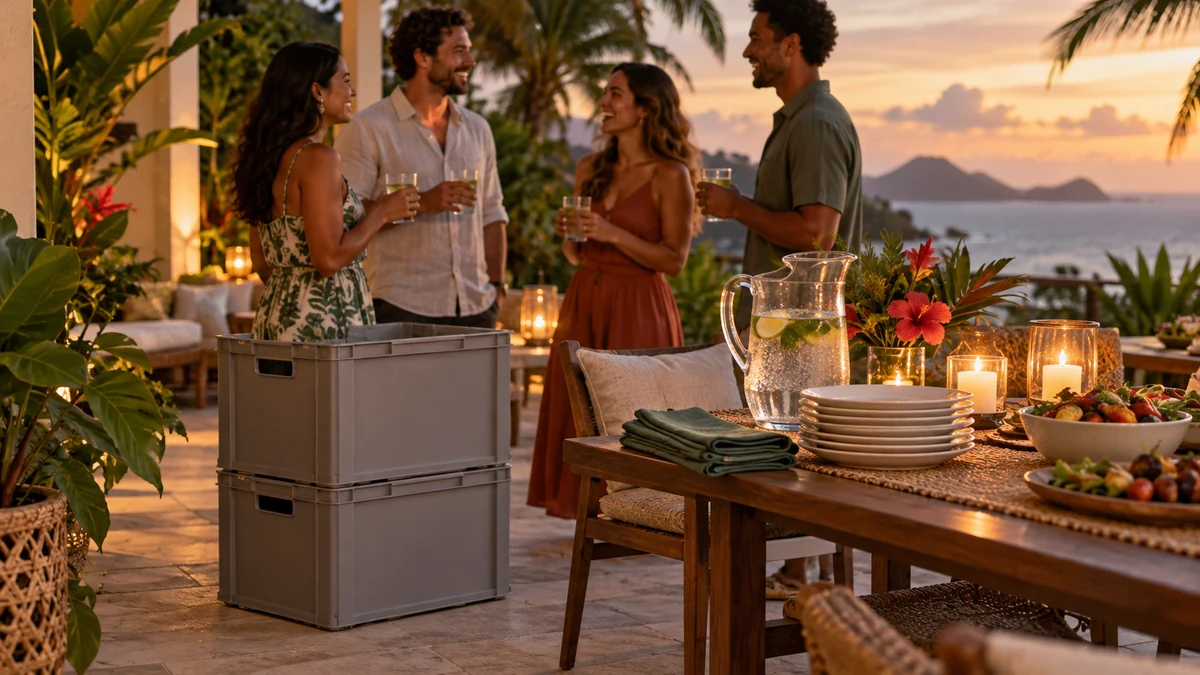
A thoughtful plan can reduce unnecessary purchases and waste while keeping the evening welcoming.
Budget and preparation
- Set an overall limit: divide the budget between food, drinks, decorations and any other essentials.
- Share the menu: ask willing guests to bring a dish and coordinate the choices.
- Compare prices in advance: larger packs are only good value if you will use them.
- Choose priorities: spend on the parts of the evening that matter most and leave out unnecessary extras.
A shared, economical menu
A coordinated bring-a-dish meal can spread the work and cost. Choose ingredients according to availability, storage and what guests will actually enjoy.
- Organise contributions: agree who brings each dish to avoid duplicates and gaps.
- Consider seasonal and meat-free dishes: pulses, salads and simple vegetable dishes can offer variety at a manageable cost.
- Check bulk-buy value: compare unit prices for rice, lentils and nuts, accounting for allergies and storage.
- Limit leftovers sensibly: plan using recipe yields. Only send guests home with perishable food that has been handled safely and can be kept chilled.
Reusable decorations
Start with what you own and make a few simple changes to create a festive setting.
- Reuse fabric: a tablecloth, scarf or suitable fabric offcut can become a table runner.
- Choose suitable LED lighting: use lights intended for the setting and follow the manufacturer’s instructions.
- Simple arrangements: branches or flowers in stable vases can replace disposable decorations. Keep dry materials away from heat and flames.
- Use washable tableware: reusable plates and cutlery avoid a pile of single-use items.
Alternatives to fireworks
Consider guests and animals who find sudden loud sounds distressing.
- Lights and projections: choose an appropriate display or a modest lighting arrangement at home.
- Lower-noise professional displays: these may reduce disturbance but are not necessarily silent or harmless.
- Keep lanterns grounded: use battery-powered lanterns as decorations; do not release flame-powered sky lanterns.
Waste and practical arrangements
- Make sorting easy: provide clearly identified containers according to your local recycling and waste arrangements.
- Compost suitable scraps: separate only materials accepted by the composting system you use.
- Avoid unnecessary individual packaging: serve from shared dishes and use clean containers for safely stored leftovers.
Explaining the plan to guests
- Keep requests clear: explain food contributions and any reusable items guests should bring.
- Ask about dietary needs: provide alcohol-free choices and suitable food, with attention to ingredients and cross-contact.
- Plan the journey home: coordinate public transport, taxis or lifts with a sober driver.
Start small: a few realistic changes can reduce waste and effort without making the evening complicated.
Family celebrations and activities for children
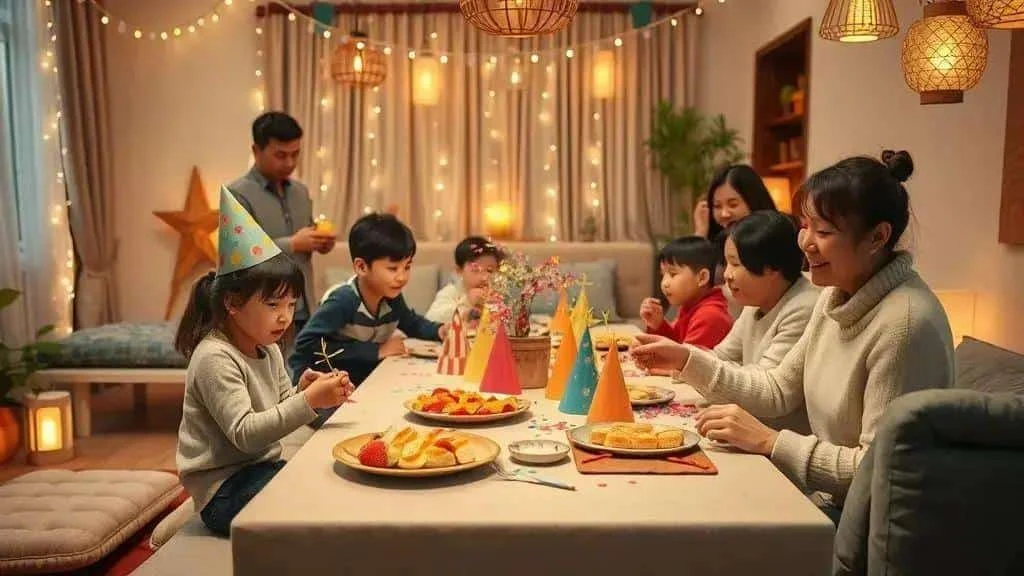
Keep activities simple, optional and suited to children’s ages and routines. An earlier countdown can work better than insisting that everyone stays awake until midnight.
Crafts and games
- Party hats and masks: offer age-appropriate paper, glue and stickers with adult supervision.
- Reusable paper decorations: make stars or a paper chain instead of scattering confetti outdoors. Even biodegradable confetti still needs thoughtful use and clean-up.
- A treasure hunt: hide suitable objects and use simple clues, avoiding small items that pose a choking risk.
- A family performance: invite children to sing, dance or tell a story if they want to.
A creative countdown
- Light-up countdown: an adult can switch suitable LED lights on as everyone counts together. Keep batteries secure and out of children’s reach.
- Surprise envelopes: open numbered paper envelopes containing wishes or activity ideas instead of bursting balloons around small children.
- A large visual countdown: use clear number cards so younger children can join in with clapping.
Food for younger guests
- Fruit plates: prepare fruit for the child’s age and avoid sharp skewers. Cut grapes lengthways into quarters for young children and supervise eating.
- Small sandwiches: use suitable fillings such as cheese, turkey or vegetables, adapting textures and checking allergies.
- Small sweet portions: older children may enjoy a little brigadeiro or beijinho, Brazilian chocolate or coconut sweets, served in an age-appropriate way.
- Drinks: keep fresh water available and choose drinks appropriate to the child’s age.
Gentle family rituals
- A gratitude jar: write or draw something to appreciate and save it for another gathering.
- A time capsule: keep children’s drawings and messages in a labelled box to open in the future.
- A symbolic arrangement: place flowers or written wishes safely indoors rather than releasing items into water.
Comfort and supervision
- Keep away from fireworks: choose a suitable viewing distance or stay indoors, with appropriate ear protection where needed.
- Offer a quiet space: provide somewhere supervised to rest away from noise and bright lights.
- Make supervision explicit: agree which responsible adult is watching the children and hand over clearly when changing.
- Food and hygiene: wash hands before eating and after craft activities, and keep food suitable for each child.
Let children help: choosing music, drawing decorations or preparing simple activities can make them feel part of the celebration.
Welcoming the year together
New Year in Brazil brings together varied traditions, flavours and hopes. Thoughtful choices help make a celebration more comfortable, affordable and considerate.
Choose the customs that mean something to you, plan a manageable meal and include children in suitable activities. Sharing stories can be just as memorable as a large event.
Thank you for reading. Follow our social channels and the I Love Christmas blog for more festive ideas and seasonal inspiration.
Frequently asked questions about New Year in Brazil
Is jumping over seven waves at midnight safe?
It is not risk-free, and night-time bathing is discouraged by beach safety authorities. Celebrate on dry land instead, particularly with children or after drinking alcohol, and follow local warnings.
Which foods are associated with good luck?
Lentils, pomegranate and grapes are associated with prosperity, abundance or wishes in some families. These are symbolic beliefs rather than promises that eating them changes your fortune.
How can children join in safely?
Choose supervised crafts, a quiet or earlier countdown and age-appropriate food. Keep them away from fireworks, open water and small choking hazards.
How can a New Year party create less waste?
Reuse decorations and tableware, plan food quantities and sort waste appropriately. Keep objects out of the sea and choose grounded LED lights rather than releasing lanterns.
Do public firework displays need permission?
Requirements depend on the location and type of event. Organisers should check with the municipality, fire service and relevant authorities, and use appropriately qualified operators.
How can I keep the meal affordable?
Coordinate a bring-a-dish menu, compare unit prices and use dishes with clear yields. Buy larger quantities only when they will be used and stored safely.
Sources and Further Reading
- Fundação Joaquim Nabuco: New Year traditions
- MultiRio: origins of New Year customs
- Brazilian Ministry of Health: drowning prevention
- Brazilian fire service: fireworks and emergency contacts
- NHS: burns and scalds
- Food Standards Agency: safe catering
- NHS: preparing food safely for young children